

Hidden Gems & Offbeat Paris: 30+ Secret Spots and Unusual Things to Do
Last Updated on 1st August 2026 by Sophie Nadeau
This post may contain affiliate links. Please check out my privacy policy for more information.
Peek behind that doorway and wander a little further down that cobbled lane. If you want to catch a real glimpse of the really authentic hidden Paris then there are plenty of secret spots in the City of Light just waiting to be discovered. And so, whether it’s your first, fifth, or hundredth time in the City of Love, then here are the top Paris hidden gems that you won’t want to miss on your next trip to the French capital city!
One of the best things about Paris is that there’s always something new to discover, and it’s usually to be found in the most unexpected of places… From following in the footsteps of a legendary alchemist to wandering around an abandoned railway commission by Napoleon, here are all of the very best offbeat Paris destinations!
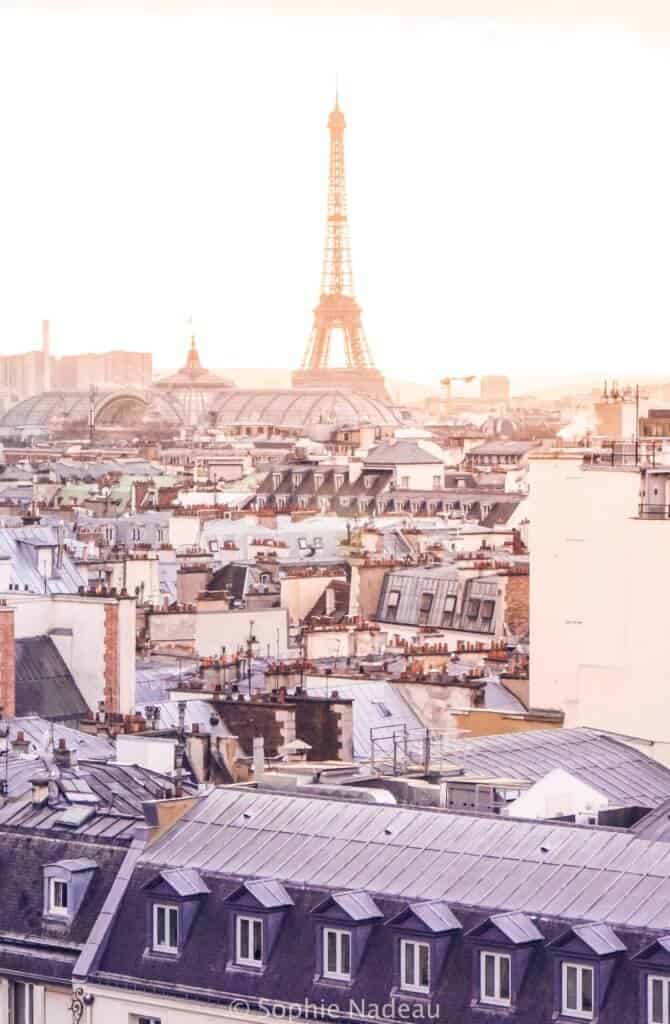
On this list of 60+ unusual Parisian attractions, you’ll find the quirky, the weird and the downright bizarre. So whether you’re in search of a great independent bookshop to pick up a new book or want to get a little lost in Paris’ underground network, here’s the very best of unusual things to do in Paris…
Follow in the footsteps of Nicolas Flamel
Yes, Nicolas was a real person. And he lived in Paris! Two roads in the city centre (Rue Nicolas Flamel and Rue Pernelle) are named for the infamous alchemist and his wife. At 51 Rue Montmorency, you’ll also find Flamel’s old house, which is often thought to be the oldest stone house in the city.
Read more: Nicolas Flamel was a real person and he lived in Paris!

Wander through the Park of Buttes Chaumont
The magical park of Buttes Chaumont is located in the 19e arrondissement and is far less popular than the likes of Jardin des Tuileries. Of all the non touristy things to do in Paris, this beautiful green space is easily one of the best options!
And with views over towards the Sacré-Coeur, a grotto, a waterfall and even a miniature temple (modelled on the Temple of Vesta in Tivoli, Italy), I have no idea why Buttes Chaumont isn’t more popular! Head here for one of the best picnic spots in the city and to escape the crowds of Paris, if only for a few hours.
Read more: Best picnic spots in Paris.

Explore the shelves of the Abbey Bookshop
Nearby to Shakespeare and Co, you’ll find the equally interesting shelves of the Abbey Bookshop. Tucked away on Rue Parcheminerie (behind one of the prettiest churches in Paris), the Abbey Bookshop is bursting with books to the point where they’re quite literally spilling out of the store, and onto the Parisian pavement. The Canadian founder of the store is super friendly and there’s always freshly brewed coffee to drink as you peruse the quirky shop floor.
Read more: The Abbey Bookshop in Paris
Shop for vintage goods at L’Objet Qui Parle
Located near the base of Montmartre, you’ll find the quirky store of L’Objet Qui Parle (literally ‘the Talking Object’). The shop is well worth a look around if only to try and determine exactly what the vintage store is actually selling. After all, inside the shop, you’ll find everything from antique chandeliers to worn parchment…
Read more: Vintage shopping in Montmartre: L’Objet Qui Parle.

Rue des Thermopyles
Situated in the less-touristed 14th arrondissement of Paris, rue des Thermopyles is a delightful road characterised by its larger cobblestones (a rarity in intra-muros Paris) and abundance of wisteria during the late springtime.
A residential road which feels more like rural France than central Paris, the road is more of a Paris hidden gem than its non-Haussmannian counterparts such as rue Cremieux and the likes. Nearby, Notre Dame du Travail is an early 20th-century church which is equally as fascinating.
Discover Moulin de la Galette
Perched close to the top of the Montmartre hill, Le Moulin de la Galette is an iconic windmill turned restaurant in the very heart of the 18th arrondissement of the city.
Located along the ever-so-famous rue Lepic, the windmill dates all the way back to the 17th-century and has a surprising history, including being painted by many an impressionist painter. Curious to know more? Discover the lost windmills of Paris here.
Enjoy a tea at the Grand Mosque
Those looking to enjoy sweet treats and delicious tea in Paris should look no further than the tearoom of the Grand Mosque in the 5th arrondissement of the city.
Though the Paris Mosque itself is by no stretch of the imagination a hidden gem, its accompanying tearoom and restaurant boasts a beautiful terrace where you can sit in the open air and admire the mosaics while sipping on your mint tea.

Watch the sunset through the centre of the Arc de Triomphe
One of my favourite hidden gems is not a secret spot per se but is instead an event you simply must go and witness for yourself during the late spring. Around the 10th May, instead of going up the Arc de Triomphe, snap a photo of the sun setting directly in the middle of it. Just don’t look directly at the suns!
Stay in a boat hotel
If you’re looking for a particularly unique experience when it comes to staying in Paris, you should note that it’s possible to stay on a boat! The Off Paris Seine is a four-star hotel offering amenities such as free Wi-Fi and a swimming pool.Check prices and availability here.
Wander through Paris for any given amount of time and you’ll soon notice a uniformity to the architecture. This is all thanks to the Haussmann renovations of the 19th-century which created the wide plane tree lined boulevards, sprawling cafés and lead-lined rooftops of the French capital that we all know and love today.
But what you may not know is that, in a bid to keep the aesthetics of the city in check, there are many fake façades of Paris, each hiding their own secret. Some façades which are actually fake and are actually empty behind so as to allow the metro to air itself include;
- 174 rue du faubourg saint denis
- 145 rue lafayette
- 29 rue quincampoix
- 27 rue bergere
- 44 rue daboukir
Visit Butte Bergeyre (Paris’ most secret micro-arrondissement)
Of all the off the beaten path things to do in Paris, one of my very favourites is that of Butte Bergeyre, a miniature micro-arrondissement close to Buttes Chaumont.
There are very few entryways to Butte Bergeryre so perhaps that accounts for why it is so quiet as you wander along its little, cobbled lanes and passageways.
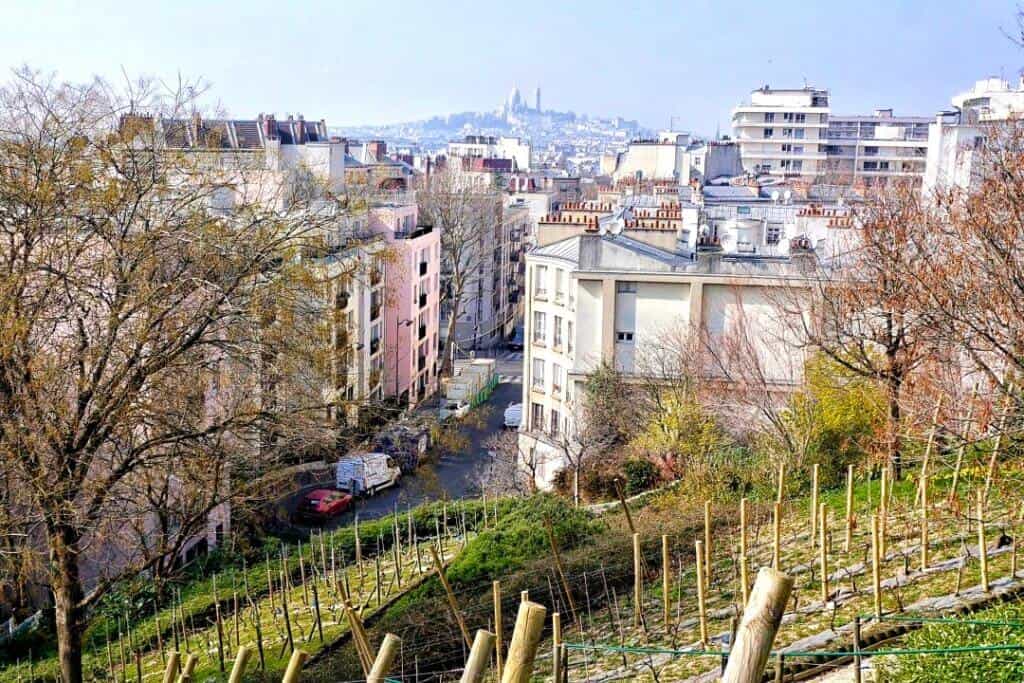
In this most secretive micro-arrondissement, that even many of the locals don’t even know about, you’ll find one of the best offbeat Paris destinations, a secret vineyard. Surrounding it, you’ll also find some wonderful architecture dating back to the 1920s and plenty of quiet space.
Read more: Butte Bergeyre.
Get lost in Cité Florale
Pretty and ivy-clad, Cité Florale is a micro-arrondissement located in the 13e arrondissement of Paris. Head here to see some cute houses, unusual Parisian architecture and to generally escape the crowds of Paris- if only for a few hours!
Read more: Cité Florale.

Wander down the prettiest road in Paris: Square de Montsouris
Rather confusingly, this ‘square’ is actually a fairly long street, meandering its way through the 14e arrondissement. Located very close to a park of the same name, Parc Montsouris, Square de Montsouris is filled with art deco architecture and artist’s ateliers with big, wide windows. Wander down this street and you’ll find a cobbled lane wedged between detached houses dating back to the 1920s and 1930s.
Read more: My secret Paris locations, Square de Montsouris.

Explore Paris’ secret side in the Collège des Bernardins
The little-known and hidden in plain sight Collège des Bernardins is located in the Latin Quarter of the city, not far from the iconic dome of the Paris Pantheon. It is from the Pantheon than a patriotic French flag flies strong and proud.
From almost every viewpoint in the 5e arrondissement of the city, the tricolours of blue, white and red can be seen, signalling that this is an important place to the Parisian landscape and history of France.
But what you may not know is that nearby, there is an even older secret once ecclesiastical building, hiding in the shadows of a small alleyway. Collège des Bernardins was founded as early as the 13th century, where it was used to house ecclesiastical members who attended lectures at the nearby Sorbonne.
The Latin Quarter actually got its name from students of the Sorbonne in the middle ages wandering around and solely conversing in Latin with one another. Today, the cloisters and surrounding buildings are used as a cultural hub and host plenty of fascinating and philosophical talks and lectures.

Look for secret Montmartre at Square Marcel Bleustein-Blanchet
Most tourists flock to the Parvis de Sacré-Coeur, glide around the basilica’s exquisite interior, wander the cobbled area of Place du Tertre where artists congregate and then venture no further. They don’t see the hidden history of Montmartre, explore its unusual past or even see its secret vineyard.
Most tourists don’t enjoy the smaller museums the arrondissement has to offer, and nor do they tend to sit, stop and watch the world go by for a little while. But on your next trip to Paris, I urge you to do just that.
Head to the pretty green and terraced space of Square Marcel Bleustein-Blanchet, which was once the site of a former windmill. Find a bench to perch on. Sit. Stop. Wait a while; you’ll be surprised by how much more of Parisian life you witness this way…
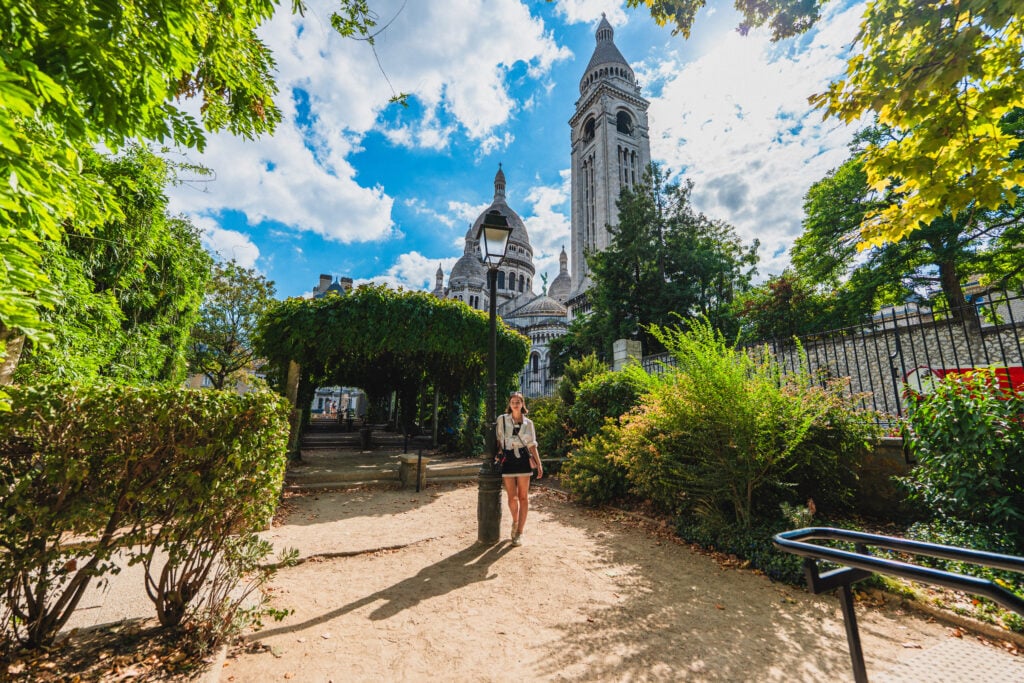
Participate in some urbex along the Petite Ceinture
‘Urbex’ (literally ‘urban exploration’) is becoming ever popular among Parisian residents. And one of the prime places to go? The Petite Ceinture. Paris’ secret railway remains a genuine secret and hidden gem even amongst Parisian locals.
The Petite Ceinture (little belt) loops its way around the city and was once used to transport heavy goods around Paris during the era of Napoleon. In the mid-1900s, and with the arrival of the métro, it was eventually replaced. However, many of the tracks remain in place, rusting and left to the elements.
Read more: How to visit the Petite Ceinture legally.

Watch a vintage film in the Latin Quarter
There are plenty of old-school cinemas dotted around Paris, and many of them are focused on the Latin Quarter and Le Marais areas of the city. Head to one of the many cinemas in these districts to see a vintage film. Date night is sorted! While in the Latin Quarter, be sure to also check out the impossibly beautiful (and ever so French) architecture of Sorbonne IV.
Read more: Latin Quarter district guide
Take a day trip to Auvers-Sur-Oise, final resting Place of Vincent Van Gogh
Auvers-Sur-Oise is a small town located to the Northwest of Paris. Here, you’ll find the final resting place of Vincent Van Gogh and his brother Theo, an Absinthe Museum and a huge fairytale-like Château. Follow in the footsteps of the great painter himself by wandering the countryside Van Gogh called home and seeing the Inn where he died in 1890.
Read more: Auvers-Sur-Oise day trip from Paris.
Visit the Arènes de Lutèce
Although much of Roman Paris is hidden to us (plenty of Ancient Paris is buried under centuries worth of the two millennia since the Roman period), there are still glimpses of it to be found now and then. One such place where you can find Roman Paris is in the Latin Quarter at Arènes de Lutèce. T
his Gallo-Roman arena was once an amphitheatre which could seat up to 17,000 people. Today, it is a public park and a popular place to play football. Nearby, there are plenty of other vestiges of Roman Paris to be spied, including the former Roman bathhouses of the Musée de Cluny.
Read more: In search of Roman Paris (Lutetita)

Visit Musée de la Vie Romantique
This beautiful house museum in the 9e arrondissement lies to the base of Montmartre. Situated in the neighbourhood of ‘New Athens’, the museum was once home to Ary Scheffer and is filled with priceless furniture and paintings. Translated as ‘the Museum of Romantic Life’ in English, it’s easily one of the most romantic spots in the city.
Read more: Feeling nostalgic at Musée de la Vie Romantique.

Marvel at some of the best street art in Paris in the metro!
Some of the best street art in Paris can be found in the most unusual of places: on the metro. Throughout the network, many stations are decorated in various styles and covered in quirky works of art.
Some of my personal favourites include Arts et Metiers (a steampunk style bronze covered station) and Palais Royal (the entrance of which is covered in Murano glass imported from Italy).
Read more: Most unusual metro stations in Paris.
See Le Clos Montmartre, one of Paris’ last remaining vineyards
Once upon a time (okay, only a few centuries ago!) much of Montmartre was covered in pasture and farmland. Among all of this greenery, there were plenty of vineyards to be found. Today, only one of the Montmartre vineyards survives and it’s located behind Musée de Montmartre.
The area surrounding Clos Montmartre is peaceful and well worth a visit, if only because you want to escape the crowds that flock to the Sacré-Coeur!
Best seen in September when the vineyard is open to the public for the annual grape harvest, during the rest of the year the clos can be spied through the metal grills surrounding it.
Read more: Clos Montmartre, the vineyard of Montmartre
Relax outside Hôtel de Sens
For English speakers, the name of ‘Hôtel de Sens‘ is actually a little deceptive. After all, it’s not the kind of hotel where you can book a room and spend a night or two. Instead, it’s a medieval family mansion, and the oldest surviving one of its kind in Le Marais which was once home to members of the church and wealthy Parisian families.
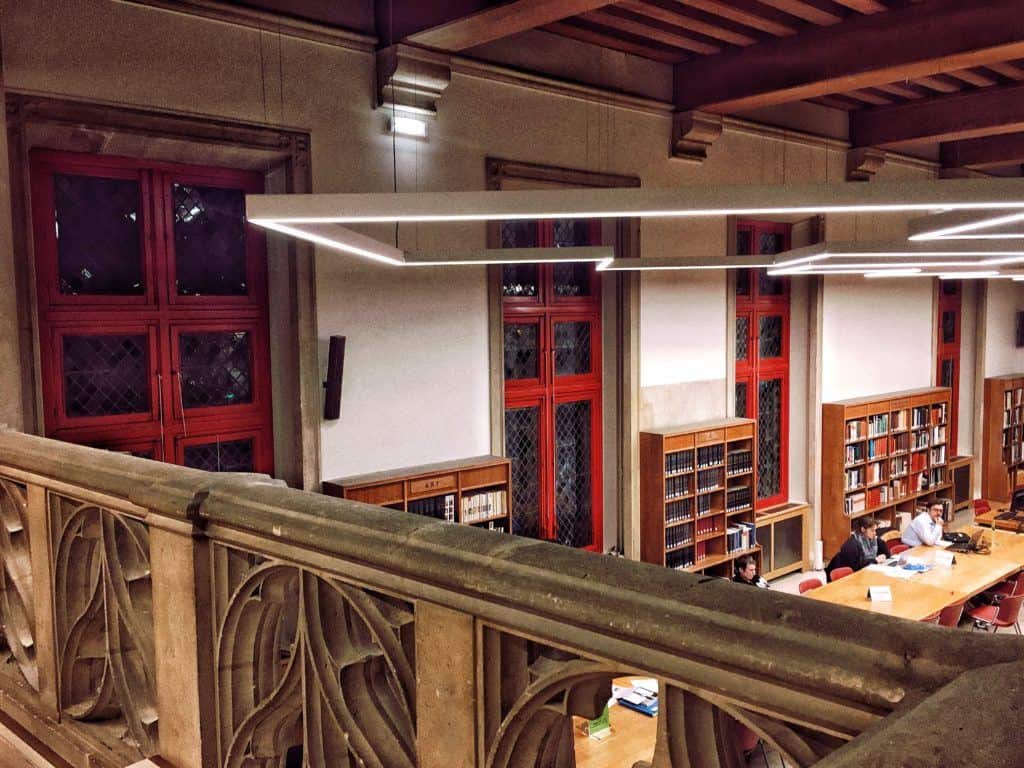
While the exterior of the building is medieval, pretty and contains one bullet lodged to its façade(a casualty of the French Revolution), the interior has been transformed into a unique library specialising in the arts and humanities. It’s open for anyone to visit, though if you want a library card to take out books, you’ll need a passport-style photo and some form of ID.
This former city palace now houses the Forney Art Library. The gardens to the back of the library are pretty, manicured and a great place to relax. While you’re there, make sure you try and see the cannonball lodged in the upper wall- it dates all the way back to the French Revolution!
Read more: My secret Paris locations, Hôtel de Sens.
Ride on the Dodo Manège, Paris’ quirkiest carousel
Located in the gardens of Jardin des Plantes and lying in the shadow of the French Natural History Museum, you’ll find a carousel dedicated to extinct species, one of which is the Dodo.
In the spring months, the Jardin des Plantes also happens to be the perfect place to spot some of the best cherry blossom trees the city has to offer.


Cour des Petites Écuries
If you’re looking for a unique Paris hidden gem where you can enjoy a glass of wine with friends and simply watch the world go by, then you need to look no further than La Cour des Petites Écuries and the adjacent Passage des Petites Écuries.
Situated in the lesser-touristed district of the 10th arrondissement of Paris, the secret lane is easy enough to miss if you don’t know where to look!
Popular among locals come Friday and Saturday nights, it’s the kind of place where you’ll find well-priced happy hour pubs and several fine dining establishments.

Dive into Paris’ underbelly at the Paris Sewer Museum
Yes, you can really head into Paris’ underbelly, enter the Paris Sewer Museum, and learn all about the city’s waste!
This is easily one of the strangest museums in the city, not to mention that it’s probably the weirdest of offbeat Paris destinations on this list! Head here to learn all about sanitation in the city, and how the government copes with waste from an ever-growing population.
Read more: A visit to the Paris Sewer Museum.

Head to the Paris Pet Cemetery
The oldest pet cemetery in the world is located to the North of Paris, a little way out of the city centre. Founded in 1899, it’s the final resting place of many dogs, cats, horses, sheep, chickens, and even a monkey. Built at the end of the 19th-century, it’s the oldest pet cemetery in the world.
Read more: Visiting the Paris pet cemetery.

Marvel at a house museum in Musée Jacquemart-André
Beautiful tapestries hang on the walls, and equally sumptuous rugs grace the floors. The entire building is adorned with all manner of artworks, objets d’art and other trinkets.
Such was the life of the wealthy French elite in the 19th Century. Perhaps most notable of all is the impressive collection of Italian Renaissance artworks.
Although the Musée Jacquemart-André is now a museum welcoming tens of thousands of visitors annually, it was once family home to a Protestant banking family who built up the collection over the course of their lifetimes. Now, you can see the beautiful French interiors for an entrance fee that’s well worth the price!

See the sinking house of Montmartre
If you’ve spent any time on Instagram searching for Montmartre photos during the past few years, then no doubt you’ve seen the sinking house of the. 18th arrondissement. No, this house isn’t really sinking! Instead, it’s actually a really clever optical illusion. And you can see it from the steps leading up to the Sacré-Coeur.
Read more: Here’s where to find the sinking house in Paris!

Visit the smallest church in Paris, Eglise Saint-Seraphin-de-Sarov
Situated in the off-the-beaten-path 15th arrondissement of the city, an area of Paris with no major monuments or attractions to offer but plenty of beautiful parks and residential areas, it’s safe to say that the 15eme doesn’t see the level of tourists that say, le Marais or Montmartre have!
However, tourists who venture to this part of Paris will be richly rewarded should they opt to visit 91 rue Lecourbe. For there, behind a button, a carriage door, and through two courtyards, you’ll soon discover Eglise Saint Serpaphin de Sarov, a wooden ecclesiastical building which is easily the most unusual church in Paris!

Admire Arc de Triomphe du Carrousel
Picture the Louvre in your mind’s eye. What do you imagine? I expect you’re seeing the semi-smile of the Mona Lisa, the marvellous Winged Victory of Samothrace, and the glittering central glass dome of the Louvre Pyramid. What I’m sure you’re certainly not imagining is the Arc de Triomphe du Carrousel, which lies somewhere between the expansive museum and the Jardin des Tuileries.
Best seen at sunrise or during the sunset so as to make the most of the golden lighting, the Arc de Triomphe du Carrousel is Paris’ other triumphal arch (in actual fact, there are a handful but this is an article for another day!).
Situated on the ‘Triumphal Route’, the carrousel arch can be found at one end, with the Arc de Triomphe de l’Étoile (often just abbreviated to the Arc de Triomphe) in the middle and the Grand Arche de la Défense at the other end, right in the heart of the skyscraper financial district of the city.
Much like the central Arc de Triomphe (that which offers fantastic views of the Eiffel Tower and is often featured on postcards of the city), the Arc de Triomphe du Carrousel was commissioned by Emperor Napoleon to commemorate his military victories, and specifically those in Austria.
Constructed between 1806 and 1808, where the arch now stands was once home to the Palais des Tuileries, a royal residence which was quite literally knocked down in 1871 to provide unobstructed views towards Place de la Concorde (i.e. where Cleopatra’s Needle stands to this day).
The arc is based on the arch of Constantine in Rome (built in the 4th century CE) and stands at 19 metres in height. Like many other artworks in Paris, the four bronze horses originally in situ were taken by Napoleon from St Mark’s Square in Venice, Italy. However, these gold gilt horses were returned to Venice in 1815 and following the battle of Waterloo. François Joseph Bosio created four replica horses, which were installed in 1828.
One of the more interesting perspectives of the Arc de Triomphe de l’Étoile (which I’ve only discovered recently) is that you can actually see both arches simultaneously if you stand on the side of the road closest to the Louvre museum. The two arches are best seen at sunset when candy colours dance across the sky and set behind the arch which is furthest away.
Visit the Eglise St Serge(Church of Saint Serge)
One day, we stumbled upon this pretty wooden church quite by accident. L’église Saint-Serge de l’Institut is just minutes away from the magical park of Buttes Chaumont and located a short walk up a little-unmarked alleyway.
Nearby, you’ll also find the Saint-Serge Institute. Founded in 1925, the institute is the oldest orthodox theology establishment in Western Europe and is a centre for higher education. Head here to see a side of Paris that most could never even imagine seeing…

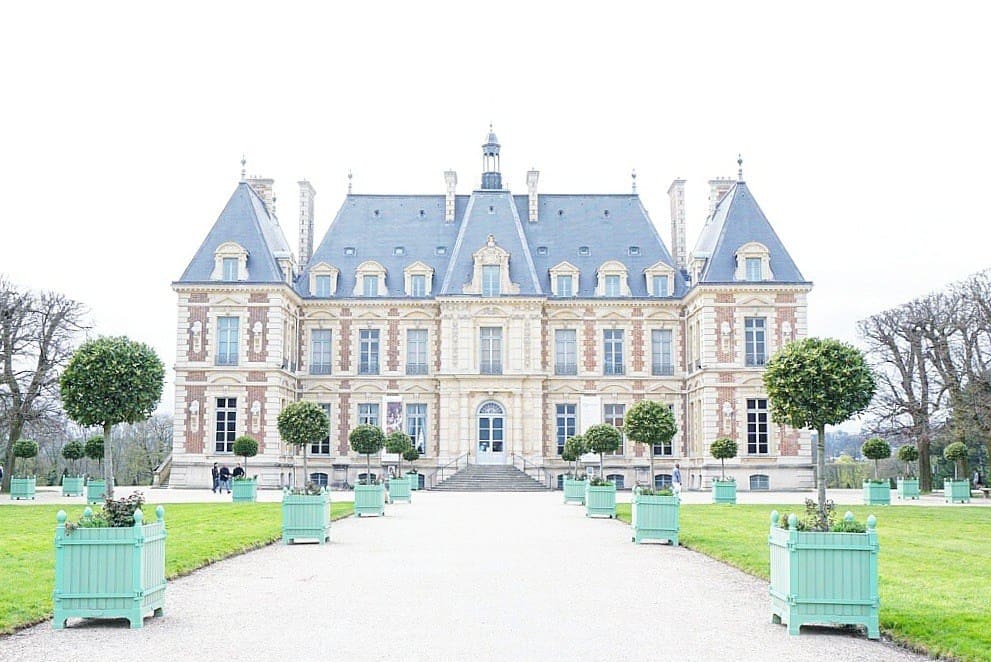
Take a day trip to see the cherry blossoms at Sceaux
Located near the end of the RER line B, approximately half an hour from the centre of Paris, you’ll find the delightful town of Sceaux. It’s easily one of the best day trips from Paris as there’s a town to discover, fairytale château to visit and endless woodland to explore. Come springtime, there’s even a cherry blossom orchard to visit (and take photos of!)
Read more: Sceaux in Spring!
Learn why all roads lead to Rome at Paris Point Zero
There’s a little plaque in the Parvis de Notre Dame that dictates much of Parisian daily life (and indeed much of the rest of France). For, it is from this point that all distances in France are measured! Head to Notre Dame to search for this little piece of engraved stone and learn more about the fascinating history of ‘why all roads lead to Rome’.
Explore the interior (and exterior) of Saint Sulpice
This ancient and mysterious church is located at the corner of Jardin des Tuileries. Built between 1646 and 1870, this Roman Catholic place of worship is well worth a visit, if only to see the grand façade and hauntingly beautiful crumbling interior.
Read more: Da Vinci filming locations in Paris

Learn about the Paris Meridian
One of the more hidden gems of Paris is quite literally hidden! You see, in times gone by, the Greenwich Meridian in London had a competitor: that of the Paris Meridian. Once upon a time, each country would have had its own prime Meridian.
However, this inevitably made shipping schedules, communications between countries, and world timing pretty tricky! As time went by, it was decided by an international community during the 17th-century that a ‘prime meridian’ be chosen.
Today, the ‘Paris Meridian’ is commemorated with a series of medallions making their way through the city which are known as the ‘Arago Line’.

Seek out the oldest house in Paris
For the longest time, it was believed that No. 3 Rue Volta was well the oldest house in Paris. However, recently scholars have proven this not to be the case and Nicolas Flamel’s house is probably the oldest! That being said, the timber-framed architecture and sloping roofs have entertained tourists and locals alike for Centuries, and is well worth a look- even if it’s probably not the oldest house in the city!
Read more: In search of the oldest house in Paris.

Go up in a hot air balloon at Parc André Citröen
Yes, this park is named after André Citroën, founder of the famous French car manufacturer. The green space of this park is filled with a beautiful blend of floral gardens meets modern architecture and is situated on the site of a former Citroën factory.
In the middle of the park, you’ll find a hot air balloon which you can go up (for a fee). The balloon offers some of the best views of the city and is open during most of the year! You can find plenty more information on going up the Ballon Generali on the tourist office’s website.
See a courtyard paved with gravestones
Located in the heart of where you’d least expect (and next to one of the cutest cafés in all of Paris, Au Vieux Paris d’Arcole), you’ll find a courtyard paved with repurposed gravestones. This rather macabre site is the result of repurposing grave markers which were removed when a nearby church was demolished during the Haussmannian reforms of Parisian architecture.
Read more: Gravestone Courtyard in Paris.

Glimpse medieval Paris at Cloître des Billettes
Ancient and inviting, at Cloître des Billettes you’ll find one of the last traces of medieval ecclesiastical architecture there is to be found in the city. Located on the Rue des Archives at number 24, in the very heart of the prestigious Le Marais district of the city, you’ll find cloisters dating all the way back to the 15th-century. Head here for some history and amazing architecture.
Read more: In search of medieval Paris, Cloître des Billettes.

Admire the oldest public clock in Paris
Located in a location where thousands pass on a daily basis, you’ll find the oldest public clock in Paris. Though it may look golden and shining, the clock has actually been here since 1370 when it was built by a German engineer. Today, the clock sits on the side of the Conciergerie and is the only remaining part of the Palais de la Cité.
Read more: In search of the oldest public clock in Paris.

Visit a former squat turned artist atelier
Rue de Rivoli boasts some of Paris’ most exclusive addresses. But one of them has been transformed into an artist’s atelier in the very heart of the city. Head to 59 Rue de Rivoli to see up and coming artists, as well as one of the most unusual uses for a Haussmann building you’re ever likely to see. Visiting the atelier is free to visit and the building is open to the public most days of the week.
Read more: An artist’s atelier in the heart of Paris.

Rent a boat at Bois de Boulogne
One of the most romantic things to do in Paris is to rent a boat on Bois de Boulogne (one of Paris’ largest public parks) and go rowing for an afternoon. Pack a picnic, get lost in nature and admire the Eiffel Tower from afar.
Read more: Boi de Boulogne Boat Rental.

Learn about Heloise and Abelard at Père Lachaise
Père Lachaise cemetery is the final resting place of many famous people, include Oscar Wilde and Jim Morrison. It’s also the final part of an enduring medieval love story and the ending chapter of a love affair that spanned generations. Head to Père Lachaise to wander the streets of the city of the dead (all the roads in the cemetery have their own street signs) and see where Heloïse and Abelard were laid to rest.
Read more: Fated love in Père Lachaise, the story of Abelard and Heloïse.
Hang out in Parc Monceau
In the 8e arrondissement of the city, you’ll find Marc Monceau. Pretty and filled with follies and greenery, it’s the perfect place to hang out, relax and read a book. Head here for some peace and quiet and to escape the crowds of the rest of Paris. Nearby, you’ll also find the Paris Pagoda.
Read more: Parc Monceau, an oasis of calm in the heart of Paris.

See inside the oldest hospital in Paris
Lying in the shadow of the world-famous Notre Dame Cathedral (which also happens to be one of those must-see Parisian top tourist destinations), one of the most unusual things to do in Paris can be found in the form of the oldest hospital in the city. And what you may well not know is that you can see the interior of Hôtel Dieu is free to the public and is open to enjoy during daylight hours throughout the week.
Read more: Secret spots in Ile de la Cité

Stroll along Villa Léandre
Located on the fringes of Montmartre, the 18th arrondissement of Paris, Villa Léandre is a beautiful art-deco street hidden away from the rest of the city. Constructed during the 1930s, this English-inspired pretty Parisian street is constructed in the English-style. Somewhat amusingly, the door of No. 10 has a plaque which reads ‘Downing Street’.
Read more: How to visit Villa Léandre

Fontaine des Innocents
The 1st arrondissement of the city is an area of Paris that is pretty much dominated by the ever-so-modern (and according to many Parisians, a little less than aesthetically pleasing) Les Halles shopping complex. Nearby, the Church of St Eustache is easily one of the most underrated churches in Paris.
Fontaine des Innocents is a beautiful and ornate Renaissance fountain that was installed to signal the arrival of Henry IV in the 16th-century. Built atop of a former Parisian cemetery, this monument is easily one of the more unique sites in Paris.
Read more: The quirky history of Fontaine des Innocents

The smallest cemetery in Paris is only open one day a year!
If you’re looking for one of the most unusual things to do in Paris, then you need to look no further than the Cimetière du Calvaire in the 18th arrondissement of the city, i.e. Montmartre.
Open for only one day a year (All Saint’s Day, the 1st November), the graveyard is not only the smallest in Paris, but also the oldest. Free to visit during the 1st of November, visitors should note that the Cimetière is available to visit via guided tour only and only in French.
Read more: How to visit the Cimetière du Calvaire

See the church from Midnight in Paris
Head to the Latin Quarter to visit the Paris Panthéon and in its shadow, you’ll soon discover a little known hidden gem of a Parisian church. Home to the last remaining relics of Saint Genevieve, the patroness saint of Paris, the church also happens to be where the last rood screen (jubé in French) in Paris is located. Head to the church steps on rue de la Montagne and you’ll soon discover *that* iconic spot from the movie.

Spy the Defender of Time Clock
One of the most unusual public clocks in Paris, and therefore one of the best unique places in Paris is that of the Defender of Time clock. Situated in the ever-so-modern concrete Quartier de l’Horloge and lying in the shadow of the Pompidou centre, the clock was created in the 1970s and features a man fighting a dragon, crab, and bird.
Although it has unfortunately been stopped since 2003, the 4 metre timepiece is impressive nonetheless. Of all the alternative things to do in Paris, the Defender of Time is one of the most unique free attractions to see.

Discover a piece of New York in Central Paris
Steps away from the Porte de Saint-Martin (one of four triumphal arches left in the city and one of a couple which were once used in the walls surrounding Paris), you’ll find a particularly unusual architectural feature on the side of one of the buildings.
The fire escapes on the buildings around No. 19 of rue René Boulanger feature traditional New York style steps, which is certainly a rarity amidst the historic Haussmann architecture of Paris!

Stroll along the Coulée Verte
a stone’s throw away from Bastille, the former site of a prison which was instrumental in the events which unfolded leading up to the French Revolution, the Coulée Verte is a beautiful green walkway that allows walkers to stroll high above the city. This walkway is so beautiful that it actually inspired New York’s Highline.
Passage de la Trinité
Situated along the infamous rue Saint-Denis, there’s one little archway that tens of thousands pass by on a daily basis, and yet most never notice. Passage de la Trinité is a true slice of medieval Paris, hidden in the heart of the Sentier district of the 2nd arrondissement of the city. Here’s a quick history of the little road, as well as how to visit for yourself.
Set along a street which is best-known for its X-rated shops, Passage de la Trinité can be found on the part of the road closest to the Porte Saint-Denis, one of four historic archways which still stand in intra-muros Paris to this day.
The open-air passage is partially covered but pre-dates most of the other passages of Paris and links 164 rue Saint-Denis with 21 rue de Palestro. The name ‘Trinité’ derives from the location’s original function as the entranceway to the since demolished l’hôpital de la Trinité (which was later known as l’hospice des Enfants-Bleus).
Originally, the set of medieval building were used as a refuge for pilgrims passing through Paris. later on, in 1545, the use of the complex was changed and was used to house orphans. It was at this time that the name of the location was changed to l’hospice des Enfants-Bleus.
The hôpital was established as early as 1202 and only ceased to function during the French Revolution, with the buildings sold off in the early 19th-century. Today, only a few vestiges of the former hospital remain, including ‘la cour des Bleus,’ ‘la fontaine de la Reine,’ and, of course, Passage de la Trinité.
The passage itself was opened to the public in 1827. Today, the passage itself in the second arrondissement of Paris is home to no shops or restaurants, and is instead a residential street. Unfortunately, the passage is often used as a toilet by passersby and due to its unlit nature, should not be visited after dark.


Search for street art in the 19th and 20th arrondissements
One of the coolest off the beaten path things to do in Paris is to search for street art, which can be found at many locations all across the French capital.
It’s worth noting that street art is more prevalent in the double digit arrondissements. If you want an even more in-depth look into street art around the 19th and 20th arrondissements, you might consider booking a street art tour like this one.
Go on a dinner cruise on Canal Saint Martin
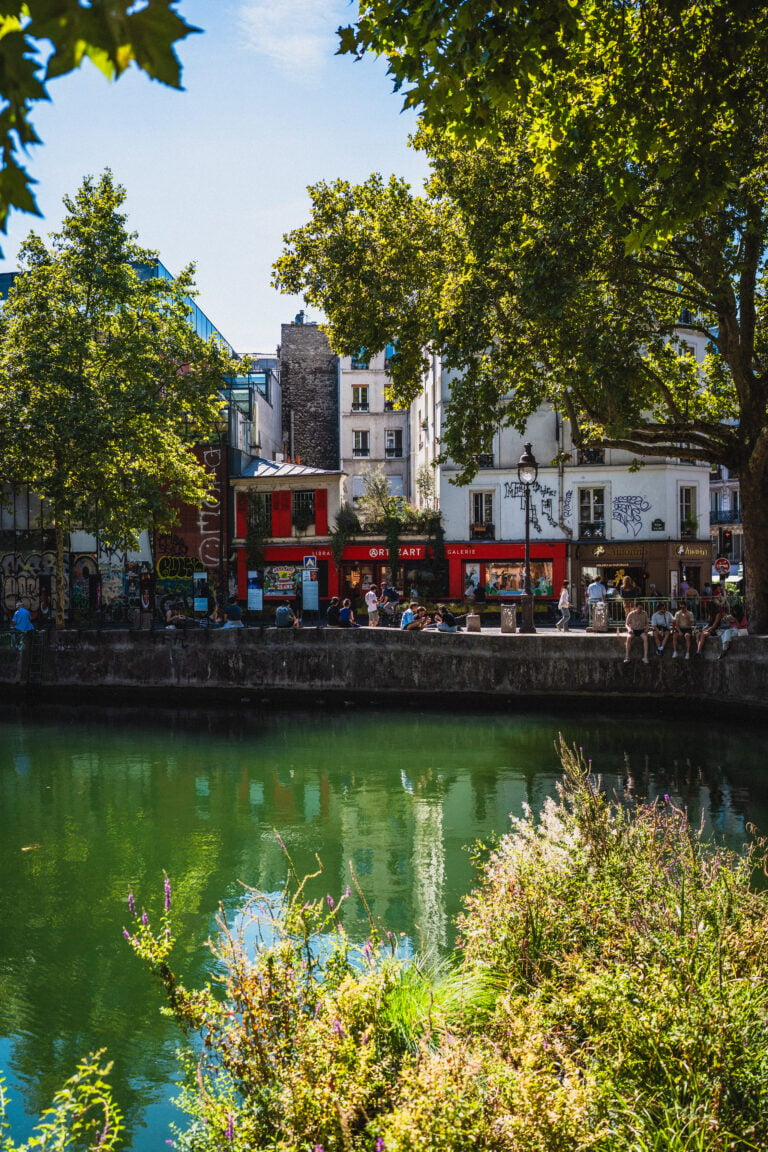
Of course, you can go on Seine River Cruises, but if you’re looking for a more off the beaten path activity while in the 10th arrondissement, then you might consider booking a dinner cruise on Canal Saint Martin. For example, this cruise offers an on-board dinner, as well as live commentary of what the boat is going past. See full details here.
Pin Offbeat Paris Destinations: 60+ Unusual attractions you’ll love!



This is such an amazing post, thank you for sharing your knowledge! I have bookmarked this post for future trips 🙂
What an incredible guide. Reminds me that I could return to this wonderful city again and again and always find something new and wonderful to love about it. Loved all your photos!
I loved reading this list Sophie! Can you believe there are some of places that I have never seen although I am a Parisian since years?! For example I knew nothing about the tiny cemetery or the old umbrella repair shop! Thanks for sharing!
Paris looks full of so many wonderful things to do! What a beautiful place.
Thank you for the great ideas and the effort you put into this post! I plan to make great use of it!
Amazing post, thank you for the info! 😀
Thank you for this info about paris
This is such a great post. I just love off the beaten path tips! I think I could spend all day in the Buttes Chaumont gardens!!!
wow so many unusual things to explore in Paris, it makes this
city so alive, i hope i will catch up.. Recently I’ve been to Paris
but while exploring Montmarte i couldn’t catch up with Romantique
Museum..
Wow! I am so pinning and bookmarking this for my Paris trip, which is in 6 days time!!! =)
This is a really great list – I’ve already done the main tourist sites in Paris so I’ll definitely be referring back to this next time I’m here. I remember hearing about the baby bottle places aaaages ago and had completely forgotten about it.
I’m always looking for quirky and unusual things to see and do in my favourite cities, so this is a fantastic guide which I’m definitely pinning for future reference 🙂
Never been to Paris (whaat?) but it’s on my list and I truly believe your tips will make my trip a bit less stereotypical and a bit more unique & local!
That’s an amazing romp through the Paris of Parisiennes. I’ve been thinking for a while that I need to go back, and this has reinforced that view. So many interesting places, and many are completely new to me. Thanks for such a wonderfully detailed and quirky guide.
Thanks for the tip. We will be in Paris next week and will visit the pet cemetery