
Paris vs London: 25+ Key Differences Between Europe’s Most Famous Capitals
Last Updated on 14th March 2026 by Sophie Nadeau
This post may contain affiliate links. Please check out my privacy policy and disclosure for more information.
It’s no secret that both London and Paris are among the most visited cities in the world, and it’s easy to see why! While the two European capitals are geographically close (you can even travel between them in just a few hours), they offer completely different experiences in terms of culture, architecture, food, and atmosphere.
So, when it comes to Paris vs London, which city is bigger? Which one is better for visitors? And which should you add to your travel bucket list?
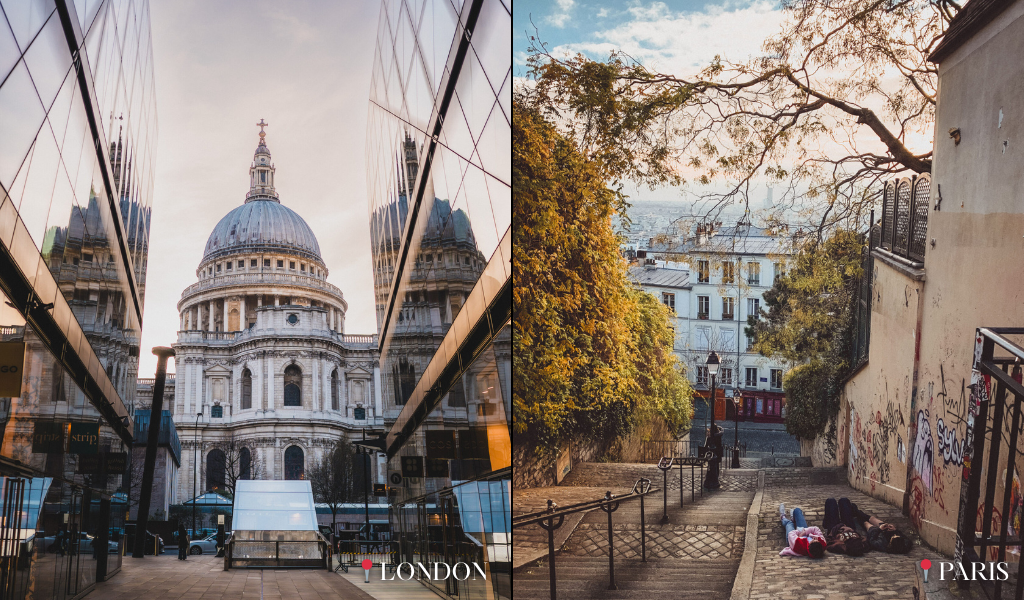
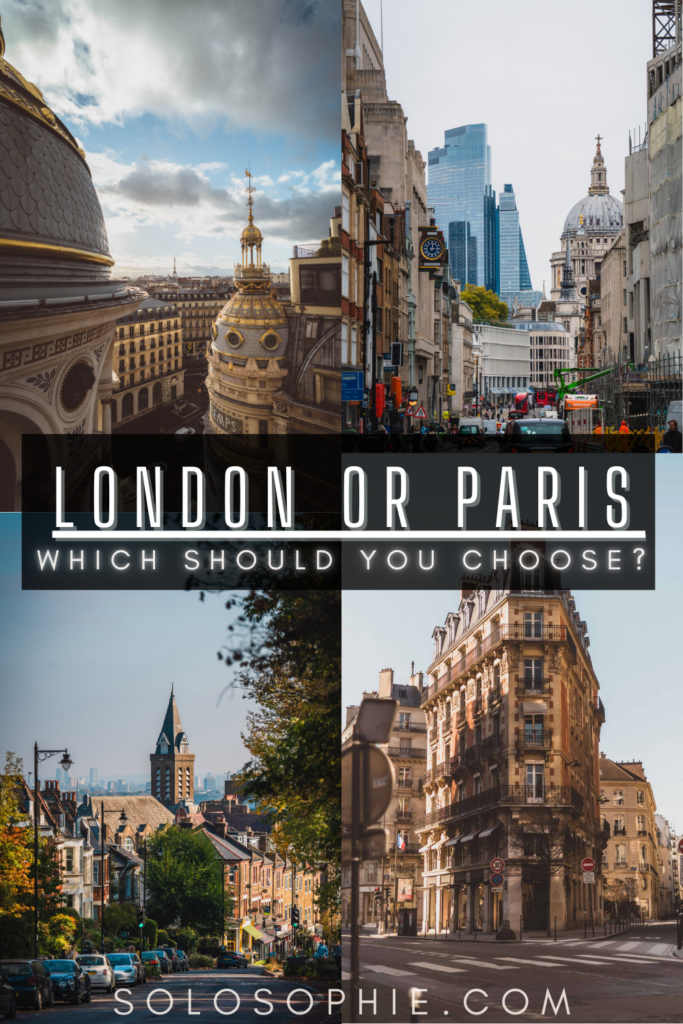
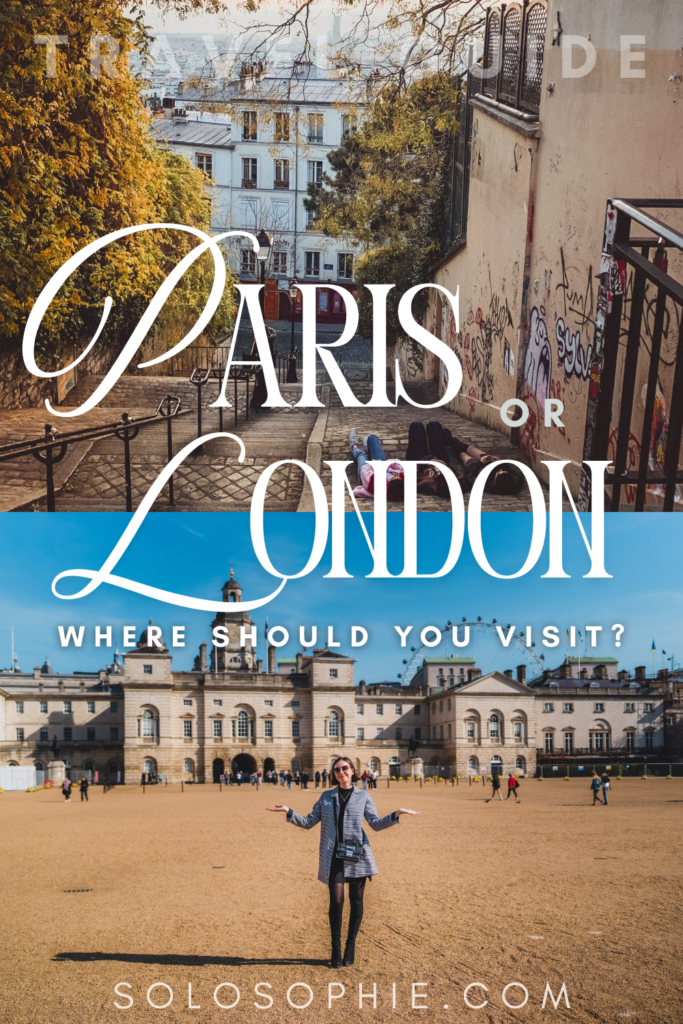
Paris or London?
As someone fortunate to have lived in both cities, I’ve definitely learned the key differences between them. So, when it comes to Paris vs London, here’s a quick overview of the key differences between these two iconic European capitals:
Size & population
Paris is the capital and largest city in France. However, it is much smaller than that of London, covering 105.4 km². As of 2026, it has an estimated population of just over 2 million, with 13.2 million in the wider metropolitan area.
London is also the biggest city in its county; in fact, it’s the largest city in the UK by a very wide margin. The city covers 1,572 km². Literally sprawling outwards, the city is home to around 9 million (recorded 2024) and just over 15 million in the wider metropolitan area.
While the numbers suggest that London is almost ten times the size of Paris, it’s worth noting that the administrative borders of the City of Paris have remained largely unchanged since 1860. In contrast, modern London is usually measured as Greater London, a much larger metropolitan area that includes dozens of surrounding boroughs.
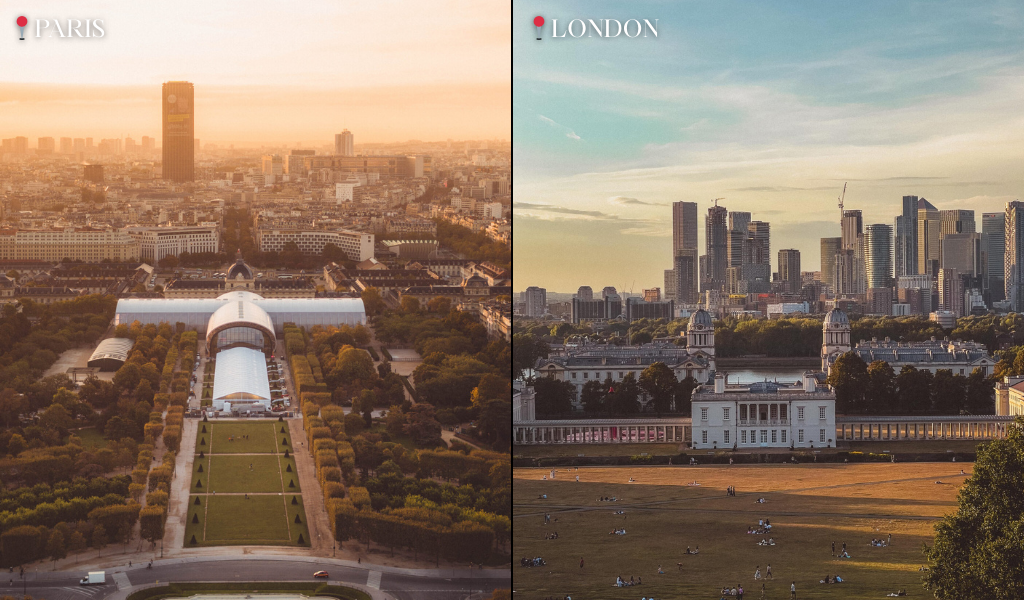
City layout
Paris is divided into twenty arrondissements. The easiest way to think of how the arrondissements are mapped out is like a snail, unfurling clockwise, with the 1st arrondissement at the centre. Created in 1795, each of the districts has its own unique style and ambience. In fact, it’s more than just geographical zones, as each one also comes with its own town hall and mayor.
London, on the other hand, is divided by boroughs. There are currently 32 local authority districts that, together with the City of London, make up the administrative area of Greater London. Each of these boroughs has its own council, handling education, social services, and housing, sometimes even its own police. With London’s boroughs, there is generally a greater autonomous governing power than Paris’ arrondissements.
Public transport
Paris is primarily served by the Métro (16 lines), RER (5 express lines), buses, and the Île-de-France tramway. Once you work out how to use the Métro in Paris and its other public transportation, it’s fairly easy to navigate. The best way to travel the city, for tourists, is to obtain a Navigo Easy pass, which is a €2, reusable card that can be charged/topped up at almost all stations. You can also download the app, but I recommend a pass to prevent battery issues or glitches.
London is served by Transport for London, which operates the iconic Underground system or “Tube”, the Overground, buses, trams and river services. As of 2026, London’s public transport is the most expensive in the world, surpassing cities like Berlin, Paris, and Tokyo. The London Underground is certainly one of the most impressive transit systems globally, with some of its 11 lines running as far as 24 meters below ground level. In fact, the network is so vast that there are over 270 operational tube stations, and at least 40 abandoned tube stations.
While it’s still possible to use Oyster cards to navigate London’s public transport, it’s actually more common to use contactless. There’s a capping system, which applies to both Oyster and contactless, and automatically limits daily or weekly costs for pay-as-you-go users.

Architecture
Paris is characterised by its grand facades and symmetry, silver zinc rooftops, Gothic churches, clean lines, classical opulence, and let’s not forget the iconic Haussmann boulevards. The city is shaped largely by the 19th-century renovations carried out under Napoleon III and Baron Haussmann; the city seamlessly blends Renaissance and Belle Époque architecture. To see the Medieval remnants of the city, you’ll do best visiting Île de la Cité and the Latin Quarter.
It’s also worth noting that for a capital city, Paris has very few skyscrapers. This is due to a strict 37-meter height restriction implemented in 1977 following the unpopular construction of the 210-meter Tour Montparnasse.
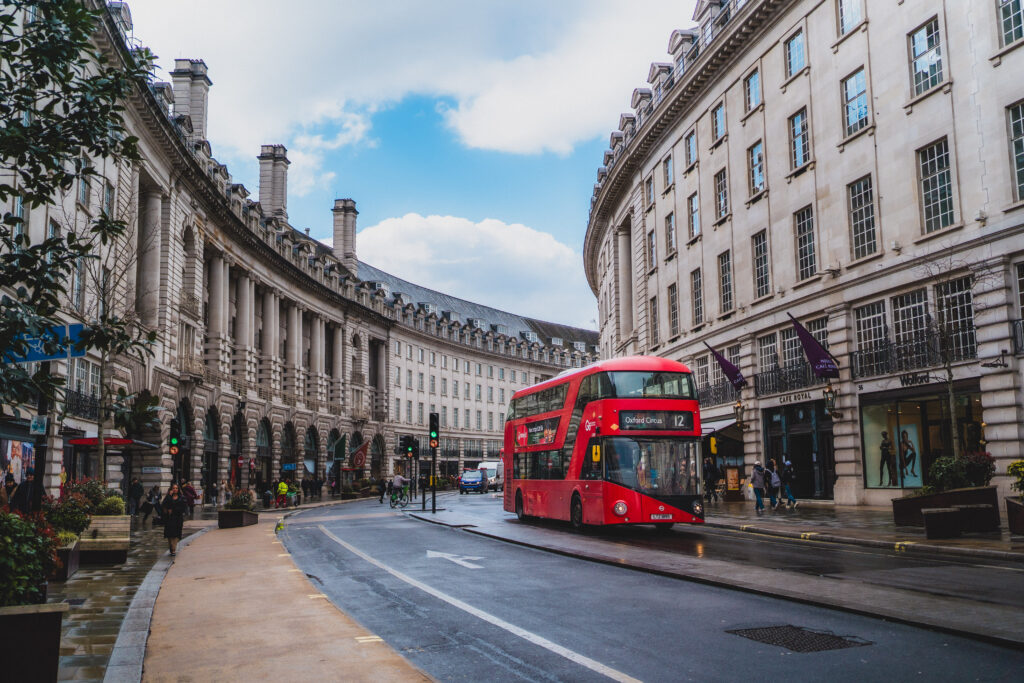
London is home to a very eclectic architectural mix, and there isn’t actually a distinctive style as such. In fact, the city suffered greatly from the Great Fire in 1666, which destroyed roughly 80% of the medieval City of London, and then the Blitz in the 1940s. Therefore, there’s no dominant architectural theme. Instead, you can see a mix of elegant Georgian terraces, ornate Victorian buildings, white-stuccoed Regency façades, and grand examples of Edwardian Baroque, contrasted alongside ultra modern skyscrapers.
The most iconic of London’s skyline is The Shard, the tallest building in the city and named so because of its unique splinter-like appearance, featuring over 11,000 glass panels.

Fashion
Paris is a fashionista’s haven! Home to the Paris Fashion Week, one of the biggest fashion events in the world, and not to mention some of the most iconic labels: Chanel, Louis Vuitton, Dior, and Saint Laurent. Alongside Milan, Paris shares the undisputed historical and contemporary title of capital of fashion. The phrase “très chic” is no mistake. Parisian chic is timeless and focuses on an effortless look with neutral colours like black, white, navy, beige, and tailored fits as the central focus.
While some might find the above description hard to believe if you’ve watched Emily in Paris… I implore you to focus on Sylvie’s fashion as reference!
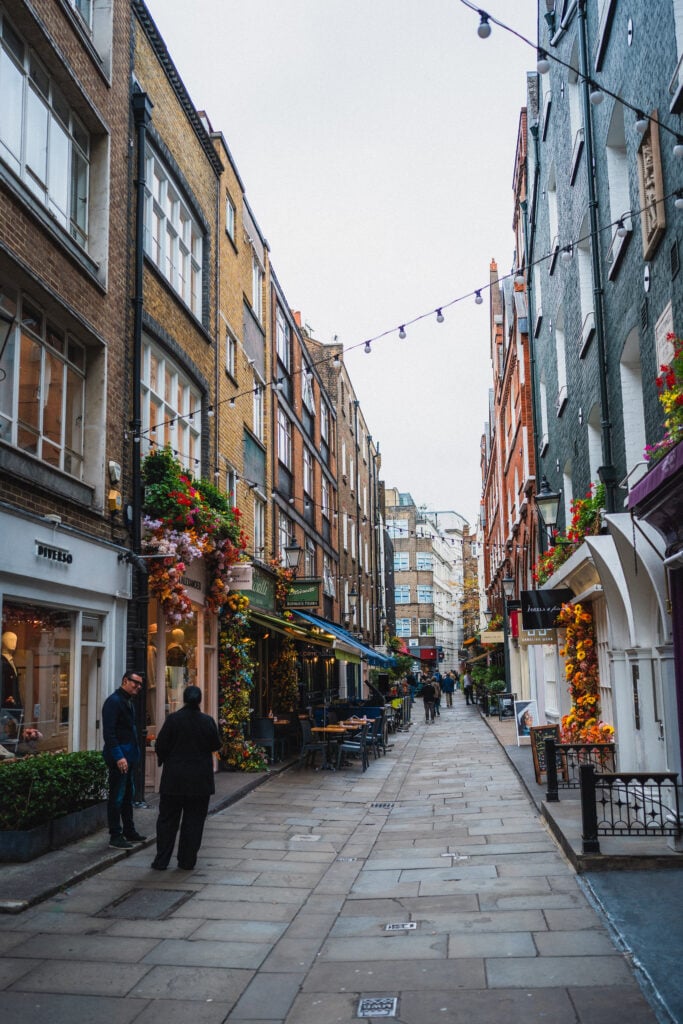
Londoners veer more towards a dynamic and creative look. Think edgy, avant-garde street style, versatility, often mixing vintage finds or high-street staples. One walk down Portobello Road, and you’ll instantly see the trends of vintage, thrift and antique-style that heavily influence the city’s residents. I wouldn’t say there’s a set style as such, similar to the city’s architecture, but rather a more diverse use of fashion as self-expression.
Coffee
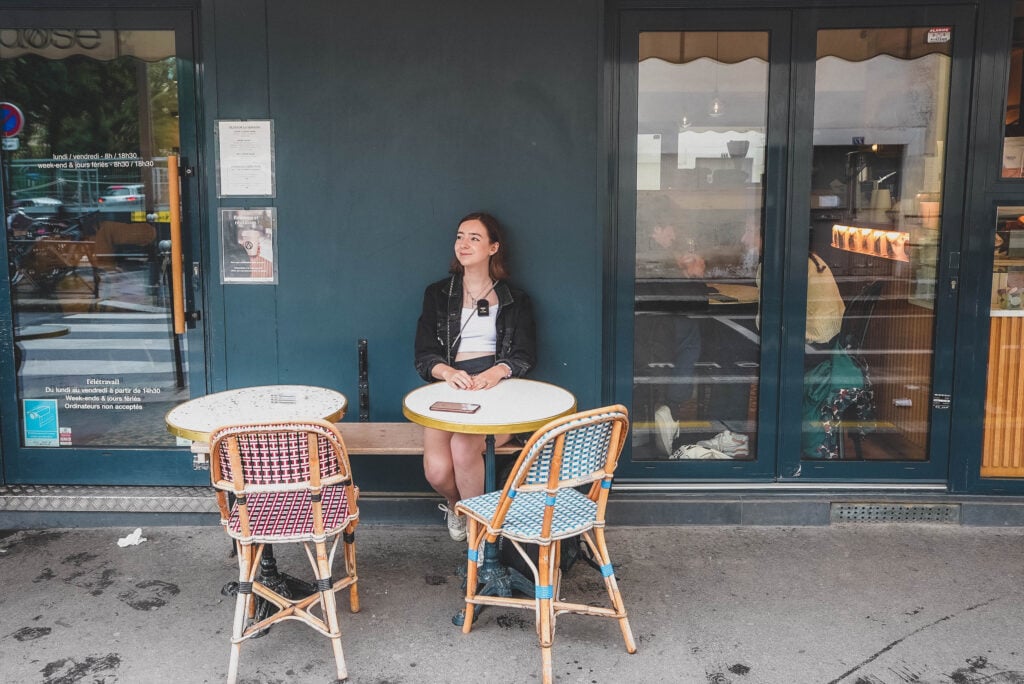
Paris is teeming with cute Parisian cafés, and the coffee culture is a big part of Parisian life, but it has to be said that it focuses more on café culture. While there are certainly more specialised coffee shops where you can choose your bean, type of brew, etc., the more typical order of coffee in most regular cafés comes in the form of an espresso shot unless specified. Yes, there’s an art to ordering coffee in Paris, you just need to know what to ask for.
London‘s coffee culture is equally as strong, a city that relies heavily on caffeine to keep its workers going. However, the café culture isn’t quite the same in terms of sitting and relaxing watching Paris pass by; instead, the city is filled with a mix of high-end speciality brewers, cosy community-focused spots, and plenty of the big chains like Starbucks, Costa and Café Nero, etc.
Food & drink
Paris is home to fine French wine and traditional, refined haute cuisine. The cuisine is characterised by its rich use of butter and cream-based sauces, red wine flavours, seasonal ingredients, and meat-heavy dishes. That being said, Paris is also home to a diverse array of cuisines, and you can find foods from all corners of the globe here. The restaurants in Paris are teeming with activity come evening time, as eating out is far more popular (and sometimes even cheaper if you find the right place) than cooking at home.
In terms of wine, there’s no better place than visiting France! The wine bars in Paris are some of my favourite places to enjoy the country’s most delicious…and readily available beverage! Wine is like water to the French, and once you’ve sipped on a delicious Chablis overlooking the artists’ square in Montmartre, you quickly understand why.
London is a vibrant, global melting pot when it comes to cuisine and its restaurants. Blending traditional British staples like fish and chips, meat pies, and the classic Sunday roast dinners. However, South Asian flavours are an absolute staple in the city’s culture; in fact, Chicken Tikka Masala (a British-Indian take on curry) is often regarded as a national favourite. One of my favourite places in the city, where you can really see just how many cultures and global street foods blend, is around the area of Brick Lane.
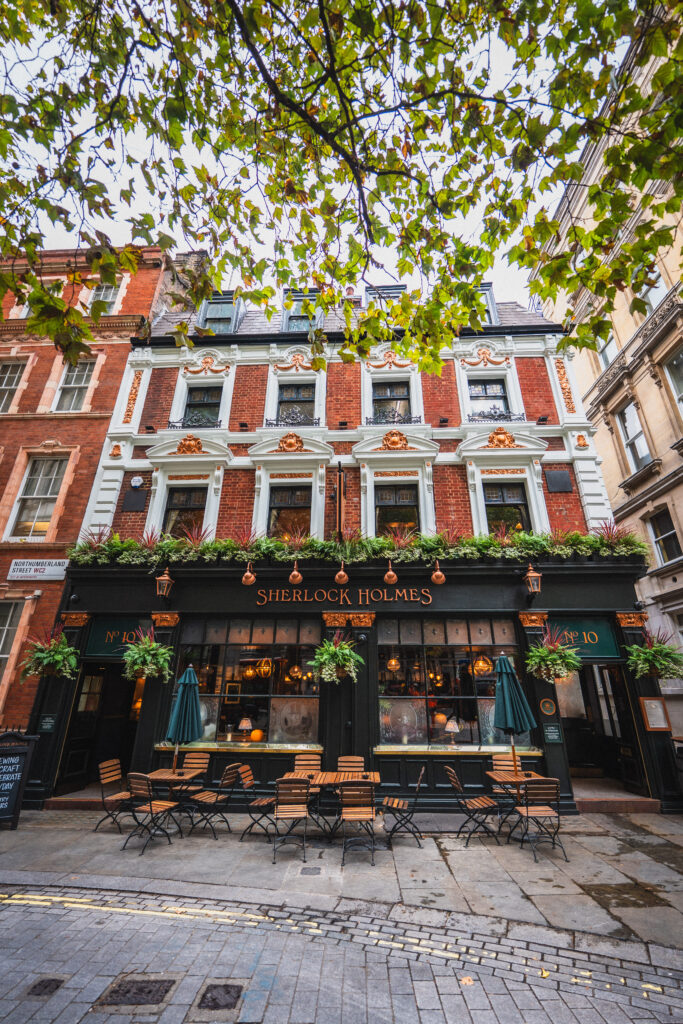
The UK capital is also renowned for its historic pubs, home to local ‘boozers’ which have served the city for centuries and remain central to London’s identity. The main drink of choice in London tends to be a pint of beer or real ale, typically around lunch time, when you’ll see the public houses at their fullest, and business people making their deals over a drink at the local corner pub.

Iconic landmarks & attractions
Paris is home to some of the world’s most recognisable landmarks, including the Eiffel Tower, the beloved Notre Dame, the Louvre Museum, and the Arc de Triomphe. In terms of attractions, the city is home to some of the world’s most treasured art, from Monet’s waterlilies to paintings by Van Gogh, Gauguin, Manet, and more, hanging in Musée d’Orsay.
Most of the museums and galleries in Paris charge an entry fee; however, if you are lucky enough to be visiting on the first Sunday of the month, then you can enjoy a lot of the city’s main sights for free (but be prepared, as the queues can be obscene!) There are also a number of free things to do in Paris, if you know the right places to look!
London is also home to equally iconic and world-recognisable landmarks. From the Elizabeth Tower (Big Ben), the Houses of Parliament, Tower Bridge, the London Eye, and, of course, the very royal Buckingham Palace, there’s no shortage of sights to be seen in the city. Something that sets the city apart from many is that most of its museums and some galleries are completely free to visit.
The British Library, National Portrait Gallery, Natural History Museum, and British Museum are all completely free to wander around and explore. Aside from this, there are plenty of other budget-friendly activities to do in London worth checking out.


Rivers
Paris‘ main waterway is, of course, the romantic and iconic Seine. The river flows from a small source in the northeastern region of Burgundy, through the heart of the French capital and then spills out into the English Channel, somewhere between Le Havre and Honfleur in Normandy.
The Seine is central to French culture and identity, and in fact, it flows past so many historic landmarks in Paris that the Banks of the Seine in Paris were inscribed as a UNESCO World Heritage site in 1991! In fact, come summertime in Paris, there are pop-up beaches along the Seine, where you can soak up the rays, and even take a dip in the river… if you’re brave enough.
London’s main river is the River Thames, the longest river entirely in England, which stretches 346 km. This waterway historically served as a major sewer for London, but luckily, it is significantly cleaner than it was in the Victorian era…despite its brown appearance. The Thames features 44 locks, over 80 islands, and serves as a watering hole for local wildlife. Though uncommon in central London (but not impossible!), you may catch glimpses of mammals such as dolphins and seals enjoying the much-improved water quality of the Thames.
Markets
Paris is brimming with open-air historic flea markets, bustling foodie markets, sweet flower stalls, and markets filled with seasonal produce and stinking of fresh cheese. The most iconic of the city’s flea markets has to be Saint-Ouen, one of the largest antique and second-hand markets in both Europe and the world.
Market culture is deeply rooted in neighbourhood life, and so you’ll find each district has its own distinctive market type and operates at different hours, but mostly at weekends. One of my favourite spots to go vintage shopping on the weekends has to be around Le Marais. It’s also worth noting that Christmas markets in Paris are worth the trip alone!
London‘s market culture is vibrant and diverse, and it makes up the social heart of the city. Home to over 250+ markets, half of which are permanent, there’s nothing more iconic than London’s historic markets.
The market scene in London is like no other, a seamless blend of global food experiences and historic, artisanal, and vintage stalls. To name a few of the city’s most popular: Borough Market, Camden Market, Old Spitalfields Market, Covent Garden Market, Brick Lane, and the sprawling Portobello Road Market. Come the festive season, the Christmas markets in London light up the city with a special kind of glow.

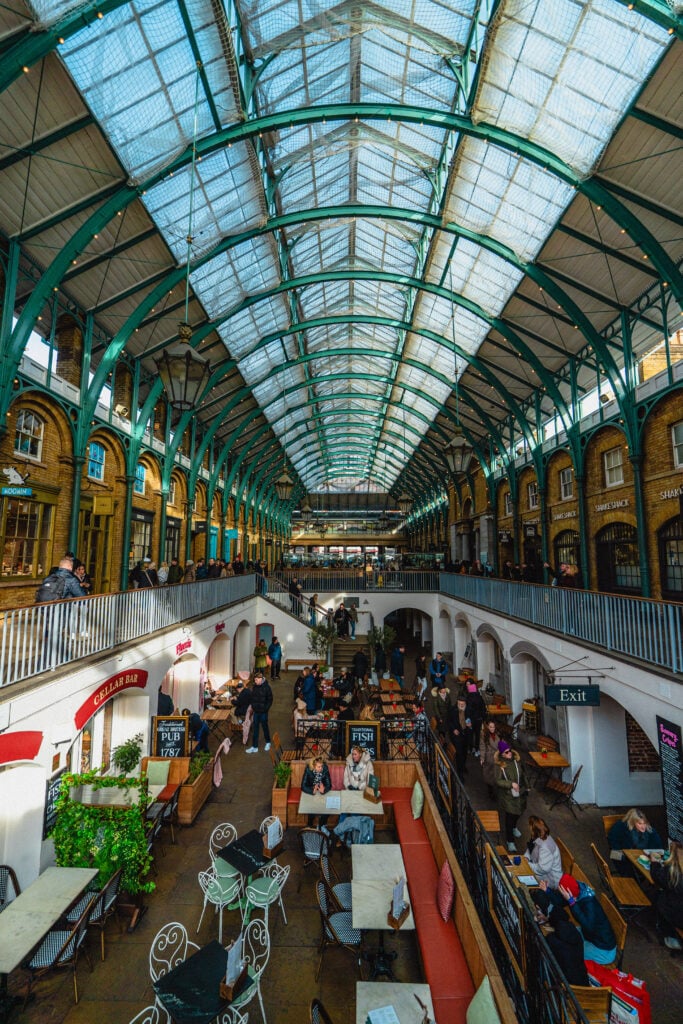
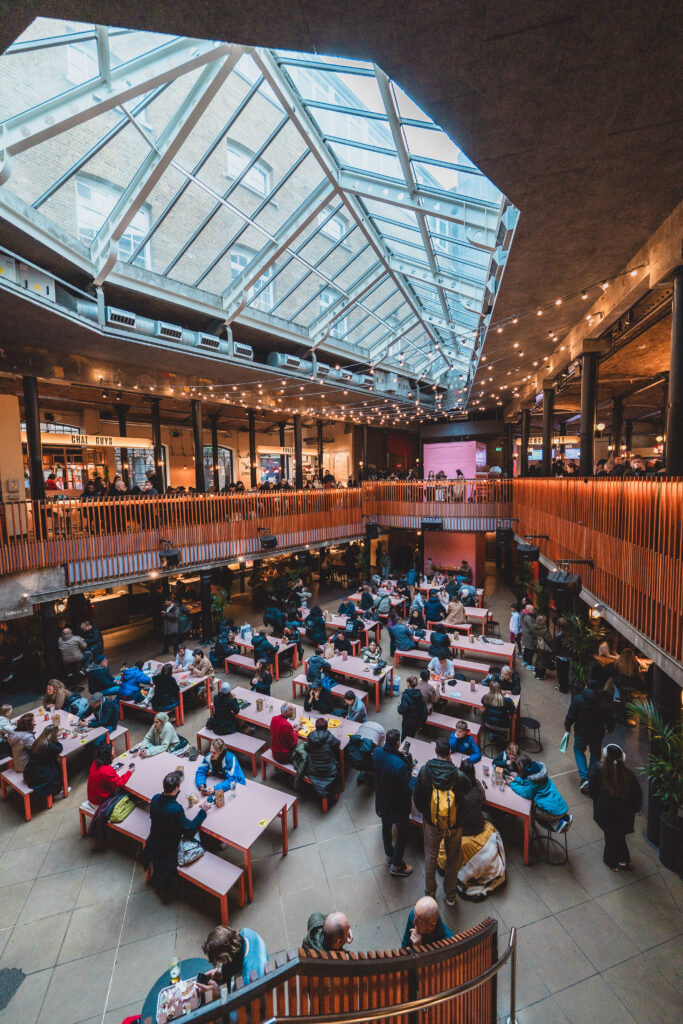
Covered passages vs arcades
Paris has several secret covered passageways, otherwise known as the ‘Passages Couverts Parisiens’ in French, that date back to the 18th and 19th centuries. These passageways were constructed to serve as shopping arcades filled with bookstores, independent boutiques, and eateries, mainly designed for the wealthy. Today, they remain charming pockets of the city to window shop and wander through.
London, on the other had has a very similar premise, yet they are known as arcades. The city’s shopping arcades were built in the early 19th century and pretty much serve the same purpose as the Parisian passageways, to create a covered corner of the city where the wealthy can purchase luxury goods away from the dirty, crowded, and crime-ridden streets. Some of the most popular Victorian arcades include: Burlington Arcade, Leadenhall Market, The Royal Arcade, and Piccadilly Arcade.
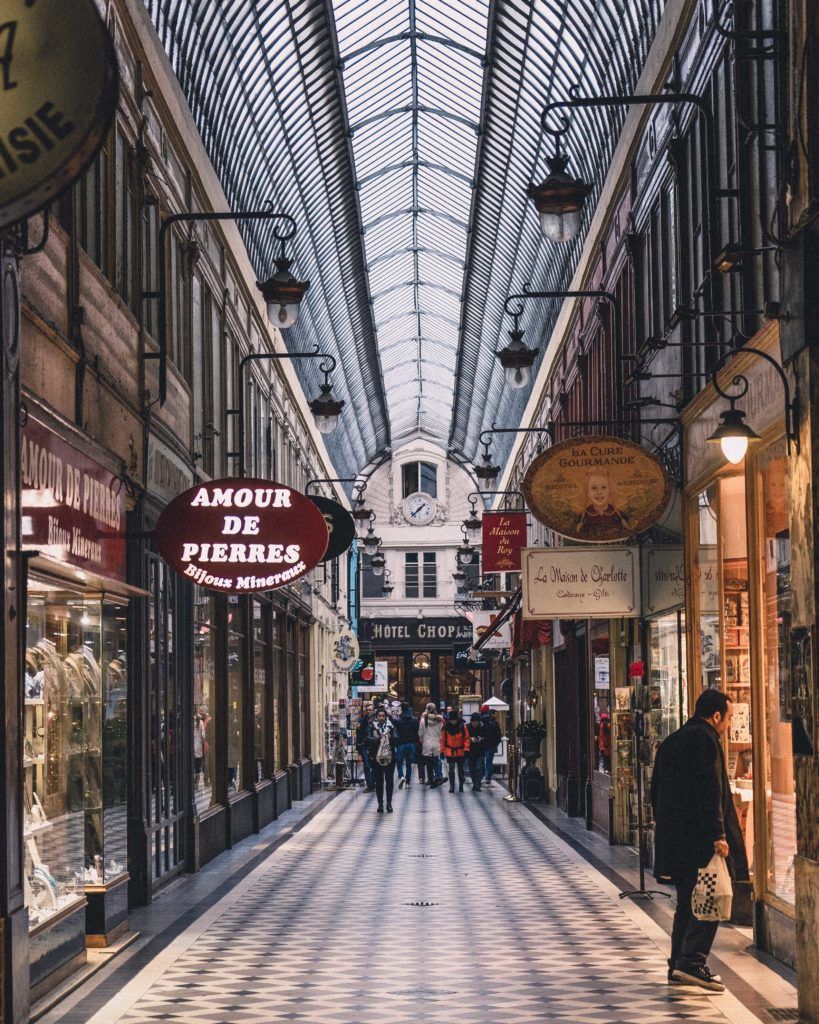

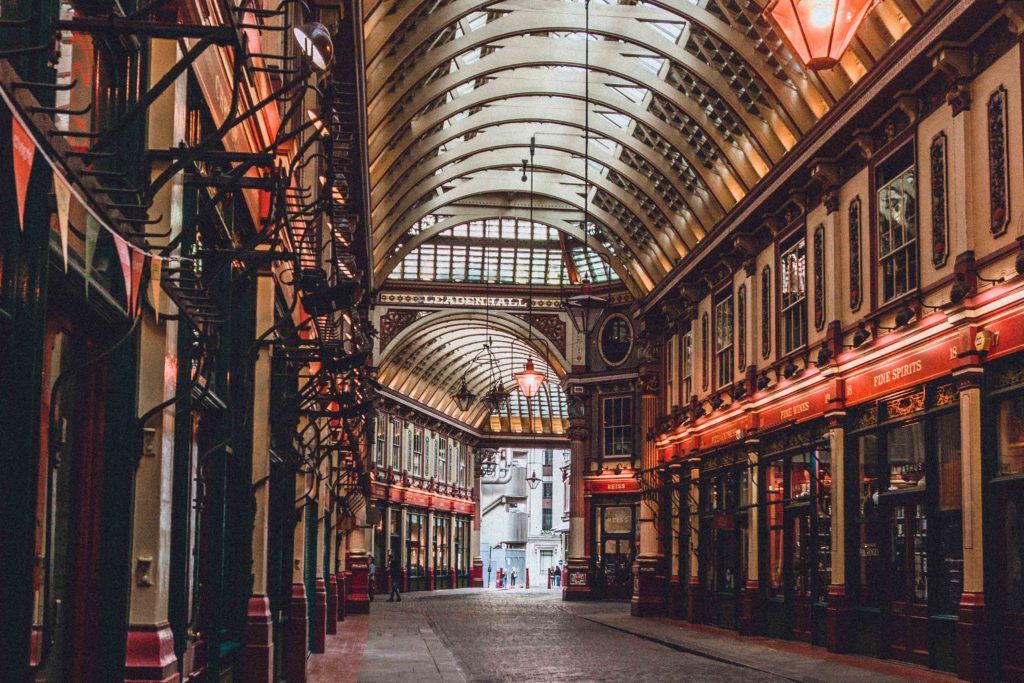
Weather
Paris and London share pretty similar climates, after all, they are pretty close geographically. However, I would say that Paris gets more sunny and warmer days, while London tends to be quite a bit windy. That being said, London in recent years has been reaching unbearable heat, especially for a city that’s not got the infrastructure; most of its buildings are, in fact, designed to retain heat!
Rainy days in Paris are best spent mooching through art galleries, gorging on freshly baked pastries and peeking inside historic churches. While the best rainy day activities in London involve museum wanderings, visiting the cosy pubs, and vintage shopping in East London.


London to Paris day trip
Still can’t decide? Well, the good news is, you don’t really have to. London and Paris are quite literally connected by the Eurostar, or there are cheap and fast flights from one of London’s many airports. A London to Paris day trip is easier to plan than you might think, and it gives you the best of both worlds by experiencing both capital cities in one go.
Paris travel tips
When visiting the City of Light for the first, or hundredth time, it always feels like a different city with more to be explored. I’ve compiled an easy 50+ Paris Travel Tips You Need to Know Before Visiting to make things easier.
Or, if you want to take Paris in your pocket with you, take a look at my Ultimate Cheat Sheet to Paris Guide – with over a decade of experience writing about the city, half a decade living in the city, and being married to a Parisian myself, I have a wealth of experience when it comes to exploring and making the most of the iconic French capital.
Travel shop
The Insider’s Guide to Paris (by a local)
This 200+ page eBook is crammed full of beautiful photos and insider recommendations. This book includes all of the best knowledge from my website, as well as extra insider information.
London travel tips
London is one of my favourite cities in the world, and I have lived here on and off for many years. However, I’m no stranger to how overwhelming and sometimes isolating the city can be. Here are my top 55 London Travel Tips to Know Before Your First Trip.
Did you enjoy reading about ‘the differences between London and Paris?’ Pin it now, read it again later!





Both places are great, but different. I think Paris has more to do, better food, but more crowds and pick pocketers. London has free museums.
They are both great and massive cultural destinations but London has maintained and increased its status whereas Paris lacks this modern influence on world culture.
So London is awesome, but Paris is better?! haha.
We love the Parisian way of life!
Overall, do you like London or Paris best?