
Wicklow Mountains Guide: Best Hikes, Viewpoints and Planning Tips
Last Updated on 23rd October 2026 by Sophie Nadeau
This post may contain affiliate links. Please check out my privacy policy for more information.
Many people say that the very best of Ireland can be found just outside of its big cities…Often referred to as the Garden of Ireland for its stunning natural beauty, the countryside south of Dublin makes it easy to see why Ireland is known as the Emerald Isle.
The Wicklow Mountains are a vast green expanse of rolling granite peaks, deep glacial valleys, heathlands, and blanket bogs. And so, if there’s one day trip you make from Dublin, then I highly recommend heading to Wicklow Mountains to see the landscapes that Ireland is so famous for. Here’s your ultimate guide on how to make the most of a trip to Wicklow Mountains!
What are the Wicklow Mountains?
The Wicklow Mountains are the largest continuous upland area in Ireland, stretching across County Wicklow and into south Dublin, roughly 45 minutes by car from the city centre. As such, a trip to Wicklow Mountains makes for one of the best day trips from Dublin. The granite and schist range is home to Wicklow Mountains National Park, Glendalough, the 127 km Wicklow Way and Lugnaquilla (925 m), Leinster’s highest peak.
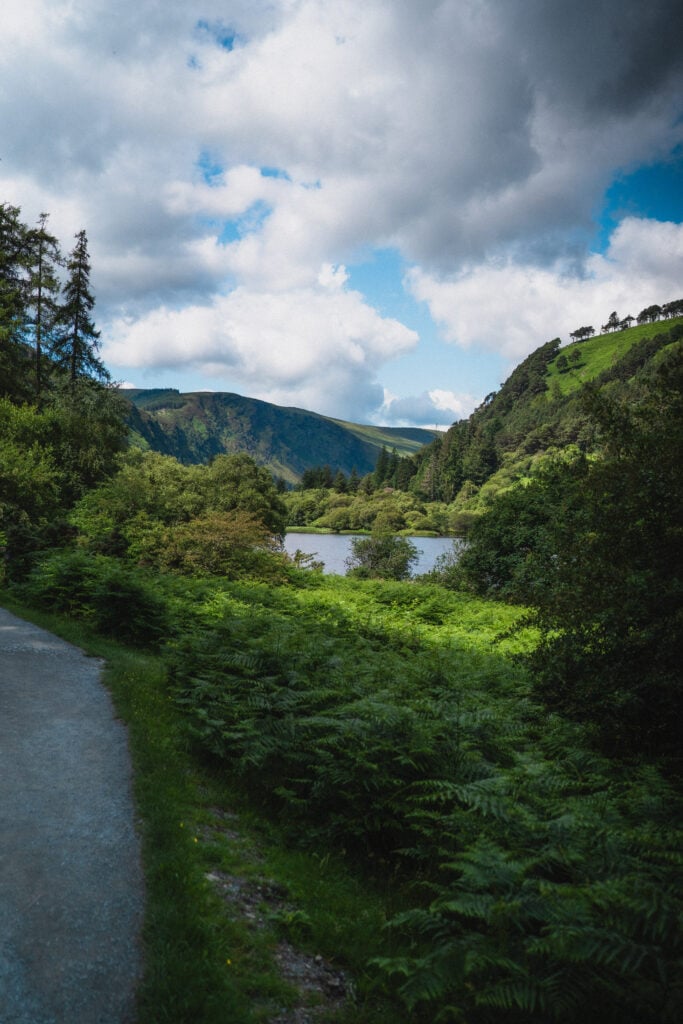
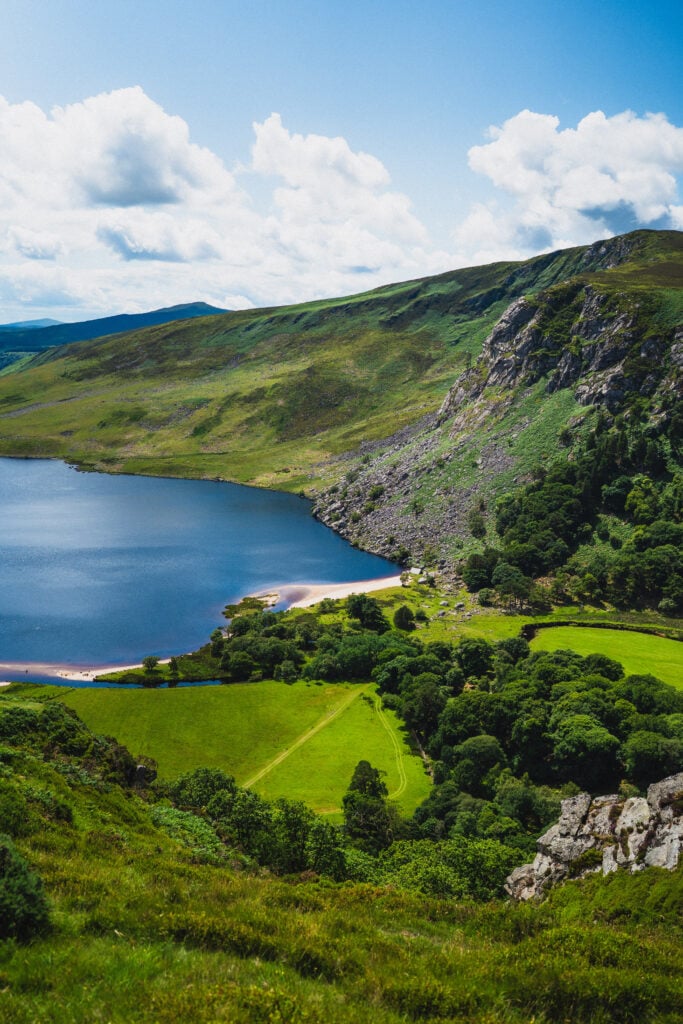
Rather than sharp alpine summits, the landscape is characterised by it rolling, heather-covered hills, deep glacial valleys, shimmering lakes and extensive blanket bog. Ice-age glaciers carved valleys such as Glendalough and Glenmalure, leaving behind distinctive corrie lakes, including Lough Ouler.
Wicklow Mountains National Park is completely free to enter and is particularly lovely to explore in late spring and summer, when the days are longer and conditions are often better for hiking.
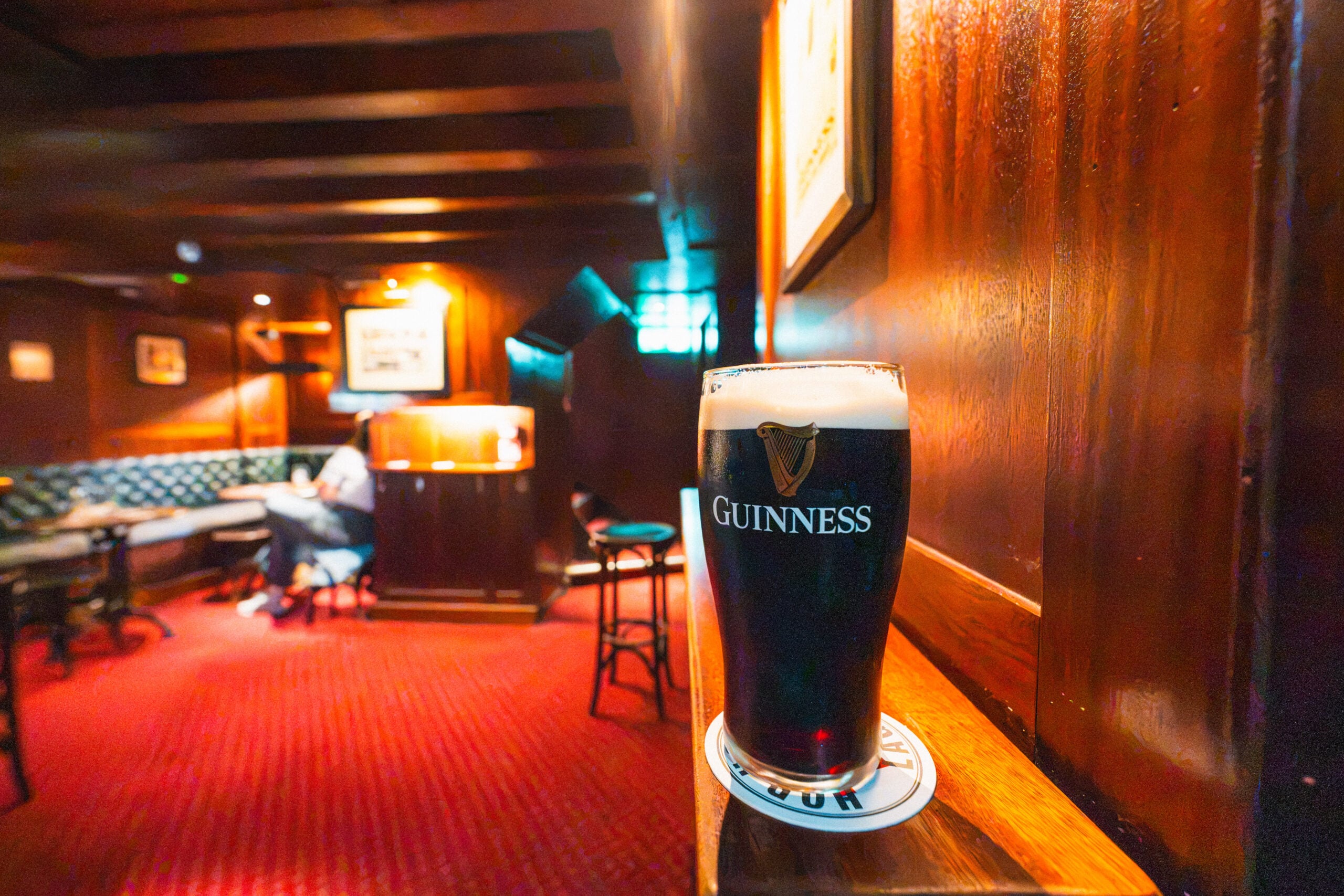
Did you know?: The Wicklow Mountains are the source of the water for Guinness!
How long do you need in Wicklow Mountains?
It’s entirely possible to enjoy the main highlights within a day (or half-day at a rushed pace). We actually did all of the things I’ve listed in this guide in one day, but it has to be said, we did get up really early. The ideal amount of time to spend at Wicklow Mountains and County Wicklow is probably somewhere more between 2 to 3 days minimum.
Alternatively, if you’re looking for a long week of hiking and enjoying the great outdoors, then it would be easy to spend up to 5 to 7 days here.
How to reach the Wicklow Mountains
The easiest way to reach the park is by car. Most trailheads are 45 to 75 minutes from Dublin, and several sit on narrow rural roads with limited public transport. If you don’t drive, Glendalough, Enniskerry and Bray are the most practical bases.
We personally visited with our car as it gave us the greatest flexibility and allowed us to visit each attraction at our own pace. It also meant that we could stop off on the side of the road each time that a photo opportunity presented to us (which was often).
| Option | Typical time from Dublin | Flexibility | Best for |
|---|---|---|---|
| Own car | 45 to 75 min | High | Hikers, multiple stops |
| Bus to Glendalough | About 1.5 hours | Medium | Day visitors without a car |
| Guided tour | Full or half day | Low | First-timers, sightseeing |
| Train plus taxi | 1 to 1.5 hours | Medium | Bray-based walks |
Best things to do in the Wicklow Mountains
Town of Wicklow
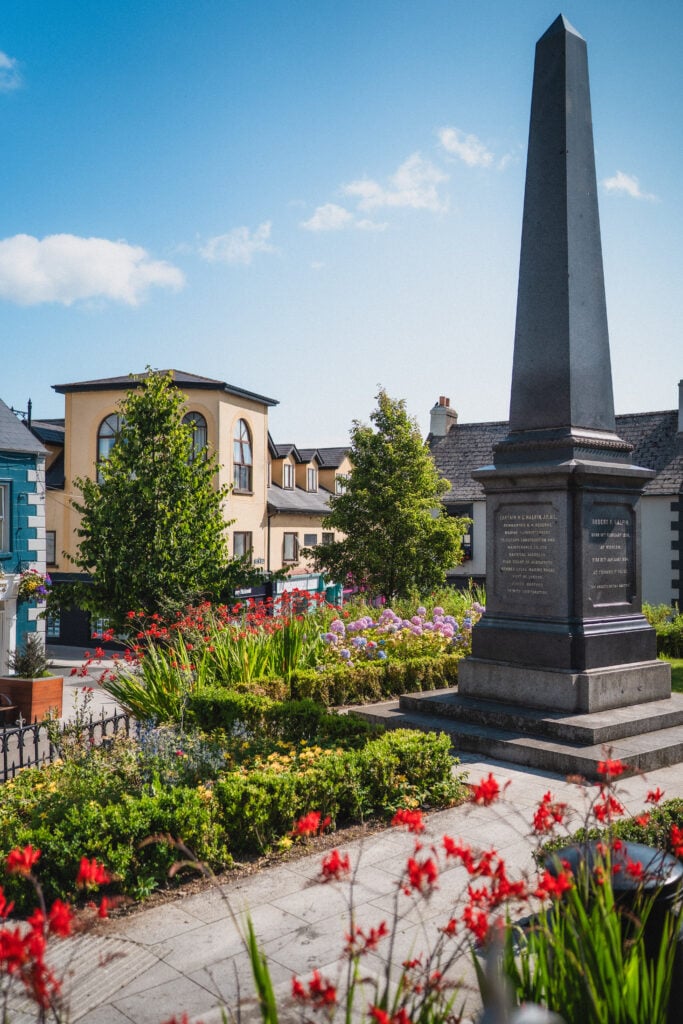
Wicklow Town is the historic county town of County Wicklow, and it’s located just south of Dublin on Ireland’s east coast. The town has a population of just under 13,000 residents, and it offers a generally quieter and slower pace of life than that of Ireland’s capital city.
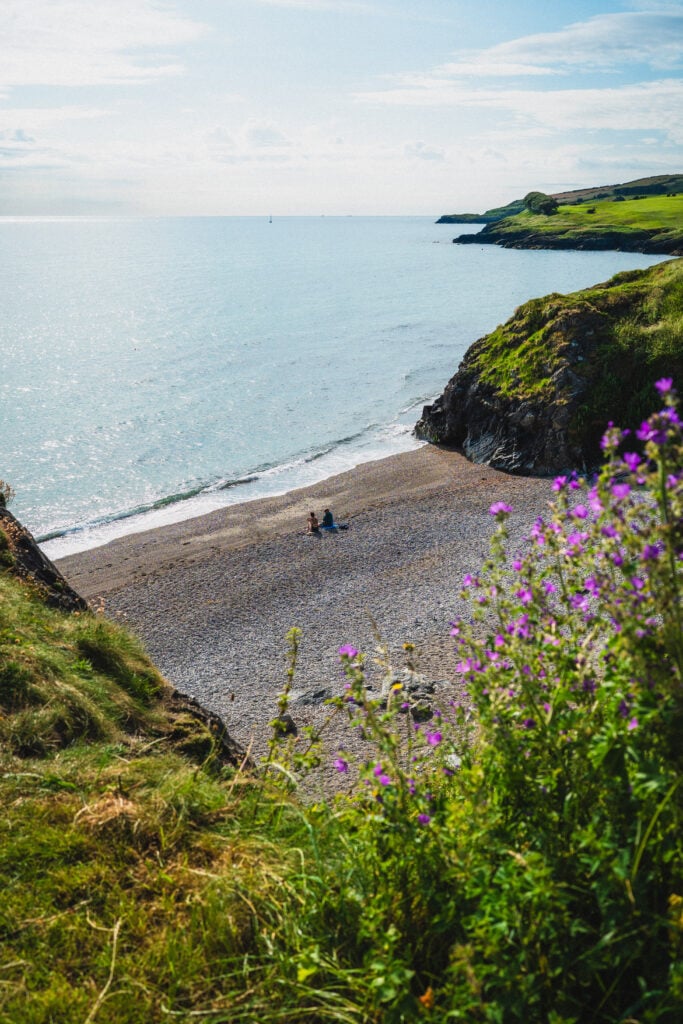
The charming seaside settlement is dotted with colourful houses lining the streets and fishing boats bobbing gently in the harbour. The town centre is fairly sleepy, with independent cafés and small boutique shops throughout. But, one of the best things to do while visiting is to enjoy the scenery, and walk along to the small coves and pebble beaches along the coastline.
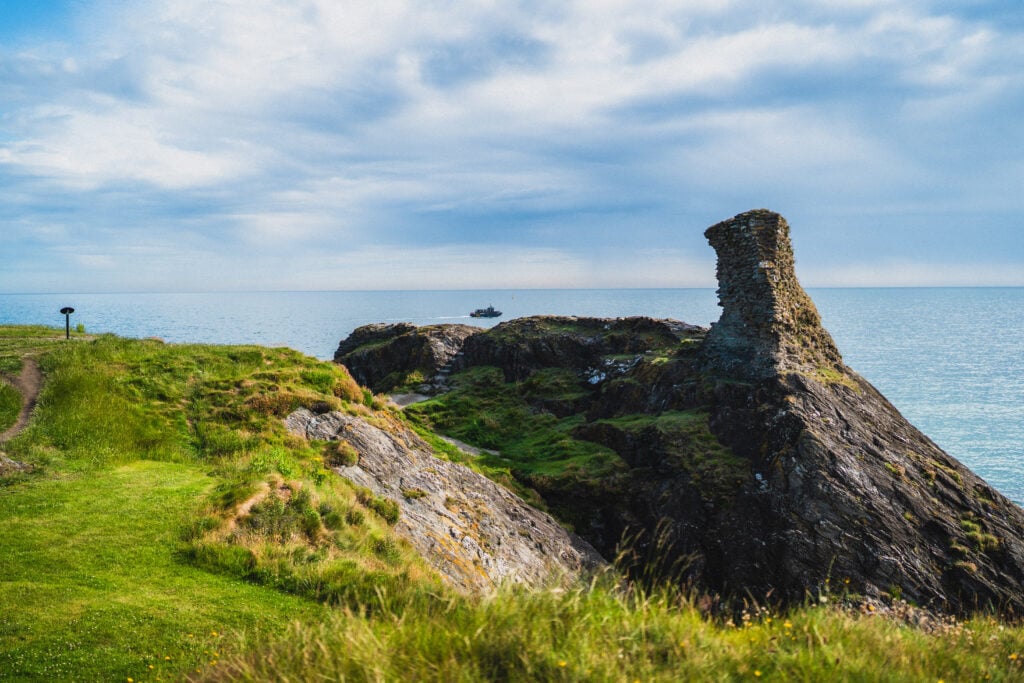
One of the best places to soak up the coastal views is just a short walk away from the town. Sitting on a rocky promontory overlooking the sea is the medieval ruins of Black Castle. The castle’s history can be traced back to the arrival of the Normans in the 12th century, and it takes its name from its turbulent history of conflict.
Enjoy the scenery of the National Park
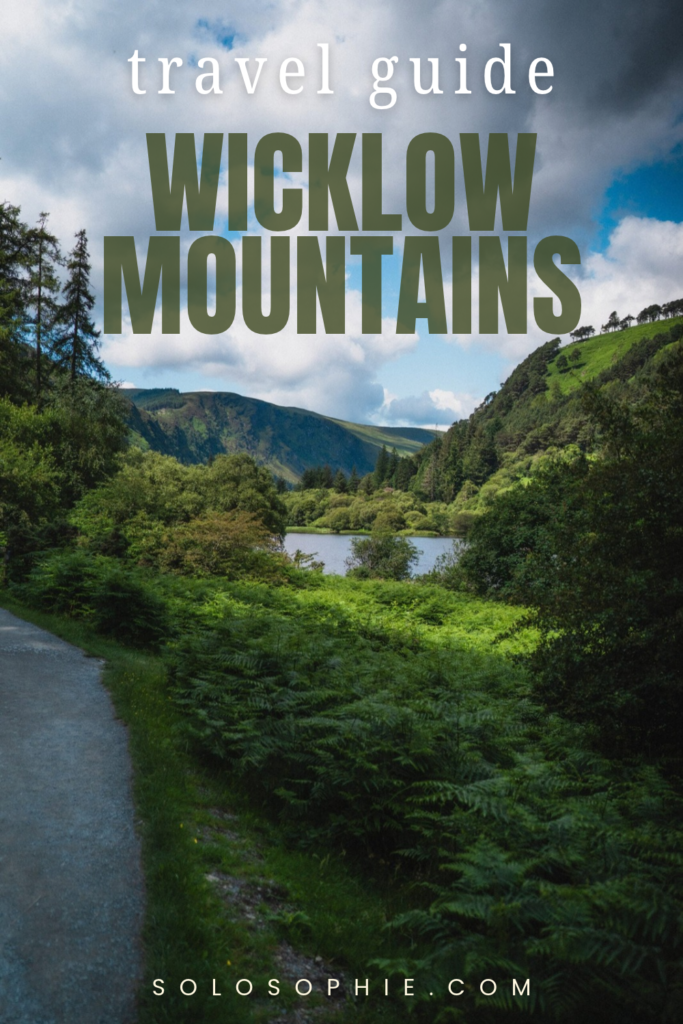
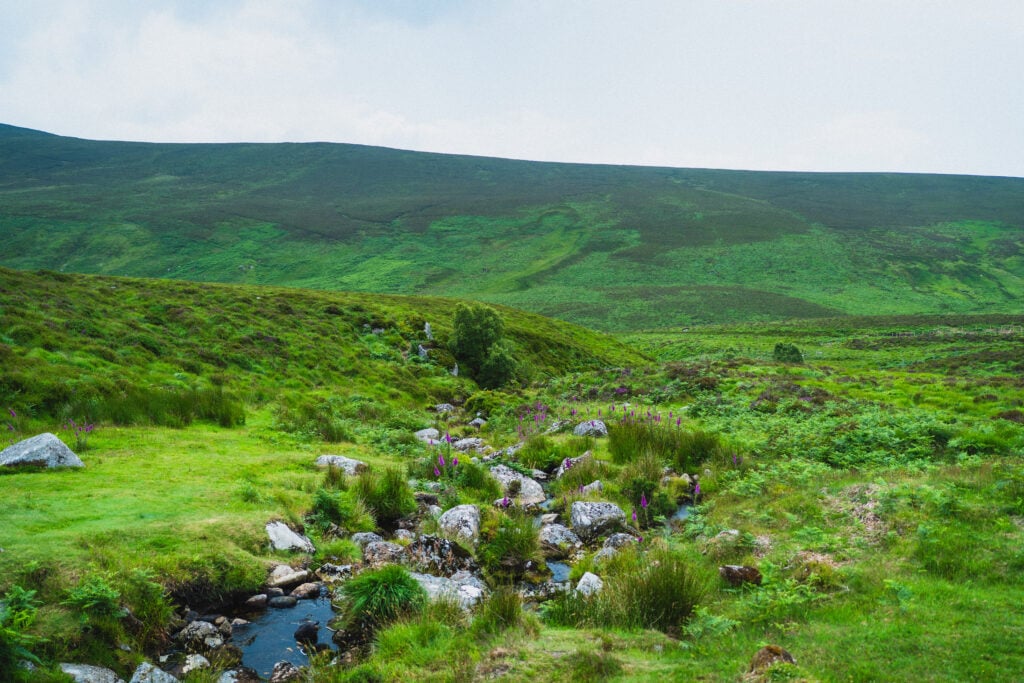
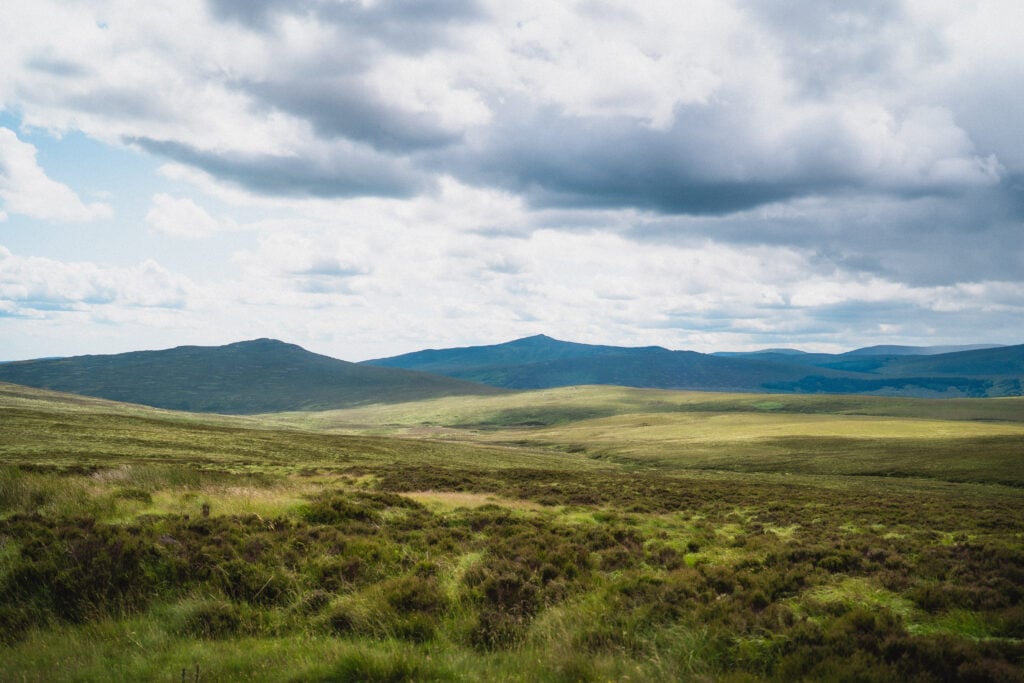
The best thing about visiting this part of Ireland has to be the stunning natural scenery of the National Park. Blankets of green moss and marsh, dotted with purple heather stretch out for miles and miles. This particular road trip, along with the Ring of Kerry (which we did last year) really solidified why Ireland’s nickname is the “Emerald Isle”.
More specifically, County Wicklow has its own nickname, and it is lovingly known as the “Garden of Ireland.” While its hard believe now, the mountainous landscape you see today was once completely covered in pine forests before turning into a vast expanse of blanket bog.
One of the most interesting things about this blanket of bog is that it’s not actually vegetarian…and by that, I mean that the landscape is home to carnivorous plants! Sundews, butterworts, and the like, traps insects to survive, enriching the green landscape of the National Park.
Glendalough Valley
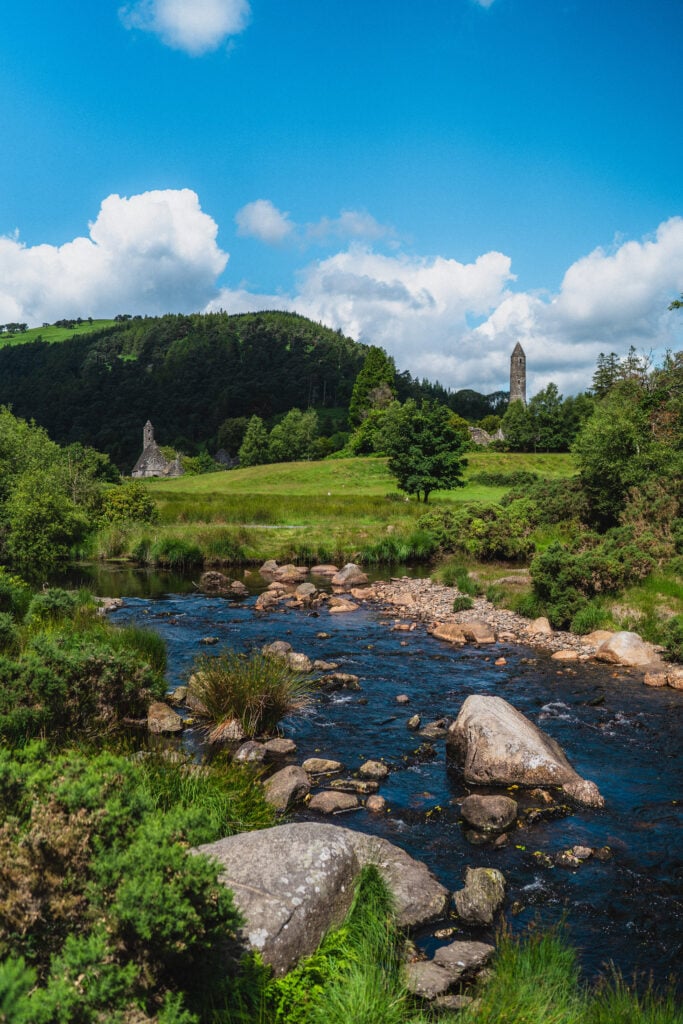
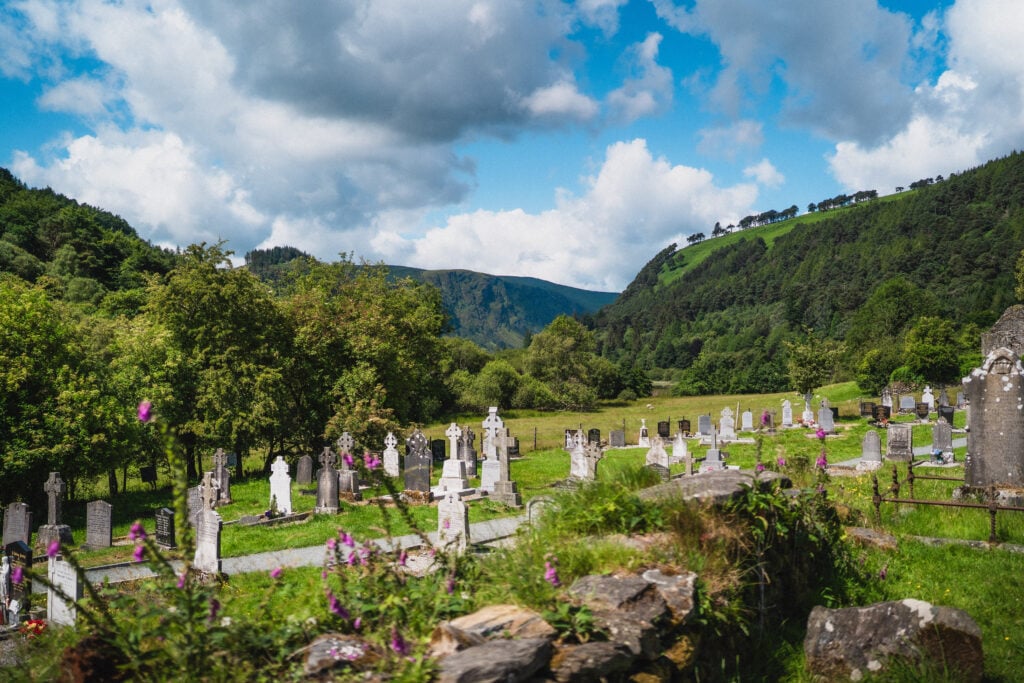
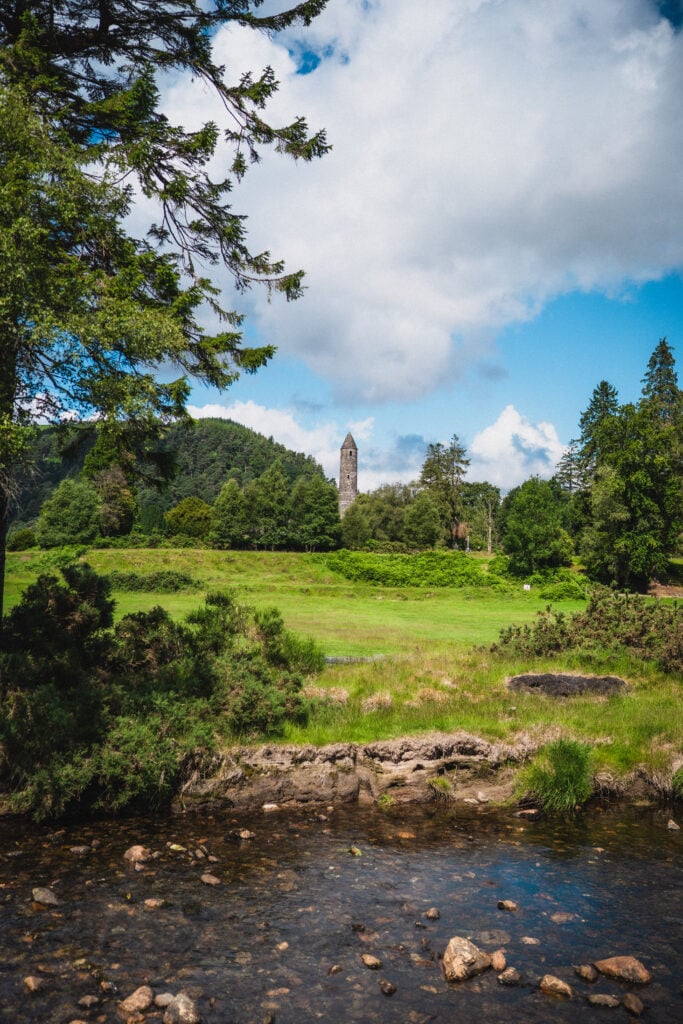
Glendalough, or Gleann Dá Loch, as it’s known in Irish, means ‘valley of two lakes’. Which is aptly so, as this glacial valley is home to two shimmering lakes, and its perhaps best known as being home to a 6th-century monastic settlement.
Like much of the surrounding landscape, the valley is dramatic, with steep-sided mountains, lush greenery. There are also plenty of walking trails which you can take to soak up views of the lakes from above.
The phonetic pronunciation of Glendalough is Glen-duh-lock.
Glendalough Monastic Site
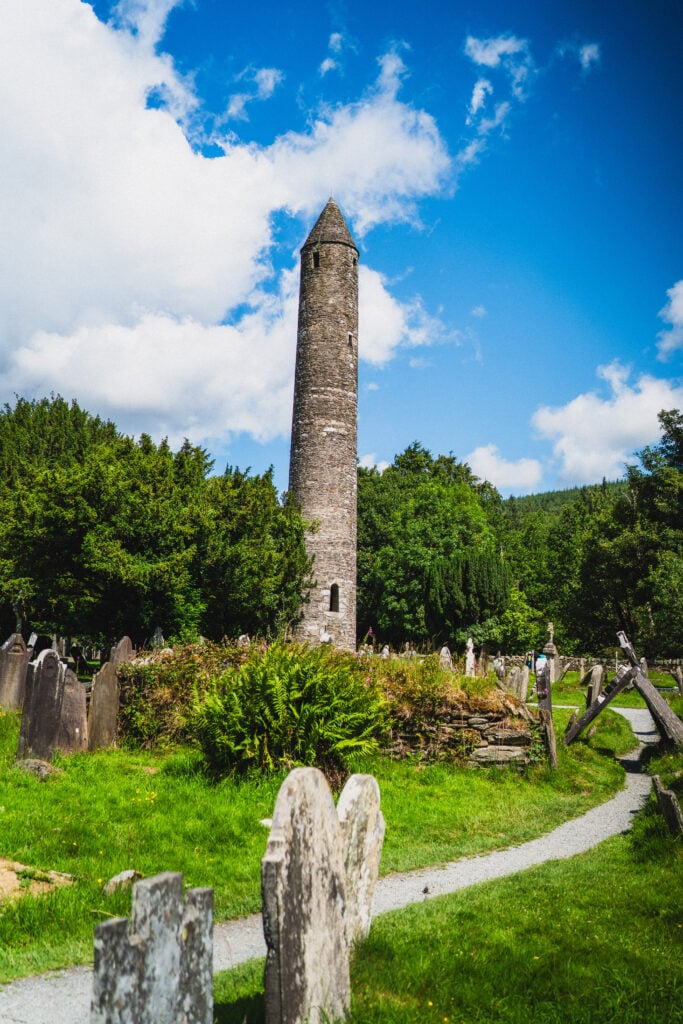
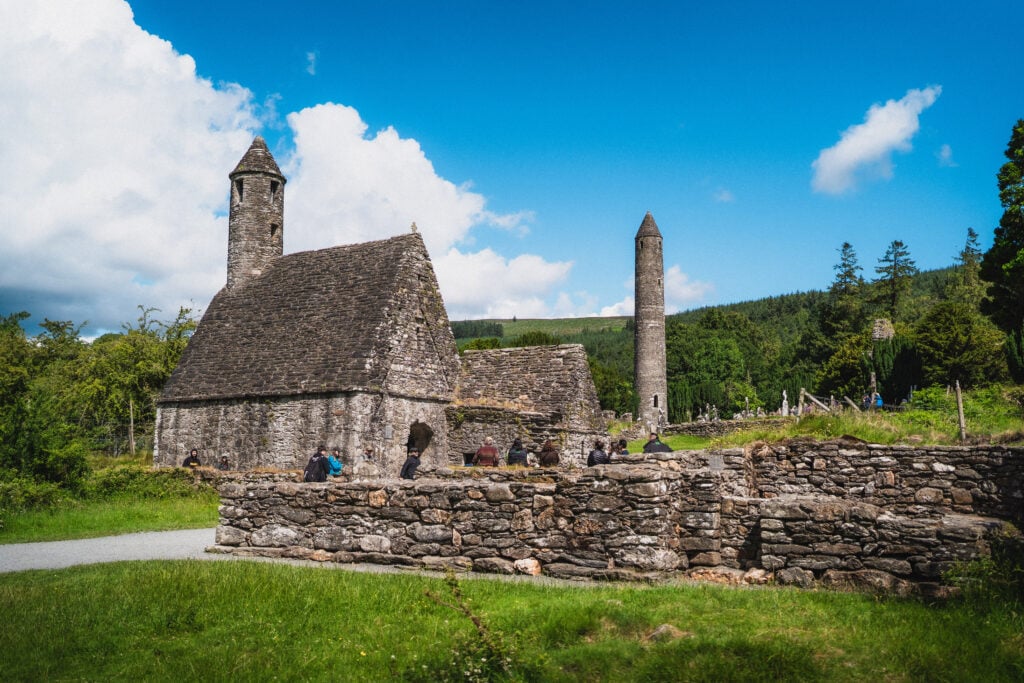
The 6th-century monastic settlement nestled in Glendalough was founded by St Kevin, who is said to have lived as a hermit in the valley for seven years. One of the sites associated with him is St Kevin’s Bed, a small cave cut into the rock face overlooking the Upper Lake.
St Kevin was renowned for his deep connection to nature and animals (which is easy to understand once you see just how beautiful the landscape is). One of the most famous legends associated with him tells of a blackbird nesting and laying eggs in his outstretched hand while he prayed.
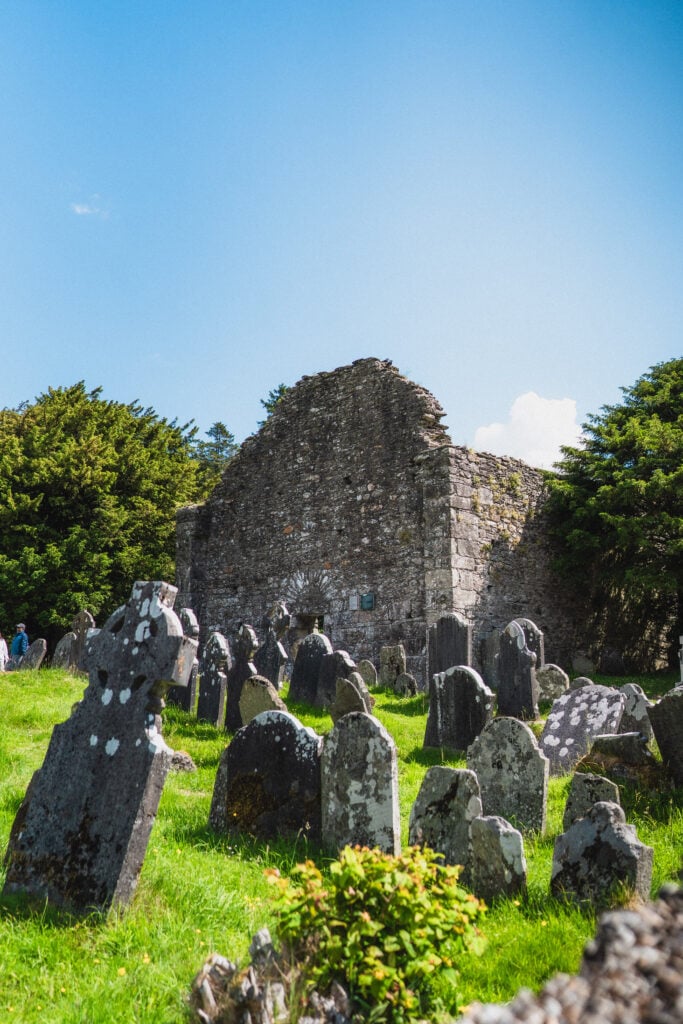
Glendalough Monastic Site is dotted across the glen and completely free to visit and wander around. The prehistoric burial site’s most fascinating features include the crumbling round tower, medieval stone churches and decorated crosses.
Nearby there’s a visitors centre where you can learn a little more in depth about the site, and there’s also a car park (which charges a small fee) where you can leave your car.
Glenmacnass waterfall
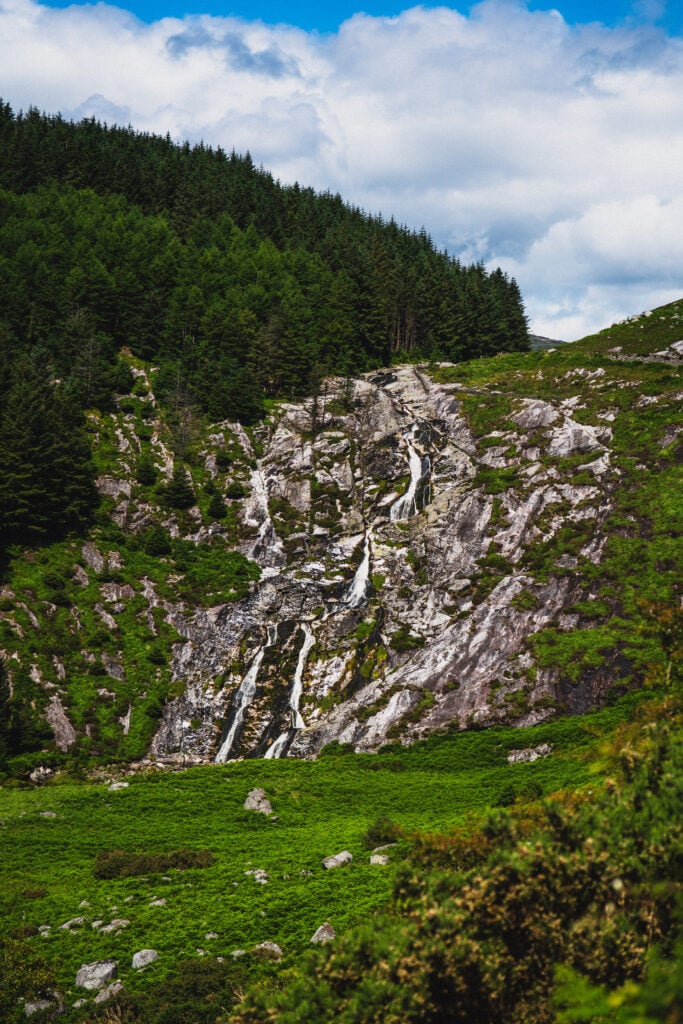
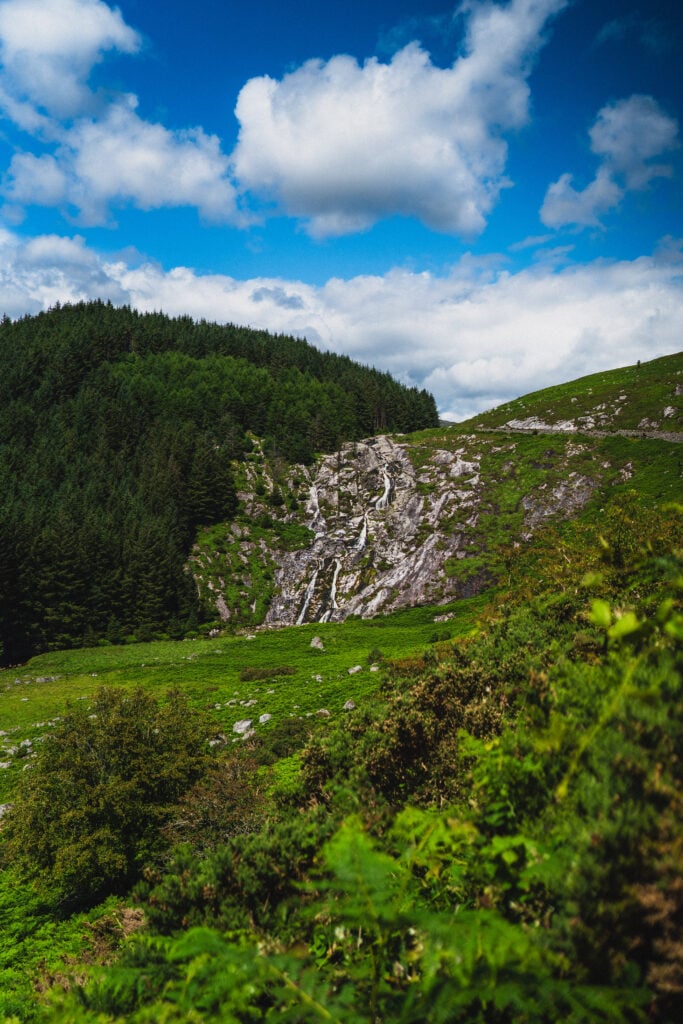
Another popular stop and stunning scenic location along the way has to be Glenmacnass waterfall, which sits an impressive 350 meters above sea level and cascades down the rock 80 metres in height.
Powerscourt
If you have longer in the area than we did (we only really had half a day to explore the mountains), then yet another waterfall worth checking out is Powerscourt waterfall. At 121 metres (398 feet), it’s widely recognised as Ireland’s highest waterfall, cascading down the rocky mountainside into a wooded valley that sits at the foothills of the Wicklow Mountains.
P.S. I Love You Bridge
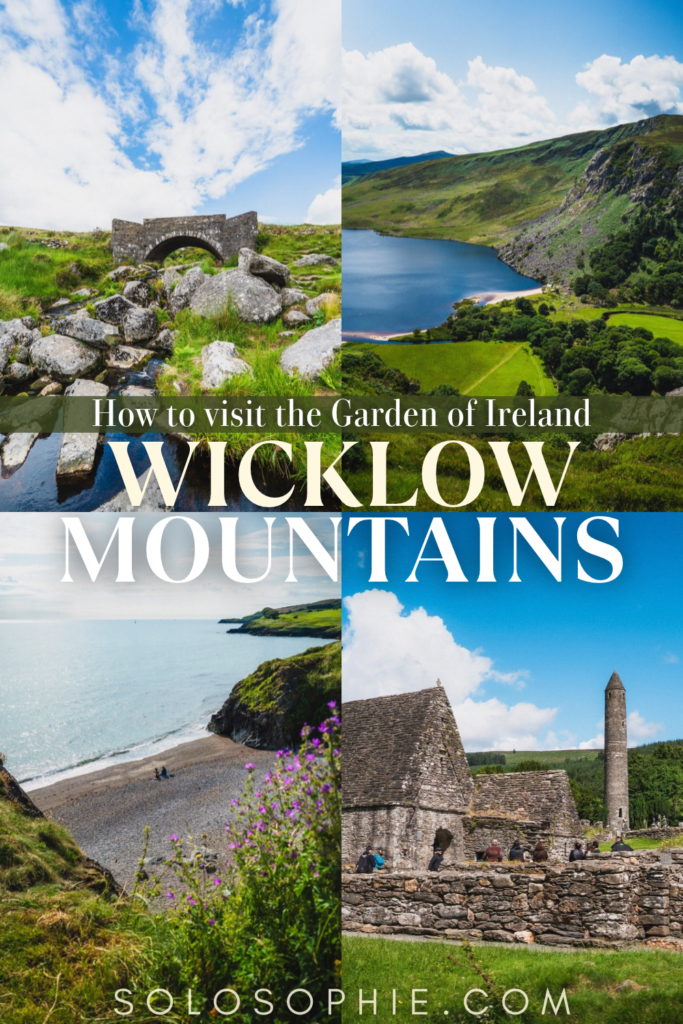
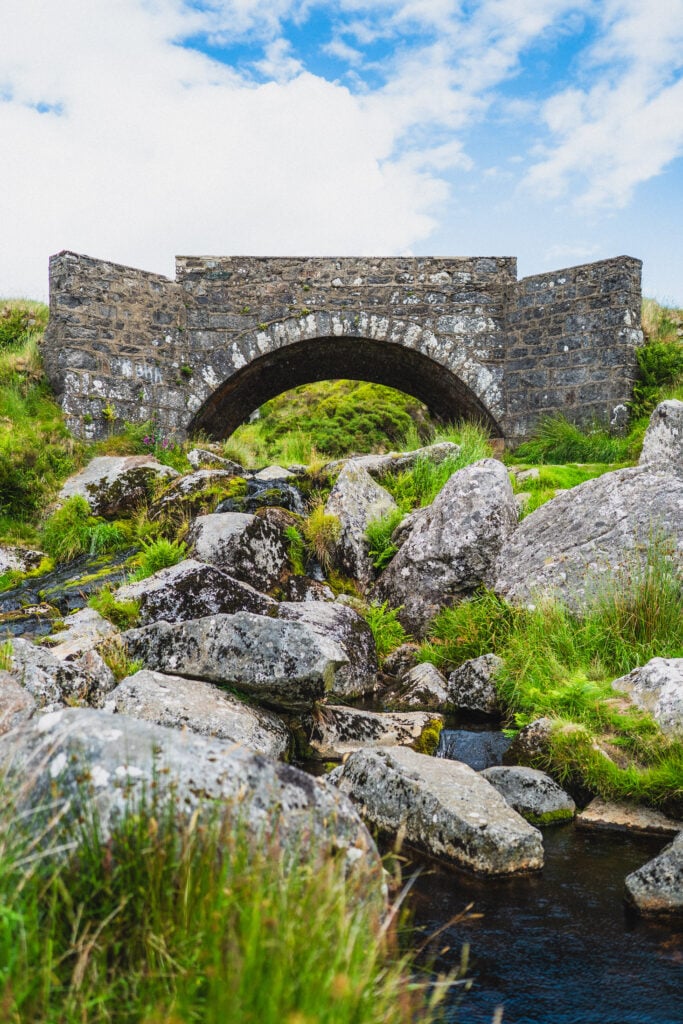
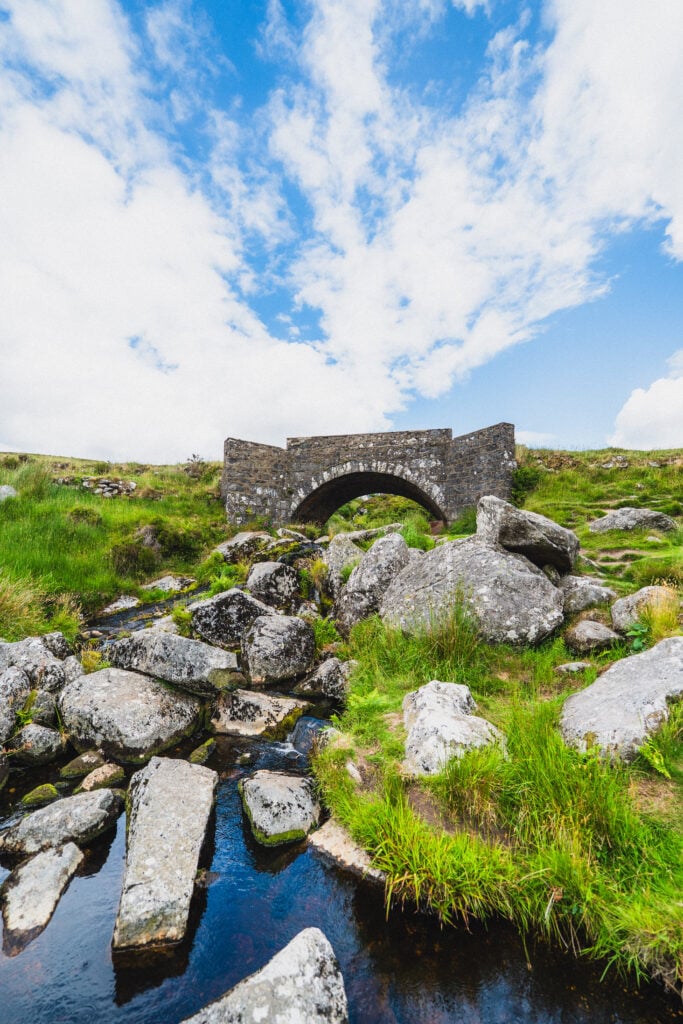
Not too far from Sally Gap is a stone bridge which feels as though it’s practically made for a movie scene. And, as you can probably guess from its name, this bridge was indeed made famous by the popular romantic film P.S. I Love you. It’s the very spot and filming location where the beloved characters Holly and Gerry first meet in a flashback.a
Sally Gap
One of the most scenic spots in the Wicklow Mountains, is where the roads meet amid sweeping views of open moorland, blanket bog and the rolling hills. The name Sally Gap comes from the Irish Bearna Bhealach Sailearnáin, which is roughly translated as “the gap of the road of the willow grove” The crossroads sits around 503 metres above sea level, and if you head further along, you can take in sights from the surrounding roads, including Glenmacnass Waterfall and Lough Tay.
Lough Tay
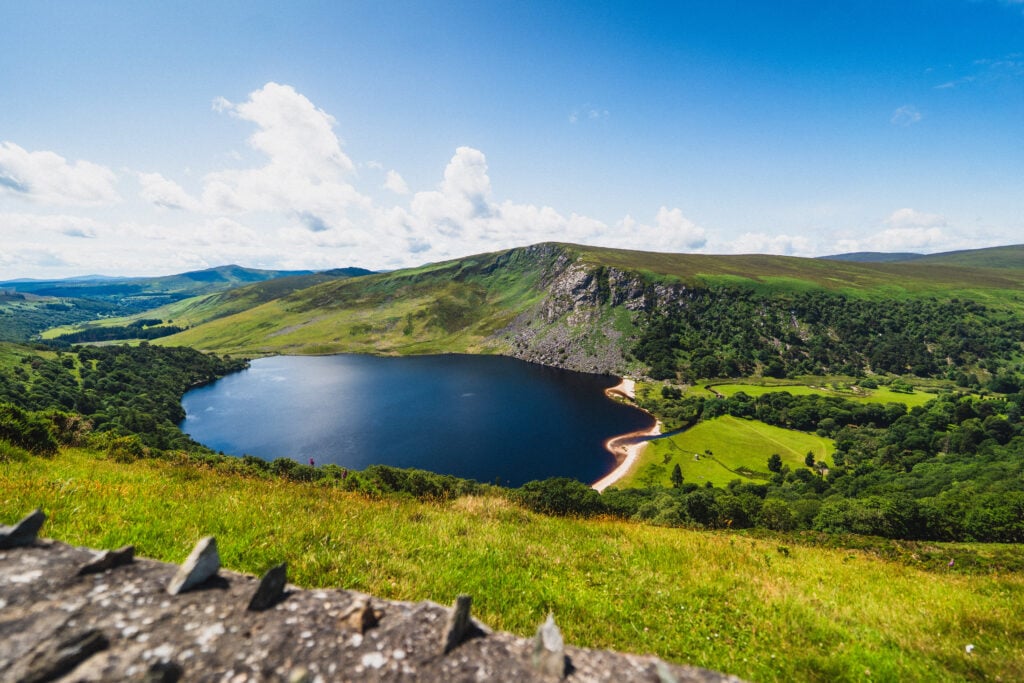
Lough Tay is probably the most famous lake in all of Ireland. You may well recognise it, as it’s featured in countless films and TV shows, more recently in the popular series Vikings. It’s also got a pretty unusual history related to Ireland’s most popular drink, Guinness.
Lough Tay is often nicknamed the “Guinness Lake”, partly because of its striking resemblance to a pint of Guinness when viewed from above due to the dark water contrasts with a narrow strip of pale sand along the northern shore (maybe if you really squint your eyes you’ll see the resemblance). The lake also sits on the privately owned Luggala Estate, which belonged to the Guinness family for much of the 20th century.
Go hiking
If you’re feeling particularly adventurous, then there are a number of hiking trails you can set out on.
| Hike | Distance | Typical time | Difficulty | Trailhead |
|---|---|---|---|---|
| Glendalough Spinc and Glenealo Valley | About 9 to 10 km | 3 to 4 hours | Moderate | Glendalough Upper Lake |
| Lough Ouler and Tonelagee | About 10 to 12 km | 4 to 5 hours | Moderate to hard | Glendalough or Wicklow Gap |
| Djouce Mountain | About 6 to 8 km | 2.5 to 3.5 hours | Moderate | Djouce Woods or Ballinastoe |
| Lough Tay viewpoint | Short roadside walk | 20 to 30 min | Easy | Military Road |
| Powerscourt Waterfall paths | Short | 1 to 2 hours | Easy | Powerscourt Estate (entry fee) |
| Glenmalure valley walks | Variable | 1 to 4 hours | Easy to moderate | Glenmalure |
| Lugnaquilla | About 10 to 14 km | 5 to 7 hours | Hard | Fraughan Rock Glen or Glenmalure |
| The Wicklow Way | 127 km | 5 to 8 days | Hard (multi-day) | Marlay Park to Clonegal |
Suggested guided tours from Dublin
If you don’t have access to your own vehicle, then there are a number of guided tours including half and full days which you can go on. You’ll meet your guide in Dublin and from there be part of a group. Here are the top rated (based on web reviews):
From Dublin: Half-Day Trip to Glendalough and Wicklow – Book tour now.
From Dublin: Wicklow Mountains & Glendalough Guided Tour (full day) – Book tour now.
From Dublin: Glendalough & Wicklow Mountains Morning Tour – Book tour now.
Dublin: Wild Wicklow Mountains, Glendalough & Guinness Lake – Book tour now.
What is the best scenic drive in the Wicklow Mountains?
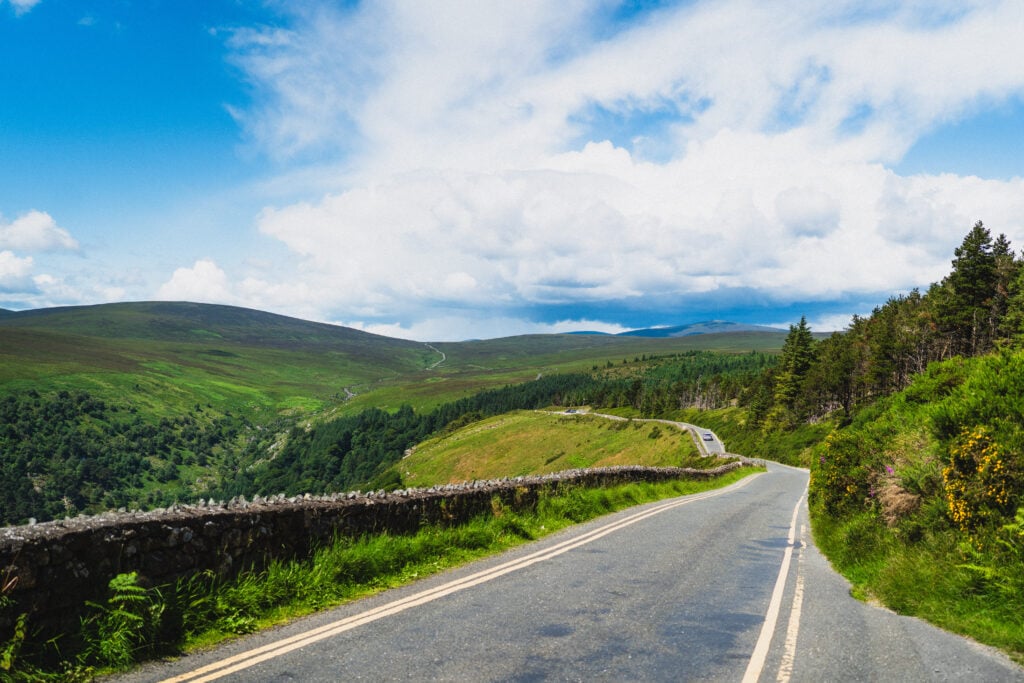
One of the best ways to explore the Wicklow Mountains is to take a drive along the Military Road, passing through Glencree and Sally Gap. Along the way, you’ll drive through wide-open mountain scenery and bogland, with views across to Lough Tay.
The road itself dates back to the early 1800s, when it was built following the 1798 rebellion to help British forces access the area. We drove this route during our visit and found it a great way to see more of the landscape and get between some of the main attractions.
A good half-day loop:
- Leave Dublin via Rathfarnham and Glencree.
- Stop at the Sally Gap crossroads.
- Continue to the Lough Tay viewpoint.
- Drive on to Roundwood, then Laragh and Glendalough.
- Return via the Wicklow Gap or the N11.
A full-day version can add Glenmalure and Powerscourt. But be sure to take care on the narrow roads, as sheep, cyclists and parked cars are commonplace.
Tips for visiting the Wicklow Mountains
If there’s one tip I can give you for visiting Wicklow Mountains then it would be to be prepared for all weather types. Ireland’s weather can be unpredictable, so even if its blue skies and sun in the morning, there’s always a chance of rainfall five minutes later, no matter what time of the year. Bring layers with you, as it’s always easier to layer down!
I’d also recommend bringing a substantial amount of water and maybe some snack too, as there aren’t a great deal of places to stop.
To get the most from a visit:
- Arrive early (before 9:30 am in summer) or visit in the late afternoon.
- Go midweek if you can.
- Walk beyond the Upper Lake. Most visitors turn back near the lakeshore, so the higher trails are far quieter.
- Check parking arrangements in advance, as charges and rules at the main car parks can change.
Watch the 3 days in Dublin vlog (Wicklow Mountains 3rd day)
Enjoyed reading our guide to Wicklow Mountains and how to visit? Pin this article now, and read it again later: