
10+ Hidden Gems in Dublin: Unique Places Most Visitors Miss
Last Updated on 13th August 2026 by Charlotte Nadeau
This post may contain affiliate links. Please check out my privacy policy and disclosure for more information.
From forgotten libraries to quaint little parks that are perfect for escaping the crowds, here are 10+ quirky, hidden, unique, unusual, and secret spots in Dublin that your guidebook won’t tell you about!
As the capital of Ireland, Dublin has seen oodles of history during its centuries’ worth of history. Characterised by its countless pubs, winding alleyways, and various museums, you can’t go wrong by dedicating any portion of a trip to Ireland to exploring the city for at least a few days.
For more Dublin inspiration, be sure to check out our guides to the best day trips from Dublin and the best Dublin travel tips for first time visitors. For more Emerald Isle inspiration, be sure to check out our guide to the best-kept secrets of Ireland and our suggestions for how to spend one day in Dublin.
Over the years, Dublin has grown noticeably busier, drawing in travellers eager to experience the charm of Ireland’s capital. And, so, it’s only natural that you might be questioning, are there really any hidden gems left to find?
I mean, I’ll be honest, the chances of discovering them as the first person ever are unlikely. However, there’s something magical about finding places that still feel hidden, even if others have uncovered them before you. And, in a city like Dublin that is so richly decorated in literary heritage, history and culture, it’s always sure to surprise you with something new to discover.
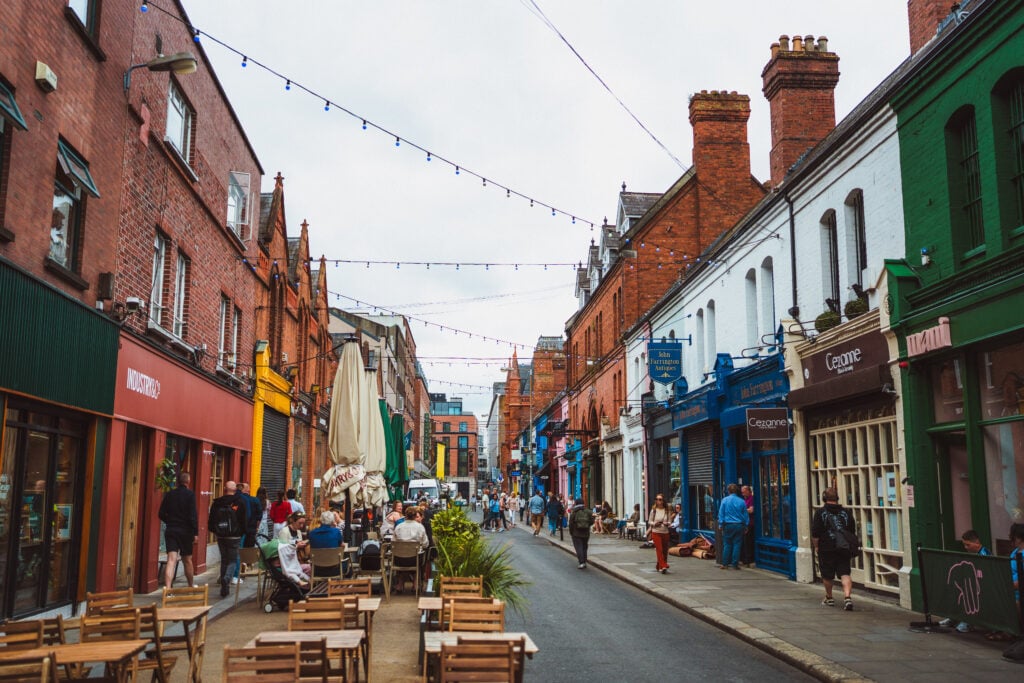
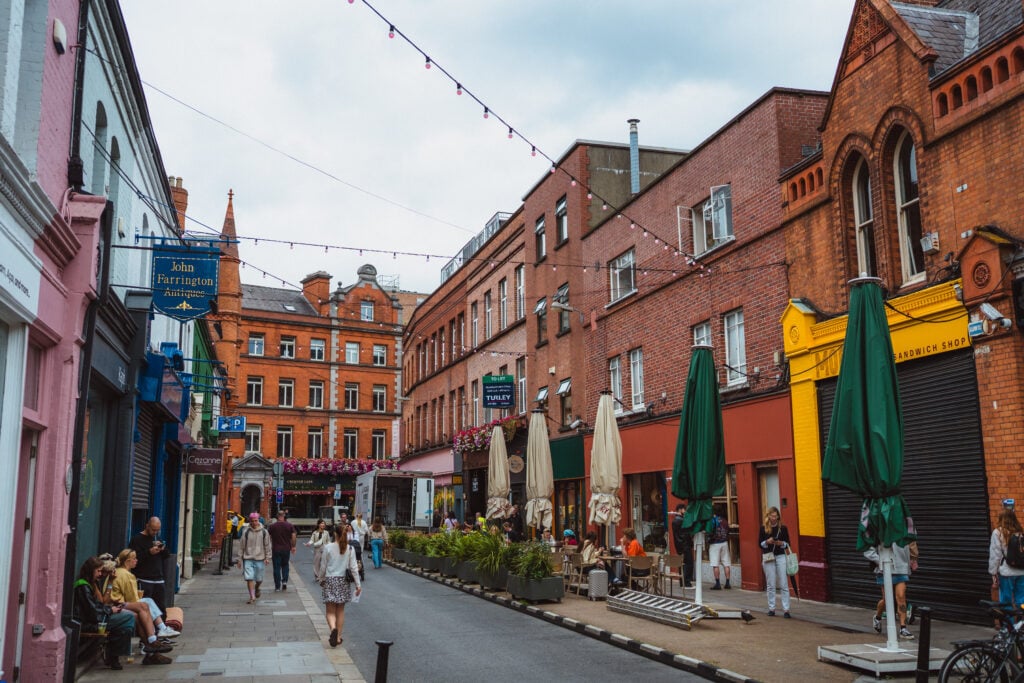
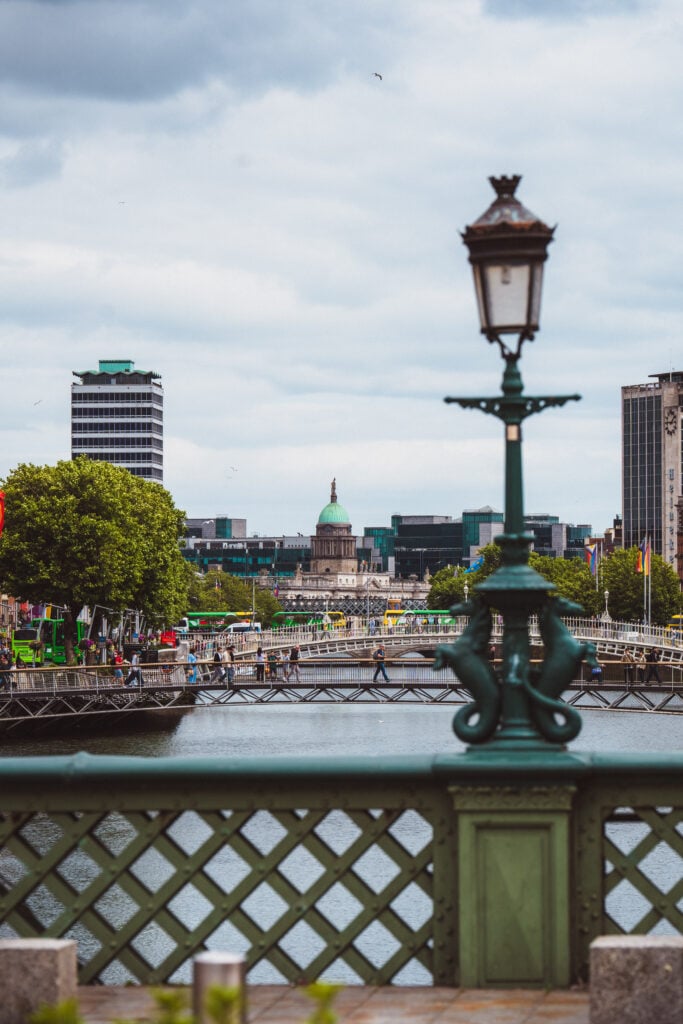
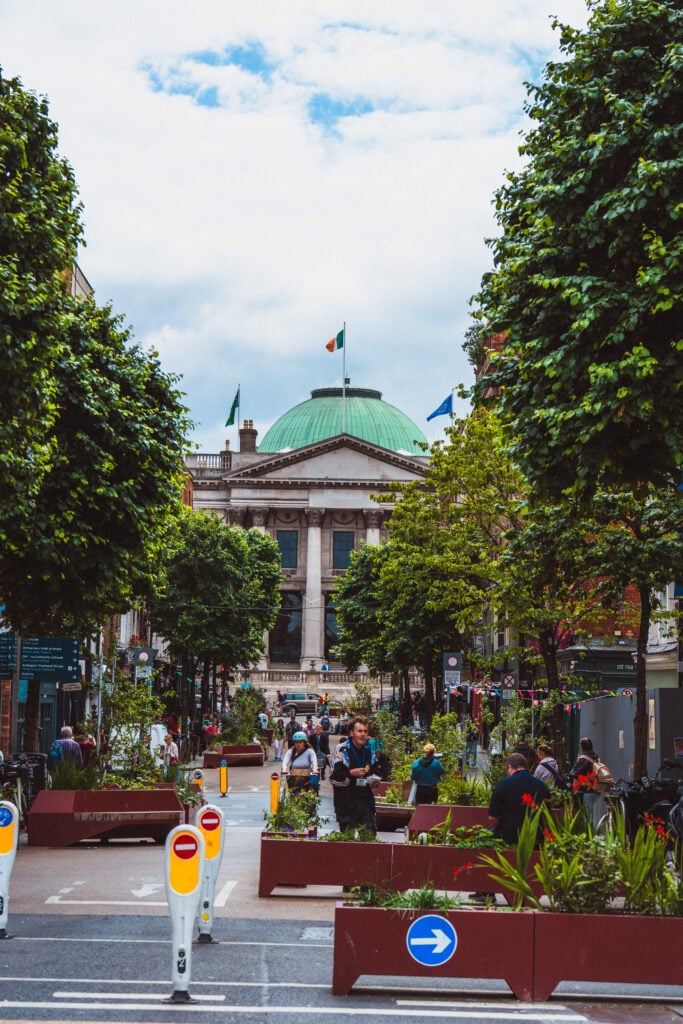
While Dublin is a pretty popular city (seeing a staggering 36.4 million passengers traveling through Dublin Airport in 2025), there are luckily quite a few hidden gems and quirky things to see, if only you know where to look…
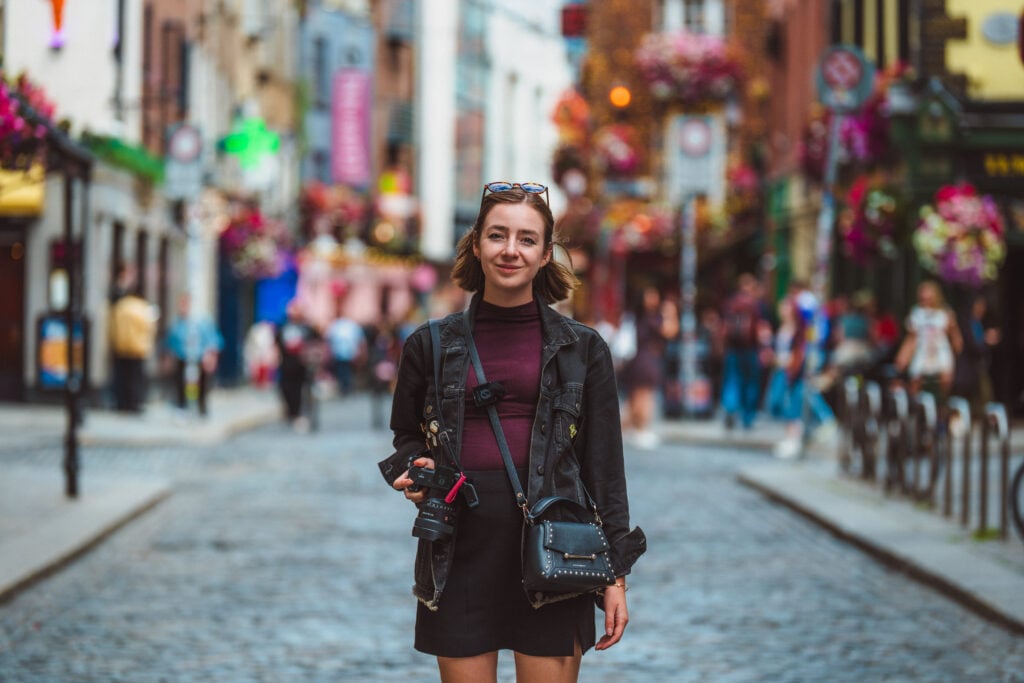
St. Audoen’s Church
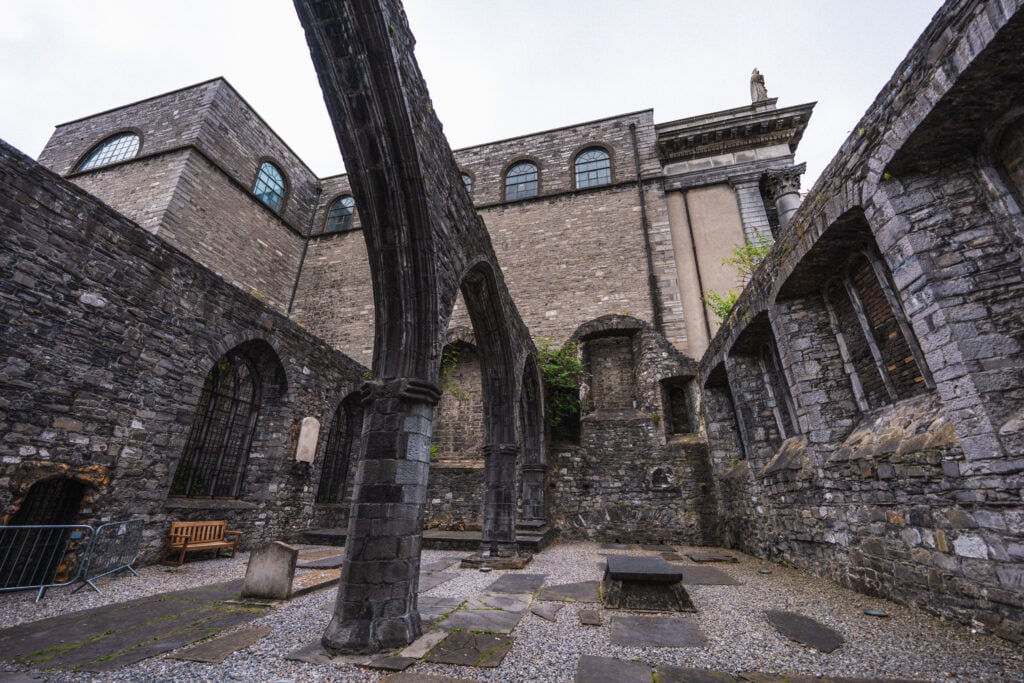
St. Audoen’s is Dublin’s oldest medieval parish church. Located in the city’s historic heart, just south of the River Liffey and close to Christ Church Cathedral, a church has stood on this site for more than 800 years. As you can probably imagine, there are plenty of hidden gems tucked within these ancient stone walls.
One thing that’s easy to miss is that there are actually two neighbouring churches. The larger Roman Catholic Church of St. Audoen, built between 1841 and 1847, is still very much an active place of worship. And, it’s beside it that the original medieval church stands.
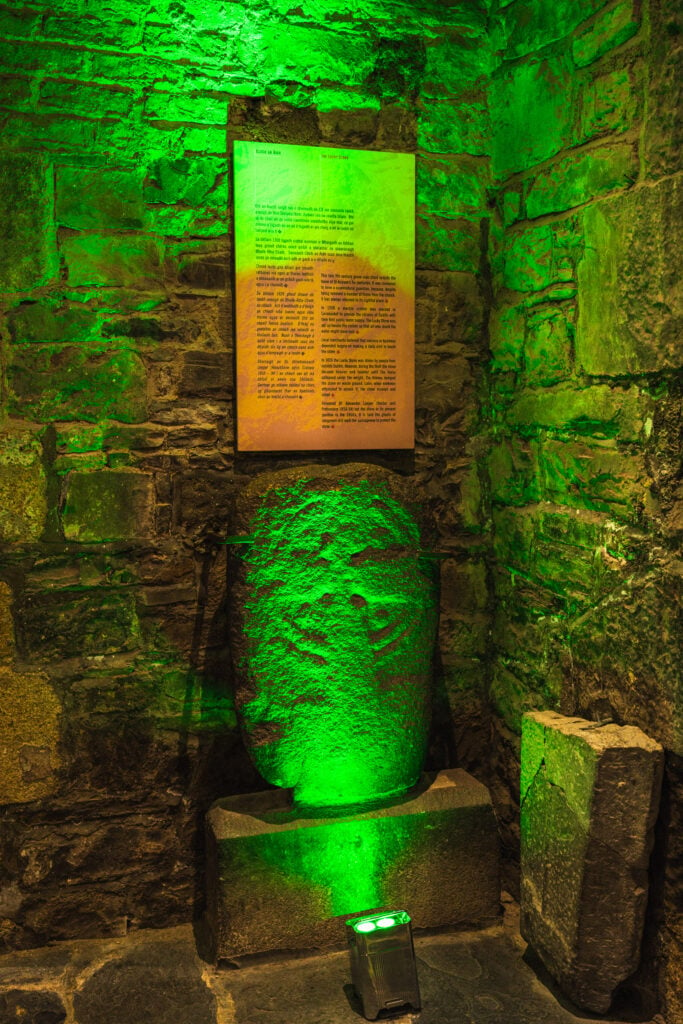
The historic walls of the building are, in themselves, impressive to visit. But be sure to keep an eye out for the Lucky Stone. Found in the main porch, this 9th-century early Christian grave marker bears a Celtic cross. Indeed, it has been documented at or near the church porch since at least 1309, making it one of Ireland’s oldest relics!
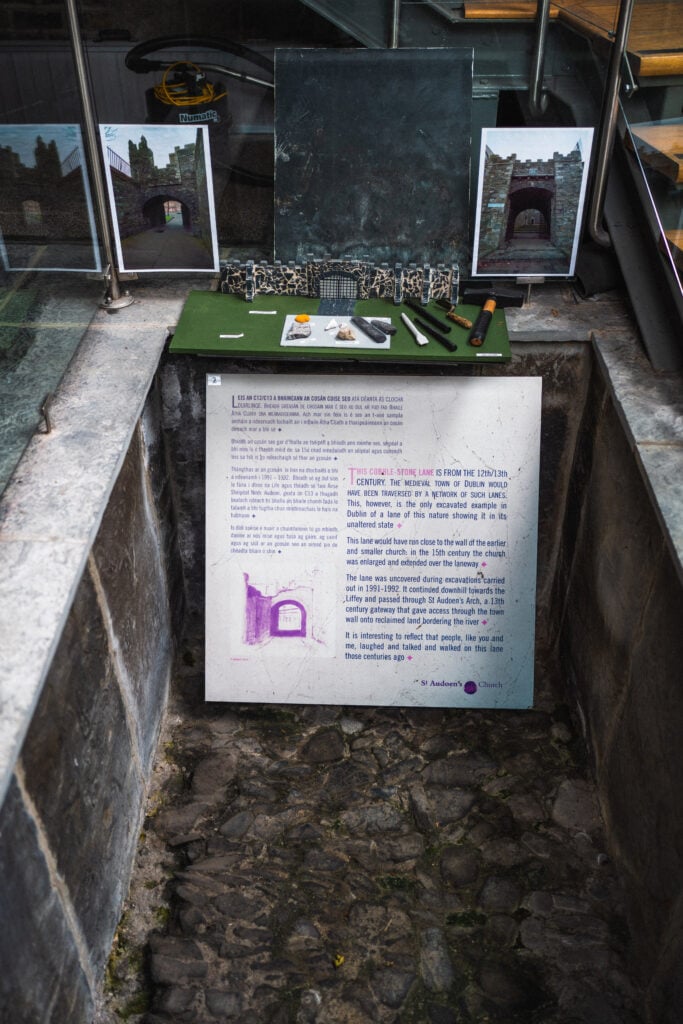
Another hidden gem that was unearthed sometime between 1991-2 during an archaeological excavation is a rare, preserved 14th-century cobbled lane surface. This can be seen inside the visitor centre.
The Icon Walk
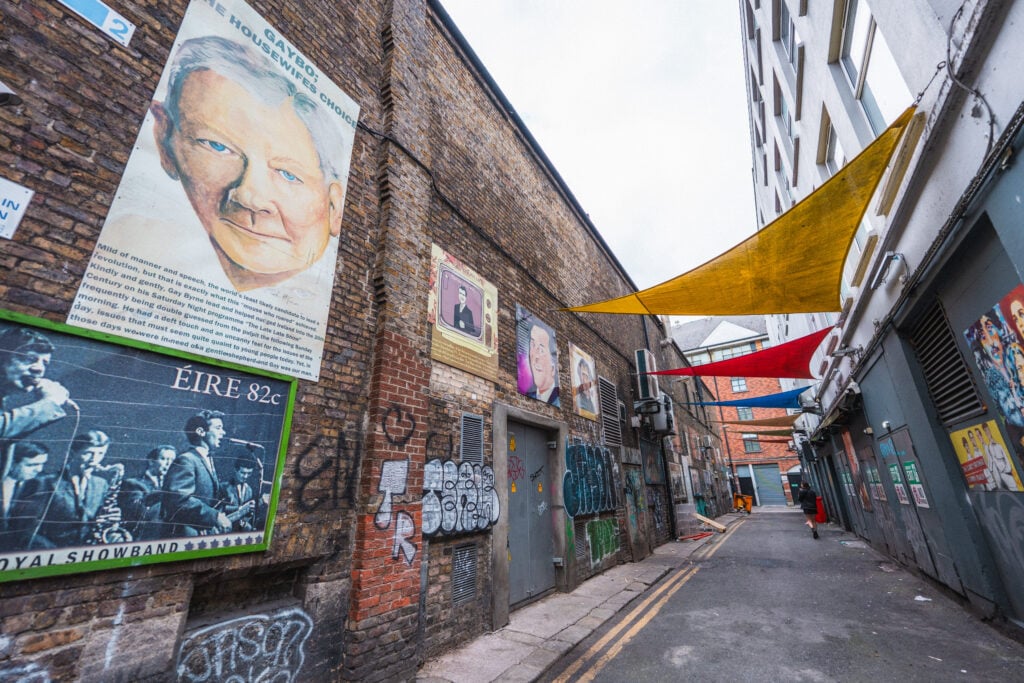
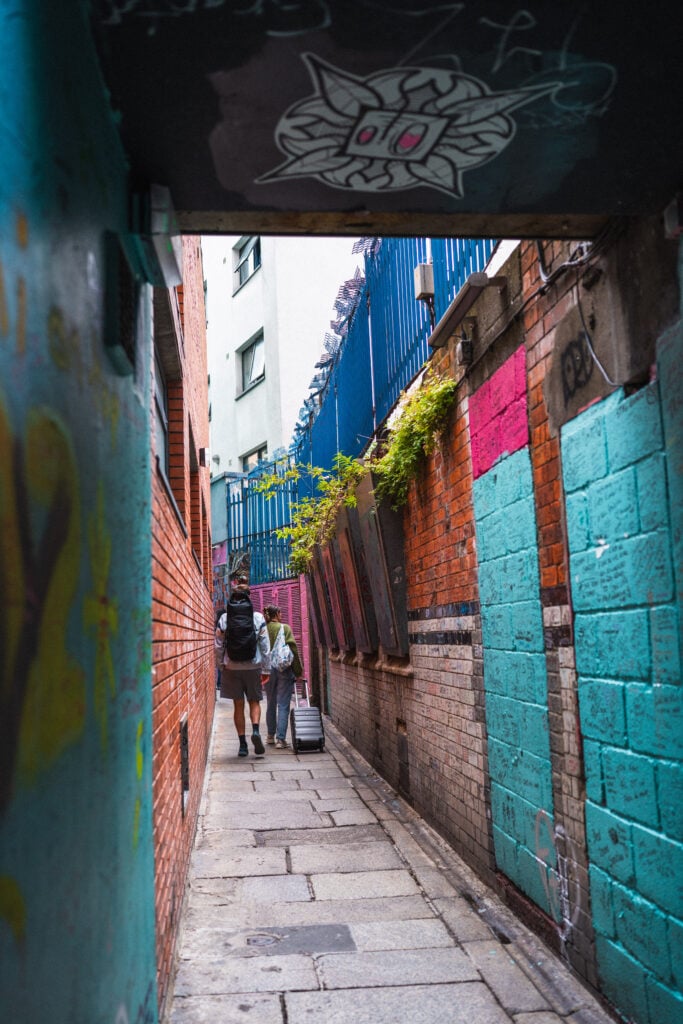
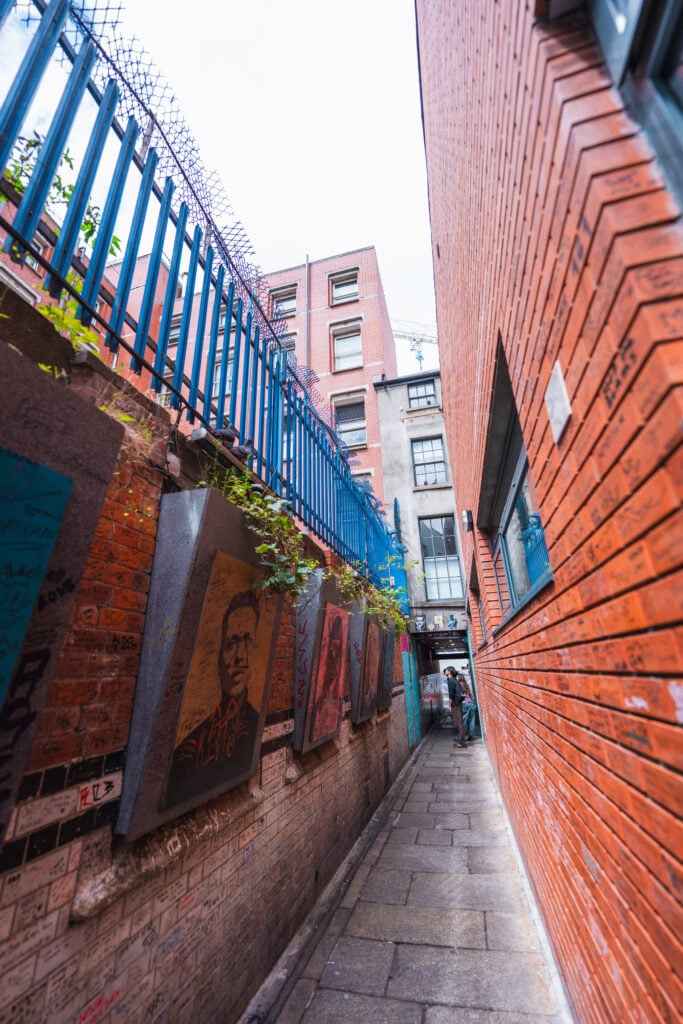
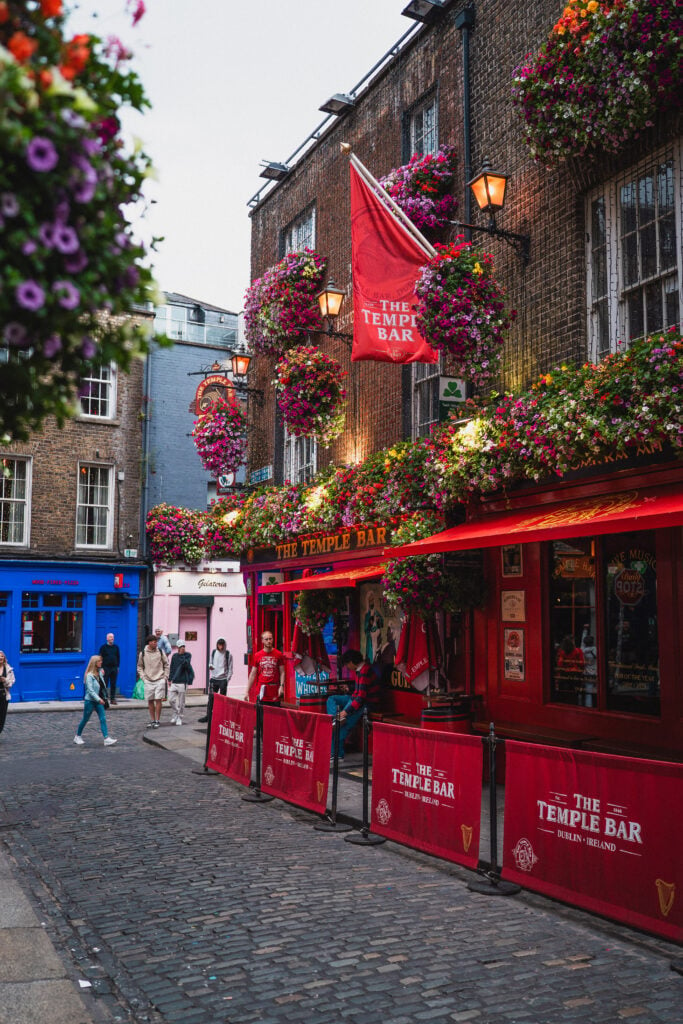
As its name suggests, this walkway is lined with the faces of some of popular culture’s biggest Irish icons. Tucked beside Dublin’s (equally iconic) Temple Bar pub, The Icon Walk is one of the city’s most unique streets, decorated with colourful murals celebrating famous musicians, actors and other cultural figures.
Of course, no wall as such would be complete without writers like James Joyce and Oscar Wilde. Also featured are playwright Samuel Beckett and musicians such as Sinead O’Connor, U2 or The Dubliners.
However, this didn’t just appear; instead, the walkway is a small love letter to Dublin, Ireland, and all those who visit. Back in 2009, Barney Phair and Aga Szot set up The Icon Factory, drawing inspiration from similar projects they had witnessed in New York.
And so, the duo set out to help create our little piece of Art and Culture in the heart of Ireland’s capital. What first started as a non-profit artists’ cooperative operating as a shop and gallery (called The Icon Factory) eventually spilt out into the walkway you see today. Unfortunately, the shop itself closed in 2023 due to rising costs in the Temple Bar area, but The Icon Walk remains a beloved feature, giving visitors a little taste of Irish culture.
George’s Street Arcade
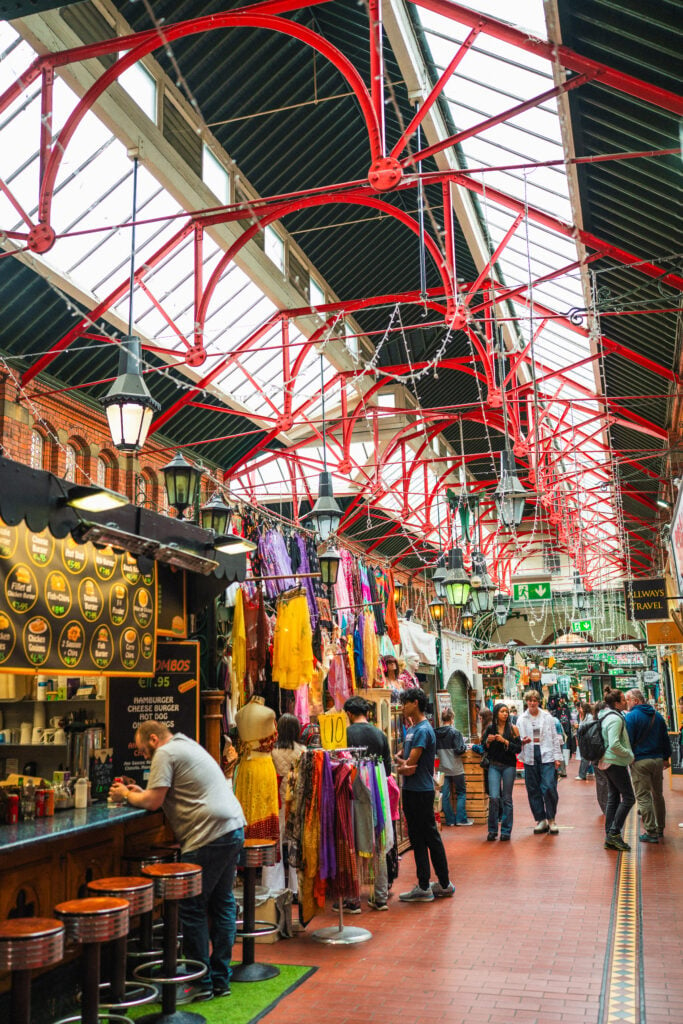
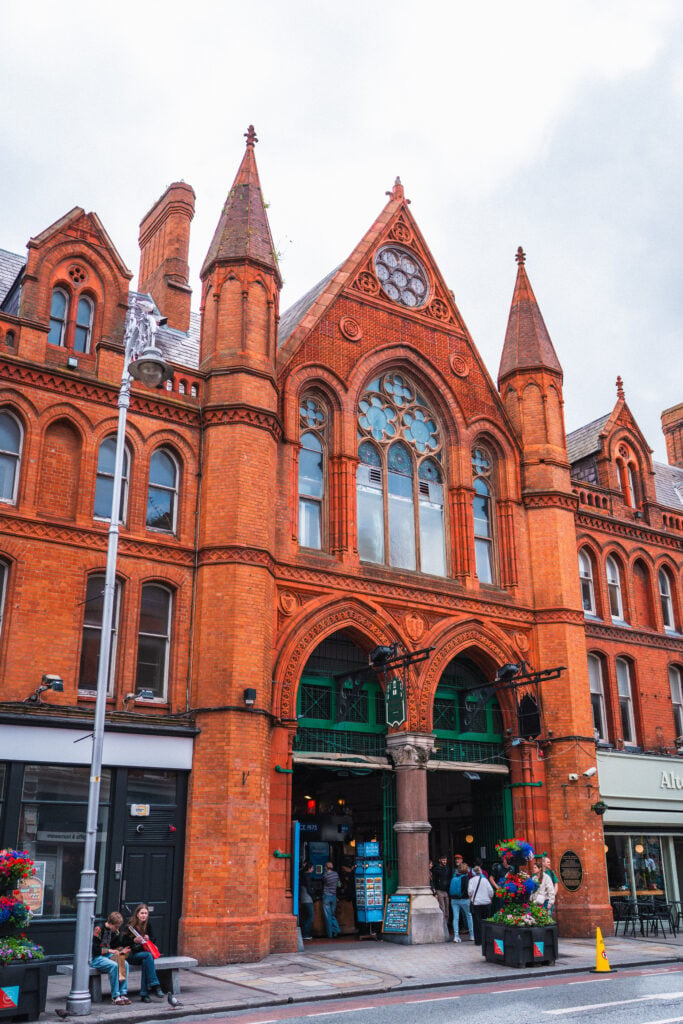
If you’re travelling through Ireland and looking for the perfect gift or souvenir to bring home, then you’ll want to head to George’s Street Arcade. While you’ll see crowds of people making their way to the nearby Grafton Street (a famous car-free shopping zone), you can actually opt to skip the crowds and discover more of a hidden gem, tucked beneath the red archways of a Victorian arcade.
Famous for its striking red-bricked turrets, George’s Street Arcade is filled with independent makers and creators selling their wares. In operation since 1881, this covered marketplace has some 40 distinct, family-run stalls and small local businesses.
Fountain of the Three Fates
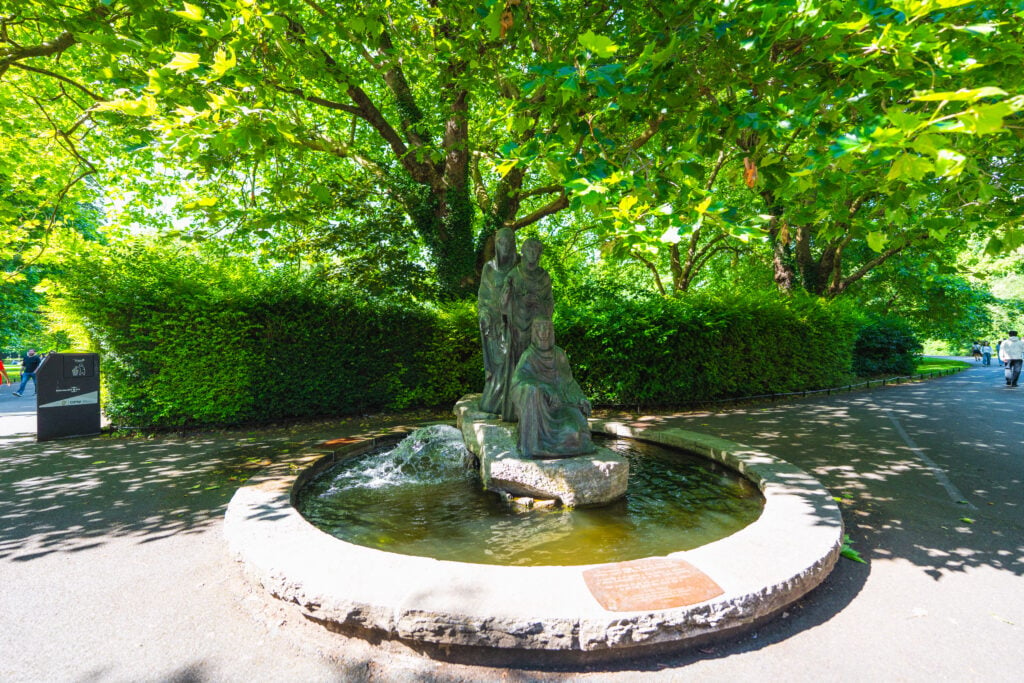
Located quietly beneath the shade of trees in St Stephen’s Green park in the heart of the city, you’ll find the bronze sculpture “Fountain of the Three Fates” (which is also known as the Three Fates Memorial).
Designed by the German sculptor Josef Wackerle, the bronze was erected in 1956. It was gifted to Ireland as a thank you to the Irish people for helping the German children and refugees after World War II.
Three robed figures, all standing at different heights, but one thing that connects them all is a small strand of (bronze) thread. The spool of thread which the tallest figure holds represents the thread of life. In Greek and Roman mythology, the Three Fates were believed to control each person’s destiny, spinning, measuring, and finally cutting the thread that marked the course of their life.
Bow Street Historical Bell
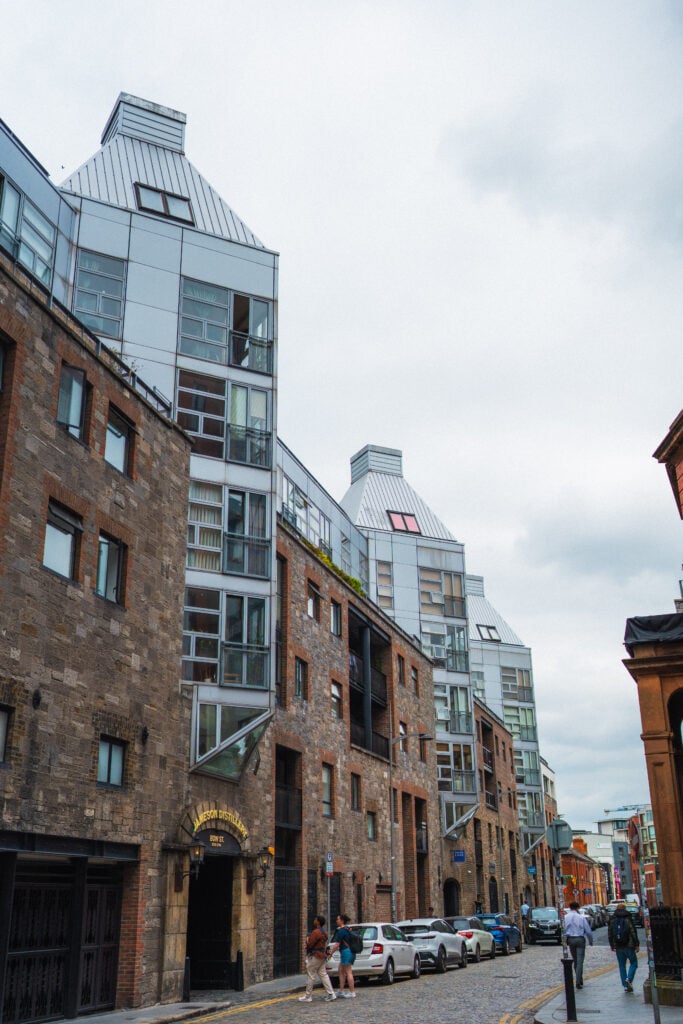
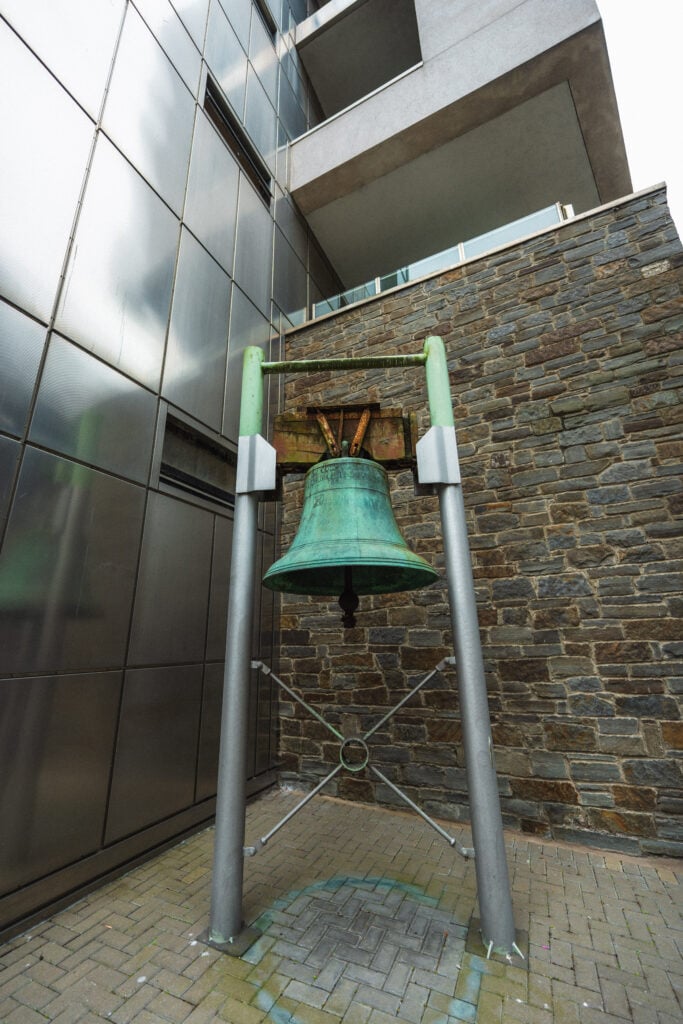
Easily stumbled across if wandering down Bow Street, this hidden gem remains pretty hidden…largely due to the fact that any information about its origins is absent. One thing we know for certain is that the bell features an inscription reading “Col. Joshua Paul 1761,” and that it was relocated to Bow Street, opposite the historic Jameson Distillery Bow St. (founded in 1780)…other than that, it’s a curious addition to Dublin’s streets.
Lilliput Press
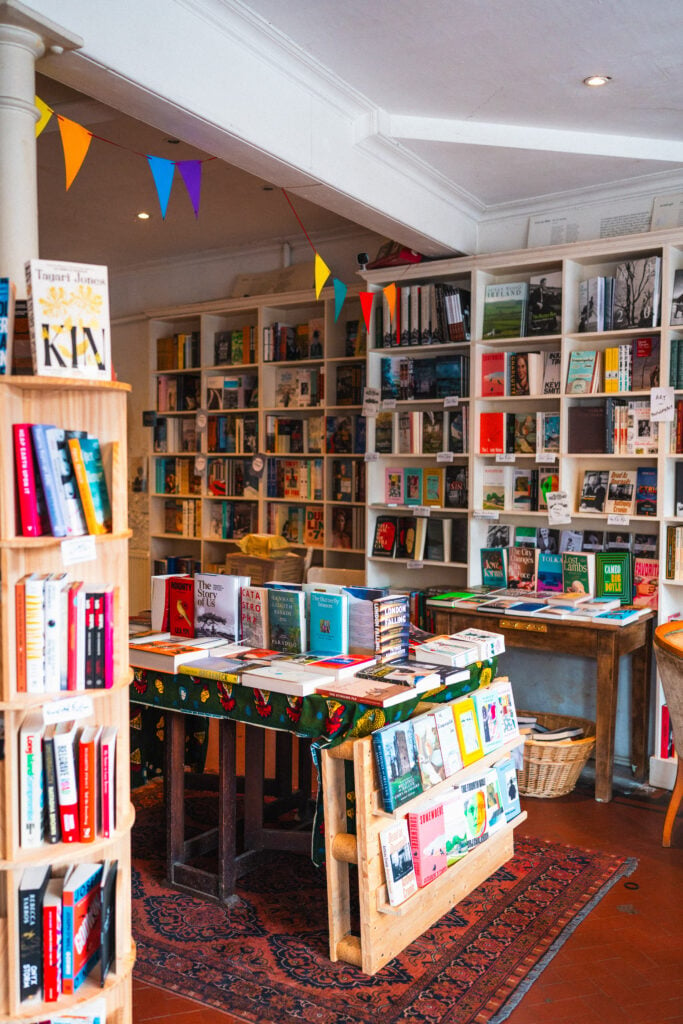
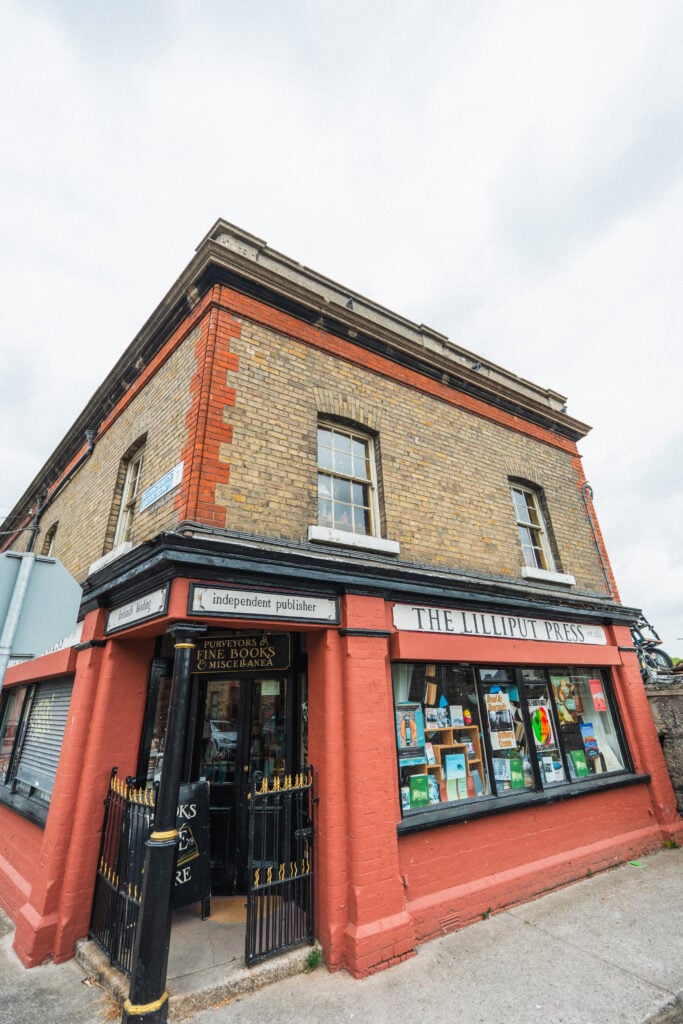
Founded in 1984, Lilliput Press is one of Ireland’s leading independent publishers. Tucked away on Arbour Hill, just a short walk from the Irish Museum of Modern Art, it doubles up as a bookshop and specialises in Irish history, literature, politics, biography and culture.
One of the most notable works associated with Lilliput Press is James Joyce’s Ulysses. In 1997, the press published the Dublin edition of Joyce’s celebrated novel, which is entirely set in the city.
Wood Quay Viking Walk
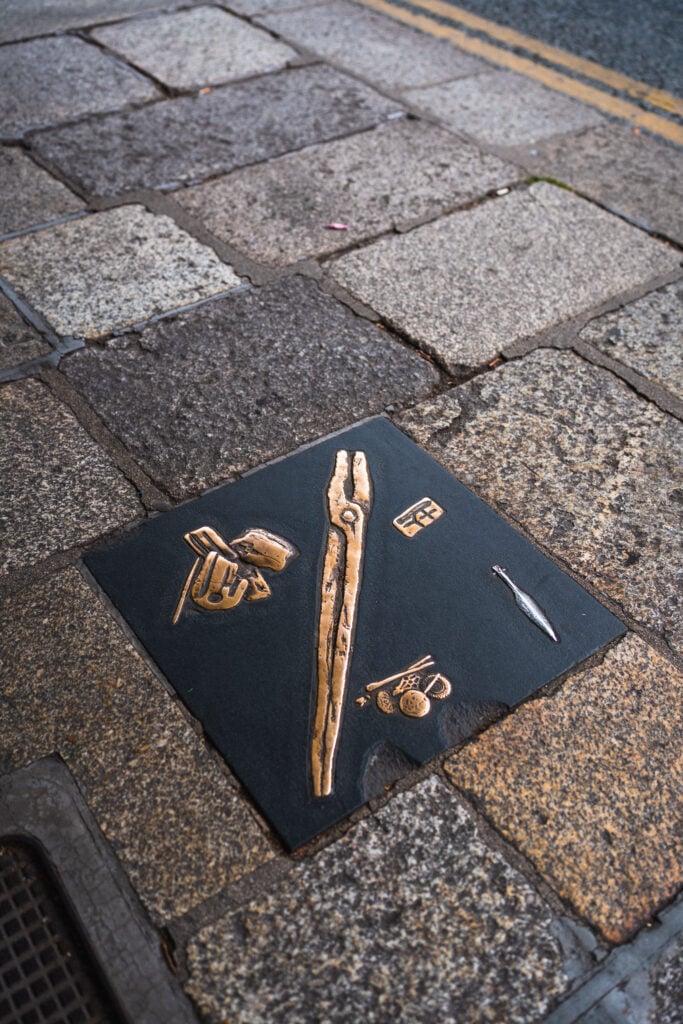
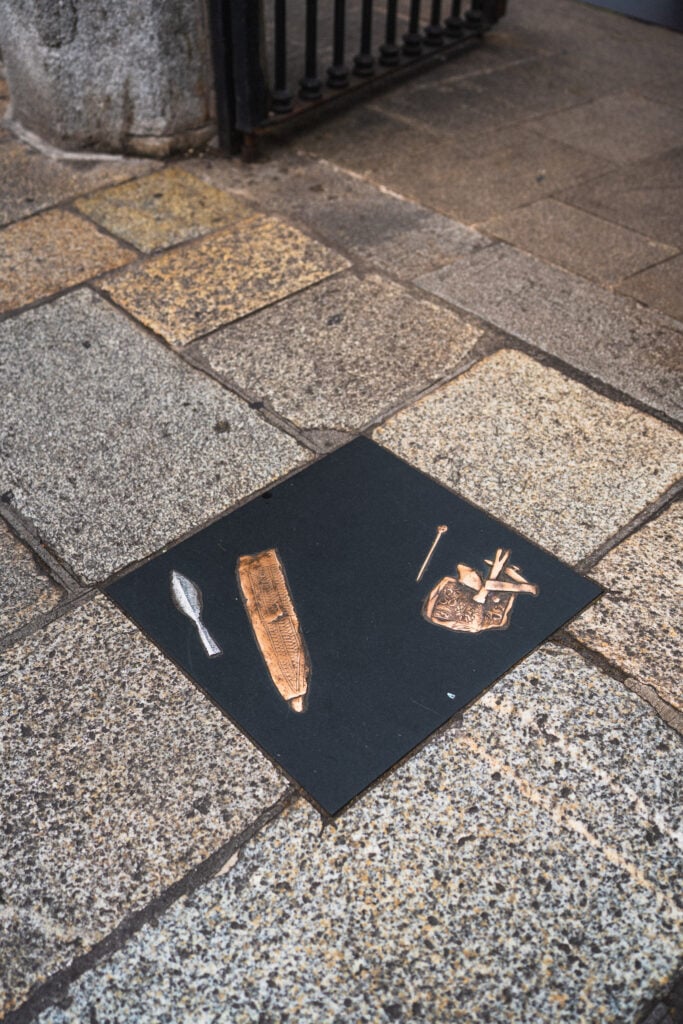
Wood Quay is often referred to as one of the most exciting Viking archaeological finds in all of Europe. In fact, the Irish capital’s name lends itself to Viking origins. The name Dublin actually comes from an Irish Gaelic place name, Dubh Linn (meaning “black pool”), which the Vikings adopted and pronounced as Dyflin when they built a major trading port here in the 9th century.
This is the Steine (or Long Stone), the very spot where Vikings first settled in Dublin in 841, laying the foundations for what has come to be one of Ireland’s most important cities. Today, traces of this fascinating Viking past lie in plain sight, with markers and plaques dotted around the area offering glimpses into the city’s fascinating Norse history.
Love Lane, Temple Bar
Another narrow lane in Dublin that’s adorned with artworks is a street known as Love Lane. While the official street name is actually Crampton Court, this small pedestrian passage actually takes its beloved moniker from a 2018 public art project by artist Anna Doran, where “Love Lane” is spelt out in pastel-shaded tiling, an artwork which grew out of Dublin City Council’s “Love the Lanes” urban revitalisation project to bring life to forgotten streets of the city.
Walk along the lane, and you’ll see tiles bearing all kinds of public submissions about love, whether that be heartbreak, confessions, song lyrics or poetry. In fact, it’s very similar to Paris’s ‘I Love You Wall’ or ‘Le Mur des Je t’aime’.
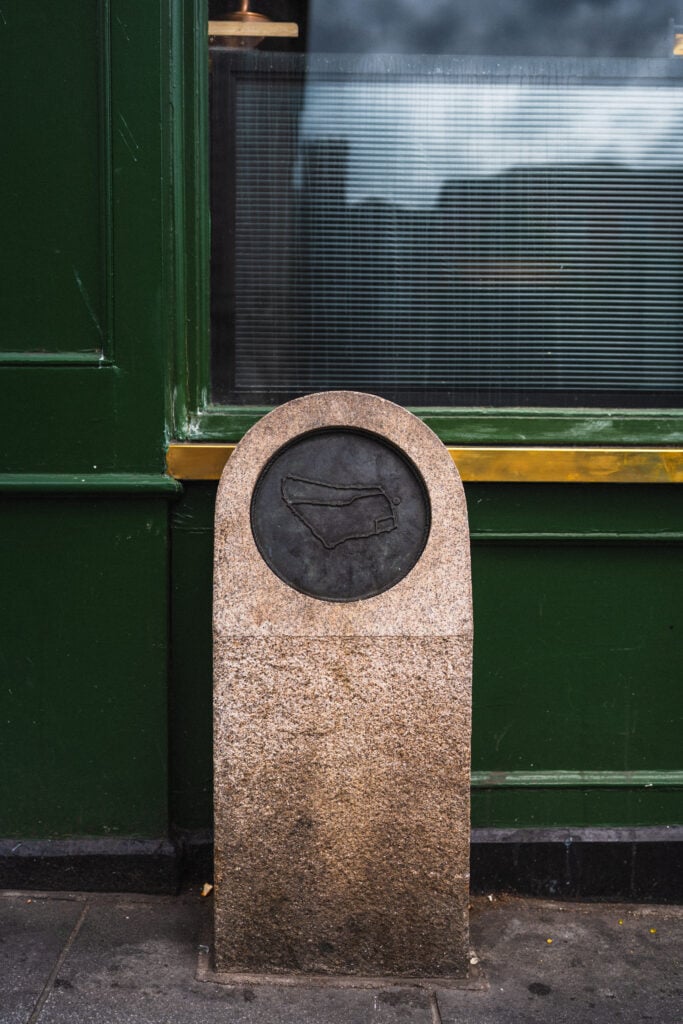
Dublin City Walls Marker
Hidden among the busy streets is a reminder of the city’s medieval past. This piece of granite serves as a marker, highlighting the location of the old Dublin City Walls, which once surrounded the city, protecting the settlement. Built from the 13th century, they gradually fell into ruin during the 1600s.
However, you can still see fragments of the city walls dotted throughout Dublin. Located in areas like Cook Street and St. Audoen’s Park, or close to Dublin Castle, you’ll find remnants of the once-grand defensive walls.
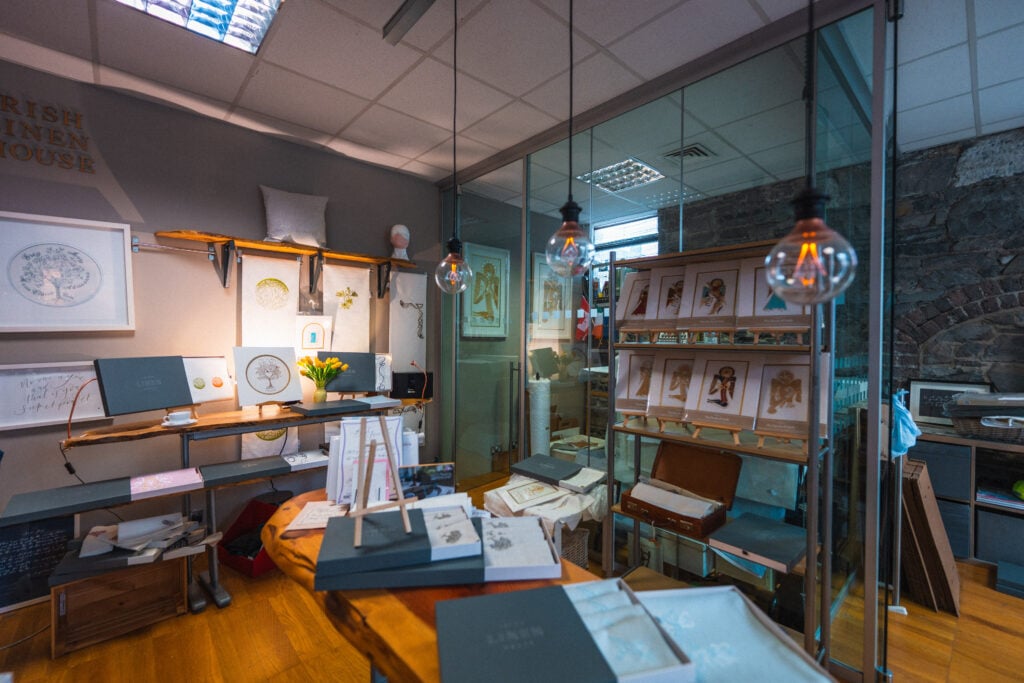
The Irish Linen House
Linen, or specifically, Irish linen, is deeply rooted in the country’s culture. Because of Ireland’s cool yet damp climate, it provides the perfect conditions for growing flax (used to make the fabric). And so, ever since the 11th century, the Irish have cultivated this sough after fabric. By the 19th century Ireland earned its reputation as a global linen powerhouse.
The Irish Linen House, located on Bow Street just down from the mysterious Historical Bell, is a family-run 100% Irish and sustainable crafting studio. Indeed, every single piece of fabric is stitched and designed locally. Their most famous commission, which you may well have heard of, is a 9-piece interpretation of the Book of Kells (featuring 2 million embroidered stitches) you can see it hanging inside Trinity College.
You can visit both the studio and the gift shop at the Irish Linen House. If you’re looking to purchase tableware or even looking for a custom intricate embroidery, this is definitely a special place to go!
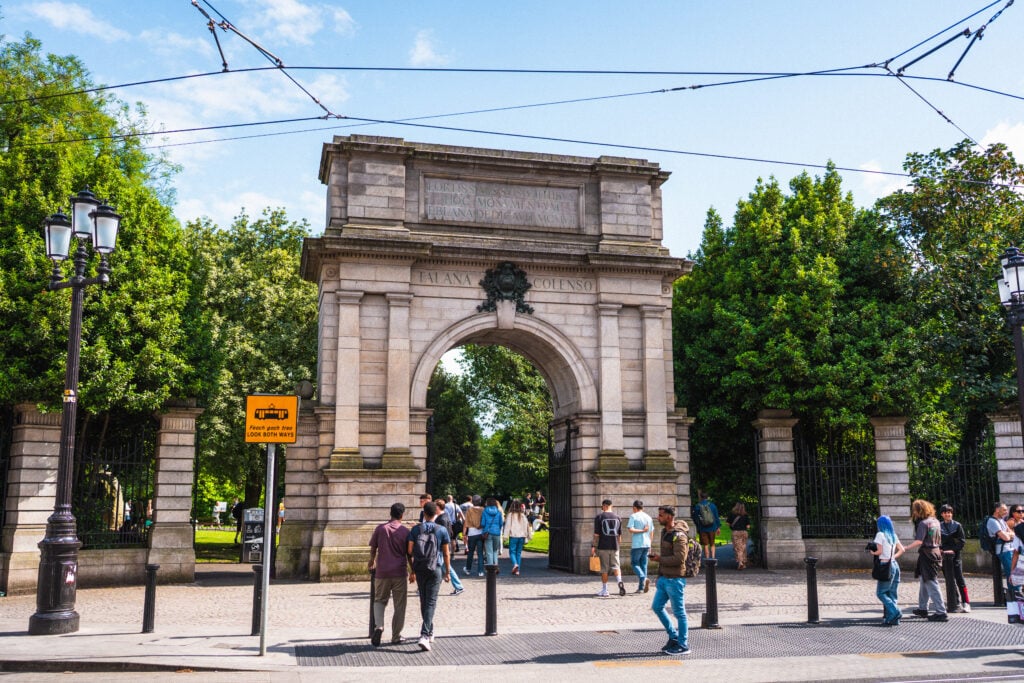
Fusilier’s Arch
If you’ve travelled to Rome, or just know about the landmarks in the Eternal City, then you may well recognise this archway, as it’s modelled after the famous Arch of Titus in Rome. The Royal Dublin Fusiliers were a famous infantry regiment of the British Army, formed in Ireland in 1881; they were then disbanded in 1922 following Irish independence.
In honour of the soldiers who died in the Second Boer War, this archway was erected in 1907. It serves as the main pedestrian and gateway entrance to St Stephen’s Green park.
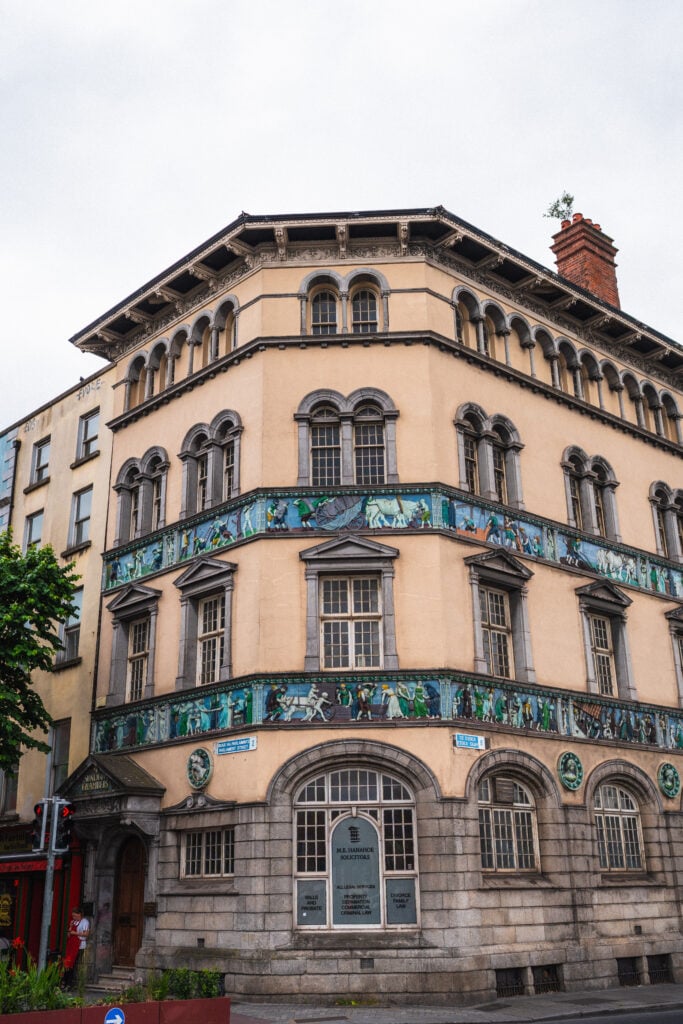
Sunlight Chambers
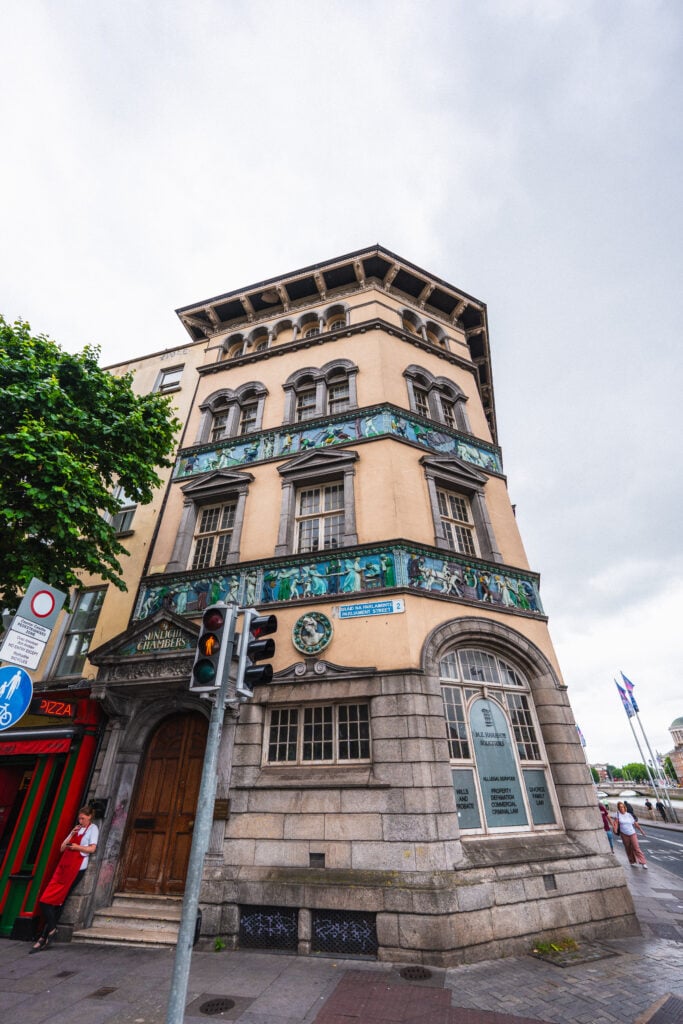
While the building itself houses commercial offices, it’s the extraordinary exterior that makes Sunlight Chambers worth seeking out. Famed for the bright ceramic wall friezes that adorn this romantic Italianate-style building, it certainly pokes out of Dublin’s pretty uniform, red-brick Georgian and grey stone Victorian styles.
If you’re able to look closely enough, you’ll see that the wrap-around friezes narrate a two-part story. Designed by Conrad Dressler in 1902, the top band illustrates the harsh, gritty realities of farming and laborious vocations that left people dirty and covered in grime. While the second reveals a solution, depicting the development of hygiene!
The Dawson Lounge
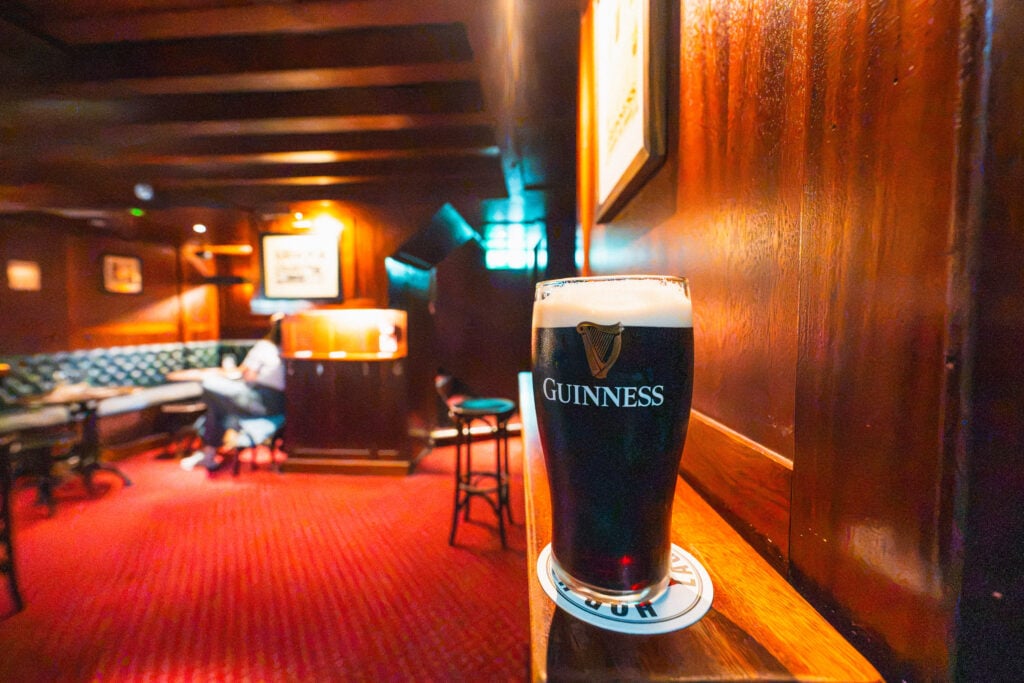
If there’s one thing that can’t be argued when it comes to Dublin is that the Irish know how to do good pubs. Indeed, the Emerald Isle and its capital are teeming with historic public houses that boast centuries’ worth of history. And if there’s one that deserves to be mentioned, it has to be Dublin’s smallest, The Dawson Lounge.
Hidden behind an unassuming little red door, The Dawson Lounge can only seat 26 people, but if you’re willing to squeeze in with standing room, they say they can fit around 40… Serving customers for nearly 200 years, the building’s official licensed premises and tavern history date back to 1832. With low lighting, moody lighting, red tones and plenty of wood, I recommend stopping in for a pint of Guinness to get a feel for one of Dublin’s old-school, cosy pubs.
St Michan’s Church
With roots dating back to the 11th-century, St Michan’s was the first church to be built on the North side of Dublin. Walk along Church Street for just a few minutes and away from the River Liffey, and you’ll stumble upon at what at a first glance seems like an unassuming church but is actually one of the best hidden gems of Dublin.
Head inside and an entirely different story unfolds. For, located in the crypt there are several mummies, dating back to between the 17th and 19th-centuries.
Although no one quite knows why the mummies, who were members of some of Dublin’s wealthiest families, are so well preserved, they can be visited during select times in the week for a small fee.

Sweny’s Pharmacy
The former 19th-century pharmacy turned bookstore and craft shop was once visited by James Joyce and is even listed as a location in his world-famous novel, Ulysses.
Today it’s a must-see for any bibliophile on a trip to the Irish Capital, is free to visit, and is the perfect place to cosy up during a rainy day in Dublin.
A visit to Sweny’s Pharmacy can easily be combined with a glimpse of Oscar Wilde’s birthplace (which is barely 100 foot down the road), as well as a trip inside the nearby National Gallery, which also happens to be free to visit! Otherwise, head in to Sweny’s to purchase a unique souvenir of your time in Dublin!

Marsh’s Library
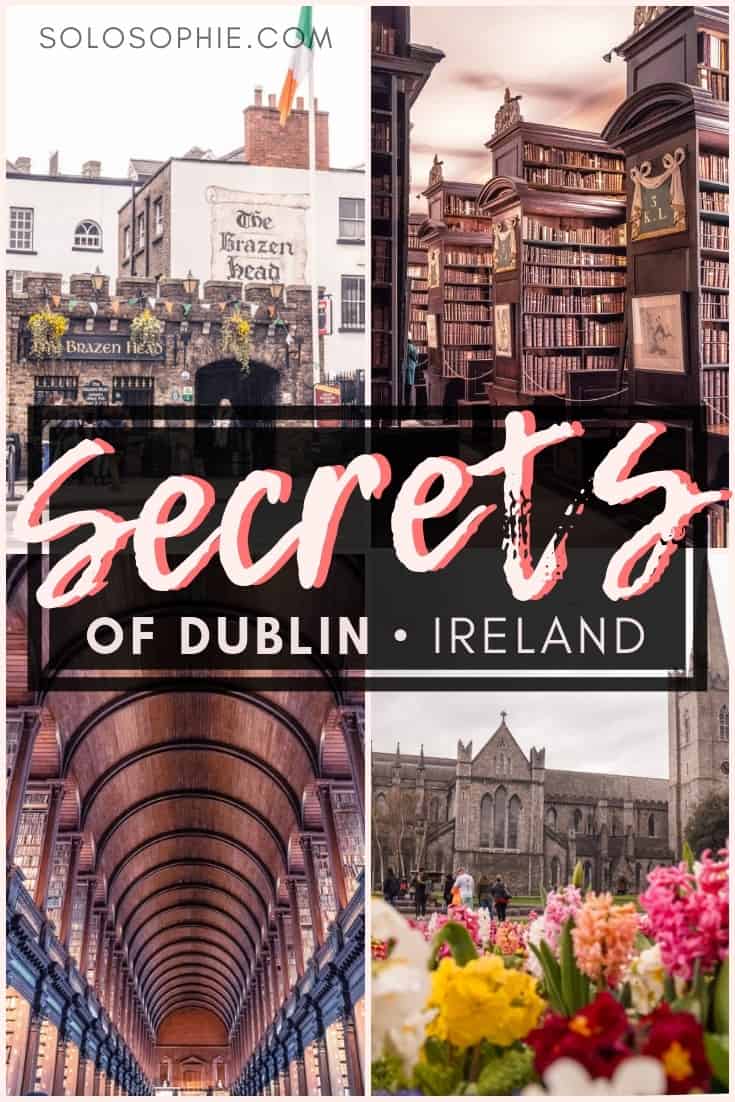
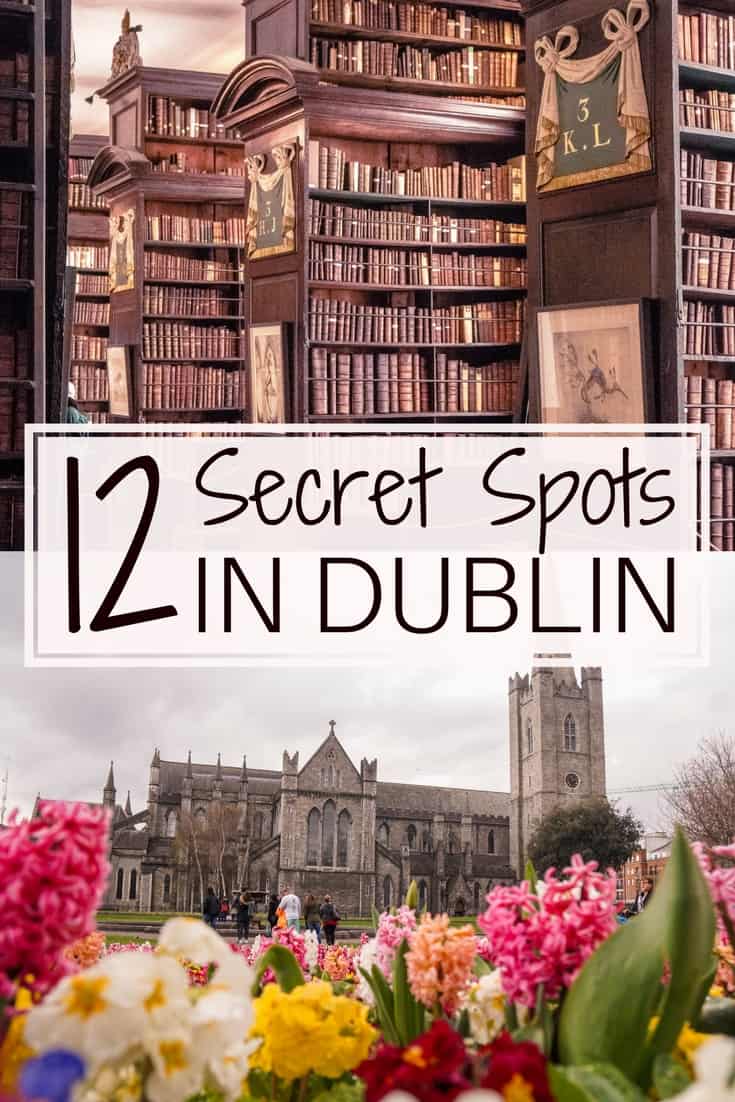
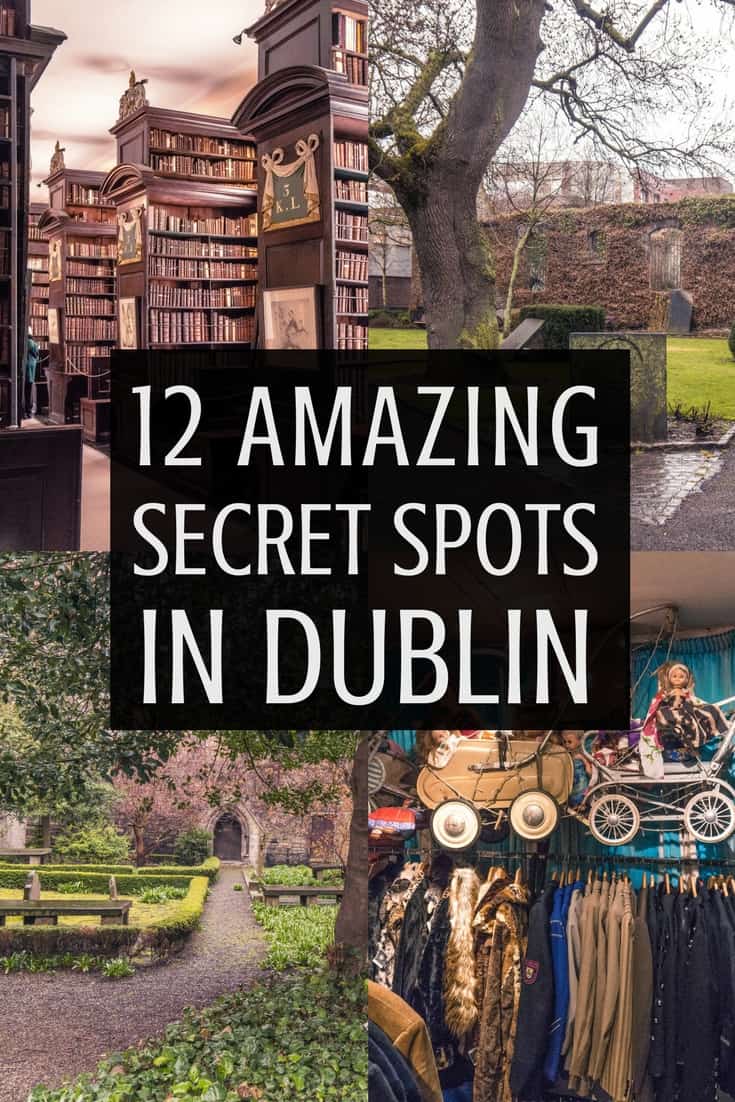
Just metres away from St Patrick’s Cathedral, behind a wrought iron gate and flowering cherry blossom trees, there’s a library dating back hundreds of years.
Once a place where Bram Stoker studied and Jonathan Swift read books from the library’s expansive collections, today Marsh’s library remains one of Dublin’s hidden gems.
So if you don’t want to brave the crowds at Trinity College Dublin to garner a glimpse of the Book of Kells, you can instead visit Marsh’s Library for the nominal fee of two or three euros, depending on whether you have a student card or not!
If you want to explore this library within the context of some of Dublin’s other greatest attractions, then why not take yourself on this free and self-guided walking tour?

Rory Gallagher Corner
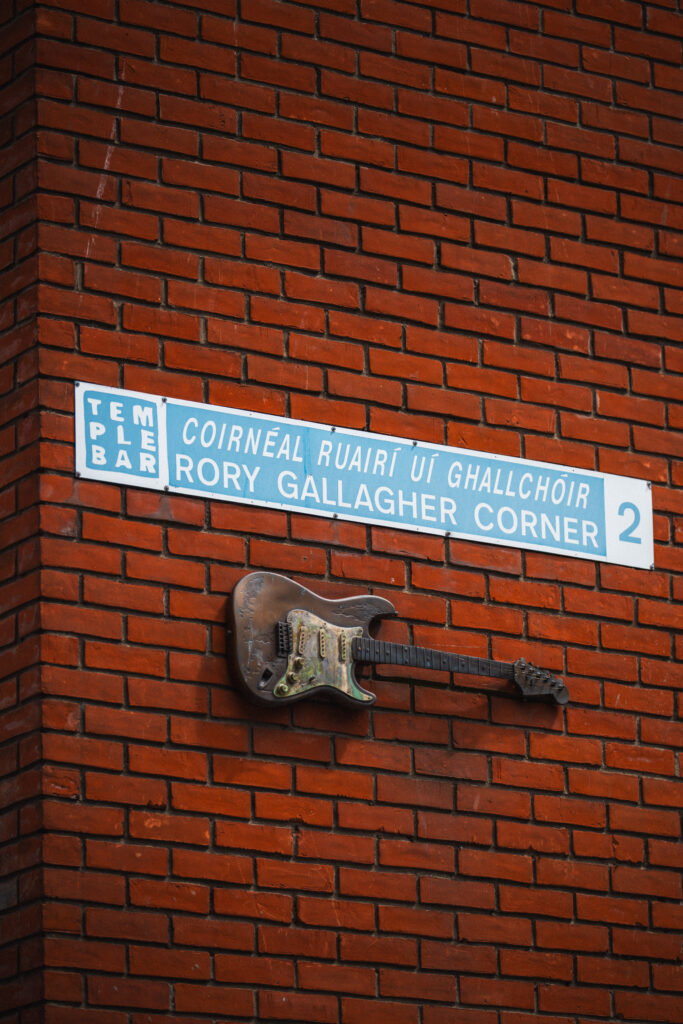
Not far from Temple Bar (i.e. the most famous drinking establishment in the city), Dublin secrets continue to unfold. After all, a small corner of one particular road is dedicated to Rory Gallagher.
Once there, look high up on a bricked wall of a local Meeting House and you’ll spot an exact replica of the guitar which once belonged to the iconic Irish singer. The original guitar was retired by Rory’s brother some time ago.
St Patrick’s Cathedral Park
Often forgotten in favour of more famous parks, the green space surrounding St Patrick’s Cathedral is filled with plenty of flowers (including fragrant hyacinths) throughout the spring and summer months. In fact, it’s easily one of the best places to see spring blossom in Dublin.
Best visited on a sunny day when the skies are not too overcast and the flowers are in bloom, this park makes for the perfect spot to hang out with friends or enjoy a picnic outdoors.
If you wish to enter inside the Cathedral itself, you should know that you’ll have to pay to step inside the ecclesiastical building (this is the same with most of Dublin’s major churches). Purchase your St Patrick’s Cathedral: Self-Guided Cathedral Admission ticket here in advance.

Ruins of St Kevin’s Church
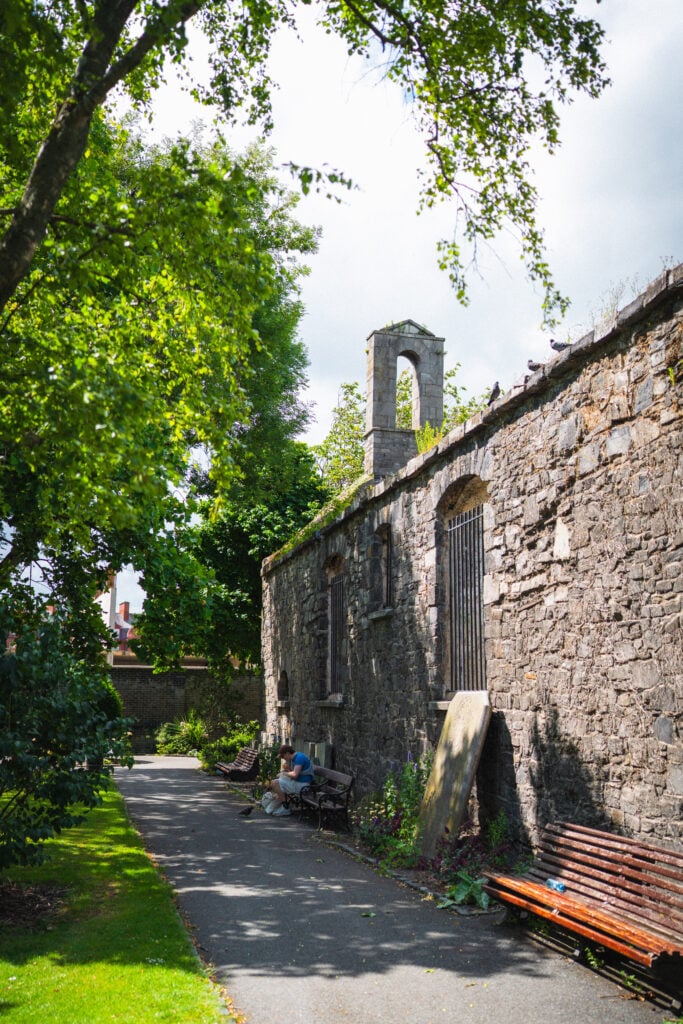
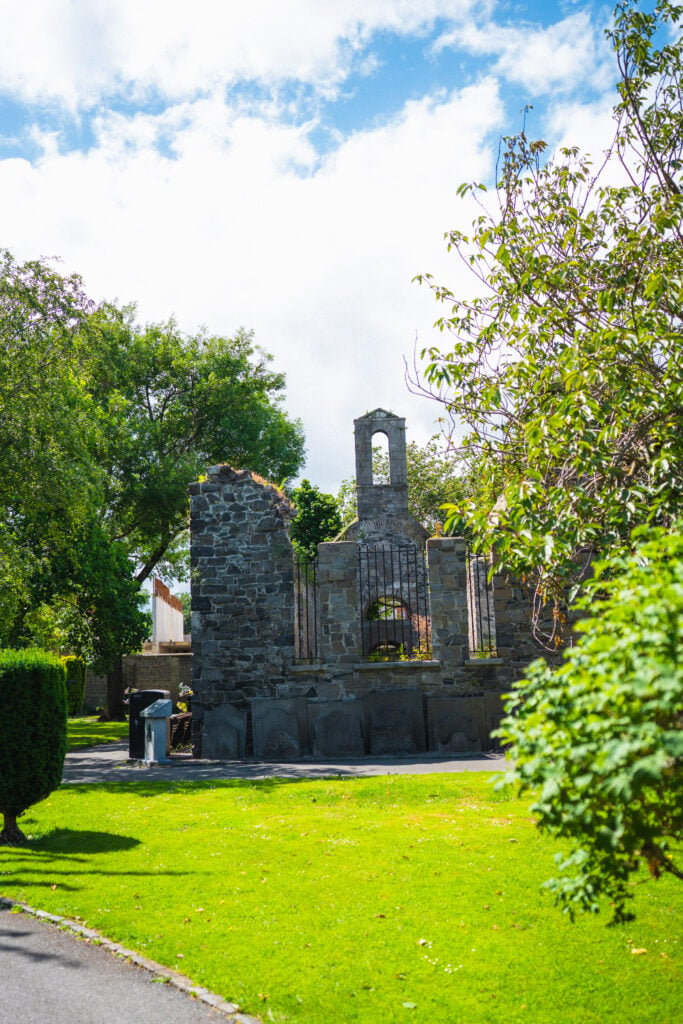
As an abandoned church with oodles of history that has since been transformed into a public park, the haunting ruins of St Kevin’s Church are well worth a visit on any trip to the Camden area of the city.
While elsewhere in the district is home to a canal, and countless hipster coffee shops, St Kevin’s Park provides a moment of calm for those seeking a quiet spot.
Huguenot Cemetery
The 17th-century graveyard of Huguenot Cemetery (known in French as Cimetière Huguenot de Dublin) is situated in the very heart of town and dates all the way back to 1693, and the people buried in the cemetery are descendants of the Huguenots, a once-persecuted religious group who fled France.
Unfortunately, the cemetery is closed to visitors full-time. However, it can still be glimpsed through wrought-iron gates on Merrion Street, just a short walk from St Stephen’s Green. Getting a little lost in Dublin is how I first caught a peek of the 17th-century burial site!

Oscar Wilde Statue
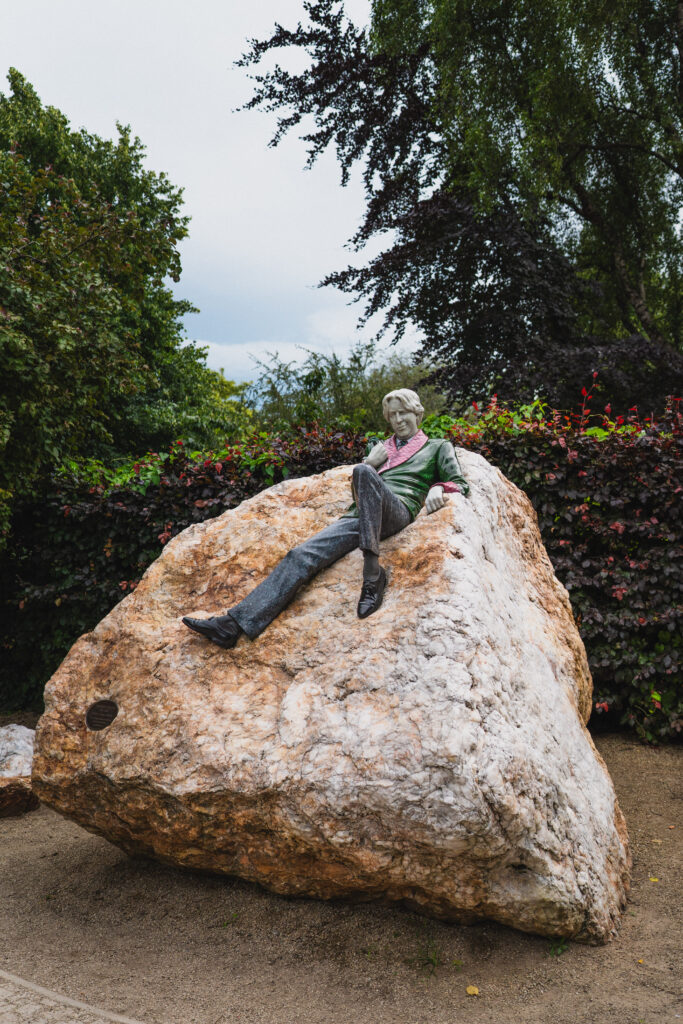
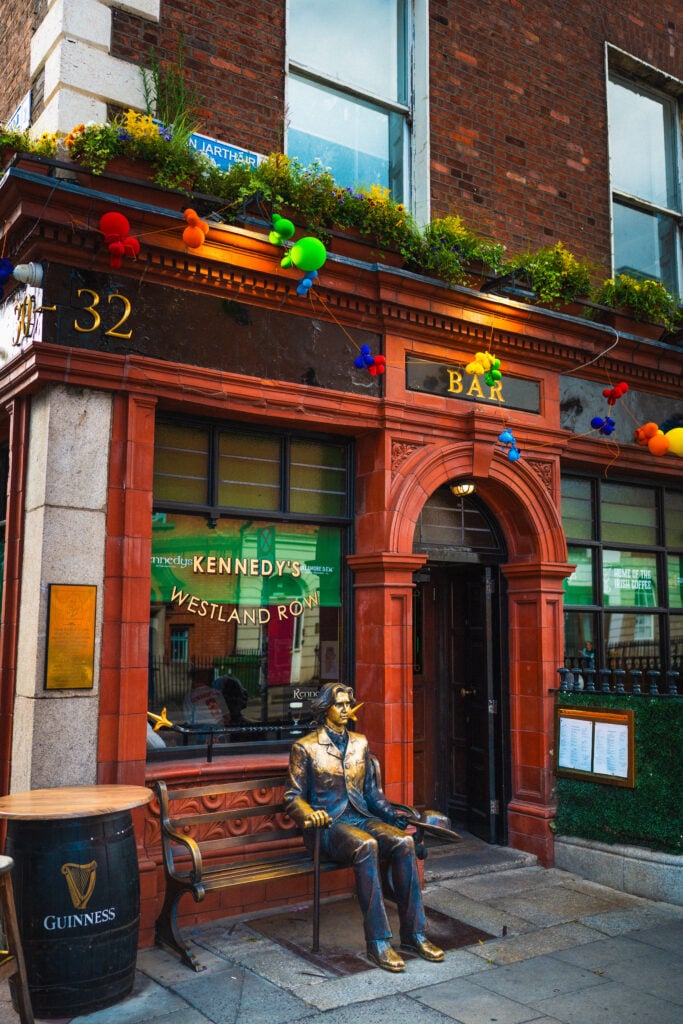
The rather amusingly appointed Oscar Wilde is a nod to the literary nature of Dublin. Situated in a park just across from the Georgian residence where the acclaimed writer once lived, the colourful life-sized statue is well worth a peek on any wander through Merrion Square.
Saint Valentine’s Relics (Whitefriar Church)
Of all the secret spots in Dublin listed in this article, the relics of Saint Valentine may well be the most unusual. But yes, the real Saint Valentine is said to be buried in Whitefriar Church and a small plaque and ornately decorated shrine now announce the location of his remains which were donated to the church by Pope Gregory XVI during the 19th-century.
And so, if you’ve got a little time spare when spending a weekend in Dublin, be sure to head to Whitefriar Church! Of all the secret spots in Dublin, other highlights of the off the beaten path ecclesiastical building include some stunning carvings and a life-sized wooden figure of Our Lady of Dublin.
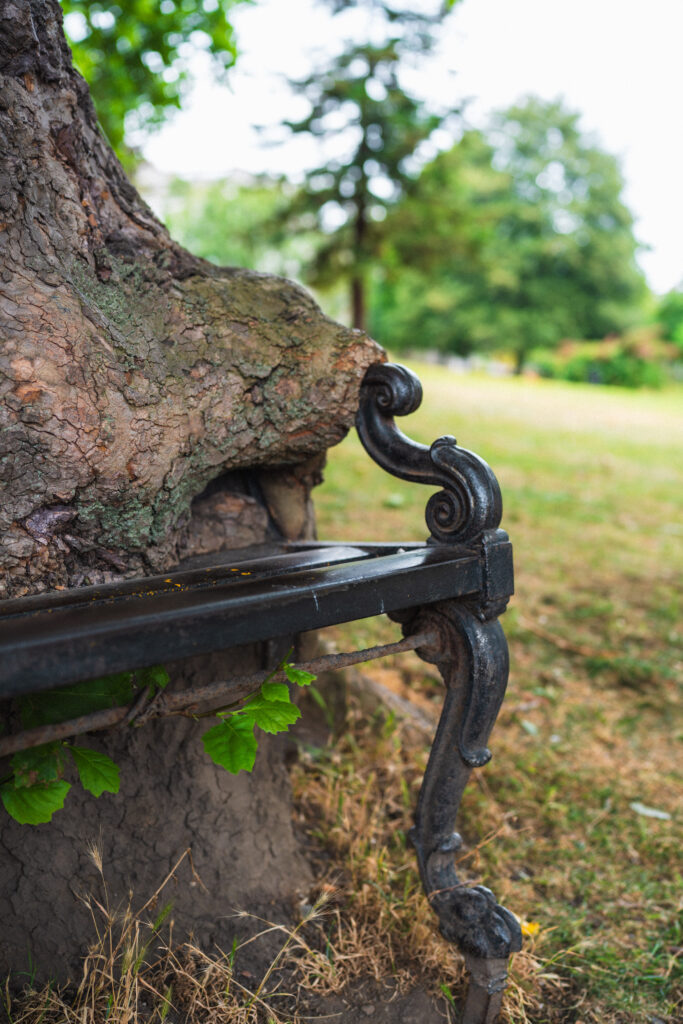
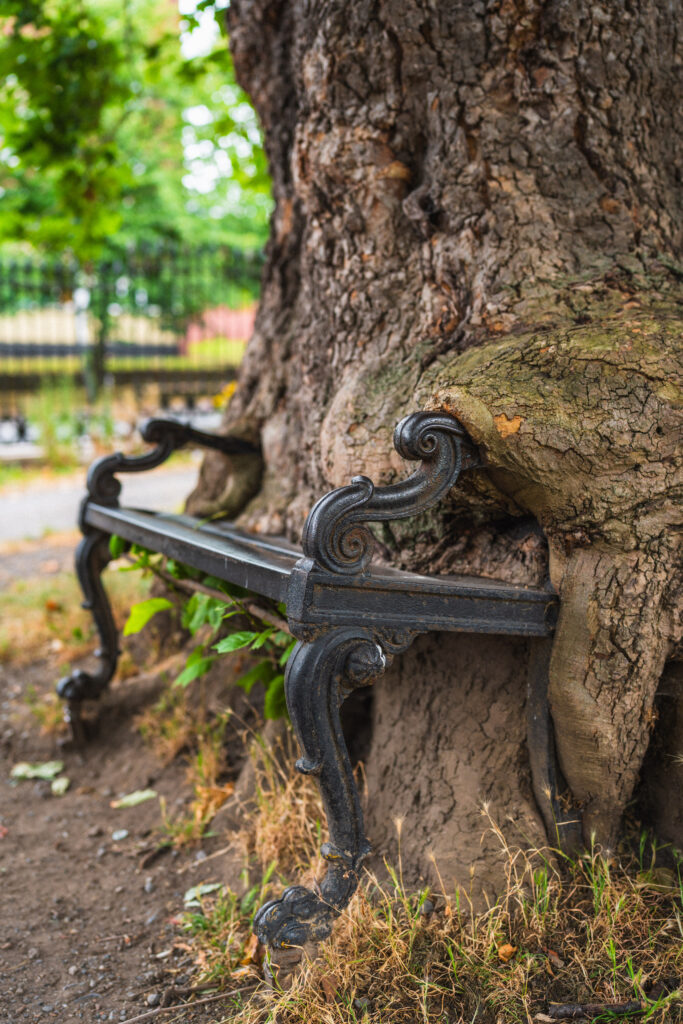
The Hungry Tree
You may have seen the name ‘The Hungry Tree’ and been a little confused as to what that means. Well, it probably actually means exactly what you’re thinking!
After all, one of the trees in Kings Inn Park has actually started growing over one of the green space’s benches, quite literally eating it up! Thanks to the rise of social media, the Hungry Tree of Dublin has become more popular than ever, so you should head there earlier in the day and midweek if possible in order to snap a photo of the famous tree.
Iveagh Park
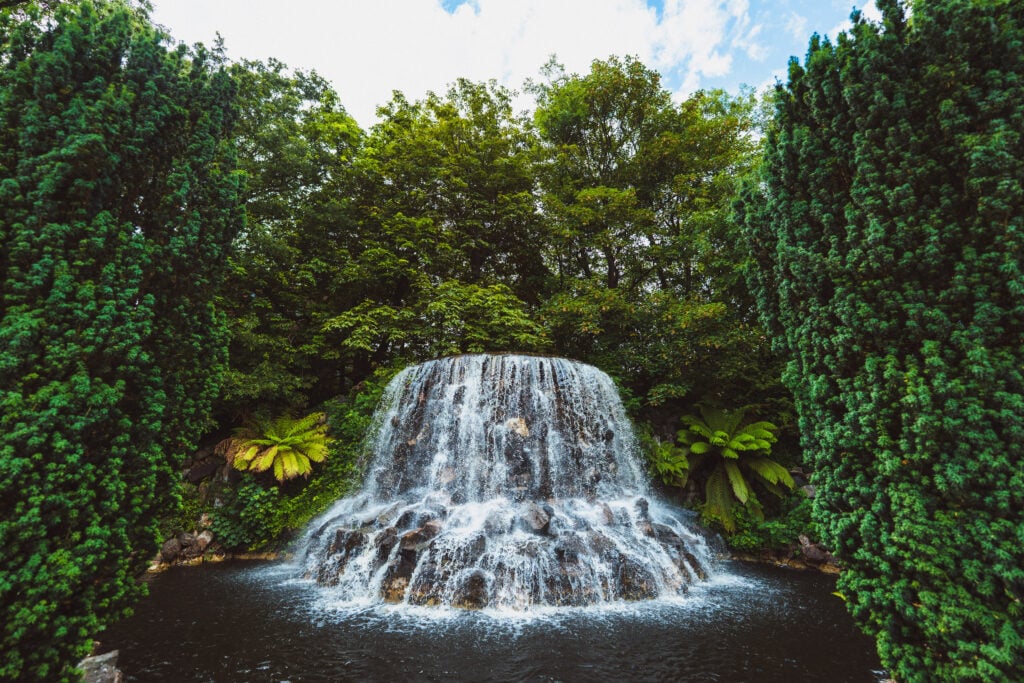
Yet another Dublin park which boasts its fair share of tantalising secrets is that of Iveagh Park, which can be found in the very heart of the hustle and bustle of the Irish capital. Iveagh Park was created in the latter half of the 19th-century and boasts features such as its own waterfall and a yew tree maze.
Dodder Rhino
One of Dublin’s most unusual hidden gems is also one of its strangest mysteries. How did a life-sized rhino sculpture end up in the middle of the River Dodder without anyone knowing who put it there?
In 2002, a large cement-filled rhino sculpture suddenly appeared in the river, leaving locals curious about its origins. Located beside The Dropping Well, one of Dublin’s oldest pubs, the sculpture quickly became a local landmark, with the pub owners even affectionately referring to the river-dwelling rhino as their ‘pet’.
The owners later held a competition to officially name the Dodder Rhino, with suggestions including ‘The Milltown Muddler’ and ‘The Plodder in the Dodder’.
Skerries
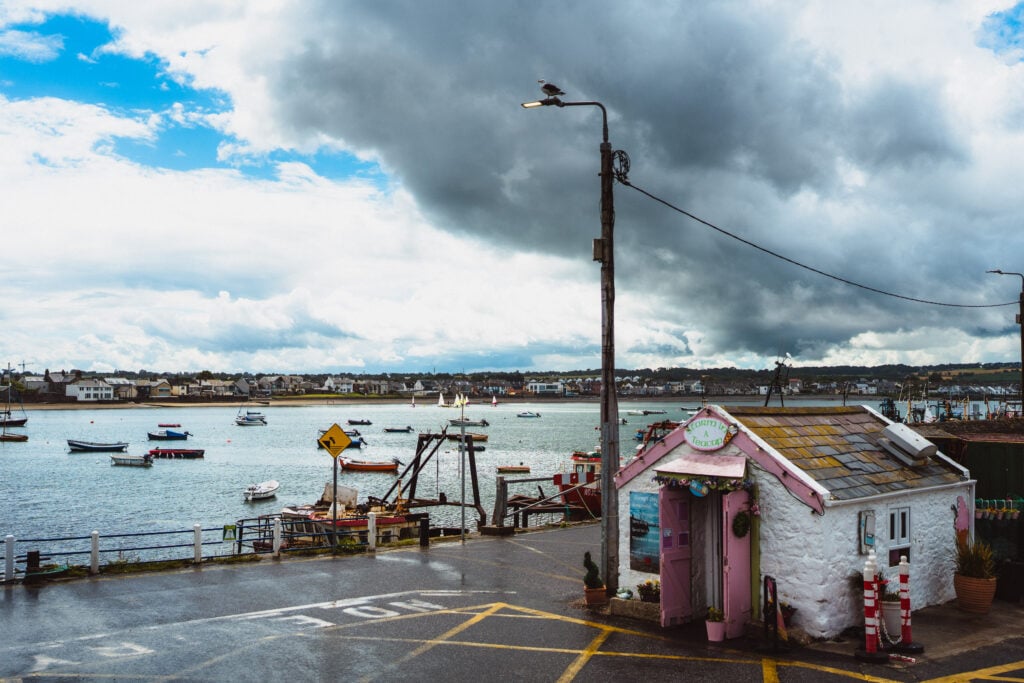
While most people heading out for a day trip from Dublin wishing to head to the sea go to Howth (which is certainly beautiful and not to be missed if time allows). However, Skerries might just be one of the best day trips from Dublin.
This scenic coastal town is around 15 miles or so north of Dublin. Rich in its fishing heritage, sandy beaches, and historic windmill, it makes for a charming escape from the hustle and bustle of city life. And it feels fairly untouched by tourism, offering a more authentic escape into Ireland.
Watch the vlog
Spend three perfect days in Dublin with me, exploring just how many hidden gems the Irish capital holds!



I lived in Dublin for almost 3 years, and I knew only a few places of this list! I have to say, to me st Patrick’s park and Oscar Wilde statue are pretty famous and touristic, but maybe I am wrong! Anyway thanks for sharing, I am definitely going to see one or two of those places 🙂
I’ve been to Dublin like 3 times and not seen most of this. Will definitely need to check them out next time I go, especially Marsh’s library and the vintage store 🙂 xx