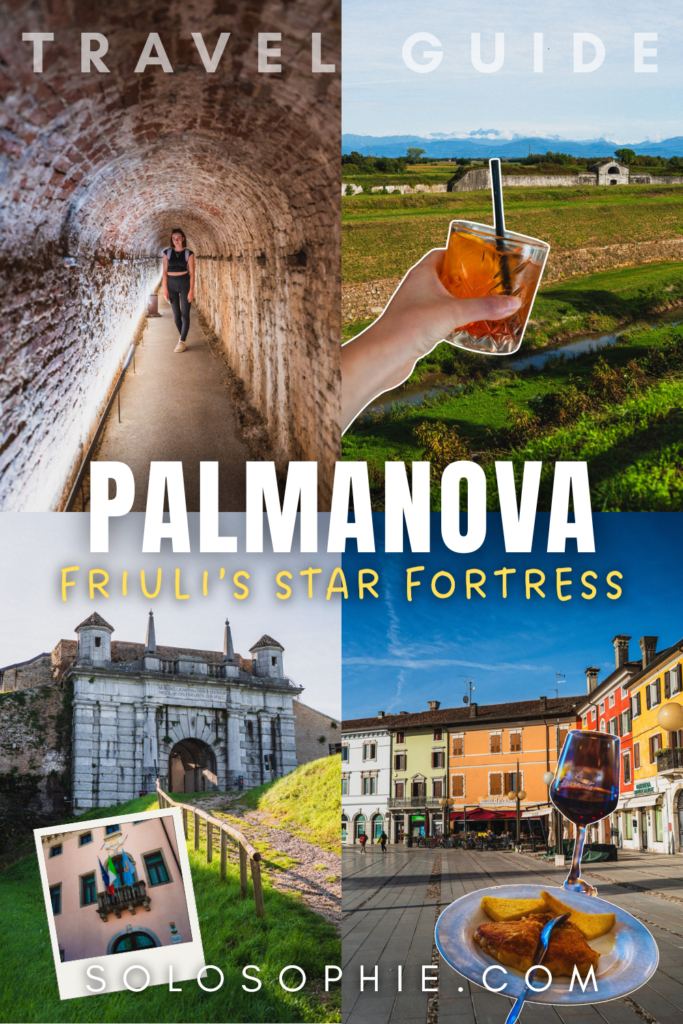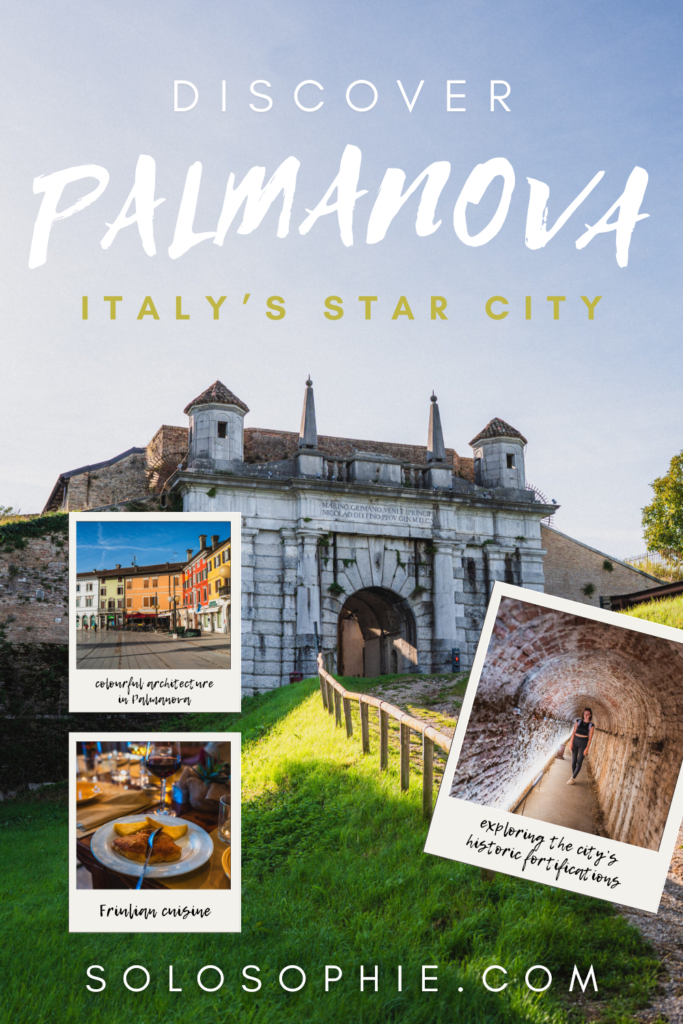
Palmanova Italy Travel Guide: Best Things to Do in Friuli’s Star Fortress
Last Updated on 12th January 2026 by Charlotte Nadeau
This post may contain affiliate links. Please check out my privacy policy and disclosure for more information.
Palmanova is renowned for its perfectly preserved 16th-century star-shaped fortress, now recognised as a UNESCO World Heritage Site. Wandering its streets feels like stepping back in time, making it a particularly unique destination for those with an interest in military history and architecture. In this guide, we’ll cover the very best things to do in Palmanova, along with where to eat and stay. Here’s your ultimate guide to exploring Friuli’s Star Fortress!
Contents
A brief history of Palmanova
The history of Palmanova can be traced back to the 7th October 1593, when the Venetian Republic founded the settlement, deciding it to be a revolutionary new type of fortified town. Its founding date commemorated the Christian victory at the Battle of Lepanto (1571), and the city also honours Saint Justina, chosen as its patron saint.
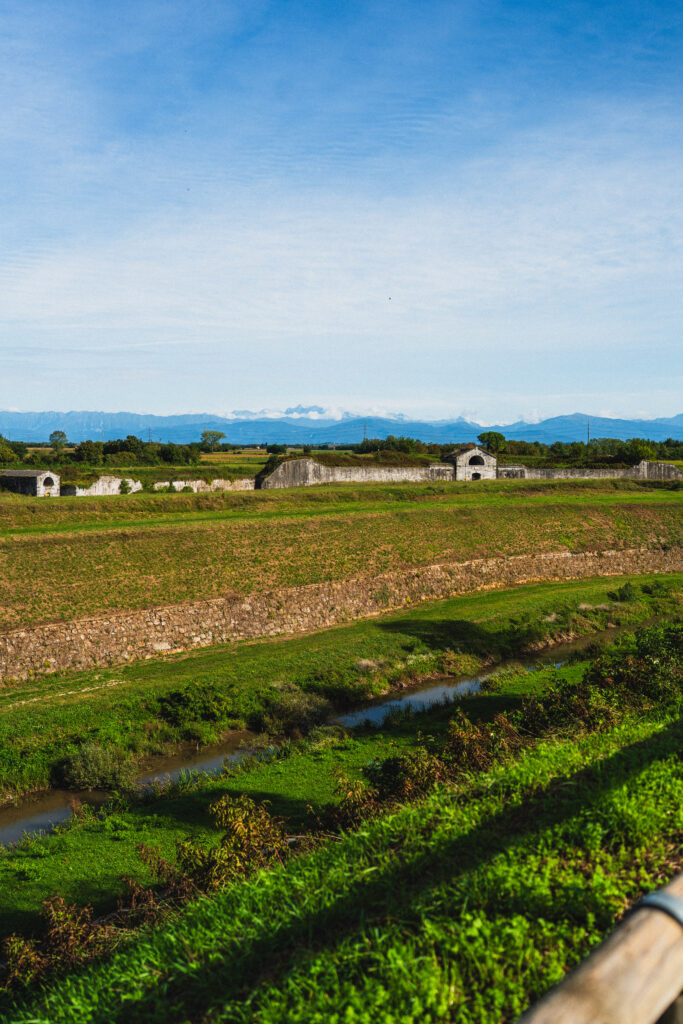
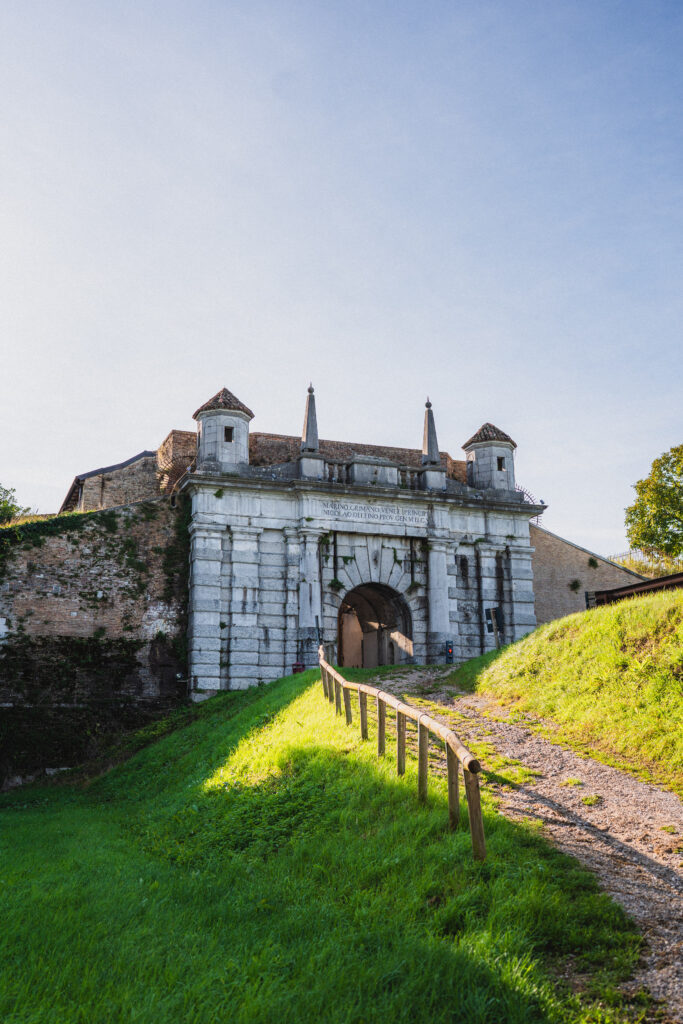
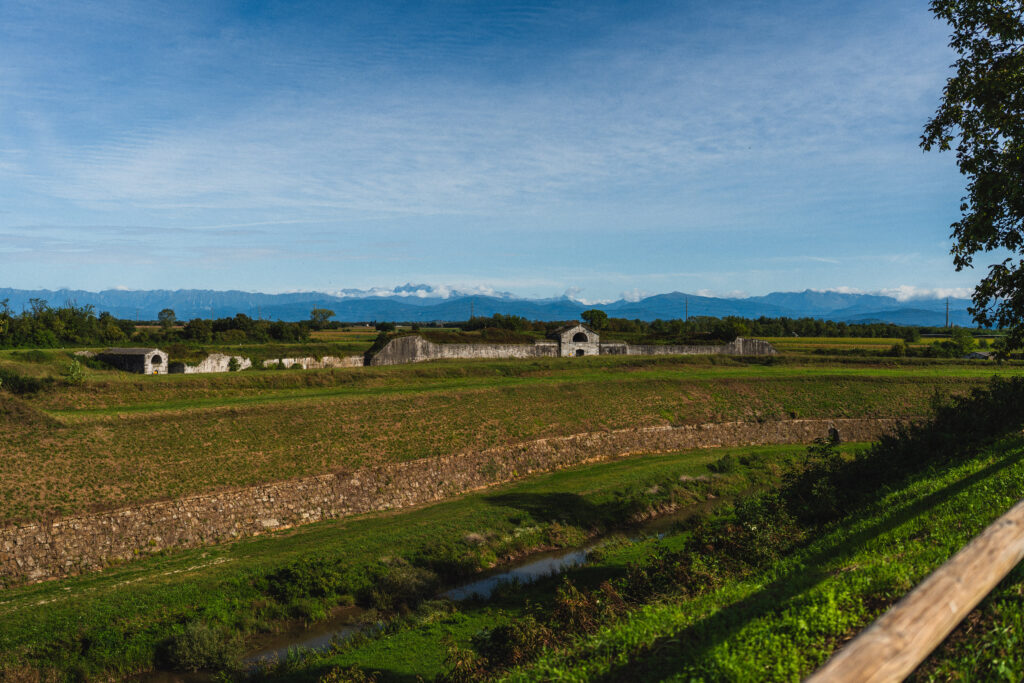
The city was designed by Vincenzo Scamozzi, constructed as a nine-pointed star fortress, incorporating the most advanced military innovations of the 16th century. The idea behind it was that each of the star’s points was strategically designed to defend one another, while the ramparts, surrounding moat, and three guarded gates, provided even more additional protection.
The first circle of fortifications alone, with a total circumference of around 7 km, took 30 years to complete. The second phase of construction took place between 1658 and 1690, with the outer fortifications completed under Napoleonic rule between 1806 and 1813.
In 1815, Palmanova came under Austrian rule until 1866, when it was annexed to Italy along with Veneto and western Friuli. Until the end of World War I, it was one of the easternmost towns along the Italian-Austro-Hungarian border and served as a military zone.
In 1960, Palmanova was officially declared a national monument, cementing its historical and architectural significance.
Today, Palmanova is home to around 5,400 residents and is widely regarded as an underrated gem of Italy. Its unique star-shaped design as a perfectly planned Renaissance fortress city has earned it UNESCO World Heritage status.
Aside from its masterpiece of military engineering, Palmanova boasts local charm, authentic experiences, interesting cultural overlaps and a quieter escape from the crowds of Italy’s more popular cities like Venice, Florence, or Rome.

Please note: Palmanova in Friuli-Venezia Giulia, Italy, should not be confused with Palmanova in Mallorca, Spain, a beach resort town.
Friuli
To get a better understanding of Palmanova’s historical and cultural context, it’s first important to understand the region it sits within – Friuli.
Friuli is a historic region in northeastern Italy, forming part of the modern region of Friuli-Venezia Giulia, and it is best known for its strong cultural identity, scenic landscapes, and rich heritage. Thanks to its location near the borders of Austria and Slovenia, the area of Friuli blends Italian, Alpine, and Central European influences, which can be seen through its architecture, cuisine, and local traditions.
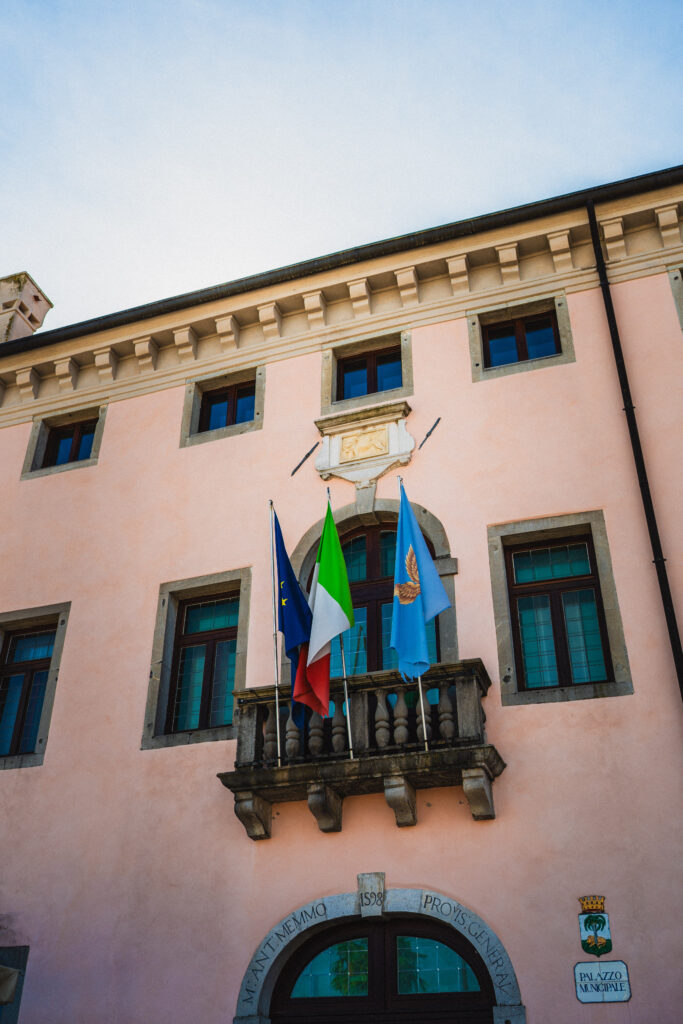
The region even has its own language and distinct flag. The flag features a golden eagle set against a blue background. The eagle was the emblem of the powerful Patriarchate of Aquileia (1077–1420), which ruled Friuli as a semi-independent state, and symbolises the region’s enduring connection to the ancient Roman city of Aquileia, whose name derives from the Latin word for eagle, aquila.
Friulian language, or Friulan, has around 600,000 speakers, most of whom are bilingual in Italian. Sometimes referred to as Eastern Ladin due to its shared linguistic roots with Ladin, the Friulian language has evolved over the centuries under the influence of neighbouring languages that include German, Italian, Venetian, and Slovene.
The Layout of Palmanova
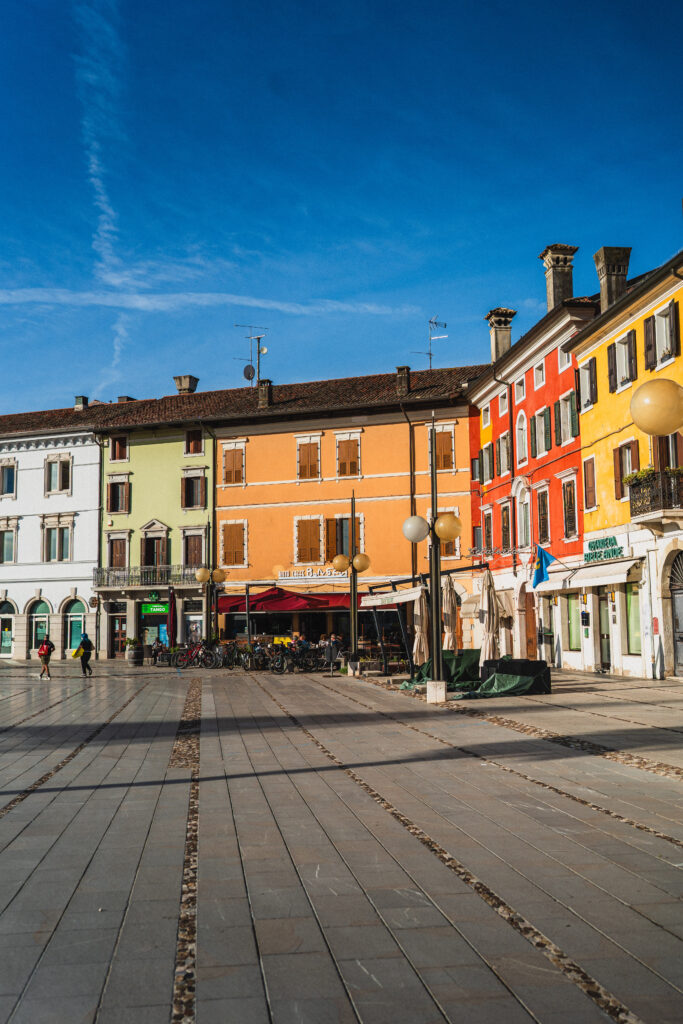
The overall layout of Palmanova is pretty unique in the fact that it’s designed as a star-shaped fortress, and remains to be one of the best preserved examples of Renaissance military architecture in Europe. The Piazza Grande is a hexagonal square that serves as the central point and heart of the city.
Three main roads lead from three guarded entrance gates directly to the central hexagonal square, Piazza Grande. The roads take their name from each of the gates: Porta Udine, Porta Cividale, and Porta Aquileia. Palmanova also features 15 smaller radial streets that lead out to the city’s perimeter.
From here, you can wander the streets and appreciate the military planning that went into creating this unique city, as well as marvel at the beautiful historic architecture that has been remarkably well-preserved.
Best Things to do in Palmanova
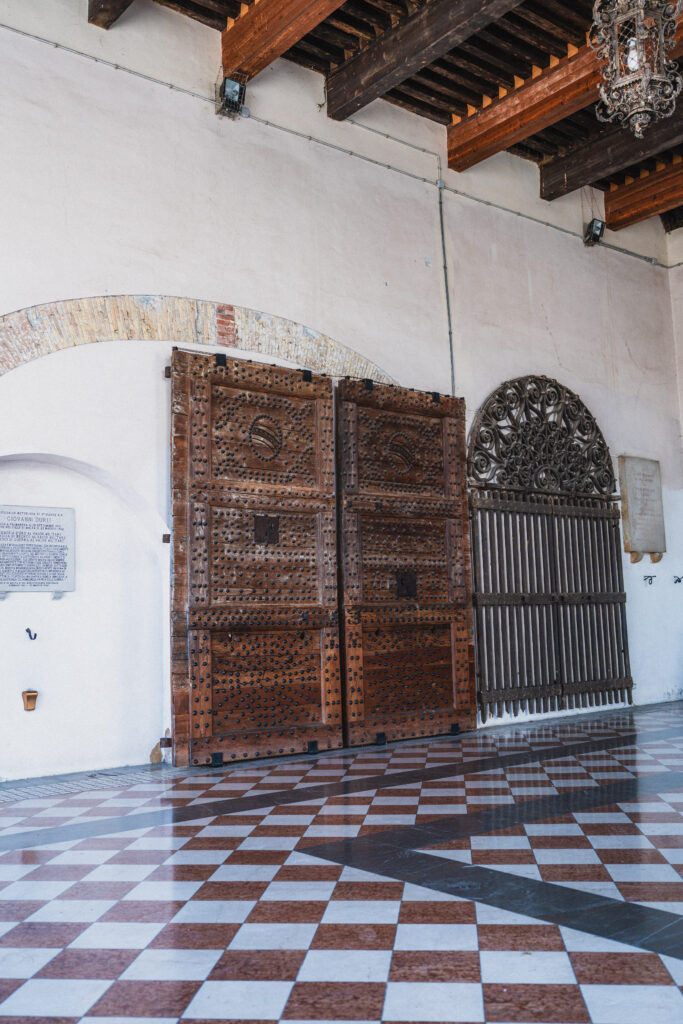
Loggia dei Mercanti
The Merchants’ Lodge and Grand Guard Lodge, as it is translated, is a seven-arched building that was built sometime between 1620 and 1625. It can be found located close to the Palace of the General Supervisor, and its name and prominent location reflect its former role as the headquarters for the troops, halberdiers, and cappelletti, who were responsible for protecting and accompanying the General Superintendent.
This area of the city is completely free to explore, and offers a better understanding of a key part of Palmanova’s historic military architecture.
Palmanova’s Cathedral
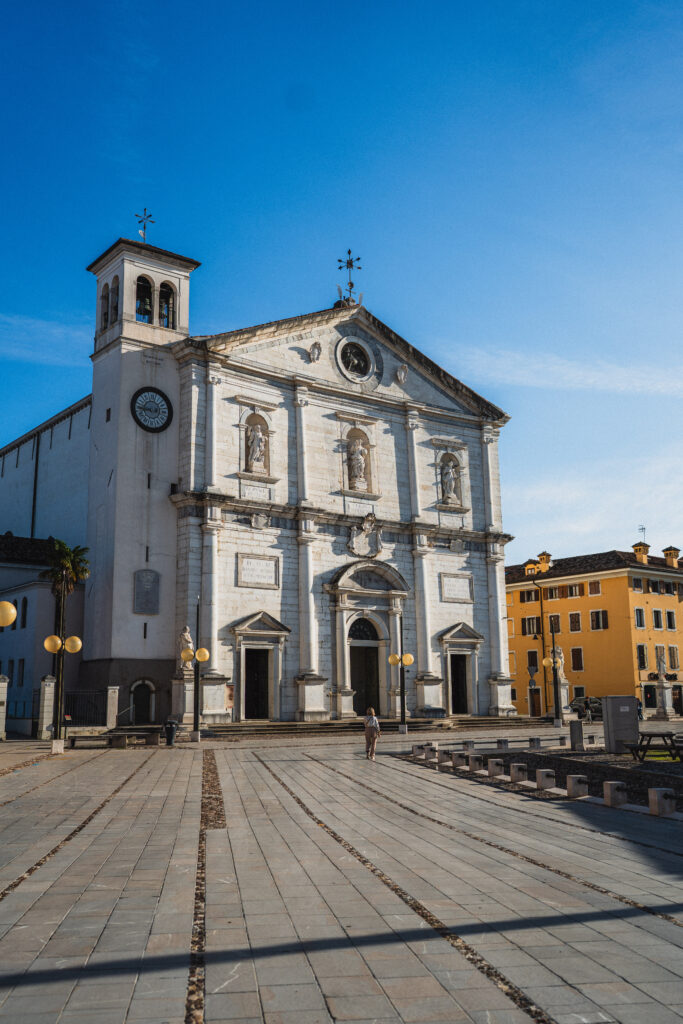
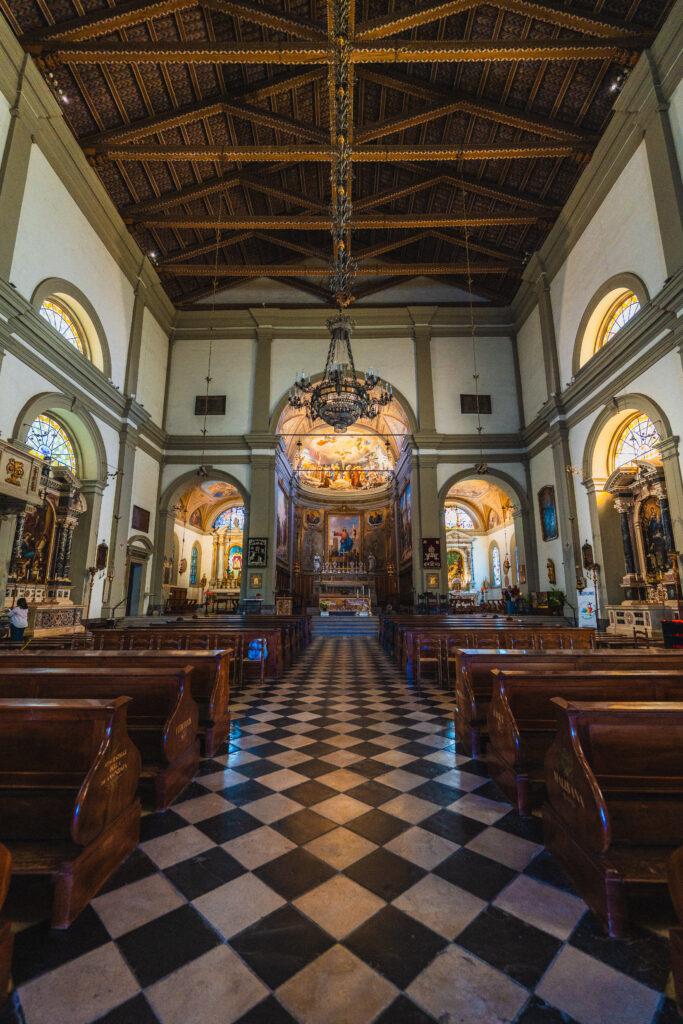
The Church of the Most Holy Redeemer (Chiesa del Santissimo Redentore) is Palmanova’s Duomo, and the main place of worship. The first stone of the cathedral was laid in 1603, but construction of the site was slow due to a lack of funding and difficult relations between Venice and the Papal State.
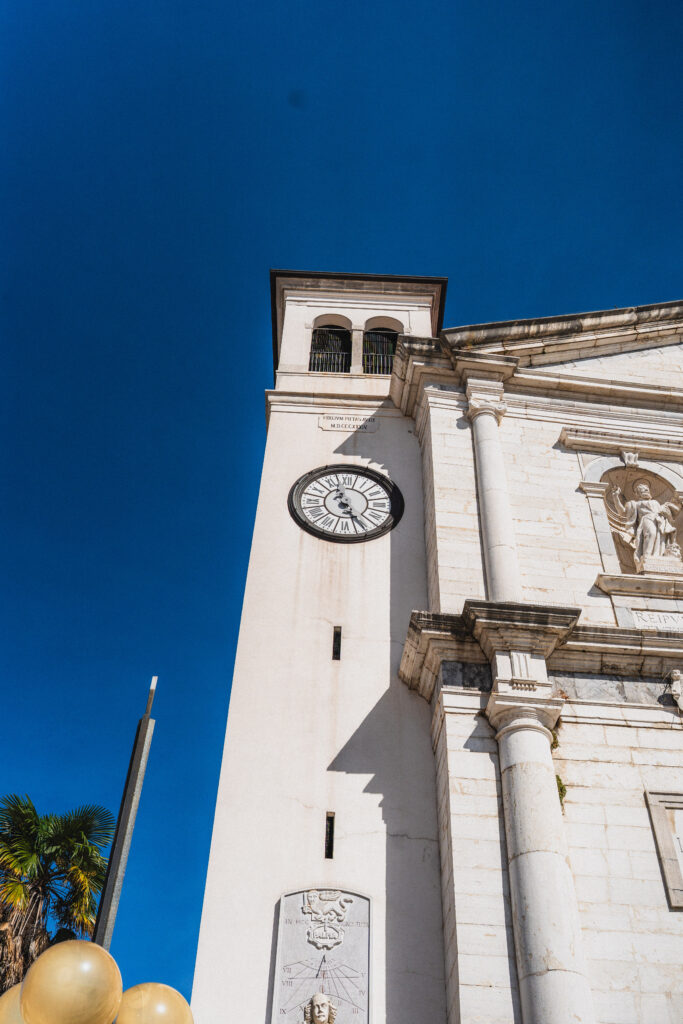
And so, a new “foundation stone” was actually laid in 1615, eventually leading to the cathedral’s consecration in 1636. The cathedral overlooks the Piazza Grande as it’s the most important and imposing building. However, its bell tower is purposefully built not very tall, as it would have become an easy target for enemy artillery.
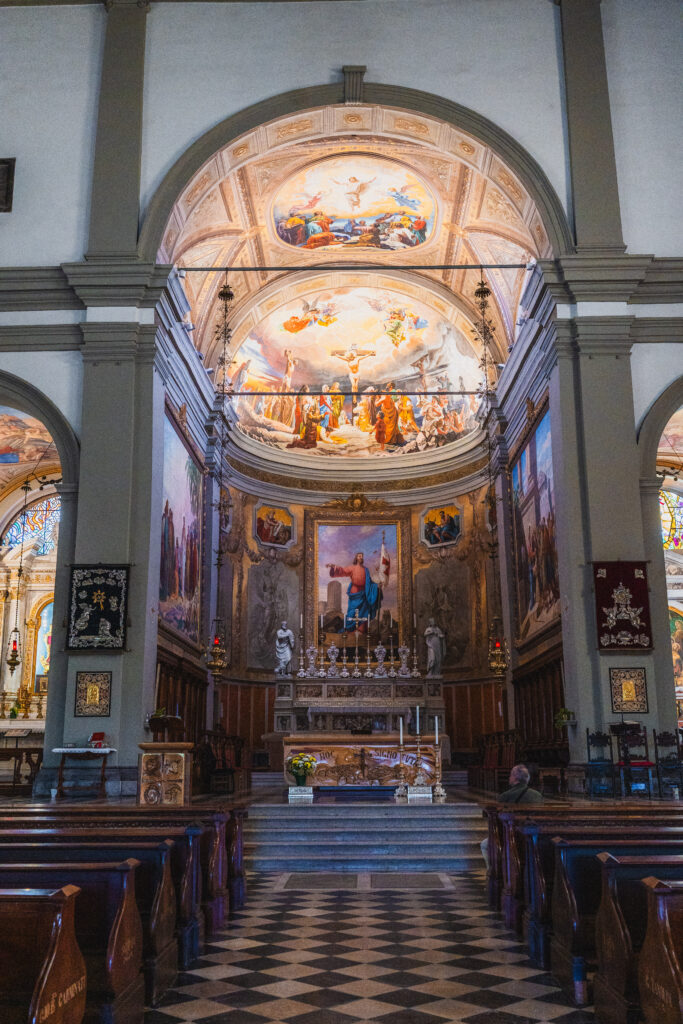
The church is open all the time and is completely free to visit, though donations are welcome. On the exterior, you can see four beautifully carved evangelist characters. Step inside, and you’ll be greeted by stunning painted frescoes and stained glass window details.
Walk or cycle around the bastion and ramparts
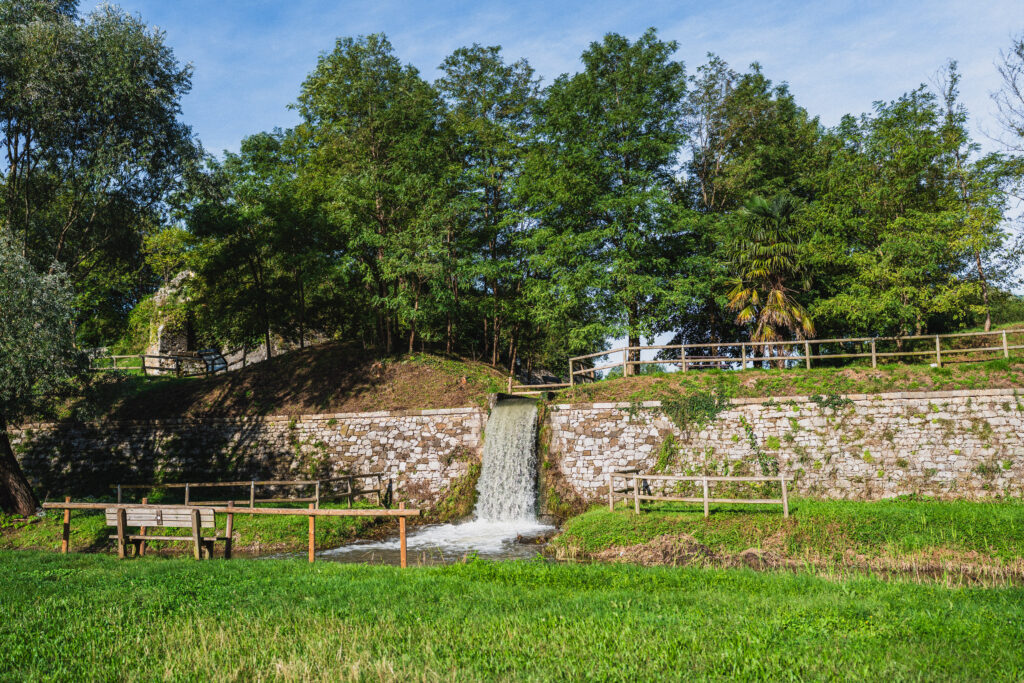
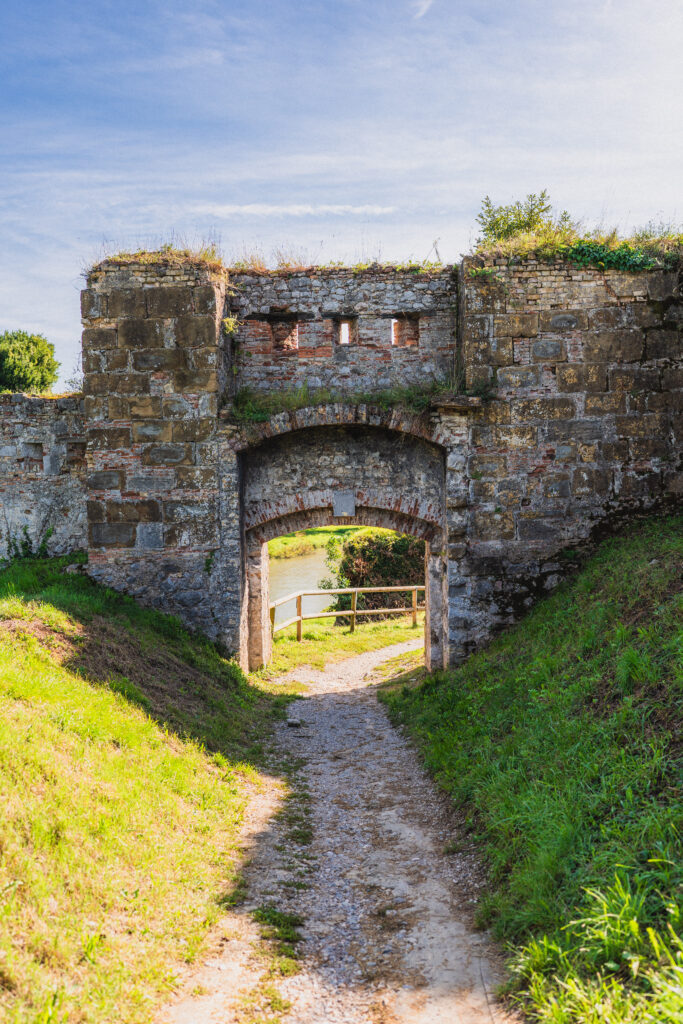
One of the best ways to fully appreciate Palmanova’s star-shaped layout and defensive architecture from every angle is to walk or cycle around the bastion and ramparts. In fact, the city is well known as a cycling destination and for its ease of access, thanks to its many flat, paved, and well-marked routes.
Palmanova is also a key stop on the Alpe Adria Cycle Route, a renowned 400 km cycling trail that crosses the Alps, connecting the Austrian city of Salzburg with northern Italy.
Some of the most popular cycle routes include:
- Palmanova, Borgo di Strassoldo & Castello di Saciletto – loop tour – Appox. 2 hours, and 34 km. This trail takes you past highlights like the city gate, Roman ruins, a Medieval village, and Saciletto Castle.
- Old City Gate of Palmanova – Porta Aquileia (Palmanova) loop from Sottoselva – Approx. 45 minutes, and 8.8 km. This route takes you past the old city gates, the lower moat pathway, and through Palmanova’s main square.
For more information on cycle and hiking routes around Palmanova, I recommend heading to Komoot’s website, where you’ll find pictures, detailed guides and helpful information when it comes to planning your outdoor excursion.
In terms of exploring on foot, the city is very walkable, and it takes around 1 hour to walk the entire circle around the outside of the City walls.
Walk inside the fortifications
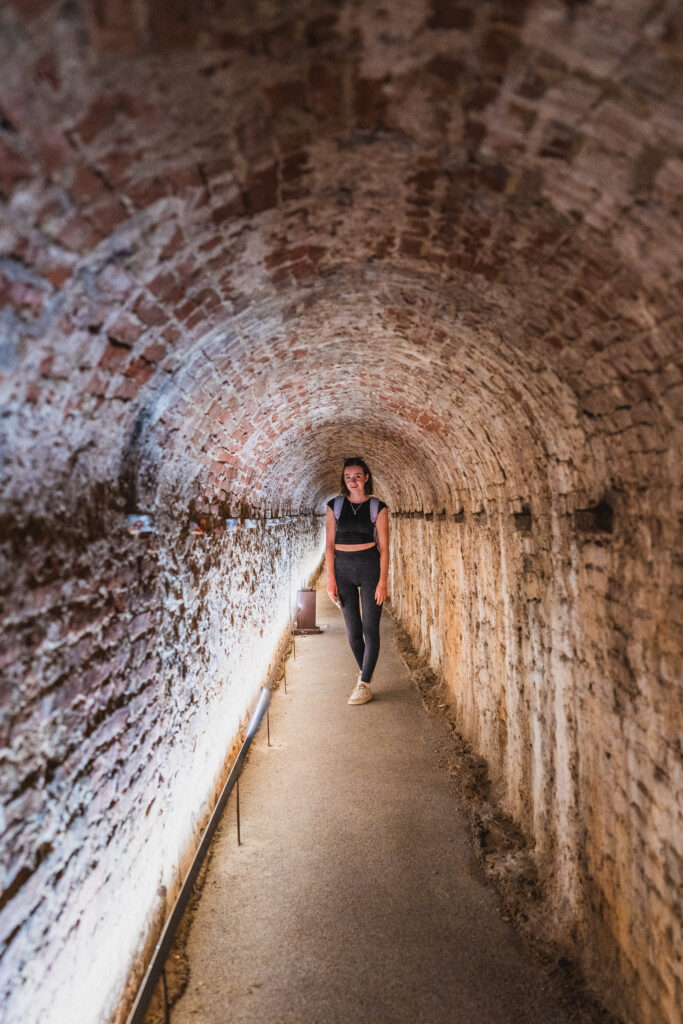
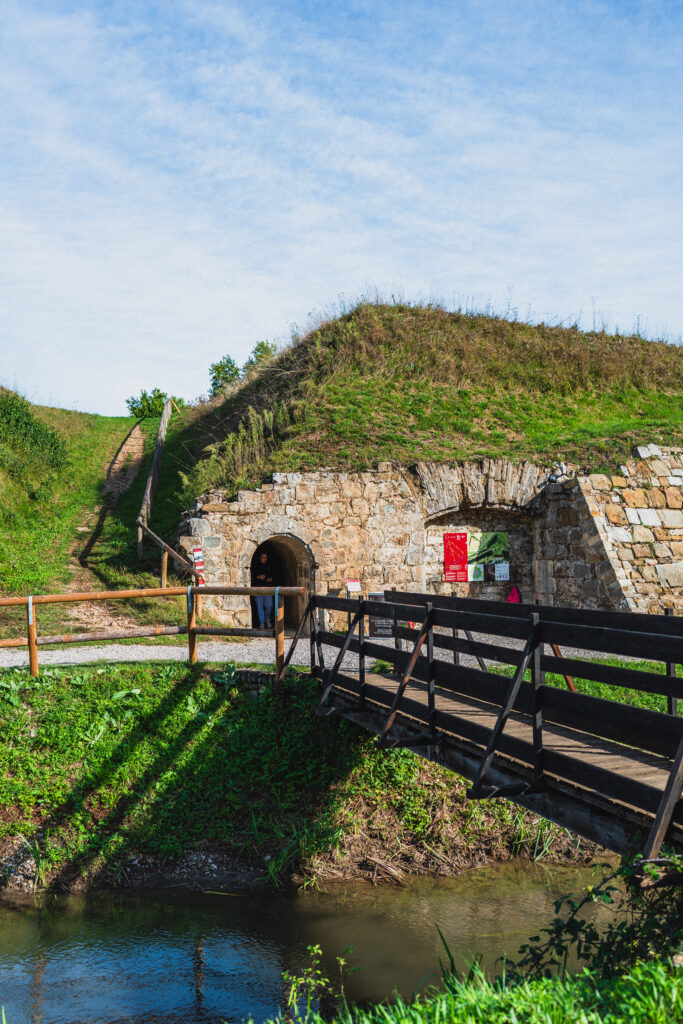
The city is built upon an intricate network of underground galleries. In fact, you can actually walk inside Palmanova’s fortifications, giving an immersive viewpoint of the city’s military past.
Most of this UNESCO World Heritage Site is completely free to visit, though you might find that some of the tunnels cost €3-€5 to enter; these tend to offer accompanying audio guides too.
See the city from above
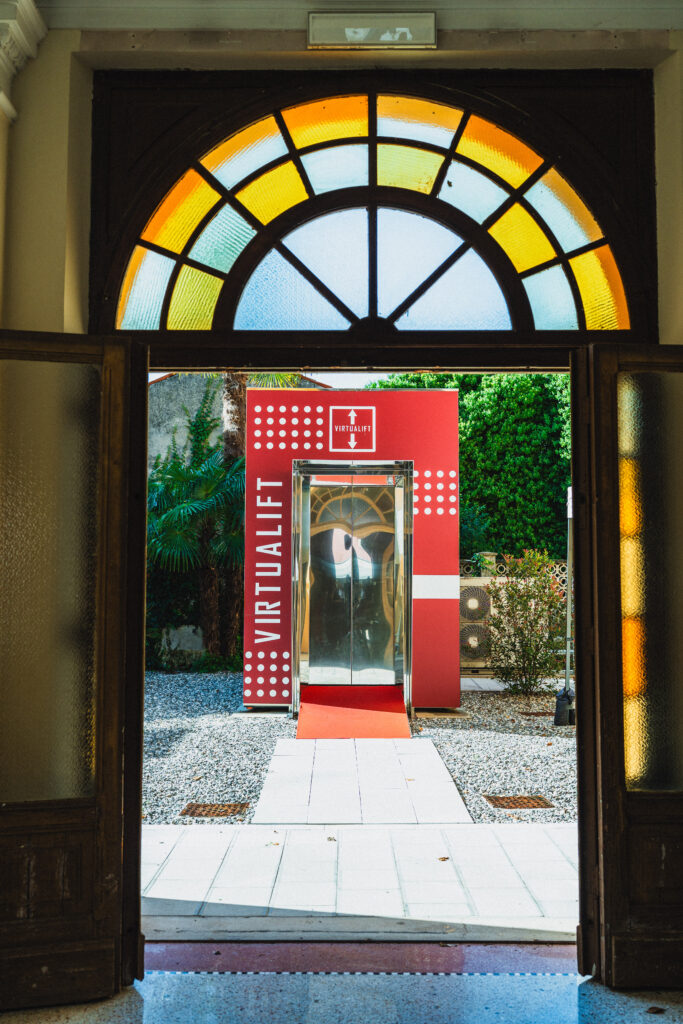
The Virtualift is a virtual elevator that offers visitors a way to admire Palmanova from the sky. This multimedia 4D experience uses real videos, sound effects, and infographics displayed on HD LED screens, enhanced by a specially designed vibrating platform for a fully immersive experience.
It costs €7 for the experience, and is typically only open on Saturdays and Sundays.
Take a day trip to Trieste
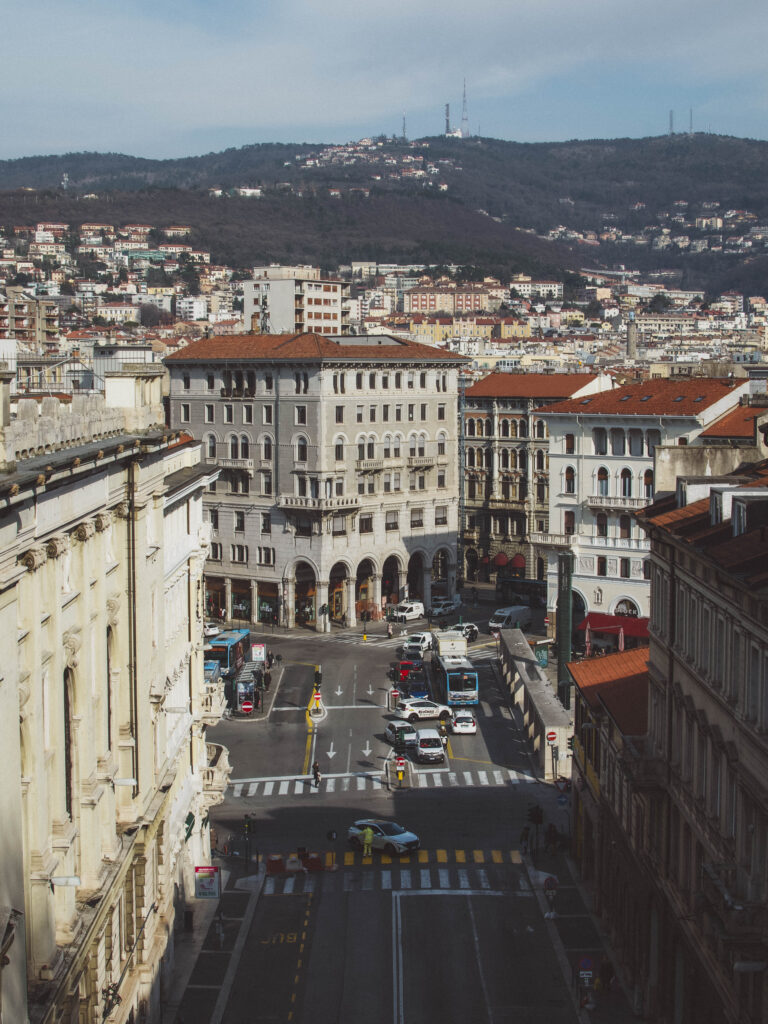
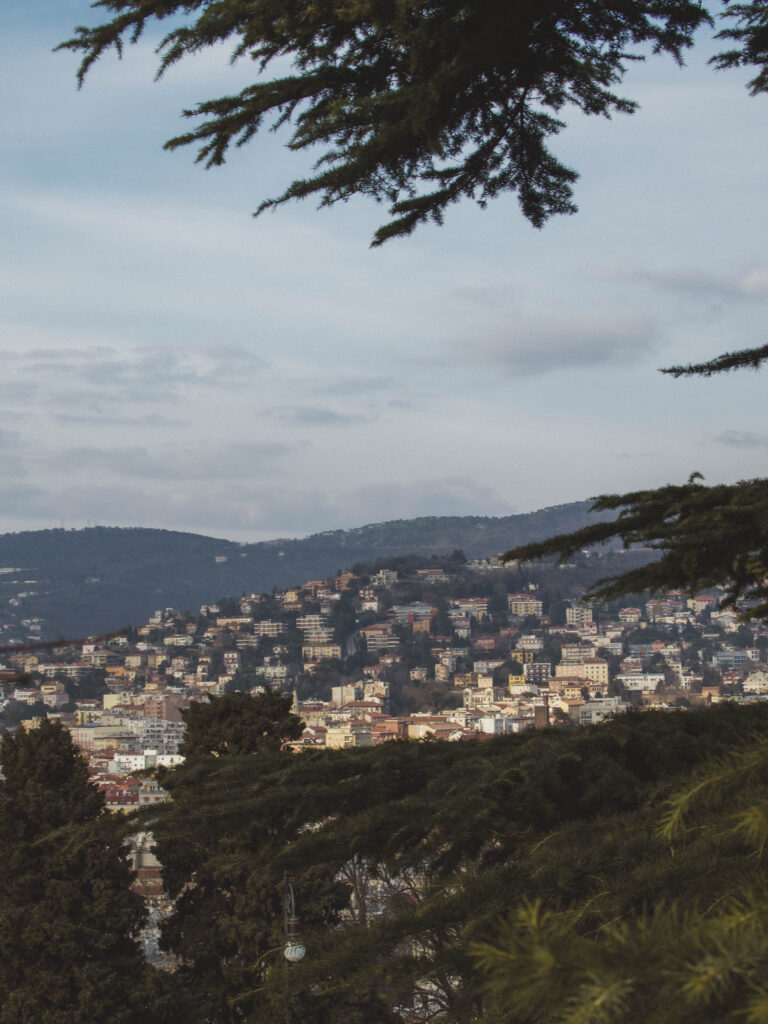
If you want to visit another Italian city with even more Austro-Hungarian influence, you should take a train or drive to Trieste. This vibrant port city sits around 55 km from Palmanova, so you can reach it by train in just 40 minutes.
Trieste is a rich historical seaport settlement best known for its gust of wind, “La Bora,” and its thriving literary heritage, with renowned writers like James Joyce and Italo Svevo visiting frequently. Read our Ultimate Guide to Trieste: Little Vienna by the Sea for more information.
Take a day trip to the Julian Alps
As Palmanova itself is fairly small, you may well find yourself wanting to explore the wider area if staying there. After all, one of the best things about Palmanova is the stunning landscape and scenery that surrounds it, particularly its proximity to the Alps and Dolomites mountain ranges in the north.
By crossing the nearby Slovenian border, you’ll reach the Julian Alps, a striking mountain range. Its highest peak, at Mount Triglav, reaches 2,864 meters, which is the tallest peak in Slovenia.
Of course, the best thing to do while exploring the Julian Alps and Triglav National Park (Slovenia’s only national park), in which the mountain lies, is to hike. Whether it’s adventure or simply stunning views, there’s plenty to do, including taking the Vogel Cable Car, visiting one of the many waterfalls, or partaking in water sports.
The easiest way to do a day trip from Palmanova is by car, which takes around 2 hours 15 minutes. Alternatively, you can take public transport, but this would require a combination of trains and buses, which can take anywhere between 2-4 hours each way.
Where to eat in Palmanova
The food served in Palmanova is primarily Friulian cuisine, where you can expect a focus on fresh, local ingredients, plenty of seafood, and homemade pasta, polenta, local cheeses, and wine.
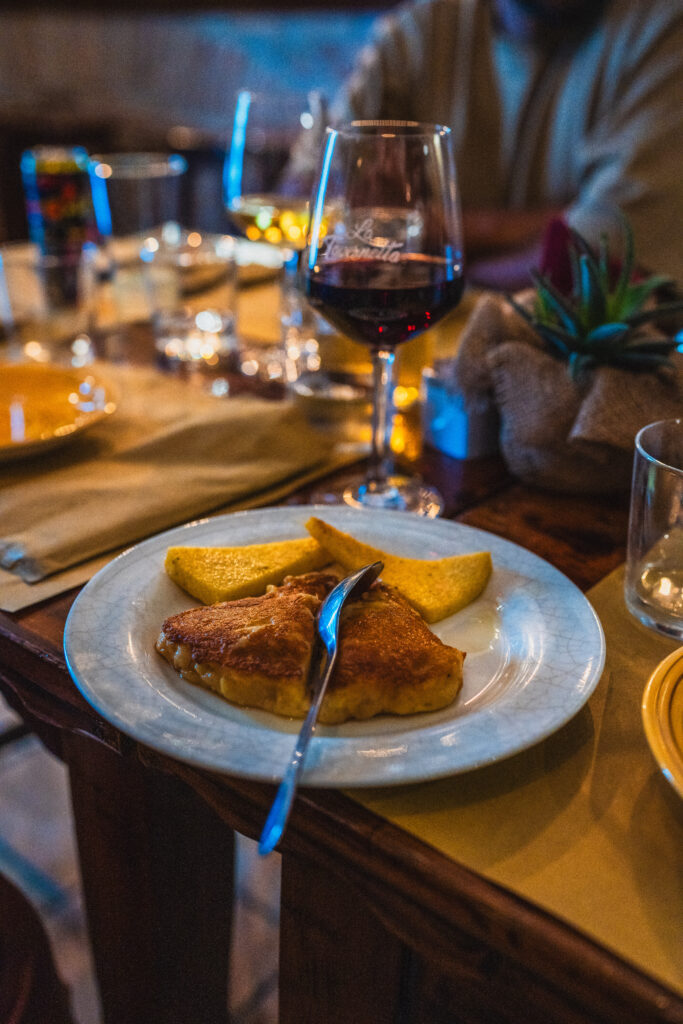
A popular traditional dish that I recommend trying is frico – a dish consisting mainly of heated local cheese and, optionally, other ingredients, such as potatoes (similar to that of the Swiss dish raclette).
La Tavernetta
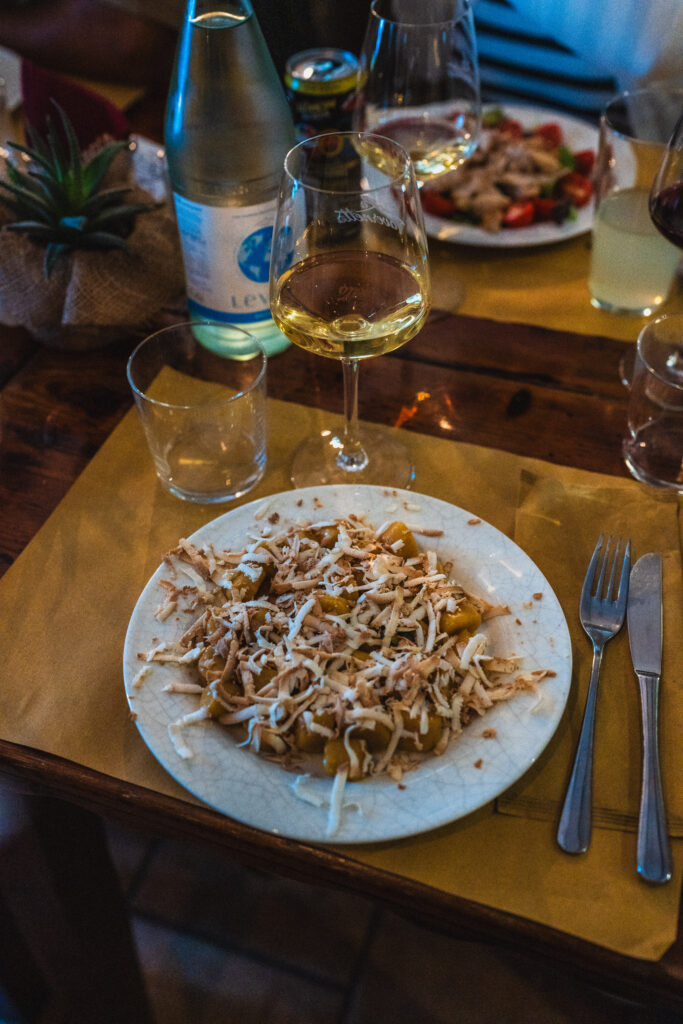
Set within a rustic tavern-style building, this family-run establishment offers plenty of delicious dishes at very reasonable prices. I opted for the pumpkin gnocchi – which was amazing! And, we had to, of course, sample their frico.
Il Melograno
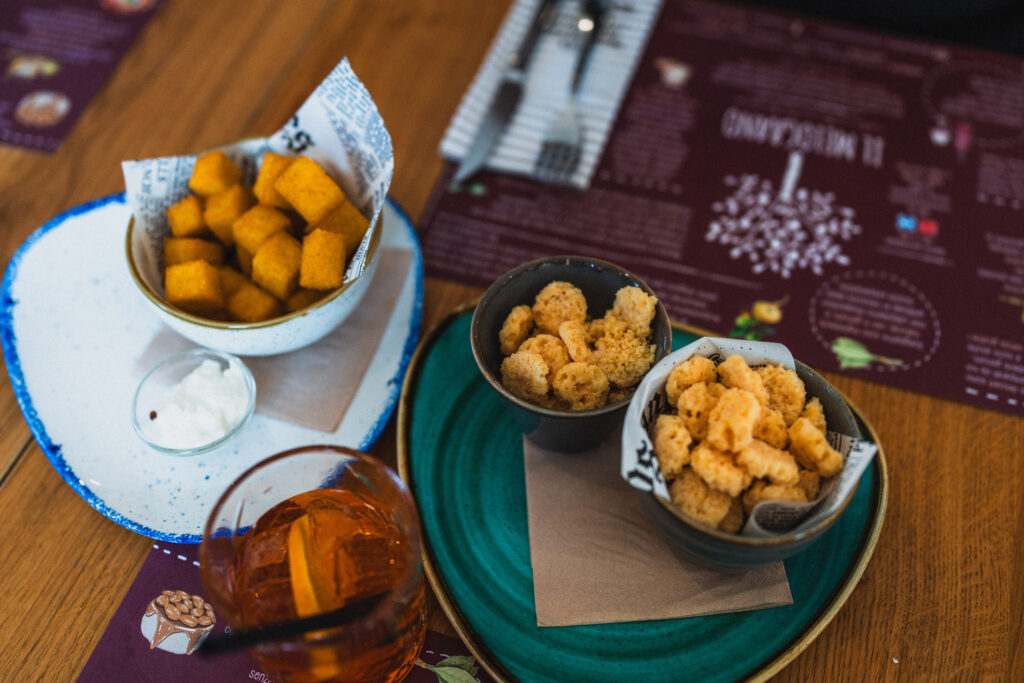
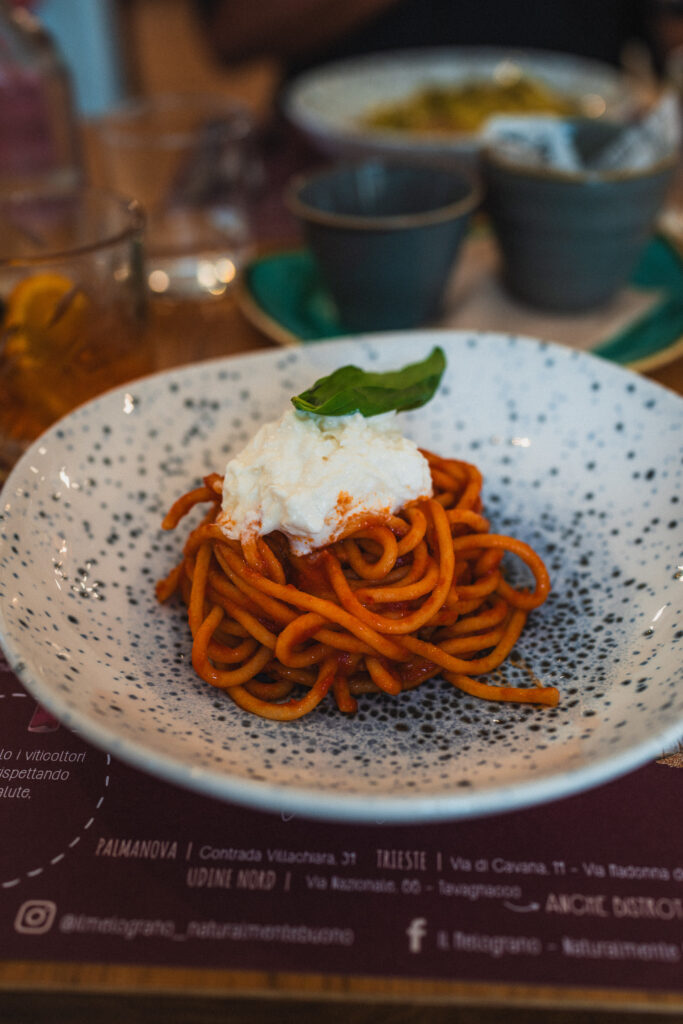
This pizzeria serves your classic beloved Italian dishes like pizza, pasta, fried polenta and a variety of other small bites. It’s a particularly good spot if you’re looking for fast service and food to keep you fuelled up for the day!
Osteria Campana d’Oro
A little more on the pricer side of places to eat in Palmanova, this hidden gem is the idyllic place to enjoy typical Friulan dishes in a more refined manner. Noted as being cosy and comfortable, everything here is homemade, and they have a wide selection of local wines to try.
Where to stay in Palmanova
Palmanova makes for a great place to stay, particularly for travellers seeking unique history and a quieter, peaceful countryside retreat. It’s an ideal destination for short visits or used as a base for exploring the wider region. Here are a few suggestions of where to stay (based on web reviews):
Hotel Ai Dogi – Situated in the very heart of Palmanova on Piazza Grande, this relaxed hotel is just a minutes’ walk from all of the city’s main attractions. Many of the rooms offer views overlooking the main square, and there is an optional breakfast buffet served daily. Check prices and availability here.
Palmamore – Set on the outskirts of Palmanova’s star, in a quiet spot, this hotel boasts excellent reviews. Many guests have commended the cleanliness and comfort of their rooms, as well as the free parking and ease of access to the accommodation. Check prices and availability here.
Enjoyed reading our guide to the best things to do in Palmanova? Pin this article now, and read it again later: