
How to Visit the Angel of the North
Last Updated on 31st January 2026 by Sophie Nadeau
This post may contain affiliate links. Please check out my privacy policy for more information.
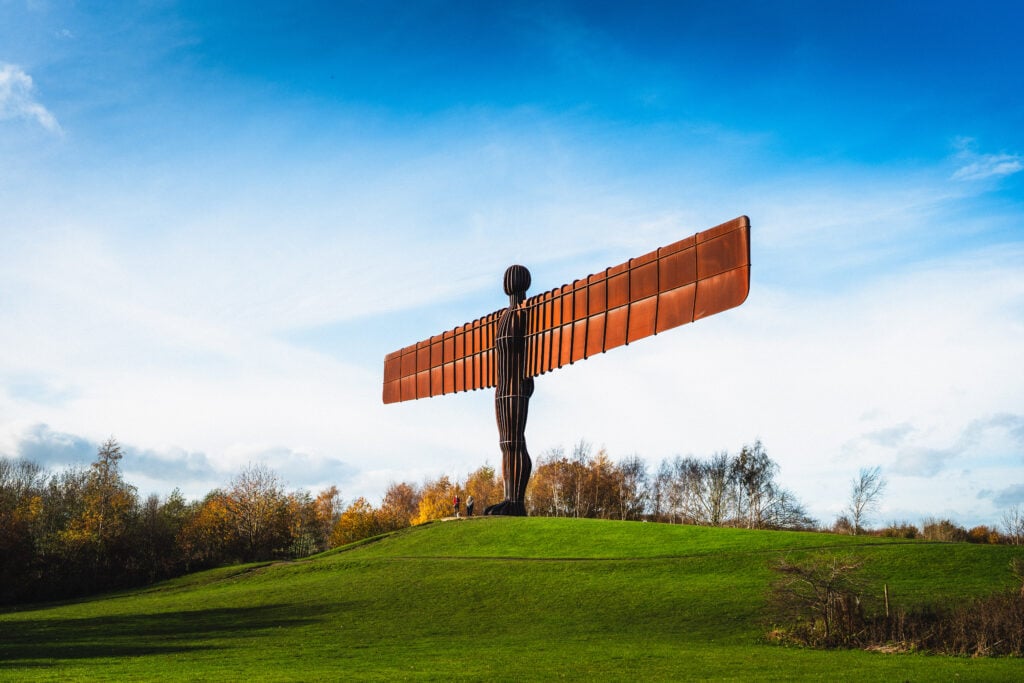
The Angel of the North is Britain’s largest sculpture. This iconic 200-tonne structure is a powerful symbol of Gateshead, and a beloved feature of the wider North East of England’s identity. Anthony Gormley’s artwork is far more than a landmark; it represents the North East’s journey from coal mines and shipyards toward a new future in the information age. Here’s your guide on how to visit the Angel of the North!


“The birth of the Angel marked the beginning of a great deal of change in our borough and indeed the wider region. It was the catalyst for the cultural regeneration of Gateshead Quays that led to the Gateshead Millennium Bridge, BALTIC and Sage.”
History of the Angel of the North
The Angel of the North first spread its wings back in February 1998, and since then has become one of the most recognisable and talked about pieces of public art in Britain’s history.
The site upon which the Angel currently stands has a history that dates back to 1990. Once home to a former colliery pithead baths, it was then reclaimed and set aside for a future sculpture.
The birth of the Angel was decided to mark a huge transition in the local area. It was built to mark the southern entrance to Tyneside, and the chosen location was to represent its industrial past and honour the coal miners who once worked below.
It was built to symbolise the region’s move away from heavy industry and into the information age, becoming a focal point for both hopes and fears along the way… Over time, it’s grown into a much-loved symbol of regeneration and identity across North East England.
Anthony Gormley, a renowned worldwide artist, was chosen in 1994 to design the sculpture. However, his designs, when released to the public, caused quite a controversial stir. People weren’t convinced by the location or the materials, and the overall idea was met with heavy criticism.
The creation of the Angel of the North took about four years from concept to completion (1994-1998). And, once the Angel was finally in place, opinions quickly changed. Today, it’s loved by locals and tourists alike, and has become completely synonymous with Gateshead’s identity and spirit.
Fun facts about the Angel of the North
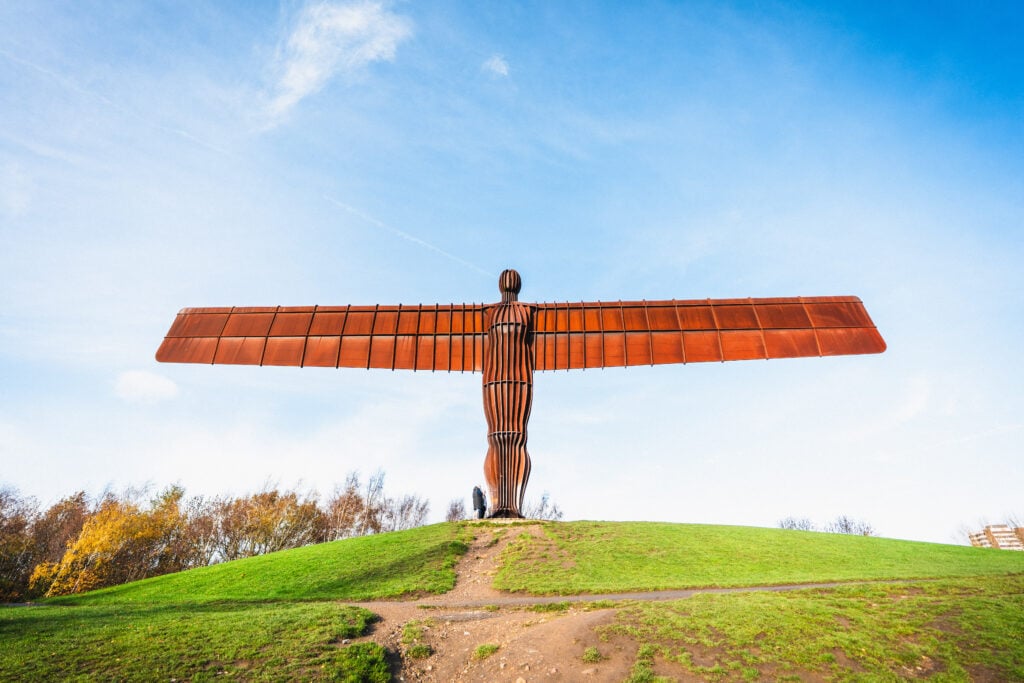
- The Angel of the North is believed to be the largest sculpture of an angel in the world…certainly in the UK at least!
- The angel can reportedly withstand winds as fast as 100 mph
- It contains enough steel to build 16 double-decker buses or four Chieftain tanks.
- Massive concrete piles, driven 20 metres into the ground, anchor the sculpture to the bedrock below.
- It weighs 200 tonnes – the body 100 tonnes and the wings 50 tonnes each
- The total cost of constructing the Angel of the North is believed to be around £800,000 for the labour and installation. £584,000 came from the National Lottery through the Arts Council. The rest was funded by Gateshead Council, the European Regional Development Fund, and private sponsors.
- The sculpture is crafted from Cor-ten steel, which includes a touch of copper that forms a protective patina, softening in appearance as it ages.
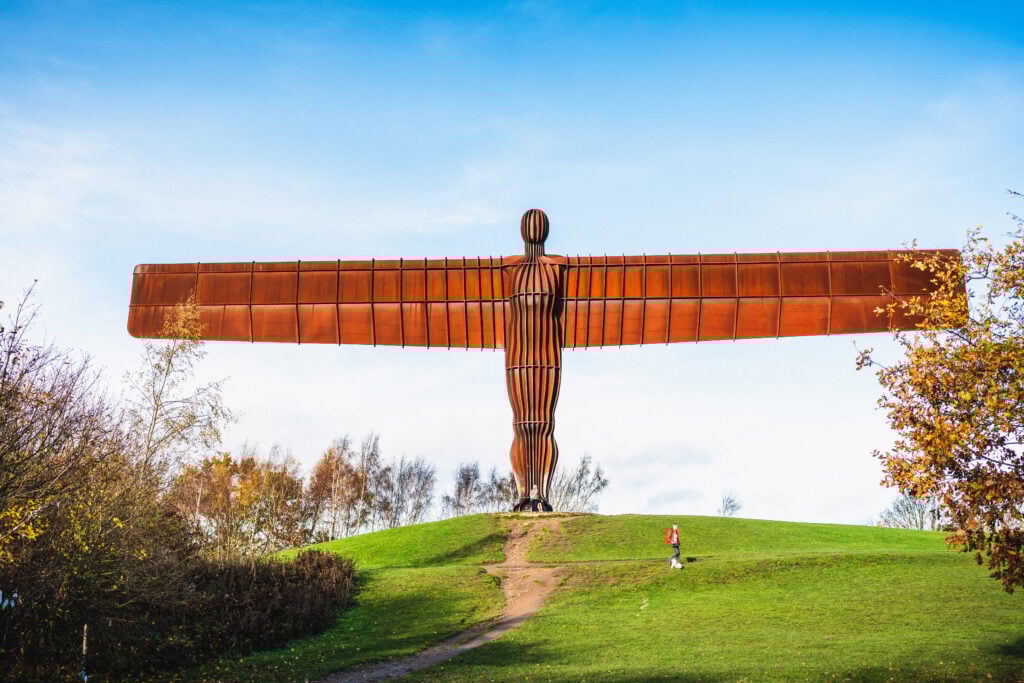
- With a 54-metre (175-foot) wingspan, it exceeds that of a Boeing 757 or 767 and is nearly as wide as a Jumbo jet.
- A popular nickname, “The Gateshead Flasher,” has been given to the sculpture thanks to its roadside location. Other nicknames include “Rusty Rita” or “The Rusty Flasher” – due to its weathered appearance.
Garden of Memories at the Angel of the North
At the base of the hill beneath the statue, you’ll find folded and unfolded notes, strands of ribbon, artificial flowers, weather-ravaged stuffed toys, empty bottles of a loved one’s favourite tipple, and a child’s football shirt, each one carrying its own memory and story.
No one is quite sure how or when this tradition of leaving items connected to grief began, but it continues year after year. Objects of deep personal meaning are placed on lampposts and in nearby trees, creating what has become known as the Garden of Memories.
How to visit the Angel of the North
The Angel of the North is a public landmark and is completely free to visit, at any time of day, seven days a week. Located just off the A1 near Gateshead, the Angel is easy to reach whether you’re travelling by public transport or by car.
By bus: Regular local buses run from Newcastle city centre and Gateshead Interchange toward Low Eighton and the surrounding areas. You’ll want to look for services that stop near Durham Road (A167). From the bus stop, it’s just a short walk up the hill to the sculpture.
By car: There’s a free car park open all year round, but be aware that it can get quite busy at weekends and sunset viewing hours.
The best times to visit are during golden hour, at sunrise, or at sunset, when the light creates the best photo opportunities and the Angel takes on a warm red glow from its copper-tinted steel.
If you’re planning to see the Angel of the North as part of a larger northeast trip, then here are our top suggestions for how to spend one day in Newcastle.
Enjoyed reading our guide on how to visit the Angel of the North? Pin this article now, and read it again later: