Causeway Coastal Route Guide: An Unforgettable Road Trip Through Northern Ireland
Last Updated on 8th August 2026 by Sophie Nadeau
This post may contain affiliate links. Please check out my privacy policy and disclosure for more information.
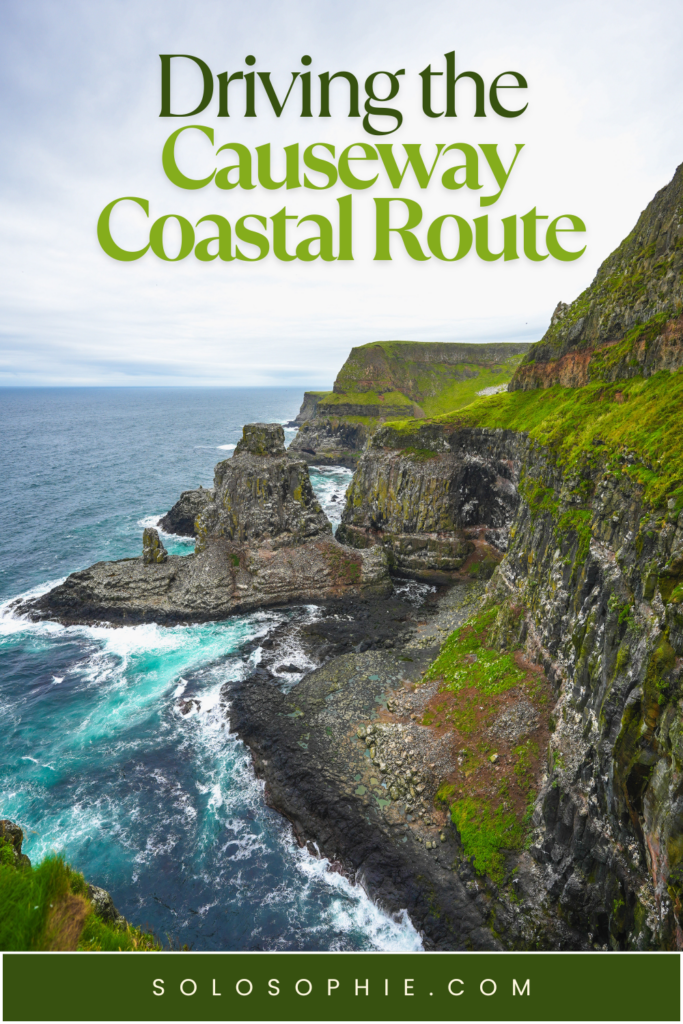
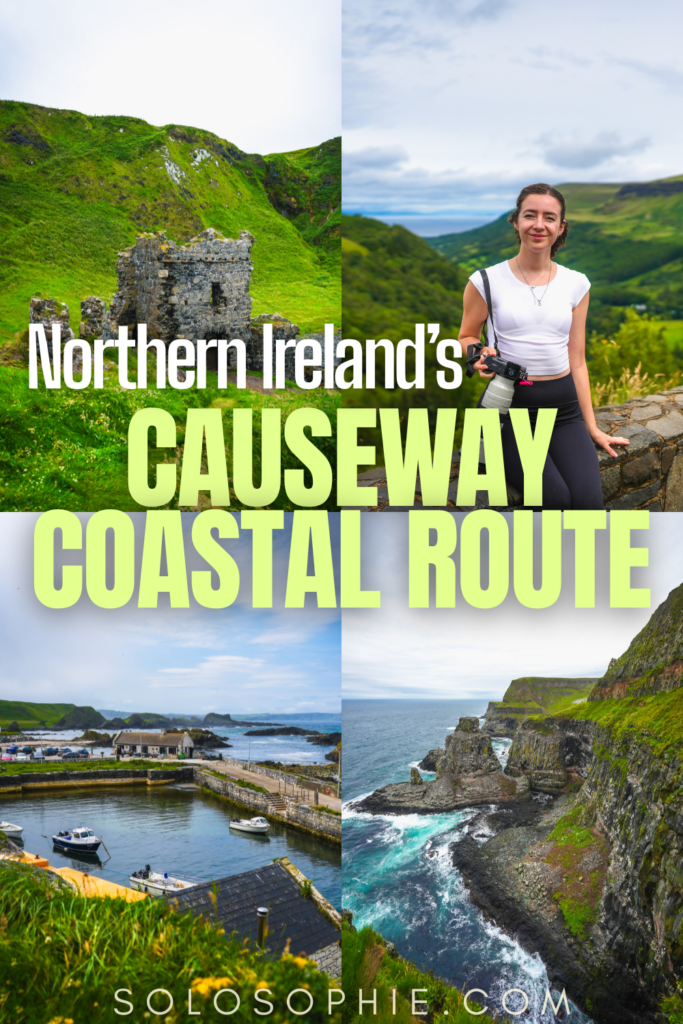
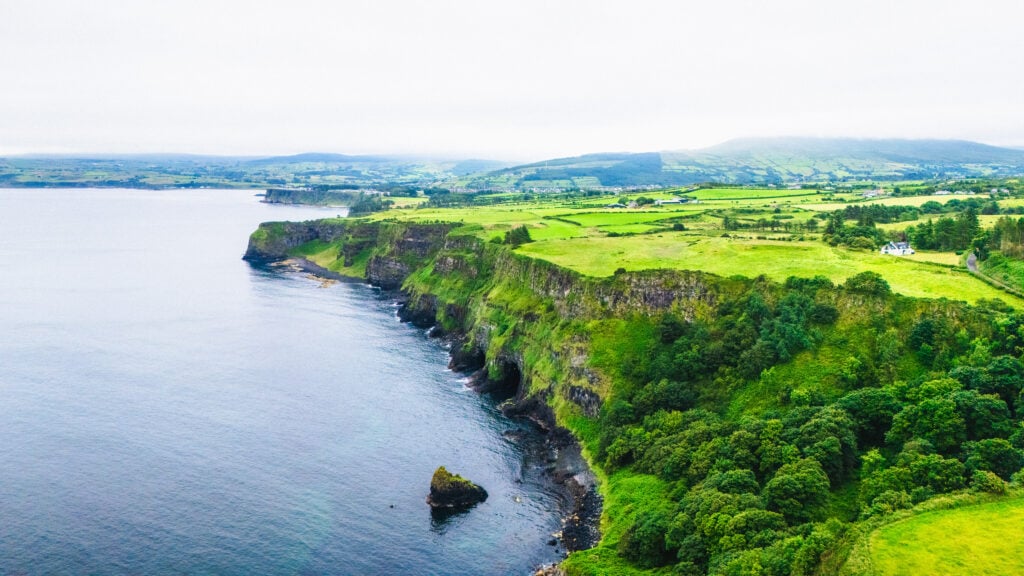
Lush, evergreen, and teeming with wildlife both on land and at sea, Northern Ireland boasts one of the most scenic drives in the world. The Causeway Coastal Route stretches 120 miles from Belfast to Derry-Londonderry, featuring some of the most iconic geological wonders, medieval castles, abandoned villages, and UNESCO treasures. Here’s your ultimate guide to making the most of a trip along the Causeway Coastal Route!
What is the Causeway Coastal Route?
The Causeway Coastal Route is a 120-mile scenic driving route that stretches from the city of Belfast to Derry-Londonderry. Sometimes overlooked by visitors for the much bigger Wild Atlantic Way route, it’s easily just as breathtaking and well worth making the trip for.
The Causeway Coastal Route, to put it short, is simply spectacular. While The Lord of the Rings wasn’t actually filmed here (though scenes from Game of Thrones were), its dramatic cliffs, ancient ruins and mystical forests make you feel as though you’ve wandered into a fantasy world.
What if you only have one day on the Causeway Coastal Route?
If you only have one day to explore the Causeway Coastal route, then I recommend doing day 3 of my suggested itinerary. This will give you a real taste for what to expect from the rest of the route, taking you to medieval castles, spying out diverse wildlife, and making sure you don’t miss out on the beloved cultural treasure, Giant’s Causeway.
That being said, if you have more than a day to spare, then I highly recommend spending somewhere between 3 and 5 days exploring this scenic route. There are countless places to explore. It’s also the type of landscape that inspires slow travel, soaking up the sights, and really enjoying being on the rugged edges of Northern Ireland’s coastline.
Suggested itinerary for the Causeway Coastal Route
Day 1: Queen of the Glens & Unknown Coastal Route
Glenariff
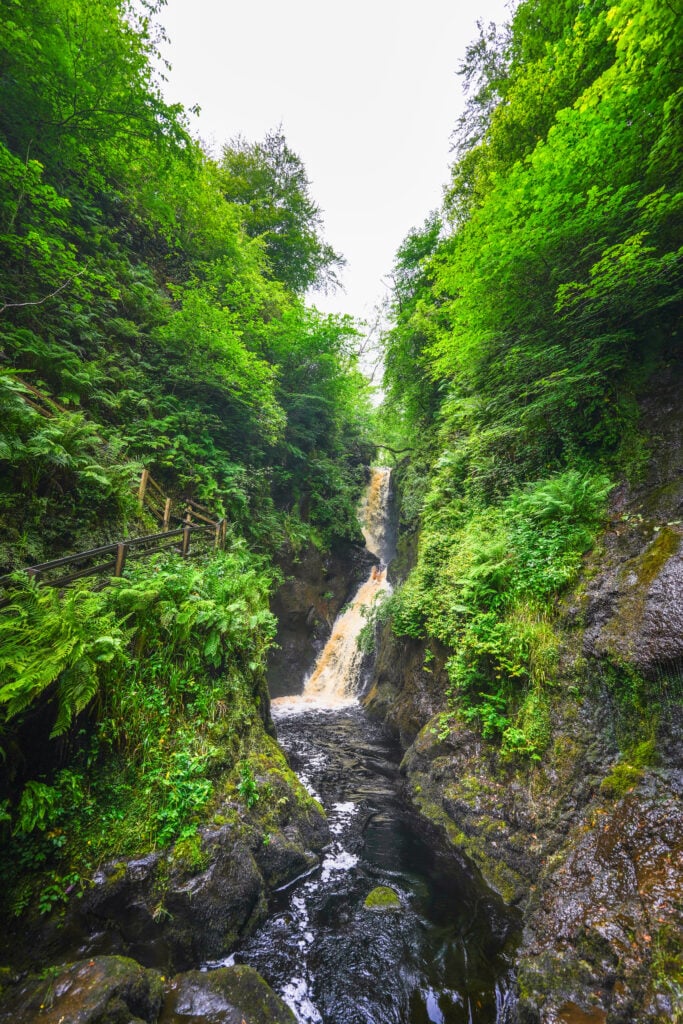
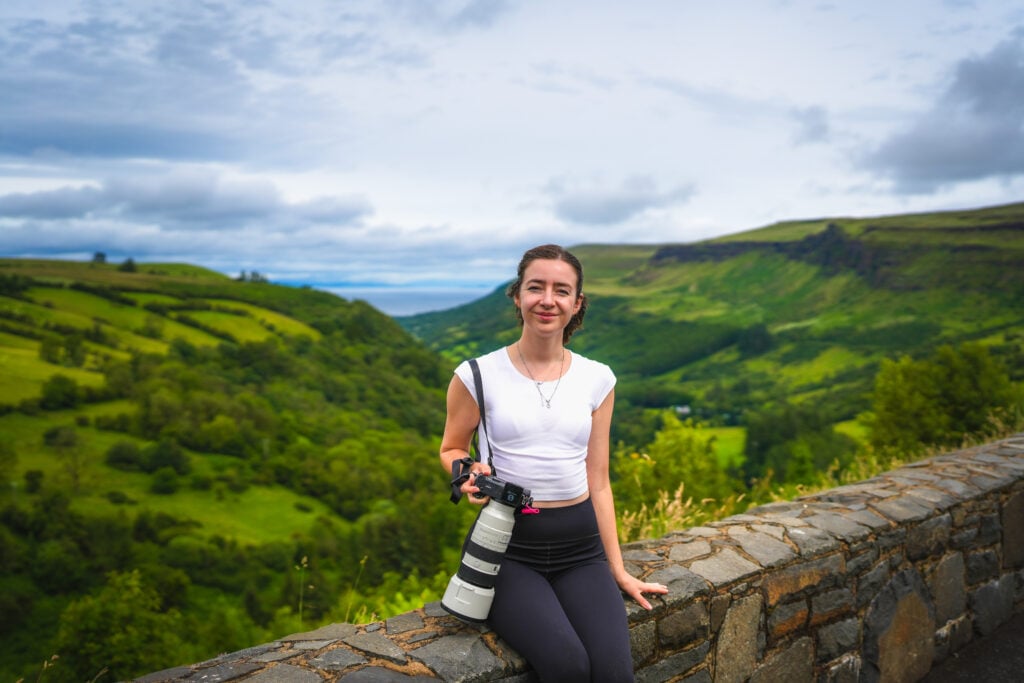
You’ll start your first day by parking up and visiting one of the greenest places along the Causeway Coastal Route. There are actually a total of nine glens along the Antrim Coast. But the largest and most famous of them is often referred to as ‘Queen of the Glens’ thanks to the fact that it spans 1,182 hectares. The glen is best known for its red squirrel population, abundance of waterfalls, and lush greenery.
There are several places to start your visit to the glen, but we chose to park at Laragh Lodge as there’s also a place to stop and get a bite to eat and a hot drink. In fact, the Victorian tea house here has been serving warm brews to travellers of the glen since 1890!
Walking along the path towards the glen, it’s easy to forget you’re so close to the coastline, especially since there are sheep grazing on the cliffside beside you. Glenariff boasts dramatic valleys and steep slopes that truly have to be seen in person to be appreciated. These deep-shaped valleys are the remnants of slow-moving glaciers that left their mark on the landscape thousands of years ago.
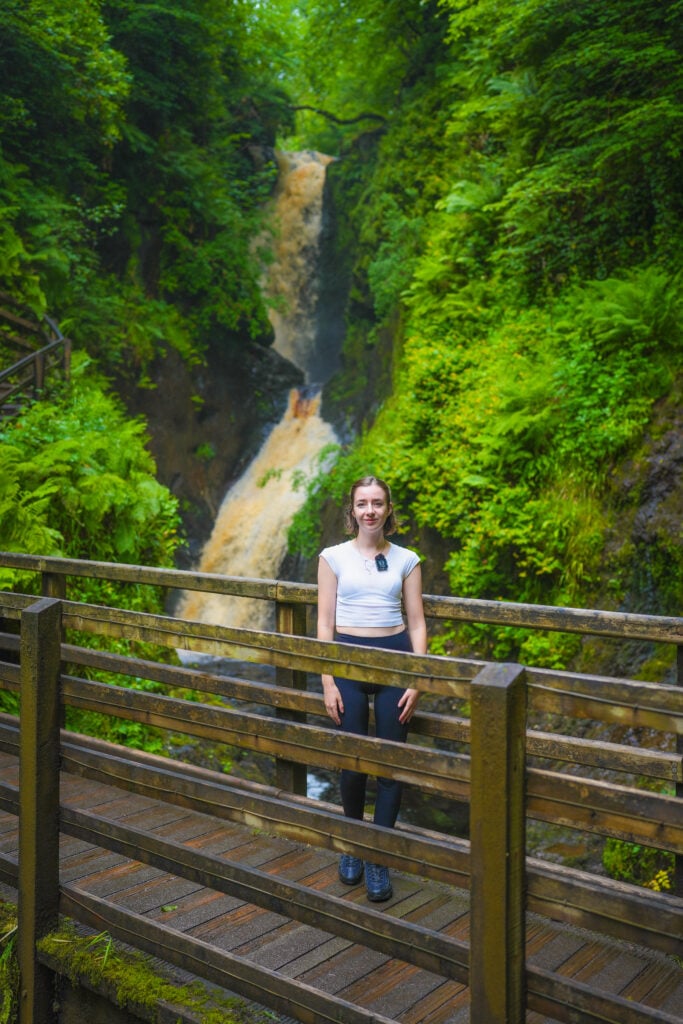
There are three different trails to choose from (1 km, 3 km or 9 km); we actually opted to do the 3 km to save time. Walking along was wet and dewy, and you’re soon enveloped in a forested area that’s covered by a blanket of moss and more shades of green than you could imagine. As you reach closer into the steep gorge area, the damp and humid microclimate becomes very apparent (and I’m not just talking about the clinging of your clothes), but also the water-loving plants and rare ferns that truly thrive here.
In the area, there are around six waterfalls and cascades. The two main waterfalls are: “The Fall of the Mare”, which is known natively as Ess-na-Larach, and “The Fall of the Hooves” (Ess-na-Crub).
Partway along the trail, there’s also a small visitor centre with a picnic area. This makes a great place to stop, take a break, and enjoy all the different bird species that inhabit the area. You’ll also find public toilets here, and in the car park too.
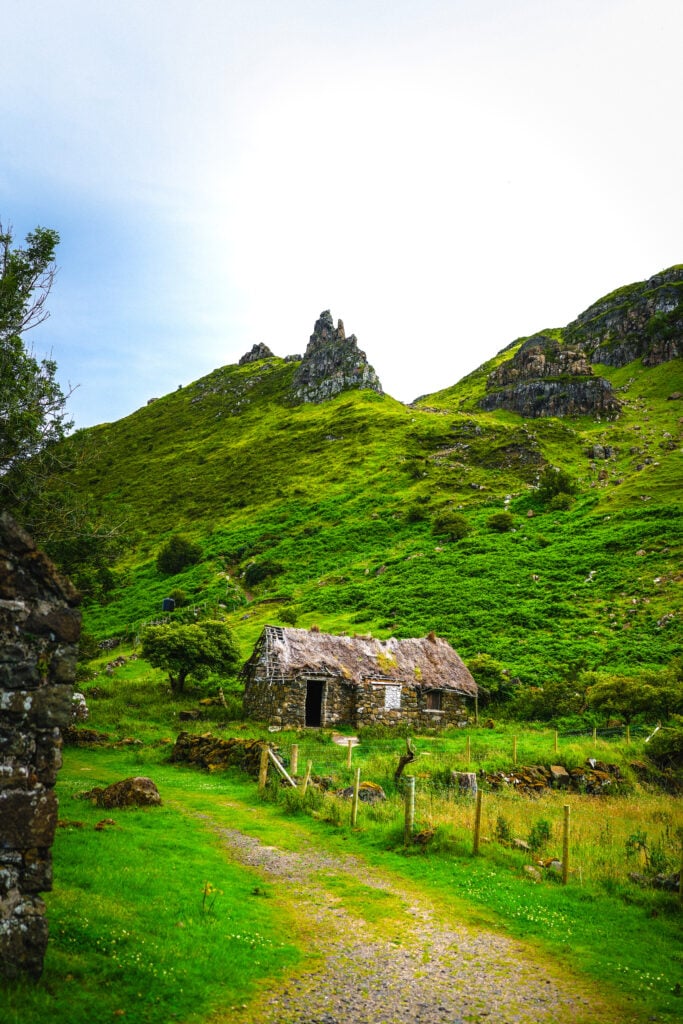
Galboly Abandoned Village
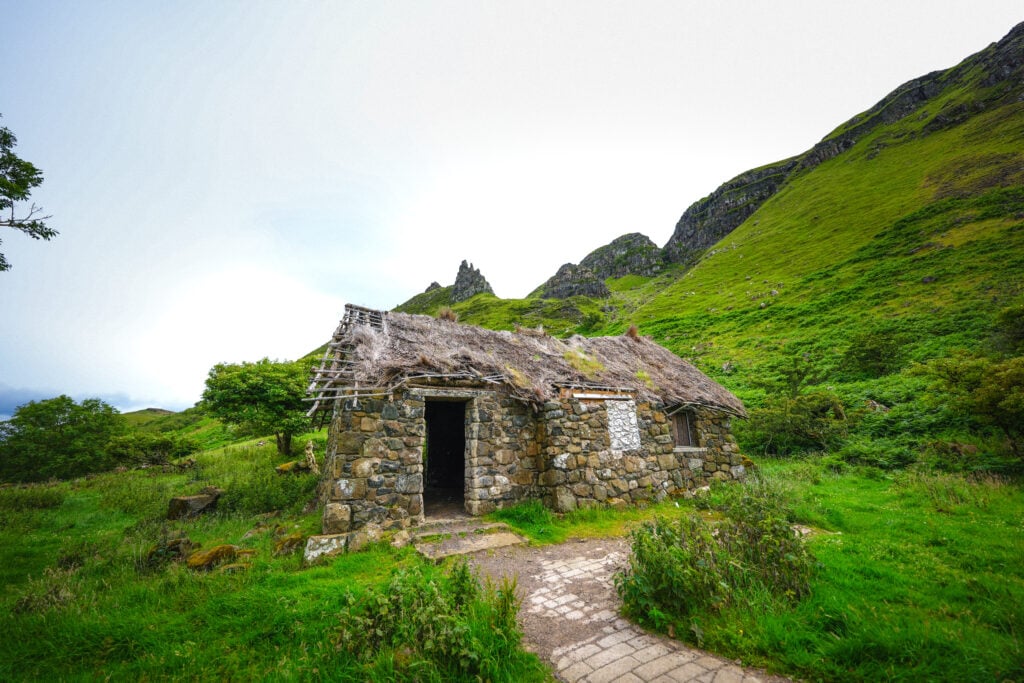
Next, you’ll want to head along to a little hidden gem which is tucked into the hills near Carnlough. Close to the bottom of the hill, you’ll find a small roadside bay which is free to park in.
As you wander up the hill towards the 19th-century settlement, on a clear day, you’re blessed with views that overlook all the way across to Scotland. And, if you’re lucky, you may well spy dolphins or orcas…though it’s still quite far from the coast, so unless you have binoculars it’s pretty hard to tell!
At one time, Galboly was a small village home to 60 or so residents. Eventually, due to a lack of work and isolation, the population declined. However, one solitary monk decided to remain. Brother Veder O’Kane was a Trappist Cistercian monk and also the final resident to live here. He lived a hermit-like life in the abandoned settlement and stayed there until he died in 2013 at the age of 72.
Another hidden gem, or rather, hidden insight into this weathered stone village, is that not all is as it seems… Galboly was actually one of the filming locations used in Game of Thrones, and so some of the houses here were constructed for that purpose. While plenty of the stone ruins are genuine, you’ll find that some are also made of fibre glass. Tap on the rock, and you’ll notice a hollow sound to this fake prop!
Ardclinis Church
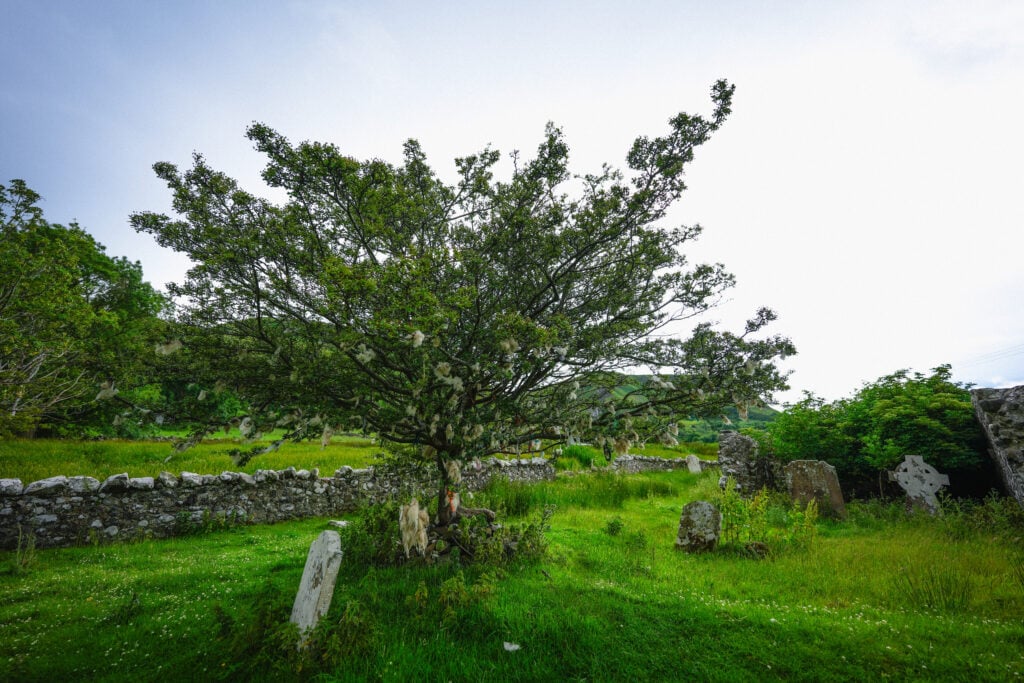
A few minutes’ drive away, you’ll find the haunting ruins of Ardclinis Church. To be honest, there’s not too much known about these ruins other than the fact that they can be traced back to the 14th century or just before. Its first official written mention is 1306, however, tradition suggests that the original foundation of the site goes way back to the early Christian period (potentially around the 5th or 6th century).
In the grounds of the church ruins, you’ll find a “fairy tree”. Hawthorn trees can live up to 400 years old and are deeply rooted, quite literally, in Irish folklore. Believed to be gateways to the otherworld, hawthorn trees often stand alone in fields or old ring forts, and are said to act as portals between our world and the fairy realm. But there’s also deep-rooted suspicion…if you damage or remove a fairy tree, then you’ll be cursed by the fairies.
It’s for this reason that fairy trees are often dedicated to saints, associated with local holy wells, or found growing beside them. According to local tradition, the Crown of Thorns was also made from this very type of tree.
Cushendun
Cushendun is a sleepy coastal village, and I’ll be honest, there’s not a lot to do here. However, it makes for a great place to base yourself while exploring the Causeway Coastal Route. There’s a quaint Northern Irish pub, Mary McBride’s, which was once one of the smallest bars in Ireland. It’s very traditional, serving delicious food, and of course a great pint of Guinness!
Cushendun also boasts stunning sea views and has a few trails from which you can wander along and soak up even more views of the coastline.
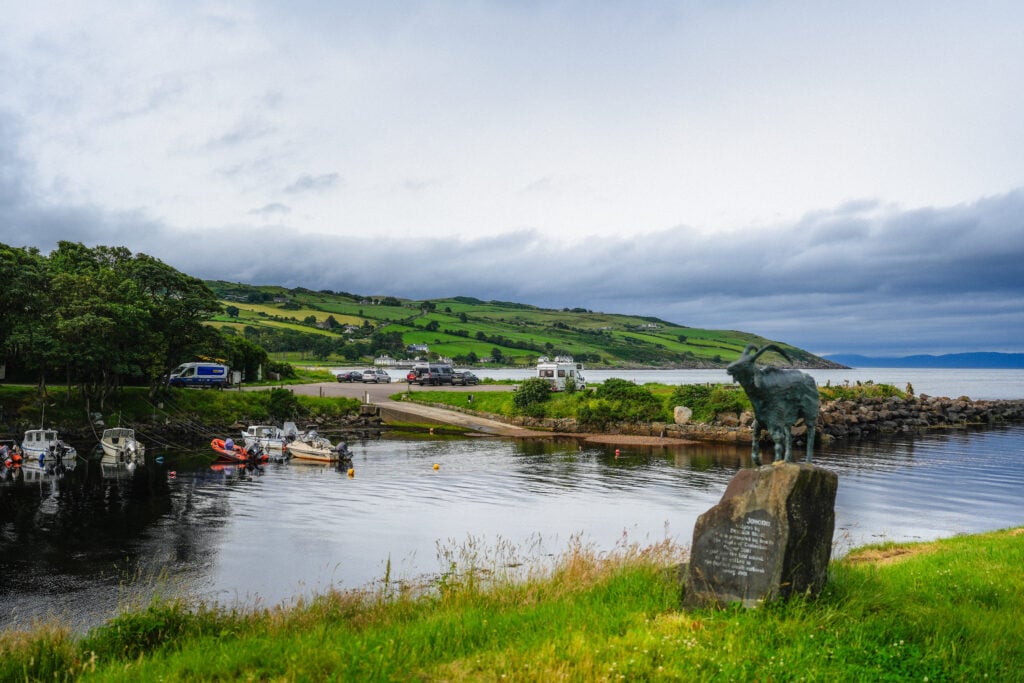
Torr Head Scenic Point
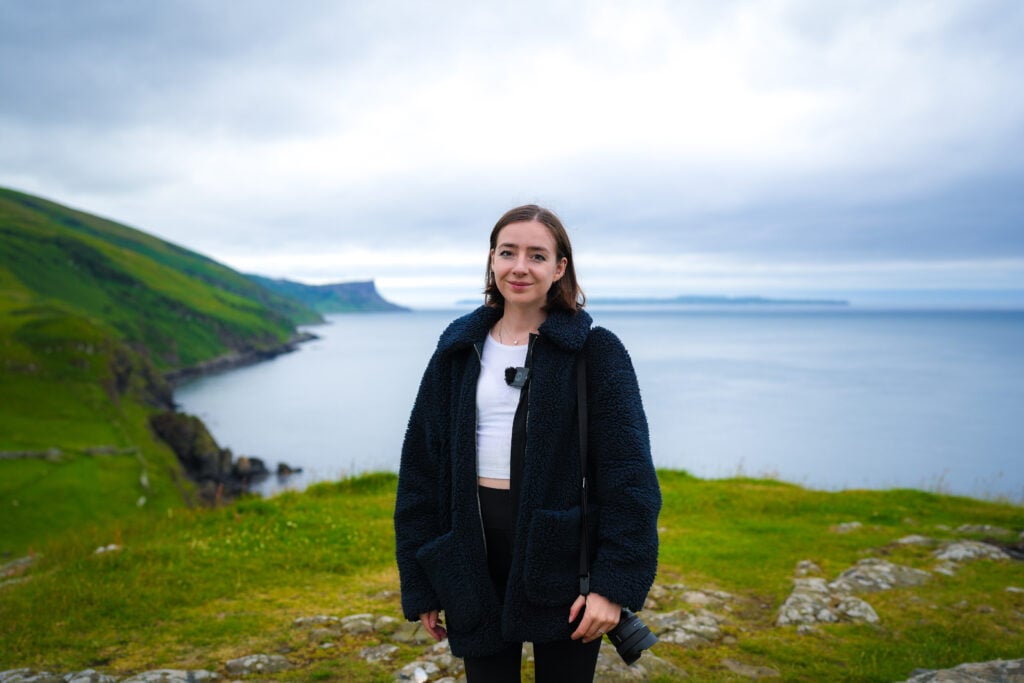
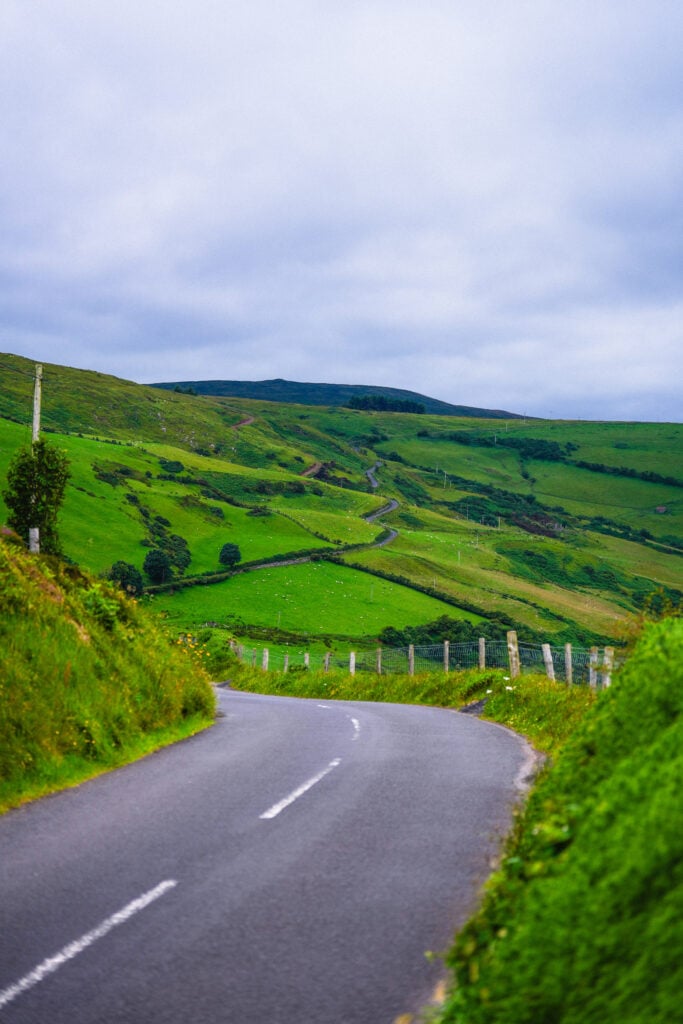
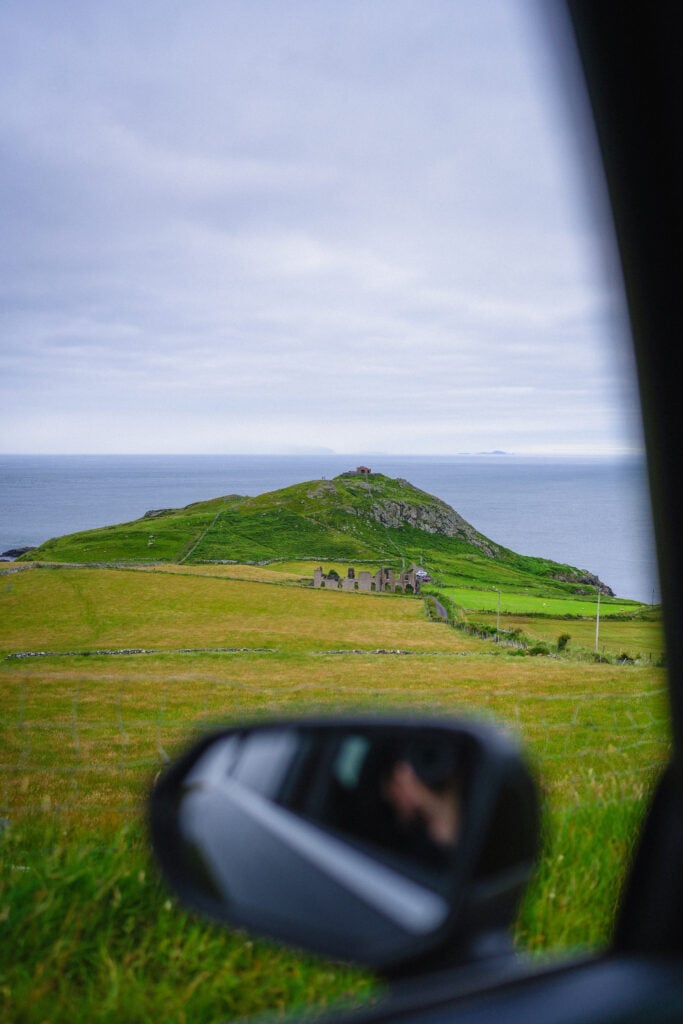
Visiting at the height of summer meant we had enough daylight to squeeze in one more adventure on day one. Torr Head is considered one of the most remote yet most beautiful drives in the entirety of Northern Ireland. And so, if you have time, it’s well worth visiting!
Torr Head takes its name from the Irish word for a mound or hill, aptly describing the high rocky headland that juts out into the sea. There’s a small free parking area located right at the base of the headland, though I should mention it can fill up pretty fast during the peak of summer.
Once you climb to the top, you’ll be greeted by incredible sweeping views. In fact, Torr Head is the closest point on the island of Ireland to Scotland, which sits just 12 miles in the distance. You’ll also be able to spy Rathlin Island.
In fact, while we were up there, we saw clouds roll over the craggy cliffs, creating a truly cinematic scene!
Day 2: The most northerly inhabited island
Rathlin Island
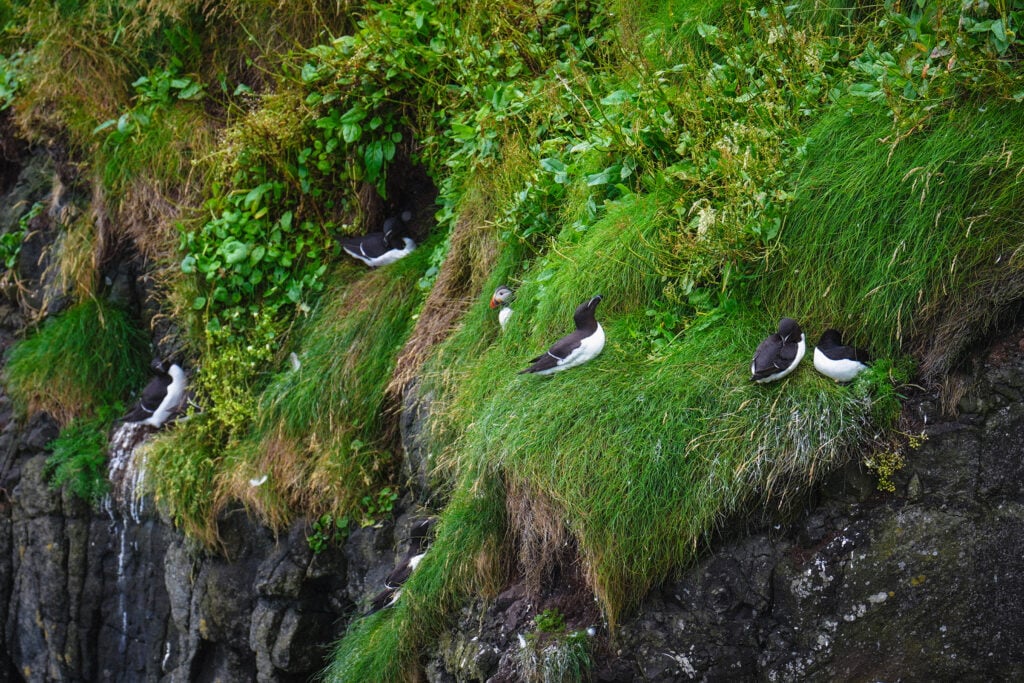
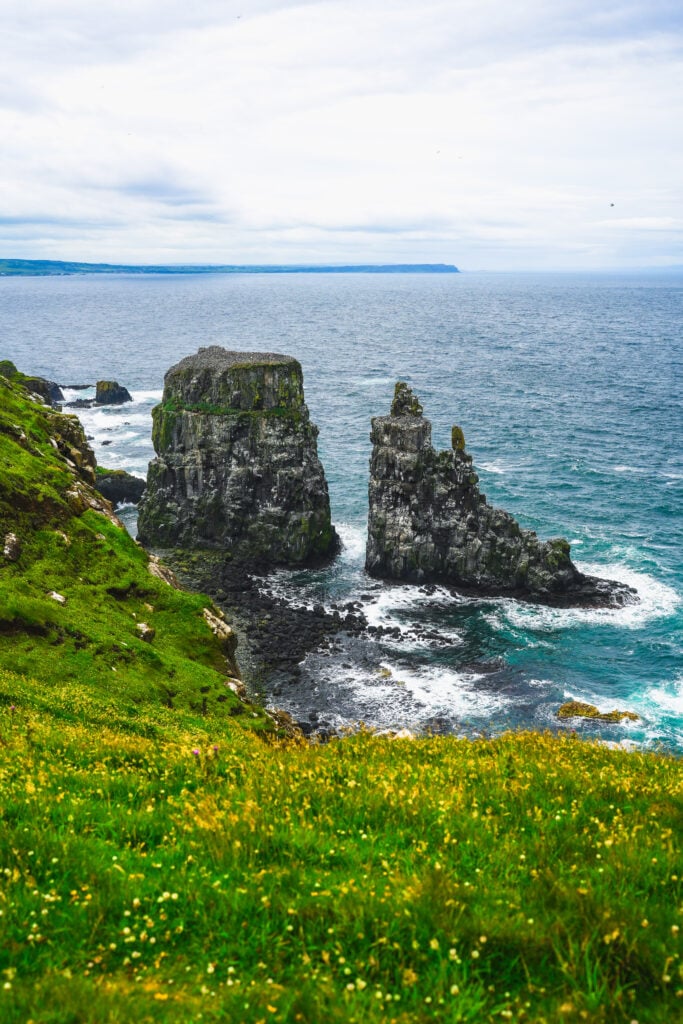
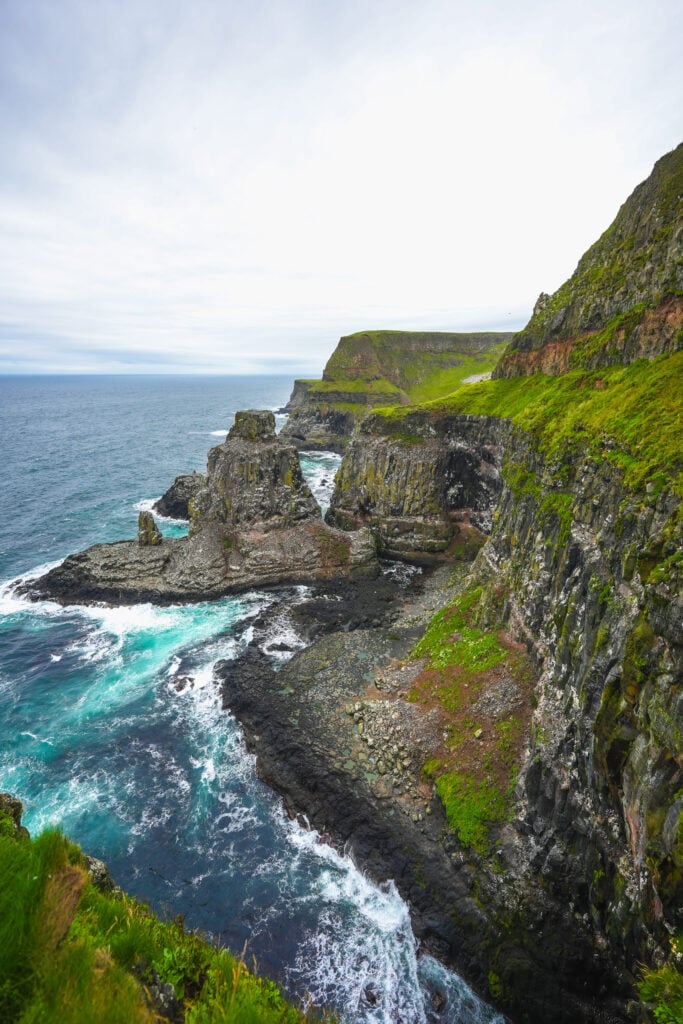
The second day of your time in the Causeway Coastal Route will be spent venturing out to the most northerly and only inhabited offshore island of Northern Ireland. Rathlin is best known for its seabird population, namely puffins, alongside its stunning natural beauty and other wildlife.
A visit to Rathlin Island will take a full day due to the ferry times. While you could opt to stay here overnight, I would only really recommend this if you’re looking for a really slow-paced kind of trip.
The heart of Rathlin centres around its harbour area, where you’ll arrive and depart from. Rather than a bustling hub, this tiny island community of just 140 people, a handful of churches and one pub has a wonderfully peaceful charm. That being said, the island can get very windy, so be prepared with a hat or something to hold your hair back.
From the harbour, we took the Puffin Bus to the RSPB Wildlife Centre. This is a two-way bus, and you’re only permitted to stay at the centre for an hour at a time, but you can head back on another bus if you wish to go again. There’s a small entry fee once you arrive, but this permits entry to a small viewing platform 100 steps down.
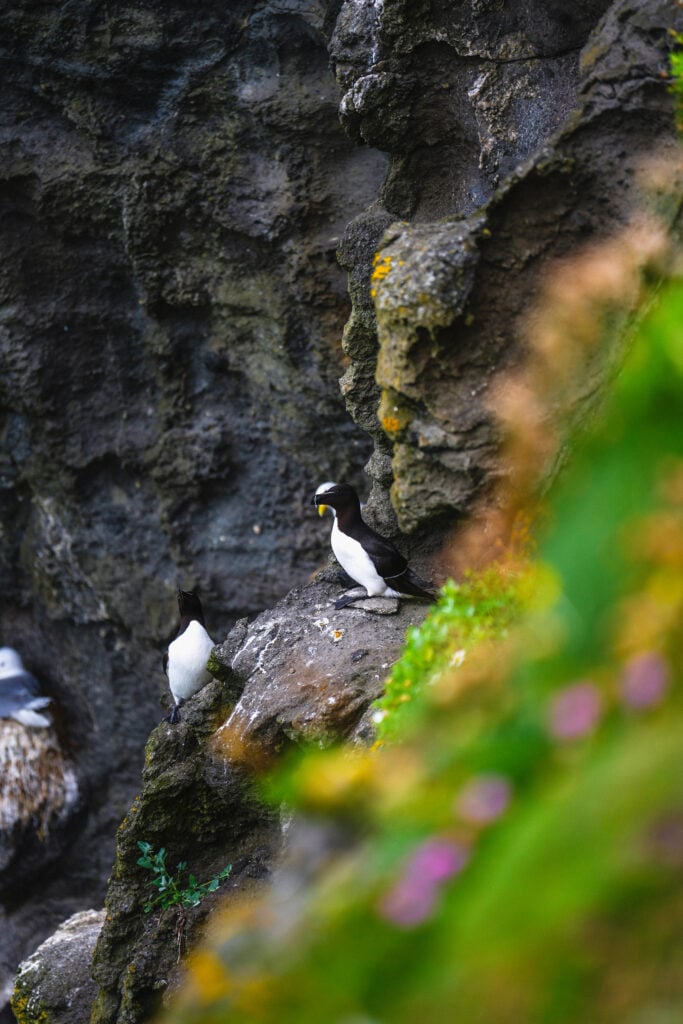
Once at the observation deck, a staff member will point out guillemots, fulmars, and razorbills. And if you keep your eyes peeled, you’ll probably see puffins too!
You’re able to borrow binoculars for free, and to be honest, this is a must as it’s pretty hard to see individual seabirds with the naked eye. The area is teeming with seabirds, and it’s really wonderful to see…though I’ll note the sensory smell of rotting fish is pretty apparent.
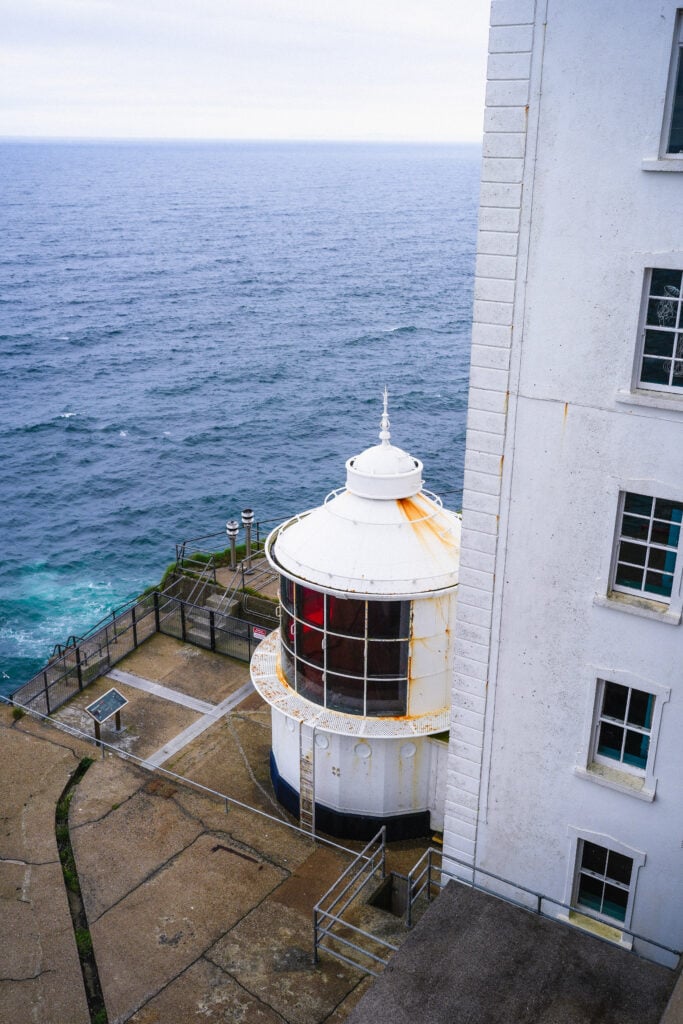
Another highlight while in the area is one of the UK’s most unique lighthouses. Rathlin West Lighthouse is famously known as the “upside-down lighthouse” due to its light sitting at the bottom of it, meaning it’s inverted. This design was made specifically to penetrate the thick Irish fog that often swallows up the coastline.
I recommend popping into the lighthouse to warm up and take respite from the wind. It’s also a great opportunity to learn a little more about what life was like as a lighthouse keeper back in the day, especially considering so many lighthouses are now operated remotely and no longer require someone living on-site.
If you’re an avid lover of nature and all things wildlife, then I highly recommend checking out my Skomer Island guide or Lundy Island video on YouTube. They are both heavily populated with puffins and seabirds galore, so if you like Rathlin Island – these are well worth checking out too.
Once you return via the Puffin Bus, make sure to spend a little time exploring trails along the Kebble Nature Reserve and coastline. Beyond seabirds, you’ll see donkeys grazing, golden hares hidden within long grass, and sometimes even lounging sea lion colonies.
Day 3: Key Highlights
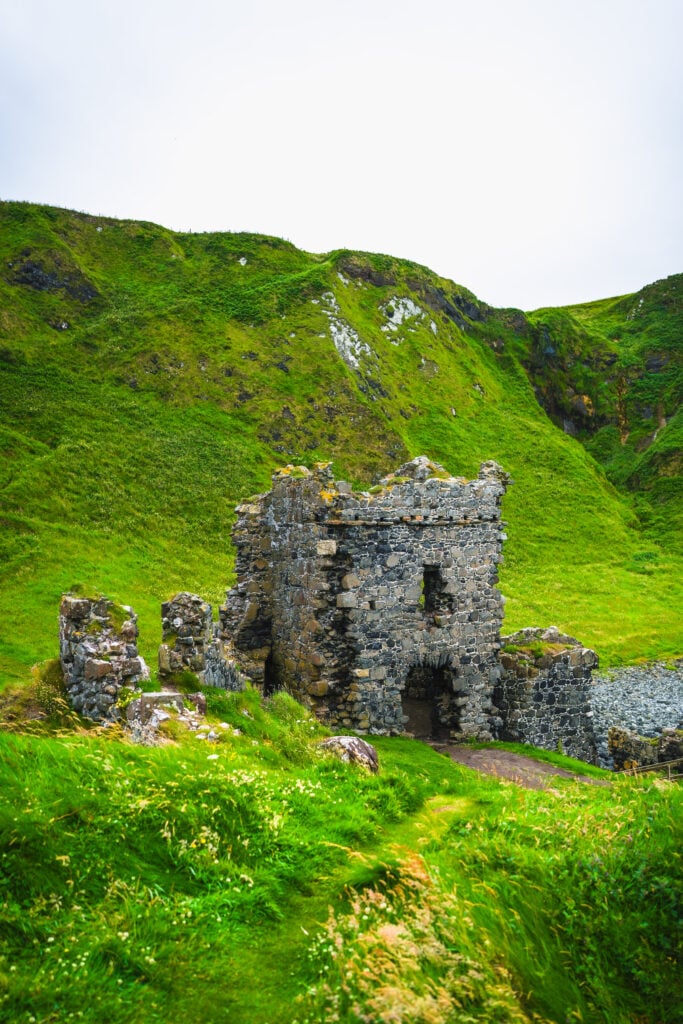
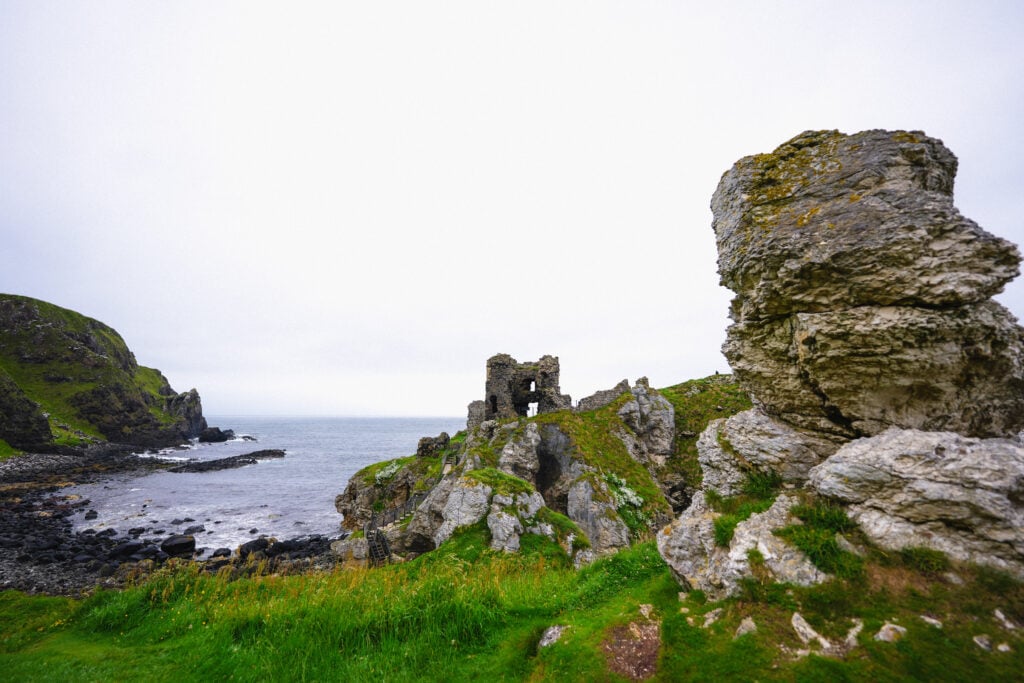
Kinbane Castle
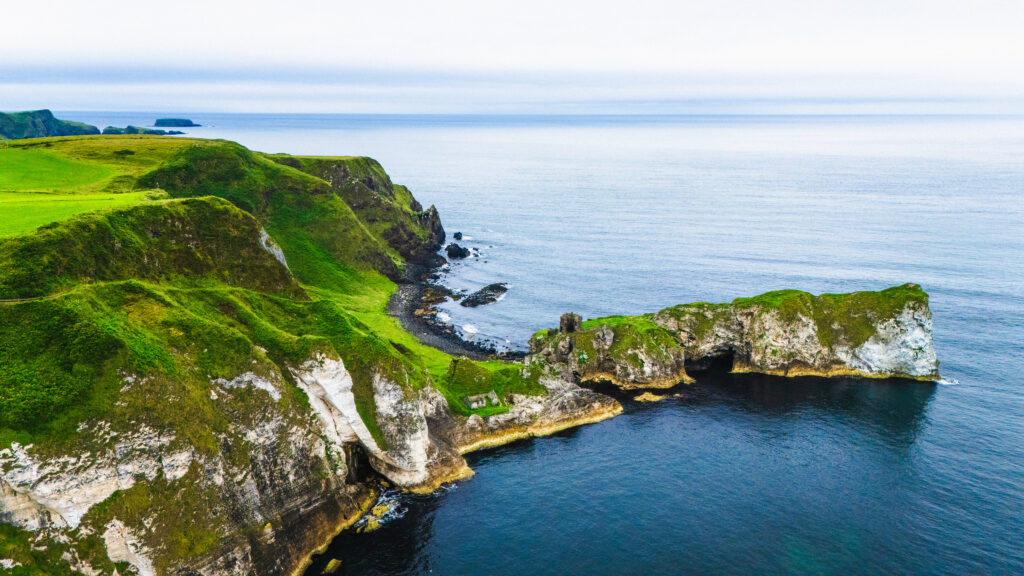
A bit of a hidden gem on this stretch of coastline and a nice alternative to the ever-so-popular Dunluce Castle (more on that later), Kinbane Castle is completely free to visit!
It’s true, hardly any tourists come here, and to be honest, I think the walk down to it is a little off-putting for some. The walk down is steep, narrow and slippery, and I’ll admit that we were a bit overwhelmed by the thought of having to walk back up after, but it was worth it in the end.
The 16th-century ruins sit on a promontory overlooking the crashing waves below. From here, you’ll also be able to see Rathlin Island. The castle takes its name from the nearby headland, An Ceann Bán, an Irish phrase meaning “white head”. This is pretty apparent when you see how chalky the headland is up close.
Kinbane Castle was built in 1547 by Colla MacDonnell of the Scottish MacDonnell clan. The castle was originally two-storey and once would have stretched quite far over the peninsula. However, all that remains of it today is a crumbling tower structure. The very same point at which the guards would have sat to see enemies approaching. Indeed, in 1551 and 1555 the castle was damaged by English forces during sieges.
Ballintoy Harbour
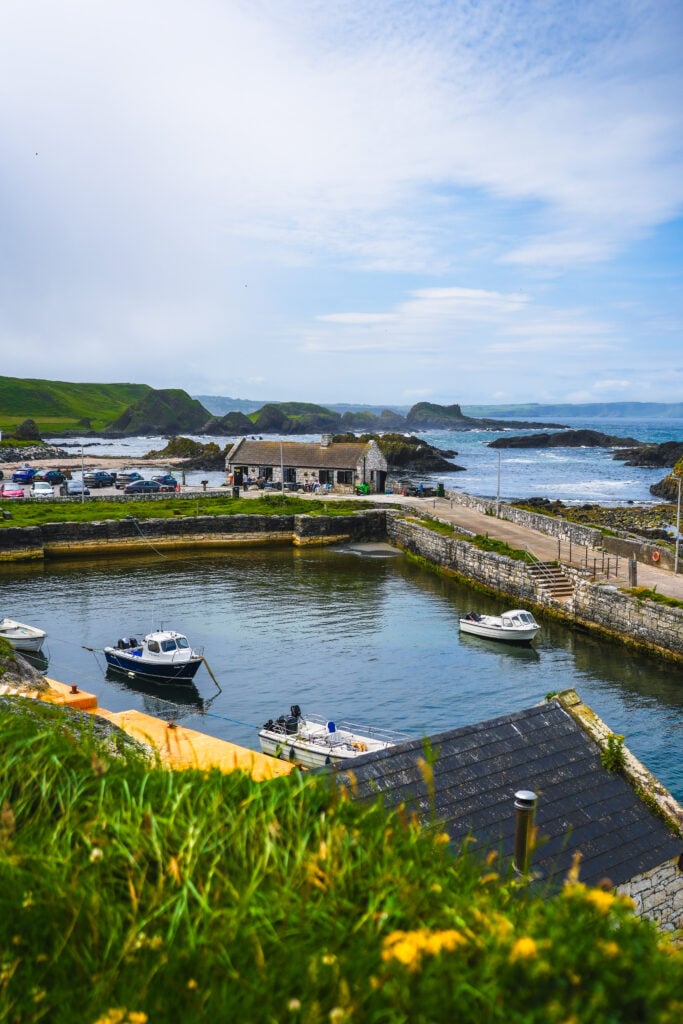
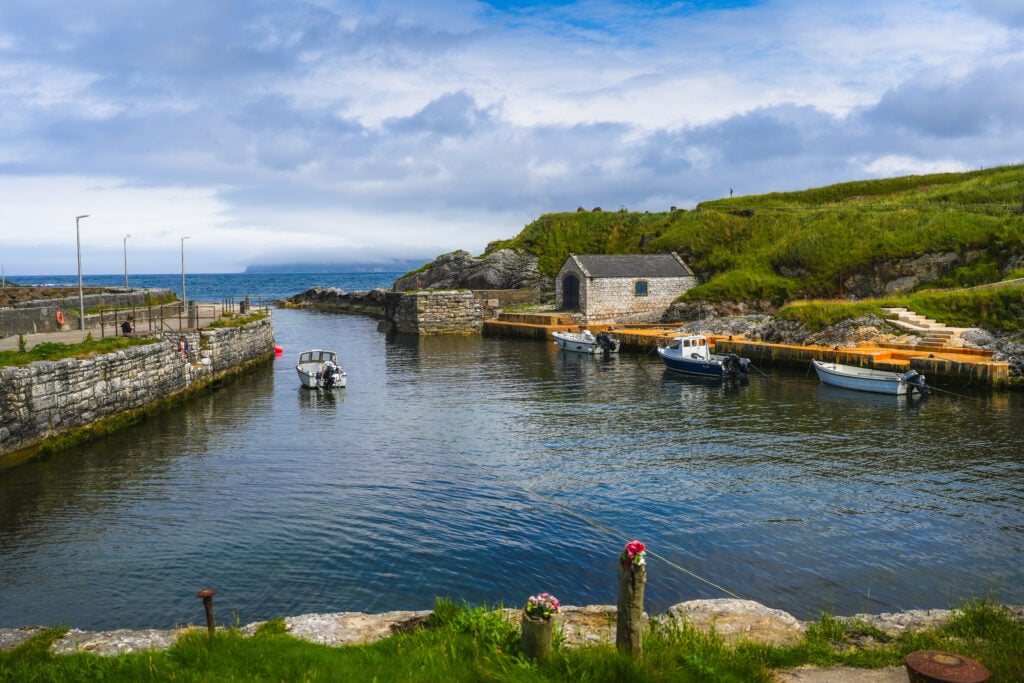
One of the most picturesque harbours in the area has to be the historic fishing port Ballintoy Harbour. Home to a beach and beautiful sweeping vistas, the harbour area has retained much of its traditional charm and looks almost untouched by time. This is perhaps why it was used as the perfect filming location base for the Iron Islands in Game of Thrones.
Carrick-a-Rede
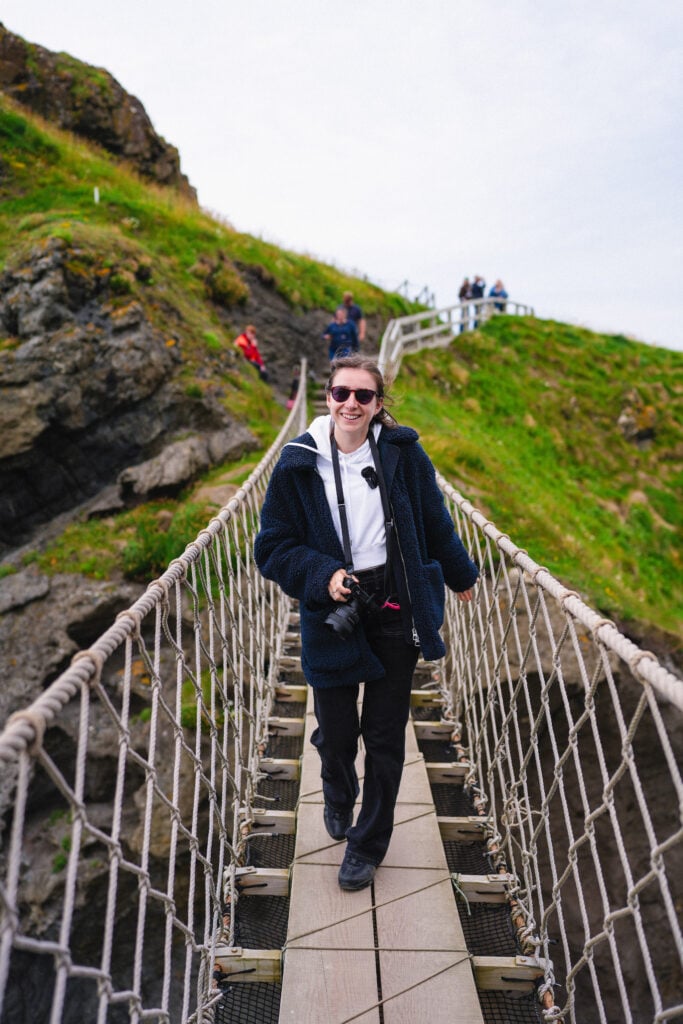
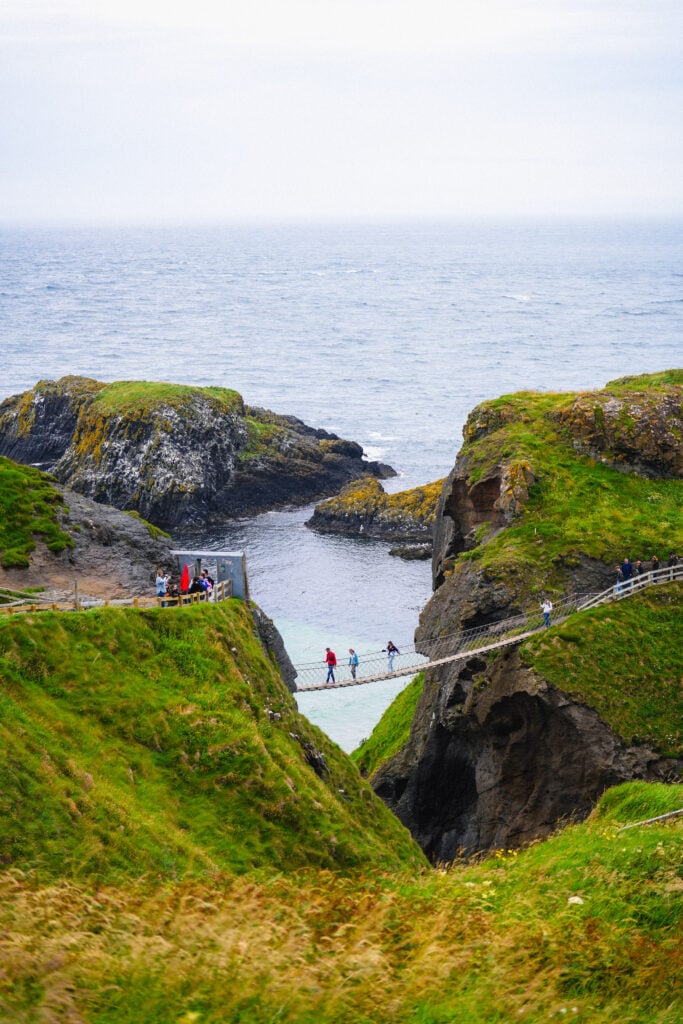
Yet another unique headland is Carrick-A-Rede, famed for its rope bridge, which was originally built so salmon fishermen could reach and check their nets. The headland is actually managed by the National Trust, with efforts to preserve the site for generations to come, and so you’ll need to book a ticket to visit here.
Once you arrive at the visitor centre, it’s around a 1 km walk to reach the rope bridge itself. Thankfully, the bridge has been thoroughly secured over the years. That being said, it still swings, and so if you are terrified of heights, this won’t be an enjoyable experience. It’s located 98 ft above the rocks below.
One of the best parts of crossing the rope bridge is how close you can get to the nesting seabirds. Offering a completely different perspective from Rathlin Island, you can see them remarkably clearly without even needing binoculars.
There are only a limited number of visitors allowed, so be sure to book a ticket online well in advance. Book your ticket here. At nearly £15 per person, you might be wondering if it’s worth it?
To be honest, for me it was just because I absolutely adore seeing puffins and seabirds up close. But it’s definitely worth considering whether you care that much, as it is quite costly for a fairly small and brief activity. Certainly a unique experience though!
Dunseverick Castle
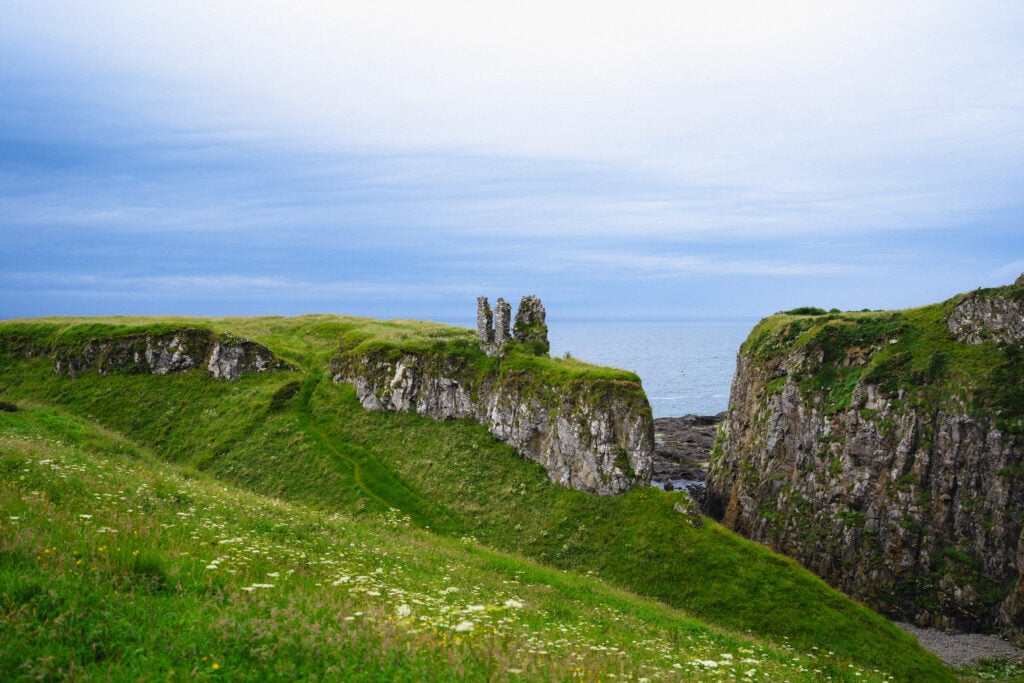
Another stop along the route is Dunseverick Castle. While only a few ruins remain today, this dramatic clifftop site has been fortified since at least the 5th century, with its strategic position overlooking the North Atlantic.
It’s said that Saint Patrick visited here and baptised a local man named Auchen, who later became a bishop in Ireland. While there’s not much left of the castle, it makes for a dramatic scenic spot to soak up even more coastal views.
Giant’s Causeway
If you’ve been or are interested in going to the Causeway Coastal Route, then there’s no doubt you’ll have been waiting for this mention. Giant’s Causeway is an incredibly special geological formation. This UNESCO-listed site is one of the greatest wonders of Europe, a natural phenomenon that continues to leave those who visit in awe. Indeed, you can’t do this part of Northern Ireland without visiting its most famous attraction.
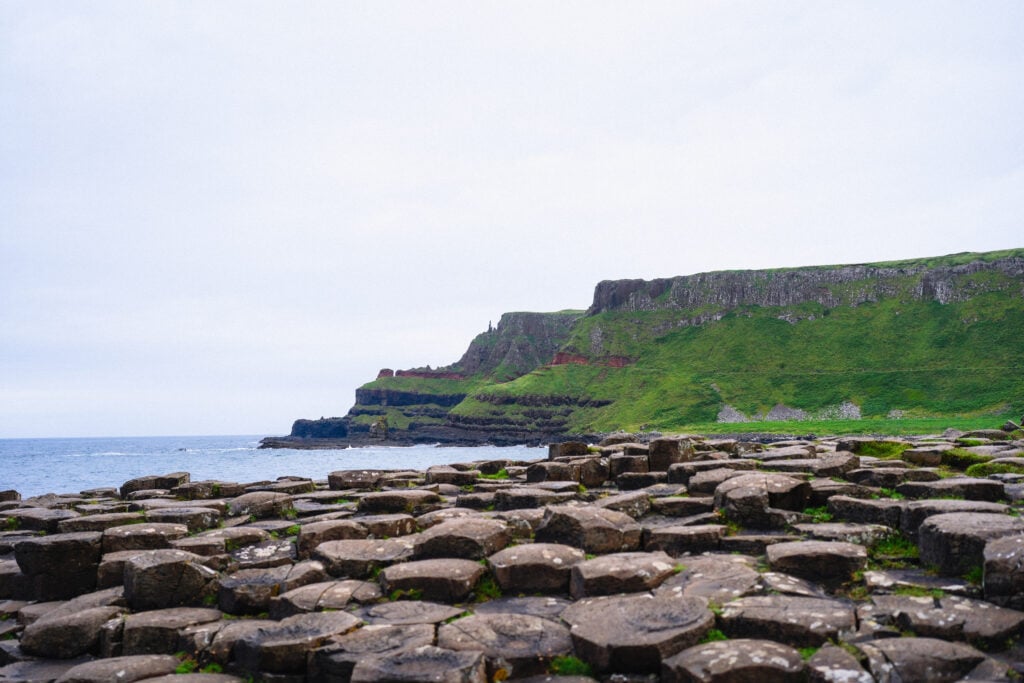
Giant’s Causeway is exactly that: giant. Made up of around 40,000 interlocking basalt columns, this extraordinary landscape was formed around 50 to 60 million years ago as lava cooled and cracked into the distinctive hexagonal shapes you see today.
Of course, as a land so heavily shrouded in myth and folklore, there’s also a story behind this scientific wonder. According to Irish legend, the stepping stones were built by the giant Fionn mac Cumhaill, who created a path across the sea to Scotland to challenge his rival, Benandonner.
Another unusual rock formation, which quite literally sticks out, is known as the Devil’s middle finger.
If there’s one top tip I can give you, it’s to visit Giant’s Causeway when the National Trust visitor centre is closed. Walking down to the columns themselves and using the public coastal walk is completely free; however, the National Trust charge people for tickets online for use of the centre and closer-by on-site parking. But, if you can, I really recommend walking down and avoiding this extra cost!
Day 4: A scenic detour
Islandmagee
A bit of a misnomer because it’s not actually an island but instead a 6-mile-long narrow peninsula and civil parish on the east coast of County Antrim. Believe it or not, we decided to have a slower-paced day. I recommend using day 4 of this itinerary to explore Islandmagee at your own pace.
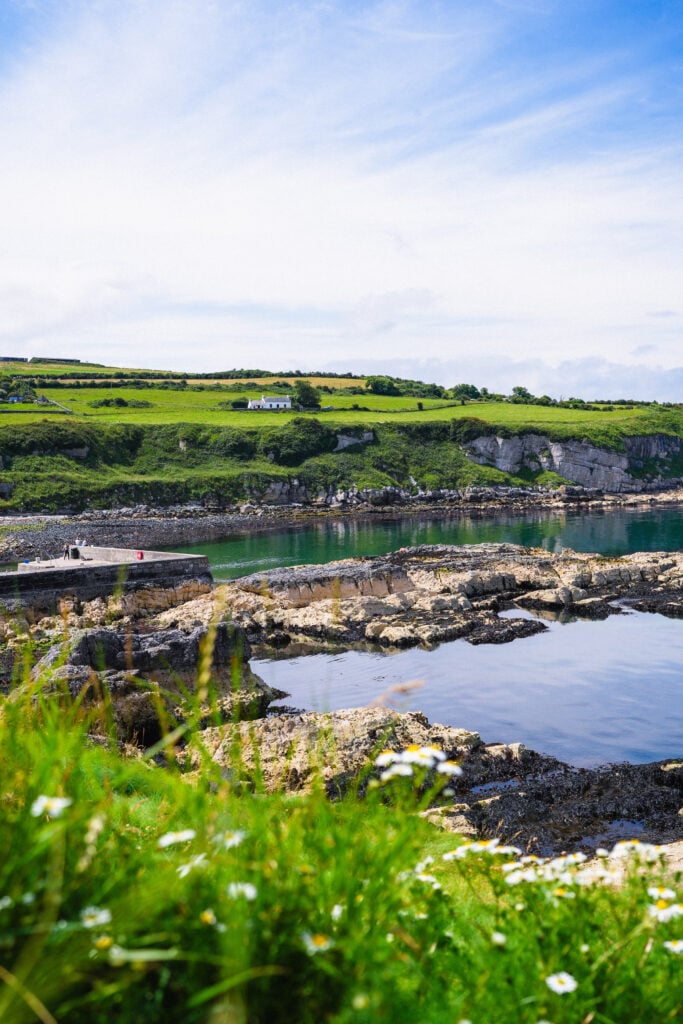
There are several charming things to do, like wandering along the Gobbins Cliff Path, soaking up seaside sights at Brown’s Bay, or strolling along to the harbour of Portmuck (a popular spot for seal spotting!)
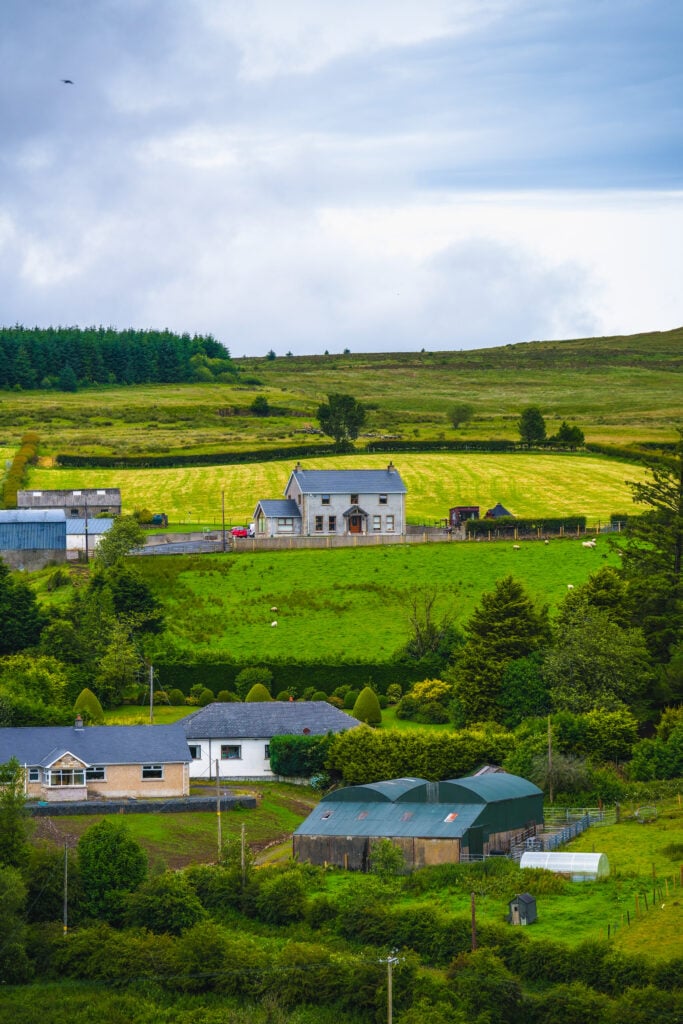
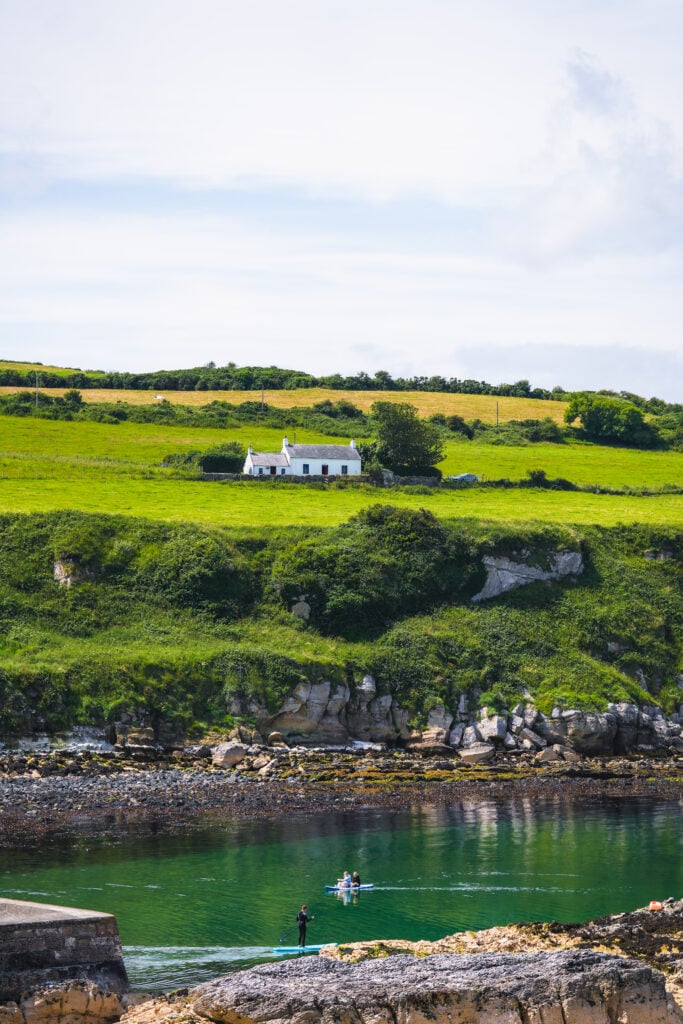
We had the pleasure of meeting up with a local artist (watch my vlog below for the full interview). Sharon Millar was born in Singapore to Malaysian and Northern Irish parents and emigrated back to the Emerald Isle over fifty years ago. She very kindly gave us a tour of her studio and talked us through her processes and approach to painting. Sharon paints dreamy landscapes with dramatic lighting, often featuring small isolated cottages (very common in the landscape), but they serve a deeper meaning – that “home is where the heart is”.
Sharon Millar’s depictions of the beauty of Northern Ireland are well worth checking out. Visit Sharon Millar’s website.
Day 5: Western Edge
Dunluce Castle
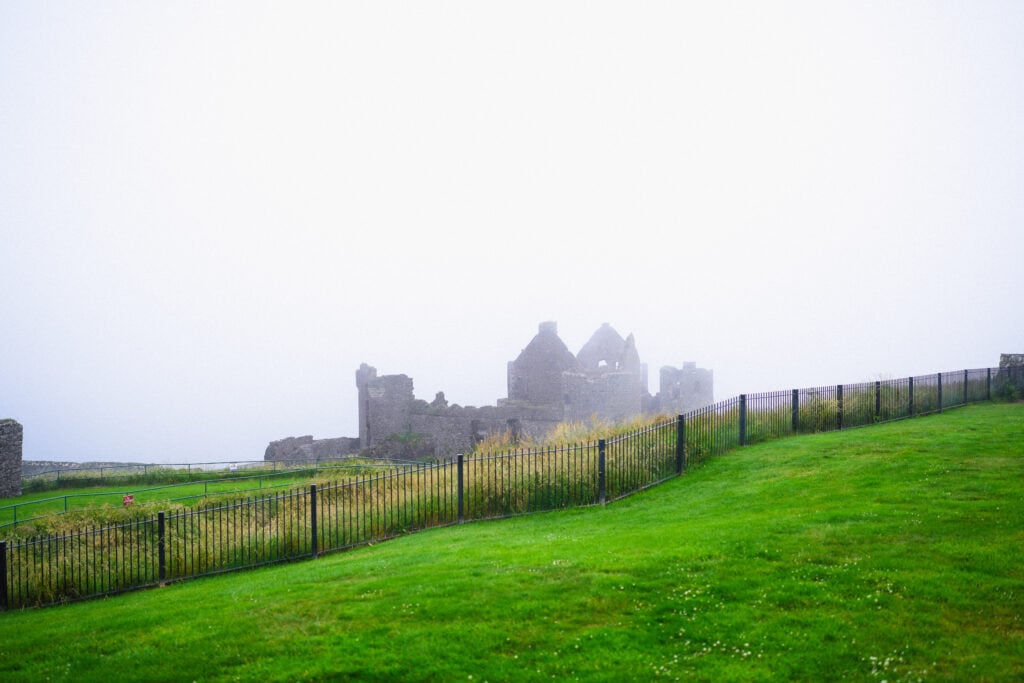
Located between Portrush and Portballintrae is one of the most picturesque and popular castle ruins along the Causeway Coastal Route. You may well recognise it, as Dunluce Castle is also one of the most photographed medieval ruins on the island of Ireland.
Originally built in the 13th century by Richard Óg de Burgh, it later became the seat of the McQuillan Clan (Lords of the Route from the late 13th century).
Portrush
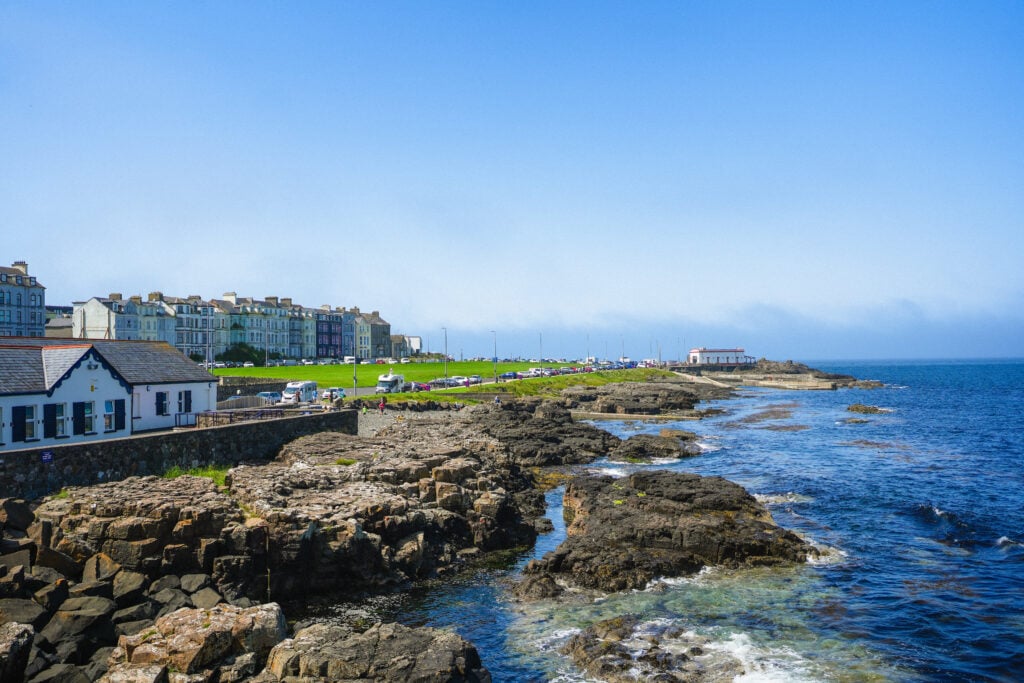
This is the other location where we based ourselves while exploring the Causeway Coastal Route. Portrush is one of the biggest towns in the region; it’s hard to believe now that it’s so busy, but it once started as a tiny fishing village. That changed in 1827 when the harbour was constructed, and the town further grew in 1855 with the arrival of the railway. Indeed, many people still visit the Causeway Coastal Route via the very same train tracks.
Wandering around, you can tell that it was, and very much continues to be, a popular coastal escape. A lot of the signage and tiles dotted throughout Portrush are reminders of its Victorian past as a bustling tourist spot. Along the main high street, you’ll find cute cafés, souvenir shops, and, of course, head down to the water, and you’ll find the main beach.
Another spot in Portrush that’s completely free to visit is the Portrush Nature Reserve. Look closely at the rocks here, and you’ll spot embedded ammonite fossils. There are also plenty of rock pools where you can spot crabs and other tiny marine creatures.
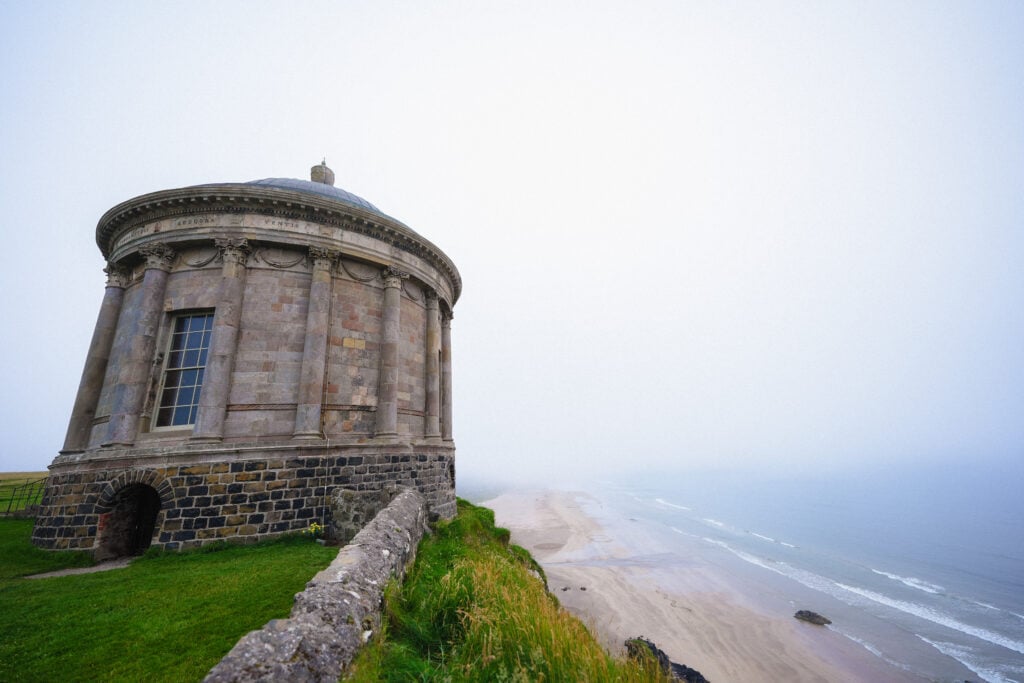
Mussenden Temple
Perched dramatically high above on the clifftops, Downhill Demesne is an 18th-century estate and one of the most fascinating stops along the Causeway Coastal Route.
Construction began in 1755 under the direction of the eccentric Bishop of Derry, Frederick Hervey, although the architect remains unknown (partly because the bishop had a habit of dismissing architects and bringing in new ones!).
The estate was lived in until 1922 and was later used by the RAF during the Second World War, but over time it fell into disrepair. Today, you can explore the ruins of the house, follies, mausoleum and gardens.
The true highlight, however, is Mussenden Temple. This stone structure was actually a circular library built by the bishop in memory of his cousin, Frideswide Mussenden. Inspired by the Temple of Vesta in Italy, the tiny building once housed the bishop’s personal book collection, with a fire burning beneath the floor to protect the room from damp. Overlooking the sea and beyond, and thinking about its previous purpose, it was definitely one of the most memorable viewpoints of the trip for me. Especially with the mist drawing in slowly.
Travel with me! (watch the vlog)
Sometimes, it can be nice to have a visual guide of somewhere before heading there. Travel with Antoine and me via our Northern Ireland trip to see just how beautiful (and green) it is!
Where to stay on the Causeway Coastal Route
We had two bases during our trip: one in Cushendun and the other close to Portrush. I think it’s well worth doing using two bases so you can really make the most of your time and trip, without having to go back and forth. In Cushendun, we opted to find an Airbnb.
Because both villages are fairly small, you’ll find that choice is pretty limited. But they do have some quaint accommodation options, with stunning views! It’s mainly whole apartments, not hotels. During peak season, you’ll need to allow plenty of time to book in advance. Here are a few suggestions of where to stay (based on web reviews):
Rockport Lodge – Set within a former summer bathing and shooting lodge, this waterfront guest house boasts sweeping sea views. Choose from a one-bedroom or two-bedroom stay; the lodge sits just outside the village centre. Check prices and availability.
There are a lot more options when it comes to Portrush. We chose to stay in the Ibis to make it a little more cost-effective, as we were in Northern Ireland for a month. However, there are plenty of lovely bed & breakfasts available.
Harbour Heights B&B – This family-run 3-star bed & breakfast dates back to 1870, overlooking Blue Flag beach. It’s noted for its great views, affordability, and basic yet comfortable rooms. Check prices and availability.
Enjoyed reading my guide to Northern Ireland’s Causeway Coastal Route? Pin this article now, and read it again later: