
3 Days in Tokyo: The Perfect First-Time Visitor Itinerary
Last Updated on 13th October 2026 by Sophie Nadeau
This post may contain affiliate links. Please check out my privacy policy and disclosure for more information.
Upon visiting Japan’s colossal capital city, it’s almost impossible to believe that during the Edo Period, it was once a small fishing village. Today, Tokyo is a city like no other – where modernity meets tradition in a labyrinth-like puzzle of towering skyscrapers, historic shrines and surprisingly tranquil pockets of green. Here’s your ultimate guide on how to spend three perfect days in Tokyo, as well as top tips to know before you go!

What is Tokyo known for?
Tokyo is the capital city of Japan. Situated on the central coast of Honshu, Japan’s largest island, it has an estimated population of just under 14 million people (and in the wider area up to 40 million), meaning that it’s the most populous city in the world and is therefore renowned for its densely packed urban cityscape.
One of the most unique points of interest about Tokyo City is its blend of modernity and tradition. As a city which changes rapidly and unpredictably, it’s said that you can never visit the same Tokyo twice!
It’s also worth noting, for a city so big and densely populated you would expect it to be chaotic and overwhelming (arguably for the senses alone, it certainly is the latter…) However, it’s one of the most ordered cities in the world – where politeness and respect are simply a way of life, and theft is almost non-existent!
Is 3 days enough time in Tokyo?
3 days is the perfect amount of time to spend exploring Tokyo, it’s not too little and it’s not too much. You’ll be able to see a lot of the main sights of the city, get to experience the overall vibe of Tokyo as well as still have more to uncover should you return.
Day 1 in Tokyo suggested itinerary
Your first day in Tokyo will feel fast-paced (mainly because we’ve packed in lots to see) but also because it’s different to any other city in the world.
You’ll be spending the day exploring viewpoints, shrines, gorgeous green spaces and intriguing neighbourhoods. Don’t worry, we’ll also offer suggestions of where to eat, and of course, grab a beer!
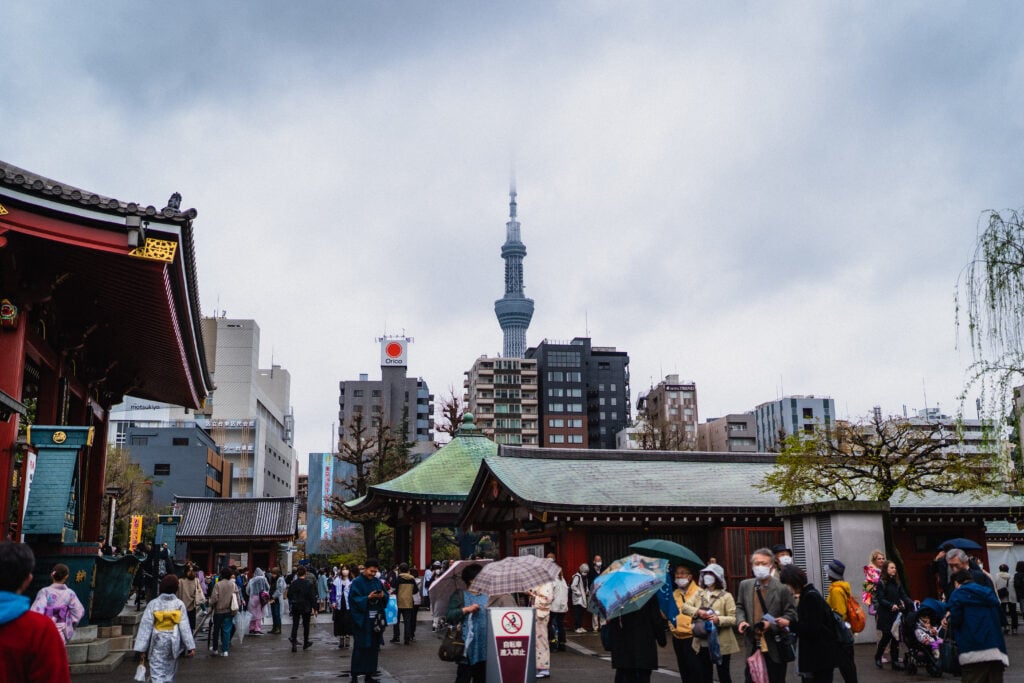
Tokyo Skytree, 東京スカイツリー
The best way to get your lay of the land over any city is to view it from above. Start your first day with a visit to Tokyo Skytree. Standing at a staggering height of 634 meters, it’s the highest viewing platform in the city (double the height of Tokyo Tower) and boasts captivating panoramic views.
A particular highlight is a section of glass floor which leaves visitors feeling as though they are floating in mid-air… though this is not for those who have a fear of heights! At the base of the tower a wide variety of attractions can be found, including shops, restaurants and even an aquarium.
The Tokyo Skytree opens at 10 AM (general admission costs ¥3,100). It has to be said, that it’s certainly more costly than some of the other viewpoints in the city.
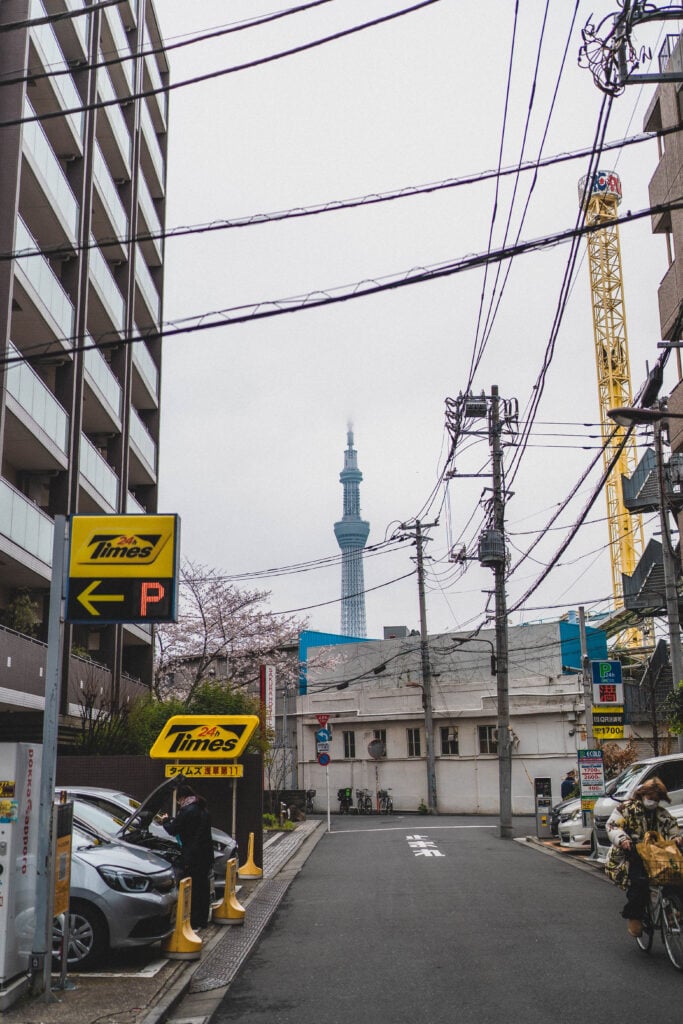

Sumida Park, 隅田公園
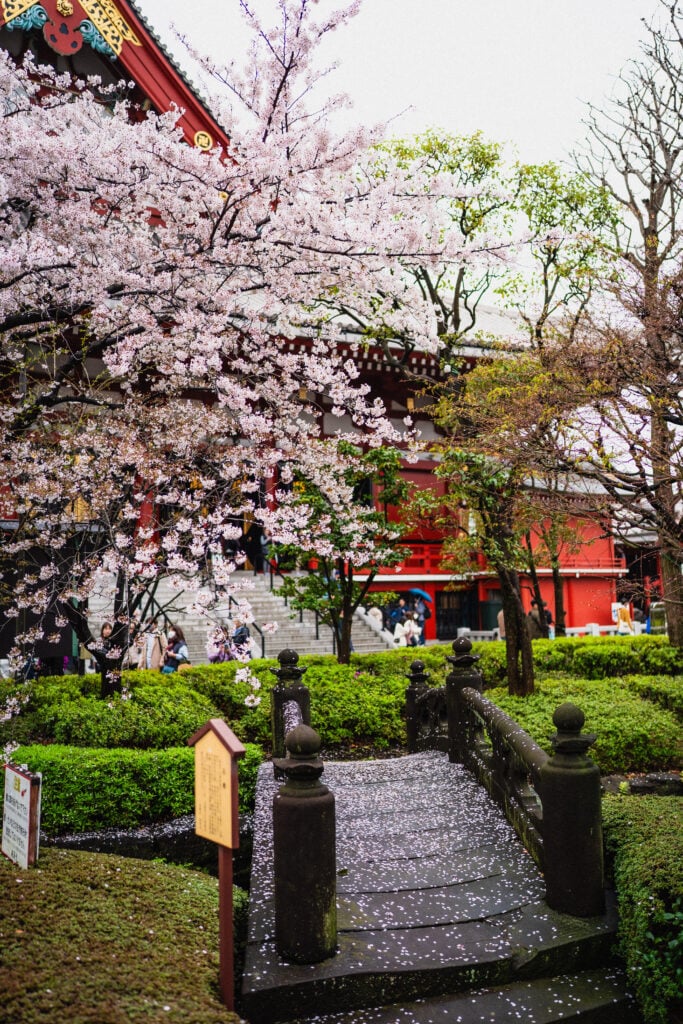
Next, head to the gorgeous Sumida Park. This riverside park is simply stunning, especially if you happen to be visiting during the Sakura season. Home to over 500 cherry trees, spread across the two sides of the park, it is one of the best places to see fluffy pink blossoms!
Providing a pocket of calm and respite from the hustle and bustle of the city, this is a great spot to people-watch and soak up views of the surrounding buildings that stretch high into the sky.
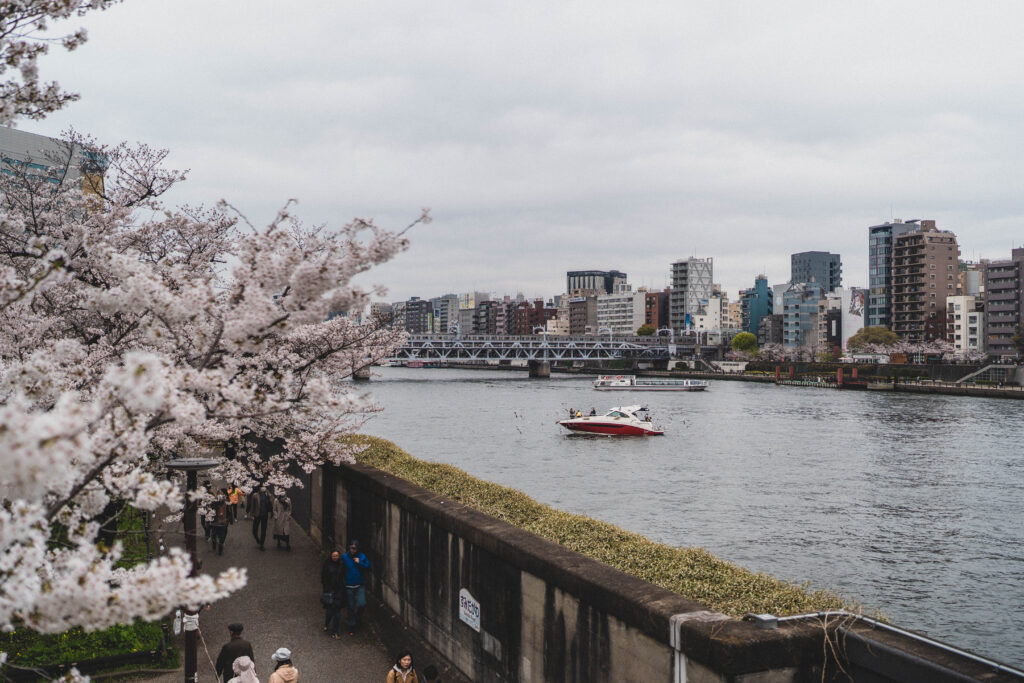
Nakamise Dori street, 仲見世通り
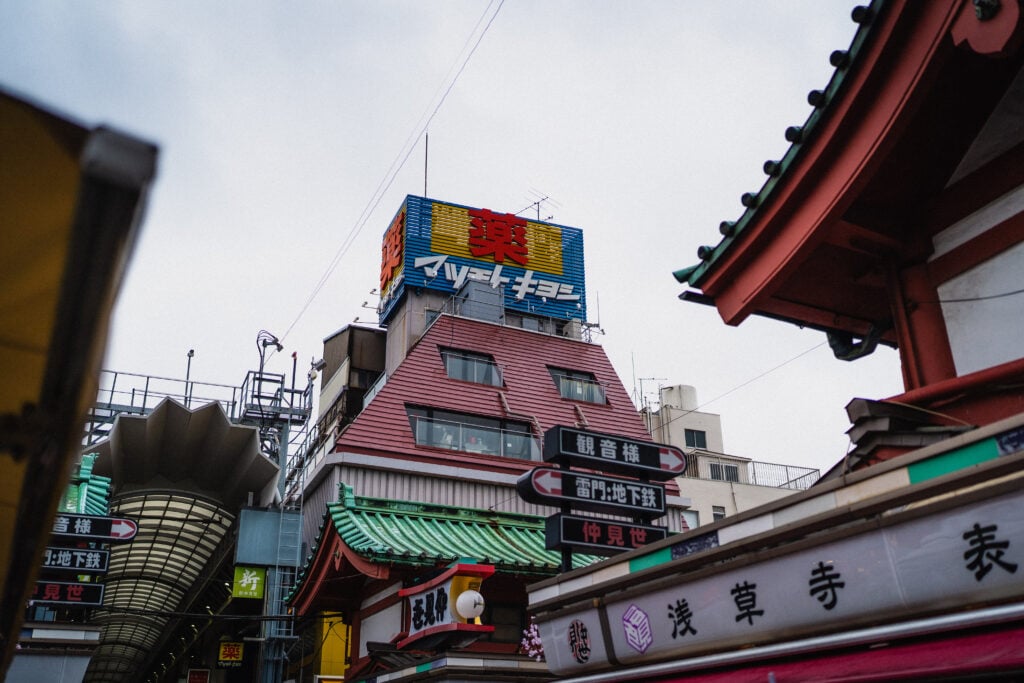
Nakamise Dori Street offers visitors a feel of old-school Tokyo, being one of Japan’s oldest shopping streets, it dates back to the 17th century. The street leads slopes upwards towards Asakusa Shrine.
Lined with over 90 different stalls, including food vendors selling Japanese delights, souvenir shops where you can purchase a gift or two and places which even sell samurai swords!
One of the more unique foods sold here is Ningyo-yaki, which translates as “baked dolls”. This local delicacy is little baked cakes shaped in the form of Asakusa landmarks, which are then filled with red bean paste. Delicious!
Asakusa Shrine, 浅草神社
This small Shinto shrine is also known as known as Sanja-sama (Shrine of the Three gods) and is one of the most famous Shinto shrines in Tokyo.
The grounds of the temple and shrine host one of the three largest Shinto festivals in Japan, Sanja Matsuri, which typically happens annually in late May and celebrates the founding of the temple.
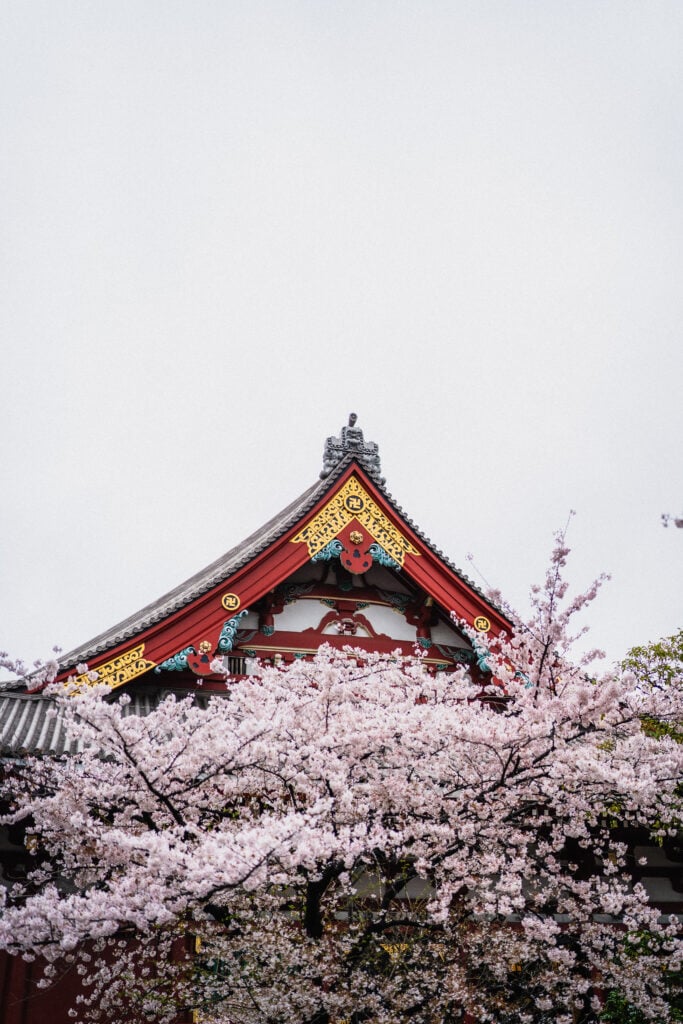
Senso-ji, 浅草寺
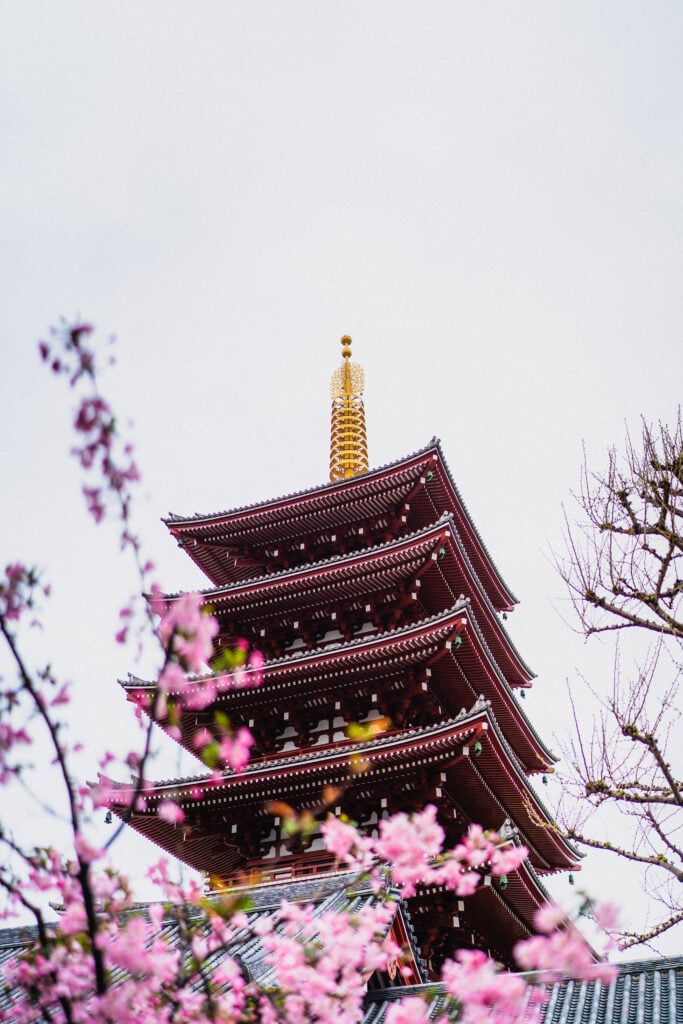
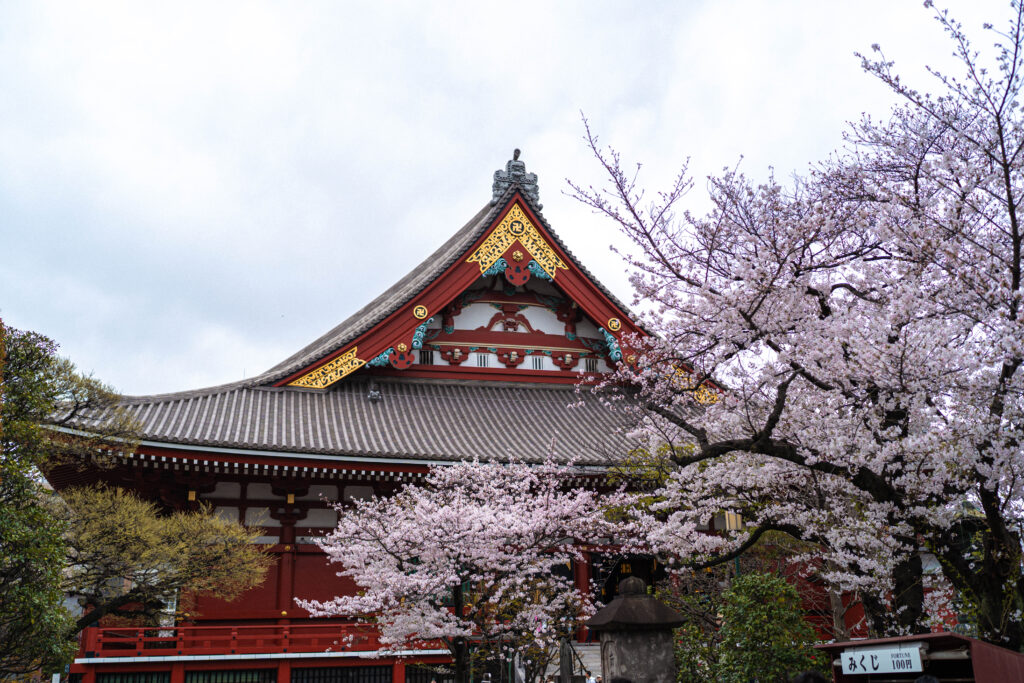
This ancient Buddhist temple is Tokyo’s oldest established temple and was completed in 645 AD. At the entrance, you’ll see the five-storied pagoda stretches into the sky at a height of 53 meters (roughly the same height as an 18-storey building) it’s one of the tallest of its kind in Japan!
The story behind this temple goes that in 628 AD, two brothers were fishing in the nearby Sumida River and fished out a statue of Kannon, the goddess of mercy. Although they returned the statue to the river, it kept coming back to them, so it was decided that a temple should be constructed here.
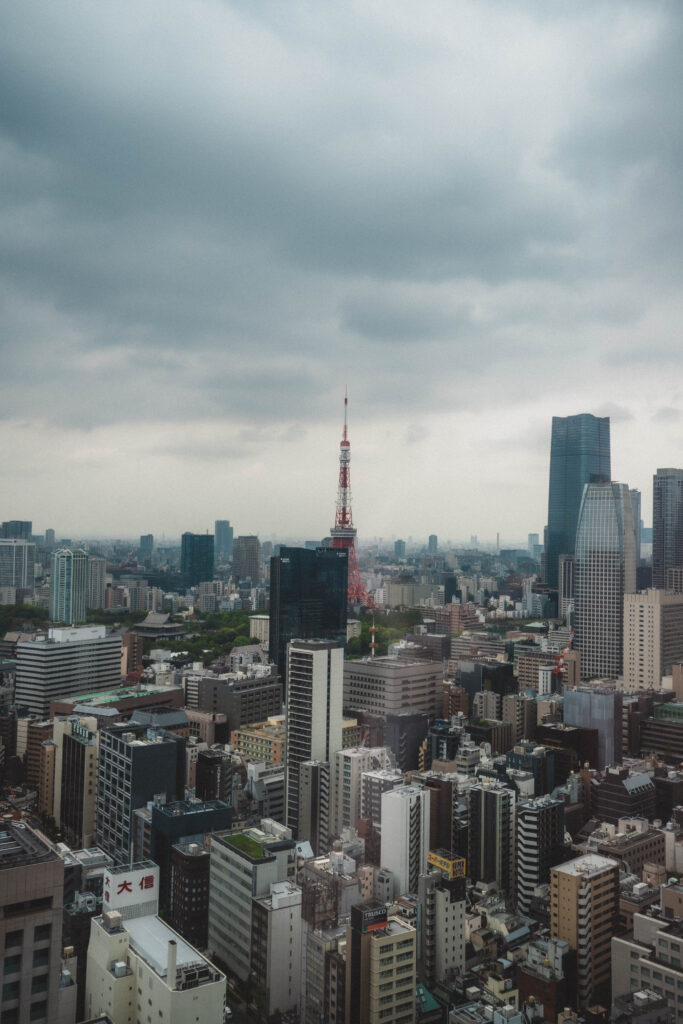
From here you can also soak up captivating views of Tokyo Tower. The view is unique in that you can truly reflect on the juxtaposition of the old and new that Tokyo is so famous for.
Ueno Park, 上野公園
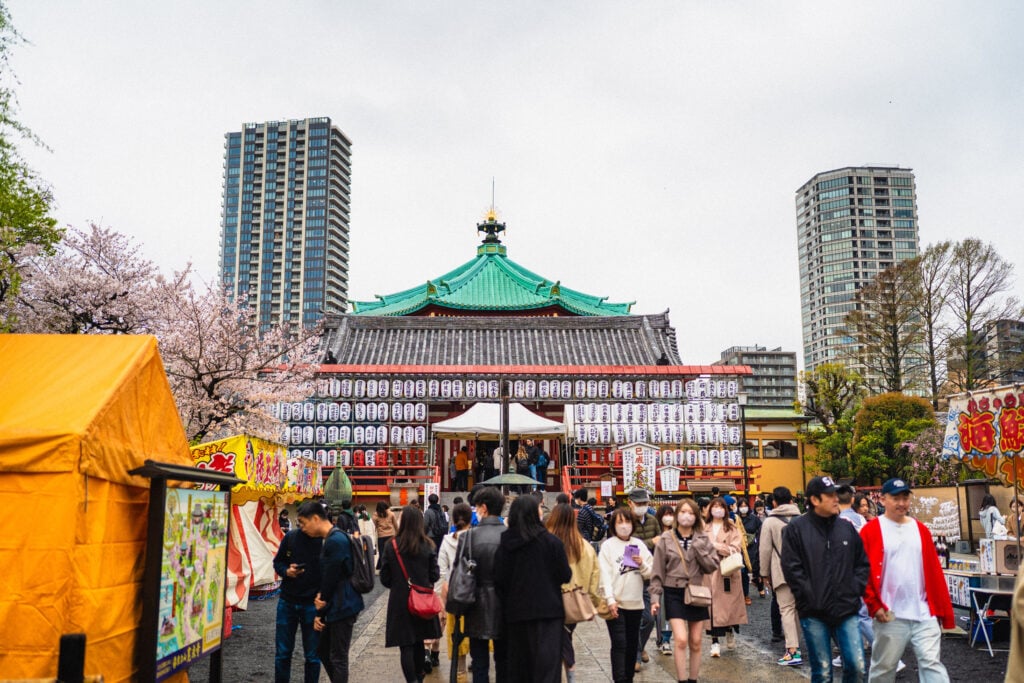
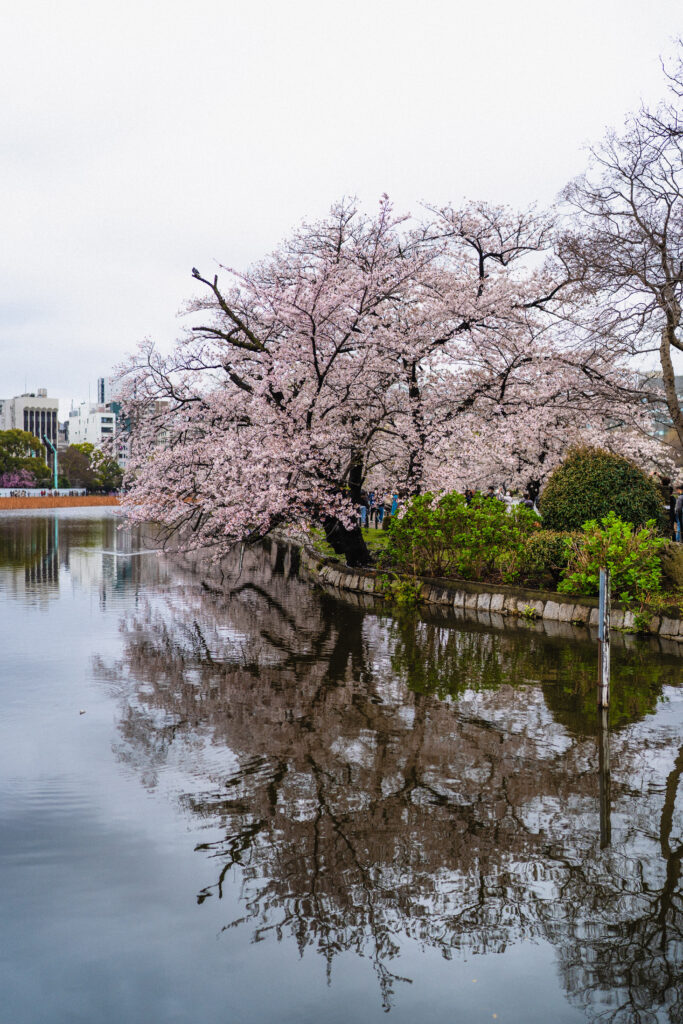
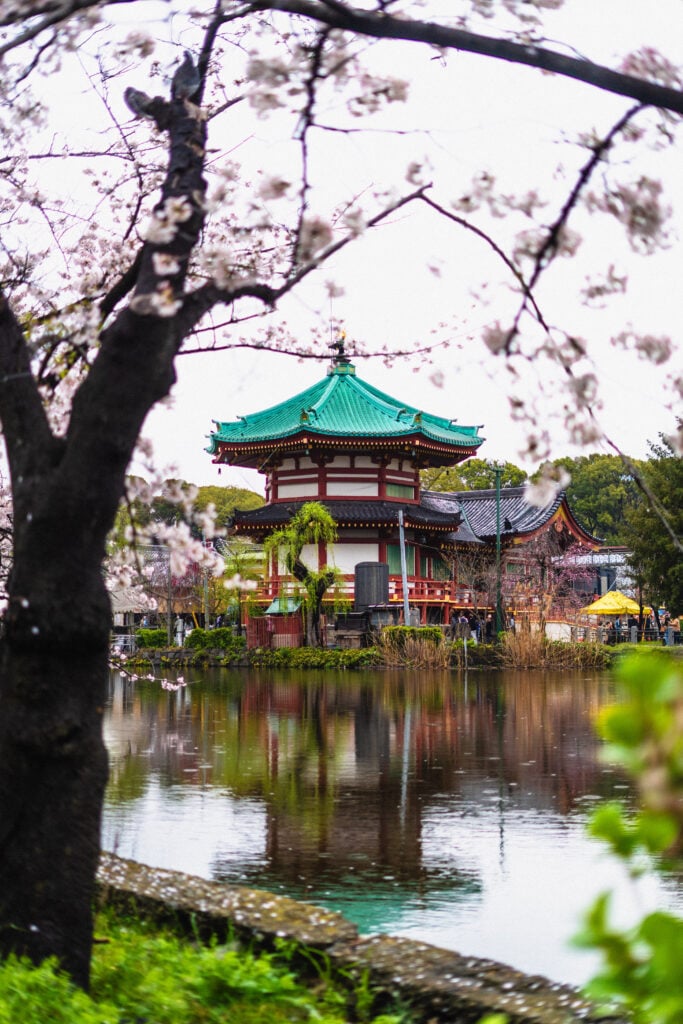
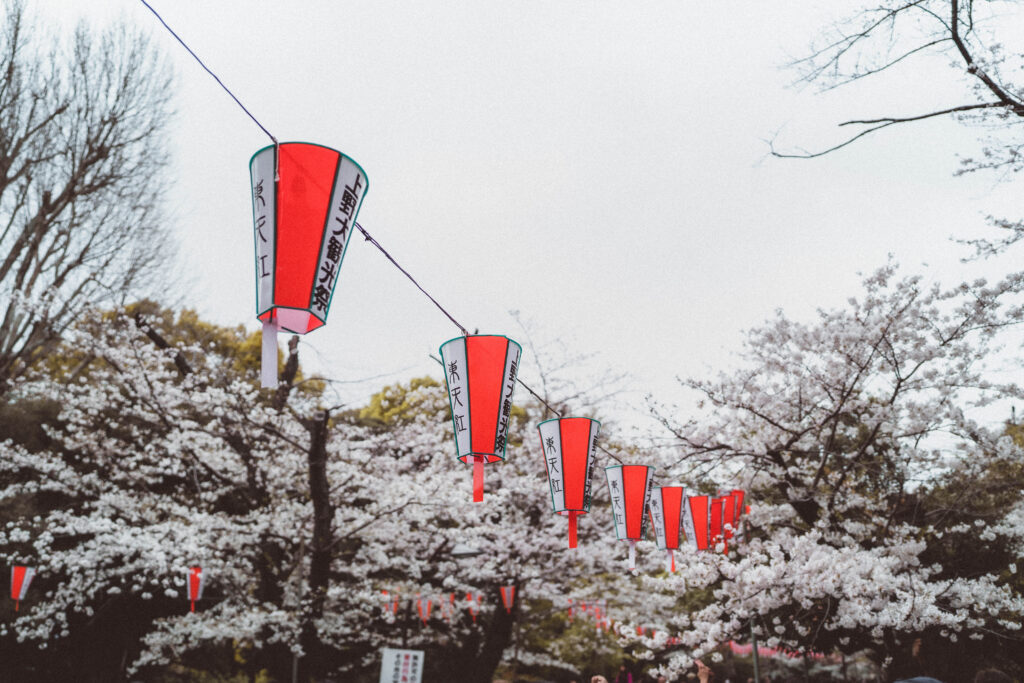
One of Japan’s oldest public parks, it is best known for Ueno Zoo and its 1,000 cherry trees. The park is a pink cloud during sakura season and becomes so popular during that time that it can draw in up to 2 million visitors!
Nestled within Ueno Park you can also visit a Shinto shrine that dates back to the 17th century and is particularly known for its golden facade and the many stone carvings that can be found in the garden.
Yushima Shrine, 湯島天満宮
Found on a hillside just above Ueno Park you’ll find the Shinto shrine, Yushima Tenjin. With a history dating back to 458 CE, it is now devoted to Tenjin, the kami of learning.
This particular shrine is a popular spot with university students (the university is situated close by) the shrine is believed to bring good fortune in exams and studies if visited often.
Akihabara District, 秋葉原
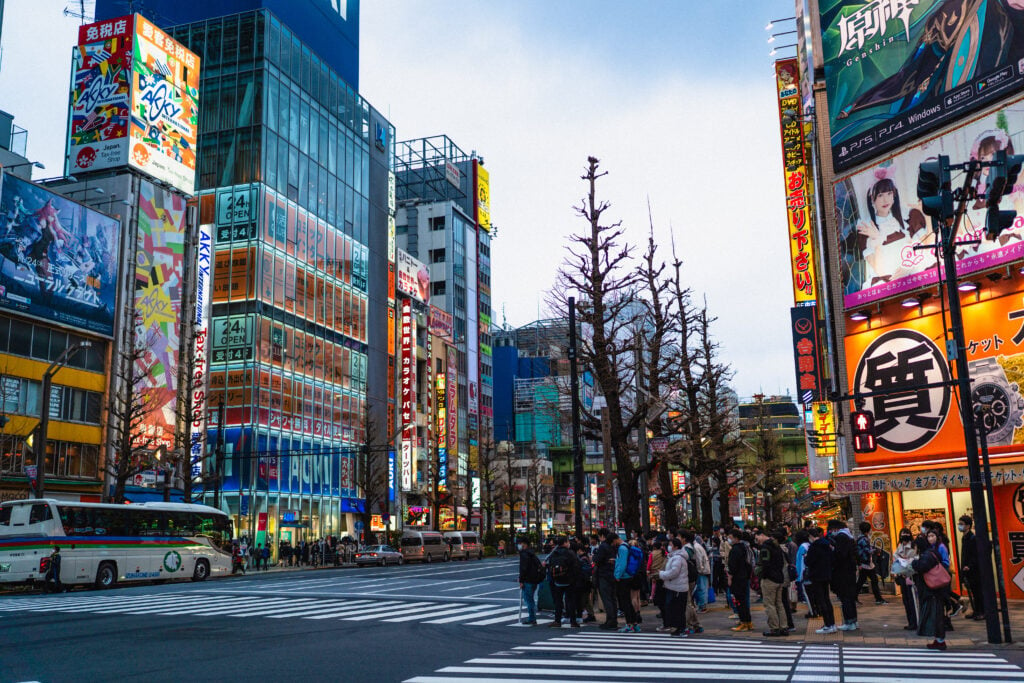
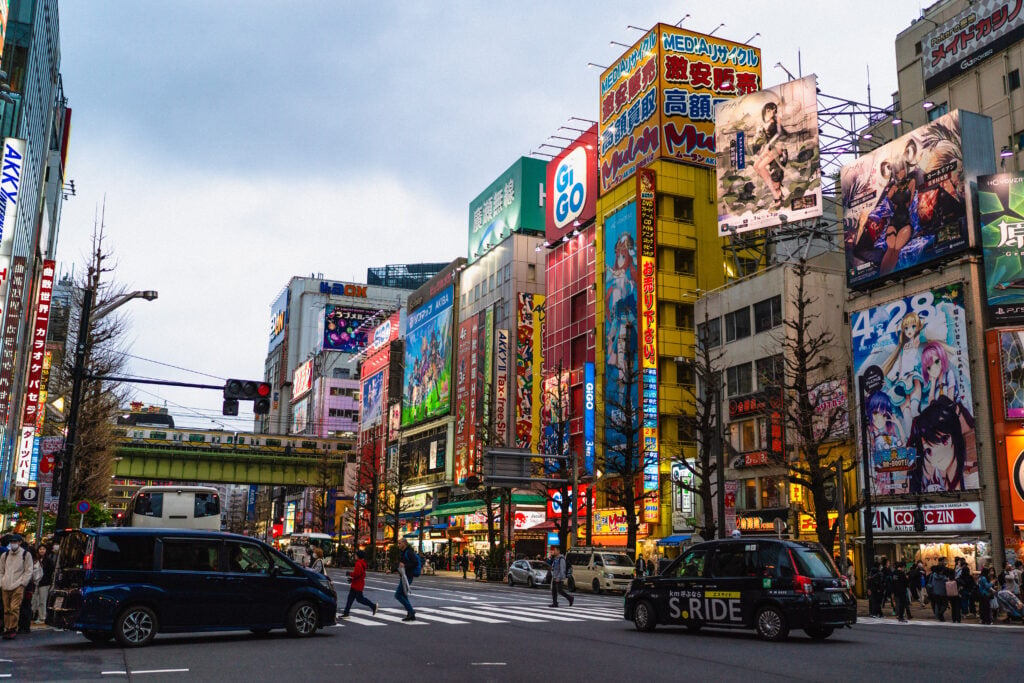
For a little introduction (if needed) to all things anime, manga, video games, and idol culture, head to the Akihabara District. Known locally as the “Electric Town” this pocket of Tokyo is filled with countless electronic shops, gaming arcades, and anime shops.
Visit a GiGo Arcade
While in Akihabara, and for the ultimate gaming experience, a must-visit is to the huge six-storey games arcade! With hundreds of games to choose from, it can be both overwhelming and also can easily suck you in for a few hours – however, I suggest not losing all your time here (though tempting!)
Head to Craft Beer Bar Ibrew
End your first day of exploring with a crisp and refreshing craft beer! With a constant rotation of beers on tap, here you can enjoy the delicious local beer and soak up the day’s wanderings over a nice chilled beverage. (Yes, you can finally relax after that intense walking itinerary!)
Day 2 in Tokyo suggested itinerary
The second day will be of similar pace (there’s a lot to see, but it’s all worth it, trust me!) From exploring historic temples, public parks and viewpoints to learning more about Tokyo’s important political sights. You’ll also have a chance to go shopping and explore the city’s buzzing, neon-lit district, Shinjuku.
Zozoji Temple, 増上寺
Start your day with a visit to Zozoji Temple. Originally built in 1392, the temple was moved to its present location in 1598 by Tokugawa who selected it as his family temple. Today, this impressive Buddhist temple houses the tombs of the six Tokugawa shoguns and it’s also the main temple of the Jōdo-shū (Pure Lande) Chinzei sect of Buddhism.
Rich with history and heritage this temple holds a lot of cultural significance, and one of the most unique parts of the temple has to be that of the decorated Jizō statues.
THE JIZO STATUES OF ZOJOJI TEMPLE, JIZO (地蔵/WOMB OF THE EARTH)
Jizō is a beloved figure of Japan, often depicted in statues as a monk, a bodhisattva dedicated to easing the sufferings of all beings, particularly associated with protecting children.
Although Zojoji does not have a specific name for this part of the temple, it is often referred to as, The Garden of Unborn Children. A sombre space filled with rows upon rows of Jizo statues, many of which are decorated with knitwear, flowers and pinwheels (which are believed to represent the constant cycle of birth, death, and rebirth) to commemorate as well as pray for the deceased souls of unborn children.

Shiba Park, 芝公園
Shiba Park is one of Japan’s oldest parks, established in 1873 it is situated just next to Tokyo Tower. The park was built to surround Zozoji Temple and is divided into several parts. One popular spot to visit is the tree-lined walkway which has the Tokyo Tower positioned in its centre.

Tokyo Tower, 日本電波塔
Visit one of the most emblematic elements of Tokyo’s skyline (and is reminiscent of an iconic landmark), the Tokyo Tower. A popular spot where you can marvel at the very structure that came to be a symbol of Japan’s ‘rebirth’ post World War II, as well as visit to the top and enjoy sweeping views of the Tokyo itself!
Standing at an impressive 333 meters tall, it was at one time the tallest tower in the world, even surpassing its inspiration, the Eiffel Tower in Paris.


Roppongi Hills
Roppongi is a lively entertainment district, it’s especially popular at nighttime when the nightlife of local bars, clubs and restaurants are buzzing hives of activity with both tourists and locals alike.
This neighbourhood is worth checking out alone just for a visit to the 54-storey Mori Tower, which houses the Mori Art Museum, a spectacular viewpoint, several retail stores and restaurants, as well as many art sculptures that surround it.
There’s even Mohri Garden, a tranquil green pocket of respite which can be found at the foot of the tower amongst the hustle and bustle of Tokyo.
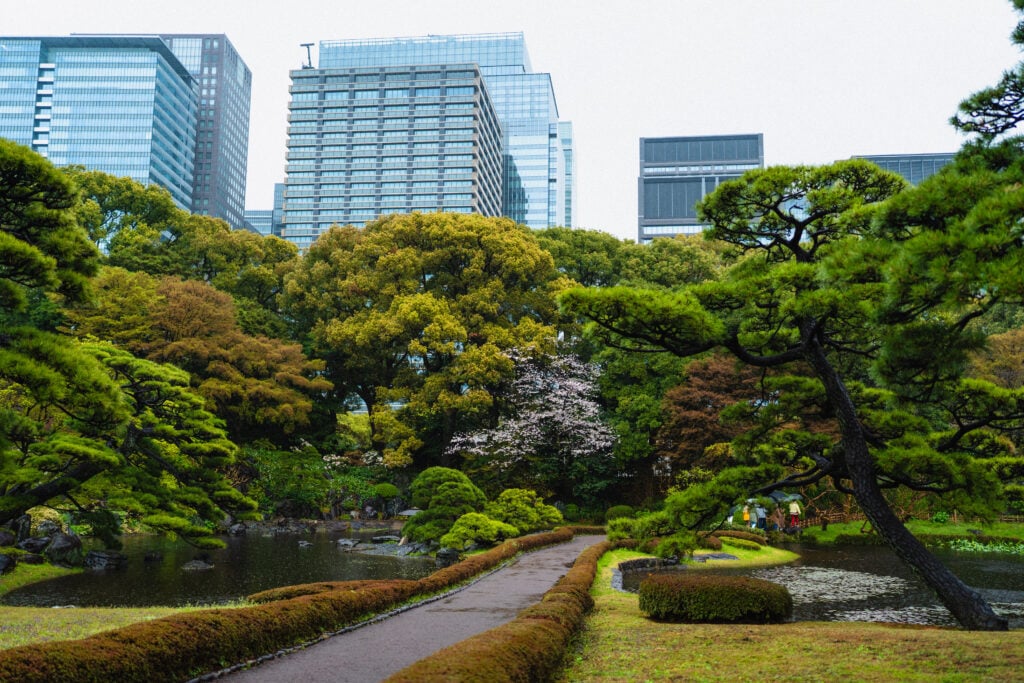
The Tokyo Imperial Palace, 皇居
Tokyo’s Imperial Palace has served as the residential place of successive Emperors since 1868. Surrounded by a large moat, stone walls and a green expanse of park area, the inner garden is usually closed off to the public (unless you happen to be visiting on January 2nd for New Year’s Greeting or February 23rd on the Emperor’s Birthday) so you’ll only be wandering past.
The area is huge, grand and everything you might expect for the home of an emperor. Located on the former site of Edo Castle, walking through the grounds is the perfect opportunity to soak up the history.
While here, be sure to take in views of Nijubashi Bridge, which means “double bridge”, it is one of Japan’s most well-known bridges and connects the Imperial Palace to land from across the moat. If the main residence of the Imperial Family is something that fascinates you, it is possible to book a guided tour of the palace grounds.
Tokyo Character Street, 東京キャラクターストリート (Tokyo Station)
Found within Tokyo Station is a shopping area with all things anime and manga! Although navigating through Tokyo Station can feel like a never-ending maze, your eyes will be drawn in by the playful colours, that’s when you’ll know you’ve reached Tokyo Character Street.
Find all your favourite characters in any available form possible, from themed notebooks, keychains, towels, playing cards, umbrellas… literally any way you can imagine!
T’s Tantan (Ramen time!)
While in Tokyo Station, head to T’s Tantan for some delicious vegan ramen. As a vegetarian, it’s not always easy to navigate the food scene in Japan generally, as many of the broths contain meat or fish. So, when you find a spot like T’s Tantan that does a fully vegan ramen, it’s pretty rare!
Ginza District
Next, head to Ginza District for the ultimate shopping experience, or to just immerse yourself in the city’s top shopping district, which is home to historic department stores. Ginza means “silver mint” in Japanese, and it is taken from the fact the district sits on site of a silver coin mint.
From upmarket boutiques selling luxury goods to humongous shopping complexes and ritzy cocktail bars, there’s a lot to take in while exploring this pocket of Tokyo.
Tokyo Government Building, (Tochō) 東京都庁
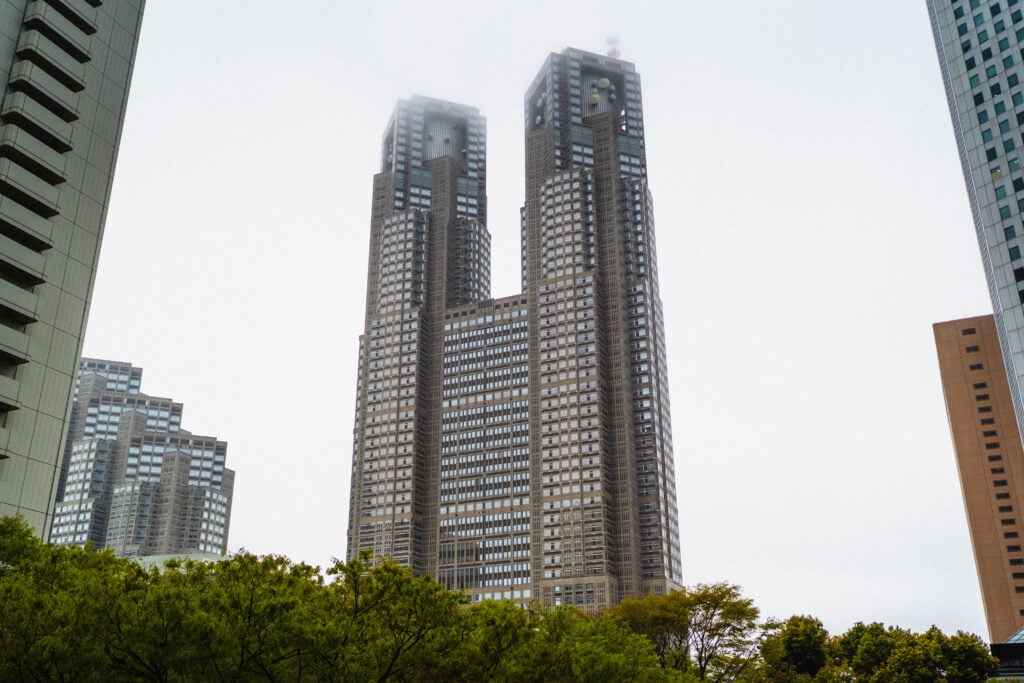
Colloquially referred to as Tochō for short, as the name suggests, this building is the seat of the Tokyo Metropolitan Government, which governs all of Tokyo Metropolis.
Completed in 1990 (at the small cost of 157 billion yen of public money…) The complex consists of three structures, each taking an entire city block. The tallest building is 48 stories, while the other two skyscrapers stand 37 stories and eight-story high.
Tochō is most popular among tourists for its two free observation decks. Offering captivating panoramic views overlooking Tokyo City and beyond! Open daily from 9:30 AM – 10:00 PM, each observatory deck has both a café and a souvenir shop.
Shinjuku Gyoen, 新宿御苑
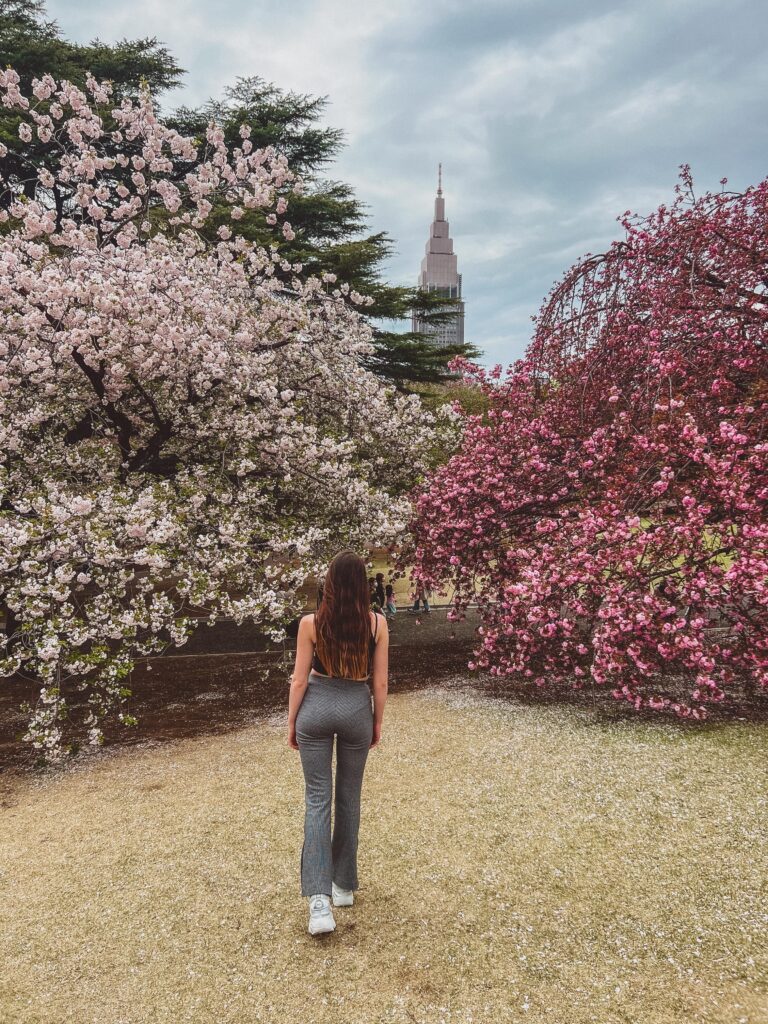
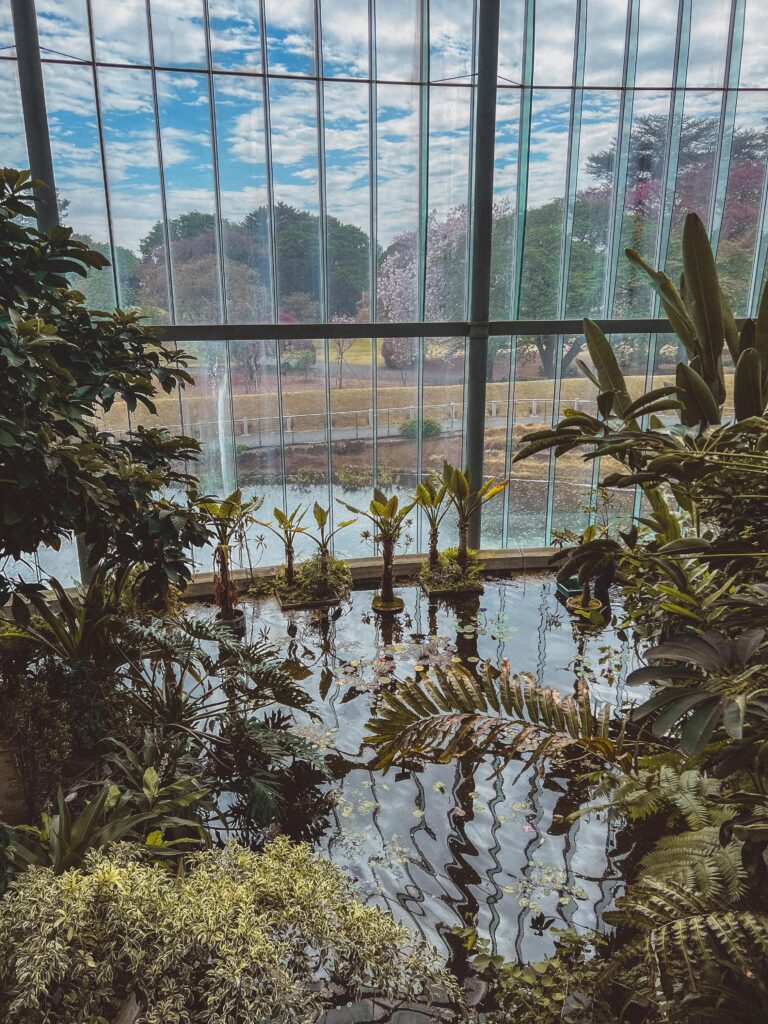
One of Tokyo’s largest and most popular parks is Shinjuku Gyoen, a grassy expanse of green lawns, exotic flowers, large ponds and meandering paths that wind around cherry trees. Offering a quiet escape from the noise of the city, this is the idyllic spot to immerse yourself in nature!
The park is comprised of three different styles: Japanese, English and French landscape gardens. There are also huge greenhouses brimming with subtropical plants, and ponds with quaint bridges where people can walk across.
Shinjuku Gyoen changes colour with each season and is particularly beautiful in autumn and during the Sakura season, where it is one of the best places to see cherry blossoms. Please note that you have to pay to visit the gardens, but the vast size of the park, as well as its sheer beauty more than merits the nominal entry fee!
Memory Lane (Omoide Yokocho) 新宿西口 思い出横丁
For a rush to the senses in sight, sound and smell, visit this super cool narrow street which is bursting with character and has a unique repuation.
Yokocho is the Japanese for “alleyway”, but the meaning has grown to be more commonly known as atmospheric narrow alleyways, which are typically crammed with izakayas (casual drinking establishments) and cheap eateries.
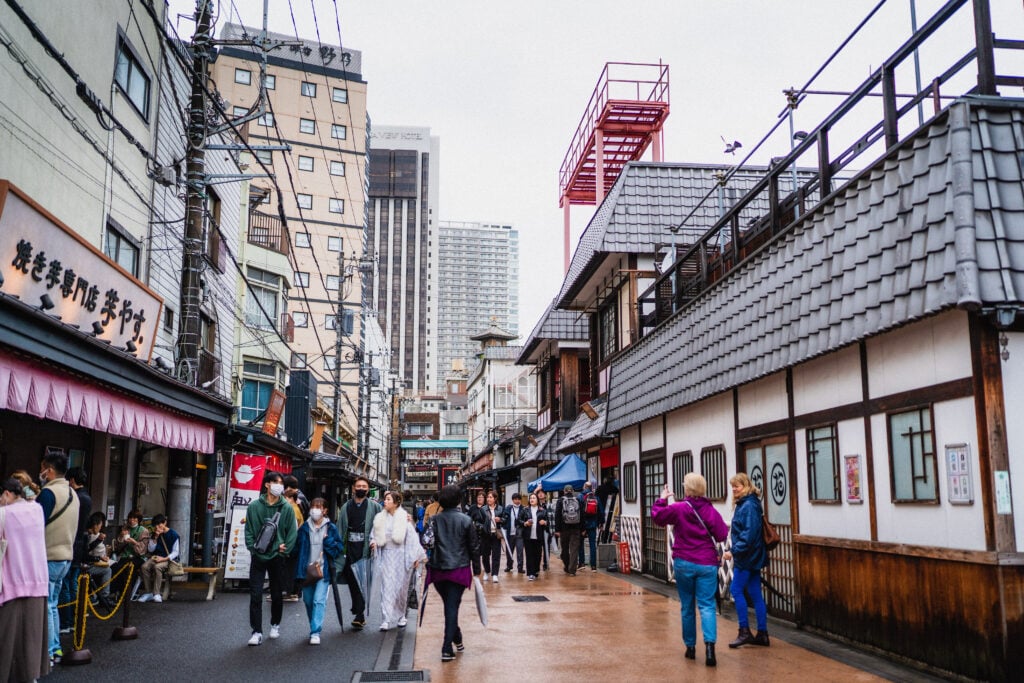
Omoide Yokocho translates as ‘Memory Lane’, and memorable it is! Walking down, the air is filled with the scent of mouthwatering grilled delights. Today, the street is particularly popular with local business workers who can come and grab a quick bite to eat or drink during or after their working day.
Gaining a reputation for its lack of toilets, Omoide Yokocho is known locally as “piss alley”, where it wasn’t uncommon to see local drinkers take a leak in the street.

Golden Gai, ゴールデン街
Similar to Omoide Yokocho, but more focused on izakayas rather than eateries, is another atmospheric street named, Golden Gai. Stop here and enjoy a crisp refreshing beer, or other kind of beverage.
This historical alleyway is of great architectural importance and provides insight into old Tokyo, especially as most of the surrounding areas have been redeveloped.Compact and dense, Golden Gai consists of six narrow alleyways, all connected by even narrower lanes, the buildings built next to one another are so close they are practically touching!
A note to add: Golden Gai is even better when visited at night as this dark corner lights up with colour and a dingy glow. Most establishments here only open from late afternoon to early evening onwards.

Hotel Gracery (see Godzilla)
The ‘King of the Monsters’ takes its name from a combination of two Japanese words, “gorira” (gorilla) and “kujira” (whale)…the ultimate destructive combination!
For a chance to see Godzilla in person, head to Hotel Gracery. The sculpture is situated on the 8th floor, but it’s only possible to see up close if you are either a guest at the hotel or a customer at its café. That being said, it’s also possible to see Godzilla when walking past the building, just be sure to look up.

Day 3 in Tokyo suggested itinerary
Your third and final day in Japan’s capital will be spent mooching around and getting to know the cultural fashion trends of Tokyo’s youth, exploring the biggest shrine in the city and then visiting the busiest pedestrian crossing in the world!
Harajuku District, 原宿
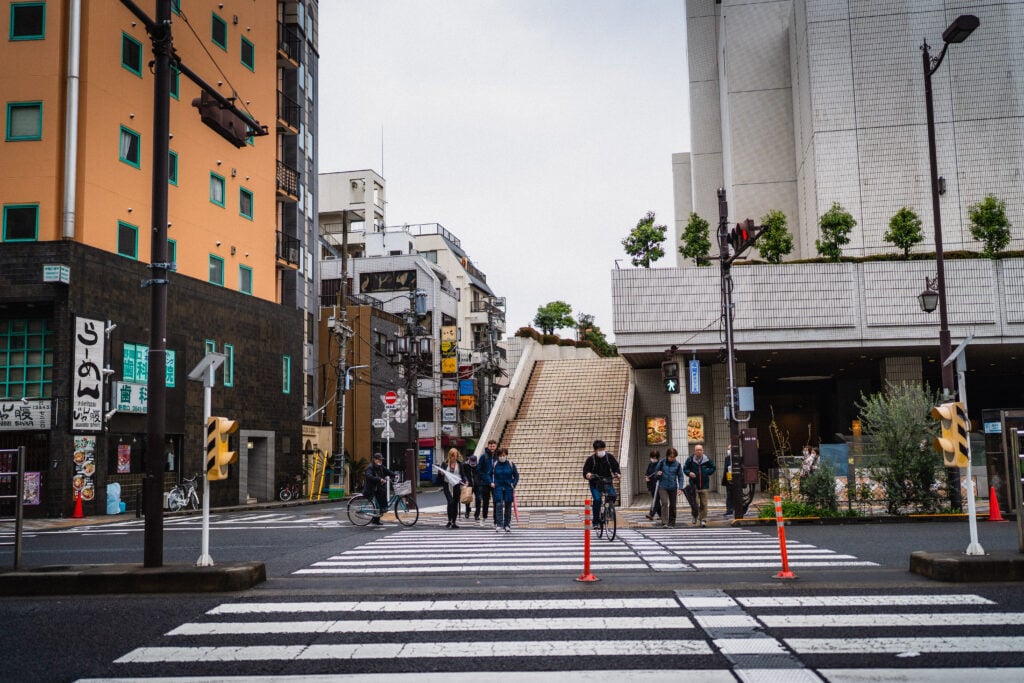
Harajuku district is a buzzing pocket of Tokyo, famed for all of its shopping and dining opportunities. Start the day here by exploring the cultural trends, window shopping and filling your nose with the sweet and savoury scents of Japanese cuisine.
Takeshita Dori
While in the Harajuku district, be sure to check out one of the most unique streets in Tokyo, Takeshita Dori. Famed for all of its shopping and dining opportunities, colourful street art and is the birthplace of ‘kawaii‘ (“cute”) culture– a unique fashion trend of pastel-hued colours which emphasise, childlike innocence and simplicity.
This is one of the trendiest and quirkiest fashion streets in the city, it’s also a spot that Lady Gaga the iconic fashion queen herself frequents!
A sensory overload of kawaii cute, edgy grunge and goth fashion, blended with the sweet scent of candy-floss and crêpes stalls that are so abundant on this particular street.
Even if buying clothes isn’t on the agenda, a walk down this street offers a truly unique experience of Tokyo’s fashion culture and trends.
Yoyogi Park, 代々木公園
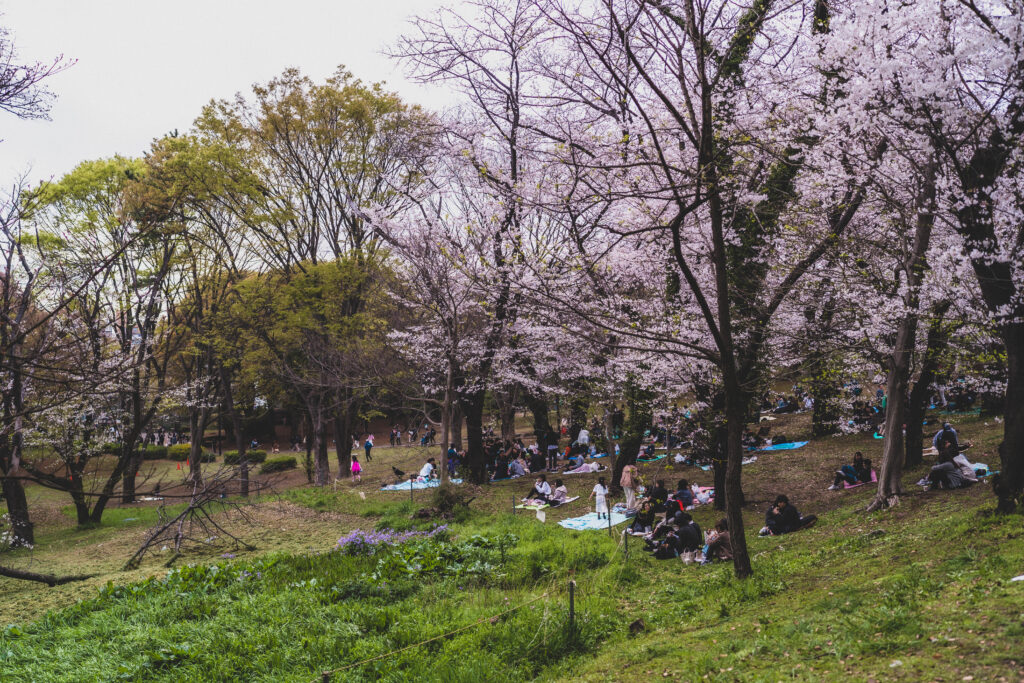
Nearby in the area, you’ll find one of Tokyo’s biggest green expanses, Yoyogi Park. Brimming with wide green lawns, forested areas and tranquil ponds, it’s a beautiful spot where locals hang out and picnic, go jogging or simply sit and watch the world go by.
Meiji Jingu Shrine, 明治神宮
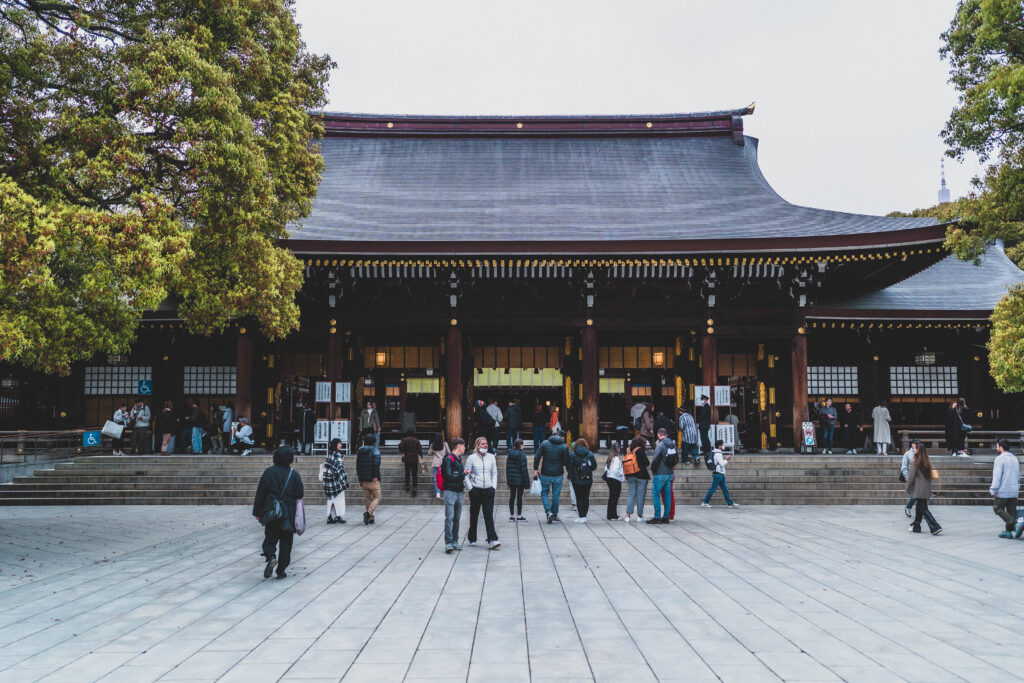
Nestled within 70 hectares of forest is a majestic Shinto shrine, which is one of Japan’s most popular shrines and the largest in Tokyo, Meiji Jingu.
Built in 1920 to commemorate both Emperor Meiji (the first monarch of the Empire of Japan) and his wife Empress Shōken, today visitors can see their deities enshrined here and pay their respects.
Some of the highlights while visiting Meiji Jingu include seeing over 200 straw-wrapped sake barrels that were donated by sake breweries from across Japan, viewing the “married trees”, the Couple of Camphor Trees are said to bring good fortune to those searching for a partner or romantic relationship and strolling around the tranquil gardens that exude fragrance when in full bloom.
Hachikō Statue
Next, you’ll want to head to a busier part of the city where crowds often gather around a small cast bronze statue of a small dog.
Hachikō (ハチ公) (which translates to English as ‘faithful dog’) was a white Japanese Akita dog, known for his unwavering loyalty and devotion to his owner. A story that will steal your heart as it has done for the people of Japan.
The loyal dog, Hachikō would always greet his owner at Shibuya Station every day after work, however, unbeknownst to Hachikō, his owner tragically suffered a cerebral haemorrhage while at work. The small white Akita is said to have returned to the station for 9 years, 9 months and 15 days, in hopes his owner might come back.
Hachikō has become a national treasure of Japan, while his story has spread within popular culture too. There’s even been a Hollywood movie based on him called “Hachiko, A Dog’s Story” which is set in New York, starring Richard Gere! However, for a more true to life film, “Hachikō Monogatari” the 1987 Japanese drama film, is a better watch.


Shibuya Crossing
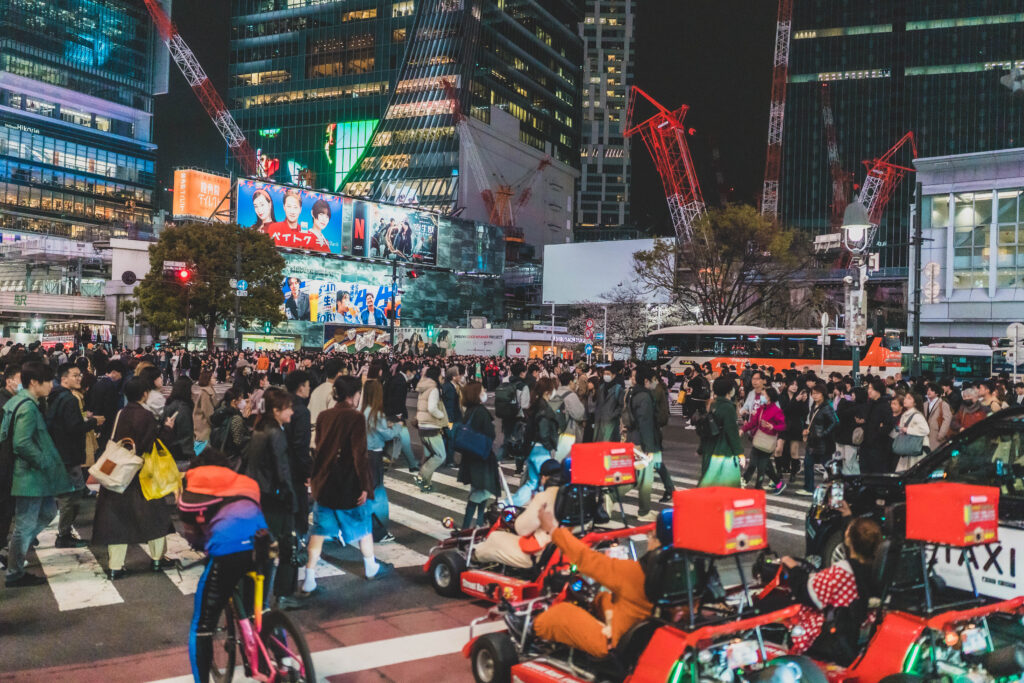
Right next to the Hachikō Statue, you’ll find even more crowds, in the form of the busiest pedestrian crossing in the world – Shibuya ‘Scramble’ Crossing.
During its busiest times, Shibuya Crossing has an estimated 1,000 – 2,500 people scrambling their way across this intersection every two minutes, from every which way direction.
Everyone should aim to cross Shibuya Crossing at least once while exploring Tokyo, as it offers a true experience of the city. Best done at night when the neon glow from the signs above shine on the chaotic mass of people masterfully dodging and crisscrossing between one another, a well ordered chaos which is testament to Tokyo as a city.
Top tip: Head to Starbucks Coffee (Shibuya Tsutaya 2F). While it may seem strange to recommend an American coffee chain, the windows from this particular branch offer one of the best views of the crossing from above.
It’s also a great opportunity to try one of the more unique coffee creations that has been crafted to specifically cater to the Japanese market!
Go up Shibuya Sky
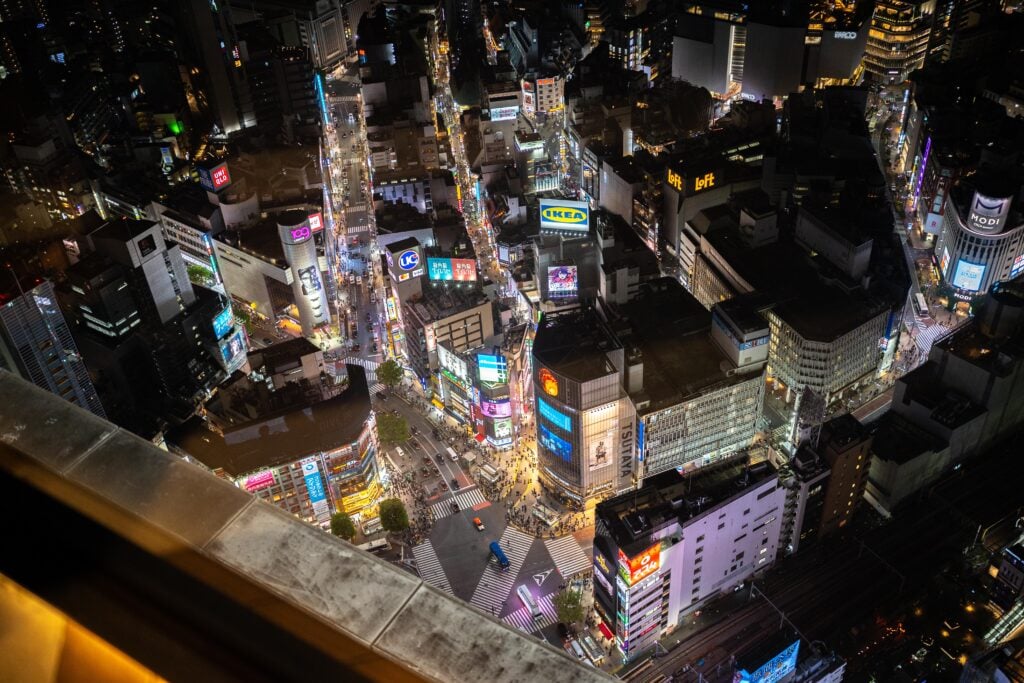
End your final night in Tokyo by taking in the city from above. Shibuya Sky is an open-air observation deck and stands as the tallest building in the district, boasting some of the best views of Tokyo’s skyline and in particular, the chaos of Shibuya Crossing below.
One of the best times to visit is when the city is aglow, a mesmerising mass of metropolis that will leave you in awe and questioning your size in comparison to the world! The last entry to Shibuya Sky is at 9:20 PM (closing at 10:30 PM).
Online an adult tickets costs 2,200 yen and high school students can go for 1,700 yen. It’s advised to purchase your ticket online in advance, not only will you skip the queues but it’s cheaper to do so than buying there. See more about ticket prices and how to purchase them on their official website here.
Foods to try in Tokyo
Before heading out to Japan, you’ll likely have read up about it (if you’re a foodie, probably extensively) and also tried Japanese food in restaurants or sushi from a local supermarket, however, nothing will prepare you for trying Japanese food in its country of origin.
It’s also worth noting, as I mentioned earlier, that being a vegetarian in Japan is more difficult than you might expect. Some of the best vegetarian and vegan options can be found in 7-Eleven (a popular Japanese supermarket chain) but, there are a few restaurants and cafes throughout the city that cater to plant-based diets.
The food in Tokyo is excellent and with an overwhelming amount of choices, it can feel impossible to choose what to have or where to go. Here are just some top suggestions of the foods you should try while in the city:
- Okonomiyaki – A savoury pancake dish which can be topped with anything from cabbage, meat, and seafood, with a variety of sauces and pickled ginger sprinkled on top.
- Tendon – This dish is essentially donburi and tempura blended to make a complete dish. A bowl of steamed rice with fried tempura vegetables, seafood or meat served on top.
- Tokyo buns – Japanese bakeries produce some of the most mouthwatering baked treats you could ever imagine! Whether its a bun filled with savoury filling or a sweet brioche filled with red bean paste as a sweet treat, there’s something for everyone!
- Sushi – You probably won’t realise that you’ve never had sushi until you eat it here. Using fresh quality ingredients, in most places you’ll likely see the sushi being prepared before your eyes just before you munch it all up.
- Omurice – This dish has made quite the sensation on TikTok and Instagram, as it is quite literally an art form after all. Fried egg omelette on a bed of rice may seem like a humble dish, but once you cut open the omelette and it splays across your plate you’ll soon understand it’s far more than simple.
- Ramen – It needs no introduction, you know it’s going to be delicious. Warm and comforting, this noodle broth is by far one of Japan’s most popular dishes.
- Yakitori – Skewered marinated meats, grilled over charcoal. The perfect snack and accompaniment to a refreshing lager.
- Tonkatsu – Breaded and deep-fried pork, served with sticky rice and a side salad (there’s also Gyukatsu (beef) or chicken katsu).
Something you should note: It’s considered rude to eat while walking. As a general rule of thumb, you should find a quiet bench to sit and eat your snacks without disturbing anyone. You should also be sure to take all of your trash home with you as litter bins are not readily available (apart from in a few in main train stations).

Where to stay in Tokyo
As you can imagine, because of its sheer size, there are several options when it comes to choosing where to stay in Japan’s capital. Here are some suggestions on where to stay in Tokyo:
Tavinos Asakusa – We opted to stay at this hotel. Budget-friendly, this hotel has pretty small rooms but is the perfect location for which to explore the wider region. Conveniently set in the Taito district, the hotel offers free WiFi and by the reception, there’s a large communal area which offers free tea, coffee and miso soup. You also get a delicious pastry included for breakfast each morning! Check prices and availability here.
Ryokan Asakusa Shigetsu – Situated a 5-minute walk from Asakusa Subway Station, this hotel boasts views overlooking the Tokyo Sky Tree. Offering traditional Japanese rooms to sleep in, the hotel has free WiFi and is particularly popular among solo travellers. Check prices and availability here.
FLOWER TERRACE Higashi Shinjuku – Located a 6-minute walk from Golden Gai and a 15-minute walk from Shinjuku Station. With amenities such as free WiFi and a balcony with city views, this hotel offers a comfortable stay and a great location. Check prices and availability here.
If it’s your first time visiting Japan, be sure to check out our top Japan travel tips!
Enjoyed reading about how to spend 3 perfect days in Tokyo? Pin this article now, and read it again later: