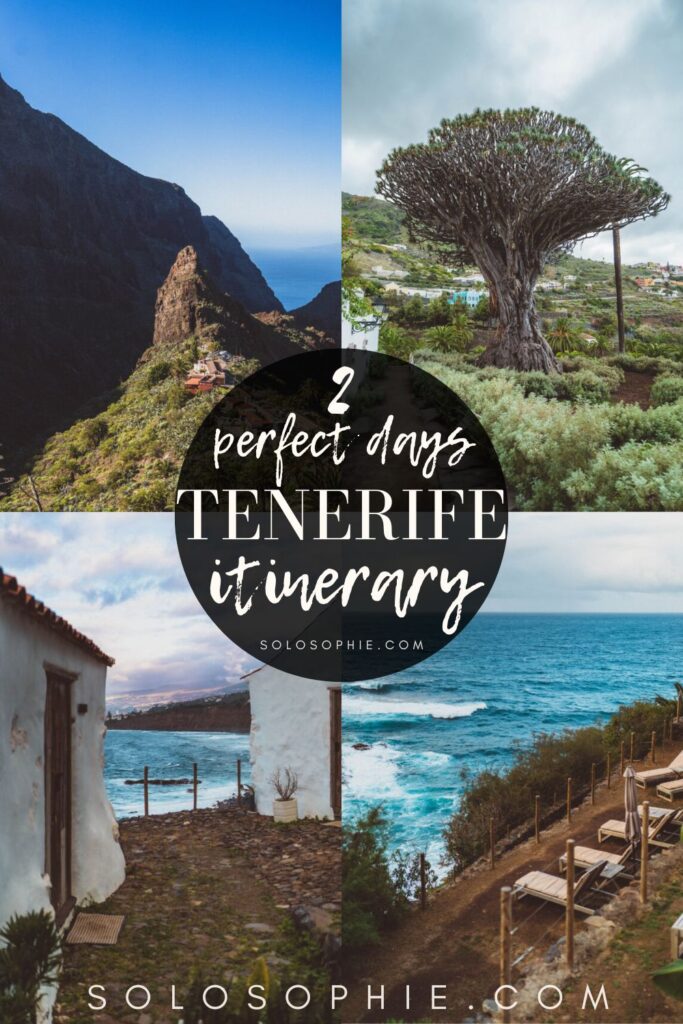

How to Spend the Perfect 2 Days in Tenerife Itinerary
Last Updated on 13th October 2026 by Sophie Nadeau
This post may contain affiliate links. Please check out my privacy policy and disclosure for more information.
Between sun soaked cities, lush green forests, endless beaches, mountain escapes, and quiet coastal retreats, Tenerife is a varied and verdant paradise that is worth visiting throughout the year. Here’s how to spend the perfect 2 days in Tenerife itinerary, as well as what to know before you go!
Is 2 days enough time on Tenerife?
Unfortunately, two days isn’t really a sufficient amount of time to see the whole of the island and so I recommend concentrating on just a few parts! This itinerary will focus on the north and western parts of the island. The southern parts are home to plenty of resorts and are perfect for a more laid-back, casual holiday.
Getting around Tenerife
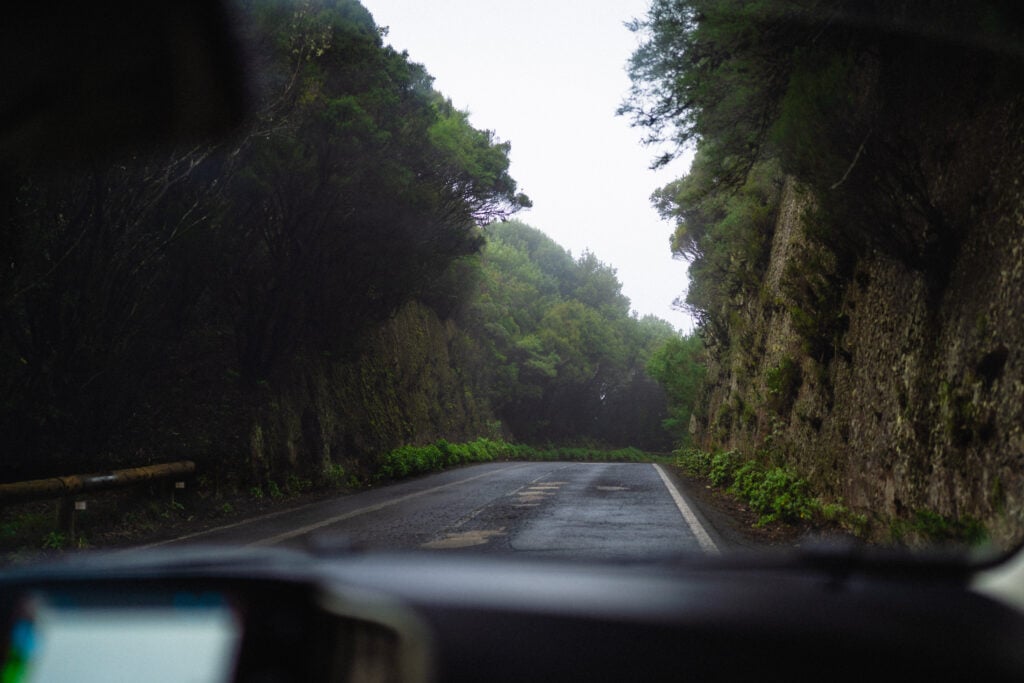
There are a few things I have to say about driving on the island. The first is that the smaller the car the better because driving around can be quite tight in some spots, and the same can be said for parking. While you could visit Tenerife without your own vehicle and stick to public transportation, renting your own wheels will give you a lot more flexibility.
Day one in Tenerife suggested itinerary
Santa Cruz de Tenerife
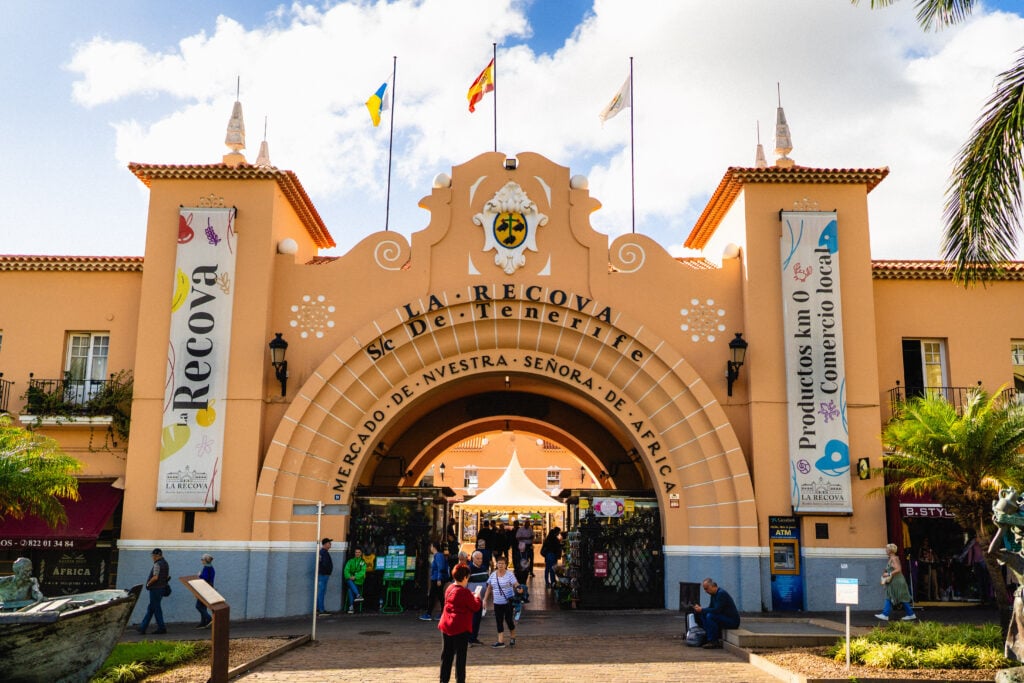
Santa Cruze de Tenerife is the capital of the island and is one of the joint capitals of the Canary Islands together with Las Palmas of Gran Canaria. There’s a myriad of modern cafés here, as well as lots of little boutiques and cobbled lanes.
We personally visited La Escala Café, this modern specialty coffee shop reflects the vibrant buzz of Tenerife and serves a wide array of mouthwatering sandwiches and cakes. Other foodie spots in the city include:
- Etéreo by Pedro Nel — for a special dinner.
- Roca de Sal — for seafood.
- Bodeguita Canaria — for local Canarian food.
- Restaurante Nielsen — for something more contemporary.
- El Porrón — for casual tapas.
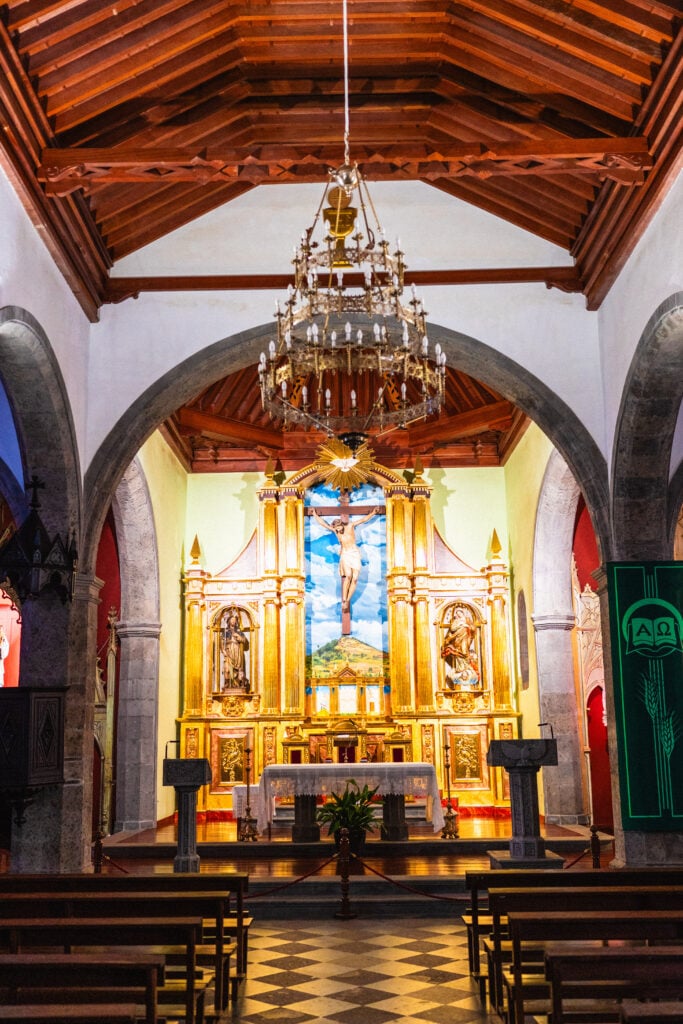
One of the more historic things to do in town is to check out the church dedicated to St Francis of Assisi which dates back to the latter half of the 17th-century. This church is free to visit and boasts an ornate golden interior.
Nearby, you’ll find the small park named plaza del Principe de Asturias. This quiet and relaxing green space is typically where locals hang out, and its the perfect place to soak up the serene ambience. Finally, the working clock surrounded by flowers marks the entrance way to parque Garcia Sanabria, which is one of the largest open spaces in the city.
San Cristóbal de La Laguna
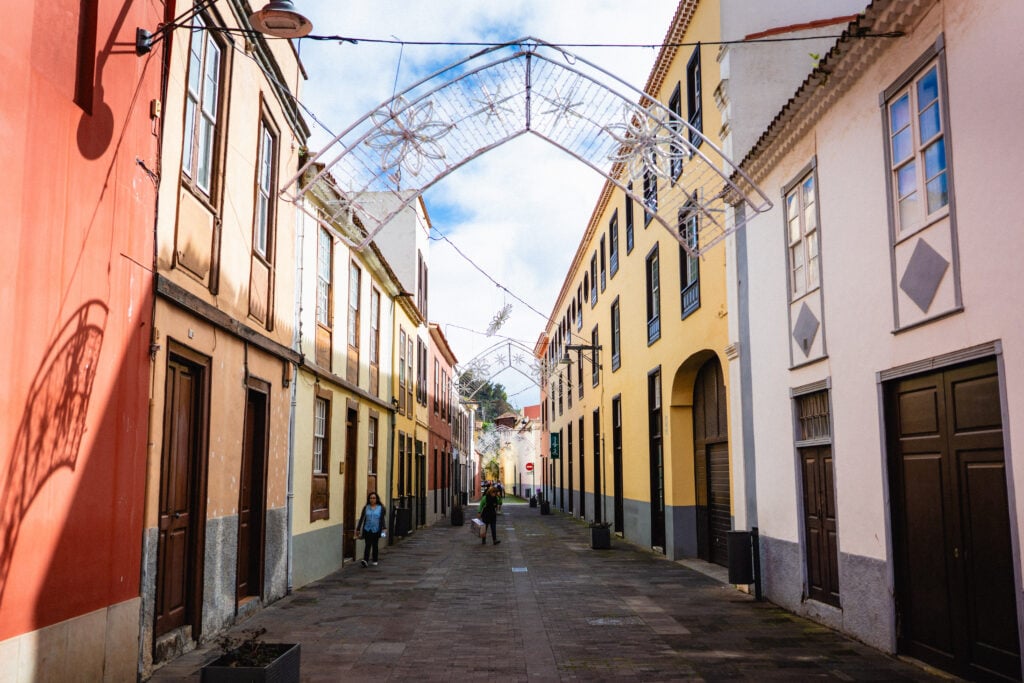
San Cristóbal de La Laguna is one of the most popular villages on the island thanks to how beautiful it is. Meandering predominantly pedestrianised cobbled lanes that criss cross through lush green parks and past historic churches.
Widely considered to be one of the most beautiful towns in Tenerife, this historic gem is home to a number of cultural sights and cosy cafés. We grabbed lunch at a café called Ahul Bowls and loved our toasts and specialty coffee!
All in all, i’d say you need around two hours or so to truly enjoy everything that this town has to offer.
Parque Rural de Anaga
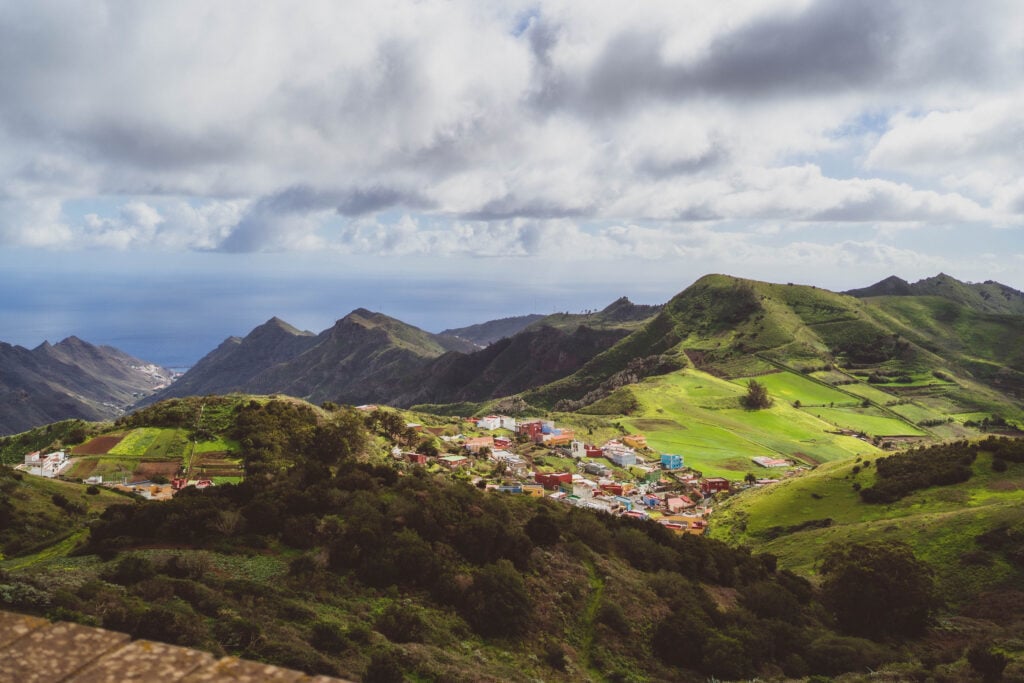
From there, it’s an easy drive to reach arguably the most secluded and rural part of Tenerife, the Parque Rural de Anaga.
The drive out to Parque Rural de Anaga is simply stunning, so you may find yourself stopping at the various viewpoints to soak up the scenery and take a photo or two.
Once at the park, I would personally start at the visitor centre where you can pick up a detailed map and go on a little trail which will give you a glimpse of what the surrounding landscape looks like. There’s also an exhibition within the visitors centre where you can learn more in depth about the history and archaeology of the local area.
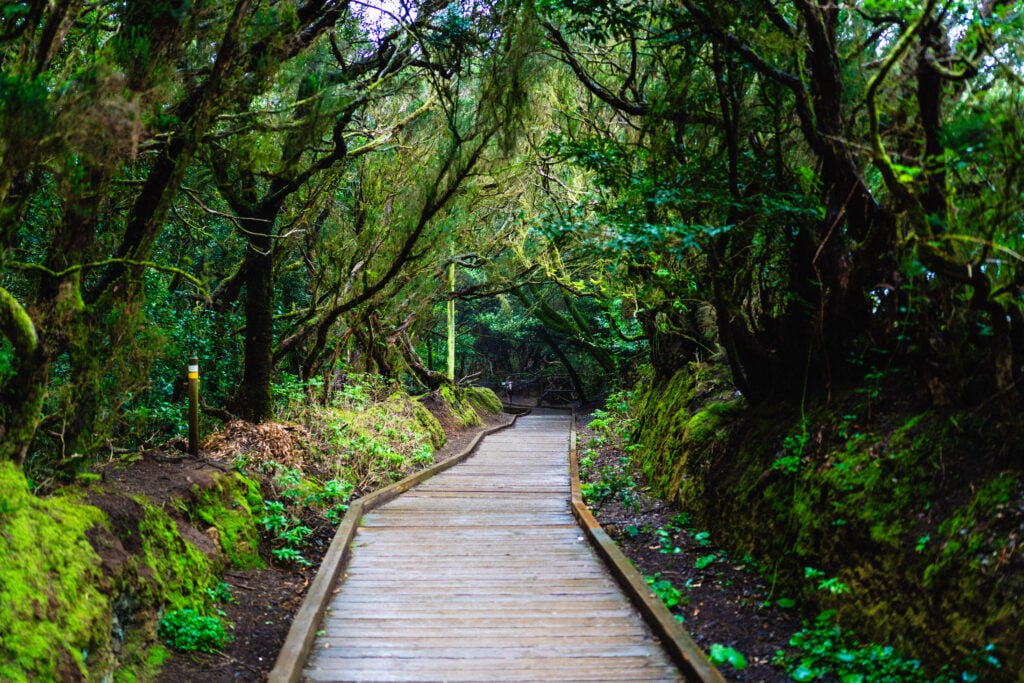
You’ll want to pack a rain jacket as it’s pretty much always overcast here and rain is pretty common, even if you’ve come straight from the warm coastal towns below. There are lots of hiking routes around here but as we only had a short time on the island, we drove to a few of the more popular viewpoints instead.
The nature preserve covers a staggering 14,419-hectares and was established in 1994. In the park you can expect to find gorgeous views down to sea level through deep ravines and through mountain passes. Highlights of the park include:
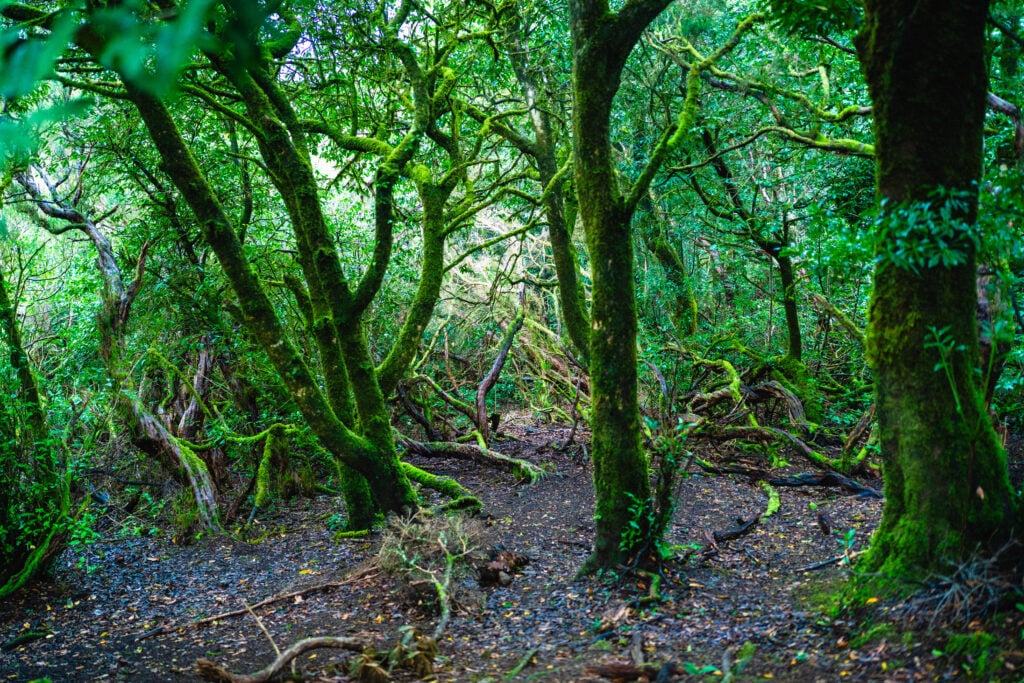
- Cloud forest – Taking its name from the very literal fact that because of the moist environment clouds of fog often hang within the trees. Walking through the paths lined with these centuries old trees that are covered in moss is truly an enchanting experience!
- Casa Santiago – If you have time, enjoy tapas with a view. This restaurant is perched high above in the mountaintop, serving traditional food amongst the most spectacular scenery of Spanish landscape.
- Views – It goes without saying, the rural park is home to some of the best views overlooking Tenerife. Vast stretches of emerald greens and sparkling blue, this is the spot of the island thats likely to leave you in complete awe.
- Beaches & natural pools – Within the park boundaries there are a number of beaches, from plush golden sand to black pebbled stretches of beach. It’s not recommended to swim there as the tide can be quite strong on this side of the island. That being said, there are also several natural pools which you can take a dip in if you have the right gear with you.
Day two in Tenerife suggested itinerary
Masca
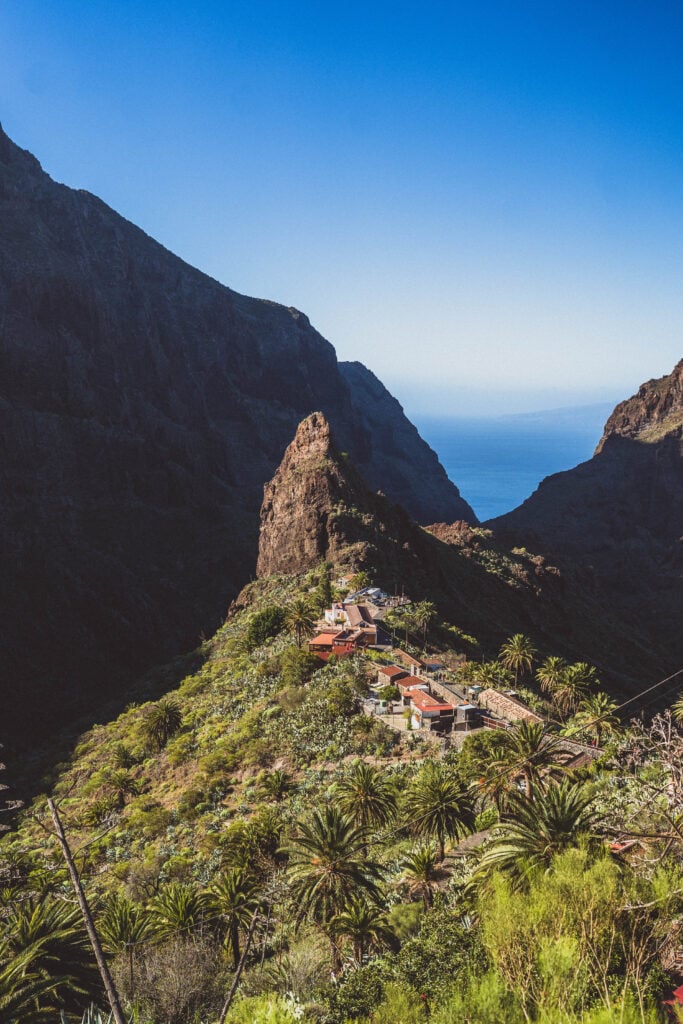
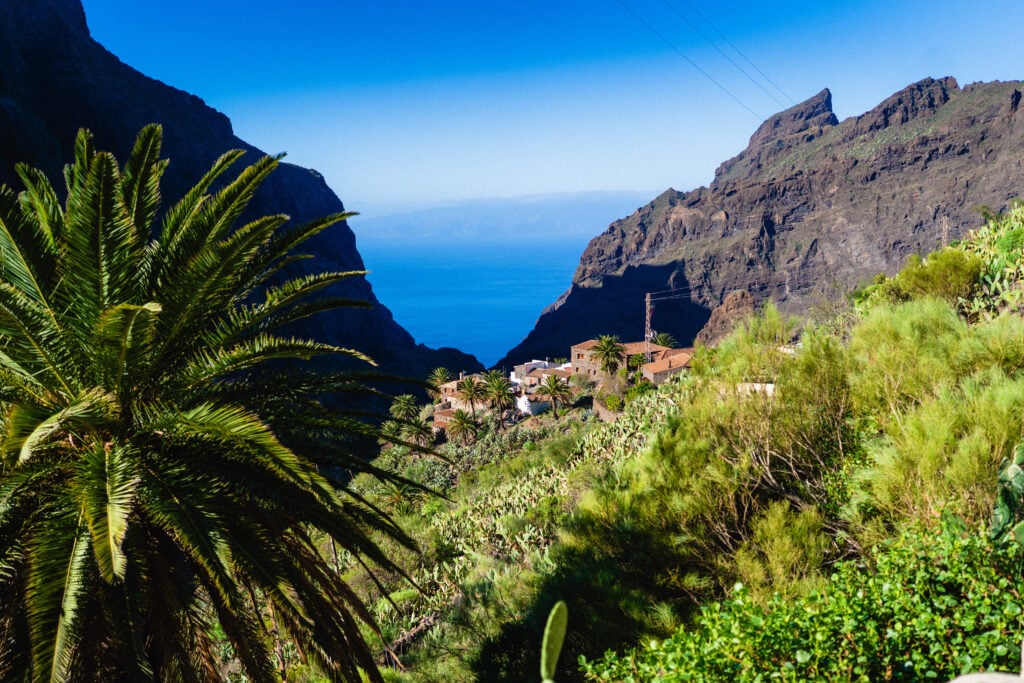
Start off the day by driving through steep mountain passes to reach the little village of Masca. Now, this is one of the most picturesque villages on the island, but it’s also one of the most crowded and so you’ll want to visit before 10 AM for a number of reasons.
The first is that there is really not very much parking at the village and so you won’t be able to stop snd visit if you arrive too late. The next is related to this and is that is that the roads to get there are pretty narrow and you don’t want to waste your precious time in Canary Islands queuing in traffic.
Masca lies at an altitude of 650 meters in the Macizo de Teno mountains. Masca was a Guanche settlement before the Spanish conquest of 1496 and the popular myth goes that it used to be a hideout spot for pirates, though there is no evidence to verify this.
Today, the quaint village is home to approximately just 90 inhabitants, but many of the houses have been renovated as small hostels and hotels. There are also many restaurants and cafes which have been put in to cater for the influx of tourism.
Rich with history, Masca has actuall been declared as an ‘Ethnographic Historic Place of Interest’ and visitors can learn more about this at its museum. A notable highlight is that of Masca chuch, which is a tiny unusual piece of architecture, built of white washed volcanic stone and Canary pine.
If visited at the right time, Masca is a peaceful mountaineous location, the houses appear to cling to the cliffside and its a destination that boasts of breathtaking views! A visit to the tiny village is well worth the trip for a more unique experience of Tenerife.
Mount Teide
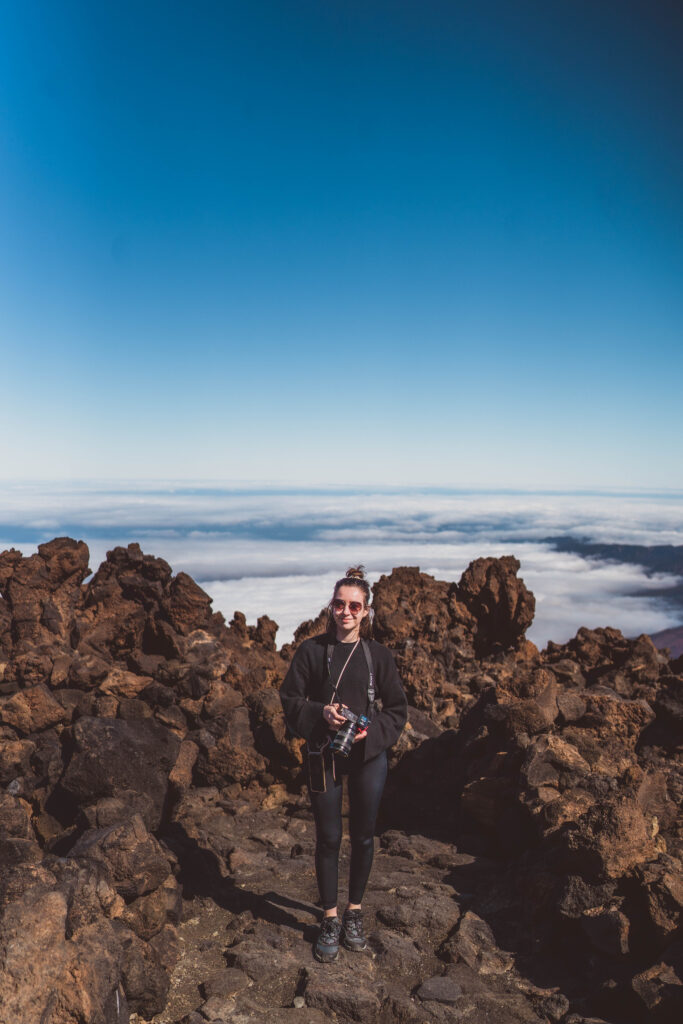
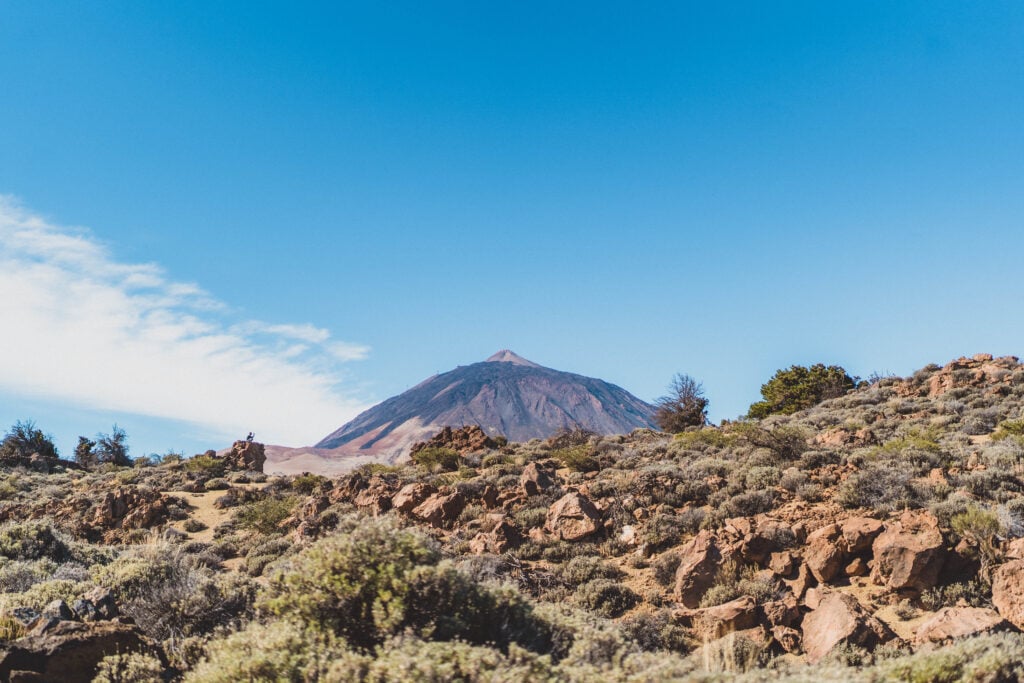
From there, it was a long drive up a mountain to reach what is the highest point in Spain! This is certainly one place where I would make sure to come prepared to with a warm jacket and plenty of snacks and drinks. Mount Teide stands at a staggering 3715 meters above sea level and you can drive up to around 2500 metres.
En route you’ll see desert landscapes and views of the island below. The varied weather was pretty surprising, it changes quickly the higher up the mountainside you go. Once at the car parking area, you can take a cable car to reach the very top of the island.
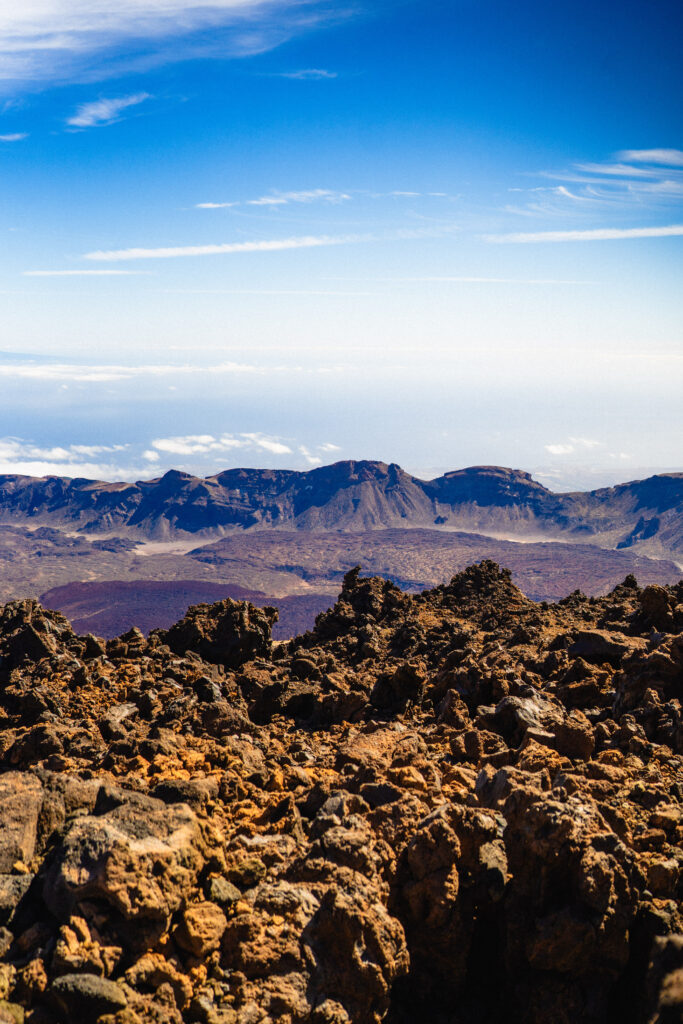
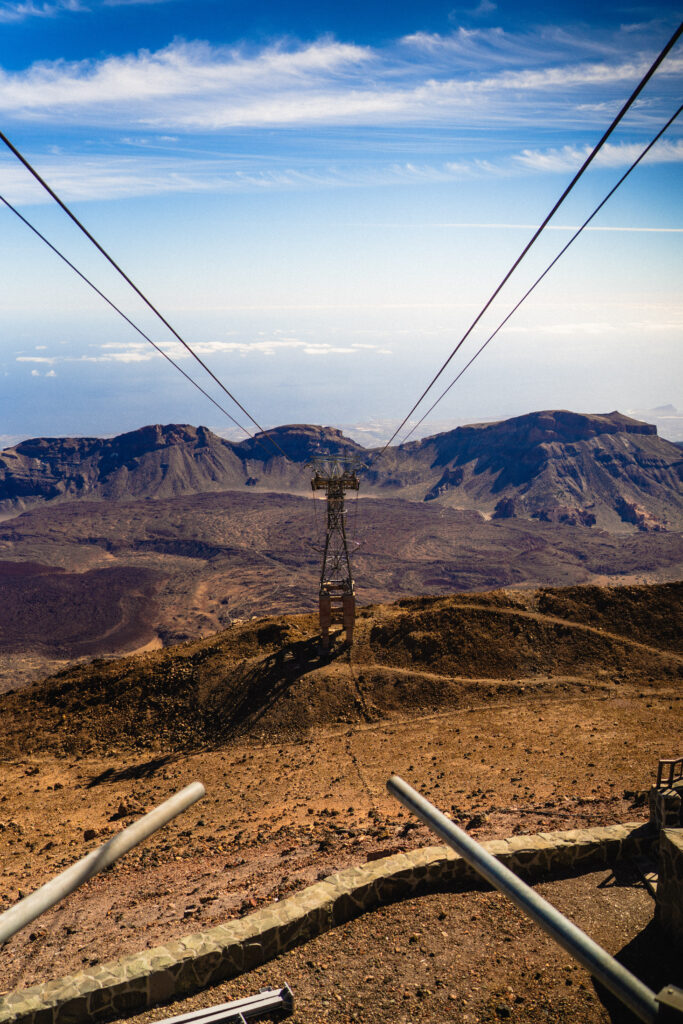
Mount Teide is a stratovolcano, characterised by its layered structure formed by successive volcanic eruptions. It is considered an active volcano, with its last eruption only occurring in 1909. Since 2007 Teide National Park has been considered a UNESCO World Heritage Site because of its impressive volcanic structure, creating a unique environment.
The cable car takes just under 10 minutes and once at the top you can walk a few different routes to admire the views below. Just note that you can’t take the path to the summit unless you pay an extra supplement for conservation purposes.
You’re only allowed a maximum of one hour at the top before you have to make your way back down the mountain with the cable car. It actually takes a little less time taking the trip back down, and at the bottom there’s a small exhibition as well as a cafe where you can enjoy light refreshments
You can only buy your cable car tickets online and there are a limited number so be sure to reserve your spot a few days in advance. Check ticket prices and more information about the cable car here.
Icod de los Vinos
Our next stop of the day was Icod de los Vinos, which is a delightful town with a population of around 22,000 residents.
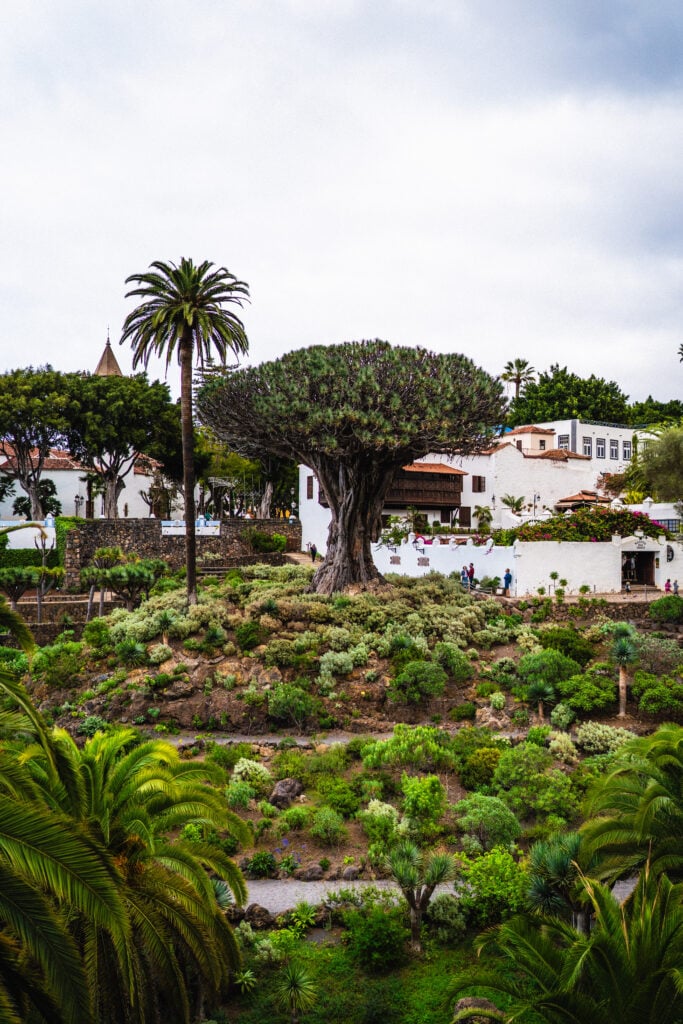
The main highlight of town is the park which houses a 1000 year old Dracaena. Known as El Drago, or the Millennial Dragon Tree, this remarkable specimen is the largest and longest-lived of its species known in the world!
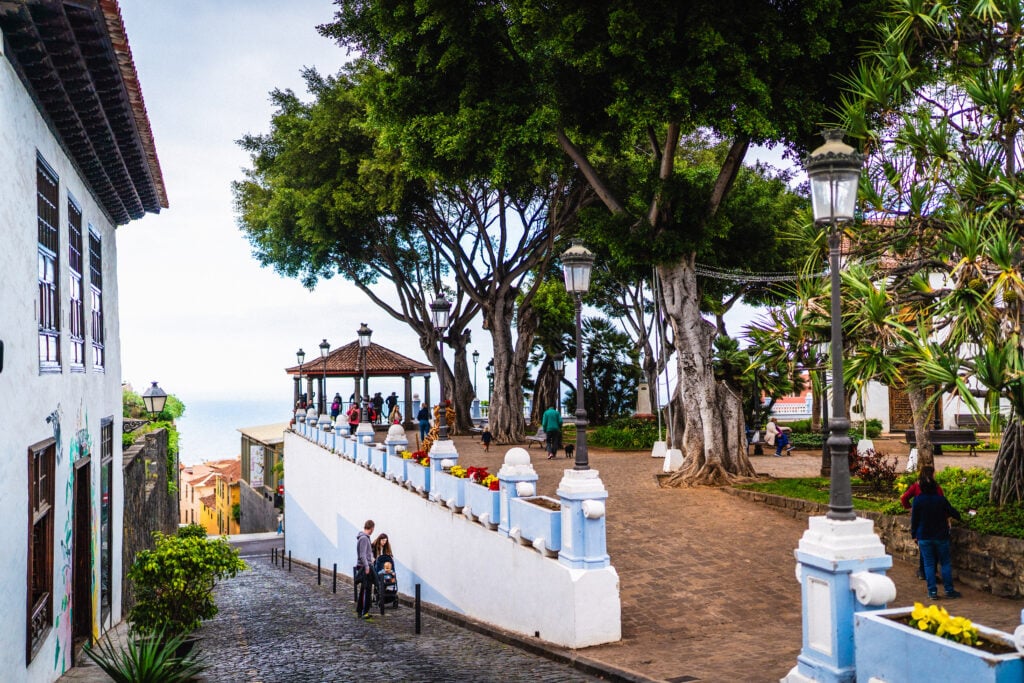
Reaching 18 meters high with a diameter of 20 meters, it’s truly a natural spectacle. As such, the tree is the symbol for Icod and is also the plant symbol of Tenerife island. It costs €4 to see the Dragon Tree.
Surrounding you’ll find the rest of the park which takes its name from the iconic tree, Parque del Drago. The green space is tranquil and you can easily spend half an hour or so admiring the varying plant species and reading the plaques to learn more about the various flora that grow on Tenerife.
Garachico
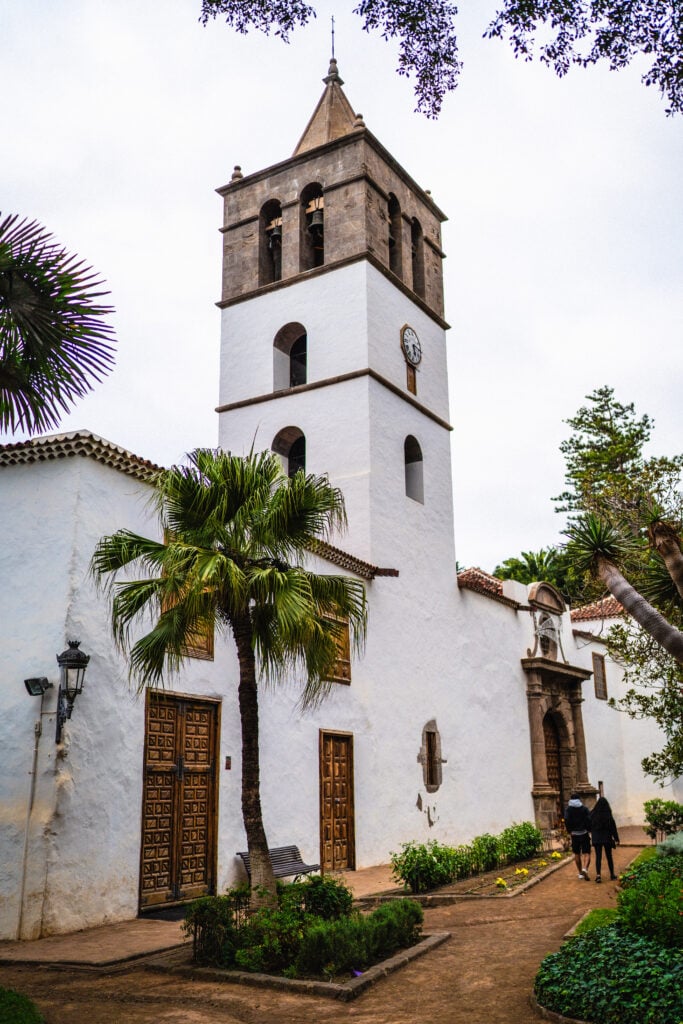
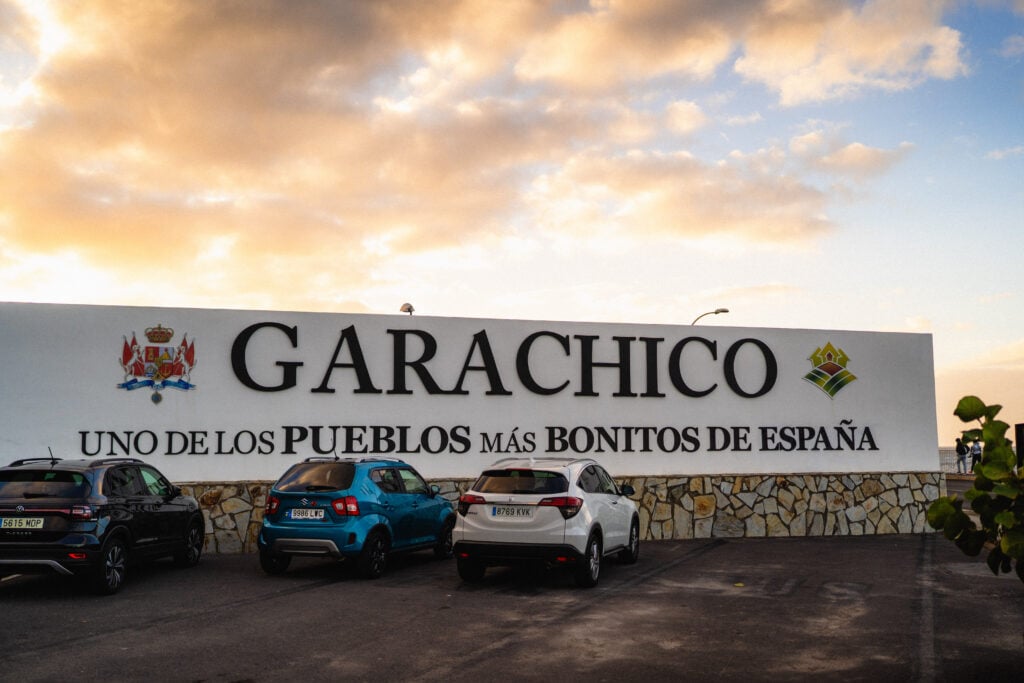
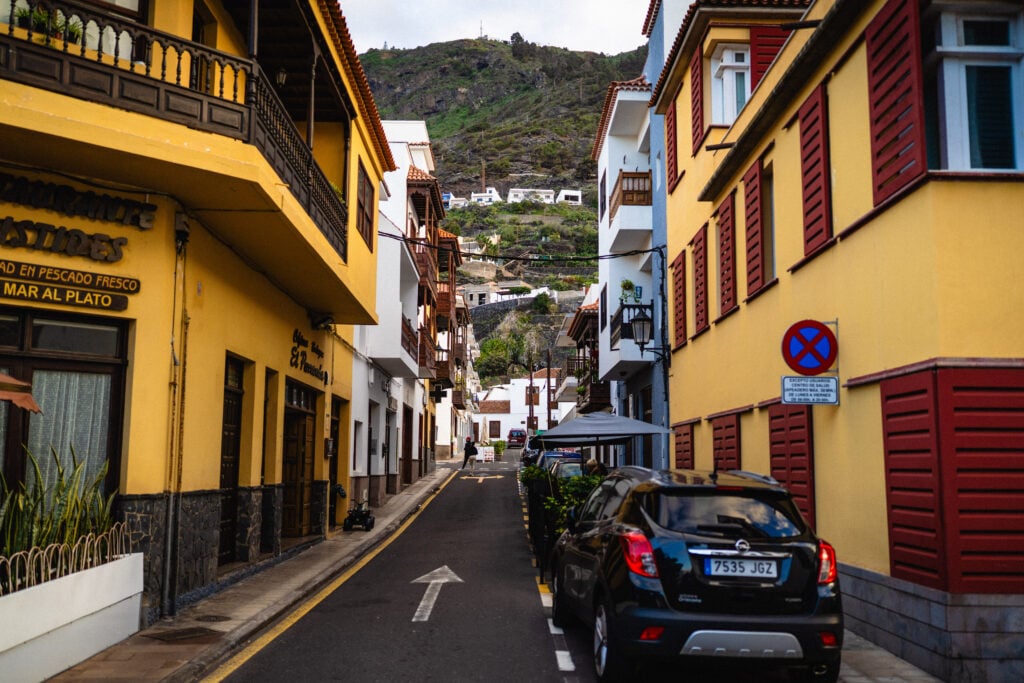
From there, it’s around a fifteen minute drive to reach Garachico. This is a sleepy little town by the sea which is famed for its natural rock pools. Unfortunately they were closed for the winter season when we were visiting. The town itself is charming, with lots of little cobbled lanes, independent eateries, and beautiful views.
Garachico has a long and varied history and was a pretty important port in the 16th and 17th centuries. It was a major trading hub for goods such as sugar, wine, and other products. However, in 1706, the town was devastated by a volcanic eruption from Mount Teide, leading to the decline of its port. Today, the town is more focused on tourism more than anything else.
Dinner in Puerto de la Cruz
We ended our time on Tenerife by heading to one of the most magical restaurants we’ve been fortunate enough to visit in the Canary Islands, Zicatela. They had plenty of vegetarian options on the menu and served up a fusion of Mexican, Japanese and Peruvian food. Other options in town include:
- Ambasada — Tapas bar with Spanish small plates. Great for a relaxed dinner.
- Ibéricos Gastro-bar — Spanish and Mediterranean sharing plates, including Iberian cured meats.
- Vinoteca Con Pasión — Wine bar serving creative fusion tapas.
- Tasca Ihüey — Creative fusion cooking in a more intimate setting.
- Muxacho — Contemporary Mediterranean and Spanish cuisine, ideal for a more substantial dinner.
Where to stay in Tenerife
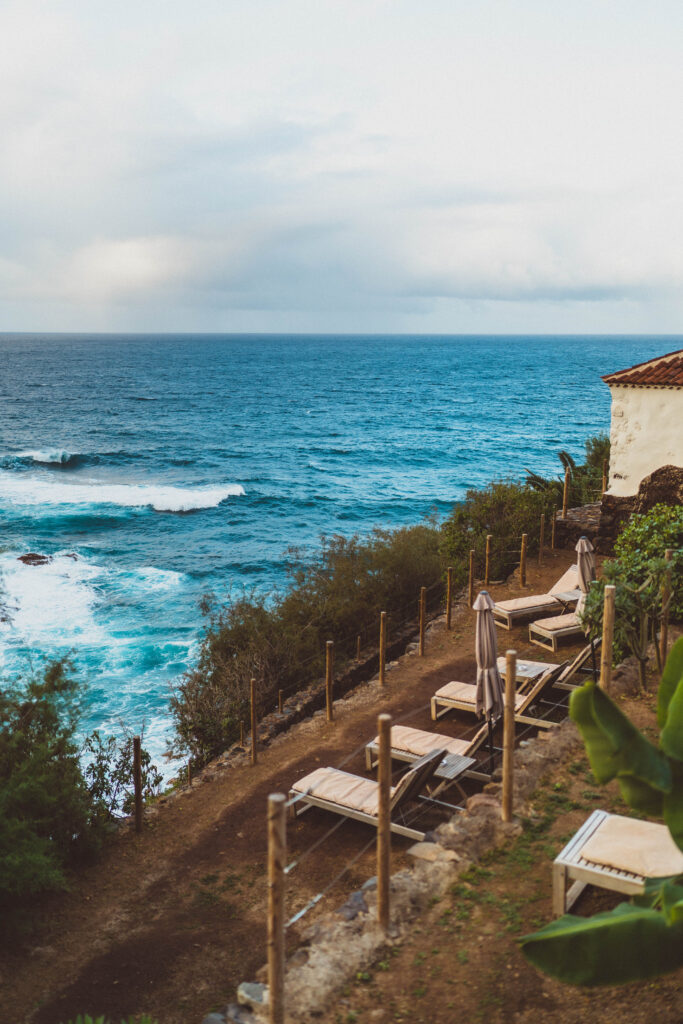
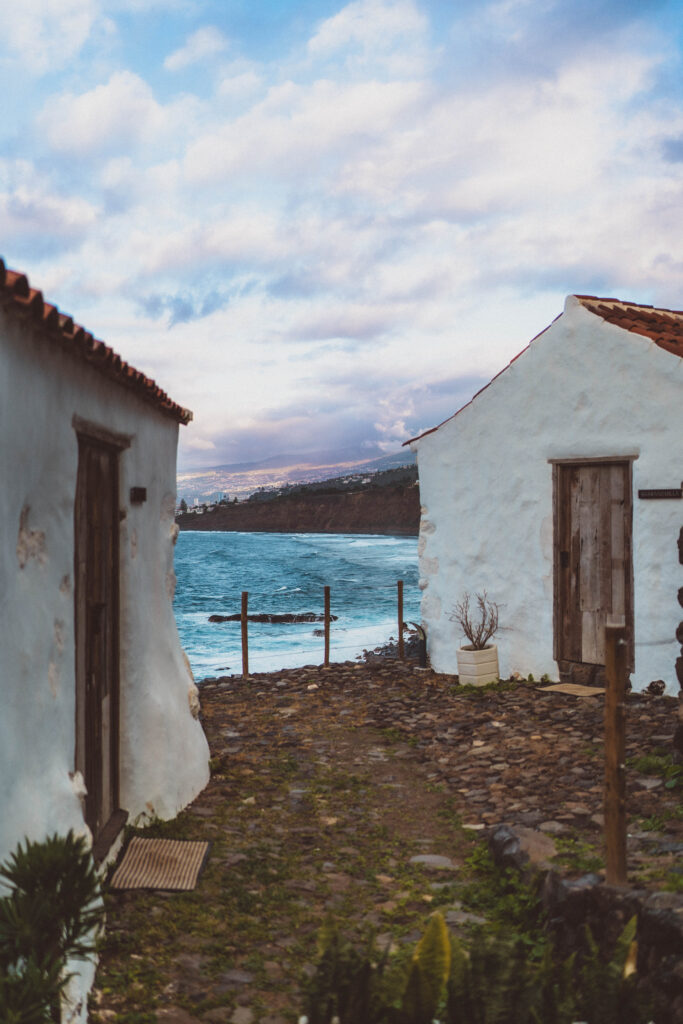
Our accommodation was in a pretty picturesque setting but I won’t give you the name as there were a few issues that made it super over-priced, including pest infestations! Luckily, however, there are dozens of self-catered options on the island in secluded little hamlets such as this and so just be sure to book in advance in order to secure great accommodation.
Here are some recommended suggestions on where to stay (based on web-reviews):
Casa Salvia Guesthouse Icod de los Vinos – Reasonably priced, this guesthouse is situated in the mountainous north of the island and boasts of beautiful views, making for the idyllic spot to rest and relax after a day of exploring. Reviews say that the host is friendly and efficient. Amenities include: free Wi-Fi, free parking and a free breakfast. Check prices and availability here.
Hotel Emblemático San Agustin – Set within an 18th century historic building, the rooms are beautifully decorated and characterised by exposed wooden beams. Situated just a 9 minute walk away from the iconic Drago Milenario tree. This is a 3-star hotel and offers Wi-Fi, as well as a courtyard with sitting areas. Check prices and availability here.
Watch my Tenerife travel guide
Enjoyed reading about how to spend two perfect days in Tenerife? Pin this article now, read it again later: