
How to Spend One Perfect Day in Toulouse: The Pink City
Last Updated on 8th May 2026 by Sophie Nadeau
This post may contain affiliate links. Please check out my privacy policy for more information.
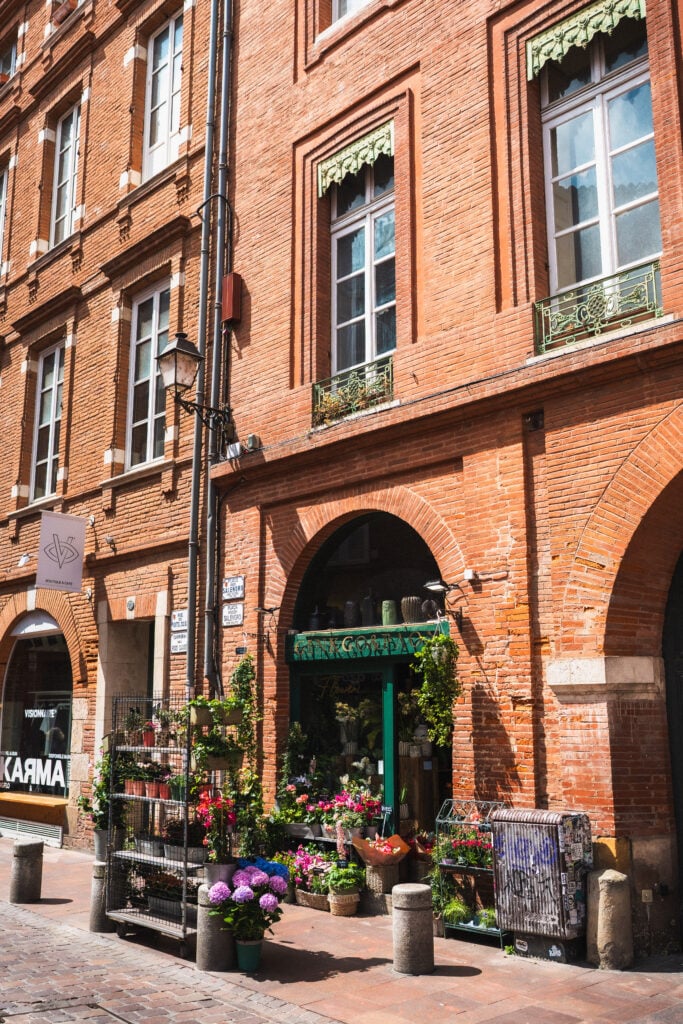
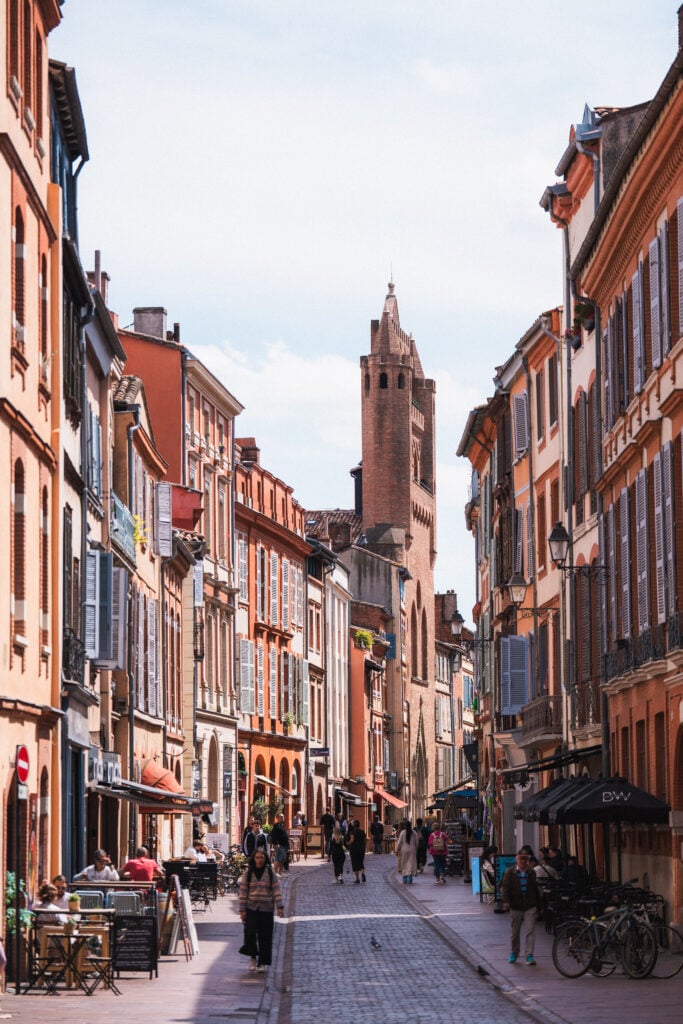
Situated in the South of France, somewhere between the glittering Mediterranean and the foothills of the Pyrenees, you’ll find the beautiful city of Toulouse. As the fourth-largest city in France, Toulouse offers plenty to see and do. Throughout l’Hexagone, it’s known as La Ville Rose for its unique abundance of rosy-brick buildings. Here’s how to spend the perfect day in Toulouse!
What’s Toulouse known for?
France’s “Pink City” is known as one of the largest and sunniest cities in the country. Characterised by its unique abundance of terracotta brick architecture, it’s also known as being the European capital of the aerospace industry, and in fact, it is the historic home, main headquarters, and a primary industrial hub for Airbus.
Toulouse is also renowned for its vibrant culture, buzzing student life, and hearty southwestern French cuisine (specifically cassoulet and Toulouse sausage!) There are also several Roman ruins. Once known as the Roman city of Tolsa, you can still see well-preserved remnants of the city and ancient artefacts inside Musée Saint-Raymond.
Is one day enough time in Toulouse?
If you are on a longer trip around southern France and don’t have much time, then one day is more than sufficient for enjoying all of the highlights Toulouse has to offer. However, if you’re the kind of traveller who enjoys exploring at a more relaxed pace, then you might want to dedicate 2-3 days to seeing the city.
Did you know?
Toulouse hasn’t always had the nickname ‘La Ville Rose’ (the pink city)… Though the city’s iconic pink terracotta architecture dates back centuries, the nickname only emerged in the early 1900s and was popularised through tourism literature.
Suggested one day in Toulouse itinerary
Tourist office
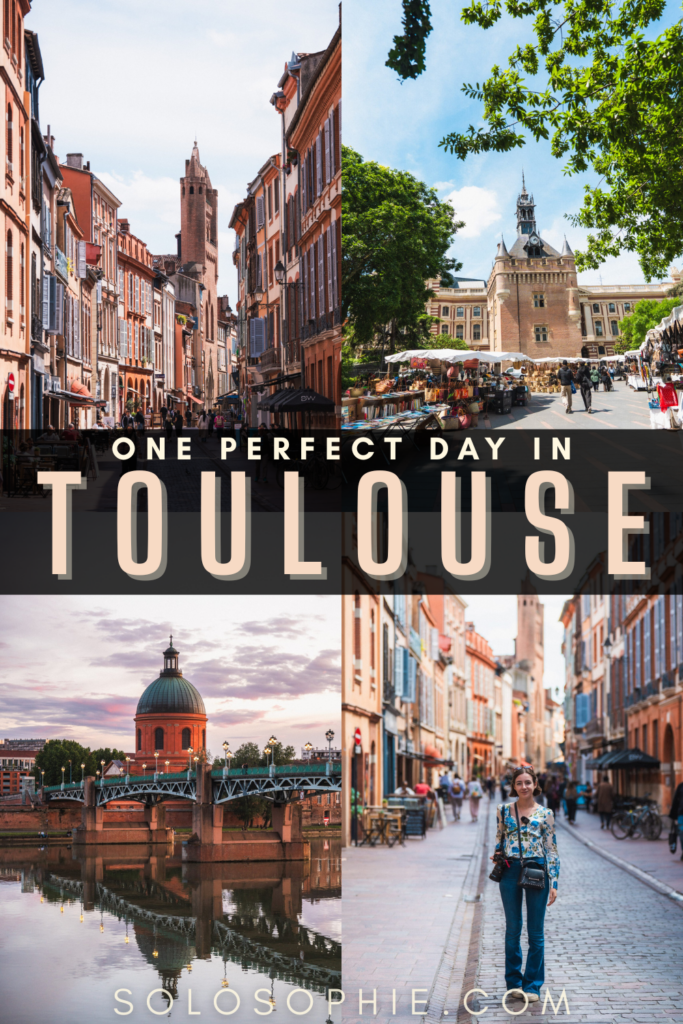
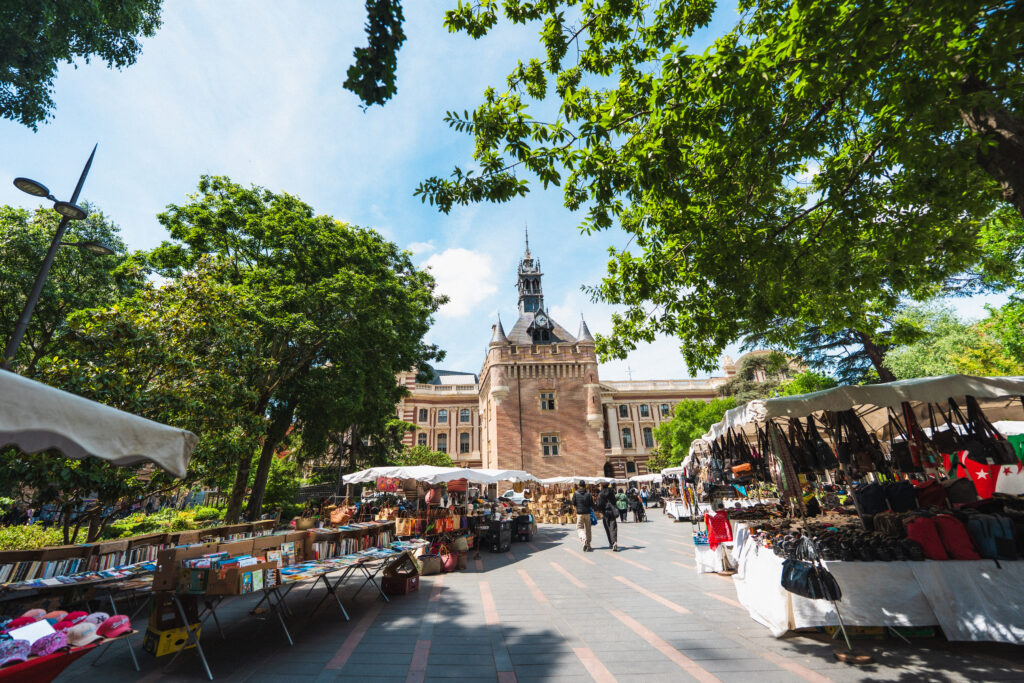
If you’re looking for maps and local recommendations, then the tourist office is centrally located inside one of the city’s most unusual buildings: the Donjon du Capitole, a fortified archive tower constructed in 1525. The building was heavily restored in the 19th century by Eugène Viollet-le-Duc, the architect also known for restoring Carcassonne and Mont-Saint-Michel.
Capitole de Toulouse
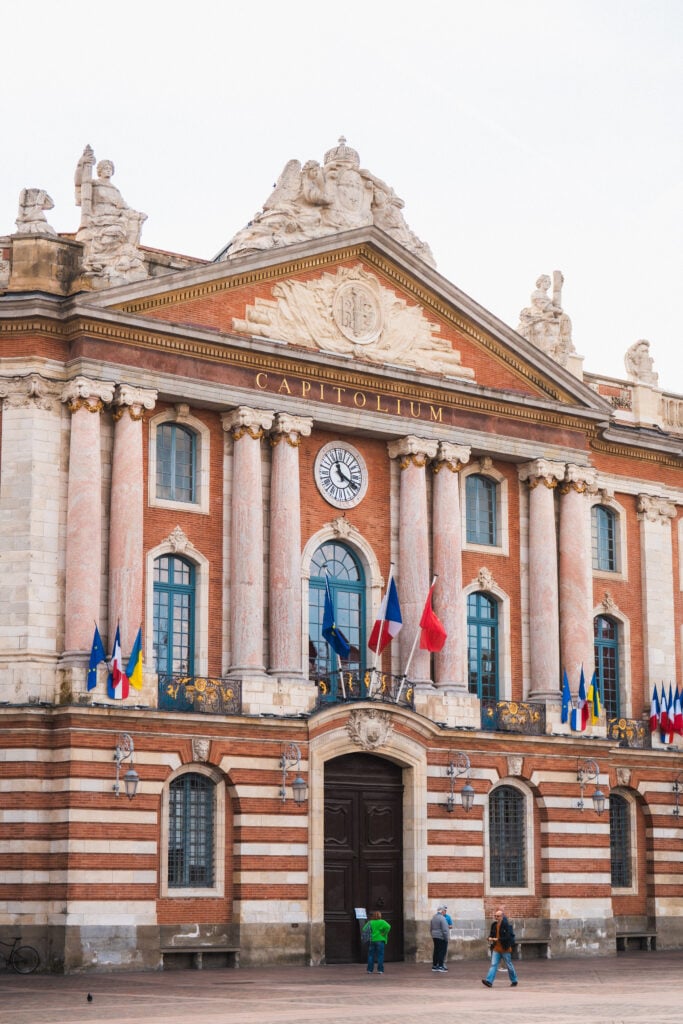
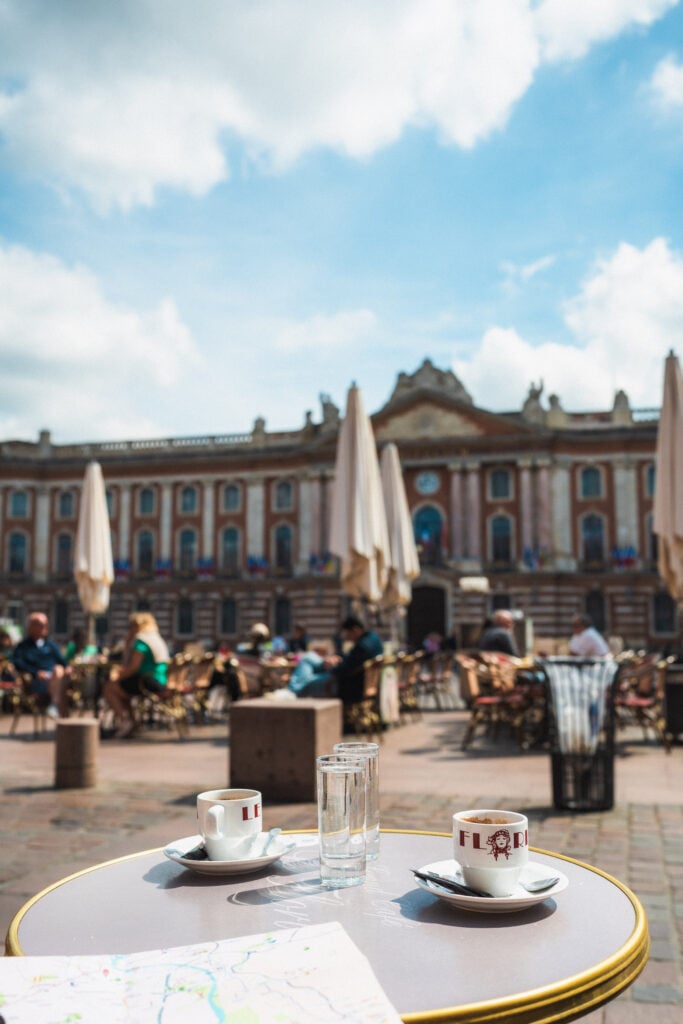
The best place to begin your day in Toulouse has to be at its historic heart, the Capitole de Toulouse. This central pedestrianised square has served as the political and civic centre of the city since the 12th century.
It’s a great place to people watch, soak up the pink-hued façade of the town hall, and sip slowly on a coffee (though be warned that the food and drinks here are much more expensive than you’ll find elsewhere in the city).
If you’re lucky and it happens to be open during your visit, you can head inside the mairie (town hall) to admire the ceiling frescoes in the Salle des Illustres.
Horloge de la rue d’Alsace-Lorraine
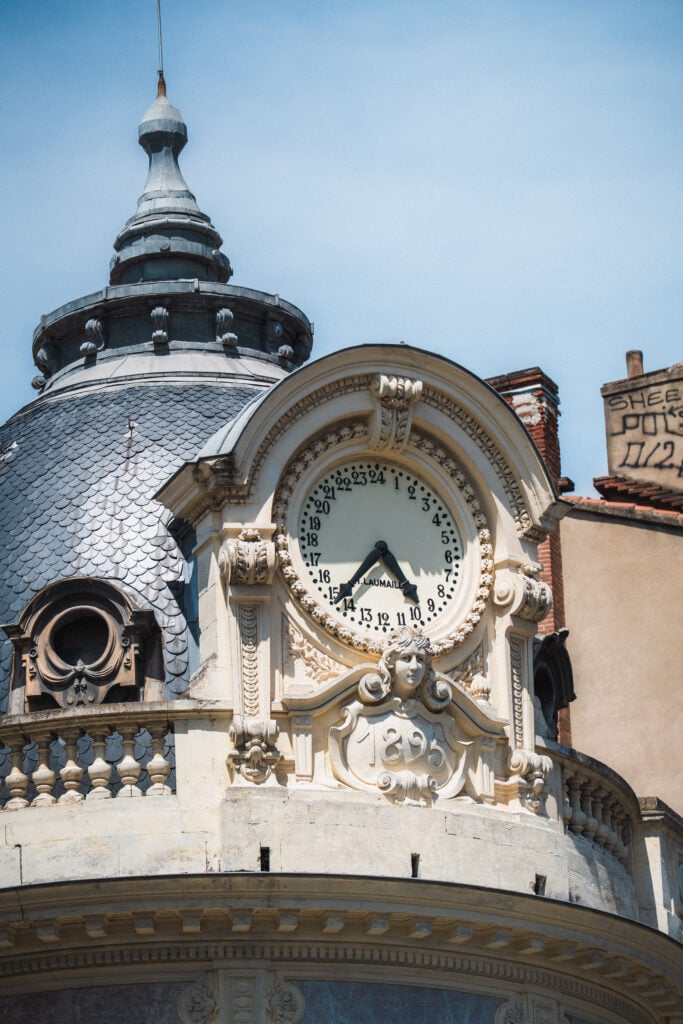
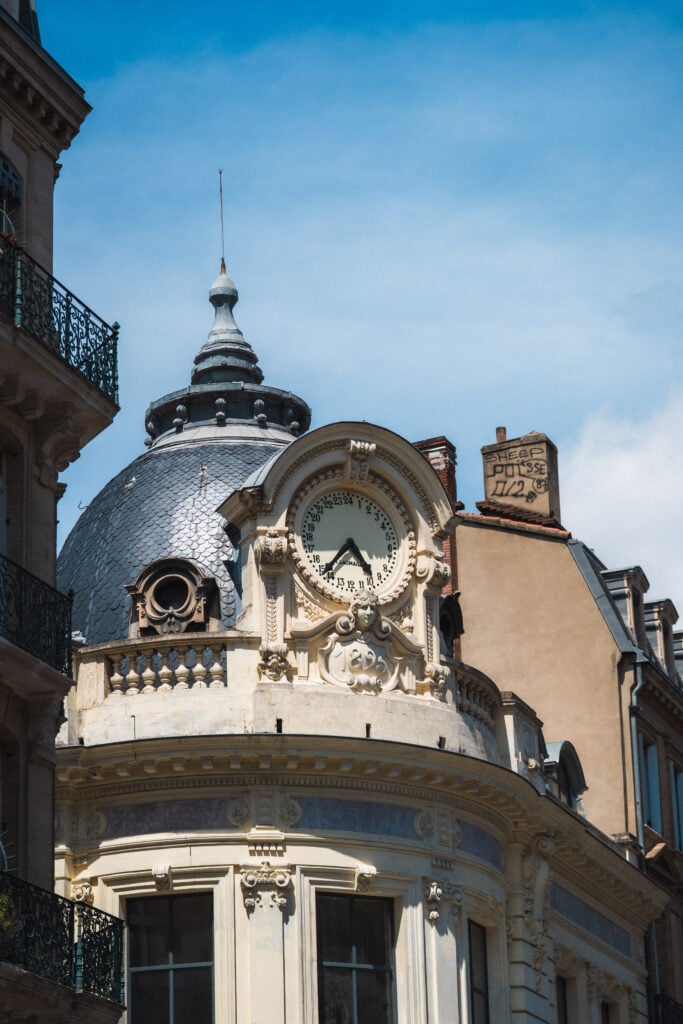
One of the best hidden gems of Toulouse is the clock on the road of Alsace-Lorraine, which has a 24-hour face, one of only two in France (the other being located in Auxerre). Perched atop a Haussmannian-style building constructed in 1895, the building itself has always been occupied by a bank. And, as the saying goes: “time is money”, this distinctive two-faced clock was designed for the merchant bourgeoisie, and it symbolises a world shaped by finance and privilege.
The clock didn’t actually seem to be functioning when we last visited, displaying the wrong time, so it was nice to see it back in ticking condition this time!
Basilica Saint Sernin
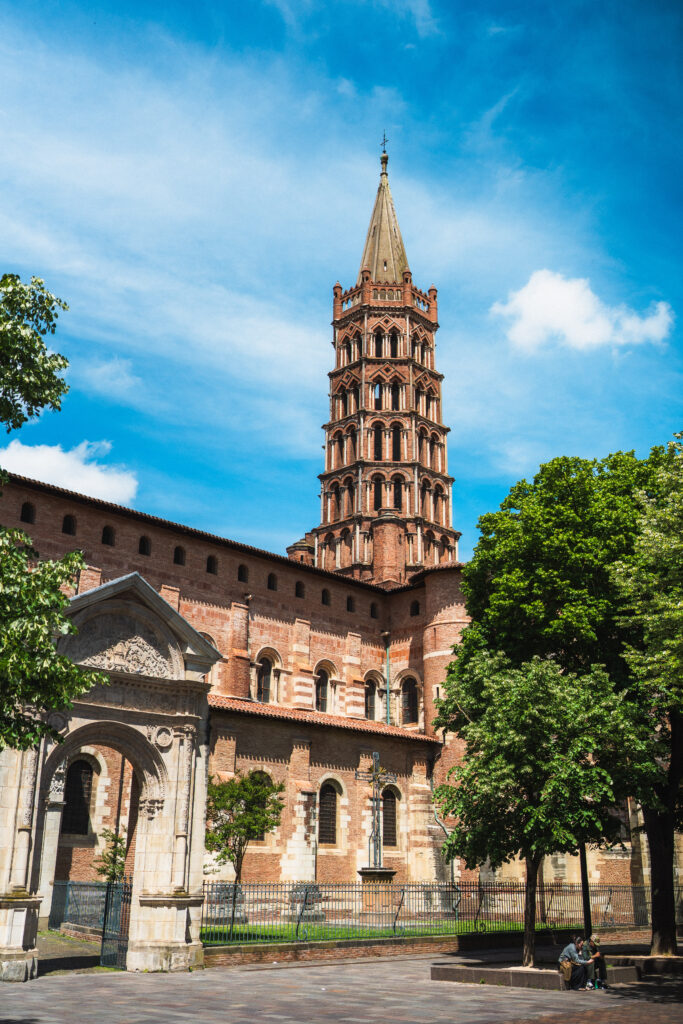
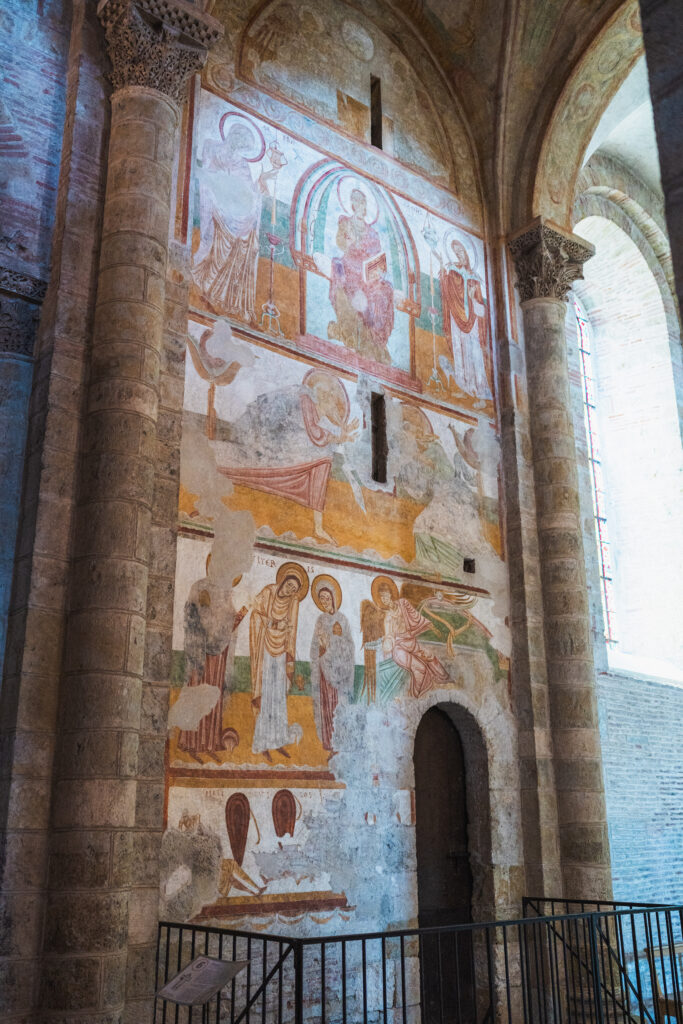
One of the largest and most important Romanesque churches in Europe, Basilica Saint Sernin is dedicated to Saint Saturnin (Sarni in Occitan), the first bishop of Toulouse who was martyred in 250 CE.
Following his martyrdom, Christians sought to be buried as close to his remains as possible, and so, a church was established on the site as early as the 6th century (traditionally dated to 581 CE). Today, you can enter the basilica for free to admire its remarkable architecture and descend into the crypt, which houses relics of several saints, including Saint Saturnin.
Chapelle des Carmélites
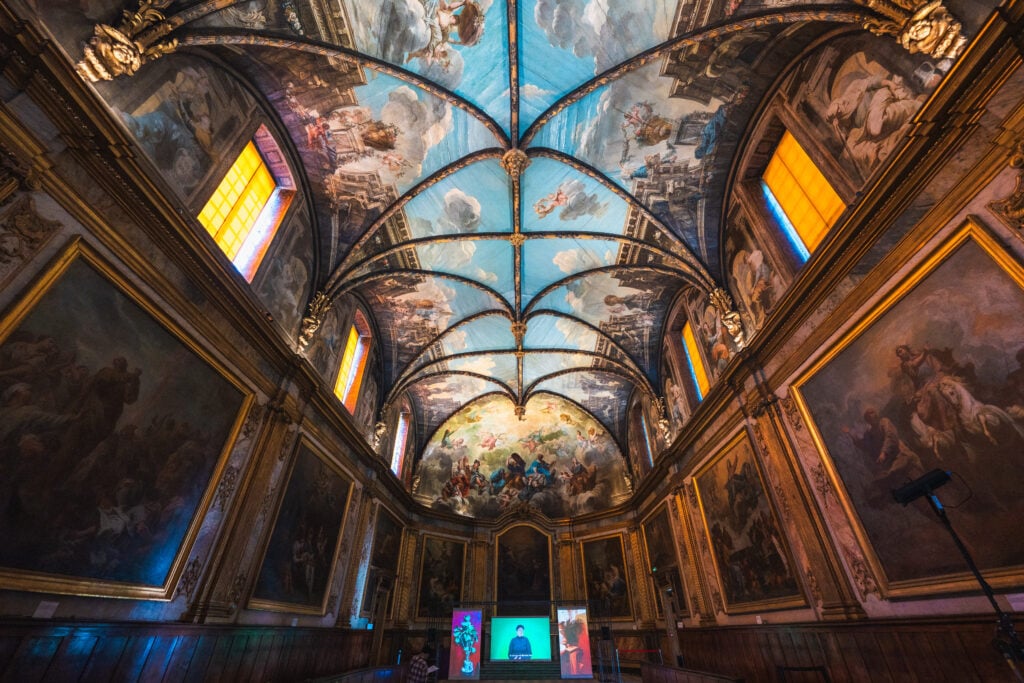
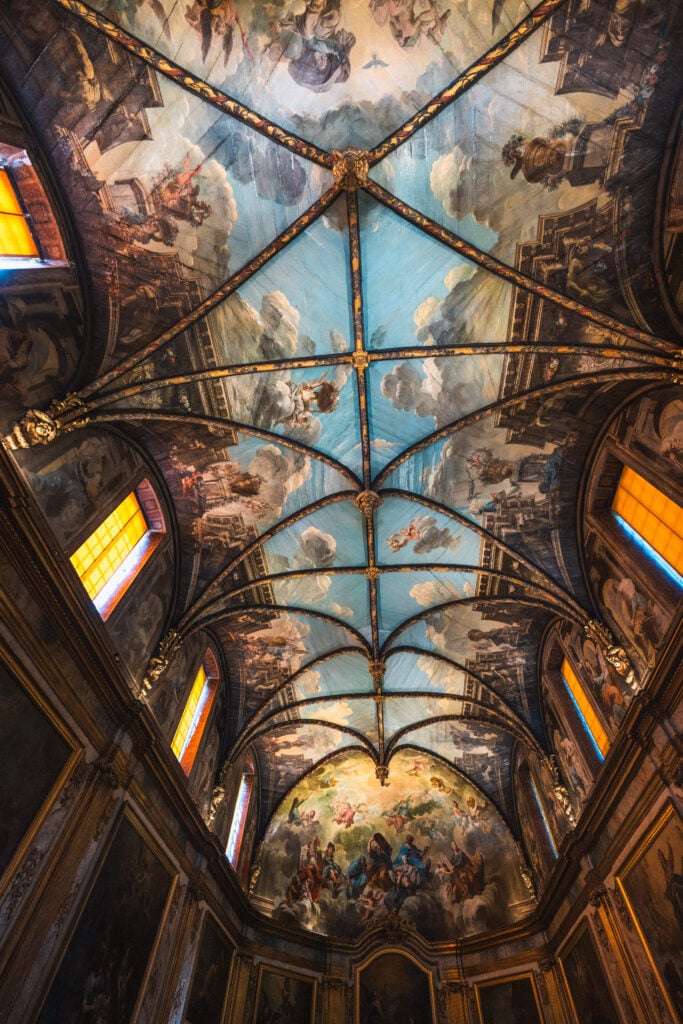
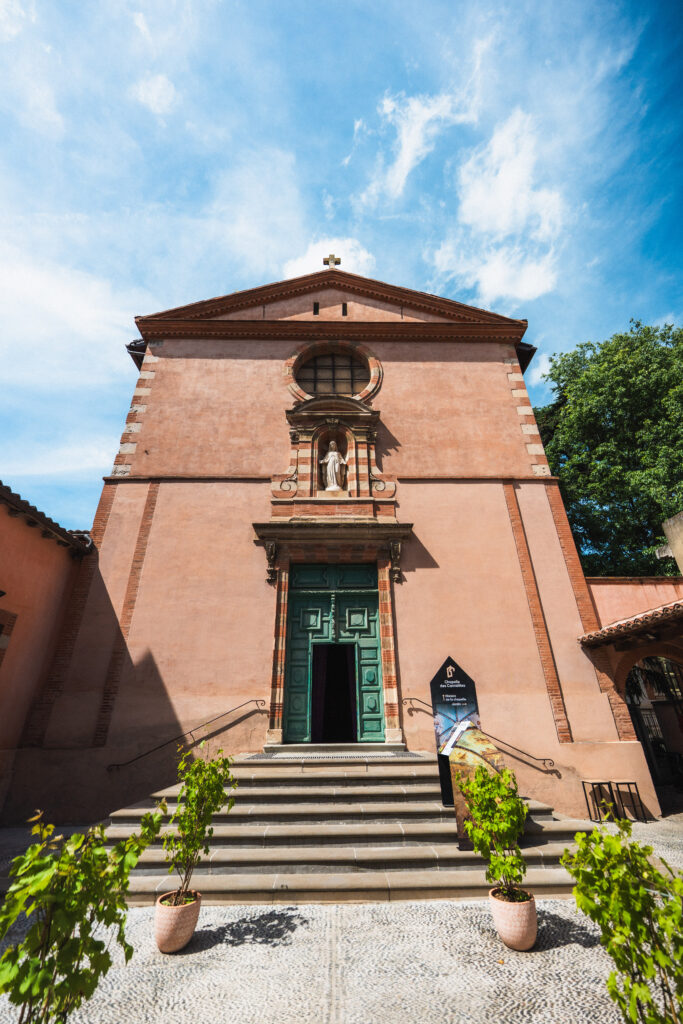
After enjoying one of the largest Romanesque churches in the world, head over to the Carmelite Chapel to admire an entirely different kind of religious space. Located along Rue du Périgord, this 17th-century Baroque hidden gem has been fondly nicknamed the “Sistine Chapel of Toulouse” for its stunning ceiling frescoes.
Certainly a jewel of Toulouse’s heritage, it is richly decorated in murals by Jean-Pierre Rivalz and paintings by Jean-Baptiste Despax. It is the only surviving building of the original convent complex, much of which was destroyed during the French Revolution; as such it was listed as a historic monument in 1909. Making for a truly mesmerising visit, and better yet, it’s completely free to enter!
Couvent des Jacobins
Next, you’ll want to head to the most important ecclesiastical building in Toulouse. The “Jacobin Church” sits at the very heart of the city, and its first foundation stones were laid in 1230. Construction began under the newly founded Dominican order, the Order of the Preachers, who were closely involved in the establishment of the university.
Over the following century, the church was expanded to include a cloister, a chapter house, a refectory, and the Chapel of Saint Antonin. Much of the building, however, had to be restored after it was requisitioned by Napoleon in 1810 and converted into barracks, stables, and an armoury, which caused significant damage to the medieval structure.
Luckily, the church has been carefully restored, offering a strong sense of how it once looked in its original form. Wandering around (which is also completely free by the way!) is the best way to soak up and marvel at all of the stunning architectural details.
One of its most striking features is the vaulted ceiling, supported by an oversized central column from which ribs radiate outward in every direction. This distinctive design became known as Le Palmier des Jacobins, the ‘palm tree of the Jacobins’.
Pont Neuf
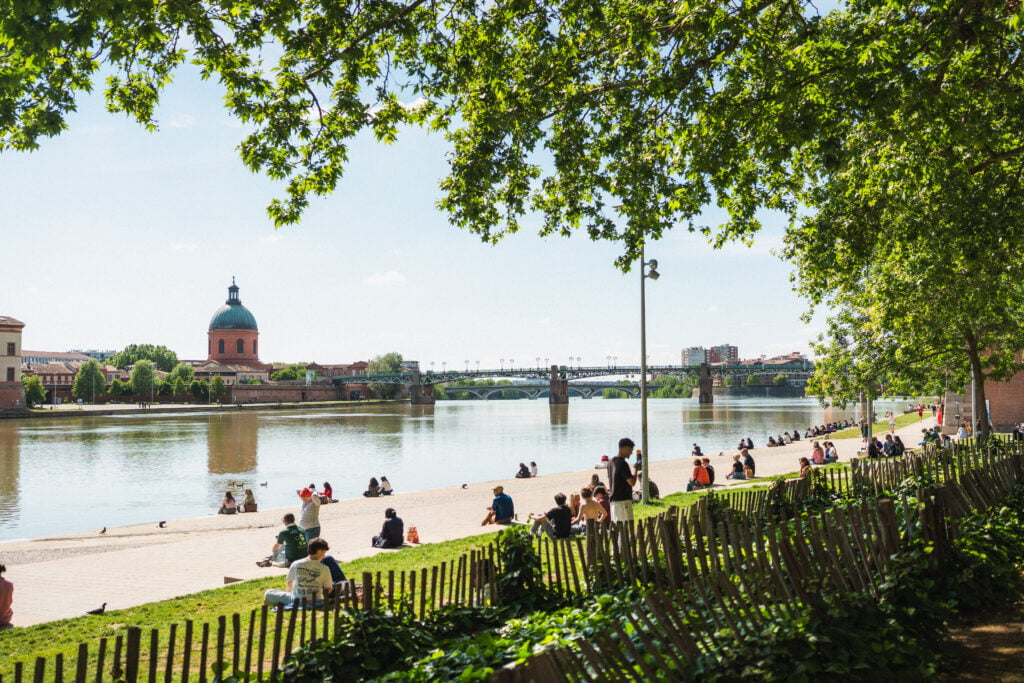
You’ll then want to make your way down towards the banks of the River Garonne, where you’ll find students sunbathing along the quays in the summer and which remains a buzzing part of the city to this day.
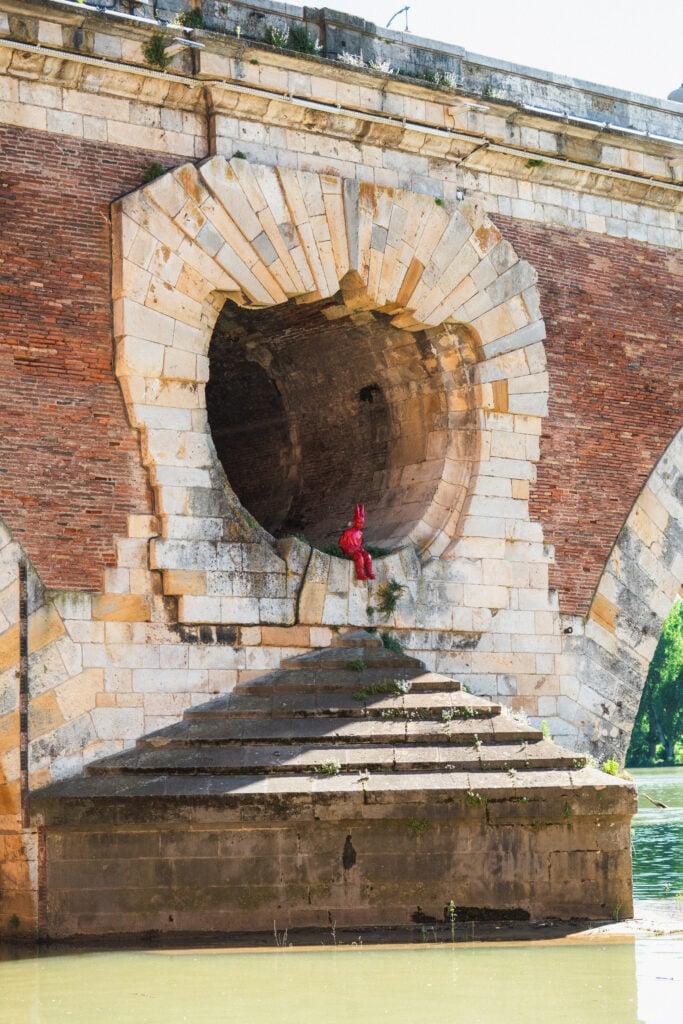
Rather ironically, the ‘New Bridge’ is actually one of the oldest bridges in the city. Constructed during the Middle Ages, this 17th-century bridge is well worth a stroll across. It’s also often compared to that of the Pont Neuf bridge in Paris, which is similar in its curving stone archway structure.
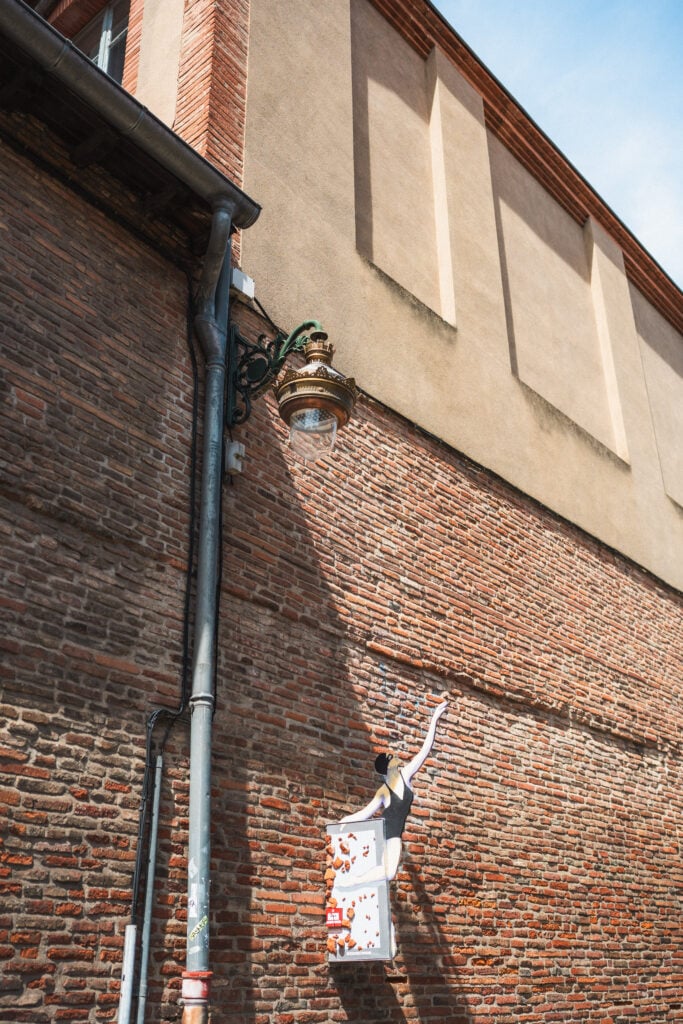
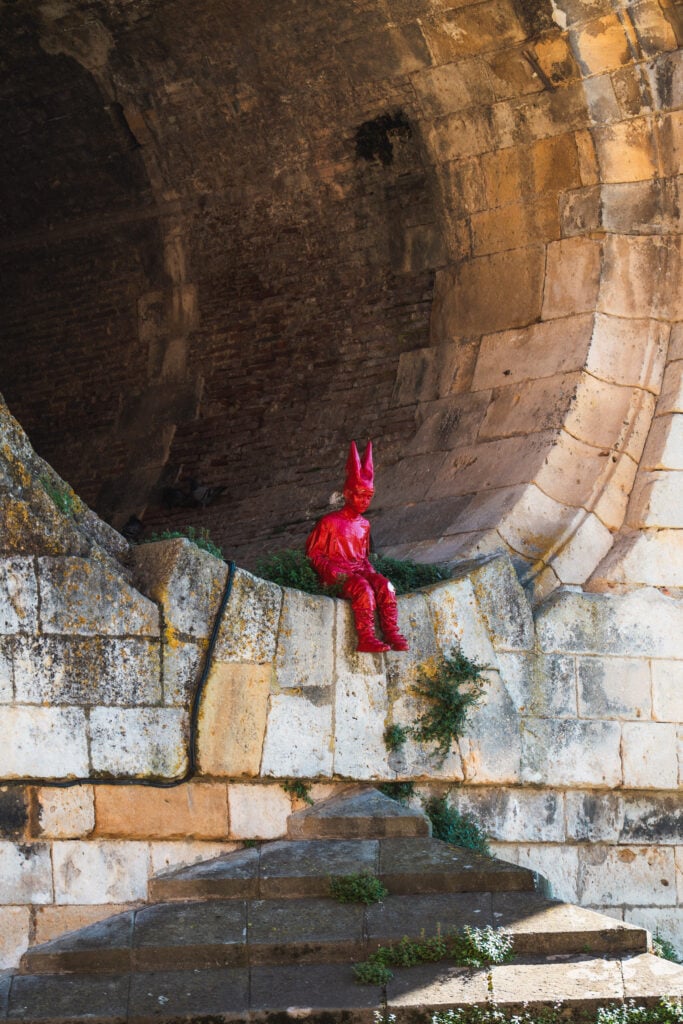
Tucked away in a niche of the bridge, you may well spy out a small red figure, often referred to as Le Diable, “the Little Devil”. This installation was created by French artist James Colomina, who is based in Toulouse, and is known for placing red sculptures in unassuming places… You might think of him as somewhat the “Banksy of sculptures” (red specifically). Colomina’s artwork encourages viewers to notice details they might otherwise pass by. The works tend to appear or disappear suddenly, never being permanent, making it all the more fun to hunt them out while wandering the city.
Pêcheur des sables
The river hasn’t always been kind to Toulouse, and a prime example of this is the Pêcheur des sables, which is now a local drinking spot. This popular spot to enjoy a refreshment by the Garonne is rather charmingly named after the sand dredgers who, until the early 20th century, during low water levels, would use scoops to sift grains of sand to make cement. Hence the name, which translates to ‘Fisher of the sands’.
However, what many people might not realise is that this bar was once used as a morgue to identify bodies, namely those who drowned in the river. In fact, according to local legends, a small underground stream once ran beneath the site, helping to preserve the bodies through constant, slow moisture. Nearby, you can also see visible markers showing historic flood levels.
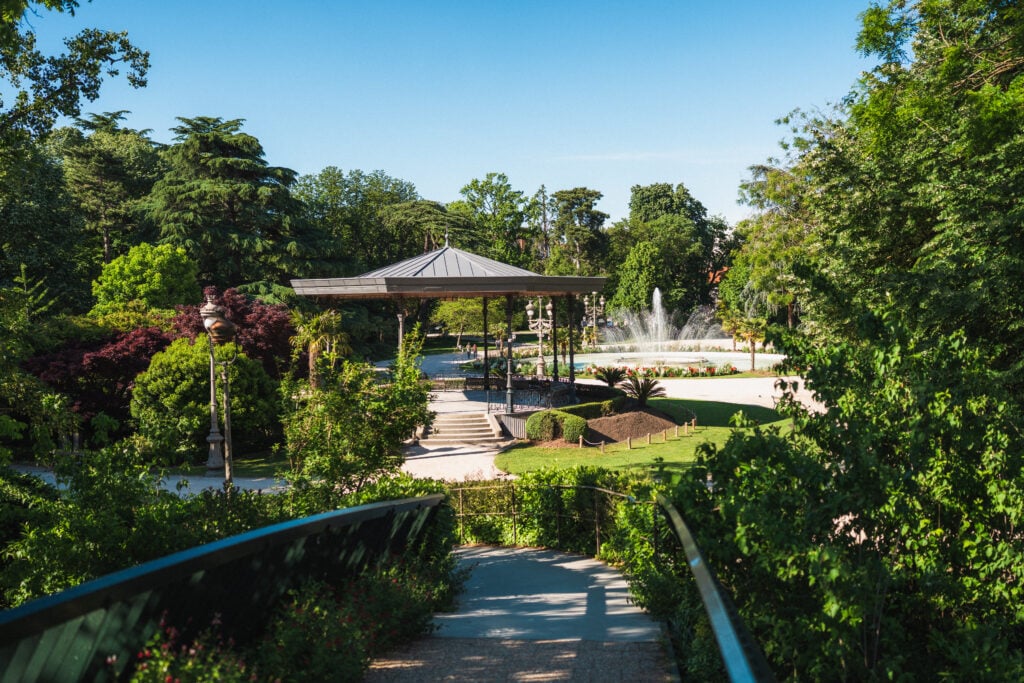
Jardin des Plantes, Grand Rond & Jardin Royal
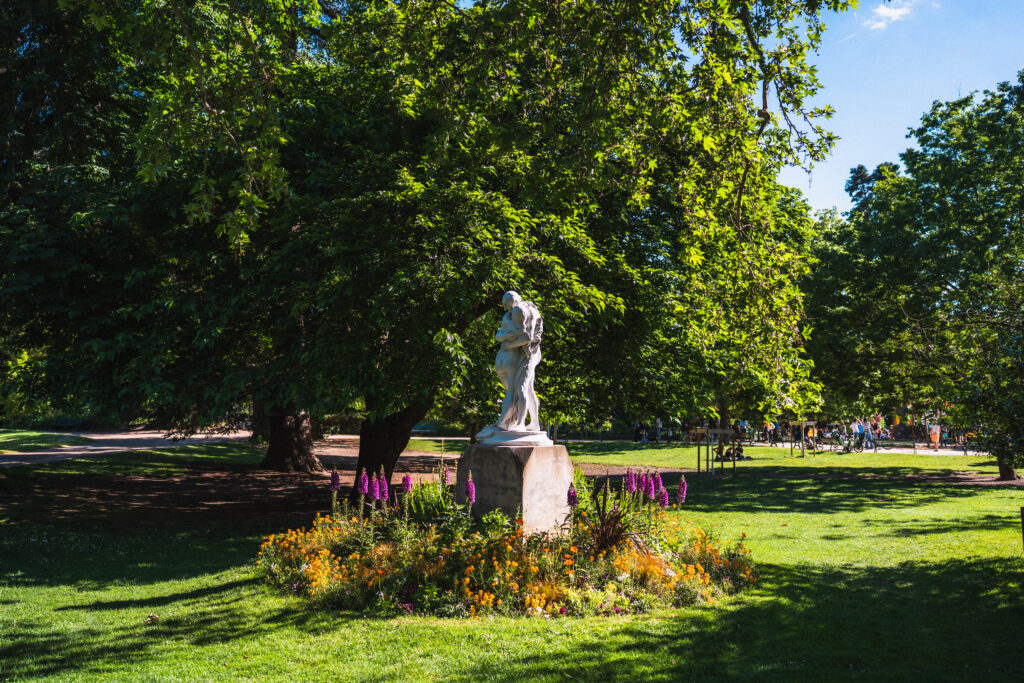
If the nickname ‘the Pink City’ is anything to go by, head to this part of Toulouse and you’ll find a very different side to it – one defined by green space rather than terracotta tones. There are numerous parks and gardens in the city, but three of the most popular are conveniently linked by bridges.
The Jardin des Plantes is the oldest, dating back to 1730. Created by the Société des Sciences, it is also home to the Henri Gaussen Botanical Garden, where you can explore a wide variety of exotic plant and tree species.
Jardin Royal is Toulouse’s first public garden. This Royal Garden was created in 1754 by Louis de Mondran, and it was then transformed into an English garden in the 19th century. Decorated with a quaint duck pond, small statues, and plenty of flowers, it certainly has a royal air to it as you wander through.
Grand Rond is equally as elegant, spanning over four hectares. It features a pavilion, a bursting water fountain, flower gardens, and a bowling lawn used for playing boules.
Sunset on the banks of the river
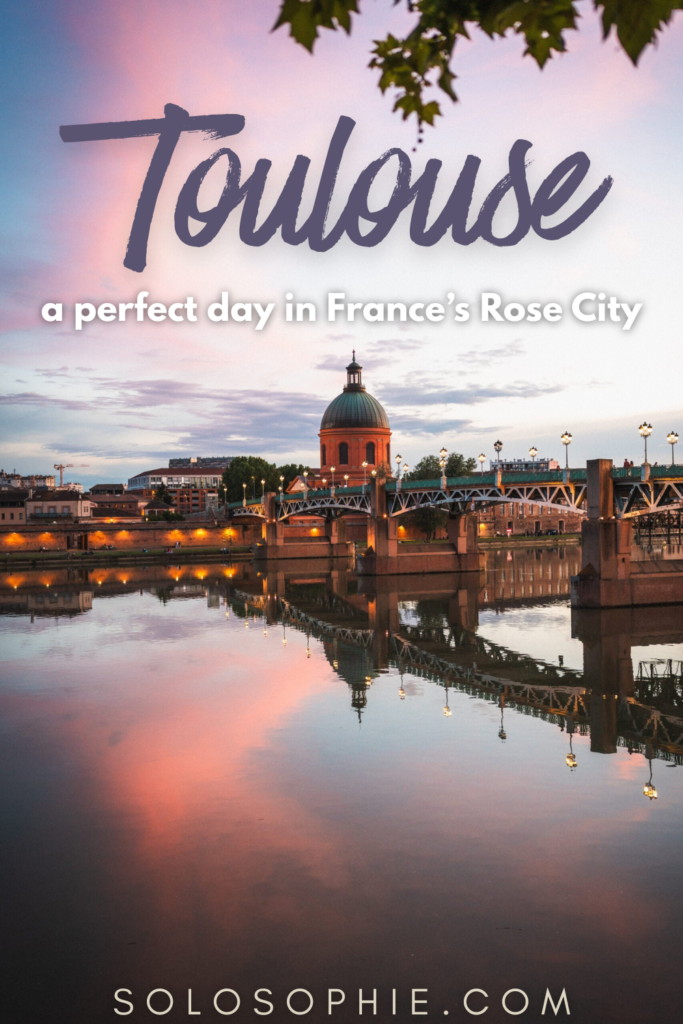
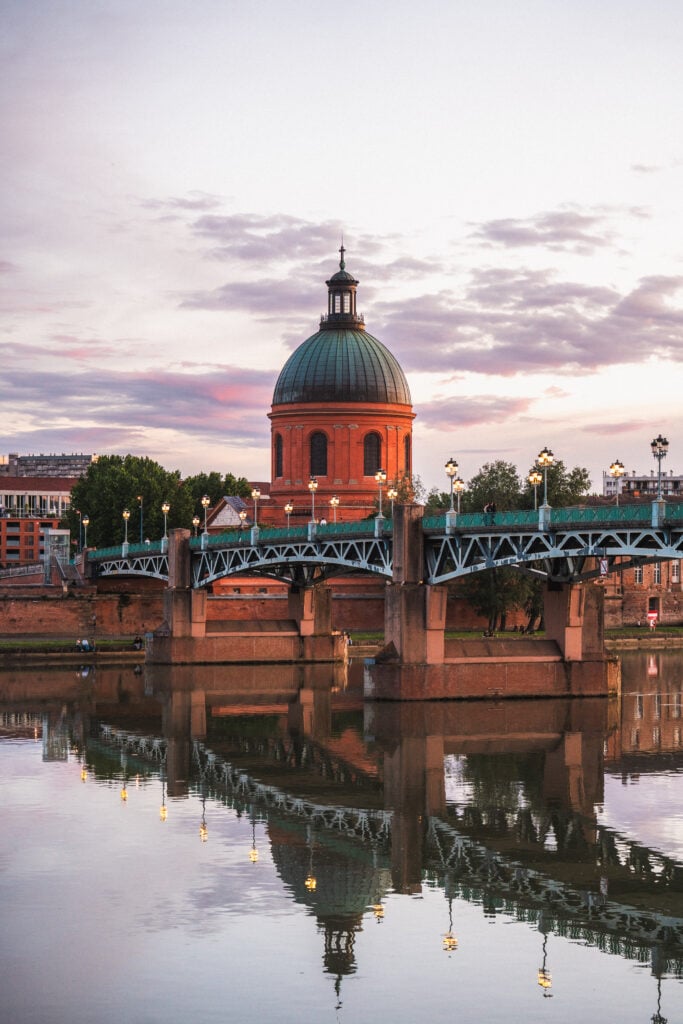
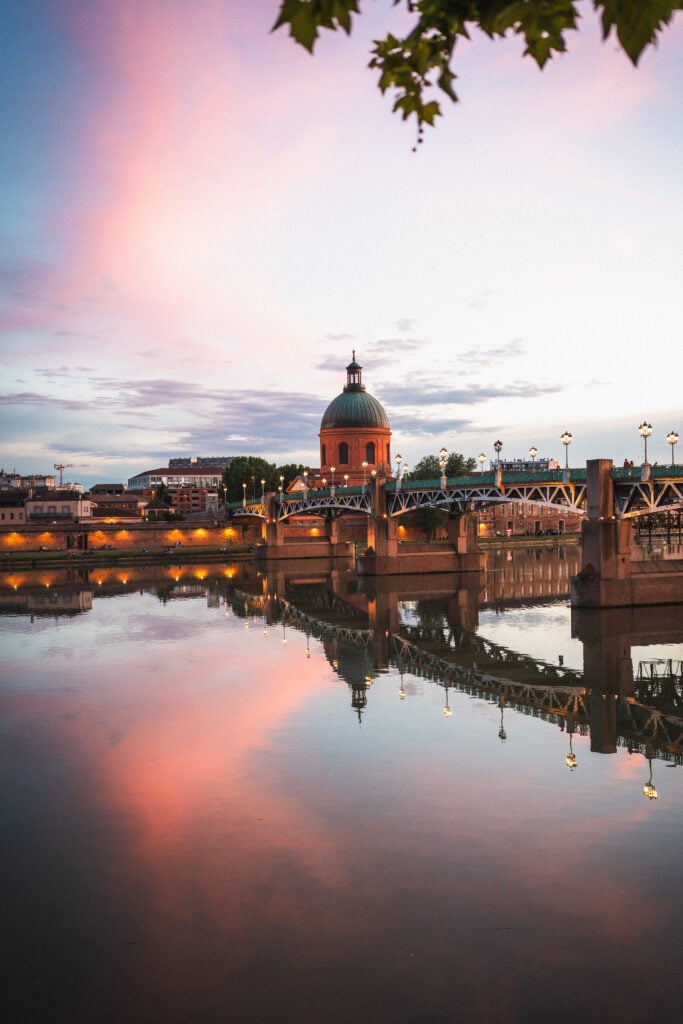
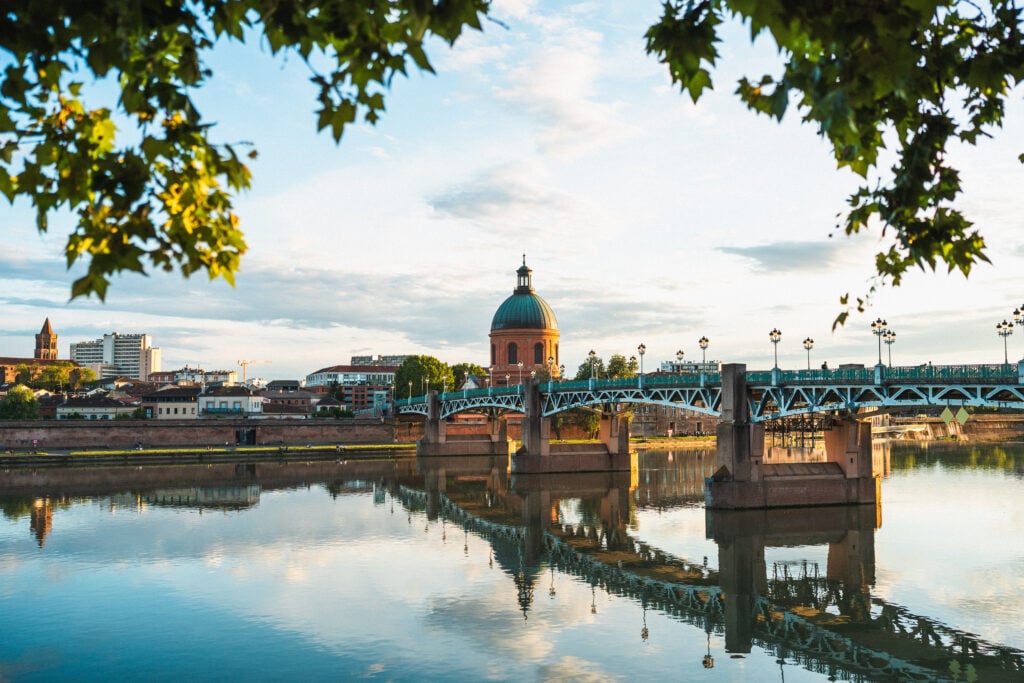
I don’t necessarily recommend trying to watch the sunset in every city I visit, but in Toulouse it’s an absolute must! As you can probably imagine, with the rosy coloured buildings already popping in daylight, there’s something absolutely serene seeing them as the sun’s golden glow fades behind the horizon. That, and the reflective glossy quality of the Garonne, only amplifies the magical effect of a sunset over Toulouse.
If you have more time
Hotel d’Assézat Fondation Georges Bemberg: Just a three-minute stroll away from the hotel sits one of the more impressive mansion houses the city has to offer. This 16th-century Hôtel Particulier turned museum offers five centuries worth of art housed in beautiful settings.
Cité de l’Espace: Of course, if you have more time, then it would be remiss not to visit the scientific discovery centre focused on spaceflight. It is located more on the outskirts of the city, so you would need a few more days here to visit, but it’s definitely worth it to learn more about astronomy, space missions and the great adventures of the conquest of the Universe!
Musée Saint-Raymond (archaeological museum): Uncover a world of Roman artefacts and archaeological history at this fascinating museum. A top highlight to see here has to be the world-renowned collection of Roman sculptures, particularly the stunning Gallery of the Emperors staring back at you.
Canal du Midi: This UNESCO World Heritage site, a 240 km-long canal, is considered one of the greatest construction works of the 17th century. The canal links Toulouse to the Mediterranean, creating a reliable inland trade route that once avoided the dangerous sea passage around Spain.
Foods to try in Toulouse
- Cassoulet – Hearty and rich, cassoulet is the typical dish of Toulouse and an absolute must-try when visiting! (if you aren’t a vegetarian that is…) It’s packed with bold meat flavours and includes a slow-cooked stew of Tarbais beans, Toulouse sausage, confit duck legs, pork belly or rind, and aromatic vegetables.
- Saucisse de Toulouse – The staple of Toulouse foods is its Toulouse Sausages, which are renowned for their simplicity. The sausages are traditionally made from high-quality pork (shoulder and belly) with no artificial fillers, black pepper, salt, garlic, and a natural casing.
- Violets – The city is known for its rose-tinted hue, but it’s also known for its delicious violet-flavoured candies. A unique place to purchase, or try, is La Maison de la Violette – a gift shop which floats on the Canal du Midi.
- Fénétra – This Toulouse cake speciality is often round or square, with a shortcrust base. The cake itself consists of a sweet pastry filled with apricot jam and cubes of candied lemon, all covered with an almond mousseline cream.
Where to stay in Toulouse
Toulouse is France’s fourth-largest city, and so when it comes to choosing where to stay, there are plenty of options depending on the overall vibe of your trip. Not only that, but the city is also a great place to base yourself for exploring the South of France, particularly if you have your own transport. It’s essentially a gateway to the Occitanie region, the Pyrenees mountains, and vineyards. Here are a few suggestions of where to stay (based on web reviews):
Capitole/Old Town area (central/ideal for first-time visitors): Hotel Albert 1er Hotel Toulouse – Located in the very heart of the city, a 3-minute walk from Capitole metro station and the Place du Capitole palace and museum. This classic hotel offers small, but stylish rooms and notably friendly service. Check prices and availability now.
Carmes (described as a “village within a city”): Hôtel Croix Baragnon – Very centrally located and surrounded by shops and restaurants, this family-run hotel is simple but charming. Situated just a 6-minute walk from the Garonne riverside. Check prices and availability now.
Saint-Cyprien (bohemian and more local vibe): Aparthotel Adagio Original Toulouse Centre La Grave – Offering family rooms, rooms with kitchenettes, 24-hour front desk, full-day security, and luggage storage. This is a great option for those looking to stay a little further out of the city and potentially save a little on accommodation costs. Check prices and availability now.
Enjoyed reading our guide on how to spend one day in Toulouse? Pin this article now, and read it again later: