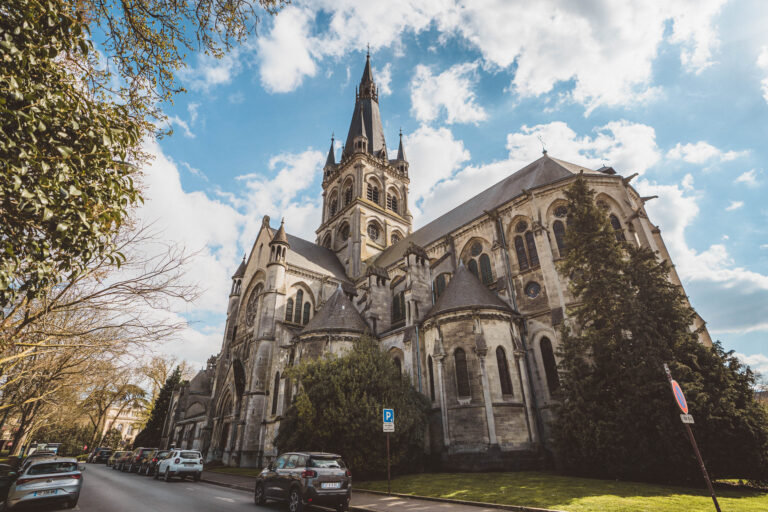
Chevreuse Guide: Fairytale French Town & Medieval Château
Last Updated on 31st July 2026 by Sophie Nadeau
This post may contain affiliate links. Please check out my privacy policy and disclosure for more information.
Chevreuse. It’s the kind of town you see in the movies. And the type of place you’d think no longer exists. But it does. And it’s totally worth your time. The fairytale town is located in the Île de France region, south of Paris and is overlooked by the haunting ruins of a medieval château.
In the town itself, you’ll find plenty of cafés, historic streets and a gently flowing river perfumed by the scent of a thousand flowering blooms. Oh so French! Here’s your guide to the best things to do in Chevreuse, as well as travel tips and what to know before visiting.

A quick history of Chevreuse, Yvelines
Founded as early as the 11th Century CE, Chevreuse is located in the Yvelines department of the Île de France region. This area of l’Hexagon is best known for its countless Châteaux, as being the inspiration for iconic artists and writers (think Emile Zola, Alexandre Dumas, and Maurice Ravel among plenty of others), and as being home to the iconic Palace of Versailles.
The town of Chevreuse itself celebrated 1000 years in 1980, and the nearby château dates back to roughly the same era. For a fairly small French town (the population hovers around five and a half thousand residents), it’s certainly fair to say that the town has seen its share of history over the years!
After all, in its early years, during the 12th century, drapery and tannery production in the town centre were abundant. Chevreuse thrived in the shadow of its nearby Château, a dominating and protective force over the surrounding valley.

However, by the 15th-Century, the town was captured, a theme that was to follow many times in the following centuries. The first time the town was captured was by the Duke of Burgundy. It then passed into the hands of Tanneguy III du Chastel, before being captured by the English during the 100-year war in quick succession.
Over the following centuries, and right up until the French Revolution, various Lords and Dukes took control of the town for a short while, before being ousted by a newcomer. Today, Chevreuse is a pretty town with a rich history. In the summer months, there’s Jazz Festivals, Book Festivals, and even fireworks for the 14th July (Bastille Day!)

Best things to do in Chevreuse
Château de la Madeleine
Towering above the pretty commune, on the cliff face of the valley in which the town lies, there’s the Château de la Madeleine. The castle is named for Saint Madeleine, to whom the site was first dedicated in medieval times. This is the main attraction of the town and the reason many people choose to visit in the first place.
Due to the castle’s fortified nature and its prominent position atop the hillside, it was once one of the strongest castles near Paris and this fact alone probably explains the reason the town passed through so many hands over the centuries. Château de la Madeleine was probably built at some point between 1030 and 1090 though unfortunately, we’ll never know the precise dates!
Today, the Château is well preserved and provides excellent views of the surrounding valley, as well as a glimpse into the interior of an ancient home, fortification and workplace. A visit to the castle’s interior is completely free and totally worth it- if only to say you’ve wandered through a medieval castle dating back to the 11th-Century!


Yvette River
The gently flowing river Yvette meanders its way through the lower part of town. Little bridges connect private residences from the pedestrianised street that runs through Chevreuse, making the entire area surrounding the Yvette river makes for the perfect walking train.
If you’re not sure where to find the river (we’d been in the town quite a while before even realising that the fairytale houses by the river even existed), then head to Rue Letanneur. This area is known as ‘le Vieux Lavoir et Les Petits Ponts sur l’Yvette’.

Meander your way down the riverside (best done on a warm summer’s day when all the flowers are in bloom) and admire the ancient architecture. Snap photos of the beautiful scenery and enjoy the scent of a thousand blooms. Bring along a typically French picnic to make the most of your visit and enjoy the little park at the end of the river walk!

Chevreuse Town
Filled with historic churches, cobbled lanes and plenty of French cafés (though it should be noted that these are for the most part closed during lunch hours and throughout much of the weekend), Chevreuse is a town that is best explored on foot.
Though there is little in the way of ‘must-see attractions’, the town itself being the attraction, you’ll still find plenty of interesting things to see if you scratch beneath the town’s surface.
After all, the priory buildings and St-Saturnin Church have now been transformed into an art centre, while the river was once used in the function of the mill, and as a place to process leather for the tanneries.

Parc Naturel régional de la Haute vallée de Chevreuse (Haute Vallée de Chevreuse Regional Natural Park)
Chevreuse is located in the very heart of one of the closest national parks to Paris. The park is not only well known for its beauty and abundance of walking trails, but for the sheer volume of historic monuments and points of interest located within its boundaries.

Port Royal des Champs Abbey
Literally known as the ‘Port Royal of the fields‘ in English, this abbey is situated exactly there: in the fields, amongst the trees! Surrounded by woodland and a little off from the main road, it’s easy to forget that you’re barely 40km west of Paris proper.
Although the Abbey was established as early as 1204, it only gained fame in the 17th Century. Founded in 1204, Mathilde de Garlande, the site established several schools. This occurred more or less contemporary to the lives of Heloise and Abelard and the first French renaissance.
Around this time, the Catholic church was gaining more and more power. Although early signs of the French language were starting to appear, Latin was still the official language.
In this way, Port Royal des Champs became one of the focal points of power in Chevreuse (which remains a popular nearby town) and its surrounding area.
From the 16th to 17th centuries, the abbey was more relaxed in its disciplines and schooling. However, around the 17th Century, the abbess of the time decided to reform the abbey, bringing it once again to the forefront of French learning.
This time, the schools at the abbey were taken more seriously and pupils of the school were trained to spread the newly proposed reforms throughout France. The standard of teaching was such that it gained notoriety throughout the country. The playwright Jean Racine was even schooled here.
Jansenism was the reform proposed and the reason why the Abbey gained so much fame. Jansenism was a theology and Catholic teaching which became widespread in France during the 17th and 18th Centuries, largely in part thanks to schooling at Port Royal des Champs Abbey.
The theology was largely based on the works of Cornelius Jansen and focused heavily on original sin and strict moral teachings. Jansenism was rejected by many people higher up in the church, including the pope himself who claimed the teachings to be heretical (contrary to church teachings).
In fact, the movement was abolished by Pope Clement XI in 1713. The notion that Jansenism spread heresy badly damaged the reputation of Port Abbey des Champs, to the extent that it was demolished in 1711. The nuns had been forcibly removed a couple of years prior, in 1709.
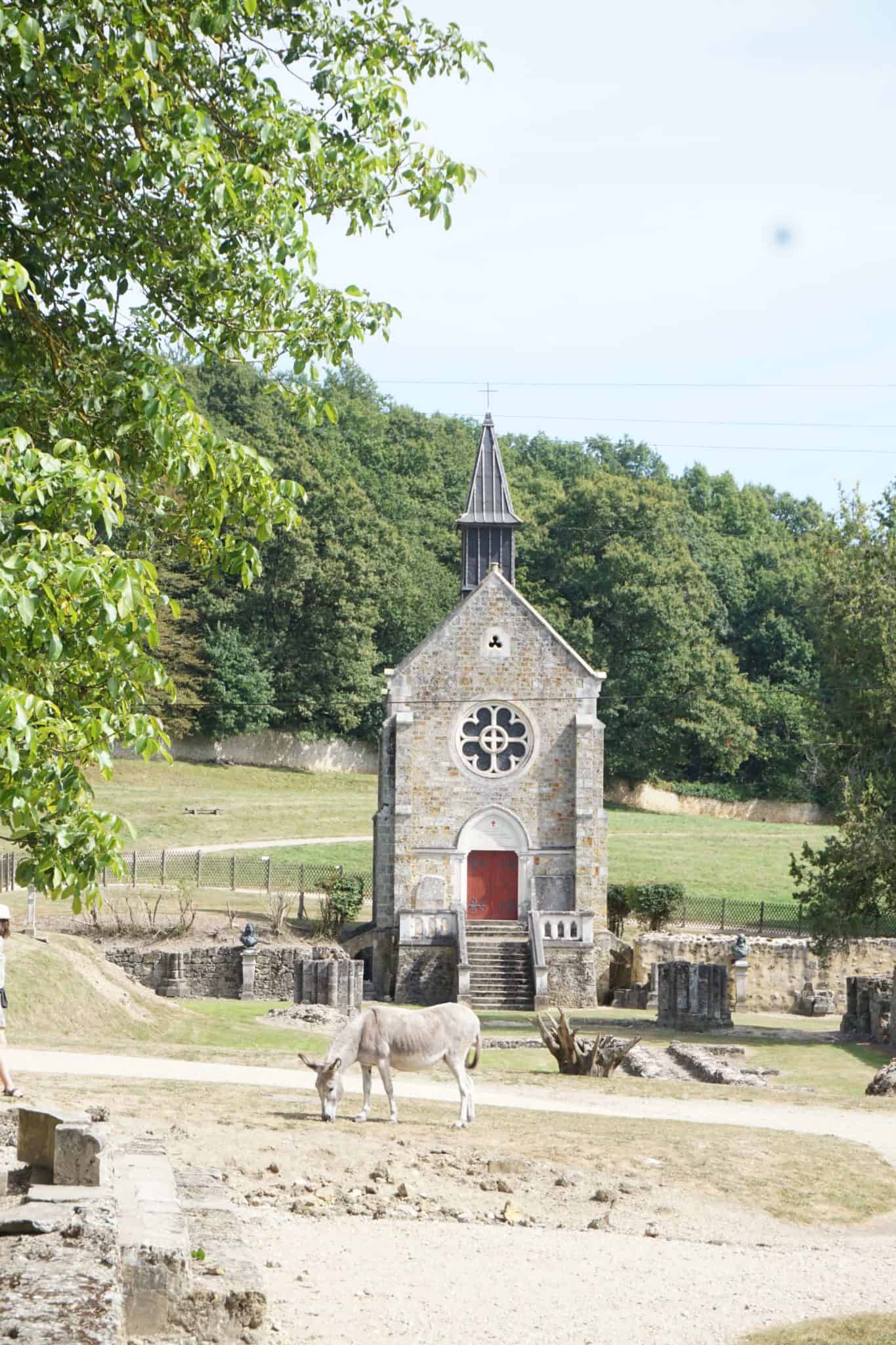
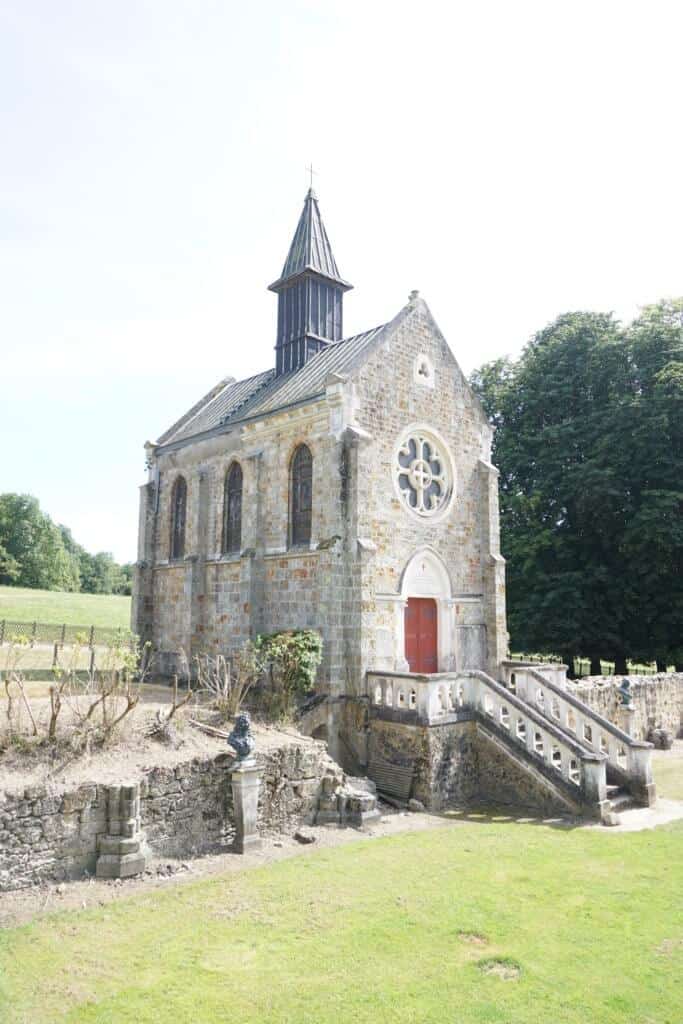
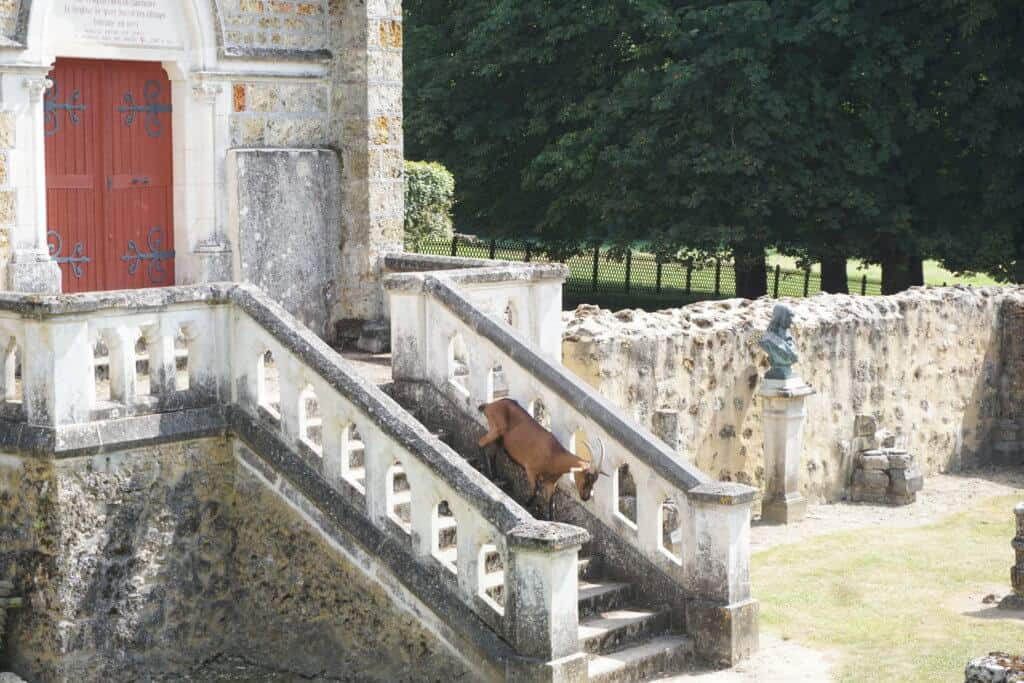
Today, little is left of the once great abbey. The ruins are still visible, as is one small chapel housing the remains of Mère Angélique’s tomb. The original dove house is also still visible (pictured below).
How to get to Chevreuse & Nearby Attractions
The pretty French town is accessible via ReR B and so is an easy day trip from Paris. The nearest station is located in the neighbouring town of Saint-Rémy-lès-Chevreuse.
Alternatively, you could easily make a weekend of exploring the surrounding towns, visiting the many nearby historic attractions, and wandering the nearby natural parkland. The rest of the region is best seen by car so as to save on time and see the most amount of attractions as possible!
Nearby, you’ll find the beautiful Monastic remains and chapel of Port-Royal-des-Champs Abbey. The beautiful ecclesiastical building is just a ten-minute drive from Chevreuse (or a couple of hours walk) and is well worth a look, if only to see a different side of France and sample the homemade honey sold on site!

The beautiful cities of Versailles and Saint-Germain-en-Laye are also in the Yvelines department. These two cities make for easier day trips from the city (both cities have ReR stations in the very heart of their centres) but are not quite as quirky a trip as one from Paris to Chevreuse. As such, if you’re looking for an off the beaten path day trip from Paris, then a visit to Chevreuse is an absolute must.

Where to stay in Chevreuse and tips for visiting
If you want to visit Chevreuse for more than a day, then it’s worth noting that the town is a great base from which to explore the wider region. Easy to access the nearby National Park and with a plethora of pretty sights to see, you can’t go wrong by spending a long and lazy weekend discovering Chevreuse on a local level.
Like much of rural France, it’s harder to find English speakers when visiting the town and so you may well want to invest in a simple French phrasebook like this one. Furthermore, due to cobbled lanes and small streets, comfortable walking shoes are a must! This is especially true if you’re looking to hike up to the castle from the town.
When it comes to booking a place to stay, there are a variety of options, though none are really in the Chevreuse city centre. Located on the fringes of the nearby National Park, close to several small hamlets, Relais Saint Laurent is well-reviewed online and offers laid-back B&B rooms. Alternatively, if you are looking for something close to Chevreuse town centre, then the Gîte de Chevreuse offers free WiFi and a beautiful garden.
Enjoyed reading this guide to the best things to do in Chevreuse? Pin it now, read it again later: