
How to Spend One Day in Tokyo: (a cherry blossom season itinerary)
Last Updated on 30th July 2026 by Sophie Nadeau
This post may contain affiliate links. Please check out my privacy policy for more information.
Tokyo is particularly beautiful to visit from late March to early April when the pink and white fluffy clouds of cherry blossom bring the city to life and give it the dreamy feel of a Studio Ghibli film. Here’s your ultimate guide on how to spend one day in Tokyo in the Sakura season itinerary, as well as top tips to know before you go!

Introducing Tokyo
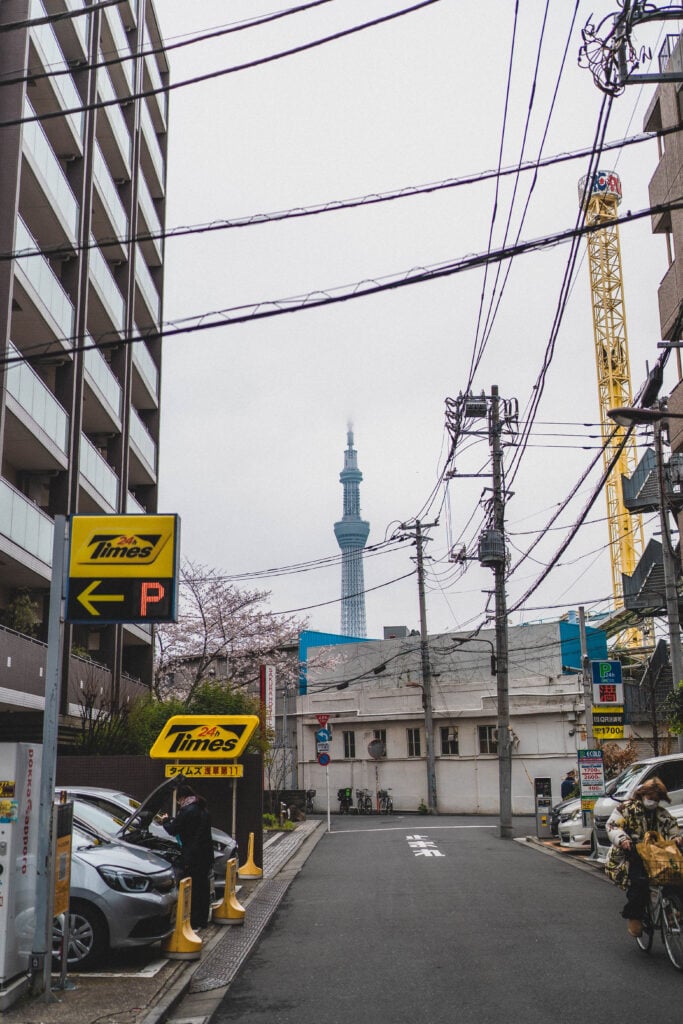
Tokyo is the capital city of Japan. Situated on the central coast of Honshu, Japan’s largest island, it has an estimated population of just under 14 million people (and the wider area up to 40 million), meaning that it’s the most populous city in the world and is therefore famed for its densely packed urban cityscape.
One of the most unique points of interest about Tokyo City is its unique blend of modernity meets tradition. As a city which changes rapidly and unpredictably, it’s said that you cannot visit the same Tokyo twice!
It’s almost impossible to believe that the huge metropolis that stands now in fact started as a small fishing village during the Edo period. In fact, Tokyo was then known as Edo.
How much time do you need in Tokyo?
As Japan’s biggest and capital city, you can probably imagine that there’s a lot to see and do in Tokyo. What with its size, population mass and number of attractions you could easily spend 4-5 days exploring and still have plenty more to see.
Because it can be quite overwhelming, we’ve put together an itinerary on how to spend a perfect day in Japan’s bustling capital with particular reference to seeing the Sakura, covering the best spots to see in one day for cherry blossom spotting in Tokyo.
If it’s your first time visiting Japan, be sure to check out our top Japan travel tips.
One day in Tokyo Suggested Itinerary
Tokyo Sky Tree, 東京スカイツリー
Begin your time at the Sky Tree. Here, if the weather is good, you can take in views of the city before you start to explore. At a staggering height stretching 634 meters into the sky, it’s the highest viewing platform in the city (double the height of Tokyo Tower) and boasts captivating panoramic views.
A particular highlight is a section of glass floor which leaves visitors feeling as though they are floating in mid-air… though this is not for those who have a fear of heights!
The Tokyo Sky Tree is a television broadcasting tower, and at its base, a wide variety of attractions can be found, including shops, restaurants and even an aquarium.

Sumida Park, 隅田公園
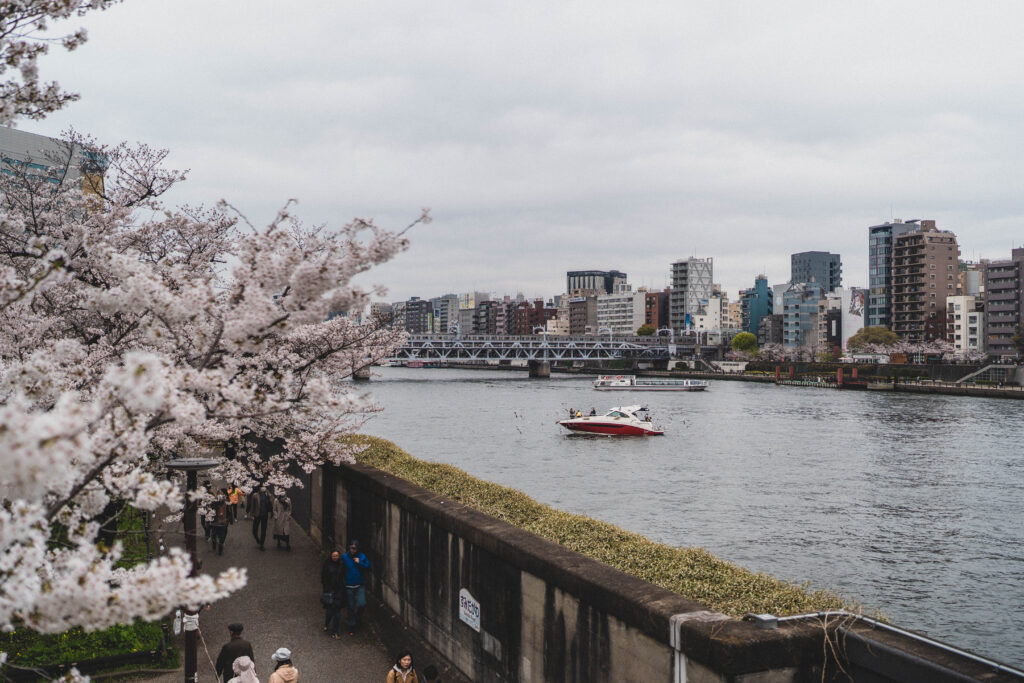
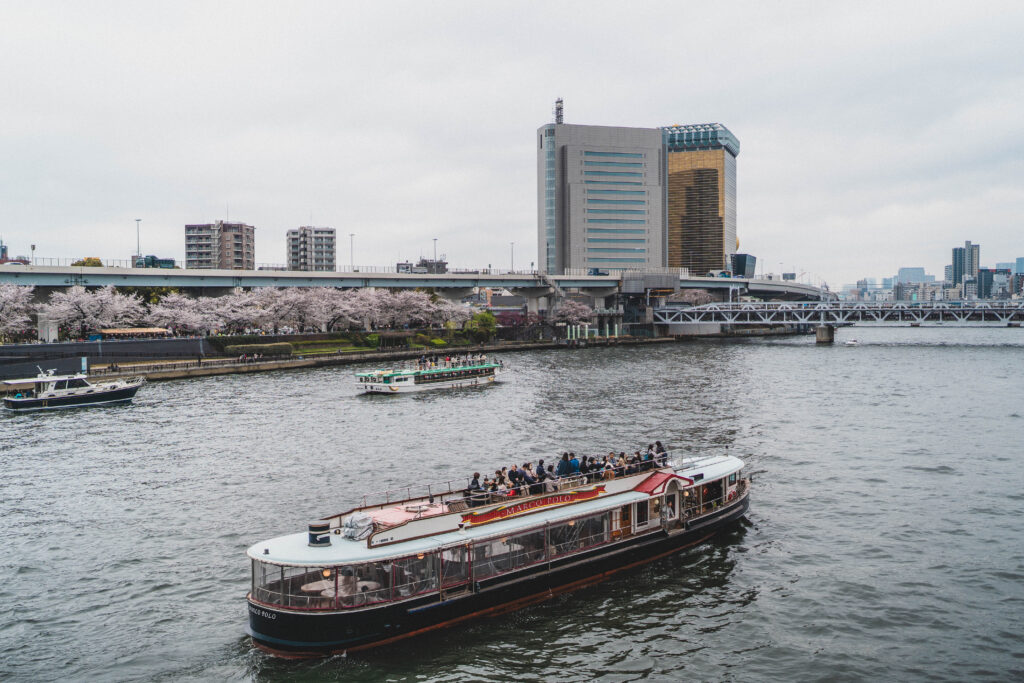
Next, just a short 10-minute walk from the Sky Tree you’ll find the beautiful Sumida Park, which stretches over both sides of the Sumida River in the centre of Tokyo.
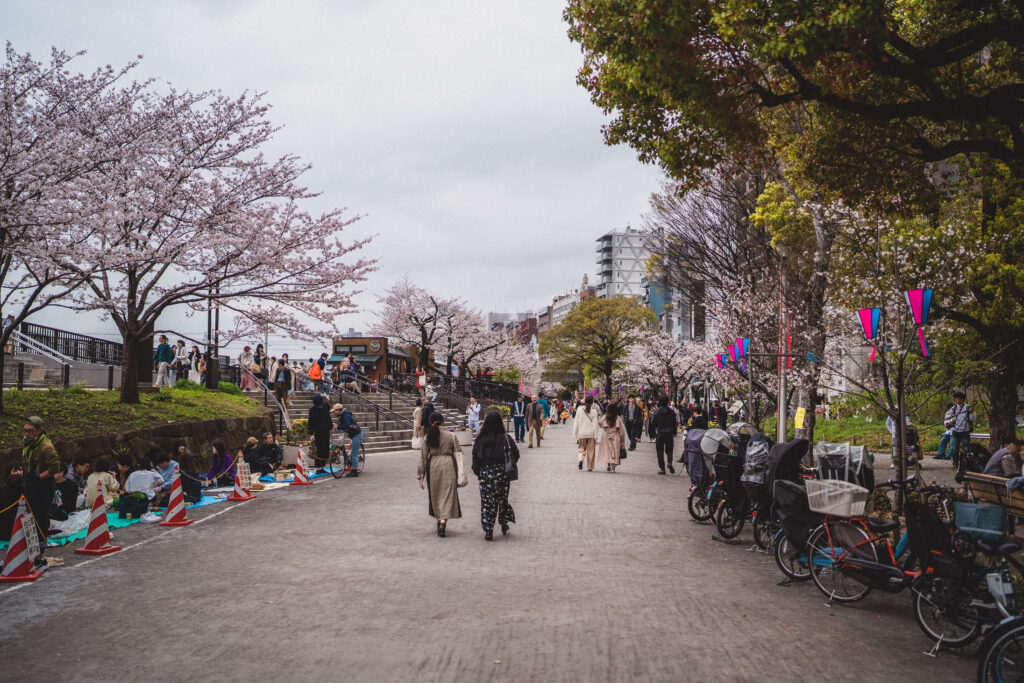
This riverside park is simply stunning, especially if you happen to be visiting during the Sakura season. Home to over 500 cherry trees, spread across the two sides of the park, it is one of the best places to see fluffy pink blossoms!
In the warmer weather, you’ll see people enjoying picnics amongst the blossoms. When crossing from one side of the park to the other, be sure to walk along the banks of the Sumida River. We found this tranquil stroll to be reminiscent of that down the River Seine in Paris!
Ushijima Shrine, 牛島
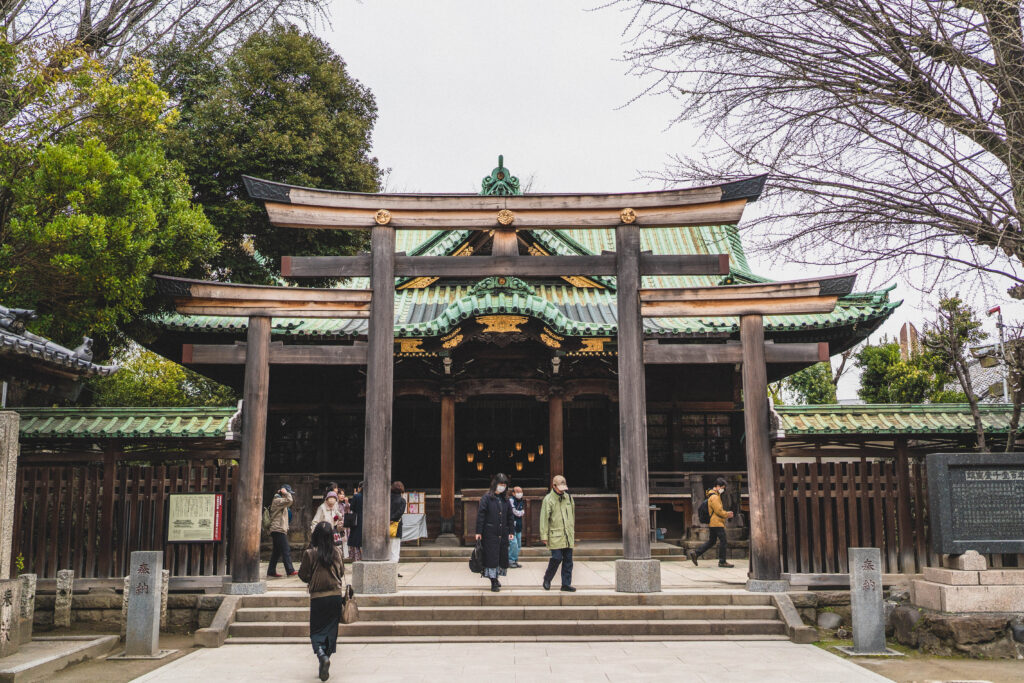
Situated within the confines of Sumida Park you can visit the Shinto shrine, Ushijima. This particular shrine is unique in that (rather than being in the form of a fox) its messenger takes the form of an ox. It’s believed that if you touch the ox then you will be cured of whatever illness ails you.
Ushijima translates as ‘cow island’ amd it’s possible that this site in which the shrine is located was once a grassy patch along the river banks where the locals kept their cows.
Another distinctive feature of the shrine is the rare wooden miwa torii. Said to have been established way back in the 9th century, Ushijima Shrine miraculously survived both the Great Kanto Earthquake in 1923 as well as the World War II bombings.
It’s important to note, that whenever visiting any shrine in Japan, it’s seen as wrong to take photos of the interior- so avoid doing so.
Injoy, 悦納
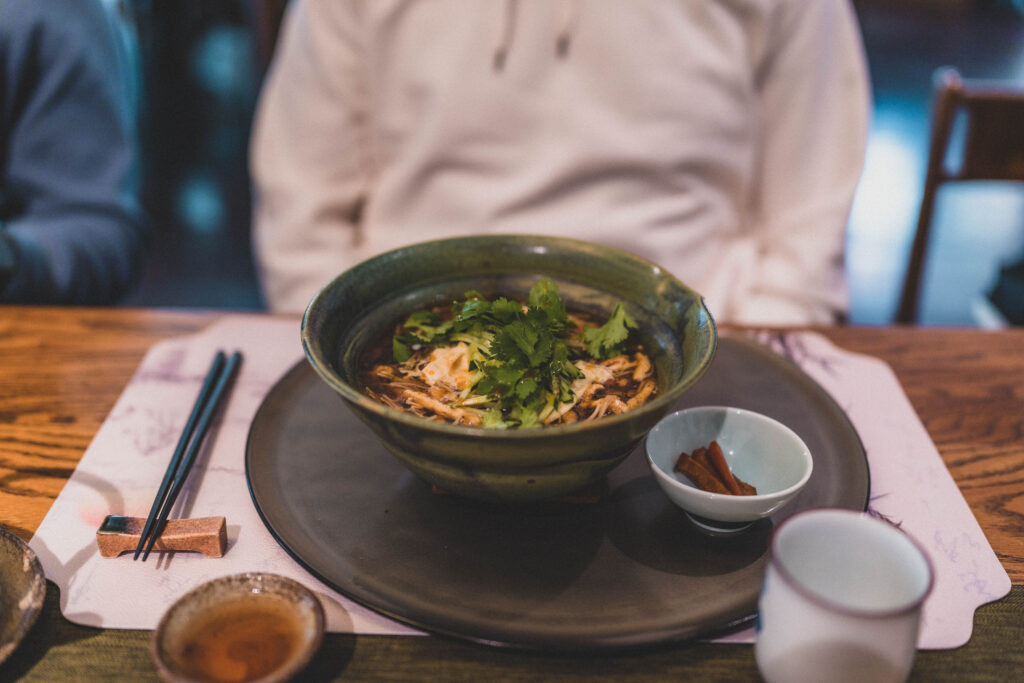
Next, stop for some food fuel! If you know anything about eating out in Japan, then you’ll know that it can be hard to find good vegan and vegetarian food! Well, Injoy is just a few minutes walk away from Sumida Park and boasts beautiful delicious dishes (it was our favourite vegetarian restaurant during our two months in Japan!)
Sensō-ji, 浅草寺
A 2-minute walk away is an ancient Buddhist temple, which is Tokyo’s oldest established temple and was completed in 645 AD.
At the entrance, you’ll see the five-storied pagoda stretches into the sky at a height of 53 meters (roughly the same height as an 18-storey building) it’s one of the tallest of its kind in Japan.
The story behind this temple goes that in 628 AD, two brothers were fishing in the nearby Sumida River and fished out a statue of Kannon, the goddess of mercy. Although they returned the statue to the river, it kept coming back to them, so it was decided that a temple should be constructed here.
Offering clear views of the Tokyo Sky Tree from the temple grounds, it’s truly a spot where you can reflect on the juxtaposition of the old and new that Tokyo is so famous for.
Truth be told, because of how beautiful the cherry blossoms are in this area, it can get particularly busy. So, if you wish to avoid the crowds, possibly consider coming earlier in the day.
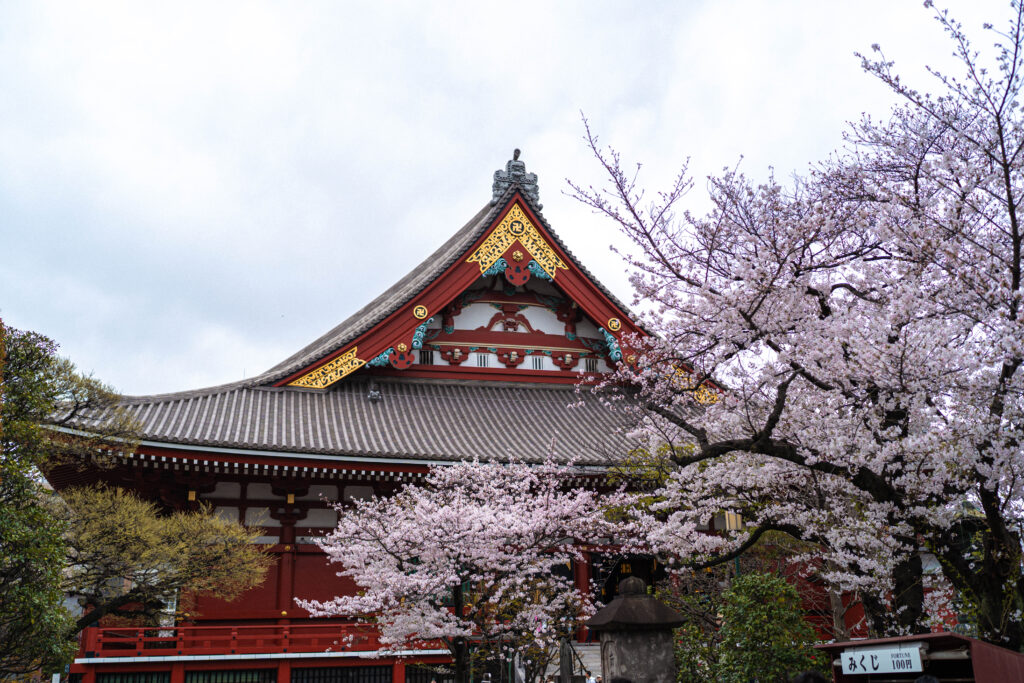
Asakusa Shrine, 浅草神社
Just a few steps away from Sensō-ji is a shrine next door. The two main religions of Japan are Buddhism and Shinto, most Japanese people practice both, which is why you’ll often find temples and shrines in close quarters to one another.
The grounds of the temple and shrine host one of the three largest Shinto festivals in Japan, Sanja Matsuri, which typically happens annually in late May and celebrates the founding of the temple.
Nakamise Dori Street, 仲見世通り
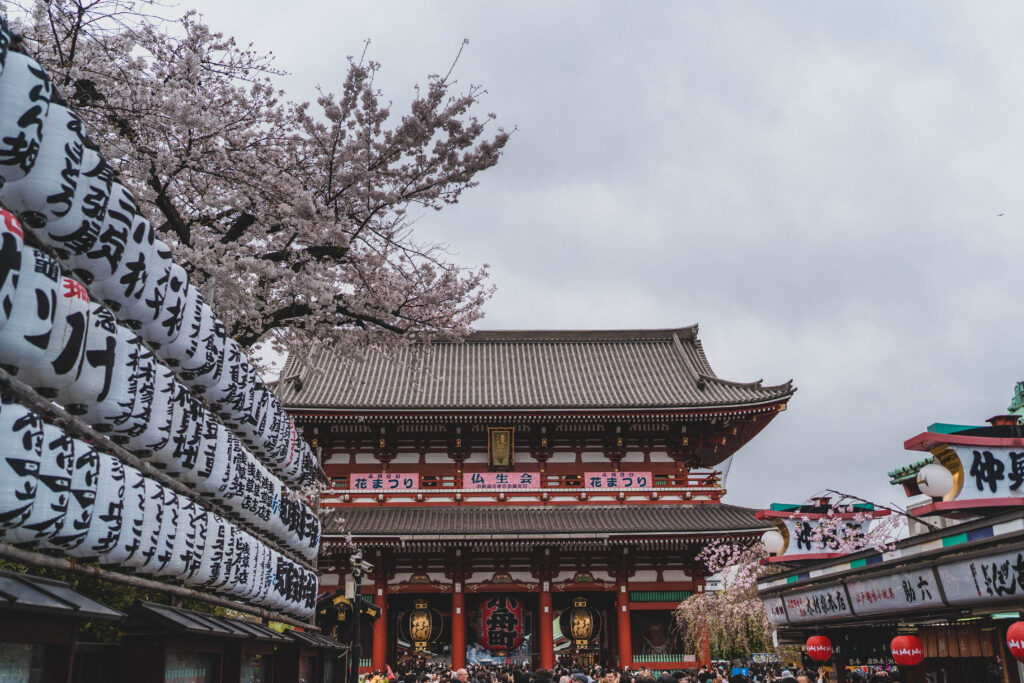
Next, head to the main street which leads up to the temple. Offering a feel of old-school Tokyo this is one of Japan’s oldest shopping streets and dates back to the 17th century.
Filled with over 90 different stalls, including food vendors selling Japanese delights, souvenir shops where you can purchase a gift or two and places which even sell samurai swords!
While exploring, sample something from one of the many food stalls! Ningyo-yaki, which translates as “baked dolls” is a local delicacy of little baked cakes which are filled with red bean paste and shaped in the form of Asakusa landmarks.
February Roastery
Once you’ve walked along the street, head to this nearby coffee shop if you need a little caffeine fix. This charming little spot serves a variety of Japanese treats as well as speciality coffee, they also offer a wide variety of milk alternative options.
Ueno Park, 上野公園
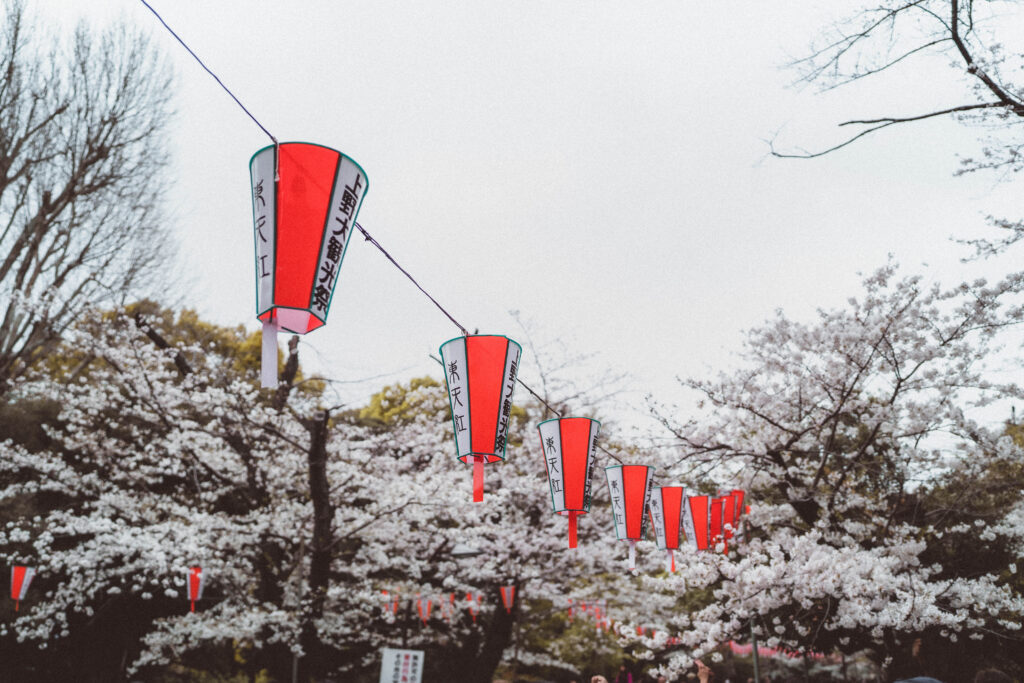
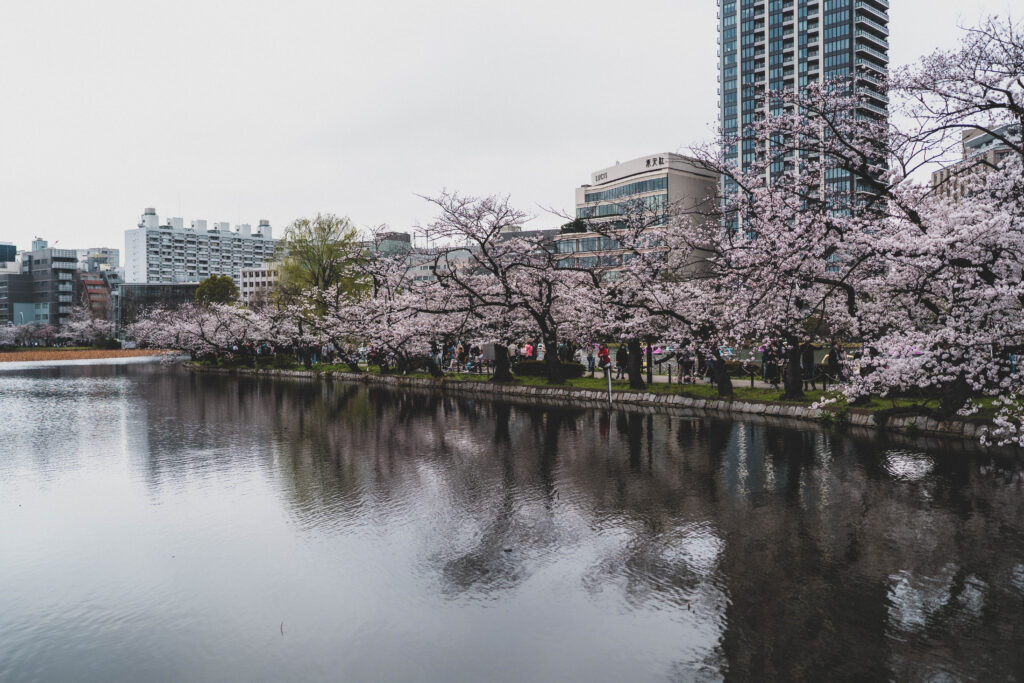
You’ll then want to take the subway (which takes approx. 15 minutes) to the next stop of the day, Ueno Park. One of Japan’s oldest public parks, it is best known for Ueno Zoo and its 1,000 cherry trees, making it one of the best places to see sakura in Tokyo!
Drawing crowds of nearly 2 million people during the blossom season, here you can find several classic street food vendors and also purchase quite a specific and unique souvenir, a bonsai tree.
Ueno Tōshō-gū Shrine, 上野東照宮
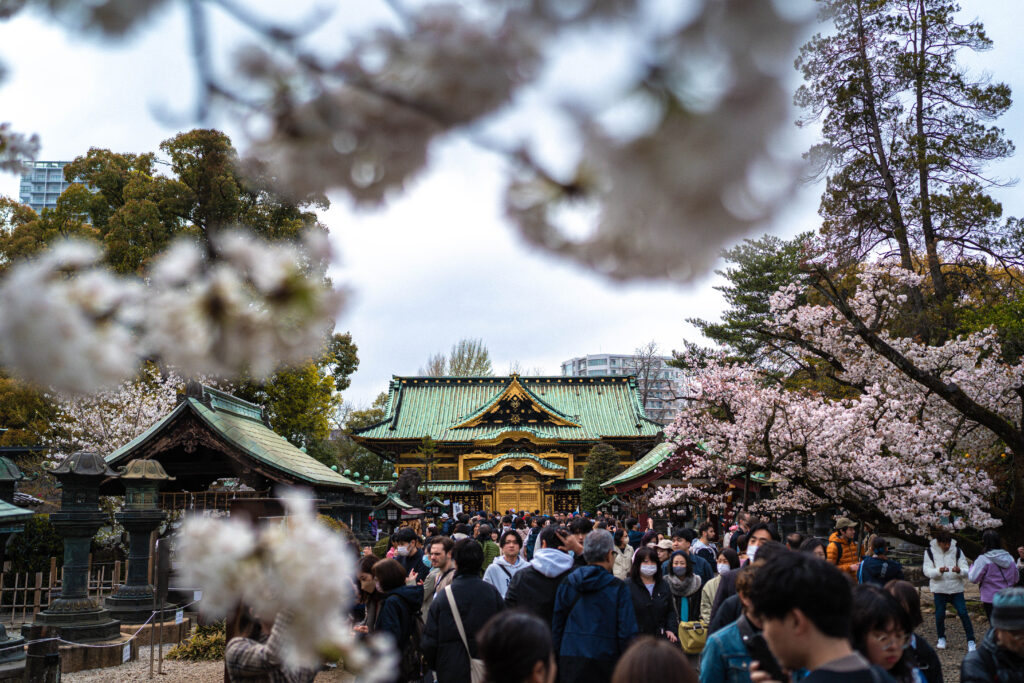
Nestled within Ueno Park is a Shinto shrine that dates back to the 17th century and is particularly known for its golden facade and the many stone carvings that can be found in the garden.
Hanazono Inari Shrine, 花園神社
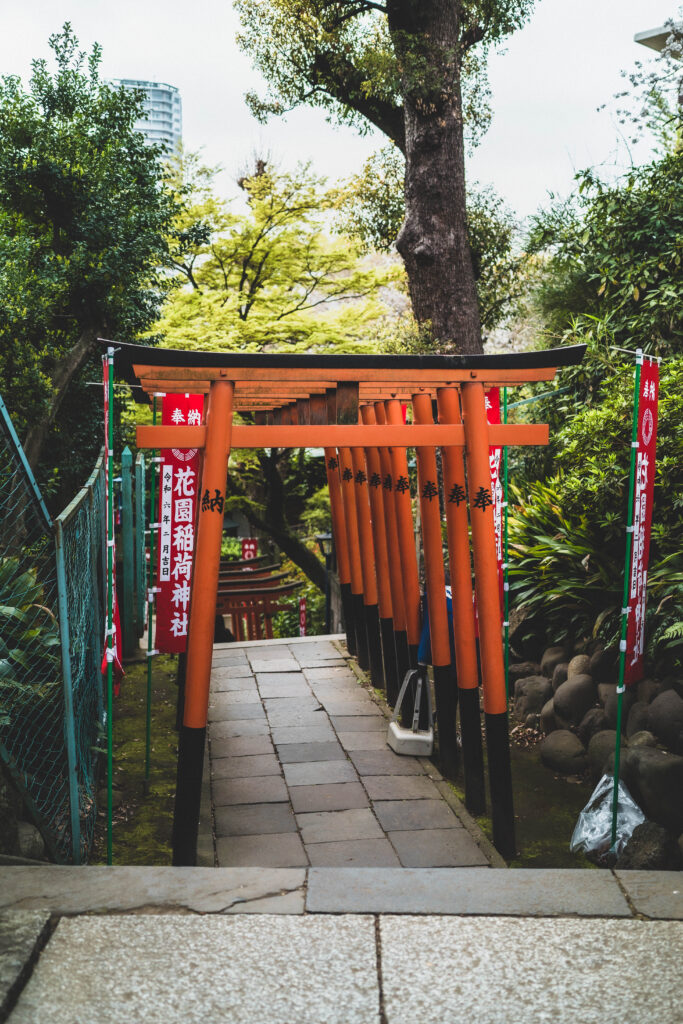
Also found within the parameters of the park, and much like that of the Fushimi Inari Shrine in Kyoto, it is dedicated to the rice god, Inari. There are many beautiful wooden red torii gates which lead up to the shrine.

Shinobazunoike Benten-do Temple
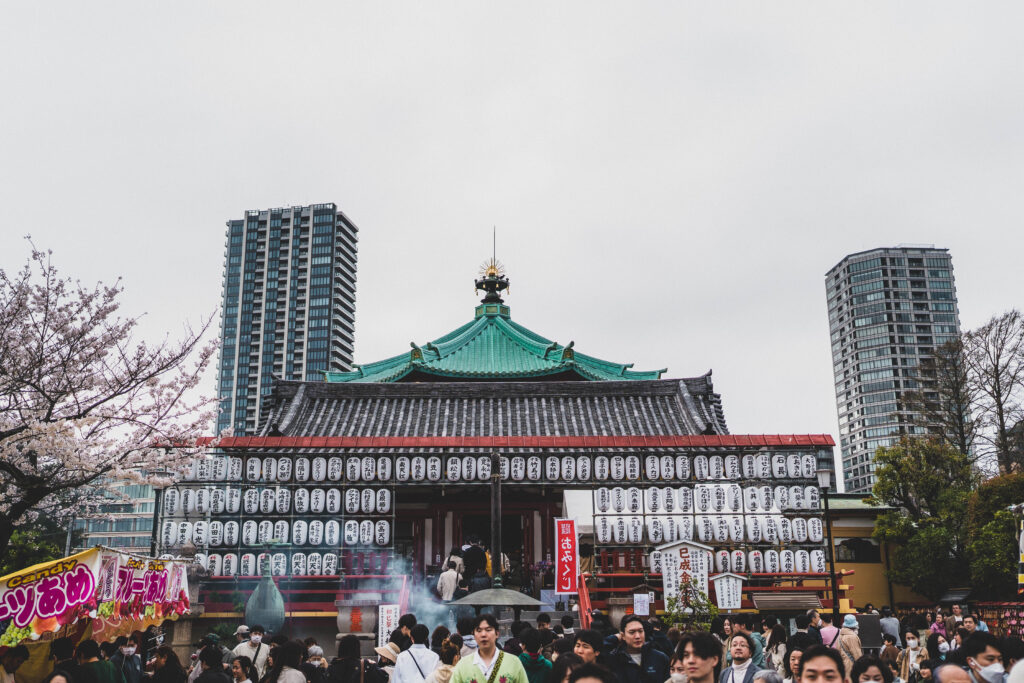
In the centre of Shinobazu Pond, a lotus pond in Ueno Park, a reconstruction of a 17th-century temple can be found. Illuminated after dusk, visiting at night time can be particularly magical.
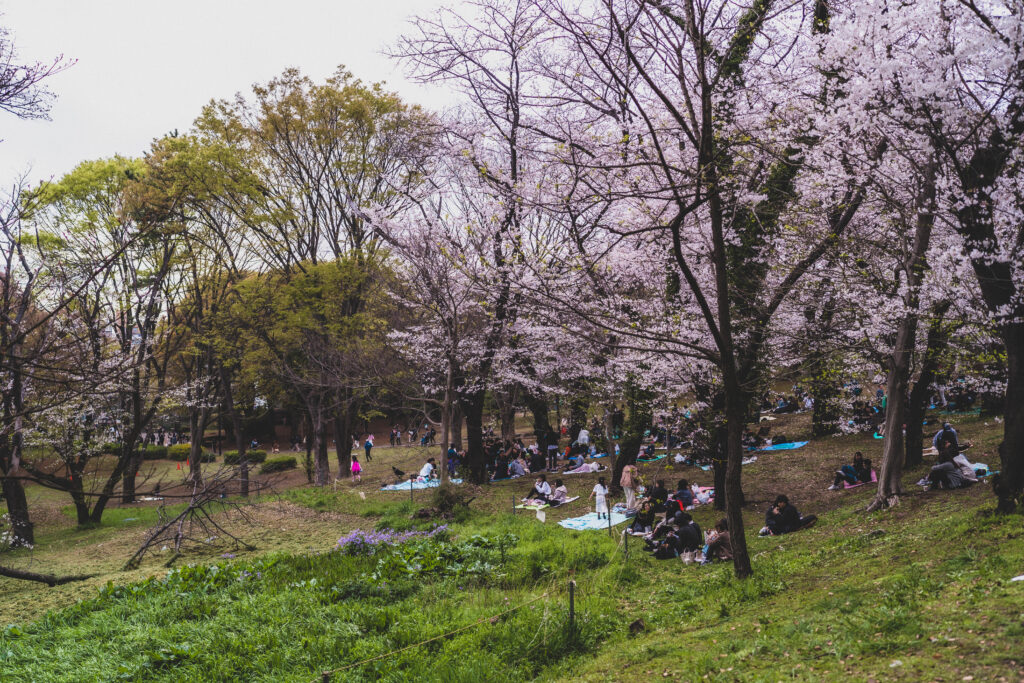
Yoyogi Park, 代々木公園
This time, take a longer subway journey (40 minutes) to the final cherry blossom spot of the day, Yoyogi Park. Situated just a 5-minute walk from the station, it is one of Tokyo’s largest parks and although it has fewer cherry trees than most, there are less restricted areas on the grass which means you can sit directly below the blossoms.
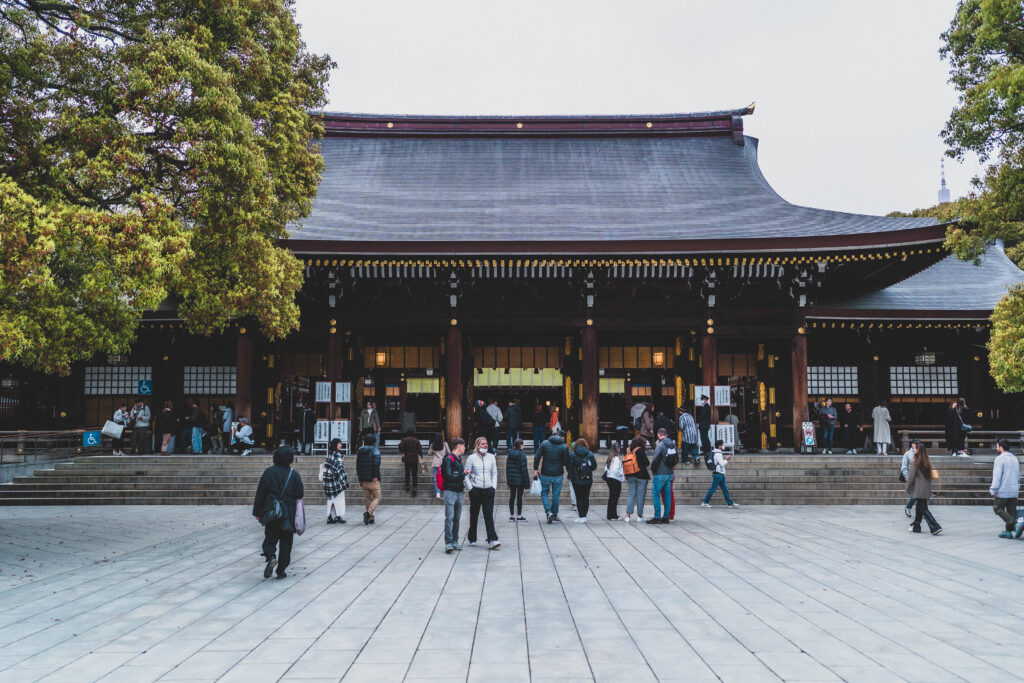
Meiji Jingu Shrine, 明治神宮
Nestled within 70 hectares of forest is a majestic Shinto shrine, which is one of Japan’s most popular shrines! On the first day of the New Year celebration, the Meiji Shrine welcomes over 1 million visitors for the first year’s prayer.
This shrine is also a popular spot for weddings, which can often be seen taking place here!
Shibuya Crossing
Famous worldwide, this crossing is known to be the busiest in Tokyo. During its busiest times, Shibuya Crossing has an estimated 1,000 – 2,500 people scrambling their way across this intersection every two minutes, from every which way direction.
Despite the foot traffic, it’s rarely a congestion problem for motorised vehicles passing through due to the well designed traffic light system.
This crossing has become one of Tokyo’s most iconic sights, featured in films, magazines and street photographers who are keen to capture the fascinating faces of commuters who cross this seemingly, quite stressful at times, intersection. If you head to one special spot, then you’ll even find a statue of Hachiko, Japan’s most loyal dog.

Shibuya Sky
End your one day in Tokyo by heading up to one of its best views, Shibuya Sky. Taking its name from the famous crossing below, you can see captivating views of the city.
What makes this viewpoint particularly unique is that you can see a bird’s eye view of Tokyo’s busiest crossing as well as the two iconic towers Tokyo Tower and Tokyo Skytree!
Opened to the public in 2019, the mixed-use skyscraper is connected to Shibuya Station and stands as the tallest building in the Shibuya district. It is seen as a symbol of Shibuya’s renewal, as this area in Tokyo has been in constant evolution for several years now.
This immersive experience allows you to visit all the way up to the open-air sky deck on the 47th floor. Read our guide on how to visit so that you can make the most of your trip to Shibuya Sky and be prepared with what to know before you go.

Where to stay in Tokyo
As you can imagine, because of its sheer size, there are several options when it comes to choosing where to stay in Japan’s capital. Here are some suggestions on where to stay in Tokyo:
Tavinos Asakusa – We opted to stay at this hotel. Budget-friendly, this hotel has pretty small rooms but is the perfect location for which to explore the wider region. Conveniently set in the Taito district, the hotel offers free WiFi and by the reception, there’s a large communal area which offers free tea, coffee and miso soup. You also get a delicious pastry included for breakfast each morning! Check prices and availability here.
Ryokan Asakusa Shigetsu – Situated a 5-minute walk from Asakusa Subway Station, this hotel boasts views overlooking the Tokyo Sky Tree. Offering traditional Japanese rooms to sleep in, the hotel has free WiFi and is particularly popular among solo travellers. Check prices and availability here.
Best cherry blossom spots in Tokyo
Of course, the most popular time of the year to visit Tokyo is during cherry blossom season and this guide should give you a good overview on how to see the more popular spots over the course of a day.
But if you have a little more time in the Japanese capital, here are some of the best cherry blossom spots you don’t want to miss out on if you get the chance!
- Near the Sky Garden – A scenic spot to enjoy cherry blossoms with views of Tokyo’s skyline in the background.
- Next to Ushimija Shrine – A quieter location where you can admire spring blooms alongside a traditional shrine setting.
- Sumida Park – One of Tokyo’s most popular cherry blossom spots, offering beautiful views of blossoms lining the river and the Tokyo Skytree.
- Along the Sumida River – One of the most pleasant places for a spring stroll, with cherry trees stretching along the riverside paths.
- Sensō-ji Temple – Enjoy cherry blossoms alongside one of Tokyo’s most famous and historic Buddhist temples.
- Komagata Street – A charming spot for capturing cherry blossom photos, especially from the street-level perspective.
- Ueno Park – One of Tokyo’s most beautiful green spaces and one of the city’s most famous hanami (cherry blossom viewing) locations. The park hosts an annual cherry blossom festival, with blooms typically appearing from late March to early April depending on the weather.
- Ueno Park Alleyways & Pond Area – Explore quieter corners of the park, including the pathways near the pond and shrine, for lovely blossom views away from the busiest areas.
- Busy Crossing Square (near Hachikō Statue) – A unique place to see cherry blossoms amid the energy of one of Tokyo’s most famous intersections.
- Kitanomaru Garden – A peaceful garden near the Imperial Palace, known for its beautiful cherry trees and tranquil atmosphere.
- The Old Imperial Palace Grounds – Discover cherry blossoms surrounded by historic scenery and traditional Japanese gardens.
- Meiji Jingu – A serene shrine surrounded by forest, offering a more peaceful cherry blossom experience away from the city crowds.
- Yoyogi Park – A lively spot popular with locals for picnics under the cherry trees during blossom season.
- Ōyokogawa River – A lovely riverside location where cherry trees create a picturesque spring walkway.
- Meguro River – One of Tokyo’s most iconic cherry blossom spots, famous for its hundreds of trees forming a pink tunnel along the riverbanks, especially when illuminated at night.
Watch the Tokyo travel guide
Enjoyed reading about how to spend one day in Tokyo during the Sakura season? Pin this article now, read it again later: