
Is Hanoi Train Street Worth Visiting in 2026 (My Honest Review)
Last Updated on 4th June 2026 by Sophie Nadeau
This post may contain affiliate links. Please check out my privacy policy for more information.
If there’s one attraction in Hanoi that is more controversial than any other, it’s the Train Street. In fact, if you Google this famous street in the Vietnamese capital, one of the first headlines that comes up is“Hanoi’s most popular street could kill you”,… which doesn’t exactly inspire confidence. Still, if that hasn’t put you off, you might be wondering whether this renowned tourist hotspot is actually worth all the hype. After visiting Hanoi’s Train Street for myself, here’s my review of what it’s really like in 2026!
What is the Hanoi Train Street?
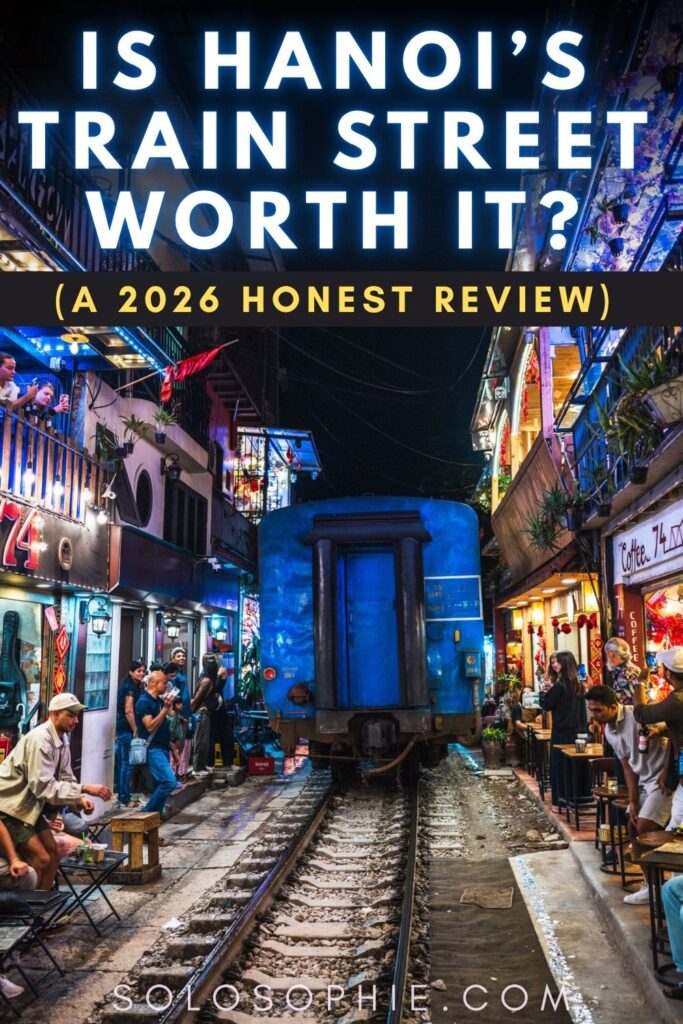
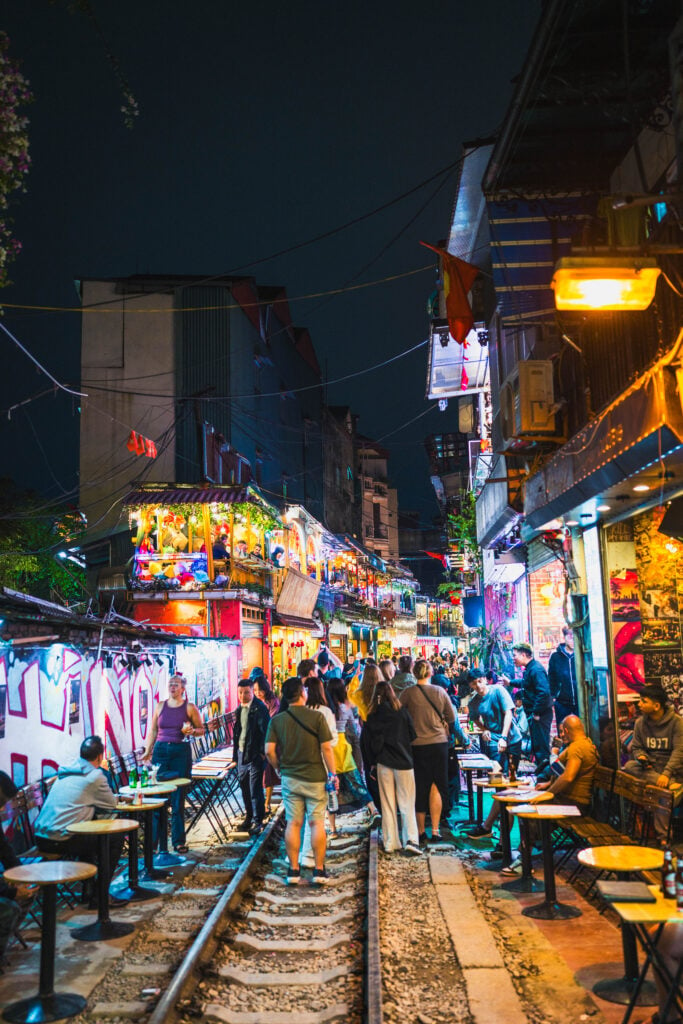
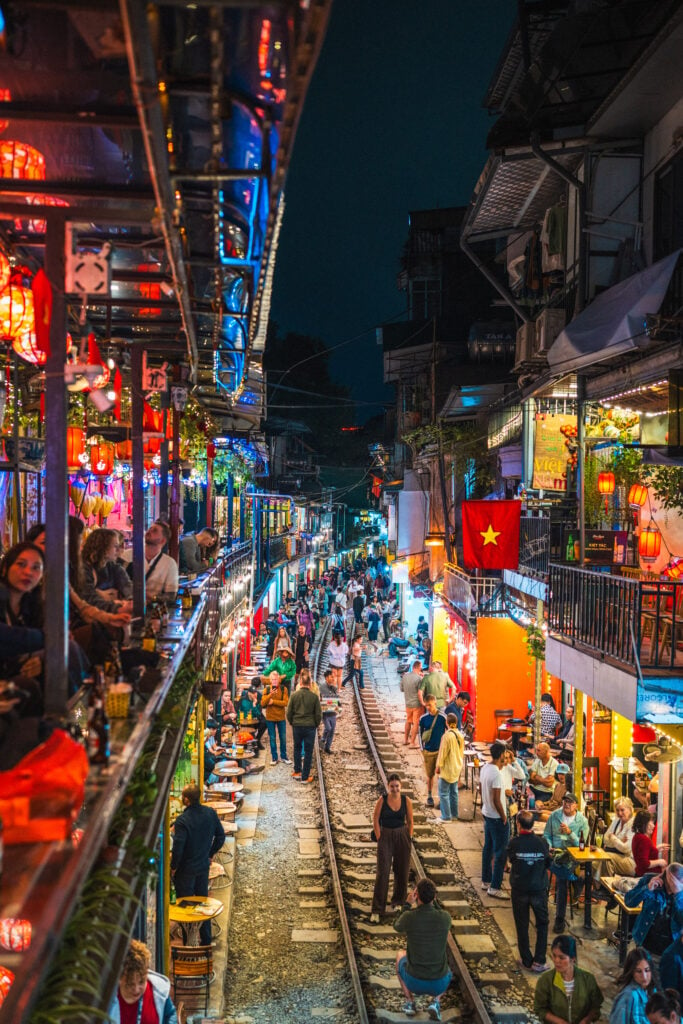
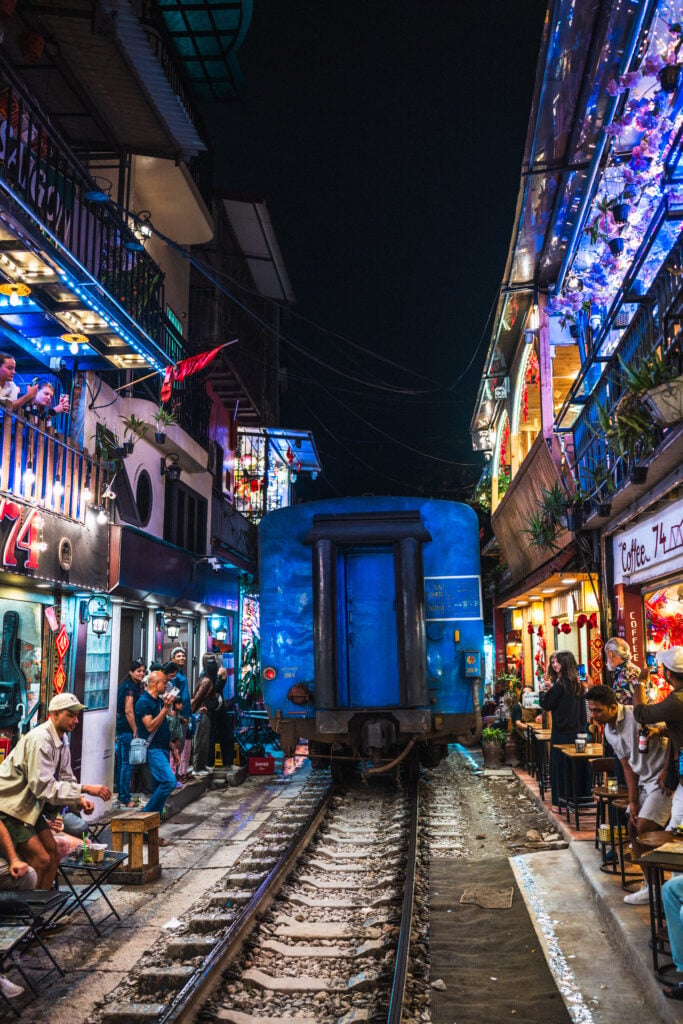
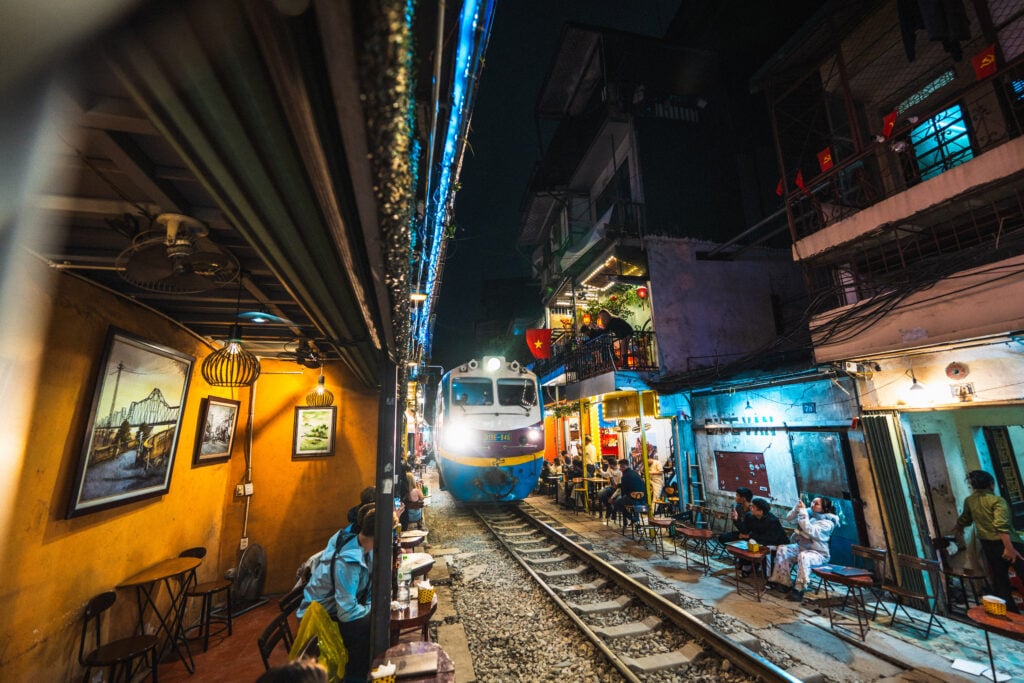
Hanoi Train Street is a unique and narrow residential street that stretches along the railway between Lê Duẩn, Trần Phú, and Phùng Hưng streets. The street is lined with colourful homes stacked upon one another and, more recently, a plethora of cafés and bars.
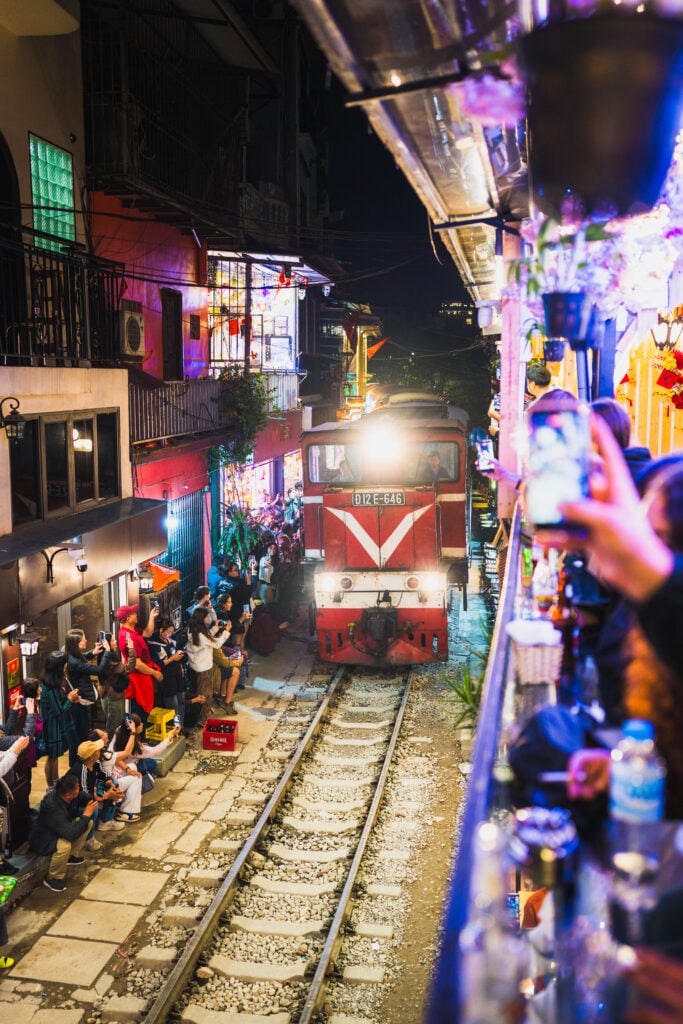
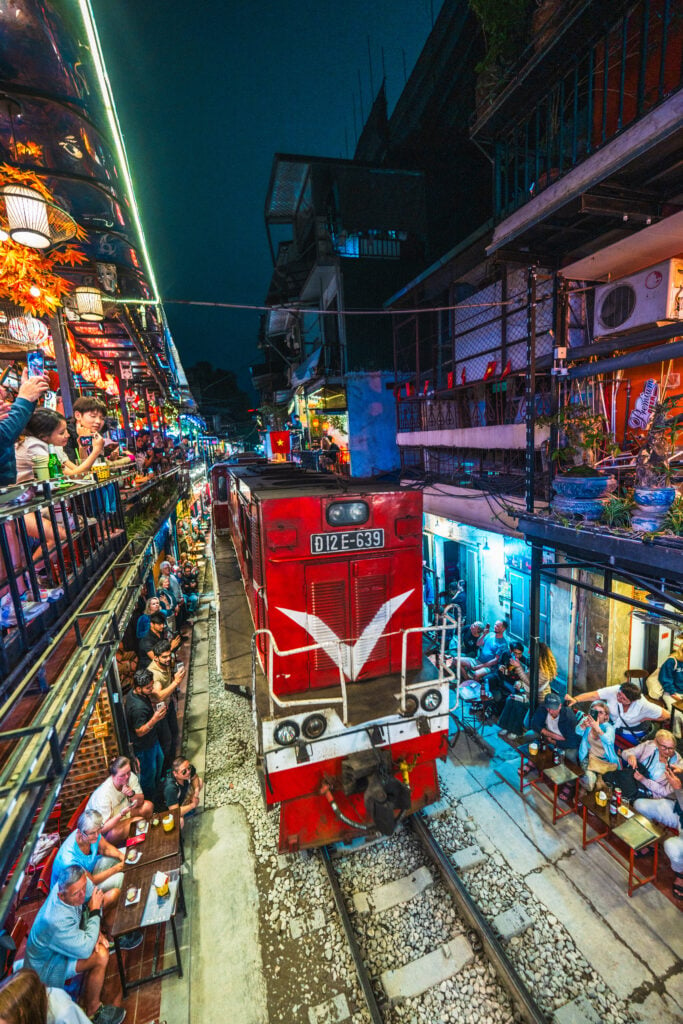
What’s most shocking about this is that the railway track is still very much in use. Massive locomotives continue to pass through multiple times a day, and as the track is so close, locals are required to pull in their belongings, and any visitors must press themselves tightly against the walls to avoid being squished.
History of the Hanoi Train Street
Hanoi’s famous Train Street wasn’t always this famous. What was once a relatively ordinary residential railway corridor has since become a social media sensation and a must-see attraction for thrill-seeking tourists.
However, the street’s popularity hasn’t come without its problems. As visitor numbers have soared, so too have concerns over overcrowding, safety, and the impact of tourism on local life.
The history of the railway itself can be traced back to 1902, when the tracks were built by colonialist French forces, connecting Hanoi to Ho Chi Minh City. Several decades later, the General Department of Railways erected a series of small buildings along the track to house railway employees.
Come the 1970s, the area was essentially considered a slum, as residents were awoken by the noise of the trains and their literal houses shaking as they passed.
It wasn’t until the 2010s that the area underwent a dramatic transformation, as social media turned Hanoi’s Train Street into an international tourist attraction. People began photographing and filming this phenomenon of locals living just inches from active railway tracks, surprised and curious about this unusual sight. Footage of trains squeezing through the narrow street played a major role in drawing adventurous travellers to the area.
In turn, as more visitors flocked to the area, the street became increasingly attractive to businesses eager to capitalise on the growing tourism boom. So, with already little space to begin with, you can see how this influx of interest in the area could be a problem both to locals and the general safety, especially seeing as the trains continued their usual route along the tracks!
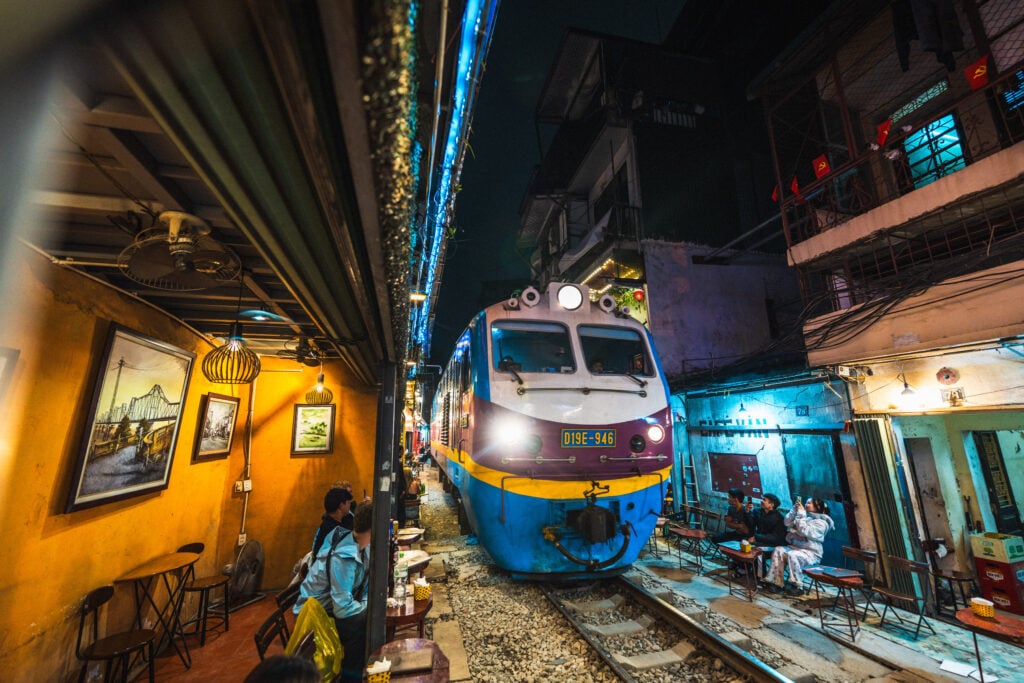
Now, it’s worth mentioning that you do, of course, hear the train coming, and there are measures in place to protect visitors. But there’s only so much that can be done. In 2019, Hanoi Train Street was closed over safety concerns, with authorities shutting down cafés along the tracks to reduce the risk of accidents. Following the pandemic, however, the area gradually reopened with stricter rules in place.
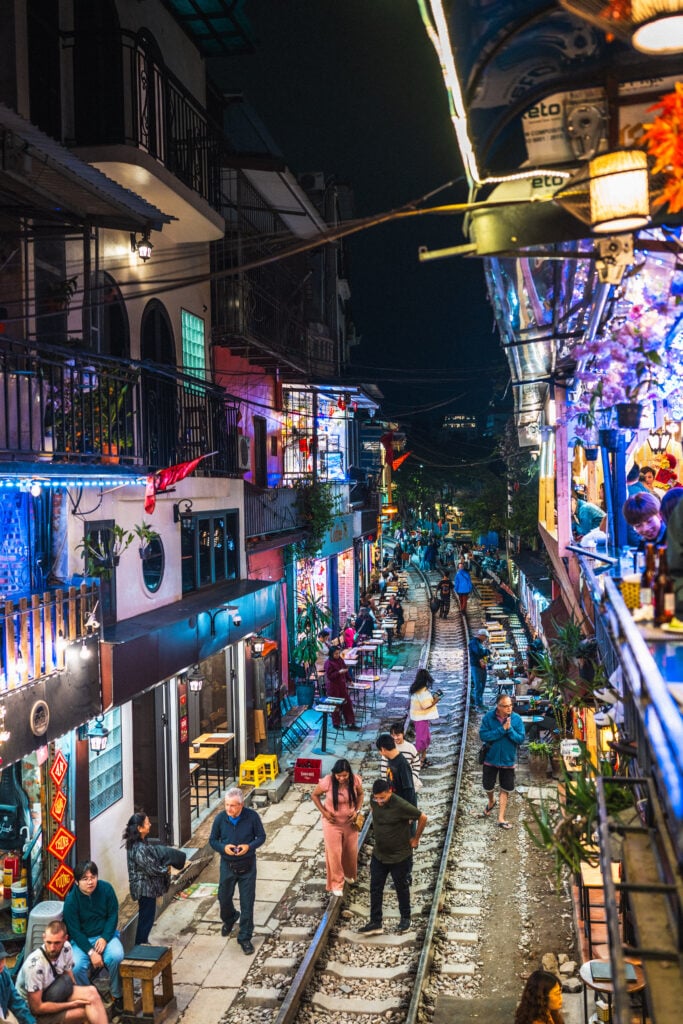
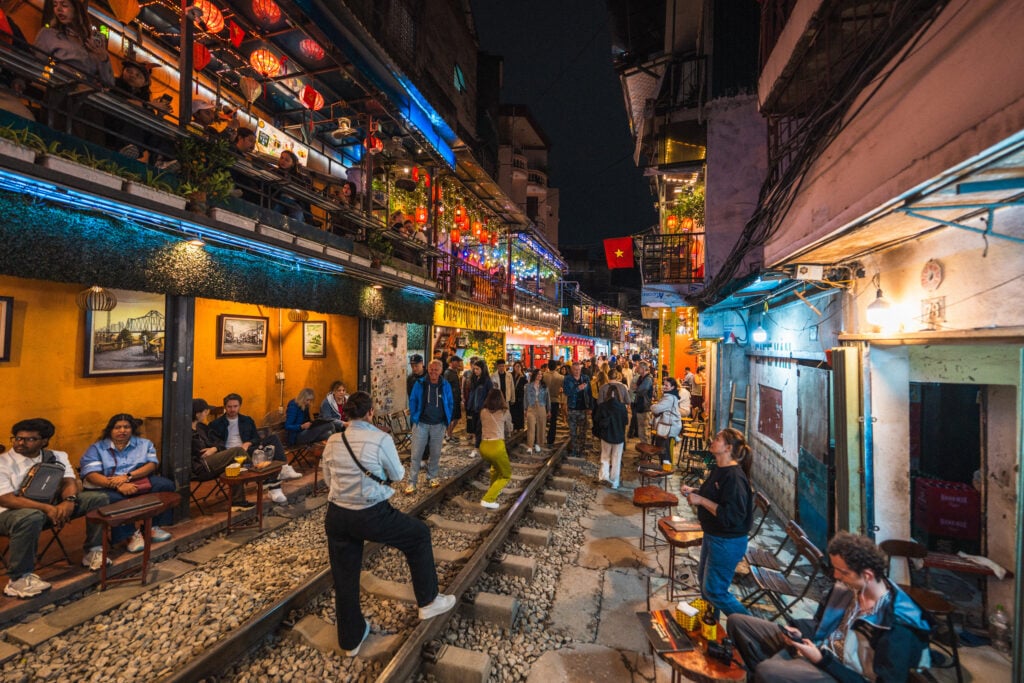
Even today, Train Street remains a controversial attraction, caught between the economic benefits of tourism and concerns over public safety. And, as someone who has visited very recently, I can confirm that the street gets extremely busy.

Is Hanoi Train Street closing in 2026?
There’s been recent speculation this year that Hanoi Train Street is closing down, and the street has indeed been temporarily closed in previous years due to safety concerns.
But it appears to be true that Hanoi authorities plan to completely stop trains from running through the iconic Old Quarter Train Street (between Hanoi Station and Long Bien Bridge), instead rerouting passengers via other tracks.
Controversies surrounding the trains
Unfortunately, not all tourists take the risk of moving trains seriously, with many standing far too close to the tracks or not moving out of the way fast enough. It’s still worth reminding visitors that this is an active railway, and the train doesn’t stop.
With visitors wanting more ‘risky’ social media content, there’s also been a rise in businesses that encourage unsafe behaviour by allowing customers to sit too close to the railway.
For locals, as is the case with many overcrowded tourist attractions, the main issue is that the sheer volume of visitors has disrupted daily life and transformed the neighbourhood into a tourist spectacle. While it’s exciting to visit new places and see unusual sights, it’s always important to travel mindfully.
Is it worth visiting?
So, here’s my verdict on whether Hanoi Train Street is worth visiting in 2026 (assuming it stays open, that is!). Overall, I’d still say yes, it’s worth a visit. However, it’s important to remain cautious and make your own judgment about whether you feel comfortable with the crowds and the proximity to the tracks.
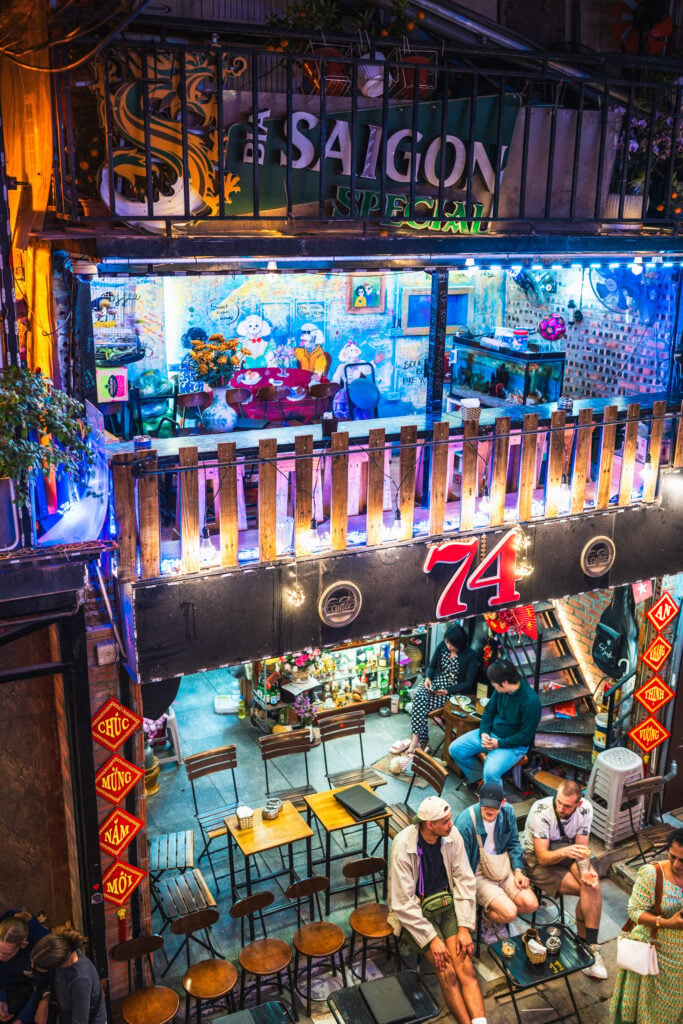
Train Street is completely lined with cafés and bars, and many of the bars have upper floors, which is better to watch the train from a safe distance. You can also check in advance to visit when the train isn’t running if you prefer:
- Mon – Friday: 8:50; 9:25; 11:40; 15:20; 21:15; 21:30; 22:00.
- Weekend: 8:55; 9:20; 11:50; 15:20; 17:45; 21:15; 22:00.
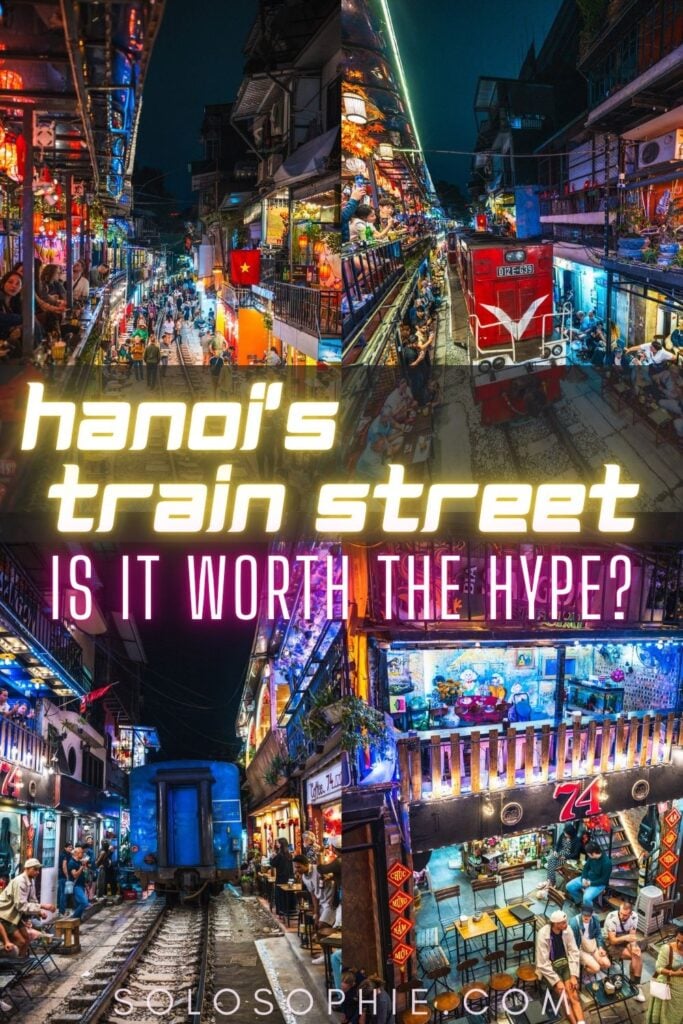
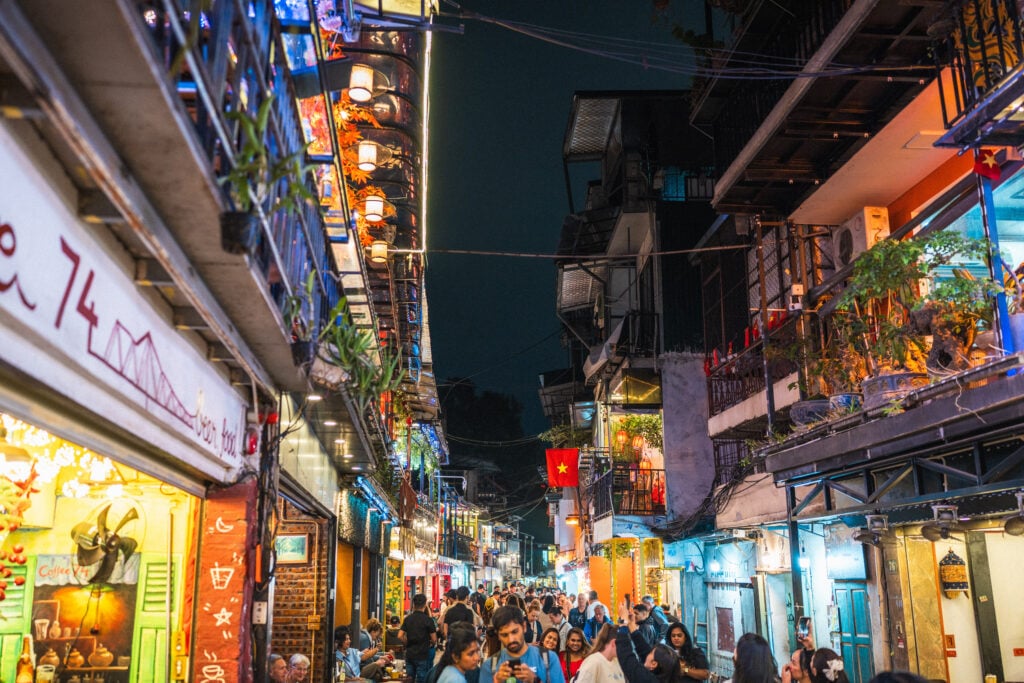
The street itself is less crowded during the daytime. By night, it’s definitely worth taking a look at as all of the street is lit by neon colours, and there’s a buzzy atmosphere. But again, it’s very touristic, so prices here are higher than elsewhere, and it tends to be very busy.
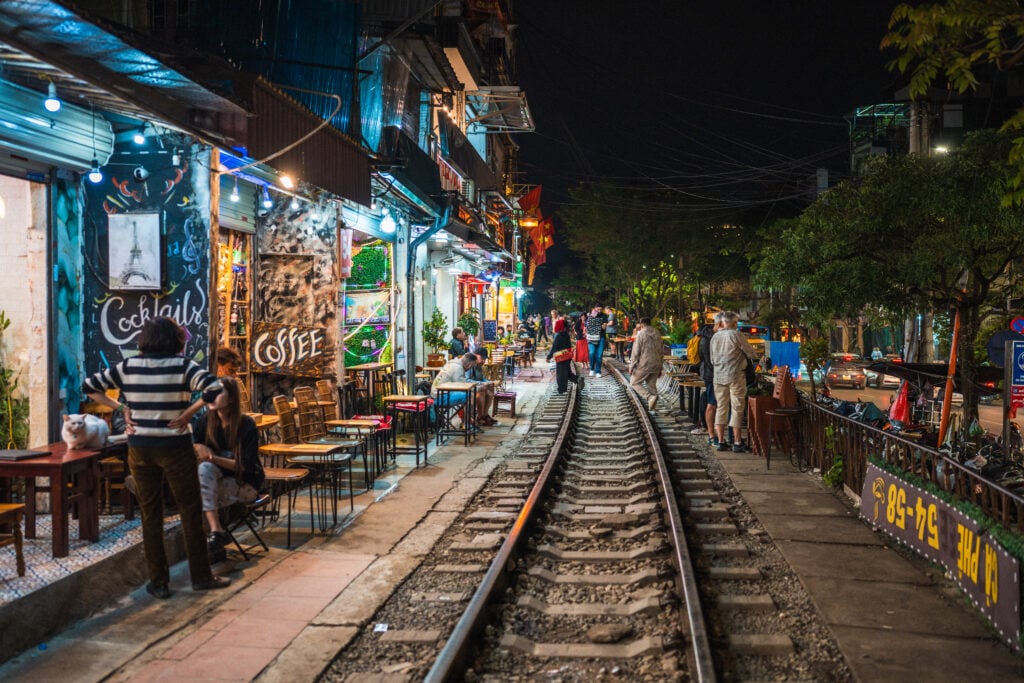
One thing I noticed while wandering along Train Street was just how quickly the crowds disappeared once you moved beyond the busiest section. Just five minutes further up the tracks, it felt noticeably quieter.
There were fewer cafés and tourists around, but I actually found this part more interesting. The houses no longer lined both sides of the railway, yet it felt more like a real neighbourhood than a tourist attraction.
Watch the Hanoi vlog
Enjoyed reading our guide to Hanoi’s train street? Pin this article now, and read it again later: