
All Roads Lead to Lazio: Where Ancient Pilgrim Paths Converge
Last Updated on 29th May 2026 by Sophie Nadeau
This post may contain affiliate links. Please check out my privacy policy for more information.
People often cite the famous saying ‘all roads lead to Rome,’ but in one Italian region, they actually do! Lazio is home to the Eternal City but outside of this, the region is little-known to travellers, and that’s a bit of a shame because Lazio has much to offer.
For those dreaming of slow and authentic experiences in Italy, Lazio makes for the perfect escape. After all, there’s a network of 5 ancient pathways (the Antichi Cammini d’Italia) all intertwined, interconnected and forming slow travel routes which converge on Rome, making Roma the perfect beginning or end to an Italian adventure.
#AD: Views and opinions expressed are however those of the author(s) only and do not necessarily reflect those of the European Union.
Project funded by the European Union – Next Generation EU «Antichi Cammini d’Italia», PNRR – Mission M1C3 Investment 4.3 Measure 274 – the ITALIAN MINISTRY OF TOURISM is the subject operator, ENIT S.p.A. is the subject agent.
Where is Lazio ?
Lazio lies in the very heart of Italy, and is a region of countless ruins, gorgeous pastureland, glittering volcanic lakes, medieval towns, coastal vistas, and, of course, it’s home to Rome. Facing the Tyrrhenian Sea, it borders Tuscany to the north, Umbria and Marche to the northeast, and Campania to the south.
Not only are the landscapes of the region surprisingly diverse but this one of the most ecologically varied regions of Italy, but there are several National Parks and nature preserves, meaning that wildlife encounters are never too far away.
When it comes to the pilgrim routes, Via Francigena is home to volcanic lakes and wetlands, Via di Francesco encompasses Sabina forests and Lucretili mountains, while the Cammino di San Benedetto boasts Simbruini wilderness and Apennine peaks.
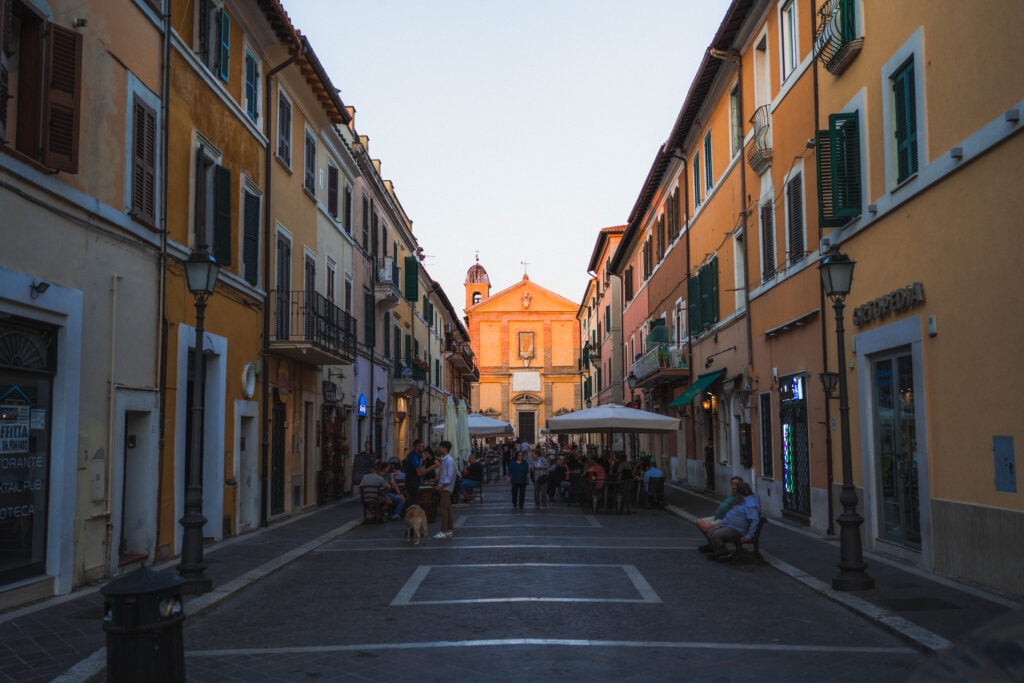
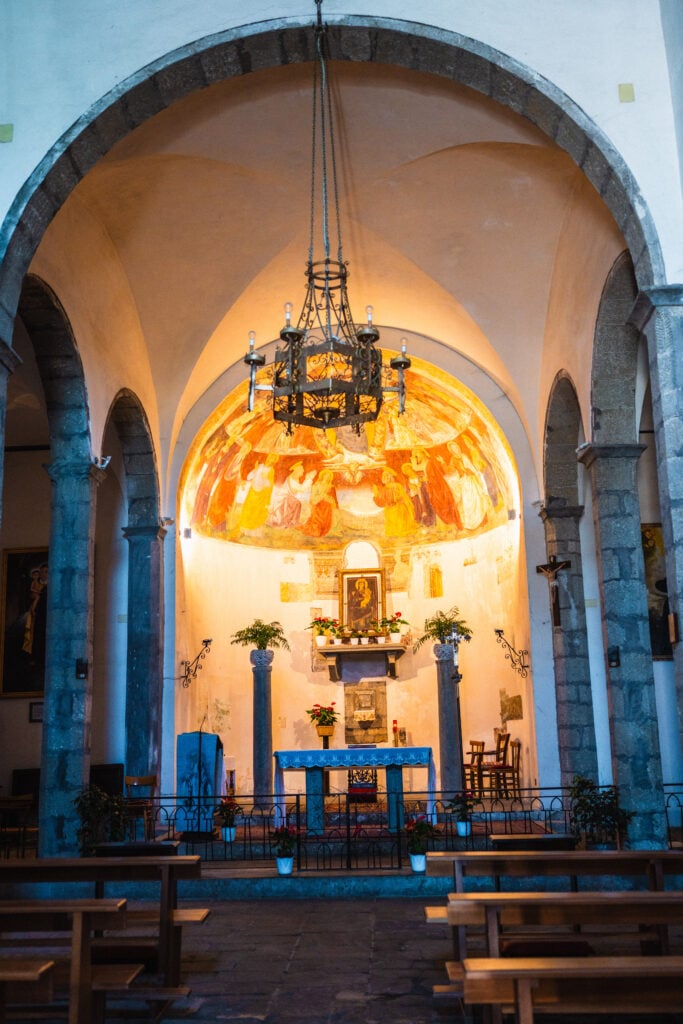
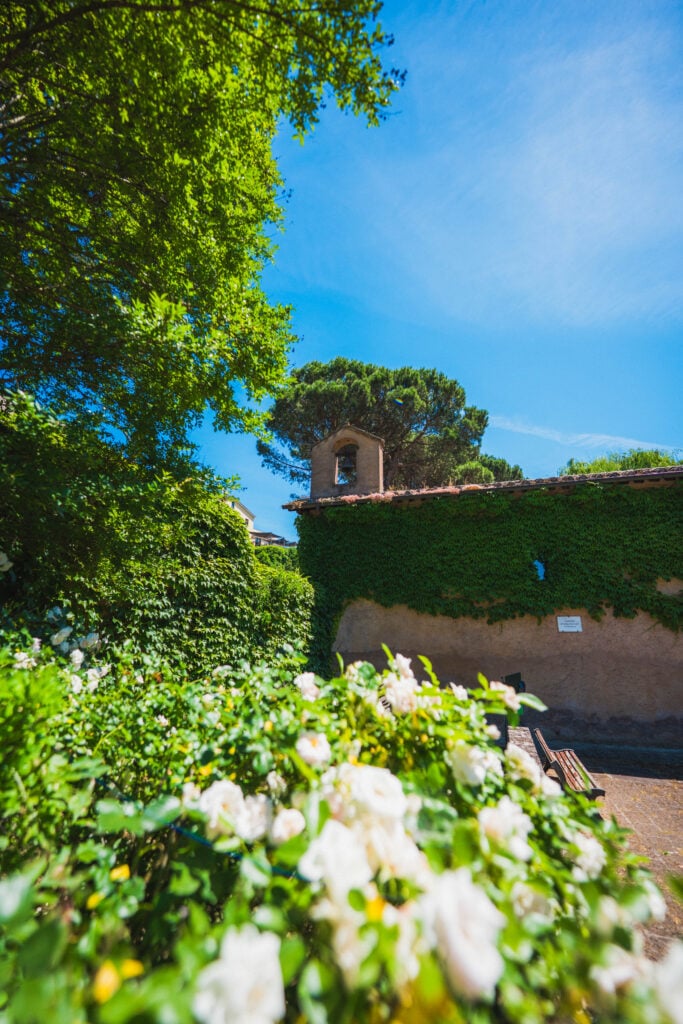
The 5 Ancient Pilgrim Routes
Every pilgrimage has a beginning, and many of the ancient pathways originate outside of Italy. However, the five paths have something in common, Lazio is the crossroads where they meet and they all share the same destination: Rome.
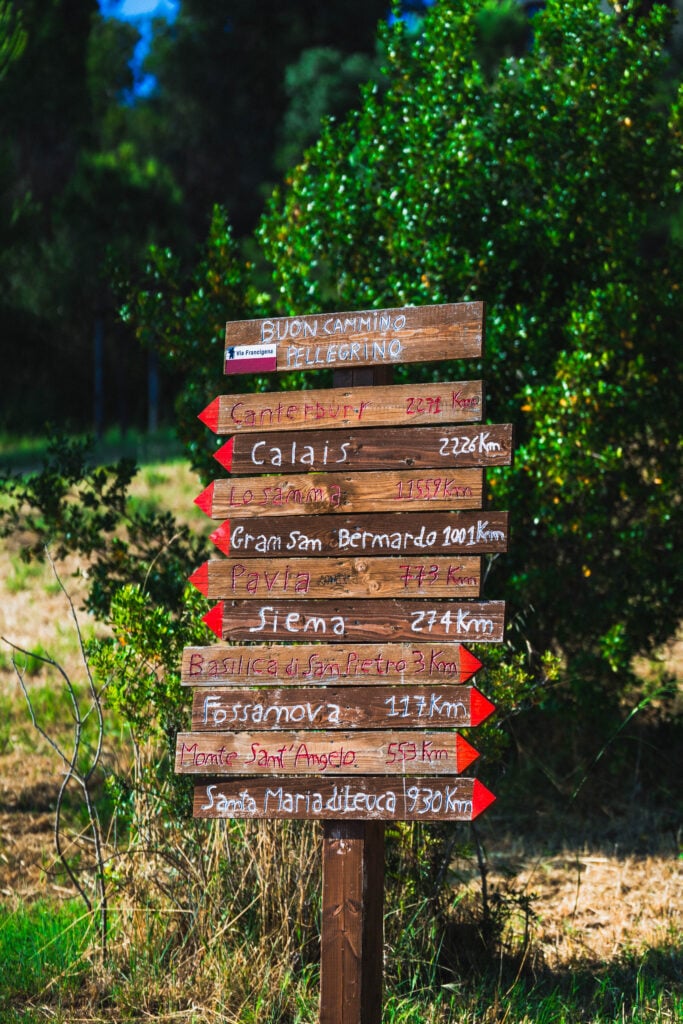
- Via Francigena: a medieval pilgrimage route of around 3,200 km linking Canterbury to Rome, followed by pilgrims for over 1,000 years across England, France, Switzerland, and Italy. Sigeric the Serious’ made the journey in the 10th-century and created the first detailed ‘itinerary,’ which now forms the route’s backbone.
- Via Romea Germanica: a historic route of roughly 2,200 km connecting Germany to Rome via the Alps, traditionally used by pilgrims and Holy Roman Empire travellers.
- Via Romea Strata: an ancient network of pilgrimage roads from Eastern Europe to Rome, revived today as a multi-country route linking the Baltic, Balkans, and Adriatic regions to Italy.
- Via di Francesco: a spiritual walking route inspired by the life of St Francis of Assisi who was born in nearby Umbria, this ancient pathways stretches between Rome, the Rieti Valley, and Assisi through forests, mountains, and medieval towns.
- Cammino di San Benedetto: at around 300 km, this is the shortest pilgrimage trail and follows in the footsteps of St Benedict from Norcia to Montecassino via Subiaco, crossing some of central Italy’s wildest mountain landscapes.
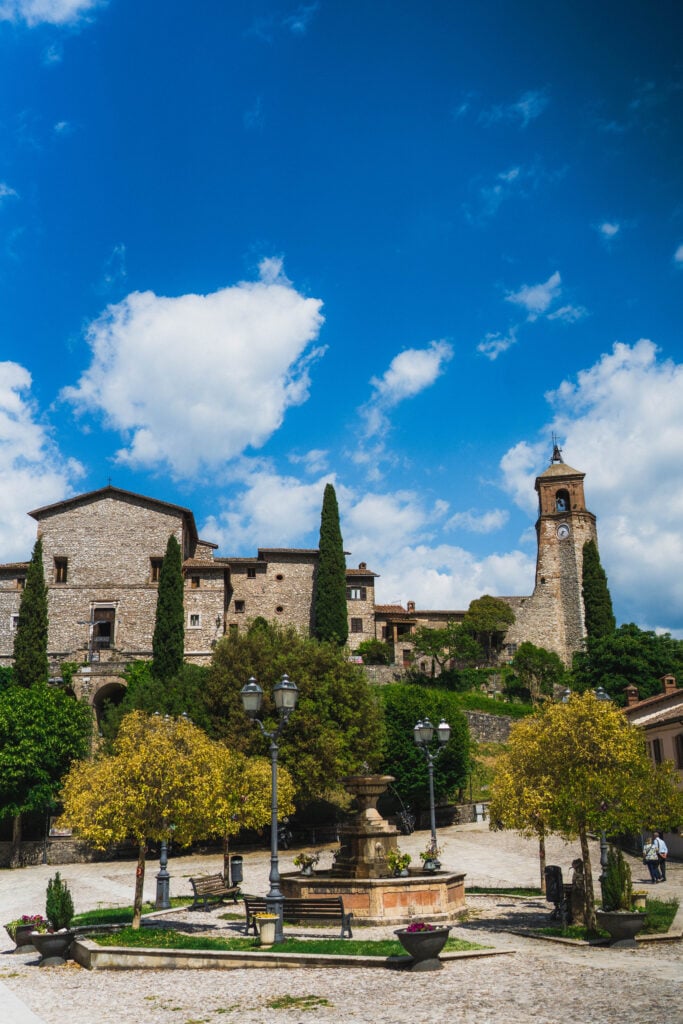
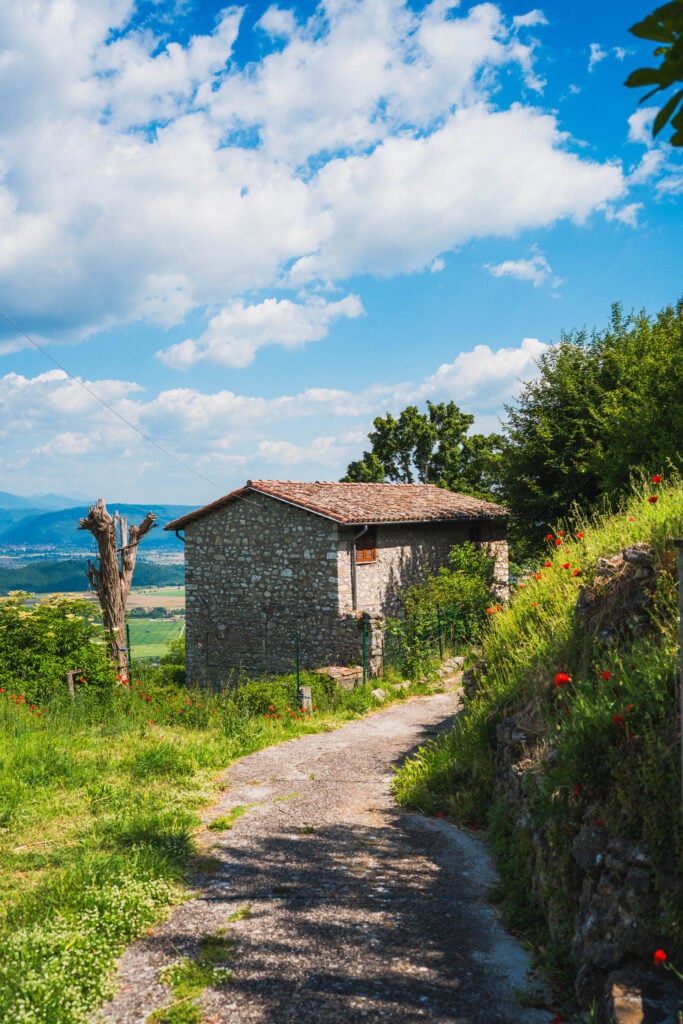
What can I expect from a pilgrim route?
While the pilgrim routes began as spiritual pathways, today they are open for all to enjoy. This is a great way to experience slow and authentic travel in Italy and you can enjoy numerous experiences along the way, including:
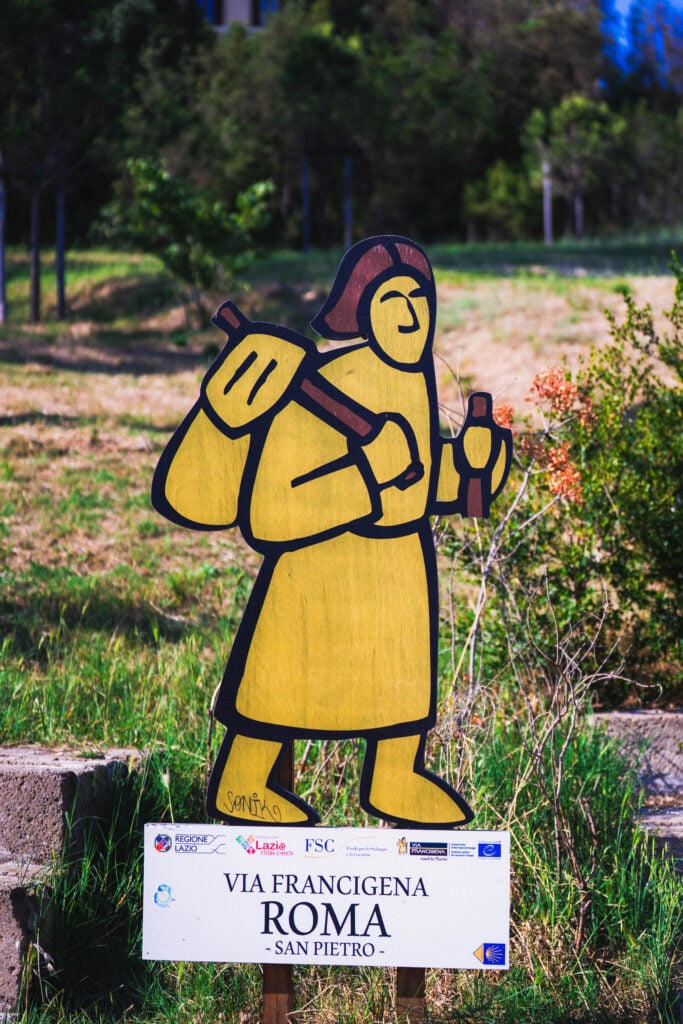
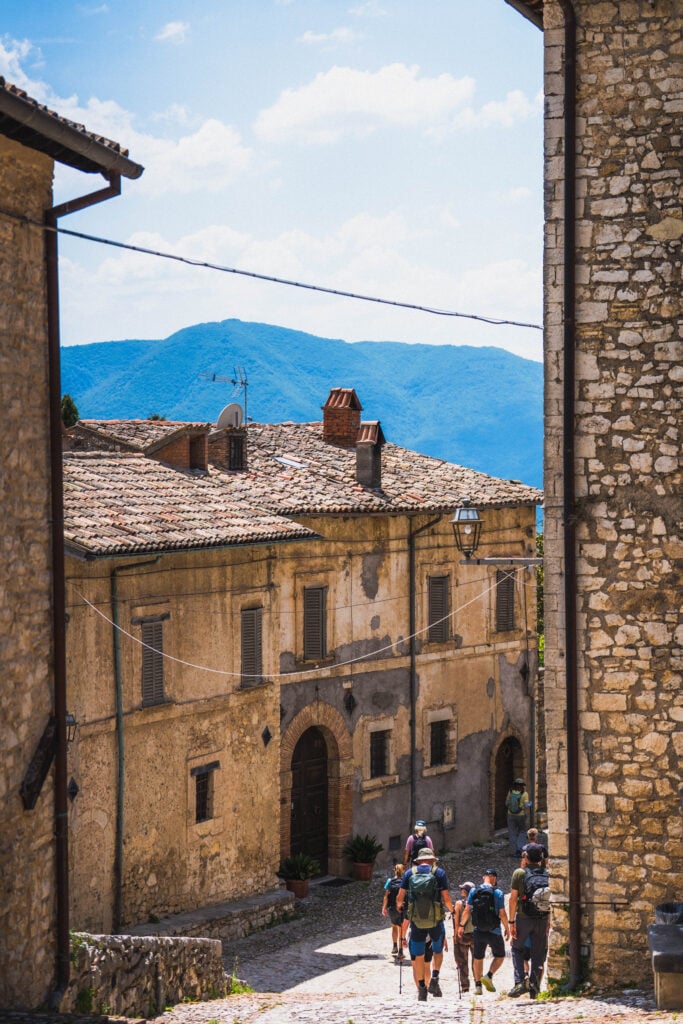
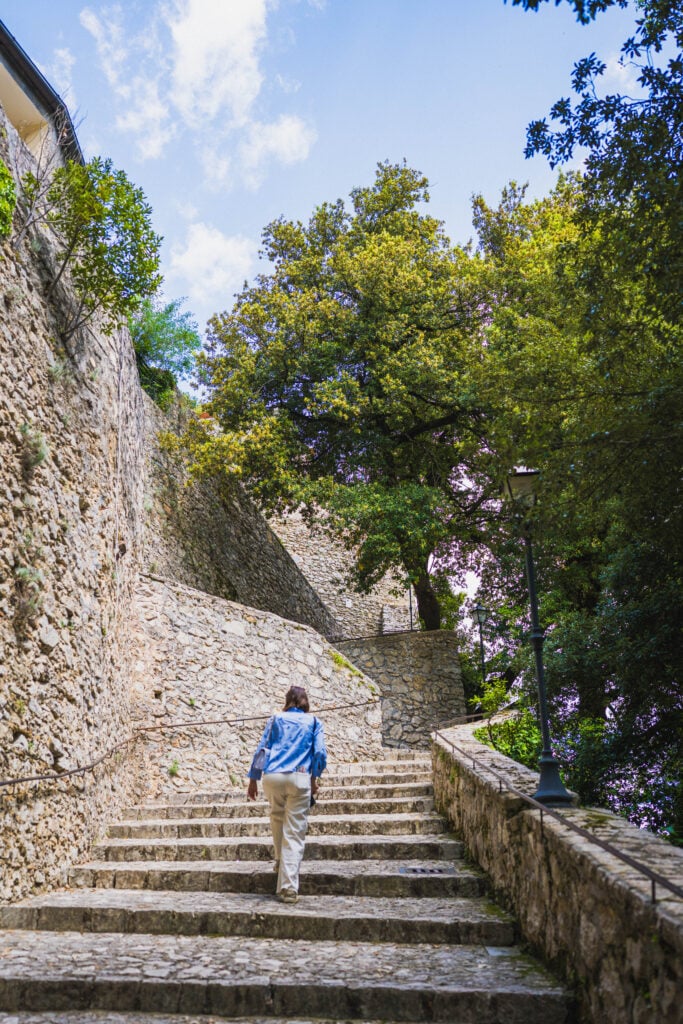
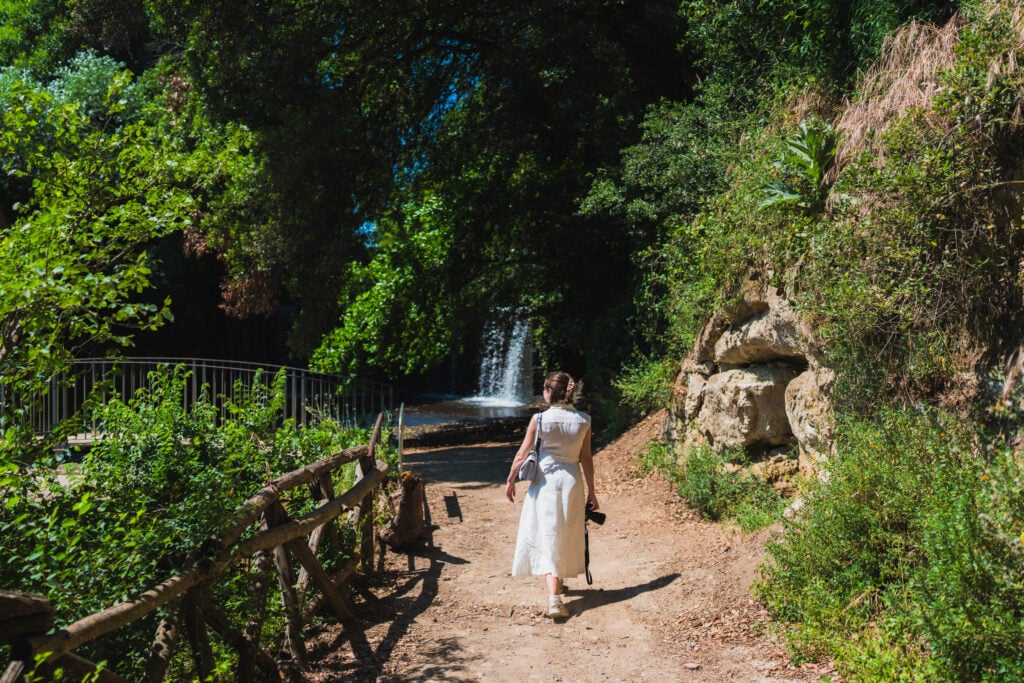
Breathtaking landscapes
Lazio is an exciting region when it comes to experiences, landscapes, and wildlife. While the most popular route (Via Francigena) is fairly flat, the pilgrim routes in the northeast (Via di Francesco and the Cammino di San Benedetto) are more mountainous and hilly.
Local wildlife
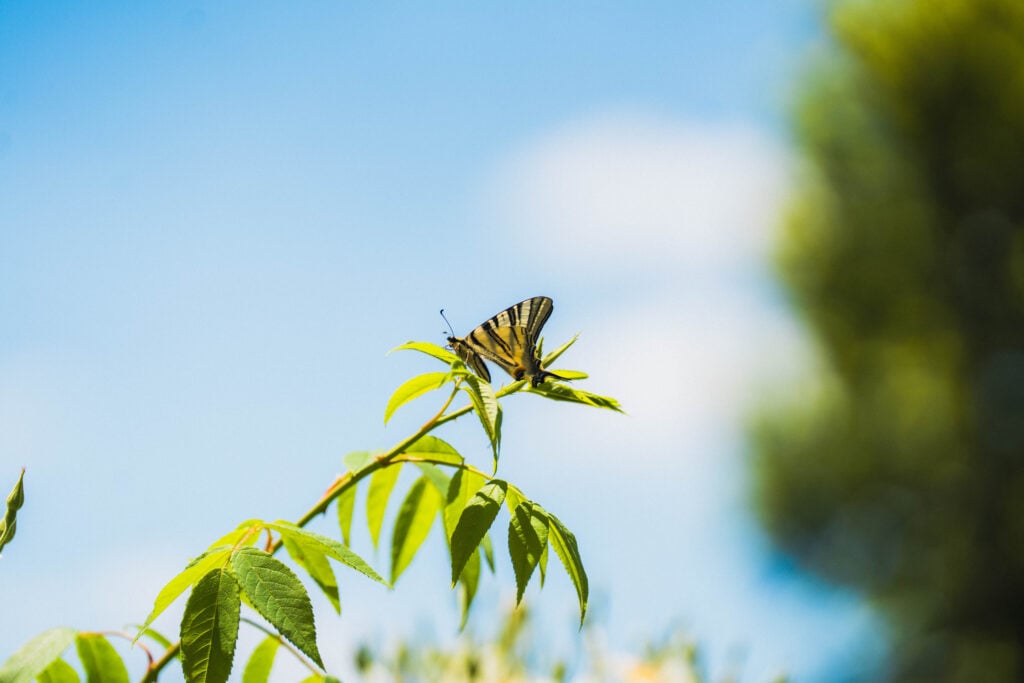
As well as an abundance of cats in and around the various sanctuaries along the route, Lazio is home to a spectacular array of local wildlife, which is best experienced during extended time in nature such as while hiking a historic pilgrim route.
Lizards bathe on sun-soaked rocks and local snakes can often be spied lounging on roads heated by the hot weather. Bird lovers might be lucky enough to spot Griffon vultures and Lanner falcons.

Sacred spaces
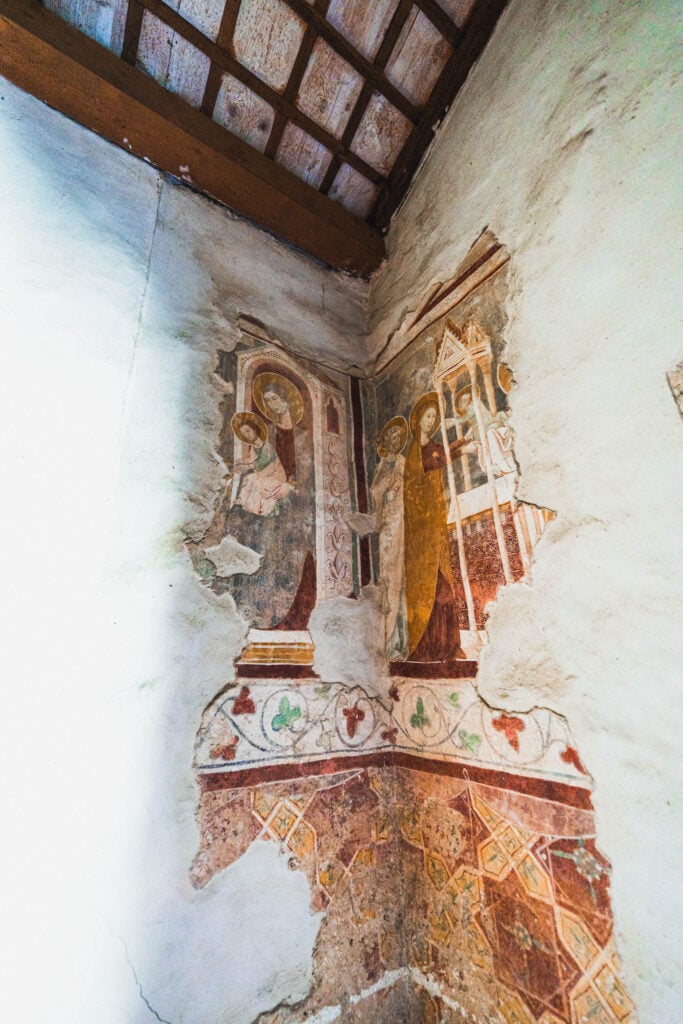
Every medieval village is crowned with its own church and there are countless sanctuaries scattered along the route. Many are incredibly well-preserved and boast treasures such as frescoes from the Middle Ages and carvings from centuries ago.
Romantic ruins
Lazio has been inhabited for millennia and traces of those former inhabitants can be found around almost every turn. The Etruscans and Romans both left their mark on the region and one of the greatest joys of a pilgrimage through Lazio today remains wandering in the footsteps of ancient people, just as pilgrims have done for centuries.
Authentic Italian cuisine
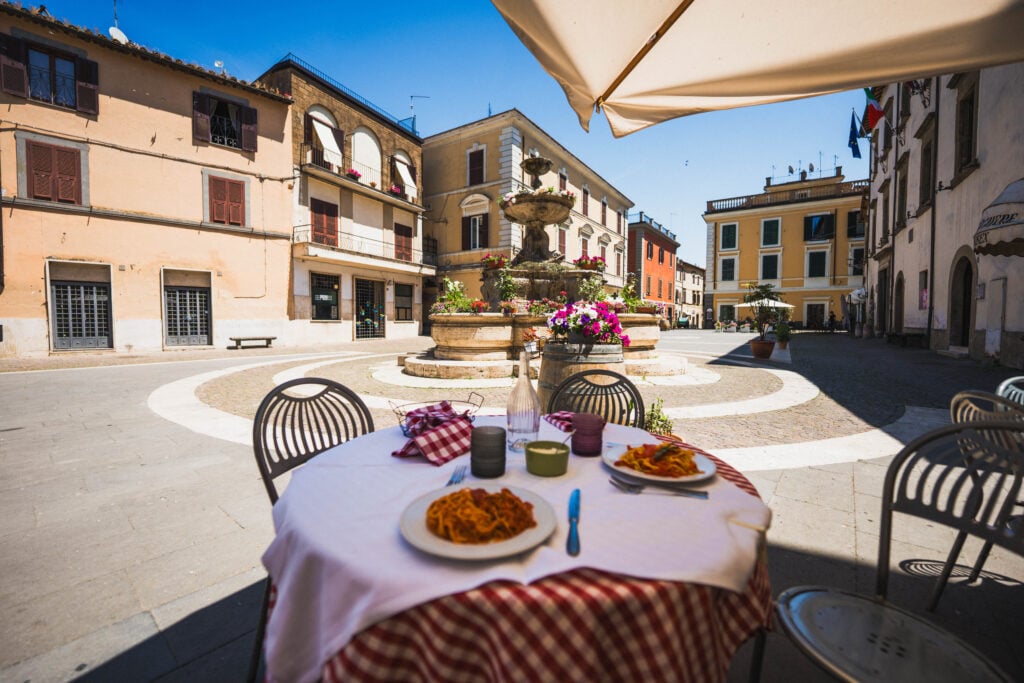
The Lazio region is the birthplace of Roman cuisine. Think hearty bowls of perfectly al dente pasta, smothered with sauces like Cacio e Pepe (cheese and black pepper) and Amatriciana (the former dish plus guanciale and tomato).
All dishes can be washed down with some acqua frizzante (sparkling water) and local wine served by the glass. Desserts are often just as delicious and in most restaurants you’ll find Italian classics like tiramisu served up by the spoonful.
Highlights of the pilgrim routes
While there are too many treasures to list in a single article when discussing the pilgrim routes which criss-cross Lazio, here are some of the more popular spots and cultural treasures along the routes:
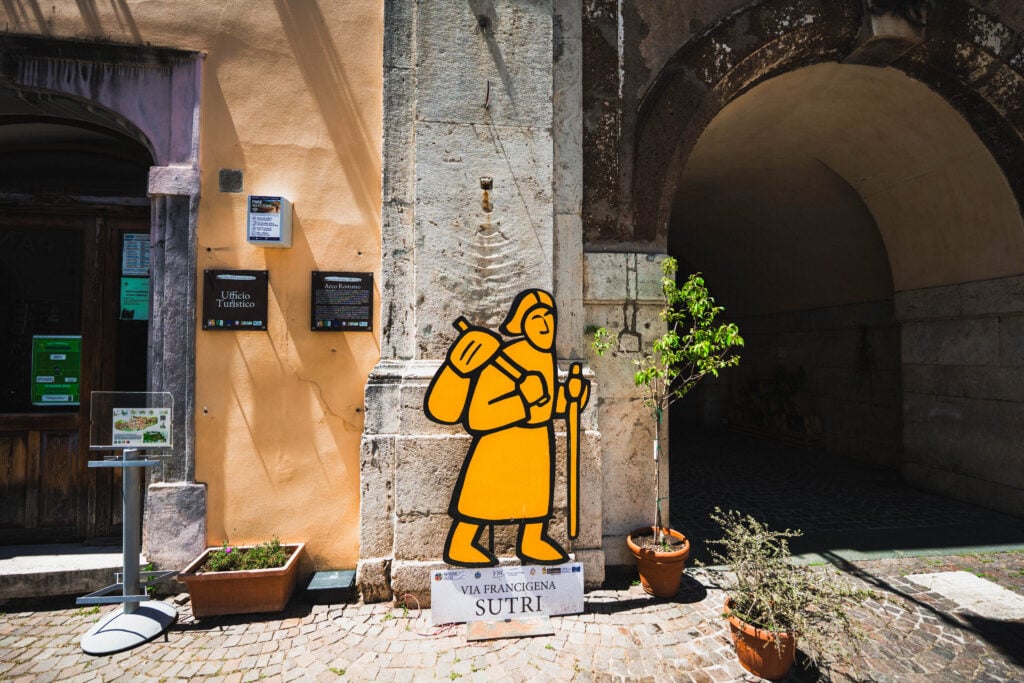
Sutri – Via Francigena
Inhabited since ancient times, Sutri is one of the most admired spots along the Via Francigena thanks to its abundance of historical ruins. Strolling through Sutri feels like wandering through an open-air museum, with Etruscan, Roman, and medieval layers carved directly into volcanic rock.
One of the main highlights of a visit to Sutri is the chance to visit the Roman amphitheatre, which was carved entirely into the local tufa rock in the 1st-Century BCE. It’s the only known example from the Roman world of a place of performance carved directly into the local rock.
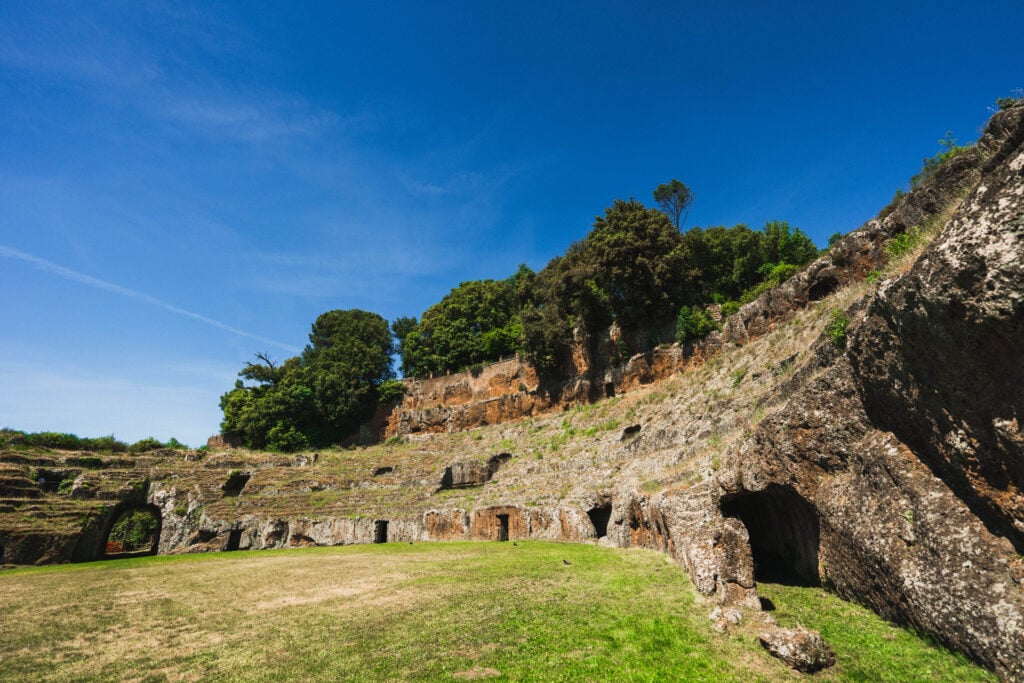
Nearby the Archaeological Park of Sutri provides incredible examples of Etruscan necropolises which were carved directly out of the stone cliff faces. The Mithraeum is nestled within the heart of this network and is a former cave sanctuary dedicated to the god Mithras that was later converted into a Christian church. Today you can enter for a small fee to enjoy incredibly well-preserved medieval Christian frescoes.
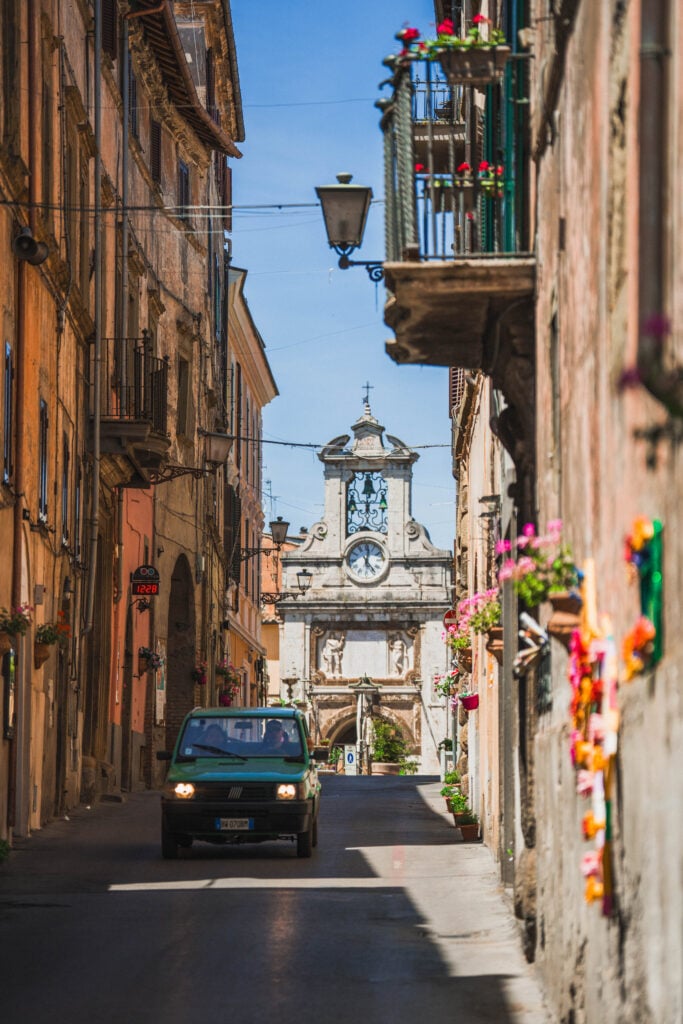
The modern people of Sutri can be found a few hundred metres away in a village perched high on a hill formed of the very same tufa rock. Listed among the most beautiful villages of Italy, the village possesses a picturesque cathedral.
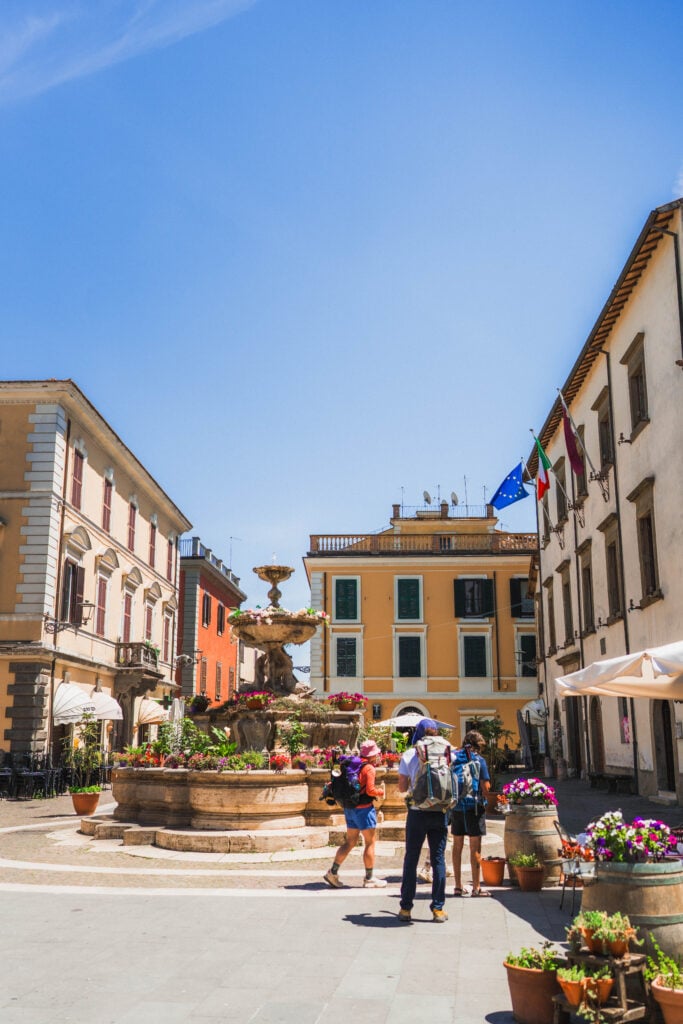
Hungry after all of that exploration? For lunch you’ll want to head to the Piazza del Comune (the town square), where various cafés spill out onto the pedestrian-only square, serving up local Roman dishes in the shadow of an ever-flowing fountain.
Viterbo – Via Francigena
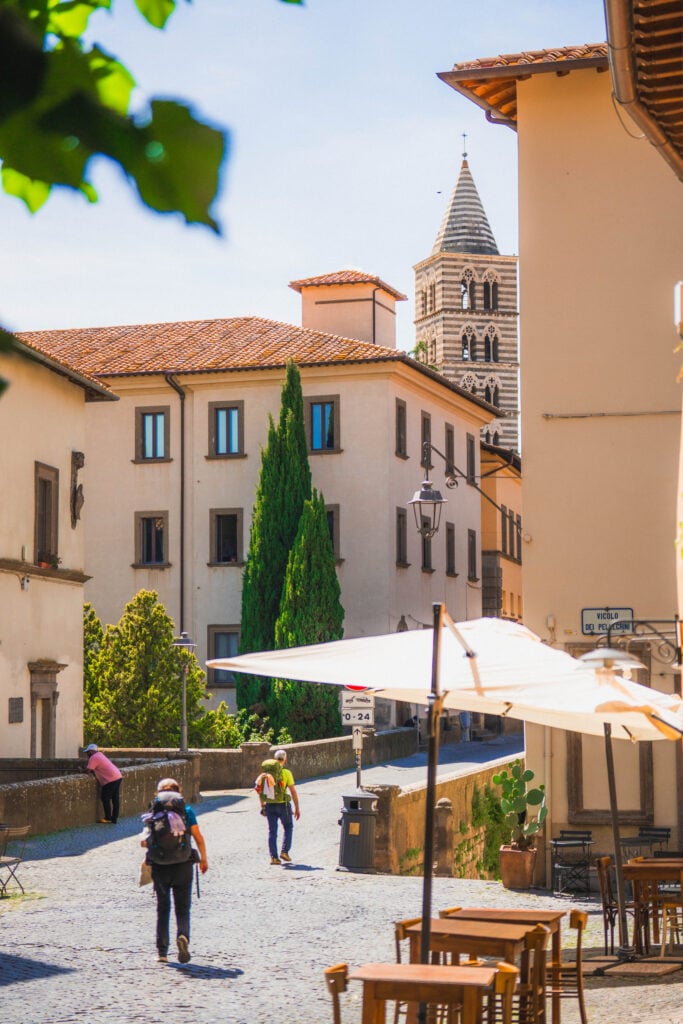
Thanks to the fact that Viterbo is the one of the closest starting points to Rome from which pilgrims can depart and still receive their Testimonium (official certificate of completion), Viterbo is just as historic as it is charming.
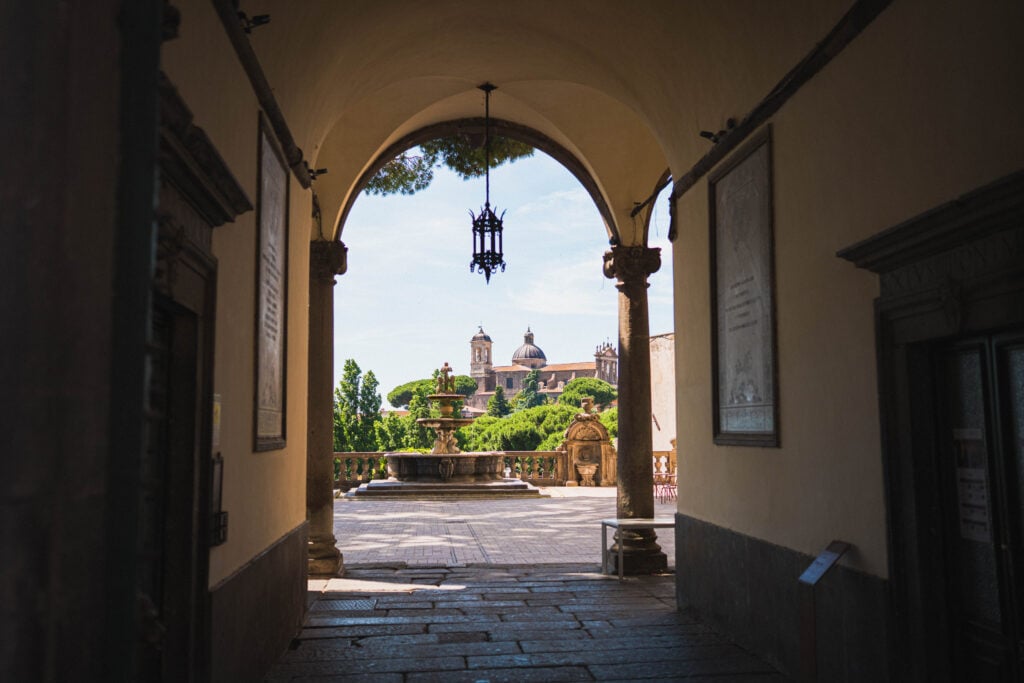
Once one of the most important papal centres outside of Rome in the Middle Ages, several popes resided in Viterbo during the 13th-century and their palace still stands to this day. The beautiful Palazzo dei Papi has now been transformed into a museum and a can’t-miss-feature for architecture lovers is a particularly stunning seven-arch loggia.
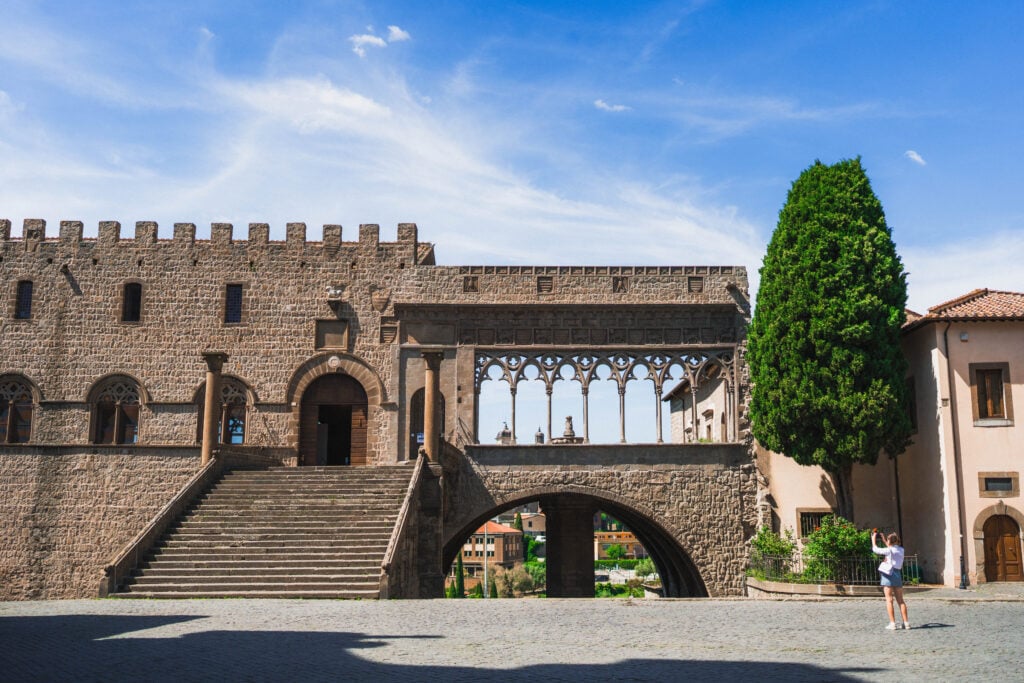
There’s plenty to entice history lovers to spend time in Viterbo as the town of 67,000 also boasts one of the best-preserved medieval town centres in Europe, which is known as the San Pellegrino district.
Wandering through the labyrinth of cobbled lanes feels like stepping straight back in time and you can almost imagine how pilgrims of the past would have had almost exactly the same experience as you can have today, as far back as the 13th-century.
Due to its medieval importance, it’s worth noting that several variants of the Via Romea Germanica pass through Viterbo, showing that these pilgrim routes do not only merge in Rome but are interconnected within Lazio in of themselves.
Rieti – Via di Francesco
Nestled within a valley of the same name, Rieti is one of the largest towns in northeast Lazio and so is a great base from which to explore the wider area (if you’re not doing a pilgrim route on foot, bicycle, or horseback but instead wish to explore the cultural sites by car).
Rieti Valley is often referred to as the Holy Valley thanks to the fact that Saint Francis of Assisi spent large swathes of time in the area between 1209 and 1223. During that time he managed to accomplish a number of things, including setting forth the final version of the Rule of the Franciscan Order, staging the world’s first live nativity, and establishing four sanctuaries.
One of the more picturesque spots within Rieti itself has to be its partially-submerged Roman bridge, which was once part of the historic Via Salaria (salt route). Overlooked by terracotta townhouses complete with laundry swaying in the breeze and the mountains beyond, this is now a popular hangout spot for local swans, ducks, and geese.
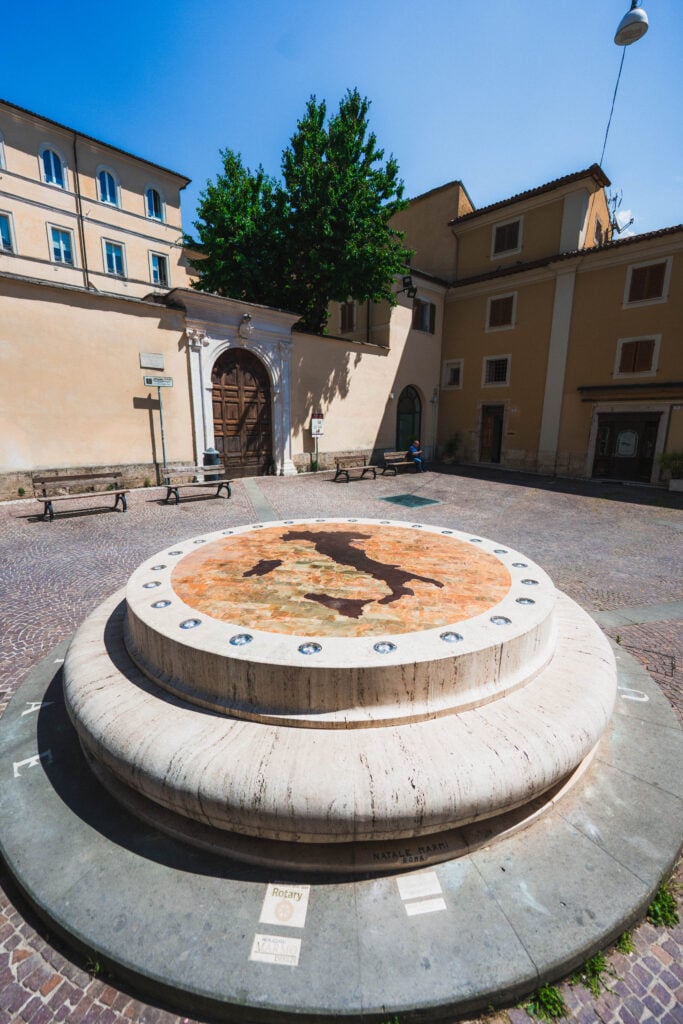
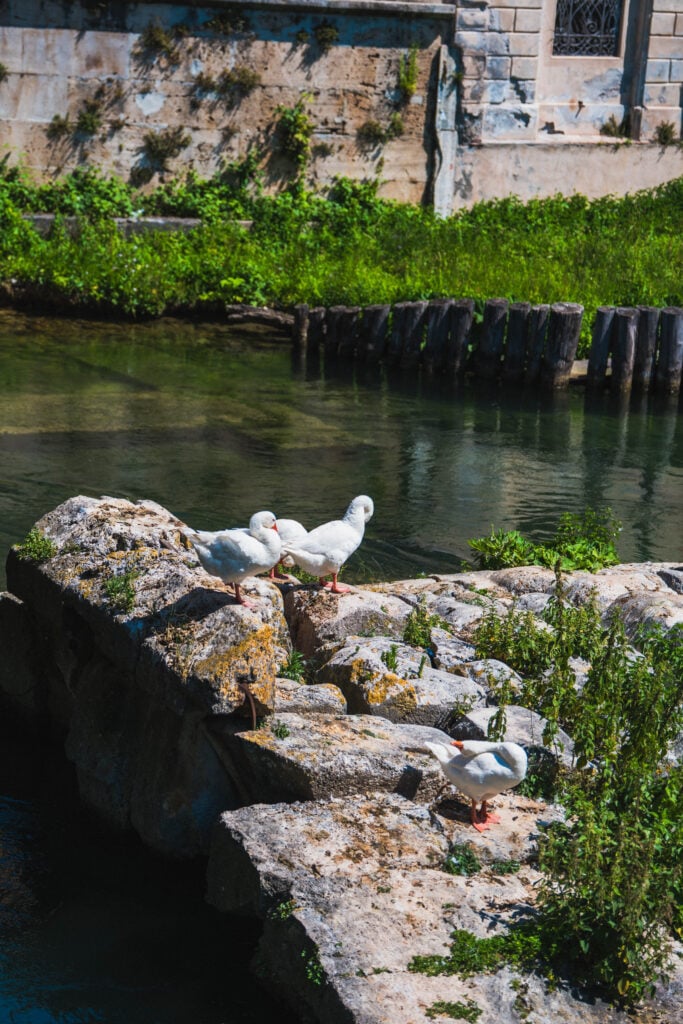
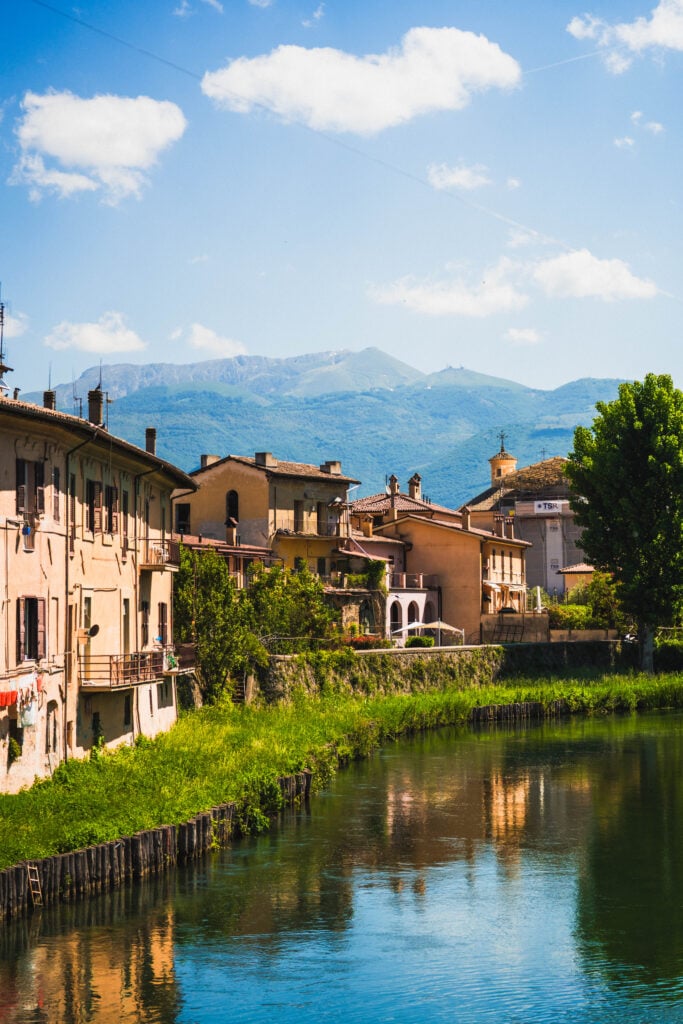
On the way out of the town you’ll pass by La Foresta, one of the four sanctuaries established by Saint Francis and arguably the most beautiful. Associated with the miracle of the wine tradition (vines still grow within the sanctuary’s grounds today), this is where St Francis retreated later in life during a period of illness and recovery.
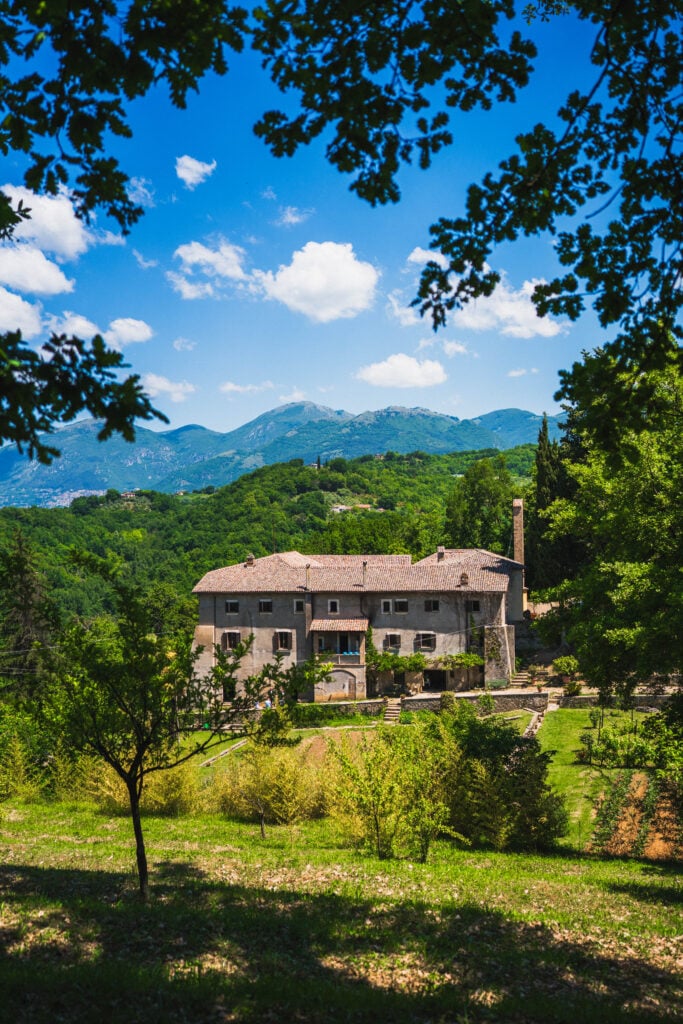
Labro – Via di Francesco
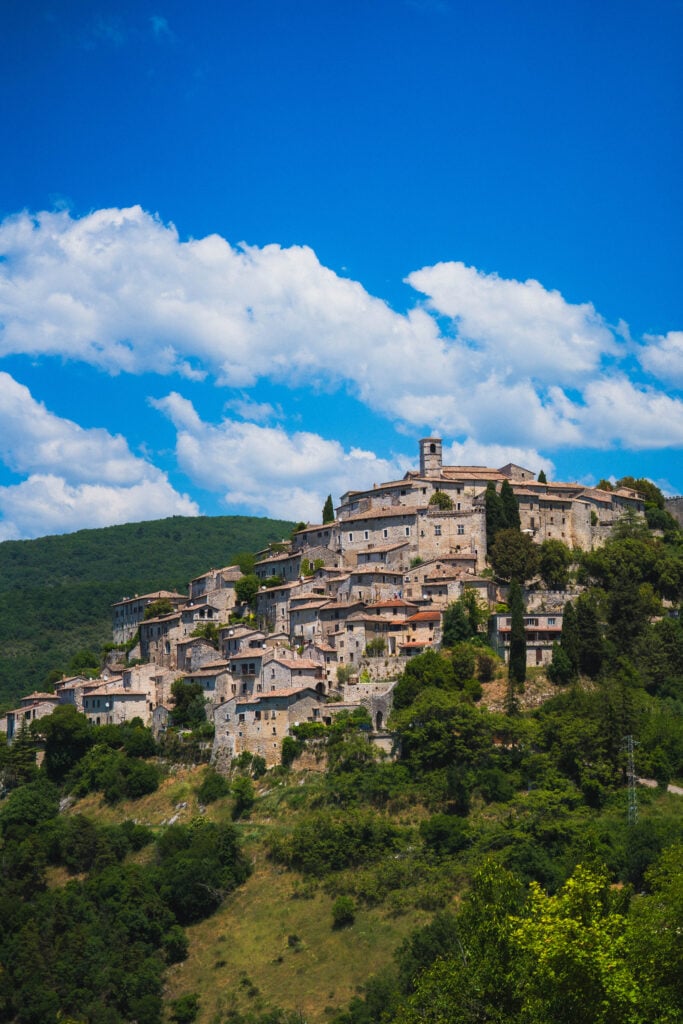
Not only is Labro one of the most postcard perfect places I’ve been lucky enough to visit in Italy, but it also demonstrated something that I noticed increasingly as we traversed the various pilgrim routes: during our visit we were the only tourists there!
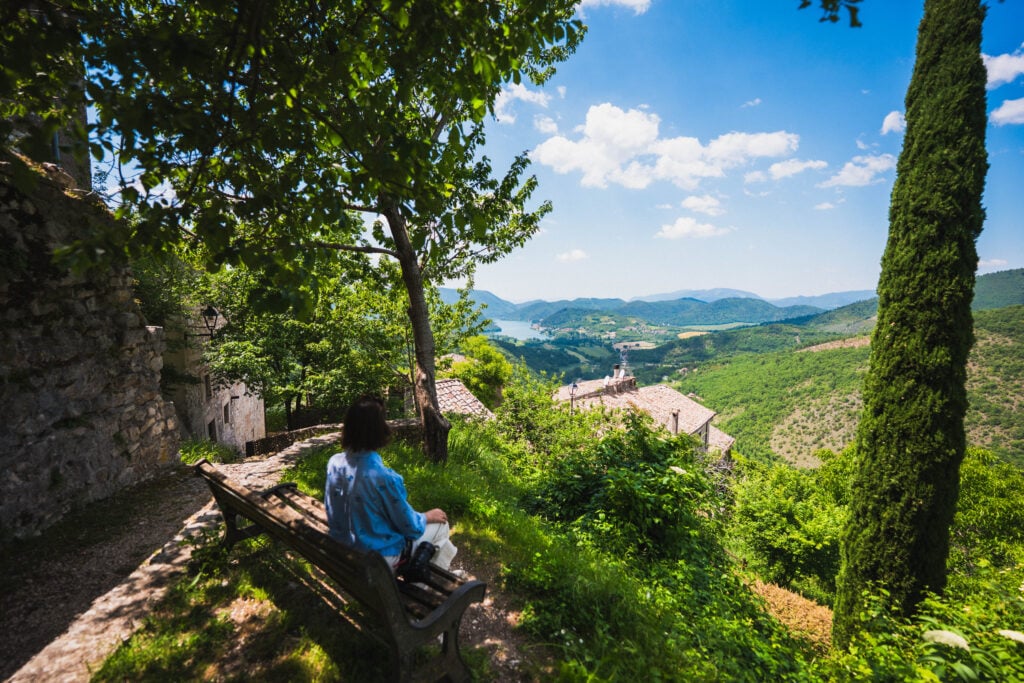
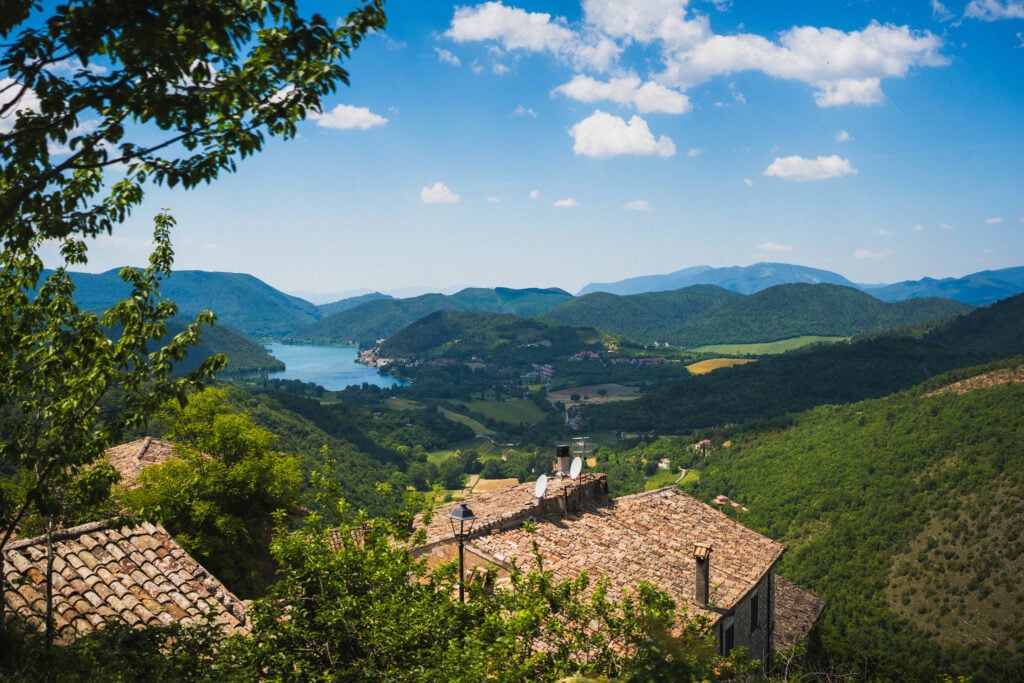
Glimpses from the path on the way up to Labro reveal one of the most striking villages in Italy: houses quite literally cling to a conically shaped hill and everything is made entirely out of stone. This perfectly preserved medieval village is home to a 16th-century castle, a medieval church and breathtaking views of Lake Piediluco and the Apennines.
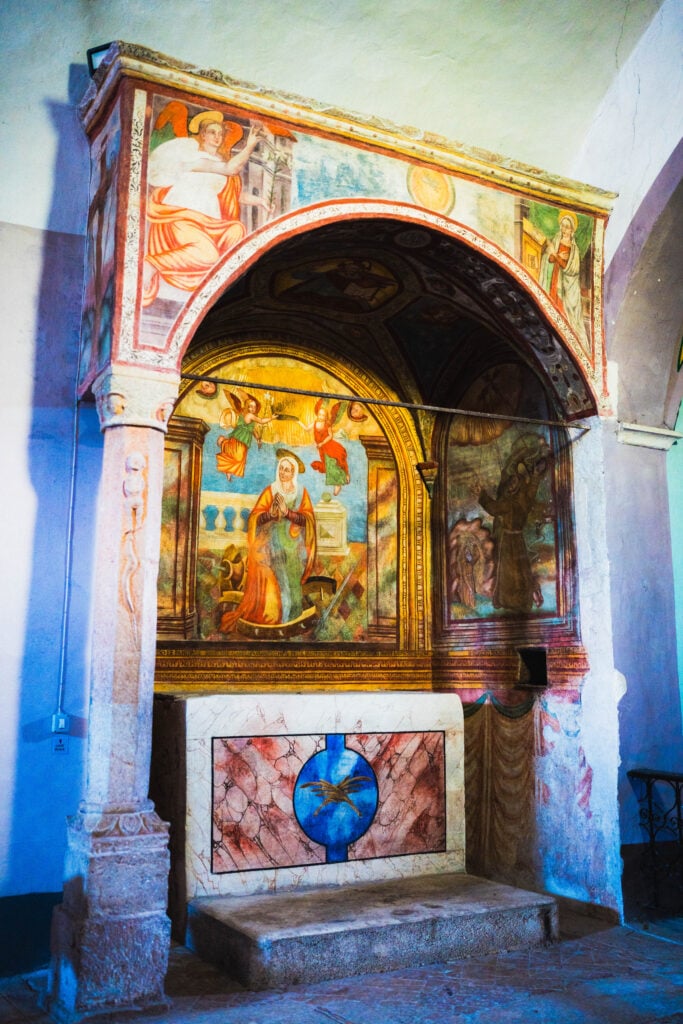
Greccio – Via di Francesco
One of the most important Franciscan sites in Italy, Greccio is twinned with Bethlehem and all around the picturesque village you’ll find references to Saint Francis. This is the very place where St Francis staged the world’s first live nativity in 1223.
A few kilometres from the village centre there’s a sanctuary established by Saint Francis and it’s here where he gathered villagers in a cave, arranging a live manger, ox, and donkey to demonstrate to the locals the humble circumstances of Christ’s birth.
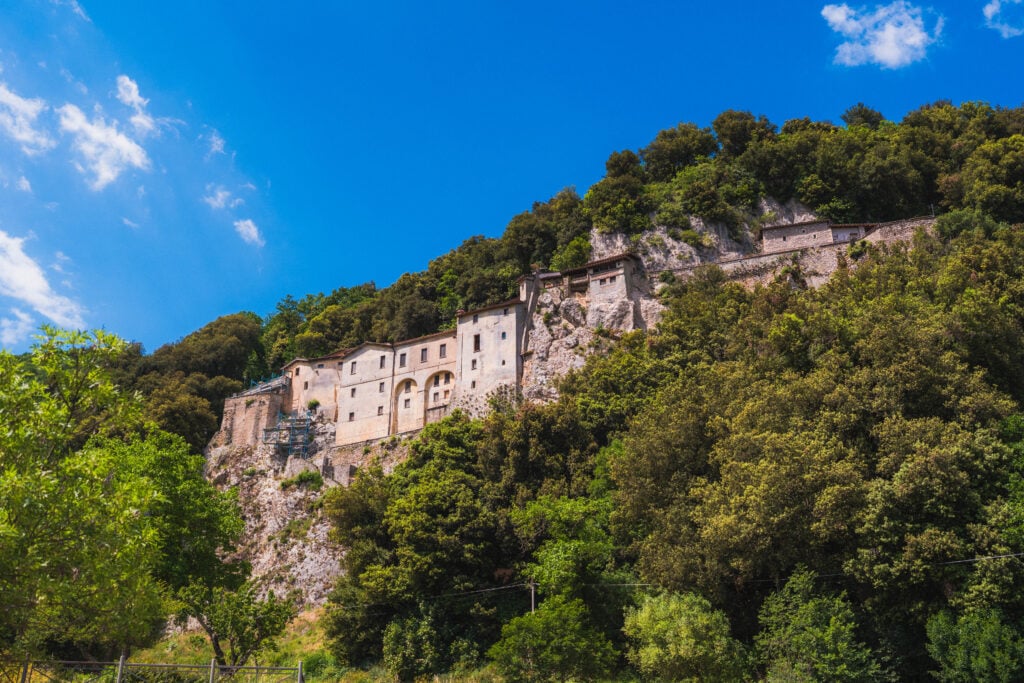
Today the pilgrim route passes through both the sanctuary and the village centre. Climb up the hill towards the church, carry on to the edge of the village and you’ll be rewarded with the most jaw-dropping views of the Rieti Valley.
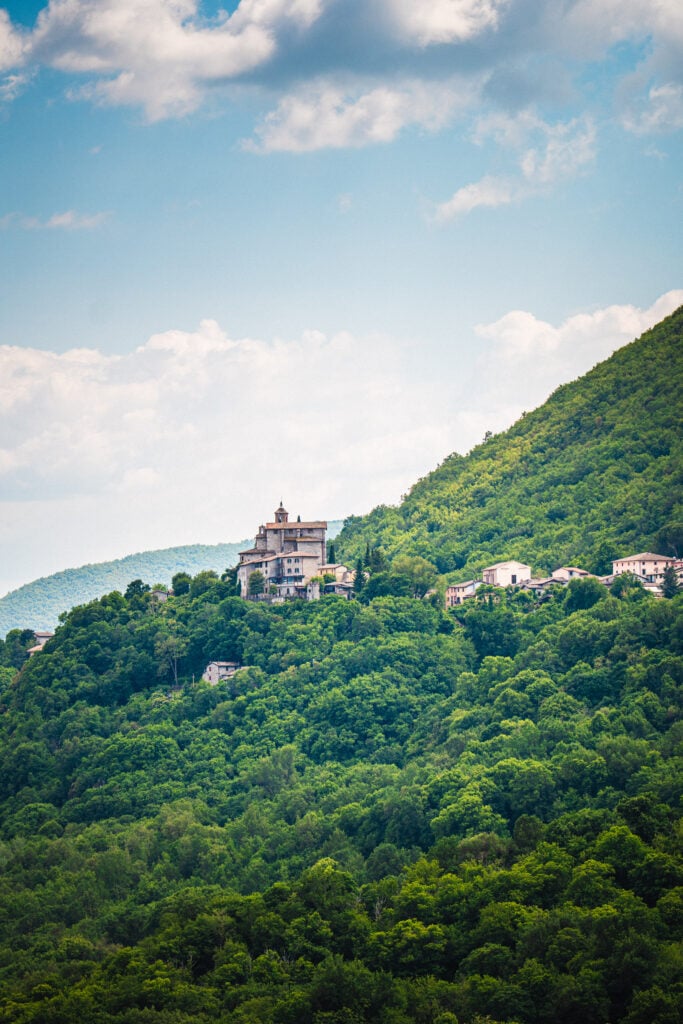
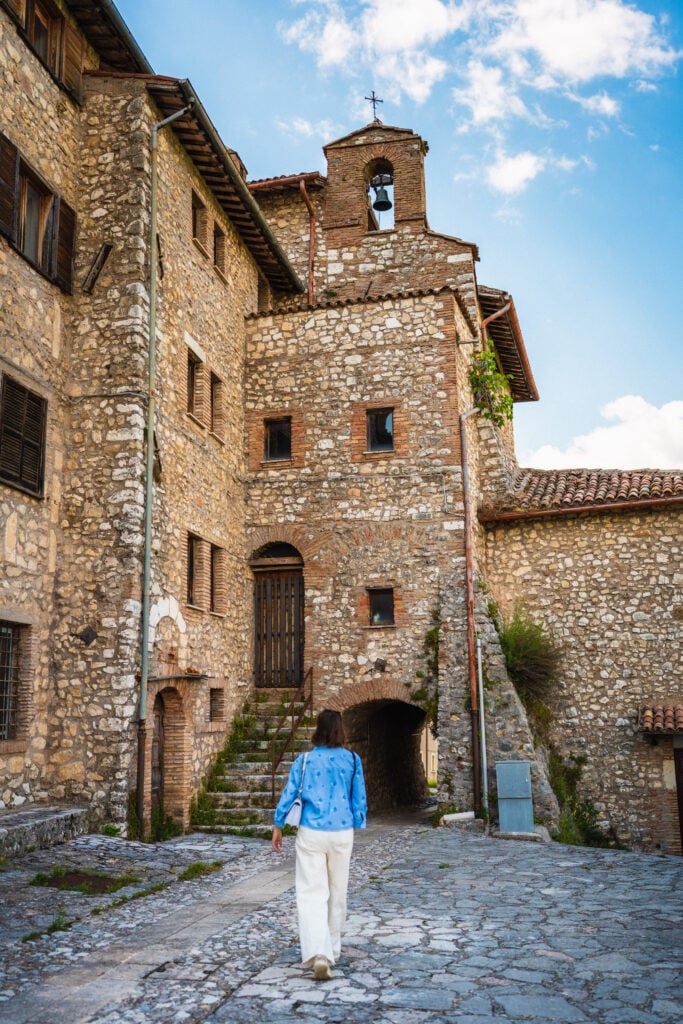
Rocca Sinibalda – Cammino di San Benedetto
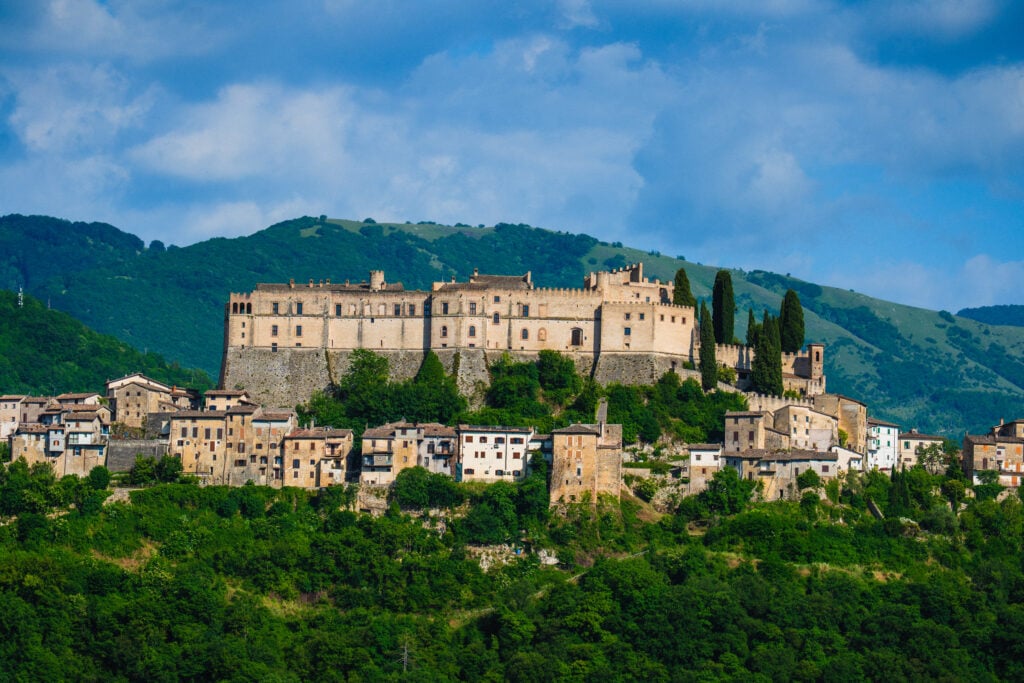
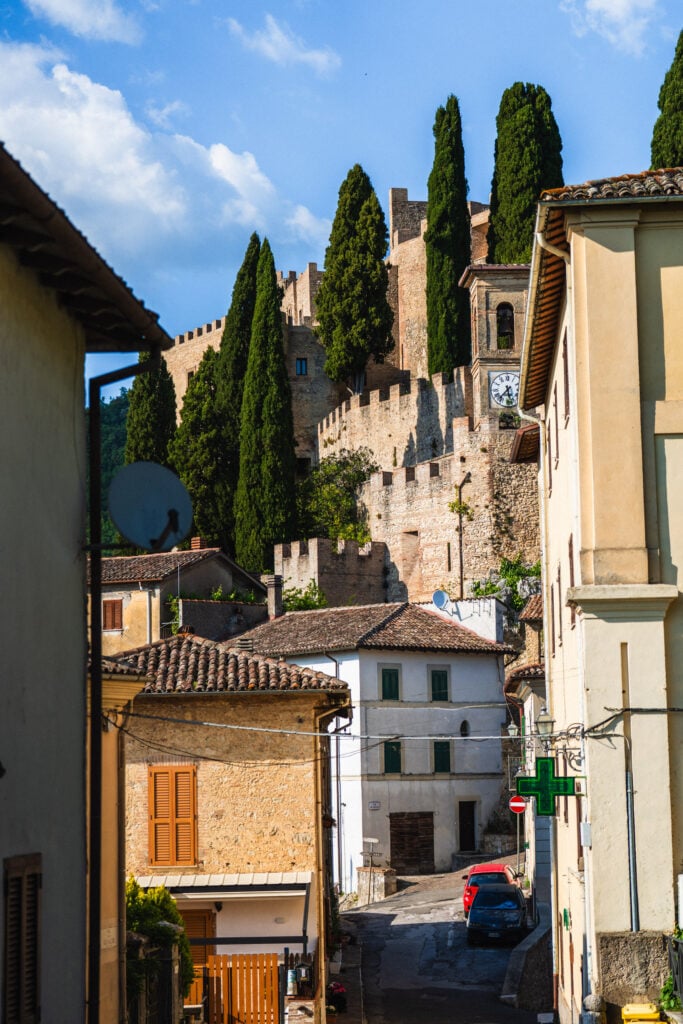
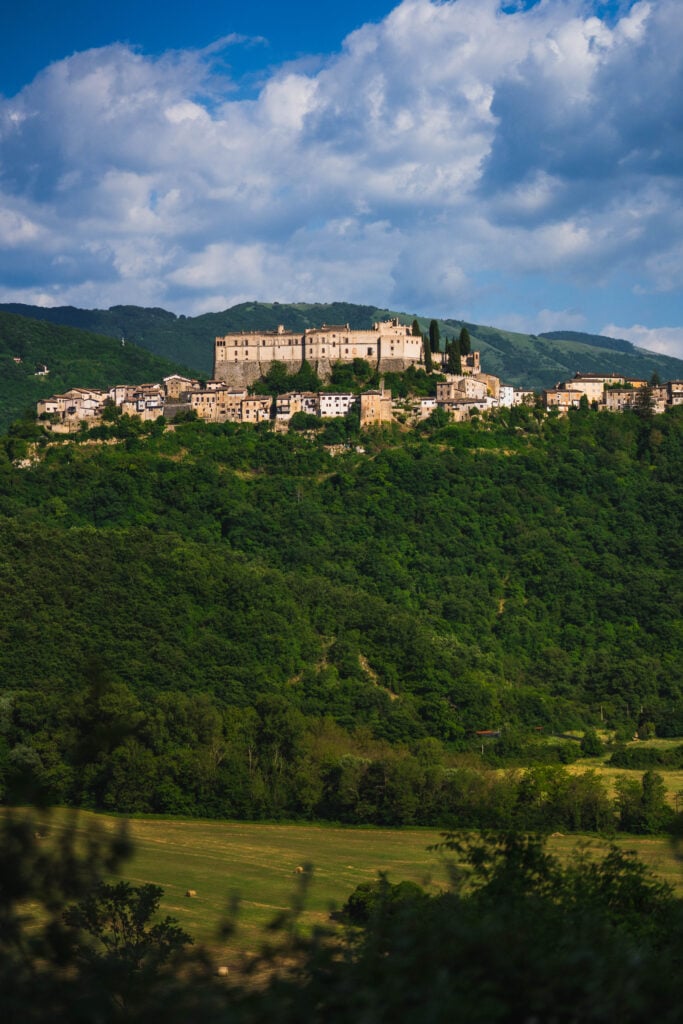
High and imposing, this fortified town is located within the Sabina mountains on the Cammino di San Benedetto, the most challenging pilgrimage route of Lazio. It’s hard to miss the fortress (Castello Sforza Cesarini) at its summit, founded in the 11th century and then heavily fortified during the 16th.
Located within a wild and quiet area of Lazio, you can hear birds singing, even while in the village centre. A compact web of stone houses and narrow lanes, still shaped by its defensive past, the village is home to fewer than 1000 residents, making if the perfect retreat from the hustle and bustle of busy modern day life.
Castel Di Tora – Cammino di San Benedetto
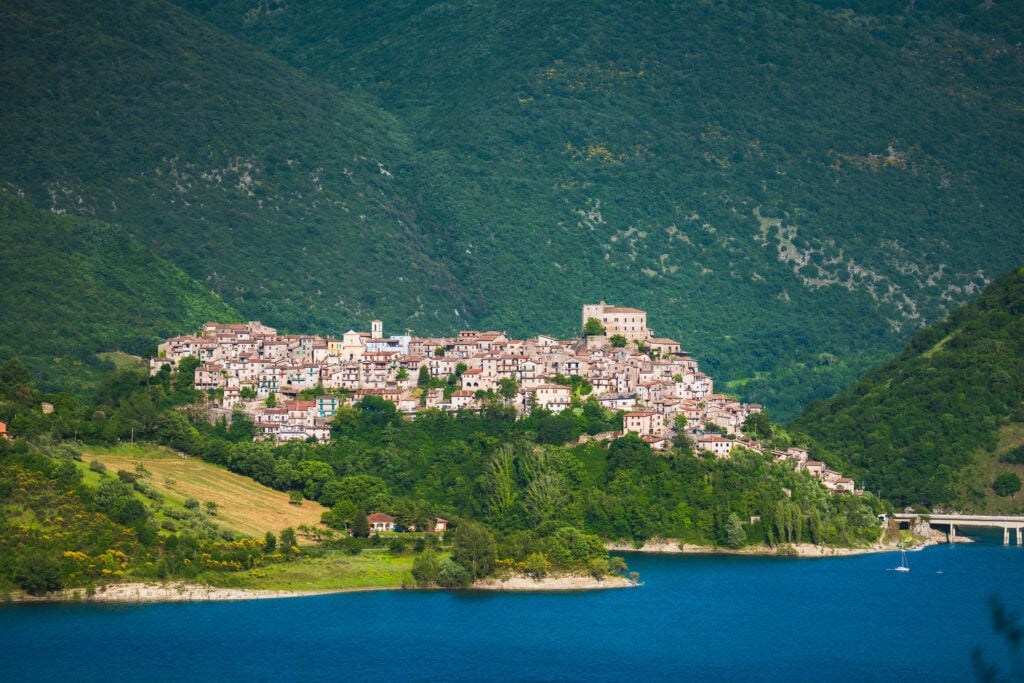
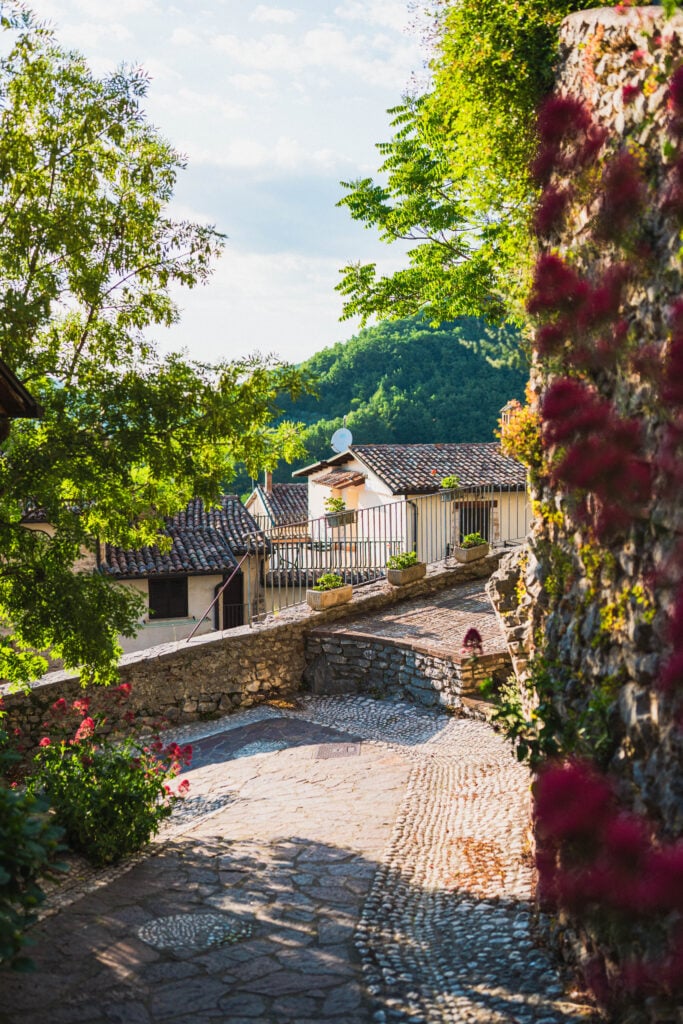
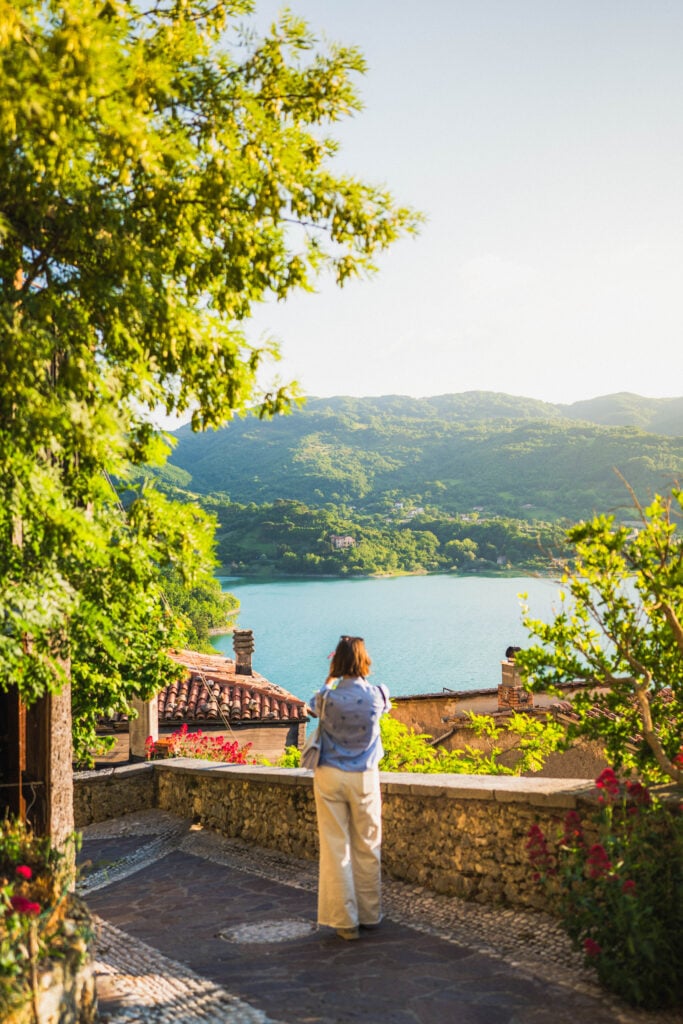
Perched upon an impossibly high rock (like many of the other medieval stops along the pilgrim routes), Castel Di Tora is listed among the most beautiful villages of Italy. It’s a little bit different from some of the other highlights of the other pilgrim routes because it doesn’t overlook endless greenery but instead the turquoise blue waters of Lago del Turano.
Unlike many of the volcanic lakes in Lazio, Lago del Turano is actually an artificial lake, a reservoir created in the 20th century by damming the Turano River. Back in Castel di Tora itself, it feels as if little has changed since the middle ages. A maze of narrow pedestrian only lanes, the main highlight is not the castle but instead the view over the valley below.
All Roads Lead to Rome
Eventually the varying pathways converge on Rome, at St Peter’s Basilica in Vatican City to be precise.
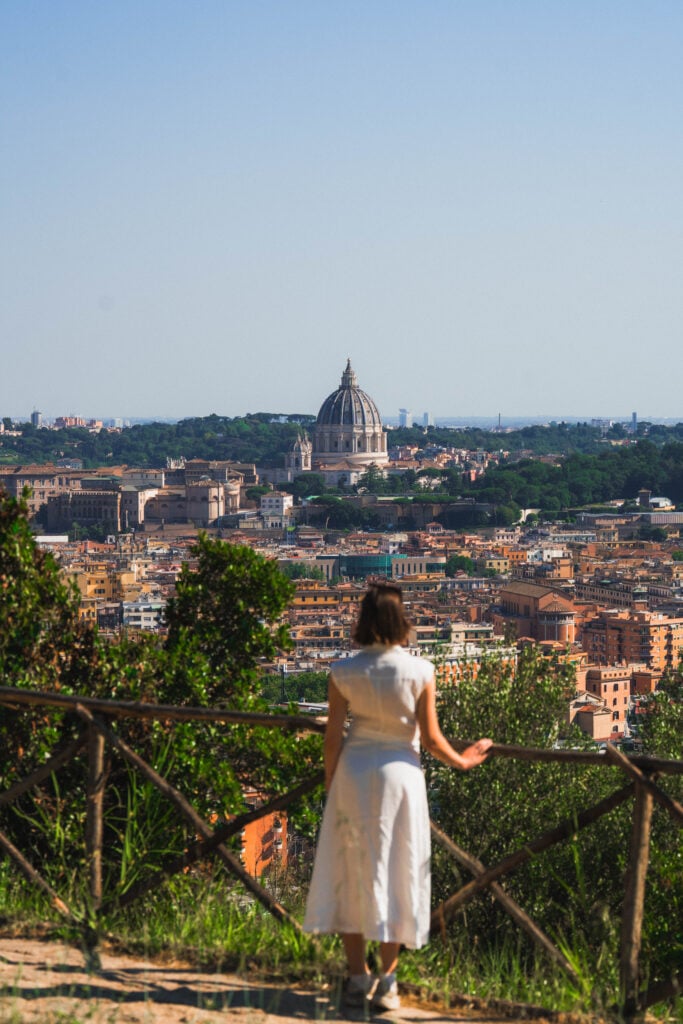
One of the most picturesque final spots on the Via Francigena is Monte Mario, a 140 metre high hill within Rome which was often referred to as Mons Gaudii (mountain of joy) during the Middle Ages as it would have been (and still is) a pilgrim’s first look of Rome after months of travelling.
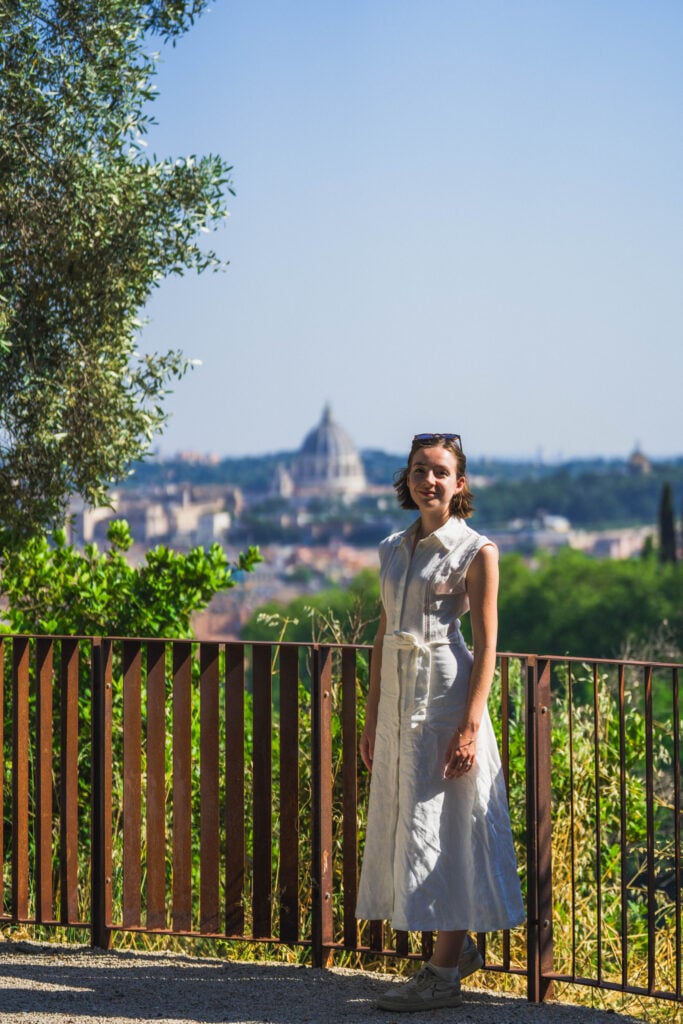
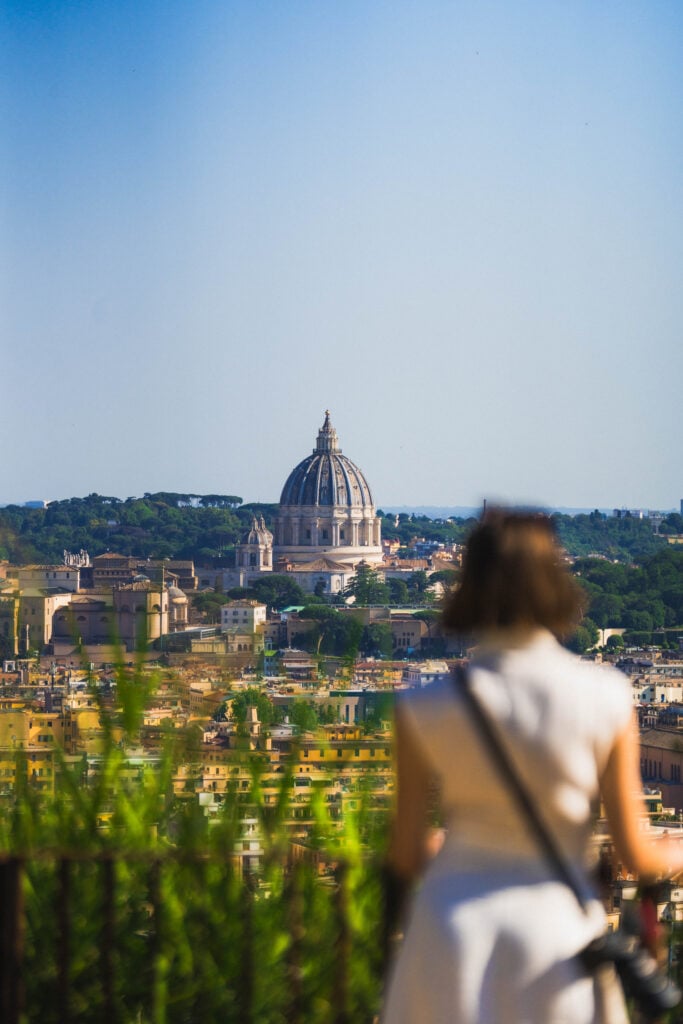
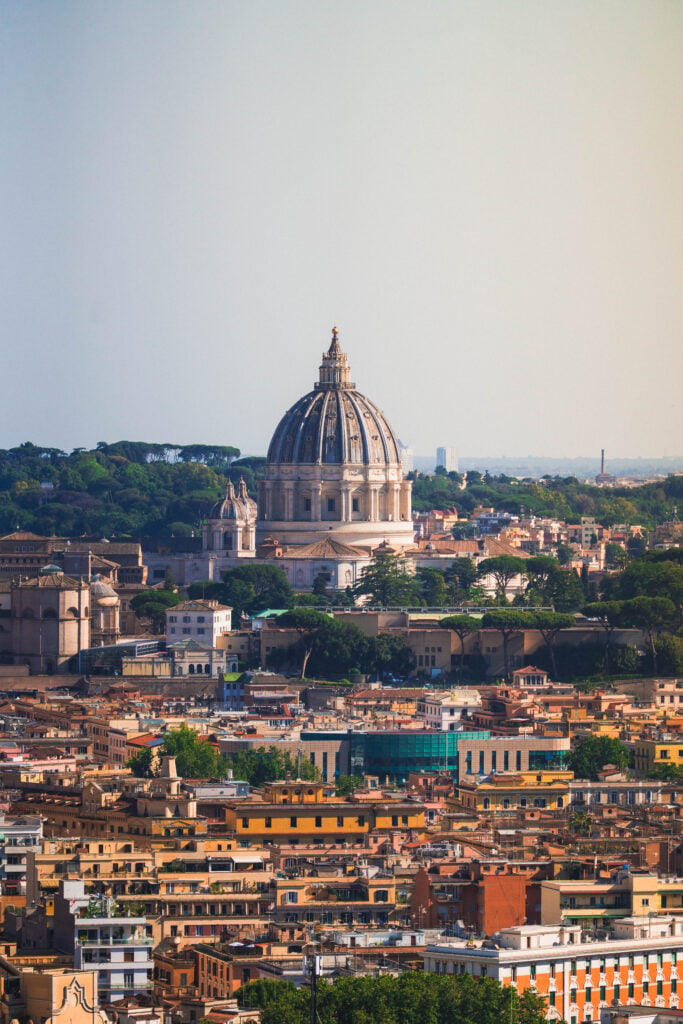
On a clear day you’re rewarded with one of the best bird’s eye views that the Eternal City has to offer, and I can only imagine the joy that pilgrims must have felt centuries ago when they finally laid their eyes on the iconic dome of the basilica, the ecclesiastical building housing the final resting place of Saint Peter.
Lazio is a place where history, culture, and slow travel converge, where the pilgrim routes of Europe meet and a destination where nature is never too far away. The only question is: which path to travel first?