Castle Drogo, Dartmoor National Park: The Last Castle Built in England
Last Updated on 20th May 2022 by Sophie Nadeau
This post may contain affiliate links. Please check out my privacy policy and disclosure for more information.
Down in the depths of Devon, in a place where the weather is at its worst and the wind whistles non-stop through a wooded valley, you’ll find the last castle built in England, Castle Drogo.
Set deep in the heart of Dartmoor National Park, an area of wilderness which is often impassable in the winter months due to severe weather conditions, Castle Drogo boast a few lasts; the last Castle to be built in England, the last private residence in England to be built entirely from granite. Here’s how to visit Castle Drogo, as well as what to know before you go!

Contents
- What is Castle Drogo?
- A Little History of Castle Drogo
- The architecture of the last castle built in England
- Saving Castle Drogo for future generations
- Must-see attractions at Castle Drogo
- How to visit Castle Drogo: Tips & Tricks
- Enjoyed reading about how to visit Castle Drogo? Pin this article now, read it again later:
What is Castle Drogo?
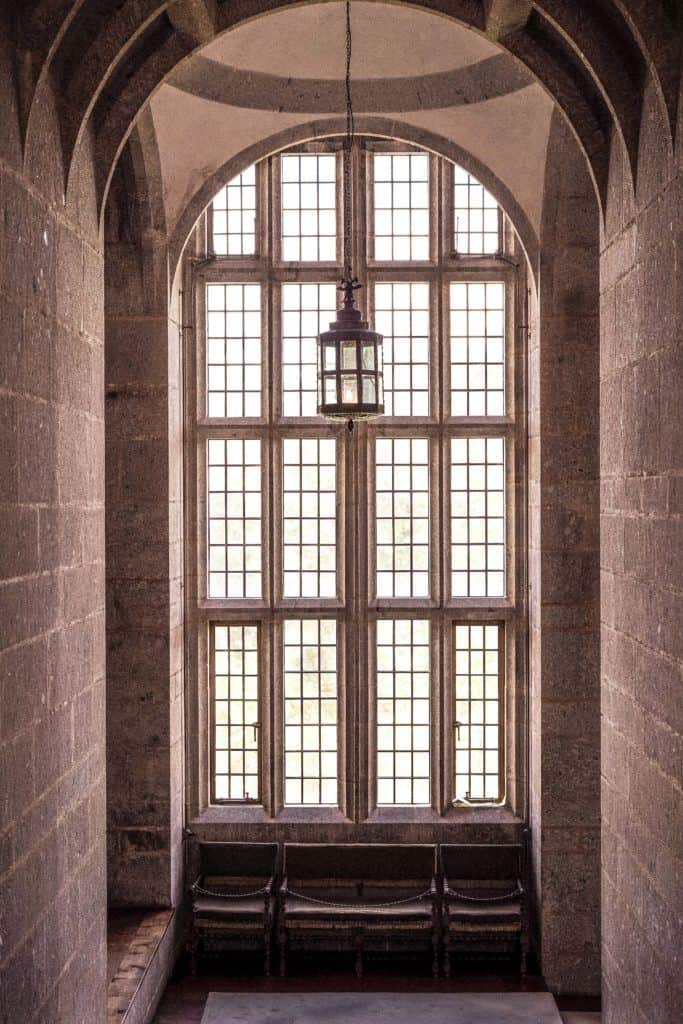
Castle Drogo is a contradiction of sorts. While the castle was constructed in the 20th-century, it has both a working portcullis for defence, battlements, as well as all of the luxuries and mod-cons of the era.
As a unique building, it was also the first 20th-century building to be donated to the National Trust, an organisation in England and Wales dedicated to the preservation of historic properties. The property was donated to the trust in the late 1970s. And, after a brief period of renovation, has been open to the public ever since…
A Little History of Castle Drogo
A man named Mr Julius Drewe commissioned the build in the very heart of Dartmoor National Park. His grandparents had been tea importers and he had taken up the family trade, expanding the company into a chain of grocery stores.
Retired by the age of 33, Julius soon became obsessed by genealogy and selected the site because it was both convenient to purchase (the land was sold to him by a family member who worked in the clergy) and because a certain Drogo de Teigne came over to England after the Norman Conquest and settled in the area.
Designed by the acclaimed architect Edwin Lutyens, the same man to have designed the Cenotaph in London, the castle was built for self-made businessman, Julius Drewe. Note that Julius himself added the ‘e’ to the end of his name ‘Drewe’ as he wished the surname to sound older than it was.
Having made his money from the tea industry and founding the Home & Colonial stores (now part of the Morrisons group), he was able to retire at the early age of 33; chance would be a fine thing… In 1890, Drewe married Frances Richardson; the story goes that he was sat in a hotel reception when he saw her.
On sight, he said ‘that’s the woman I’m going to marry,’ pretty arrogant, don’t you think? Frances loved gardening, particularly roses and as a result of this, Castle Drogo has a large landscaped garden. Being obsessed as to where his family had come from, Mr Drewe hired a genealogist.
The genealogist discovered that Drogo de Teigne, a Norman Baron, had come to the area centuries previously. Drogo is the Latinised form of Drewe and the nearest village to Castle Drogo is named ‘Drewsteignton’. Through all of these connections, it was therefore assumed that Mr Drewe must be the descendant of this Norman knight.
In an attempt to further this connection, Drewe donated vast sums of money for the restoration of the pub in Drewsteignton and even had it named ‘The Drewe Arms’. Unfortunately, later research has rendered the entire discovery false and there is, in fact, no connection between Mr Drewe and Drogo de Teigne.
The architecture of the last castle built in England
Castle Drogo is a contradiction of sorts. While it was constructed in the 20th-century, it has both a working portcullis for defence, battlements, as well as all of the luxuries and mod-cons of the era.
Designed by the acclaimed architect Edwin Lutyens, the same man to have designed the Cenotaph in London, the castle was built for self-made businessman, Julius Drewe. Note that Julius himself added the ‘e’ to the end of his name ‘Drewe’ as he wished the surname to sound older than it was.
From the outset, the castle was an ambitious build, using all the latest equipment and technology available. Edwin Lutyens, (designer of the Cenotaph) was hired as chief architect.
Although he advised Mr Drewe that a country house would be much more appropriate for such a bleak and barren environment, Julius was convinced that he needed a castle built in such a way as to make it seem like it had stood there since time immemorial.
The result is that windows were placed inside staircases to falsely indicate later additions and a mix of various architectural styles were used. However, Mr Drewe was also on the cutting edge of technology and so the ‘modern’ castle boasted a lot of modern equipment.
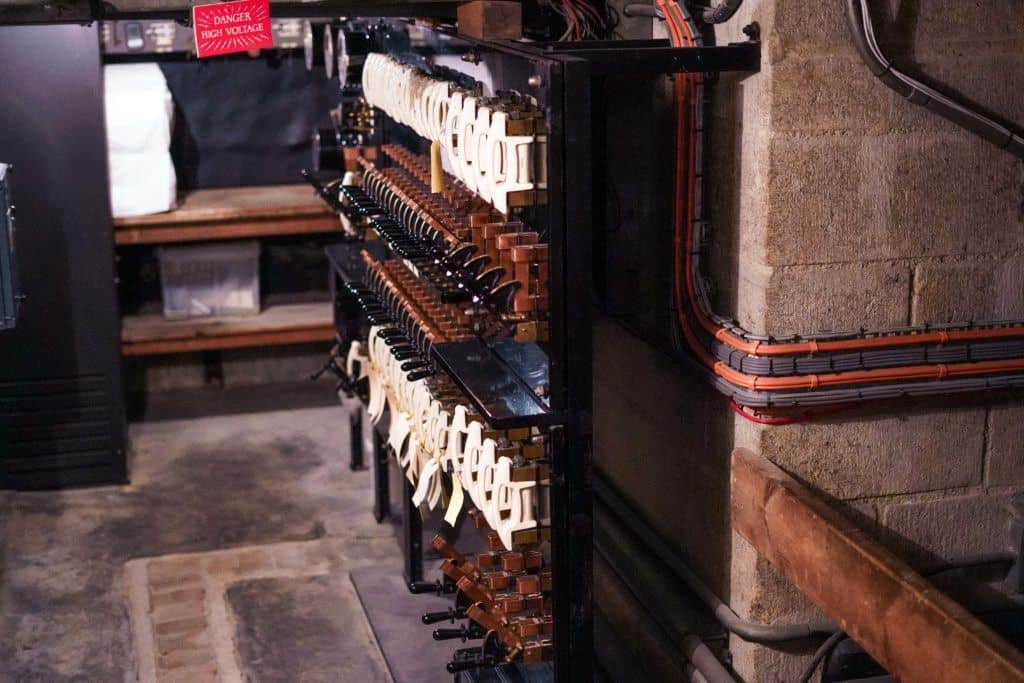
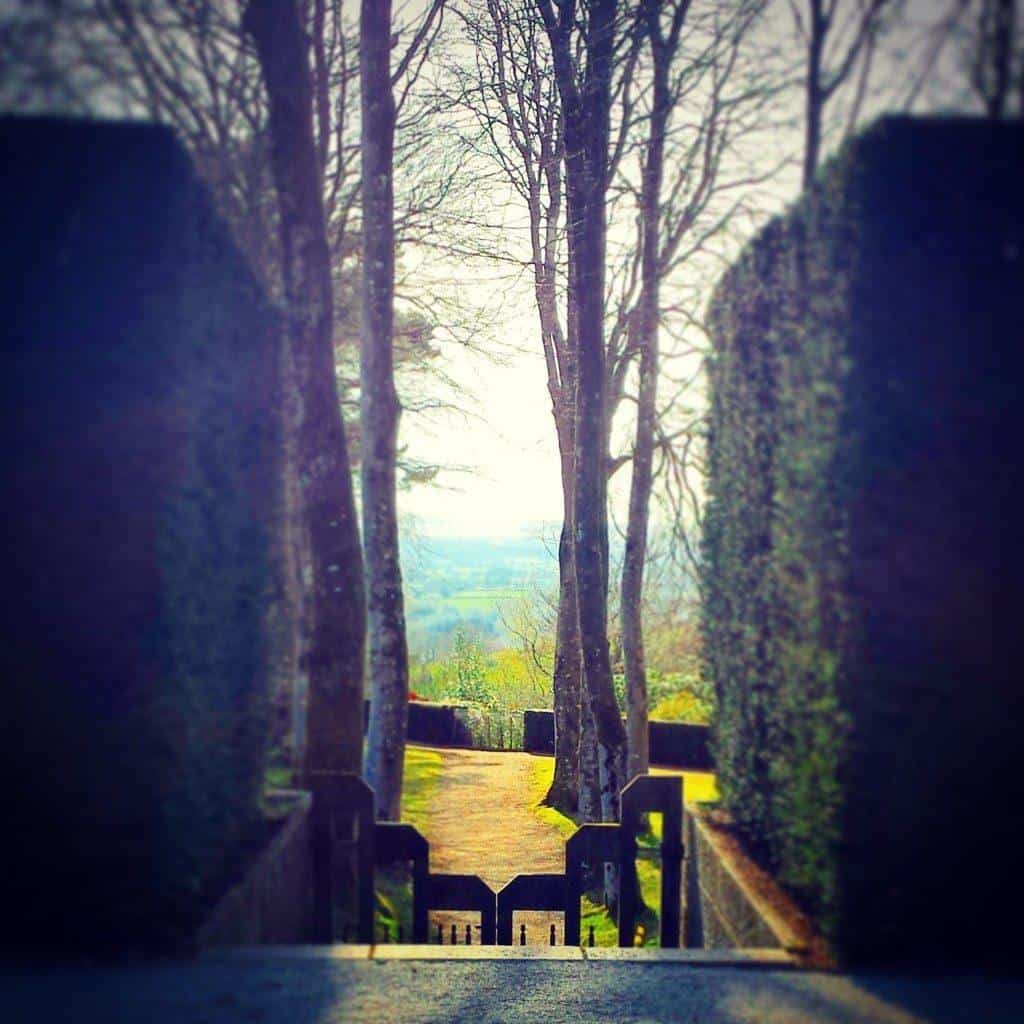
This included a shower with a number of settings, electric candlesticks for the dining room table and a refrigerator. However, the very best thing about the last castle built in England has most definitely got to be its magnificent views over the surrounding moorland!
Saving Castle Drogo for future generations
The building is currently undergoing a 13 million pound renovation, to make it watertight and structurally sound for the new few hundred years. The Castle Drogo renovation project is a massive undertaking, the likes of which have been barely seen before in the UK.
Unfortunately, due to the ‘modern’ techniques used at the time, the roof and windows have leaked since the outset. Although the materials (asphalt and lime) were ground-breaking combinations when they were first installed, they were not tested, especially against the harsh weather of Dartmoor.
This means that castle Drogo is in the middle of a £11 million+ restoration project to repair the windows, roof, and a large amount of water damage caused over the past few decades. Castle Drogo is currently still open to the public but in a way in which is different from any other National Trust property.
There are temporary interpretations by various artists and companies and much of the original furniture and fittings have been safely stored away for the duration of the project. One of my favourite temporary exhibitions within the castle is the tapestry room (formerly the dining room).
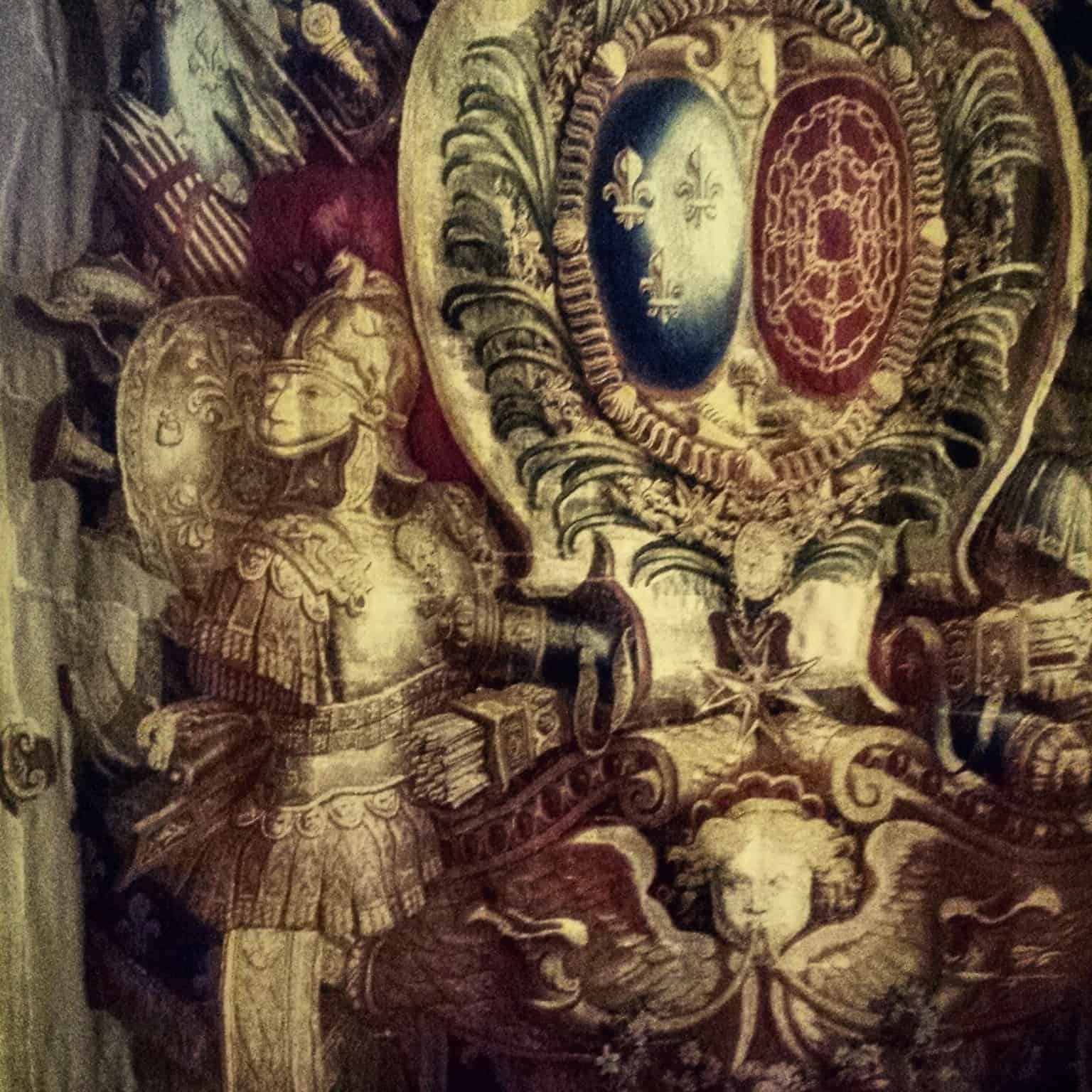
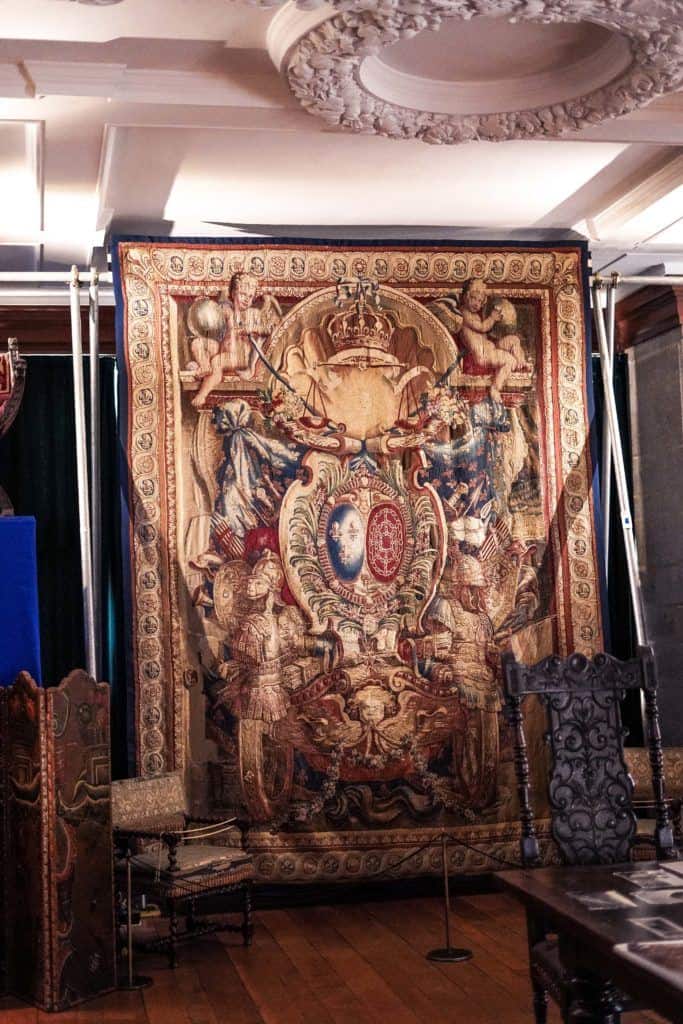
In pride of place in the centre of the Dining Room, hangs ‘Le Char De Triomphe’ tapestry. It was acquired by Mr Drewe when he bought Wadhurst Hall (now demolished) in Sussex from a Spanish Family of bankers who had gone bankrupt. The tapestry was probably made by the iconic Gobelins Factory in Paris; a world-famous organisation famous for their luxurious tapestries and rich use of colours; notably red and purple.
The tapestry, having been left flapping in the wind near the great entrance hall for years and years, was only rediscovered during the renovation to be incredibly rare and one of only a few left in the world. Created in 1693, it is a portiere; intended for covering doorways. It is originally thought to have hung in the palace of Versailles and is meant to depict Louis XIV’s military victories.
Must-see attractions at Castle Drogo
The last castle built in England boasts a wide variety of things to do, meaning that there is something to interest anyone, of any age. From the intricate details of Lutyen’s architectural masterpiece to playing croquet in the gardens to visiting stunning landscaped gardens, Castle Drogo has plenty to do, and even more to see.
The viewing Tower
The viewing tower boasts amazing views over Dartmoor and beyond. Although the viewing platform is closed in bad weather, it’s the perfect spot to observe the reparation works to the castle and get an idea of how vast the structure actually is!
Rhododendron Walk
The environment is harsh on Dartmoor and the soil is acidic (organic material just disappears soon after it is buried), rendering it difficult to grow many plants. Fortunately, rhododendrons are very hardy and plentiful on this part of the moor!
Char de Triomphe
A Louis XIV-era tapestry which was produced by the Gobelins Factory, once hung in Versailles, and somehow ended up in the middle of nowhere, England at Castle Drogo…
For years, the portiere (deriving from the French word for ‘door’ and meaning door cover) hung in the breezy corridor linking the entrance hall to the dining hall, drawing room, and the rest of the house. Dusty and grimy, little was thought of the hanging, which acted as a decorative piece for decades, rather than hiding any hidden doorways!
Little was thought of the Char de Triomphe tapestry until an inventory was taken of the house at the beginning of some major renovations works (the kind of works which are still continuing on to this day!) At this point, it was discovered that the tapestry was created in 1693 and was most likely created by the Gobelins factory of Paris.
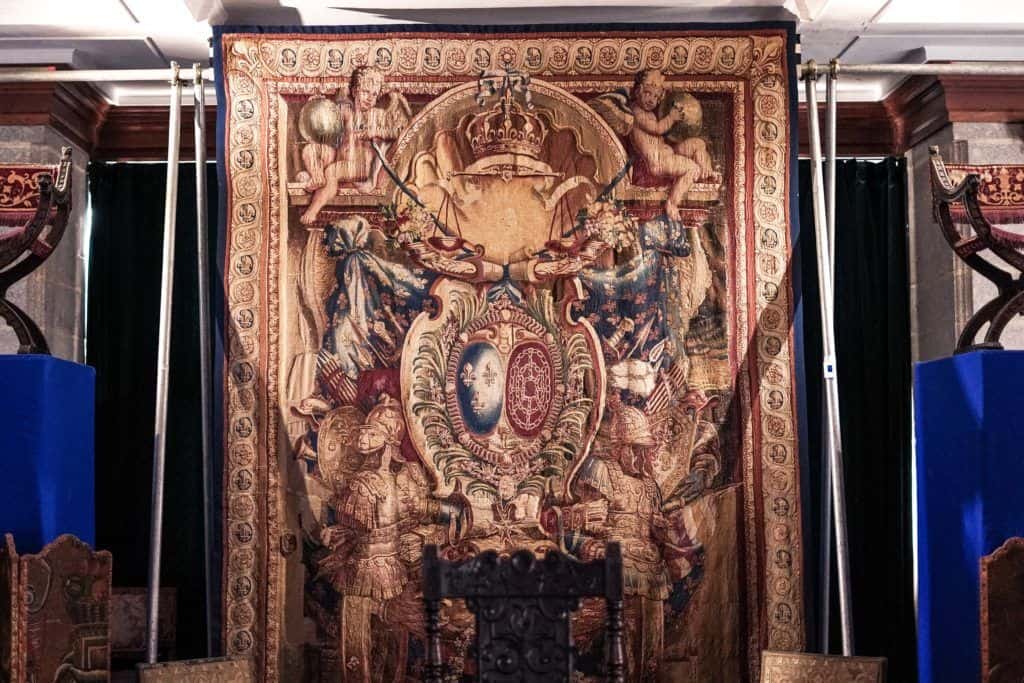
A grand and beautiful piece dedicated to celebrating Louis XIV’s military victories, it’s believed that during the French King’s reign, it hung in the Palace of Versailles. The design is by Charles Le Brun, who was the first painter for Louis XIV. Woven by hand, it would have taken six people several years to create.
Julius Drewe acquired the Char de Triomphe Portiere when he bought the Wadhurst House, Sussex and all of its estate from a Spanish banking family whom had gone bust. Quite how it ended up in Sussex in the first place remains somewhat shrouded in mystery.
Today, the tapestry is just one of a handful of this type surviving in the world. Restoration of the tapestry took place over the period of five years and, during this time, the tapestry was mostly in Norfolk.
The rose garden
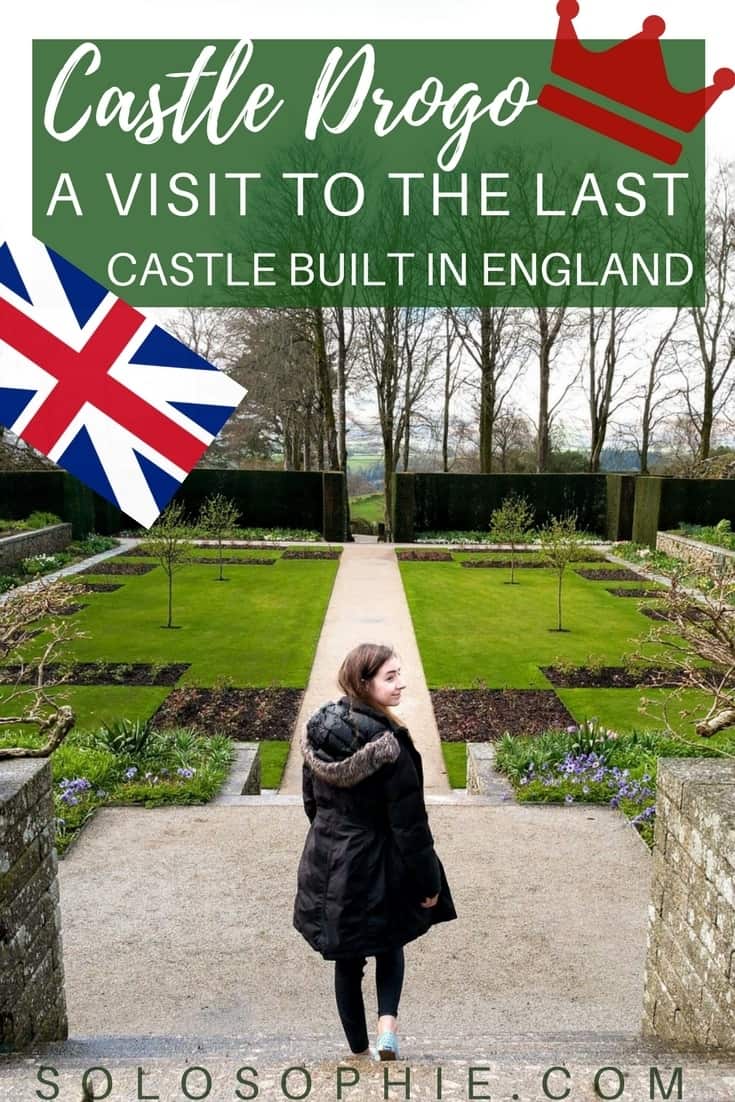
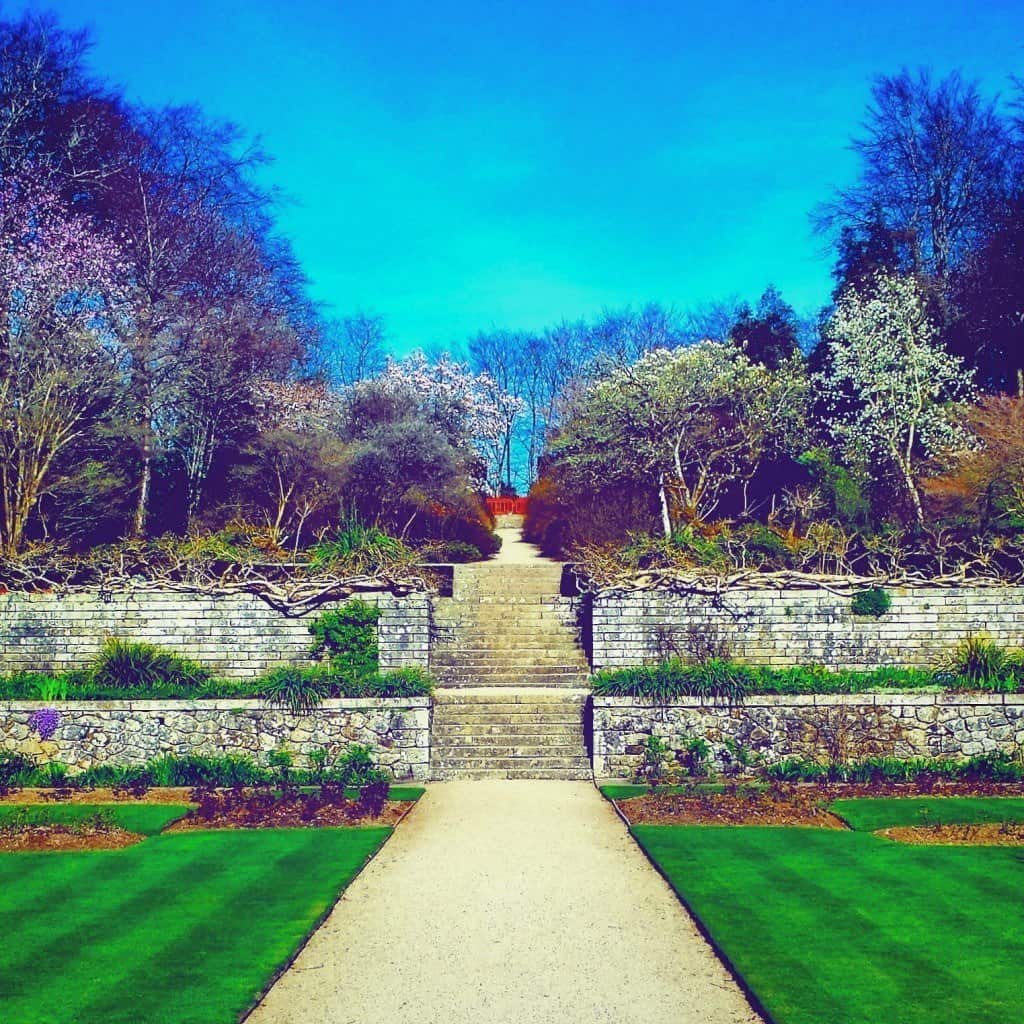
One of the more unusual features of the castle is that the gardens are hidden from the house itself by several well-placed and positioned hedges. The lady of the house, Frances Drewe, so loved gardening that her portrait features the roses of Drogo. Today a sweet-smelling rose garden still flourishes in the castle grounds.

Incredible stonemasonry
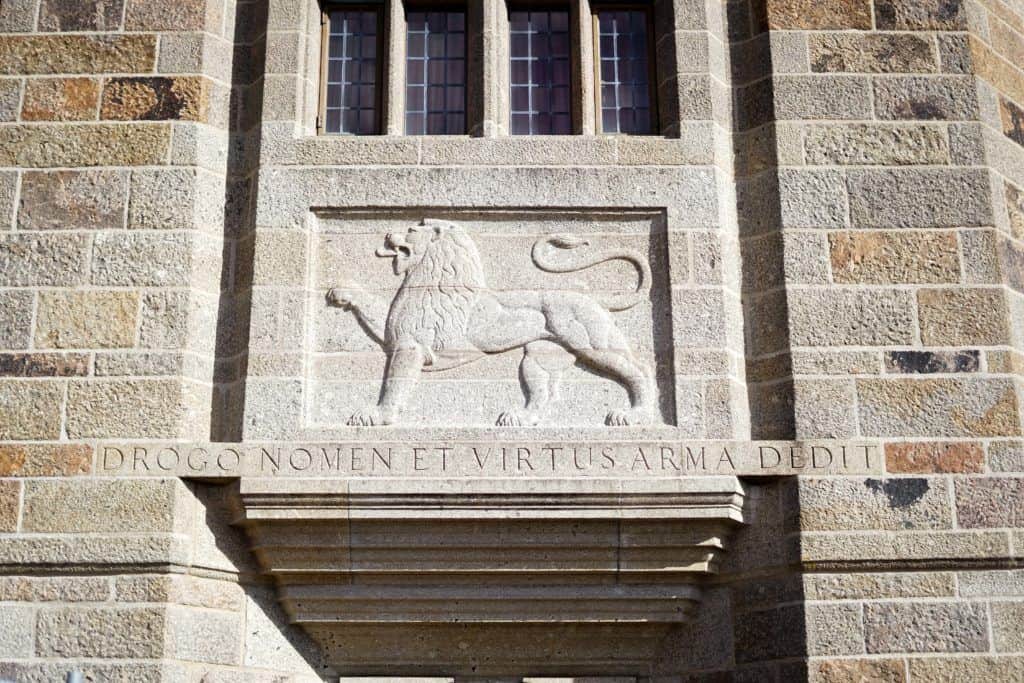
The granite blocks you see at Castle Drogo today come from a local Dartmoor quarry which has since been closed. Throughout the castle, everything has been hand-hewn, carved. And no detail is too small. From the motto above the doorway to the battlements on the roof, really take the time to admire the work of some seriously skilled masons…
Fingle bridge, Plunge Pools & Salmon Leaps:
The River Teign finds it source in the heart of Dartmoor and meanders its way through much of Devon, giving its name to several large settlements along the way; Teignmouth and Teigngrace to name but a couple. Fingle Bridge and the Victorian Plunge Pools make for a lovely walk, are free to visit, and you can even bring along your dog as well!

How to visit Castle Drogo: Tips & Tricks
Open daily between 9:30- 5:30 in the summer months with the grounds open for walks from dawn to dusk. During the winter time, the Castle is open on select days only. This is for both preservation and renovation purposes (large renovations are undertaken in the winter months each year). Yearly events are also held in December to celebrate Christmas and the New Year.
Price to visit Castle Drogo
In order to visit Castle Drogo, you’ll have to pay a fee to enter (and you’ll have to pay to park if you’re not a National Trust Member). Members visit for free and the Visitor’s Reception Centre also has a tea room and gift shop. Nearby attractions include Lustleigh (the prettiest village in Dartmoor), plenty of local pubs, and Spinster’s Rock (a Neolithic Dolmen with a rather peculiar past).
Enjoyed reading about how to visit Castle Drogo? Pin this article now, read it again later: