5 Days in the Algarve: The Ultimate Itinerary for First-Time Visitors
Last Updated on 30th July 2026 by Sophie Nadeau
This post may contain affiliate links. Please check out my privacy policy and disclosure for more information.
One of the most beautiful destinations in Portugal is the Algarve region, a stretch of coastline that is world-famous for its plush golden sands that hug the tall jagged cliffs, surrounded by crystal-clear waters. Home to historic towns and vistas that boast of the most beautiful melting sunsets on earth! Here’s how to spend the perfect 5 days in the Algarve, as well as top tips to know before you go.


Is 5 days enough time in the Algarve?
If you’re only looking to do activities, then five days is more than enough time to get a feel for the Algarve. However, if you’re in search of some sea, sunshine, and relaxation on the beach, then you’ll want to add on one to two extra days for doing this!

Getting around the Algarve
We opted to rent a car, as this gave us free autonomy to explore at our own pace and made travelling to the more remote destinations a little easier. I would say to be able to follow and fit everything on this itinerary in, you need your own transport. Check car rental prices here.
However, the Algarve region is well connected via public transport and one of the most cost-efficient ways to travel is via bus, though you’re restricted to certain travel times. Many of the major towns (and some of the smaller ones) are served by the national railway service Combois De Portugal, or you can even find ferry boats for quick coastal connections.
Day 1 in the Algarve suggested itinerary
On the first day, you’ll visit several cultural spots to get a feel for the Algarve, including a visit to the region’s capital city.
Tavira
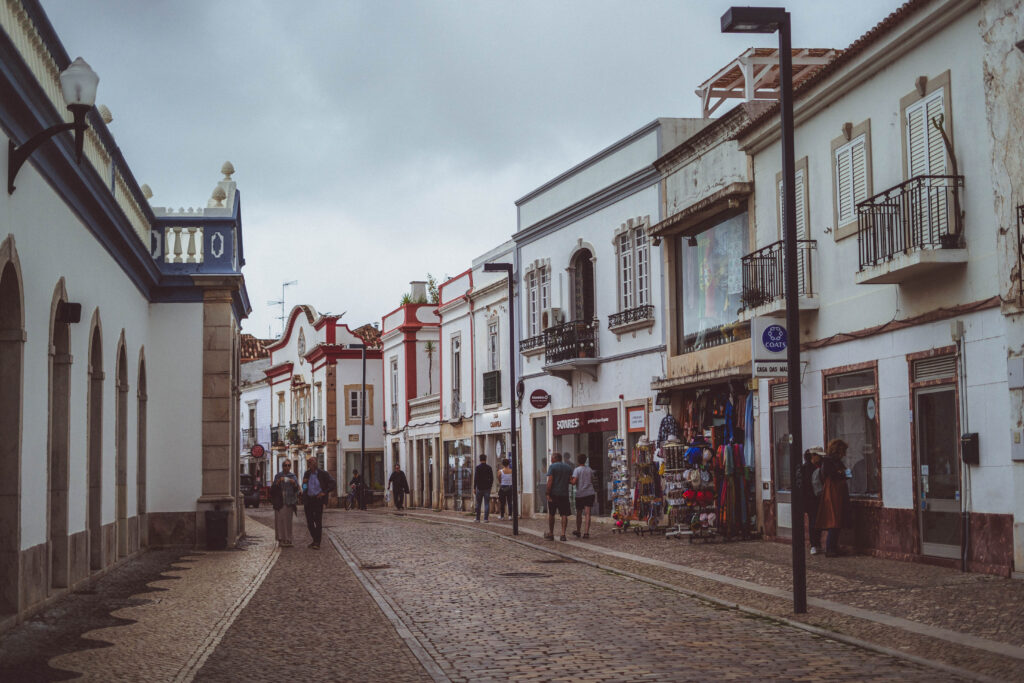
Spend the first few hours in the morning exploring the delightful town of Tavira, a hidden gem of the Algarve coastline nestled at the foothills of the Caldeirão Mountains. A little off the beaten path, this small town is rich with cultural and religious heritage and is often considered to be one of the most beautiful towns of the Algarve.
Tavira is situated along the Gilão River, and one of the best things to do while visiting is to simply stroll along the waterfront and soak up the charming ambience of this Portuguese town. Walking along you’ll see the ancient Roman bridge that crosses over the river.
Head into the historic part of the town to see the former ramparts and remains of a castle, that have since been turned into beautiful public gardens that are free to wander around.
Then, visit the town’s beautiful churches. The main church and highest point of Tavira, Igreja de Santa Maria do Castelo, dates back to the 18th century (much of the former 13th-century building was destroyed in an earthquake). The other church in the town, the Church of Mercy, is a beautiful example of Renaissance architecture.
Before leaving Tavira, I suggest getting a coffee at the main gathering place of the town, Praça da República (Republic Square), where you can watch the world go by and feel the magic of this small historic town, a wonderful place barely touched by tourism.

Faro
Next, a 20-minute drive away you’ll reach the capital city of the Algarve, Faro (which is likely to be the place where you landed as its home to the main airport of the region).
Often overlooked as a transit hub, Faro is the largest city of the Algarve and home to historic treasures that make exploring the city worthwhile. Start by wandering around Cidade Velha, which is the name for Faro’s historic old town.
Characterised by pastel-hued houses adorned with colourful shutters and Portuguese tiling that is so synonymous with the European country, the old town is the most picturesque pocket of the city. One of the more unique-looking buildings in the area is the 16th-century Faro Cathedral, which has Gothic, Renaissance, and Baroque features.
Marvel at the old city walls, then discover one of the city’s hidden gems, Bone Chapel. This small chapel is found within an 18th-century church and here you can see the remains of over 1,200 monks excavated from a friars’ cemetery in 1816.
End your visit to Faro by taking a stroll along the harbour around the colourful marina and fishing port where you can see the fishing boats gently bobbing in the wind. There are several seas-facing restaurants where you can enjoy a bite to eat, all serving delicious fresh seafood and traditional Portuguese cuisine.

Capela dos Ossos, Alcantarilha
Next, you’ll want to head towards the west to visit one of the most fascinating sights of the Algarve region, a chapel built entirely of bones, Capela dos Ossos (Chapel of Bones). Tucked away at the rear of a church, this hidden spot is not to be missed and more easily visited with your own transport.
Inside the 16th-century chapel lies a ghoulish sight of almost 5,000 skeleton remains lining the walls, ceiling and altar, some of which are painted gold. As this is such a secret spot in Portugal, you’ll likely have the chapel to yourself…although it’s a slightly macabre experience.
Porches Pottery
An 8-minute drive from the chapel is a quaint and wonderful pottery shop that has been hand-painting beautiful ceramics for over 50 years!
The Algarve is also well-known for its ceramic-making history, rooted in culture and heritage, you’ll see plenty of shops selling all manner of pots, tableware, and decoration when driving along the coastline. However, one of the best souvenirs from Portugal you can bring home has to be from Porches Pottery.
This quaint little shop uses the majolica technique, which has been around for a thousand years, creating unique ceramics, each one individually hand-painted by resident artists.
Opening hours: Monday – Friday 9 AM – 6 PM, Saturday 10 AM – 2 PM and closed on Sundays.

Stay in Ferragudo
End your first day of exploring by basing yourself in Ferragudo (see options of where to stay below). This charming and traditional fishing village is a peaceful maze of narrow winding streets, whitewashed cottages and flowers climbing the walls.
Enjoy dinner with a sea view and a delicious glass of velvety red Portuguese wine! The restaurant Borda do Cais has a small menu, offering seafood specials and beautiful views.
Day 2 in the Algarve suggested itinerary
Spend the second day relaxing on the beach, exploring the geological wonders of the Algarve and a little more time exploring Ferragudo, where the itinerary suggests you spend the first two nights of your trip.
Marinha Beach
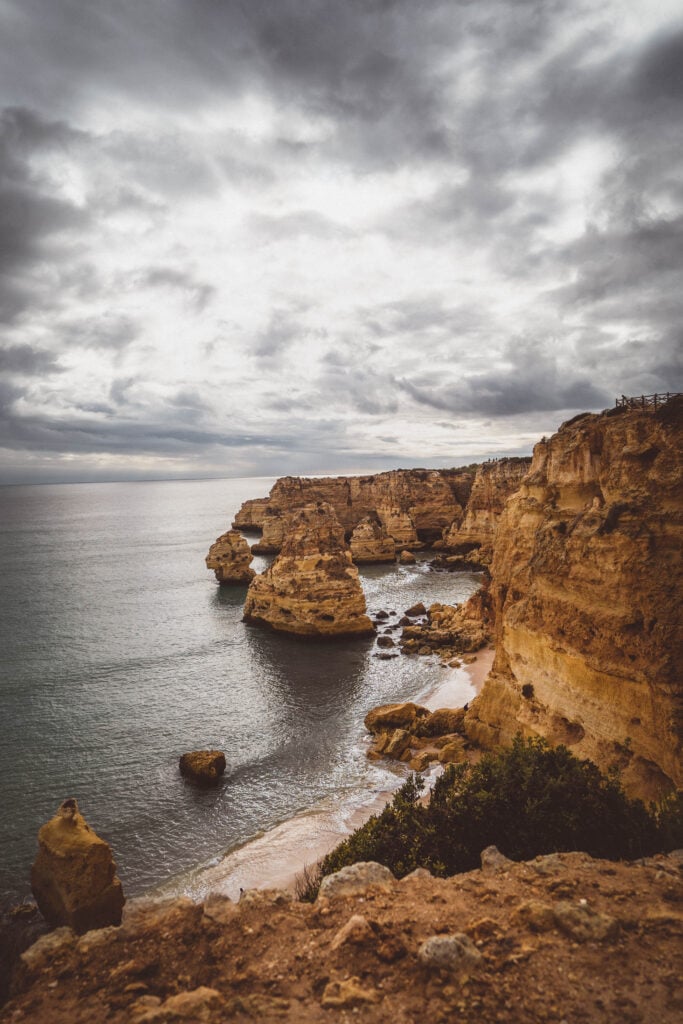
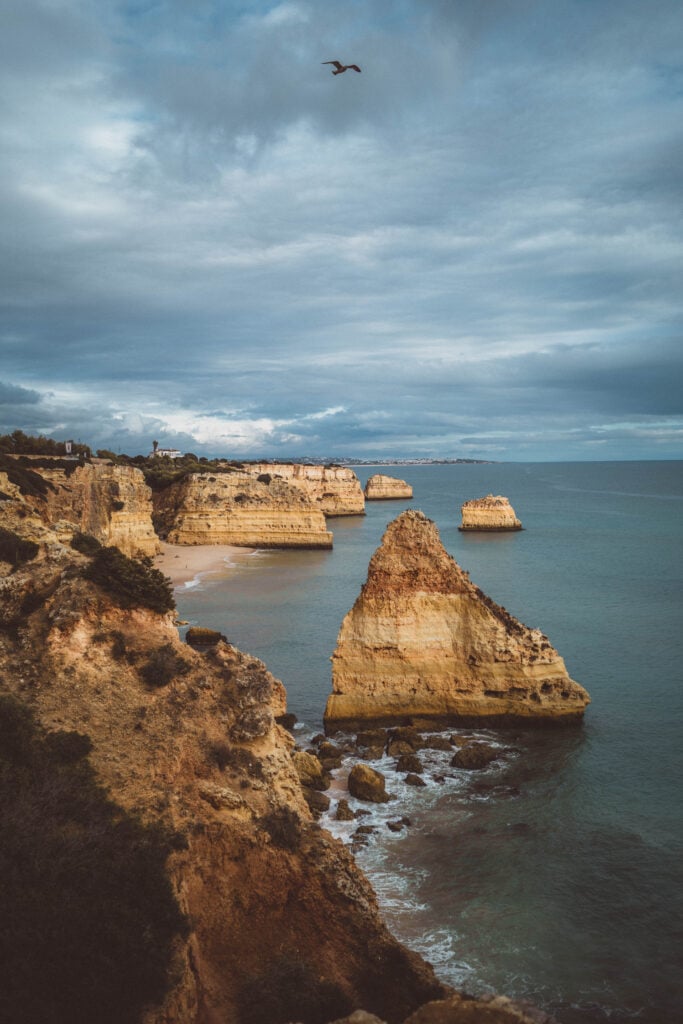
Of course, the reason most people visit the Algarve region is for its world-famous golden beaches. Start your day by heading to Marinha Beach, which is one of the most emblematic beaches of Portugal and is situated near Lagoa.
Views overlooking the beach are simply breathtaking, with crystal clear waters and huge golden cliffs. One of the biggest draws to this beach is its unique geological rock formations, a famous rock known as the ‘M rock’ or the ‘Cathedral’ comprises two archways which visitors can swim under and enjoy this wonder of nature.
Algar Seco
A short 10-minute drive along from the beach is another group of unusual and fascinating rock formations known as Algar Seco. Years of weathering and erosion have created small rock pools, caves, balconies and windows, looking into the azure blue of the Atlantic Ocean.
The golden limestone cliffs are packed with tiny fossils of marine life from millions of years ago, and every view here is postcard-perfect! You can also stop here to enjoy a late breakfast or early lunch at the Bistro Algar Seco (though you may need to book in advance if visiting during peak season).
This spot can get quite strong currents, so it’s strongly advised not to try swimming here, and be sure to have comfortable shoes as walking along the paths can be uneven. I would allow for at least 1 hour to explore the area and if you are driving, the closest spot to park is called Estacionamento do Algar Seco.
Carvoeiro
This small town is just a 12-minute walk from Algar Seco, this picturesque and traditional Portuguese resort town which is especially popular amongst hikers and beach lovers!
The most popular thing to do while visiting is to walk along the Carvoeiro Boardwalk, a clifftop path that provides stunning panoramic views out into the blue and of the surrounding landscape. The path eventually leads back to Algar Seco, where you can return to your car.
Ferragudo
Head back to your base and enjoy spending some time exploring and relaxing in the quaint little pocket Ferragudo. There are a few small beaches if you haven’t had your fill of sunshine for the day, or you can explore the old town which is home to some historic treasures.
One of the most interesting things to see while exploring the town is the ancient Fort of São João de Arade, an abandoned medieval fortification that sits on the edge of the coast. This is a great spot from which to watch the sunset melt into the horizon, ending another day of the Algarve well travelled!
Stay in Ferragudo
Spend your second night in Ferragudo (see options of where to stay below).
Day 3 in the Algarve suggested itinerary
On the third day, we suggest taking a break from the busier coastal towns and visiting the quieter more hidden gems of the Algarve Coast that lie inland, nestled amongst the natural landscape.
Monchique
Head into the mountains and visit the small town of Monchique, famed for its stunning views and natural landscape. Tucked away atop the hillside this quiet and peaceful town is characterised by its abundance of colourful buildings and narrow cobbled lanes.
The history of Monchique dates back to the Romans when they first discovered the settlement for its healing natural thermal springs. By the 8th century (during the Islamic period) the town gained notability for its honey and medronho (a strong fruit brandy) production.
Some of the best things to do while visiting Monchique are to go hiking and explore the outdoors, visit Studio Bongard Ceramics, and take a dip in the warming (and traditionally healing) thermal spring at Caldas de Monchique.
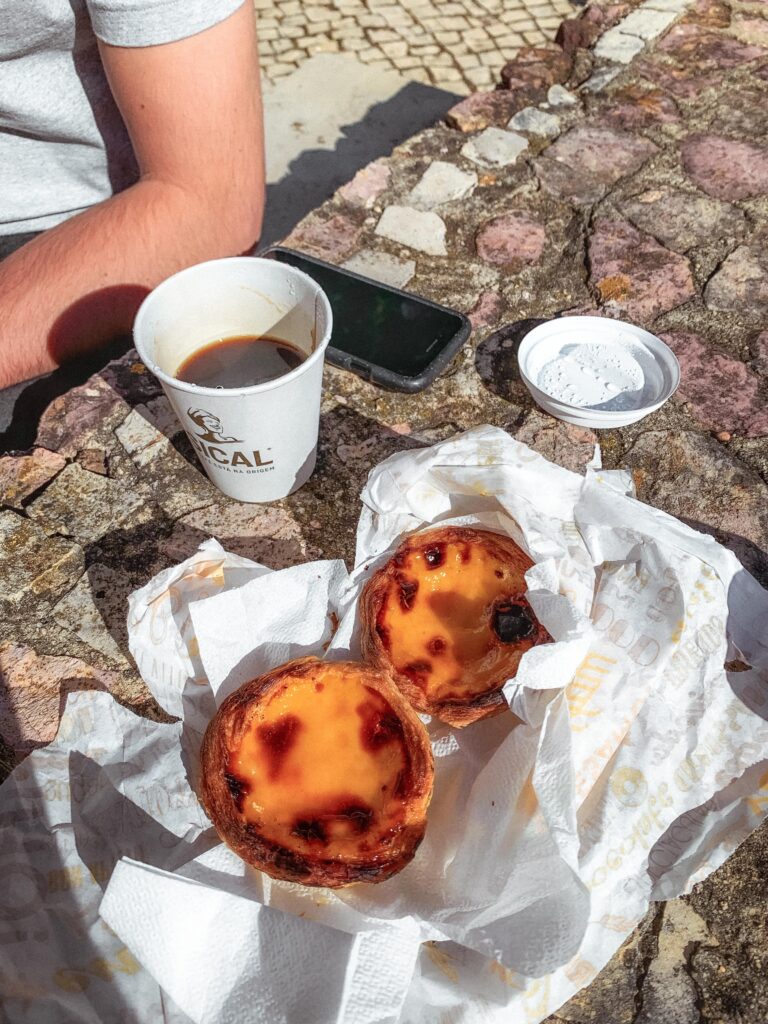
Grab a morning coffee and Portuguese pastry from the cosy café Ochalá, before leaving! I would allow for at least 2 hours or so to explore the mountaintop settlement.
Silves
Another spot in the Algarve region that offers a completely different vibe to the slightly more chaotic coastal towns is the city of Silves. Situated inland, wandering around this town feels as though stepping back in time and it stands out for its beautiful Arabic architecture.
Hard to miss, one of the most unique structures of Silves is the stunning rose-pink castle which is perched on a hillside overlooking lush green vineyards, olive groves, and the glittering sea of the Algarve coastline, as if straight out of a fairytale!
Other sights to see in the city include, the Sé Catedral, which dates back to the Middle ages and is built in the Gothic style. Directly opposite is the archaeological museum, which showcases the history of Silves dating back to the 2nd Century BCE right up until the present day.
If you wish to see all the historical sights of Silves in-depth, consider allowing for 2-3 hours to explore. There are also several Portuguese restaurants in the city, so either stop for lunch here or pick up some snacks from a local supermarket.

Alte
Another town perched high in the hills and blessed with natural beauty is, Alte. This small settlement of cobbled lanes, and whitewashed houses complete with terracotta rooftops, is best known for the two healing springs Fonte Pequena and Fonte Grande.
One of the best things to do while in Alte is to simply wander around and soak up the ambience, experiencing the feel of rural Portuguese life. Situated in the heart of the historic town is a beautiful church which dates back to the 13th century. There’s also a small museum which is free to visit and open on weekdays, which details the life and works of Alte’s most famous resident, Cândido Guerreiro.
Before leaving the hillside, be sure to check out the waterfall, which is known in Portuguese as Cascata Queda do Vigário, and is one of the only waterfalls along the Algarve. This wonder of nature is 24 metres tall and is surrounded by fig trees.

Salir
End a day of exploring in the charming inland village of Salir, which is a 20-minute drive from Alte. This speck of a village is home to fewer than 3,000 people and is best known for its 12th/13th-century castle that was constructed to protect nearby residents from Christian attacks.
If you get to the village before 5 PM on a weekday you can visit the Salir Archaeological Museum, which will give further insight into the castle and the surroundings’ history.
Enjoy dinner with a view! Janela da Serra is a cosy restaurant situated next to the church, serving homemade delicious Portuguese cuisine and tapas-style food, there are several vegetarian options on the menu. The restaurant boasts breathtaking views overlooking the natural landscape and beyond.

Stay in Lagos
For the third night, opt to stay in Lagos as its central southwestern location on the Algarve coastline makes for a great base from which to explore the western area of the region (see suggestions of where to stay below).
Day 4 in the Algarve suggested itinerary
Lagos
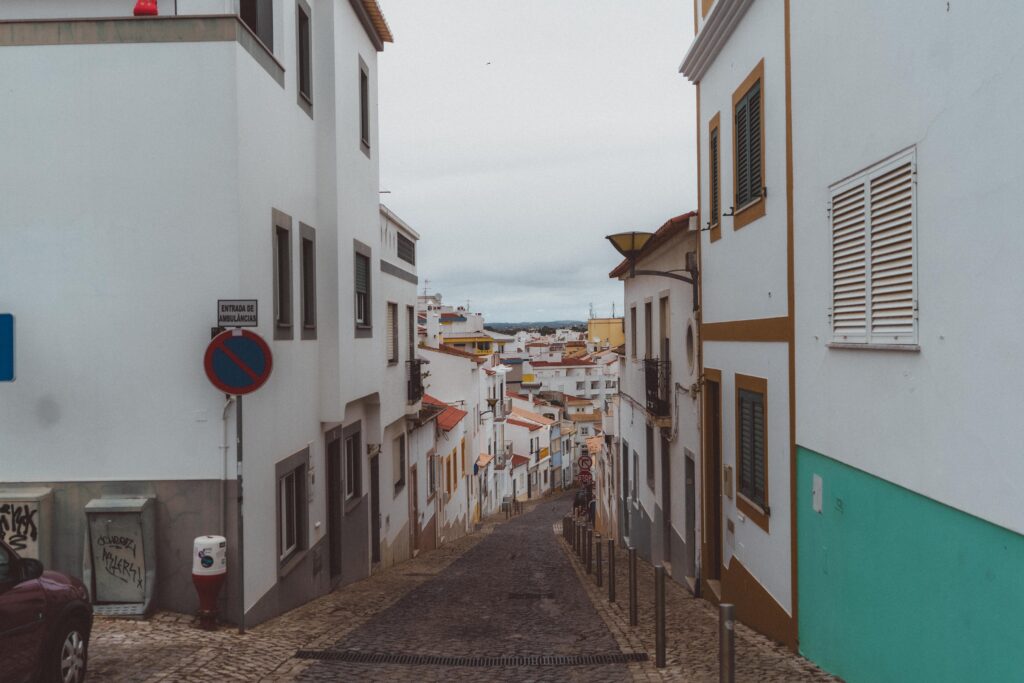
Spend a few hours of the morning exploring Lagos, which is easily one of the most popular towns of the Algarve region to visit. Known for its magnificent walled old town fortifications that were built in the 16th century, Lagos is rich with history and still very much has a medieval vibe to it.
We were pleasantly surprised at how much there is to see and do in Lagos. Here are a fews suggestions of what to do:
- Visit a small museum – There are several different museums in Lagos and each focuses on an entirely different topic.
- Lagos Fortress – Known as the Forte da Ponta da Bandeira in Portuguese, the Lagos Fortress dates back to the late 17th century and was constructed to protect the region from marauding pirates.
- Lagos Castle – Admire the former fortifications, which largely date back to the 16th-century.
- Head to the beach – One of the best things in Lagos is the stunning stretch of beaches, which are also super popular for those who love water sports!
For more information and inspiration, read our guide on the best things to do in Lagos.
Ponta da Piedade
Sun-kissed limestone cliffs are reflected by a dazzling turquoise sea: one of the most beautiful and fascinating places to visit in the entirety of the Algarve is the Ponta da Piedade.
Translated from Portuguese to mean “point of mercy”, this magnificent headland of rocks has been hewn out by the sea, storm, and salty sea breeze over millennia. You can see fossils embedded in the stratified slices of limestone, as well as caves, grottoes and natural arches. It’s truly a natural wonder of the world!
There are several ways to reach Ponta da Piedade from Lagos. You can easily get there on foot, the walk is only around 30 minutes one way. Alternatively, you can drive closer to the point and park at the free car park for visitors, which is around a 5-10 minute gentle stroll from the most dramatic of the cliff faces. Another option is to book a boat cruise like this one.

Benagil cave
Yet another Algarve treasure that is easily reached from Lagos is Benagil Cave. This sea cave has been carved out by the salty sea breeze and crashing waves for over 20 million years and is now one of the most wondrous places to visit in the region!
Unfortunately, due to over-tourism, boats are no longer permitted to dock inside the cave and so you can’t stand on the beach. With this being said, you can still book a boat tour which will take you into the cave so you can admire it from aboard your boat. See tour details here.
Stay in Lagos
End your day by finding a spot to sip on some Algarve red wine and enjoy some delicious Portuguese cooking. Taninos Wine & Kitchen is an intimate bistro/wine bar-style restaurant, with outdoor seating and comforting food, this is a great place to end a day of exploring.
Day 5 in the Algarve suggested itinerary
For the final day, it will be a little more relaxed (as that’s what holidays are for after all) and you’ll be exploring yet another very different setting of the Algarve region, right at the western tip of the coastline. You’ll likely only need half a day to explore Sagres, but it’s best enjoyed at a leisurely pace.
Sagres and surroundings (west coast)
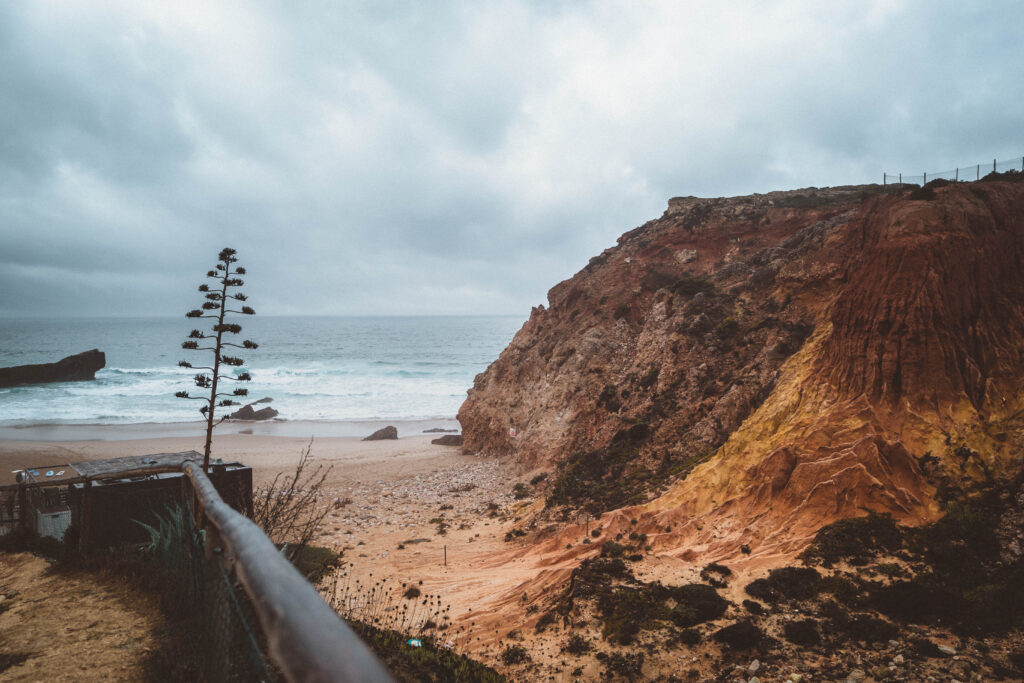
During the Middle Ages, Sagres was known as ‘the end of the world’ because it was the furthest explored place in the known world to Europeans. Like none of the other landscapes visited so far on your trip, Sagres is one of the most remote pockets in all of Portugal and is characterised by its towering cliffs, windswept, barren landscape and turbulent seas.
One of the most iconic spots to see in Sagres is the lighthouse, which also sits on the most western point. There has been a lighthouse on the point since as early as 1520 when it was already recognised that the area was full of jagged rocks and so dangerous for passing ships. Today you can visit this small beacon, but please note it’s closed on Mondays.
Visit the historic 15th-century fort, which is known as Fortaleza de Sagres, a unique structure which is quite conveniently protected on three sides by the jagged rocks, 200-foot cliff faces, and crashing waves below.
Then head to one of the most charming areas of Sagres, the old fishing port, Porto de Pesca da Baleeira. Boasting a busy fish market which takes place during the week, you can watch the fish market in action from the restaurant of A Sereia.
Due to its position directly alongside the Atlantic coastline, the western tip of the Algarve is also particularly popular amongst surfers, and is widely considered as one of the best places for surfing in all of Europe!
It’s important to note, that Sagres is very spread out, there is no quaint old town to explore, and instead many of the top sights are spread far and wide, so ideally to visit this area of the Algarve you will need your own means of transport.
Stay in Lagos
For your final night, I recommend staying in Lagos again, its location is super convenient and as there’s so much to see and do in the town it’s easy to spend plenty of time here (see below for suggestions of where to stay).
Where to stay
Base yourself in Ferragudo for the first two nights of the trip and then stay in Lagos for the final three nights. This way you’ll only have to change hotels once but you will reduce your driving time greatly and both are great base locations for exploring the destinations on this itinerary. Here are some suggestions of where to stay (based on web reviews):
Ferragudo:
Vitor’s Village – Overlooking the Arade River, this casual and relaxed hotel is around a 20-minute walk from the beach and castle. Amenities include free parking and free Wifi, an outdoor pool and a restaurant bar area. Check prices and availability here.
Hotel Rural Brícia Du Mar – This beautiful hotel boasts great reviews from guests, with clean comfortable rooms and friendly staff, there are also beautiful views. Amenities include an outdoor pool, free Wifi, free parking and a bar and restaurant area. Check prices and availability here.
Lagos:
Canavial I & II Apartamentos – Offering modern studio apartments located just 600 meters from the sandy Porto de Mós Beach. The apartments are set within a small garden and have two swimming pools for guests to enjoy. Amenities include free Wifi, free parking, an outdoor terrace, rooms with balconies and sea views. Check prices and availability here.
Indigo Guest House – Situated less than 700 meters from two different beaches, this recently renovated guesthouse has double rooms and a roof terrace with stunning views. The kitchen and bathroom facilities are shared, and there’s free Wifi and outdoor seating. Check prices and availability here.
Travelling to Portugal soon? Read our 10+ Handy Portugal Travel Tips Guide to make planning your trip a little easier!
Enjoyed reading about how to spend the perfect 5 days in the Algarve region? Pin this article now, read it again later: