
How To Spend The Perfect 10 Days in Provence Itinerary
Last Updated on 29th July 2026 by Sophie Nadeau
This post may contain affiliate links. Please check out my privacy policy and disclosure for more information.
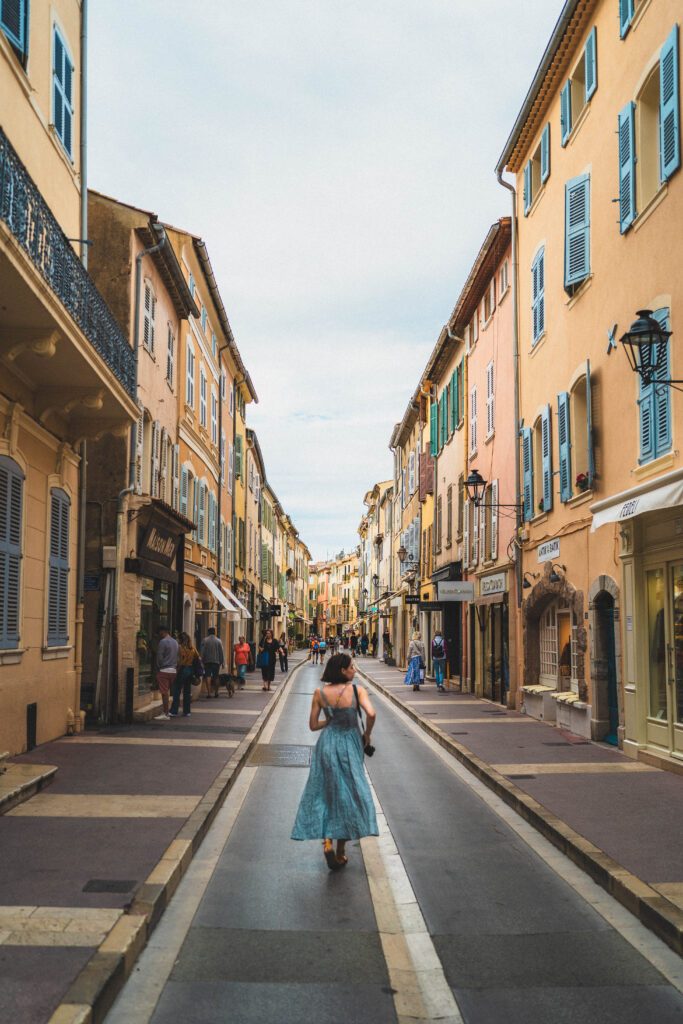
Picture perfect Provence has been a dream destination for travellers for centuries. And once there, it’s easy to see why. Breathtaking mountain-scapes are crowned by fortified castles which, in turn, give way to meandering waterways and medieval towns.

When to go?


Suggested 10 days in Provence itinerary
Day 1: Introduction to Provence
Avignon


Day 2: Water towns of Provence
Fontaine de Vaucluse
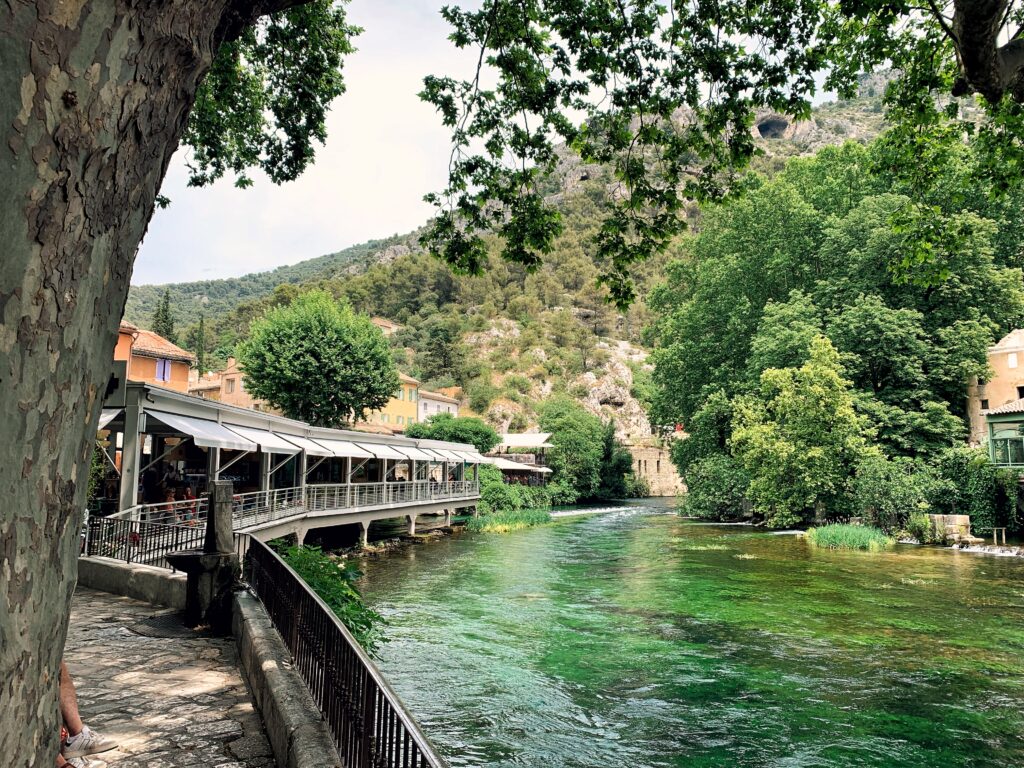
Fontaine de Vaucluse is the fifth largest spring in the world, where an impressive 630–700 million cubic meters of water spill out each year. The water is so pure that the site is considered part of the Natura 2000 network.
Originally, the town was named Vallis Clausa by the Romans. This means ‘closed valley’. The ‘Fontaine de’, on account of it being the source of the River Sorgue, was only added in the middle of the 20th-century to omit confusion between the name of the region and the name of the town itself.
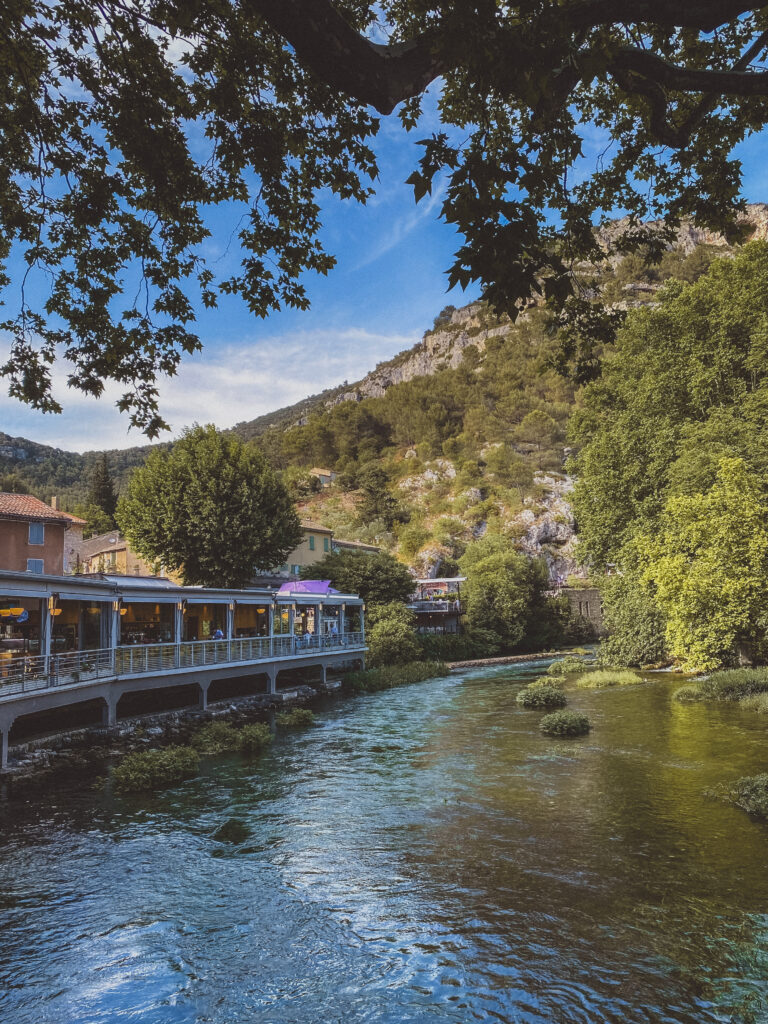
While the spring is both a beautiful and spectacular sight, there are several other things to be enjoyed in the town. There are a number of museums in Fontaine de Vaucluse which showcase the history and culture of the area.
From the Italian poet Francesco Petrarca’s former 14th-century residence, to an Underwater Museum, French Resistance Museum and a Paper Mill Museum(Moulin à Papier).
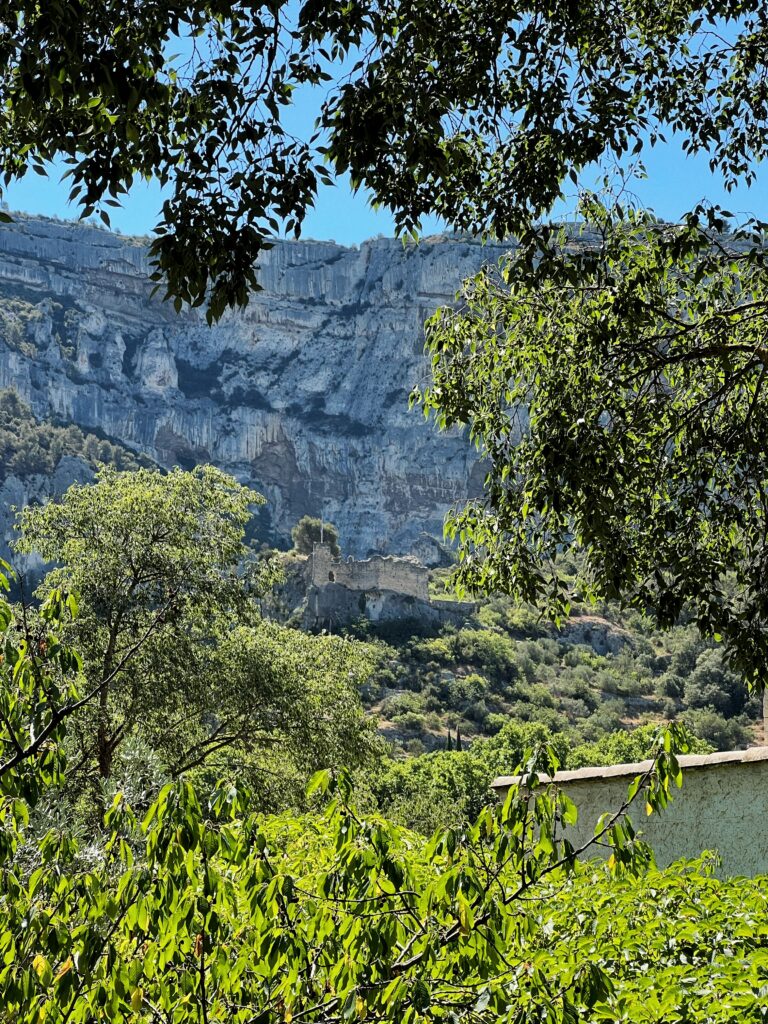
One of the best things to do while visiting Fontaine de Vacluse is to take the short, but steep, hike up to the 14th century ruins known as, Bishops of Cavaillon Castle. These beautiful limestone remains boast magnificent views overlooking the town and the rolling hills that surround. Read our guide on the best things to do in Fontaine de Vacluse.
L’Isle sur la Sorgue
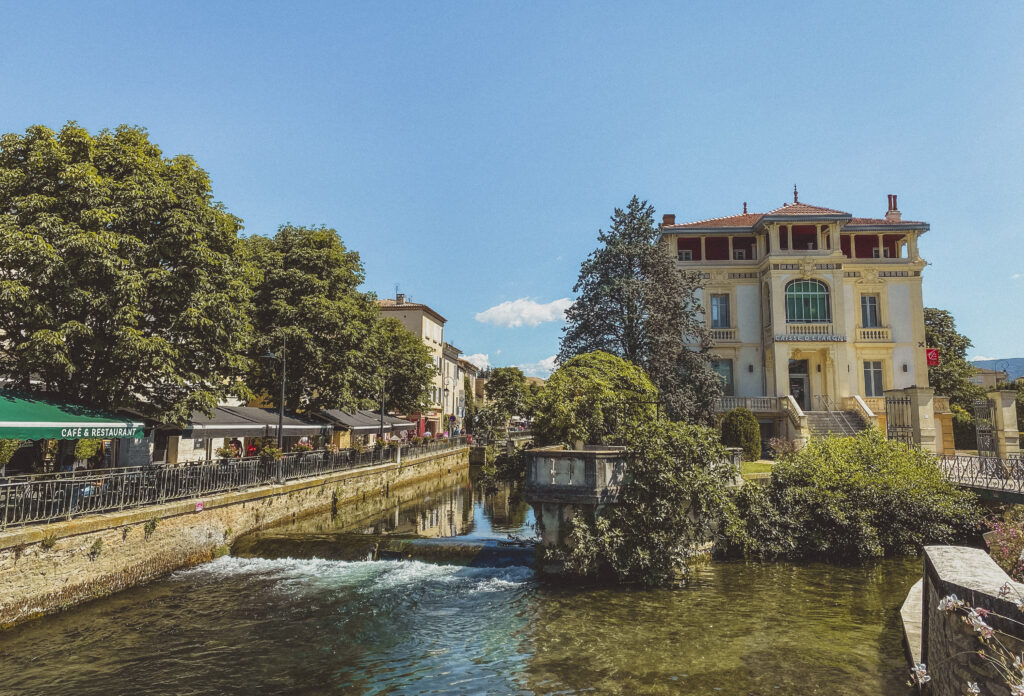
This delightful market town is divided into five distinctive branches by the River Sorgue, making it a small pocket of gently flowing streams and tree-lined banks. L’Isle sur la Sorgue has earned its title as “The European antiques capital” thanks to its impressive collection of antique dealers and vintage shops.
If at all possible, you should aim to visit this town on Sunday when a sprawling market takes place and over 300 vendors take to the town centre to sell everything from local Provençal ceramics and pottery to fresh fruit and vegetables, baked breads and every other Provence food stuff you can think of!
Aside from perusing antique treasures, be sure to stroll along the Sorgue River and see if you can spy out some of this historic water wheels. The force of the Sorgue was useful in industry in a time before electricity and these wheels were used to power spinning mills and mill grain. There were once as many as 66 wheels in Isle sur la Sorgue. Read our insider’s guide to the best of L’Isle-sur-la-Sorgue.
Day 3: High in the hills of Provence
Gordes
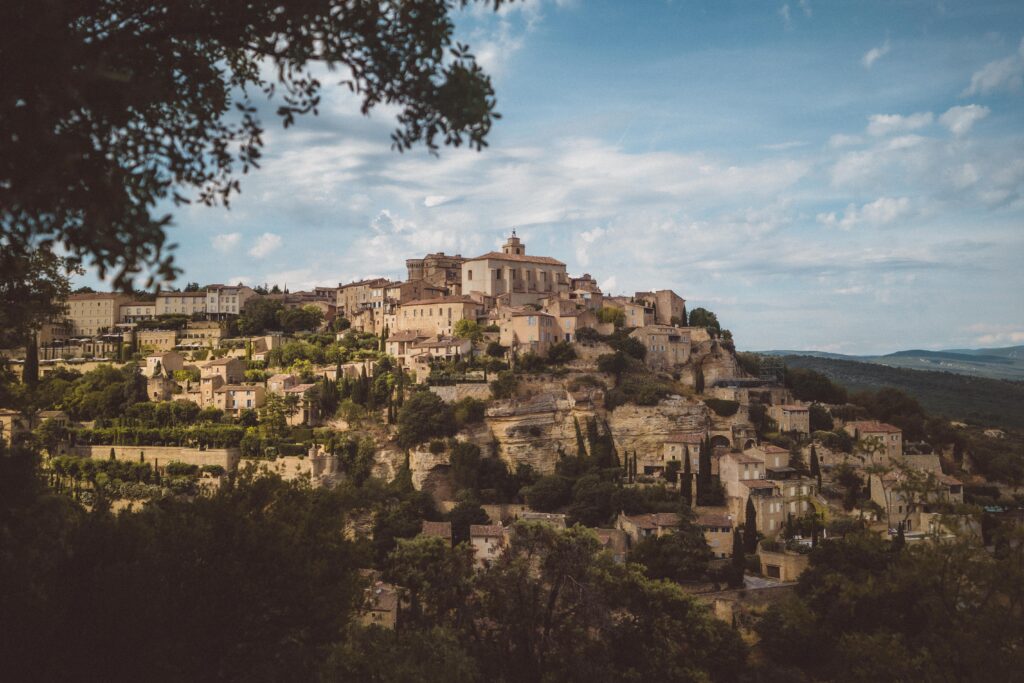
When first through Gordes, it feels as though time has stood still in this fairytale Provençal ‘village perché. The dreamy golden stone terraced houses rise up the hillside to the Renaissance 14th century that crowns the town. It will come as no surprise that Gordes is classified as one of the Most Beautiful Villages in France.
Gordes is undoubtedly one of the most famous towns in Provence and its picturesque nature has attracted plenty of famous residents over the years. Today, the town is ‘the place to be,’ as referenced by the fine dining possibilities and luxury hotels.
When it comes to visiting, undoubtedly one of the best things to see is the magnificent viewpoints both from the town and of Gordes from afar. Then, you’ll want to enjoy soaking up the charm and laid back ambiance of the town as this is where most of its charm lies. Read our insider’s guide to the best things to do in Gordes.
Abbey Notre-Dame de Senanque
Just 4 km from Gordes, set alone in a wild a narrow valley, lying silently amongst the sea of lavender fields is the stunning Cistercian abbey, Abbey Notre-Dame de Senanque. The abbey is still in use and seven times a day, the monks who reside there gather to pray together in the church.
Aside from its obvious beauty, the 12th century abbey is particularly renowned for its production of lavender delights. Selling lavender scented soaps, candles, sweets and treat, the monks also create Senancole, a liqueur flavoured with various savory tasting plants and herbs. Read our guide on how to visit Abbey Notre-Dame de Senanque.


Roussillon
An orange hued town that can be seen from miles around thanks to its warm umber glow, Roussillon (“Russet”) gained fame due to its wealth of russet rocks and orchre stone.
The beautiful village perché, is the main centre of the Ochre country and its surrounding landscape has often been compared to that of Colorado in the United States. Two of the best places to experience this vibrant orange rock include Le Sentier des Ocres and Colorado Provençal.
Ochre can be found across Provence in a strip of 25 km which stretches between Roussillon and Gignac and passes through Rustrel. In times gone by, this ochre was mined so as to be used in numerous ways, including lime paints, colour coatings, and concrete.
The mining has created many funny formations and rocky outcrops, giving names such as ‘Giants’ Causeway’ and ‘Needles of the Fairy Vale’.
While going on the Ochre trails are the best way to see for yourself, if you want to learn even more about the history of ochre mining in the region (as well as the protection of the landscape today) then you can visit the Écomusée De L’ocre Roussillon.
Another thing to do before leaving is to visit the small shops of the town, here you can see local art work made from the pigment of the stone. There’s also the opportunity to buy small jars of ochre, natural or dyed, you can pocket home a little piece of Provence as a souvenir or to make your own art! Read our guide on the best things to do in Roussillon.

Day 4: Hidden gems of upper Provence
Banon
Banon is a charming hilltop town which comprises of an older historic upper town and more modern lower town. This sleepy settlement is home to a glorious variety flora and fauna, vine covered buildings and sweeping vistas overlooking the Provençal landscape.
One of the best things to do, apart from simply walking around and soaking up its charm, is to visit Le Bleuet Bookshop. Open 365 days a year, this beautiful bookshop boasts over 100,000 titles for sale! Read our guide on the best things to do in Banon.

Saint-Saturnin-lès-Apt
Boasting crumbling castle ruins, pretty in pastel shuttered houses, and breathtaking views, wandering around Saint-Saturnin-lès-Apt feels as if stepping into your very own fairytale. This gorgeous hillside Luberon village is rich with beauty and charm.
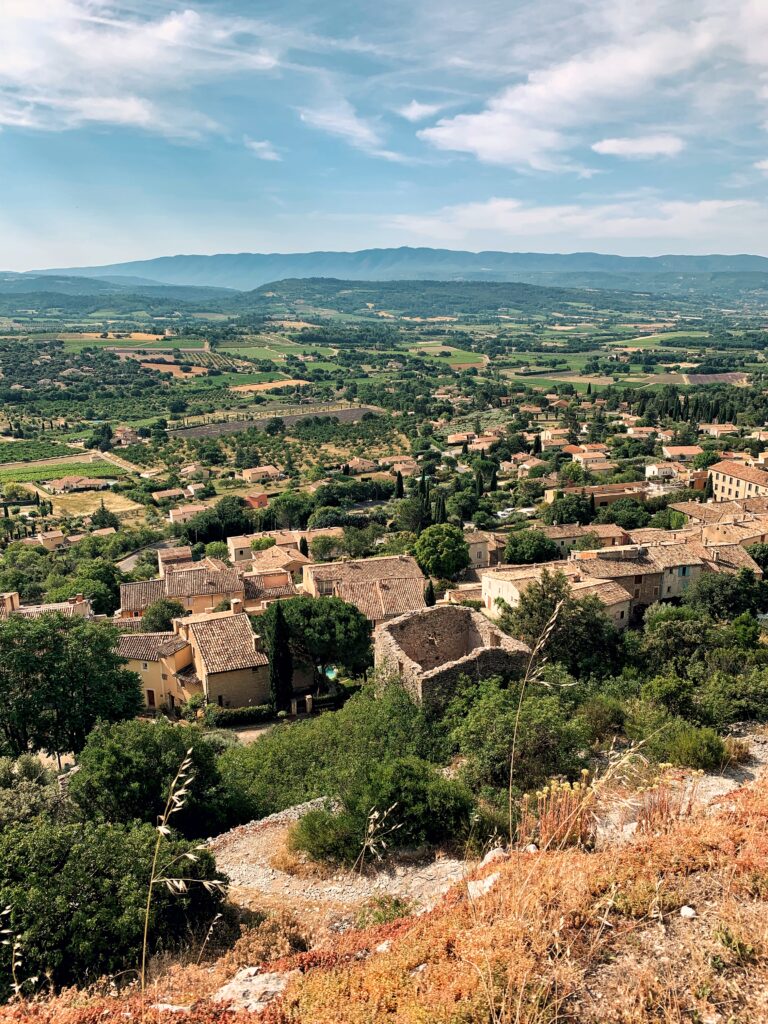
One of the best things to do while visiting the village is take the steep hike up to the fortress ruins. The first attestation of a castle on site was in 1009 and it was from here that the rest of the village sprung up. On your loop descent down again, you’ll pas by a tranquil water reservoir and dam, which was built in 1863. Read our guide on the best of Saint-Saturnin-lès-Apt.

Day 5: Discover the Provençal countryside
Moustiers-Sainte-Marie
Often referred to as as simply Moustiers, this historic village is nestled in the heart of the Verdon Regional Natural Park, dramatically set into the side of two limestone cliffs. The terraced village climbs the hillside and between the cliff faces, a gold glittering star is suspended by iron chains attached from either side.
Little is known how the star came to be hanging above the village, though it’s believed that it was placed there by a local knight, on his return from the Crusades. The settlement is also well-known for its faïence pottery, which has been produced in the town and surrounding area since the 17th-century.
The once flourishing pottery industry of Moustiers can still be seen in the small shops which still sell the distinctive white and pale blue faïence pottery pieces. For those who are particularly interested in pottery and its history, there is even a museum of faïence located in the heart of the medieval village.
Other things to be enjoyed include marvelling at the waterfall that spills from the rocks above and gently streams through the village, and visiting the beautiful Romanesque style church that sits in the main square. Read our guide to the best things to do in Moustiers-Sainte-Marie.

Valensole lavender fields
Deep purple and heavenly in smell, enjoying the various seas of lavender in Provence is easily one of the best things to do while exploring the region. The most famous of all of the Provence lavender fields are those to be found around the town of Valensole, which is just minutes from the village Moustiers.
Lavandes Angelvin is the best-known of the lavender fields on the Valensole Plateau and it’s here where you’ll find the trees on the lavender horizon which are so often photographed at sunrise. Lavandes Angelvin is on the D6 (one of the main routes through Provence).

Gorges du Verdon
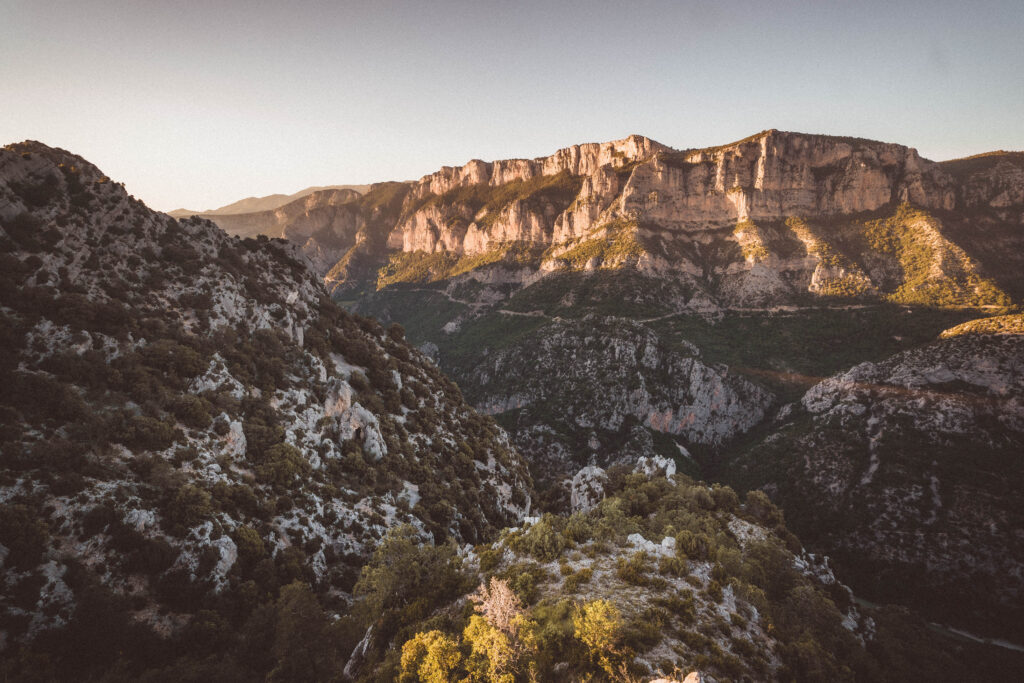
Situated to the west of Moustiers, the Gorges du Verdon is a river canyon that sprawls across the northernmost stretch of the central Povençal hinterland. A wild and rugged landscape of mountain trails, the sparkling turquoise Lake of Sainte-Croix and several breathtaking viewpoints are to be found in this pocket of the region.
Tunnelled 700 meters deep and stretching 21 km long, there are few landscapes in Europe quite as dramatic as this. The towering cliffs are home to a diverse range of flora and fauna, including eagles, wild boar and rare orchids.
The freshwater lakes are mineral rich (pretty cold) but perfectly pleasant to swim in when the hot summer sun is beating down. During peak season the lakes are dotted with boats and swimmers.
Whether it be hiking, kayaking, or simply strolling around the shores of the lake, this outstanding area of natural beauty is best soaked up via its many outdoor pursuit possibilities. Read our complete guide to Gorges du Verdon.

Day 6: Hidden gems of Verdon
Villecroze
Perched in the wooded hillside of the Var department of Provence, Villecroze is a tranquil medieval village best known for its curious troglodyte cave dwellings. The beautiful village is lined with terraced cafés, restaurants, and is also home to a majestic 35 metre high waterfall and Tuscan-style garden.
The Troglodyte caves of Villecroze were formed over 700,000 years ago as a result of slow calcification of plants and mosses from a waterfall that once poured over the rock face.
The 16th century dwellings are found on the eastern edge of the village and can still be visited today; the caves and their stone windows can be admired from the peaceful gardens that sit in the foreground.
Cascade de Sillans
The Cascade de Sillians (Waterfall of Sillans) is considered one of the most beautiful waterfalls in France. Its fresh emerald colour water cascades down at an impressive height of 44 meters and, if visited when the sun’s shining, you might even spy small rainbows forming.
The only way to reach this waterfall is along the ‘belvédère’ walking route. However, visitors must now park at Place du 8 mai 1945, as parking has been limited so as to not disturb the residents. From here, it takes around 15 minutes to stroll winding through the woodland path to reach the waterfall viewing platform.
Aups
Another charming medieval town of the upper Var is Aups, found under the dappled shade of huge plane trees. While there is not so much by way of attractions in Aups, this sleepy little town is the perfect place to enjoy respite in the shade, wander the cobbled lanes and sip on a refreshing drink while soaking up the laidback ambiance of the town.
While exploring, you might pop into the Simon Segal Museum, which houses a collection of modern art from three different schools of painting: Toulon, Bourges and Paris.
Tourtour
Like much of the region’s settlements, Tourtour is included in the list of ‘most beautiful villages in France’. This ancient hilltop village gives way to some of the widest and most stunning vistas in Provence, where swathes of olive groves, wooded pines and cypress trees can be seen sprawling across the landscape.
Although the village population itself is just over 500 people, Tourtour boasts as being home to the remains of three castles, as well as several churches. The historic centre of the village is completely pedestrianised and filled with quaint terrace cafés, a fountain and main square.
One of the greatest joys of a visit to Tourtour is sitting outside and immersing yourself in the convivial atmosphere of its many restaurants. Spend you evening here dining in Provençal style! Read our guide on the best things to do in Tourtour.
Traditional Provençal cuisine is bold and packed full of flavour, yet renowned for its simplicity and use of farm-to-table ingredients.
Provençal cuisine draws inspiration from the Mediterranean climate, as well as its proximity to Italy, all the while being situated in La France!
Due to its location along the coast, Provence dishes are also heavily fish-focused.
Day 7: Hidden gems of the French Riviera
Fréjus
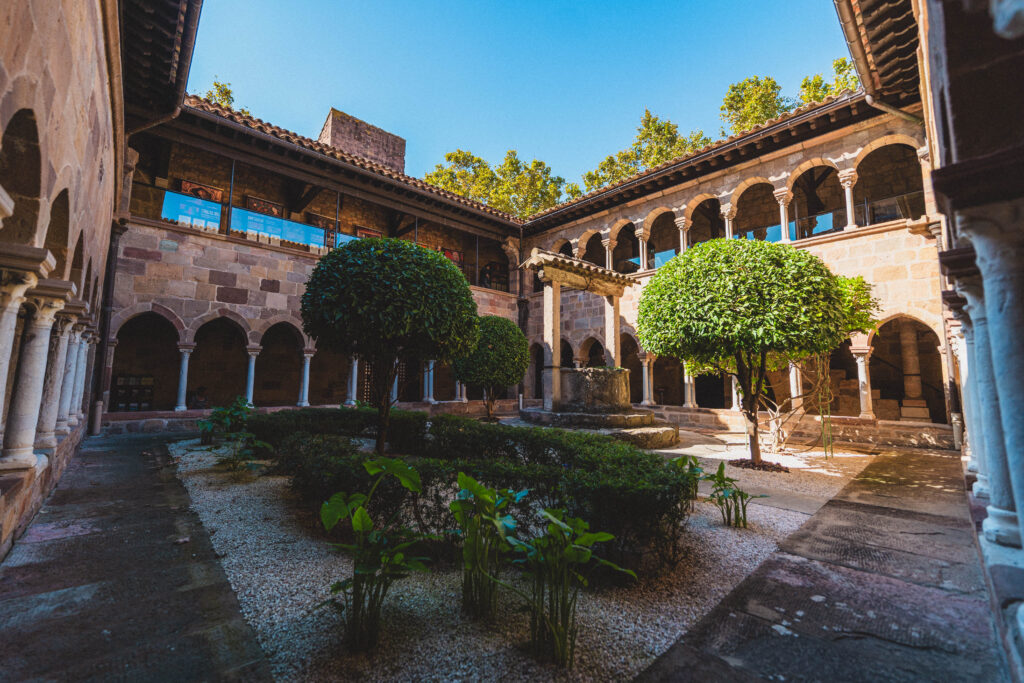
Start your day in the coastal town, which is often referred to as the “French Pompeii”, as it was over 2,000 years ago that Julius Cesar came to the area and made Fréjus, the Roman’s first naval base in the Mediterranean.
Fréjus is renowned for its beauty and rich historical interest. Home to a plethora of Roman remains and distinguished medieval ecclesial sights, it’s one of the most frequented seaside resorts on the French Riviera and also boasts one of the largest beaches in the Côte d’Azur. Read our guide on the best things to do in Fréjus.
Saint Raphaël
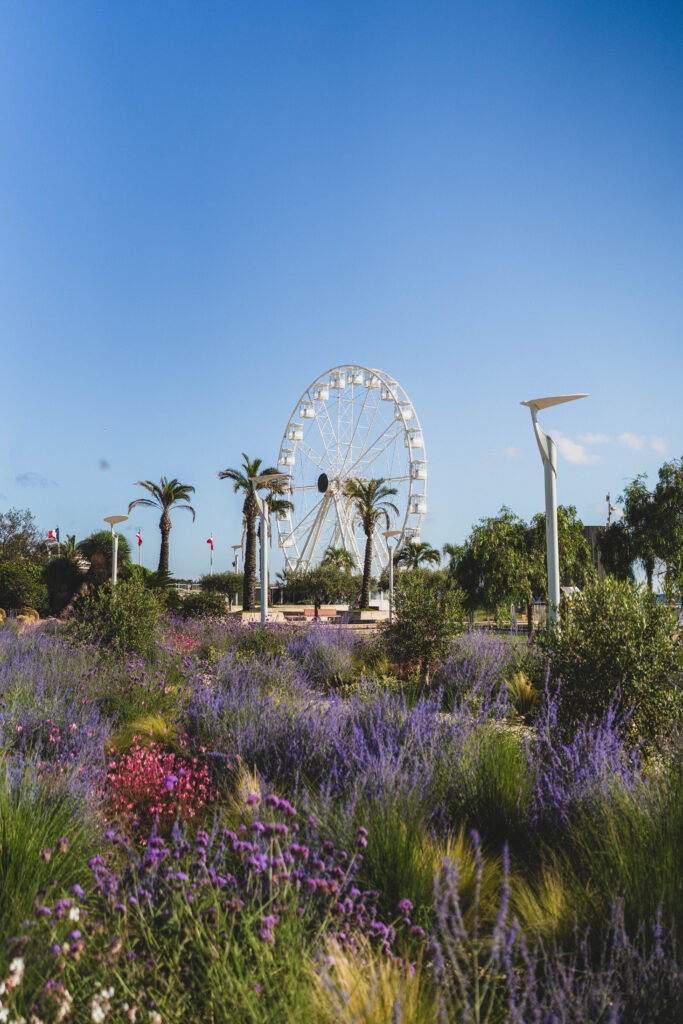
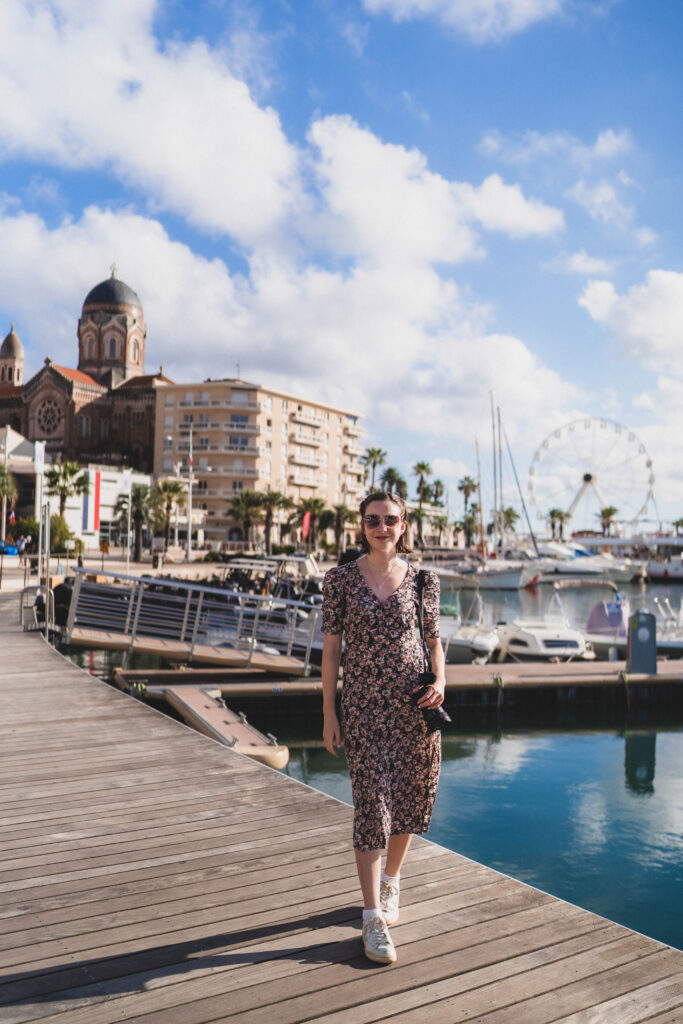
Next, head to Fréjus’ larger neighbouring town, Saint Raphaël. This bustling seaside resort best known for its beaches and rocky coves and is home to the secluded île d’Or (Golden Island), which is considered one of the most beautiful symbols of the Estérel Côte d’Azur area.
One of the main highlights to visit in town is the beautiful ecclesial building, Basilique Notre-Dame-de-la-Victoire. Built from pink sandstone mined from the Esterèl mountain range, it was constructed with hopes to make the town look more attractive, in turn drawing in more visitors.
Boasting some 25 beaches, Saint Raphaël is the idyllic spot for those who love to bathe in the sunshine and enjoy the warm climate of the French Riviera.
There are also several hiking opportunities if you head up to the nature reserve, Cap Dramont. From here, visitors are blessed with breathtaking views that stretch from Agay Bay all the way to the Estérel. Read our guide on the best things to do in Saint Raphaël.
Day 8: Classic towns of the French Riviera
Saint Paul de Vence
One of the most frequented villages in Provence is the fairytale hilltop village Saint Paul de Vence, which is often dubbed the ‘second most beautiful village in France’. Although wandering around this medieval settlement feels world’s away from the glitz and glamour of the French Riviera, it’s not too far from the bustling city of Nice.
As if stood still in time, Saint Paul de Vence is a labyrinth of cobbled stone alleyways, a smattering of churches and museums, as well as a lavoir (public wash basin) and fountain. But, one of the best things in this village perché is undoubtedly its sweeping views overlooking the Cotê d’Azur!
Wandering through the village you’ll come across plenty of small boutique shops, terrace cafés and the historic Espéron Tower, which looms above the main square. Some of the prettiest streets in Saint-Paul-de-Vence include rue des Doriers and Montée. Read our insider’s guide to the best things to do in Saint Paul de Vence.


Cagnes-sur-Mer & Haut-de-Cagnes
Cagnes-sur-Mer is split into several parts. Cros-de-Cagnes (the lower part) of the once quaint fishing village, stands today as a commercialised resort town, swelling with high-rise flats, hotels and supermarkets.
Similarly, Cagnes-sur-Mer (the upper town) is pleasant, but nothing special, and is the kind of settlement which can be found pretty much anywhere in France.
A point of interest for those who love art, Renoir spent the last 12 years of his life in Cagnes-sur-Mer which is known as his “Cagnoise” period.
His former Neo-Provençal home (built for the family in 1908) has since been transformed into a museum, showcasing over a dozen of the artist’s paintings, as well as some of his personal items.
When it comes to the upper town, a total contrast to the modernity below, the old hill village Haut-de-Cagnes is a weather beaten, cobble stoned gem.
Capped with an illustrious fortress, the village boasts stunning vistas of the surrounding French Riviera landscape. Read our Cagnes-sur-Mer & Haut-de-Cagnes travel guide.

Day 9: Discover Nice
Nice
The bustling and colourful capital of the Côte d’Azur exudes bucket loads of character and culture. Nice is the fifth largest city in France and can be found along the jade coloured shores of the French Riviera.
Nice la Belle, as it’s nicknamed, is renowned for its stunning beaches, vibrant markets, and charming old town. The city is also famed for its spectacular seaside promenade, which is known as the Promenade des Anglais.
From delicious eateries, beautiful historic ecclesial buildings and home to Musée Matisse, a museum dedicated to the life and works of the beloved French artist. Nice doesn’t fall short of things to see and explore.
Of course, one of the best things to do in the French Riviera is to head to the beach and soak up the sunshine. Enjoy the stunning views of the Mediterranean Sea and the iconic blue chairs! Read our how to spend one perfect day in Nice guide.

Èze
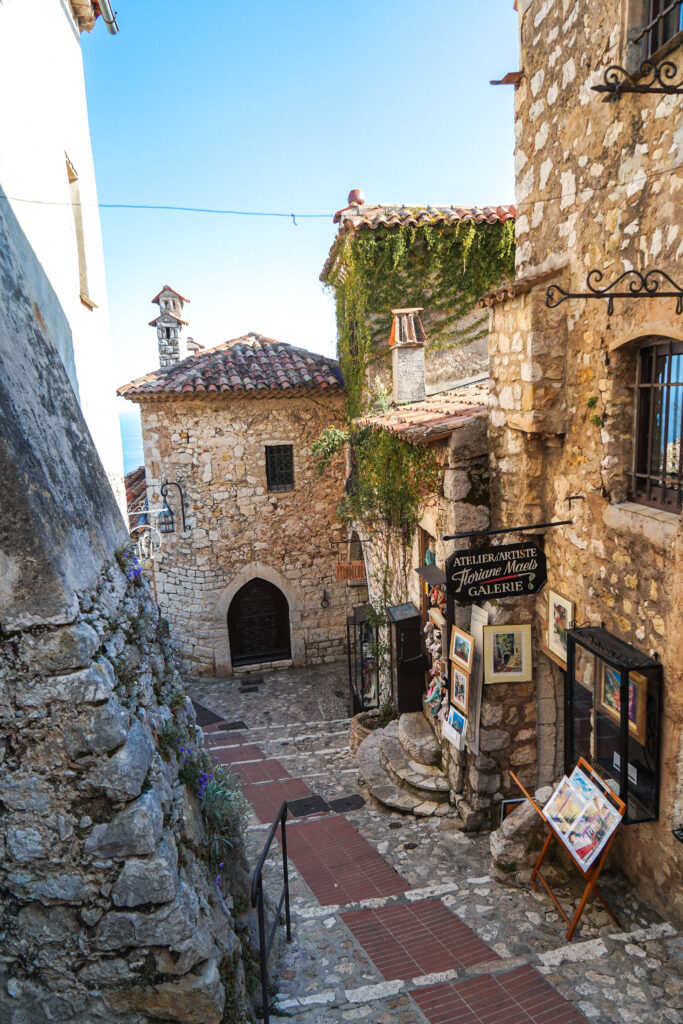
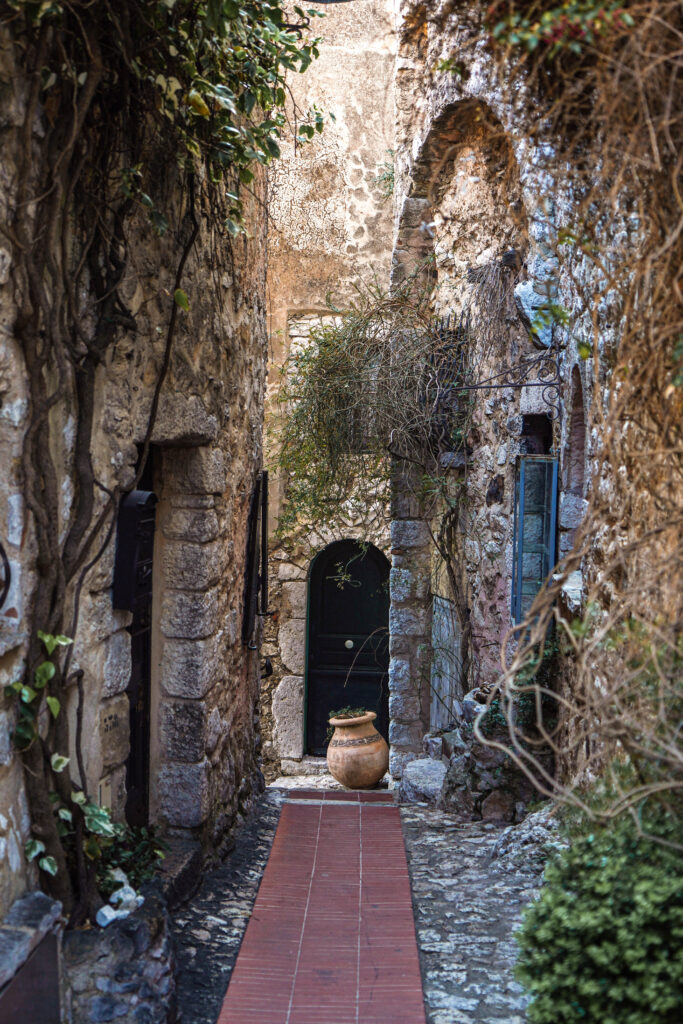
If time allows, opt to spend your evening in the walled, medieval hilltop town of Èze. This peaceful and enchanting town boasts breathtaking views overlooking the Provençal countryside to the sea, and is also known for making the world-famous perfume, Fragonard which has been produced at Maison Fragonard since 1926!
Home to a beautiful lemon coloured 14th century church and a plethora of small boutiques and galleries selling local crafts, simply wandering around Èze is one of the best ways to enjoy it.
The glorious Jardin Exotique (exotic garden) that crowns the town boasts yuccas, agaves, cacti and aloes that are planted around the ruins of a medieval fortress that was destroyed in 1706. Read our guide on how to visit Èze: the medieval hilltop town of the French Riviera.
Day 10: The sunniest town in Provence
Menton
Hailed as the ‘Pearl of the French Riviera’ , Menton is glitzy, chic, and the last large town before the French border with Italy. Renowned for its unique beauty, charming pastel-hued prt and stepped old town, Menton is most famous as being the birthplace of Jean Cocteau and for its citrus.
Back in 1929, Menton was the biggest lemon producer in Europe, it’s for this reason that a huge lemon festival has been held in Menton on an annual basis since 1934. Today, the event is one of the largest winter events on the French Riviera (second only to Nice Carinval) and is themed differently each year.


Want to know how to visit the Menton Lemon Festival (Fête du Citron)?
While exploring Menton you can follow in the footsteps of the beloved French poet and playwright, Jean Cocteau, by visiting the museum which details his life and works. Visit the vibrant covered market (open from Tuesday to Sunday) and check out the 19th-century botanical garden of Val-Rahmeh.
Of course, while in Menton, one of the greatest joys is being within proximity to the sparkling Mediterranean sea. The main beach, La Plages des Sablettes is pebbled and situated close to the Vieux Port. The beach is sheltered by rock jetties and boasts crystal clear waters perfect for swimming. Read our guide on the best things to do in Menton.

Other places in Provence worth a visit
Of course, Provence is a pretty vast region and so it’s pretty much impossible to cover everything worth seeing and doing in the area over the course of 10 days. Here are some other spots worth adding to your itinerary if you have extra time…
Villeneuve-les-Avignon
Picture perfect and straight off a postcard, wander here and you can expect to find cobbled lanes, unrivalled views of Avignon, and even a 14th-century fort where you can meander along the ramparts.
For one of the best views of the Papal Palace back in nearby Avignon, you need only La Colline des Mourgues Park. Otherwise, the Saint-André Gardens next to Fort Saint André are listed as a Remarkable Garden of France and surround a Benedictine monastery.
Les Baux-de-Provence
Widely regarded to be one of the most beautiful villages in Provence, the upper town of this historic settlement has just a few dozen residents. Well-preserved and dating back centuries, the little pedestrian streets hide hidden churches, small chapels, and many a boutique shop.
Les Baux de Provence is a ‘village perché,’ which means perched village and is typical of the French countryside. As its name would suggest, the perched village is typically nested on the side of a hillside and were often fortified, constructed just below a chateau.
One of the most famous places to visit in town is the Carrières de Lumières. This interactive art museum is quite literally built into the mountainside; in a former quarry whose stone was used to build the houses above. If you want to go but also want to beat the crowds, then book your tickets in advance, at least 24 hours before!

Châteauneuf-du-Pape
If you make it your mission to visit just one wine destination while in Provence, or simply take one day trip from Avignon, make it the world-famous Châteauneuf du Pape. Once the summer home escape for the Popes in nearby Avignon, today all that remains of their once grand Château are two crumbling walls presiding high above the rest of the town.
Start your wine route at this stunning lookout point. From here, you can admire the many vineyards spilling out endlessly into the distance. Be sure to look down too. The river-polished stones that line the vines of the Châteauneuf-du-Pape vineyards are unique to this region and not only aid in heating up the plants, but also allow for great water drainage.


Where to stay
Anywhere you choose to base yourself in Provence is bound to be beautiful, and with your own means of transport the region is easy accessible from wherever you choose to stay. These are our suggestions on where to stay based on this itinerary:
Fontaine de Vaucluse (days 1-5) –
Mid-range- Hôtel du Poète: This quaint hotel is set within a former mill building that overlooks the gently flowing emerald green of the River Sorgue. Boasting warm, Provençal-inspired rooms, and a pool and spa, this is the ultimate relaxation accommodation. Check prices and availability here.
Mid-range- La Figuiere Fontaine de Vaucluse: This Provençal B&B is set above the beautiful riverside restaurant (which I highly recommend dining in at least once!) Simple and comfortable, this accommodation resides in a peaceful area of the town. Check prices and availability here.
Tourtour (days 6-8) –
Low to mid-range- Au coeur du village provençal – Set within a 19th century building, this one bedroom apartment has a fully equipped kitchenette and can sleep two people. Check prices and availability here.
Nice (days 9 & 10) –
Mid-range- Hotel Cresp: This laid-back hotel is conveniently located close to Nice’s Opera House. All rooms have facilities such as TVs and complimentary WiF. Check prices and availability here.
Luxury- Hotel Negresco: For an unforgettable stay during your time in Nice, you’ll want to book yourself into this luxurious five-star accommodation which has become something of an institution in the city. Check prices and availability here.

Getting around
While there are options for public transport, the buses that serve the South of France (with particular note to the rural areas) are for those who aren’t in a hurry. Therefore, for this itinerary you’ll want to rent your own car.
By car
Driving around the South of France can be a pleasant experience. A lot of the roads, particularly in The Provence hinterlands, are narrow, sided by steep walls of limestone rock on one side and a sharp drop on the other.
In some instances, cars can just about pass one another. However, to reach the more remote towns and villages, you’ll certainly want to brave the roads (and drivers) of the region, just be sure to bring a substantial amount of Kwells tablets.
If choosing to take the exciting drive around the South of France, it’s worth noting that during the peak season, it can be difficult to park, and the popular towns and villages can become heavily congested by morning.


Enjoyed reading our 10-day suggested itinerary around Provence? Pin this article now, and read it again later:
Thank you for creating such a rich, sensory, and thoughtfully paced itinerary. You’ve turned Provence from a flickering dream of purple fields into something beautifully tangible—and utterly irresistible. This is travel planning at its finest!