An Insider’s Guide to the 15+ Best Things to do in Venice
Last Updated on 24th June 2026 by Sophie Nadeau
This post may contain affiliate links. Please check out my privacy policy and disclosure for more information.
Venice, the City of Water. It’s one of those magical European destinations that manages to top every visitor’s bucket list- and for good reason. From the world-famous canals to the Renaissance architecture, here’s a guide to the best things to do in Venice, as well as travel tips and what to know before visiting.
Where is Venice?
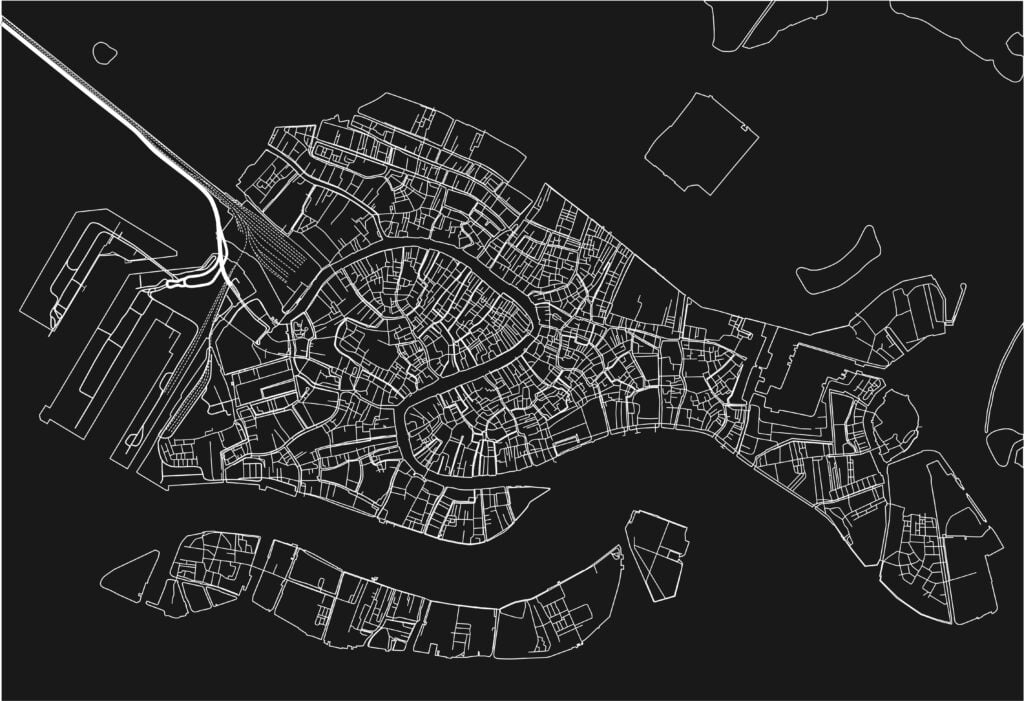
Venice is located in Italy in the Veneto region in Northern Italy, of which it is the capital city. The city is located at the North end of the Adriatic sea and is a fish shaped conglomeration of 118 individual islands which are interlinked with canals (around 25 miles worth, to be precise) and bridges (over 400 bridges at the last count!).

How long do you need to visit Venice?
Ideally, in order to see all that Venice’s old town has to offer, you’ll need to spend at least two or three days in the Italian city. This way you’ll get time to properly enjoy at least several of Venice’s major museums at a leisurely pace and have a little time for rest and relaxation too!
What is Venice known for?
Venice is known as the ‘floating city’ thanks to its endless canals and many bridges. In fact, rather than roads there are waterways! What’s even more interesting is that the entire city is constructed on pilings, which are tree trunks driven into the clay of the Venetian lagoon.
Venice, or Venezia as it is so-called in Italian, is also famous as being one of the most romantic cities in Europe. In fact, it’s even one of the top honeymoon destinations in Italy!
The city is traditionally known as La Serenissima (the most serene) as it was recognised as its own sovereign state. At its peak of power during the Middle Ages, Venice was one of the six biggest and most important cities in Europe.
Today, vestiges of its past can be found all over the island city. It’s best to plan to visit Venice over the course of three or four days. If you’re short on time, then here’s our guide to spending the perfect one day in Venice.

St Mark, the Patron Saint of Venice
The patron Saint of Venice is Saint Mark and it is the legend pertaining to him that allowed Venice to exercise religious control over the Mediterranean. According to legend, St Mark actually travelled to Venice to bring Christianity to the Venetians.
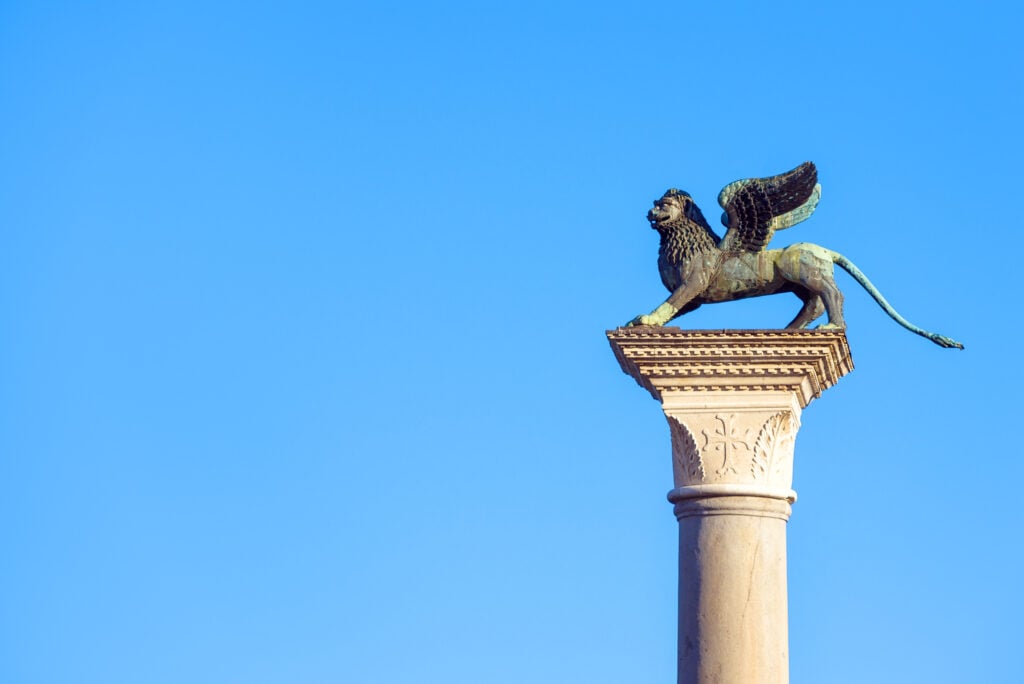
In 828, Venetians stole St Mark’s relics from Egypt and smuggled them to Venice, where they are alleged to still be to this day. The symbol of St Mark is the winged lion, which remains the symbol for the city of Venice to this day.
Even now, one of the columns that welcomes travellers to the city in Piazza San Marco is topped by a bronze statue of a winged lion. The relics of Saint Mark lie below the High Altar in the Basilica of Saint Mark.
Best things to do in Venice
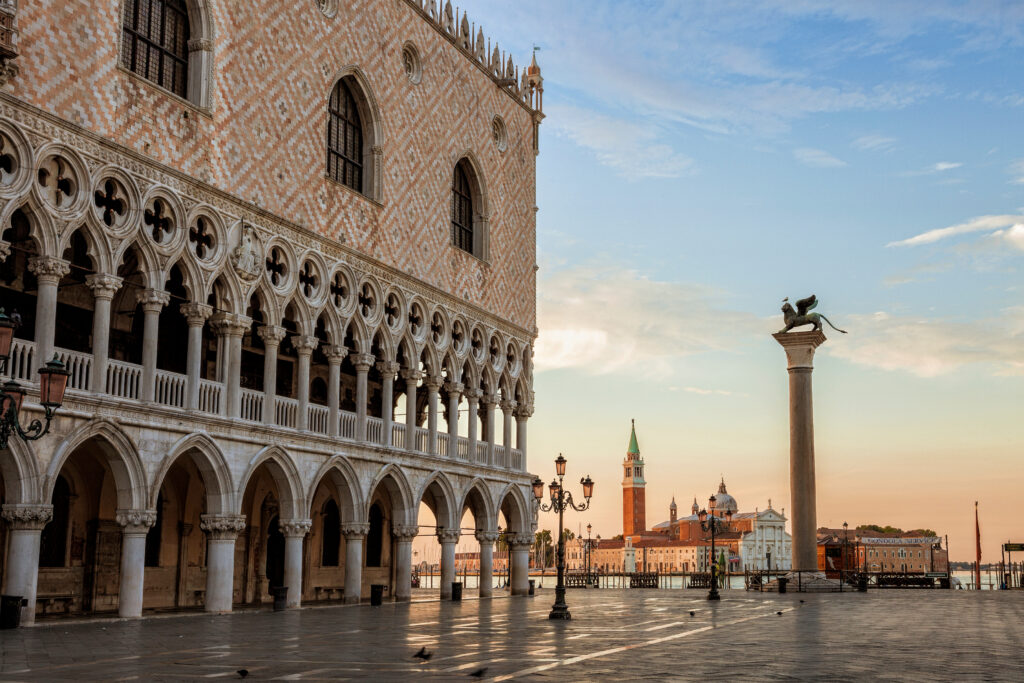
Doge’s Palace
Of all the things to do in Venice, the number one attraction on most people’s bucket lists is the Doge’s residence, which was once the seat of Venetian government.
Over the course of 1100 years, there were 120 Doges. The building you see in St Mark’s Square today was constructed by the Duke of Venice in 1340 so as to show off his wealth.
The architectural style is Venetian Gothic, and for around four centuries it was from here that the Doge (a noble man who was elected by other nobles but ruled like a King) ruled Venice and dominated politics and power in Europe. As you can imagine, today the Doge’s Palace is one of the most popular spots to visit in Venice.
One of the most impressive rooms within the Palace is the Great Hall of the Council, which is where important political meetings would have taken place under the ornate frescoes by Tintoretto. The room could have seated 2500 nobles.
I would personally recommend going earlier in the day and even mid-week if possible. The interior of the palace contains an abundance of richly appointed rooms and takes several hours to visit. In Italian, the building is known as Palazzo Ducale.
Another interesting thing to note is that several rooms in the interior of the Doge’s Palace offer spectacular views of Venice, including of the Bridge of Sighs.
If you’re planning on visiting St Mark’s Basilica as well (and want to do a guided tour), consider purchasing this Doge’s Palace & St. Mark’s Basilica with Terrace Access Tour.
See the Venetian Arsenal
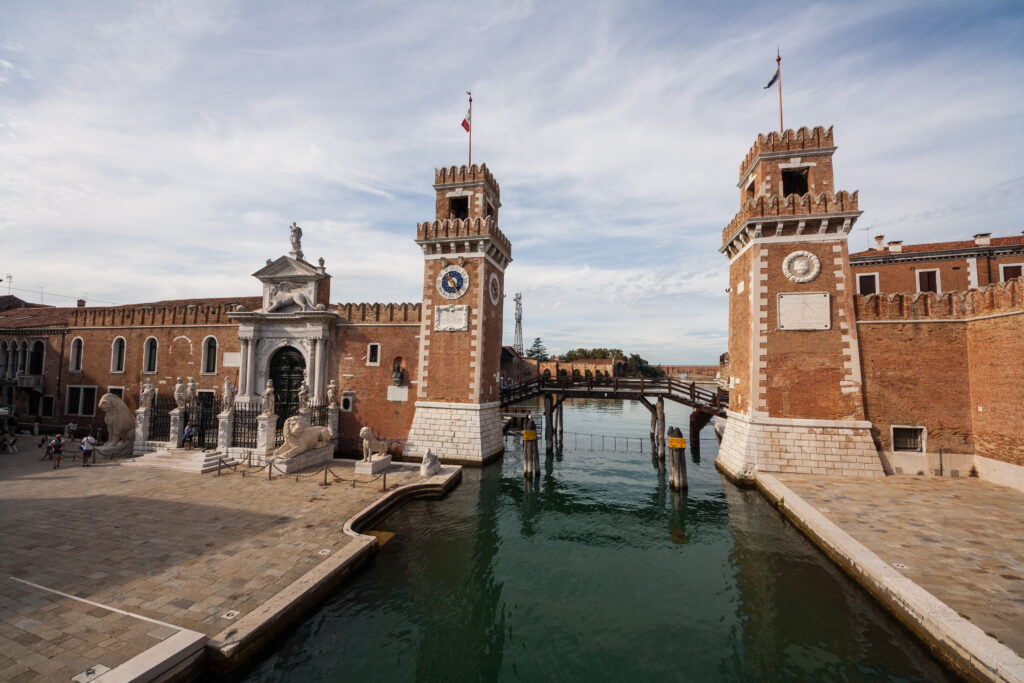
The very first great industrial military complex in Europe was created in Venice in the form of the Venetian Arsenal. This comprised of a series of shipyards and armories and would have been vital to producing Venice’s maritime trading vessels throughout the Middle Ages.
At the time, there would have been around 3000 workers producing all things battle related in a kind of assembly line. The Venetial Arsenal could produce a staggering one warship per day. Today, the Venetian Arsenal complex can be admired via its exterior.
Saint Mark’s Basilica
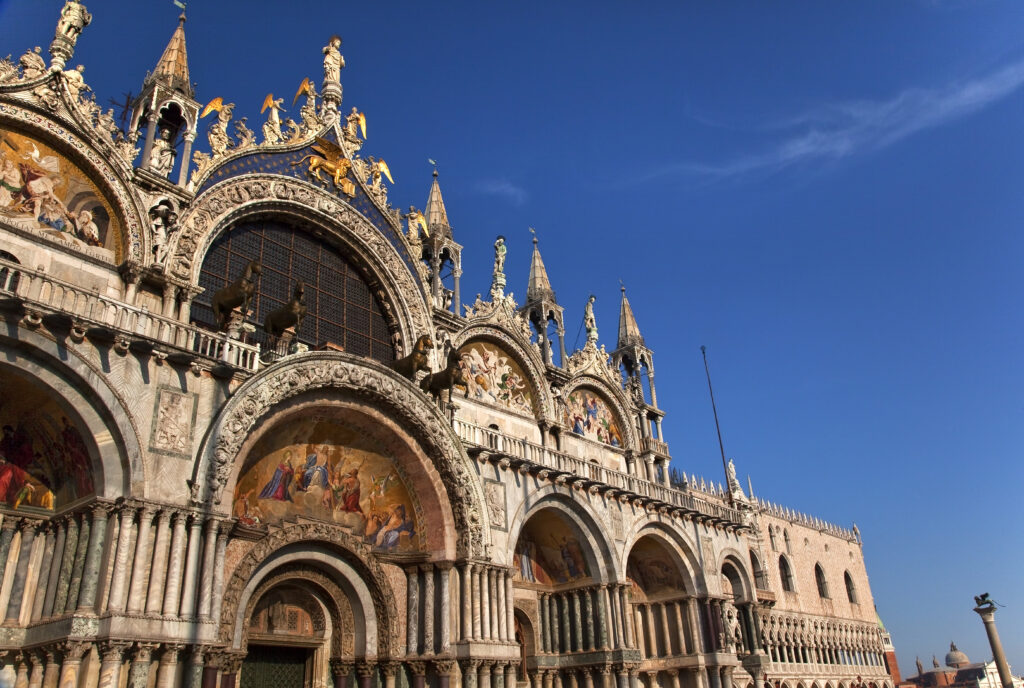
St Mark is the patron Saint of Venice and it’s after him that the most important ecclesiastical building in Venice is named. Aside from the Doge’s Palace, the other must-see monument in Venice is Saint Mark’s Basilica, which is constructed in an Eastern style (taking inspiration from Greek, Islamic, and Byzantine architectural styles).
The cathedral of the Patriarchate of Venice was constructed in the 11th-century, though later additions mean that the resulting ecclesiastical building now resembles a number of architectural eras.
The façade of the cathedral is covered in gold mosaics, sculptures, columns, and other carvings which were pillaged during Venice’s raids of other civilisations on the Mediterranean.
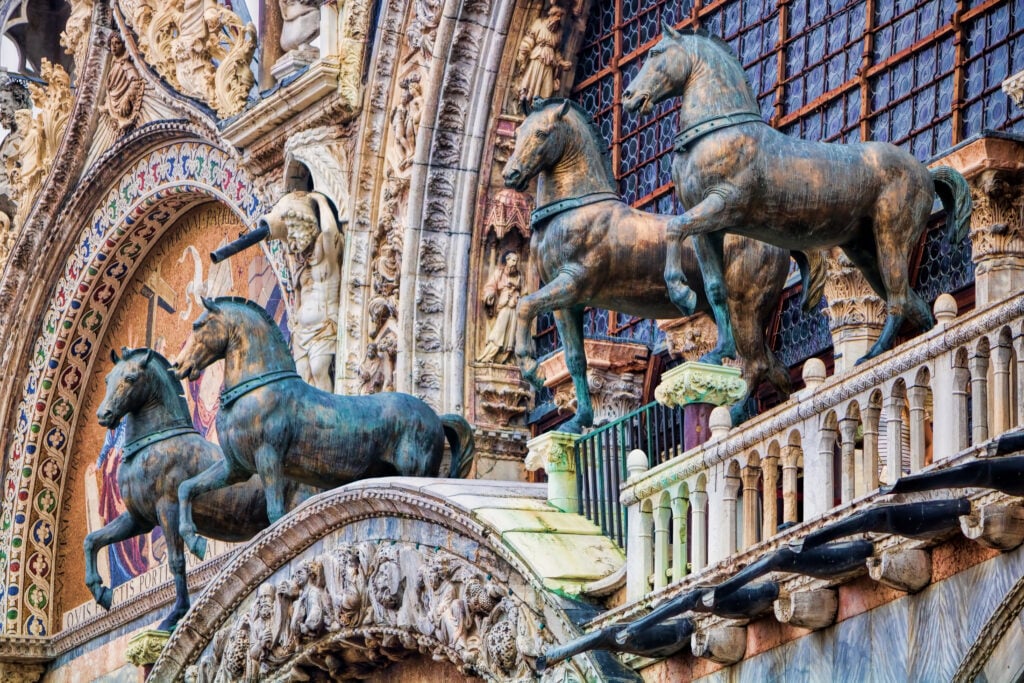
One of the most prized spoils of the Venetians were the four bronze horse statues, that were alleged to have been cast for Alexander the Great. They eventually ended up in Constantinople, where they were stolen by the Venetians, before later being pillaged by Napoleon.
Now, they’re back in Venice. With this being said, visitors should note that the four cast bronze horses on the exterior of Saint Mark’s Basilica are replicas. The original horses are now housed within the Basilica itself.
Highlights of the interior of the church include a small basilica museum and an outdoor terrace. In order to access the cathedral, visitors will have to pay a nominal fee of a few euros, or alternatively do a guided tour. As with many other attractions in Venice, queuing to get inside the church can be incredibly long!
Wander around Venice
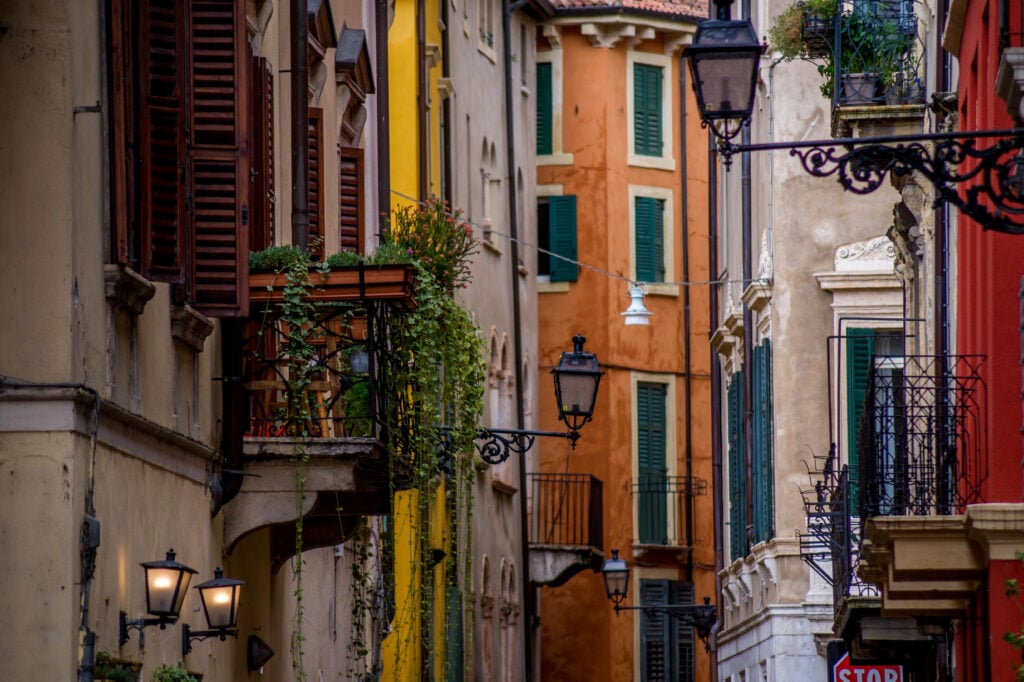
One of the best ways to experience and discover Venice is simply to stroll around the city and allow the streets to reveal themselves to you. Head out with no particular end goal in mind and allow your feet to take you where they may, making sure to take a look at all of the amazing details as you walk. To learn even more about the city with the help of a guide, book this Venice walking tour.
St Mark’s Square
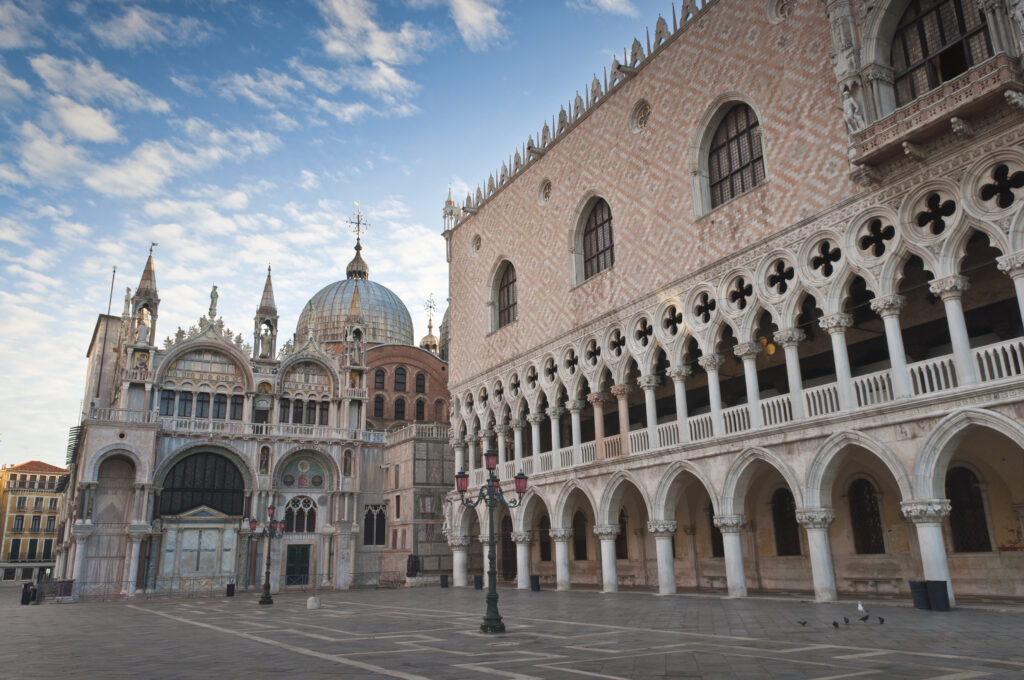
One of the top tourist attractions in Venice actually merits a word of warning before going. St Mark’s Square, known as Piazza San Marco in Italian, is located in the heart of Venice and from here it’s easy to find all the other major monuments that Venice has to offer.
St Mark’s Square is the first Venice attraction that many visitors to the city arrive at due to its position facing the Adriatic Sea. Almost immediately, visitors are welcomed by two large columns.
The columns of San Marco and San Todaro were brought back from Constantinople in the 12th-century and it’s local superstition that it’s unlucky to walk between the two columns due to the fact that the area was used as a public execution spot in the 18th-century.
Be sure to bring your camera along for the square offers 360 degree beautiful views. The pigeons are also legendary here, simply due to the sheer amount of them (feeding the pigeons is banned)!if you’re on a budget, then you shouldn’t sit and dine (or even have a coffee) in St Mark’s Square as it’s incredibly expensive!
Enjoy the view from Campanile di San Marco
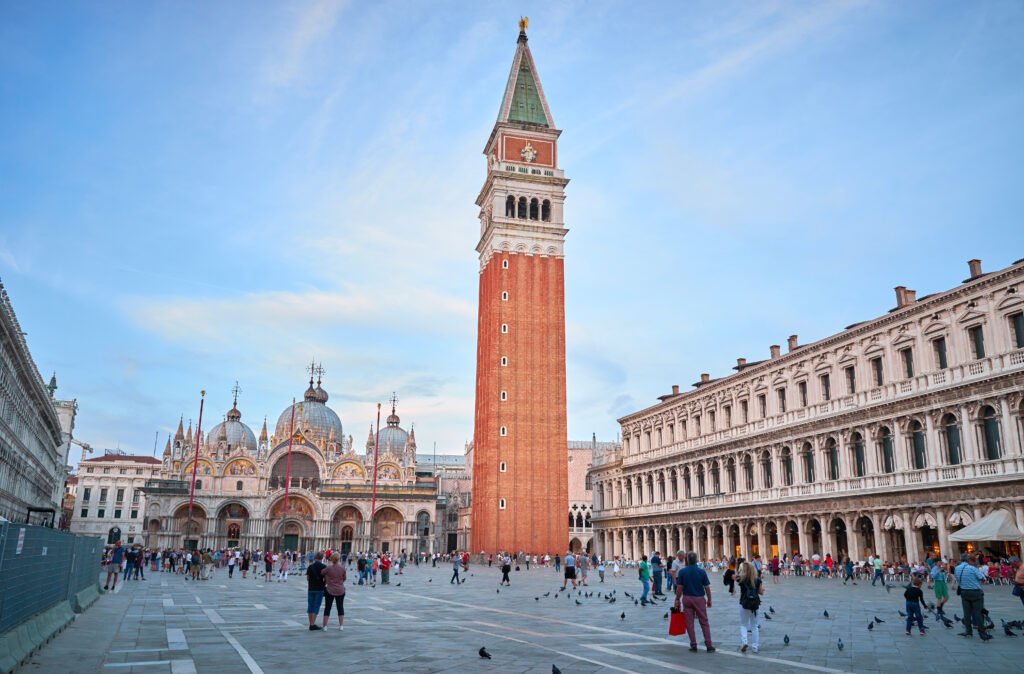
Of course, when visiting a new city, one of the best ways to get a lay of the land is by enjoying a bird’s eye view from above. Well, in Venice, you can do this by heading to the top of Campanile di San Marco, which towers to over 300 feet above ground level.
There has been a tower in situ in some form or another for well over 1000 years. Though the ticket is pretty pricey to ascend the bell tower in an elevator (in excess of €10), the view from the top is more than worth the price, if only to see the sheer amount of water in Venice for yourself!
Admire the Rialto Bridge
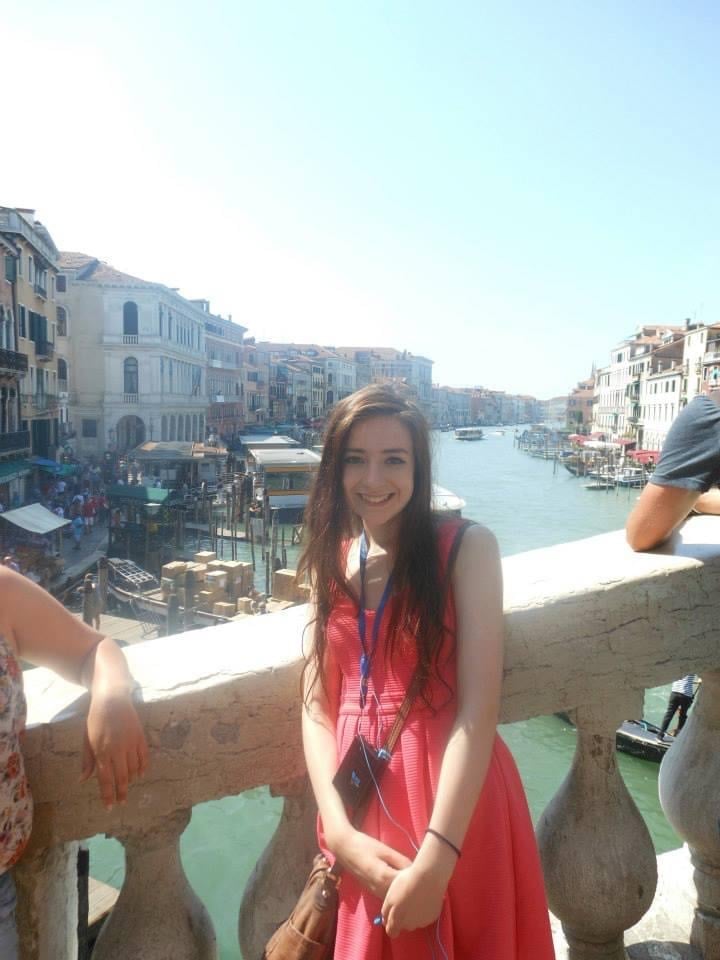
While Venice may be famous for its endless canals, the Italian city is also pretty famous for several of its bridges, including the Rialto Bridge (known as Ponte di Rialto in Italian). The Ponte di Rialto is the oldest of four main bridges that cross the Grand Canal and is situated in Rialto, which is a commercial district of Venice.
The Rialto Bridge was constructed in the latter half of the 16th-century and today is one of the most defining features of Venice. There has been a bridge on site since the 12th-century and it’s a common route for gondolas to pass during a water tour of Venice.
As you can imagine from its sheer popularity, there will be a lot of other visitors present should you opt to visit the Rialto Bridge. As such, I highly recommend heading to the bridge early in the morning and mid-week if possible.

Bridge of Sighs
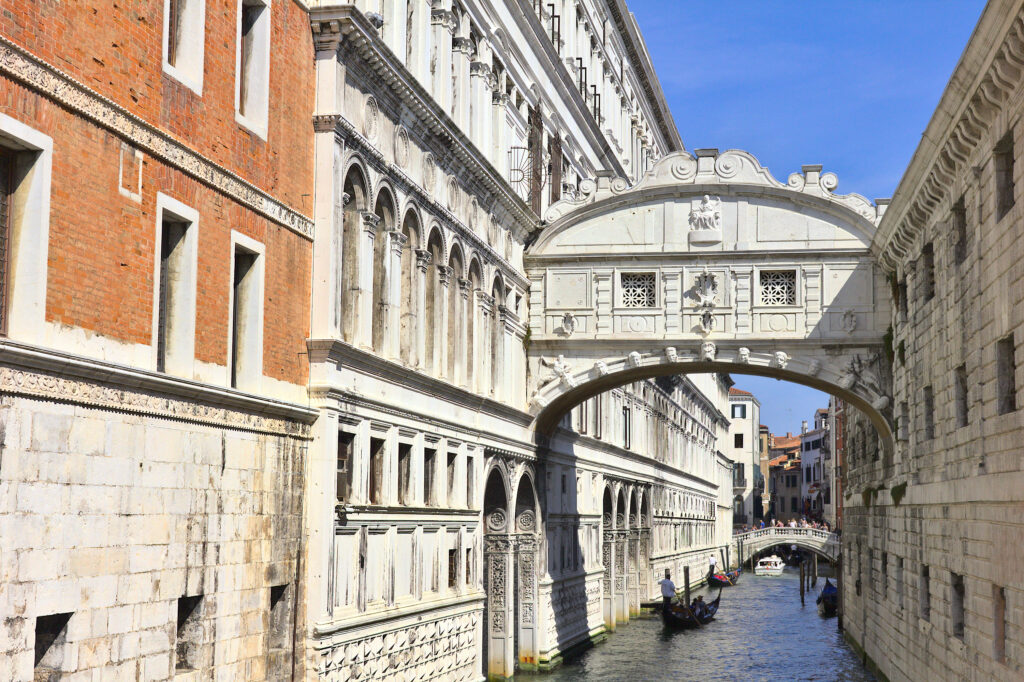
The other most famous bridge in Venice is that of the Bridge of Sighs, which arcs its way over the Rio di Palazzo. The bridge is unusual in that it is made of limestone and is enclosed. The bridge connects the interrogation rooms of the Doge’s Palace with the New Prison.
It’s said that the bridge is so called because, during the Middle Ages, prisoners would have been kept in a building on one side of the bridge. When it came to their execution date, they would have been led over the bridge to the execution spot, hence the name ‘sigh’ (one last sigh).
Despite its rather macabre history, the Bridge of Sighs is considered by many to be one of the most romantic places to visit in Venice, and so many couples choose to get engaged there (so don’t be surprised if you see a proposal or two during your Bridge of Sighs visit).
As one of the most popular sites in Venice, don’t be surprised to arrive at the bridge and find it absolutely full of people. The bridge itself is also home to a number of vendors, including sellers of Murano glass. Visitors who are fans of visiting the UK will also be interested to know that there’s a copy of the Bridge of Sighs in Oxford, England.
Go on a gondola ride
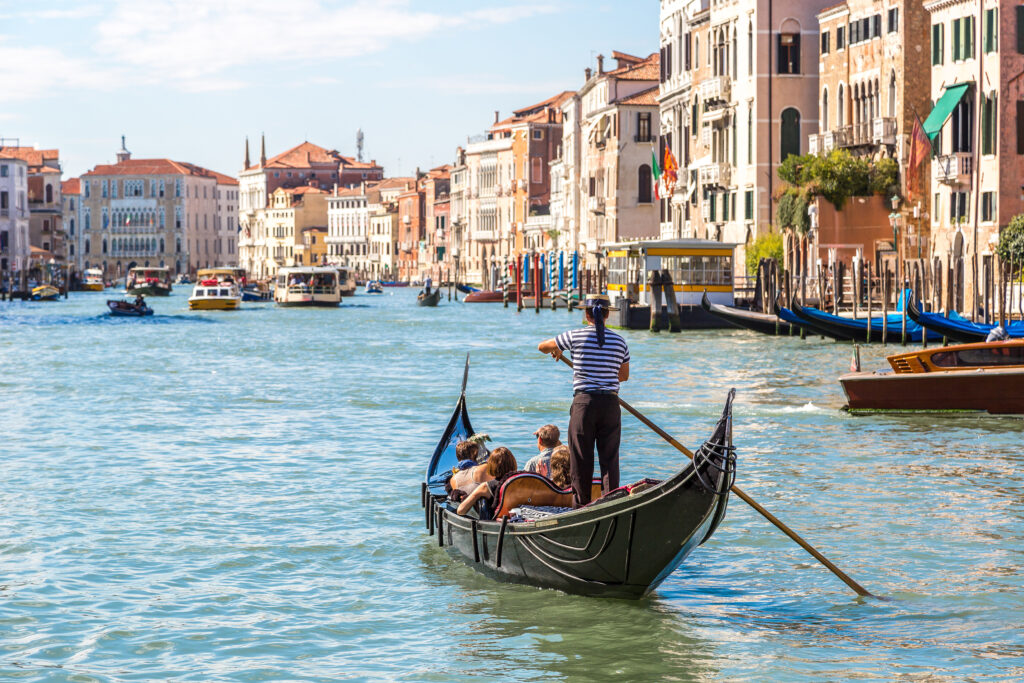
There’s one Venice activity that everyone has on their list, but wonders if it’s really worth the hype (or indeed the price). During my first trip to Venice at the age of 19, I opted to take a gondola ride, and honestly I’m so glad I did!
The gondolas are an integral piece of Venetian history, and these canal boats have ferried people through the waters of Venice for close to 1000 years! Indeed, the first mention of a gondola was mentioned in a letter by a Venetian Republic official in 1094!
Gondola rides will set you back a pretty penny and the city has capped the rates for a gondola ride (the people who captain a gondola are known as gondoliers and there are around 400 who operate in Venice today) at 80 euros for 40 minutes or 100 euros if taken after sunset.
Visitors to Venice should note that the price is per Gondola as opposed to per person. Book your Private Gondola Ride along Canal Grande here in advance.
See the Grand Canal
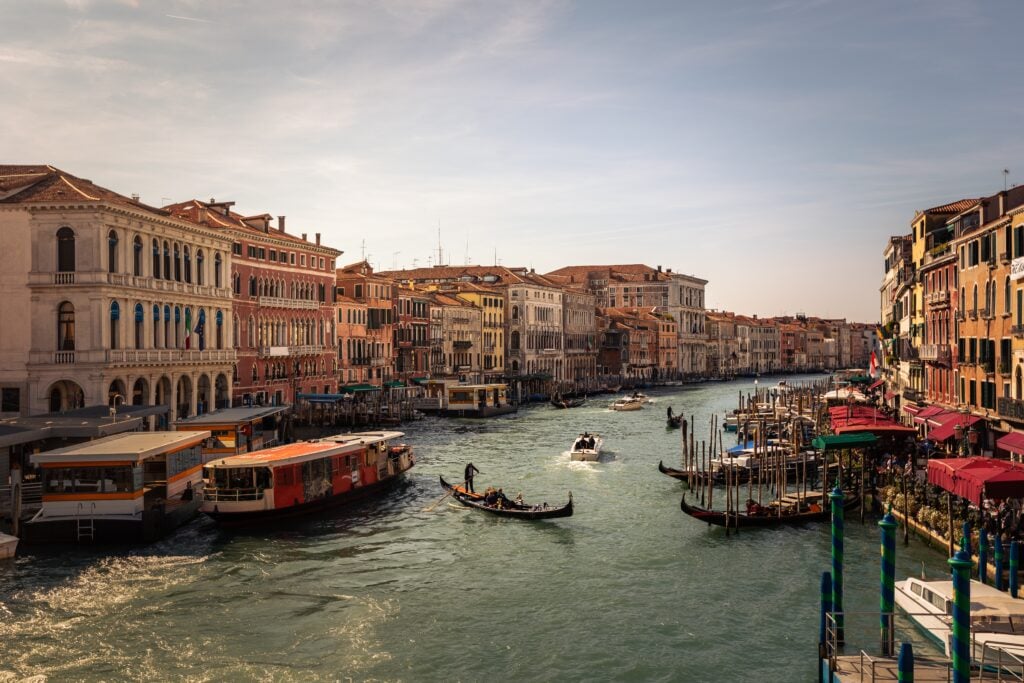
The Grand Canal is the main waterway in Venice and its over this body of water that many of the most important bridges in the Italian city cross.
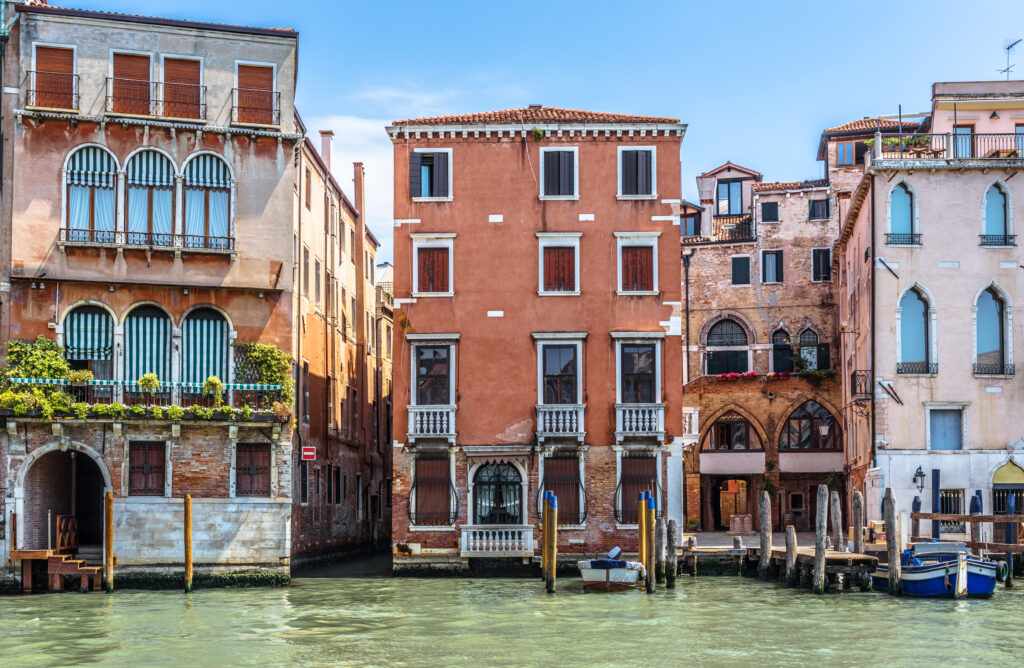
There are a number of spectacular buildings in Venice that can actually only be accessed via the Grand Canal and so you can see them via Vaporetto (more on this later) during your Venice trip!
These grand buildings would once have served as Palaces constructed by wealthy merchant families. While water level would have been to store and export goods, the first floor would have served as offices. Above that would have served as sumptuous living quarters. Today, many former Palazzos have been turned into luxury hotels.
Gallerie Dell’Accademia
Those who love art can most certainly not miss out on the Gallerie Dell’Accademia which is an art museum featuring Venetian works that date back to pre 19th-century.
The building itself is fairly interesting in that it is a former convent which was converted into a museum in the latter half of the 18th-century. Artists whose works feature inside include Leonardo da Vinci, Titian, and Canaletto. For an extra special occasion, consider booking this Private Accademia Gallery and Dorsoduro Tour.
Basilica Di Santa Maria Della Salute
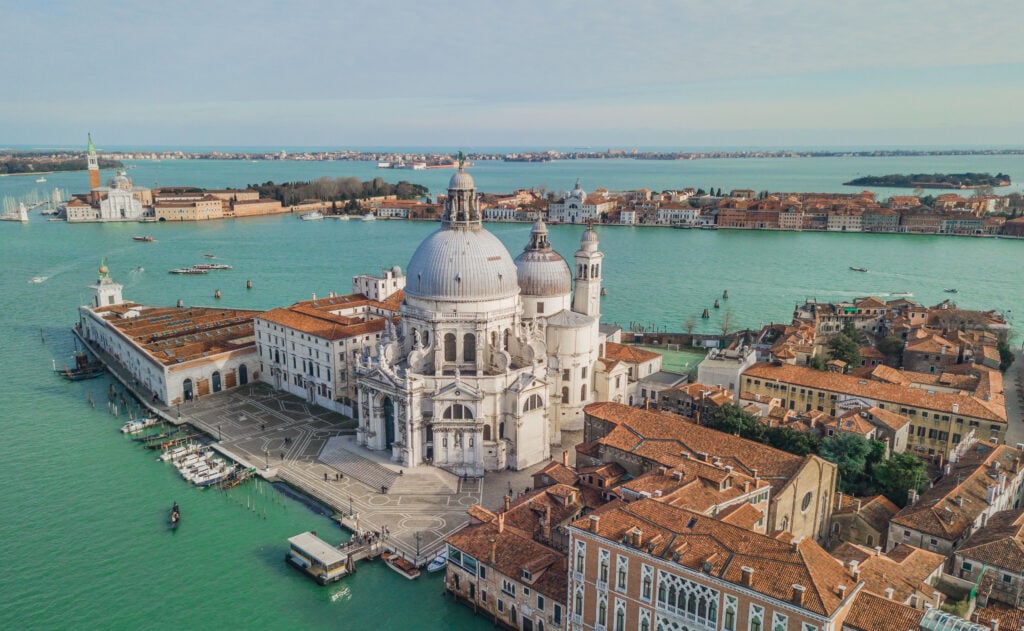
Lying on the water’s edge, the grand and imposing Basilica Di Santa Maria Della Salute (Our Lady of Health) was constructed in the 17th-century. Prior to the build, Venice had suffered from an awful outbreak of the Bubonic Plague.
At least 46,000 people in Venice died of the Plague, while the number for the number of deaths in the entirety of the Venetian Lagoon is estimated to be much higher.
The Basilica was constructed by the people as a way of saying thank you for deliverance from the pestilence (which they believed could have been even worse).
While Venice can be a pretty pricey city to visit, visiting the interior of the Basilica di Santa Maria della Salute actually costs nothing, making a trip to this ecclesiastical building one of the best free things to do in Venice.
Sample Venetian food
Italy is well-known for its amazing Italian food, with each area, region, and town boasting its own local speciality. Venice is no different and some of the more unique foods from Venice include goose meatballs and lobster.
Due to Venice’s close position to the sea, fish is on the menu. One of the more popular fish dishes when it comes to dining in Venice is Baccalà mantecato which is salted cod sevrved with a variety of herbs. To learn even more about local Venetian food, book this 2.5-Hour Street Food Tour with a Local Guide.
Enjoy an aperitivo
Food aside, a favourite Venetian pastime is to go for an aperitivo with friends, which involves drinking and enjoying some cicchetti (snacks). The most traditional liqueurs drunk at an aperitivo are campari or aperol and these are consumed as a spritz or as a negroni. If you want to make more of an experience of it, consider purchasing this Venetian Aperitif on the Lagoon.

Take a cooking class
If you truly want to get to grips with the local cuisine, then there is perhaps no better way to soak up the history and culture behind Italian food than by taking a cooking class. For example, this cooking class will show you how to to make traditional Venetian dishes. Check prices and availability here.
See one of the narrowest streets in Europe
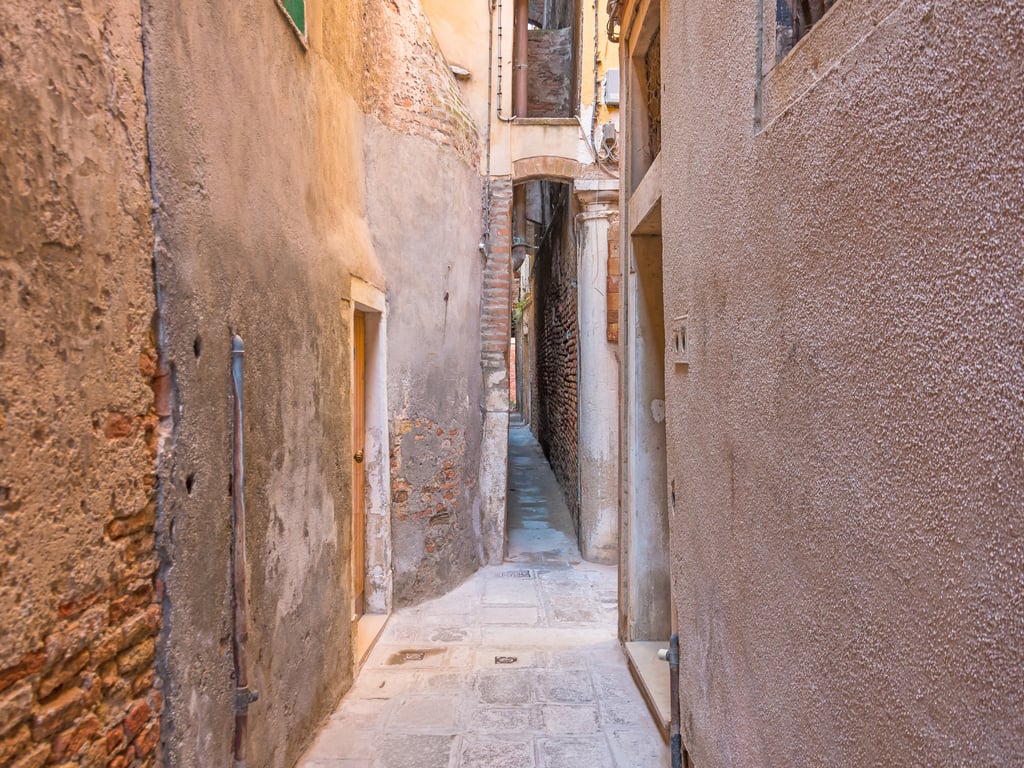
One of the best-kept secrets of Venice is a tiny lane, Calle Varisco, that’s easy to miss if you don’t know where to look. As the narrowest street in Venice, if not all of Italy, and one of the narrowest streets in Europe, Calle Varisco (also known as Ramo Varisco) ironically has some very tall tales to tell.
According to legend, if a murderer walks down this narrow and dead-end street (the street leads only to another canal and is not a through passage), then they’ll be instantly crushed by the close together walls. At its narrowest point, the street measures just 20 inches across.
Go in search of filming locations
Thanks to its prevalence in books, paintings, and other works of art, Venice has been used as the backdrop for many a film. Some of the most famous movies to have been shot in Venice include The Tourist, Casino Royale, and Don’t Look Now.
Shop at Libreria Acqua Alta, Venice, Italy
For one of the best hidden gems of bookshops in Europe, you simply need to visit Venice. World-famous thanks to its meandering canals, a wealth of bridges, and stunning architecture, the Libreria Acqua Alta is unusual in that it stores its books in bathtubs and boats! Often touted to be ‘the most beautiful bookstore in the World,’ the shop features stacks of books both outside and in.
Take a day trip to Burano
Though I wouldn’t recommend staying in Venice for the simple reason of going on day trips to other destinations in the region (the island is small and accommodation is incredibly pricey), one of the easiest day trips from Venice is to head to the nearby island of Burano.
Burano is one of the many islands in the Venetian Lagoon and is easily reached via ferry. The journey time takes 39 min and costs €8. Once on Burano, visitors can enjoy some of the most beautiful and colourful houses, as well as learn more about the island’s lacemaking industry.
For a guided visit that encompasses Murano and Burano, consider booking this Murano, Burano and Torcello Islands Full-Day Trip.

Visit the Venetian Christmas Markets
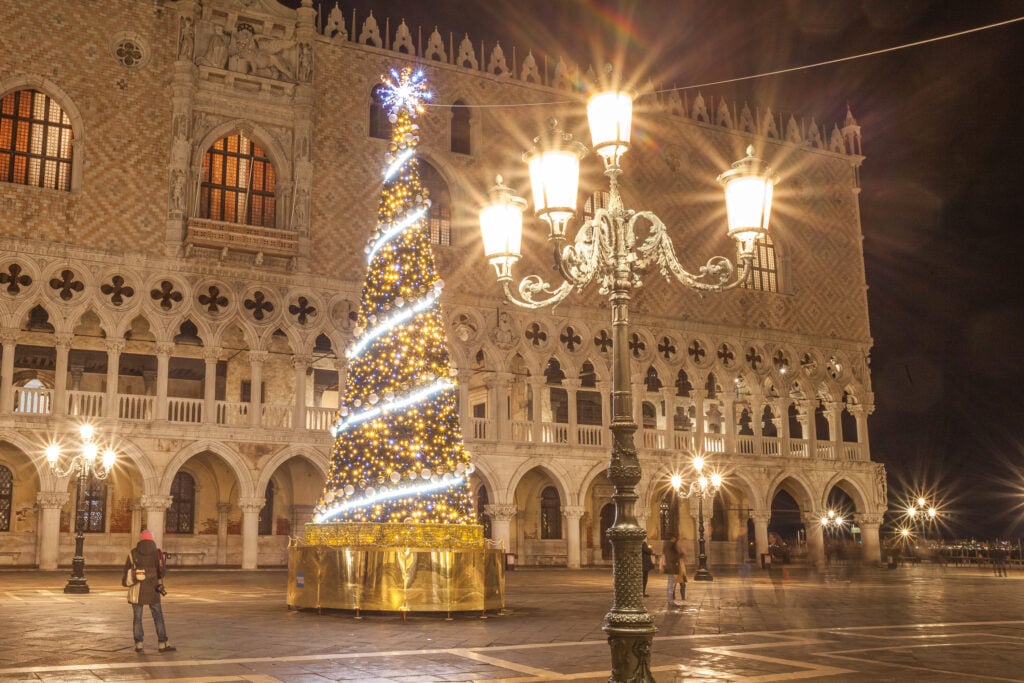
If you happen to be visiting Venice in the winter, then it’s worth noting that one of the more unusual Christmas Markets in Europe is held in the City of Water. Taking place in December each year, particular highlights include Italian food for sale and traditional gifts from Venice such as Venetian masks and Murano glass.
Getting around Venice
Since most of the major attractions of Venice are concentrated within a fairly small area, it’s not hard to get around the city to see all of the most important monuments that the City of Canals has to offer. After all, almost everything worth seeing that isn’t a hidden gem is within a ten to fifteen minute walk of St Mark’s Square.
The best way to explore Venice is on foot (with the exception of perhaps a gondola ride). As such, be prepared with comfortable walking shoes and avoid stiletto heels (on account of the cobbled lanes).
If you want to take to the waters, then by far the cheapest way of getting around the city is by getting the Vaporetto, which is a kind of public water bus that stops off at pontoons dotted along the Grand Canal every few minutes. The water taxis also go to other nearby islands in the Venetian Lagoon such as Murano and Burano.
Where to stay in Venice
As one of the most popular places to stay in Italy, Venice has no shortage of places to stay to suit almost any taste and budget. Just note that as Venice is such a visited city, you’ll want to book your accommodation as soon as possible in order to secure the best rates and the place you actually want to stay in! Here are some of the top picks for Venice based on ratings and location:
Budget: If you’re in search of an affordable option when it comes to staying in Venice, then this hostel offers private rooms and single-sex dorms set against the backdrop of a waterfront granary-turned-hostel.
Please note that anywhere to stay in Venice is quite expensive, and if you truly want to save some money, then you should opt to stay off the island of Venice and instead on the mainland. Check prices and availability here.
Mid-range: This charming accommodation is located under a 10 minutes walk from St Mark’s Square and is set within a restored 17th-century property overlooking a canal. Check prices and availability here.
Luxury: For those looking for the ultimate luxury experience, this five-star hotel boasts amenities such as a spa, room service, and breakfast buffet. Check prices and availability here.
Fee to visit Venice
In 2026, on 60 peak days between April and July, visitors to Venice will need to book and pay the tourist entry fee in advance and use a QR code to enter between 8:30 AM and 4 PM. The admission fee starts on the 3rd of April 2026. You can read more about this tourist fee in our guide to the Venice tourist fee.
If you’re looking for a wider guide to Italy, then be sure to check out our 2 weeks in Italy itinerary, in which the floating city features. Otherwise, for more inspiration, be sure to check out these top quotes about Venice.
Enjoyed reading about the best things to do in Venice? Pin this article now, read it again later: