
Rame Head Chapel: St Michael’s Hermitage in Whitsand Bay, Cornwall
Last Updated on 1st March 2023 by Sophie Nadeau
This post may contain affiliate links. Please check out my privacy policy and disclosure for more information.
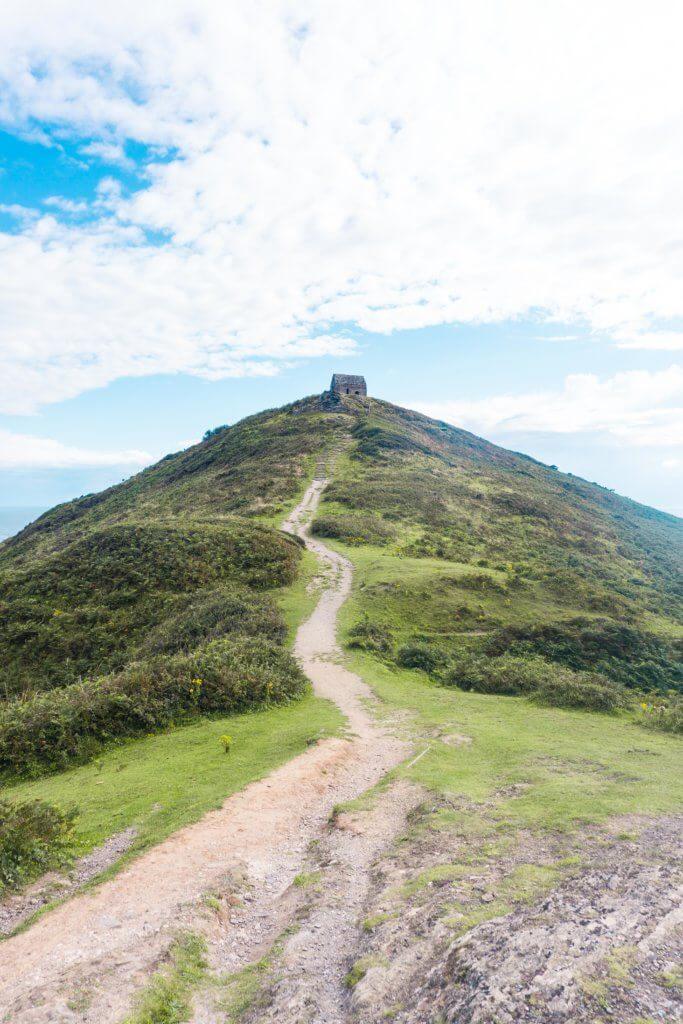
For as long as I can remember, I’ve been drawn to abandoned, remote and neglected places. There’s something about the peacefulness, stillness (and lack of phone signal) that make you want to seek more and more of these little gems hidden throughout the countryside… Dramatic, striking and on the very fringes of Cornwall, the small Rame Head Chapel in Whitsand Bay is most definitely one of these places.

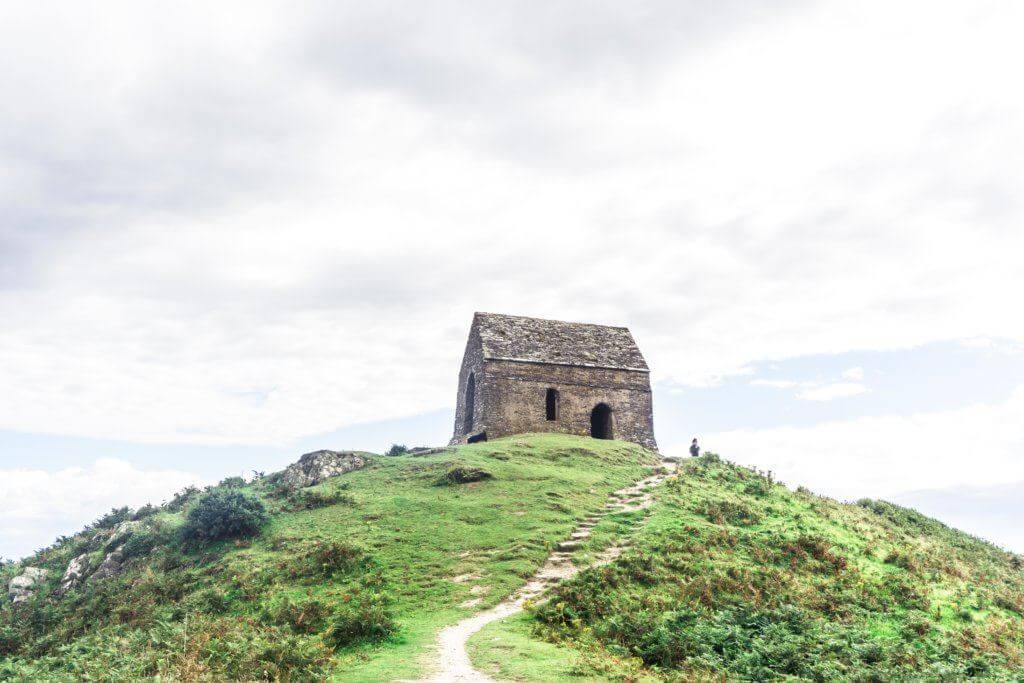
After all, the lone figure of the hermitage dedicated to the Archangel St Michael strikes a cutting silhouette along this wild stretch of coast. Records suggest that this tiny chapel dates all the way back to the 14th-century, perhaps even further.
Today, although there are no windows or even a door, the chapel remains standing, constantly battered by the elements and sea spit from the crashing waves below. As such, the chapel is open 24 hours a day, though due to a distinct lack of artificial lighting is still best visited during daylight hours.
A History of the Rame Head Chapel
The point’s prominent location, which serves as both a look out to sea and a 360-degree viewpoint across the 4 mile bay of Whitsand, make it the perfect place to construct a building with a view. A such, the site has been occupied by humans for millennia.
During the Iron and Bronze Age, the site was home to a wooden hillfort, as well as various other barrows and structures. Due to the nature of the weather in the area, little of the prehistoric site remains today, though plenty of ancient sites can still be found littered across the landscape of Cornwall.
As for the current building, it’s likely that a chapel has stood in situ since at least the time of the Norman Conquest (11th-Century).
However, records only date back to the medieval period, when Tavistock Abbey bought the land surrounding Rame Head at some point during in the 12th-Century.
This means that despite sitting squarely in Cornwall, the land once belonged to the county of Devon! The chapel was first licensed for mass in 1425 but it was probably used as a Celtic hermitage prior to this (a small abode where a solitary monk would live).
Built as early as 1397 (perhaps even earlier), the chapel is dedicated to St Michael, like many other early chapels in the area. Notable examples nearby include Brentor and St Michael’s Mount. The chapel was heavily restored in 1882, meaning that it still has a roof and is in fairly good repair.
During the Second World War, the position of the site on the headland above the River Tamar (and overlooking the city of Plymouth) meant that the chapel of Rame Head was used as a mobile radio station in the early 1940s.
How to visit the St Michael’s Chapel
Today, the chapel is free to visit and is approachable via a footpath leading from the Rame Head car park. The stony car park also serves the nearby National Coast Watch Station.
The Station is open seven days a week, through daylight hours and you can always go in and speak with the friendly volunteers about the vital work they do and learn more about the organisation.
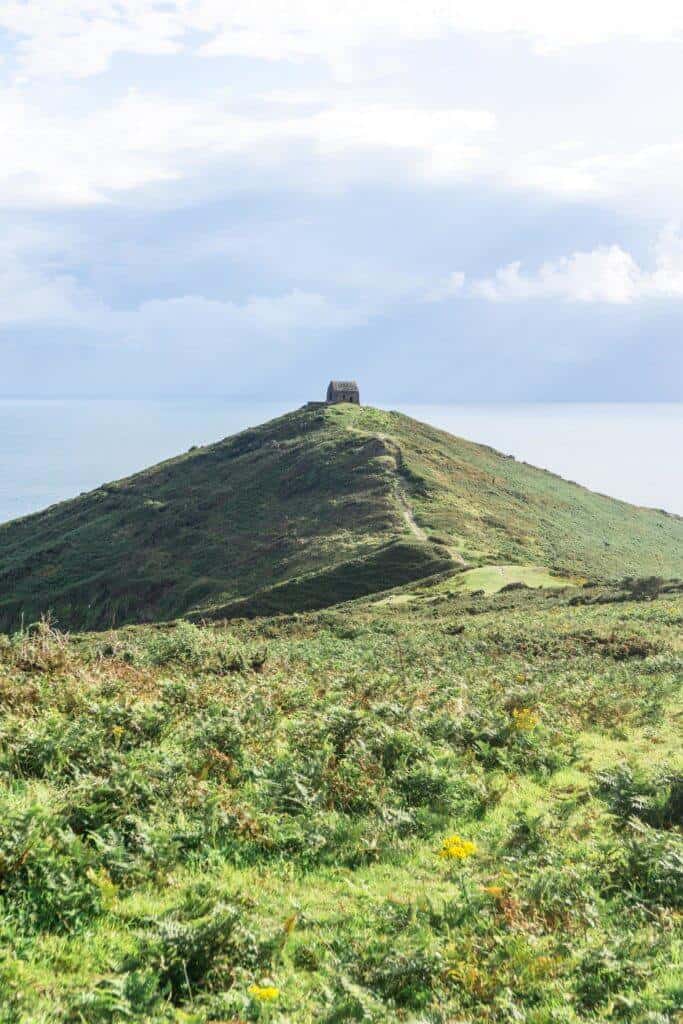
The chapel is located at the very top of a sun-kissed hill, around a half mile from the car park. Horses graze nearby and there are heather bushes aplenty. Everything looks out to sea and the headland is always beautiful, even on a rainy day.
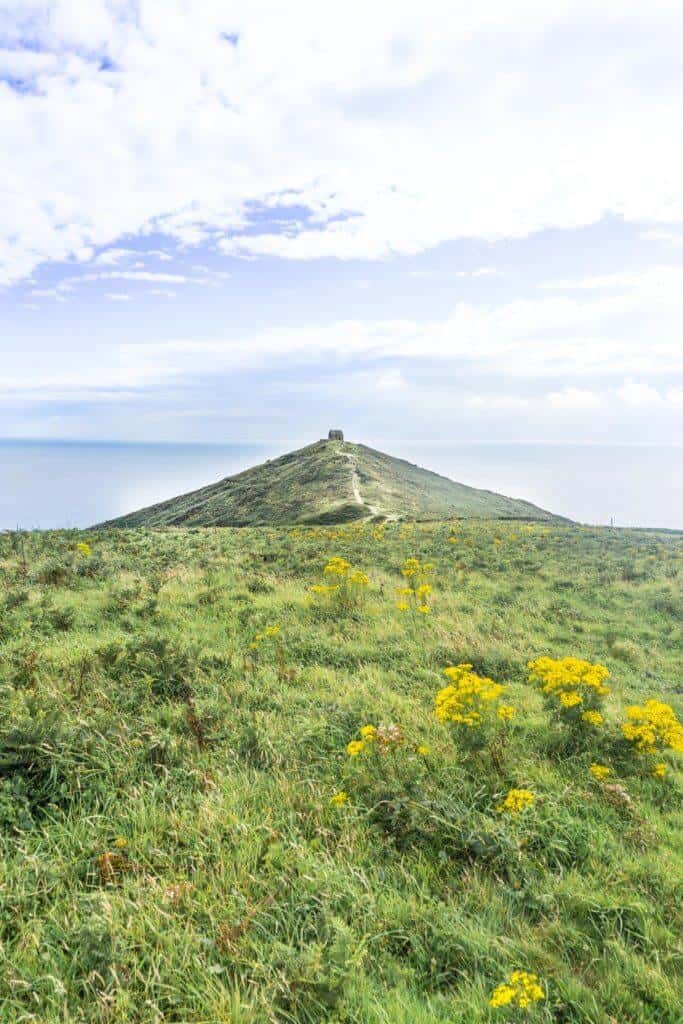
Though not far in terms of distance, the climb up to the Rame Head Chapel is steep in places, challenging at times and comprises of many stairs. You’ll also want to bring along your camera as the vistas from the top and on the way are simply stunning.
If you’re planning on walking during your trip to Cornwall, you should know that the South West coastal path is the longest trail in England and follows the coastline around the entirety of Cornwall. Bodmin Moor is the main moor in Cornwall, and while beautiful, it can require plenty of walking in certain areas.
It can be hard to hike in places and so good walking shoes like these ones are an absolute must. Whatever the time of the year that you’re visiting Cornwall, rain is always a possibility and so it’s important to be prepared for showers (even during the summer) with a good waterproof coat like this one.



Thank you for sharing your beautiful photos.