St Mary’s, Isles of Scilly: Hidden Gems, Beaches & Best Things to Do
Last Updated on 31st July 2026 by Sophie Nadeau
This post may contain affiliate links. Please check out my privacy policy and disclosure for more information.
St Mary’s is the largest and most inhabited of the isles in Scilly, a natural haven of wildlife, subtropical plants, and fascinating rock formations. Surrounded by azure waters, the enchanting island is addictive for those interested in natural history, hiking and a diverse display of flora and fauna. Here’s your guide to the best things to do in St Mary’s, home to the capital of the Isles of Scilly!
A brief introduction to the Isles of Scilly
The Isles of Scilly are the UK’s largest group of islands, an archipelago that lies just 28 miles from the coast of Cornwall in England. An area of outstanding beauty, there are around 140 or so islets, but only five of them are inhabited: St Mary’s, Tresco, St Martin’s, St Agnes and Bryher.
The Isles of Scilly are characterised by their turquoise waters, pale fine, sanded beaches and tropical foliage, all of which provide a haven for wildlife and those who love to be immersed in nature.
What is St Mary’s known for?
St Mary’s is the largest and most populous of the Scilly Isles, it’s also where the airport is located and where the Scillonians dock from the mainland. Like many of the islets in the archipelago, St Mary’s is renowned for its stunning white sandy beaches, thriving wildlife and intriguing archaeological sites.

Best things to do
Explore Hugh Town
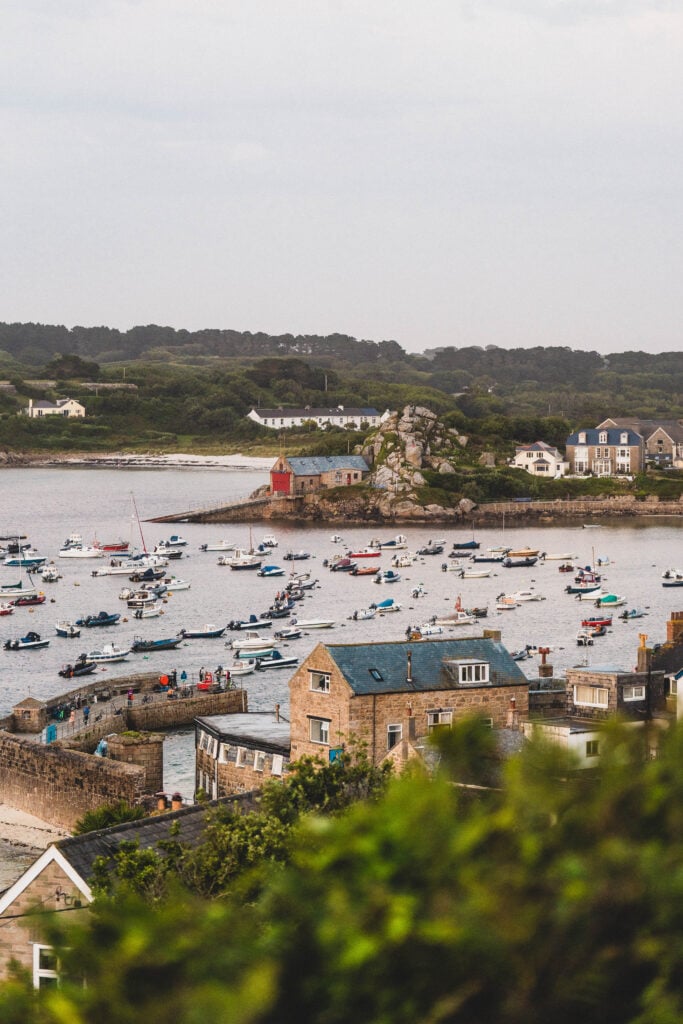
Hugh Town is the beating heart and capital of the Isles of Scilly. This town rose to particular importance during the Tudor times thanks to its sheltered harbour area. Today, Hugh Town remains extremely important as it is the main point for the Scillonians to reach the mainland and vice versa.
Aside from eateries, cosy cafes and a couple of pubs, Hugh Town is also the only spot in the Scilly’s isles where you can find a mainstream supermarket and bank.
All the best food spot suggestions!
Where to eat on St Mary’s?
When it comes to eating out in St Mary’s you’re pretty spoilt for choice Here are a few of our favourite places to eat on the island:
- Dibble and Grub – specialising in tapas & Mediterranean cuisine
- Hugh Street Cafe – a great breakfast spot!
- The Atlantic Inn – pub classics, including a delicious vegan version of fish & chips
- Longstone Lodge – sandwiches and light bites in a cosy setting
The Garrison
The Isles of Scilly were a weak point in England’s defence system. The Garrison is an area in St Mary’s, that was at one time one of England’s most remarkable and impressive coastal defence systems.
Today, you can still wander around and see the well-preserved fortifications and walk the length of the Garrison walls which, from the top, boast amazing views onto Hugh Town Harbour and the rest of the town.
Star Castle, which stands on the fortified Garrison Hill, was built in 1593. The 16th-century fortress has since been transformed into a beautiful 4-star hotel, where visitors can enjoy a luxury experience in a place steeped in history.
Visit Old Town
Just around the corner from Hugh Town is the former administrative capital of the Isles of Scilly. This town was of great importance in Norman times, however, little of the original architecture remains today.
As its name suggests, the Old Town is thought to be the oldest settlement on the island, and it remains a popular tourist destination, as well as being the closest of the towns to the airport.
There’s a cafe, quaint pub, small church, and a few holiday lets that make up most of the town, with a beautiful natural harbour that links the village with the open sea.
Halangy Down Village & Bant’s Carn Burial Chamber
Halangy Down is a prehistoric village where you can see the stone remains of at least eleven houses. It’s believed that the settlement occupied the site from the later Iron Age, 300 BC to the early Middle Ages, 600 AD.
Bant’s Carn Burial Chamber is much older than the village, dating back to the Bronze Age, 2,500 BCE. This stone and earth tomb sits above the ancient village and was a communal burial chamber.
The Long Rock
Nearby Halangy Down Village is a 2-metre-tall prehistoric standing stone located on Long Rock Down. Very little is known about this monument. However, it is covered in crusty lichen, which stands a testament to how fresh and clean the air of the Scilly Isles is.
Carreg Dhu Gardens
The gardens take its name from the Cornish words for ‘Black Rocks’ and can be found in the heart of St Mary’s. This subtropical paradise was created in 1986 by Richard and June Lethbridge, who started their labour of love on the site of a disused quarry and managed to bring it together thanks to donations from local birdwatchers and the Council of the Isles of Scilly.
The exotic and foreign plants, some of which were gifted by the world-famous Tresco Abbey Gardens, thrive in this peaceful and quiet spot. The quarry site offers a very sheltered environment compared to that of the rest of the island.
In 2006, the addition of a Narcissus Garden was made; Narcissi are a historic variety of daffodils that can be traced back to the early years of the flower industry.
Carreg Dhu Gardens is community-led and maintained by volunteers; it’s open and free for visitors to wander around and admire the wonderful 11.5 acres of verdant foliage!
Innisdigen Burial Chamber
The Isles of Scilly were first visited by hunter-gatherers thousands of years ago. During the Bronze Age, the islands became occupied by several Burial Chambers and other monuments as the Neolithic inhabitants settled here.
It’s thought that there are around 80 of these kinds of chambers on the Isles of Scilly. The name ‘burial’ is slightly misleading as these chambers weren’t solely used for that purpose, but also for ceremonies. Today, they remain well preserved and its fascinating to imaging how these spaces might have been used, almost 3,500 years ago!
Pelistry Bay
Widely regarded as one of the most beautiful spots of St Mary’s, Pelistry Bay is a secluded beach on the eastern shore of the island and is only reachable by foot. Even if you have a bicycle, there’s quite a steep rocky track to reach the beach area.
Once there, you’ll be greeted by a large stretch of fine white sand and, at low tide, you can walk out to the small tidal island known as Toll’s Island.
Toll’s Island
Toll’s Island is the largest of four small tidal islets which can be reached by foot from St Mary’s shore. The island is 300 meters long and 175 meters wide, and once there, you can see Civil War battery remains.
The Loaded Camel
One of the most fascinating natural wonders of the island stands in the form of a camel. This natural formation of granite stones piled upon one another resembles that of a camel carrying a heavy load. It has become a popular landmark thanks to its unique appearance (and makes for a great photograph!)
Go hiking
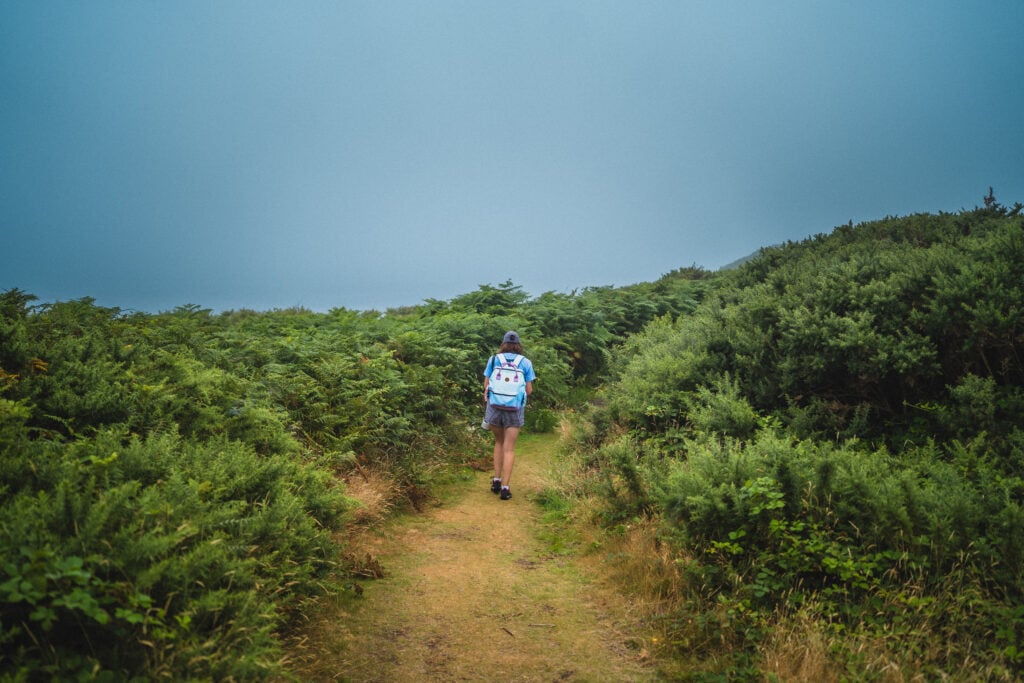
St Mary’s has over 30 miles of hiking trails that crisscross throughout the island. Here are some of the best trails you can undertake while on the island:
- St Mary’s Island Coastal Loop (15.5–16 km / 9.8 miles) – The classic full-day hike circumnavigates the island, taking in dramatic cliffs, secluded beaches, prehistoric sites, and panoramic sea views. Allow around 4–5 hours without long stops.
- The Garrison Circular Walk (3.5–4 km / 2.3 miles) – One of the island’s easiest and most rewarding walks, following the historic Elizabethan Garrison Walls. Expect fantastic views over Hugh Town, neighbouring islands, and the harbour, as well as Star Castle and coastal fortifications.
- Harry’s Walls & Porth Mellon Loop (9 km / 5.7 miles) – A varied route combining Tudor ruins at Harry’s Walls, Iron Age remains, peaceful countryside and the sandy shores of Porth Mellon Beach.
- Halangy Down & Bant’s Carn – A shorter heritage walk to one of Britain’s best-preserved Iron Age villages and the nearby Bronze Age entrance grave of Bant’s Carn. It’s ideal if you’re interested in archaeology alongside coastal scenery.
- Peninnis Head Walk – Follow the paths around Peninnis Head to discover granite tors, a lighthouse, rocky coves and some of the island’s most dramatic Atlantic views. Sunset is particularly beautiful from here.
- Old Town to Porth Hellick Coastal Walk – A gentle coastal stroll linking Old Town Bay with Porth Hellick, passing secluded beaches, wildflowers, and the island’s quieter eastern coastline.
- Bar Point & Watermill Cove – Head north from Hugh Town to discover Bar Point, Watermill Cove, and hidden beaches with excellent opportunities for birdwatching and spotting seals.
- Innisidgen Hill & Giant’s Castle – A rewarding inland detour to twin Bronze Age burial chambers with sweeping views across St Mary’s and the surrounding islands.
Getting around the island
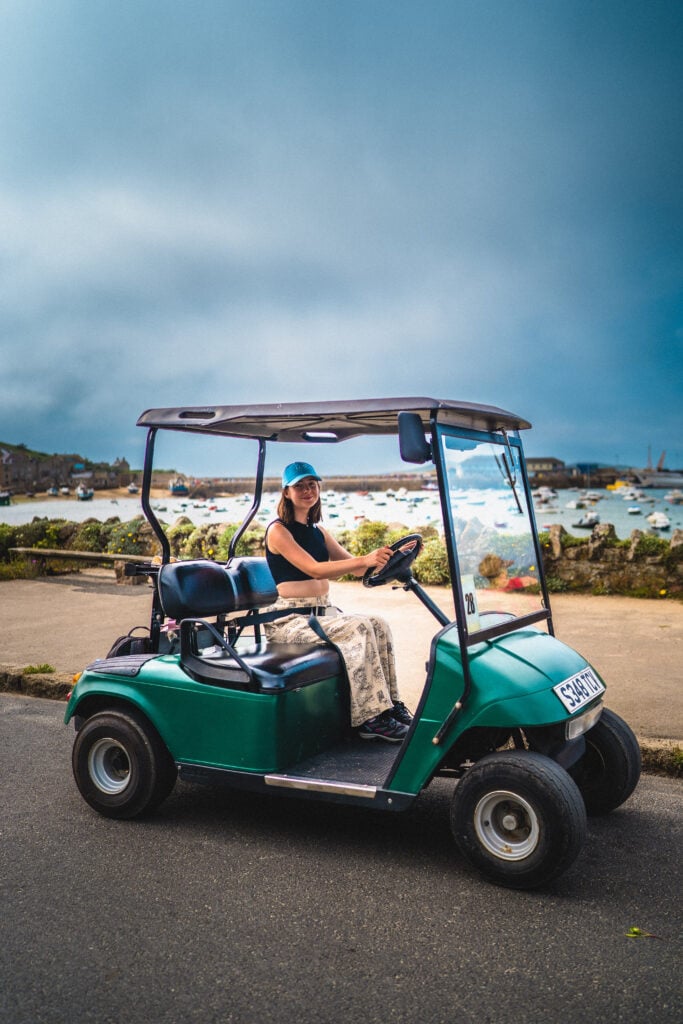
St Mary’s is the largest of the Isles in Scilly and stretches around 6 square miles in total. There are several ways you can explore the island, by foot, by community bus, by taxi or, as we chose to do- by Scilly Carts! (golf-buggies)
Not only is exploring the island via a buggy really fun, but it also means you can cover quite a lot of ground and sites within a short amount of time. Of course, there are parts where you’ll need to park and walk, but for the most part you can reach most of the island.
We opted to rent a Scilly Cart for one day, which cost £60, so it’s not necessarily the cheapest way to explore, but well worth doing if you have the opportunity! Please note, as you are travelling on motorised roads, you’ll need a full driver’s license to rent a Scilly Cart.