
Salinas del Carmen Guide (Salt Museum, Church & Whale Skeleton)
Last Updated on 14th October 2026 by Sophie Nadeau
This post may contain affiliate links. Please check out my privacy policy and disclosure for more information.
Those who are picturing the eastern portion of Fuerteventura will no doubt be picturing the sandy beaches and little fishing towns in their mind’s eye. However, there’s another cool site worth checking out, and that is the salt flats. Here’s your guide to the best of Salinas del Carmen, where you can discover the salt flats, a unique whale skeleton, and a tiny little church.

A brief history of salt in Fuerteventura
Sea salt is often overlooked, it always seems available and is the most common food flavouring used. However, have you ever stopped to think about where it comes from? Or how it’s extracted and produced on such a large scale?
Salt has been used for thousands of years, and its ability to preserve food was a founding contributor to the development of civilisation. It is one of the most important elements in sustaining life and thanks to Fuerteventura’s surrounding sea, it has an abundance of natural resources from which to extract salt. The island’s history of salt mines dates back to 1641.
There are both natural and manmade salt pools in Fuerteventura, and back in the day salt was considered a “common good” so inhabitants of the island went around and freely collected their needed salt supply. However, this was recorded so that no one took advantage and took too much, it was also forbidden for individuals to sell or export salt to other islands.
It wasn’t until the late 18th century that salt production became more of a market in Fuerteventura. However today, only one saltworks remains in operation, but you can still visit former salt pans and natural ones which are scattered across the island.
Things to do in Salinas des Carmen
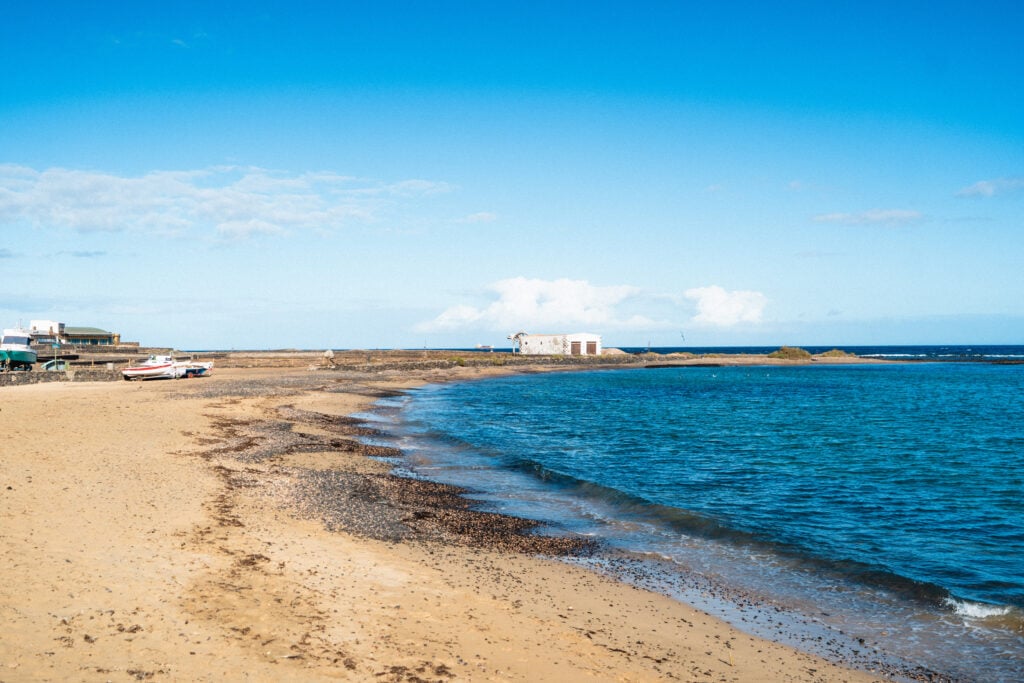
Playa del Muellito
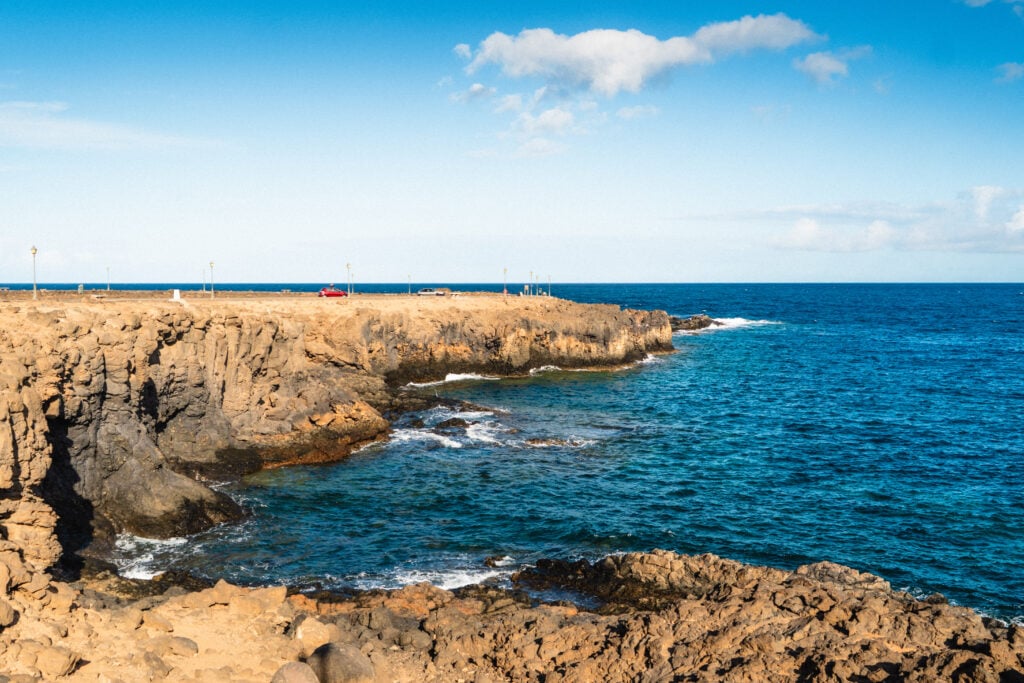
Thanks to its enviable location overlooking the sea, Salinas del Carmen has its own little beach, which is known as Playa del Muellito. Sandy and scenic, the beach is renowned for its unique natural features which are distinguished by its striking cove, dunes and black sand.
The beach is a popular sunset viewing spot on the island and also a prime location to marvel at the power of the ocean. Here, you can see waves crash against the rocks, although not ideal for swimming, it offers a different experience to that of other beaches.
Church of Salinas des Carmen
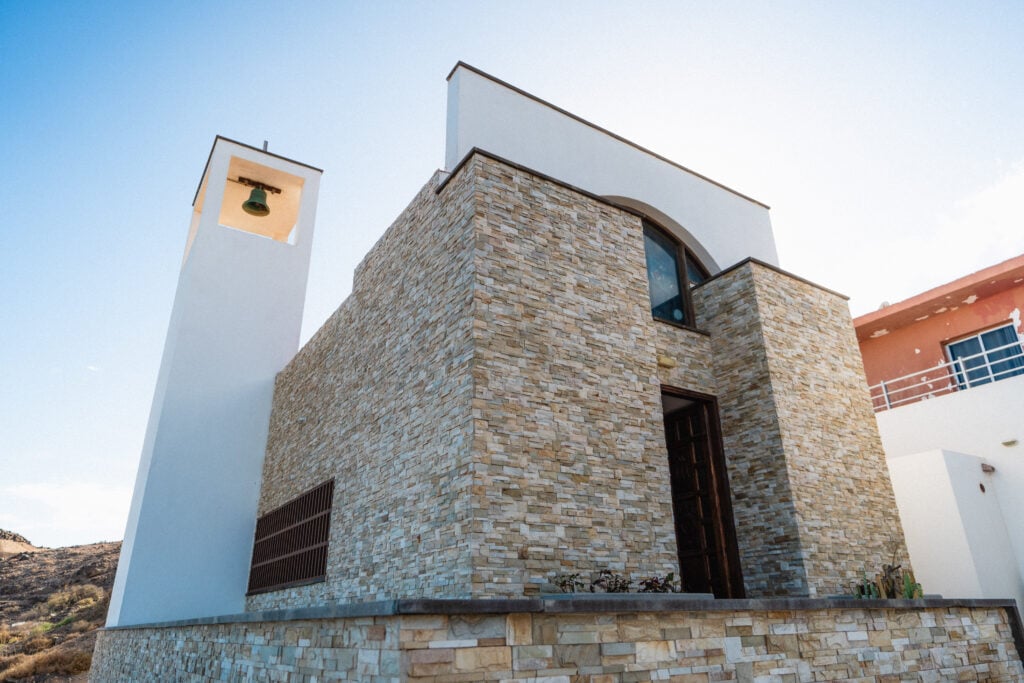
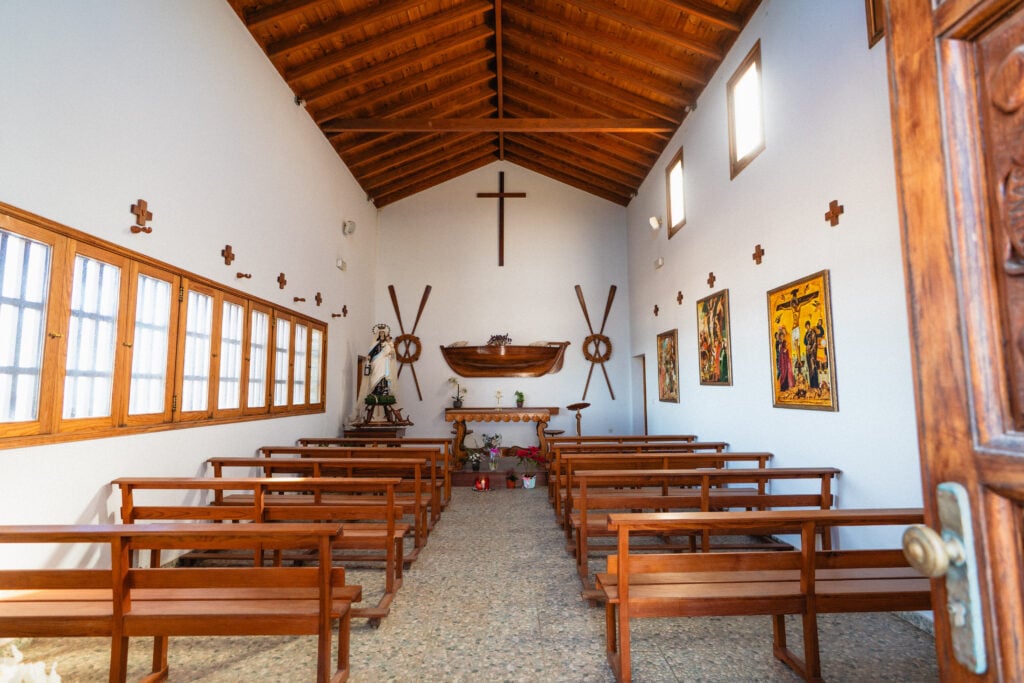
The little church of Salinas del Carmen was built in the early 18th century, so has a very modern feel to it. Offering a space of tranquillity as you hear the waves crash in the distance, inside are several marine motifs on display.
Del Carmen Saltworks Museum
Salinas del Carmen Saltworks began in 1910, and today they are the only saltworks in Fuerteventura which are still in operation. So, the best place to learn more about the history of salt production and see a working place in action is here.
Home to a small museum, you can also stroll around the large saltpans, while you soak up the wonders of this overlooked readily available seasoning! You will be taken around the manmade salt pans and shown how the magic happens. Also, an added element to the scenery is you see the skeleton of a whale in the background as you walk around.
To visit, it only costs €5 and this includes of tour of the grounds and a booklet with English translation. You can drop by and do not need to book in advance. The opening times are, Tuesday to Saturday from 10 AM – 6 PM (May and October) and 9:30 AM – 5:30 PM (November to April).
Restaurante los Caracolitos
Much like other little villages in Fuerteventura, such as Pozo Negro, there is one single restaurant in the village which serves classic Canary Island dishes such as fish-forward plates and potato-based sides.
The restaurant only accepts cash so, if you plan to eat there, be sure to go prepared! Here are some classic dishes to look out for on the menu:
- Papas arrugadas con mojo – Traditional wrinkled Canarian potatoes served with mojo sauce.
- Pulpo a la plancha con mojo – Grilled octopus with Canarian mojo sauce.
- Pescado fresco a la espalda – Fresh local fish cooked on the bone, often grilled with garlic.
- Lapas a la plancha – Grilled limpets, a classic Canary Islands seafood dish.
- Gambas al ajillo – Prawns cooked with garlic and olive oil.
- Mejillones con mojo verde – Mussels served with green mojo sauce.
- Gofio escaldado – A traditional Canarian dish made with toasted cereal flour mixed with hot stock.
- Caldereta de marisco – Seafood stew.
- Paella de marisco – Seafood paella.
- Cherne frito con papas – Fried wreckfish, a local favourite, served with potatoes.
- Salpicón de pescado y marisco – A refreshing salad of fish and seafood.
- Queso Majorero – Local goat’s cheese from Fuerteventura, sometimes served with tomato and garlic.
Whale Skeleton
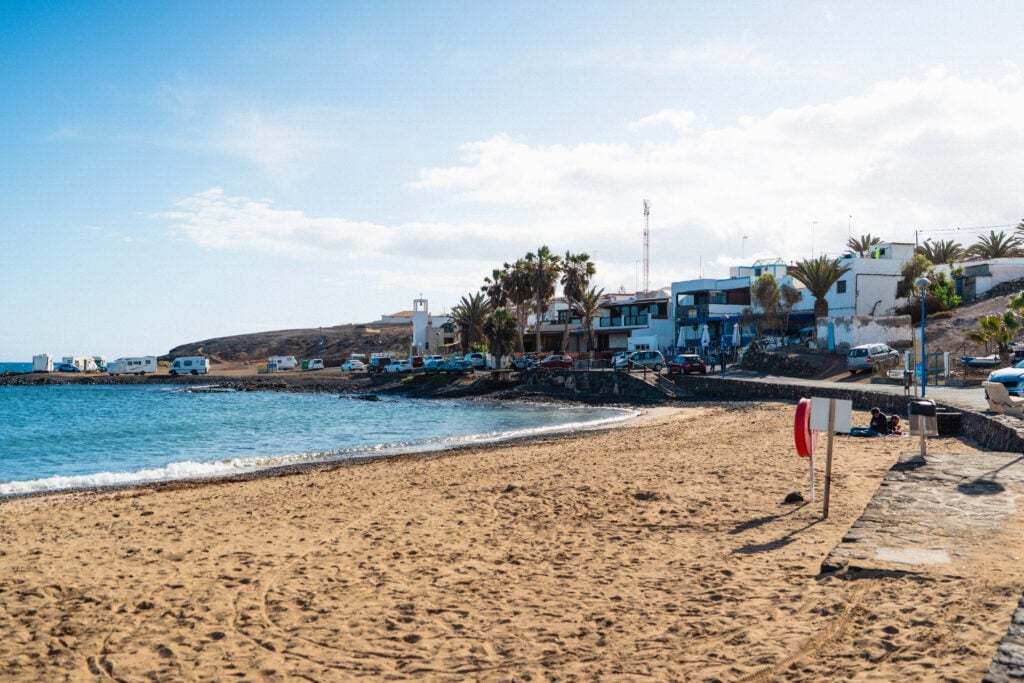
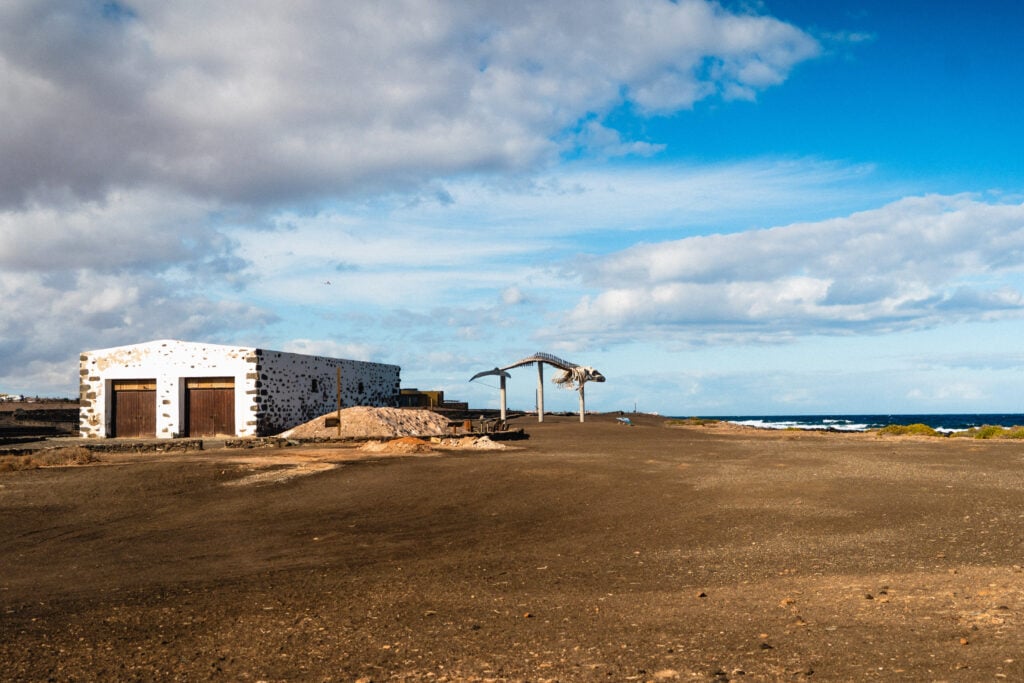
There are a number of whale skeletons on display across Fuerteventura, though the most famous is probably the fin whale skeleton which is in Salinas del Carmen. The skeleton has been in situ since May of 2003.
In April of 2000, a young female fin whale, with a length of 19.5 meters (64 feet), became stranded in Majanicho, which is situated in the Municipality of La Oliva.
Recognising the cultural and exhibition significance of this remarkable creature, the Island Council of Fuerteventura, in partnership with the Department of the Environment of the Government of the Canary Islands, resolved to take the necessary steps to recover the whale’s skeleton and display it publicly near the ocean at Salinas del Carmen.
Salt Flats
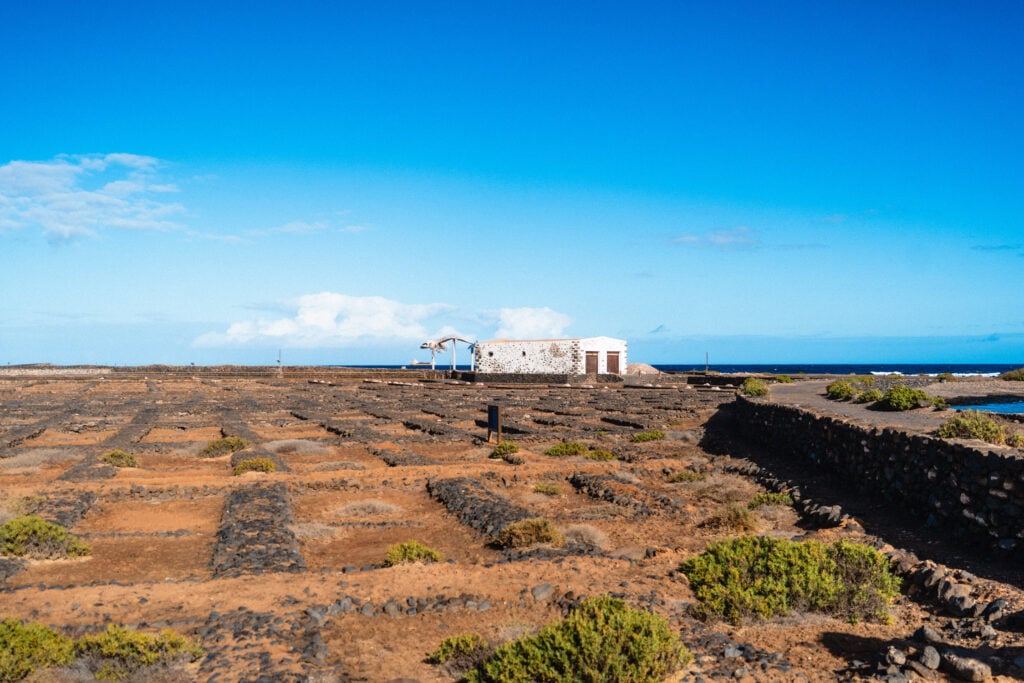
The Salinas del Carmen are a Site of Cultural Interest and, as mentioned, are the only salt flats of Fuerteventura that remain in operation. There are also many places where you can see the natural salt flats, these are found in small pools along the rugged terrain of the coastline, most commonly found on the west coast of the island.
In addition to this, the area is of great environmental value as the small pools attract wading birds and gulls. Known to draw in a pair of Barbary Falcon, other birds more commonly seen are, Whimbrel, Little Egret, Common Greenshank, Common Redshank and Little Ringed Plover to name a few.
Looking for more Fuerteventura travel inspiration?
As the second largest of the Canary Islands group, you can probably imagine there is a lot to be explored! To make things a little easier, we’ve put together several travel guides to give you better insight as to what to know before you go, as well as the best things to see: