One Day in Hampstead: Hidden Gems in London’s Leafy Village
Last Updated on 1st July 2026 by Sophie Nadeau
This post may contain affiliate links. Please check out my privacy policy and disclosure for more information.
Hampstead is a leafy suburb in northwest London, and it’s easily one of the most beautiful neighbourhoods in England. With centuries of history, cobbled lanes, cosy old pubs, and sweeping views from Hampstead Heath, London’s leafy village feels like a world away from the bustle of central London. And, its charm hasn’t gone unnoticed, as Hampstead is not only a haven for locals but also a celebrity hotspot.
In this travel guide, I’ll take you on a 1-day itinerary of Hampstead, showing you the best things to do in the area, hidden gems, where to eat, and everything you need to make the most of a day in London’s leafy village!
A brief history of Hampstead
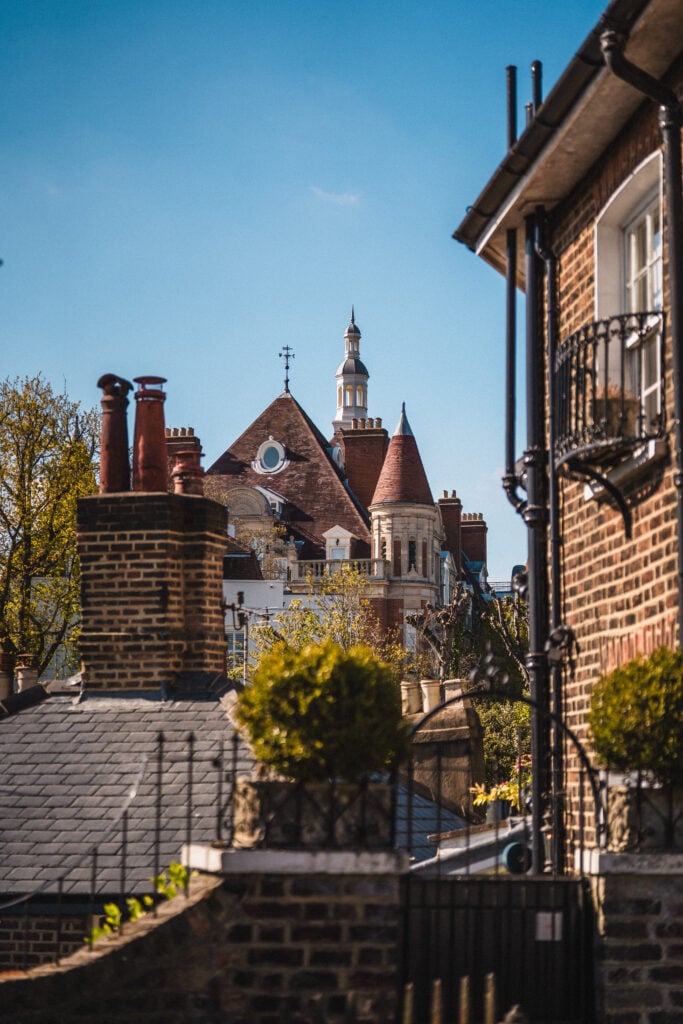
Hampstead started as an Anglo-Saxon village, and it was named‘hamstede,’ or as you might recognise, homestead. For centuries, it remained a quiet traditional English village.
It wasn’t until the 17th century that the settlement began to grow, as people were fleeing London during the Great Plague of 1665 and the Great Fire of London in 1666 (it’s worth noting, we’re talking about wealthy people fleeing these disasters).
Compared to London, Hampstead was a haven of fresh air and clean water, which by the late 17th was believed to have special health-giving qualities. And so, even more wealthy Londoners wished to escape the smog of the city for this little village at the highest natural point in London.

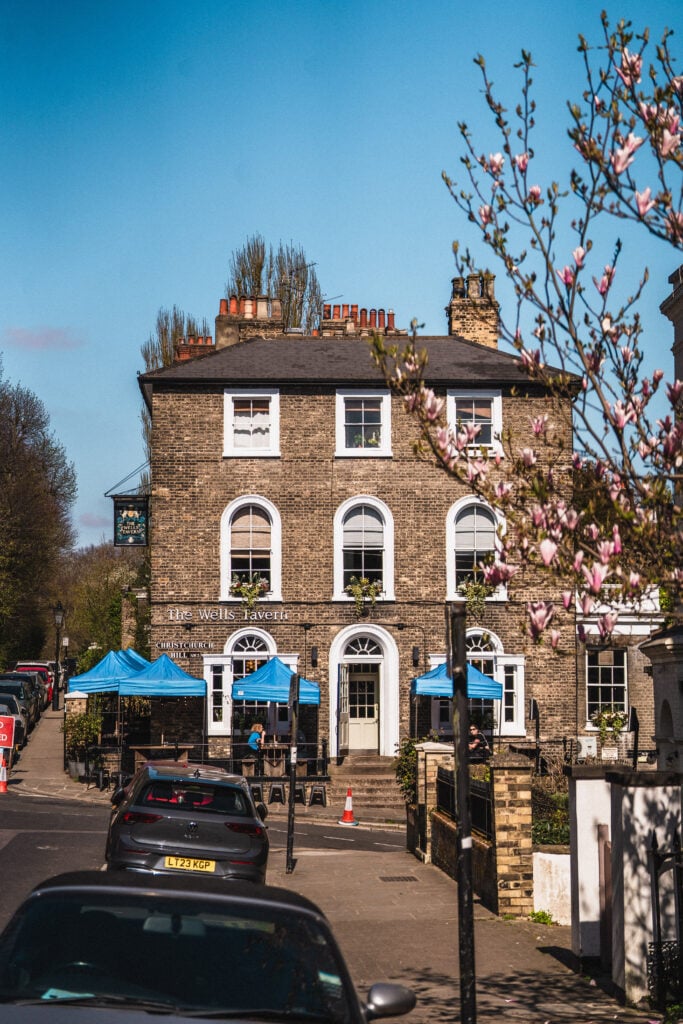
In the 18th century, Hampstead’s wells and spas made it a fashionable retreat (Hampstead Wells Spa), and the building of mansions soon followed. Even today, visitors can spot reminders of its spa-town history in street names and historic buildings. By the 1860s it couldn’t have been easier to get to Hampstead thanks to the opening of the North London Railway.
Now, Hampstead is considered one of the most beautiful neighbourhoods in England. The wealthy continue to settle here, with celebrities to the likes of Harry Styles, Jude Law, Helena Bonham Carter, Daniel Craig, and Ricky Gervais…just to name a few!
However, even if purchasing a property here is out of reach, visitors can still enjoy the village for its hidden gems, cosy pubs, and beautiful views overlooking London from the glorious green of Hampstead Heath.
What tube line goes to Hampstead?
The Northern line goes to Hampstead Station. So, you’ll want to take the train heading north towards Edgware. From the station, it’s just a 5-minute walk where you’ll join the small lanes and little side streets that take you to the heart of the district.
One day in Hampstead
Hampstead Square
Hampstead Square is the perfect place to begin your day of exploring. From here, it’s easy to wander into the charming cobbled lanes and quiet side streets that make this area so special. The square itself is lined with picturesque 18th-century houses that reflect the district’s prosperous past, largely thanks to the nearby Hampstead Wells Spa.
Burgh House
Burgh House is a beautiful and historic, Grade 1 listed, Queen Anne building. The Georgian townhouse was built in 1704, making it one of the oldest surviving homes in Hampstead! It was originally constructed to accommodate the many people moving out of London to the newly developing spa town.
Since the 1970s, Burgh House has been at the heart of the community. Step inside and you’ll find a cosy gallery where local artists showcase and sell their work, alongside a small museum celebrating Hampstead’s painters, portraits, and creative history. Visiting is free, though donations are always welcome, and much of the centre’s charm is kept alive thanks to its music room, which is rented out, and still hosts events today.
Chalybeate Well
Next, you’ll want to head to Chalybeate Well, the exact reason for why Hampstead became famous for its water in the first place. The well, along with several others in the area, was first discovered in the 17th century, and its name chalybeate actually means the water contains iron salts, thus why it was believed to have health-giving qualities. So, while the water isn’t suitable for drinking, it’s medicinal properties were greatly valued.
One of the volunteers at Burgh House told us that water isn’t coming up from the ground anymore; however, it could easily be accessible if needed.
Wandering along little side streets
Simply exploring Hampstead’s pedestrian side streets is one of the best things to do in the village, especially on a clear spring day, where hidden gems and charming corners await. The delightful sounds of chirping, buzzing and all things nature make it almost impossible to remember that you’re still within the realms of London itself.
One thing you’re certain not to forget is Hampstead’s connection to celebrities, as you’ll spy out dedicated plaques to those who have lived or frequented the area. We saw a plaque that denotes Daphne Dumorier, the famous novelist, lived here for 2 years in the 1930s. And, it’s easy to see why so many were drawn to Hampstead, given how peaceful and picturesque the area is.
Flask Walk
One of the most charming streets in the district has to be that of Flask Walk, a predominantly pedestrianised alley. However, if you head to the western part of the street, you’ll find a small alleyway filled with independent boutiques, bars, and restaurants, capturing the quintessential charm of Hampstead.
Lunch at Ginger & White
We opted to have lunch at a delightful restaurant called Ginger & White. Here, they serve a variety of classic brunch dishes and speciality coffee in a cosy setting. If visiting when it’s sunny, you can sit out on the terrace and soak up the beauty of Hampstead.
Mansfield Place
Although it’s more of a quick glimpse than a full stop, Mansfield Place is worth a peek as you explore Hampstead. There are lots of tiny pedestrian streets criss-crossing through, but Mansfield Place is one of my favourites!
Holly Mount
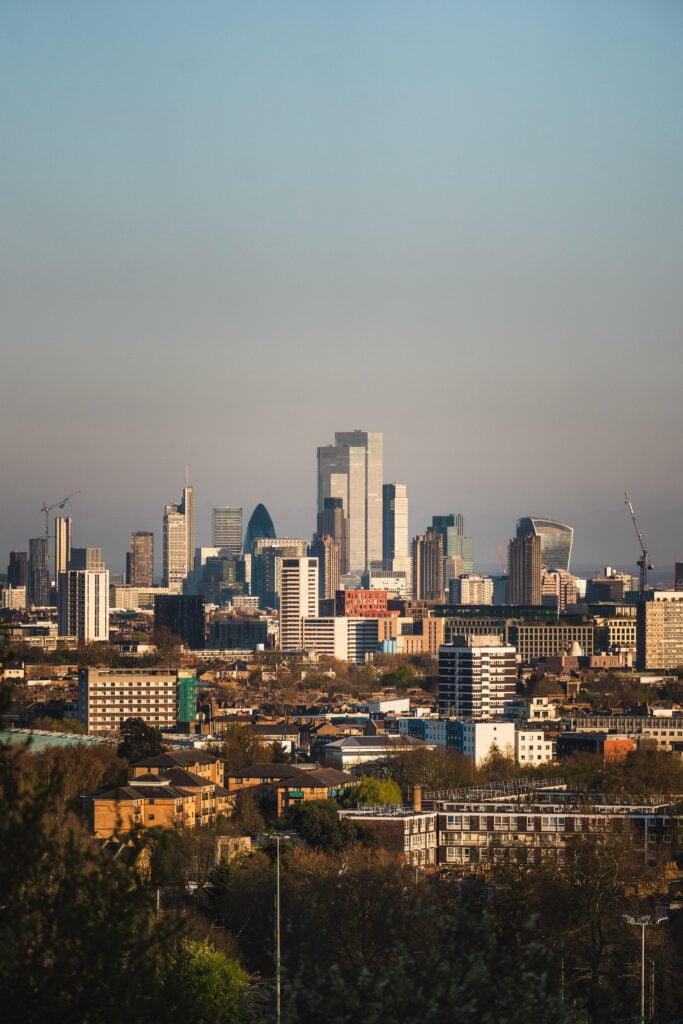
Next, walk up to Holly Mount, where you’ll be greeted by spectacular views of the city of London. Thanks to Hampstead’s position on the hill, this means that there are great vantage points of London. On a clear day, you can see as far away as the Shard, which sits on the other side of the River Thames.
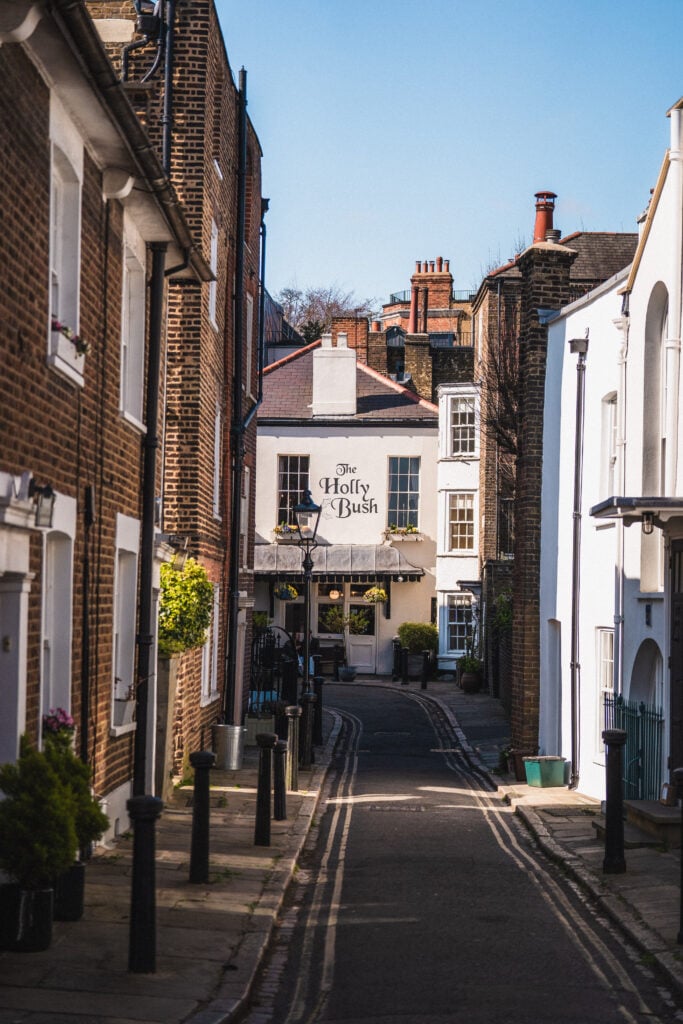
The main thing to see here has to be probably the most photographed pub in England, The Holly Bush. This iconic public house is set within a Grade II listed 18th-century building. The pub is classically cosy, and writers and celebrities alike are known to frequent there.
Fenton House & Gardens
Fenton House is a beautiful 17th-century manor house and gardens, which is managed by the National Trust. This former merchant house has since been transformed into a museum where visitors can peruse quirky collections, including an impressive array of playable early keyboard instruments. There’s also a picturesque walled garden to explore.
It’s worth noting, Fenton House is only open to the public a couple of days a week, and it’s recommended to book ahead of your visit. You can do so here, on their official website.
Sweet treat stop off at GAIL’s Bakery
Although I’m not a massive fan of bakery chains, I do really like GAIL’s, and its original spot is on Hampstead High Street. So, if you’re in the mood for a sweet treat, stop off as you explore, I recommend it here!
Whitestone Pond
Next, head up to Whitestone Pond, which sits 135 meters above the London basin, making it the highest point in all of London. This decorative pond was a former watering hole for horses, and to be honest, it’s seen better days. While it’s obvious when there, it’s worth noting that this is not one of the swimming points in Hampstead.
The Hill Garden and Pergola
One of Hampstead’s hidden gems is the Hill Garden and Pergola, which is tucked away in the north-west corner of Hampstead Heath. The garden was created at the beginning of the 10th century for Lord Leverhulme, with the idea of having extravagant garden parties and summer evening strolls…how quaint!
The Georgian arbour and terrace stretches over 230 meters and boasts stunning views overlooking Hampstead Heath and beyond. It’s completely free to visit, but tends to close at dusk. It’s most commonly used as a picturesque photography setting, and for small wedding ceremonies (but bookings are full for the foreseeable!)
Hampstead Heath
Hampstead Heath is an ancient heath in London that covers over 800 acres and comprises a wild woodland and vast meadows. This park has ties to
Hamstead Heath covers over 800 acres and comprises a wild woodland as well as expansive meadows. Beyond its natural beauty, the park has cultural significance too as it inspired C.S. Lewis while creating The Chronicles of Narnia and was where Constable spent his final years painting. It’s the perfect spot for a leisurely stroll, a picnic, or simply soaking up the views over London.
The Heath boasts lots of beautiful and old trees, but one which has become somewhat of a local legend is the Hollow Beech or “hole tree,” which, as you can probably guess, is plentiful with holes!
Mixed Bathing Pond
The Mixed Bathing Ponds is one of Hamstead’s greatest curiosities, and it’s exactly what the name suggests. Here lies one of London’s best open air swimming pools, and it’s been open to swimmer as early as 1893. The main ponds were originally dug in the 17th and 18th centuries as reservoirs to meet London’s growing water demand, however, they now supply the demand for summer swimmers in London!
As the water isn’t heated, it’s actually only open for swimming during the warmer months of the year, and depending on when or which pond you swim in, there may be a small fee to pay for entry. While tempting when hot, the water was opaque… but rest assured, it is tested weekly during use.
Parliament Hill Viewpoint
Raised 98 metres above sea level, Parliament Hill is yet another one of London’s highest natural points found in Hampstead. This area of open parkland offers sweeping vistas of the city skyline, and gives just the slightest idea of how vast London is when seen from above.
Best time to visit Hampstead
Hampstead is a delight all year round, but for the best of foliage and weather, I recommend visiting late Spring to Summer. That being said, it’s also the idyllic place for a slow autumnal stroll and an afternoon, escaping London’s hustle and bustle for a short while. It makes for one of the best day trips from London thanks to its proximity (and charm!)
Watch the YouTube video:
Enjoyed reading our travel guide to Hampstead? Pin this article now, and read it again later: