The Ruins of an Abandoned Chapel at Ford, South Devon
Last Updated on 13th February 2022 by Sophie Nadeau
This post may contain affiliate links. Please check out my privacy policy and disclosure for more information.
Somewhere in the very heart of the South Hams, there’s a small gap in the hedgerow. High and overgrown, there’s little to indicate that it’s here, on the fringes of the, Chivelstone, that you’ll discover the ruins of a small independent chapel and well-kept graveyard, which is the Chapel at Ford in South Devon…

Close to the very tip of the land, at the point where the sea meets the land (East Prawle boasts the most Southerly point of Devon), there’s a mish-mash of winding country roads.
A maze of lanes riddled with holes, covered in grass, and single track widths characterise this area of the South Hams, an area of the South West best-known for its stunning vistas and postcard-perfect fishing settlements.
But en route to must-see tourist destinations such as Gara Rock Café and the beach of East Portlemouth, there are still many hidden gems that few tourists get to experience, no doubt because they’re rushing towards the sound of crashing waves and the squawk of gulls crying overhead.

A history of the independent chapel at Ford, Devon
Constructed in the 18th-century to serve as an independent chapel, the ecclesiastical building of Ford was then enlarged in 1818. Though few records of the church survive to this day, the chapel was home to a largely dissenting congregation.
That is to say, many of the congregation in this part of the Parish of Stokenham were Protestant Christians who separated from the Chuch of England in the 16th, 17th, and 18th centuries. Truth be told, this is not surprising when one considers that influential dissenters, John Flavel and John Hicks, were prevalent in Stokenham during this period.

Though Ford may seem secluded today, this is likely nothing in comparison with how remote the hamlet and independent chapel must have been during the 18th-century, when horse and carriage or your own two feet were the only ways to get around.
As such, it’s no surprise that much of the population were dissenters, disillusioned by the far away Church of England and Roman Catholic denominations. Some estimates suggest that during the 18th-century, up to 1 in 5 people in Devon were dissenters.
If you head to the Devonian capital city of Exeter today, then you can expect to find a Dissenters graveyard, close to an old eye hospital that has since been converted into a luxury hotel.

Eventually, the small bible chapel was abandoned and left to the elements, presumably due to a lack of congregation (all the hamlets and villages around have little more than a dozen or so inhabitants each).
Today, Ford chapel has no roof. The front door is boarded up and the glass windows are gone. Trespassers are warned that prior permission must be granted should they wish to wander within the crumbling walls.
Trees grow within the property, in the place where pews and pulpits once presumably stood. However, it’s worth noting that the church’s accompanying burial ground is well maintained and mowed on a regular basis. When Pevsner visited the chapel in the mid-twentieth century, the building was already in a somewhat state of disarray.

How to visit the ruined chapel of Ford Village in Devon
Blink and you might miss it. The village of Ford (also listed as Forde in older records) is a teeny tiny hamlet with less than a dozen houses and just a handful of residents. All pastel houses surrounded by farmland and single-track roads, the village has little by way of attractions, and not even a pub to its name!
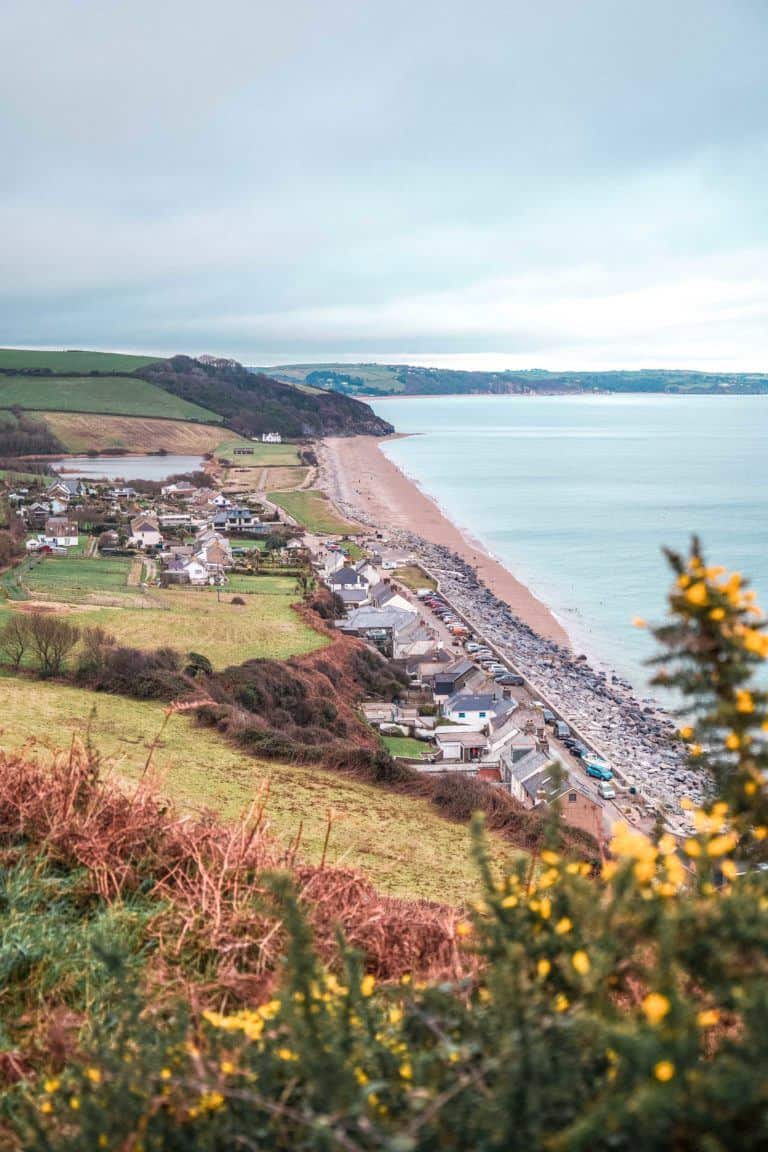
Situated somewhere on the road between Frogmore and Kellaton, must-see destinations nearby include the washed-away village of Hallsands and the impossibly pretty Beesands (where it’s possible to purchase some of the very best fish and chips in Devon from the hut of Brittania @ The Beach).


Hi Sophie, very interesting to read your piece on Ford Chapel. I live in the local area and have visited this place many times. Did you know that around the back of the building there is what appears to be a hideaway, in the form of a narrow passage. It would be interesting to know why this is there and what if any its purpose was. I know some buildings have secret rooms or ‘Priest Holes’, I have always wondered if this was the case here.
Hello, thank you for your comment! I actually didn’t realise this but will have a little research now to see that I can find 🙂