Best Things to Do in Cluny, France: A Complete Guide
Last Updated on 6th October 2026 by Charlotte Nadeau
This post may contain affiliate links. Please check out my privacy policy and disclosure for more information.
Located somewhere in southern Burgundy (Bourgogne), this sleepy French town is best known for its medieval Benedictine Cluny Abbey, which was once at the heart of a vast monastic empire in the Middle Ages. Today, a visit to Cluny is nothing short of charming. While it is fairly small, wander around, and you’ll soon discover just how many treasures and interesting stories are tucked away within the walls of this little town. Here’s your complete guide to the best things to do in Cluny, France!
What is Cluny known for?
Cluny is best known for its important historical past. At the heart of the town stands the beautiful Abbaye de Cluny, once the largest church in the Western world for around 400 years (a title that was held until St. Peter’s Basilica in Vatican City was built).
Today, Cluny feels more like a sleepy town. Perfect to explore over the course of a day. If you want to make a long weekend of a visit here, you could easily pair a trip to Cluny with a wider exploration of the Burgundy area.
Best things to do in Cluny
Visit the Abbey
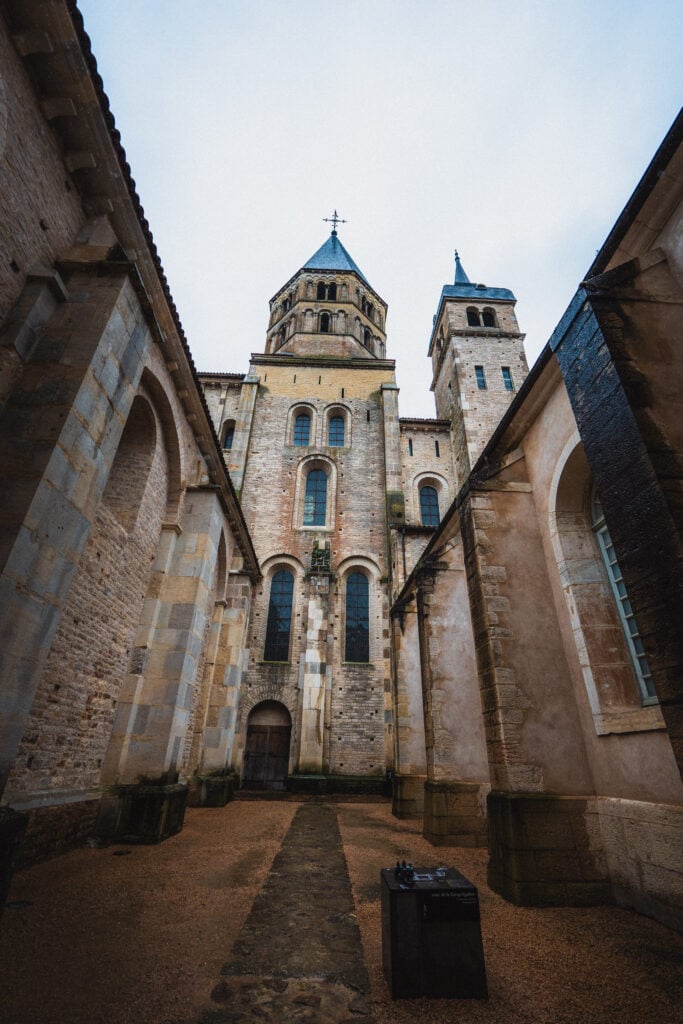
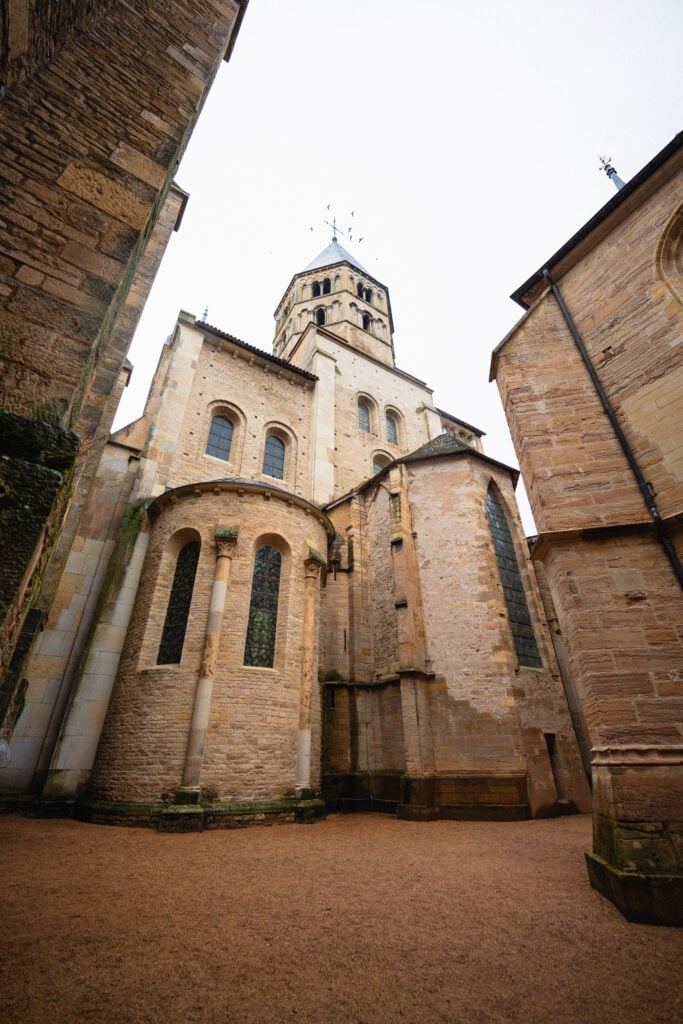
One of the main draws for most visitors to Cluny is, of course, its beloved Cluny Abbey (Abbaye de Cluny). When you visit today, it can be hard to grasp the concept of just how large the church once was. This is especially true when you realise that what you see is only 8% of the original abbey that once stood here.
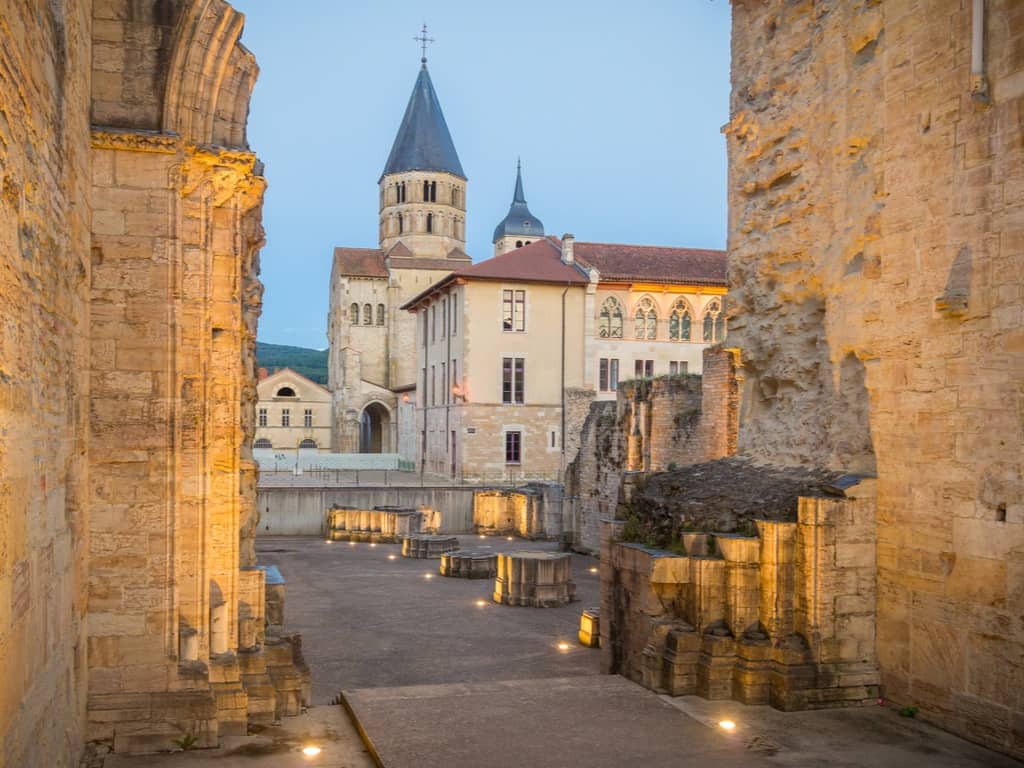
To give an idea of perspective, Cluny Abbey once measured a total length of 187 meters (614 feet), with the central barrel-vaulted ceilings soaring some 30 meters (nearly 100 feet) high. At the time of its construction, this was an unprecedented height for the Romanesque era. Not to mention, the abbey was also cut with 300 windows!
Luckily, there is a well-laid-out museum, with a helpful 3D cinema screening at the beginning of your visit (available in both English and French) that tells the story of the Abbey from its construction right up until the present day.
Cluny Abbey was founded on the 11th of September 910, when William the Pious, Duke of Aquitaine, donated the estate of Cluny to establish a monastery. The abbey followed the Benedictine Rule and became the mother house of the Cluniac Reform. Crucially, it was placed directly under the protection of the papacy, leaving little room for interference from local secular authorities.
At its peak, the Cluniac order directed a vast network governing well over 1,000 monasteries and thousands of monks across Europe.
Cluny Abbey flourished for centuries, but its long decline began towards the end of the Middle Ages. By the 18th century, the abbey was a far cry from its former position, and the French Revolution eventually brought monastic life here to an end. After this, a lot of the abbey was essentially used as a sort of quarry, with stones taken for use in other building projects. Hence, only a little portion of the original abbey still stands.
Cluny Abbey is open daily from 9:30 AM to 6:00 PM (this tends to extend until 7 pm during summer), with the last admission allowed 45 minutes before closing. To be honest, you don’t need to book online, but you can purchase on arrival. See their official website for an up to date cost/ticket types. It’s also worth noting that from November through to March, the abbey is free to visit on the first Sunday of the month.
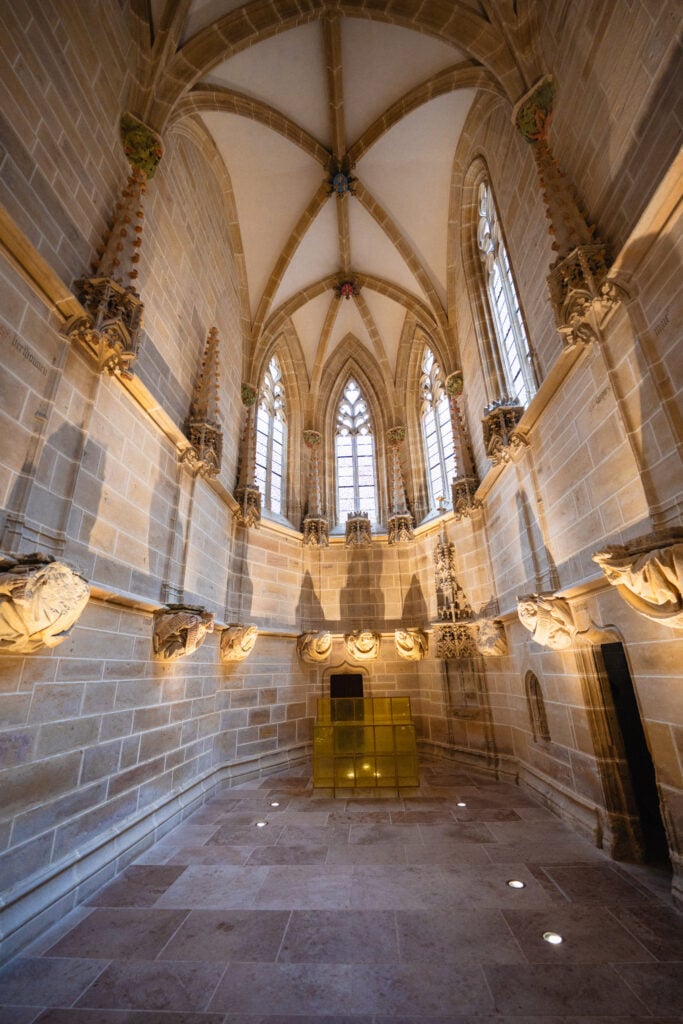
Église Notre-Dame de Cluny
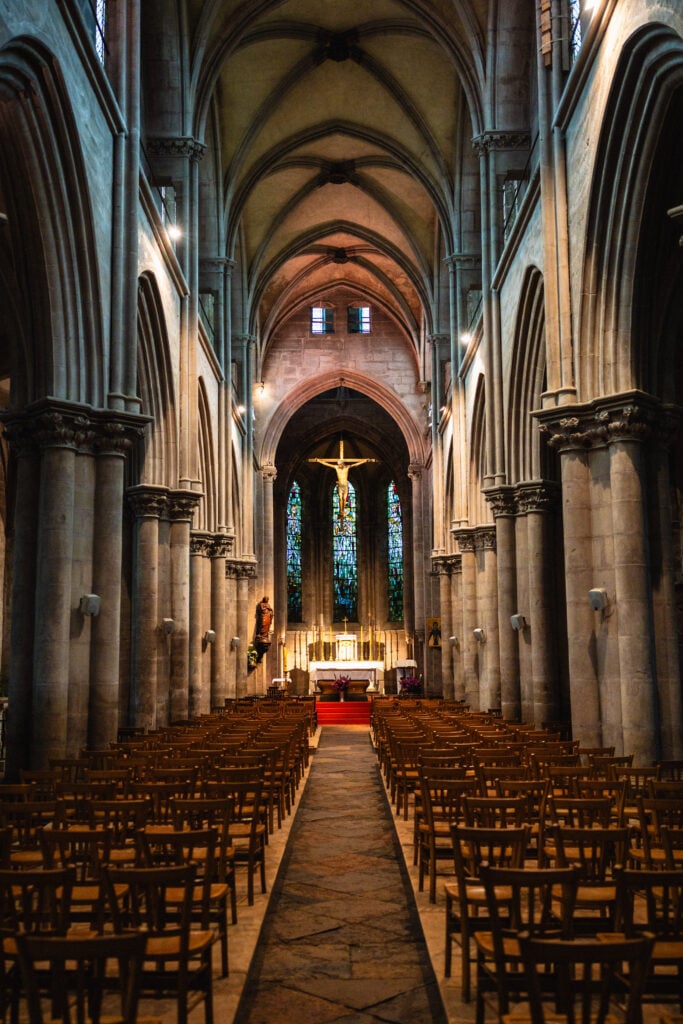
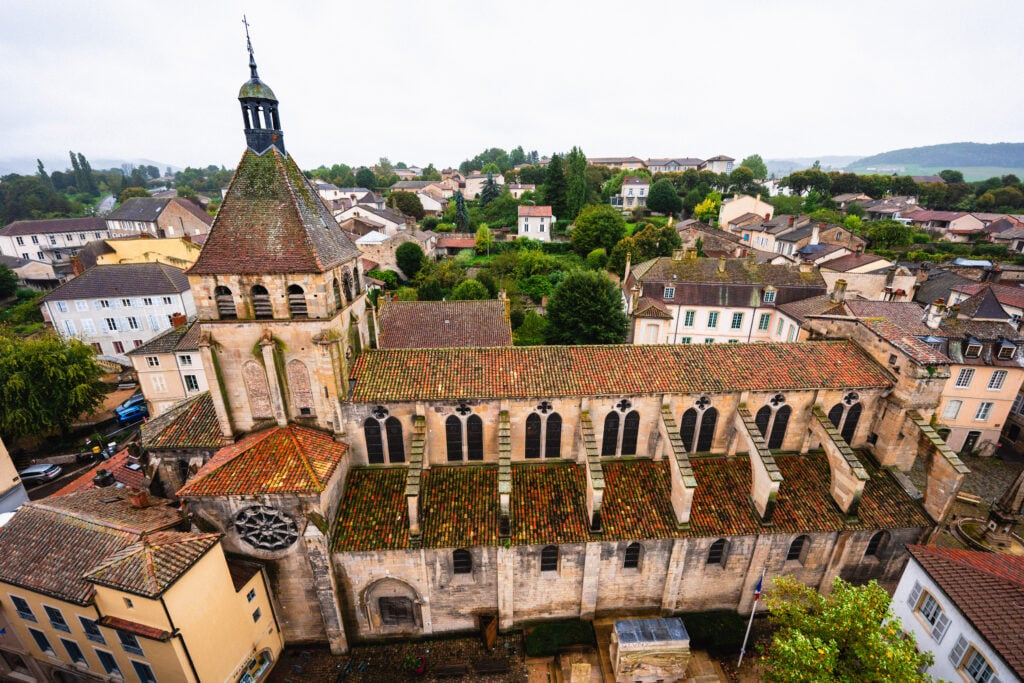
Set within the prettiest square in town, opposite a medieval house which has since been transformed into a museum, yet another attractive church in town is that which is dedicated to Notre Dame (Our Lady).
Construction of this Catholic church spanned from 1159 until the 14th century. Designed in the Gothic style, this active parish church is at the heart of Cluny and is considered a French Monument Historique. For the best view of its bell tower, you’ll want to head up the Cheese Tower, which sits nearby.
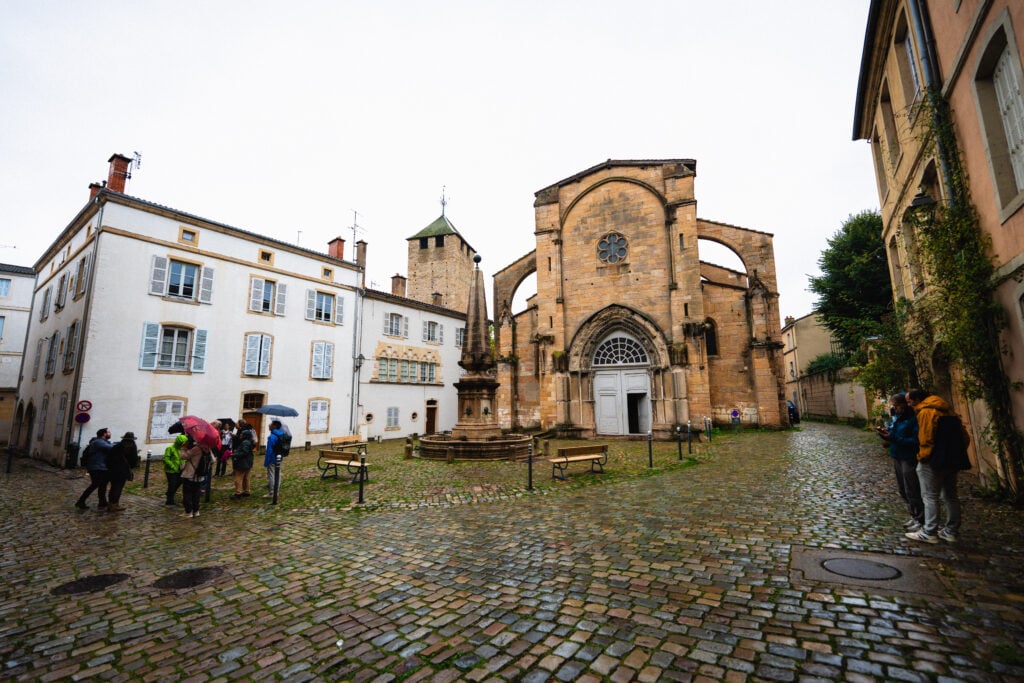
Wander the Streets
Medieval charm can be found around almost every turn, and many of the streets are pedestrianised, meaning that you can explore the cobbled lanes at your leisure. And so, one of the best ways to experience Cluny is to simply wander the streets and soak it up.
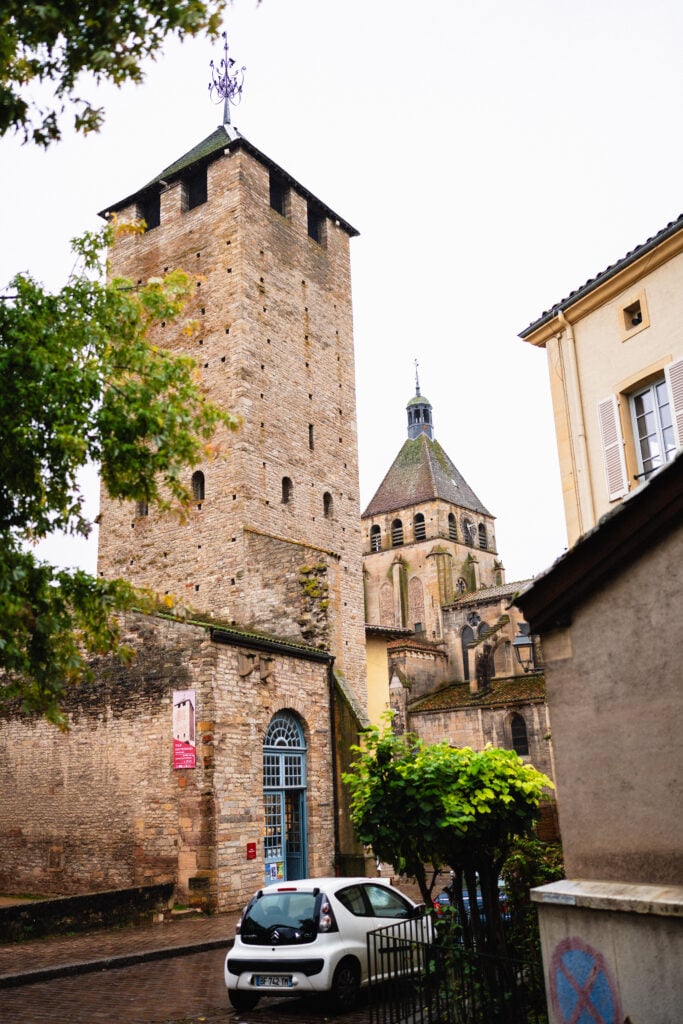
Tour des Fromages (Cheese Tower)
This tower takes its charming name from the 19th century, when a local woman rented a floor of the tower to dry the cheeses she produced. However, this isn’t the first of its food-related nicknames. Before it became a site for dairy production, the tower was originally known as Bean Tower (Tour des Haricots) because it once used to story food supplies, like beans and grain.
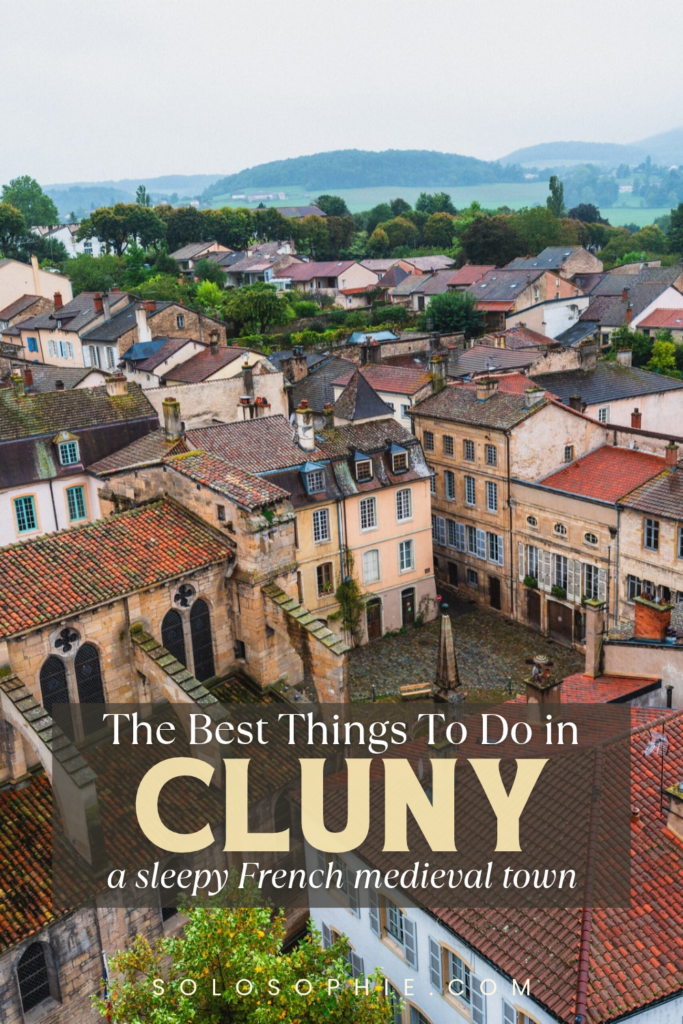
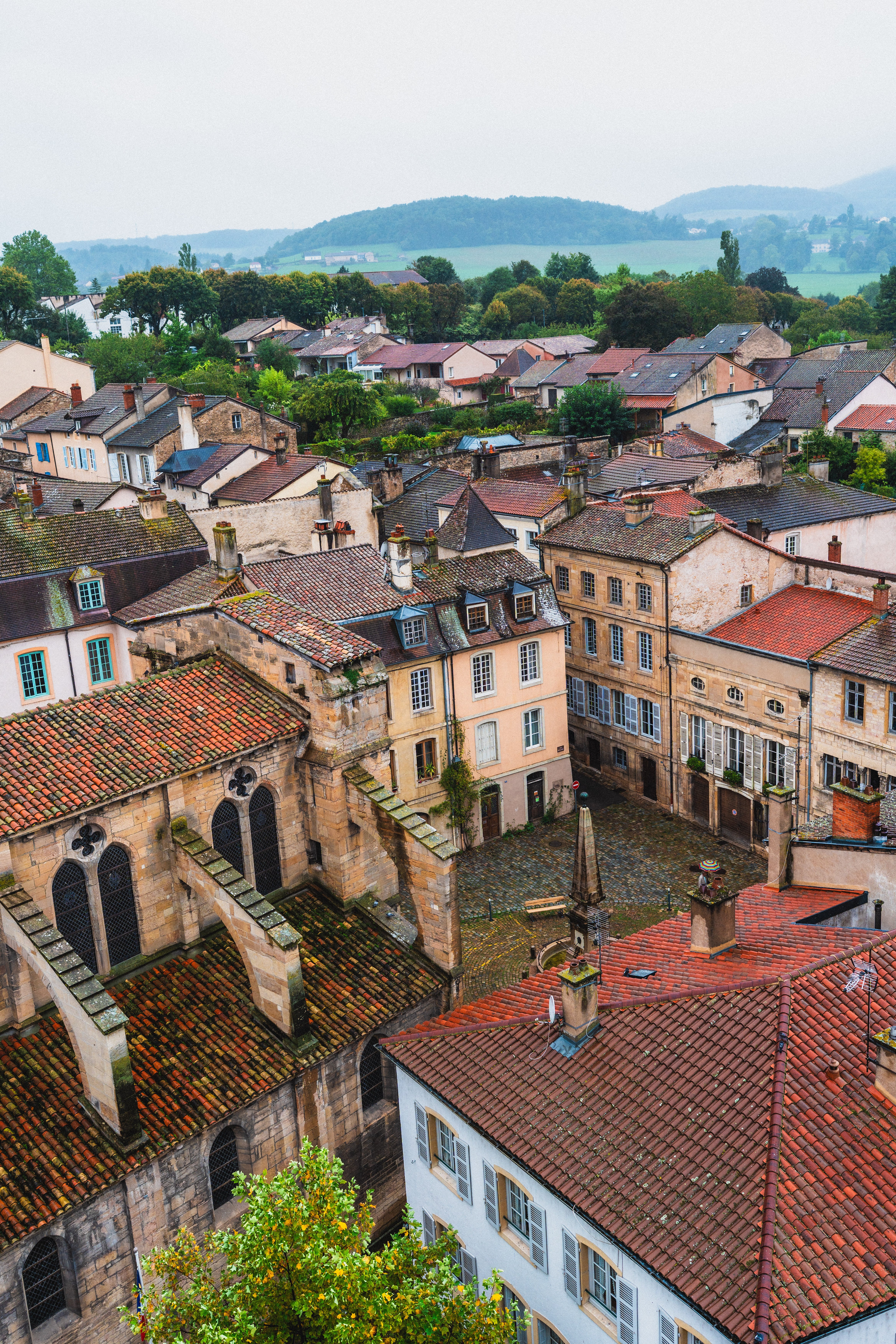
Today, the tower is solely a treasured landmark. Climb the 120 steps to the top, and you’ll be greeted by the best bird’s-eye perspective of Cluny and its surrounding landscape.
Maison des Dragons (House of Dragons)
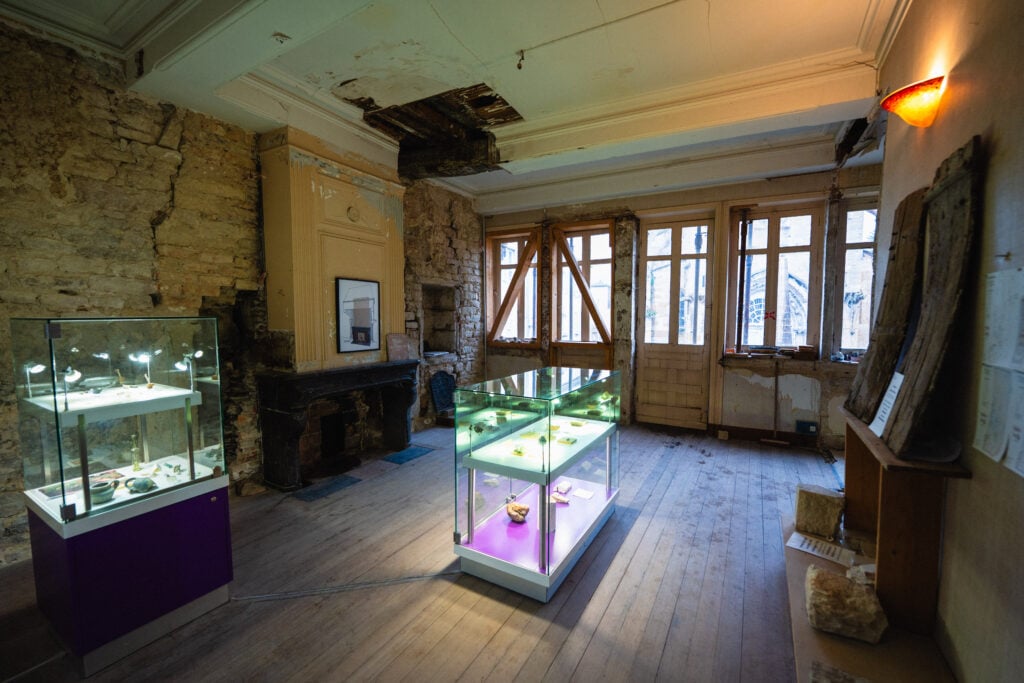
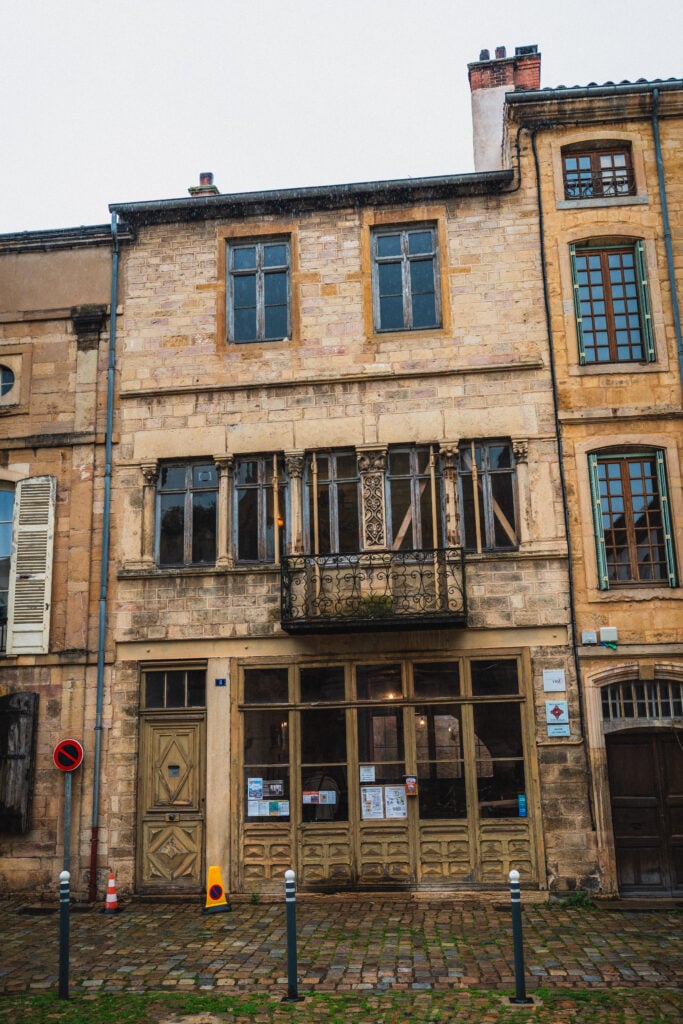
This historic medieval house is located at number 8 Place Notre-Dame, directly opposite the Notre-Dame church. Built in 1215, the House of Dragons is one of the few Romanesque-Gothic residences in France that remain open to the public. It’s worth noting that the house is completely free to visit but is unfortunately only open during heritage days or by private appointment.
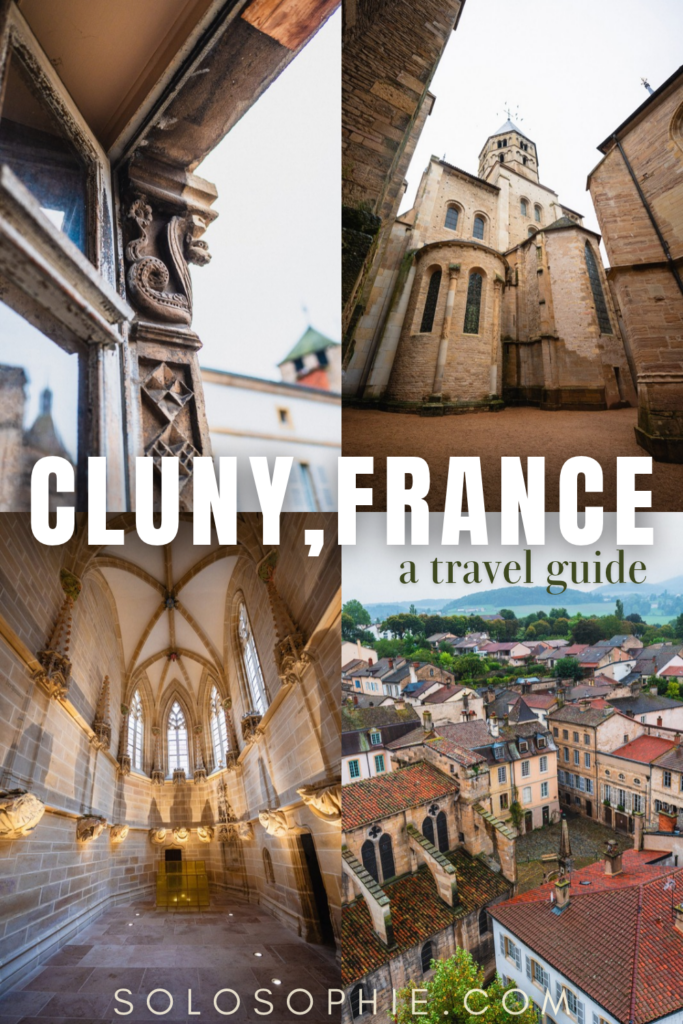
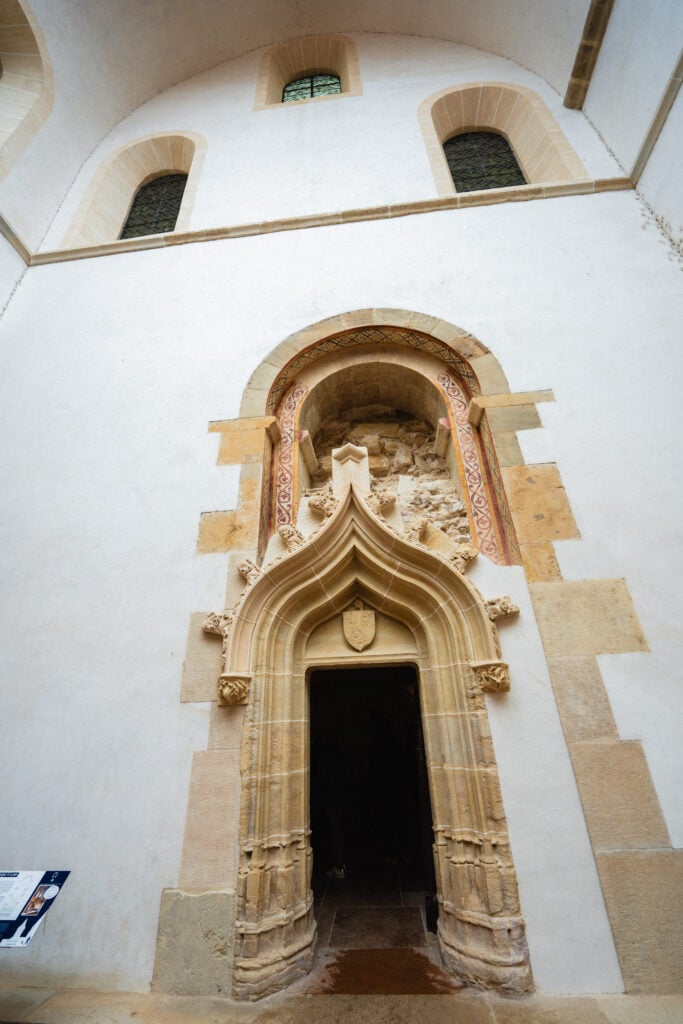
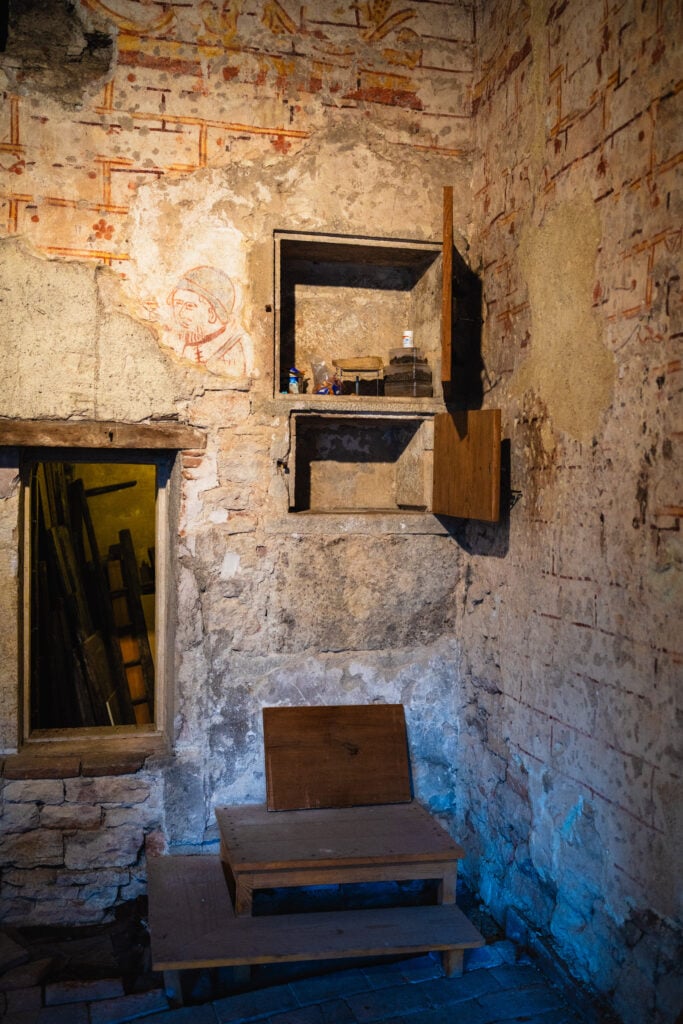
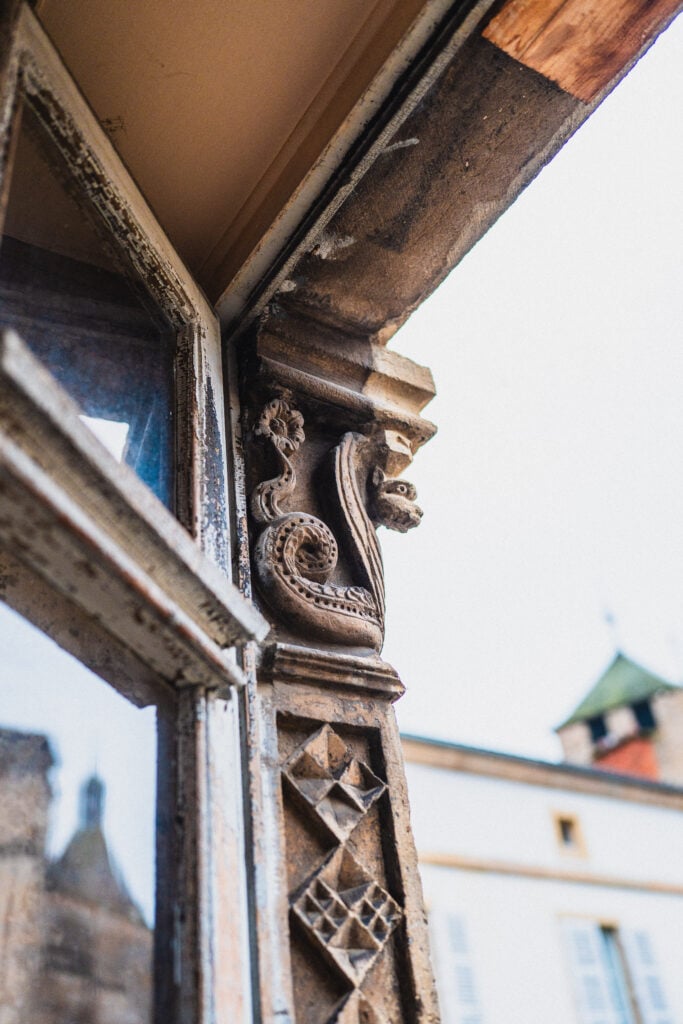
Richly decorated, the house owes its name to the dragons sculpted on the main pillar of its clerestory. Step inside the house and you’ll see a fascinating display of artefacts, murals, and the like, which have been recorded as dating from anywhere between 1215 and the end of the Middle Ages.
The interior walls feature layers of historic decoration spanning from the medieval era through the Renaissance and later periods. I loved looking closely at the walls and trying to make out the faces and different scenes that have been painted here over the centuries. Another feature to see is inside a room, which contains a medieval safe built into the masonry of the wall itself.
Suggested one day itinerary for Cluny
| Time | Activity |
|---|---|
| Morning | Visit Abbaye de Cluny + Museum. You can pay extra for a guided tour or alternatively take yourself on a self-guided tour. |
| Late Morning | Walk the medieval town centre and climb the Tour des Fromages for the best view in Cluny. |
| Lunch | Eat at one of the local restaurants: Le Potin Gourmand, La Halte de l’Abbaye. Reserve a table ahead of time in peak season. |
| Afternoon | Visit Église Notre-Dame, the National Stud Farm (open to visitors free of charge). Consider a short drive to Château de Cormatin or Berzé Castle. Alternatively, visit a nearby vineyard. |
| Evening | Enjoy dinner in town. Sometimes there are concerts or cultural events in the abbey grounds or town centre. |
Nearby attractions
Cluny is truly nestled in central France and while it’s only an hour or so from Lyon by car, it can still feel a little remote. As such, if you want to truly get away from it all for a few days, then this is the place to head to. There are several other interesting attractions in the surrounding region, including:
- Château de Cormatin – 15 minutes from Cluny
- Berzé-le-Châtel Castle – 10 minutes from Cluny
- Brancion village and castle – 25 minutes from Cluny
- Grottes d’Azé (Azé Caves) – 15 minutes from Cluny
- Taizé Community – 10 minutes from Cluny
- Tournus – 35 minutes from Cluny
- Mâcon – 30 minutes from Cluny
- Autun – about 1 hour from Cluny
- Beaune (wine capital of Burgundy) – about 1 hour 15 minutes from Cluny

Where to stay in Cluny
To be honest, I’d only really recommend staying in Cluny if you’re after a slow and sleepy retreat. Otherwise, if you’re visiting the Burgundy region, I’d recommend opting for Dijon or Beaune, as there are more options when it comes to accommodation, food, and nightlife. Nevertheless, Clundy is full of charm and a great remote base.
One of the best things about staying in Cluny is that you’re pretty much guaranteed the accommodation will be set within a stunning historic house. Here are a few suggestions for where to stay (based on web reviews):
Hotel de Bourgogne – Very centrally located and built directly on the ruins and historic site of the former Benedictine Cluny Abbey. This hotel is praised for its clean and comfortable rooms that offer views overlooking the inner garden or the dome of the abbey church itself. Check prices and availability here.
La Maison des Gardes – This historic family-owned guest house (chambres d’hôtes) is set in a former guardhouse (built in 1703), around a 5-minute walk from the town centre. One of its best features is the enclosed park, which is home to trees that are over 300 years old! Check prices and availability here.
Watch the Burgundy vlog
Enjoyed reading about the best of Cluny in Burgundy? Pin this article now, read it again later: