
London in One Day: An Itinerary for First-Time Visitors
Last Updated on 18th November 2026 by Sophie Nadeau
This post may contain affiliate links. Please check out my privacy policy for more information.
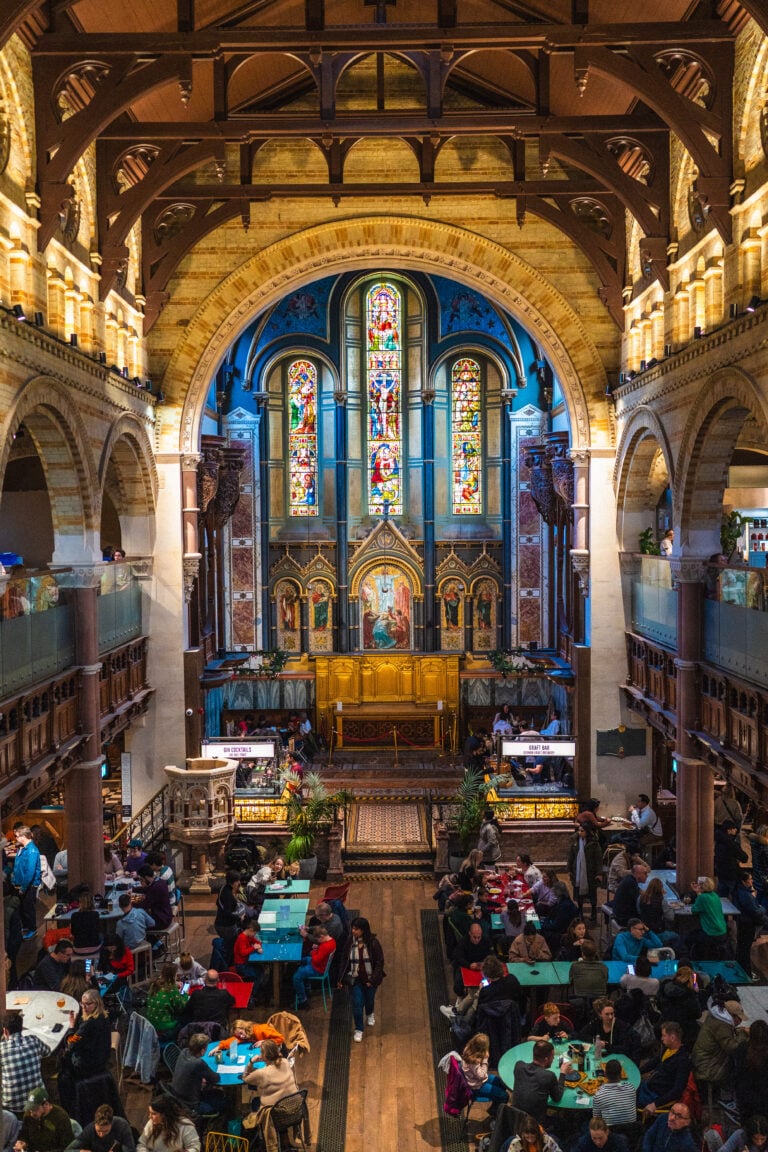
London is one of the most iconic destinations in the world. It’s the kind of place where every neighbourhood feels different, and you can essentially travel the world without ever leaving the city. So, your first thoughts are probably, how is it even possible to see everything in a day? The short answer is: you can’t. But, in this guide, I’ll show you how you can make the most of one day in London, exploring its main attractions and some hidden gems along the way.

Is one day in London enough?
Truth be told, it could take weeks, months, or even years to ever see London in its entirety. Even then, it’s one of those cities that’s always changing, so no two visits to the same neighbourhood will ever be the same.
With all that being said, it’s still very possible to experience London and some of its most iconic sights in the short space of a day – if you are up for a full day of venturing!

Suggested one day in London itinerary
Sky Garden
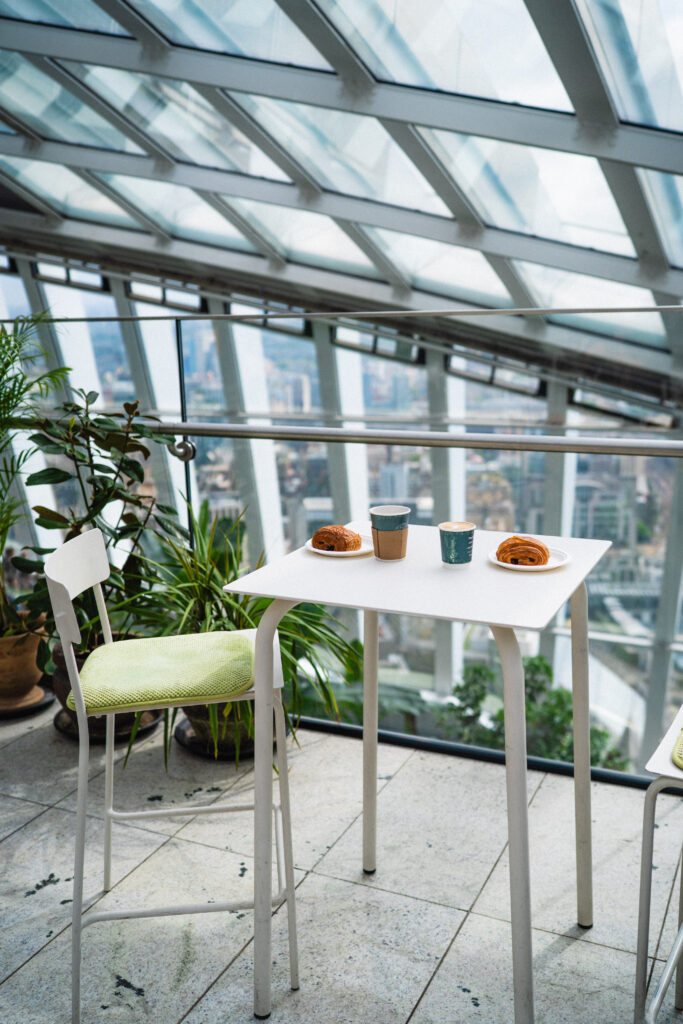
Start your day in the Big Smoke by taking it all in from above, in the aptly named Sky Garden. The building in which this unique sight is located, the Fenchurch Building, has fondly been nicknamed the ‘walkie-talkie’ due to its radio-like shape.
The Sky Garden boasts of being London’s highest public garden, and it’s blessed with 360-degree skyline views of the city. Some of the most iconic landmarks you can see here, with uninterrupted views, include St Paul’s Cathedral, the Gherkin, The Shard, and Tower Bridge.
The garden is located 155 meters (508 feet) above the city, and it spans the 35th, 36th, and 37th floors. Wandering around, you can soak up the carefully curated selection of drought-resistant Mediterranean, South African, and tropical plants that are best suited to this top-floor environment.
It’s actually completely free to visit, but you need to book online several weeks in advance to secure your spot (they tend to leave a few walk-in spaces too, but I recommend booking as spaces fill up fast).
However, if you’re unable to plan this far in advance, then a little hack worth knowing is that you can book a “sunrise entry ticket”, which allows access between 8:15 AM and 9:15 AM for about £12.65 (and also includes a hot drink and pastry).

Wander through the City of London
Not to be confused with London as a whole (although I do recommend wandering the entire city when possible), the City of London is the historic heart of London and is just one square mile in size!
Established by the Romans around 47 AD as Londinium, it may feel a far cry from its historic roots when you look up at the skyscrapers. Yet alongside these modern towers, you’ll still find preserved medieval, Roman, and Victorian architecture blended in throughout the city. Perhaps the best example of this can actually be found opposite the Sky Garden, in the form of the 12th-century church, St Mary-at-Hill.


St Dunstan in the East
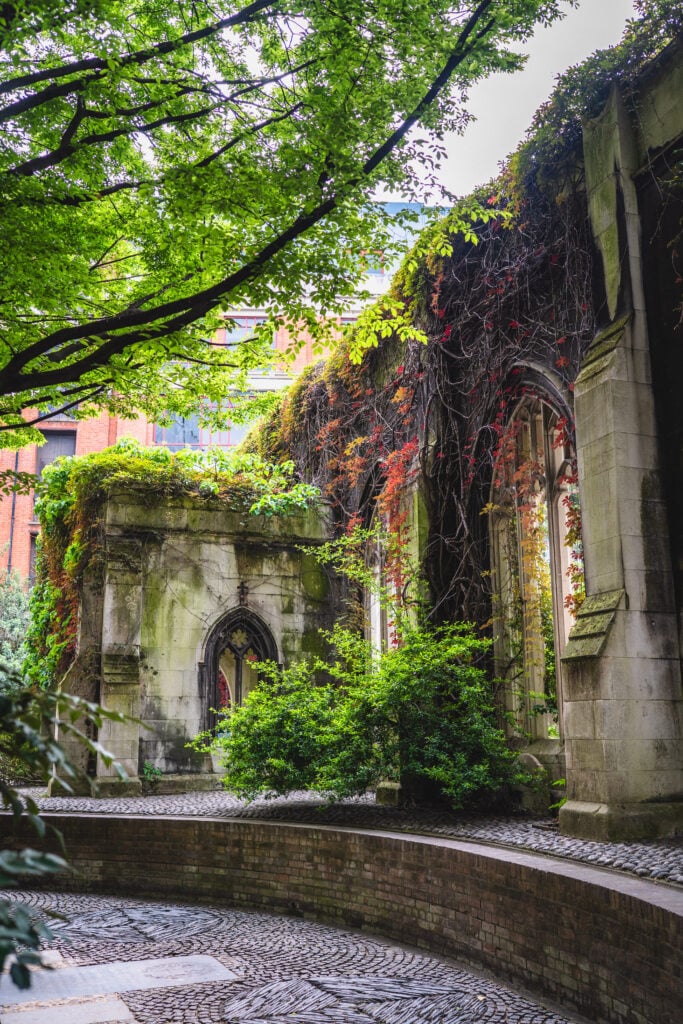
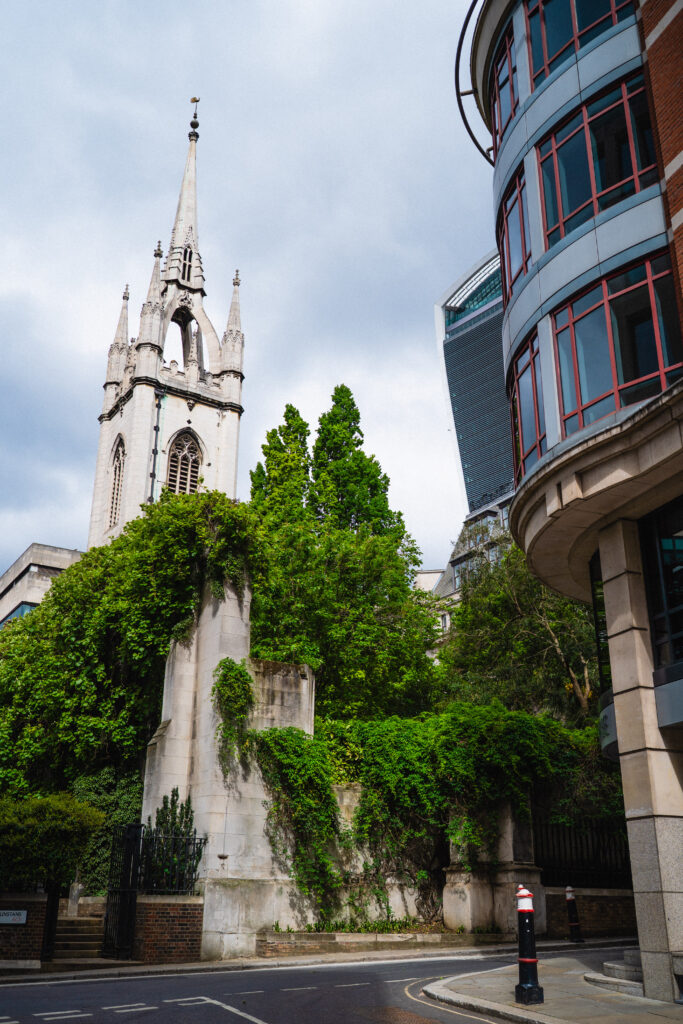
However, the most famous ecclesiastical building in the City of London has to be that of St Dunstan in the East. A church was first built on this site in Saxon times, restored by St Dunstan himself in 950 AD, and then rebuilt after the Great Fire in 1697. Unfortunately, the church was hit by another tragic event and was mostly destroyed during the Blitz.
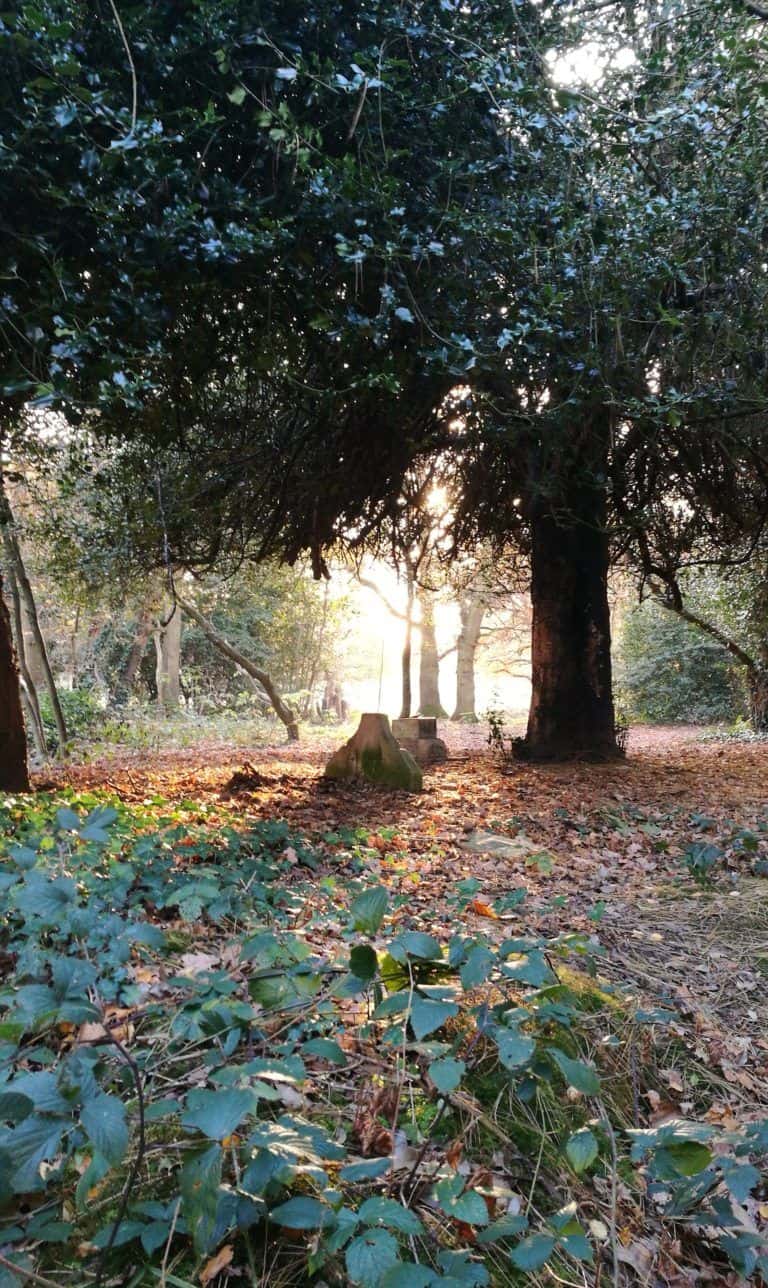
Somewhat of a hidden gem, while little of the church remains today, its crumbling stone layout encompasses a luscious green secret garden to explore. Vines and ivy curl and interweave between the cracks in the walls, hanging over the gothic archways, and a fountain sits in the middle of what was once the nave.
Head here during the working week, and you’ll see plenty of office workers escaping for a moment of pause in this little green lung of the city.
Tower of London
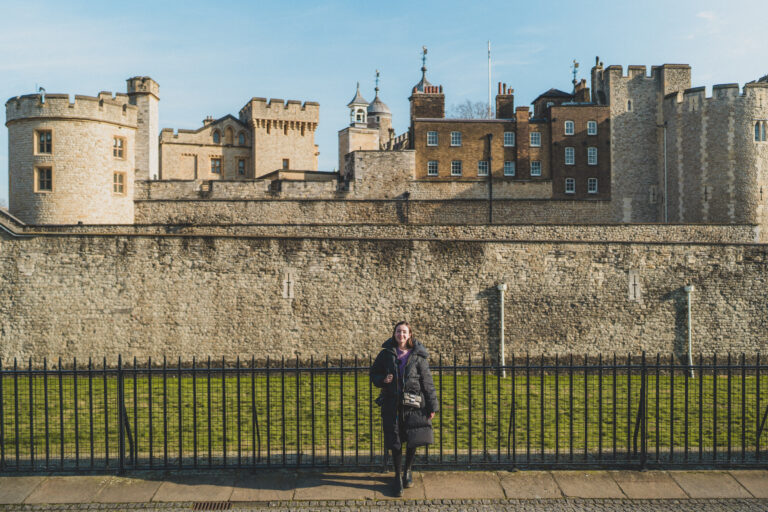
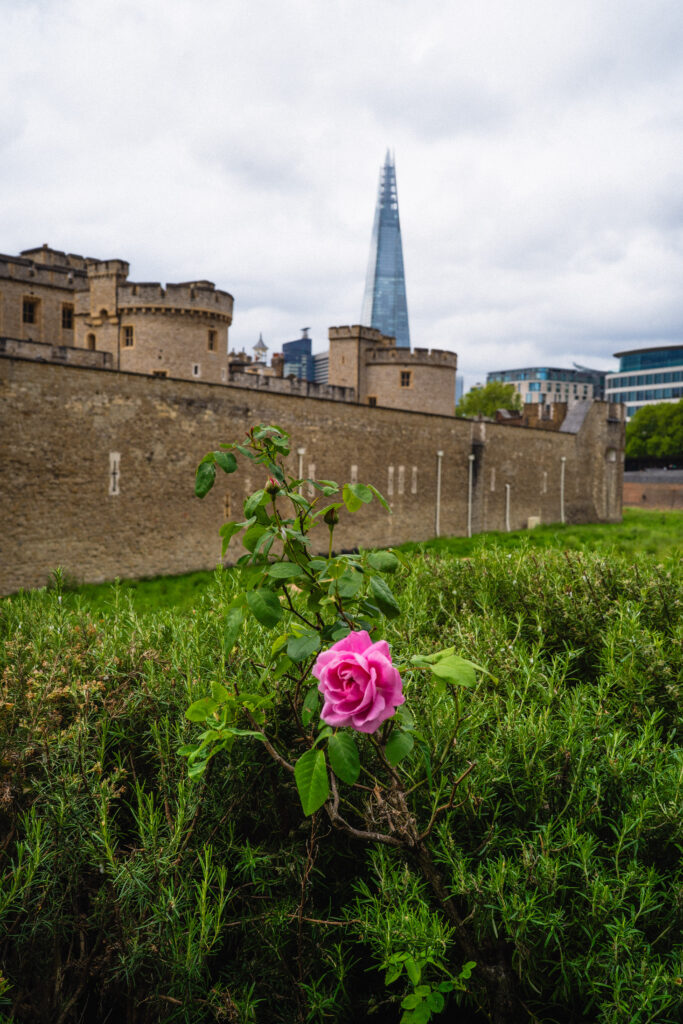
Next, you’ll want to head to one of London’s most talked-about landmarks. The Tower of London is actually a huge historic castle and fortress that dates back thousands of years. Its history traces back to William the Conqueror, who constructed the central keep in the 1070s, famously known as the White Tower, to assert his royal authority and defend the capital after the Norman invasion of England in 1066.
Since then, it has undergone many transformations and served a variety of purposes. It has functioned as a royal stronghold, a royal mint, an armoury, a luxurious palace, and even housed a Royal Menagerie for over 600 years, making it London’s first zoo!
Today, it houses the Crown Jewels, and around 3 million people visit the Tower of London each year to uncover its fascinating history and secrets. There’s so much to see, and so, for this itinerary, we actually just walked around the outside and admired the fortress in all its grandeur.
As one of the most popular attractions to visit in London, I highly recommend booking your ticket in advance. They sell tickets based on time slots, and it’s most popular to go in the morning…as there’s a lot to see, so allow yourself 3 hours or more to visit.
Tower Bridge
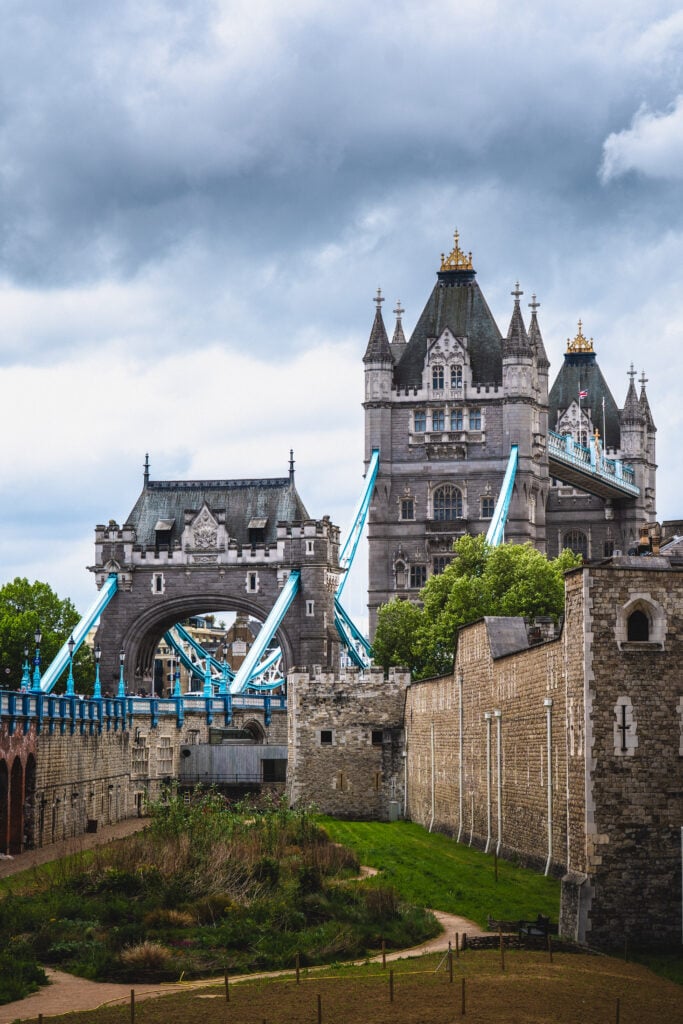
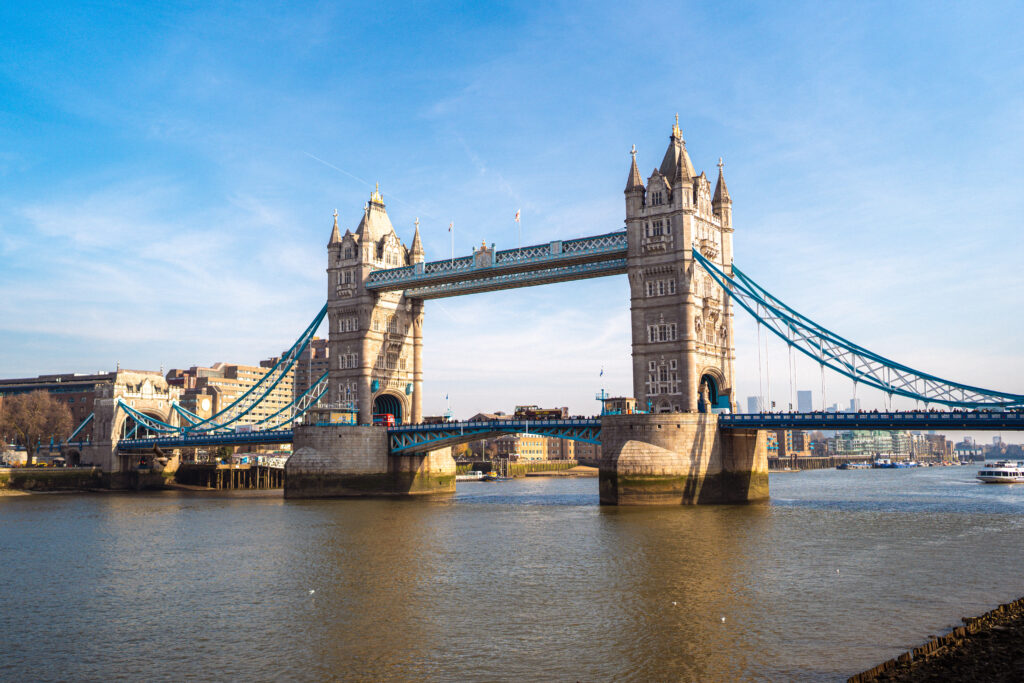
Named after the famous fortress that it sits directly next to, you’ll see the combined bascule and suspension bridge that spans the River Thames. Completed in 1894, Tower Bridge was built with the intention of relieving traffic congestion in the East of London and allowing tall ships to pass below to the busy London docks.
A few times a month, the bridge opens its doors to allow larger boats on the River Thames to pass through. You can find out more about the Tower Bridge lift times here.
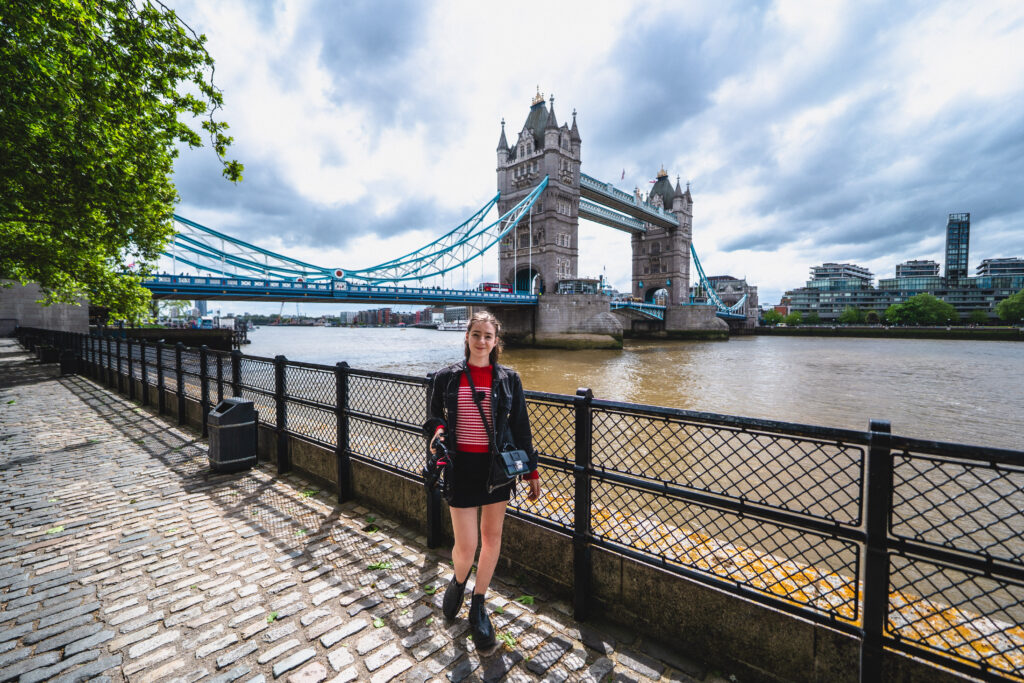
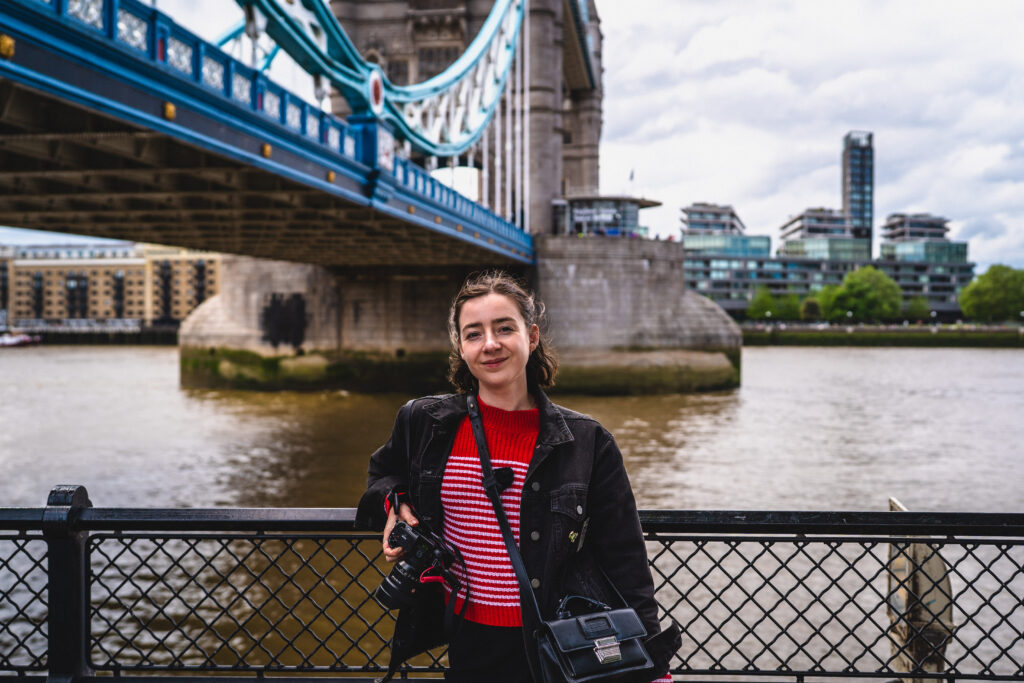
While the bridge itself no longer helps with London’s teeming congestion, it remains one of the city’s most iconic sights and stands as a marvel of Victorian engineering. It’s completely free to walk across the bridge. However, for a different perspective, visitors are welcome to climb the tower and walk across the glass floor walkways for a fee.
Good to know
Bridging the two sides of the River Thames, Tower Bridge was constructed during the Victorian Era and, at its peak, was considered an incredible feat of engineering. Today, you can visit the interior of London Bridge for a fee (and if you pay for one just attraction in the city, I highly recommend a trip!).
Included in the tour is the chance to spy the engine pumps which control the folding bridge, as well as a wider history of London itself. From the top, the view is easily one of the best views in London. When talking of Tower Bridge, be sure not to confuse it with the London Bridge.
Now in its third incarnation, the original London Bridge was covered in houses. Tower Bridge itself was built between 1886 and 1894. The suspension and bascule bridge came about as a result of a need for more transportation across the Thames.
The East End was developing at a rapid rate, and with that came the requirement of a River Crossing. By the time the bridge was completed, total construction costs came to £1,184,000. This would be the equivalent of over £120 million in today’s money.
London Bridge
Walk further down the Thames, and you’ll find another bridge, which is certainly less aesthetic but often confused with Tower Bridge due to its name. The bridge you can see today was built in the 20th century, and is essentially just concrete (and quite ugly). But if you’re familiar with the nursery rhyme “London Bridge Is Falling Down,” you might wonder if this was the first.
There have, in fact, been twenty or so distinctive versions of London Bridge. A bridge has continuously existed at the site for nearly 2,000 years, dating back to a wooden Roman crossing built around 50 AD. While the bridge has never completely “fallen down,” its different iterations have suffered structural failures.
The code name “Operation London Bridge” was also used as the funeral plan for Queen Elizabeth II. In fact, the code name was devised in the 1960s and continuously updated to ensure a seamless transition of power and a respectful state funeral for when the time should come.
Ye Olde Watling
Considering you’ll have already done a lot of exploring by this point, I recommend stopping for lunch (and possibly an ale) in one of London’s historic pubs. One of the greatest charms of pub culture in London and the UK for that matter, is you can enjoy a hearty meal and the overall atmosphere without purchasing a drink, there’s no right or wrong way to enjoy the cosy nature of a public house!
St Paul’s Cathedral
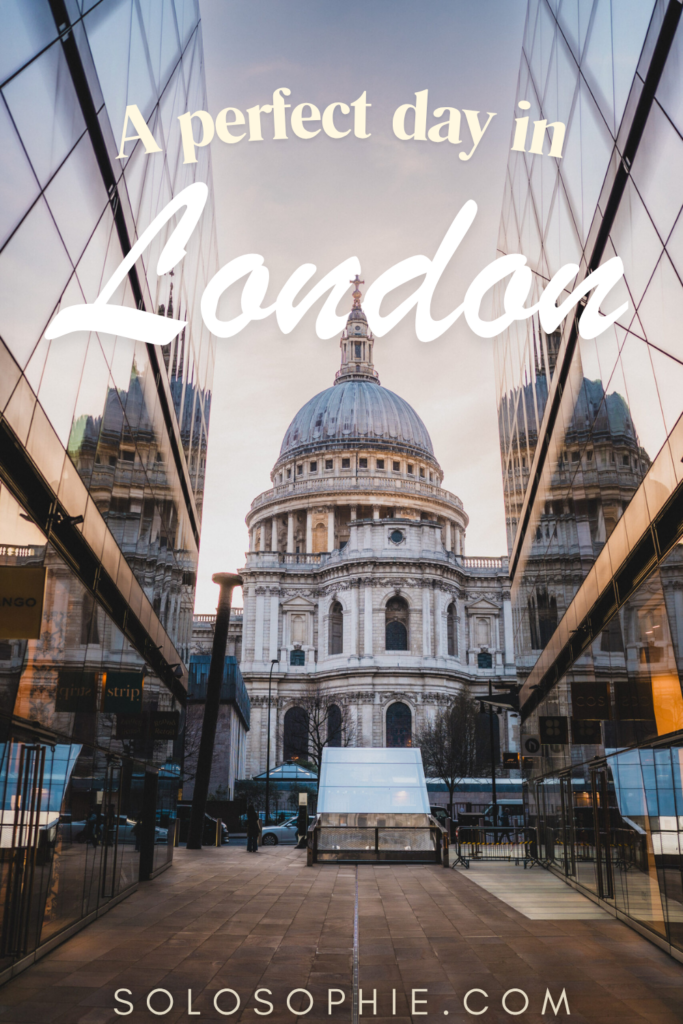
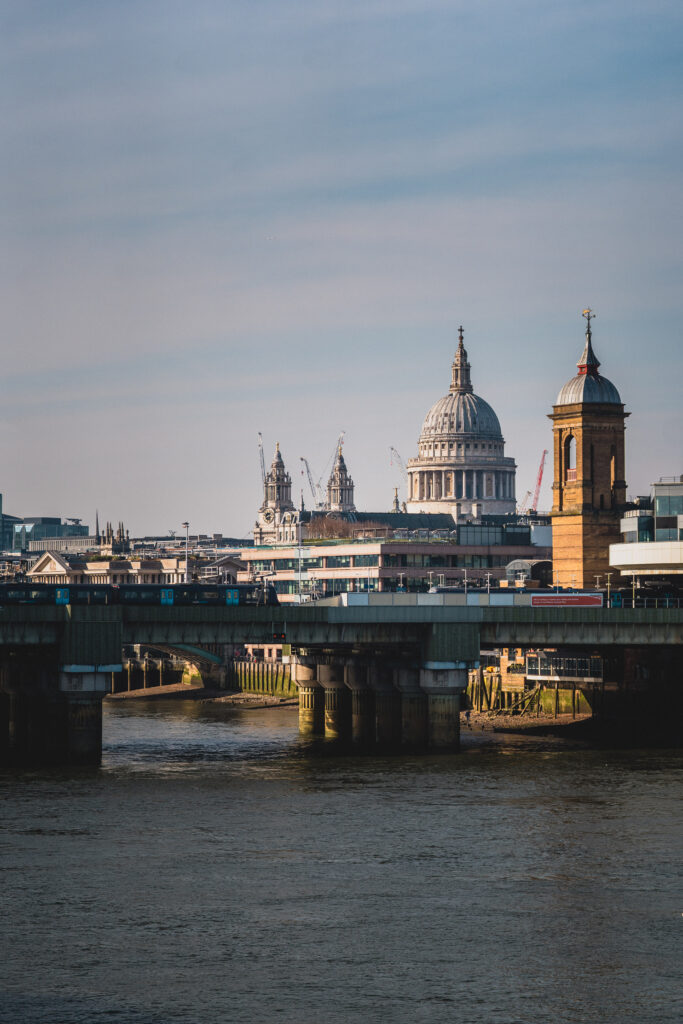
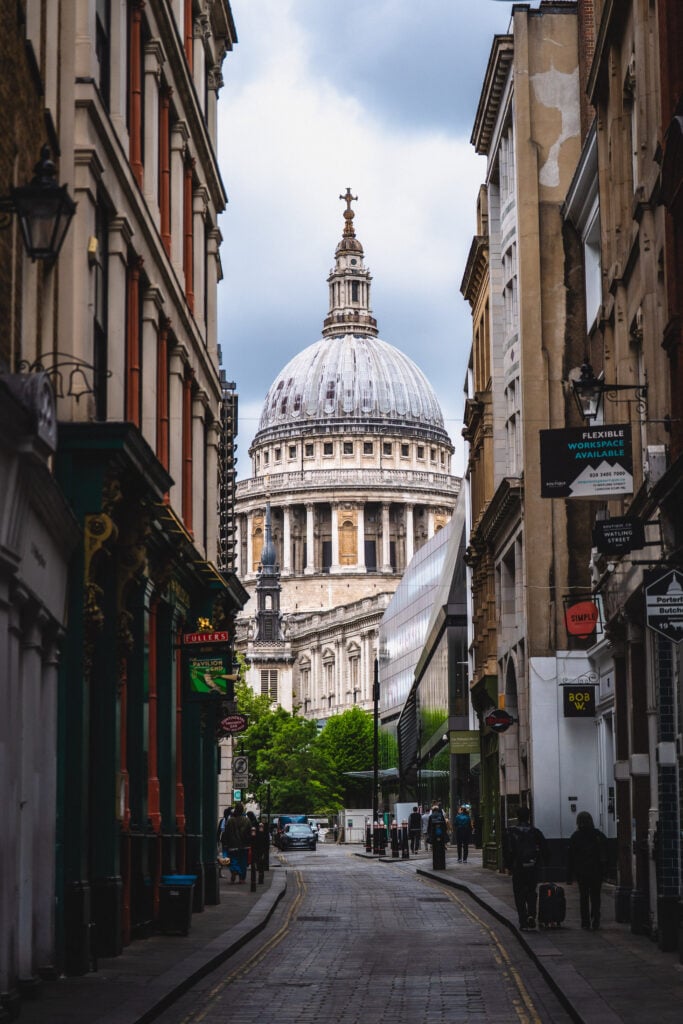
Greater London is home to four main cathedrals, but one of my favourites to photograph is undoubtedly that of St Paul’s Cathedral. This iconic dome-topped masterpiece was created by Christopher Wren and has dominated the London skyline for over 300 years. At one time, it was the tallest building in London.
Today, while no longer the tallest, the cathedral still stands on the highest point of London, atop Ludgate Hill. Designed in the Baroque style, the ecclesiastical sight is crowned with a gilded golden pineapple (symbolising the height of opulence due to its exorbitant cost).
St Paul’s Cathedral also boasts one of the best city views of London, if you climb the 528 steps to the very top of the dome (the Golden Gallery). However, the entry fee to this and the cathedral is quite pricey, so unless you really want to, I recommend wandering the churchyard and festival gardens and admiring it from the outside instead.
Top tip: For the most iconic and photograph-worthy view of St Paul’s, head to the One New Change shopping centre rooftop terrace!


Temple Bar
Another of Christopher Wren’s designs can be found in the form of Temple Bar, which was the principal ceremonial entrance to the City of London from the City of Westminster. Commissioned by Charles II and constructed sometime between 1669 and 1672, this gateway is built with durable white-grey limestone from the Isle of Portland in Dorset, a highly prized stone material.
On a more gruesome note, during the 17th and 18th centuries, the heads of convicted traitors were frequently mounted on pikes and exhibited on the roof of Temple Bar, as was the case on London Bridge!
Carter Lane
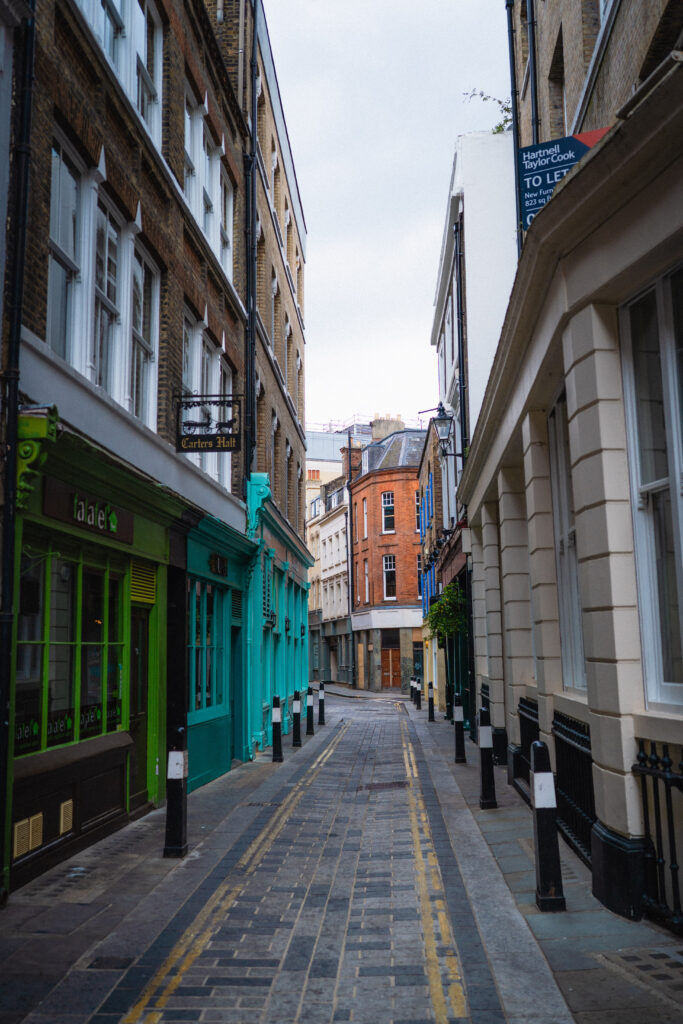
For a visit to one of London’s more quaint and quiet streets, you’ll want to head to Carter Lane, which can be found near St Paul’s Cathedral. Filled with small cafés, eateries and boutique-style shops, this charming little lane has houses that date back to the 17th century, along with narrow alleyways that snake off from it.
Millennium Bridge
Crossing back over the River Thames means yet another bridge to add to your itinerary. After all, walking is one of the best ways to enjoy London, especially when its public transport is among the most expensive in the world!
You may well recognise the Millennium Bridge as it’s often used as a major pop-culture backdrop. Most famously, it was dramatically destroyed in the opening sequence of Harry Potter and the Half-Blood Prince.
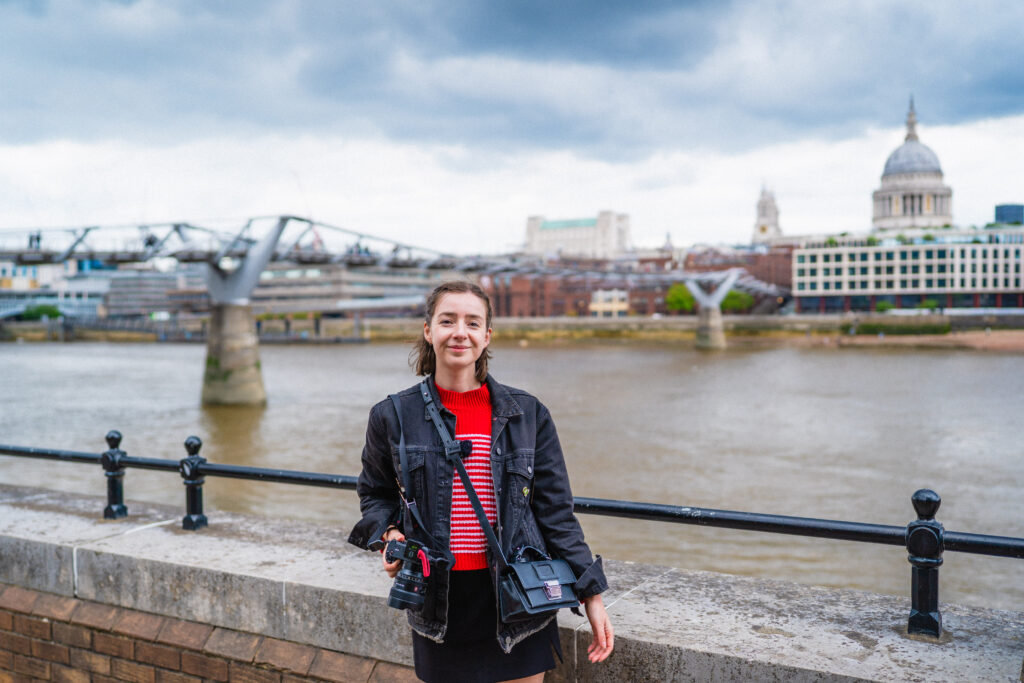
The pedestrian-only bridge takes its name from the fact that it was built to commemorate the turn of the new millennium and the year 2000. Though it opened to the public in 2000, it quickly acquired a rather unfortunate nickname for a bridge…
Known as the “wobbly bridge” due to the fact that it swayed so much when people walked across it, the bridge closed for another two years before it could safely reopen.
South Bank (Bankside)
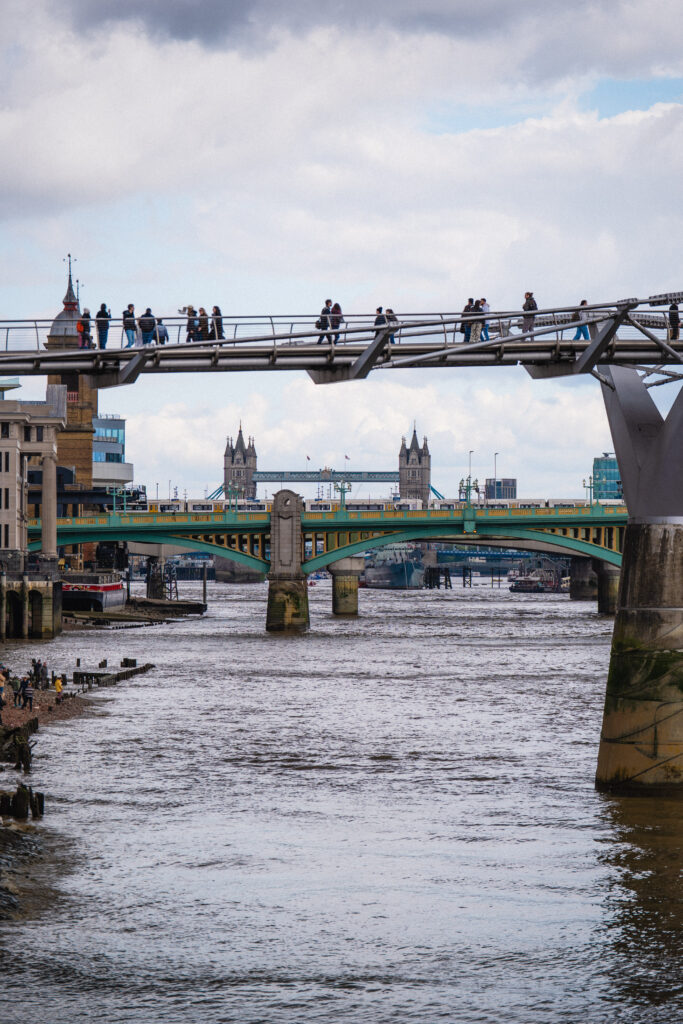
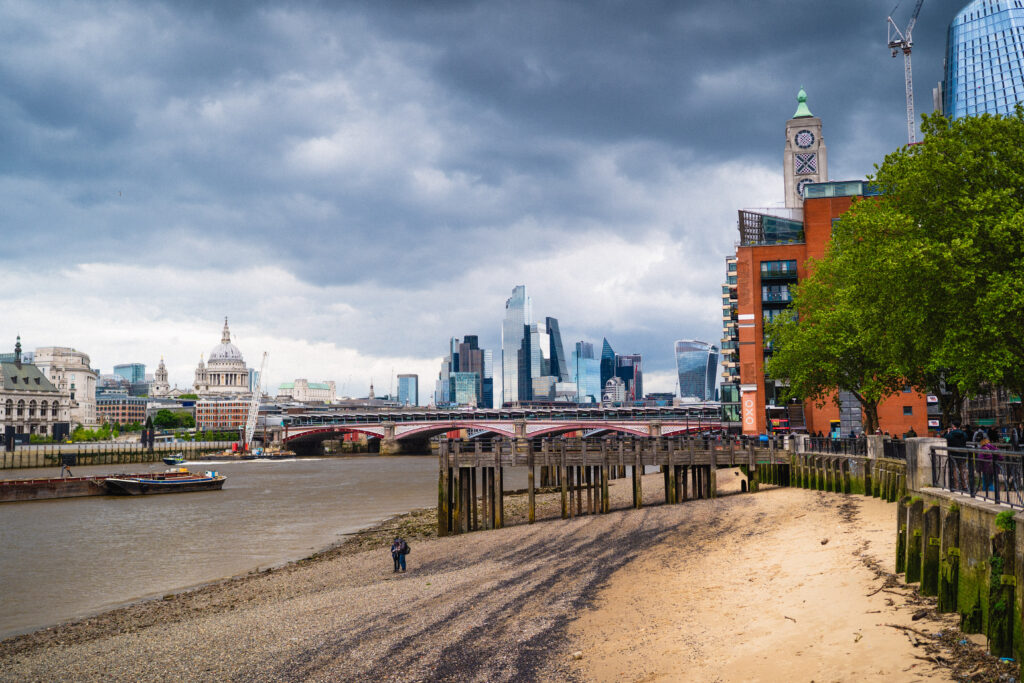
Walk over the Millennium Bridge, and you’ll reach South Bank, the vibrant cultural hub which stretches the south side of the River Thames. The bridge actually takes you from St Paul’s Cathedral, straight across to the Tate Modern – an art gallery which is free to visit.
Also found in the area is the iconic theatre, Shakespeare’s Globe. This reconstruction of an Elizabethan playhouse was built in 1599, and Shakespeare himself actually wrote many of his plays to be played out in this very theatre!
Wander further along the Thames, and you’ll find several other sights worth visiting, but one of the most charming is the South Bank Book Market. Tucked away under Waterloo Bridge, this book market offers the perfect opportunity to purchase a second-hand book to remember your trip to London by.
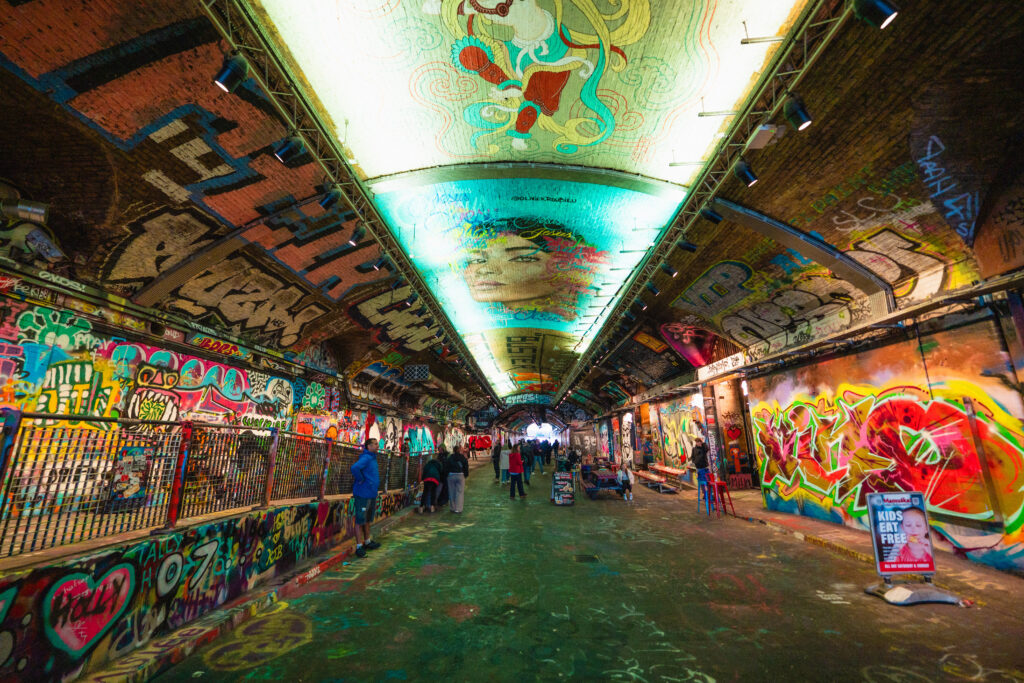
Leake Street
London has an incredible and ever-changing mural scene, and one of the best places to see street art in London is under the archways beneath London’s Waterloo Station. Often referred to as the “Banksy Tunnel,” because the anonymous artist transformed it into a legal, ever-changing graffiti gallery by hosting his legendary “Cans Festival” here in May 2008.
Since then, Leake Street has become the unofficial home of London’s street art scene. No two visits are the same, and it’s constantly changing, with new works popping up and surprising visitors all the time.
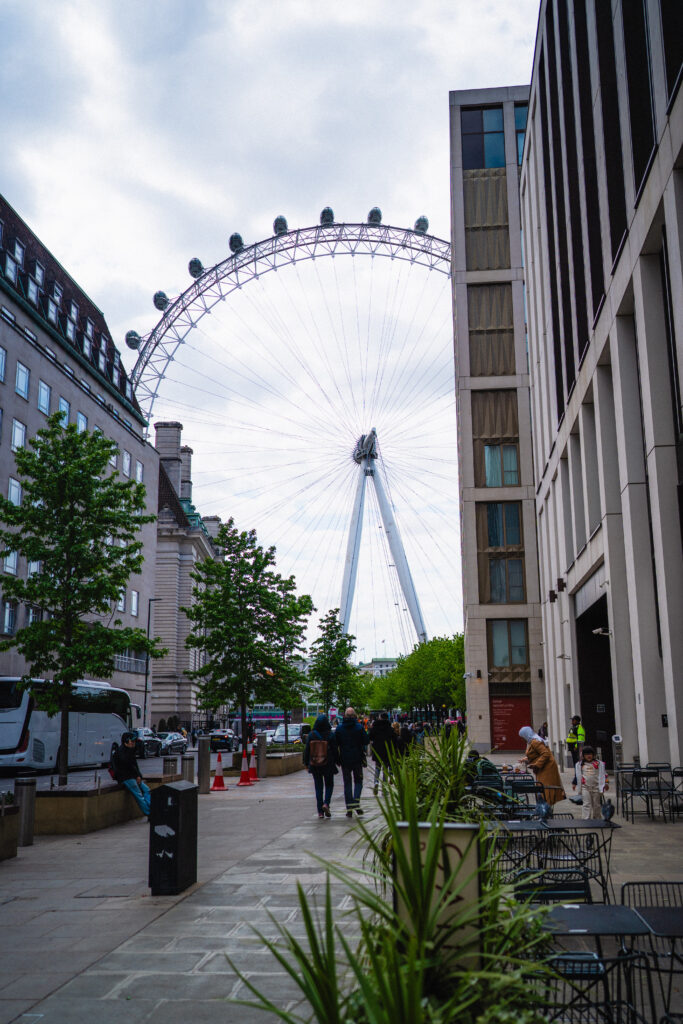
The London Eye
A landmark that likely needs no introduction, the London Eye is the world’s largest cantilevered observation wheel. Many people don’t realise that it was only ever meant to be temporary; similar to the Millennium Bridge, it was put up to celebrate the new millennium, the year 2000.
However, after its enormous popularity (and economic draws), it was decided that it would stay, quickly becoming London’s most visited paid attraction and a core feature of the city’s skyline. A turn on the London Eye is very costly (starting from £29 upwards), and while it offers a stunning view of Big Ben and Parliament, I wouldn’t necessarily pay that much for what you get, especially as there are better viewpoints at a much lower cost.
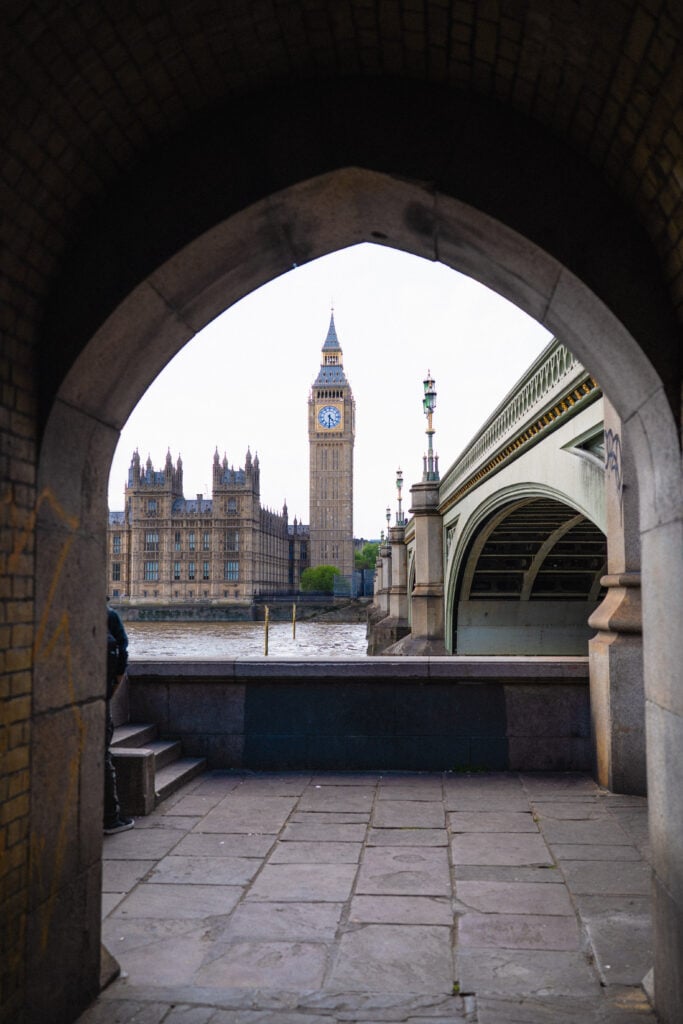
Palace of Westminster
One of the most stunning pieces of architecture in London is the very meeting place for the Parliament of the UK. The Palace of Westminster is a masterpiece of Victorian Gothic Revival architecture. What you can see today dates back to the 19th century, having been rebuilt after the previous building was destroyed by fire.
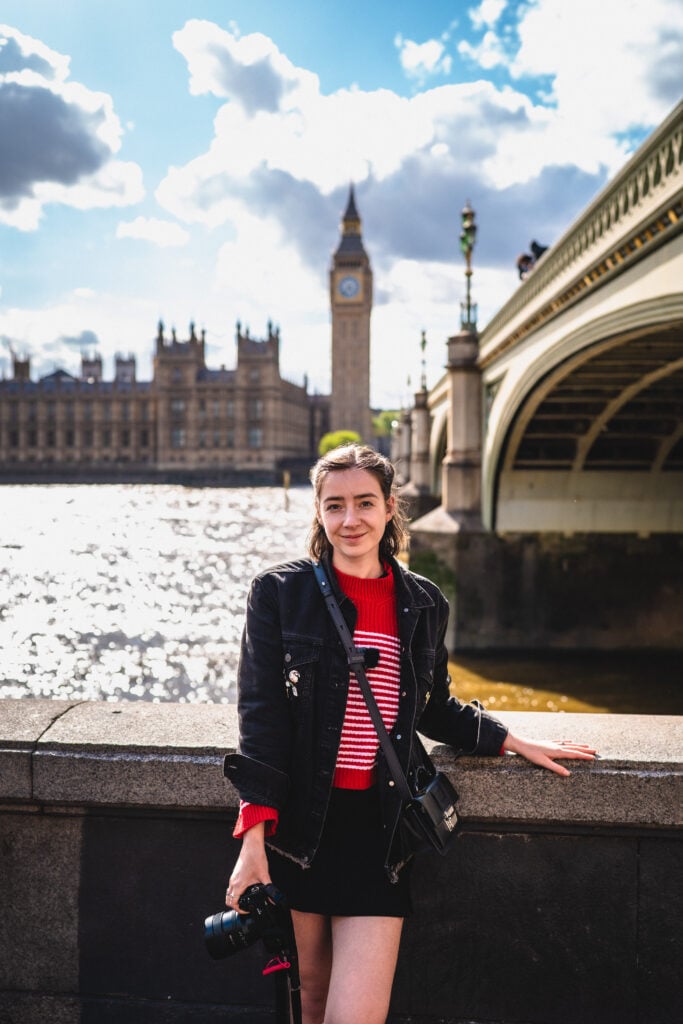
Its most famous feature is Big Ben (the name actually refers to the great bell inside the tower itself), but the tower itself was renamed the Elizabeth Tower in 2012 to commemorate Queen Elizabeth II’s Diamond Jubilee.
Whitehall Gardens
After wandering along the bustling banks of the south side of the Thames, you may want to come to Whitehall Gardens for a quiet pocket of calm. This charming green space is very well cared for (likely thanks to its proximity to the Palace of Westminster), and so, during Spring you can enjoy the colourful blooms of the different flowers potted here.
Gordon’s Wine Bar
Coming to the end of your day, head to one of the coolest bars in central London. Gordon’s Wine Bar was established in 1890 and is famously recognised as the oldest wine bar in the city. Candlelit and dreamy, the bar itself is situated within a stone vault, so it kind of feels as if you’re visiting a wine cellar and staying there…cooling down with the very wine you drink!
If you have more time!
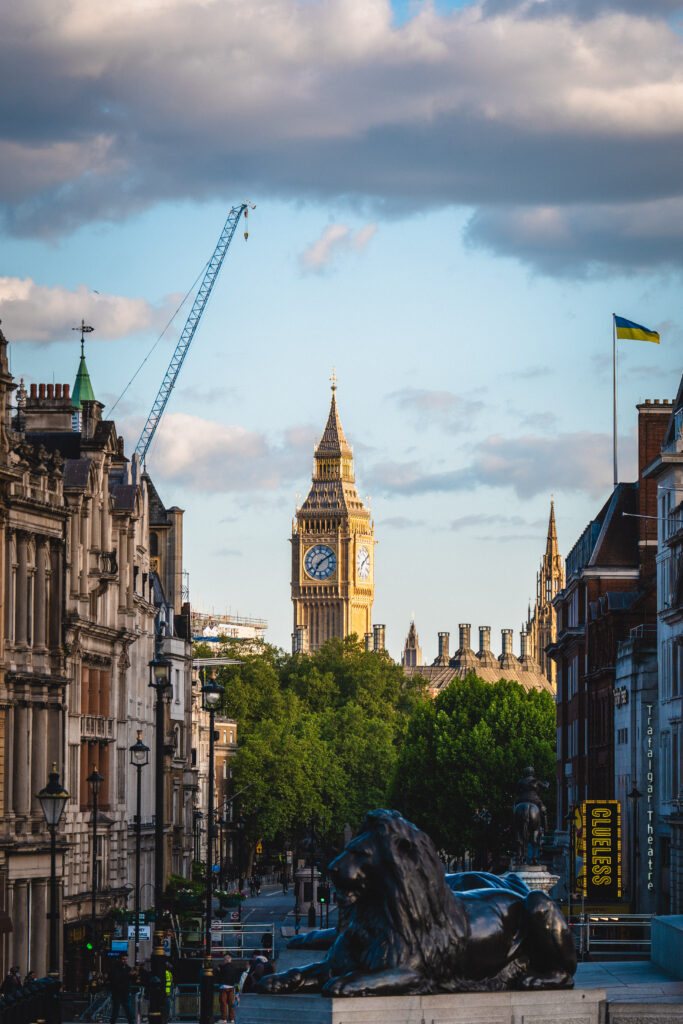
Trafalgar Square
A very cool and different place to hang out is in Trafalgar Square, a public square that takes its name from the Battle of Trafalgar, in commemoration of the British Royal Navy’s victory on October 21st, 1805.
Home to both the National Gallery and National Portrait Gallery, the square itself features two identical monumental fountains that sit to the east and west of Nelson’s Column, which is also guarded by four massive bronze lions.
A note of caution: be particularly vigilant when wandering around here, as this tends to be a hotspot for London scams!
St James’s Park
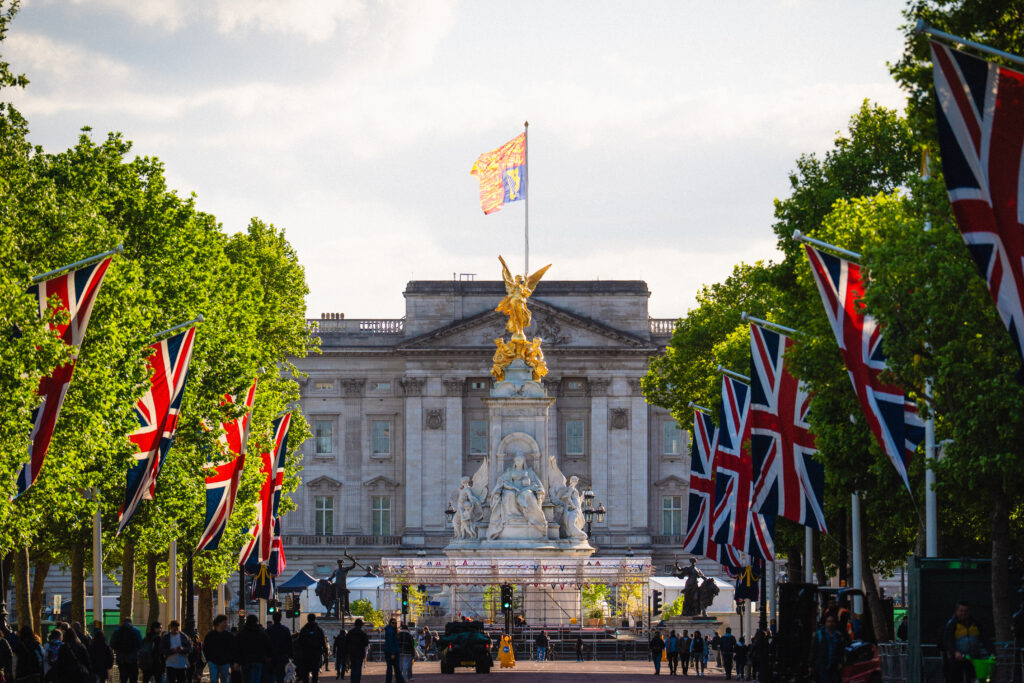
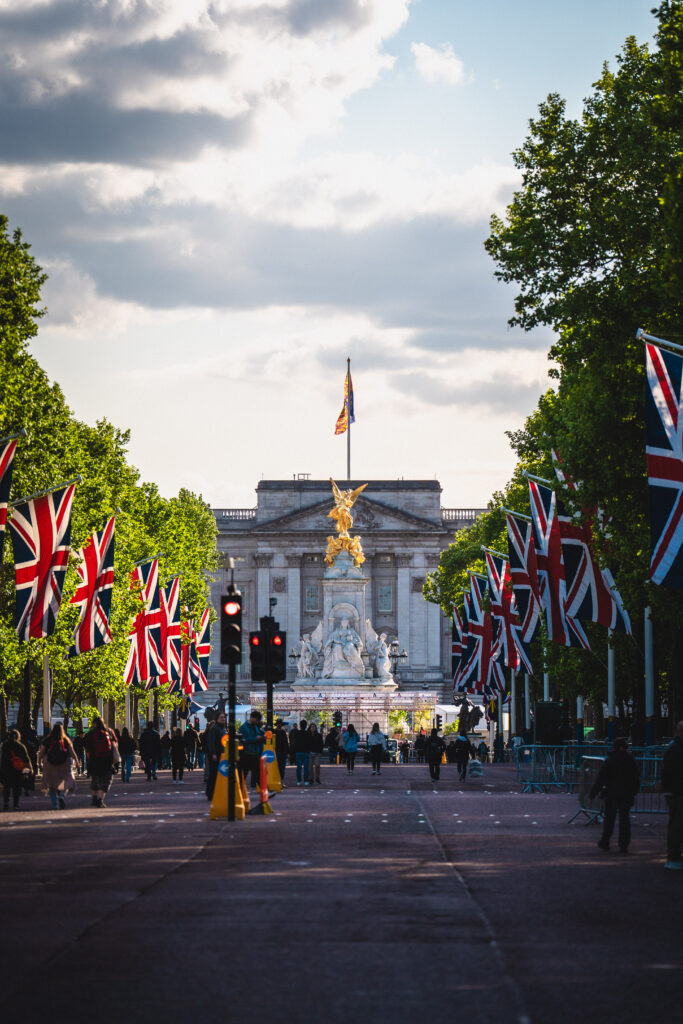
One of my favourite green spaces in London has to be St James’ Park, because it’s here that you get the best view of some of the city’s most iconic sights. This royal park spans 23 hectares and is bordered by three royal palaces. The park’s history can be traced back nearly 500 years.
One of the most unique things to spy out in this green space is the Pelicans of St James’ Park. First introduced here in 1664, today, six Great White pelicans call the park home. The most famous of the flock is Gargi, who is estimated to be around 30 years old and known to fly over Buckingham Palace! There’s also Isla and Tiffany, and the most recent (gifted by Prague zoo) are Sun, Moon, and Star.

Where to stay in London
It has to be said, London is absolutely massive, but luckily, it’s also plentiful with accommodation options. That being said, to make your life easier, I always recommend finding somewhere within walking distance of a tube stop, preferably one that is well connected to the Underground’s main lines.
While a lot of your exploring will be done in the City of London itself, I recommend staying in a neighbourhood elsewhere, as the square mile doesn’t have much nightlife happening after business hours. Here are a few suggestions of where to stay (based on web reviews):
citizenM London Shoreditch – This hip and trendy modern hotel is situated just a 12-minute stroll from Liverpool Street tube station. Guests have commented that the rooms are bright and spacious, and that the location is perfect, offering excellent value for money. Check prices and availability now.
Sun Street Hotel Shoreditch – Set within a Georgian property, this charming hotel is an 11-minute walk from Spitalfields Market and 10 minutes from Liverpool Street Station. Guests have commented on the friendly nature of the hotel and the very chic, unique decor (which is really dark but atmospheric!). Check prices and availability now.
food to try in london
- 🍳 Full English Breakfast – Eggs, bacon, sausages, beans, mushrooms, tomatoes, and toast.
- 🐟 Fish and Chips – Crispy battered fish served with chunky fries and mushy peas.
- 🍗 Sunday Roast with Yorkshire Pudding – Roast meat, roasted potatoes, vegetables, gravy, and the iconic pudding.
- 🥧 Shepherd’s Pie / Cottage Pie – Meat pie topped with creamy mashed potatoes.
- 🥧 Steak and Kidney Pie – Tender beef and kidney in a rich gravy, encased in flaky pastry. A hearty, traditional British comfort food.
- 🌭 Bangers and Mash – Sausages with mashed potatoes and onion gravy.
- 🥟 Cornish Pasty – Pastry filled with meat, potatoes, and vegetables.
- 🧀 Ploughman’s Lunch – Cold plate of cheese, bread, pickles, and salad.
- 🥚 Scotch Egg – Boiled egg wrapped in sausage meat and deep-fried.
- 🍮 Sticky Toffee Pudding – Rich sponge cake with toffee sauce, often served with custard or cream.
- 🍓 Eton Mess – Crushed meringue, strawberries, and cream dessert.
- 🌑 Black Pudding – Blood sausage often served as part of a breakfast.
- 🥩 Beef Wellington – Beef fillet coated in pâté and duxelles, wrapped in puff pastry.
- ☕️ Tea and Scones – Classic afternoon treat with clotted cream and jam.
Enjoyed reading our guide on how to spend one day in London? Pin this article now, and read it again later: