A Local’s Guide to London’s Historic Pubs
Last Updated on 17th July 2026 by Sophie Nadeau
This post may contain affiliate links. Please check out my privacy policy and disclosure for more information.
Public houses, or “boozers,” as Londoners affectionately call them, are small cornerstones of city life. They’re places where locals come to put the world to rights, share ideas, or simply enjoy the comforting ritual of a pint in good company.
London’s historic pubs have stood for centuries; some can even be traced back as early as the 16th century, serving as the watering hole for everyone, from those passing by to some of the city’s greatest minds. In this guide, we’ll be exploring some of the historic pubs that have shaped London’s drinking culture as we know it today.
Best pubs in central London
Before you continue reading, I’d like to point out that some of the historical details here are drawn from pub websites themselves, which occasionally include stories or legends used for marketing purposes, so there are definitely some tales that you should take as part of the pub’s storytelling rather than strict fact.
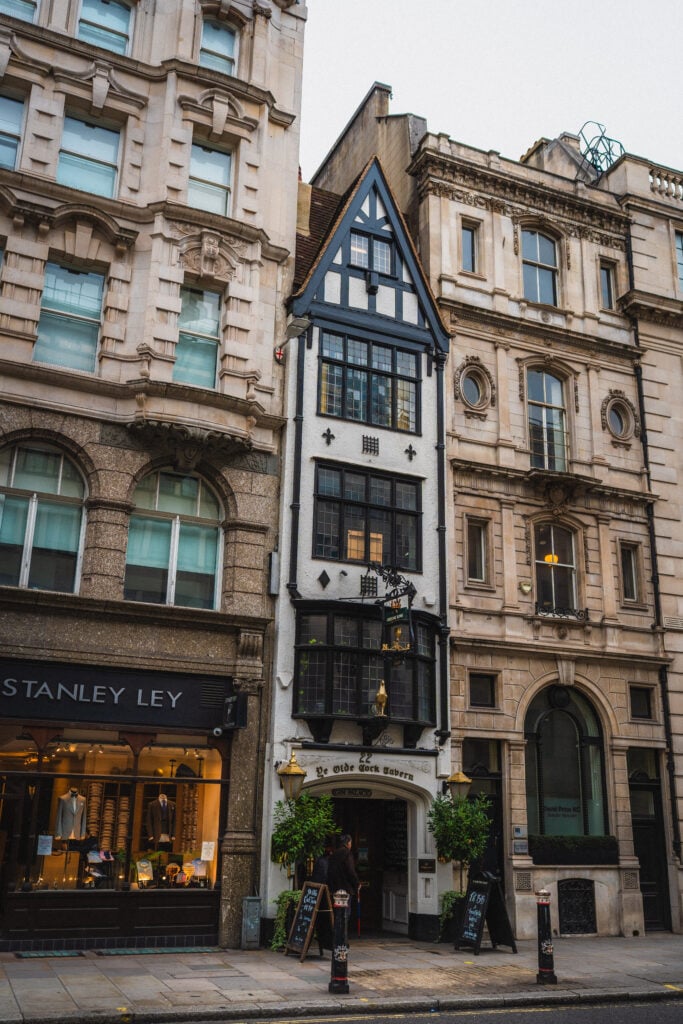
Ye Olde Cock, Fleet Street
Address: 22 Fleet St, Temple, London EC4Y 1AA
Situated on the renowned Fleet Street, once the bustling heart of Britain’s newspaper industry, you’ll find the narrowest pub in London. Ye Olde Cock Tavern is one of London’s most famous pubs; it holds centuries of stories within its walls and has hosted a surprising number of notable people.
The pub’s origins can be traced back to 1549, though the 16th-century public house you see today has only stood in its current position since 1887, when it was moved across the street to make way for the Bank of England.
Thanks to its position along the bustling Fleet Street, the pub was a favourite haunt of writers, journalists, politicians, and creatives who worked along the street. Some of the greatest minds said to have frequented the tavern include: Samuel Pepys, Alfred Tennyson, Andrew Newitt, Charles Dickens, and Virginia Woolf.
In 1930, Ye Olde Cock Tavern hosted the founding meeting of the Society of Industrial Artists, which was later renamed the Society of Industrial Artists and Designers, with attendees including Sir Misha Black and Milner Gray.
The pub continues its tradition as a meeting place of minds, as it still remains the meeting place for Cogers (a free speech society that was established in 1755 in the City of London), where thinkers meet on every second Monday of the month. In addition to this, the Sylvan Debating Club and Debate London also meet here at various points during the month.
Today, the tavern is owned by the corporate giant, Greene King – one of the UK’s largest pub chains. So while the building itself has preserved historic features and the history it holds, you might find the selection of real ales a little more limited!
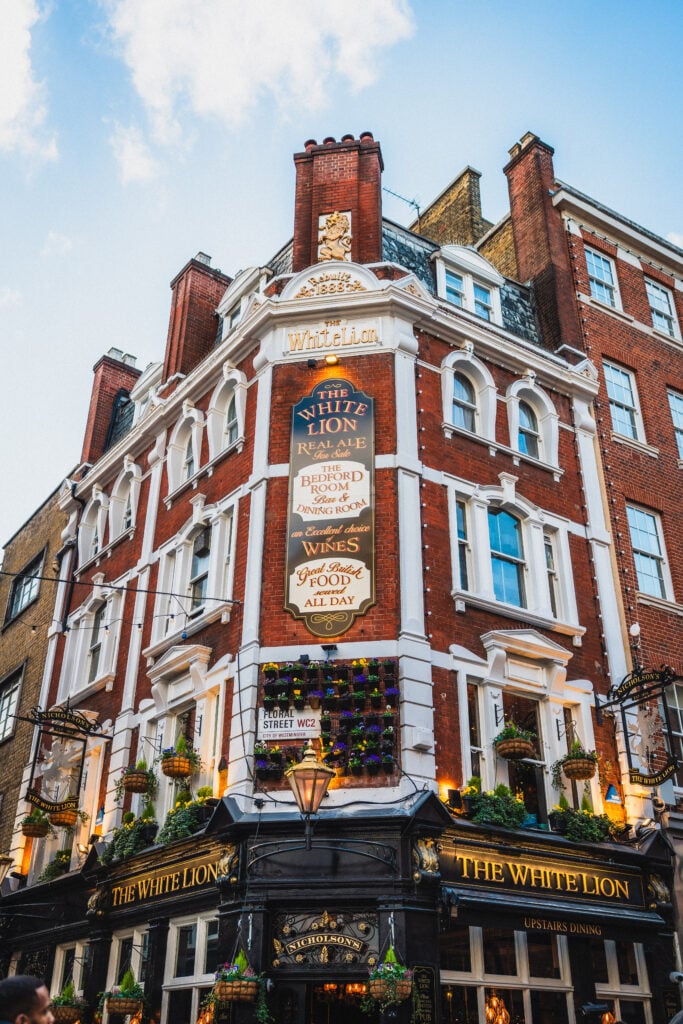
The White Lion, Covent Garden
Address: 24 James St, Greater London WC2E 8NS
This historic pub sits on the corner of James Street and Floral Street in Covent Garden. There has been a public house at this site named The White Lion since 1839, though the current building seen today dates back to 1888.
The pub’s perhaps most notable mention is that it gave its name to the White Lion Group, a radical political society whose members included Dr Watson and John Gale Jones, who first met at this very pub. Today, the White Lion is part of the Nicholson’s pub chain, and is mostly visited by tourists, office workers, and those heading off to watch the opera.
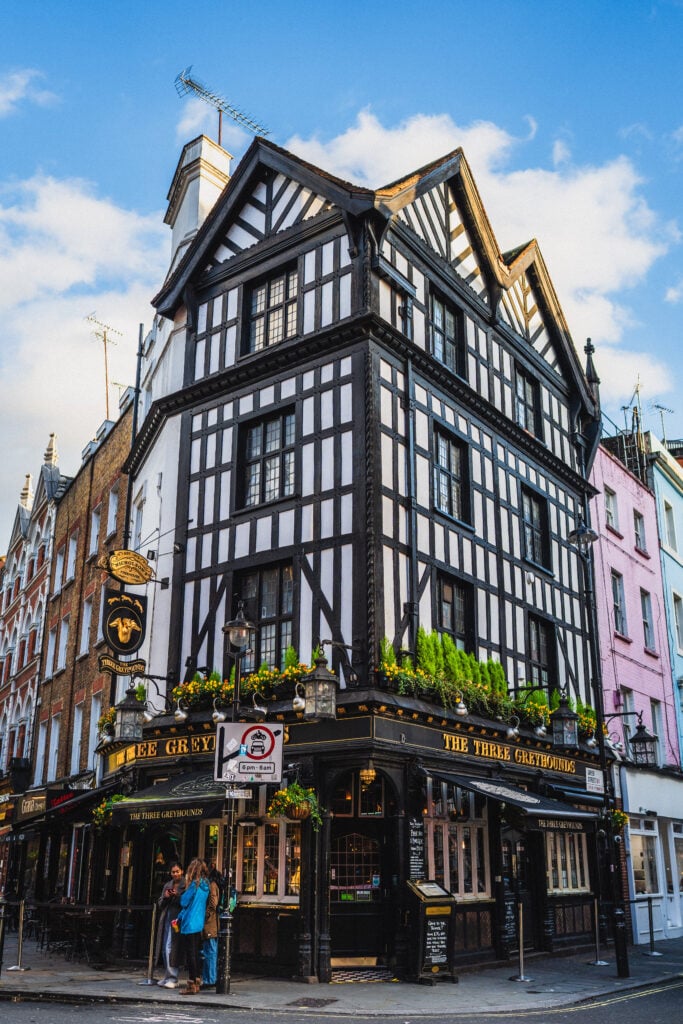
The Three Greyhounds, Soho
Address: 25 Greek St, Greater, London W1D 5DD
Nestled on Greek Street in the heart of Soho and set within a mock Tudor building, you’ll find another now Nicholson’s pub, the Three Greyhounds. This public house boasts of being the drinking haunt to the likes of the Sex Pistols, The Clash and Mozart!
The building was first licensed in 1927, and the pub likely takes its name from the dogs which were once used for hare‑hunting when this part of London was still open ground and not built up like we know it today.
While there are claims on the Nicholson’s website that Mozart himself visited here, it should be noted that the pub only stood here at least 56 years after the renowned composer’s death, so unless they are talking of a ghost haunting, that fact is pretty redundant.
However, the pub has a reputation for being a drinking spot for famous musicians, which would make sense due to its location. Punk legends such as the Sex Pistols and The Clash have been mentioned, though the certainty of who exactly visited remains unknown.
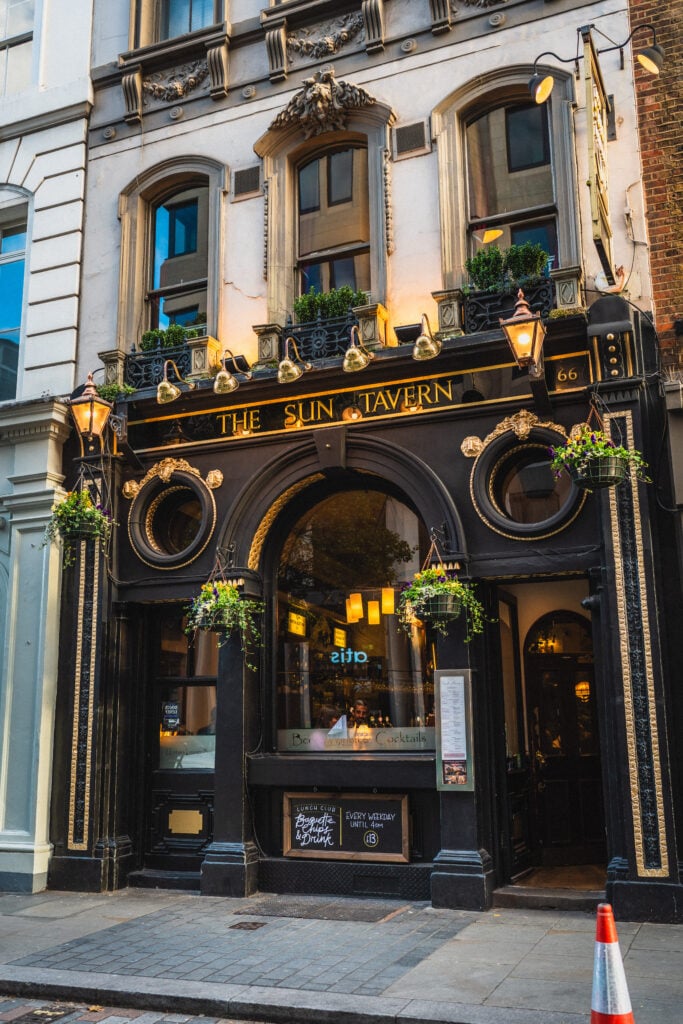
The Sun Tavern, London’s West End
Address: 66 Long Acre, Covent Garden
Located in the heart of Covent Garden, the site of the Sun Tavern has witnessed many great changes and developments throughout the centuries. Indeed, the Sun Tavern has been a fixture on Long Acre since 1718, a street that was once renowned for its coach-making and later the automobile trade.
Though not as famous as some of Covent Garden’s other historic pubs, the Sun Tavern remains a charming reminder of the area’s past. Its Grade II-listed interior retains a traditional Art Deco feel, offering visitors a quiet stop for a pint while soaking up the atmosphere of Long Acre and its centuries of London history.
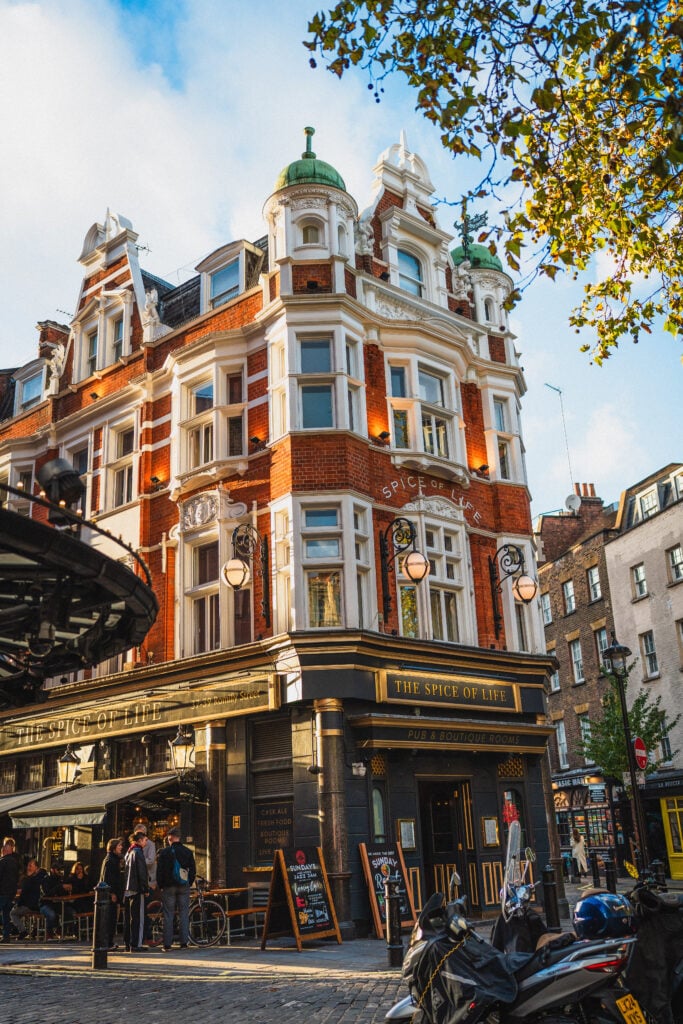
The Spice of Life, London’s West End
Address: 6 Moor St, London W1D 5NA
Back in the 1950s and 60s, when it was known as the Scots Hoose, this unassuming pub hid one of Britain’s most legendary folk clubs upstairs…The pub here was founded as The George & Thirteen Cantons in 1759, and it later became known as The Scots Hoose, until it was eventually renamed The Spice of Life in 1975.
In its heyday, when the pub was known as the Scots Hoose, an upstairs events venue was run by a man known as Bruce Dunnet (there’s little else known about him online apart from this), but what we do know is that his passion project turned into a magnet for the leading lights of folk revival. Big folk names such as Bert Jansch, Al Stewart, Davey Graham, Ralph McTell, Roy Harper, Sandy Denny, Ewan MacColl, and The Young Tradition all flocked to perform on the small stage, igniting a lively music scene here.
In the 1970s, the pub was regularly frequented by members of many rock groups, including The Stranglers, Buzzcocks, Stiff Little Fingers, Sex Pistols, Spandau Ballet, The Faces, UFO even the comedy group The Rutles.
Today, the Spice of Life offers a little slice of London life with its cosy atmosphere, and it remains an active music venue, hosting a regular Jazz Club, a variety of music genres, and occasionally other types of acts such as open comedy performances.
The Ship Tavern, Holborn
Address: 12 Gate St, London WC2A 3HP
Established in 1549, The Ship Tavern has played a fascinating role in Holborn’s history, entwined with English royalty, secret Catholic worship, and the Freemasons. It’s believed the pub was initially opened to quench the thirst of thirsty farm labourers from the nearby Lincoln’s Inn Fields.
The public house’s most intriguing history is entwined with the English Reformation. During a time when Catholicism was outlawed, the Ship Tavern became a refuge for Catholic priests, who even held secret Masses behind the bar, cleverly disguised to escape the notice of the authorities.
Today, it stands as one of London’s oldest historic pubs, offering visitors a pint steeped in centuries of hidden history. There are six handpumps for regional beers, and you can choose from a variety of delicious traditional ‘pub grub’ options if you’re seeking out a hearty meal!

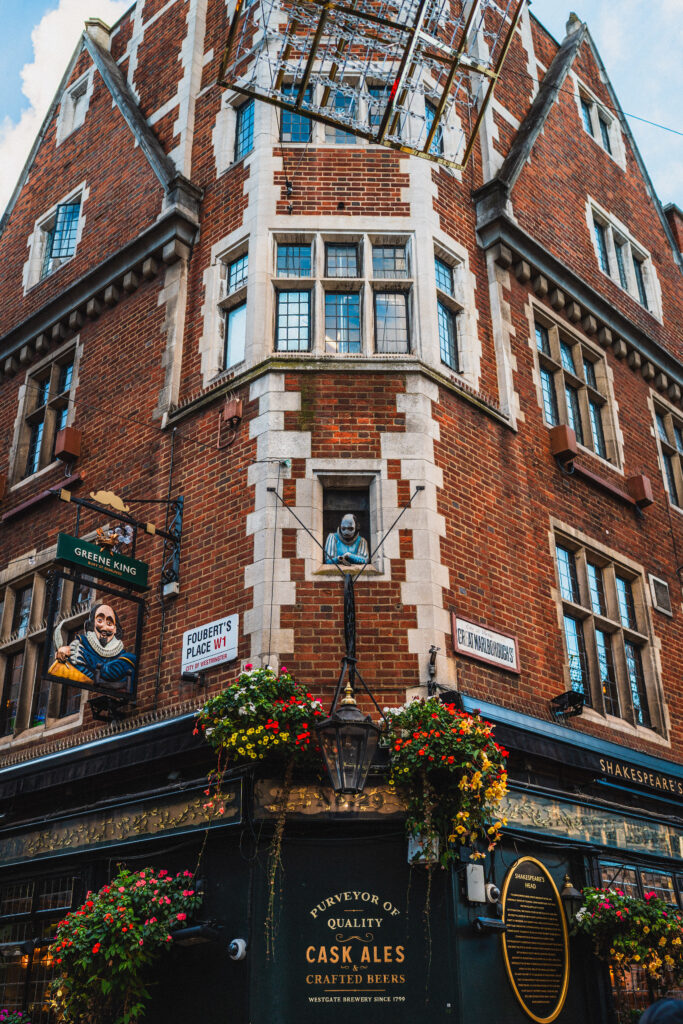
Shakespeare’s Head, Soho
Address: 29 Great Marlborough St, Carnaby, London W1F 7HZ
Wander along Carnaby Street and you may well find that you spy out a bust of the renowned playwright, hanging on the outside of a historic public house. Look up, and you’ll see Shakespeare himself peeping out of the top window. Aptly named so, Shakespeare’s Head is rumoured to have once been owned by the Shakespeare family.
The Soho pub was first established in 1735, and the original owners were Thomas and John Shakespeare, who claimed to be distant relatives of the poet William Shakespeare… no doubt a claim that would help the pub to attract more custom.
Today, Shakespeare’s Head is still very much a cosy, historic boozer steeped in charm – but it has to be said, as it’s Greene King-owned, the food and drinks on offer here are limited. But, I’d recommend stopping in for a pint or two for the atmosphere alone!
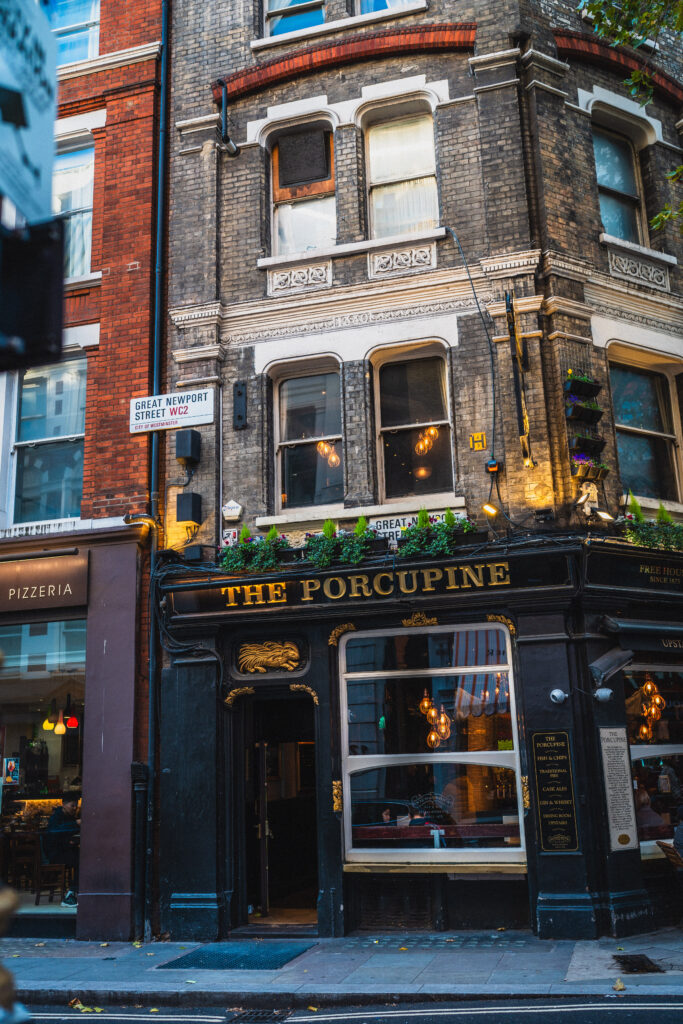
The Porcupine, London’s West End
Address: 48 Charing Cross Rd, Greater, London WC2H 0BS
Tucked into the corner of Charing Cross Road at the edge of Leicester Square, The Porcupine has been pouring pints since around 1725, making it one of the oldest pubs in the area. Over its long life, the public house has had some intriguing associations. Once a haunt for Freemasons, in 1807, The Porcupine was the meeting place for the Freemasons’ group, the “Lodge of Confidence.”
Another interesting story surrounding the pub is that in 1822, a gang of thieves flocked to the bar to celebrate having just burgled the house of Lord Ashbrook. Busy drinking away their win, they asked the landlord of the pub to hide their treasures behind the bar, unaware that the landlord would notify the authorities, and they were arrested on site!
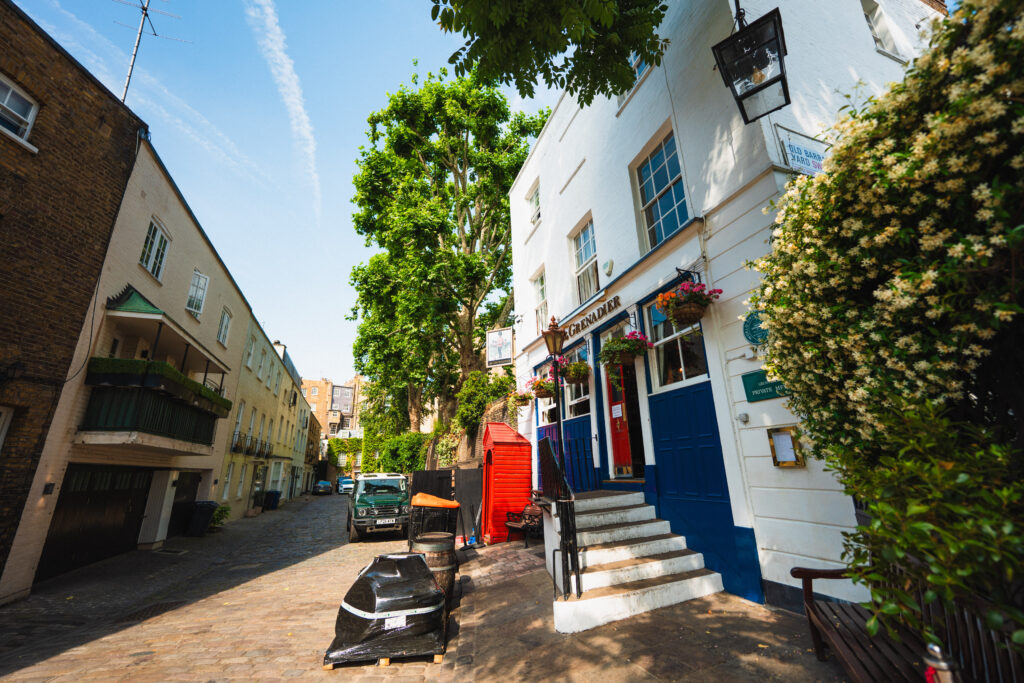
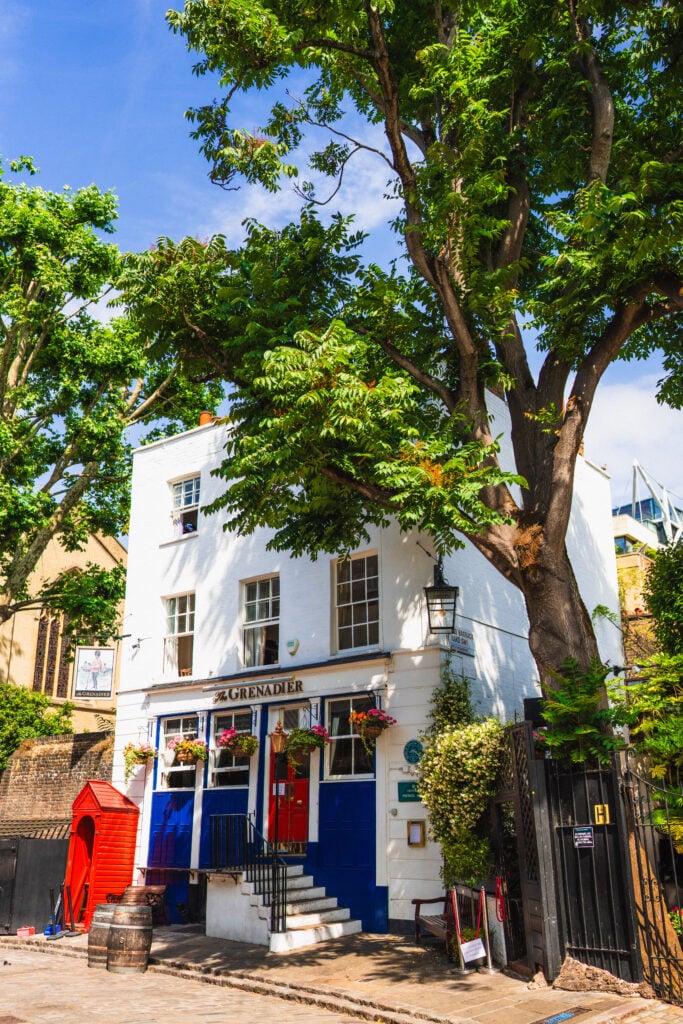
The Grenadier
Address: 18 Wilton Row, London SW1X 7NR, United Kingdom
This pub is somewhat of a new discovery to me but has quickly become a firm favourite. Also said to be one of the more haunted pubs in the city, the location of this boozer isn’t always readily apparent as it’s somewhat tucked away down an otherwise residential mews street.
The site on which the pub now stands was originally occupied as an officer’s mess in the 1720s for the senior infantry regiment of the British army, the 1st Regiment of Foot Guards. By the 1820s a pub had been opened on site under the name of the Guardsman.
Following the Grenadiers actions at the Battle of Waterloo, the Guardsman was subsequently named the Grenadier, a name which it has kept to this day. Step inside and you’ll find cosy, historic charm and (I’m reliably told) one of the best Beef Weelingtons in London!
Olde Cittie of Yorke
Address: 22 High Holborn, London WC1V 6BN
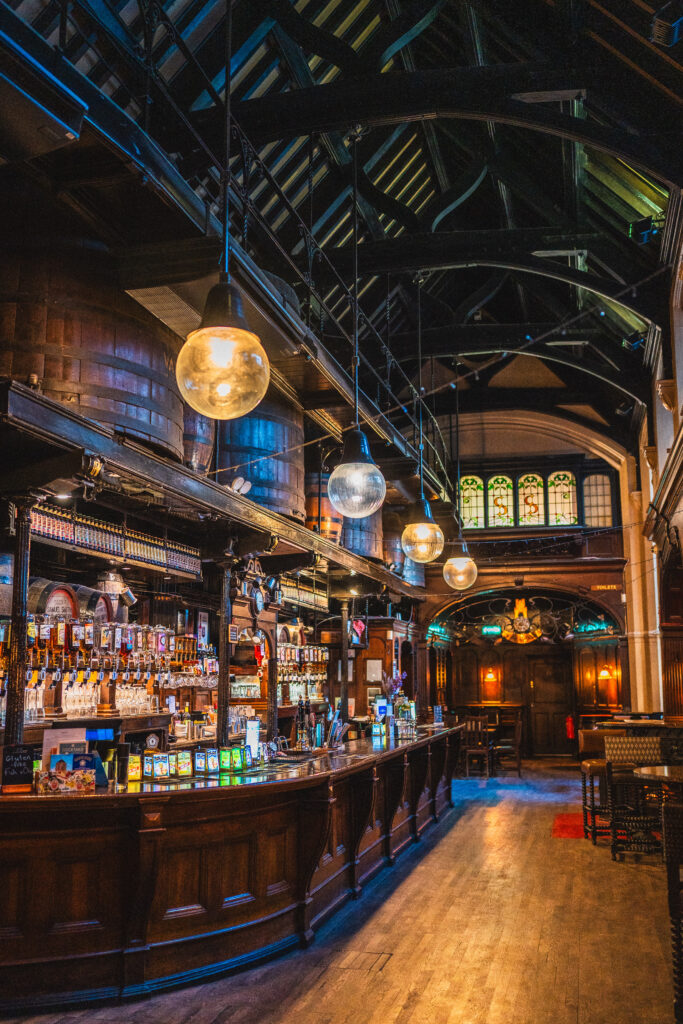
A curious blend of old and new, vintage and modern, The Cittie of Yorke welcomes you with its cosy booths and barrels, which are suspended above the bar, and it proudly holds the title of being home to Britain’s longest bar. It’s also a place where you’ll find some of the best-priced beer in London’s Zone One!
Though the Cittie of Yorke feels old, much of its historic feel is actually faux-historic, deliberately carried throughout the pub’s design. While there may have been a tavern on the site since the 15th century, the building you see today was constructed in the 1920s, incorporating elements from older structures.
This results in a semi-authentic historic pub, though it’s still brimming with character and the perfect place to stop for a cosy pint in London. A notable highlight is that of Henekey’s long bar, which is famous as being the longest pub bar in Britain. In fact, the bar is so renowned that Welsh poet Dylan Thomas is said to have written a poem inspired by it.
The Old Red Lion, Holborn
Address: 72 High Holborn, London WC1V 6LS
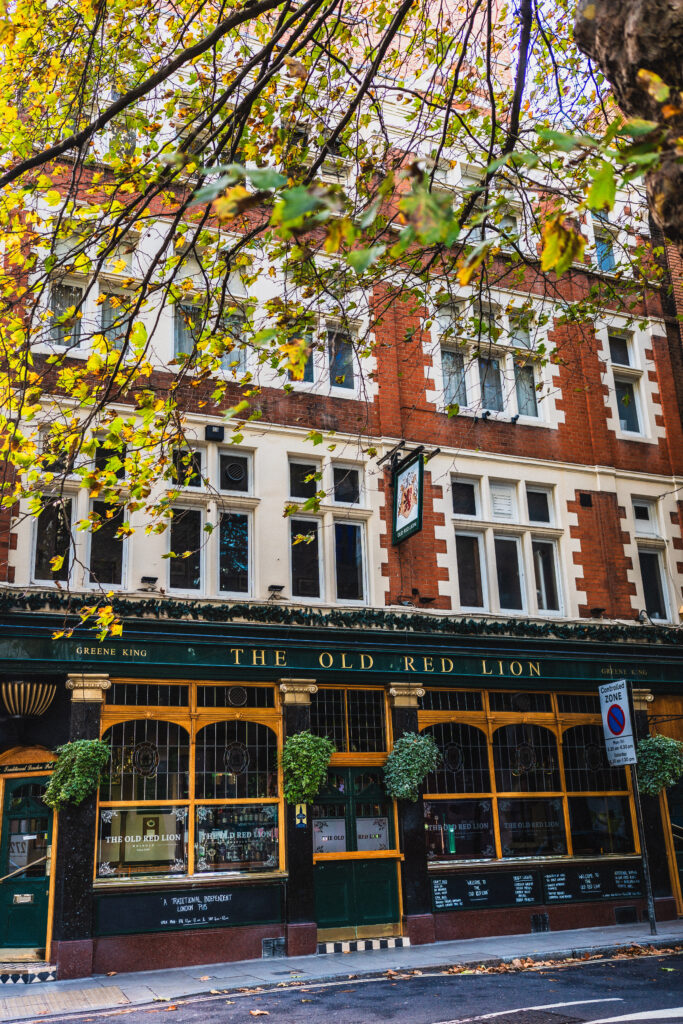
Another historic gem of Holborn is that of The Old Red Lion, where, according to a green painted plaque that sits outside, Cromwell’s body was kept in the cellars of this pub for a few days after his death in 1658. The plaque reads:
“Lord Protector & Lieutenant General Oliver Cromwell’s body lay in the cellar of these premises for several days prior to dismemberment in September 1658.”
While it’s true the pub held Cromwell’s remains for a short while, the dates read here are wrong; indeed, it was when his body was exhumed and posthumously “executed” in 1661 that Cromwell made somewhat of an appearance at the Old Red Lion.
The bodies of Cromwell and his fellow Roundheads, John Bradshaw and Henry Ireton, were exhumed by order of King Charles II. It is reported that the bodies were stored in the Old Red Lion overnight before being taken to Tyburn for a ceremonial hanging and beheading – their heads later to be displayed in Westminster Hall.
The Marlborough Head, Covent Garden
Address: 36 Drury Ln, London WC2B 5RR
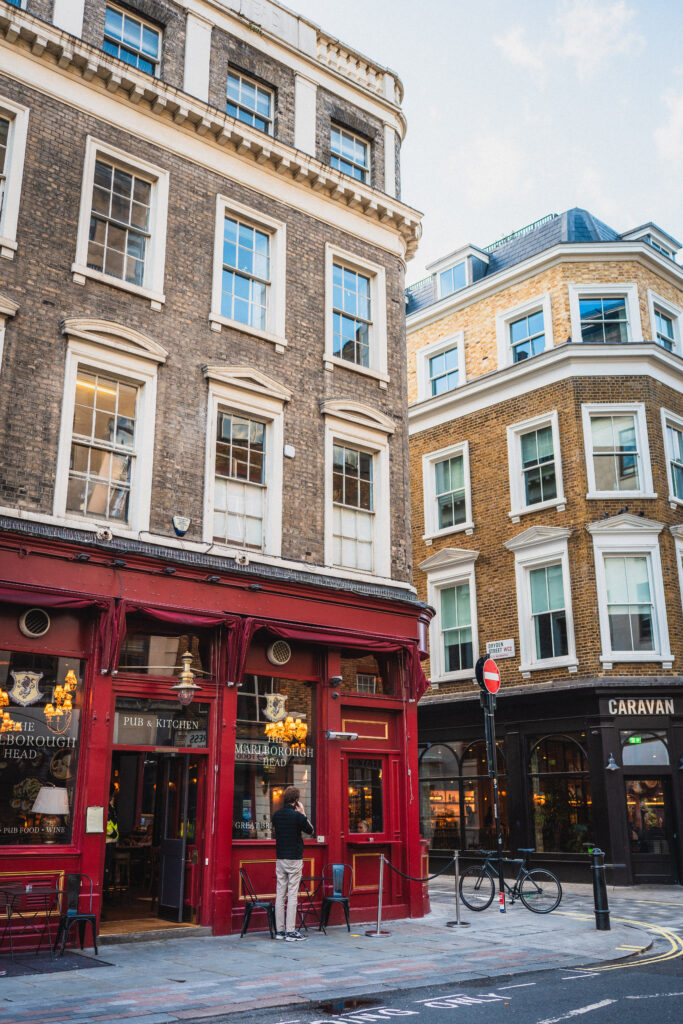
Tucked away on London’s historic Drury Lane, The Marlborough Head is housed within a striking 1892 building that retains much of its late-Victorian character. While it doesn’t carry the centuries-long continuity that some of the nearby pubs in the area have, it still offers a taste of London’s pub heritage in the heart of the bustling Covent Garden.
However, Drury Lane itself is most notable as being home to the Theatre Royal Drury Lane, one of the world’s oldest and most significant theatres. Another recognisable reason for some is from the children’s nursery rhyme, where the “Muffin Man” lives.
The Lamb & Flag, Covent Garden
Address: 33 Rose St, London WC2E 9EB
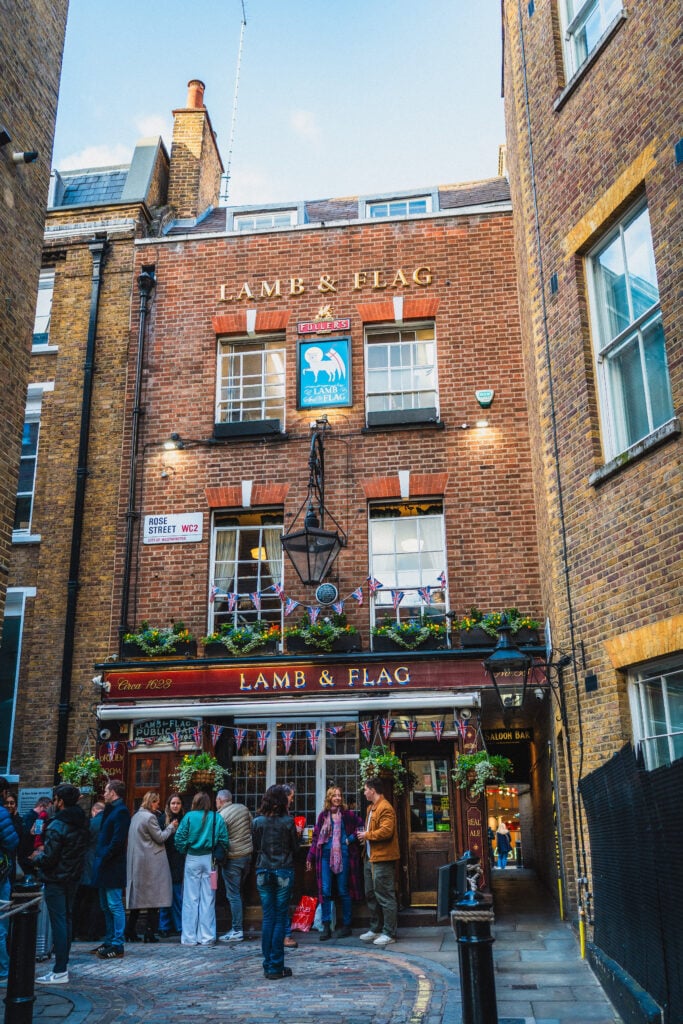
The Lamb & Flag pub can be found tucked away on Rose Street in Covent Garden, and it is widely regarded as one of the oldest pubs in the area. While there’s no exact date for when the public house’s license started operating, it’s known that it served as a pub in 1772 under the name Cooper’s Arms, and later adopted the Lamb & Flag name in 1833.
This pub is perhaps best known for its rougher history; indeed, it earned its nickname “The Bucket of Blood” thanks to the fact that bare-knuckle prize fights were hosted in the upstairs room.
Further evidence of violence in the area can be found on a plaque outside of the building that denotes a notorious event in 1679, when John Dryden was attacked in a nearby alley by men sent by Charles II, in retaliation for a satirical verse Dryden wrote about the king’s mistress, Louise de Kérouaille.
In the 19th century, The Lamb & Flag is reported to have been frequented by Charles Dickens… who, we can probably agree by this point, seemed to be a regular at quite a few of London’s pubs!
The Clachan, Soho
Address: 34 Kingly St, Carnaby, London W1B 5QH
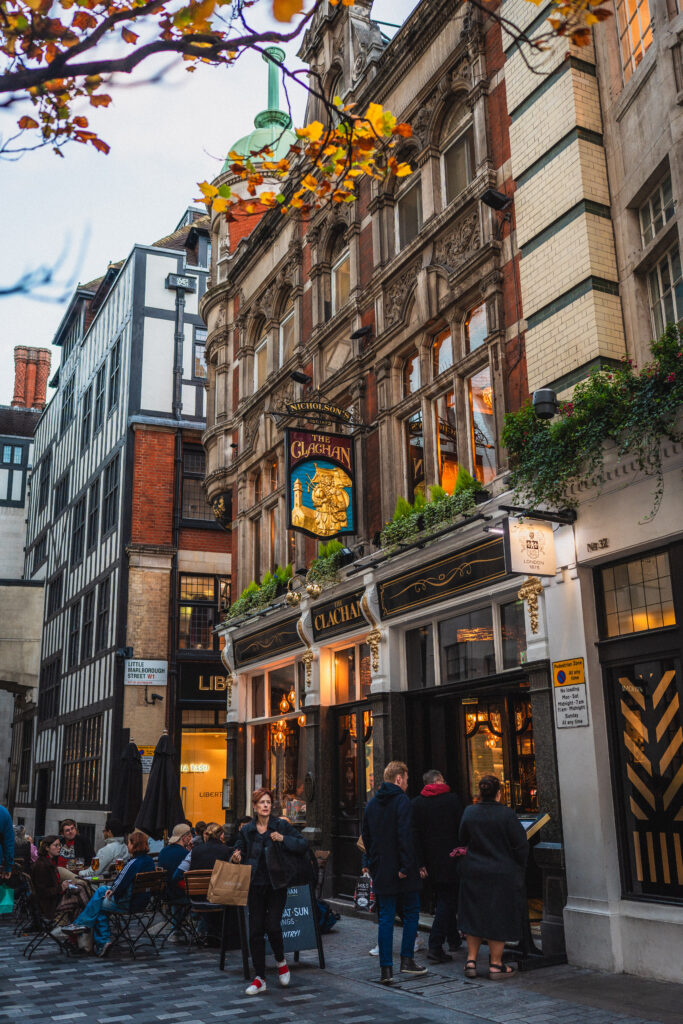
Nestled on Kingly Street in the heart of Soho, The Clachan was rebuilt in 1898 and is now a Grade II‑listed pub that beautifully preserves its late‑Victorian “gin‑palace” style. Once known as the Bricklayers’ Arms until the late 1800s, it now serves as a charming meeting place (true to the Gaelic meaning of “Clachan”) where historic vibes meet modern London pub culture.
The Cambridge, London’s West End
Address: 93 Charing Cross Rd, Greater, London WC2H 0DP
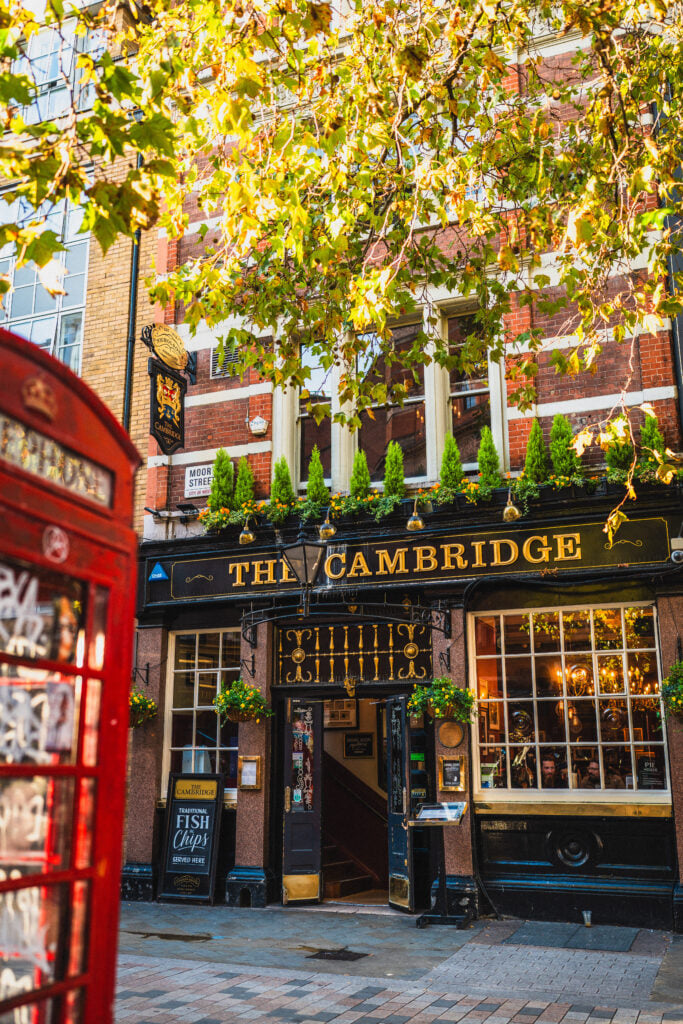
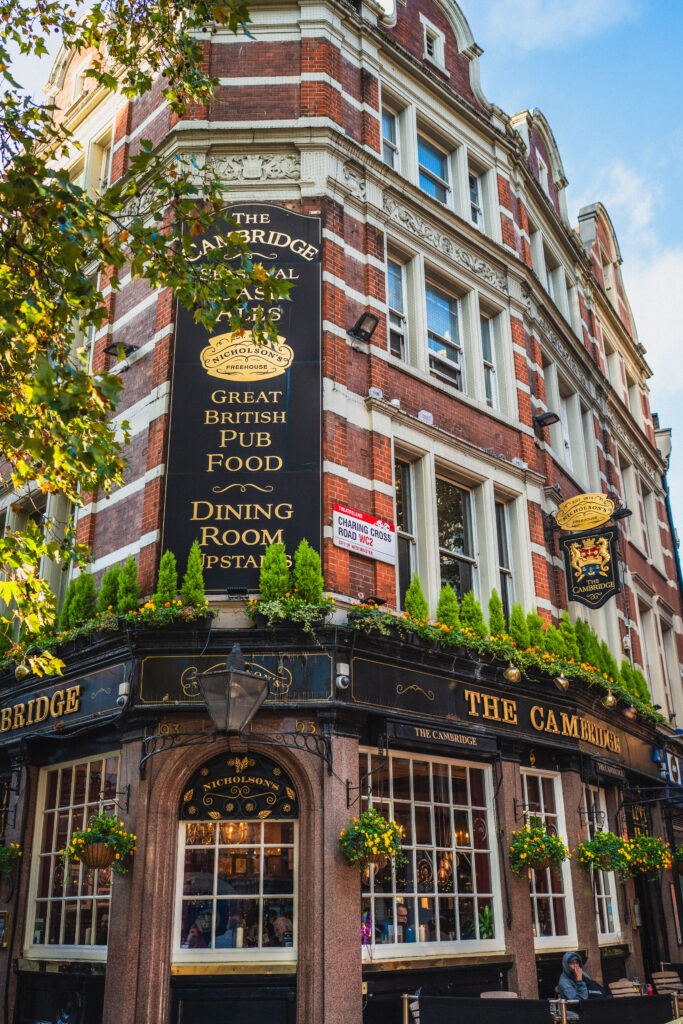
The Cambridge pub sits on the north-west corner of Cambridge Circus in London’s West End, beside the Palace Theatre. There was a public house established on the site in the 1740s that was first known as The King’s Arms. However, the pub seen today was rebuilt around 1887 when Charing Cross Road was constructed, and it was renamed The Cambridge.
The name “The Cambridge” comes from Prince George, Duke of Cambridge, who officially opened Charing Cross Road, and after whom the Circus was named – it does not correlate with Cambridge itself.
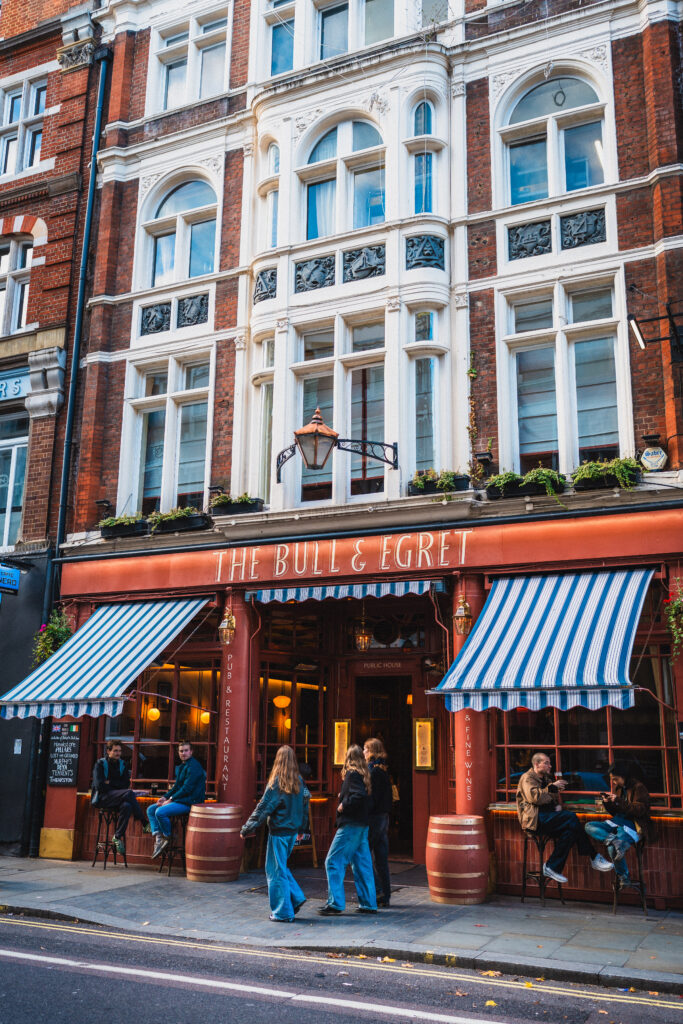
The Bull & Egret, Covent Garden
Address: 81-82 Long Acre, London WC2E 9NG
This London public house has witnessed centuries of history, but its first origins can be traced back to 1704 when it was first licensed as the Bull’s Head. It later passed through various owners, including big chains such as Sam Smith, Greene King, and Shepherd Neame, before finally returning to independent hands in 2025.
To honour the pub’s original identity and celebrate its independent spirit, the new owners named it The Bull and Egret, making it the only pub in the country with this name, which is a rare distinction in a city where most pub titles are reused.
Coach and Horses, Mayfair
Address: 5 Bruton St, London W1J 6PT
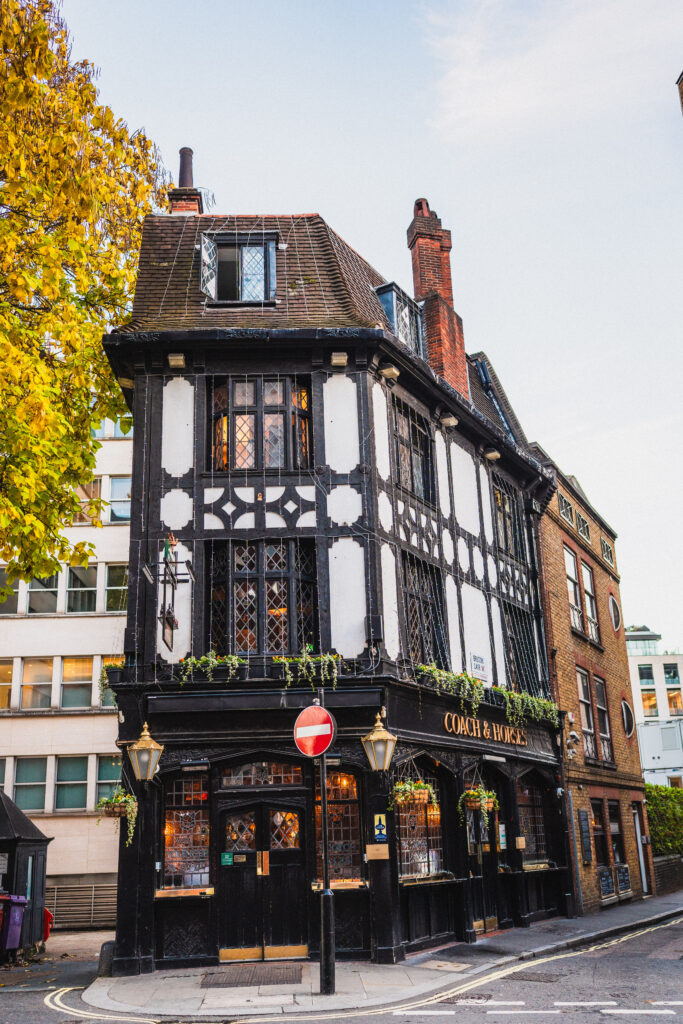
Tucked away on Hill Street, right in the heart of the elegant district of Mayfair, you’ll find the Coach & Horses pub. This public house dates back to around 1744, making it the oldest surviving pub in the neighbourhood.
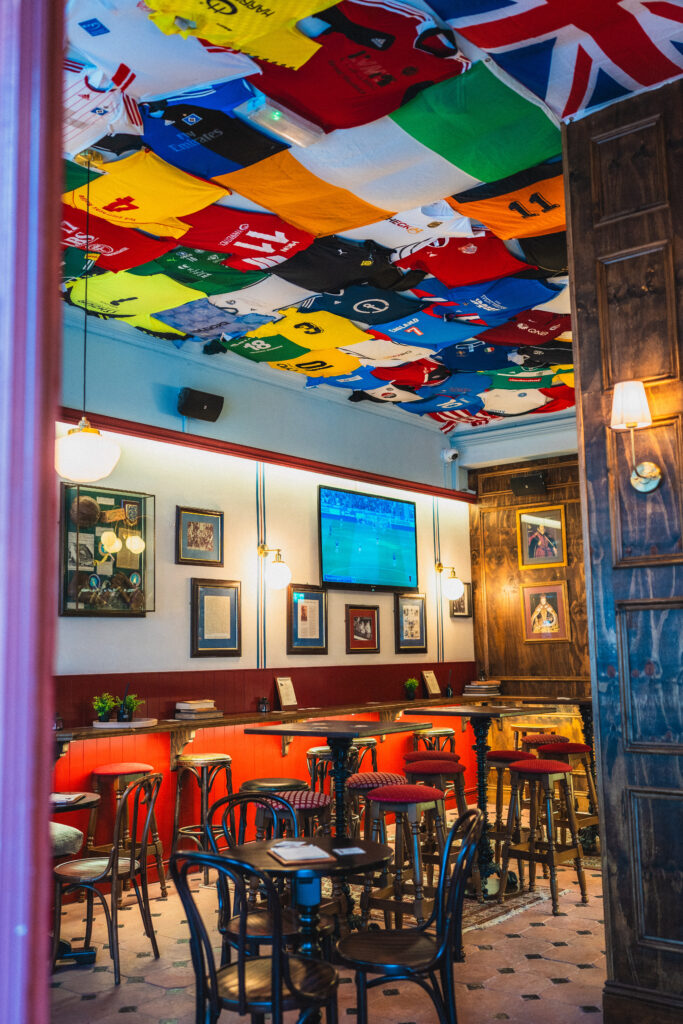
Step inside the Grade II listed building and you’re welcomed by dark wood panelling, cosy nooks to sit in, and a grand curved bar. The pub itself takes its name from the fact that it was once a staging post for horse-drawn coaches arriving from the countryside. Today, the pub offers a slice of pub life amid the polished and regal charm of its home district.
The Flask, Highgate
Address: 77 Highgate W Hill, London N6 6BU
Found in the leafy London suburb of Highgate is a cosy historic pub that dates all the way back to 1663, and takes its name from the fact that in the past the pub sold flasks so that people could collect water from nearby springs. However, the most interesting aspect of this pub is that it is reputed to be the most haunted pub in London.
The most famous of the pub’s spirits has to be that of the Spanish barmaid who came to London and got a job in the Flask Pub. Legend goes that the barmaid fell hopelessly in love with the publican, who never returned her affection. Heartbroken, some say she hanged herself over this unrequited love. It’s said that her restless spirit still haunts the pub today, appearing in quiet corners or moving glassware…

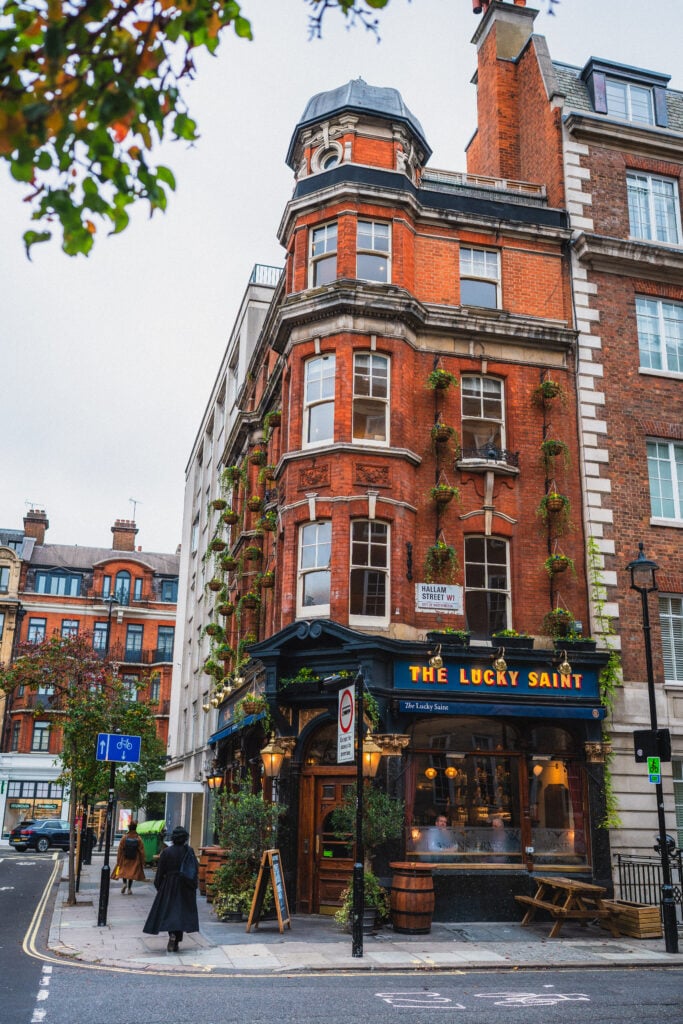
The Lucky Saint
Address: 58 Devonshire St, London W1W 5EA
The Lucky Saint is a modern pub with a traditional spirit. It was once the long‐closed Mason’s Arms, until the venue was revived in March 2023 by the alcohol‐free beer brand Lucky Saint, becoming their flagship pub. Though they serve an excellent variety of alcohol-free beers, you can also find alcoholic beverages here too.
The history of a pub on this site can be traced back to the late 18th century, though the current building seen today was built in 1899.
Sherlock Holmes
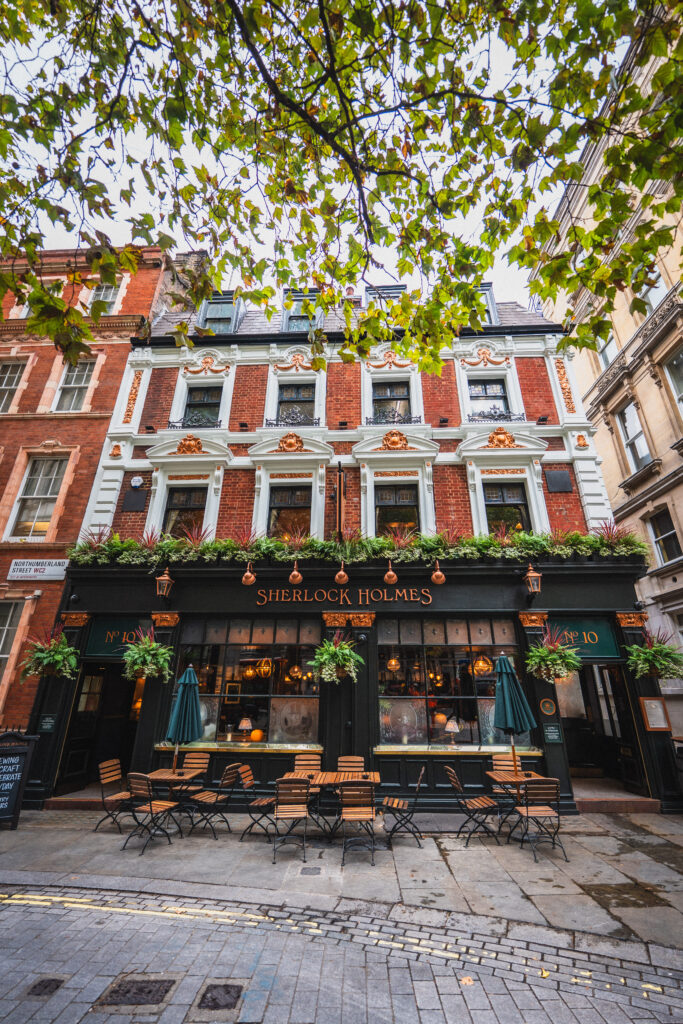
Address: 10 Northumberland St, London WC2N 5DB
Tucked away on Northumberland Street, just a short walk from Trafalgar Square, this Victorian-era pub is packed with character and lots of intricate details. The public house, originally established in the 1880s, was renamed in the 1950s to honour the world’s most famous fictional detective. It also happens to be one of London’s literary locations that every book lover should visit!
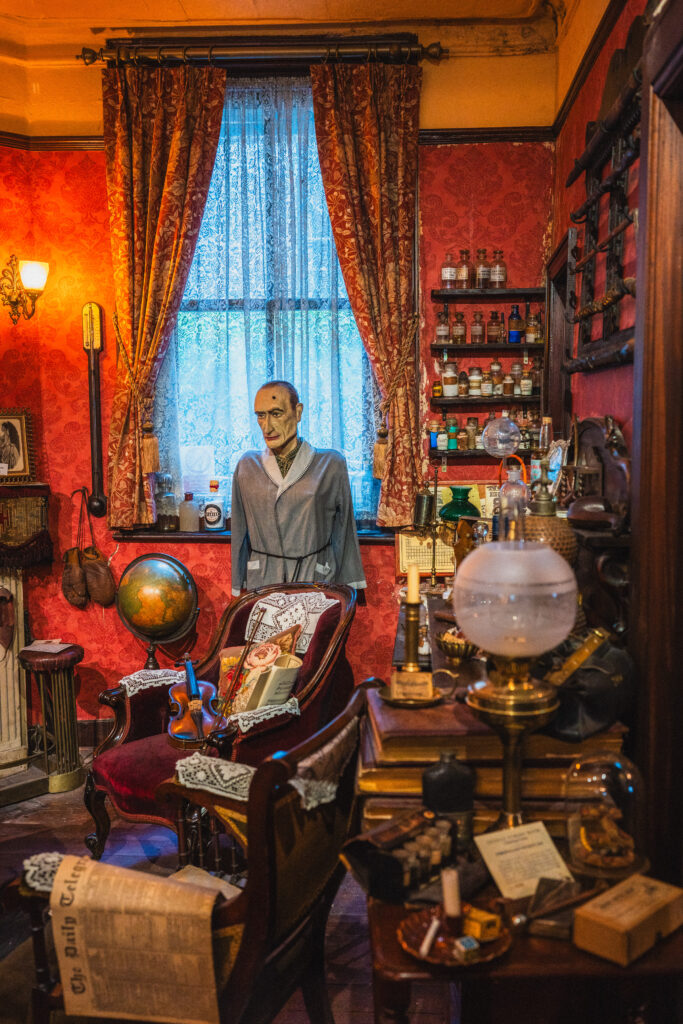
Step inside and you’ll find plenty of Sherlock Holmes memorabilia, beautiful stained glass windows and paintings. And, if you head upstairs, there’s even a small museum which recreates Sherlock’s apartment.
Enjoyed reading our guide to London’s best historic pubs? Pin this article now, and read it again later: