Unique Statues and Monuments in Europe I’ve Seen on My Travels
Last Updated on 17th March 2026 by Charlotte Nadeau
This post may contain affiliate links. Please check out my privacy policy and disclosure for more information.
Europe is full of famous landmarks, but some of the most memorable sights I’ve come across aren’t the ones in guidebooks. Statues and monuments have been created across cultures and time, serving all sorts of purposes, some to celebrate people or moments, while others make us think, remember, or even question history. Along my travels, I’ve collected statues & monuments like souvenirs; here are some that have left an impression!

Contents
- Agatha Christie Memorial
- Bust of Dalida
- Manneken Pis (and other peeing statues)
- Little Princess
- Greyfriars Bobby
- Fountain of the Fallen Angel
- El Barrendero (The Sweeper)
- Eros Bendato
- Robin Hood
- Michelangelo’s David
- Mother with her Dead Son
- The Weight of Oneself
- Oscar Wilde
- The Time Keeper
- The Creel Loaders
- Queen Victoria Statue
- Tribute to the Fishermen
- Monument to the Heroes of 1809
- Grey’s Monument
- Gerardus Mercator
Agatha Christie Memorial
Where: London, England
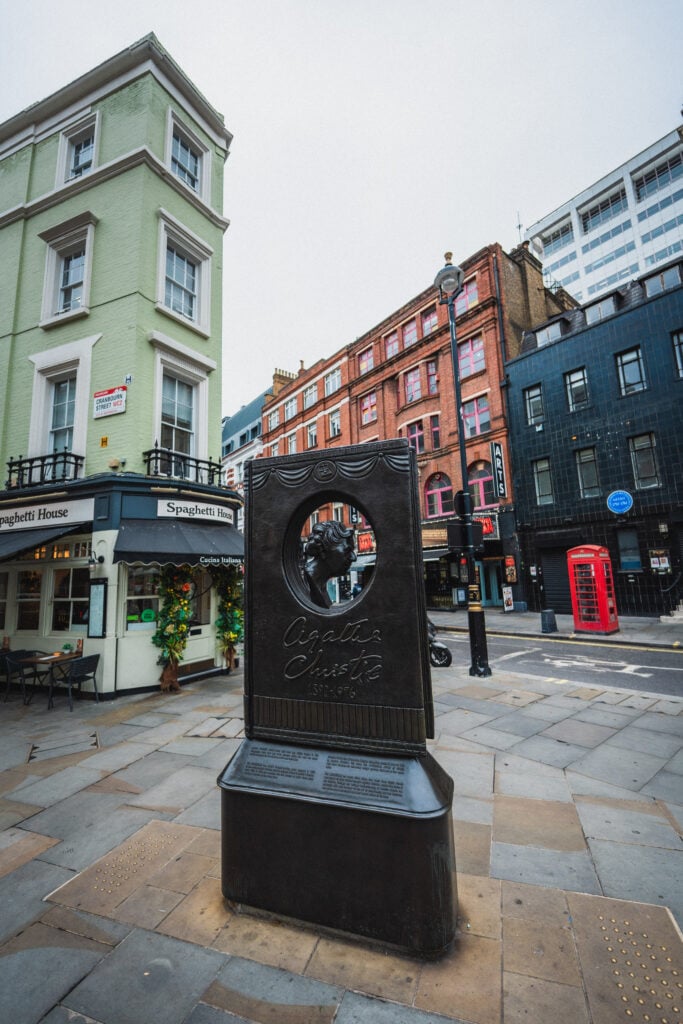
Hailed as the beloved “Queen of Crime,” it will come as no surprise that there is a bronze plaque dedicated to Agatha Christie’s extraordinary contributions to literature and theatre. Located in the heart of London’s theatre district in Covent Garden, not too far from Christie’s renowned The Mousetrap (the longest continuous running show in the world).
In fact, the memorial was placed here to mark the 60th anniversary and 25,000th showing of The Mousetrap. It’s a larger-than-life book with Christie’s profile in relief, surrounded by motifs from some of her novels. The work of art was designed by sculptor Ben Twiston-Davies and then unveiled by Agatha Christie’s grandson in 2012. It now stands proud as one of London’s literary locations, of which there are many!
Bust of Dalida
Where: Paris, France
Nestled in the heart of Montmartre is a beloved tribute to the iconic Italian-French singer, Dalida (Yolanda Gigliotti, 1933–1987). In fact, Dalida made such a huge impression on French culture that a small square was named after her, near where she lived on Rue d’Orchampt for over 20 years. This is where the statue that honours her now stands.
Created by Alain Aslan, the bust of Dalida was erected to commemorate the 10th anniversary of her death. Over time, a rather curious tradition has emerged wherein visitors often rub the breasts for good luck…

Manneken Pis (and other peeing statues)
Where: Brussels, Belgium
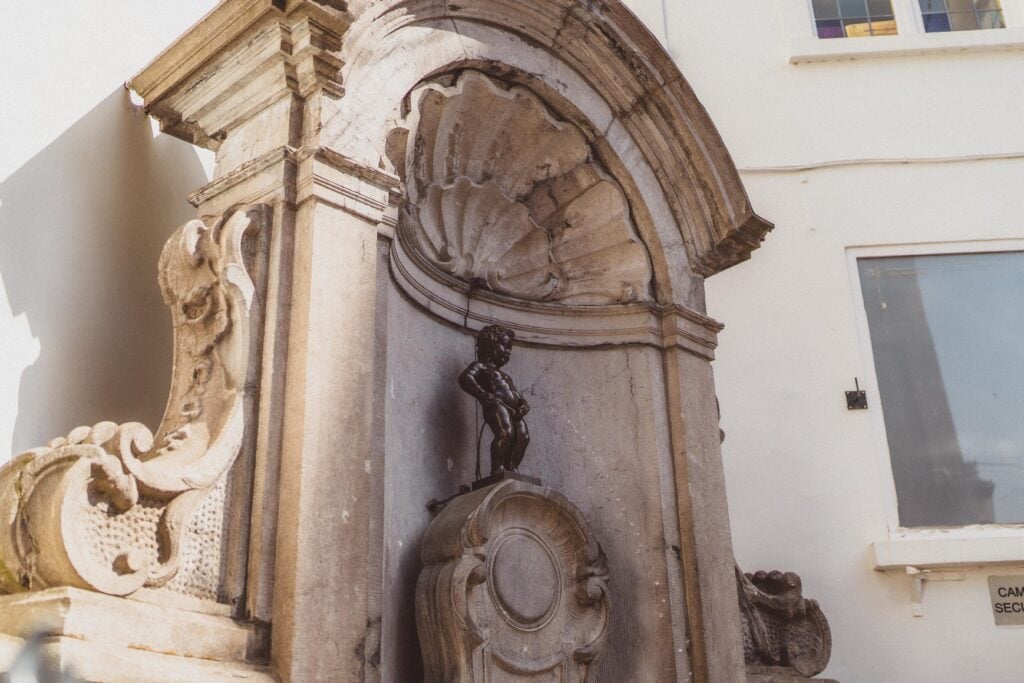
Known in Dutch as the ‘Little Pissing Man,’ this tiny statue is one of Brussels’ most iconic landmarks. It’s been stolen so often that today a replica stands on-site, while the original lives in the Brussels Museum!
The first time I saw it, I honestly wasn’t sure if I’d found the right place. After hearing so much about it, I expected something much bigger… but instead, it’s a very small bronze statue of a little boy casually peeing into a fountain.
The statue dates back to the 17th century and has since become synonymous with the city’s humour and identity. So much so, in fact, that it’s often dressed in different costumes throughout the year (there are literally hundreds of outfit combinations!)


Little Princess
Where: Budapest, Hungary
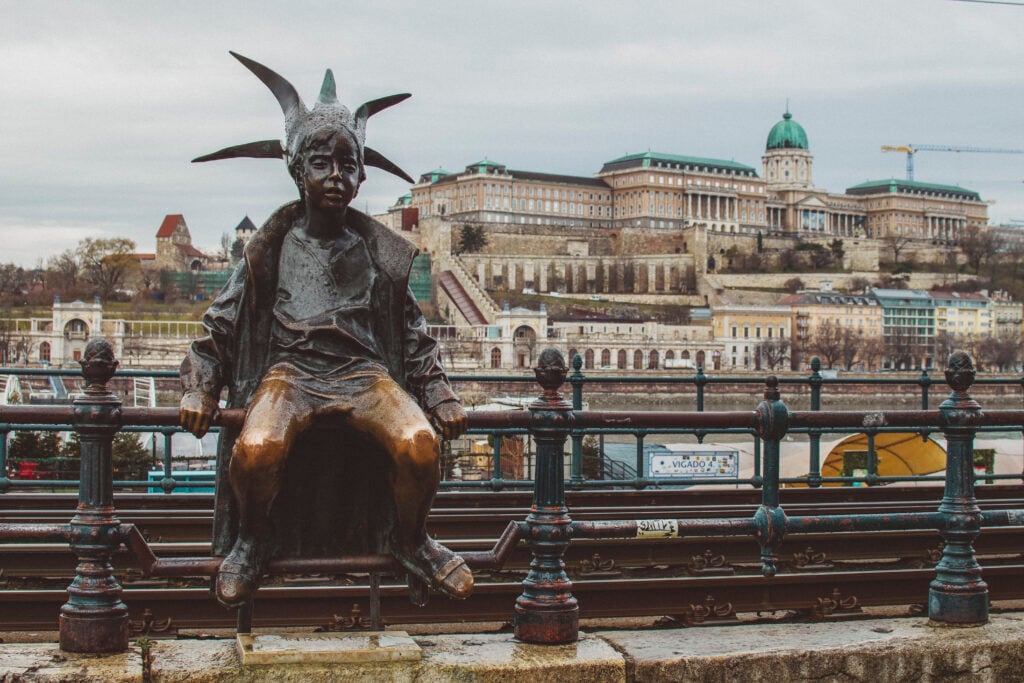
Created in 1972 by Hungarian sculptor László Marton, the Kiskirálylány (Little Princess) statue captures the whimsical innocence of childhood in a way that still charms visitors today. Marton was actually inspired by his daughter Évike, who loved playing dress-up around their home. He wanted to translate that playful imagination into a bronze, freezing a moment of carefree joy in time!
Today, visitors pleasantly stumble across the Little Princess sitting idly along the Danube promenade in Budapest. It’s become one of the most iconic statues to photograph in the city thanks to is position, with the stunning Parliament building set in the backdrop.
Greyfriars Bobby
Where: Edinburgh, Scotland
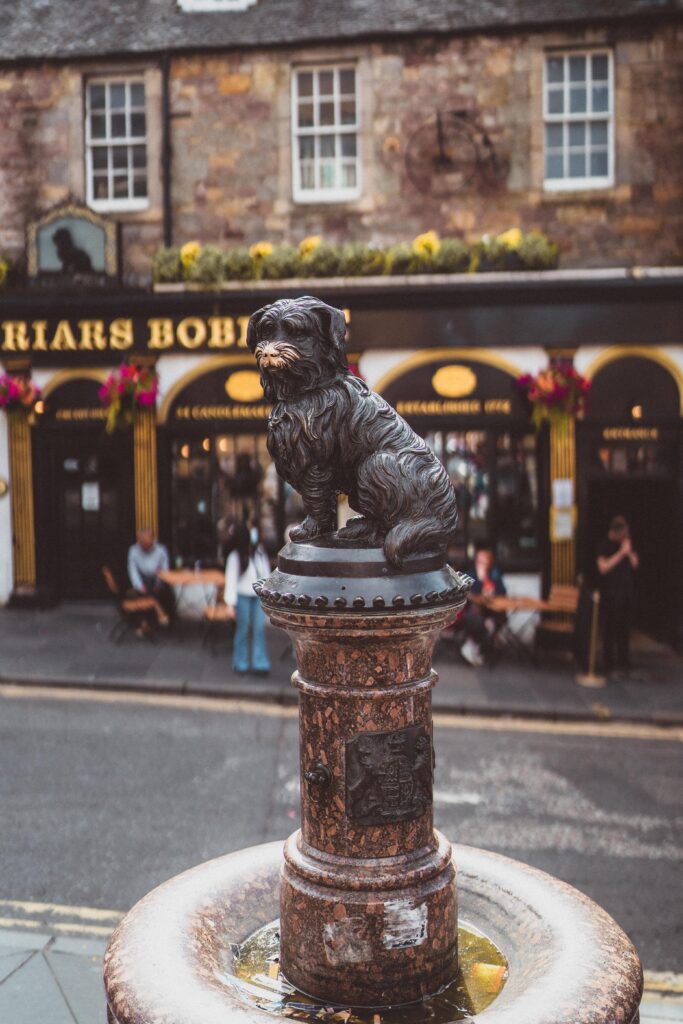
Greyfriars Bobby is a loyal Skye Terrier who stood guard at his owner’s grave for over a decade! One of Edinburgh’s most popular local legends is that of a heartwarming story between a man and his dog. After John Gray passed away in 1858, Bobby supposedly spent 14 years guarding his master’s grave, refusing to leave. The local community were so touched by the dog’s devotion that they raised funds for a statue to commemorate him.
And so, in 1873, sculptor William Brodie created a bronze cast of the small Skye Terrier. Today, it sits quietly (aside from the flocks of tourists) near the entrance of Greyfriars Kirkyard, which is a famous Harry Potter filming location in the city. Urban legend says rubbing his nose brings good luck, hence why Bobby’s nose is gold, but the locals would prefer if you just admired him instead.
Fountain of the Fallen Angel
Where: Madrid, Spain
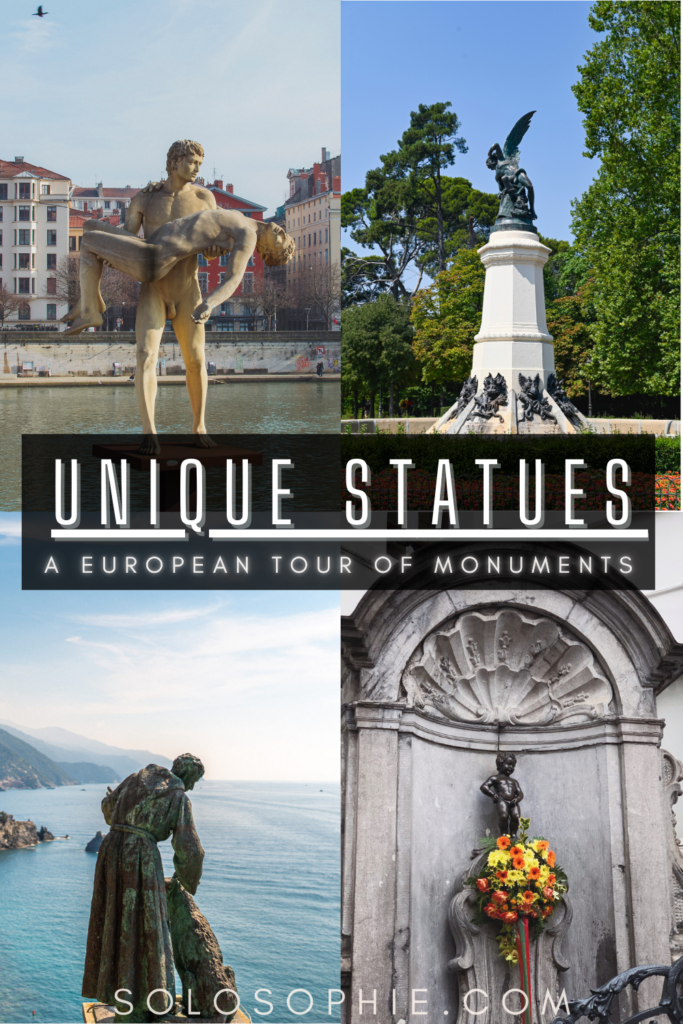
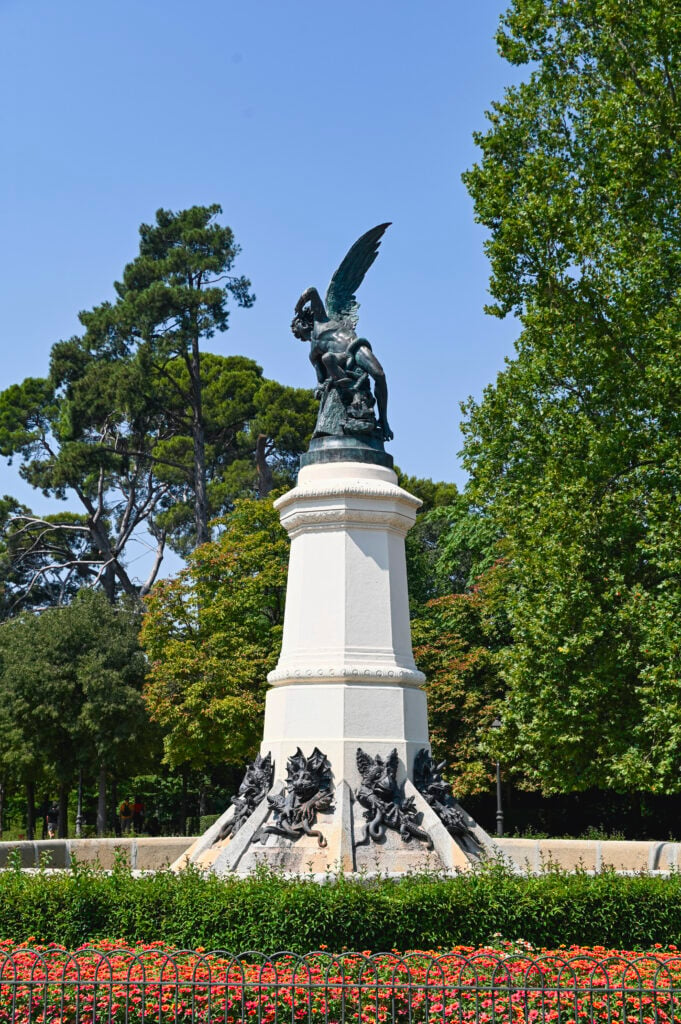
Found in Madrid’s lush green El Retiro Park is said to be the only public statue in the world dedicated to Lucifer. The Fountain of the Fallen Angel (Fuente del Ángel Caído) captures the moment he’s cast from Heaven. And, it sits 666 meters above sea level!
El Barrendero (The Sweeper)
Where: Madrid, Spain
Another iconic statue to see in Madrid is The Sweeper. The statue was commissioned as a tribute to the city’s municipal cleaning staff, recognising the vital work that keeps the streets clean, despite much public recognition.
Unlike grand monuments to famous figures, this sculpture celebrates ordinary heroism and community service, giving a voice to those who make urban life possible! In fact, it’s so subtle that you almost walk past it as if it’s another person on the street, thanks to it being a life-like size replica of a person.

Eros Bendato
Where: Krakow, Poland
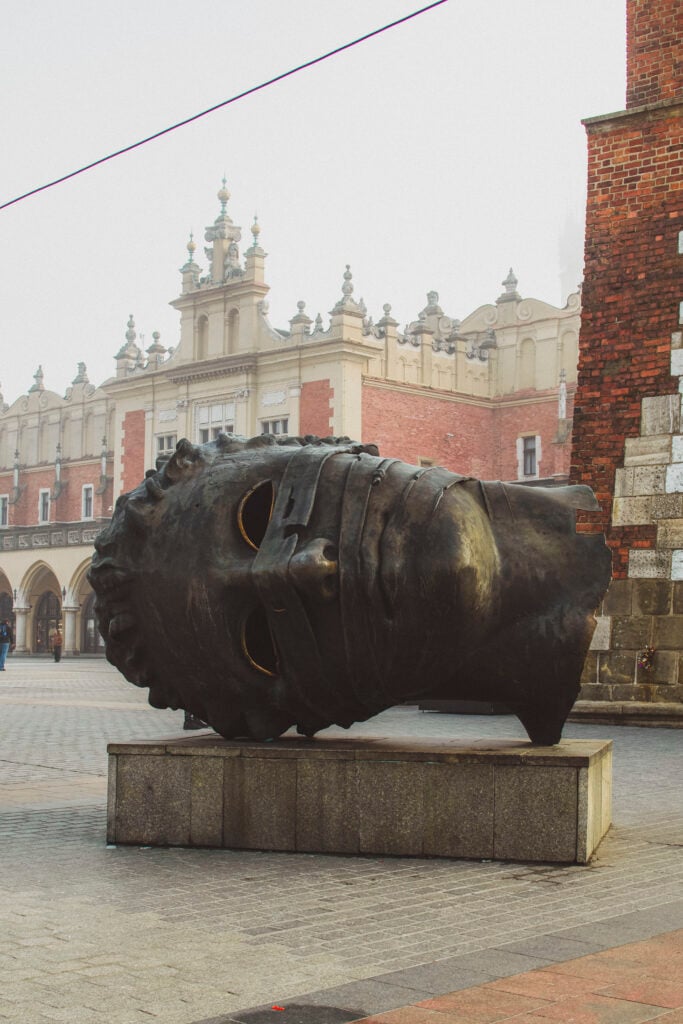
Found in Kraków’s main market square, you’ll see a giant bronze Greek-looking head. In fact, it is the Greek god of love, Eros. His head is wrapped in bandages, meant to symbolise love and desire under constraint.
The sculpture was created by Igor Mitoraj, a Polish artist who is known for his post-modern, fragmented sculptures of the human body. Eros Bendato is 370 cm long, 290 cm wide and 225 cm high. And, despite being hollow, it still weighs around 1,900 kg!
Robin Hood
Where: Nottingham, England
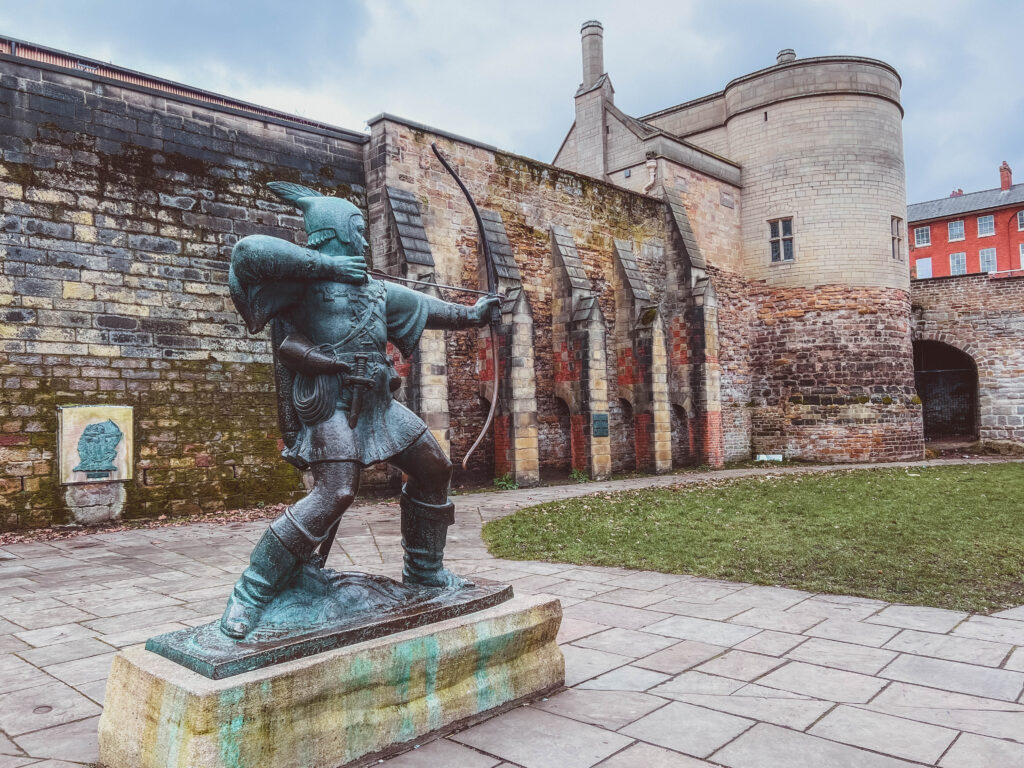
Nottingham’s most iconic outlaw and local legend is Robin Hood. While he is a figure of folklore rather than historical fact, a statue of him has been striking a heroic pose near Nottingham’s castle since 1952. The sculpture was created by James Woodford and commissioned to celebrate the city’s cultural identity.
Despite being the master thief, it turns out that visitors can’t resist stealing his arrow – with Nottingham’s council having to replace it multiple times!
Michelangelo’s David
Where: Florence, Italy
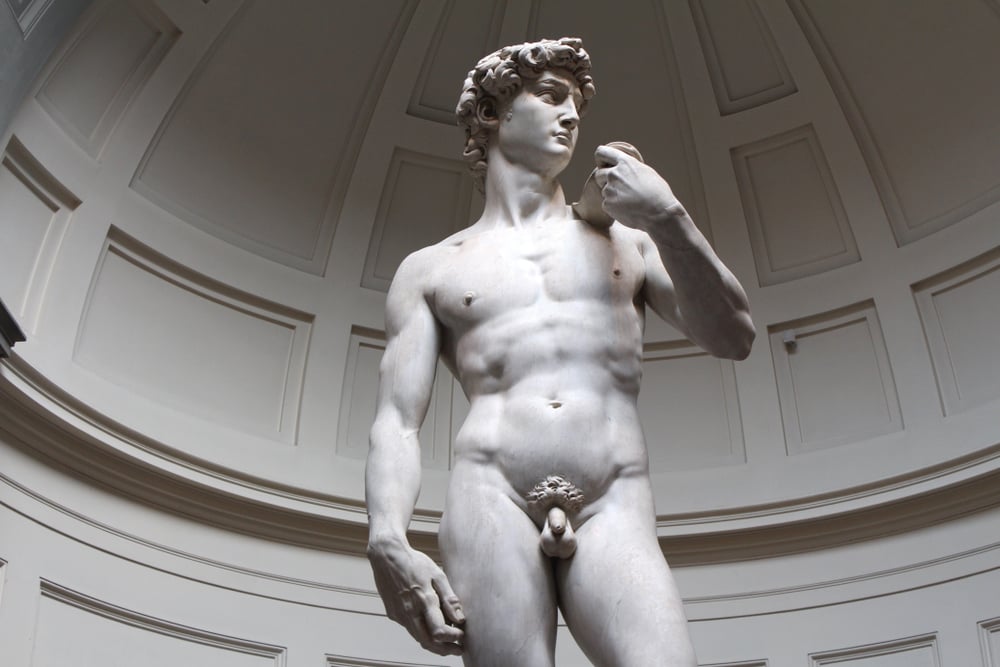
This is certainly one of the most iconic sculptures that most people go out of their way to visit. Completed in 1504, Michelangelo’s David towers at an impressive 17 feet, and seeing it in person is truly mesmerising, and certainly one of the best things to see in Florence.
This masterpiece captures the biblical hero just before his epic showdown with Goliath; every muscle and vein has been intricately carved with precision, incredible detail and proportion. It’s been standing in Florence as a symbol of strength and beauty for over 500 years and can be found in the Galleria dell’Accademia di Firenze.
Mother with her Dead Son
Where: Berlin, Germany
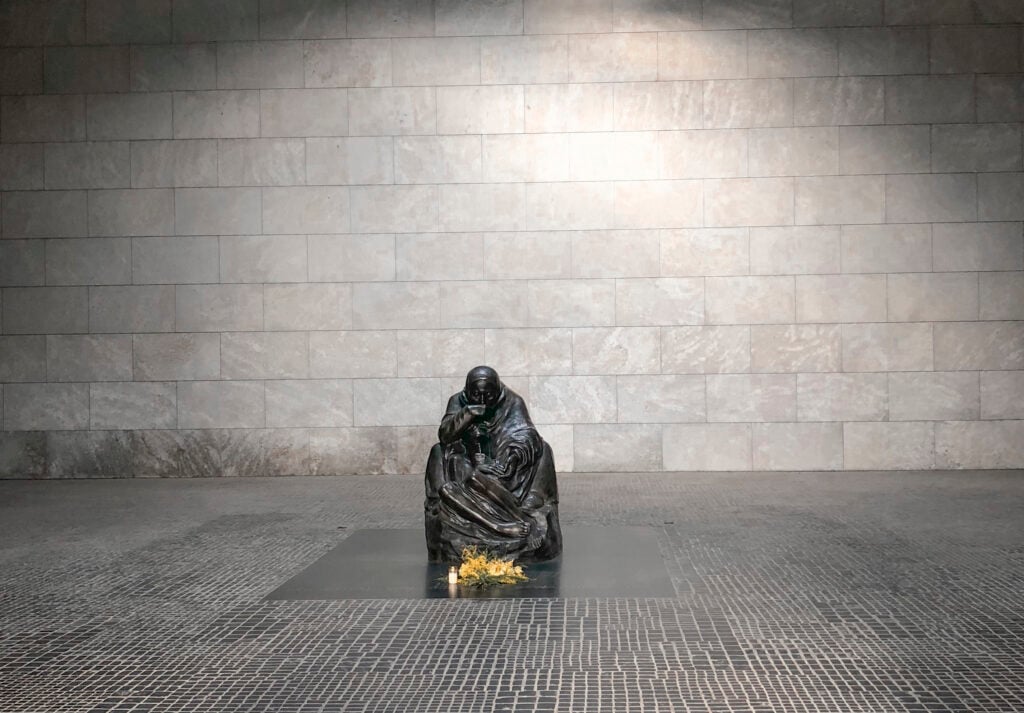
Silently seated in Berlin’s Neue Wache, Käthe Kollwitz’s Mother with her Dead Son (Mutter mit totem Sohn) was created after she lost her own son Peter in WWI. Today, it stands as a powerful memorial to the victims of war and tyranny, reflecting on grief and loss. Neue Wache itself is situated just a 15-minute walk from the Brandenburg Gate, another important monument worth visiting in Berlin.
The Weight of Oneself
Where: Lyon, France
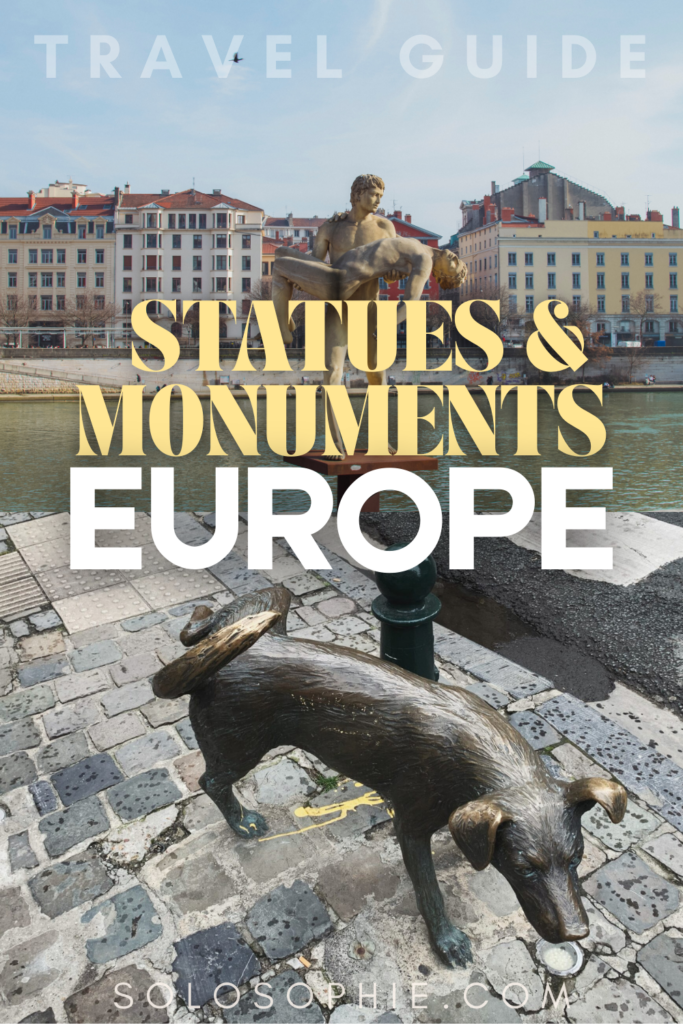
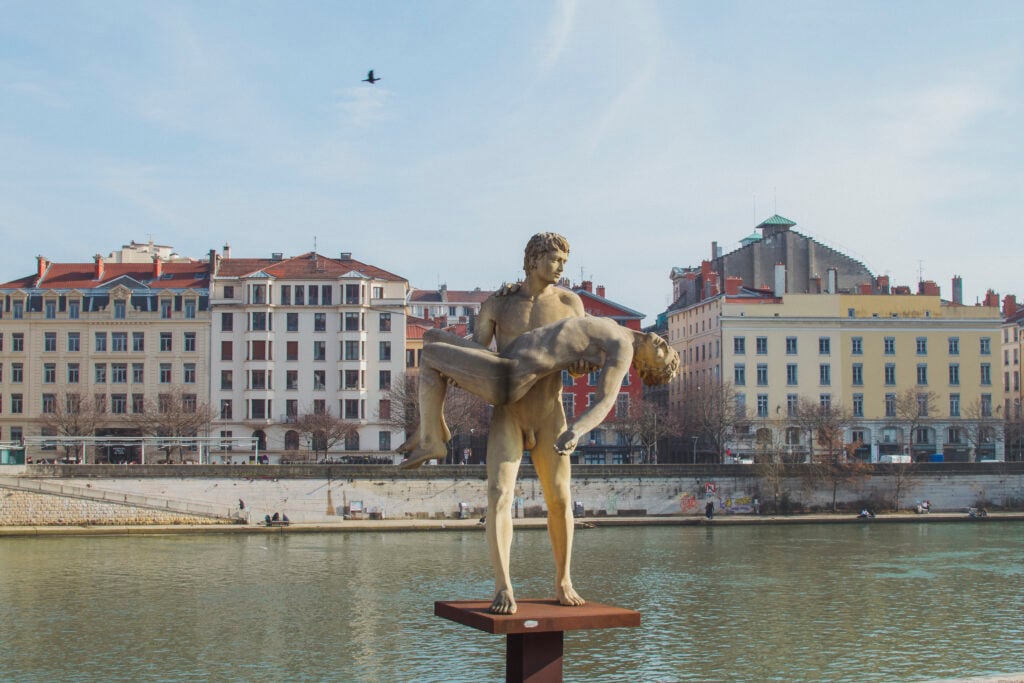
In the streets of Lyon, somewhere along the Rhône River, you’ll find a sculpture that stops you in your tracks, a man literally carrying his own body! Similar to the saying “carrying the weight of the world on your shoulders”, except more personal, this striking work of art invites reflection on identity, existence, and resilience.
Oscar Wilde
Where: Dublin, Ireland
Nicknamed by locals ‘the queer with the leer,’ this charming statue perfectly captures the wit and flair of Ireland’s literary legend, who can be found lounging on a rock in Merrion Square in Dublin. The writer is immortalised in this vibrant green, pink, and bronze figure, reclining with a sly smile and a flamboyant pose, perfectly capturing Wilde’s wit, charm, and unapologetic flamboyance. The very qualities that made him one of Ireland’s most beloved literary figures!
Another place that has become somewhat of a monument in itself to Oscar Wilde is Paris, where he was laid to rest in Père Lachaise Cemetery. The writer’s tombstone actually now has a glass casing surrounding it due to the fact that they were unable to stop visitors from leaving lip-stained kisses on it!

The Time Keeper
Where: Dijon, France
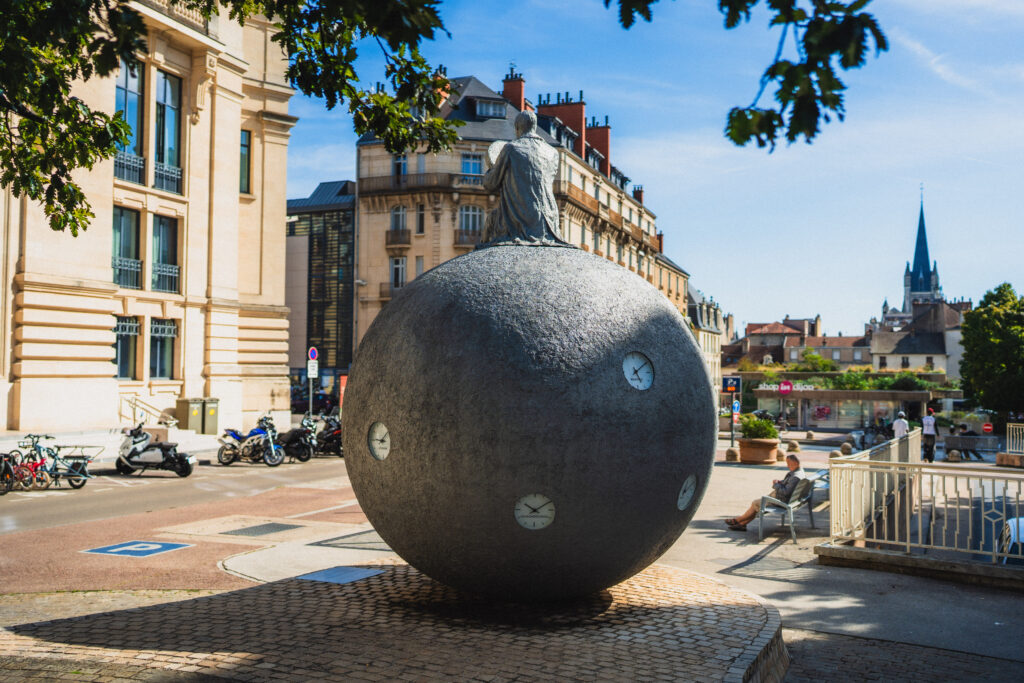
One of my all-time favourite monuments and hidden gems in Dijon has to be The Counter of Time (Le Compteur du Temps). This striking sculpture is by the German sculptor Gloria Friedmann, and it sits silently ticking away at Place Grainger. This large, round, metallic sphere is embedded with twelve different clocks showing the local time of cities across the world. Sitting atop, you’ll see the time counter himself. The message behind the timepiece is pretty simple: use your time wisely.
The Creel Loaders
Where: Dunbar, Scotland
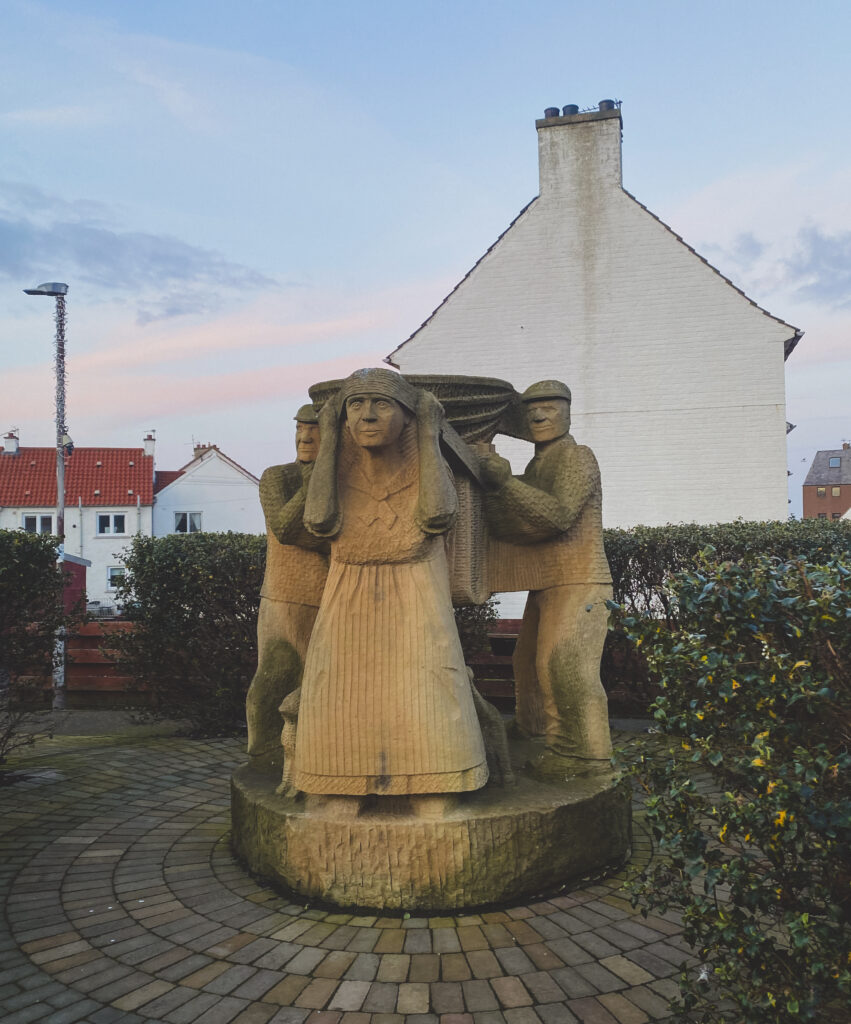
Found in the quaint fishing town of Dunbar, you’ll stumble across this carved sandstone sculpture just before reaching the harbour front. The artwork was sculpted with the intention to honour the fishing heritage of the town, as well as pay tribute in particular to the unsung harbour women of Dunbar. Depicting two fishermen loading a creel on a woman’s back, it tells a tale of when women would carry these heavy loads of herring over 26 miles away to sell. The sculpture also features two cats at the woman’s feet, with reference to the fact that this spot was previously named Cat Row!
Queen Victoria Statue
Where: Valletta, Malta
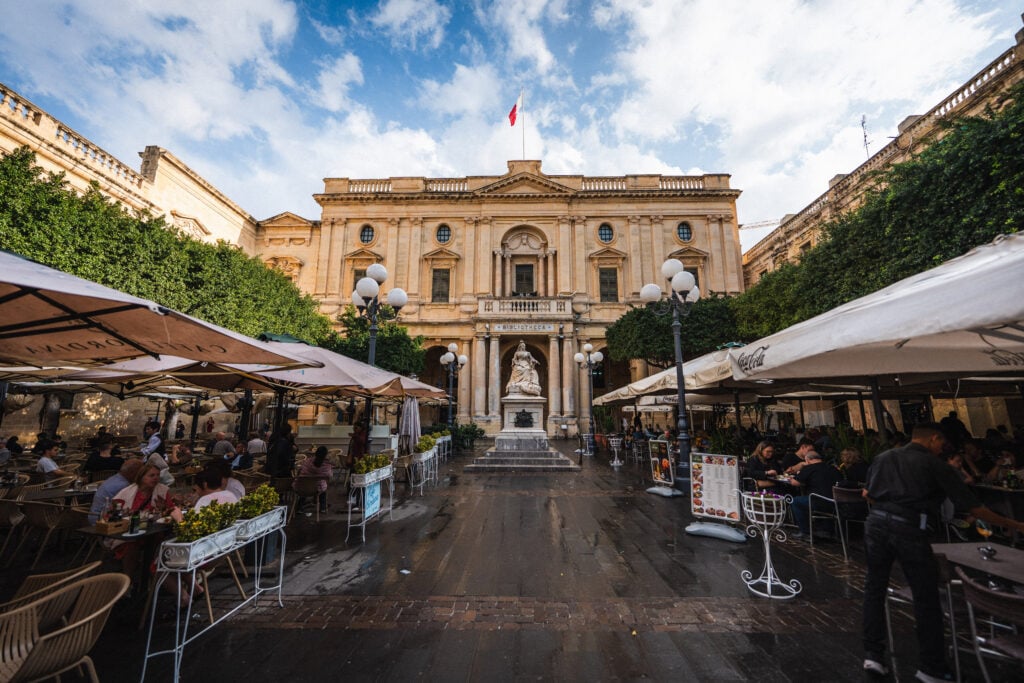
In the heart of Valletta, just outside of the city’s library, you’ll find a very British sight. A statue of Queen Victoria was installed in 1891 to commemorate the Queen’s Golden Jubilee in 1887. Not just that, but it symbolises Malta’s historical connection to the British Empire.
Tribute to the Fishermen
Where: Fuerteventura, Canary Islands
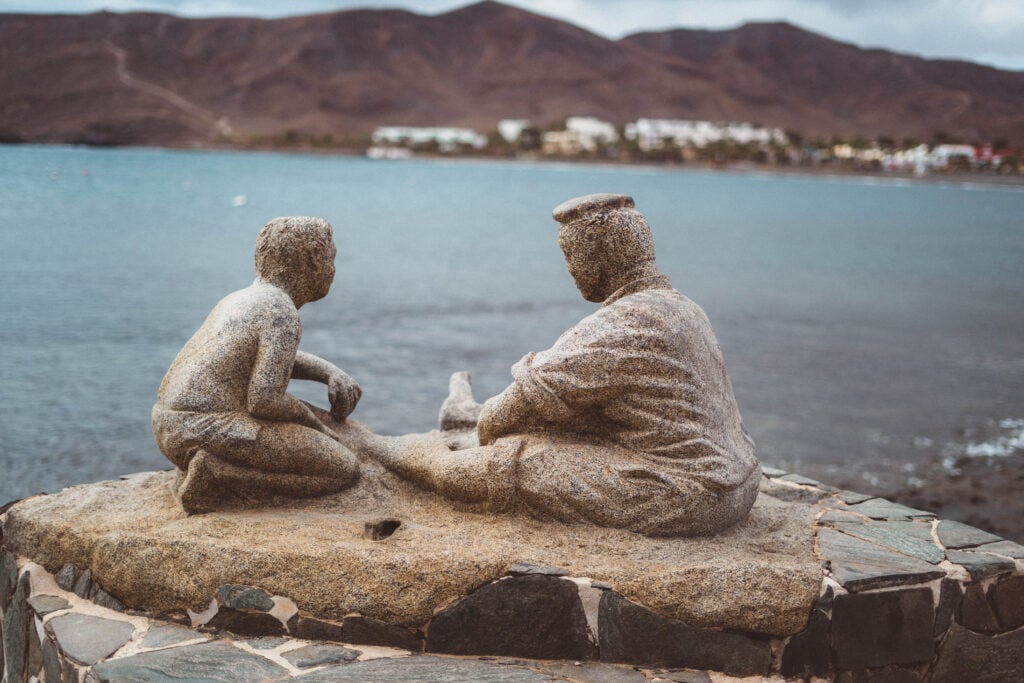
This granite sculpture of a fisherman and a boy sitting next to a basket of fish sits near the waters edge at Las Playitas on the Canary Island of Fuerteventura. There’s very little about this sculpture online, so my only guess is that it’s a simple and beautiful reminder of the island’s fishing heritage and how it continues to pass through the generations.
Monument to the Heroes of 1809
Where: Barcelona, Spain
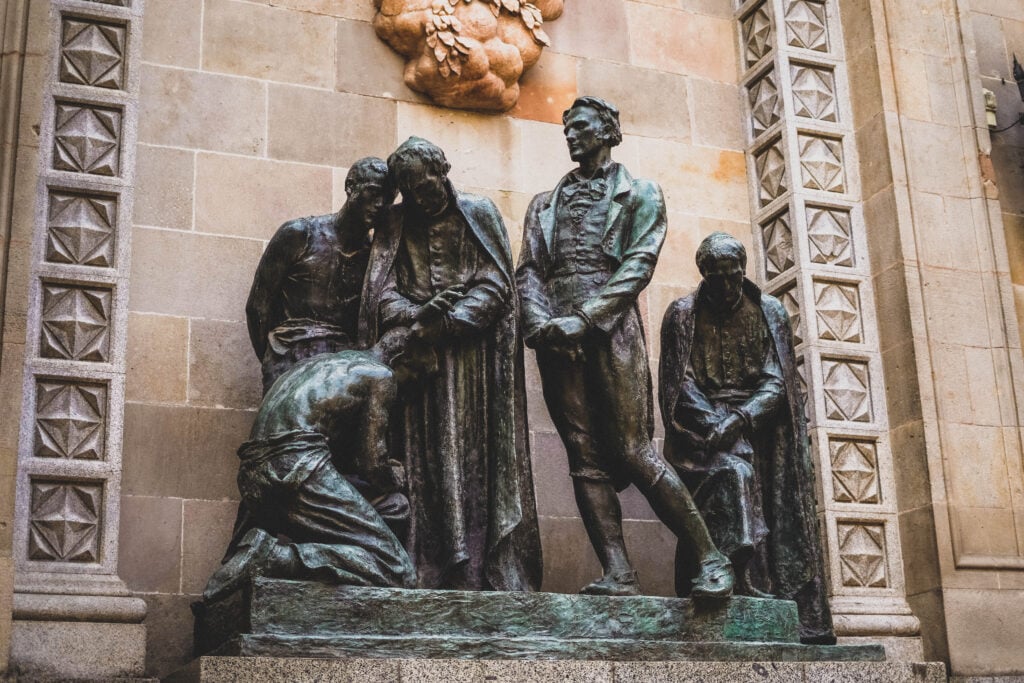
Tucked away somewhere in Barcelona’s Gothic Quarter, and not too far from Barcelona Cathedral. This monument commemorates five martyrs who were executed following an attempted uprising against French troops during the 1808 occupation of Barcelona.
Grey’s Monument
Where: Nottingham, UK
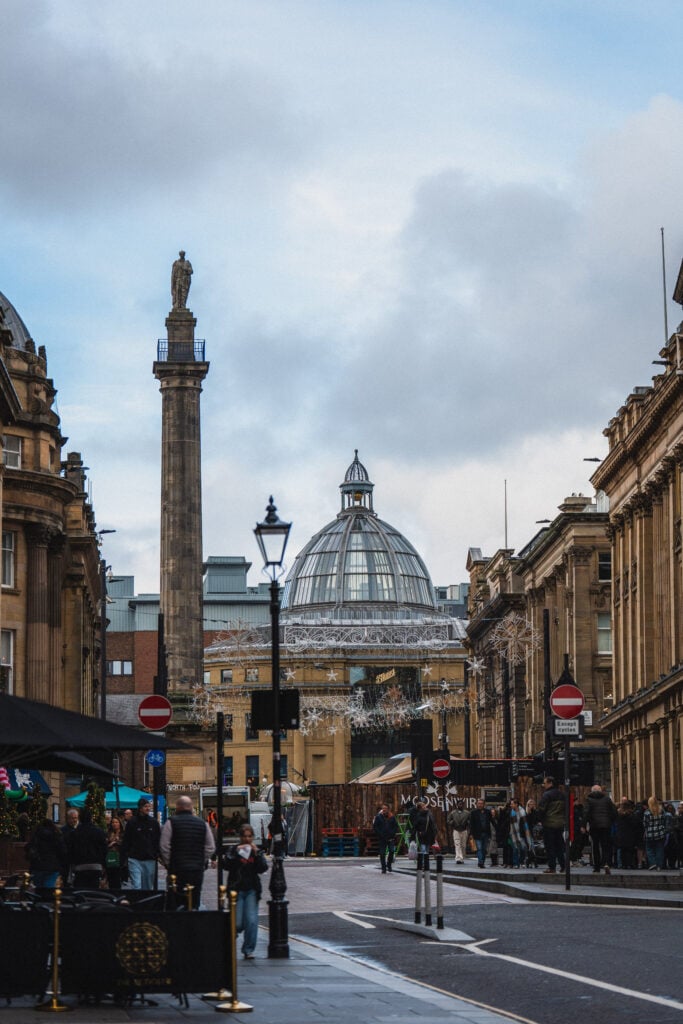
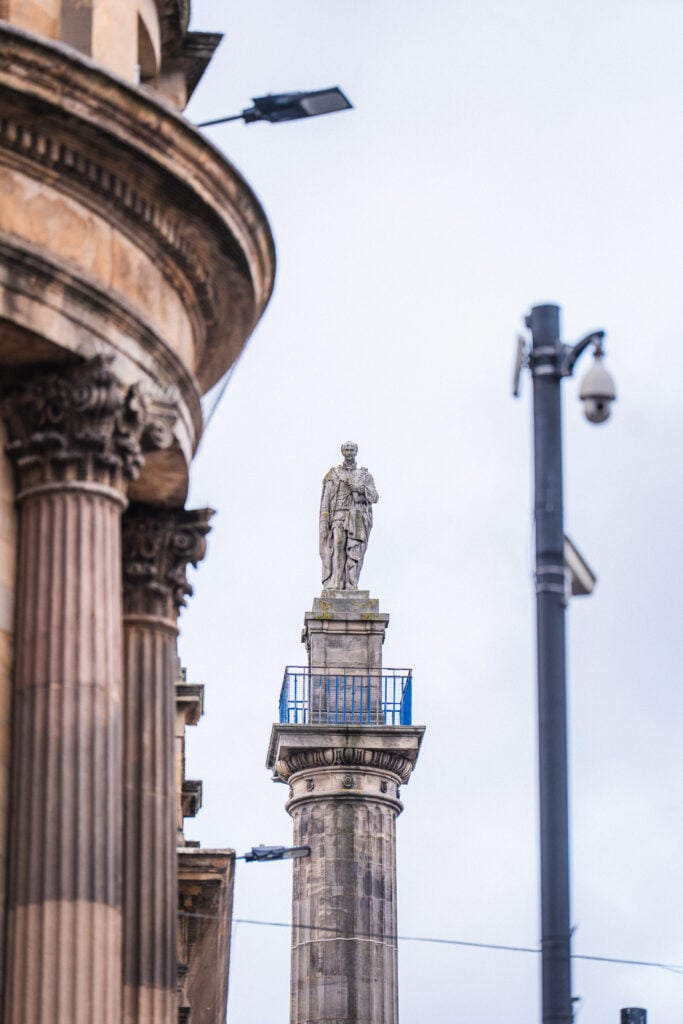
One of the most iconic streets to visit in Newcastle is Grey Street, which is dominated by the imposing monument, Grey’s Monument. This monument was erected to celebrate the 1832 Reform Act introduced by Earl Grey. Officially known as the Representation of the People Act 1832, or the Great Reform Act, this piece of legislation was aimed at reforming the electoral system in England and Wales – a demand for more middle-class men to be able to vote.
While it’s certainly progress made, it should be noted that it wasn’t until the 1918 Representation of the People Act that all men over 21 (and some women over 30) could vote.
Gerardus Mercator
Found in the Belgian town Leuven, this humble bronze statue is dedicated to the Flemish cartographer, Gerardus Mercator. He began his studies at the Catholic University of Leuven in 1530, where he studied the humanities with philosophy. Following time travelling in Antwerp and Mechelen, Mercator then ventured back to Leuven with a newfound love of geography.
Created by local sculptor Raoul Biront, the statue honours Mercator’s time studying and working in Leuven during the 16th century. Positioned in the heart of the city centre, it’s a quiet reminder of Mercator’s legacy, whose work still shapes modern navigation and geography.

Enjoyed reading our guide to unique statues and monuments in Europe? Pin this article now, and read it again later: