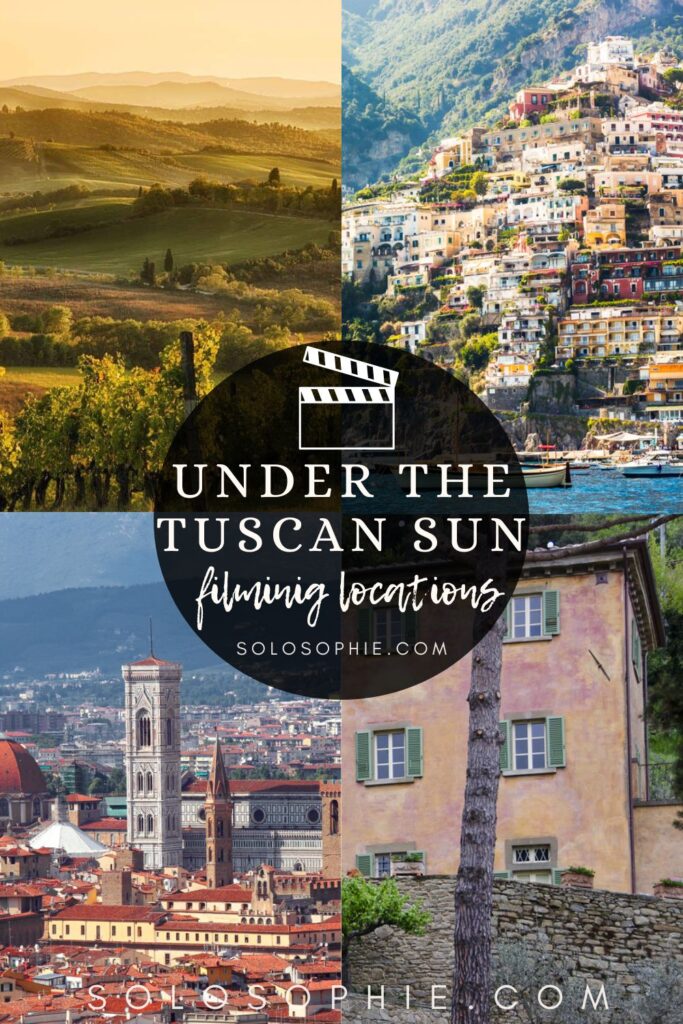
Under the Tuscan Sun Filming Locations in Italy and Beyond
Last Updated on 11th May 2024 by Sophie Nadeau
This post may contain affiliate links. Please check out my privacy policy and disclosure for more information.
If there’s one movie that will make you wish you could pack a bag and move to Italy ASAP, it’s Under the Tuscan Sun. After all, how many movies tell the story of a writer and recent divorcee jetting off on a trip to Tuscany, and spontaneously buying and restoring a beautiful 17th-century villa to live in!
Lead protagonist, Frances Mayes, takes us on a journey through Italy that reads like the perfect itinerary to visiting, especially during the summer months. Fall in love with the rolling hills, sparkling coastlines and historic cities of the enchanting boot-shaped county, and get an insight into the main filming locations as well as where to find them.

Contents
A brief introduction
If you are unfamiliar with this delightful romance, Under the Tuscan Sun is essentially a love letter to Tuscany and an exploration of Italy’s wondrous locations through the eyes of American writer and recent divorcee, Florence Mayes.
The 2003 film is loosely (like, very loosely) based on the 1996 memoir ‘Under the Tuscan Sun: At Home in Italy’ by American author Frances Mayes, which details how after a divorce her and her significant other go through the various challenges of renovating their Tuscan property, an abandoned villa named Bramasole.
If you’re looking to fill you wanderlust cup then this is absolutely the film for you. A golden hue of pinch-me moments and sweeping landscapes that actually exist…this movie will make you laugh, cry and leave you feeling full!
Although this isn’t really a film that can be ruined with spoilers (as it’s pretty much happens how you would expect a movie like this to go), don’t worry we won’t reveal too much. Read on for the filming locations and where to find them, scattered across the Italian landscape:
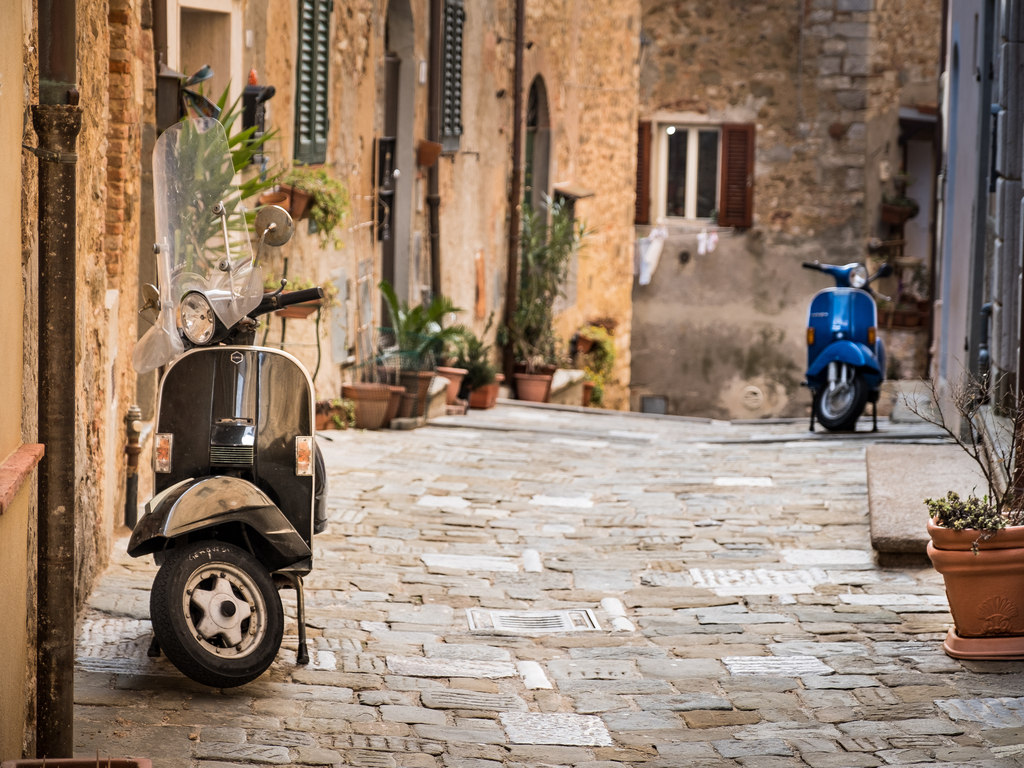
Florence
Florence Cathedral
After her friend Patti falls pregnant, her and her partner give Frances their place on the Italian tour, “Gay and Away” which is a lively group of members from the LGBTQ+ community, and their first stop of the tour is the most iconic building in all of Italy, Florence’s Duomo.
Located in the heart of the city’s historic centre, is Florence’s impressive duomo as well as its bell tower and baptistery. A magnificent example of Italy’s Renaissance, Santa Maria del Fiore Cathedral hosts one of the most incredible cupolas you can admire in the whole country!


Intesa Sanpaolo S.P.A
Not the most exciting of filming locations, but a pivotal point of the movie, this is the bank in which Frances goes to when signing documents and paying for the villa, Bramasole. You can visit the interior of this Italian bank, situated on Via Maurizio Bufalini.
Cortona
The movie quickly switches from Florence to the Tuscan landscape, and the historic Tuscan town where Diane Lane’s character finds herself is the hill top town, Cortona, which is nearby to Arezzo.
Cortona is actually the exact town sited by Mayes, so these filming locations are in fact authentic to the original memoir.

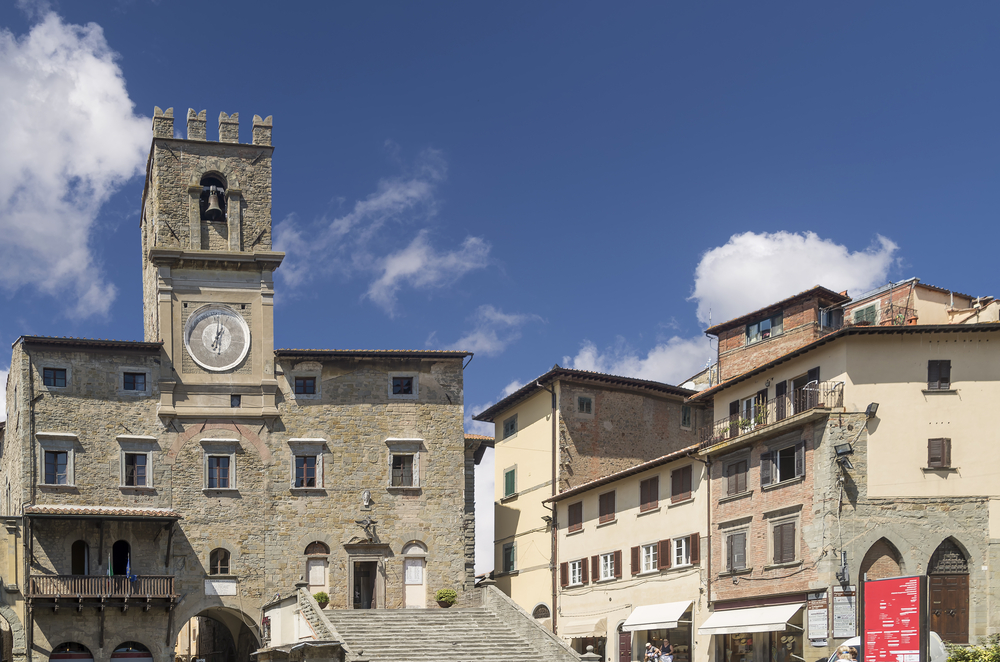
Piazza della Repubblica, Cortona
One of the first glimpses that we get of Cortona is the marketplace located on the Piazza della Repubblica. This is where the American tourists leave the bus to sample Italian delights from the vibrant marketplace. Meanwhile Frances is captivated (understandably) by an eccentric blonde woman, Katherine, who’s nuzzling a duckling against her cheek.
As suggested from what we see in the film, this piazza is the bustling heart of Cortona, brimming with activity it’s a cherished gathering spot and the place to truly experience and get a taste of Italian life in Tuscany!
Piazza Pescheria, Cortona
After following Katherine through the winding streets of Cortona, Frances ends up on the piazza that overlooks the market of Piazza della Repubblica. It’s here that you see the protagonist attempt to write a postcard for a fellow American tourist.
Teatro Signorelli, Cortona
Half way through the film, Frances is joined by one of the Polish construction workers aiding her on the renovations, to the movies. Watching a dubbed version of George of the Jungle (1997), you can see the beautiful interior of the 19th-century, Signorelli Theater.
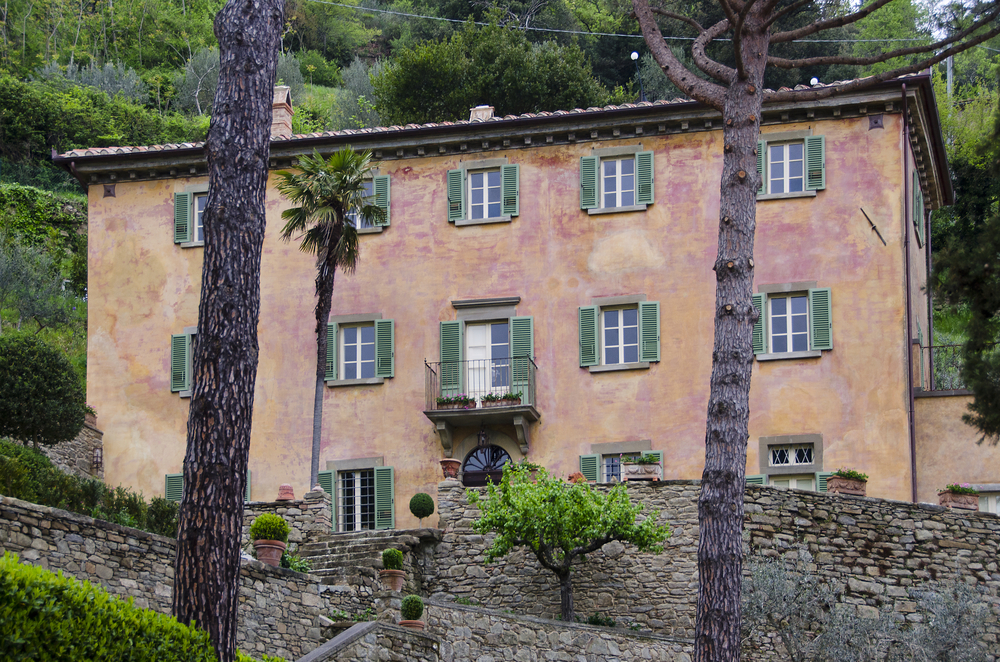
Villa Laura (Bramasole)
Who doesn’t long to live in an pastel hued villa nestled within cypress trees in the Italian countryside? Well, if you get a big pay out from a divorce you could!
While on the tour bus the character Frances catches sight of the run down villa and a sign that says “Bramasole”, which translates from Italian to mean ‘yearn for the sun’… don’t we all!
Anyway, after she spontaneously decides to purchase the villa, throughout the movie we are shown the highs and the lows of renovating the property alongside her charming crew of Polish construction workers. There are also several garden scenes, including the final scenes where Frances hosts a party.
Of course this is fictional and all happens within the duration of a movie, but there’s something really satisfying about watching the struggles and triumphs of a house coming to life. Throughout the movie you see more and more of this gorgeous 17th century villa slowly reveal itself and it’s truly mesmerising!
Today the very same villa, known as Villa Laura, is available for weekly rental throughout the year.
Montepulciano
Piazza Grande, Montepulciano
When Patti (Sandra Oh’s character) turns up to surprise Frances, they attend a flag-throwing ceremony which is situated on the historic square, Piazza Grande.
The art of flag throwing dates back to Medieval and Renaissance times and generally speaking, special occasions in Florence and Tuscany are often marked with vibrant and colourful street parades which feature flag throwers, accompanied by a band of musicians.
The Piazza Grande is the town’s highest point and main meeting place, in fact it is considered to be one of the most beautiful squares in all of Italy! Also, it may be familiar for lovers of the Twilight saga, as it features in the second movie, New Moon.

Positano
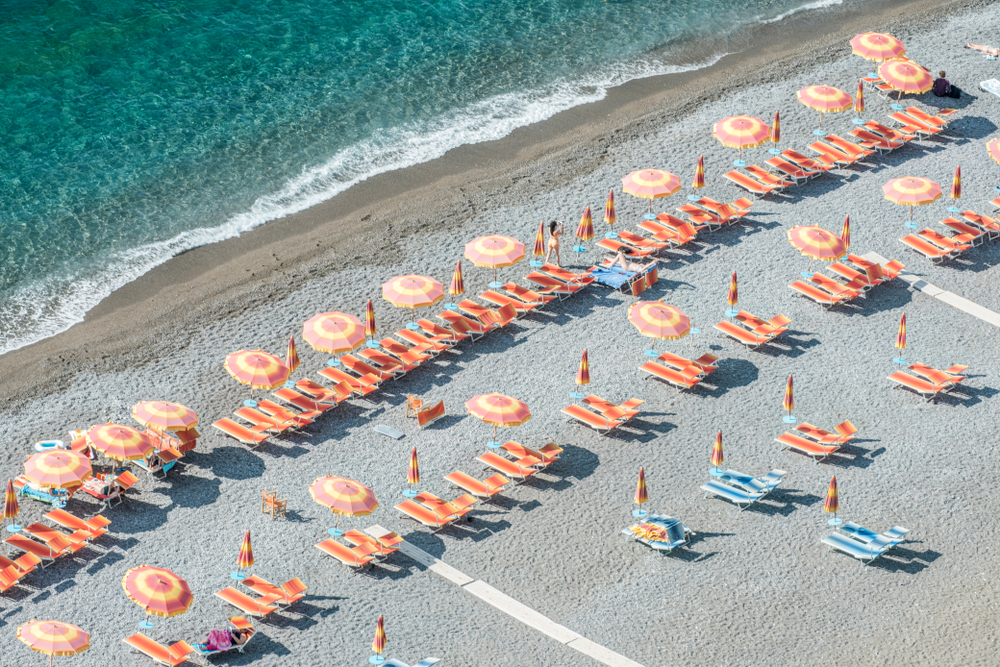
Positano Beach
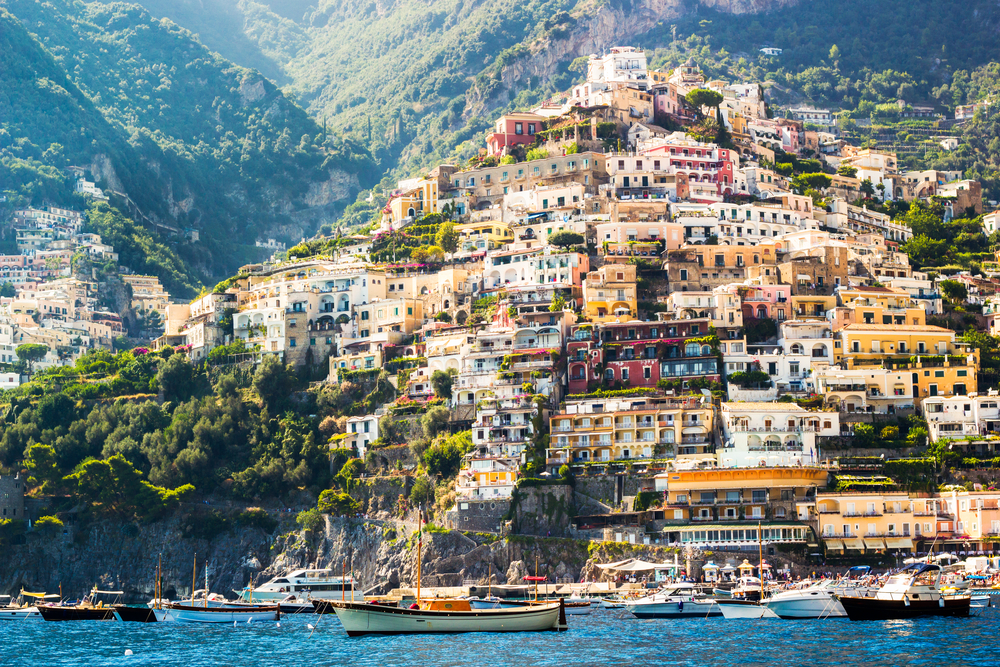
The only beach location to feature in Under the Tuscan Sun is that of Positano. The town itself is the true pearl of the Amalfi Coast, and each year hundreds of thousands of people travel from far and wide for its beauty, and I think it’s fair to say that’s partly thanks to the depictions of this coastal gem in the film!
After driving from Rome to Positano with a handsome stranger (which is actually over 3 hours driving…but they make it seem much less) the main character is taken to Positano Beach, where we are treated to magical views of the pastel hued houses climbing the craggy hillside.
In fact, Positano features quite a few times in the film as a picturesque coastal addition to Under the Tuscan Sun’s tour of Italy.
Hotel California Positano
Frances spends the night with a handsome Italian man in the beautiful Amalfi town of Positano. The hotel where they stay is Hotel California, also known as Albergo California, and this 3-star hotel offers rooms with balconies that boast of dreamy views of Positano town and the sea beyond!
Fancy staying in the same hotel as the movie? Check prices and availability here.
Rome
Piazza Venezia, Rome
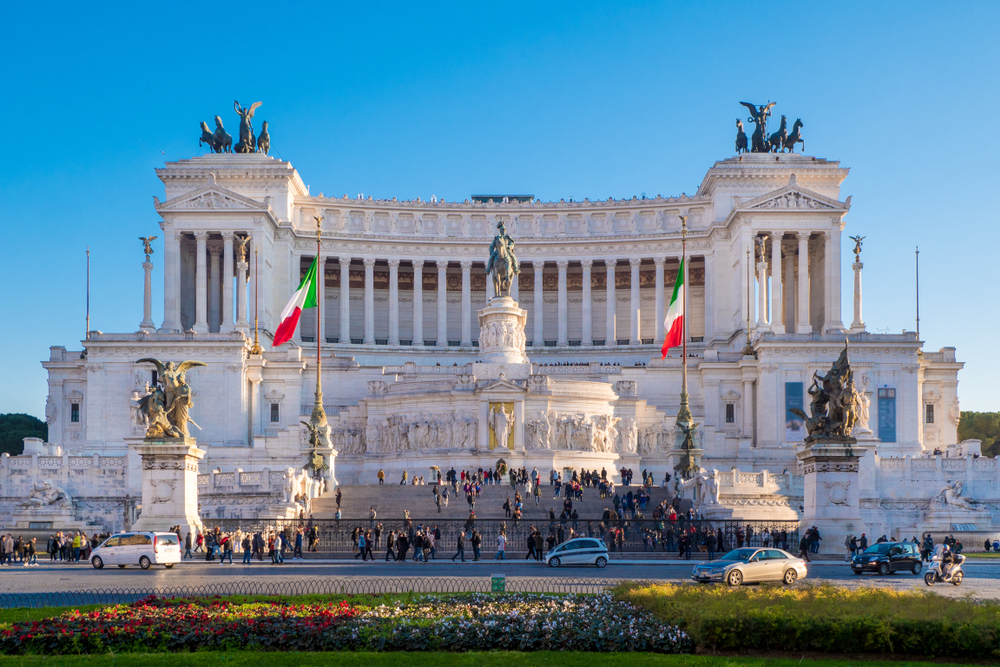
The first shot of Rome we see is when the character Frances decides to take a break from renovations and her bus stops directly in front of the iconic Victor Emmanuel II National Monument, Rome’s loudest and proudest monument that was built to celebrate the unity of Italy, 1885.
Piazza di San Simone, Rome
One of the more streeful scenes of the movie is when the protagonist is hounded by three men on the backstreets of the city, this is where Frances runs and comes across the handsome stranger. The Piazza di San Simone is seen in the backdrop of this scene, with the stone carved fountain behind.
Sanctuary of the Madonna di San Biagio
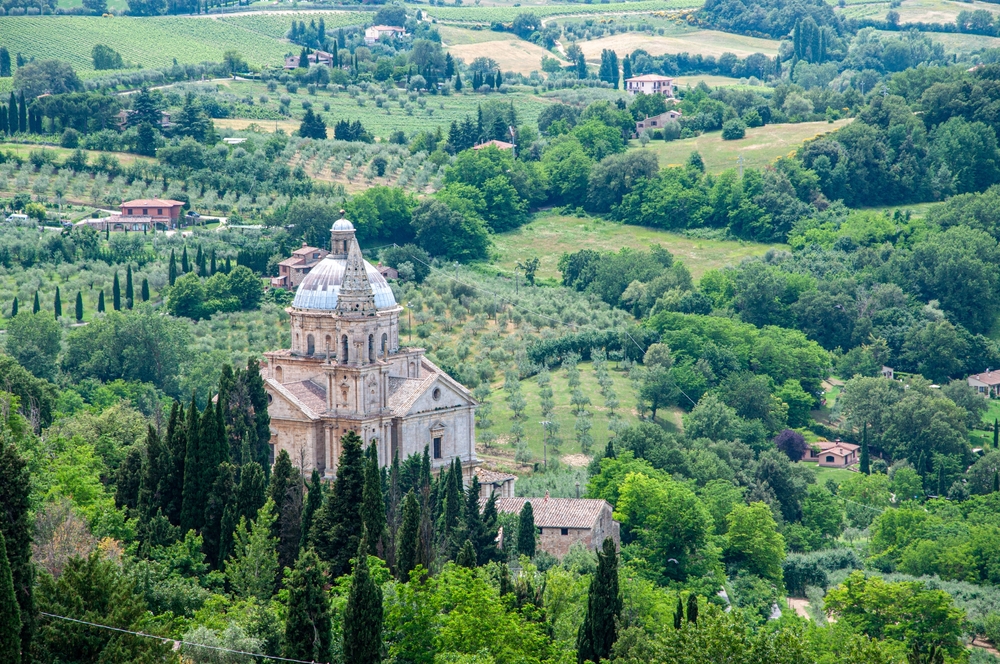
Closer to the final scenes of the movie, where a wedding takes place (I won’t name whose) we are taken to the magnificent San Biagio church, which is situated just outside of Montepulciano.
Built some time between 1518 and 1540 this beautiful church is an example of Greek cross plan, intricate and elaborate in design it makes for a truly romantic setting for a wedding!
Enjoyed reading about the best Under the Tuscan Sun filming locations? Pin this article now, read it again later: