Best Things to Do in Highgate: A Perfect One Day Itinerary
Last Updated on 20th October 2025 by Charlotte Nadeau
This post may contain affiliate links. Please check out my privacy policy and disclosure for more information.
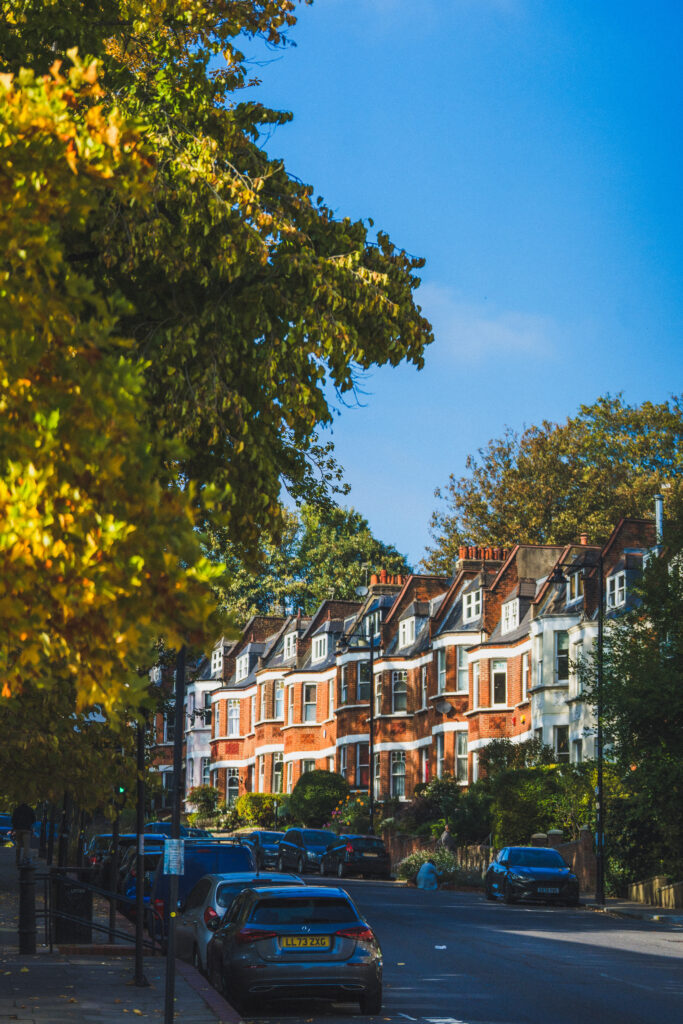
Perched on one of the city’s highest points, this charming North London village feels a world away from the hustle and bustle of the Big Smoke. With its leafy lanes, historic cemetery, and cosy pubs, it’s the perfect autumnal escape. Filled with nature, history, and local charm: here’s your ultimate guide on the best things to do in Highgate and how to spend one perfect day in this leafy London village!
Contents
What is Highgate known for?
Nestled in the London Boroughs of Camden, Highgate is a leafy suburb best known for its historic cemetery, abundance of independent cafés and boutiques, and in general its quintessential beauty and charm.
If you’re visiting the Big Smoke and want to escape the crowded chaos, but without venturing too far, then Highgate makes for an excellent weekend ‘getaway’ from London. It’s also the perfect autumnal escape if you wish to see fall colours and visit the final resting place of many notable names.
Best things to do in Highgate
Café Forum
No good exploration of Greater London (or the UK for that matter) starts without a tasty café brunch. Just a stone’s throw away from the gateway tube station, Archway, you’ll find Café Forum. Though this spot isn’t technically within Highgate, I highly recommend visiting for a delicious breakfast and morning coffee!

Whittington Stone
Afterwards, you’ll want to take a peek at one of Highgate’s most charming landmarks, the Whittington Stone. This historic stone cat monument dates back to 1821 and was inspired by the legendary figure Dick Whittington – a character from English folklore who famously set off to London to seek his fortune.
The small stone cat can be found perched beside a quaint pub of the same name, a delightful little detail of Highgate that adds to the area’s storybook charm!
Highgate Hill
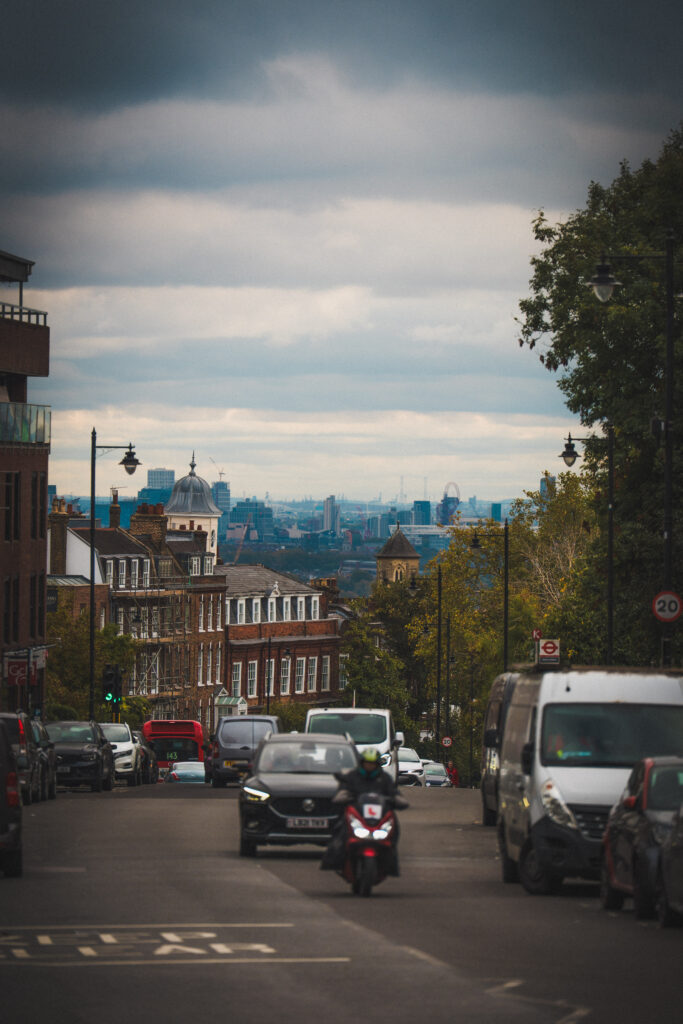
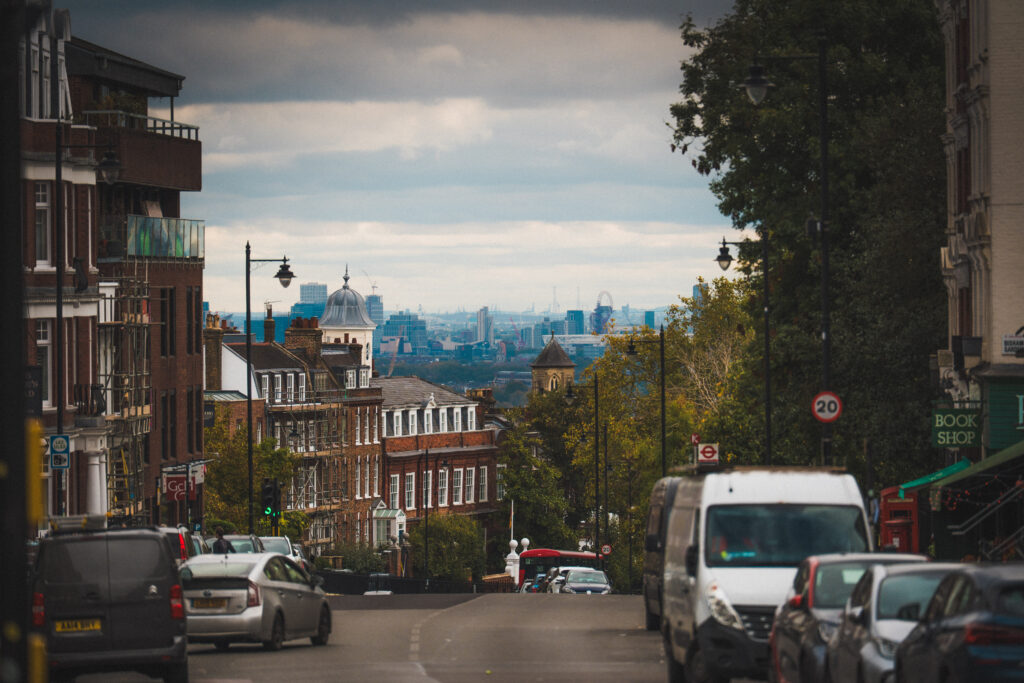
From the Whittington Stone, you’ll head up Highgate Hill, which is one of the area’s steepest climbs, though you’ll come to the steepest hill in London a little later in this itinerary. But, thanks to the incline, you’ll be greeted with sweeping leafy views. And, if you look closely, you can see the Emirates Stadium, which is home to Arsenal FC!
Waterlow Park
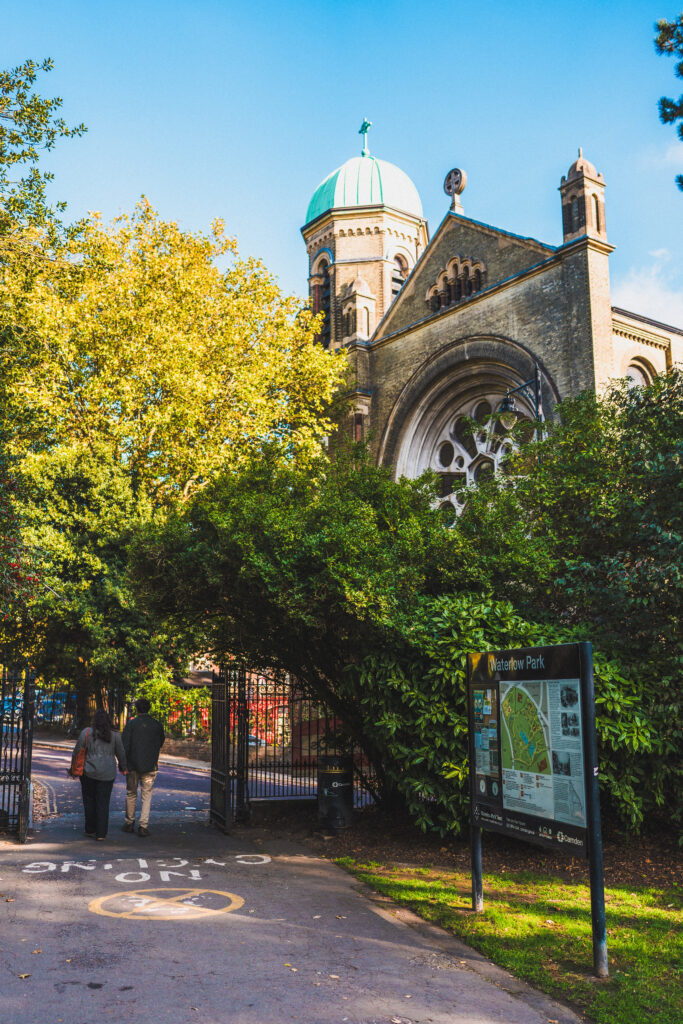
Waterlow Park was once the private estate of British philanthropist and Liberal Party politician, Sir Sydney Waterlow. In 1889, Waterlow generously gifted the land to the city, calling it “a garden for the gardenless”, creating a public space where Londoners could relax and soak up the beauty of local nature.
After a major restoration in 2005, the park has since become known as one of North London’s most peaceful green spaces, complete with ponds, landscaped gardens, and beautiful views of the city’s skyline.
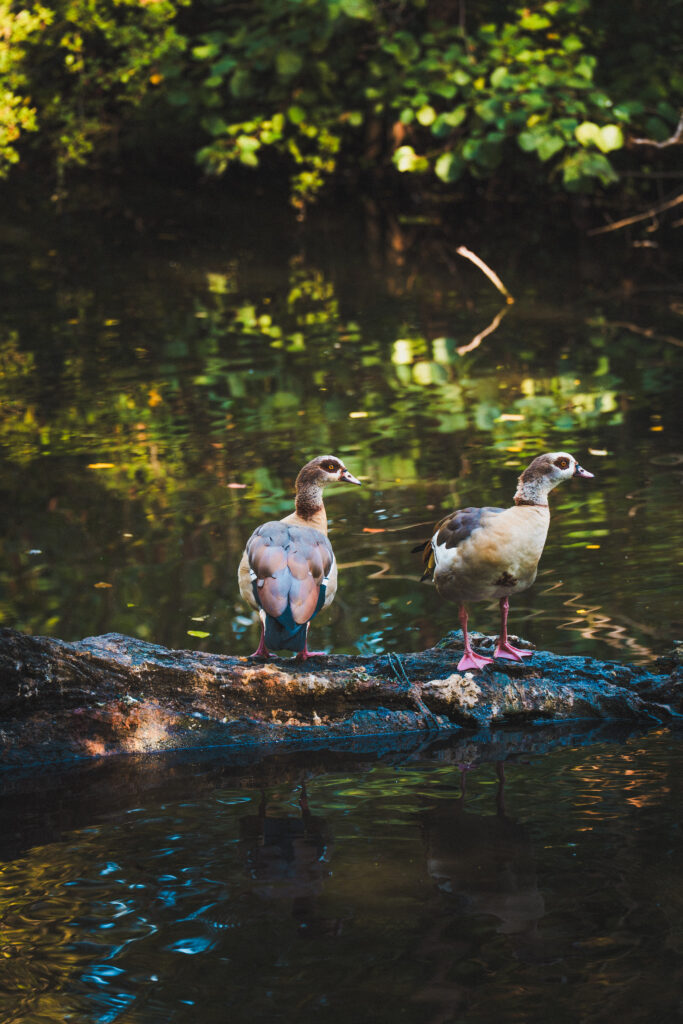
The park is home to three ponds, conveniently named: the upper pond, the middle pond, and the lower pond, all of which are fed by natural springs. As such, you can expect to see lots of birds like coots, moorhens, mallards, and other waterfowl.
Undoubtedly, the best time to visit Waterlow Park has to be come springtime when all the local wildlife is brimming with new life, or during the fall when the autumnal colours are burning brightly with orange, reds, and yellow.
Highgate Cemetery
It might seem unusual to call Highgate Cemetery the village’s most must-see attraction. Perhaps even more surprising is that the sentiment “there is no death without life” rings especially true in this natural haven of moss-covered gravestones and tombs.
The cemetery first opened in 1839 because, at the start of the 19th century, a crisis began to emerge in London: there weren’t enough places to bury people, and options were particularly limited for those who were not of the Christian faith. To address this, private companies stepped in and began creating burial grounds on the outskirts of cities. Highgate Cemetery is one of “The Magnificent Seven” – an informal term applied to seven large private cemeteries in London built around this crisis.
Indeed, Paris faced a similar issue of overcrowding in their city graveyards. In fact, Highgate Cemetery was directly inspired by Paris’s renowned Pere Lachaise Cemetery!
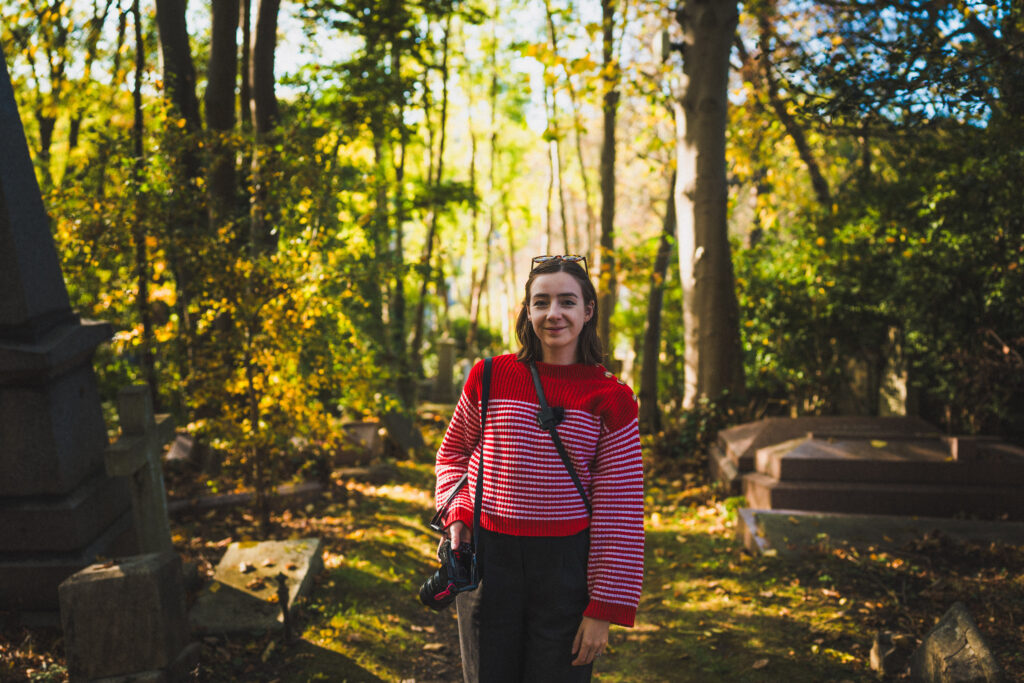
Another unusual fact is that this garden cemetery was designed for visitors to explore, enjoy the serene grounds, and take in its beauty, even while serving as a burial place for the departed.
Highgate Cemetery is the final resting place of several notable individuals, and at the time, it was common for cemeteries to be built as tourist attractions. Actual guides were sold on to help visitors discover different graves and carvings, and newspapers even advertised visits!
Today, the same sentiment remains, as a visit to Highgate Cemetery costs £10, granting access to the eastern portion as well as the original western portion. The eastern section is better maintained, still used for burials, and is most famously the resting place of Karl Marx, which some might say is a little ironic given that you now have to pay to visit his grave.
Because of a severe lack of space, it’s actually really hard to get a burial plot here. They’re not necessarily for sale, per se, to just anyone; in fact, certain criteria must be met, such as being over 80, terminally ill, or already having a family plot. A new plot starts at over £32,000, reflecting the scarcity of space.
Highgate Cemetery is also associated with myths and legends. It is reputed to be haunted, and even the ticket seller admitted that if she believed in ghosts, she would believe this cemetery is one of them. The most notable being the Highgate Vampire.
In the 1970s, the cemetery captured the public’s imagination with reports of supposed supernatural activity and sighting of a fanged being. The legend of the Highgate Vampire haunting the grounds became a media sensation at the time, sparking curiosity and intrigue across London and beyond.
Aside from the vampire, other visitors you are almost certain to encounter are the local foxes, which thrive in this particular environment!


Swain’s Lane
Just a short stroll from Waterlow Park lies Swain’s Lane, a narrow, winding road with roots that can be traced back to 1492. In the 15th century the road was named “Swine Lane” and it takes its name from the local pig farmers who once drove their herds along this route. However, over time, the name of the road was changed likely to make it sound a little more refined.
Today, Swian’s Lane runs beside Highgate Cemetery and is famous for being one of the steepest roads in London. It’s for that reason the road is a favourite among local cyclists looking for a challenge, though most visitors are content to just admire the views (and catch their breath) on the way up.
Holly Village
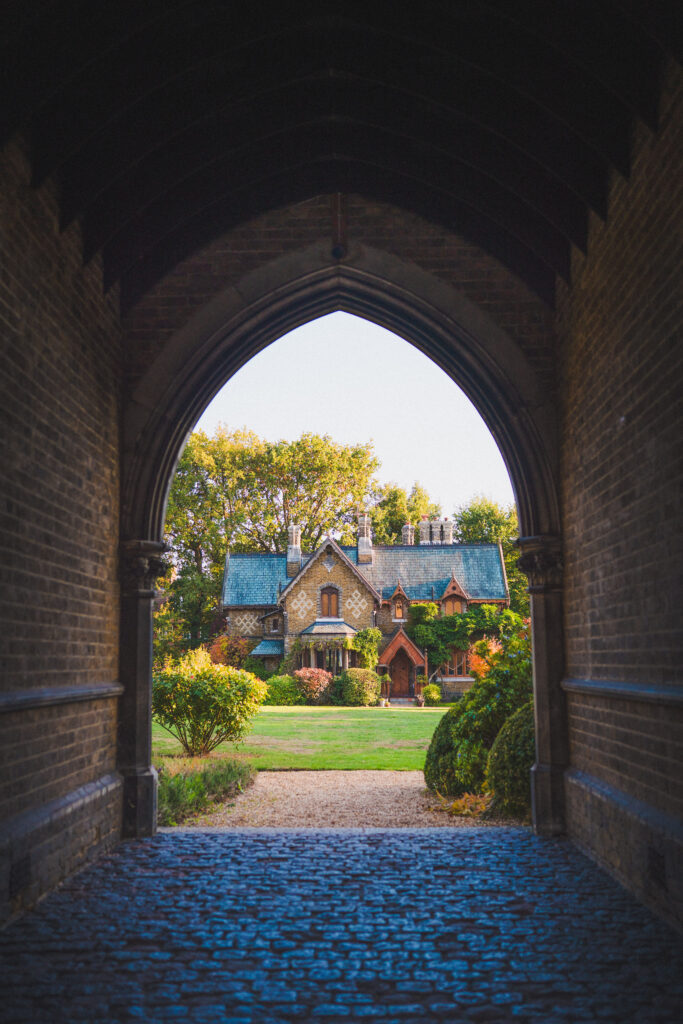
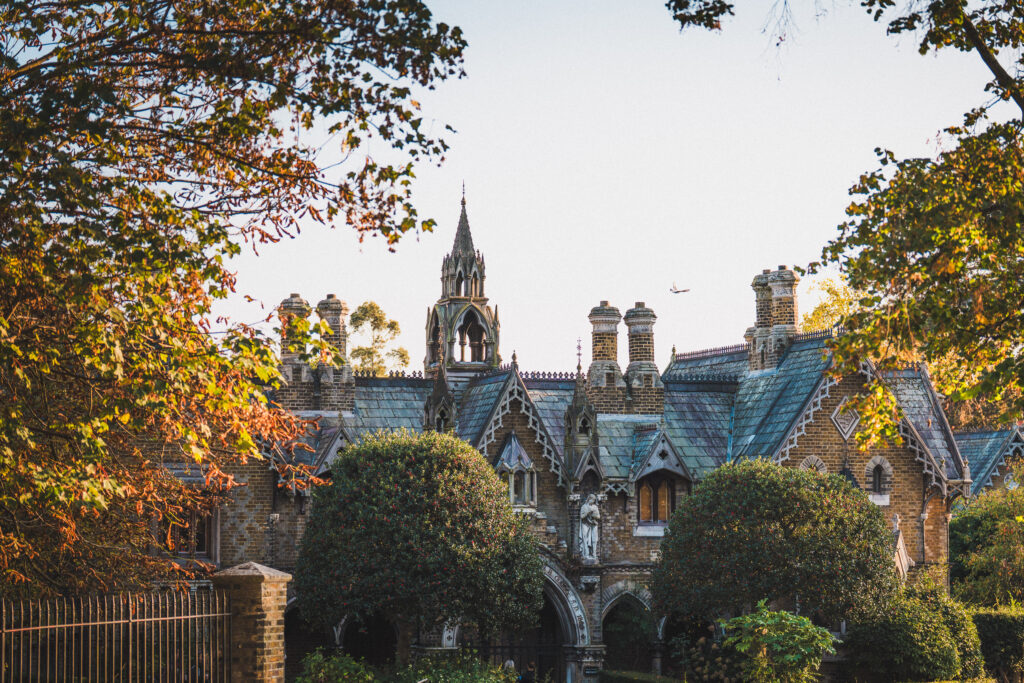
This “village within a village” is actually a privately owned, gated community of ornate Victorian Gothic cottages. This self-contained community was built in 1865 for the Baroness Angela Burdett-Coutts as a model housing development, this cluster of eight houses still exists as a unique feature of Highgate that you can admire from afar.
Parliament Hill
Parliament Hill is technically within the boundaries of Hampstead Heath, but it’s also technically part of Highgate too. Raised 98 metres above sea level, Parliament Hill is one of London’s highest natural points. As such, this area of open parkland offers sweeping vistas of the city skyline, and gives just the slightest idea of how vast London is when seen from above.

Highgate High Street
Highgate High Street is the main thoroughfare through the district. And, along the street, you’ll find plenty of independent boutique shops, bakeries, and cafés. Some of the best places to visit include:
- Highgate Bookshop – “a haven for book lovers”, this cosy, peaceful bookshop is packed with titles of all genres.
- Mary’s Living and Giving Charity Shop – this well-regarded charity shop is filled with second-hand treasures donated by locals (this is a very affluent area of London after all).
- Sourdough Sophia – the name gives it away, you can expect to find baked goods and sourdough treats at this fairly recently opened bakery.
- Arts And Vintage – found on Archway Road, this gift shop is filled with all the goodies that make for perfect gift giving.
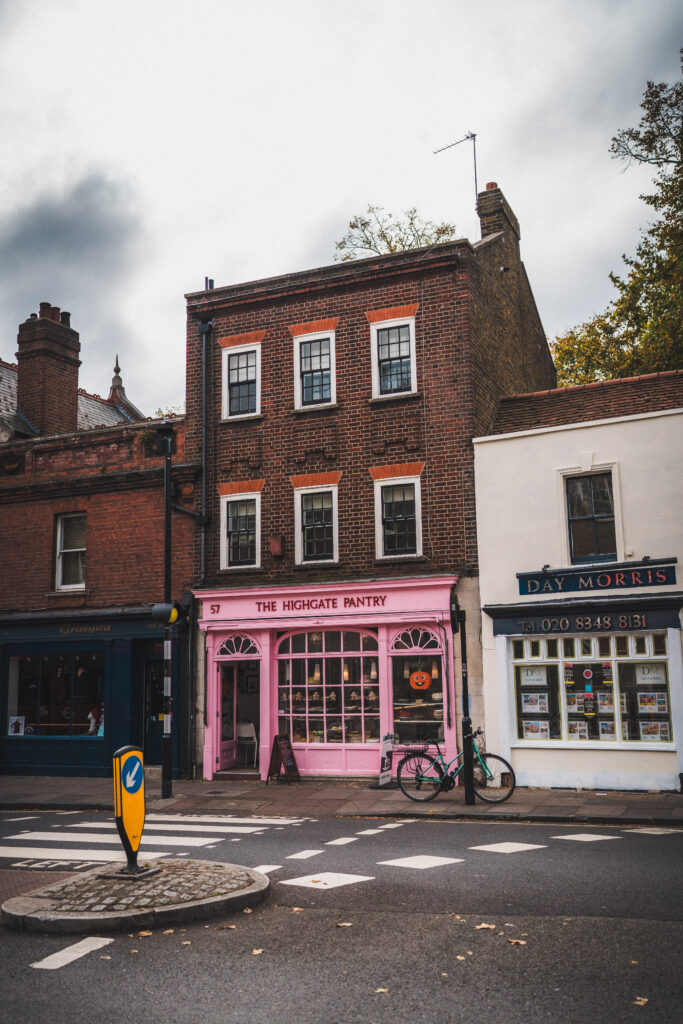
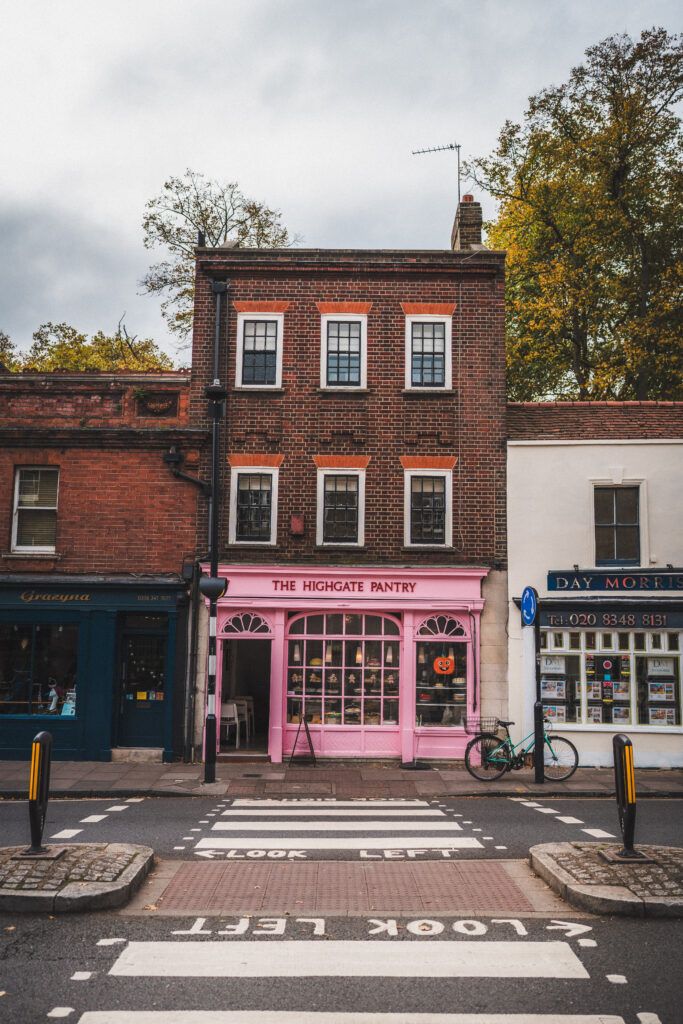
- The Highgate Pantry – a standout pink storefront, this café and bakery has some pretty varying reviews… but the cakes looked nice from the window!
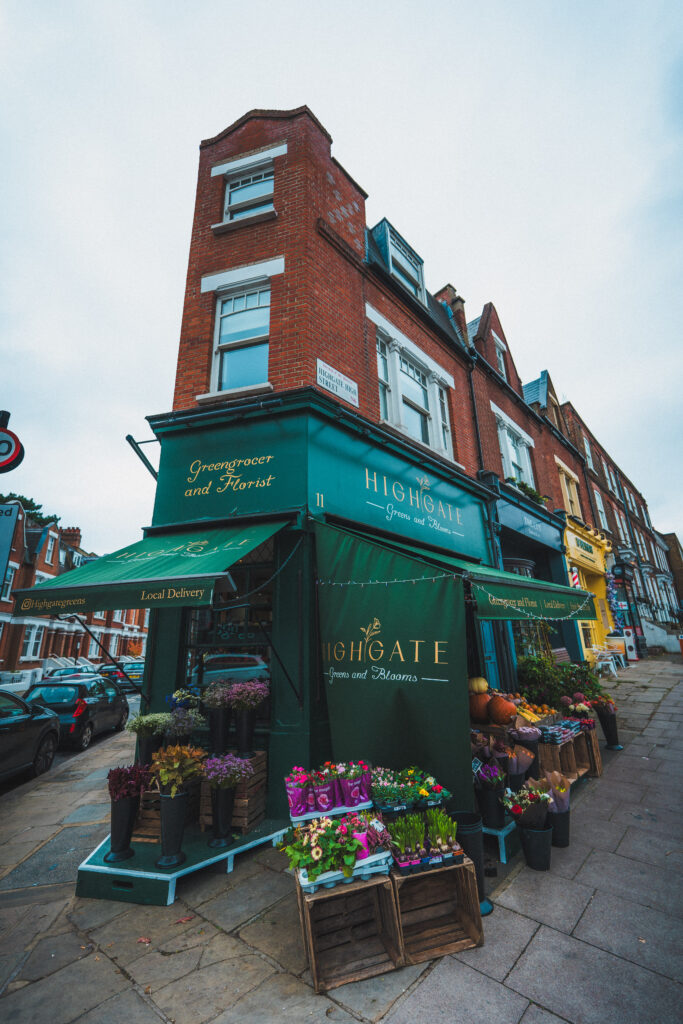
- Highgate Greens and Blooms – this is the spot to go for your freshly cut flowers and fruit & veg!
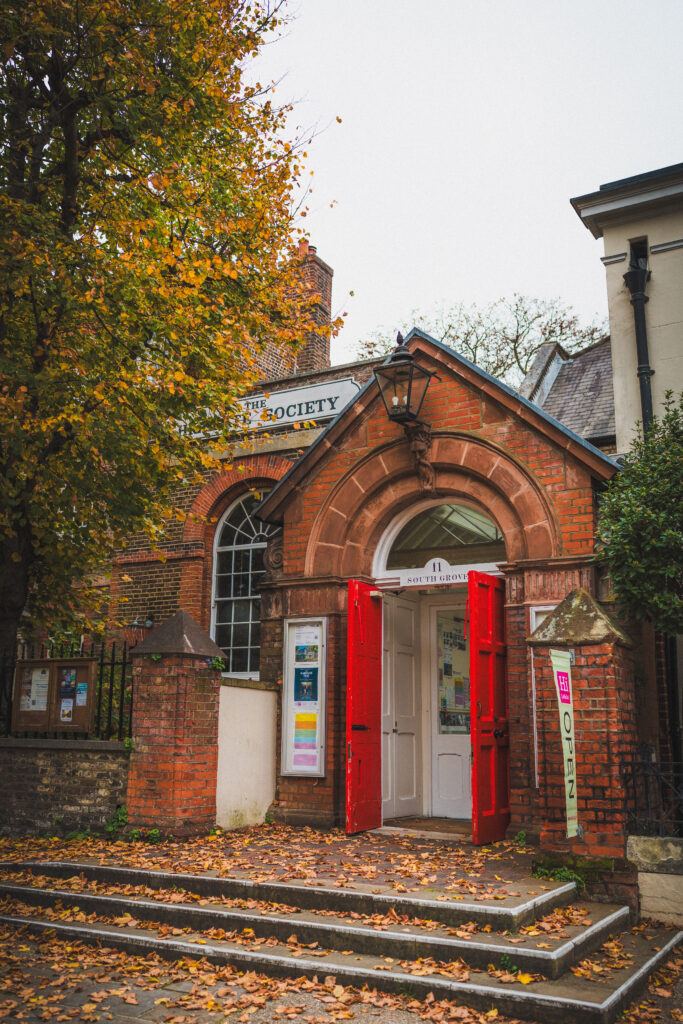
The Highgate Literary and Scientific Foundation
This institution was originally established as both a library and a membership community, designed to be accessible and help people understand scientific developments. It actually predates the widespread growth of libraries in the UK, making it one of the oldest community libraries in England!
The Flask Pub
Like many leafy London suburbs that were once villages in their own right, Highgate offers plenty of open spaces where you can relax and enjoy the greenery. However, if the weather happens to be rainy during your visit, there are also several historic cosy pubs in the area, one of which is named the Flask Pub.
The history of Flask Pub dates all the way back to 1663, though most of the building you see today was likely built during the 18th century. The pub takes its name from the fact that in the past the pub sold flasks so that people could collect water from the nearby springs around Highgate. However, the most interesting aspect of this pub is that it is reputed to be the most haunted pub in London.
The most famous of the pub’s spirits has to be that of the Spanish barmaid who came to London and got a job in Flask Pub. Legend goes that the barmaid fell hopelessly in love with the publican who never returned her affection. Heartbroken, some say she hanged herself over this unrequited love. It’s said that, her restless spirit still haunts the pub today, appearing in quiet corners or moving glassware…

St Michael’s Church
St Michael’s Church is a beautiful example of Gothic Revival architecture. It stands 136 meters above sea level, making it the highest elevated church in all of London. This quaint Anglican parish church was consecrated and opened for worship on the 8th November 1832.
On their website, St Michael’s advertises that they host lunchtime music recitals where visitors can enjoy 30 minutes of free music from 1:30 pm, performed mostly by students or alumni of local music colleges. Though I should add, when we visited it seemed to be closed despite saying open online, so bear this in mind!
Kenwood House
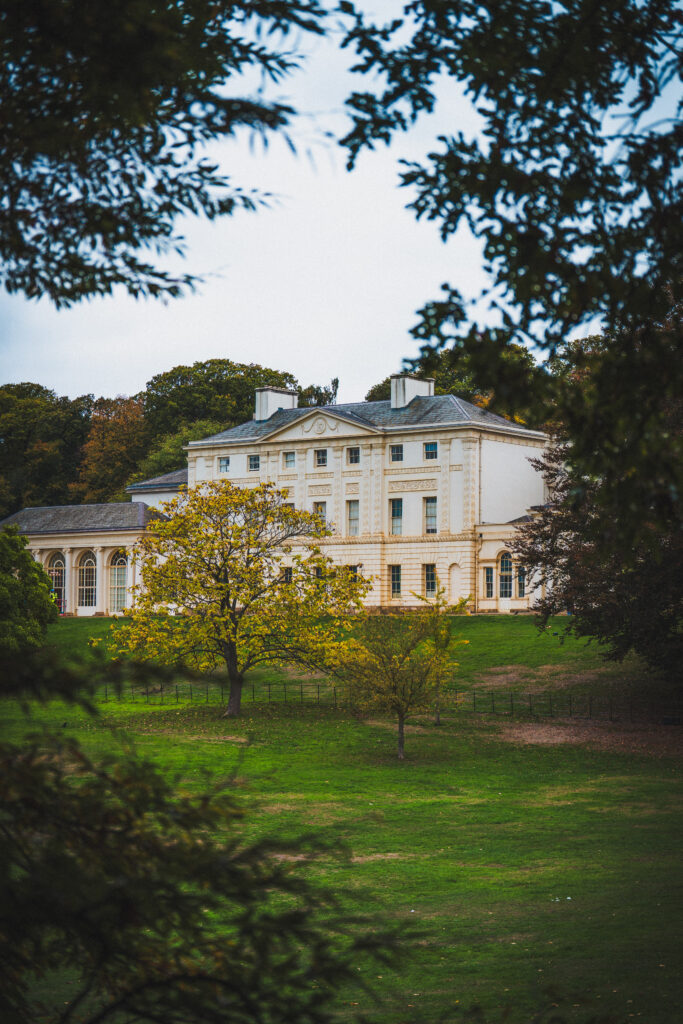
If you love historic houses, then one of the finest in England can be found right here in Highgate in the form of Kenwood House.
This historic site sits within an imposing estate that is still free to visit today. Most of the house you see now dates back to the 17th century, but it was largely remodelled in the 18th century by the Scottish architect, Robert Adam.
The work was commissioned by William Murray, the first of Mansfield, and the house remained the stately home of the Murrays of Mansfield well into the 20th century. Today, it is owned and managed by English Heritage, and the public can visit inside for free, although donations are always appreciated.
Inside, you’ll also find that there are a number of treasures, including a library designed by Robert Adam, complete with a decorative frieze and ceiling paintings by Antonio Zuki.
If you’re looking for refreshments or something to eat, just outside of the house you’ll find a charming café which serves up a wide selection of snacks and hot and cold drinks.
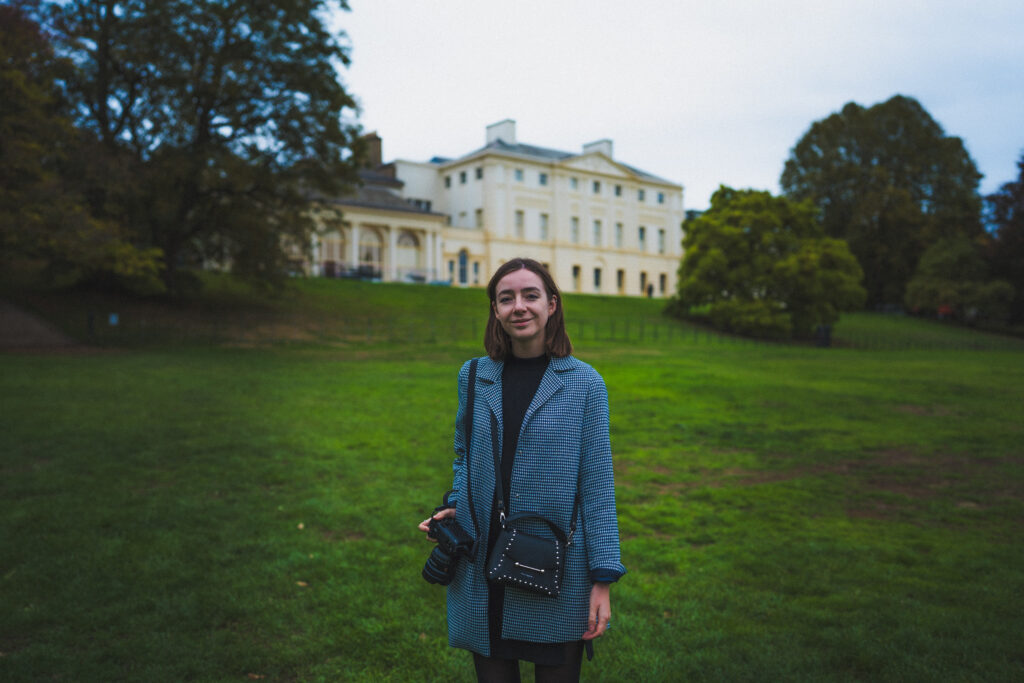
The estate is particularly lovely to wander around, and when you look back up at the house, you may well recognise it as it’s been chosen as the backdrop for many films, most notably, Notting Hill, but also period dramas such as Sense and Sensibility and Mansfield Park.
Enjoyed reading our travel guide to Highgate? Pin this article now, and read it again later: