

The Eagle, Cambridge: A Historic Institution Steeped in History
Last Updated on 3rd February 2025 by Sophie Nadeau
This post may contain affiliate links. Please check out my privacy policy for more information.
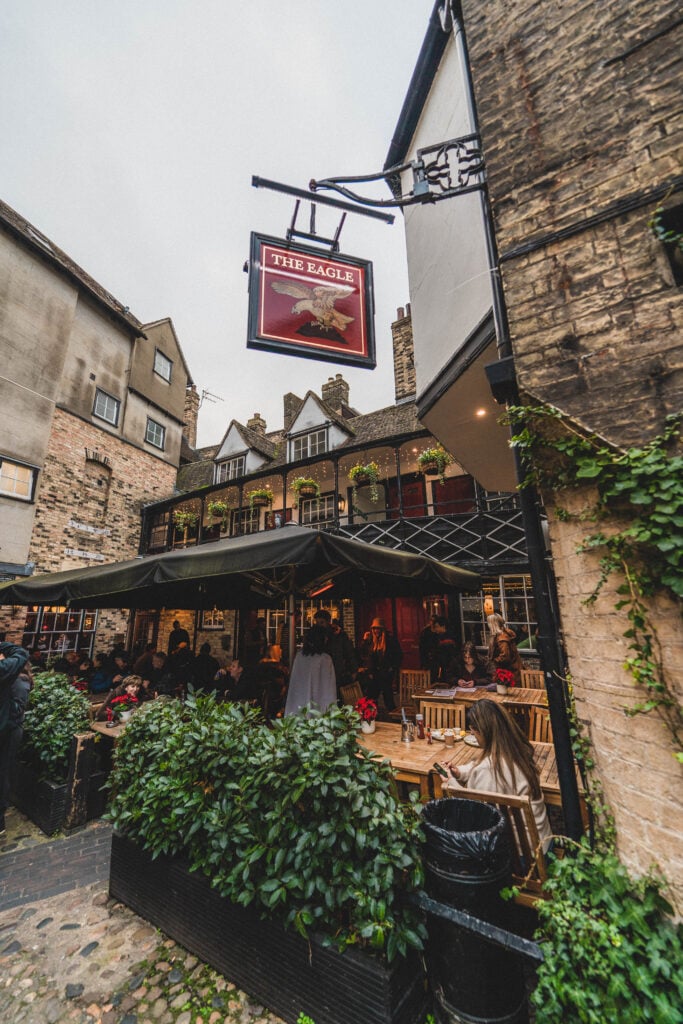
The Eagle is one of Cambridge’s finest historic institutions, dating back to the 16th and 17th centuries. It was both a regular stomping ground for the RAF soldiers of World War II and the very spot where “the secret of life” was announced, forever changing our scientific understanding of the world. Here’s your brief guide on all things to know about The Eagle, as well as how to visit!
A history
The Eagle first opened its doors in 1667, starting as a coaching inn, it catered to the weary travellers of London and beyond. The inn was first known as “The Eagle and Child”. With over 300 years of history, it is the second oldest public house in Cambrige, after the Pickerel Inn.
By 1845 the railway came to Cambridge and the inn’s popularity declined. Transforming into a tavern instead, The Eagle saw a new wave of clientele in the form of students, researchers, and faculty members from the colleges of the prestigious Cambridge University.
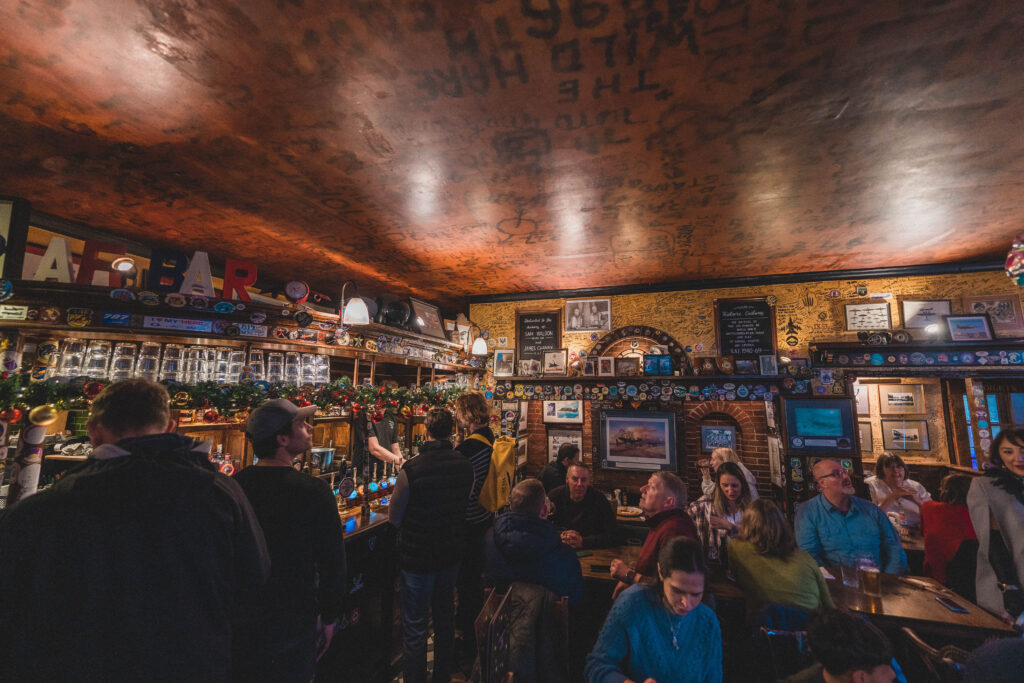
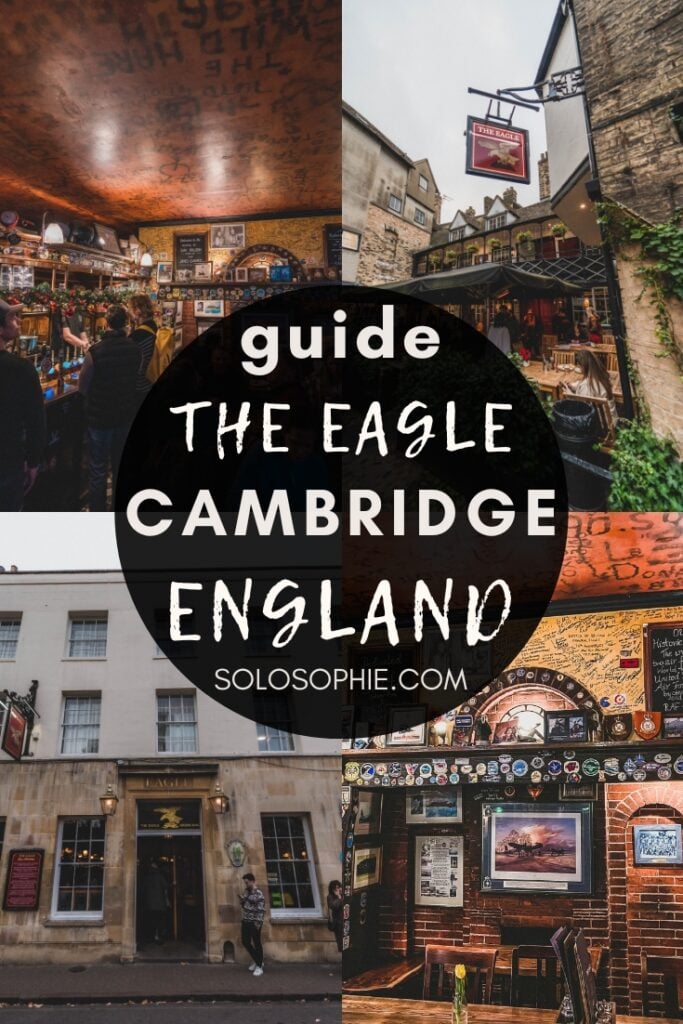
During the Second World War, The Eagle became a popular spot for RAF soldiers to drink between airstrikes. One night, RAF Flight Sergeant P. E. Turner climbed up on the table and burnt his squadron number on the ceiling.
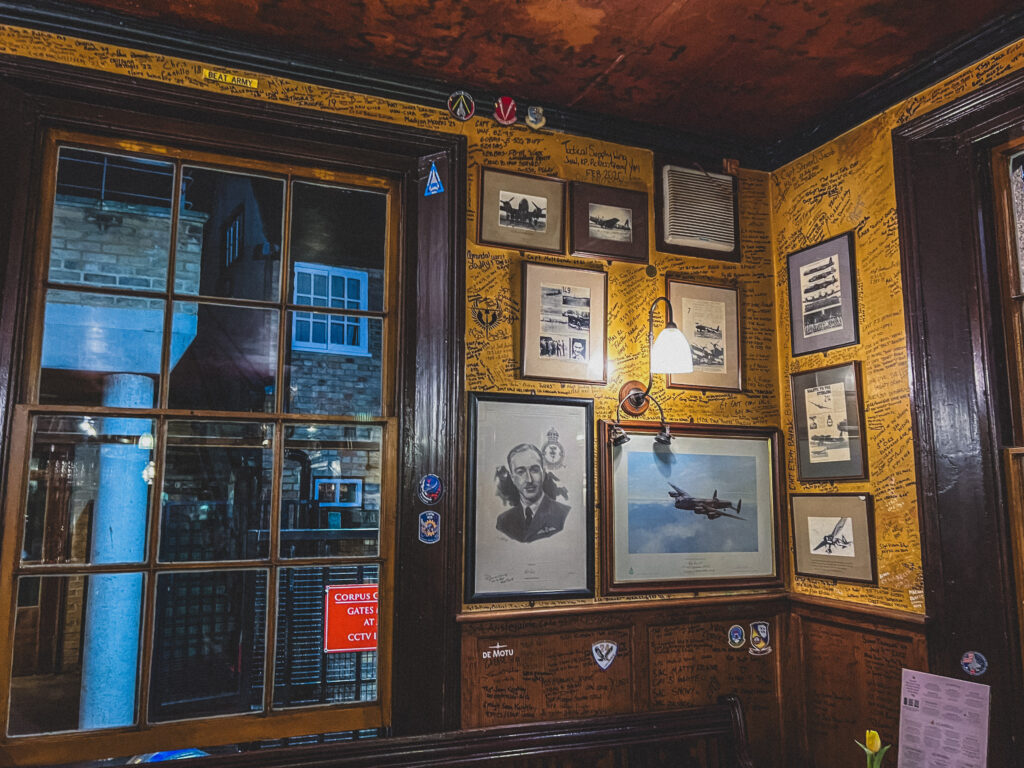
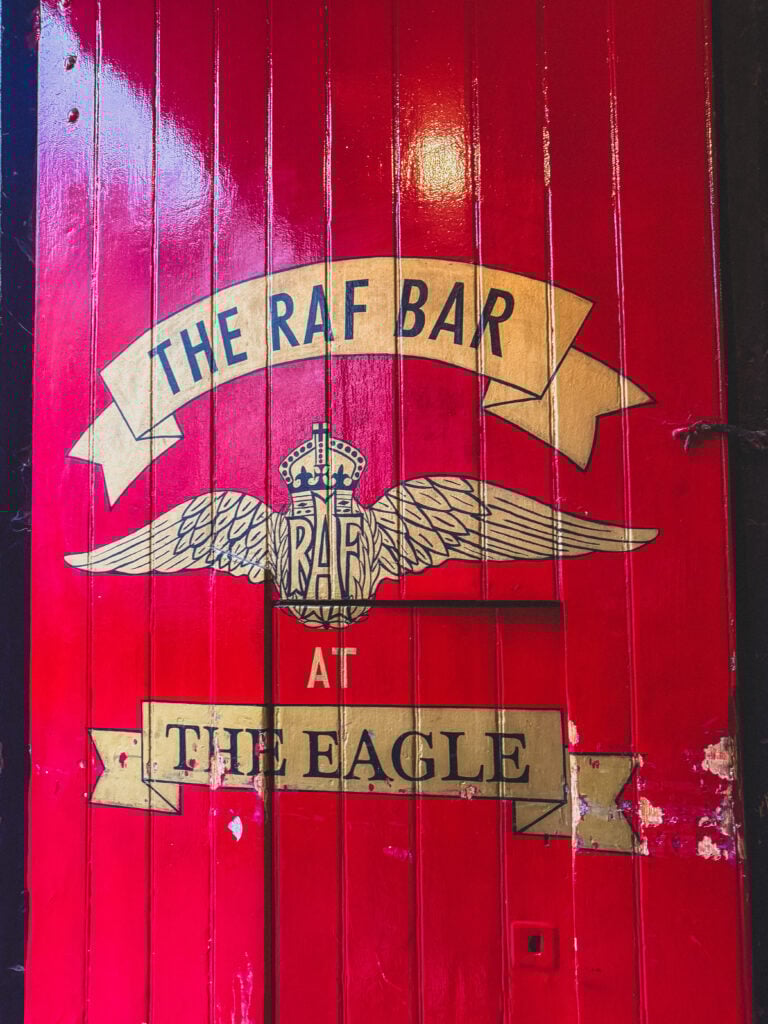
Following the trend, the Allied airmen who socialised and drank in the pub thereafter would use wax candles, petrol lighters and lipstick to write their names and squadron numbers and various other doodles. Ever since, the pub has been nicknamed the “RAF Bar”.
Some years later, in 1953, two of the pub’s most notable patrons (after their announcement) would walk in, sharing a discovery that would change life as we know it. Francis Crick and James Watson were two scientists from the nearby Cavendish Laboratory. On the 28th of February 1953, Crick interrupted the patron’s and announced “we have discovered the secret of life.”

After such a statement, of course, everyone raised their pint glasses! After all, Crick and Watson had discovered the double-helix structure of DNA. This scientific achievement was one of the most groundbreaking moments in history, and certainly one of the greatest scientific discoveries of the 20th century.
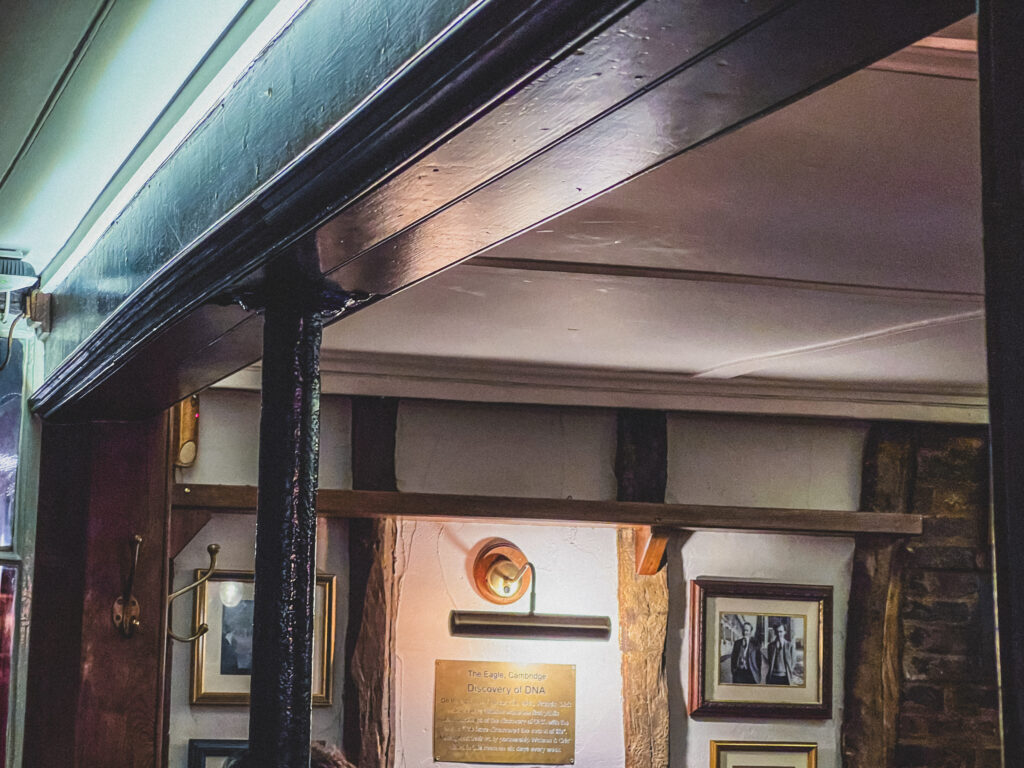
Upon visiting The Eagle now, a blue plaque adorns the pub commemorating the 1953 announcement, along with the contributions made by Rosalind Franklin and Maurice Wilkins.
Side note: (yet another woman lost to history!) Rosalind Franklin’s work on the X-ray image, known as “Photograph 51”, which guided the entire research on DNA, was shown to Crick and Watson by her colleague Maurice Wilkins without her knowledge.
Sadly, Franklin died of ovarian cancer in 1958 at the age of just 37, this made her ineligible for the Nobel Prize. This was just four years before Watson, Crick and Wilkins received a Nobel Prize for “their” discovery. Since 1974, the rule for allowing a posthumous award was eliminated.
Rosalind Franklin is only now getting the wider recognition she so deserves.
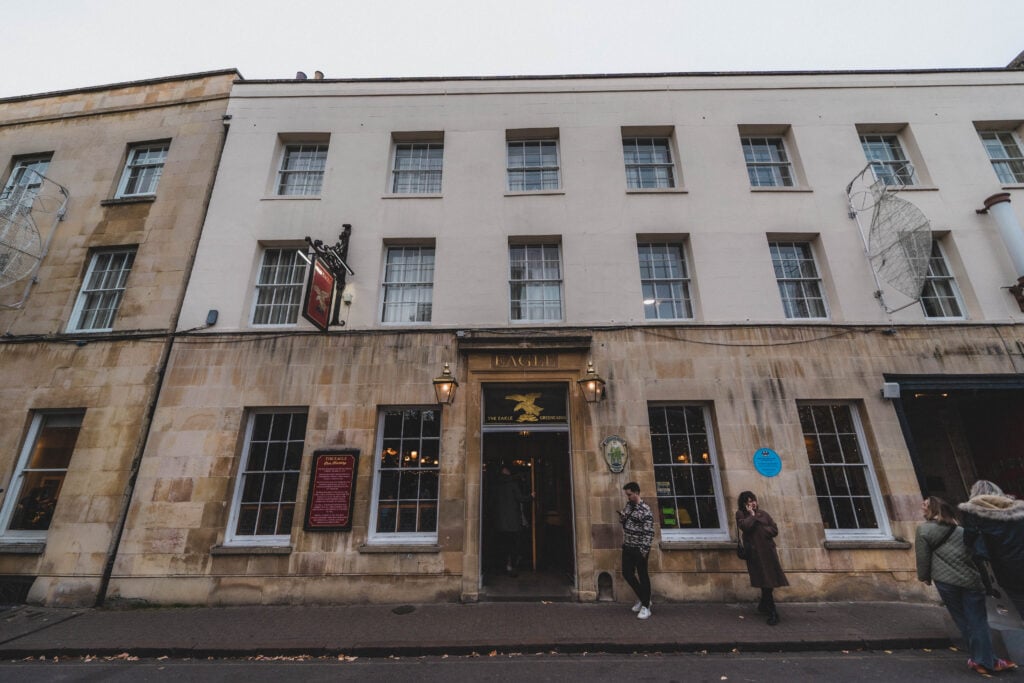
In 1988 The Eagle briefly closed its doors for renovation works, extending from number 7 Bene’t into number 8.
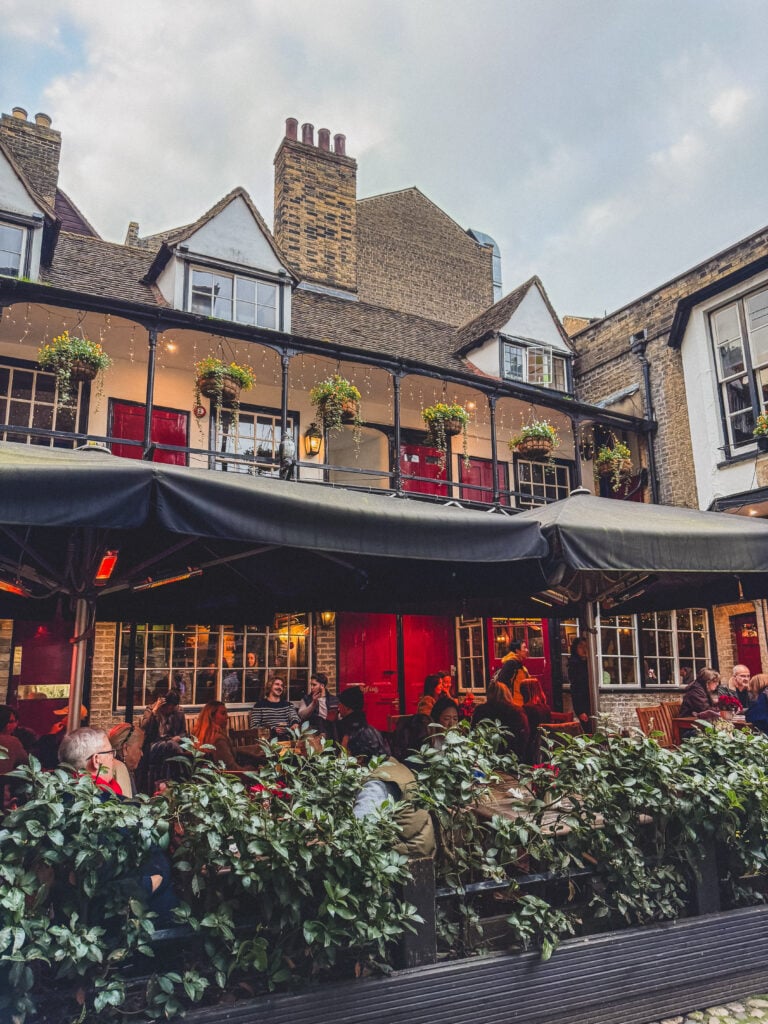
Today, The Eagle continues to pour pints and gratitude to all those who visit. This historic landmark is a beloved feature of Cambridge and one of the city’s most famous pubs. Even though the pub is managed by the pub retailer giant Greene King, the building itself is Grade II listed and still owned by Cambridge’s Corpus Christi College.
Highlights
The ceiling
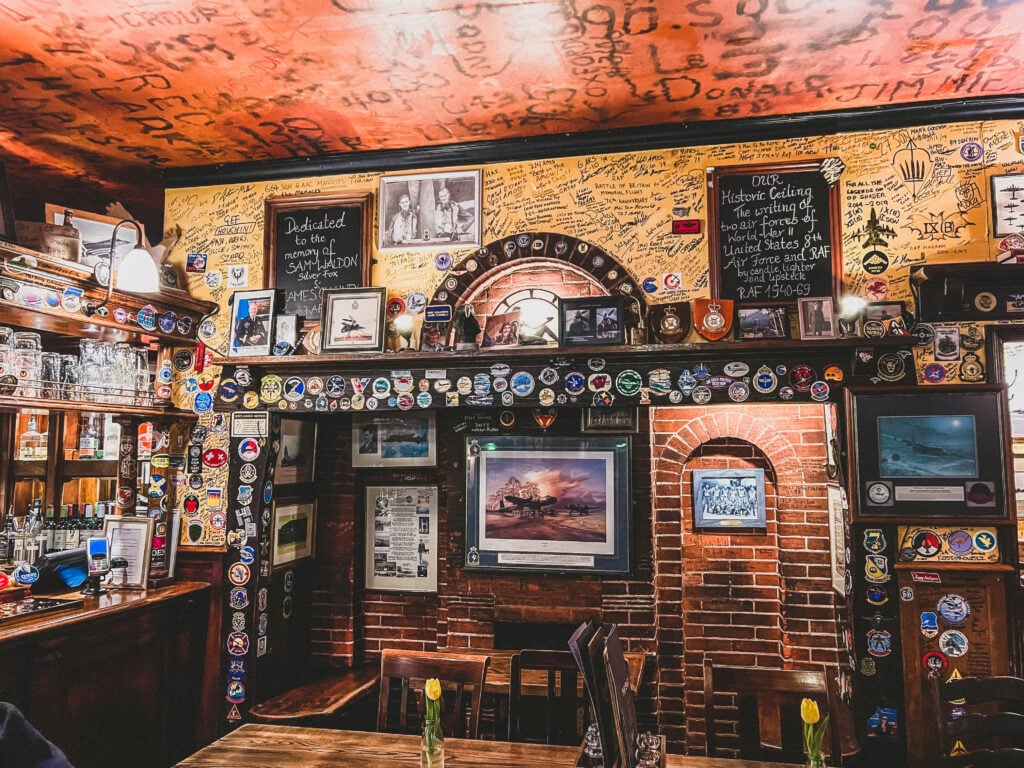
One of the most unique aspects of The Eagle is looking up at its ceiling. At first, the markings appear to be just some kind of graffiti design, but upon a closer look, you’ll see the layers of history unfold.
Several names and squadron numbers are burnt into the ceiling, as well as various other doodles, including a red lipstick outline of a lady in red who is reputed to be the Landlady’s sister, Ethel.
The original bench
Aside from the newer blue plaque on the front of The Eagle that commemorates all the contributors to the DNA discovery, inside can be found another plaque dedicated to Crick and Watson at the very spot where they made the announcement.
The end of the plaque reads, “Throughout their early partnership, Watson & Crick dined in this room on six days every week”, and the original bench still sits in situ.
Rosalind Franklin plaque
In recent years, another plaque was added inside the pub to honour and recognise Franklin’s contributions to the discovery. Part of it reads (Franklin whose) “exceptionally skilled crystallography enabled Crick and Watson to unravel the double helix structure of DNA”.
Eagle’s DNA ale
Paying homage to the pub’s fascinating history, the Eagle’s DNA ale is served on draught for visitors to drink and remember the important discovery that’s so intrinsically linked with The Eagle.
Psst! Only have one day to visit Cardiff?
Cambridge is a delightful university city with centuries’ worth of history. Some of the best things to do in town include drinking pints in historic pubs, visiting churches, and exploring the free university museums!
How to visit
The Eagle can be found on 7-8 Bene’t Street in the heart of Cambridge, just across from King’s College. If you’re looking for more ideas in the city, be sure to check out our suggestions for how to spend one day in Cambridge.
As one of the city’s most important historic pubs, it can get fairly busy as most people want to take a peek inside. Therefore, if stopping by for food I recommend booking ahead, but, if it’s just for a pint or two you should be fine to walk in. The pub is also dog friendly! See their official website here to make a booking.
Opening times: Monday to Wednesday (11 am – 11 pm) Thursday to Saturday (11 am – 12 am) & Sundays (11 am – 10:30 pm)
Food is served from 12 pm – 10 pm daily and till 9 pm on Sundays.
Enjoyed reading our guide to Cambridge’s The Eagle? Pin this article now, and read it again later:




Your “how to visit” section is both charming and practical—booking tips, dog-friendly vibe, central location, and lively atmosphere all neatly covered. The blend of quirky historic detail, cultural context, and just enough travel know-how made me grin—and feel like I’m ready to pull up a stool and soak it all in.
Thanks for this beautifully balanced, intelligent, and heartfelt tribute. The Eagle is now firmly on my Cambridge must-visit list!
Sources