The Ultimate One Week in Tuscany Itinerary You’ll Want to Steal
Last Updated on 15th October 2023 by Sophie Nadeau
This post may contain affiliate links. Please check out my privacy policy and disclosure for more information.
Spending a week in Tuscany is the perfect way to discover ancient cities and unique settlements with their churches, museums, and historic sites, but also, a more intimate part of the country, characterised by an authentic, simpler lifestyle. Best explored over the course of at least seven days, here’s our advice for spending one week in Tuscany.

Romantic and inspiring, Tuscany is an incredible Italian destination. During the last ten years, the region started a completely new trend in tourism, focusing on the promotion of its food and wine production, in close contact with nature, and placing value on the territory and its ancient traditions.
If this is the kind of adventure that you’re looking for, then get on board and explore the best things to do in Tuscany in a week.
Contents
Essential Things to Know about Tuscany
Tuscany is an important region in Italy located in the central-northern part of the country, with a big portion of its boundaries facing the Tuscan Archipelago and the Tyrrhenian Sea.
The capital of Tuscany is Florence, however, there are many more important cities scattered around the whole region. Some of them will be included in this 7-day in Tuscany itinerary. The most important cities in Tuscany are Florence, Pisa, San Gimignano, Lucca, and Siena.

Traveling to Tuscany
The best way to get to the region is to travel to Florence by train. Since the city is in a very central position in the country, traveling times are relatively short no matter where from you start your trip towards Tuscany.
Since Florence is the capital of Tuscany and the most important city in the area, there is a remarkable train station, Santa Maria Novella, that connects the city to the rest of the country as well as to many important cities in the Tuscany region.
Florence’s International Airport receives flights from several European cities, however, there are no flights from non-European countries arriving in Florence. For that reason, if you’re getting to Tuscany from out of Europe, you can travel to Rome or Milan and take a domestic flight or a high-speed train.
Moving around, instead, is better done by car, which gives you enough freedom to move from one town to another, exploring at your own pace and stopping anywhere on the road. The local roads are well-maintained and the highways are wide and safe in this part of the country.

When to visit Tuscany
The region has quite pleasant weather all year round. The best time of the year to visit is spring when the temperatures are comfortable enough and attractions are not overcrowded or overpriced.
During April, May, and June you will encounter plenty of sunshine too. August instead, is too hot while fall is another good alternative, as it is still not very cold, however, rain can be common in certain areas.
Where to Stay in Tuscany
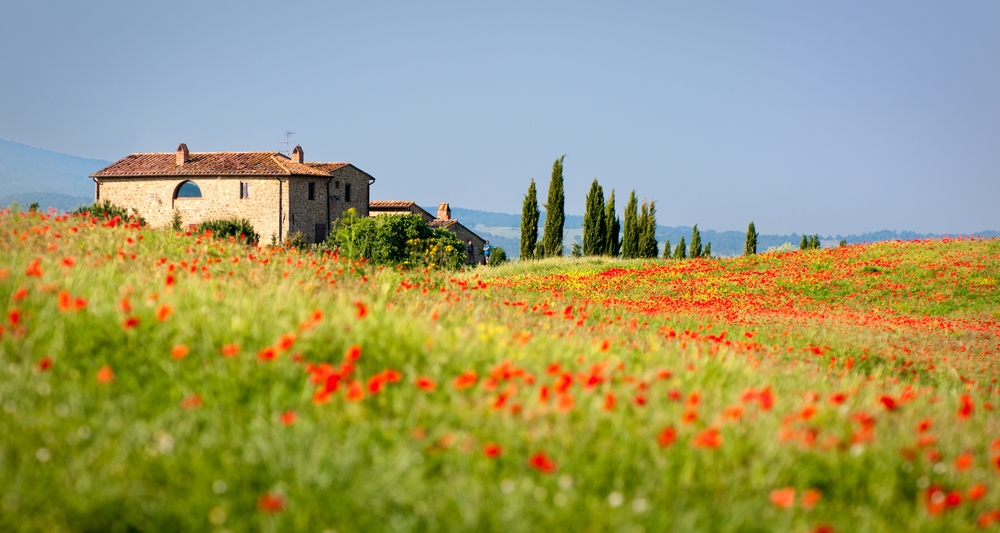
There are different alternatives. You can change accommodation for every town you visit, you can base yourself in Florence and, from there, take daily trips to every major town, or you can experience life in the Tuscan countryside and spend a week in a local agriturismo (farmhouse).
If that is the idea you like best, down below you will find the agriturismo accommodation I suggest you check out these Tuscany farmhouses:
Castello di Bossi: Close to the Chianti wine region, the farmhouse offers stunning garden views, free bikes, a seasonal outdoor swimming pool, a bar, a garden, and a tennis court.
The farm stay features private parking free of charge. Some units feature a seating area as well. There are different breakfast options as well as barbecue facilities. Check prices and availability here.
Agriturismo Crocino in Chianti: In the Chianti area of Tuscany, about 60 km from Florence, this gorgeous place offers accommodation with a restaurant, a garden, and private parking free of charge. Check prices and availability here.
Relais La Torre: A magnificent property for an unforgettable stay in Tuscany, this farmhouse is nestled within a large estate, among vineyards, olive groves, and woods. The stay includes a rustic Tuscan breakfast. On the premises, there is also a chapel from 1756. Check prices and availability here.
One Week in Tuscany: Places to Visit and Things to Do
To make the trip easy and flexible, for you to enjoy your days without being extremely exhausted every evening, you will only find three main activities to do on each day of the visit. And it is my strong suggestion to focus only on three major things each day.
This does not mean that there isn’t a lot more to do in the area, on the contrary, it gives you the chance to spend hours doing more than just visiting landmarks, it allows enough free time to mingle with the locals… and live like a local, because, in the end, that’s what Tuscany is all about!
Day 1-2 in Tuscany: Florence
It is a good idea to devote two complete days to Florence as there is a lot to see and discover in the former Renaissance capital of Italy. If you only have a short time, then be sure to check out our suggestions for one day in Florence. Otherwise, for a long weekend, check out our suggestions for how to spend 3 days in Florence.
The city hosts some of the most remarkable architectonic gems in the country, as well as stunning art museums, and picturesque cobblestoned alleys, all in one of the prettiest historic towns in Tuscany.

Santa Maria del Fiore
Upon arrival in Florence, head directly to the heart of the historic district (it’s a 10-minute walk from the main train station) to explore Florence’s Cathedral, Santa Maria del Fiore.
In the same area, you will also be able to observe the impressive Giotto Campanile, the church’s bell tower, as well as Saint John’s Baptistery with incredibly detailed doors designed by Botticelli, one of the most remarkable Italian Renaissance artists of all time.
Locally known as the Duomo di Firenze, this cathedral is one of the country’s best examples of the Italian Renaissance. The main characteristic of the building is the imposing cupola that was designed back in 1436 by Filippo Brunelleschi.
This ceiling is deemed to be the biggest masonry dome built in history. From the centre of the church, when you look up at the dome, you can appreciate one of the most refined frescoes ever made in Europe during the historic period.
If time allows, it is a good idea to have a close-up look at the. You will be able to check out unique details of the intricate work of engineering and amazing city views. Check ticket details here.

Piazza della Signoria
Your second stop on this Firenze itinerary will be the main square, Piazza della Signoria, only steps from the cathedral. In the area, you can visit the inner courtyards of Palazzo Vecchio (for free), or purchase a ticket for a complete tour of the Palace for further details and information about the history of the city.
At the main gate of the Palace, you will be stunned at the famous replica of the famous Michelangelo’s David. This is not the original sculpture, which is housed in a nearby art gallery (L’Accademia), which you can visit on your second day in Florence.

Galleria degli Uffizi
Right on the street that starts at Palazzo Vecchio to reach the Arno River, stands Florence’s Uffizi, one of the most incredible art exhibitions in the world that features stunning paintings and works of art, including a Renaissance art collection featuring works by Da Vinci, Caravaggio, and Botticelli, among others.
Since the place is incredibly vast, the best way to enjoy the highlights of the exhibitions is by booking a tour with a local guide. Check prices and availability here.

Before starting your second day in Florence…
If you are a fan of art and are still willing to see the original Michelangelo’s David, then make a short early visit to Galleria dell’Accademia. The earlier you go, the less crowded it will be. In the museum, which is mostly devoted to the art of Michelangelo, you can also explore an odd Museum of Musical Instruments.

Arno River and Ponte Vecchio
The Arno River is another landmark in the city, which divides it into two distinctive parts. Crossed by several bridges, the most famous of all is Ponte Vecchio.
Ponte Vecchio (which means old bridge, in Italian) is an ancient bridge that today hosts houses and shops. This medieval bridge is the road you will take to visit the Oltrarno district, on the other side of Florence to visit the next attractions.

Oltrarno, Palazzo Pitti and Boboli Gardens
Devote the whole afternoon to wander the streets of the bohemian neighbourhood of Oltrarno, with its bohemian cobblestone streets plenty of trees, cozy wine bars, and restaurants, and a less touristic vibe that is incredibly attractive.
This is the best area for an authentic Florence meal minus the high price tags you are certainly going to pay in the historic district, so do your wallet a favor, and eat in Oltrarno!
Try: Alimentari del Chianti, a super famous eatery where to try a wide selection of Italian panini in Pitti Square.
The district has two major landmarks that you might one to explore, you can start by checking out the different areas inside Palazzo Pitti.
Built back in 1457 for a local family, the building was designed by Filippo Brunelleschi. Palazzo Pitti was also home to the powerful Medici family that ruled Florence for decades.
This Renaissance palace houses an extraordinary collection of art that includes the works of Raphael, Caravaggio, and Tiziano among others and there are also organised tours like this one available.
The well-curated gardens of this palace are known as the Boboli Gardens, and it remains one of my favorite places to explore in Florence, offering unexpected city views as well.
Inside this unique green space, you will find impressive fountains, symmetrical spaces, and bizarre baroque sculptures hidden in unexpected corners. If you are ready to add this visit to your Tuscany itinerary, then get your ticket in advance.

Sunset at Piazzale Michelangelo
Assuring the best vistas in town, this is an unmissable meeting point where locals love to hang out, especially at sunset, after a hard day at the office. Piazzale Michelangelo is a gorgeous square and main observation point perfect to capture the best images of Florence.
But it is also a cool place to sit, enjoy a beer, and take in all the beauty that the capital of the Tuscany region has to offer.
End your day in town with a light meal and end your stay in Florence with Italian gelato. After all, Florence is where many people believe the Italian sweet was invented.
When in Oltrarno, it is a good idea to taste the gelato made by Gelateria Santa Trinita, located on Frescobaldi Square, not far from Piazzale Michelangelo (8, Piazza de’ Frescobaldi).

Day 3: Pisa
One full day in Pisa is enough to admire the most visited landmarks in town, enjoy the local gastronomy, and spend a relaxing time before heading to the next destination. These are the three most remarkable things to do in Pisa in a day.
Pisa is located about 90 kilometers from Florence, getting there by train is fast and easy (from 45 minutes to 90 minutes, depending on the train), while driving can take more time. For more inspiration, be sure to check out our guide on how to get from Florence to Pisa.

Leaning Tower of Pisa and Piazza dei Miracoli
Home to the super famous leaning tower, Pisa is one of the most visited towns in the country. Dating back to 1090, the Leaning Tower of Pisa is the main reason why you will visit, and this applies also to all travelers, so head there first thing in the morning to beat the crowds!
The tower is located in the area known as Piazza dei Miracoli (Miracles’ Square), one of the several UNESCO sites Tuscany. The tower is part of the Pisa Cathedral complex, as it is the cathedral’s bell tower.
For that reason, in the same area, you will also find the Baptistry of Pisa. All of the buildings were made in the Pisan Romanesque architectural style. The cathedral of Pisa is dedicated to the Assumption of the Virgin.
These religious complexes, often found in many Renaissance squares in Italy, (for instance in Florence) was often made of a trinity of buildings, the Church or Cathedral, the Bell Tower, and the Baptistry.

Camposanto
Piazza dei Miracoli, though, has a fourth structure worth a stop, the so-called Camposanto, the Italian word for cemetery. Pisa’s Monumental Cemetery is a structure made from the same white stone used in the rest of the complex, and it features a picturesque courtyard with dozens of columns that make for spectacular pictures.
The courtyard also has a beautiful and well-attended garden with dozens of colourful flowers. Inside the main building, there are walls adorned with frescoes which are also worth some time during your visit.

Pisa National Museum and Pisa’s Lungarnos
Overshadowed by the popular Leaning Tower, not every visitor is aware of the National Museum of Pisa on the banks of River Arno River.
Several permanent exhibitions host important objects and sculptures related to the history of this important former maritime republic (also known as merchant republics, they were Pisa, Venice, Genoa, and Amalfi).
Also in the museum, there are sculptures from the Pisa Cathedral and its Baptistery.
The museum is located along the bank of the Arno, so after checking out the museum, why not enjoy a relaxing stroll along this important Italian river?
Several bridges cross the Arno in Pisa, plus several beautiful walks, known as lungarnos. These are the streets of the city that pass beside the river and host wonderful buildings and reach the river outlet in Marina di Pisa.
These picturesque walks used to be the heart of the city centre where Pisa’s wealthy families would build magnificent homes. The most famous of them all is known as the Lungarno Mediceo.

Day 4: Lucca
Located about an hour and a half from Florence by car (and about the same time by train), Lucca is a compact town easy to walk around in a day. Down here you can find three unmissable things to do in Lucca during your visit.
Ancient Walls
Founded on an ancient Etruscan settlement, the city has played a key role in the striving history of the region. To access the old town, it is necessary to pass through one of the many gates located on Lucca’s protective walls.
Mostly dating from the Renaissance, the historic walls of Lucca were erected between the mid-1600s and the early 1800s. The vast fortification over four kilometers long has twelve ramparts and eleven bastions.
And contrary to what you might expect, they were never used for defensive purposes, however, they did have a useful purpose back in 1812 when the gates to the city were closed to prevent the city from flooding… and it worked!
Back in the late 1800s, part of the walls was turned into a public park which is one of the main green areas in Lucca, with dozens of drinking fountains, picnic areas, and games for small children.
Lucca Cathedral
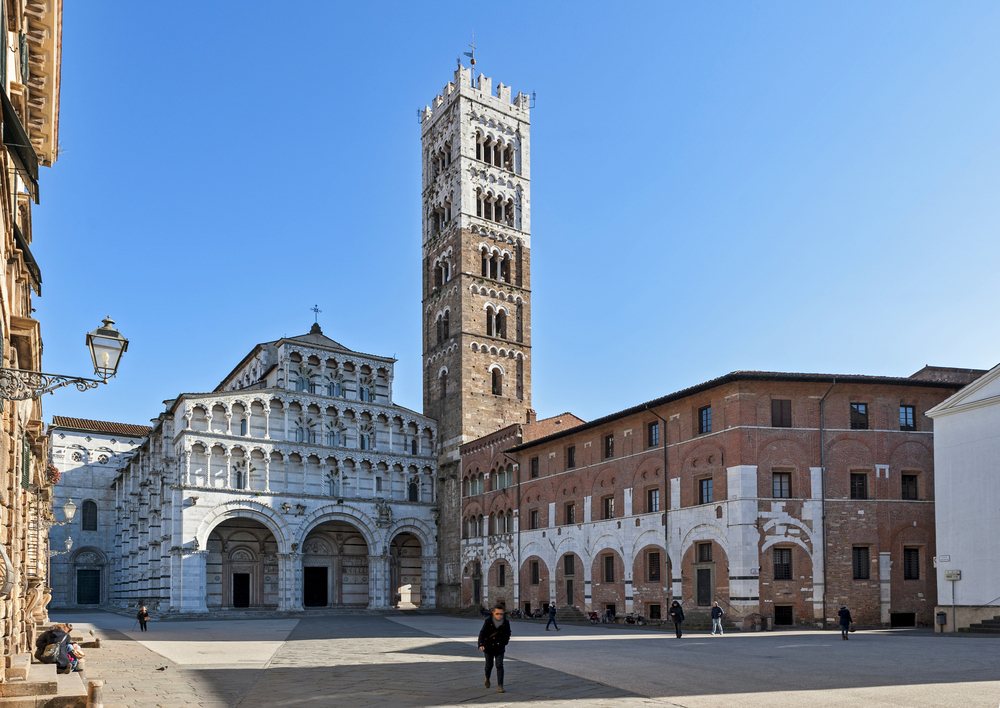
Once you pass the gates and enter the ancient district, start by paying a visit to the Romanesque Cathedral of Lucca, built in honor of Archangel Michael.
Also called San Michele al Foro, this church is a Romanesque masterpiece that was built over an ancient Roman forum, from where it gets its name. The present cathedral was built in 1070, however, it has a more modern facade dating from the thirteenth century.
The Towers of Lucca and Puccini Museum
It is a good idea to climb one of Lucca’s two main towers to have a different perspective of the city centre. The Guinigi Tower is a bizarre tower that hosts a garden of oaks on its top.
The highest tower in Luca, the Clock Tower features 207 wooden steps and one of the most interesting things to do in Lucca is to climb and admire the clock’s ancient manual mechanism.
Lucca was also the birthplace of the great Giacomo Puccini, often depicted as the greatest opera composer in the country. The Puccini Museum is set in the house where he was born and where he lived before moving to Milan.

Day 5 in Tuscany: Siena
It is not easy to choose only three things to do in Siena, as there is so much to discover in this fantastic Medieval Tuscan city, so I will try to fit a few more options for you to choose from.
Piazza del Campo and the Duomo
We could easily say that the most important places to see in Siena, a UNESCO World Heritage Site, are located between Piazza del Campo, the city’s main square, and the Cathedral, or Duomo di Siena, so let’s see all that can be done in the area.
Featuring an original shape that resembles a shell, this Square is a worldwide famous location as it annually hosts (in July and August) one of Italy’s most important events, the horse race known as Palio di Siena, in which ten of the seventeen contrade or city wards of Siena compete.
Around the Piazza, you can see the important buildings in town, including the Palazzo Comunale housing the town hall, and Torre del Mangia, an 87-meter-high medieval tower that at the top offers spectacular 360° views of the city.
The next stop should be Piazza del Duomo, the cathedral square, which hosts, among other things, the famous Siena Cathedral with some impressive treasures, including the crypt, the baptistery, and the Piccolomini Library with incredible frescoes from the early 1500s.
- The Siena Cathedral Complex Pass is excellent value for money to visit all the most important landmarks in Siena. Check prices and availability here.
Dedicated to the Assumption of the Virgin, Siena’s Cathedral is an important example of a Romanesque-Gothic church with a curious use of abundant white and green-black marbles, the symbolic colors of Siena.
The building was made between the years 1215 and 1263. Its incredible dome, completed a year after the rest of the church has a lantern added by the prominent artist Bernini. The cathedral’s magnificent bell tower has six bells, the oldest of them dating to 1149.
Contrade Museum
This curious but interesting Siena museum hosts the collections of the Palio Horse Race. On Sundays, enter the Contrade Museums instead, where the Palio horse race collections are preserved.
- Walking Tour with Duomo or Contrade Museum Visit: This is a great tour that includes access to the Duomo and a walking tour of Piazza del Campo. Check prices and availability here.
Francigena Street and Monte dei Paschi
It is a good idea to walk along the well-known Francigena Street to admire the city’s most important buildings and monuments. Here you can stop for a snack and a drink, do some shopping, and enjoy the views of two of Siena’s historic sites.
The first of them is Monte dei Paschi, the oldest bank in Europe and the second oldest bank in the world. It was founded in 1472.
The other one, Palazzo Tolomei is one of the finest Italian Gothic palaces which was built between 1270 and 1275 by a local family and it as the first permanent headquarters of the Siena Municipality, before the current town hall, Palazzo Pubblico, was built.

Day 6 in Tuscany: San Gimignano
As your Tuscan adventure draws to its closure, day six shelters a magnificent medieval gem, the imposing walled city of San Gimignano, another UNESCO World Heritage site.
The city, built over a former Etruscan settlement, is small and easy to walk, allowing you to see the main landmarks in just a day.
Torre Grossa and other Medieval Towers
San Gimignano is known for its incredible Medieval skyscrapers and medieval architecture which gained it the name of the Town of Fine Towers.
Today, it is possible to observe, as you approach the city from the distance, a characteristic skyline made of twelve well-preserved towers and houses enhanced by the location of the settlement on top of a hill and surrounded by defensive walls.
The tallest tower in town is known as Torre Grossa, with an imposing 54-meter height, this is one of Tuscany’s most important medieval towers, dating back to 1310.
Surrounding the area, there are several interesting churches to visit, including the city’s Cathedral and several Gothic chapels.
- Torre Grossa and Duomo Tickets: These tickets include entrance to the tower and San Gimignano’s main cathedral. Check prices and more information here.
Piazza della Cisterna
There is no better place in San Gimignano than this square to get a complete view of what the city would look like during the Middle Ages.
Right in the heart of the historic center, Piazza della Cisterna is a small square that has a bizarre triangular shape and from where the most remarkable towers in town can be seen, including the remains of an ancient tower on Tortoli Palace, the high Devil’s Tower, and the twin Ardinghelli towers.
From the square, it is possible to walk along via del Castello, an ancient road hosting more Medieval noble homes and typical San Gimignano towers.
Vernaccia di San Gimignano
No…! This is not a city or a district in San Gimignano, but its most important local product, a fantastic wine.
In fact, San Gimignano is also a perfect gastronomic destination and it is known in the rest of the country for being home to one of the most remarkable wines made in Tuscany (and the rest of Italy), Vernaccia di San Gimignano.
This white wine is produced from an ancient grape that has strived in the area for hundreds of years, growing on the sandstone hillsides of the area. Other important regional products are San Gimignano’s ham and the locally produced saffron.
Be sure to finish your day in San Gimignano by indulging in an Italian favourite pastime, the Italian aperitivo. This tradition typically sees you having a drink (usually a Spritz) with snacks before dinner together with friends and family and is seen as a way of ‘opening up your appetite’.

Day 7 in Tuscany: Chianti Region
As your Tuscany itinerary comes to an end, devote your last day to enjoying the best of the Tuscan countryside and head to the heart of the Chianti region, close to the province of Siena, even when its official borders have never been defined.
Given that wine tasting will be the main activity of your day, the best thing you can do today is to avoid driving from one winery to the next, and join a tour that includes transport.

Italian road fines tend to be high and severe for those driving and drinking, so let a professional driver take care of the roads while you take care of the grapes!
The following wine-tasting tours of the Chianti region are excellent value for money and have ravishing reviews, check them out:
- Chianti Wineries Tour with Food and Wine Tasting: This original tour is among the top-rated experiences in Tuscany, it includes a visit to two authentic wineries in the beautiful Chianti Hills. Check prices and availability here.
- Montepulciano Wine Tasting and Cellar Tour: A perfect opportunity to taste Montepulciano wines as well as other regional produce from Tuscany. During the trip, you will also learn about the local winemaking traditions and even visit a cellar. Check prices and availability here.
- Full-Day Brunello Wine Tour with Full Lunch: Departing from Florence, this tour takes you to visit to the land of the famous Brunello di Montalcino, discover cellars and taste wines and extra virgin olive oil. It includes a delicious lunch. Check prices and availability here.
- Truffle Hunting and Meal at a Winery: Tuscany is also the region where you can find the best truffles in the country, and this tour proves it. You will join a wonderful truffle hunting experience with a professional guide and dogs. The experience ends with a gourmet truffle lunch at the winery. Check prices and availability here.
Endless are the experiences you can live during a whole week in Tuscany, simply plan your trip and get ready to taste some of the best flavours in Italy.
Enjoyed reading how to spend one week in Tuscany? Pin this article now, read it again later:
Gabi Ancarola is a journalist and travel writer who has lived over 20 years in Italy, and has been living in Crete for the last five years. She hosts culinary tours, translates and writes for her Crete travel blog The Tiny Book. She’s written for Greek Reporter and published several travel guides about Greece.