How to Visit Jameos del Agua, Lanzarote
Last Updated on 5th June 2024 by Sophie Nadeau
This post may contain affiliate links. Please check out my privacy policy and disclosure for more information.
If you ask anyone what to do on Lanzarote, then no doubt Jameos del Agua will be near the top of their lists. After all, the unique opening in the lava tube is home to a blind lobster species that is only found in the cave and has since become a symbol of Lanzarote. Here’s how to visit Jameos del Agua, as well as things to know before visiting.

Contents
What is the Jameos del Agua?
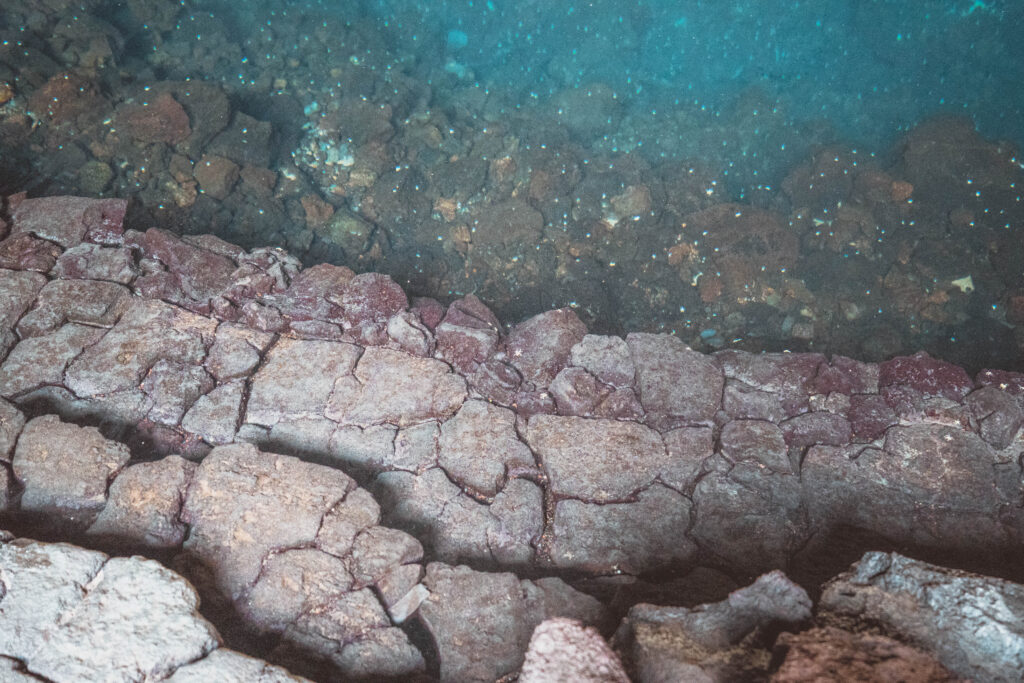
Between 3000- 5000 years ago, the lava tube was formed when hot molten magma flowed down from the volcano of Monte Corona all the way to the sea. The lava stream cooled and formed a crust before draining away into the sea and leaving behind a tunnel.
The lava tube which houses Cueva de los Verdes and Jameos del Agua (they are different openings of the same tube, of which Jameos del Agua is the part closest to the sea) stretches for 6 km above sea level before reaching the sea and extending a further 1.5 km below sea level.
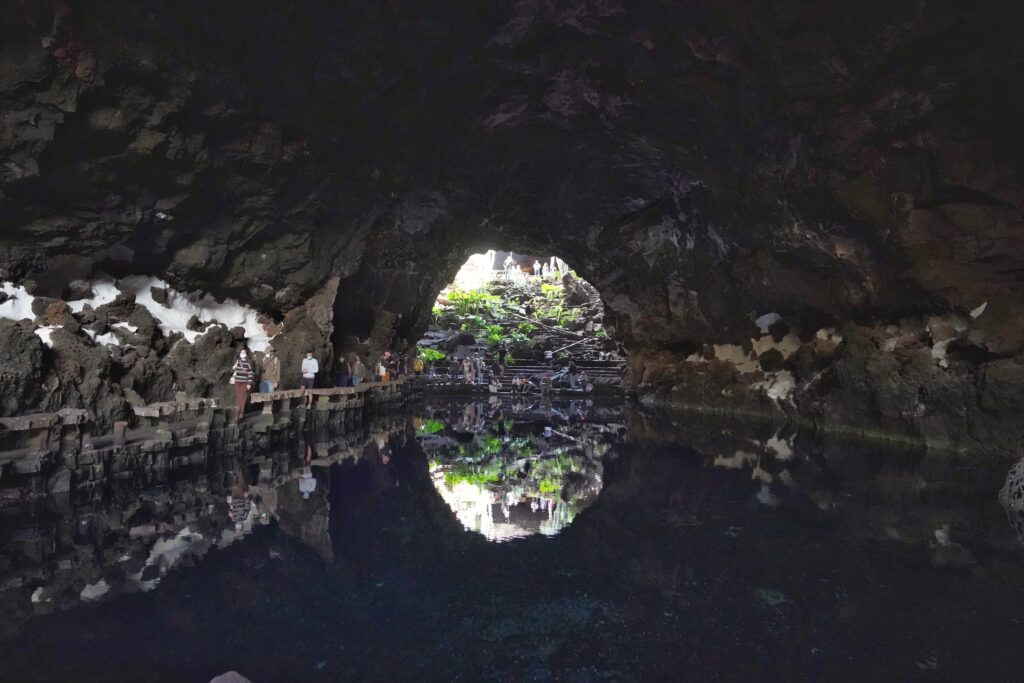
There are around two dozen sections where the roof of the tunnel has collapsed, thus forming caverns which are known as jameo. The Jameos del Agua is formed of three jameos; Jameo Chico (the entrance), Jameo Grande, and Jameo la Cazuela.
One particularly unique ‘jameo’ is where a natural seawater lake has formed, which has given rise to unique conditions for an endemic crab species.
Munidopsis polymorpha (Blind Squat Lobster)
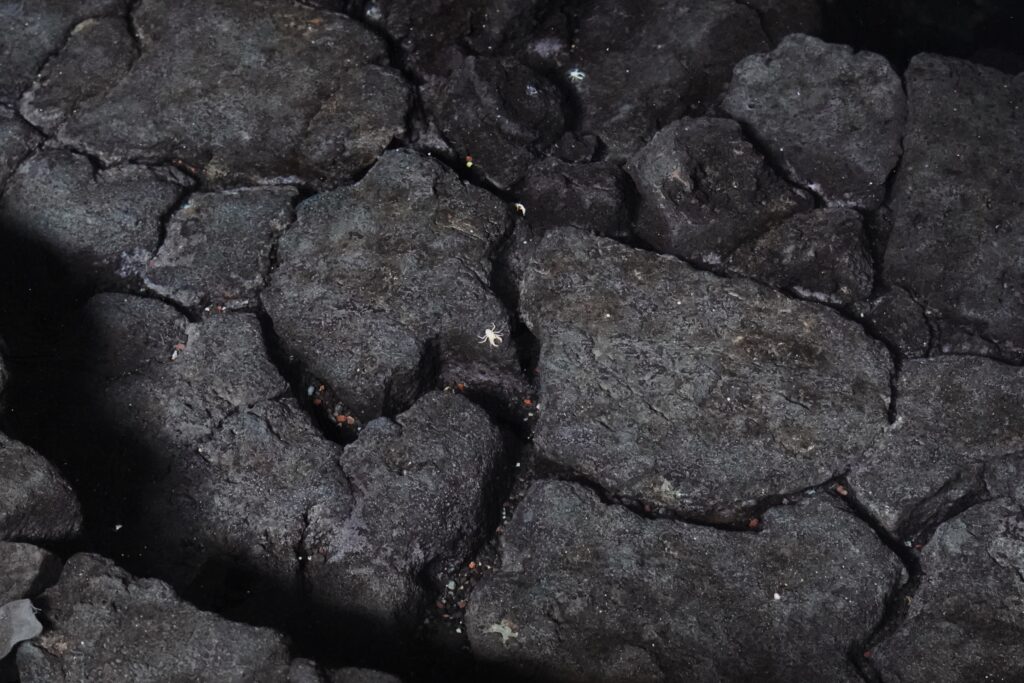
The most magical part of the cave with the natural seawater pool is indeed being able to see the blind lobster species for the first time. These little white lobsters are completely blind and are around 1 cm in length.
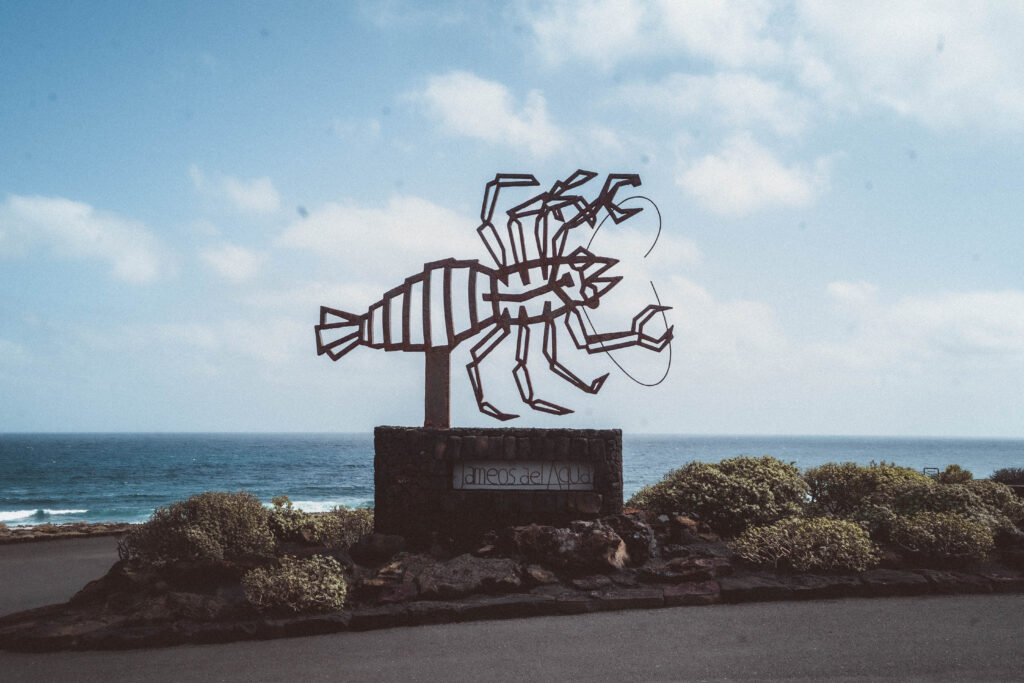
They are endemic to Lanzarote, meaning that this is the only place in the world where they can be found. So iconic are the little squat lobsters that they are now the animal symbol for the island and their image can be found on flags, advertisements, and signs.
Munidopsis polymorpha have adapted so perfectly to the lighting and water conditions of the sea cave that even the slightest change in the environment can damage or kill them. For this reason, it’s absolutely forbidden to throw coins into the water and the area is considered to be ecologically fragile!
César Manrique and creating a tourist attraction
The entrance to the Jameos del Agua, as well as a number of other architectural features were designed by late acclaimed Lanzarote artist, César Manrique (it was his first of such projects).
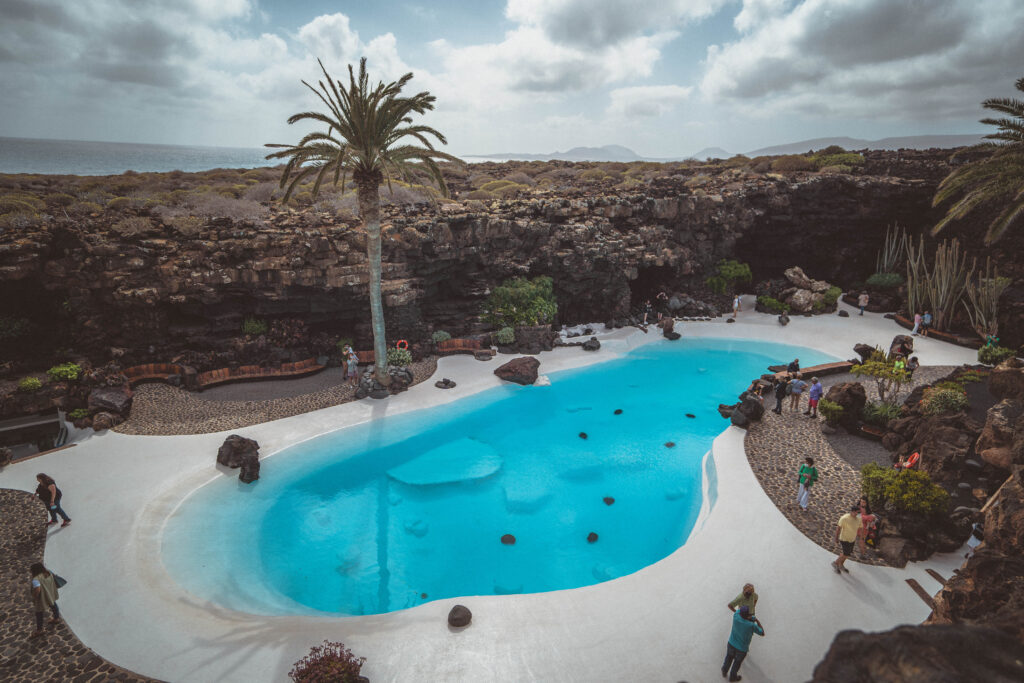
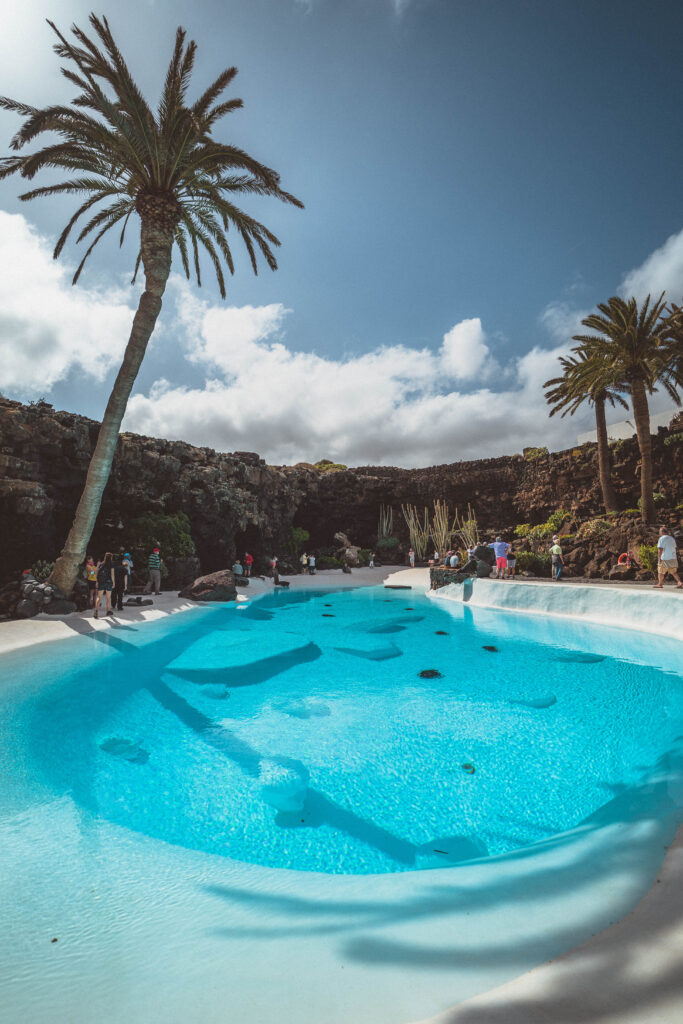
The entire complex comprises of a restaurant, the seawater cave lake, gardens, a museum, and a pool (though visitors are not allowed to bathe). Parts of Jameos del Agua was opened to the public for the first time in 1966, prior to the full opening in 1977.
Facilities and things to do at Jameos del Agua
Upon entering the complex, visitors head down a fairly steep flight of steps before entering into a semi open-air café that overlooks the cave. We didn’t have time to stop for a coffee in the café but it’s fairly well-reviewed and is a relaxing way to enjoy the unique ambiance of the complex.
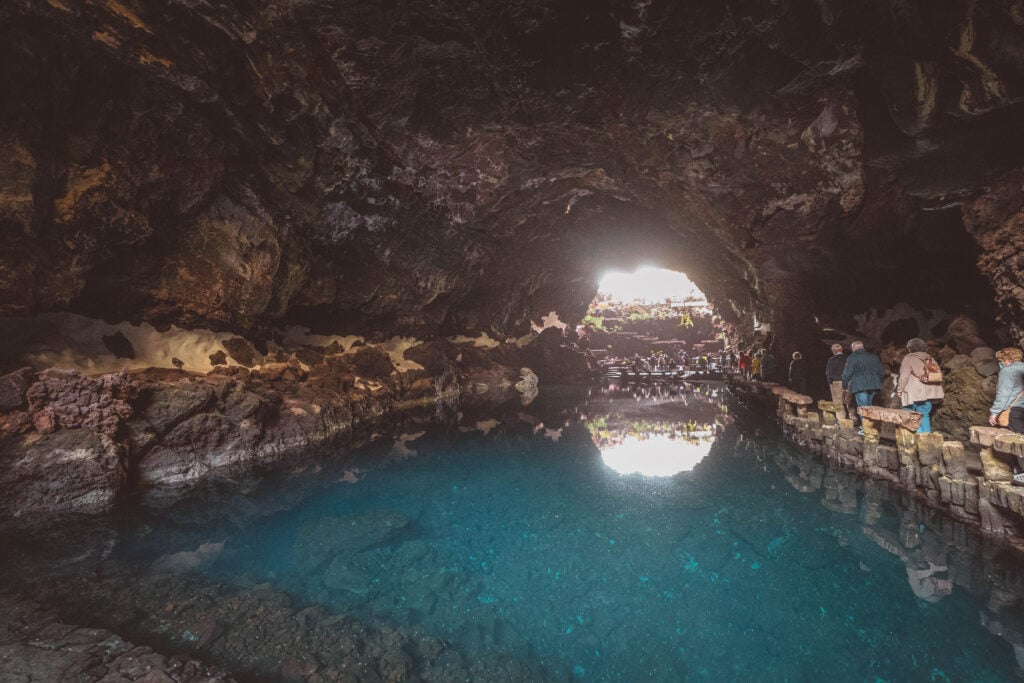
Visitors can then follow down more steps to reach the fringes of the lake that the squat crabs call home. Lighting is very unusual in the cave, so it’s hard to take photos, but the complex truly is quite magical.
You’ll then walk around the fringes of the lake before emerging into another café area that’s also home to a manmade swimming pool. The visit to Jameos del Agua took us around 40 minutes in total.
Tickets for Jameos del Agua
We personally found that the easiest way to get around the Canary Islands was by renting a car (in my opinion, Cicar is the best car rental experience we’ve ever had). However, you can also book a guided tour like this one if you want to see a number of César Manrique’s works without the fuss of car hire.
Much like many other tourist attractions in Lanzarote, even if you’ve purchased your ticket to visit Jameos del Agua through a different vendor, you’ll still have to wait in line with everyone else to enter the complex.
We personally opted for one of the ‘bonos’ (vouchers) option which gives you a slightly reduced entrance rate if you opt to buy a ticket that includes several island attractions (you can apparently save up to €5, depending on which option you choose).
You have to know which attractions you want to visit at the time of purchasing the tickets as these monuments are printed on the ticket you receive. We personally bought a combination ticket for the Cuevea de los Verdes, the Jameos del Agua, and the Jardín de Cactus.
For more Lanzarote inspiration, check out our suggestions for how to spend 3 days in Lanzarote.
Jameos del Agua or Cueva de los Verdes: Which should you visit?
Jameos del Agua and Cueva de los Verdes are located within a few hundred metres of one another and, as of 2023, both cost €10 each to visit. I would highly recommend heading to both, but I personally preferred the Cueva de los Verdes, which I found to be better value for money.
With this being said, whereas with the Cueva de los Verdes there is a strict number of people who can enter at one time due to the unique nature of this part of the lava tube, meaning that you can be waiting upwards of an hour to visit.
In stark contrast, due to the steady stream of flow of people in Jameos del Agua, we only had to wait a few minutes to visit. However, as I said previously, I did truly find the Cueva de los Verdes to be much better value for money as there was more to see.
All in all, I would preference seeing Cueva de los Verdes, though ideally see both attractions during your Lanzarote stay! The Jameos del Agua is located close to the town of Arrieta and is also not far from the town of Haría.