

Climb Arthur’s Seat: Edinburgh’s Extinct Volcano
Last Updated on 22nd August 2024 by Sophie Nadeau
This post may contain affiliate links. Please check out my privacy policy and disclosure for more information.
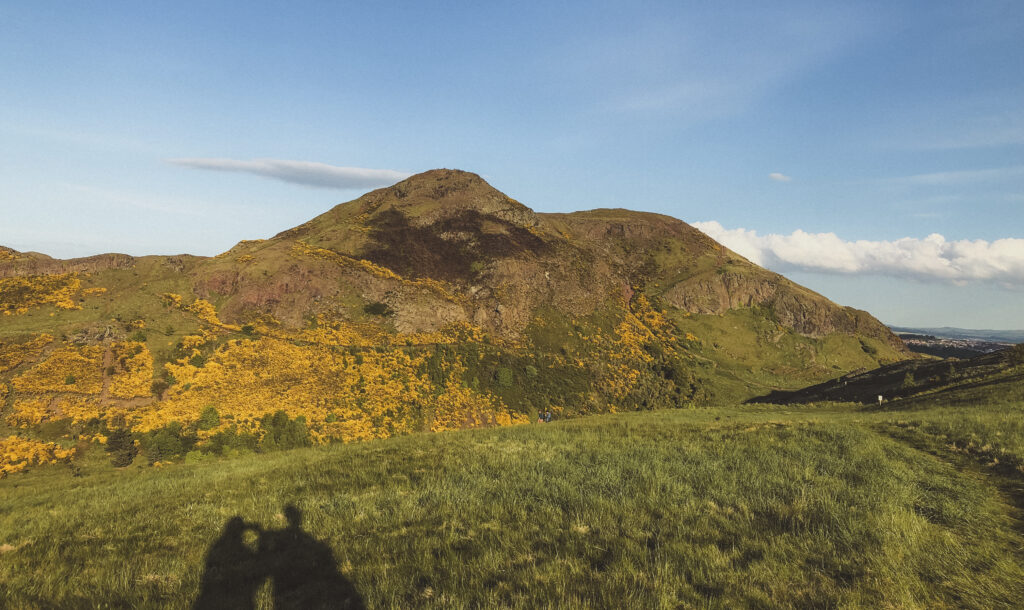
Visible from miles around, at the heart of Scotland’s capital city lies the enchanting Àrd-na-Said, better known as Arthur’s Seat. This extinct volcano erupted over 340 million years ago!
One of the best things to do when visiting Edinburgh is to climb to the top of this iconic landmark and admire the breathtaking views of Edinburgh’s landscape. Here’s your ultimate guide on how to make the most out of climbing Arthur’s Seat.

Contents
What is special about Arthur’s Seat?
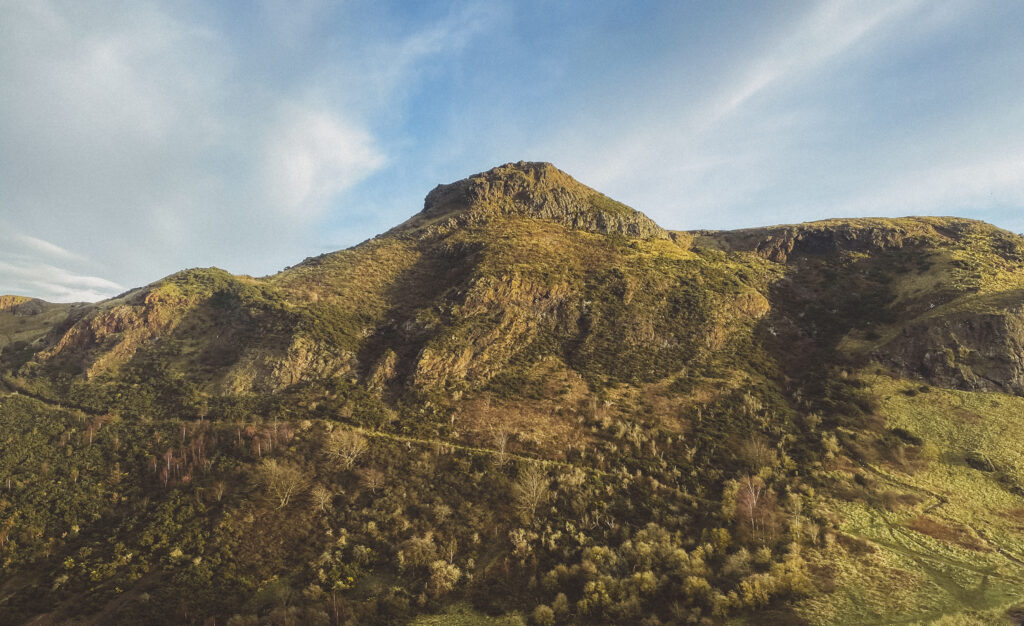
This small composite cone reaches 251 meters above sea level, and is one of the most studied ancient volcanoes in the world. Aside from its geological fascination, there are many a myth and legend that surround this iconic mountain.
It is speculated that this was the site of Camelot, King Arthur’s legendary castle. But other (slightly more elaborate) legends pre-dating Celtic times, is that a dragon used to fly in the skies and terrorise the people of the land, only to one day fall asleep and never wake up, its body becoming the hill we know now.
There’s also a superstition amongst the students of the city… if you don’t climb the summit of Arthur’s Seat on your first week at university, you are doomed to fail your degree!
So as you can see, there are quite a lot of stories surrounding Arthur’s Seat, and for those who live in Edinburgh, it holds a special place in their hearts.
What you need to know before you go
The hike up to the summit of Arthur’s seat is generally considered a moderately challenging route, however, there are several different paths to choose from.
Alternatively if a steep climb isn’t your cup of tea, you could opt for the Salisbury Crags (the surrounding hills of Arthur’s seat) which still offer magnificent views.
It’s dog friendly! So if you have a furry friend, bring them along.
- Wear sturdy walking shoes: walking boots would be ideal, the paths are steep and rocky (weather dependant of course) they can be slippy too!
- Pack a drink & snack: there are no facilities nearby or at the top, it’s very much a hike through nature so make sure to bring the fuel you’ll need for your climb- it’s also a great spot to have a picnic so if you are willing to carry it up, keep this in mind!
- Bring something warm to wear: you are in Scotland after all… the summit can feel considerably cooler even on a summers day, and the wind can be nippy, so be sure to bring an extra layer or two
- Don’t forget your camera: the views are stunning at the top, so make sure to bring something that you can capture the moment with to remember this special view for years to come
How to get to Arthur’s Seat?
Arthur’s Seat is situated in Holyrood Park which is just at the bottom of the famous Royal Mile, if you are coming from Waverley station it’s just a short 15 minute walk from there.
If you have your own transport, there are a couple of car parks located conveniently at the bottom of where the path starts.
The Walk
There are several paths leading up to Arthur’s Seat summit, each of them offering different scenic views. The most popular route up starts just beside Holyrood Palace (the King’s official residence of Edinburgh).
You will come to two trails, if you stick by the one on the left it will take you to Arthur’s Seat. The other goes to Salisbury Crags, which as mentioned before still offers great views but serves as a gentler walk!
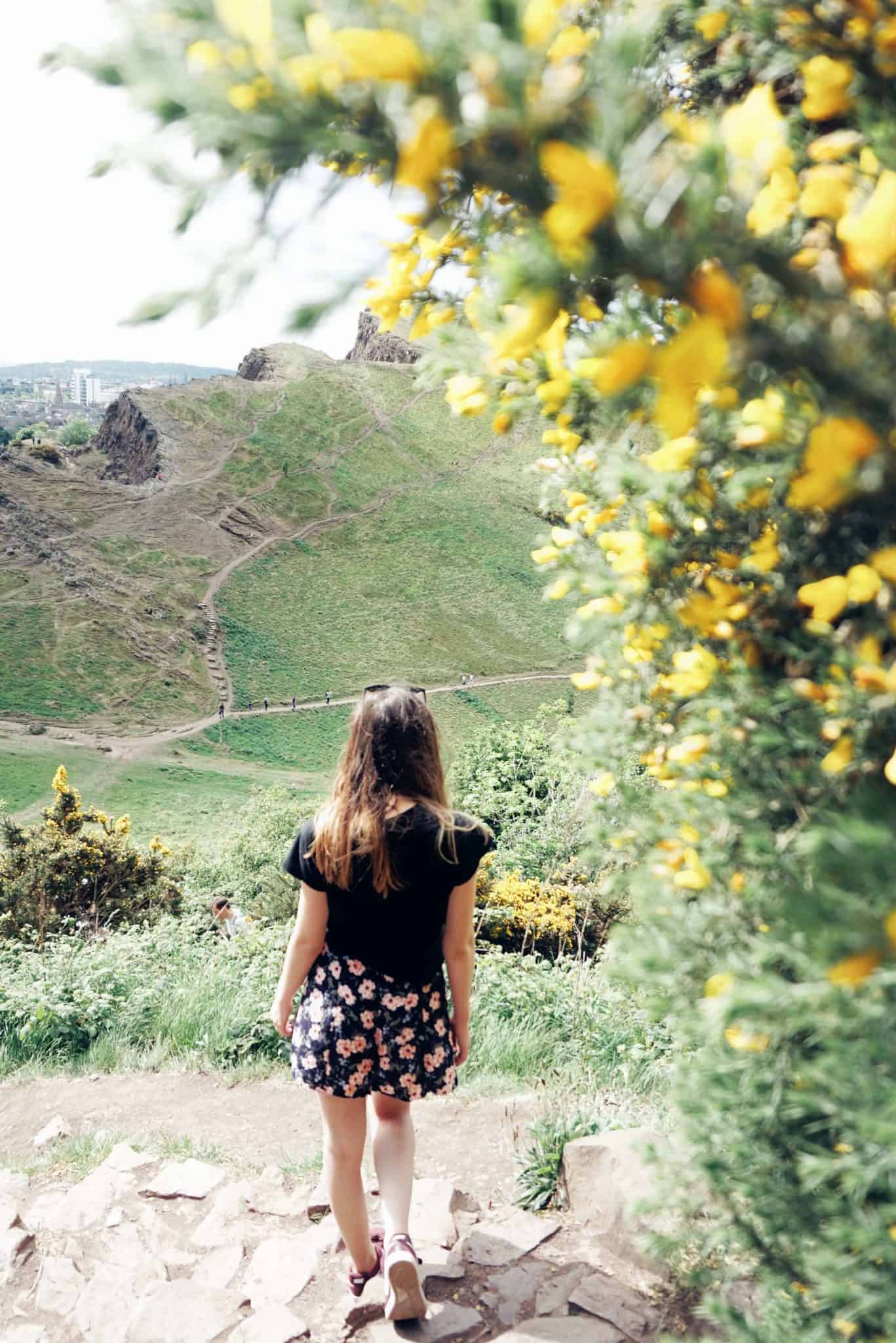
The path will first start by taking you past St Anthony’s chapel ruins and then you will start a descent into the valley for a short while. After this, you follow the rocky path upwards on a steep enough (but not too strenuous) towards the summit. The path is a mixture of rocks, dirt tracks and some steps.
To reach the summit it can take anywhere up to an hour, it depends on the speed you want to go and whether or not you choose to take pauses (there are several photo opportunities along the way!)
14th-Century Ruins of St Anthony’s Chapel
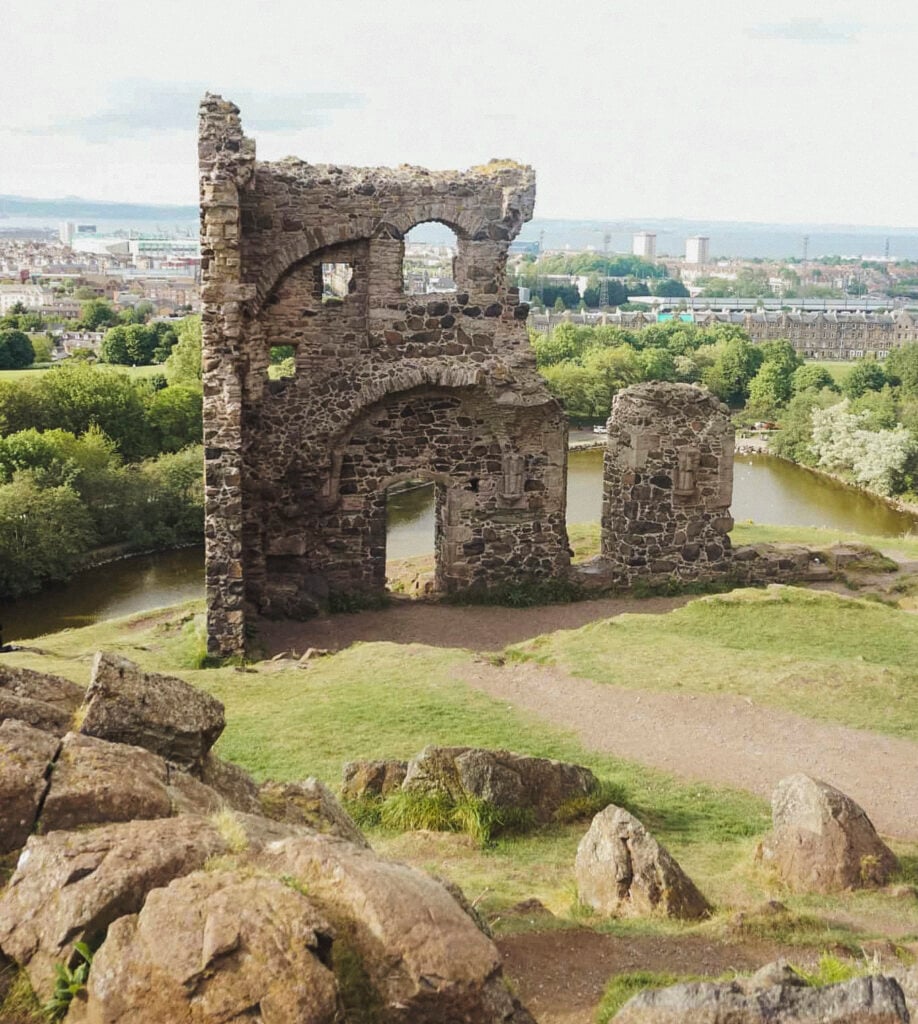
Near the start of you walk up, you’ll spot the mysterious 14th century ruins of a medieval chapel, bearing the name of the patron of lost things, St Anthony (a rather fitting name for this forgotten gem).
Very little is known about the chapel, however, it’s thought that it was once an outlying chapel for the nearby ruins of the abbey during the 1300s. An alternative explanation suggests that the chapel was built as a beacon for pilgrims walking through the Scottish Hills.
Whatever the use of St Anthony’s Chapel, it’s clear that following the Reformation by Henry VIII, the chapel was abandoned and left to the elements. Today all that remains are a few crumbling walls and even fewer explanations as to how they got there…
The Views
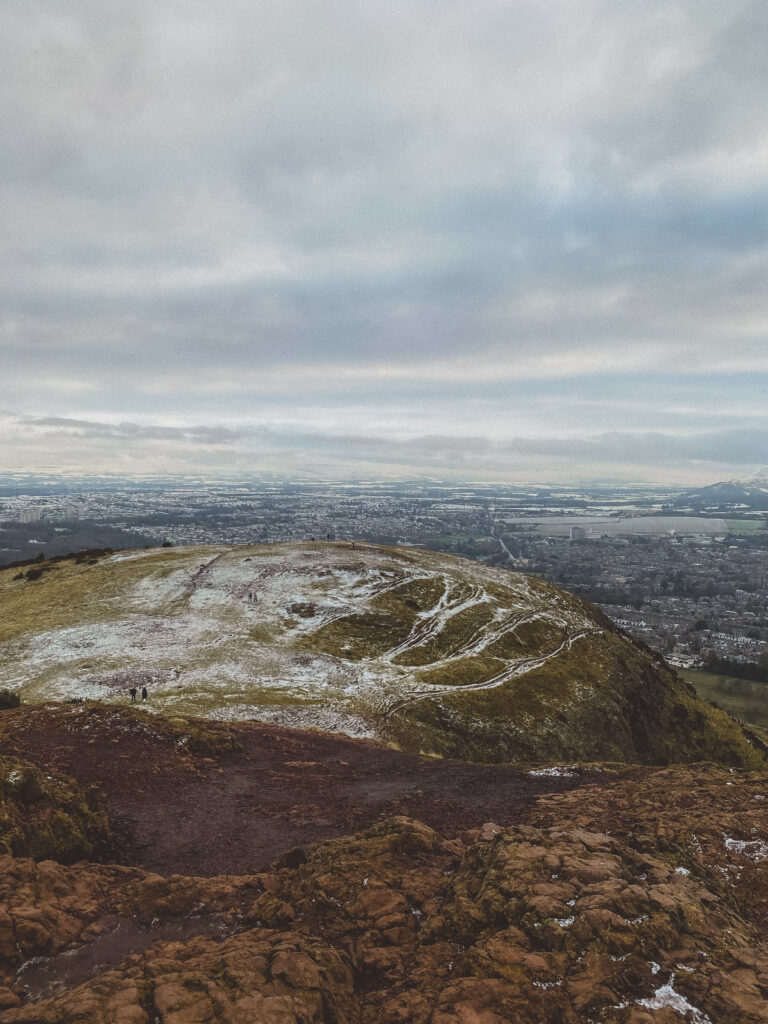
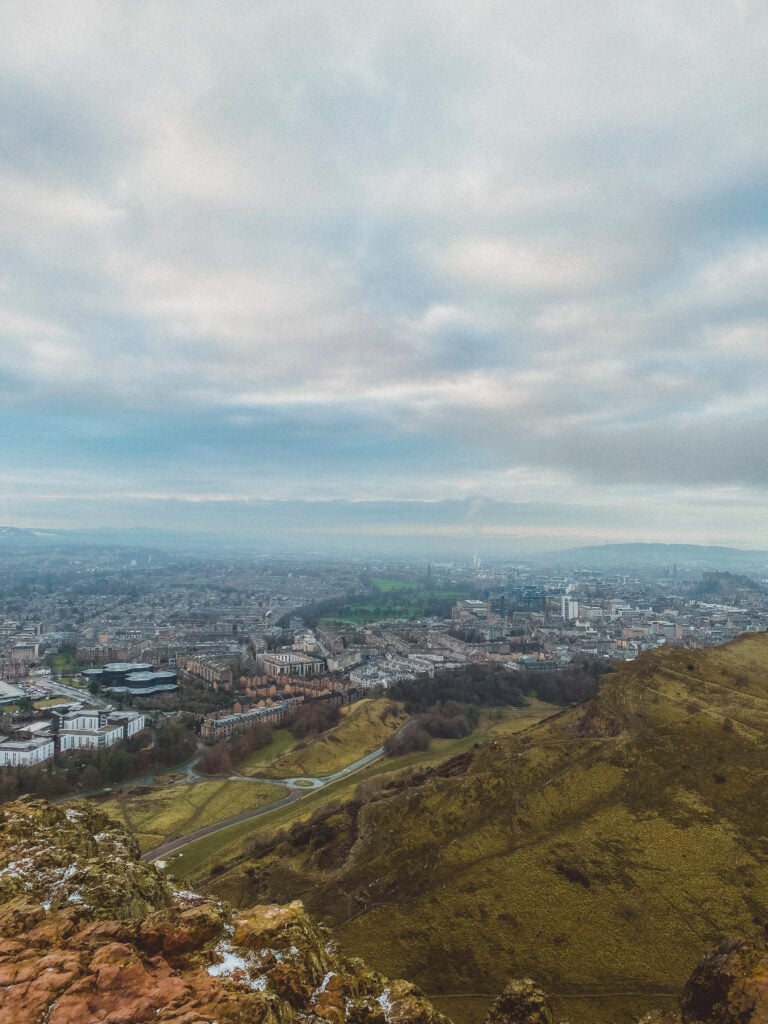
There’s nothing more satisfying than reaching the top of a hill, especially when it’s left you feeling a little out of breath. Reaching the summit of Arthur’s Seat is special because the view is pretty hidden until the very last moment.
Once revealed, you will find yourself blown away by the beauty of the surrounding landscape! You can see the pockets of Edinburgh’s changing skyline, with Gothic-style architecture popping out and a blend of the modern that’s been introduced.
You can also see the sea! Shades of blue and the mountains that are faded in the distance make this spectacular view all the more worth the climb. It’s also warming to see how many green spaces and hills still occupy this beautiful city.
That’s just a taste of what to expect… but of course words don’t do it justice, you’ll have to see for yourself!

When’s the best time to visit?
Holyrood Park is always open and completely free to visit, meaning you can climb Arthur’s Seat and its surrounding hills whenever you want!
Some of the more special (and quieter times) are at sunrise, there’s a magical quality to the quiet and stillness of the air as you see the day starting. The best time for sunrise is of course in Winter, not only do you get some extra time in bed, but the skies are dramatic and truly a sight to behold.
For warmer temperatures and clear skies, June-August are the best months. That being said, any time of the year is great, but let’s not forget it is Scotland, so be sure to check on the weather before your trip.

Enjoyed reading this guide on climbing Arthur’s Seat? Pin this article now, read it again later:

A Love Letter to Edinburgh
$15.95
Want more handy information to bring with you on-the-go? This is the ultimate travel guidebook filled with insider knowledge (from a local), the best go-to spots, practical tips and stress-saving hacks that will make your trip truly unforgettable!



This is not the way I would climb Arthurs Seat. This park was our playground as children, young teenagers and where we gained our lifelong fitness. The easiest way is to find your way to Dunsapie Loch by following the road round and ascend from there. It slopes fairly gently up to the summit and there is no need to acquire alpine climbing skills to get to the top. The views are certainly magnificent. At one time, looking over to Prestonfield Golf club you could see the trees planted out in an ‘Ace of clubs’ shape. The golf club was won on the turn of a card apparently. Hunters Bog was a rifle range where the Home Guard practised, firing at targets across the valley, during the Second World War and was still used after the war. We named one Valley ‘Crystal Valley’ as we found volcanic crystal there. Dead Man’s valley where the sun never shone. Not official names but we knew where we meant.
What a wonderful view! I have been to Edinburgh twice but never knew about this.
Ive written it down for a next time..thanks for the tip!
x
I wanted to do it too but the weather was grismal