Ultimate Edinburgh Fringe Festival (Travel Guide 2026): Top Tips & Insider Advice
Last Updated on 6th January 2026 by Charlotte Nadeau
This post may contain affiliate links. Please check out my privacy policy and disclosure for more information.
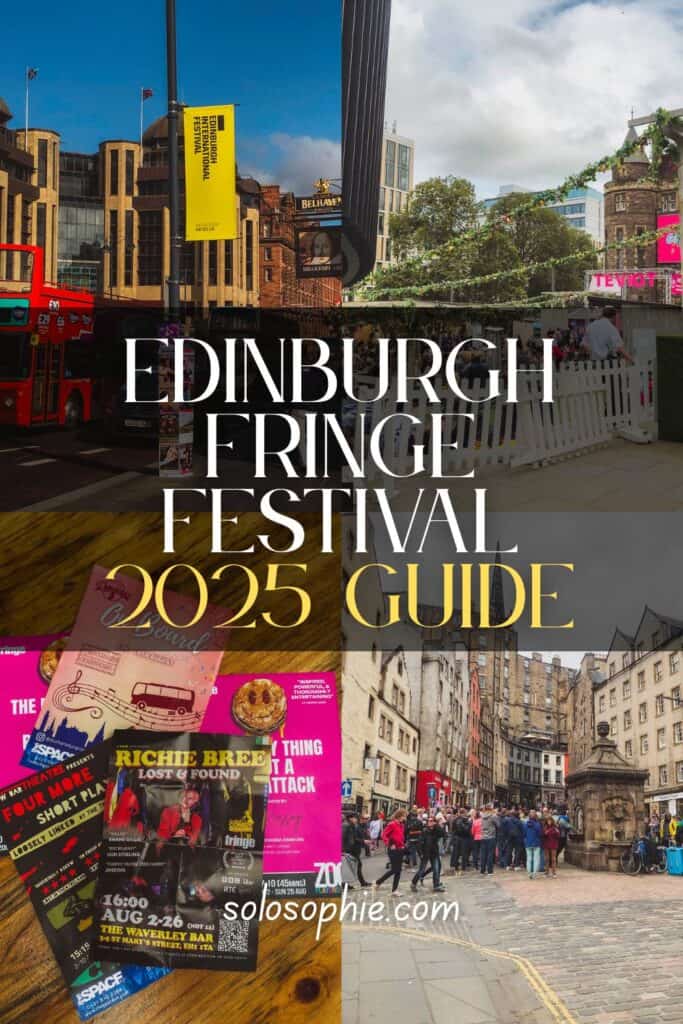
Every August, Edinburgh transforms into a whirlwind of chaotic energy, laughter, and unfiltered creativity. Home to the world’s largest performing arts festival, the Scottish capital hosts a month-long stretch of continuous celebrations where comedy, theatre, music and the more experimental shows happen at nearly every hour of the day.
Planning a trip to the Edinburgh Fringe Festival 2026? In this guide, we’ll give you some of the best insider travel advice (from a local) on how to prepare and navigate the Edinburgh Fringe Festival in 2026!

Contents
Introducing the Edinburgh Fringe Festival
The history of the festival can be traced back to 1947, when an informal collection of theatre groups began performing on the “fringes” of the Edinburgh International Festival, founded the same year by Sir Rufolf Bing, with the intention of reuniting people through art after World War II.
Nowadays, these two festivals pretty much run in sync throughout the month. The main difference to know between the two is that Edinburgh’s International Festival is curated and tends to have big flagship shows and a higher budget, while the Fringe is very much open to all performers, there’s no selection committee, anyone may participate, with any type of performance.
Today, Edinburgh’s three-week-long festival is described as “The world’s greatest platform for creative freedom” and is indeed, the world’s largest performing arts festival, drawing in 3 million people to the Scottish capital (which is home to just over 500,000 people).
In 2024, it’s estimated that more than 2.6 million tickets, and, a recorded 51,446 scheduled performances of 3,746 different shows across 262 venues from 60 different countries took place.
When Is the Edinburgh Fringe Festival 2026?
This year, Edinburgh’s Fringe Festival will kick off on Friday, 7th August 2026, and run until Monday, 31st August 2025. While there are no official open and closing parties on these days, various venues and locations like the Royal Mile will host their own celebrations to mark both the start and end of yet another year of the Festival.
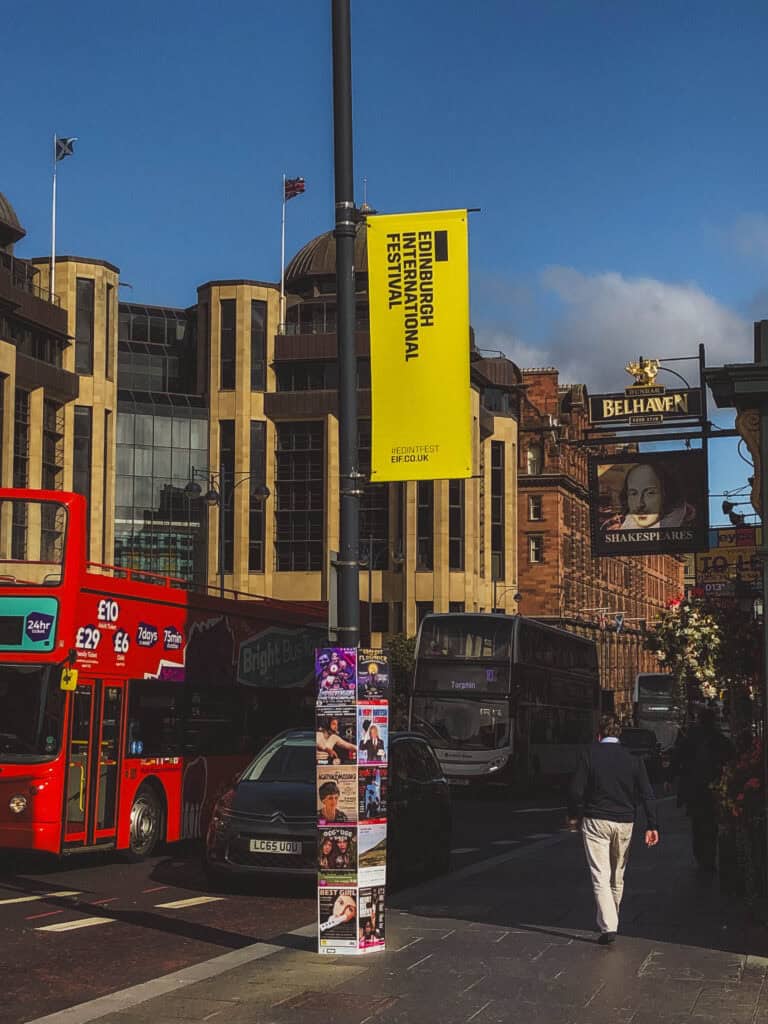
Get the official app & programme
The best way to browse what’s on offer at the festival each year is simply by downloading the EdFringe app. The app will have the most up-to-date information, you can keep tickets on your phone, and there’s even an option to create a personalised schedule to help organise your trip. It is recommended on their official site that each year you delete and redownload the app to ensure you have the most recent version.
For those who prefer the traditional way of flicking through a programme, there is a 2025 Fringe printed programme which you can pick up in person, order online, or, if you are a member of the “Fringe Friends”, then you’ll receive one on an annual basis. The paper version will not include any shows added after the date of print.
Plan ahead
Before heading to the festival, one thing you should note is that the popular shows will sell out fast, sometimes even months in advance. So, if there’s a specific comedy show or act that you’re set on seeing, be sure to keep an eye out for when tickets go on sale and don’t waste time in booking them. That being said, don’t overbook yourself either, as the festival is best explored with a little freedom and spontaneity, the best show will sometimes be the one you happen across!
Aside from booking the shows, planning ahead is essential when it comes to staying in Edinburgh itself. The city doubles in population (and price) throughout August, so you’ll need to factor this in and seek accommodation that will best suit your trip.
Free Fringe shows vs paid shows
There are two types of shows that you go to at the festival. The free shows operate as a “pay what you want” policy. While it’s polite to leave a tip, if you didn’t enjoy the performance, you’re not required to leave a donation. The free shows are a first come first basis and are typically un-ticketed, but some might require a physical ticket upon entry.
Tickets for paid shows can cost anywhere between £5 to £30. In recent years, the average cost has risen drastically, so going to several paid shows per day really racks up the cost. You can purchase them online, or if feeling spontaneous, there’s The Fringe Box Office where you can buy physical tickets.
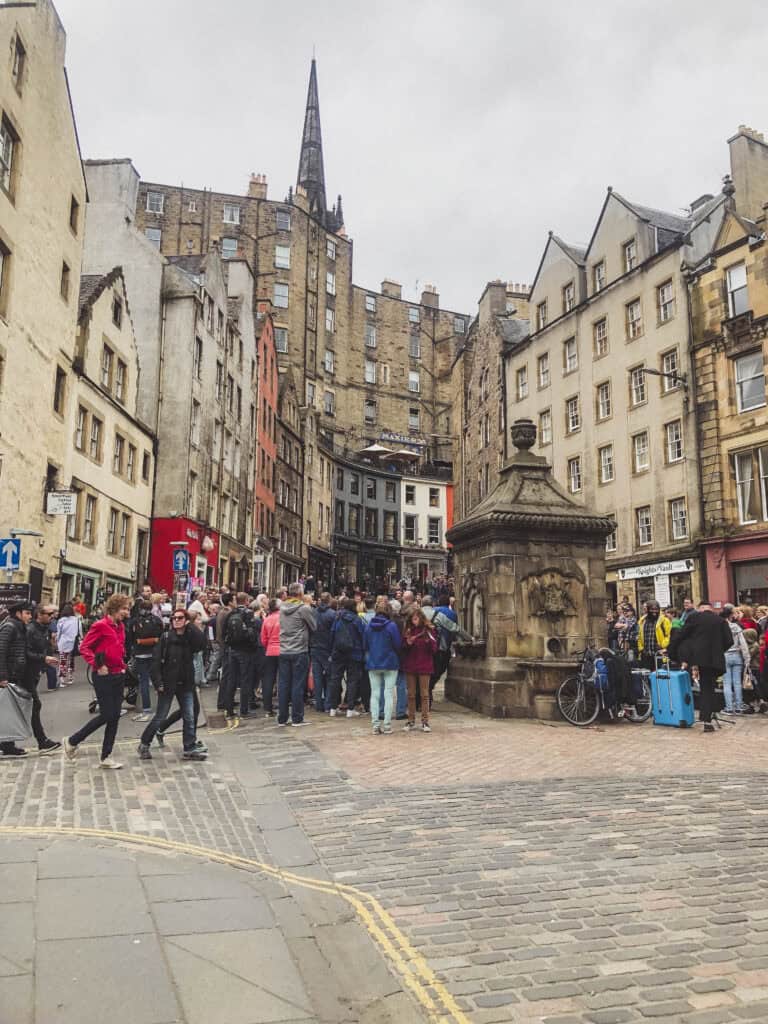
It’s also worth noting that you’ll see plenty of street performances, anything from fire-breathing, magic, to opera singing and dancing. The main street performances tend to take place on Grassmarket, along the Royal Mile, and near to the National Museum of Scotland.
Insider Tips for First-Time Fringe Goers
Don’t accept leaflets & flyers
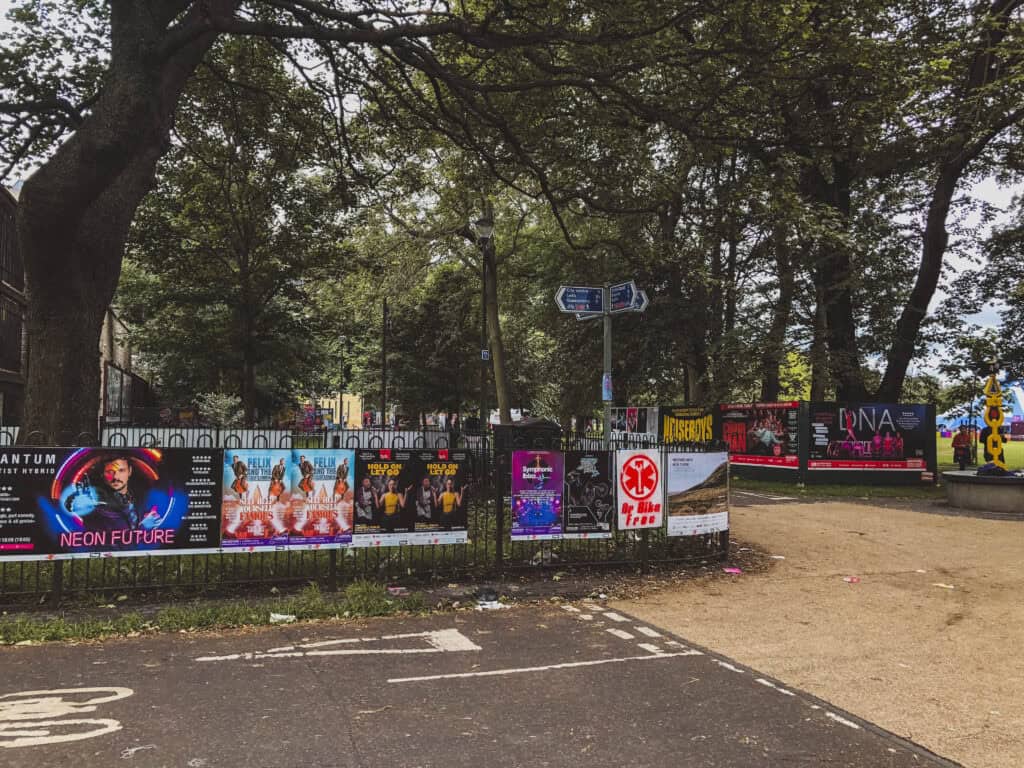
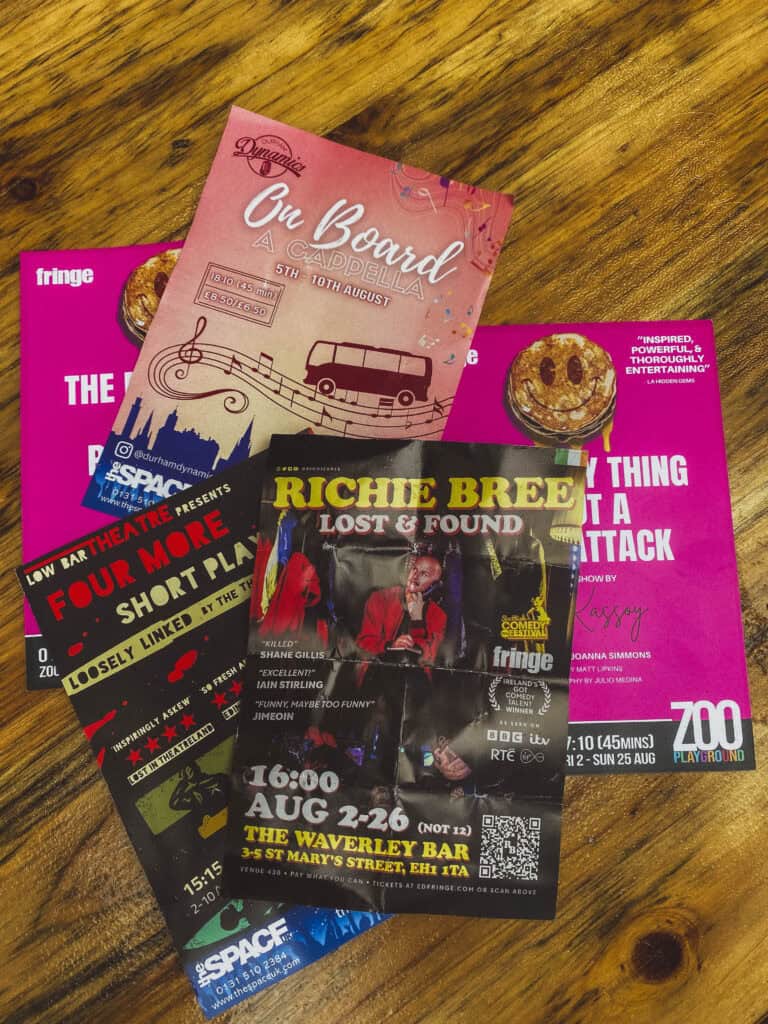
Upon walking around the city, you’ll quickly learn that leaflets, flyers and posters are plastered everywhere and unfortunately, all over the floor too. While they can be a great way to learn about shows you might want to check out, it’s also easy to have a buildup of paper on your person should you choose to accept one from the many people who take to the streets and flyer throughout August as a summer job.
I recommend not taking a flyer or leaflet as you’ll become a quick target. There are hundreds of people out there trying to get you to come to their show, and while the first few conversations are fun, it can become relentless.
Expect the unexpected
One of the first years I lived in Edinburgh, I took a taxi and the driver said to me, “You haven’t experienced the Fringe Festival until you are the only person left in the audience”, and this is possibly the best advice remembered when it came to sitting alone clapping on an act still trooping on through their show, even though every single person had walked out…
The Festival is for all levels; anyone can put on a show, especially lots of free shows. And, if you choose to risk a free show (which is the ultimate festival experience) then you’ll find that people walk out when they are really bad. However, some can be good, others interesting, and then there’s a point in your life where you witness a one-man show reenacting the entire film 300 for an hour. Yes, there was a lot of sweat.
But that’s the beauty of the festival, it’s vibrant, diverse, and most of all unexpected. So, the best way to enjoy it is by having no expectations for anything, even if you book tickets in advance.
Keep an eye on your possessions
As with any city or crowded area, pickpockets will take their chance to strike. Be aware of your belongings at all times and avoid leaving them on the sides of tables, on the floor at shows, or having them open as you walk around.
Use the Half Price Hut
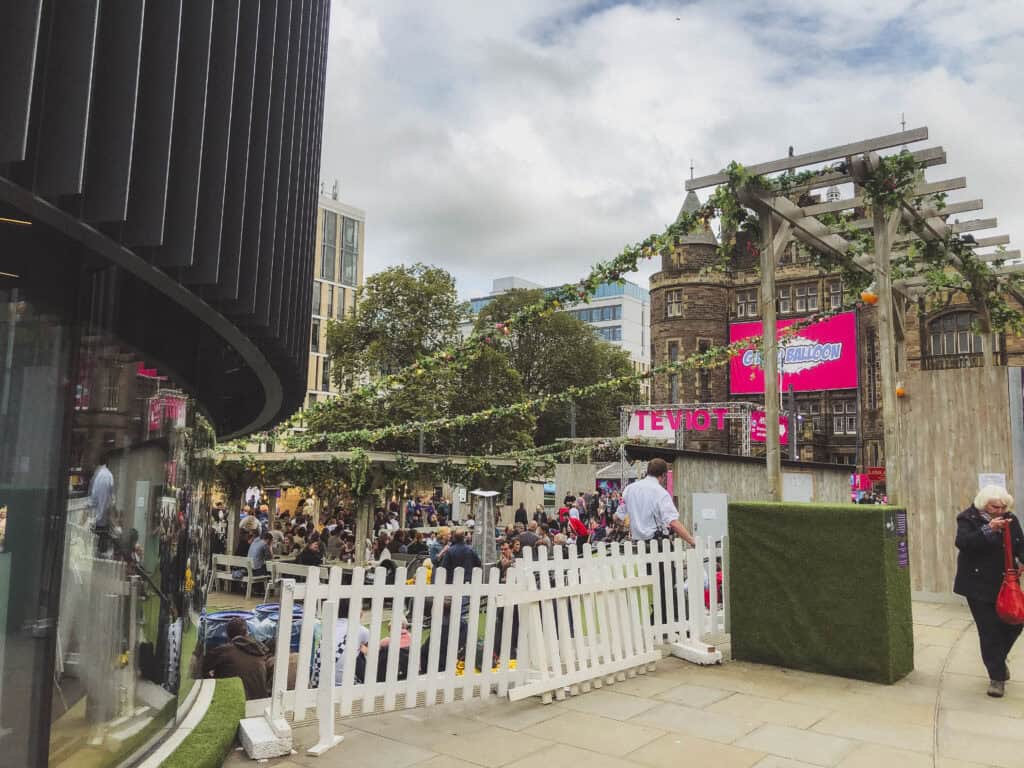
Thousands of half-price tickets are available to purchase on the day from the Half Price Hut, which can be found at the Fringe Box Office. This is a great way to catch a bargain and save money. This year, the Half Price Hut will open from Wednesday, 6th August 2025.
Only book 1 or 2 shows per day
Avoid booking up your entire day with shows and allow for the freedom of flexibility to explore, and perhaps go to a show you come across. While there’s a lot you’ll want to see, if you book up your entire day it might well take the joy out of experiencing the festival, and navigating through crowds to get to things on time will quickly become stressful and frustrating.
A show typically lasts an hour, so I recommend only booking one or two in advance and then letting the rest of the day take you. After all, there’s always plenty to see, and you have the opportunity to hydrate, eat, and enjoy the city itself.
Locals get discount
It pays off to know people, and in this case, if you know a local, you could be reaping the rewards and saving money (on accommodation, too!) Fringe Days Out provides free tickets to support Edinburgh community groups, but there are also plenty of venues that offer discounted rates to those with a local postcode.
Sit at the front to be picked
Many of the performances in the festival involve the crowd, whether it’s for practical purposes, helping out on a magic trick, or simply to be the butt of a joke. If you sit at the front, you are more likely to be picked. The festival thrives on audience participation, and it’s also a great way to hear just how far members of the crowd have come to visit from!
That being said, being singled out is some people’s worst nightmare. If this is you, then I highly recommend sitting further back to avoid being picked out.
Getting to Edinburgh
People travel from all corners of the world to reach Scotland’s capital city in August, so you should expect train and plane prices to be high. If travelling using your own vehicle, be sure to check out parking prices and availability in advance, as it’s a capital city the costs can be high (expect everything to be highly priced in August), and there’s a high demand.
If travelling by plane, then Edinburgh airport is directly connected to the centre of the city via the tram. This frequent service is easy to use and runs every 7 minutes from 7 am to 7pm seven days a week, and then every 10 minutes until 11:30 pm (the last tram from the airport is 10:48 pm). During the festival the trams operate 24/7 on Friday and Saturday nights to help with travel for those visiting the festival.
Travelling to Edinburgh by train is possibly the most expensive option, but it also offers flexibility. However, this year I recommend booking well in advance as there are a multitude of things happening in the city, so all the trains will likely be booked up.
Where to stay during the Fringe
As mentioned, Edinburgh’s population doubles come August, so finding accommodation (especially last-minute) can be difficult. This is particularly true this year, thanks to Oasis’s multiple performances happening at Murrayfield Stadium and the recent tightening of licensing rules for Airbnbs in Edinburgh. However, there’s no need to despair, as there are plenty of options to consider:
Stay in student halls: The city tries its hardest to accommodate as many festival goers as possible, one of the ways it does this is through the short-term letting of student accommodation. This option is often the cheapest, too!
You can find this type of accommodation through dedicated student housing providers, the universities, or sometimes they are listed on flat hunting websites and social media (if sourcing accommodation on social media, be cautious and ensure that it’s a legitimate before sending across any kind of payment).
Don’t stay in Edinburgh: This option isn’t necessarily for everyone, as part of the experience of the festival is staying in the Gothic city itself. However, there are several options which are more affordable and also offer a quieter stay, plus you get to see a little more of Scotland!
Lots of people tend to opt for Glasgow as it’s only a 40-minute train ride between the two cities (because of this popular option, the trains can be busy, so bear this in mind). Nearby places that are located along bus routes include Musselburgh (which is by the sea!) Bonnyrigg, Dalkeith, and Lasswade.
Splash some cash: If money is no object, then you’ll still be able to find accommodation, just know that it’s likely going to cost twice, if not three times, more than a typical stay in the city.
If staying in the city itself, I recommend booking in the Old Town or along the Royal Mile for the ultimate chaotic festival atmosphere. If you prefer to enjoy the festival, but also leave the crowds behind, then I recommend staying in Leith or Newhaven. Check out our Edinburgh neighbourhood guide for more information.
It’s good to know someone local: Of course, the most cost-efficient way to stay in the city is if you’re lucky and know someone you can stay with. Plus, locals with an EH postcode can often find discounted tickets to Edinburgh Fringe shows.
Other must-see spots
Seeing the Edinburgh Festival in August is one of those lifetime experiences that must be done at least once. However, it’s no secret that the endless shows, bustling crowds, and constant flyering in your face can be exhausting. To break up your trip, consider visiting these other spots in the city:
Edinburgh Jazz Bar
This is technically a festival venue, but well worth a visit in its own right. The Jazz Bar is an institution and an absolute must-visit to anyone making a trip to Edinburgh. This stylish basement bar is home to year-round live music. In August the programme is completely crammed with multi-genre music from jazz, funk, soul, and it’s open every day from 1 pm to 5 am.
See folk music in a pub
A good way to take a break from the Festival, but still enjoy the lively atmosphere of the city, is by visiting a local pub and enjoying traditional folk music live. Some of the best places to see this are: The Royal Oak, Sandy Bell’s, The Ensign Ewart, The Black Cat, and The Malt & Hops.
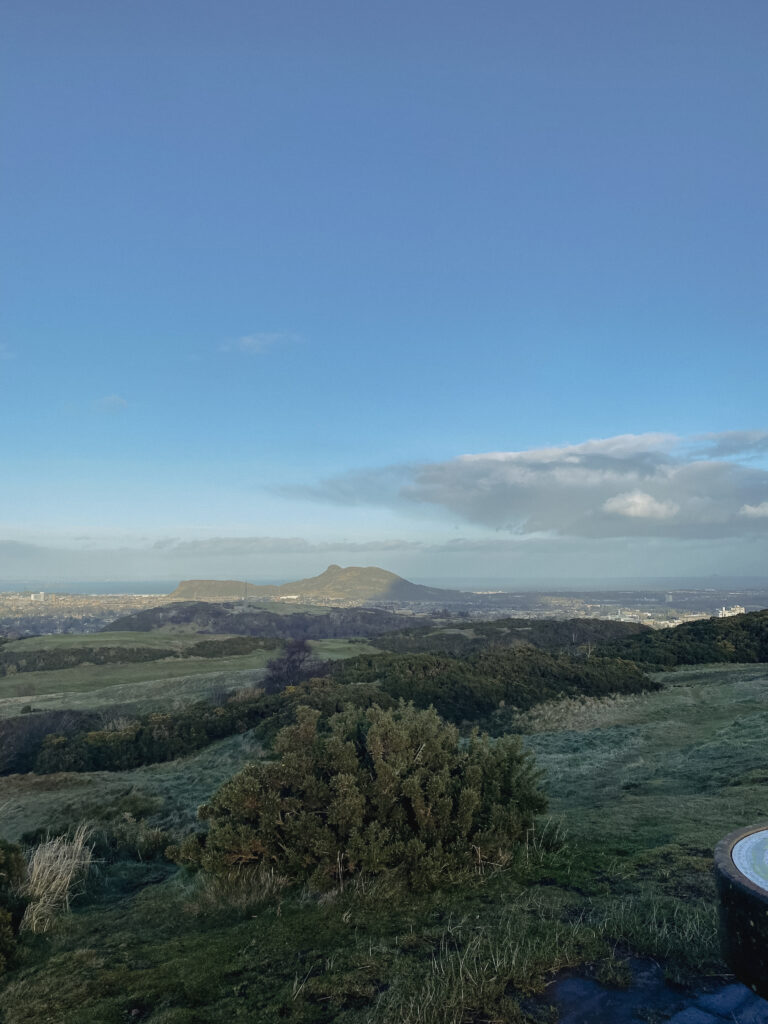
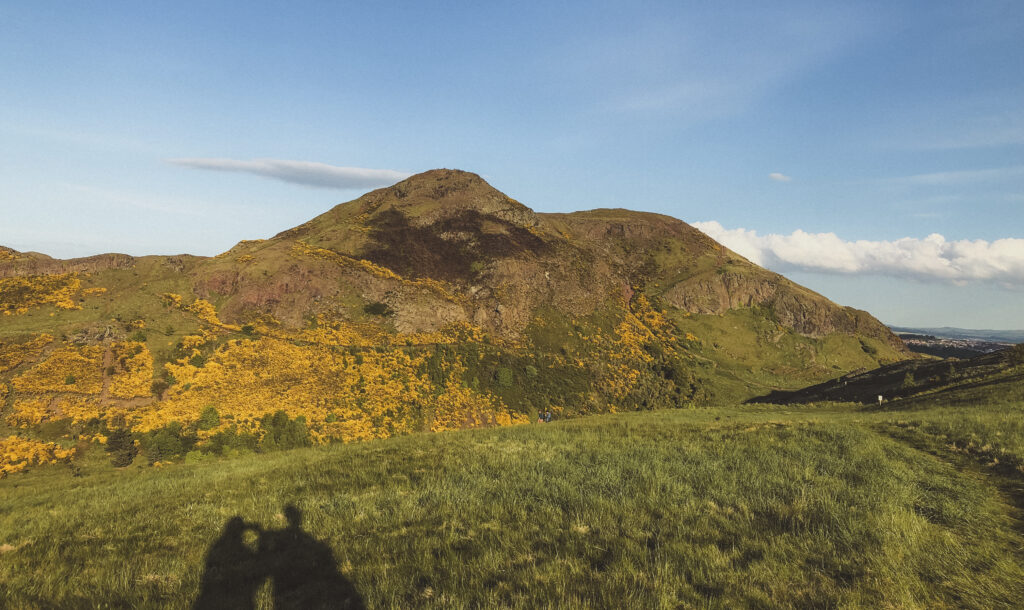
Climb Arthur’s Seat
There aren’t many cities in the world where you can climb an extinct volcano. Edinburgh is a city of seven hills, and there are several stunning walks and climbs that can be enjoyed in the summer weather. The most famous being Arthur’s Seat.
If you’ve watched the series One Day, you might recognise it as one of the filming locations. Either way, this iconic landmark is one of the best things to do while visiting the city, and boasts the best views overlooking Edinburgh, the River Forth, and beyond.
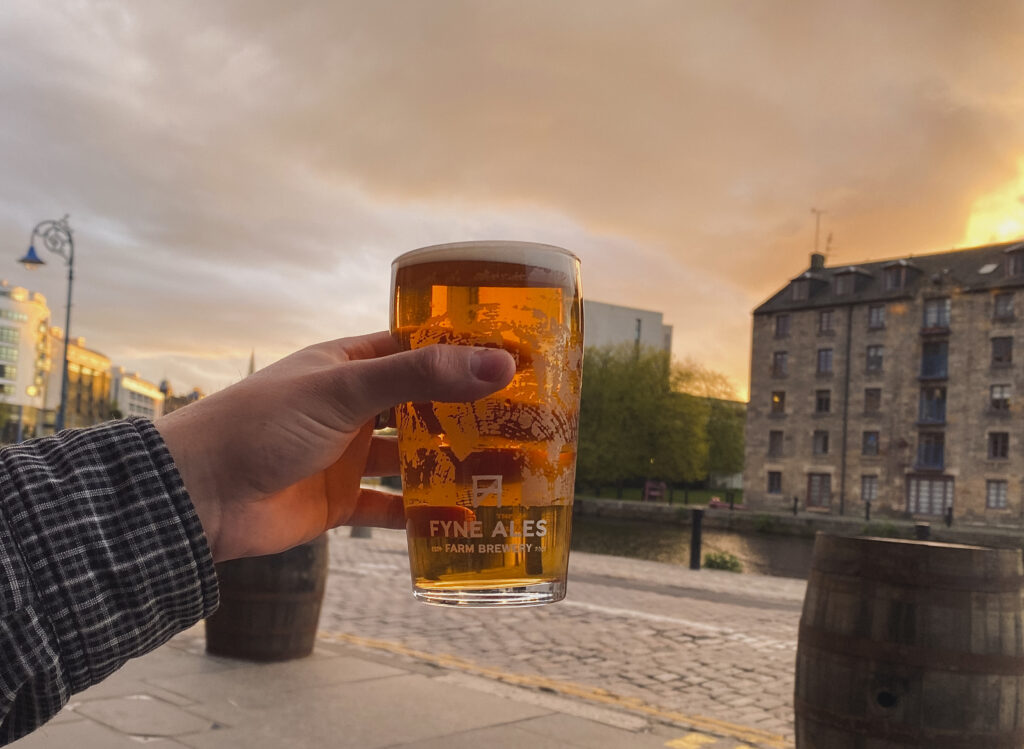
Taste local beers
You might notice that Edinburgh has a distinct malty smell. This is due to the roasting of malted barley for local whisky production and brewing beer. The Scottish capital has been brewing beer since the 12th century, and at one time it became the brewing capital of the world, home to over 40 breweries. So, it would be rude not to sample the local produce. Read our guide on the best local beers to try!
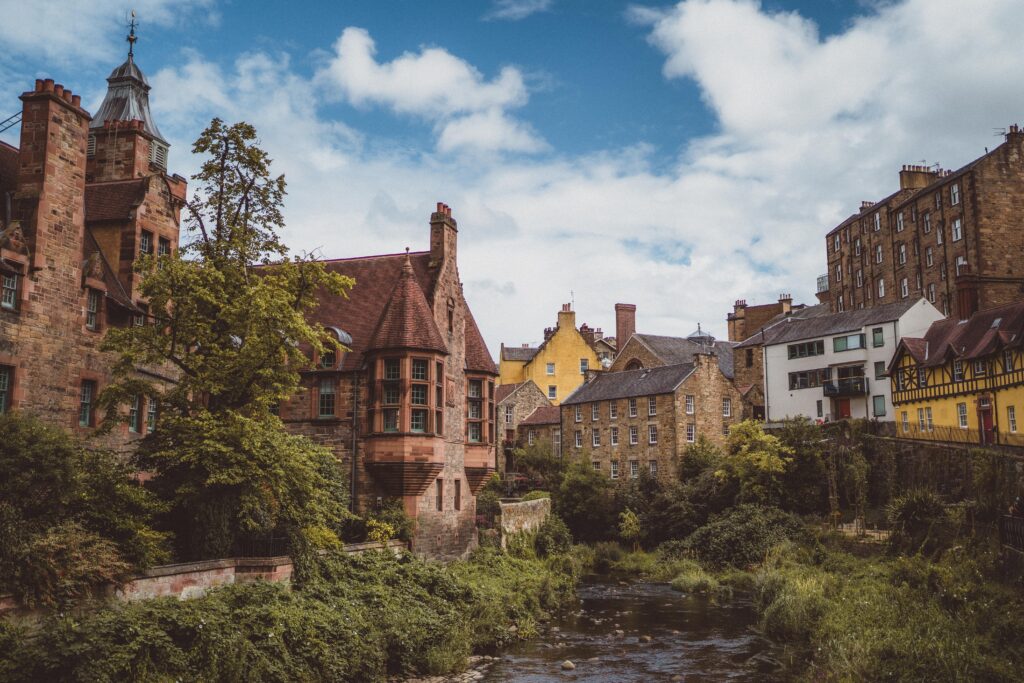
Visit Dean Village
A small stream babbles nearby, and you can hear birds chirping in the surrounding trees. The quaint area of Dean Village is far removed from the normal bustle of busy Edinburgh city life. To escape the Festival for an afternoon, head down to Edinburgh’s prettiest pockets, enjoy the trails along the Water of Leith and get some postcard-perfect snaps.
Did you know we have a travel guide to Edinburgh?
Discover the beauty of Edinburgh’s cobbled streets, by reading our recommendations for all the historic pubs, quirky cafes, restaurants, and small museums to visit. As well as top suggestions for what to do on a rainy day, romantic date ideas and plenty of suggested itineraries and walking tours to make your travels easier.
Enjoyed reading our guide on how to visit Edinburgh’s Fringe Festival? Pin this article now, and read it again later: