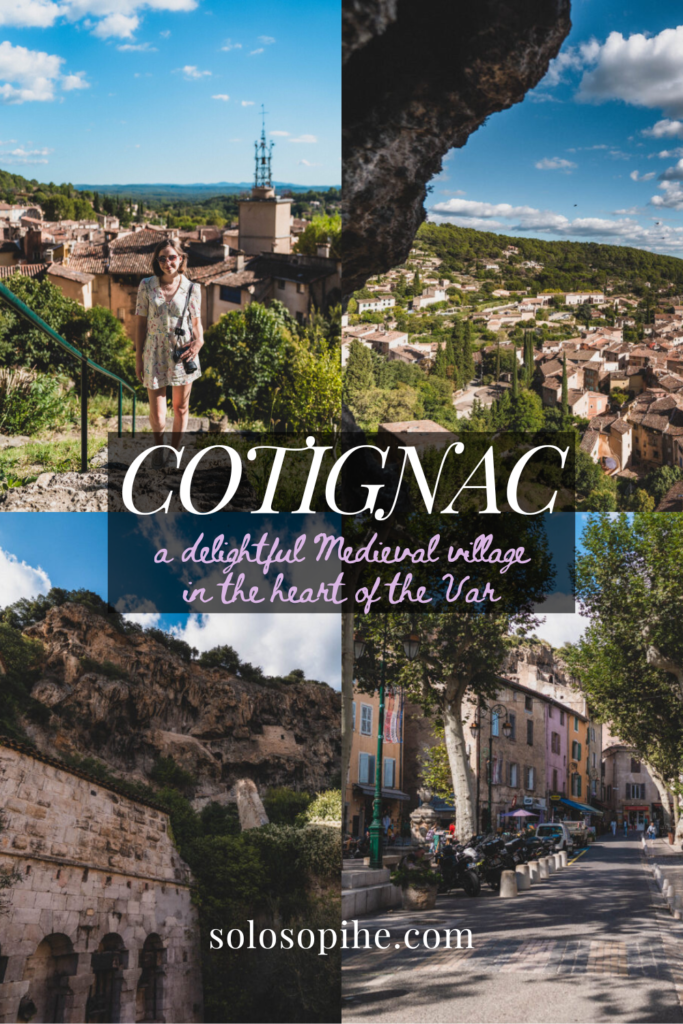
Cotignac Guide: A Delightful Village in the Heart of the Var
Last Updated on 9th October 2024 by Charlotte Nadeau
This post may contain affiliate links. Please check out my privacy policy and disclosure for more information.
Welcome to Cotignac, a medieval gem in southeastern France’s Provence-Alpes-Côte d’Azur region. This charming town is built into the limestone cliffside that looms overhead and is often hailed as one of the country’s most beautiful villages. It’s also said to be the site of several miracles. Here’s your guide on Cotignac, a delightful village in the heart of the Var!

Contents
What is Cotignac known for?
Nicknamed the “The Little Saint-Tropez of Haut Var”, Cotignac is a medieval gem of Provence most famously known as a destination where religion-related miracles have happened. Nestled at the foot of a limestone cliff known as “The Rock”, many cave dwellings and crevices have been tunnelled into its face by a waterfall (which has since been diverted).
Thanks to the dramatic cliffs and quintessential South of France landscape that surrounds it, Cotignac is hailed as one of France’s most beautiful villages. As such, it has been known to draw the eyes of celebrities to the likes of George Clooney and Brad Pitt!
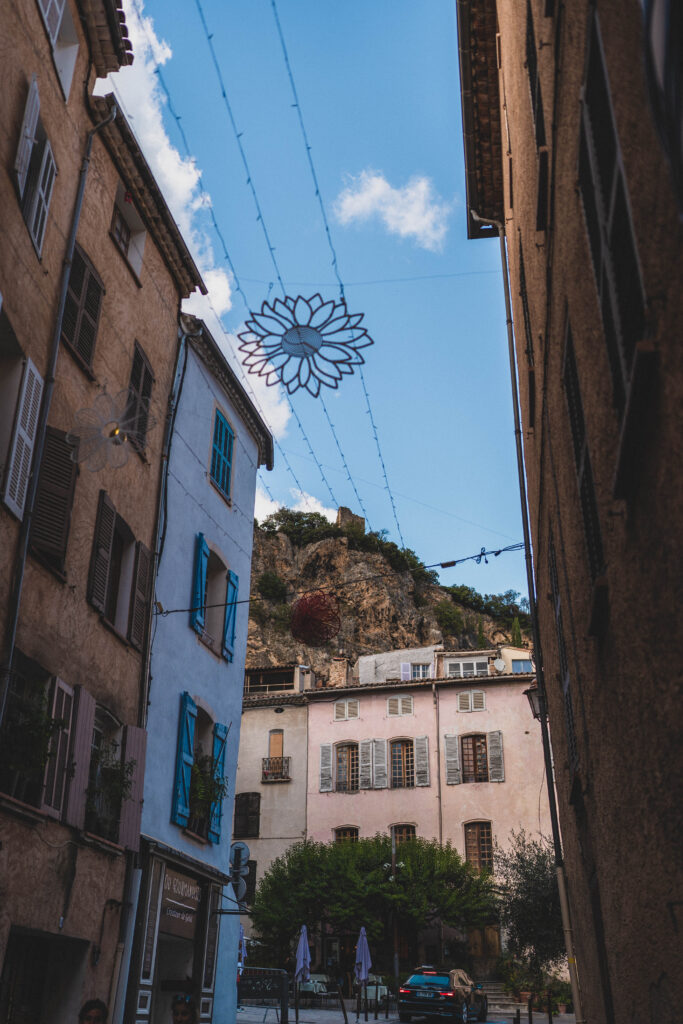
A brief history of Cotignac
The medieval village of Cotignac was first established in the 5th and 6th centuries, though the oldest parts of the settlement seen today date back to the 12th century.
In the 12th century, a fortress and two Saracen towers (“Les Tours Sarrasines”) were built high above the village atop the limestone cliff as a lookout to protect the settlement from invasions. Although very little of the castle remains, the two crumbling turrets still stand guard above Cotignac.
During the 18th century, the commune saw exponential population growth and experienced a “golden age”, becoming quite prosperous. This being said, the residential population (last recorded in 2015) sits at around 2,500 people.
Historically, the village is said to have been a site where miracles happened and the Holy family appeared. The two miracles include a vision of The Virgin Mary and baby Jesus appearing to a local woodcutter, as well as a local shepherd sighting Saint Joseph some years later. As a result, Cotignac is an important place of pilgrimage.
Indeed, to this very day, some 150,000 pilgrims trek their way to the settlement each year in honour of Notre-Dame de Grâces and Saint-Joseph.
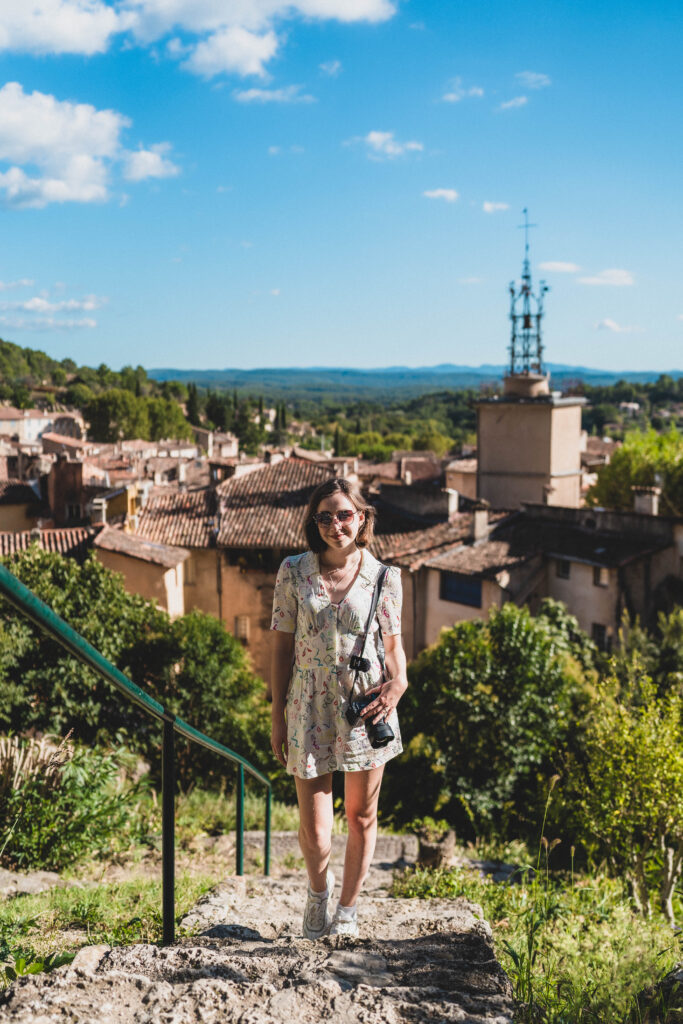
Today, Cotignac is a relatively undiscovered gem of Provence and a little off the beaten path, hence why it’s maintained its traditional Provençal countryside feel. Its beauty and charm have drawn in creative minds of the world, as well as celebrities flocking to admire this tranquil pocket of southern France.
*If you get a chance, there are many reasons to visit Cotignac, some of which we’ll outline below…
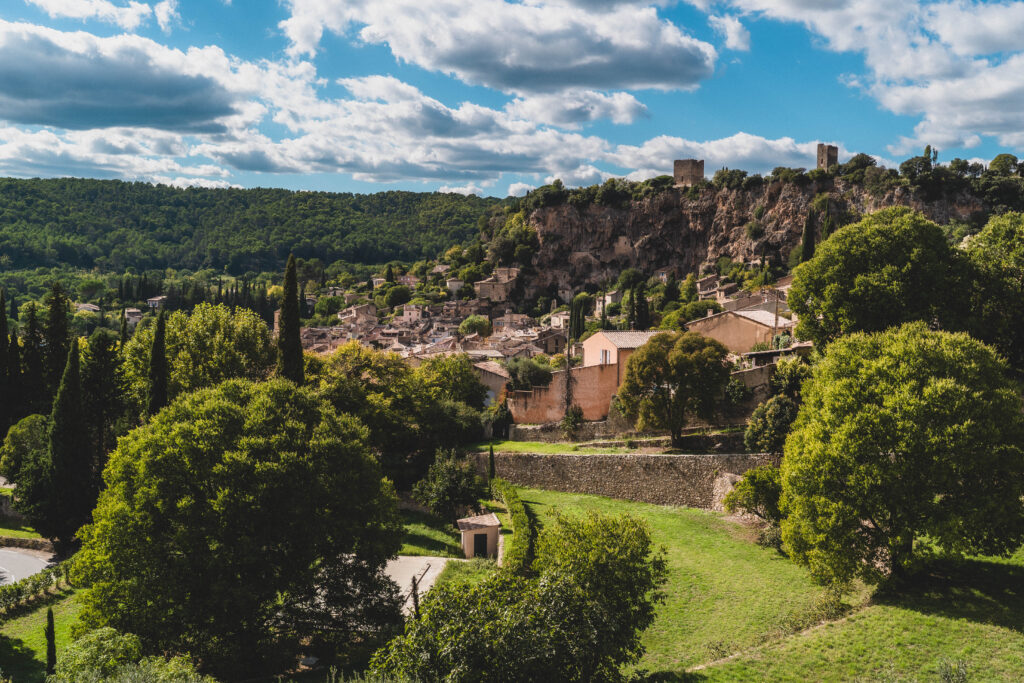
Cotignac has an elevation of 230 meters above sea level and is protected by an 80-meter-high and 400-meters long limestone cliff known as “Le Rocher”, which translates as “The Rock”. The cliff face is filled with troglodyte caves which were traditionally used as storage holes for animals and grain, and sometimes shelter during stormy weather.
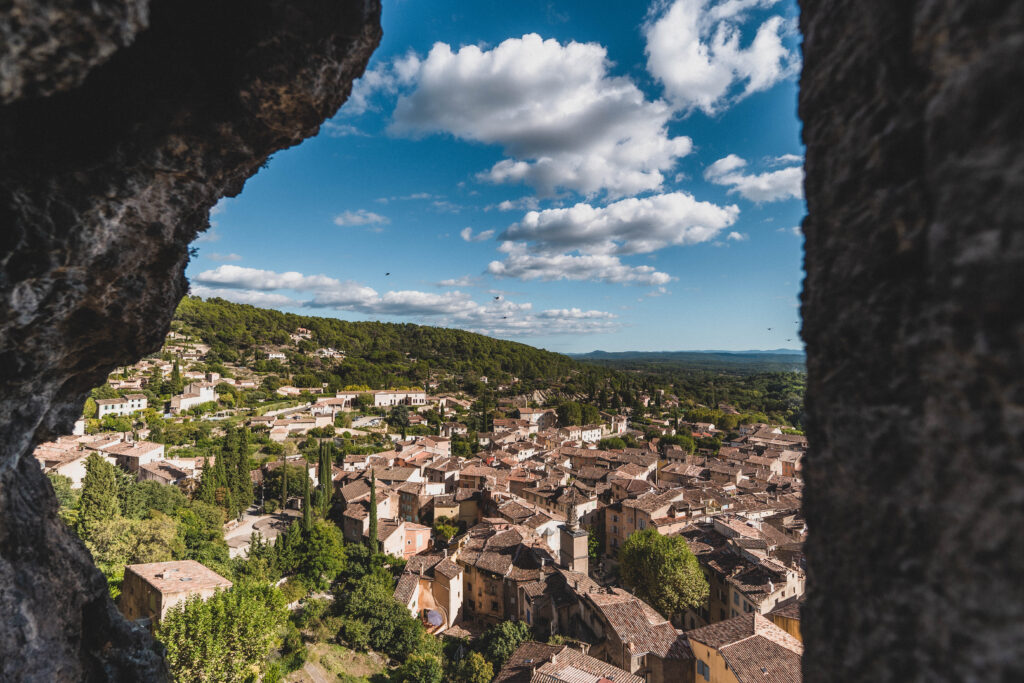
Best things to do in Cotignac
Considering that Cotignac is part of the most beautiful villages of France association, you’ll want to dedicate at least a long afternoon to soaking up its many charms, perusing its lovely little gift shops, and perhaps enjoy a drink or snack on a terrace.
Visit the cliff houses and caves
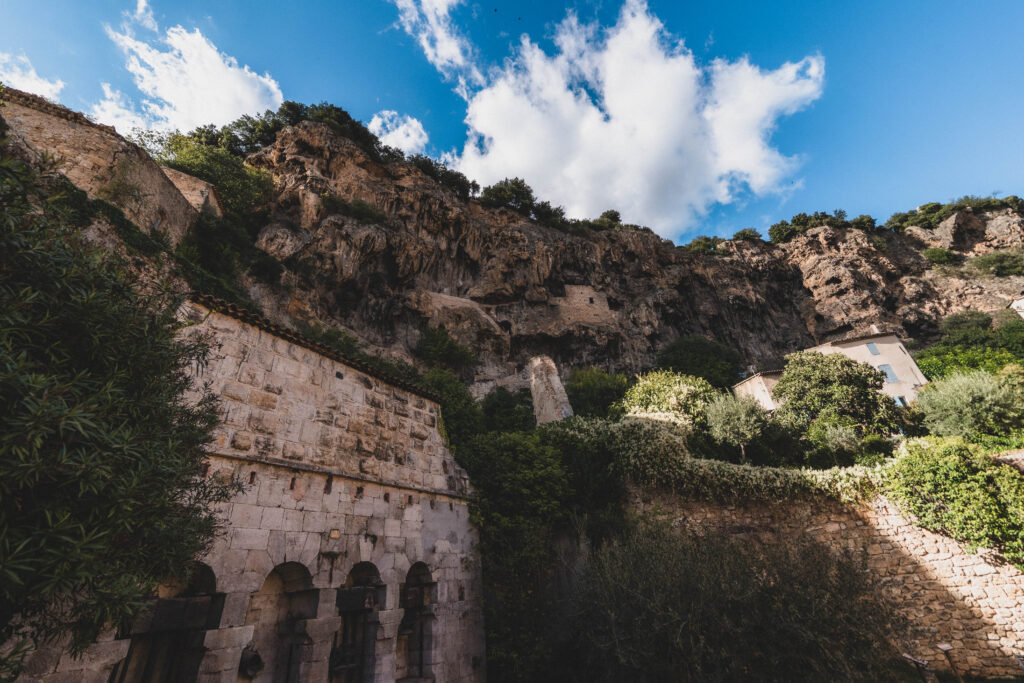
Found within the limestone cliff are several caves and crevices which have been used by the villagers for hundreds of years. Carved out by a waterfall which once gushed from the rock’s face, in the 10th century the water was diverted to make space for Cotignac.
Today, many of the cave dwellings are still inhabited, and it’s possible to visit some of them! There’s an entrance fee of two euros, and you can’t book a slot in advance. Make sure you bring cash, as credit/ debit cards are not accepted.
Fascinated by cliffside homes?
Read about the enchanting ‘City of Caves’. Once dubbed the “shame of Italy” Matera is the world’s third oldest city where poverty and hardship are a recent memory.
Sample local food
With delicious French cuisine and, of course, exceptional regional wines, the South of France is a veritable delight when it comes to dining experiences. Not to mention, Cotignac is home to Jardin Secret, a Provençal restaurant that focuses on eco-friendly cuisine and has earned its very own Michelin Green Star.
Provençal cuisine relies heavily on local produce, including golden olive oil, the bounty of the Mediterranean Sea and the staple aromatic mix of Herbes de Provence. Some of the dishes you might expect to see include Ratatouille, Bouillabaisse (a traditional fish stew) and Salade niçoise (a tuna & egg salad that originated from Nice).
Where to eat:
- Le Temps de Pose
- Picotte Provence
- La Pizzaïola de Cotignac
- Jardin Secret – (£££)
While it’s still pretty common to be served an “assiette de légumes” (plate of vegetables), it has to be said that the South of France is becoming better at catering to the vegans and vegetarians of the world.
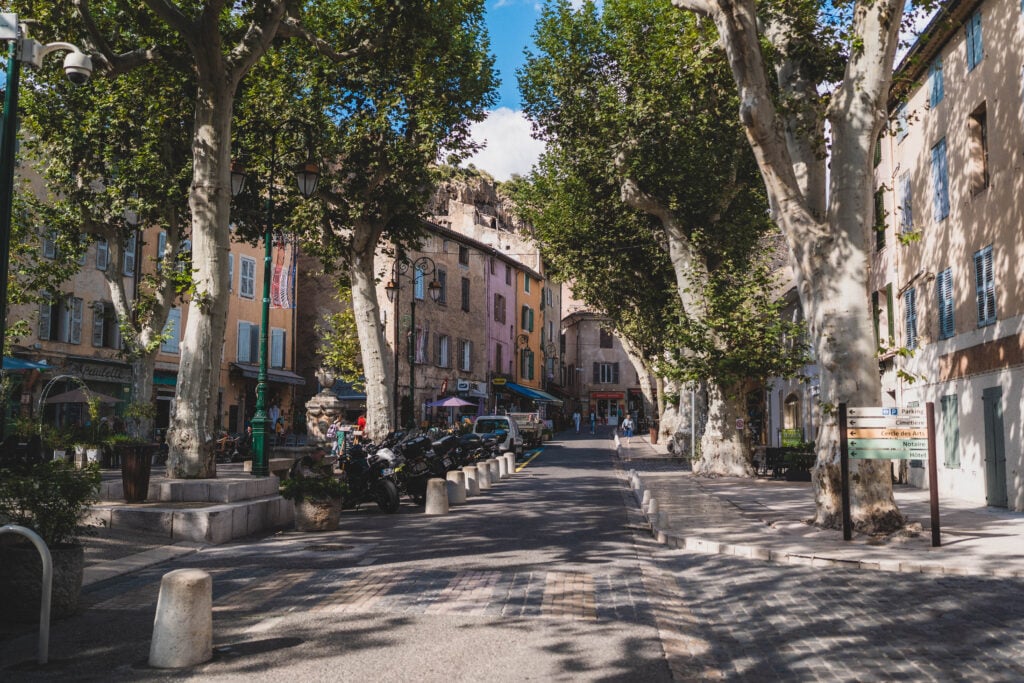
Wander around the old town
Characterised by soft pastel-coloured houses, quaint cobbled lanes and the dappled sunlight that leaks through the canopies of trees, Cotignac makes for a wonderful destination for which to soak up inspiration and wander around.
Some of the main highlights of a walk around town include:
- Cotignac’s many fountains – There are a total of eighteen fountains to seek out, almost all of which were built in the 17th century. All of the water that spouts out is pure and safe to drink!
- Le Chapeau Voyageur – (The Traveller’s Hat) This is the go-to hat shop in town where you can pick up any kind of headwear you desire!
- Cotignac Market – An artisan market takes on Tuesdays from 8 am, and traders usually start to trail off around 12:30 pm. Here you can mooch around stalls brimming with local produce and delights of the region.
I would recommend parking close to the tourist office as there is a huge free car park. From there, you can easily head to the tourist office to pick up pamphlets about the local area before traversing the bridge that goes over La Cassole River and walking a few minutes into Cotignac’s village centre.
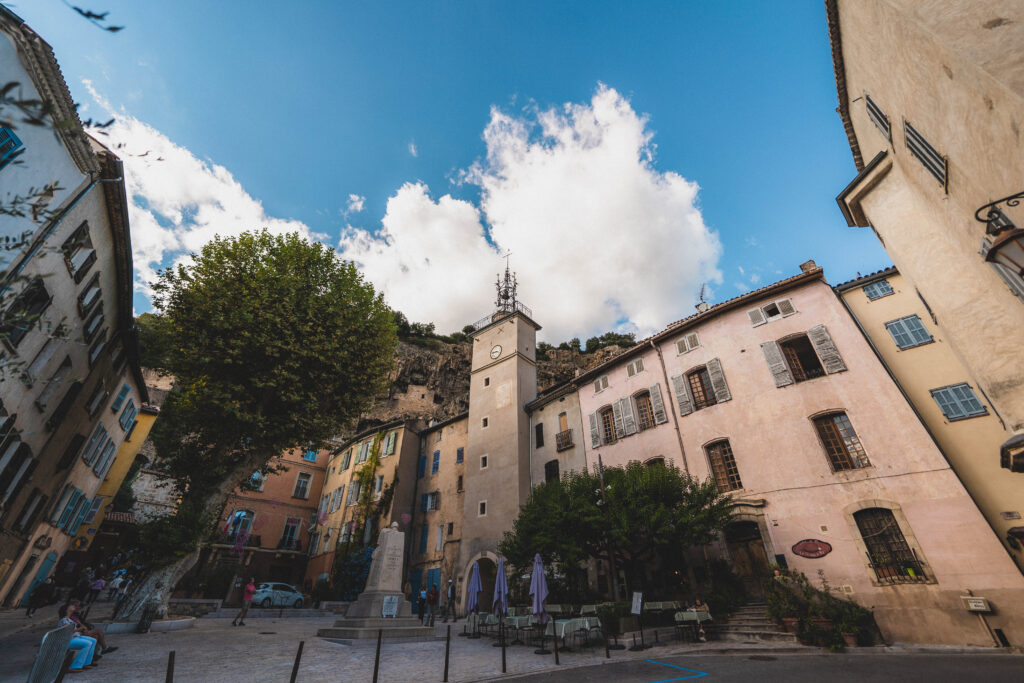
Visit the Shrine of Our Lady of Graces
A beautiful lemon-coloured church where miracles are said to have happened, a visit to this ecclesial sight is the highlight of those who pilgrim to Cotignac. The church was built in 1519, two years after The Virgin Mary and Baby Jesus were sighted by a local woodcutter.
Where to stay
There are plenty of beautiful places to stay in Cotignac, from traditional Proveneceal dwellings to guesthouses full of charm. And, thanks to it being relatively unknown on the main tourist route of South of France, you’re pretty much guaranteed a peaceful time! Here are a few suggestions of where to stay (based on web reviews):
La maison du bonheur – Offering accommodation with mountain views, this recently renovated bed & breakfast has amenities including a garden and private pool. Guests have commented on the hosts being friendly and welcoming and the location is fantastic! Check prices and availability here.
La Bastide du Mûrier – Boasting a calm environment nestled in the heart of Cotignac, this bed & breakfast offers an included daily homemade breakfast, a private pool and free parking on site. Run by a lovely couple, reviewers have commented on their attentiveness and described the residence as “a little paradise on earth”. Check prices and availability here.
Guesthouse Le Mas de Cotignac – Sitting at the higher end of luxury, this beautiful guesthouse boasts both an indoor swimming pool and an outdoor seasonal pool. A complimentary breakfast is available daily, and you’ll also find a sun terrace, garden and relaxation area to enjoy. Guests have described it as a peaceful retreat and highly recommend. Check prices and availability here.
Enjoyed reading our guide to Cotignac? Pin this article now, and read it again later: