How to Visit Cascade aux Ecrevisses in Guadeloupe
Last Updated on 16th February 2026 by Sophie Nadeau
This post may contain affiliate links. Please check out my privacy policy and disclosure for more information.
Basse-Terre, one of the two large islands that form the ‘butterfly’ shape of the Guadeloupe archipelago is best-known for its lush jungle and sheer quantity of rainfall. Therefore it should be no surprise that the area is incredible for visiting waterfalls, and one of the most easily accessible is Cascade aux Ecrevisses.
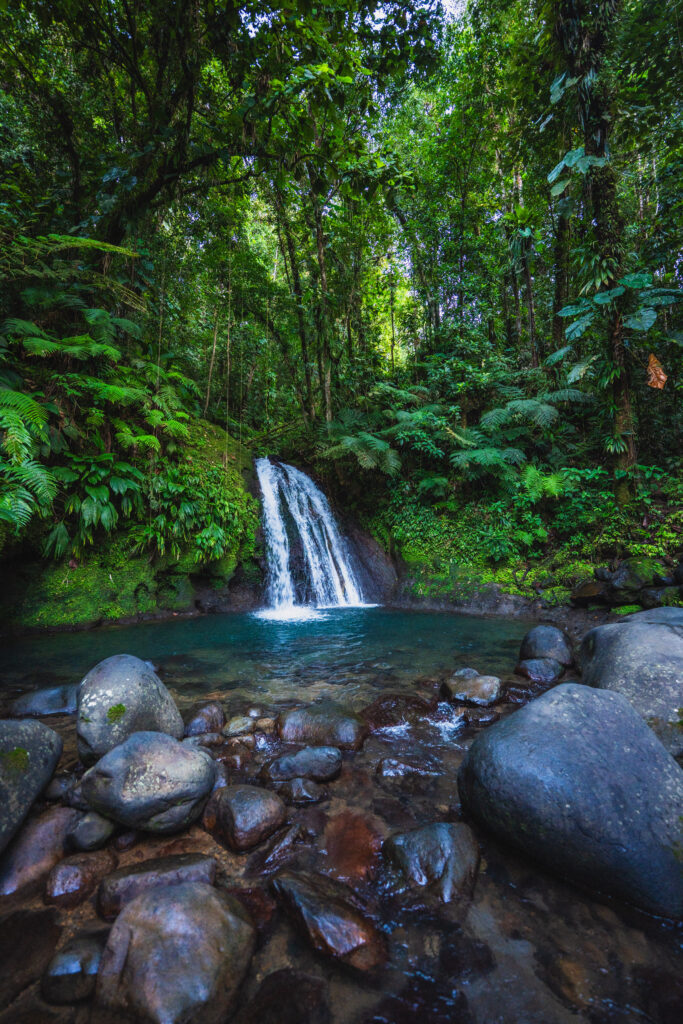
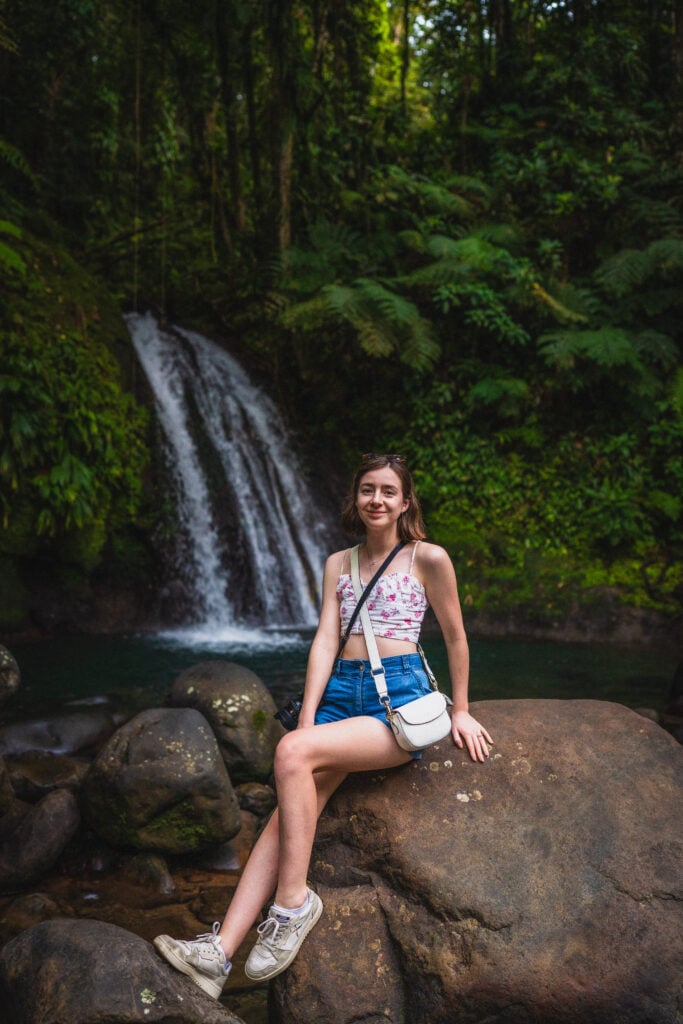
While the name is literally translated into English as ‘Crayfish Waterfall,’ today there aren’t very many freshwater crayfish still living in the basin. Instead, this is a historical name from a time when freshwater crayfish inhabited the stream. And at 8 metres in height, this might not be the tallest waterfall in Guadeloupe, but it’s definitely the easiest to reach!
Guadeloupe’s National Park
The waterfall lies within the boundaries of Guadeloupe National Park, a protected area known for its rich biodiversity. The park covers much of Basse-Terre and includes volcanic peaks (including the highest point of the island, Soufrière), rivers, waterfalls, and diverse wildlife.
Along the path, if you’re quiet and keep your eyes peeled, you might be able to spot:
- Tropical plants and giant ferns
- Colorful birds such as hummingbirds
- Small reptiles and amphibians native to the region
How to visit Cascade aux Ecrevisses
Like many of the smaller waterfalls in Guadeloupe, this fall is completely free to visit and there is even a free car park nearby. Located along the scenic Route de la Traversée (D23), this spot is popular among both locals and visitors alike.
You should note that due to the easy access of this trail, space in the car park can fill up fast and so I recommend arriving early in the day or later in the day (we visited just before 6 PM at dusk when the light was ethereal) in order to actually be able to park!
Once you’ve parked your car you can follow a well-paved and well-maintained ten minute trail in order to actually reach the falls. The trail is mostly flat and shaded, making it suitable for families with children and casual hikers and I even saw people pushing strollers along the path.
Due to the protected nature of the park, drones are not permitted. The area is unsupervised but many people still opt to go swimming. Be wary that after heavy rainfall, the rivers can swiftly become dangerous in Guadeloupe and so you should always check the weather before departing anywhere in Basse-Terre.