How to Visit Tiger Cave Temple in Krabi (Wat Tham Suea)
Last Updated on 3rd March 2026 by Charlotte Nadeau
This post may contain affiliate links. Please check out my privacy policy and disclosure for more information.
The Tiger Cave Temple is a stunning Buddhist temple shrouded in legends. Famous for its 1,260-step climb, sprawling meditation caves, and breathtaking panoramic views, this temple is both a spiritual retreat and a test of stamina. Home to sacred shrines, golden statues, cheeky monkeys, and truly unforgettable views, Wat Tham Suea is a must-see highlight on any trip to Krabi. In this guide, we’ll tell you how to visit and just exactly why it’s worth the effort to make the climb to its summit!

Contents
A history of the Tiger Cave Temple
The temple was first established in 1975, when a Vipassana monk named Ajahn Jumnean Seelasettho came to meditate in the cave. During his stay, he reportedly saw tigers roaming the area, hence why the temple is named Wat Tham Suea (Thai: วัดถ้ำเสือ), Tiger Cave Temple.
There are a few different legends about the cave. Some say a giant tiger actually inhabited the small limestone cove, roaming around long before the monk came to meditate there. While others point to tiger paw prints found on the cave walls, including a natural bulge in the rock that looks just like a paw! Whether it’s fact or folklore, there’s certainly a feeling of mystery and intrigue surrounding the temple’s location and origins.
Hiking to the Tiger Cave Temple
This is definitely a challenging hike, so make sure you bring plenty of water and wear something comfortable on your feet. At the base of the temple, they even have free water bottles sitting in buckets of ice, which was super refreshing on a hot day. But, I have to say, I wasn’t a fan of the taste!
Some people tackle the climb in sandals (my husband included), but I was really glad to have trainers/a suitable strapped to my feet kind of footwear. This is because the steps are uneven and all different heights, and coming back down can be tough on your knees, so having proper shoes makes a big difference.
Highlights of the Tiger Cave Temple
Temple at the base
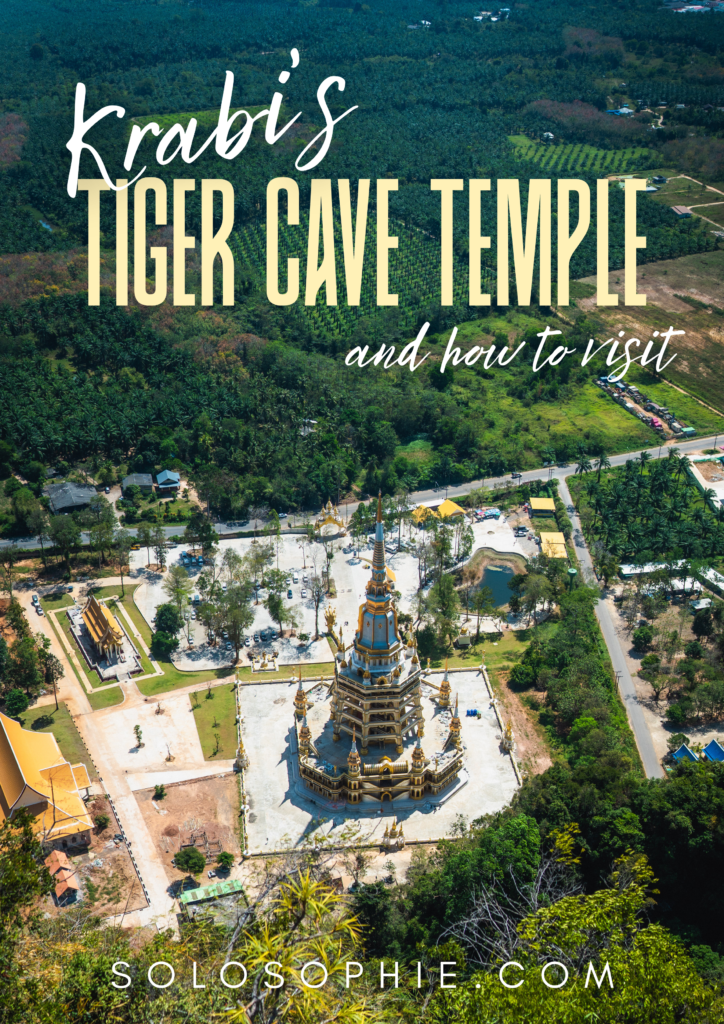
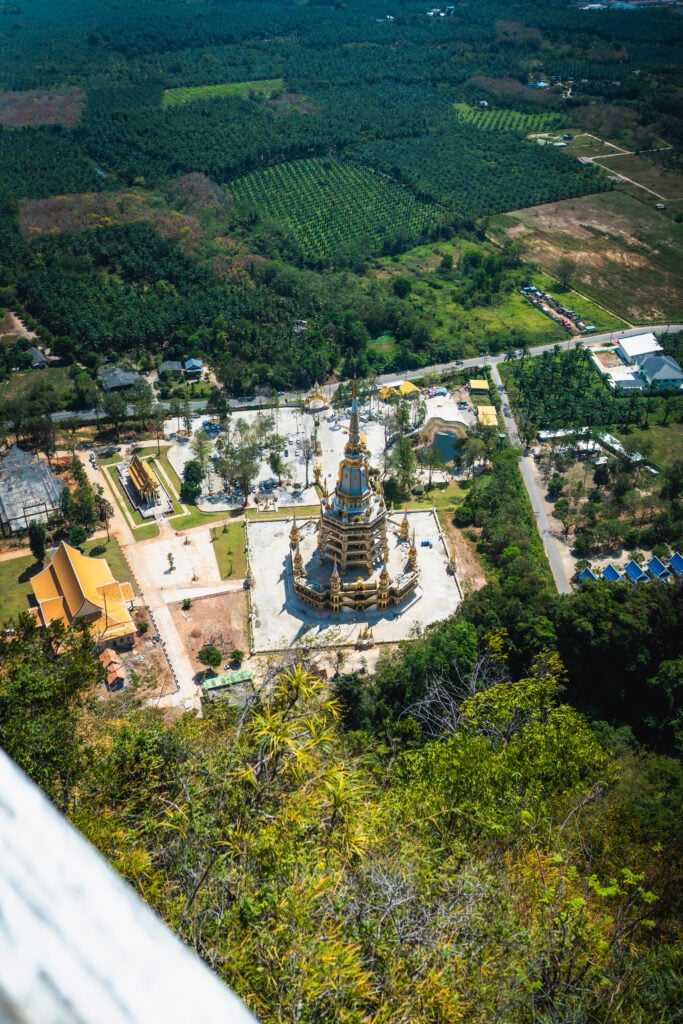
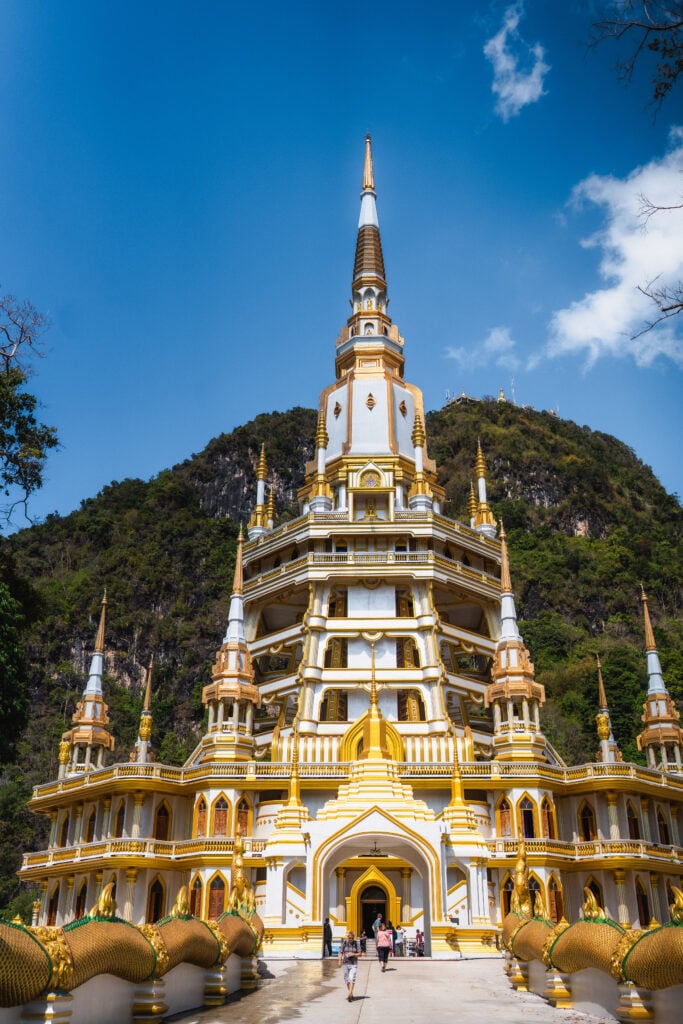
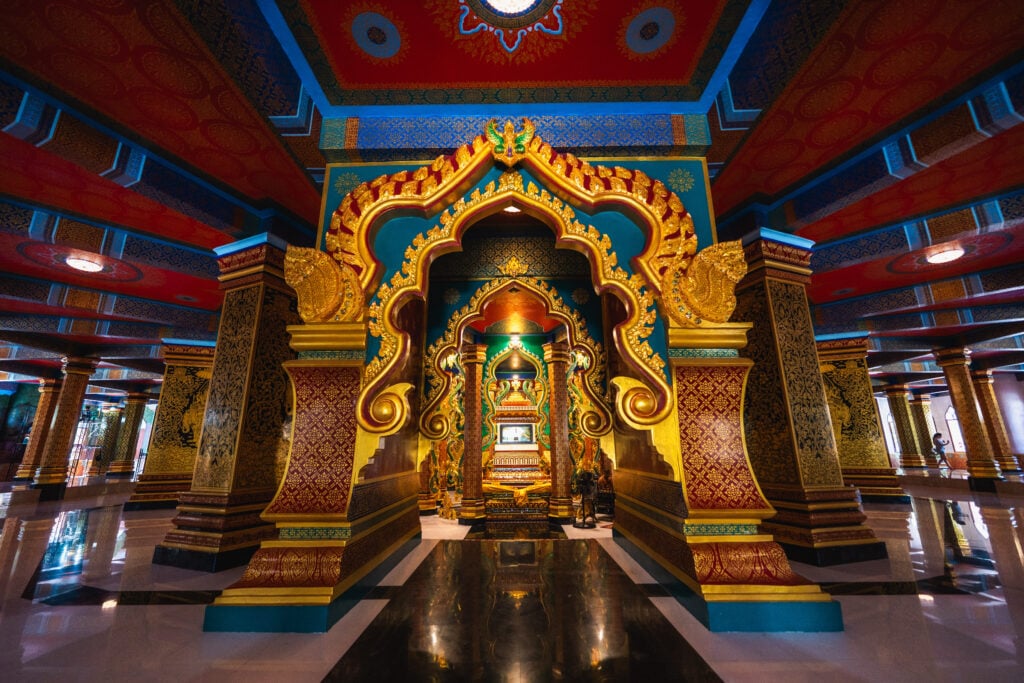
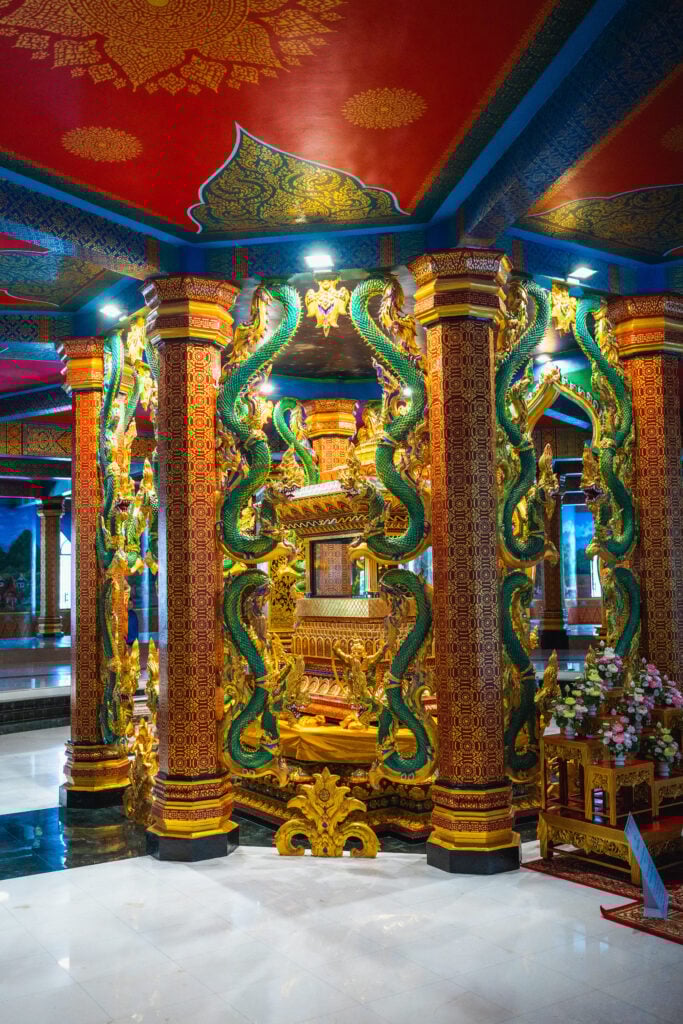
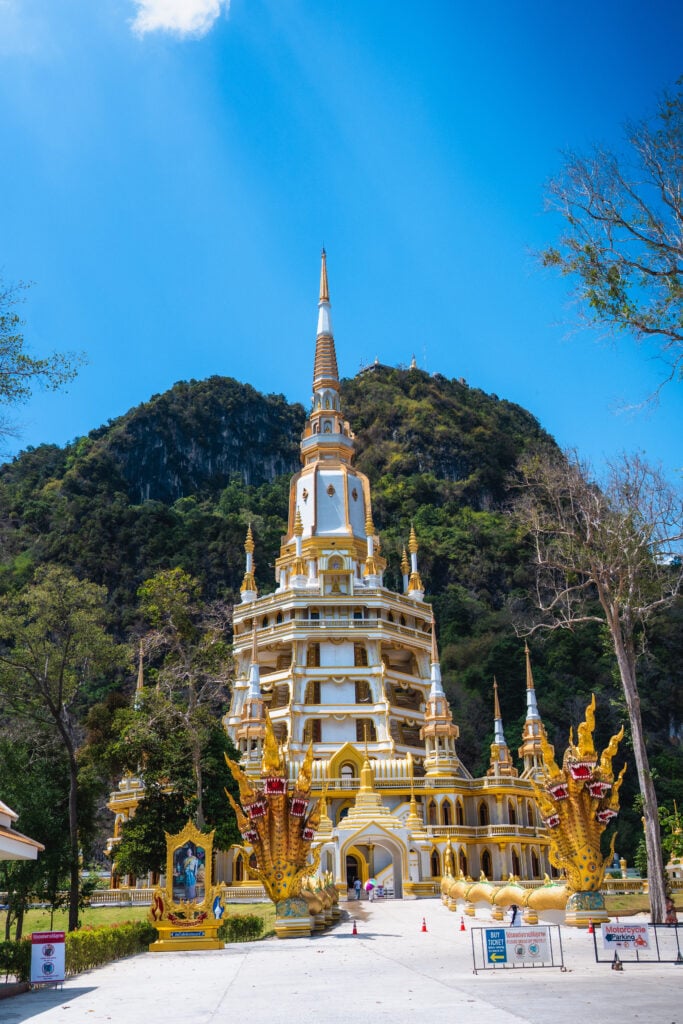
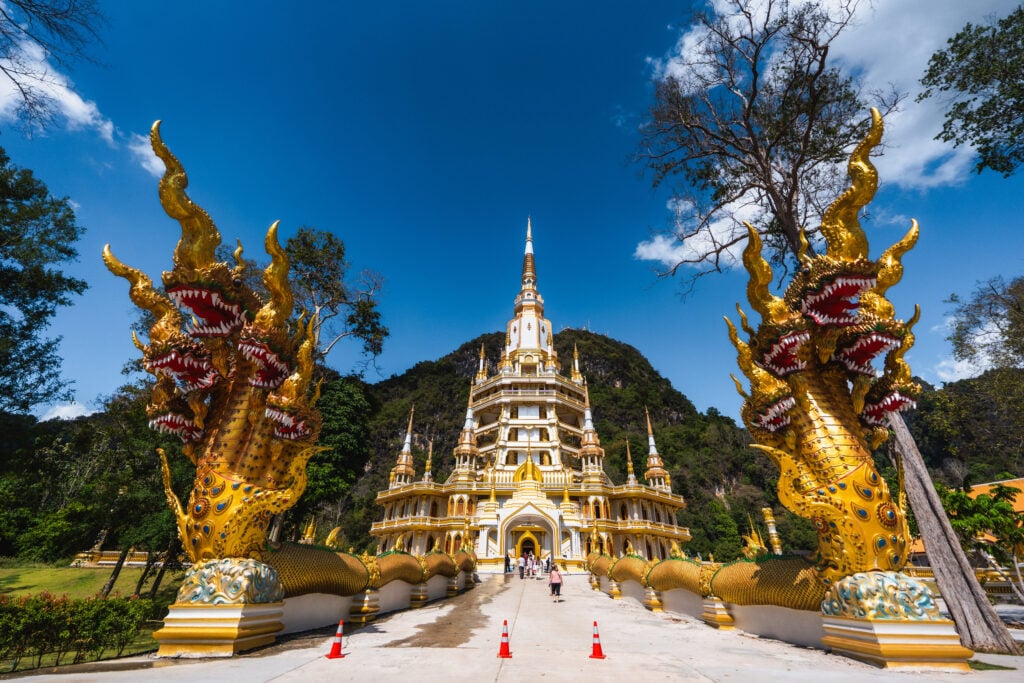
While most people are eager to climb to the summit of the temple, it’s definitely worth stopping first at the base and exploring the ground complex. Start your visit by wandering around the Buddhist temple and ordination hall that sit at the foot of the hill.
This temple is still very much used for spiritual practice, allowing a space for both monks and visitors alike to meditate, reflect, and soak up the spirituality of Wat Tham Suea.
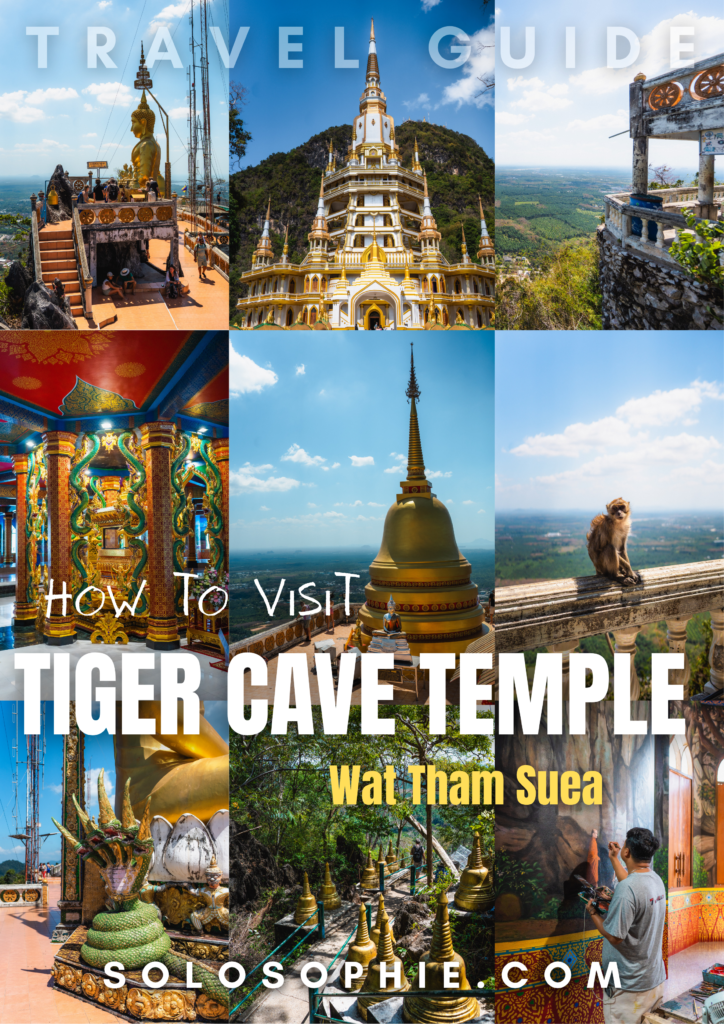
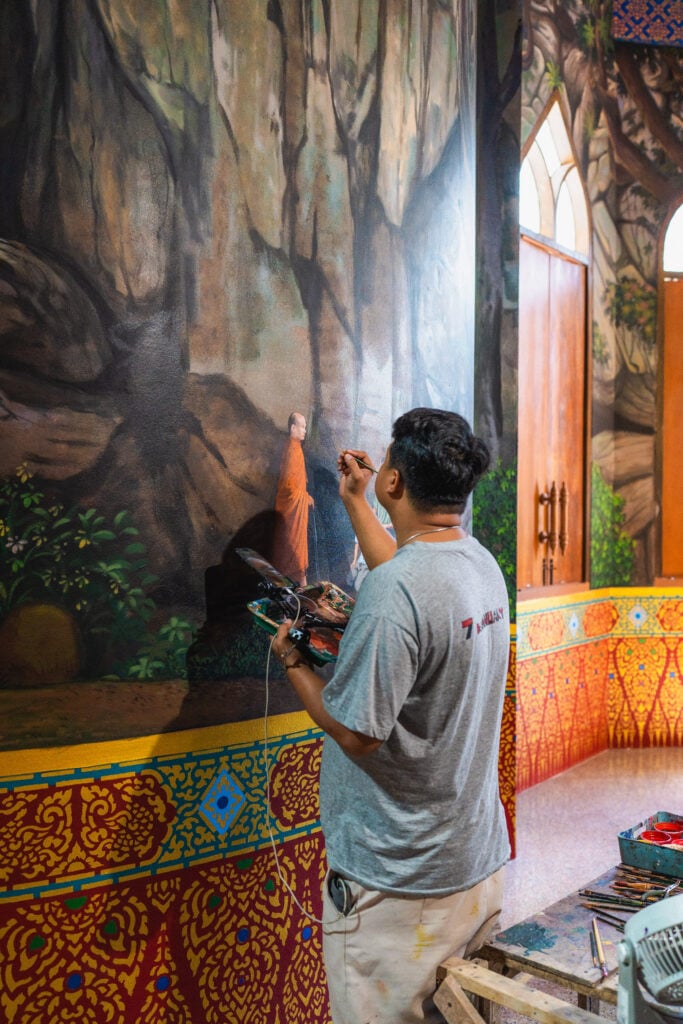
When we visited, the base temple was actually undergoing renovation and expansion. We were lucky enough to watch artisans hand-painting the intricate details, bringing parts of the temple to life in vibrant colour. Seeing it up close really gives you a sense of just how complex and detailed the design is, especially knowing that every pattern and brushstroke is carefully crafted.
Tiger Cave
The temple is actually built around a complex of natural limestone caves that are nestled within the overgrown jungle valley. And, one of these caves is from which the temple takes its name. You can visit the main cave, where you’ll see shrines, Buddha images, and of course, lots of tiger figurines.
Stairs
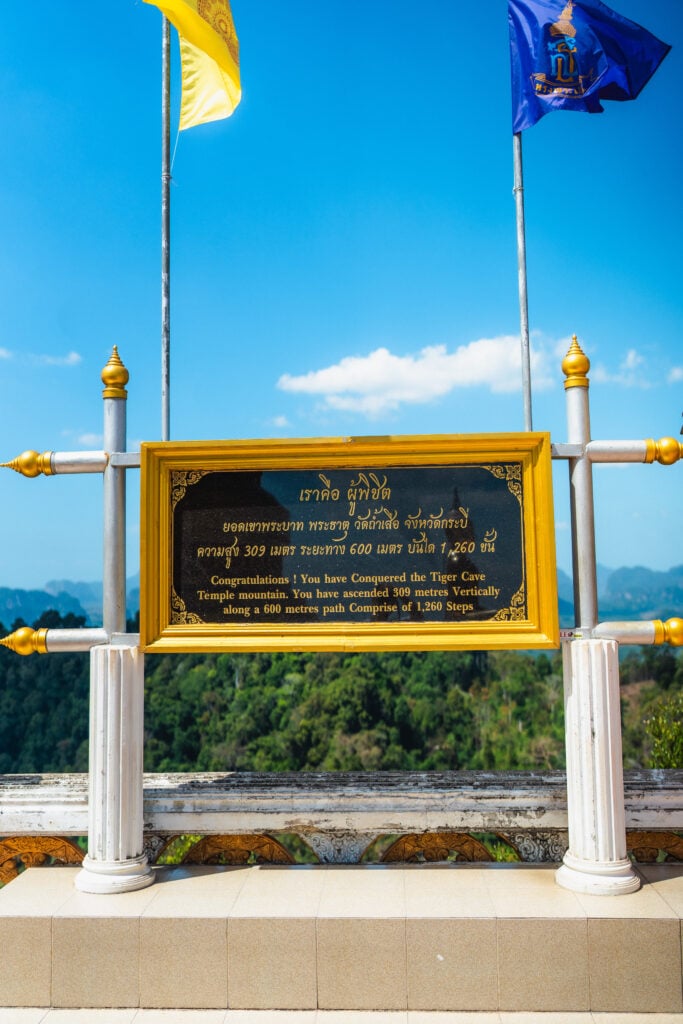
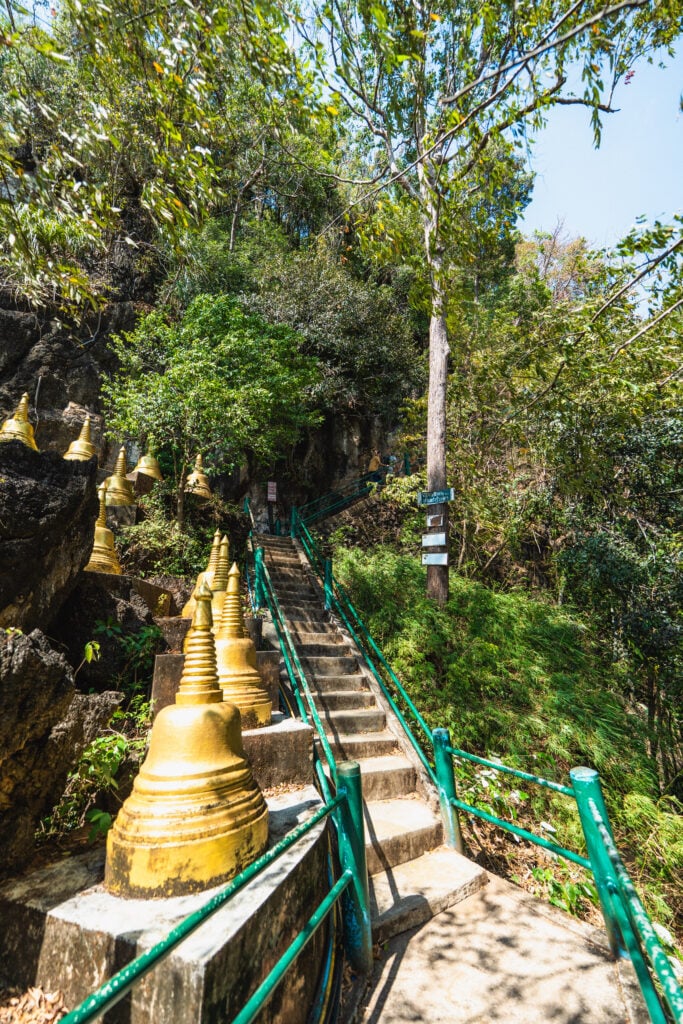
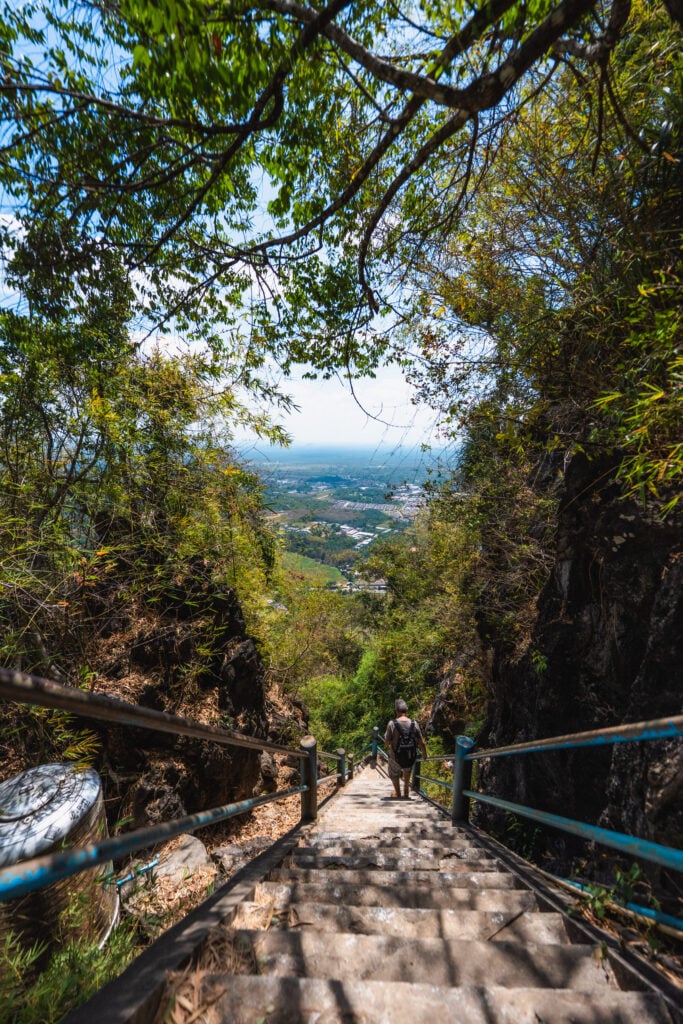
The real challenge of visiting Tiger Cave Temple has to be the challenging hike up the 1,260 stairs that lead to the summit. In fact, additional stairs have been added recently, as there used to be just 1,237… which I imagine still felt like a hefty enough climb!
The stairs weave and wind around the mountainside and reach an elevation of 278 meters. The stairs themselves are of differing heights, so be careful when guiding yourself up, and be sure to have some form of hydration, after all, it’s both the Thai sun and gravity attempting to beat you down all at once.
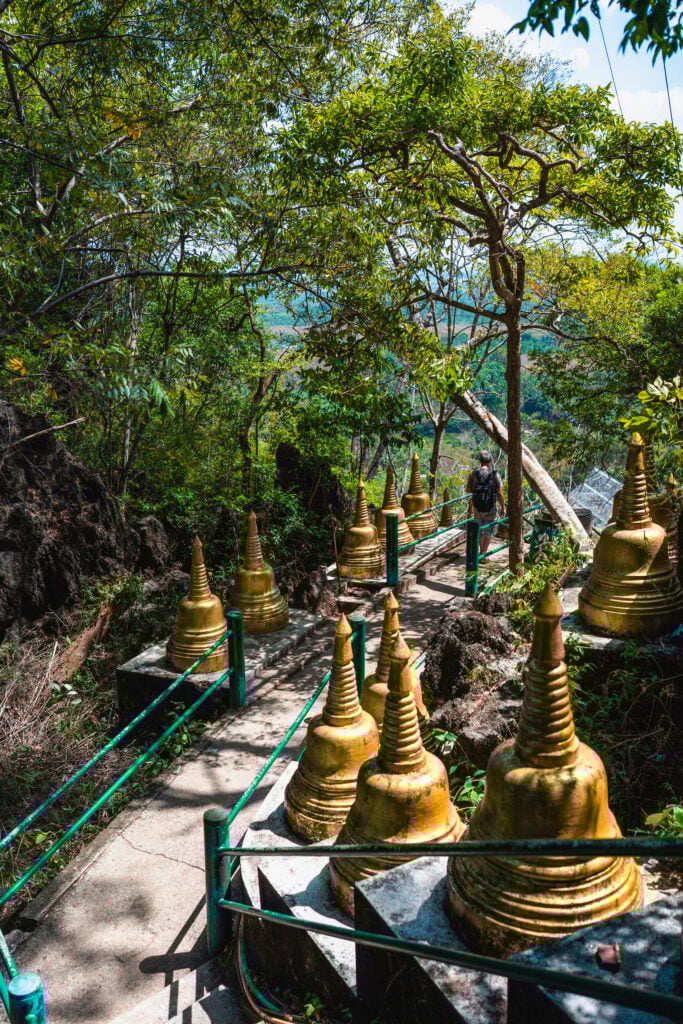
At least the journey up is engaging. Along the route, you’ll see plenty of small shrines, sacred bell-shaped monuments, and likely spy out plenty of monkeys that reside in the area.
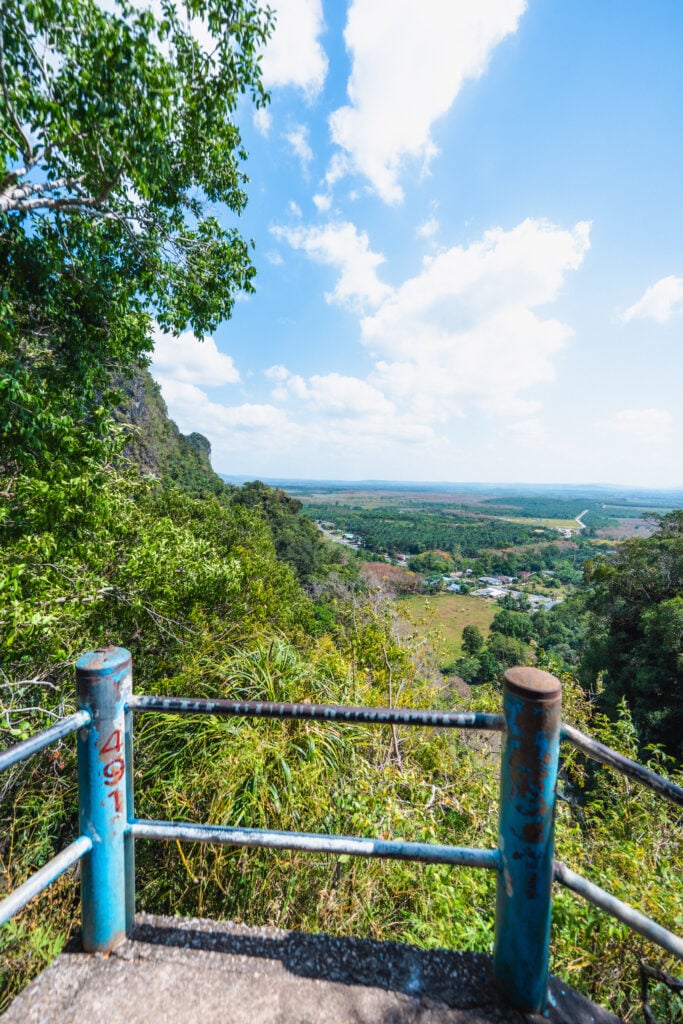
It should take around 35-40 minutes to reach the top of the temple, but you can take as little or as long as you like; there’s no rush! Plus, there are plenty of opportunities to let people pass by, stop to take a photograph, and soak up the views as you take a breather.
Highlights of the stairs
Small shrines
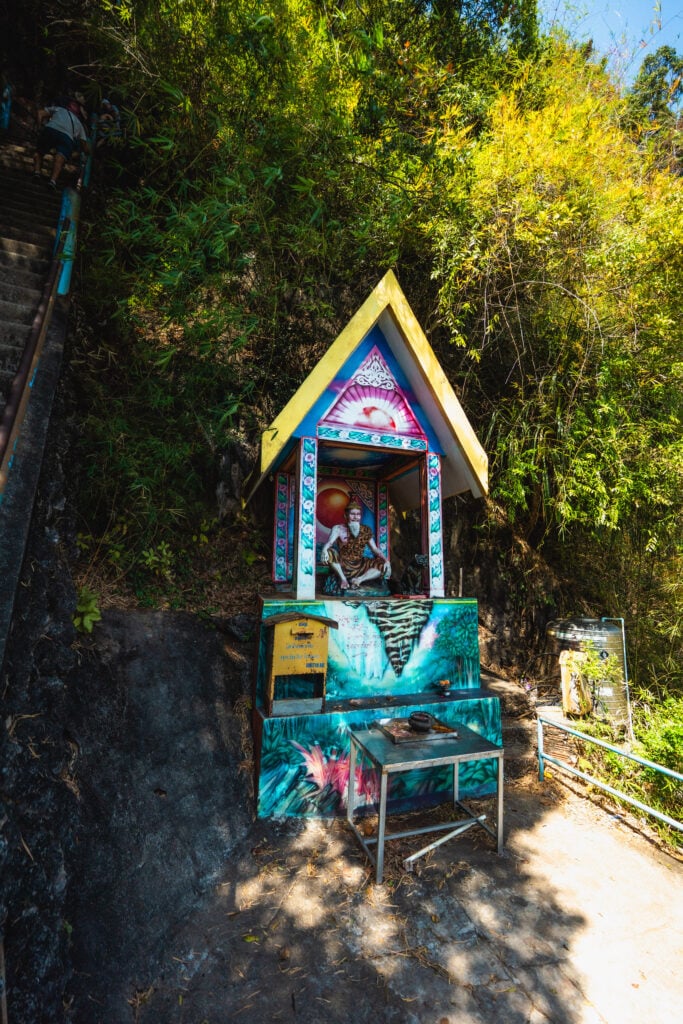
Along your journey to the summit of the mountain, you’ll see plenty of small shrines. In Thailand, these are known as spirit houses, or San Phra Phum, and they are essentially miniature shrines built to provide a home for local spirits to prevent them from inhabiting the main building. They also serve to protect, ensure prosperity, and bring good fortune.
Offerings are typically left at these small spirit houses, so you may well see things like flowers, incense, or drinks (I’ve noticed some people just leave water bottles), but these offerings are left there to show respect and maintain harmony.
Featured along the stairs, you’ll also see several Buddhist prayer bells. While there are bells at the summit that visitors are invited to ring, these ones are decorative and supposed to invoke a meditative sense of calm as you make your strenuous ascent to the top of the limestone mountainside.
Top Temple
When you finally make it to the end of the stairs, you’ll find a covered platform at the “basement” level of Tiger Cave Temple. At this point, you can still wear your shoes. It’s also the perfect spot to have a rest on the benches and soak up the view from the shade.
Then you’ll want to remove your shoes (which is obligatory) to climb the final steps into the actual temple.
Tiger Cave Temple
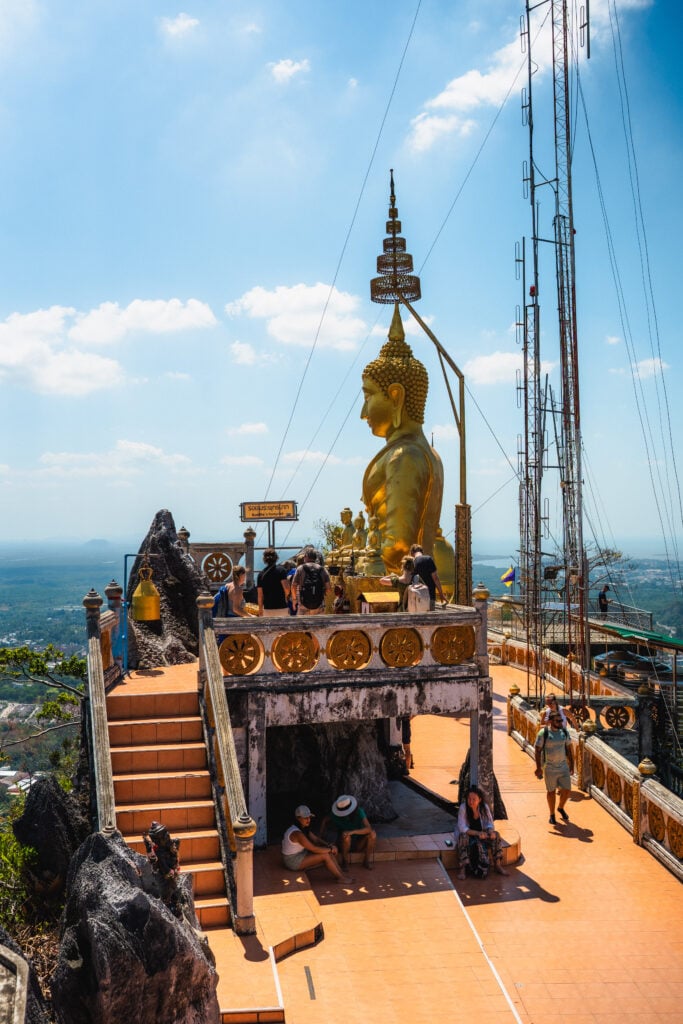
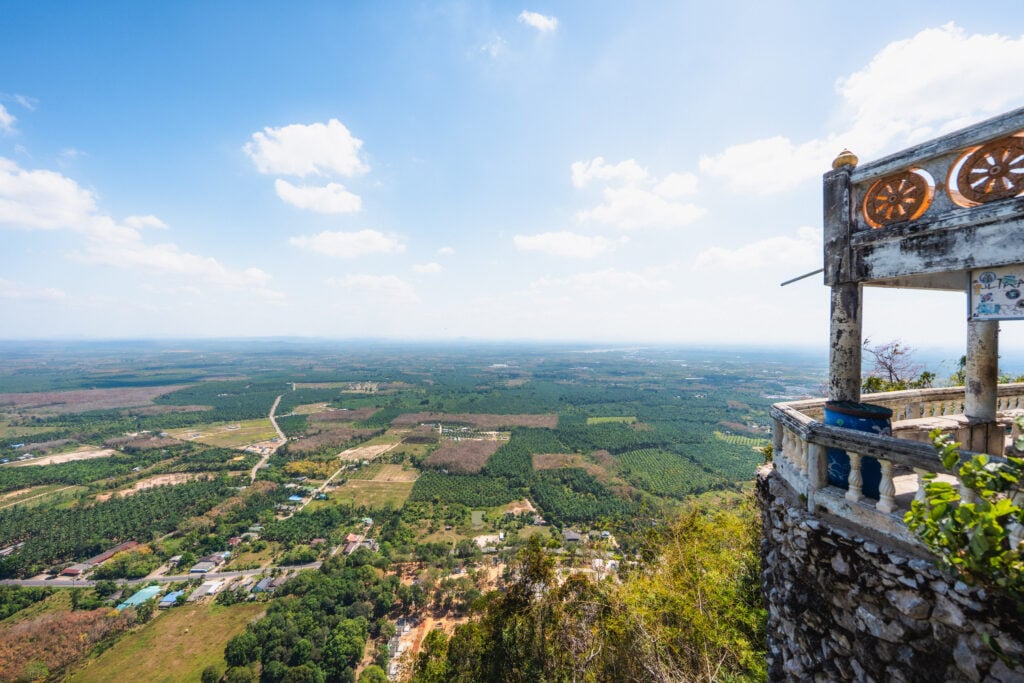
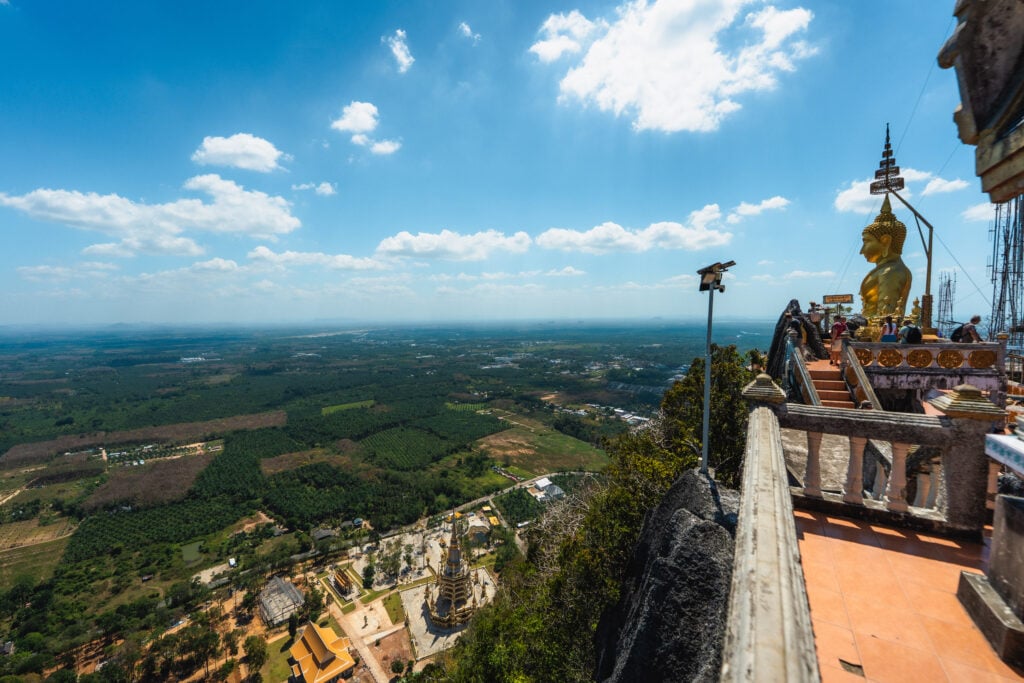
The Tiger Cave Temple sits in the open air, and so the view is every bit as breathtaking as you might imagine. On a clear day, depending on the time you visit, you might even spot the glimmer of the sea in the distance, stretching out beyond Krabi’s lush landscape.
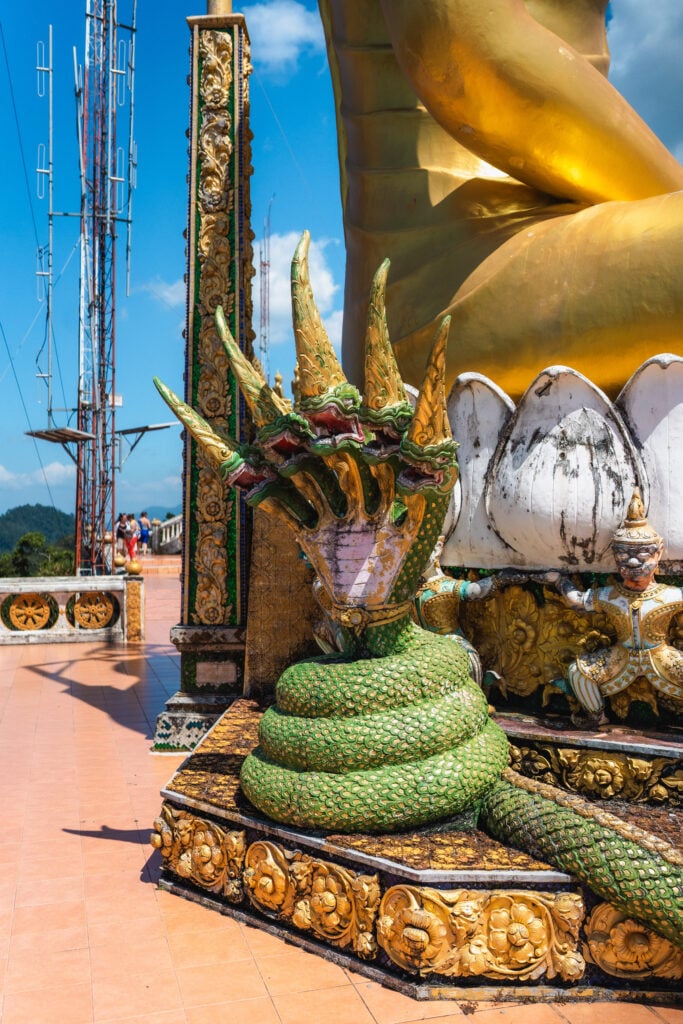
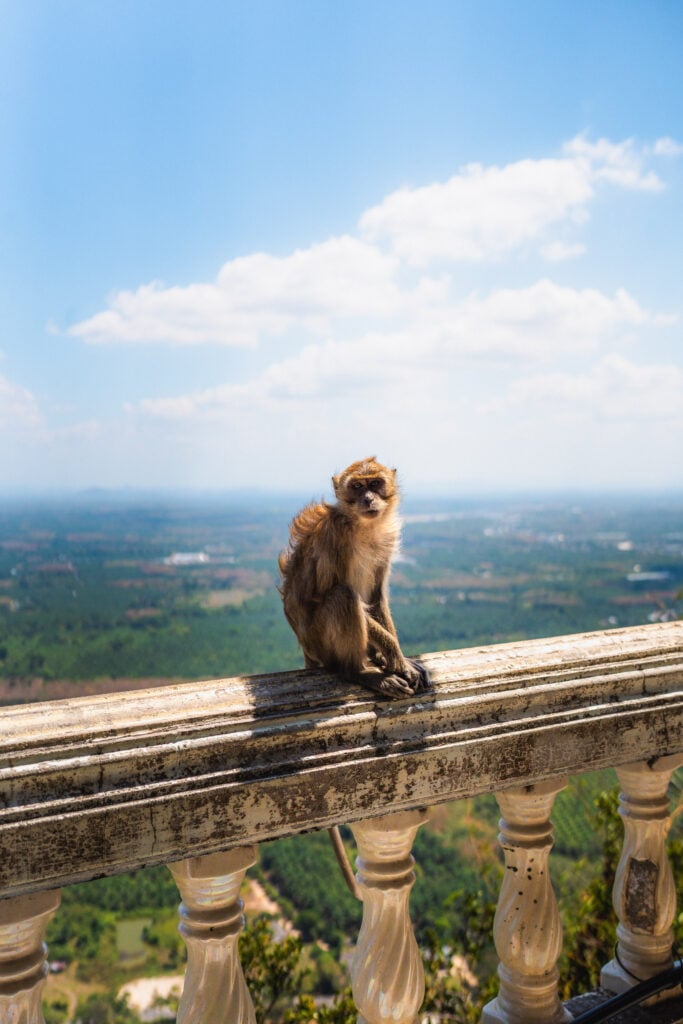
Seeing just how fast and luscious the surrounding landscape is makes the climb all the more worth it. At this level, you’ll also see a huge golden Buddha statue, a shrine, and a pagoda. And, plenty of monkeys!
Temple Etiquette
When visiting temples in Thailand, it’s important to dress respectfully by covering your shoulders and knees. At many of the more popular temples, you’ll usually find an honesty stand where you can rent a shawl if needed.
At Wat Tham Suea, you can borrow a cloth for free, which is a nice touch! That said, I’d recommend bringing or purchasing your own as it’s a bit more comfortable, saves time, and means you’re not relying on what’s available on the day.
A word on the monkeys
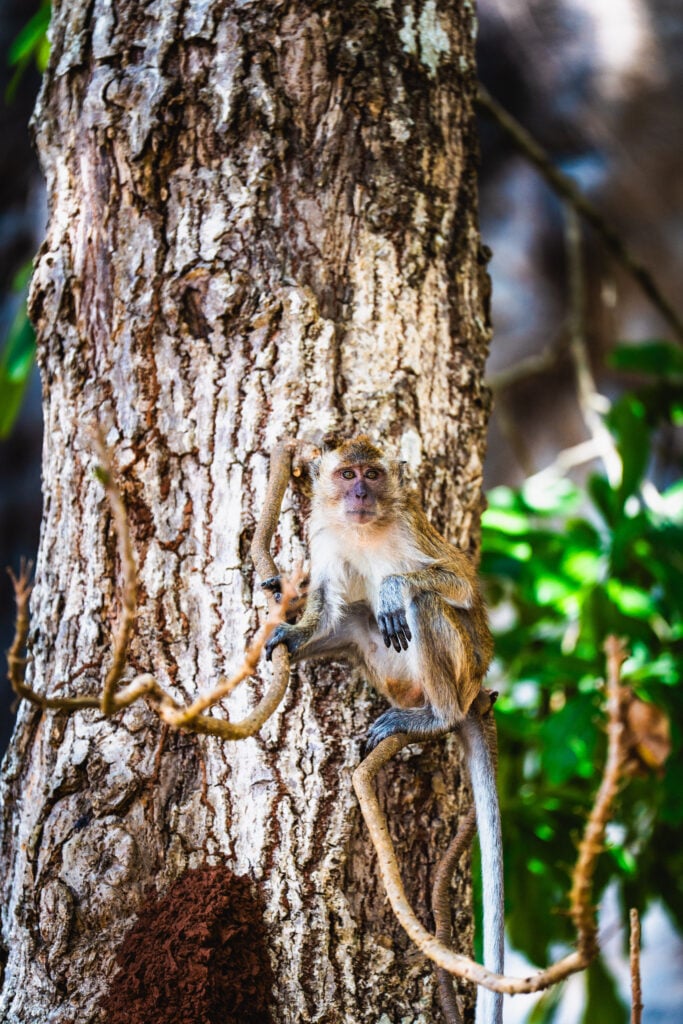
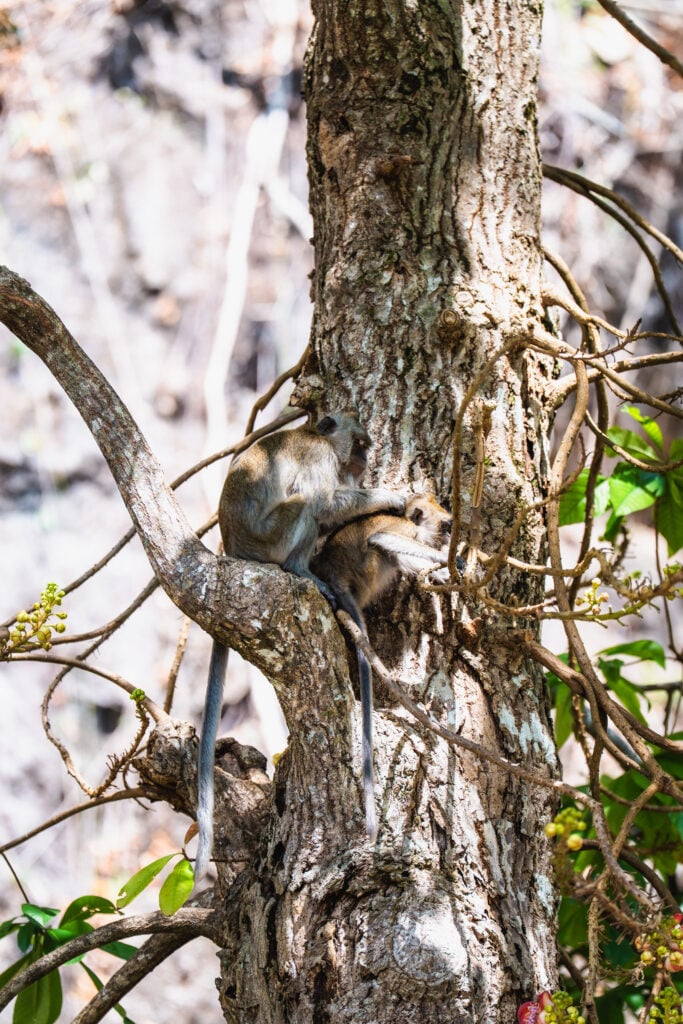
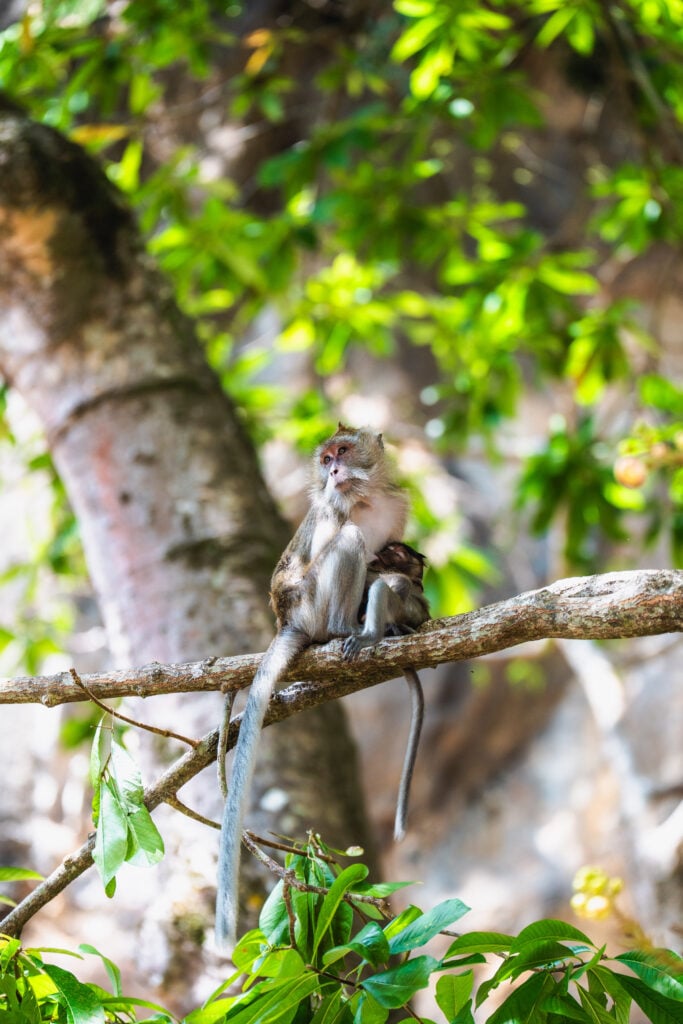
This temple in particular is heavily populated with Crab-eating macaque monkeys, and so, you’re almost certain to spy out a few on your way up to and at the top of the temple. So, a cautionary warning: they can be quite mischievous.
In fact, they are so used to people that they can be surprisingly bold, especially if they suspect you of having food – we even saw them with the contents of someone’s bag sprawled across the floor (including reading glasses!)
The best way to keep the monkeys away from causing havoc is by keeping any snacks hidden away, holding onto your hats, sunglasses and water bottles, and generally not leaving anything unattended. While they’re fascinating to watch, they can be super opportunistic if given the chance!
In terms of safety, you shouldn’t approach the monkeys or try to touch them in any way. It’s also best to avoid direct eye contact, as they can interpret this as a sign of aggression. If you want to take photos, keep your distance, be quick, and don’t get too close. As I said, they’re very used to people and cameras; you just need to be mindful and respectful when around the monkeys.
How to visit
Tiger Cave Temple is around 9 km northeast of Krabi Town, and is easily accessible via scooter, taxi, or tuk-tuk. It’s worth noting that the travel there is steep and can be difficult terrain, so it’s only recommended to take a scooter here if you’re confident or a fairly experienced driver.
The temple is completely free to visit, and it’s open from 6 am until 6 pm. The best time to visit is earlier in the morning, ideally before 9 am, or later in the afternoon/evening – this way, you’ll avoid the peak heat. The busiest time at the temple tends to be between 10 am and 3 pm.
Enjoyed reading our guide on how to visit Krabi’s Tiger Temple? Pin this article now, and read it again later: