10+ Must-Visit Literary Locations in London Every Book Lover Will Adore
Last Updated on 31st July 2026 by Sophie Nadeau
This post may contain affiliate links. Please check out my privacy policy and disclosure for more information.
From the world of Sherlock Holmes and Agatha Christie’s thrilling crime adventures, to Virginia Woolf’s rich introspection, London’s streets are steeped in literary history. While it would take a lifetime to uncover every bookish corner of this incredible city, this travel guide will take you to historic pubs, cosy bookstores, and iconic literary landmarks that every book lover should know about. Here’s your guide to the best of London’s Literary locations!
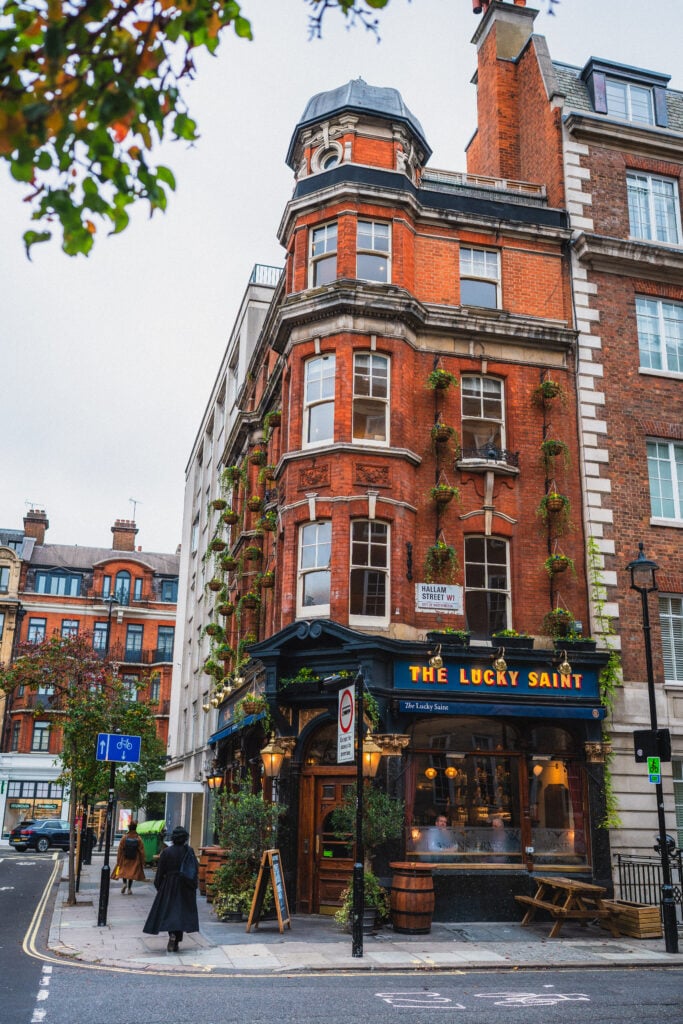
What makes London such a literary city?
London has been home to some of the greatest writers in history. From Shakespeare and Charles Dickens to Virginia Woolf and Arthur Conan Doyle, the city’s cobbled streets and centuries’ worth of history have long inspired countless stories and set the stage for some of literature’s most unforgettable characters.
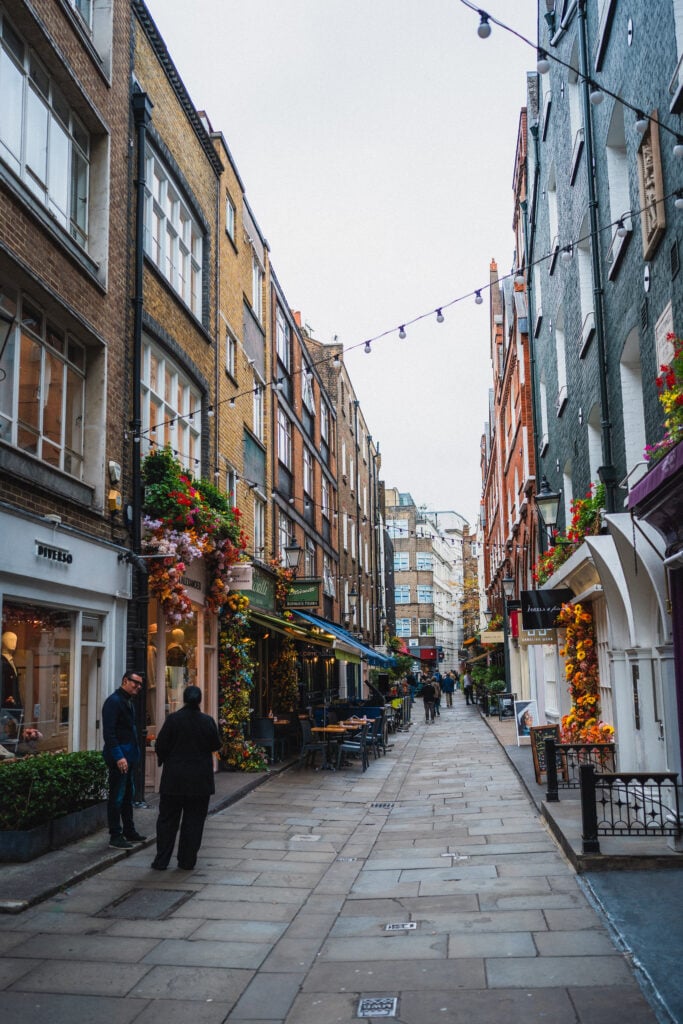
Literary locations in London
Agatha Christie Memorial
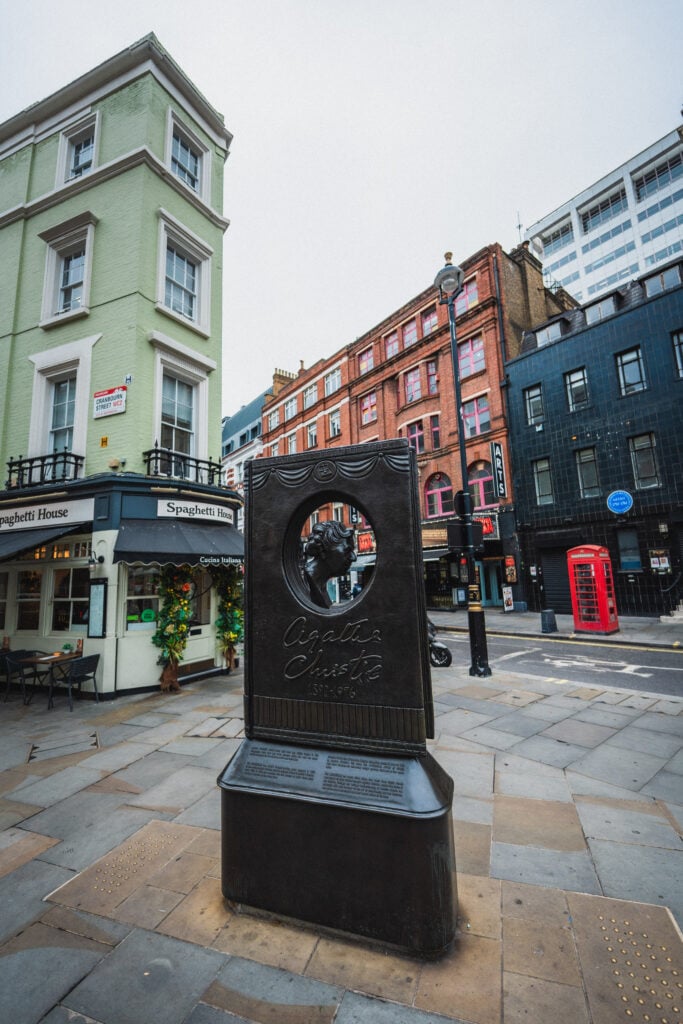
Located at the heart of London’s theatre district in Covent Garden, you’ll find the Agatha Christie Memorial. This bronze is dedicated to celebrating the “Queen of Crime” and her extraordinary contributions to literature and theatre.
The memorial was unveiled in 2012 by Christie’s grandson to mark the 60th anniversary (and 25,000th showing) of The Mousetrap – a play that Agatha Christie wrote, and that has been running at the St. Martin’s Theatre since 1852, making it the world’s longest-running play!
The bronze features an almost 8-foot-high book with Christie’s profile in relief, surrounded by motifs from her novels. This work of art was designed by sculptor Ben Twiston-Davies, and it has become both a beloved literary and artistic landmark that perfectly captures the memory of such a beloved author.
A brief note on the author: Agatha Christie was born in 1890 in Torquay, Devon. Widely regarded as the Queen of Crime, she’s one of the bestselling authors of all time, with more than 2 billion books sold and her work translated into over 100 languages. She also wrote more than 20 original stage plays, with 10 of them being published.
Sherlock Holmes pub
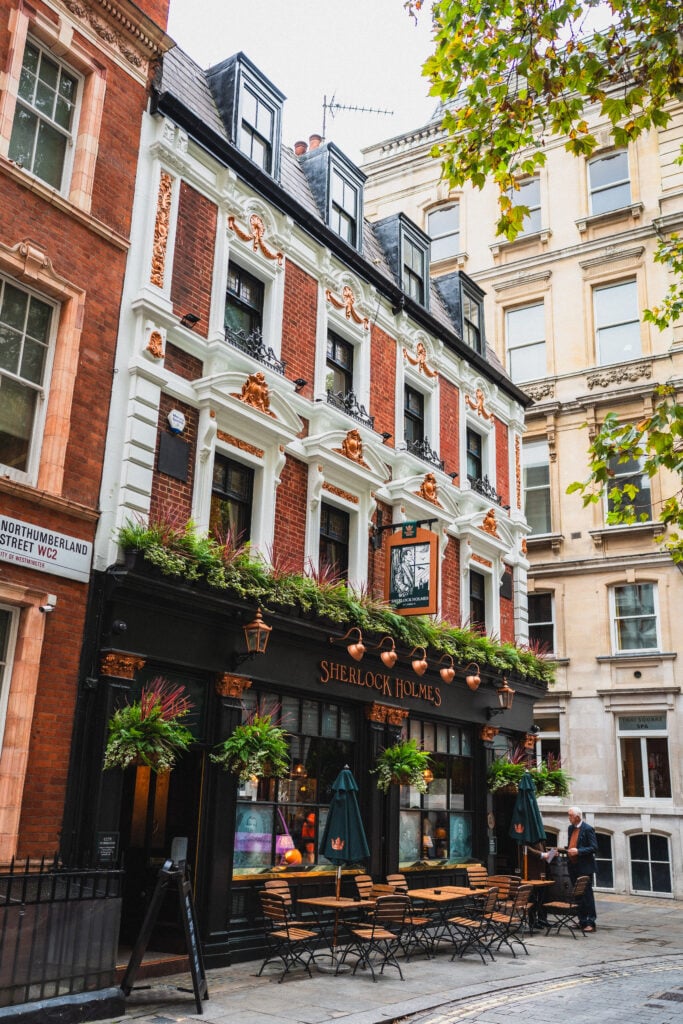
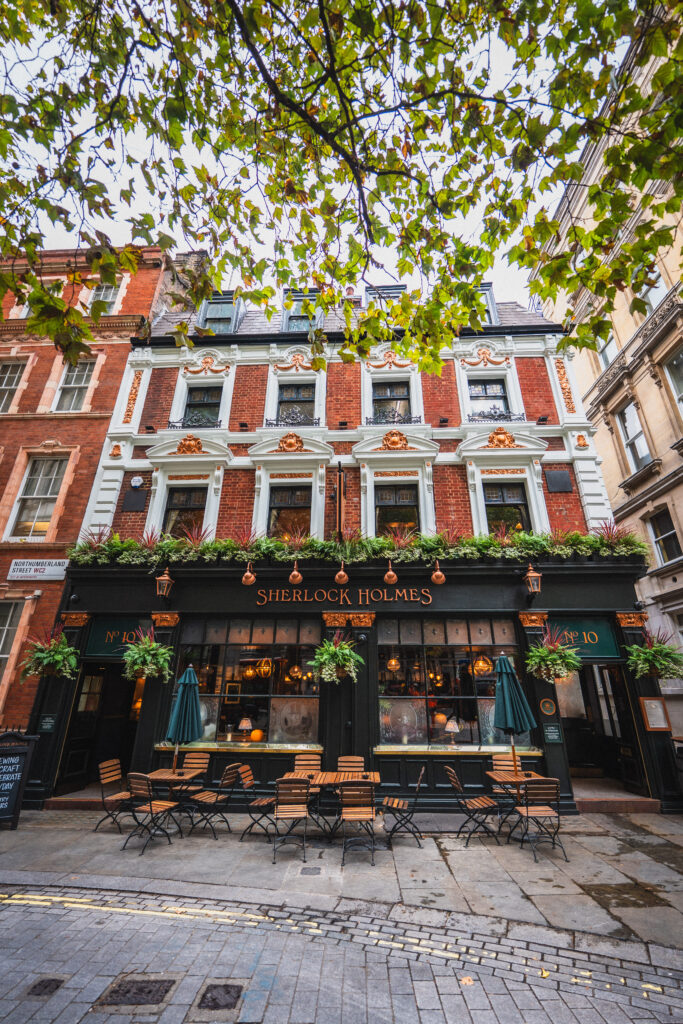
One of London’s favourite fictional characters has to be Sherlock Holmes, who was created by Sir Arthur Conan Doyle. Of course, you can visit the Sherlock Holmes Museum at 221B Baker Street, and there’s also a Sherlock Holmes statue outside of Baker Street Station. But if you’re looking for a themed pub, then I recommend visiting Sherlock Holmes.
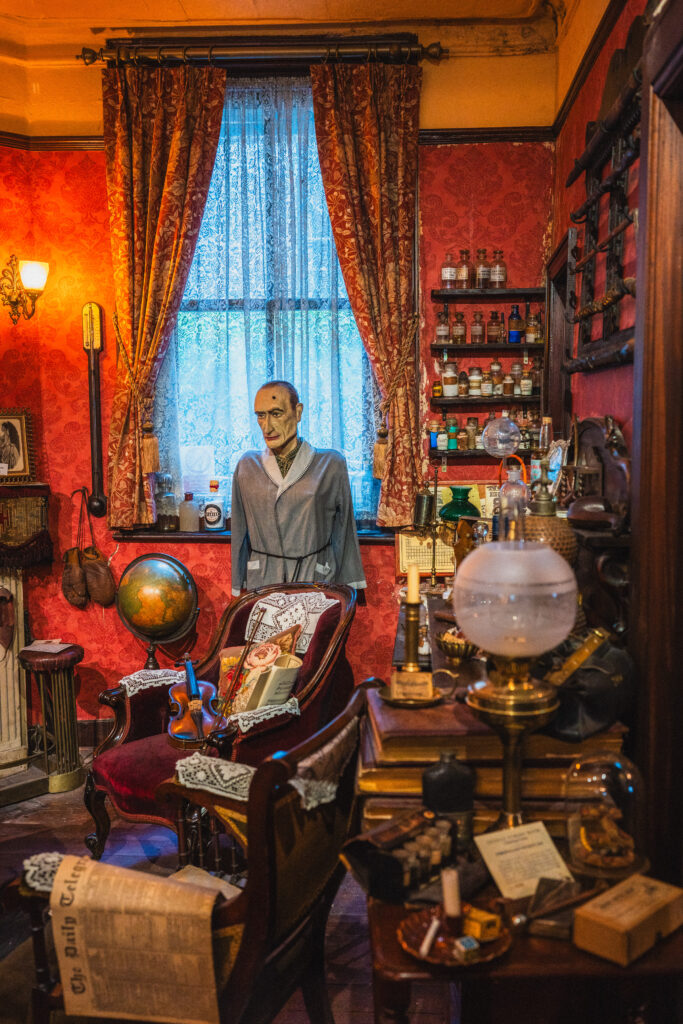
Tucked away on Northumberland Street, just a short walk from Trafalgar Square, this Victorian-era pub is packed with character and lots of intricate details. The public house, originally established in the 1880s, was renamed in the 1950s to honour the world’s most famous fictional detective. Inside, there are plenty of Sherlock Holmes memorabilia, beautiful stained glass windows and paintings. And, if you head upstairs, there’s even a small museum which recreates Sherlock’s apartment.
A brief note on the author: Sir Arthur Conan Doyle was born in 1859 in Edinburgh, Scotland. Best known as the creator of the legendary detective Sherlock Holmes, he revolutionised the mystery genre with his sharp storytelling and keen eye for detail. Over his lifetime, Doyle wrote four novels and 56 short stories, as well as numerous works of historical fiction, science fiction, and non-fiction.
There are also a number of other Sherlock Holmes locations dotted across the capital. Here are some of my favourites:
- 221b Baker Street – Located in the heart of London, the Sherlock Holmes Museum is dedicated to all things Sherlock, Watson, and Hudson. The address 221b Baker Street was only created in 1932 when the Abbey Bank moved its premises further up the street and street numbers were added to Baker Street. At this time, the bank employed a full-time secretary to reply to mail addressed to ‘Mr Sherlock Holmes’. The Sherlock Holmes Museum also opened around this time (giving itself the address of 221b Baker Street in the process). This led to a bitter dispute between the bank and the museum as to who owned the iconic address. However, since the closure of Abbey House, headquarters of the Abbey Bank in 2005, there has been no one around to challenge the claim of 221b Baker Street by the Museum. As such, the museum remains at address 221b to this day. Ironically, 221b today is actually located between 237 and 241 Baker Street.
- Hudsons Old English Restaurant, 239 Baker St, Marylebone, London NW1 6XE – Sat right next to the Sherlock Holmes Museum, of all the locations for Sherlock Holmes in London, this may well be the cutest. Located at 239 Baker Street, Hudsons Old English Restaurant doesn’t actually serve any food… Though it doesn’t take Holmes’ detective skills to work out that the façade has been painted this way in a bid to attract more visitors. Nevertheless, it is an adorable addition and goes well with the theme of being able to purchase ‘Mrs Hudson’s Antiques’ in the museum shop.
- Madame Tussauds Museum – In a somewhat ironic twist of fate, Madame Tussauds in London is located in Marylebone, just a short walk away from the end of Baker Street. As such, it’s easy to visit many Sherlock Holmes in London locations in the space of a short few hours. Here, in Madame Tussauds, you can see various representations of actors who have played Holmes both on television and on the big screen.
Cecil Court
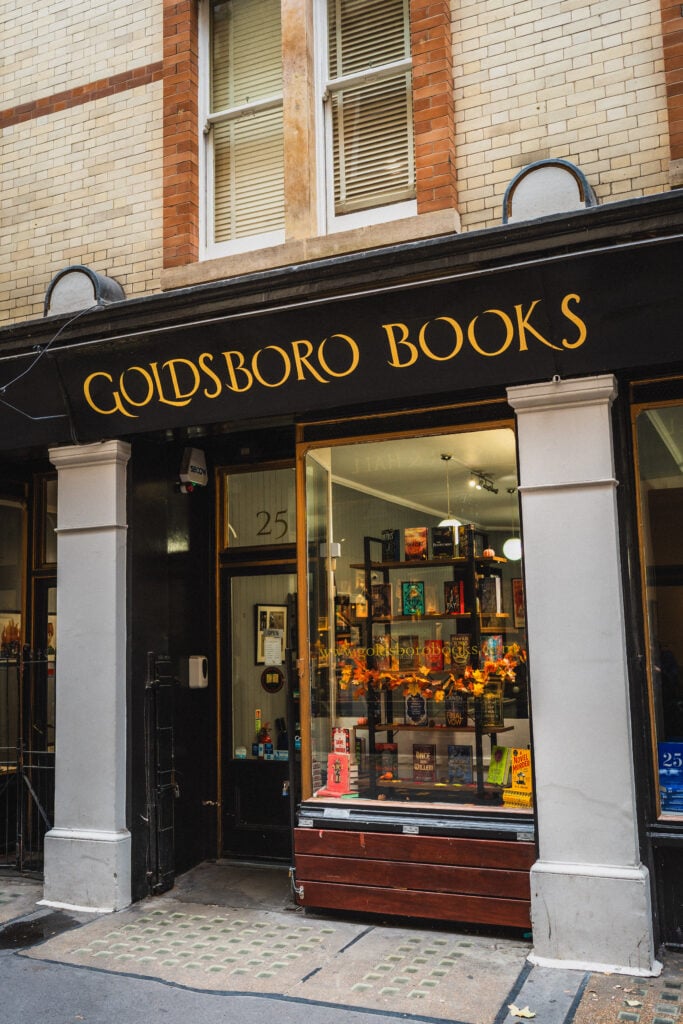
Nestled somewhere between Charing Cross Road and St Martin’s Lane, Cecil Court is often called “Booksellers’ Row” and is a haven for antiquarian bookshops, art galleries, and antique stores. So, if you’re interested in niche and specialist books, then you’ll want to come here.
If you walk along to Number 9, you’ll see a plaque that commemorates the time that the renowned composer and musician Mozart lived on the street. For just four months, Mozart and his family lived in Cecil Court, from April to August 1764, during which time, the eight-year-old prodigy performed for King George III twice! And, it’s rumoured that he may have composed his first symphony here, too.
Any Amount of Books
Set over two floors on Charing Cross Road, you’ll find a secondhand book shop that buys and sells rare, hard-to-find and antiquarian editions. They stock a wide array of genres with prices starting anywhere from £1.50. It’s a book lover’s haven, particularly if you love that familiar smell of musty pages!


Fitzroy Tavern
Just a stone’s throw away from Oxford Street, stands the Fitzroy Tavern, a place that has long been a gathering place for writers, artists and intellectuals. In fact, the tavern is of such historical importance that the surrounding area, Fitzrovia, actually takes its name from it.
In the early 20th century, it became a favourite haunt of literary figures such as Dylan Thomas, George Orwell, and Virginia Woolf, who would meet here to exchange ideas and stories over a pint (…or several!). The pub retains much of its original charm, with period décor and an atmosphere that feels steeped in creative history and the meeting of minds.
Daunt Books
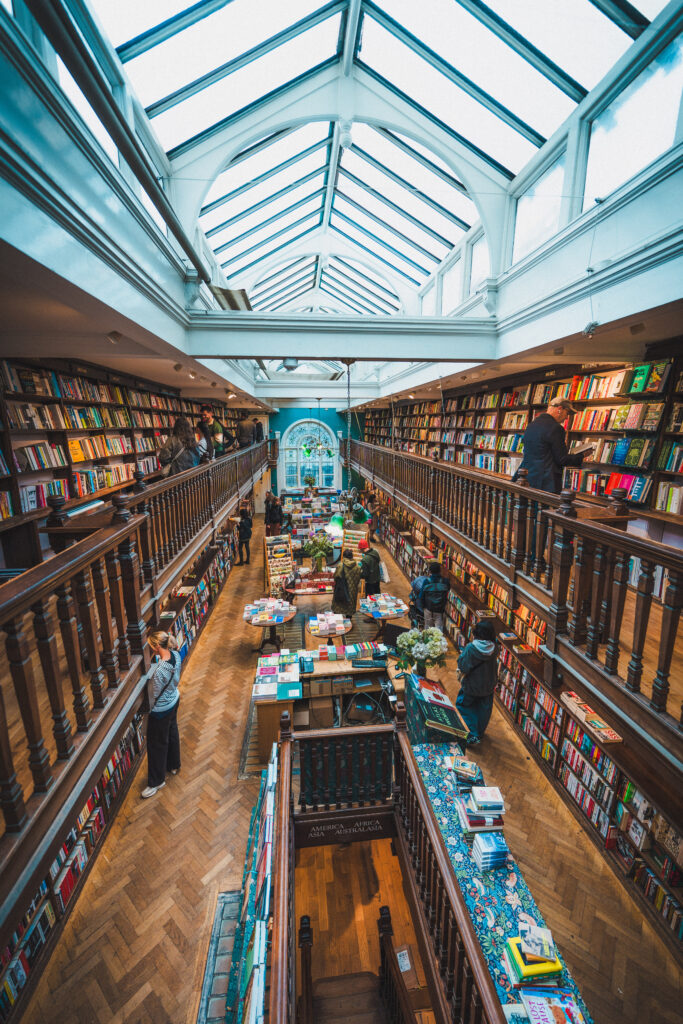
Marylebone is undoubtedly one of the most beautiful districts in London. And, it also happens to be home to the prettiest bookshop, Daunt Books! This original Edwardian bookshop boasts long oak galleries and graceful skylights, perfect for book browsing.
Daunt Books bookshop is part of an independent chain, so you can find several others dotted around central London. The first flagship store, and brainchild of former banker James Daunt, opened in the 1990s at 83 Marley High Street.
What’s particularly special about Daunt Books is that they cater to and specialise in travel and travel writing! Step inside and you’ll find plenty of travel books: anything from memoirs, phrase books, language books, fiction, and history.


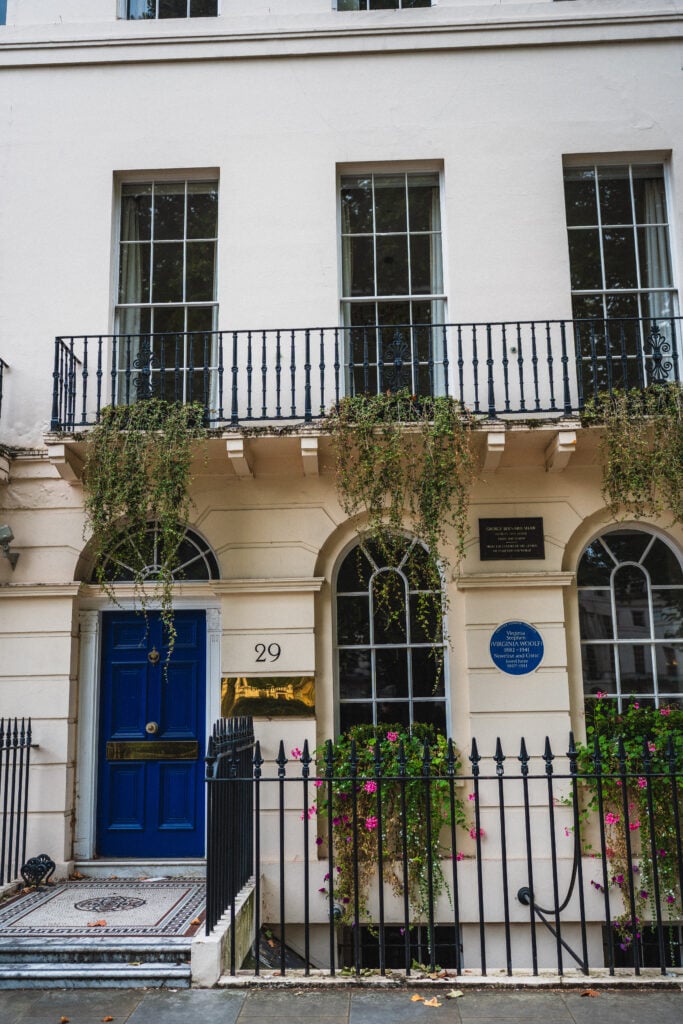
Virginia Woolfe blue plaque
All around London, you’ll likely see little blue plaques outside of buildings. These plaques often denote where someone famous once lived or worked. Head to 29 Fitzroy Square and you’ll see a plaque dedicated to Virginia Wold, who lived there between 1907 and 1911.
Virginia Wold is associated with a lot of places in London, including the Fitzroy Tavern, where she would regularly meet fellow creatives, and Bloomsbury, as she was part of the Bloomsbury Group – a group of associated British writers, intellectuals, philosophers and artists in the early 20th century.
A brief note on the author: Virginia Woolf was born in 1882 in London and became one of the most influential writers of the 20th century. She was a pioneering novelist, essayist and critic, and her work continues to inspire writers, thinkers, and literary enthusiasts around the world.
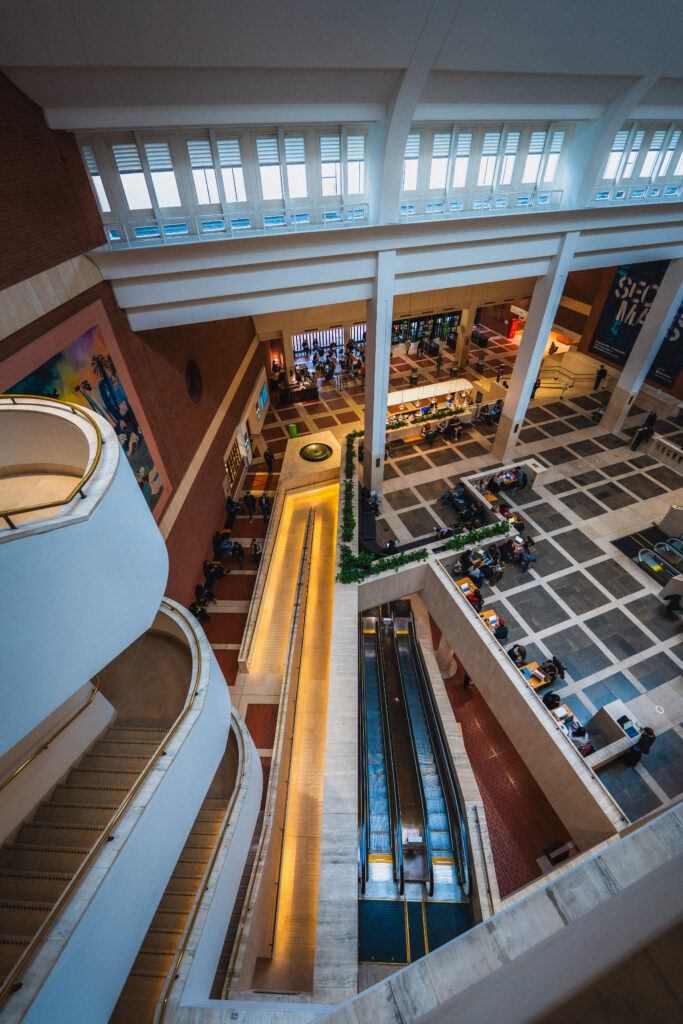
The British Library
Of course, no literary trip around London would be complete without mentioning The British Library. This is the National Library of the UK and is regarded as one of the greatest libraries in the world. Home to over 170 million items in its collection, this remarkable building is literally teeming with knowledge and resources.
The British Library first opened in July 1973; however, it moved to its current location in St Pancras in 1977. Today, the library holds a copy of almost everything published in the UK and Ireland. Though, of course, this isn’t all held on site. Throughout the year, the library hosts a number of special exhibitions. It’s completely free to visit, and well worth a wander around!
Some of the many fascinating things to be seen at the British Library include: two of the four surviving original copies of the 1215 Magna Carta, and The Diamond Sutra, a central text of Indian Buddhism that dates back to 868 CE and is broadly considered to be the oldest extant printed book.
Southwark Cathedral
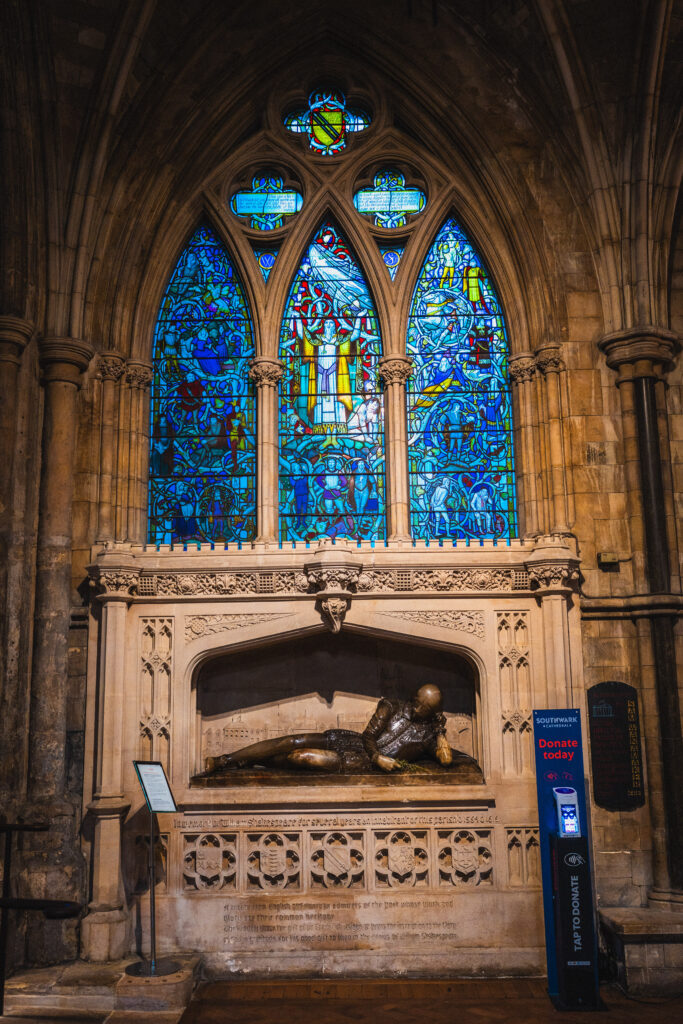
Southwark Cathedral sits near London Bridge and has long been intertwined with the city’s literary heritage. Up until 1905, Southwark Cathedral was known as St. Saviour’s, and its most famous parishioner was William Shakespeare. He used to come to the church when he worked at the nearby Globe Theatre, and it was also the final resting place of his brother.
The cathedral is also linked to two renowned poets: Geoffrey Chaucer, the 14th-century poet, and it’s home to the tomb of John Gower, who has long been considered to have been the first true English poet. Both poets were known to be friends and complimented one another in their works.
Literary themed aside, as you wander around Southwark Cathedral, you may be lucky enough to spy out the local cat, who belongs to the cathedral itself. Hodge, the much-loved cathedral cat, joined in 2020 and can sometimes be seen prowling between the pews.
Dr Johnson’s House
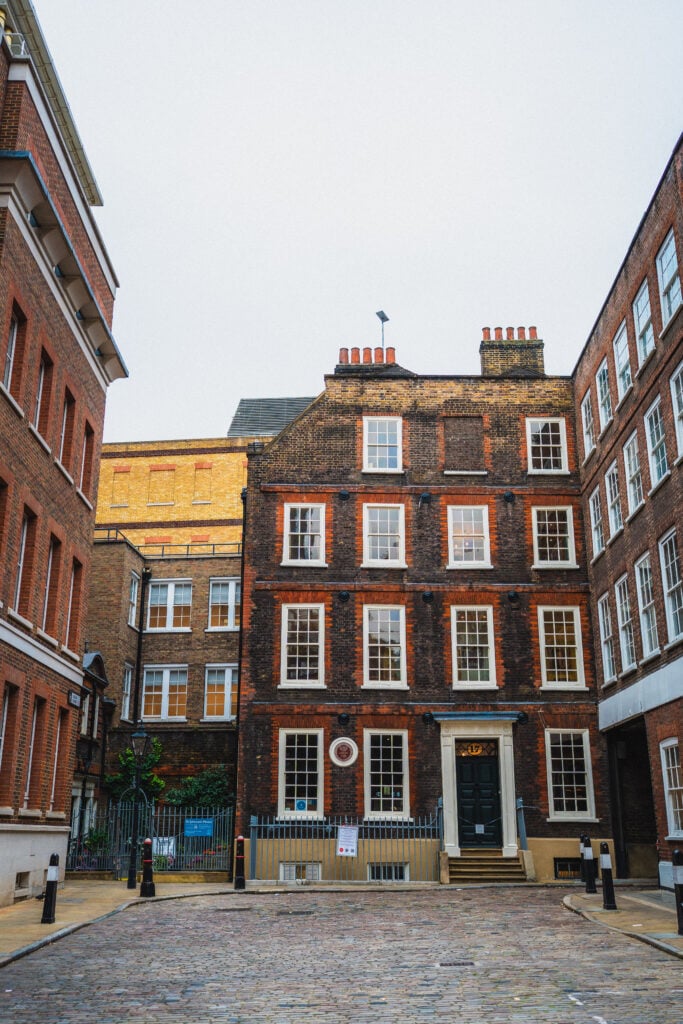
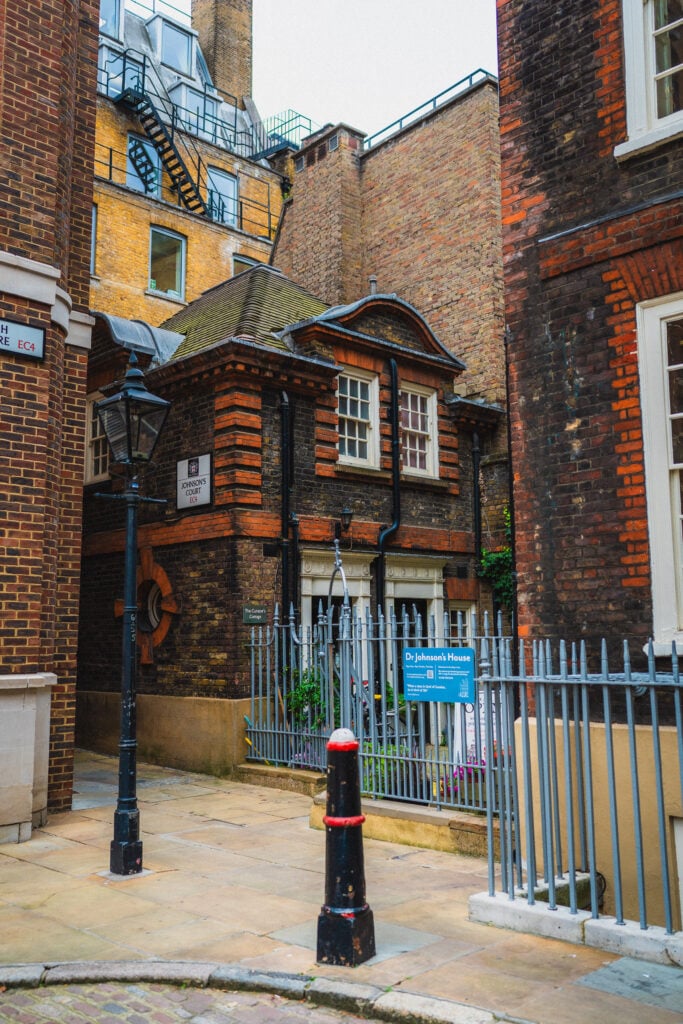
Nestled in the heart of City of London, Dr Johnson’s House is a charming 200-year-old townhouse that sits at 17 Gough Square, and celebrates the life of Samuel Johnson, a brilliant writer, lexicographer, and creator of the first modern English dictionary.
It should be noted, it is not the first dictionary, as many assume it to be, but the first comprehensive, authoritative dictionary on which every English dictionary across the globe to this day is founded. A Dictionary of the English Language was published in 1755.
Johnson lived in this townhouse from 1748 to 1759, and inside are well-preserved period furnishings, portraits, and exhibits that bring his world to life through a museum. Literary enthusiasts can explore the study where Johnson worked, see manuscripts and personal artefacts, and immerse themselves in the atmosphere of 18th-century London.
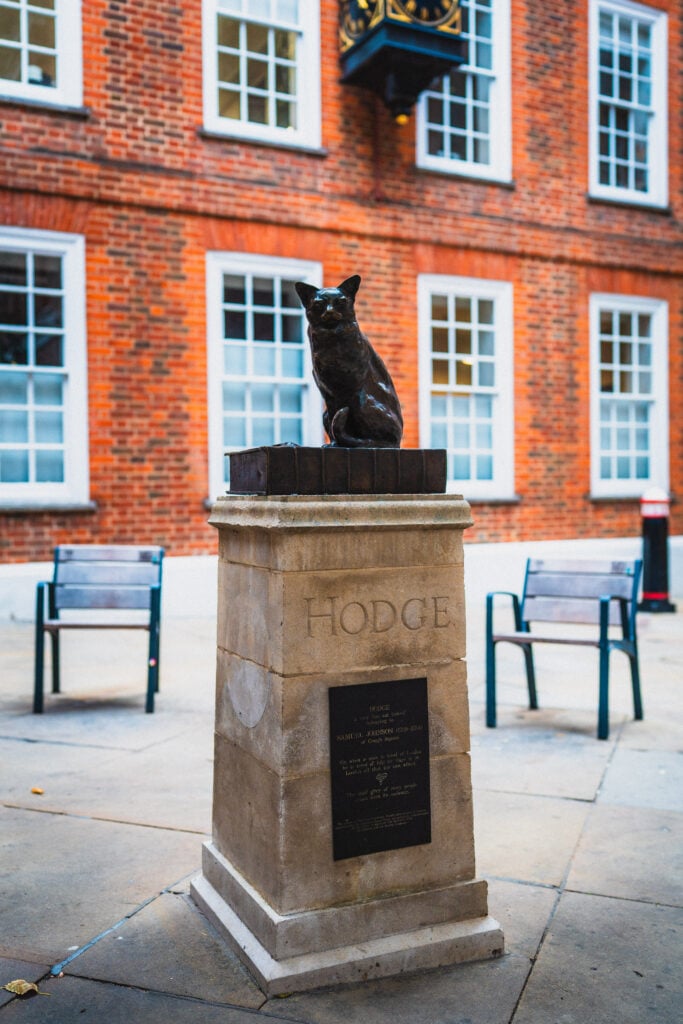
Side note, Dr Samuel Johnson also had a great love for cats, and so, one of his cats, Hodge, can be seen immortalised in bronze form on Guff Square, close to the museum.
A brief note on the author: Samuel Johnson was born in 1709 in Lichfield, Staffordshire, and is best known as the creator of A Dictionary of the English Language, a groundbreaking work that helped standardise English. He was also an author who touched every genre of writing and superlatively so as an essayist, a moralist, a journalist, a literary critic, and a biographer.
Ye Olde Cocke Tavern
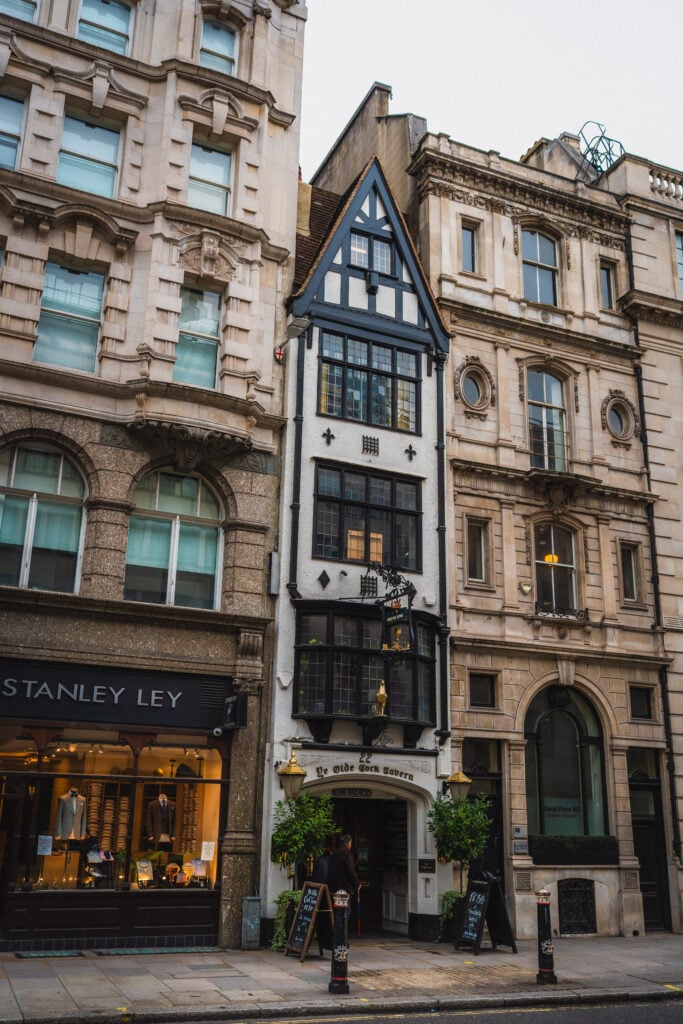
When visiting the Big Smoke, one thing’s for certain is that you’re never too far away from a drinking spot where literary figures once went to. Ye Olde Cocke Taven dates all the way back to 1549. In its day, writers to the likes of Charles Dickens, diarist Samuel Pepys, Dr Johnson, and more, would have all come here to enjoy a real ale.
The building you see today dates back to the 1880s, because the original building was demolished in order to make way for the justice courts that can be found across the road.
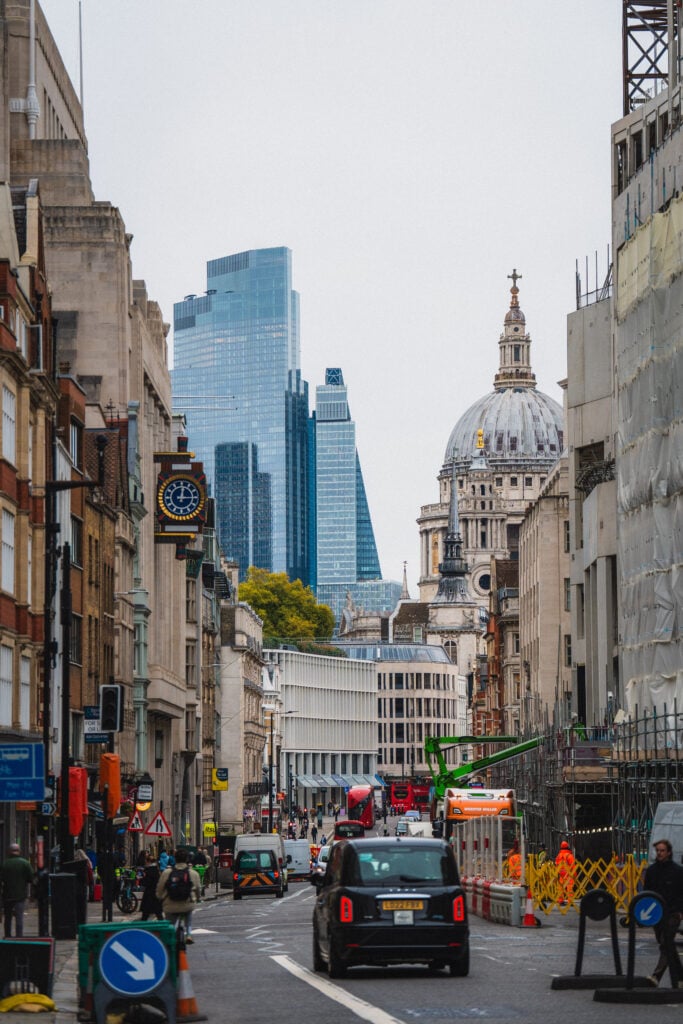
Fleet Street
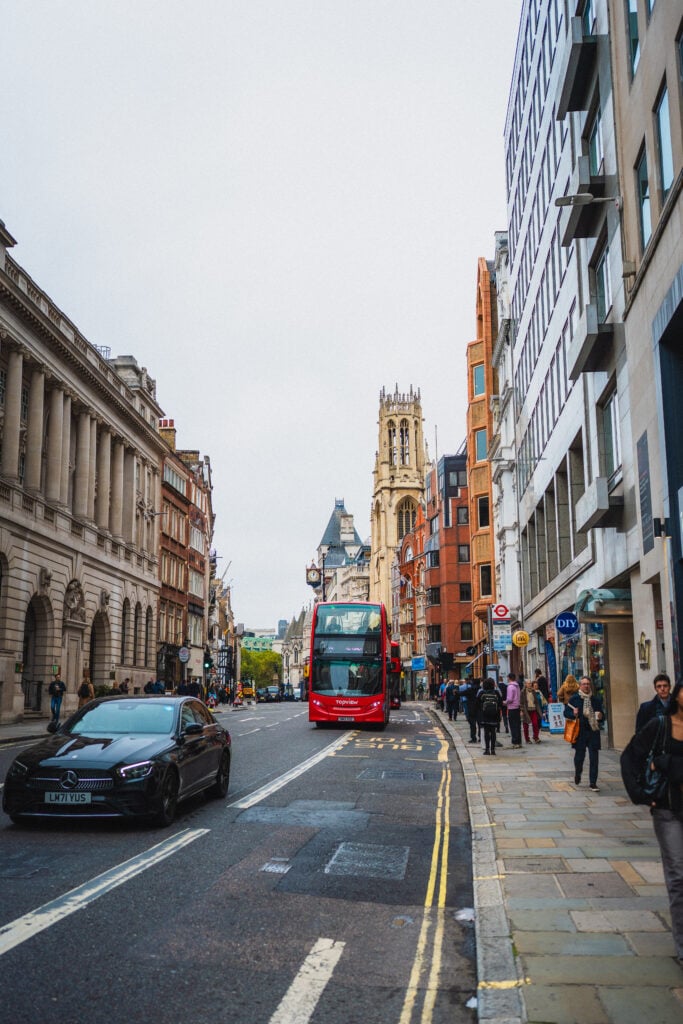
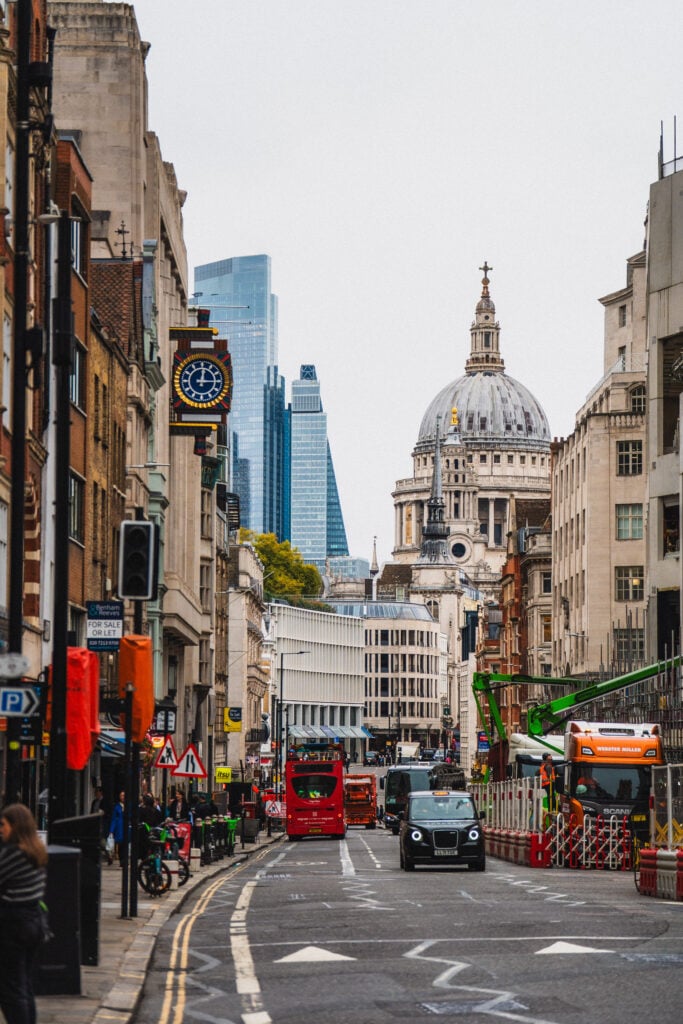
Fleet Street is one of the city’s most iconic streets, particularly due to its historic association with the British newspaper industry. In fact, the street has often been referred to as “the street of ink” thanks to it being so synonymous with the national press.
The area became home to several printing presses that started in the 1500s, but it wasn’t until 1702 that the Daily Courant would appear. On the 11th of March, 1702, the Daily Courant published its first edition of what would be the world’s first daily newspaper!
St Bride’s Church
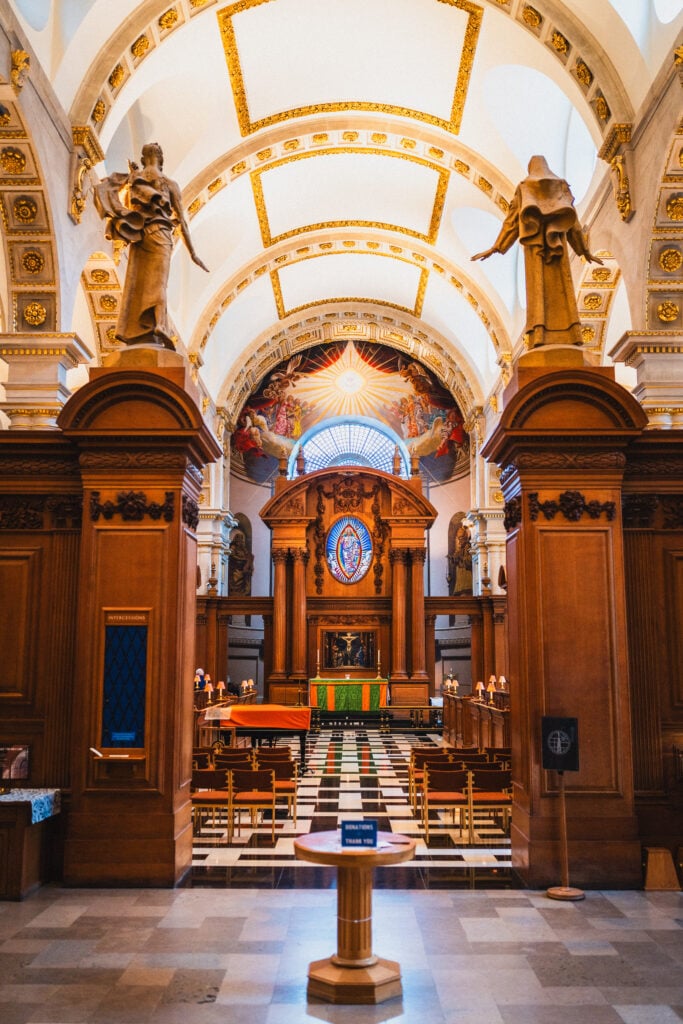
Known as “The Journalists’ Church” thanks to its strong ties to journalism and newspapers, St Bride’s Church stands high above the rest of Fleet Street and has a history that can be traced back over 2,000 years.
Inside the ecclesiastical building, you’ll find the crypt of St. Bride’s Church, a site steeped in history. This is actually the eighth church to stand here, as Christians have been worshipping on this spot for 1,500 years. There are a few fascinating things to note: the steeple is impressively tall and is said to have inspired the first tiered wedding cake, and the church is packed with literary connections.
In 1940, a bomb struck the church, which led to the discovery of a previously forgotten crypt, complete with Roman ruins. Today, this space has been transformed into a small museum, where visitors can explore the rich history of St. Bride’s and learn about its many literary associations.
The church is sometimes referred to as the ‘Printers’ Church’ or the Printers’ Cathedral, due to its close ties with nearby Fleet Street. Most notably, Samuel Pepys was baptised here, and it is thanks to his records that it is known that the church largely burned down during the Great Fire of London in 1666. The first printing press with movable type was also brought here in 1500.
Upstairs, you’ll find a section of the church dedicated entirely to journalists who have died, are being held hostage, or whose fate is unknown: a poignant reminder of the ongoing connection between this historic church and the world of news and literature.
Bloomsbury
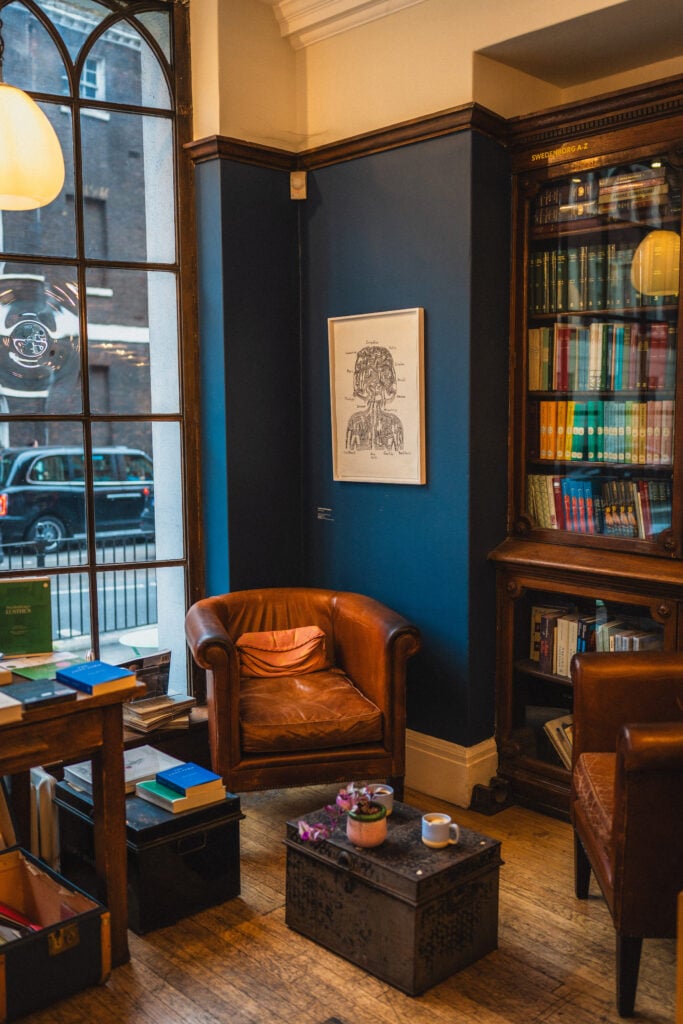
Bloomsbury is the best district to find cosy coffee shops with a side of books! One of my favourite bookshops has to be the London Review Bookshop. Opened in 2003 by the literary magazine, The London Review of Books, this bookshop sells thousands of reads from classics to contemporary fiction, and has a fabulous tea room where you can cosy up!
It’s also worth mentioning the Bloomsbury Group, a circle of artists, writers and intellectuals in the first half of the 20th century, who all lived and working in the Bloomsbury district!

Watch the YouTube video
Enjoyed reading our guide to the best of London’s literary locations? Pin this article now, and read it again later: