
20+ Best Free Things To Do in Milan, Italy’s Most Expensive City
Last Updated on 15th April 2025 by Sophie Nadeau
This post may contain affiliate links. Please check out my privacy policy for more information.
Ah, Milano! This iconic Northern Italy destination is a must-see when visiting the boot-shaped country. Renowned worldwide for its luxury fashion and prominence in design, Milan is a city where sporting brands like Gucci, Prada, Versace and Armani is simply the norm. Furthermore, the city is home to the only two known frescoes by Leonardo da Vinci, delectable Milanese cuisine, and copious displays of elegant architecture.
With all this in mind, you might be wondering if it is possible to visit such a decadent city on a relatively small budget? The answer is, yes – absolutely! From ornate church interiors to artist districts and monumental cemeteries…here are the best free things to do in Milan!
Is Milan city expensive?
If you’ve spent any time looking up Milan, you’ll have quickly realised that it’s the most expensive city in Italy. Indeed, Milan is one of the most expensive cities in Europe.
However, this article is a reminder to not let the cost of a place deter you from visiting! When it comes to cities as large as Milan, you can always rely on an abundance of free things to do and visit as well. And, it’s even possible to source reasonably priced accommodation if you seek it out.
Is Milan a city worth visiting?
Yes, Milan is absolutely worth visiting! From the various people I’ve spoken to who haven’t yet visited, it seems that most first impressions of Milan are that it is more of a financial hub and very expensive.
While both are true, Milan City is also a powerhouse of culture, and, thanks to its size, there are a multitude of things to see which don’t involve spending money. Milan is one of those destinations that has something for everyone.
Best free things to do
Cimitero Monumentale
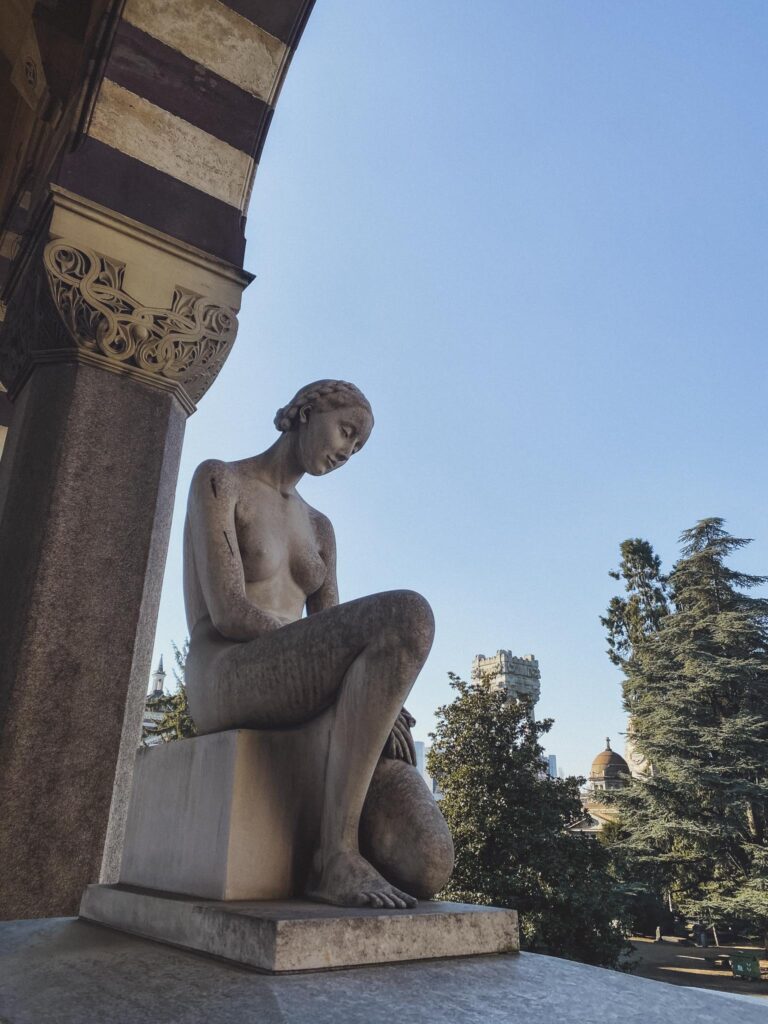
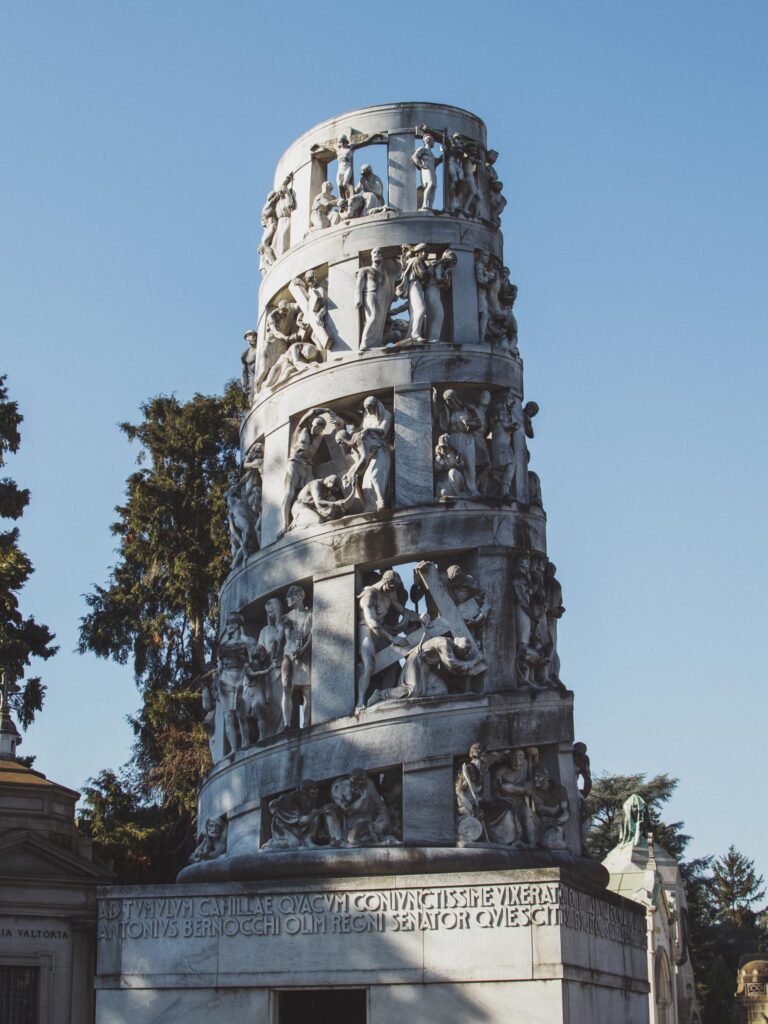
The Monumental Cemetery is a quiet and calming space tucked away in the northern corner of the city, close to Chinatown. Designed by the architect Carlo Maciachini, the cemetery was first opened in 1866 and is one of two of the city’s large burial grounds.
You’ll be greeted by a grand pink and white Neo-Medieval-style building on arrival. This large Famedio (“hall of fame”) is where some of Milan’s most honoured citizens are interred, including the likes of: Alessandro Manzoni, Salvatore Quasimodo, and Arturo Toscanini.
The intricately carved tombstones, temples and small statues silently witness the passing of time. This has to be one of the coolest places in Milan and is somewhat of an open-air art gallery. You can easily spend an hour or two getting lost down the paths and reading the markings of those laid to rest here.

Brera District
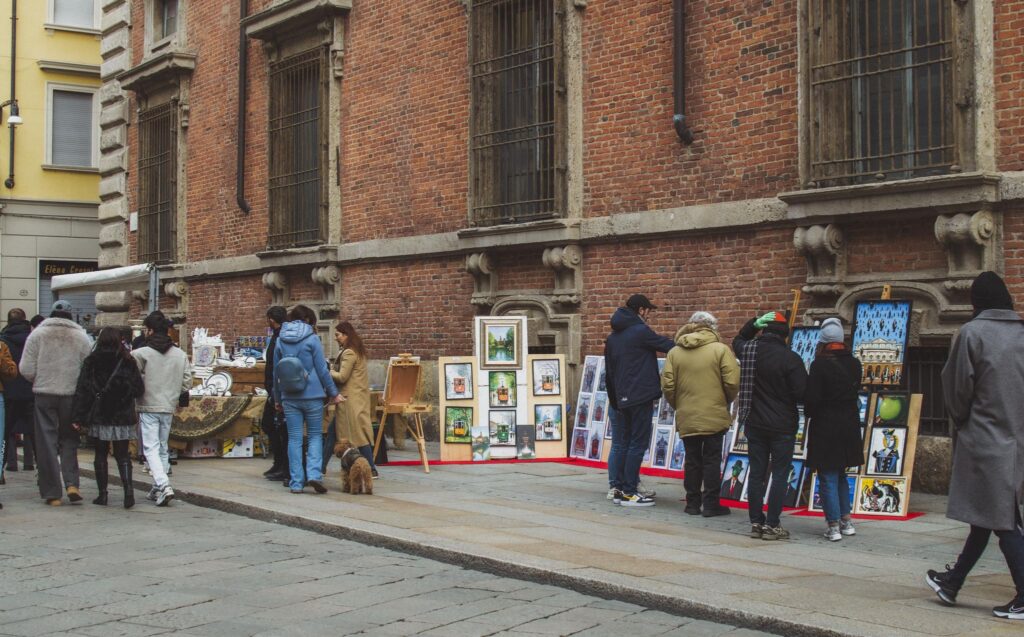
When first researching this pocket of Milan, I came across a description citing it as the “Monmarte of Milan” , with reference to the charming artist’s haunt of Paris. It is indeed similar, with the exception of a hill. Brera is an artsy district in the heart of Milan, characterised by its quaint cobbled streets and historic 18th century architecture.
The Brera neighbourhood is considered one of the city’s most beautiful districts, embodying the importance of art and design so deeply rooted in Italian culture. This buzzing area exudes a bohemian charm where the vine draped shutters are all shades of pastel, and stylish cafés line the cobbled pathways.
Every third Sunday of the month, the Mercato dell’Antiquariato di Brera (Brera’s Antique Market) takes over the narrow streets, providing a treasure trove of artworks and collectable items to peruse.
Palazzo Brera (The Courtyard of Honour)
Palazzo Brera is a monumental palace in Milan, and while there is an entry fee to visit the palace itself, that’s not to say you can’t enjoy a peek inside its courtyard. The building seen today dates back to the 16th century and was built upon the remains of a former Jesuit college.
The Courtyard of Honour (the free area to visit) is centred by a bronze cast statue of Napoleon in the guise of Mars the Peacemaker. The white marble statues that surround commemorate various Italian artists, scientists and patrons of the arts.

Brera Botanical Garden
This secret green oasis is hidden away in Brera, and few people know about this officially recognised museum…which is completely free to visit! This is easily one of the best hidden gems of Milan!
Orto Botanico di Brera was first established in 1774. As of 1935, the garden was taken over by the University of Milan, who continue to manage it today. Since then, it has served as a place of education for students of medicine and pharmacology.

Galleria Vittorio Emanuele II
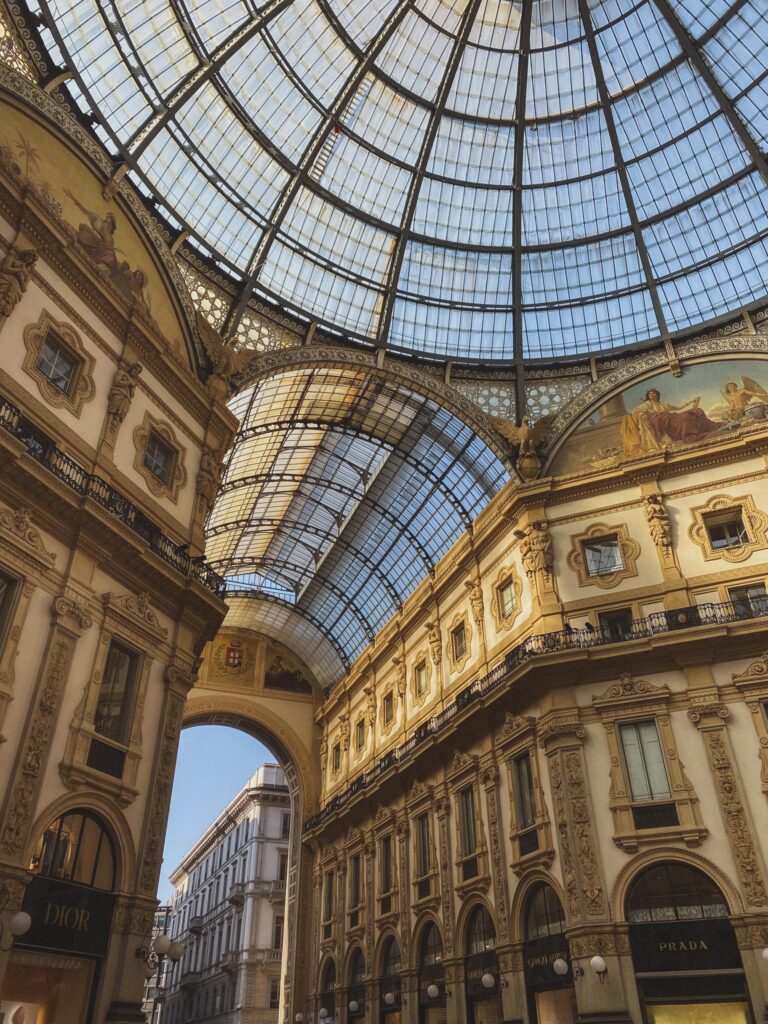
This iconic covered arcade exudes the height of luxury, housing plenty of upscale shops (with security guards posted by each door!) Constructed in the latter half of the 19th century, the Vittorio Emanuele II Gallery can be found beside the city’s duomo.
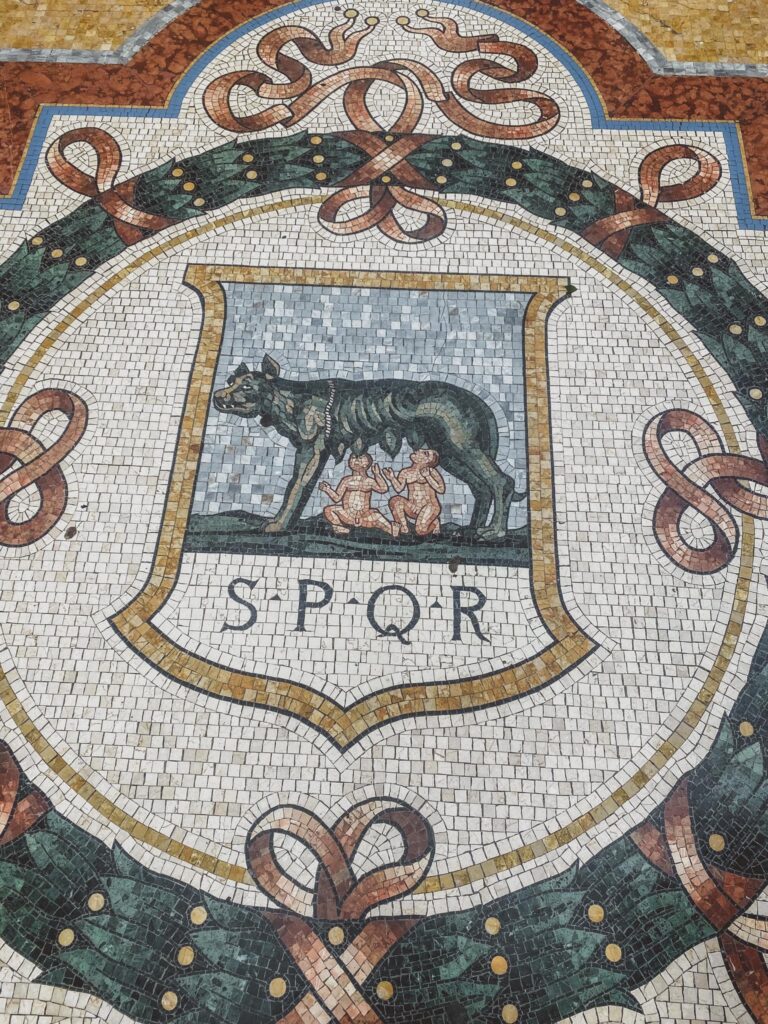
Walking beneath the huge glass-panelled domes and grand painted frescoes is the best way to experience the decadence and fashion-driven atmosphere of Milan. There is a legend that says if you spin on the bull in the centre of the mosaic flooring, you’ll be rewarded with a trip back to the city!
Marvel at the Duomo di Milano
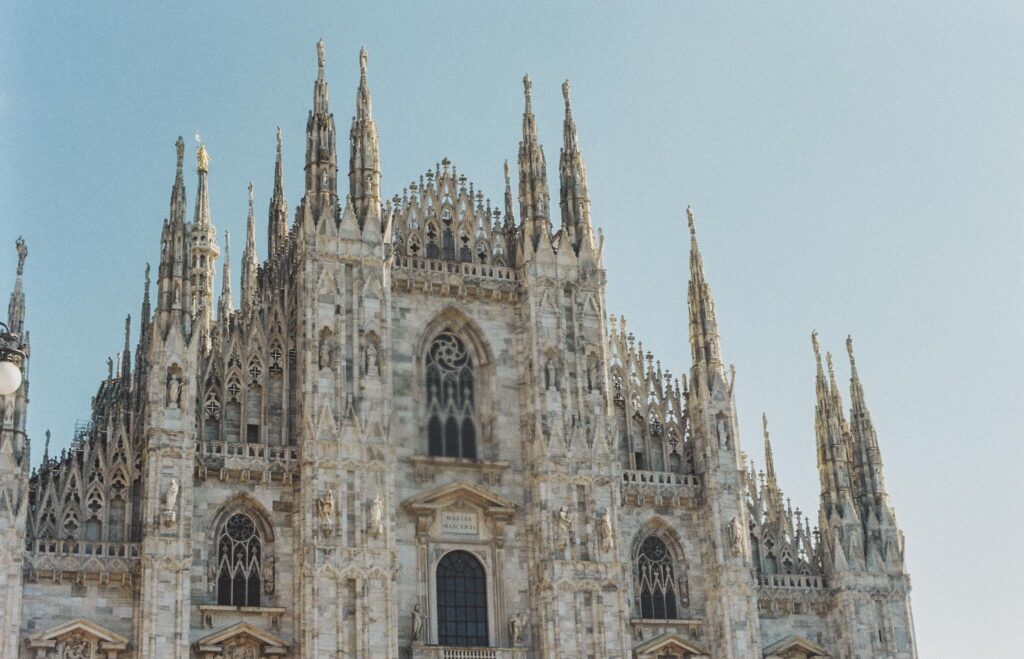
One of the most notable and celebrated sights in all of Italy has to be that of the Duomo di Milano. This extravagant Gothic cathedral is a vision of light rose-tinted Candoglia marble, and it is one of the world’s most ambitious and impressive architectural feats.
Taking over 600 years to build, the Duomo di Milano is adorned with 135 spires which rise in a crown formation into the sky. Intricately decorated with 3,400 figures and gargoyles, you could easily spend hours soaking up the details of the cathedral’s facade alone.
Of course, the Duomo is free to look at, but you’ll have to pay to visit the interior and terrace. A visit to the Duomo terrace offers one of the most magical experiences in Milan. Read our guide on how to visit the Duomo di Milano rooftop terrace.
Palazzo Moriggia | the Museum of the Risorgimento
“Risorgimento”, which translates as “Rising Again” was the name given to the 19th-century movement for Italian unification, culminating in the establishment of an independent Kingdom of Italy in 1861.
This small, free museum was established in 1884. Today, visitors can explore a varied collection of objects and artworks which illustrate the history of the Italian unification.
San Maurizio al Monastero Maggiore
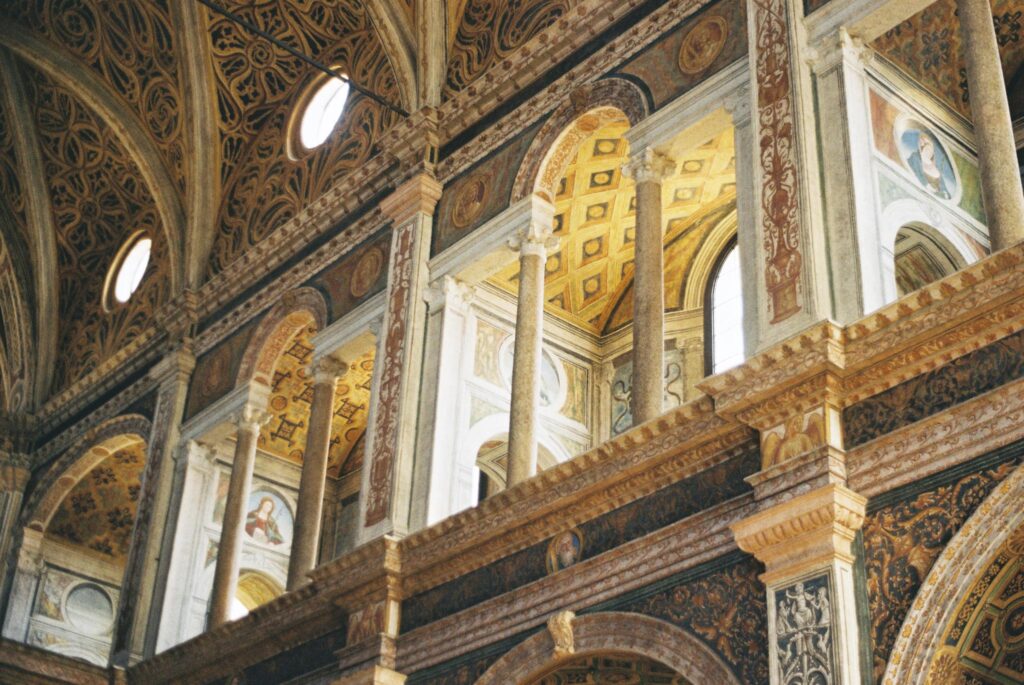
Located next to the Civic Archaeological Museum, this unassuming church, which is grey and gloomy from its exterior, hides within its walls some of the most beautiful and ornate well-preserved 16th-century frescoes. San Maurizio is often referred to as “the Sistine Chapel of Milan” by the locals.
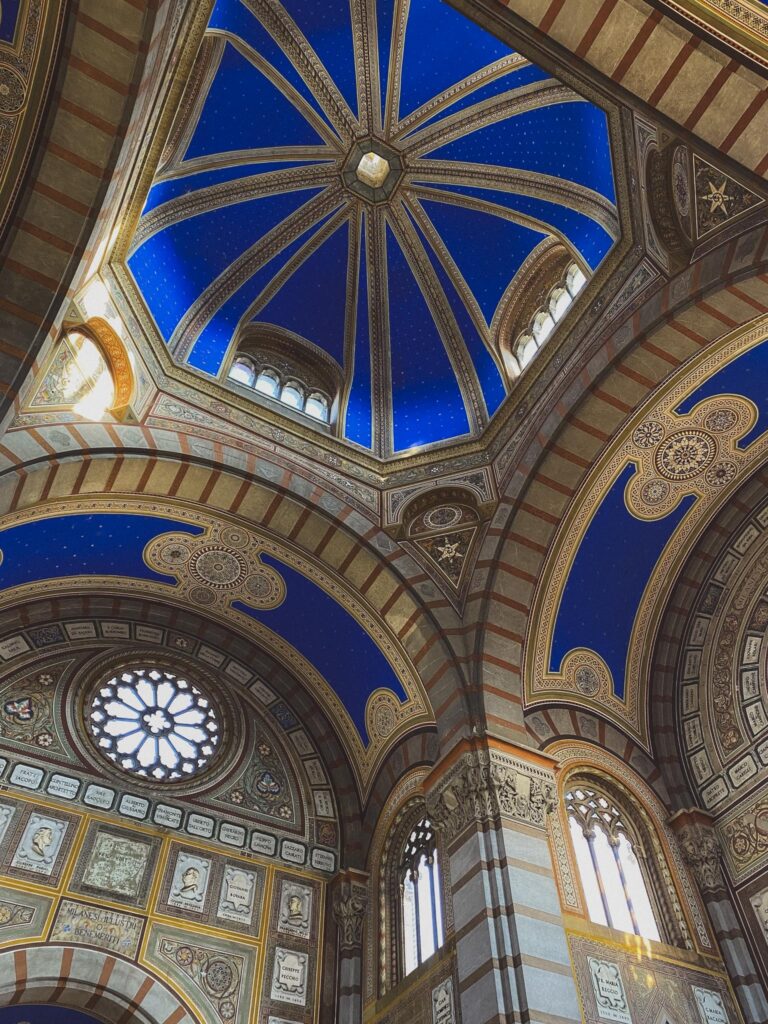
This was one of my favourite sights in Milan. Every inch and corner of the church’s interior is detailed with colourful images of saints, martyrs and biblical scenes. Walk further into the ecclesial building and you’ll see the hall of nuns where a starry night sky of midnight blue and gold paints the walls, dotted with God and angels.
Civic Archaeological Museum (see the entrance exhibition)
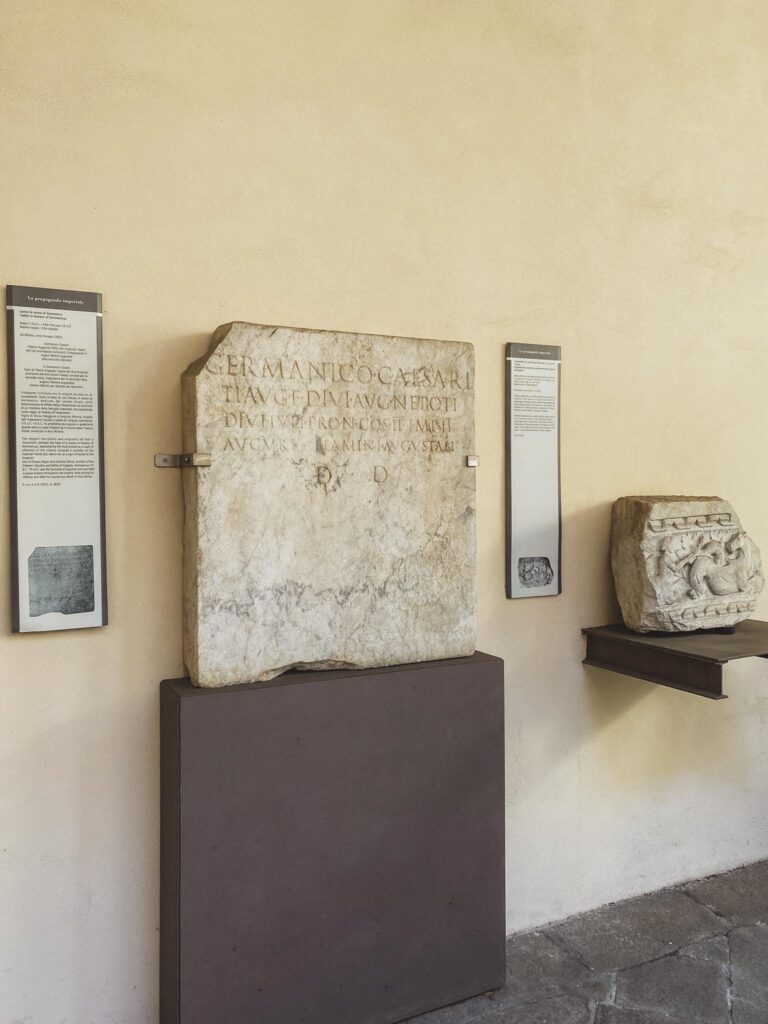
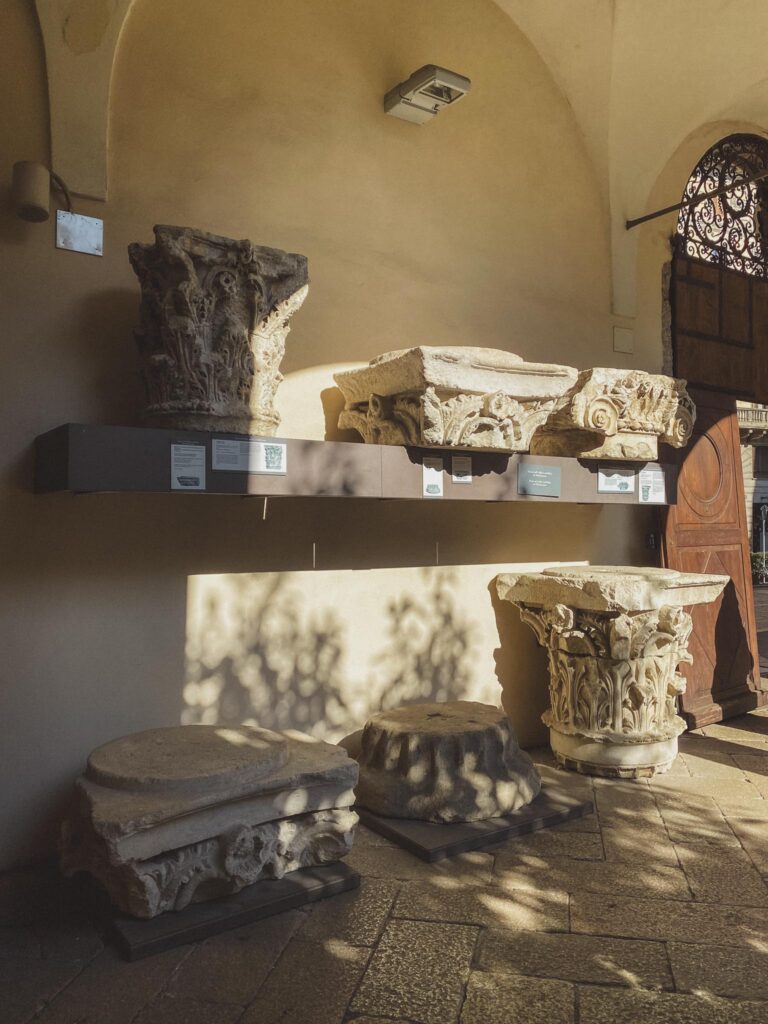
While the Civic Archaeological Museum itself is paid entry, you can get a taste of what to expect by visiting the courtyard just before the entrance. Here, there are a number of Roman relics and remains on display. The museum itself is located within the ex-convent of the Monastero Maggiore.
Step inside the Sforza Castle courtyards
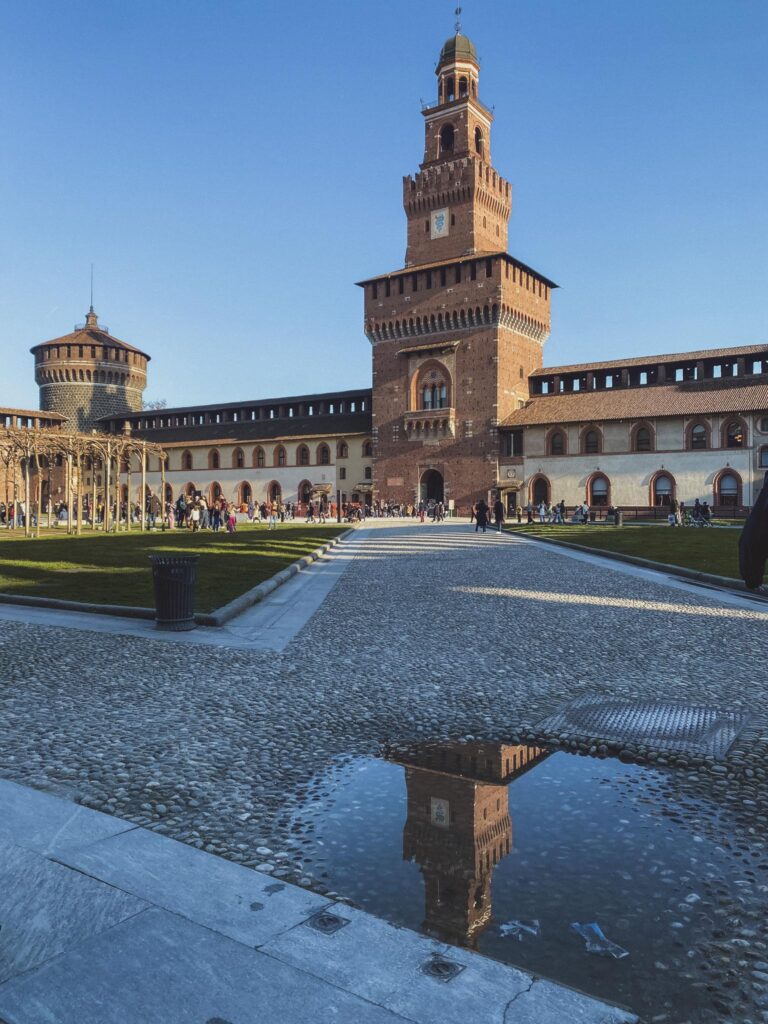
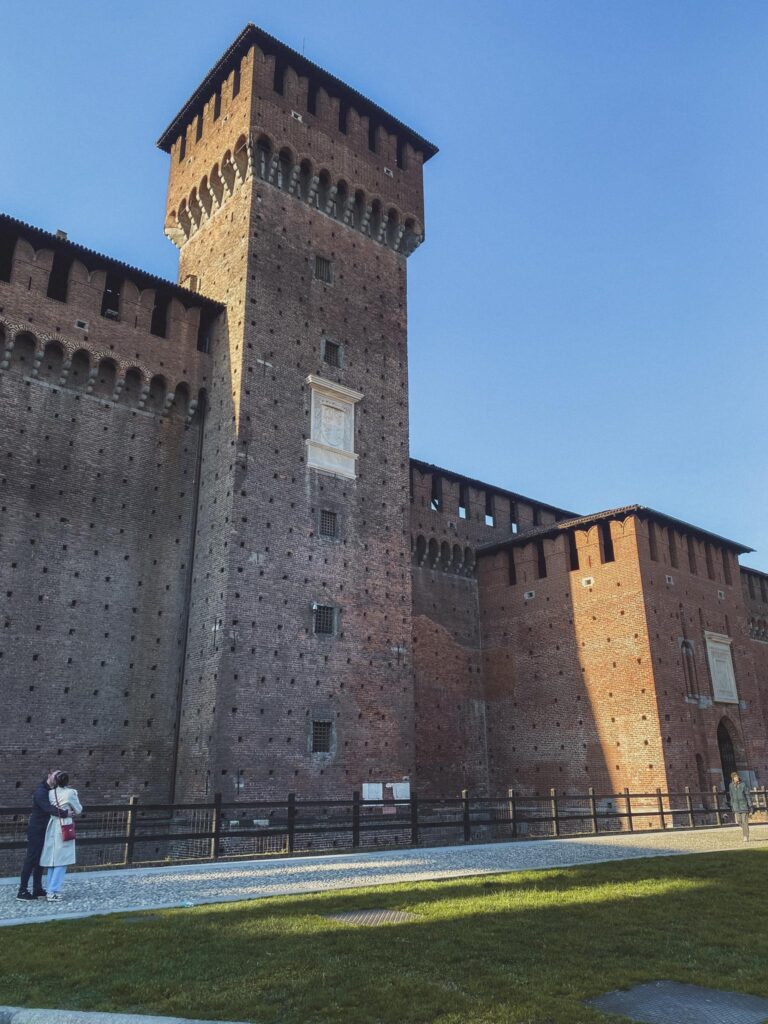
The Sforza Castle is a Medieval fortification located in Parco Sempione. The red-brick fortress was built in the 15th century by order of Francesco Sforza, the Duke of Milan. There are three courtyards inside which can be explored (for free!): Ducal Courtyard, Rocchetta Courtyard, and the Courtyard of Arms.
The three connected castle courtyards offer a glimpse into the lavish and elegant lifestyle of the Sforza family. Visitors are welcome to walk across the moat and visit each courtyard where fragments of statues, archaeological artefacts and painted frescoes can be seen.
Enjoy free water throughout Milan!
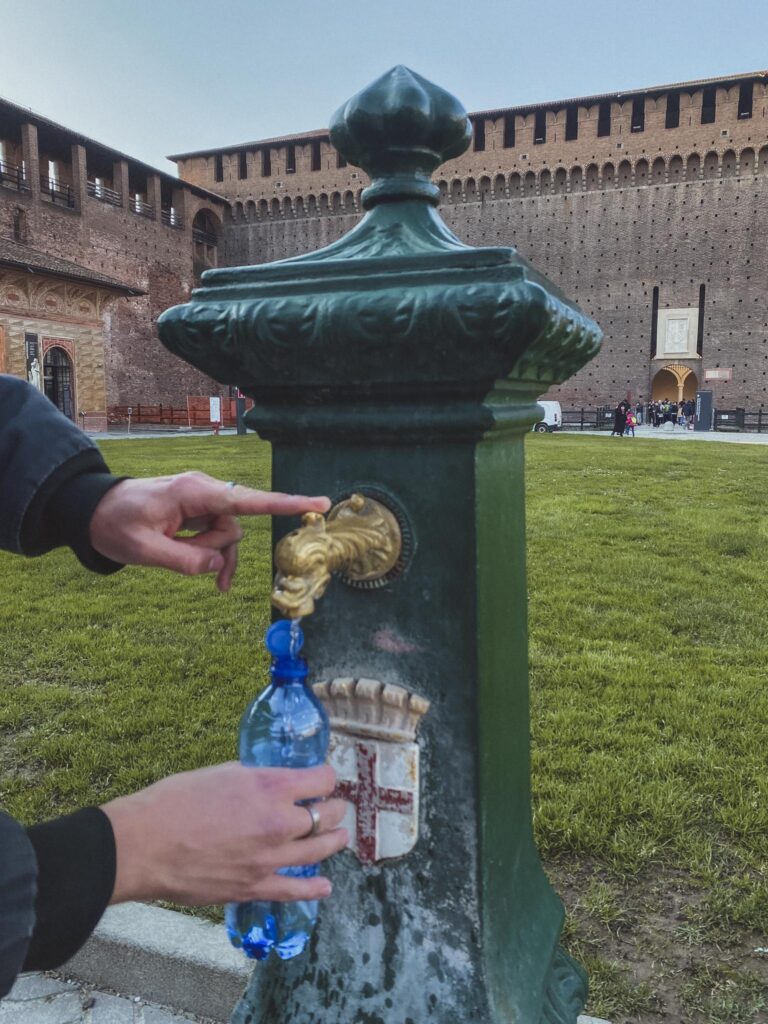
Not so much a free thing to do, but it’s always nice to know where to find free water. As with many of the cities throughout Italy, in Milan, you can find plenty of free water sources to keep you hydrated! The water sources are known by the locals as “nasoni”(big noses) or “fontanelle” (little fountains).
Parco Sempione
This is one of Milan’s largest green spaces and it was first established in the late 19th century. Characterised by its winding paths, woodlands, recreational spaces and small ponds, this space comes to life in the heat of summer. Be sure to keep your eyes peeled for small terrapins basking by the waterside!
Found within the parameters of the park is the Porta Sempione, which is a city gate of Milan and looks fairly similar to that of the Arc de Triomphe in Paris.
Basilica di Santa Maria delle Grazie
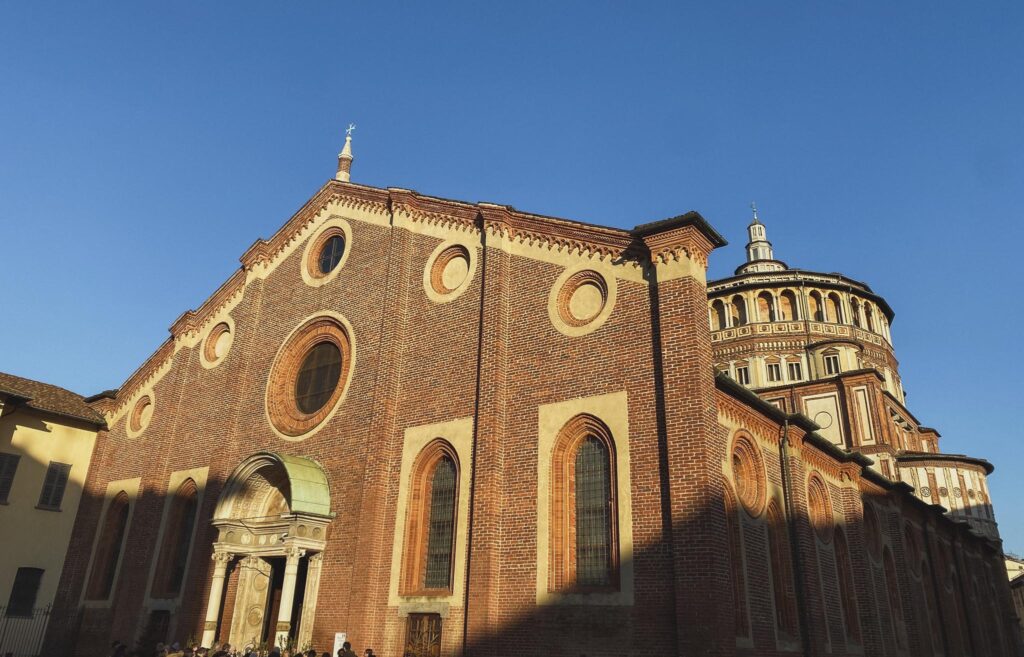
Perhaps one of the most famous churches in Milan, this basilica is a UNESCO World Heritage Site and its convent contains the mural of The Last Supper by Leonardo da Vinci. To visit this masterpiece you have to pay an entry fee.
However, the church itself is free to enter and will likely blow you away with its beauty! As with most of Italy’s ecclesial buildings, the Santa Maria delle Grazie doe not disappoint. Inside, the ceiling is covered with painted sun swirls in burnt tones of red, orange and umber. And, the domes are adorned with frescoes, showing off even more of the grandeur Renaissance art that can be found in the city.
“Naviglio” is the Italian word for “canal”, therefore “Navigli” is the plural. This district, as its name suggests, is made up of a series of interconnected waterways and is situated in the heart of Milan.
Navigli is an enchanting area to explore. Though it has to be said, it is best visited at night time when it’s abundance of bars and eateries are buzzing, beckoning in travellers to enjoy an Aperol spritz by the tranquil canal (so you can probably expect to spend a little money here!)

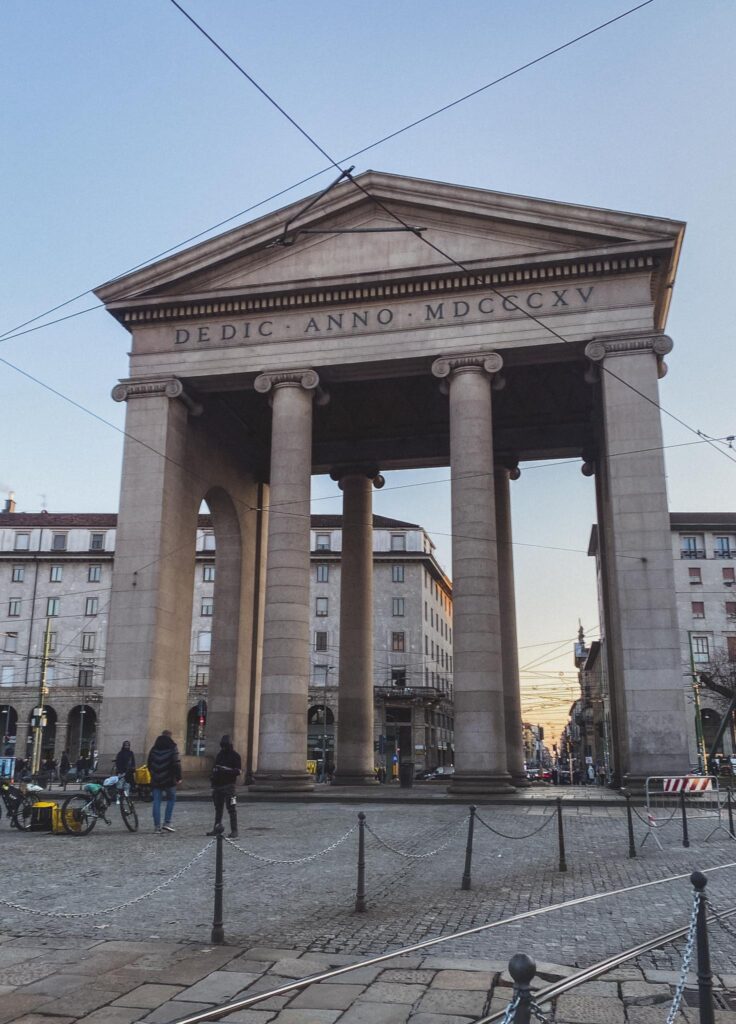
Porta Ticinese
Stood as a gateway to the start of the Navigli district is the Medieval gate which used to be part of the former 12th century walls of the city. It is one of three remaining city gates in Milan. After the Napoleonic wars a Latin insctription was added. It reads “PACI POPVLORVM SOSPITAE” (“to peace that frees peoples”).
Santuario di San Bernardino alle Ossa
One of the more intriguing visits in Milan is that of the small side chapel of the Church of San Bernardino alle Ossa. This small ossuary was first constructed in 1210 to house the house bones from the adjacent cemetery which had run out of space.
Step inside the ossuary and you’ll see that the walls from floor to ceiling are entirely covered in human bones and skulls. The remains are arranged decoratively, resembling the cross, as well as adorning the cornices and pillars. When looking up, visitors are greeted with a stunning fresco, Triumph of Souls in a Flight of Angels, which was painted by Sebastiano Ricci in 1695.
Basilica of Sant’Ambrogio
It’s impossible to get sick of exploring Italy’s churches because each one feels like viewing an entirely different masterpiece. So, here’s another one to add to your list to visit!
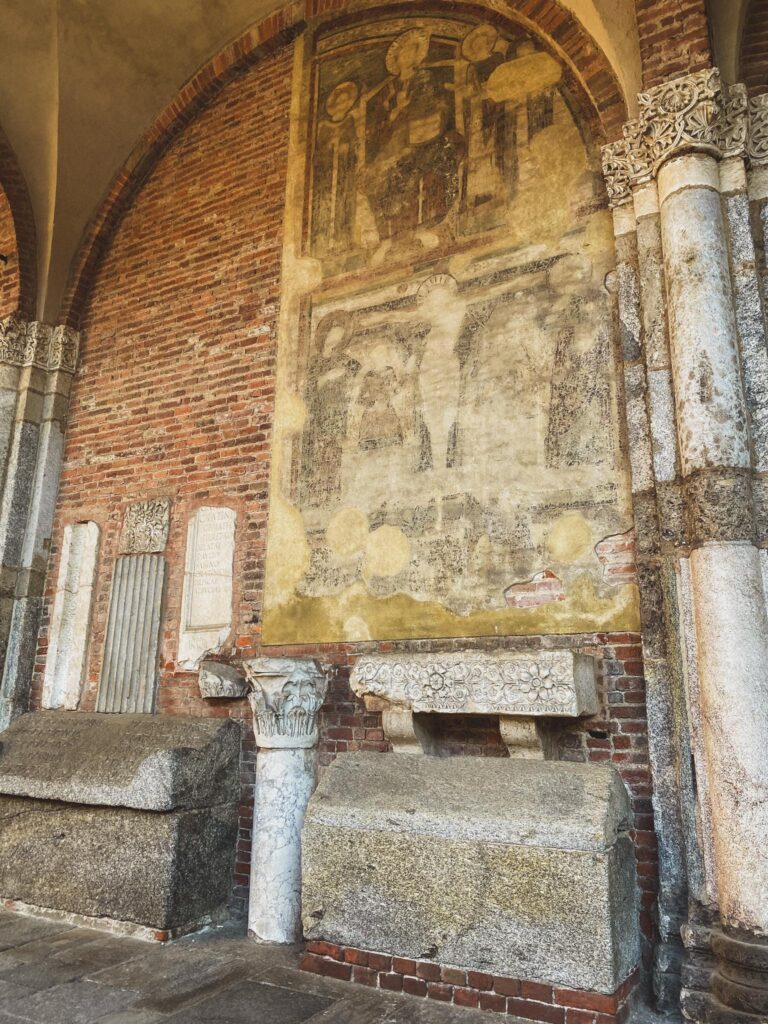
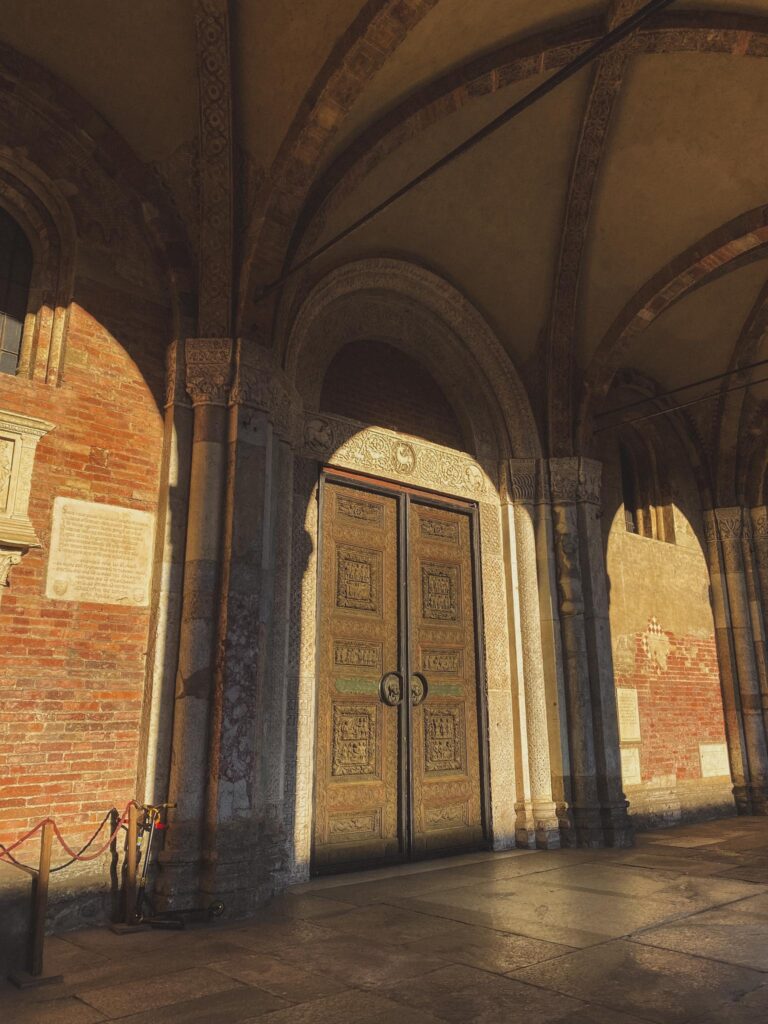
The Basilica of Sant’Amborgio is one of the most ancient ecclesial sights in Milan. The church was first consecrated in 379 by St. Ambrose. It has since been restored in a Lombard Romanesque style dating from the 11th century.
Mooch at Via Fauchè market (open Tuesday morning & Saturdays)
There’s nothing more enjoyable than perusing markets when visiting new places. In a fashion capital like Milan, you’re in with a chance to find some high-end brands at a fraction of their retail price!
The market takes place on Tuesday mornings and Saturdays at Via Giovanni Battista Fauchè. Be sure to have cash on you just in case (this part is obviously not free!)
Indro Montanelli Public Gardens
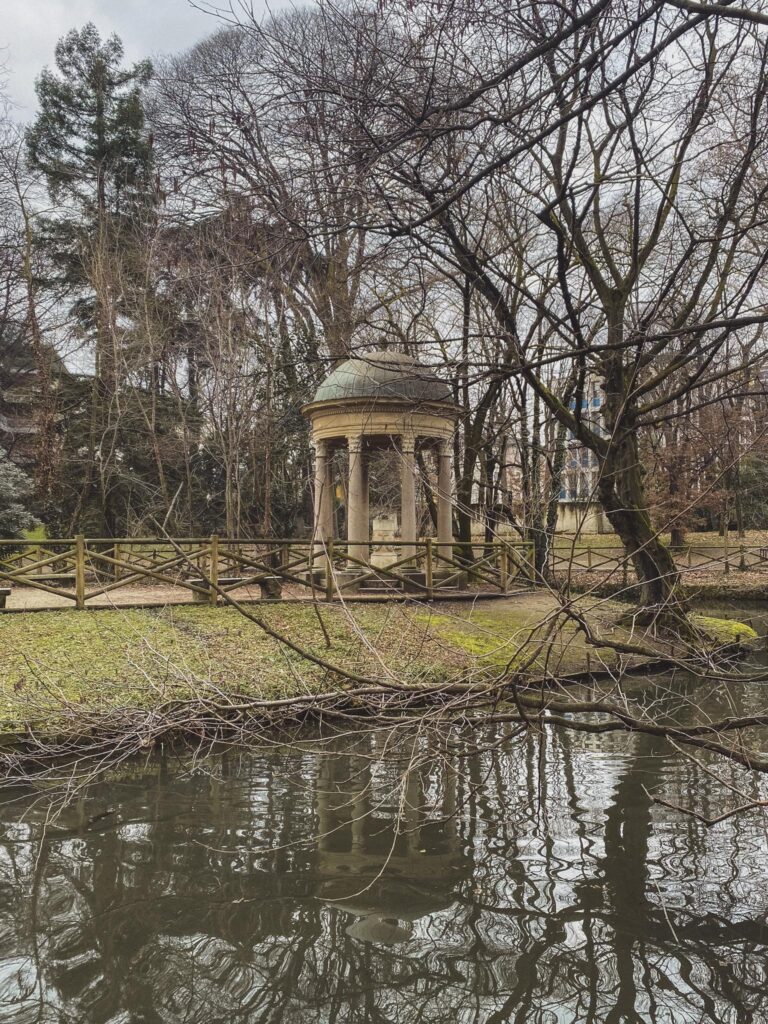
This beautiful garden is tucked away behind the neoclassical building which houses the Gallery of Modern Art in Milan. We visited the gardens in February, so it wasn’t too green, to say the least. Yet, they were still in use, with people taking their dogs on a chilly winters walk and families kicking a ball around.
The garden was inaugurated in 1784 and it was one of the first of its kind in the city, expressly intended for recreational use for all. In 2002 the garden took its name from the journalist and writer Indro Montanelli, who was known to spend a lot of time here.
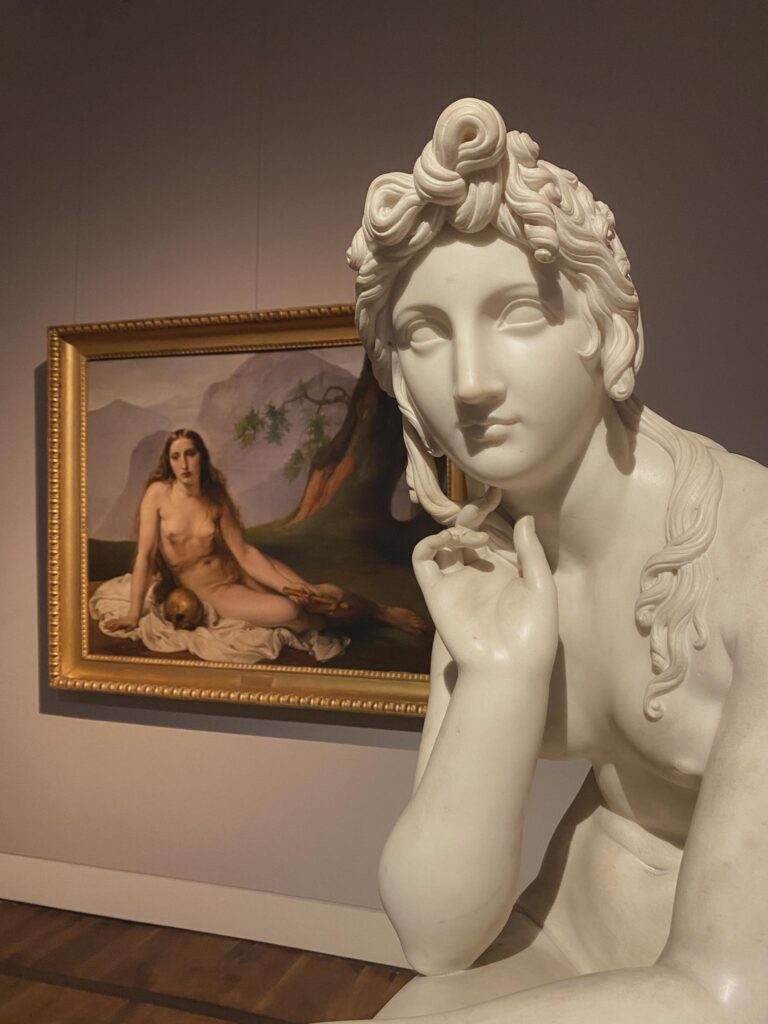
The art collection of the gallery is housed in a beautiful villa, and admission to the exhibition is €5.
Nelson Mandela Statue
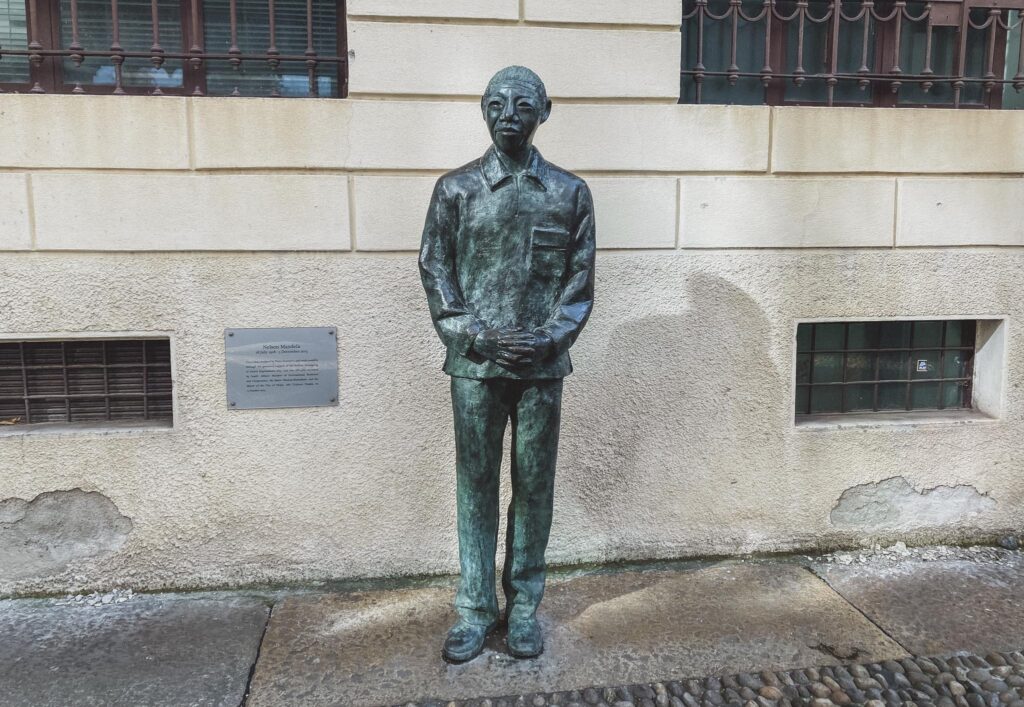
This small statue stands silently in a square just outside of the Consulate General of South Africa. The bronze sculpture was donated to Milan by the South African Government in 2015.
See the Needle, Thread and Knot sculpture
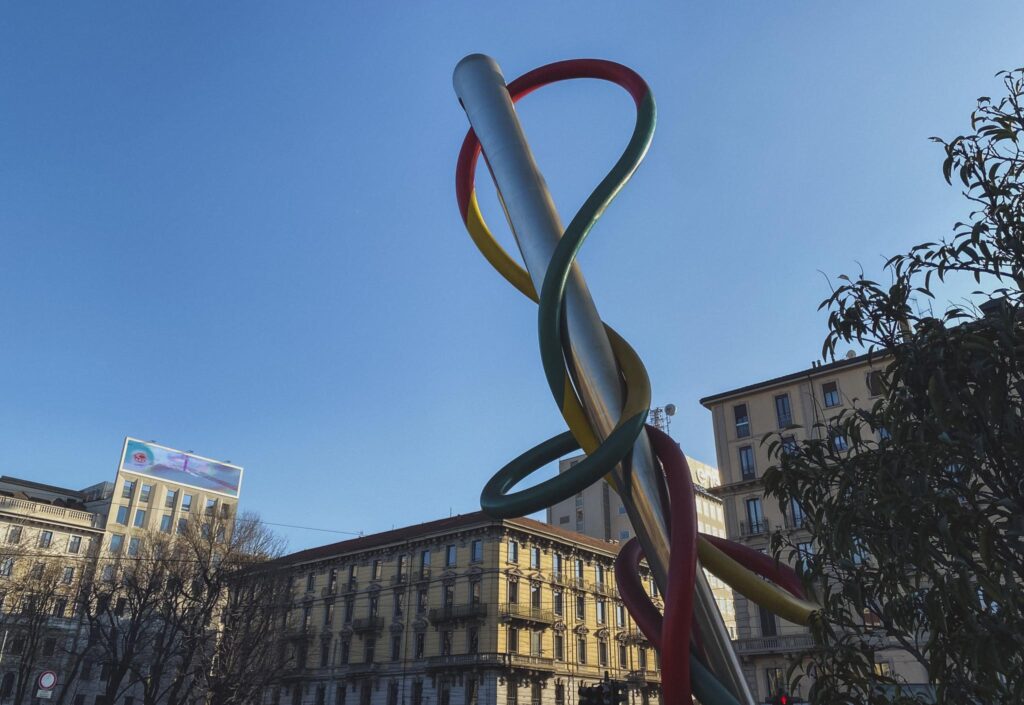
This public artwork was first unveiled in February 2000. While the photo below doesn’t detail this, the end of the stainless steel sculpture leads to a fountain where the “knot” sits at the middle.
The piece was commissioned by the City of Milan during the renovations of the Milan Cadorna railway station, with the three colours (red, green, and yellow) representing the city’s metro lines at the time. It’s also now regarded as a sculpture which pays hommage to Milan’s influence in the fashion industry.
Enjoyed reading our guide to the best free things to do in Milan? Pin this article now, and read it again later: