
A 2 Days in Lisbon Itinerary You’ll Want to Steal
Last Updated on 16th October 2026 by Sophie Nadeau
This post may contain affiliate links. Please check out my privacy policy for more information.
Lisbon or Lisboa as it’s known in Portuguese is the steep hilly capital city of Portugal. A vibrant coastal metropolis characterised by its terracotta roofs and colourful architecture. As one of the oldest cities in western Europe, Lisbon has seen a fascinating history and as a result makes for an enchanting city of intrigue where cultures blend and thrive. Here’s how to spend 2 days in Lisbon itinerary!

Is 2 days in Lisbon enough?
The short answer is yes! Although you won’t be able to see all of Lisbon in two days, you can get a feel for the city and cover a lot of ground in 48 hours, exploring the city’s main landmarks and historical sights, as well as indulging in its cuisine and culture.
If you have even less time, then you can check out our suggestions for how to spend one day in Lisbon and if you’re planning a wider Portugal trip, check out our suggestions for how to spend 10 days in Portugal.
What is Lisbon known for?
Lisbon is Portugal’s hilly coastal capital and largest city, rich with a fascinating history that dates back to 1200 BC. The city is renowned for its fluid blend of cultures which can be traced through its charming neighbourhoods, colourful architecture and delicious cuisine.
One particular flavour that can be felt throughout the city is that of its Islamic culture thanks to the fact that the Moors of North Africa ruled Lisbon as a Muslim city for nearly 500 years.
Day 1suggested itinerary
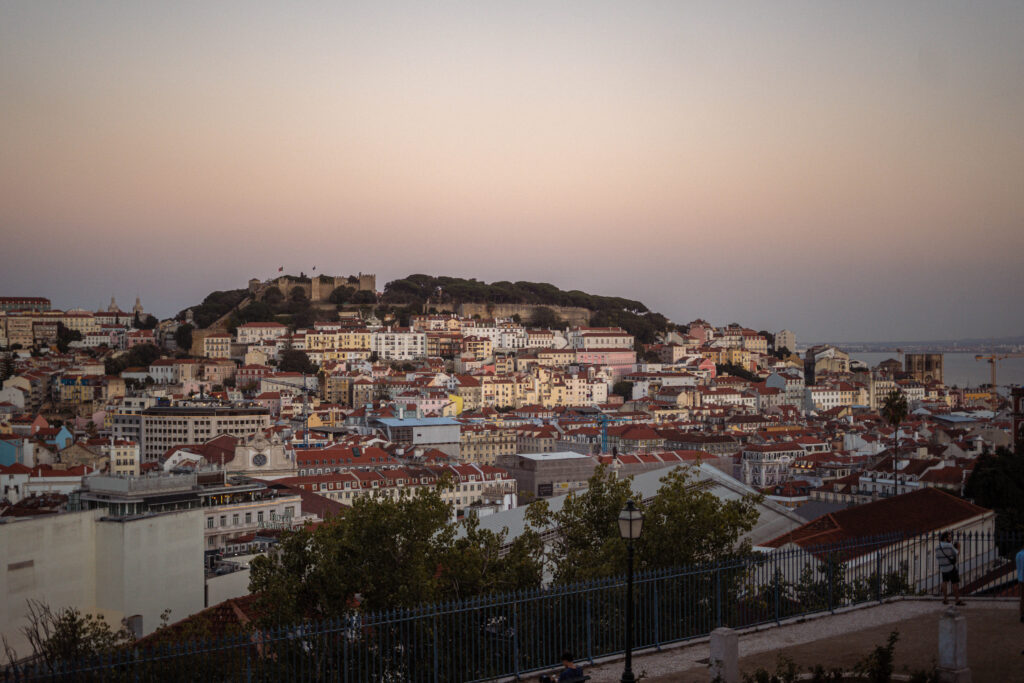
Castelo de Sao Jorge (and view)
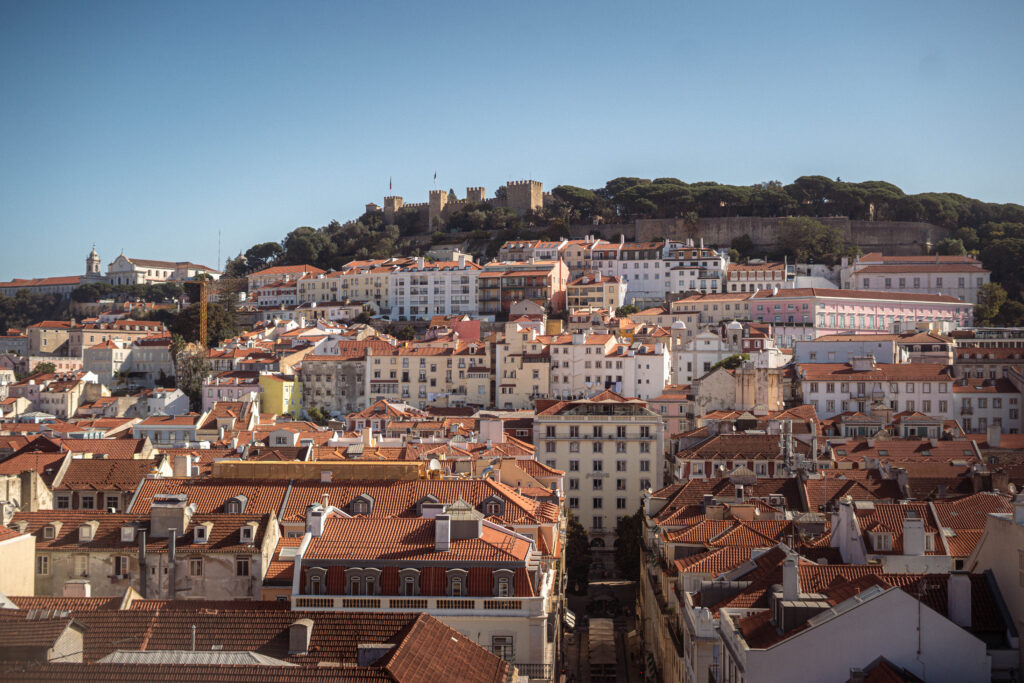
Start your time in Lisbon by exploring the former Moorish castle, São Jorge, which has been altered so much by subsequent occupiers that little is left of its original structure.
Despite it being an iconic military monument that was once part of a larger complex defence system, no much is known about the castle. However, there is an archaeological centre on site which allows visitors to uncover more about its history and also displays the oldest piece of evidence that dates back to the 7th century BC.
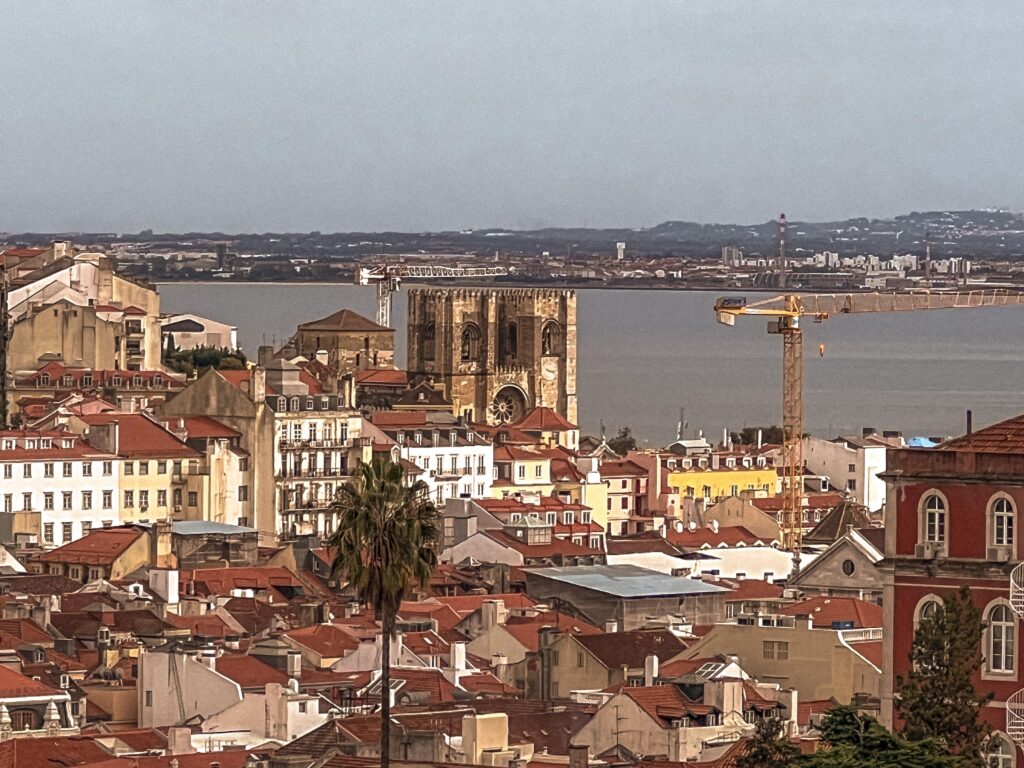
Thanks to the fact it is perched atop a hill, one of the best things about a visit to the castle is the spectacular views it boasts. Overlooking the Tagus River and Alfama district, you can soak up the intricate pattern of terracotta patchwork roofs, stitched together by a maze of narrow meandering paths.
Santo Antonio
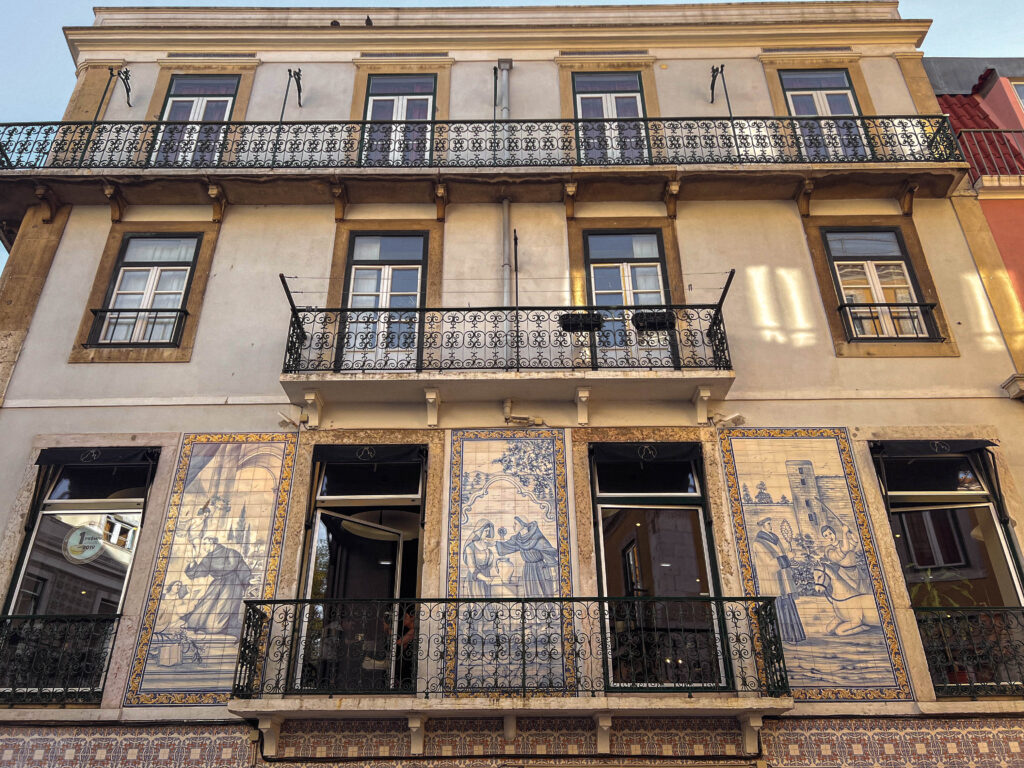
Stop for a sweet treat or morning pastry at Santo Antonio, a fabulous bakery full of charm that has a sign outside which says, “Eat a custard tart and ask Saint Antonio for a miracle”.
Although pretty touristic, this store boasts a beautiful tile façade and, once inside, there are all kinds of treats on offer, including a Portuguese croissant. This bakery also makes our list as one of the best places in the city to buy a pastel de nata in Lisbon!
Miradouro das Portas do Sol
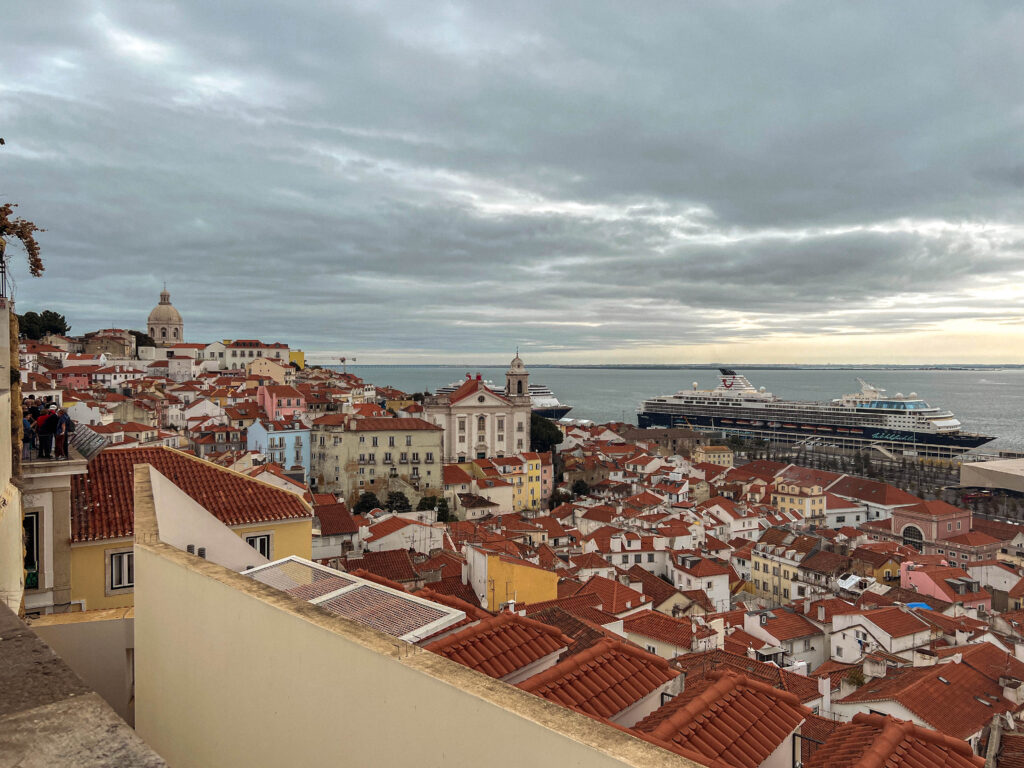
Lisbon is often referred to as ‘The City of Seven Hills’, similar to Rome, the Portuguese capital was founded among seven peaks that make up the surrounding landscape. In Portuguese viewpoints are known as miradouros and Lisbon has plenty of them.
Miradouro das Portas do Sol is a large terrace which sits above the ancient neighbourhood Alfama and boasts unobstructed postcard-perfect views overlooking the terracotta roofs that splay across the landscape and the azure of the sea just behind.
For even more amazing views, check out our full guide to the best views in Lisbon.

Miradouro de Santa Luzia
Another viewpoint nearby that is a slightly more romantic thanks to its beautifully tiled and arched terrace, is the miradouro of Saint Lucy. Overlooking sweeping views of the city and river, there are also a few eateries along here which means you can enjoy delicious Portuguese cuisine with an enchanting view!
Lisbon Cathedral
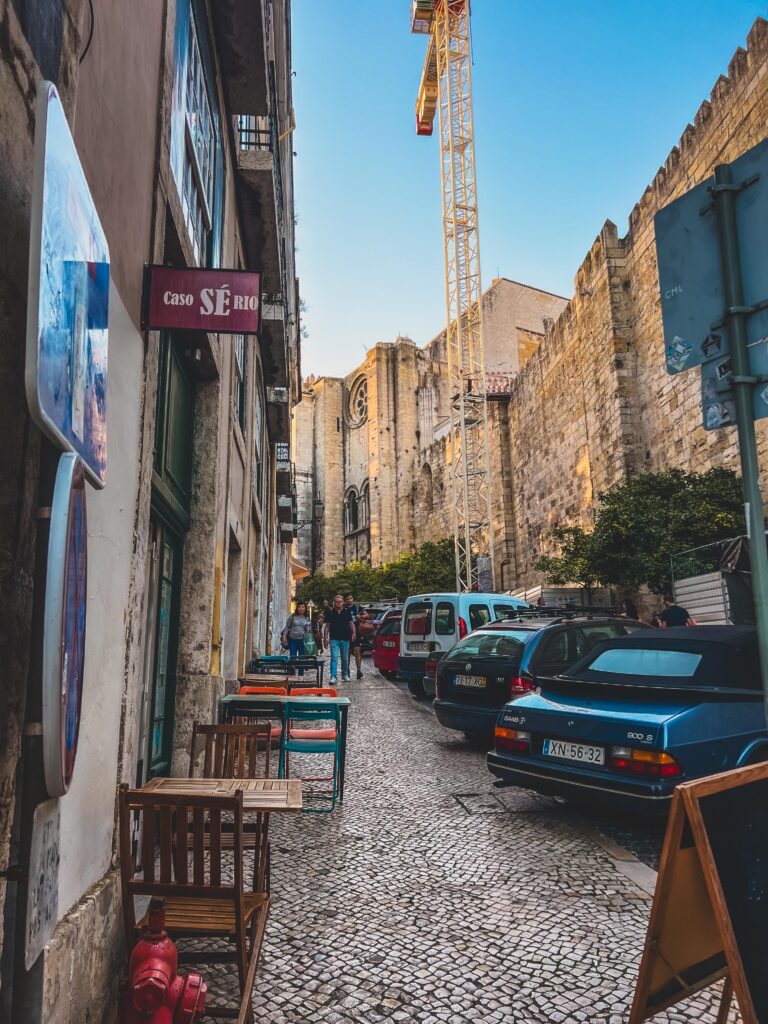
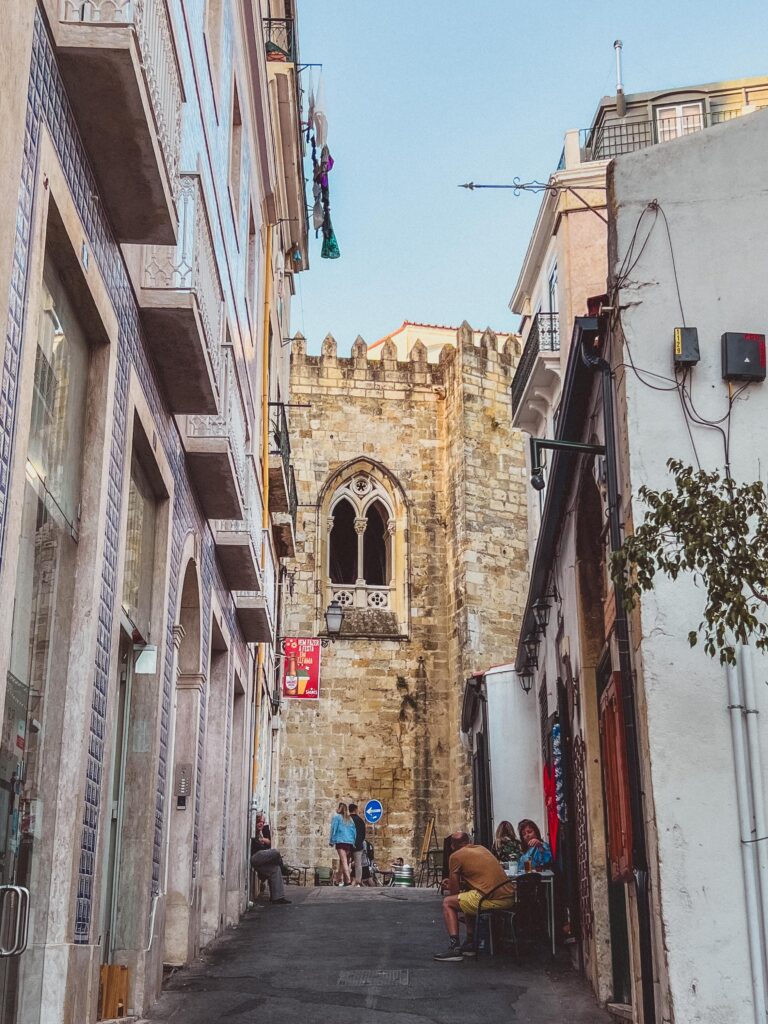
In the heart of Lisbon is its cathedral, which is officially known as The Cathedral of Saint Mary Major, though locals often just refer to the cathedral as Sé. It stands as the oldest church in Lisbon and was initially built as a mosque, when the city was conquered by the Moors and stayed under Arab control for many centuries.
The church was first built in 1147 and despite the several earthquakes and natural disasters that have shook the Portuguese capital, this sacred structure has managed to mostly survive, with the help of renovation and restoration works being made several times.
Between modifications and changes in religion, it’s for that reason that Lisbon Cathedral is such a mixture of architectural styles; as a result, it has been designated a National Monument.
The cathedral itself is free to enter, though I recommend paying the small fee to visit the Gothic cloister, where you can see traces of the Roman, Arab, and Medieval periods, as well as a small museum.
Arco da Rua Augusta
The Rua Augusta Arch is a stone-carved memorial that was s built to commemorate the city’s reconstruction after suffering a devastating earthquake in 1755. Today, this historic monument is one of the most visited landmarks of the city.
The impressive archway features six columns and is adorned with various historical figures of significance, the overall structure reaches around 30 meters high into the sky. It was originally built as a bell tower, which is why you can still see a bell atop it today.
If you choose to visit, you can climb up a spiral staircase to the top and view Lisbon from yet another great viewpoint. Similar to that of the Arc de Triomphe in Paris, you can view one of Lisbon’s busiest pedestrianised streets from above.

Livraria Bertrand
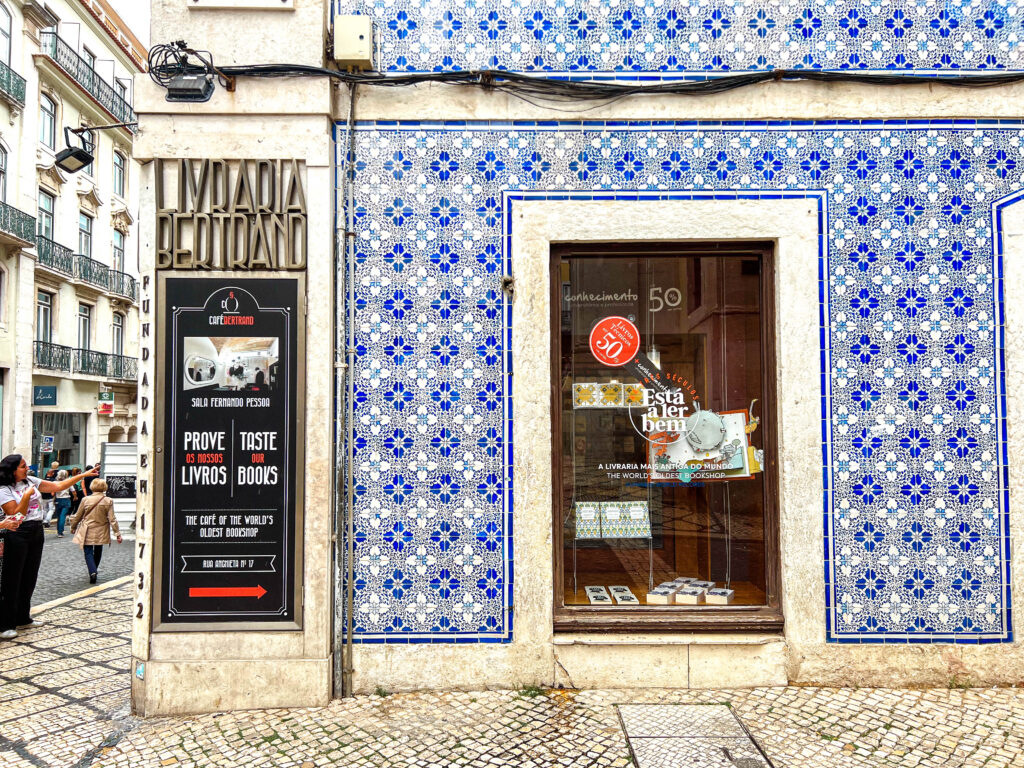
The oldest bookshop in Portugal is a treasure trove that resides here in Lisbon. Covered in quintessentially Portuguese ‘azulejos’ (that means ’tiles’ in Portuguese), this Lisboa bookstore dates all the way back to the first half of the 18th-century, firmly placing it in the Guinness Book of World Records as the ‘Oldest Operating Bookshop’, as a plaque proudly indicates at the entrance to the shop.
Church of Saint Roch/ Igreja de São Roque
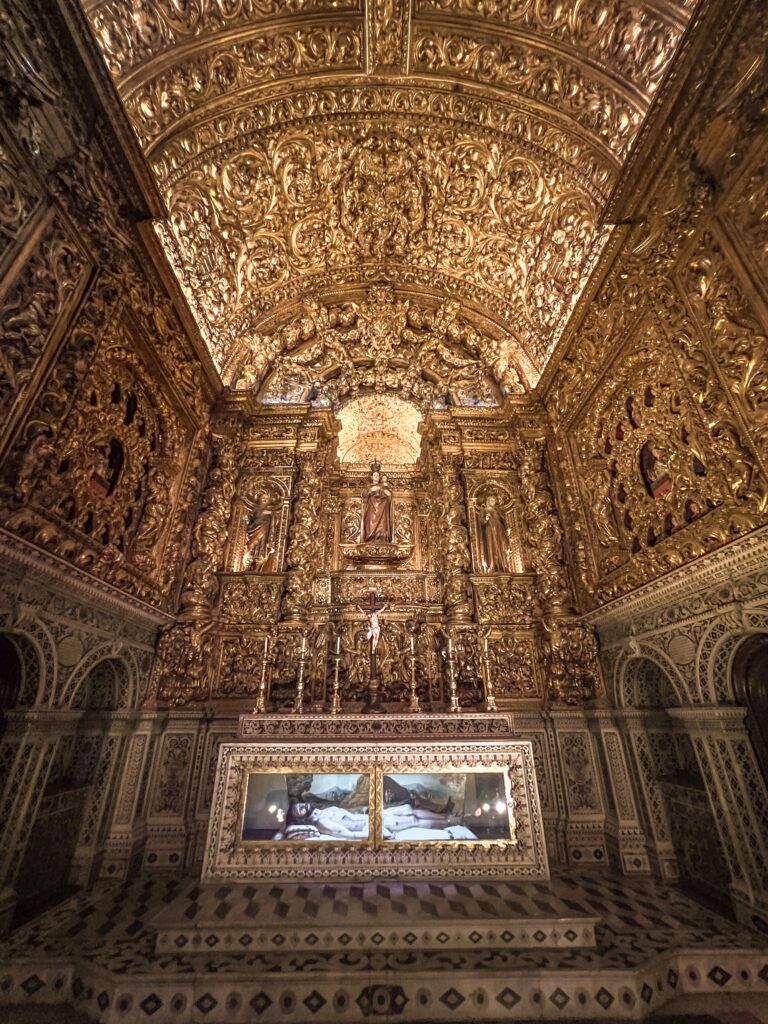
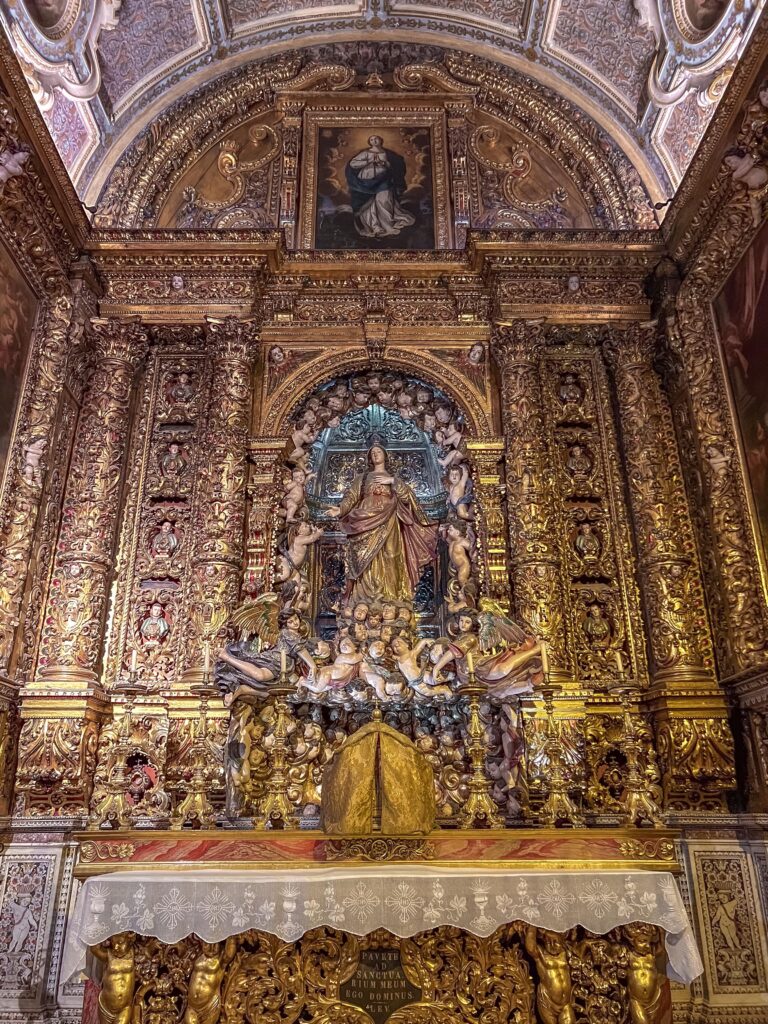
While surprisingly simple from the outside, the interior of the Sao Roque Church between the neighbourhood of Lisbon boasts one of the most ornate and exquisite insides of any church in Portugal. The Igreja de Sao Roque also boasts the claim of being the oldest Jesuit church in the Portuguese world.
Undoubtedly one of the most beautiful churches in all of Lisbon, the Church of Saint Roch is extremely ornate in design and simply so stunning you could easily spend a few hours taking in all the intricate details of the sacred building.
Built in the 16th century, it was the earliest Jesuit church (Society of Jesus, a religious order) in Portugal and one of the first Jesuit churches anywhere in the world. It’s also one of the very few buildings in Lisbon that managed to survive the devastating earthquake of 1755 relatively unscathed.
The lavish design exudes opulence and it’s more than likely to have been one of the most expensive churches to have been built at its time. Built in a Baroque style, one of the most impressive sights within the church (despite the luxurious gold that adorns all of the intricately carved features) is that of the painted ceiling, so be sure to look up!
There is no entrance fee, though donations are always welcome, and it’s one of the most fascinating and absorbing sacred spaces I’ve ever visited.
Miradouro de Saõ Pedro de Alcântara
Just steps away from the church of Saõ Roque is the ‘viewpoint of St. Peter of Alcántara’, a miradouro which is open day and night and offers one of the best views of the Castelo de Saõ Jorge.
In the summer, the balcony comes to life when part of the wide terrace is transformed into an outdoor festival area, with pop-up stands selling snacks and drinks, as well as live music performances.
Day 2 in Lisbon suggested itinerary
Pastel de Nata Cooking Class
The small sweet custard egg tart has come to be emblematic of the city, with its origins tracing back to before the 18th century when the monks at the Jerónimos Monastery created the sweet treat.
While in Lisbon one of the most unique (and enjoyable) experiences you can partake in is making the delicious pastel de nata pastries for yourself!
Whether you prefer to learn how to cook in a local’s home or enjoy cooking in a more formal cooking class environment, there’s a variety of different pastel de nata baking classes in Lisbon to choose from.
Suggested pastel de nata cooking class
Read the full article here


Time Out Market
This bustling marketplace is “where you can find the best of Lisbon under one roof”, a concept space that was created in 2014 by the team behind Time Out. The market is set across two levels and filled with a wide choice of eateries and bars.
The modern Portuguese food market is housed within the historic market hall building and is the best place to find fine dining at reasonable prices, as the space has been carefully curated and so some of the best chefs in the city are found serving food in their restaurants here.
The market is open seven days a week from 10 AM – midnight.
Mosteiro dos Jerónimos
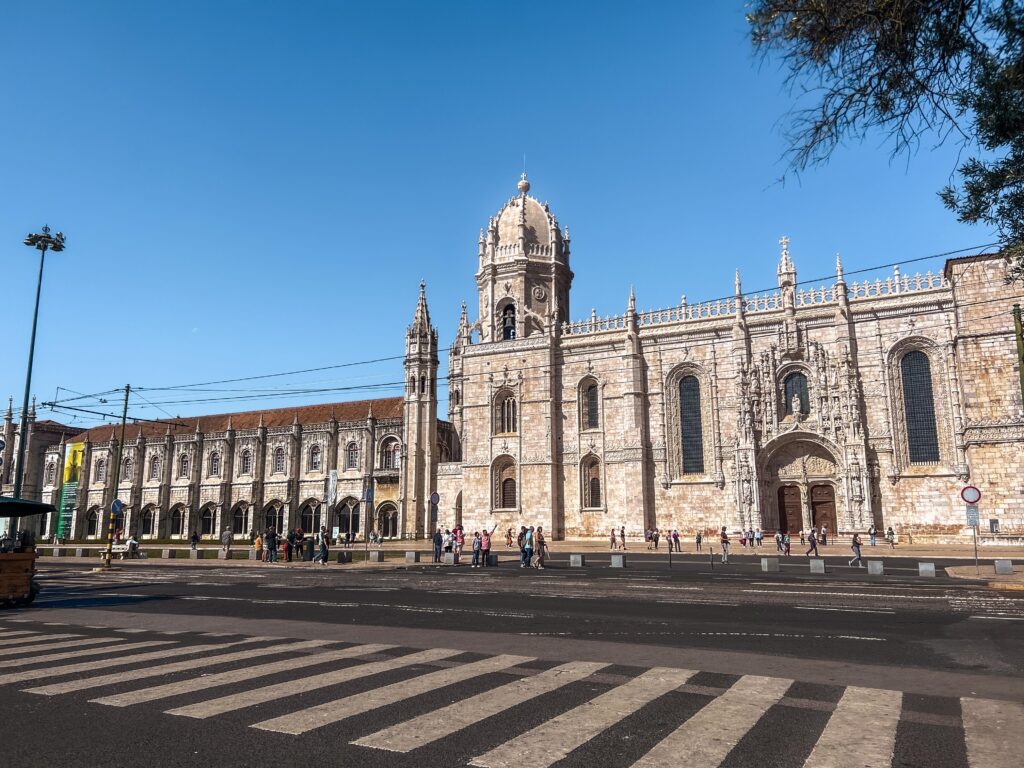
One of the city’s most visited attractions is the Monastery of Jerónimos, a grand and intricately carved sacred building with ornate spires that was built for Vasco de Gama, a Portuguese explorer and nobleman (who is notable as being the first European to reach India).
The wealth generated from Portugal’s period of colonisation led to the construction of monuments, including that of Mosteiro Dos Jeronimo. As a UNESCO World Heritage Site, it is also one of the city’s most visited attractions.
The monastery is also the final resting place and tomb of both the famed Portuguese explorer Vasco de Gama and the beloved poet of the country, Lus de Camões.
Pasteis de Belém
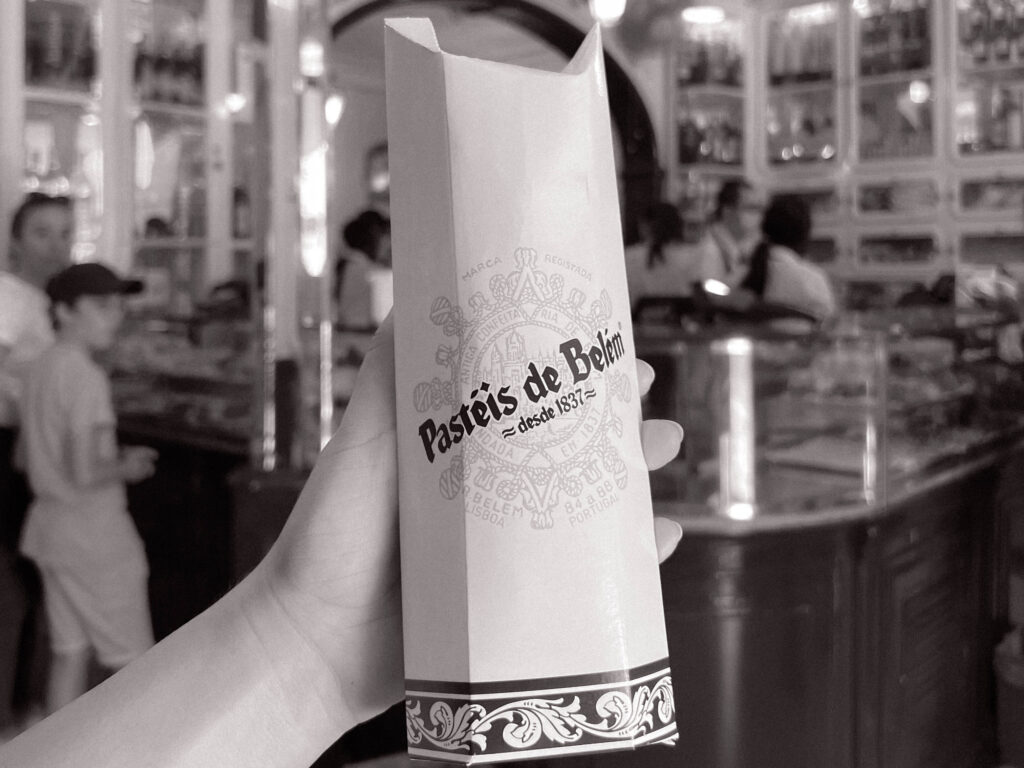
One of the best afternoon sweet treats to pick up when venturing the city is, of course, the delicious and creamy egg custard tart, and Pasteis de Belem is one of the most iconic and reputable pastel de nata houses in Lisbon.
Originally known as Fábrica de Pastéis de Belém (Belém being translated into English as ‘Bethlehem’), this is the store which makes the original Pastéis de Nata and has used the same original (and oh-so-secret) recipe since 1837.
Belem Tower
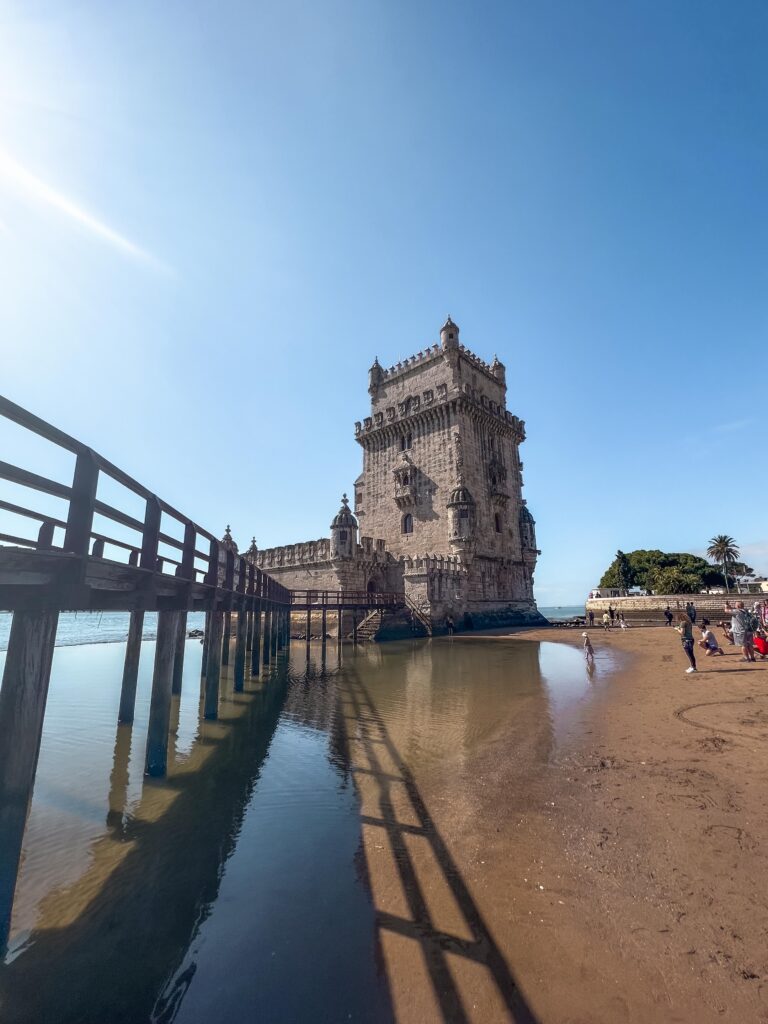
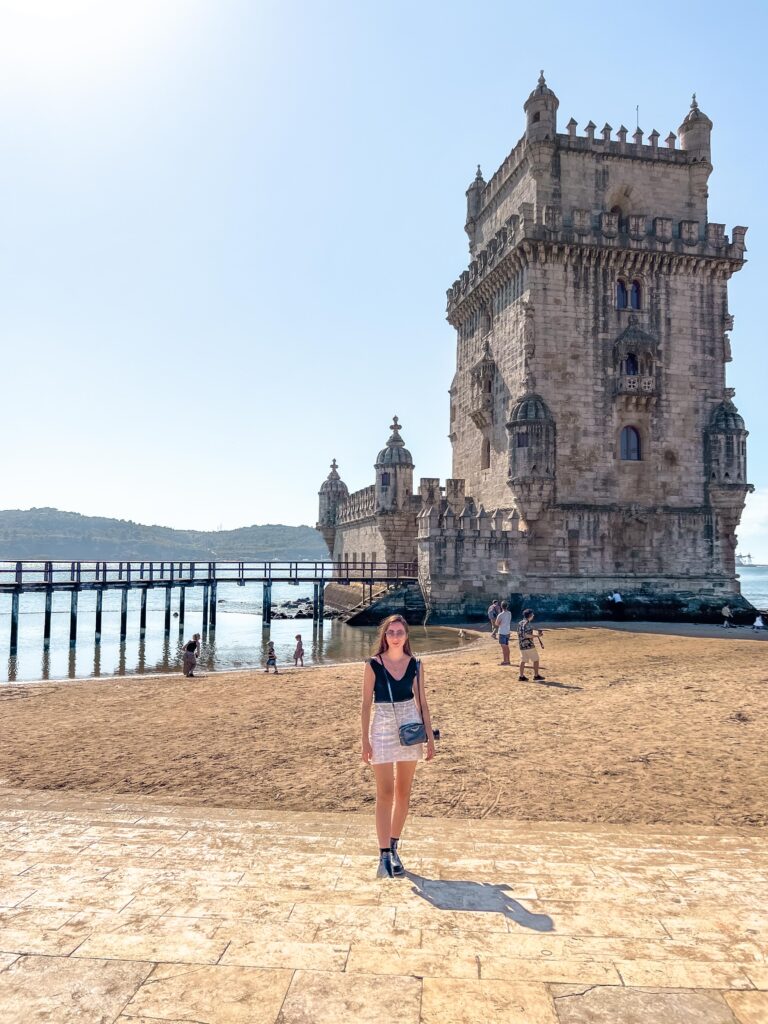
End your day slightly outside of the city centre and venture to the suburb of Belem where you can see the striking historical landmark, Belem Tower or Torre de Belém (it’s official name is the Tower of Saint Vincent).
This beautiful 16th-century fortification once served as a point where Portuguese maritime culture was administered, as well as being a ceremonial gateway to Lisbon. It’s built from limestone and stands at a height of 30 meters and has four storeys.
Along with Jerónimos Monastery, Belem Tower has earned its status as a UNESCO World Heritage Site and is often thought of as a symbol of Europe’s Age of Discoveries period.
For a fee, you can visit the interior of the beautiful tower. However, the best way to enjoy it is to simply admire the rich and lavish style of the Portuguese Manueline architectural style from the outside. It’s also one of the best spots in Lisbon from which to soak up a sunset!
If you have more time…
Jardim da Quinta dos Azulejos
This 18th-century hidden garden is one of Lisbon’s best-kept secrets! An oasis of peace and tranquillity, where floral wafts of fragrance fill the air, especially a strong smell of Jasmine.
The garden is designed in traditional Moorish fashion, with a central courtyard as well as vine-covered archways, painted tiled walls and paths that are partly hidden thanks to the overgrown luscious nature of the foliage that thrives here.
Palace Fronteira
Located outside of Lisbon’s historic centre, in a very quiet pocket of the city, is the former hunting pavilion and palace of Don João de Mascarenhas, the1st Marquis of Fronteira.
Originally built in 1640 as a summer retreat, to this very day the current marquis still lives there! However, some parts of the palace are open to the public and for a fee, visitors can explore the treasures that lie in and around Palace Fronteira, though only as a guided tour in mornings.
Inside you can see the fabulous interior which is ornately decorated with fine art, the library which is home to over 3,000 books, some of which date back to the 16th century, and the formal dining room which is decorated with portraits of Portuguese noblemen.
The palace is also home to immaculate gardens which were influenced by Italy. Maintained with a pristine maze of trimmed hedges, beautiful sculptures and blue-hued tile work that adorns the garden walls, it’s one of the finest gardens in all of Portugal!
eaten path attractions and locations so that you can get to know the place just like a local. Luckily, Lisbon has no shortage of wonderful hidden gems and there are plenty of secrets to be unravelled. Here’s your ultimate guide to the best secret spots in Lisbon…


Livraria Simao
While everyone knows about the Livraria Bertrand, the oldest bookshop in the world, it’s worth noting that Lisbon has a fair share of other bookshops worth visiting that are a little more off the beaten path.
One of the more interesting spots to check out (even if you can’t read Portuguese) is Livraria Simao. This bookshop is a single room selling around 4000 books and only one person can fit in the store at any given time, meaning that the owner themselves have to step out to let in even a single client.
O Cauteleiro
Thanks to its status as such an old and historic city, Lisbon has no shortage of busts, bronzes, and statues depicting various people, animals, and even monuments.
One of the more unusual statues in Lisbon depicts a lottery ticket seller and is close to the Sao Roque church. The statue is of a full sized-man who is selling tickets. Local legend suggests that, if you rub the ticket, then you will be rewarded with good luck.
The statue is meant to be a nod to the common, everyday person and is meant to be a little tribute to the ordinary man or woman, considering that most statues that exist are dedicated to the overprivileged.

Top of the Triumphal Arch
Much like Paris, Bucharest, Marseille, and many other cities all across Europe, Lisbon too has its own iconic triumphal arch by the name of Arco da Rua Augusta. But what a lot of visitors to the city don’t realise is that you can actually go to the top of the arch for the sum of a few euros.
If you already have the Lisboa Card, then going up the arch is included in the price of the card. Please note that this isn’t exactly the best view of Lisbon, but it’s still a pretty cool view and there is hardly ever a queue to go up the arch!
For more miradouros, be sure to check out our guide to the best views in Lisbon. After visiting the Rua Augusta arch, you can head back into the Baixa neighbourhood where you can find Fábrica da Nata, one of the best spots for finding a pastel de nata in Lisbon.
Crypt of St Anthony’s Church
If you’re in the Alfama neighbourhood, then no doubt you’ll come across the Sé of Lisbon, which is the city’s cathedral and main ecclesiastical building. Nearby, there’s a smaller church dedicated to the patron saint of Lisbon, which is known as the Igreja de Santo António de Lisboa.
According to local tradition, the church is located on the site where Saint Anthony of Lisbon was meant to have been born. Today, the church largely dates back to the 18th-century and is built in the Rococo and Baroque styles.
Free to visit, it’s a beautiful spot and is the perfect way to escape the rain or heat during a stroll around Alfama. What many visitors don’t realise is that you can also go down into the crypt of the church for free and see the spot (now an altar behind a wrought iron grill) where Saint Anthony is alleged to have been born. In 1982, Pope John Paul II prayed to Saint Anthony in the little chapel.
Belem Lighthouse
Though it’s undoubtedly not worth going out of your way to see, the Belem Lighthouse is a neat little piece of history that can be seen on the 15 minute walk between the Padrão dos Descobrimentos and the Belem Tower. This stone and brick building is a lighthouse that is no longer in use but dates back to a time when it was needed to guide ships along the river Tagus.
Fernando Pessoa house
Those who are visiting Lisbon will no doubt wish to visit the Carmo Monastery, the beautiful ecclesiastical in the Chiado district which lost its roof during the great earthquake of the 18th-century.
But what many visitors to the area won’t know is that a little nondescript building on the other side of the square holds its own important history.
After all, the pink building boasts a single solitary plaque announcing that it was here where Fernando Pessoa, one of the most significant literary figures of the 20th century in Portugal, lived.

Cristo Rei Statue
A little way out of Lisbon and across the Ponte 25 de Abril, there’s one statue that is quite complicated to get to, meaning that few venture out that far. The giant statue of Cristo Rei depicts Christ with his arms outstretched and can be found on the south side of the River Tagus.
The statue can be spied from various viewpoints across the city, including from next to the Belem Tower. If you’re flying into Lisbon, then the chances are pretty high of you also spying it from your plane window provided that you sit on the right-hand side of the plane when facing the front.
Where to eat and drink in Lisbon
There are a plethora of places to eat and drink in Lisbon so you’ll never have a shortage of places to choose from, but here are some of my favourites:
Dear Breakfast
Dear Breakfast Lisbon is one of the most popular breakfast spots in the city and they have several locations across the Portuguese capital. Whether you want avocado on toast, fruit bowls or French toast, they have plenty of classic breakfast staples here!
The best spot in the city if you want to start your day the right way is to reserve a table in the Alfama district. This popular neighbourhood is one of the most popular places to visit in Lisbon, and for good reason- it’s just so picturesque!
Fabrica de Nata
If you don’t fancy sitting down for breakfast, there are lots of cafes where you can grab a coffee and pastel de nata, such as the ever-popular Fabrica de Nata.
The pastel de nata is one of the most famous pastries from Portugal and is a Portuguese egg custard which is sometimes dusted with cinnamon. If you’re looking for a Portuguese souvenir, consider bringing home a box of these sweet treats(though bear in mind that they have to be purchased quite fast after purchase).
Lunch in the Chiado Neighbourhood
As one of the more popular neighbourhoods of the city, Chiado has no shortage of food options. Some of the top vegetarian options in the are Organi Chiado and The Green Affair. A historic café which is incredibly popular (with inflated prices to match) is Brasileira do Chiado.
This historic café is something of an institution in the neighbourhood thanks to its strong links with famous writers of times gone by. There is even a life-sized statue of Fernando Pessoa, the famous 20th century Portuguese poet, writer, literary critic, translator, publisher, and philosopher.
Lunch in Alfama district
The Alfama area is a great place to grab a bite for lunch. Prado is a much-loved eatery serving fresh, local meals at an affordable price. It’s open for lunch on Fridays, Saturdays and Sundays. Alternatively, Audrey’s is open from 7:30 am – 11:00 pm every day and is famous for its brunch options.
If you’re vegan or vegetarian, the Ao 26 – Vegan Food Project is nearby and open for lunch. I definitely recommend visiting to try a vegan Franceschina, which is one of the most popular dishes in Portugal. It’s usually a meaty, cheesy sandwich but Vegan Food Project have their own plant-based twist to it!
Food and drink to try in Lisbon
Portugal’s cuisine is heavy in meat and seafood, using bold flavours and local ingredients, it’s typically simple but delicious! Here are a few suggestion of what to try:
- Bachlhau – The Portuguese word for cod, this is the national food of Lisbon which is salted codfish. It’s slightly confusing as there is no set recipe and the Bachlhau is essentially just incorporated into various different recipes. However, it has been eaten here since at least the 16th century!
- Ginjinha – this strong sweet (yet sour) cherry liqueur is made from steeping ginja berries in alcohol, then, post-infusion, spices such as cinnamon and/ or cloves are added, as well as sugar. Alongside Port, it’s an iconic alcoholic beverage of Portugal.
- Grilled Sardines – Portugal as a whole country has strong ties to maritime heritage thanks to its coastal position. One of the most popular snacks eaten is grilled sardines, in fact, it’s also a common scent your nose might pick up while wandering around the city.
- Tosta mista and torrada – Found at almost every café within the city, the delicious and comforting ham and cheese toastie which is a firm favourite around many places in the world.
- Ameijoas a bulhao pato – Another seafood speciality, this is clams in the sauce. While mussels tend to be a little more buttery, clams offer a saltier ‘straight from the sea’ flavour and are served in a mignonette sauce for this dish.
- Caldo verde – A popular ‘green’ soup of shredded cabbage, potatoes, olive oil, black pepper and salt and mainly flavoured with onion. It’s a simple and warming dish.
- Bifanas – Traditional pork sandwiches; pork is, in fact, the second most consumed meat in Portugal.

Best viewpoints in Lisbon
– Triumphal Arch of Rua Augusta – A lesser-known viewpoint overlooking Praça do Comércio, with excellent views of the grand square and the surrounding city.
– Miradouro das Portas do Sol – One of Lisbon’s most famous viewpoints, offering beautiful views over the terracotta rooftops of Alfama. Visit early to avoid the crowds.
– Miradouro de Santa Luzia – A picturesque terrace decorated with traditional blue-and-white azulejo tiles, with views over Alfama. Particularly beautiful when the bougainvillea is in bloom.
– Miradouro de São Pedro de Alcântara – A spacious, lively garden terrace with panoramic views of Lisbon and São Jorge Castle. Occasionally hosts outdoor events and live music.
– Santa Justa Lift Viewing Platform – Offers views over the Baixa neighbourhood and São Jorge Castle. An alternative to queuing for the famous lift is to access the upper platform via the nearby streets of Chiado.
– Lisbon Cathedral Terrace (Sé de Lisboa) – A paid viewpoint between the cathedral’s twin clock towers, overlooking the historic Alfama district.
– Dom Pedro V, 56 – A quieter, lesser-known viewpoint in the bohemian Bairro Alto neighbourhood, offering pretty city views without the crowds.
Rooftop bars with a view
- The V Rooftop Bar – A rooftop spot for drinks overlooking Lisbon.
- Memmo Príncipe Real – A stylish rooftop with views across the city.
- Topo Martim Moniz – A rooftop bar with panoramic city views.
- Topo Chiado – A central rooftop spot near the historic Chiado district.
- Lumi Rooftop Bar – A rooftop venue for drinks and city panoramas.
Where to stay in Lisbon
If you only have two days in Portugal’s capital then I recommend staying as close to the historic centre as possible, this way you’ll be within walking distance of the main sights. Plus, it’s a beautiful place to base yourself! Here are a few suggestions of where to stay (based on web-reviews):
Dear Lisbon – Gallery House – Set in the trendy neighbourhood of São Bento, this art-themed hotel is 3 km from São Jorge Castle and 2 km from Lisbon Cathedral, which is easily reached via the tram. Check prices and availability here.
Lisbon Old Town Guest House – There are only two different rooms available here, so you’ll likely need to book far in advance. Boasting of stunning views of either the city or sea, this beautiful guest house is just minutes from local eateries and the Time Out market. Check prices and availability here.
Enjoyed reading about how to spend 2 perfect days in Lisbon? Pin this article now, and read it again later: