
Meiji Jingu Tokyo: A Visit to the Largest Shrine in Tokyo
Last Updated on 16th October 2026 by Sophie Nadeau
This post may contain affiliate links. Please check out my privacy policy for more information.
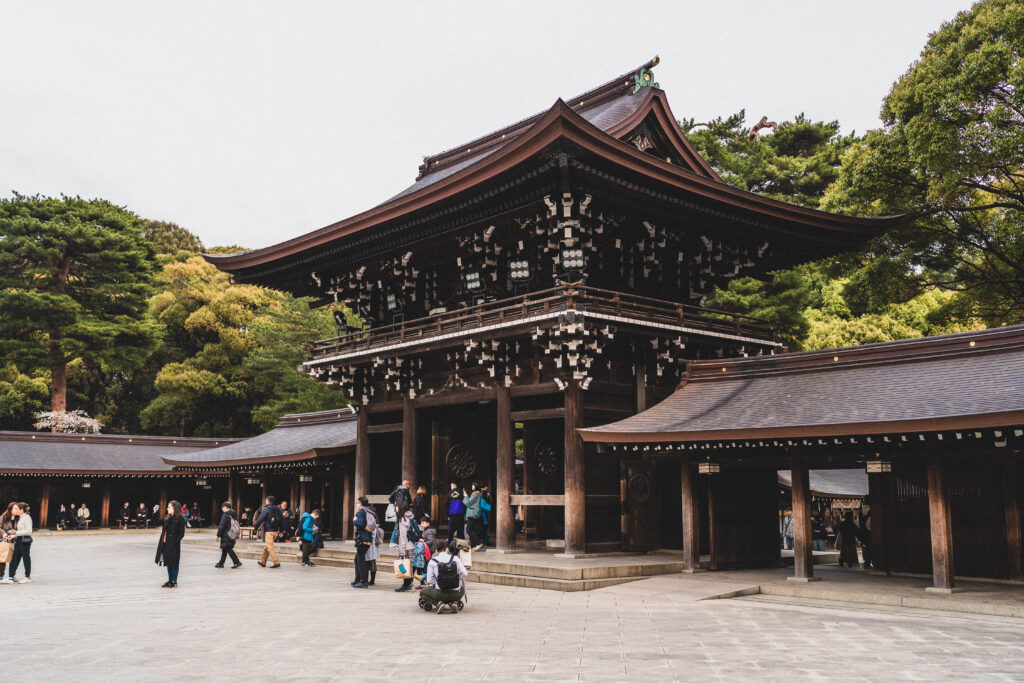
Found within the Harajuku district, adjacent to one of the city’s biggest green expanses, is Meiji Shrine, 明治神宮, Tokyo’s largest shrine. Home to a bucketload of sake barrels, a tale of two lovers in the form of trees and a beautiful tranquil garden. Here’s your guide on how to visit Meiji Jingu, as well as top tips to know before you go!

A history of Meiji Jingu
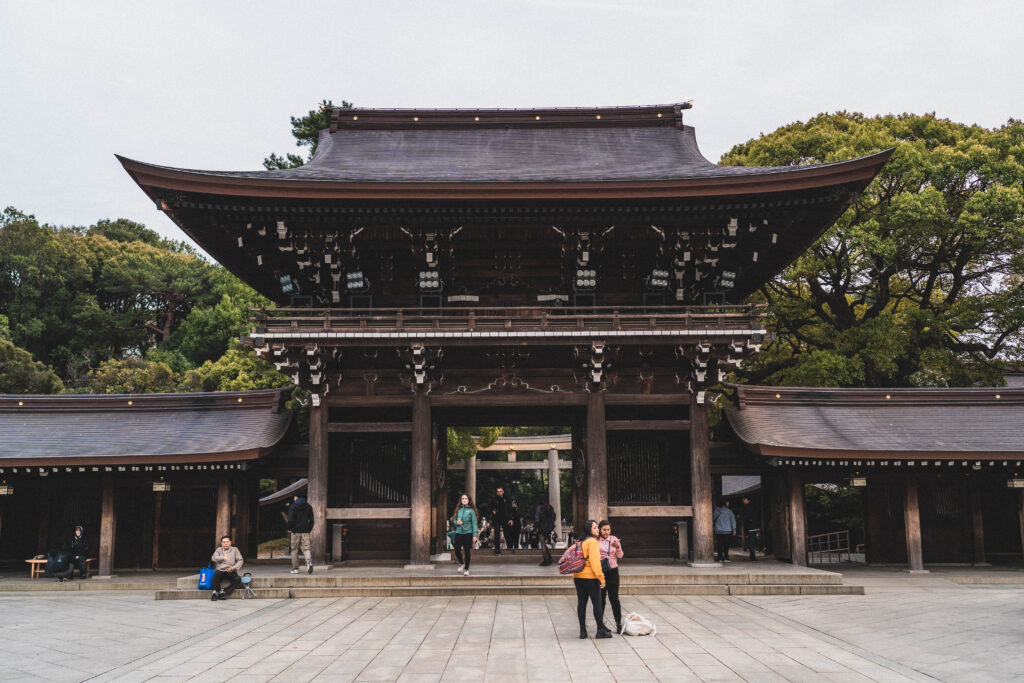
Meiji Jingu was built to commemorate both Emperor Meiji (the first monarch of the Empire of Japan) and his wife Empress Shōken, eight years after the Emperor’s passing (1912) and six after the Empress (1914). The shrine took five years to built and the deities were formally enshrined here in 1920.
However, as with many of the shrines in Japan during that time, Meiji Jingu was destroyed by fire during the war. The building seen today was largely reconstructed to its original form in 1958.
As the first emperor of modern Japan, Emperor Meiji ascended to the throne in 1867. His name Meiji “enlightened rule” came to be the name for the period to come, which was the Meiji Restoration.
This was an era of major political, economic, and social change in Japan. Empress Shōken, his wife, was described as a “beloved mother of the nation”. To this day, both enshrined souls are held in the highest esteem by the people of Japan.
Today, Meiji Shrine is the largest shrine in Tokyo and one of the most popular to visit in all of Japan. In the first days of the New Year, during hatsumode (first prayer), the shrine welcomes up to 3 million visitors!
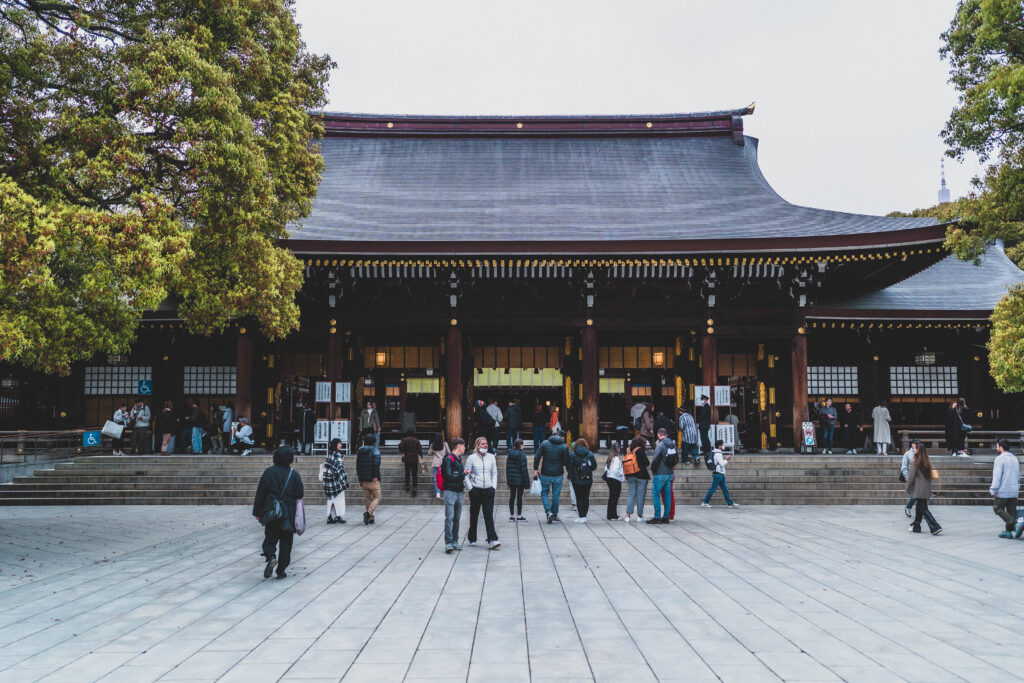
Highlights of Meiji Jingu
Barrels of Sake
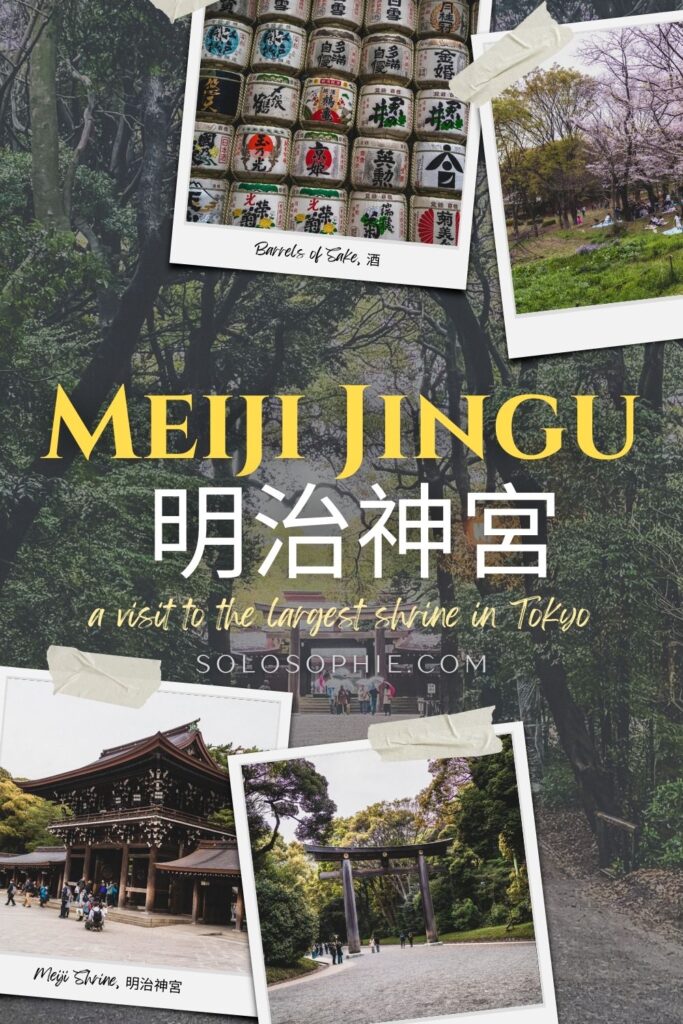
If coming through the south entrance of the shrine, you’ll come across a large collection of sake and wine barrels stored along the approach. All of which are labelled, wrapped in straw and perfectly stacked, there are over 200 traditional sake barrels to see!
During the Meiji Period, Emperor Meiji led the industrial growth and modernisation of the new Empire of Japan. As a result, many sake breweries around Japan donate barrels of sake every year to show their gratitude and deep respect for Emperor Meiji and Empress Shōken.
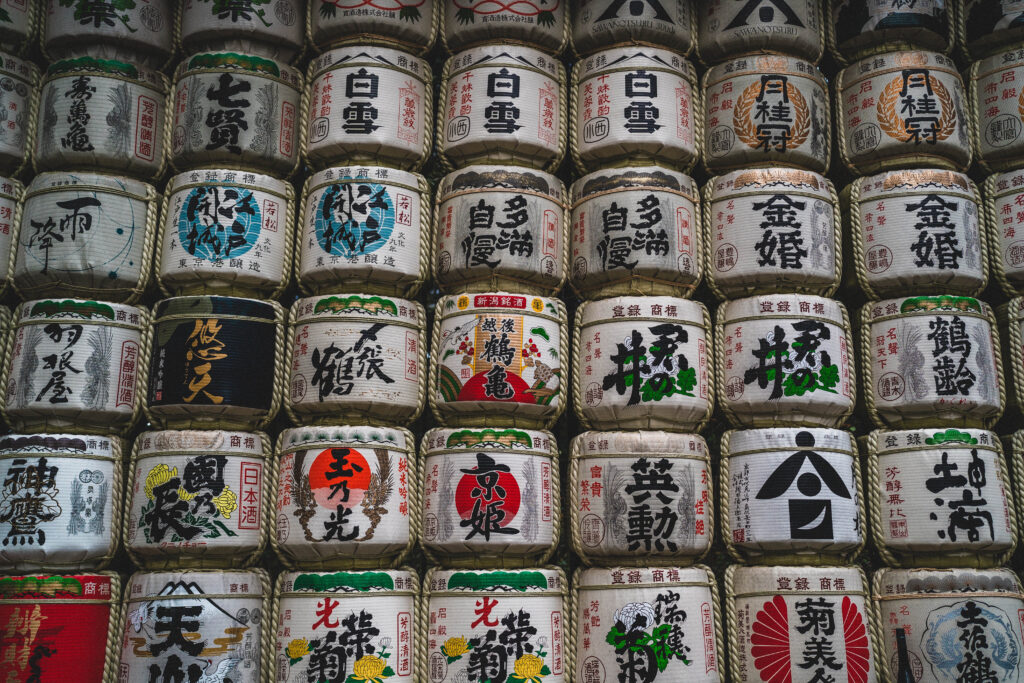
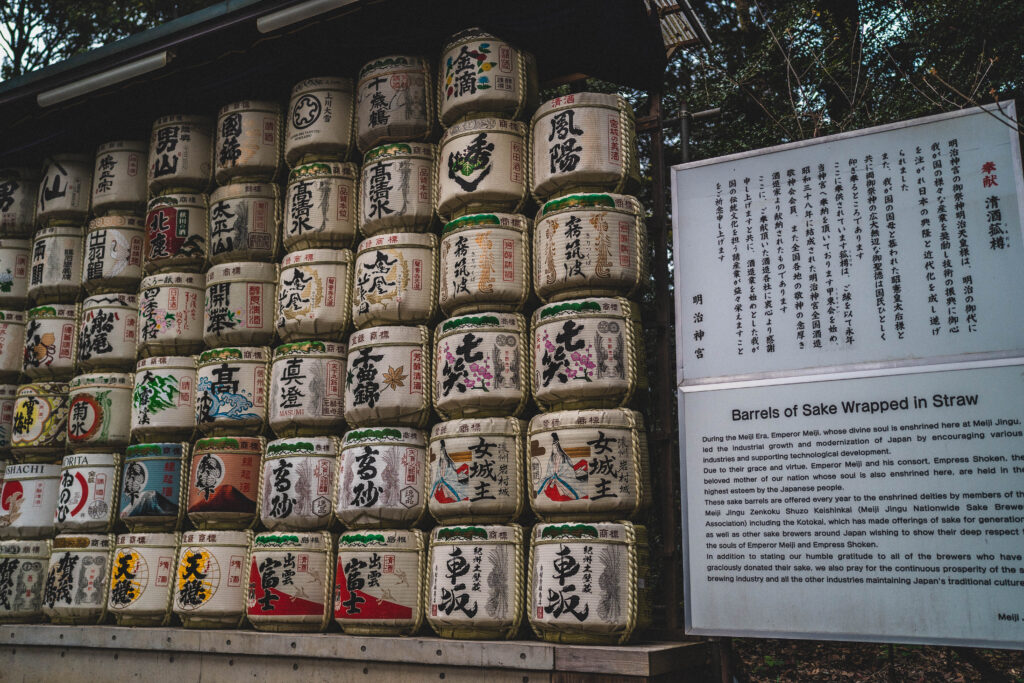
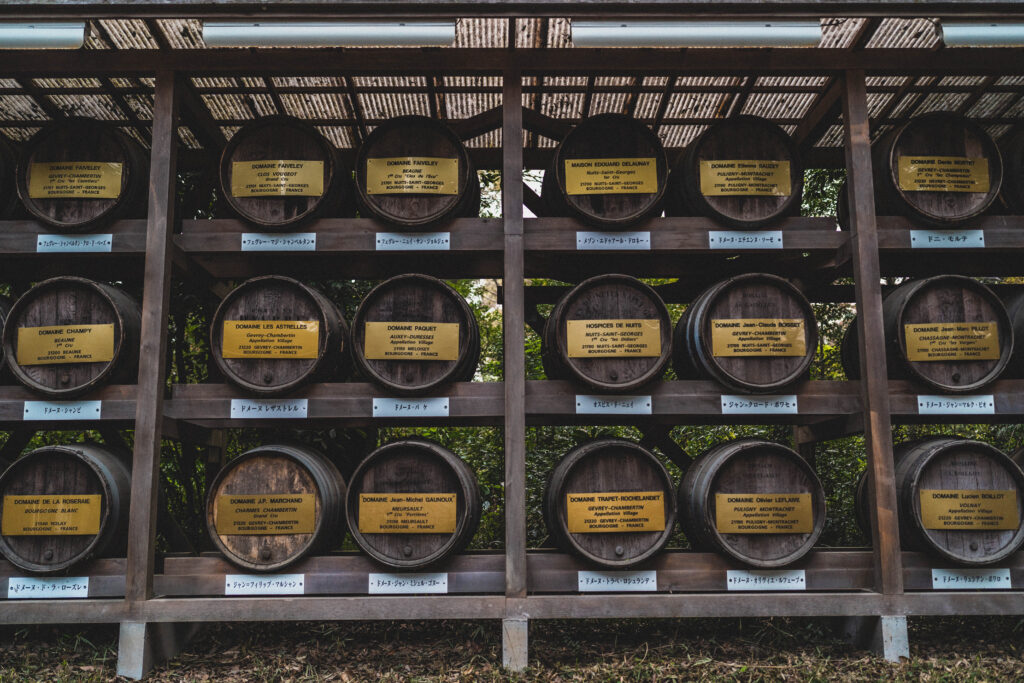
You may also spy out some French wine barrels, which were offered by the celebrated wineries of Bourgogne in France.
These hints towards the emperor’s love for wine as well as the accomplishment of Western culture spreading across Japan during the Meiji period. On the signpost as you pass you can read “with the earnest prayer that France and Japan will enjoy many more fruitful years of friendship”.
Wooden Tori Gate
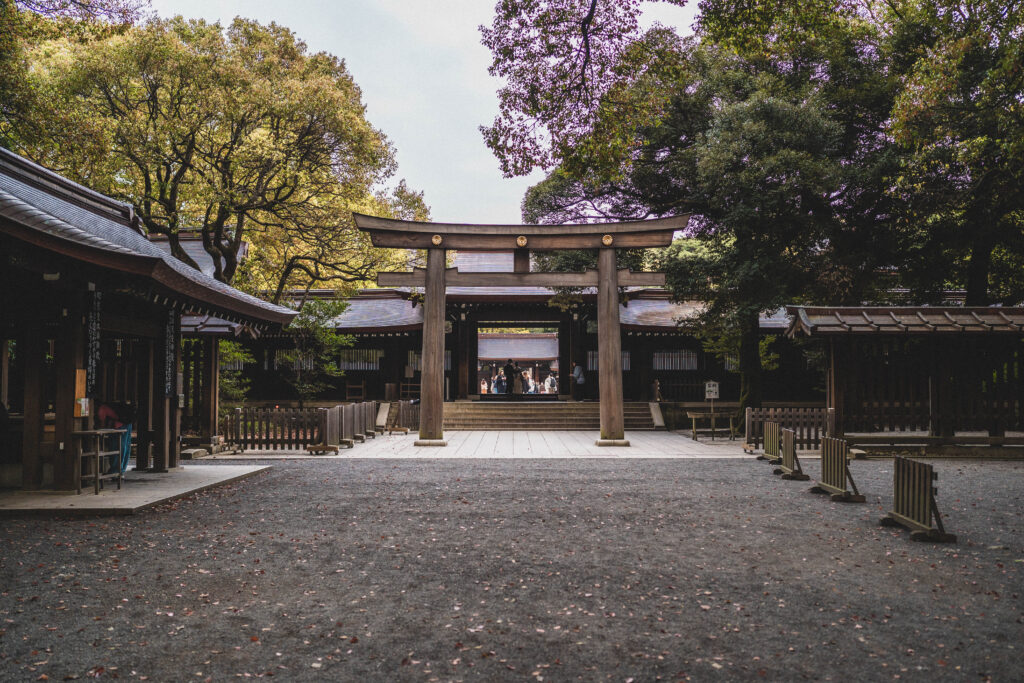
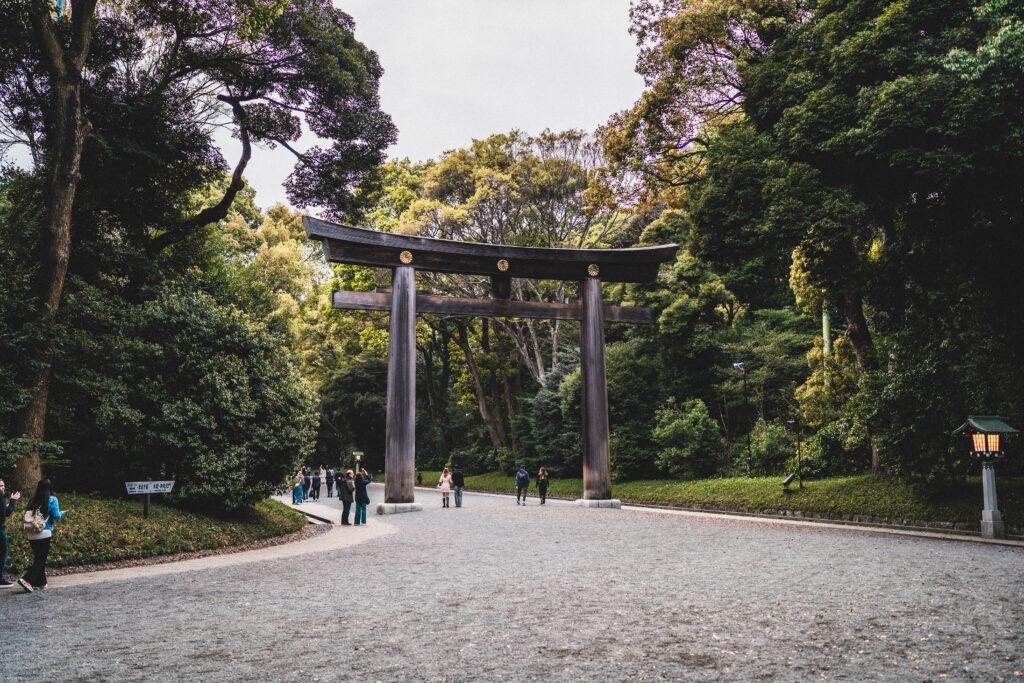
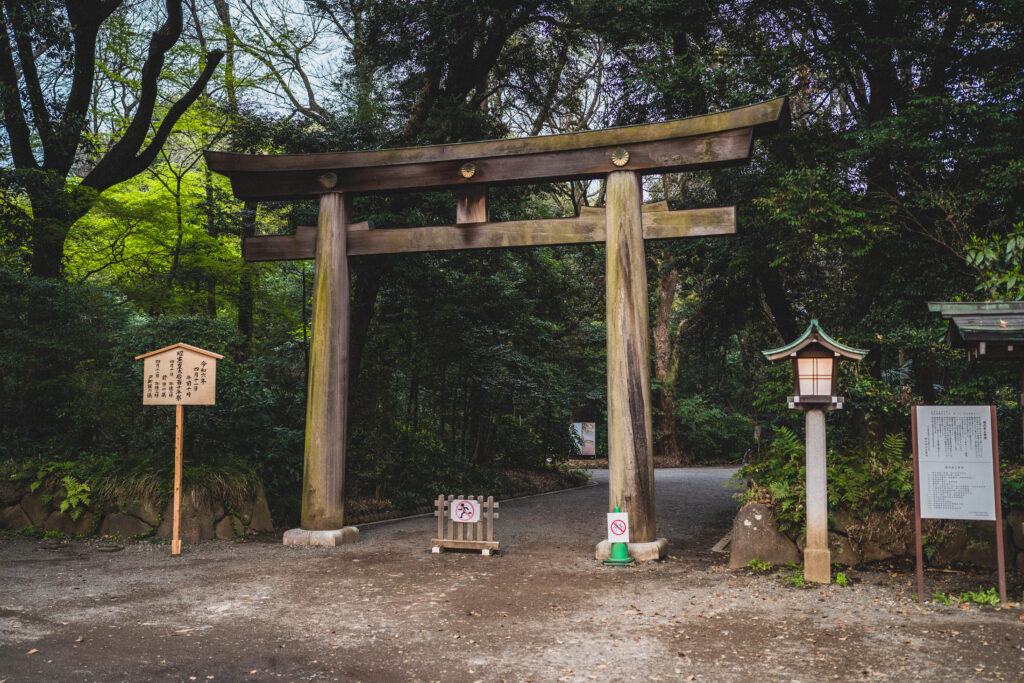
Meiji Jingu is home to eight different torii gates, however, the grand shrine gate that welcomes you at the entrance boasts as being the biggest wooden torii of the Myōjin Style, standing at 12 meters high. (But it has to be said, a lot of the torii gates in Japan claim to be the biggest of their kind!)
“The Married Trees” – Couple Camphor Trees
Found within the grounds are two trees which were planted as saplings when the shrine was first established in 1920, and for over a century now they have grown side by side.
The Couple of Camphor Trees are also known as Meoto Kusu, or ‘husband and wife camphor trees’ and they are said to represent Emperor Meiji and his wife Empress Shoken, who were known to have a happy and solid marriage.
The two trees are tied together by a sacred rope called shimenawa (しめ縄), which signifies their sacred connection and is said to ward off any evil spirits.
Today, people who are searching for a partner or romantic relationship visit the trees for good luck and success in a happy, safe and loving marriage. Even if you aren’t searching for “the one” right now, admiring the trees that have grown together for over a hundred years is pretty special!
Inner Garden
Predating the shrine, the Meiji Jingu Inner Garden has a rich history that can be traced back to the Edo period. The garden was commissioned by Emperor Meiji himself as a note of adoration to his wife the empress.
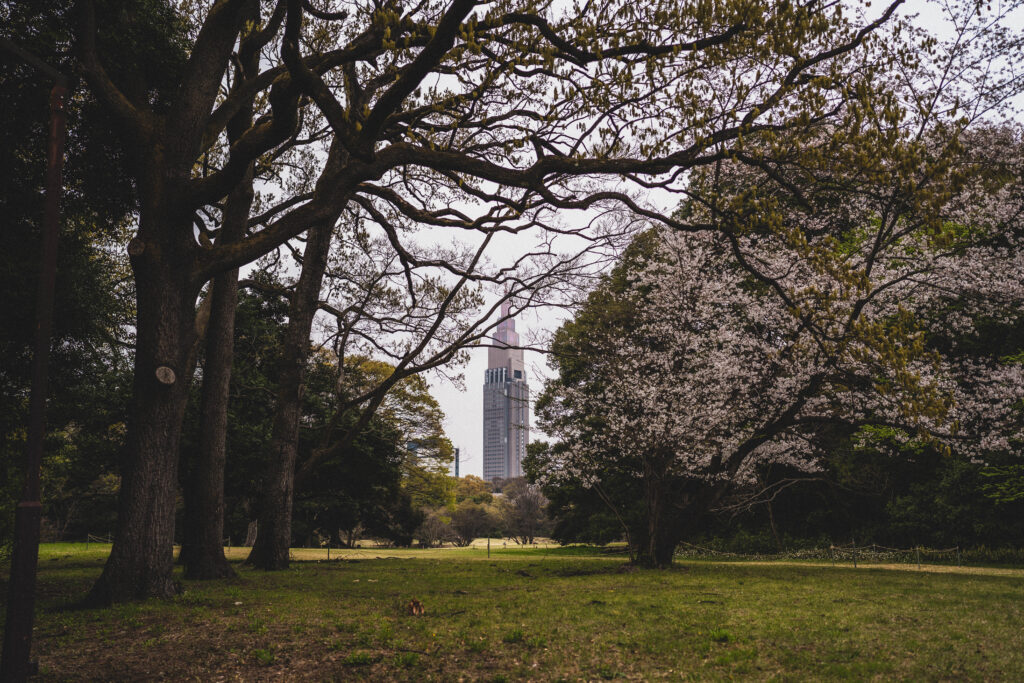
Today, visitors can wander through and breathe in the fresh air and fragrant scents of the garden, leaving you feeling as though you’ve left the city of Tokyo completely! A magical landscape of small ponds, centuries-old trees and a small rest house called Kaku-un-tei can be viewed.
Kiyomasa’s Well
Found within the Inner Garden is the small enchanting pool of water known as Kiyomasa’s Well, it is recognised as a symbolic spiritual spot that will bring good fortune to those who visit it.
Named after Katō Kiyomasa, a famous daimyō (feudal lord) of the Edo period, the spot where the well is now located is where his private residence once stood.
Meiji Jingu Museum
Also known as the Treasure Museum, the museum is a fairly recent addition to the shrine having only opened in 2019, it was built to commemorate the 100th anniversary of Meiji Jingu. The museum was designed by the world-famous architect, Kuma Kengo.
Inside visitors can explore a small exhibition space that displays various valuable articles and items Emperor Meiji and his wife used, as well as learn more in-depth about the local history and construction of the shrine itself.
The museum is open daily from 10 AM – 4:30 PM and the entry fee is ¥1,000.
Yoyogi Park, 代々木公園
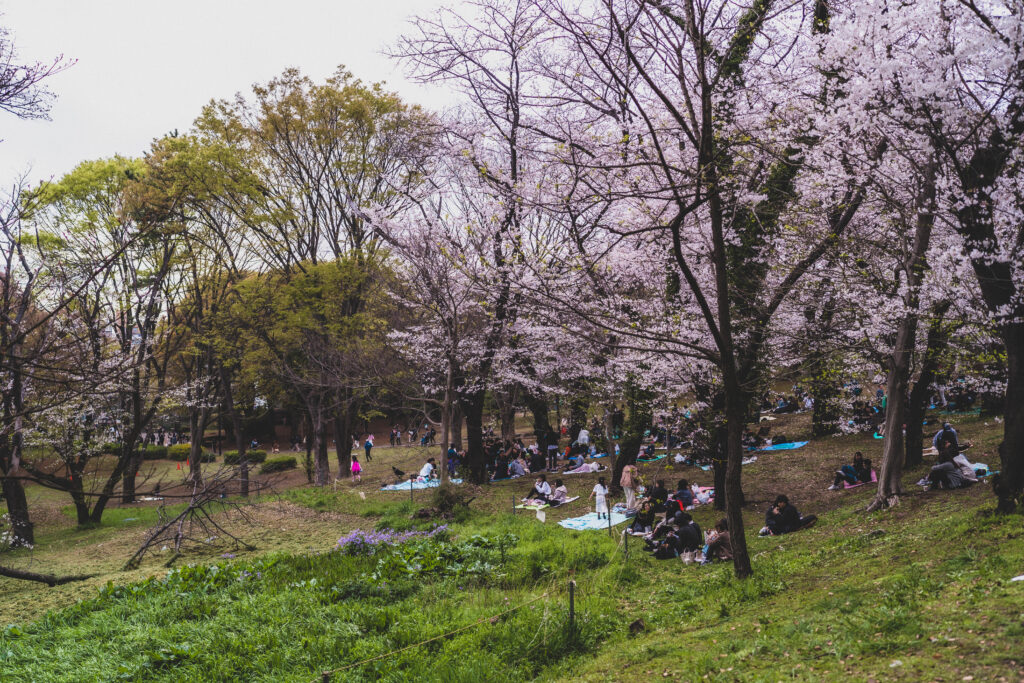
Sitting adjacent to Meiji Shrine is one of Tokyo’s biggest public green spaces, Yoyogi Park. Brimming with wide green lawns, forested areas and tranquil ponds, it’s a beautiful spot where locals hang out and picnic, go jogging or simply sit and watch the world go by.
Takeshita Dori, 竹下通り
While in the area, check out one of the most unique streets in Tokyo, Takeshita Dori. Famed for all of its shopping and dining opportunities, colourful street art and is the birthplace of ‘kawaii‘ (“cute”) culture– a unique fashion trend of pastel-hued colours which emphasise, childlike innocence and simplicity.
This is one of the trendiest and quirkiest fashion streets in the city, it’s also a spot that Lady Gaga the iconic fashion queen herself frequents! A sensory overload of kawaii cute, edgy grunge and goth fashion, blended with the sweet scent of candy-floss and crêpes that fill the air.
Even if buying clothes isn’t on the agenda, a walk down this street offers a truly unique experience of Tokyo’s fashion culture and trends.
How long do you need at Meiji Jingu?
Ideally, you’ll want at least an hour to explore the shrine, but if you wish to explore the inner gardens and soak up the tranquil ambience, I suggest setting aside 2 hours to visit.
Best time to visit
As one of the most popular and busiest shrines in Japan, you may be wondering when the best time to visit could be. Crowds are unavoidable at such a popular destination, however, the best time to avoid queuing and enjoy the most peace is to get to the shrine just before it opens at 8:30 AM.
June and July are the best time to enjoy the flowers in bloom when visiting the shrine’s tranquil gardens.
How to visit
Meiji Jingu is open daily from sunrise to sunset and there is no entry fee to visit the grounds. You can easily reach the shrine from Harajuku Station, which is just a short 5-minute walk away.
Enjoyed reading about Meiji Jingu, Tokyo’s largest shrine? Pin this article now, and read it again later: