
Kayabuki No Sato: Kyoto Prefecture’s Thatched Village
Last Updated on 6th March 2025 by Sophie Nadeau
This post may contain affiliate links. Please check out my privacy policy for more information.
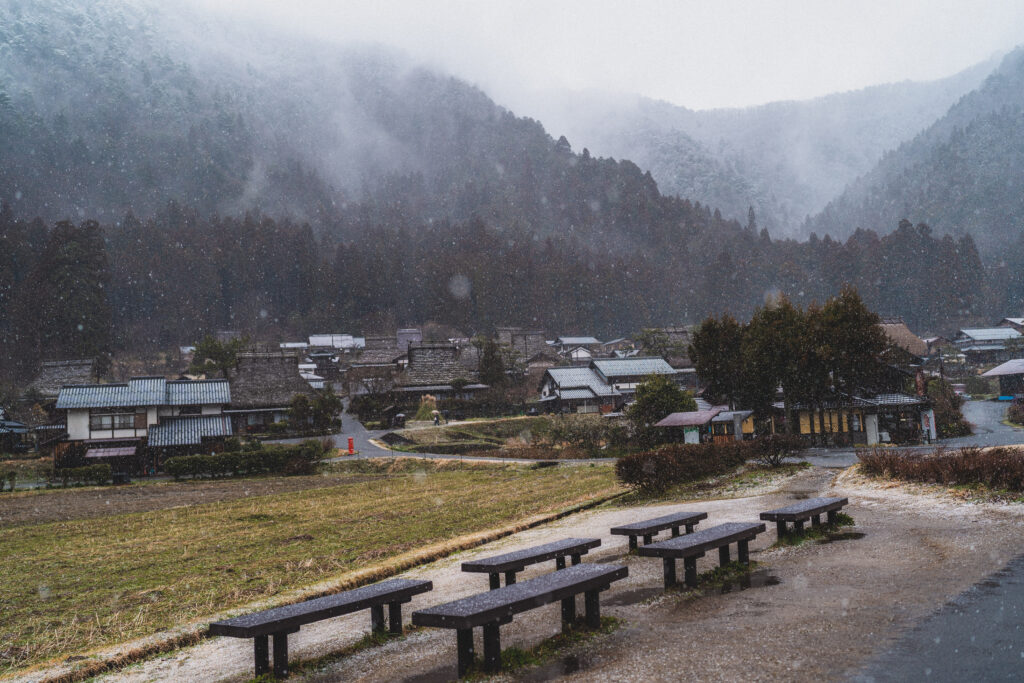
Nestled at the base of tree-topped mountains, Kayabuki No Sato is a rural village filled with traditional thatched houses. Situated to the north of Kyoto prefecture, there are around 39 traditional dwellings still remaining to this day. Charming and as if straight out of a fairytale, here’s your ultimate guide to Kyoto’s thatched village, Kayabuki No Sato as well as top tips to know before you go!


Where is Kyoto’s thatched village?
Kayabuki No Sato is set within the rural and remote area of Miyama (美山) which is nestled at the foot of Mount Miyama (which translates into English as ‘beautiful mountains’). The thatched town is situated approximately 30 kilometres north of central Kyoto, making it around a 1.5 hour drive away.
Is Miyama worth visiting?
Yes absolutely! If you have time, then exploring the rural area of Miyama gives you an opportunity to escape from the hustle and bustle of city life and experience a remote area of Japanese landscape which people inhabit.
Famed for its abundance of outdoor activities, you’ll be spoilt for choice when visiting. Thanks to it’s proximity, it makes for a perfect day trip from Kyoto (especially if you have access to a car).
Within the area of Miyama you’ll be able to visit the beautiful thatched hamlet, Kayabuki No Sato. Home to the highest percentage of thatched roof houses than any other place in Japan, it’s a unique destination to visit and well worth the trip!
That being said, if you have limited time in Japan and don’t have your own transport, it is a little further out the way to explore.
A brief history of Kayabuki No Sato
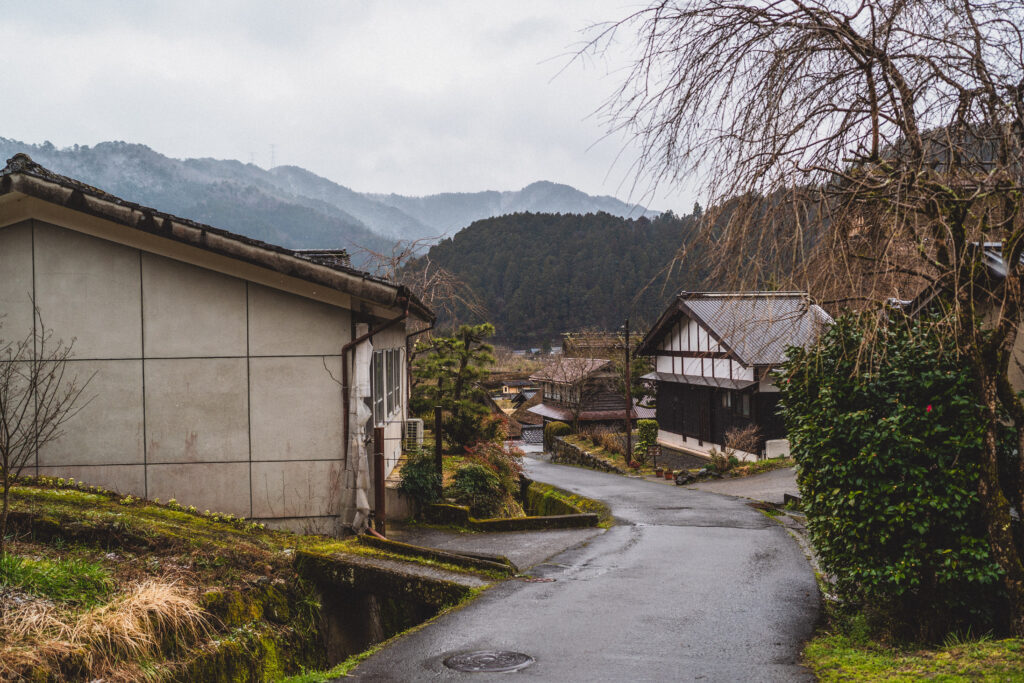
Kayabuki No Sato translated from Japanese to “thatched roof village” and situated within the rural area of Miyama mountains, which literally translate as “beautiful mountains” the name alone suggests how enchanting this small pocket of Japan is.
Thatched roofs in Japan are typically made from the following: japanese silver grass, reeds, rice straws, wheat straw. Having existed in Japanese communities for over 5,000 years, thatched houses are part of Japan’s culture, heritage and way of life.
That being said, today only a handful of villages across the country are home to these skilfully crafted roofed homes. Constructed from surrounding natural materials that have been so carefully cultivated, they truly are a remarkable feat.
Despite being beautiful, the crafted roofs aren’t robust enough for extreme weather conditions and are highly flammable. In addition, the knowledge for this ancient craft is slowly dying out.
In 1993 Kayabuki No Sato was declared a national heritage site and, as a result of this, the government subsidised 80% of thatching costs.
The village is also fitted with an impressive automated fire suppression system, meaning that 1,000 tonnes of water are stored in 62 huts…so the chance of this village burning down any time soon is pretty unlikely.
The systems are tested twice a year, these tests have become somewhat of a popular local event! Named the Water Hose Festival, typically falling on the 20th May and 1st December.
At this time, the village bursts to life, rainbows are created in the reflected light, and the thatched cottages are sprayed with jets of water, proving their resilience from flames.
A thatched roof actually needs to be replaced every 20 years or so and the old thatch is actually recycled to be used as fertiliser. It’s truly a connecting to the land and telling a story.
Thanks to Kayabuki no Sato’s heritage status, it has helped keep the local thatching profession alive and the village itself maintained. That being said, the thatching craft is rapidly disappearing as time goes on.
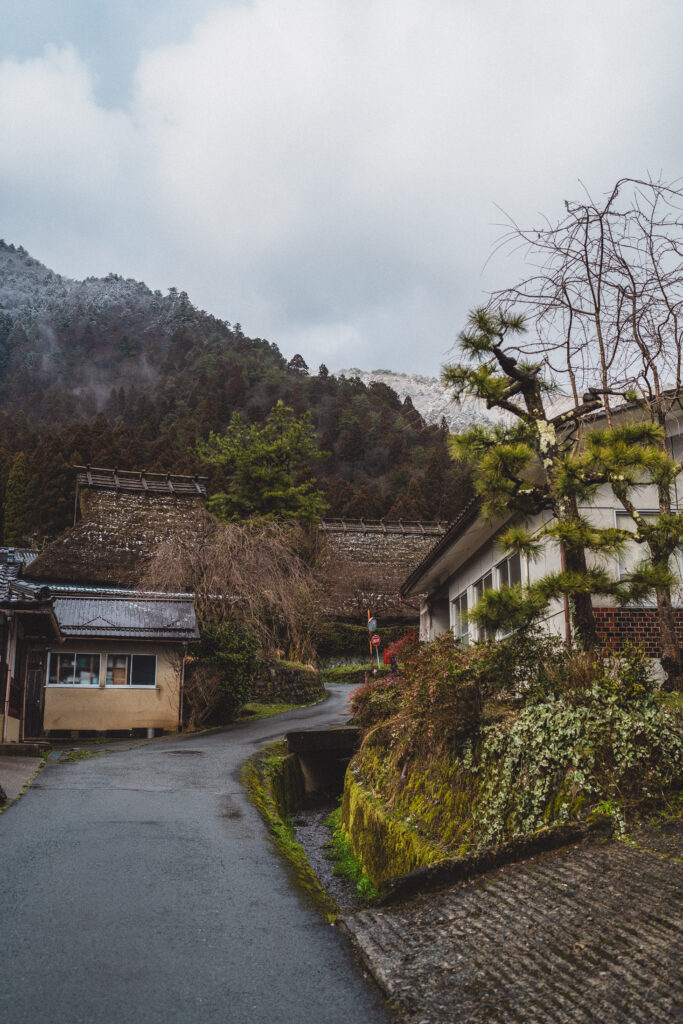
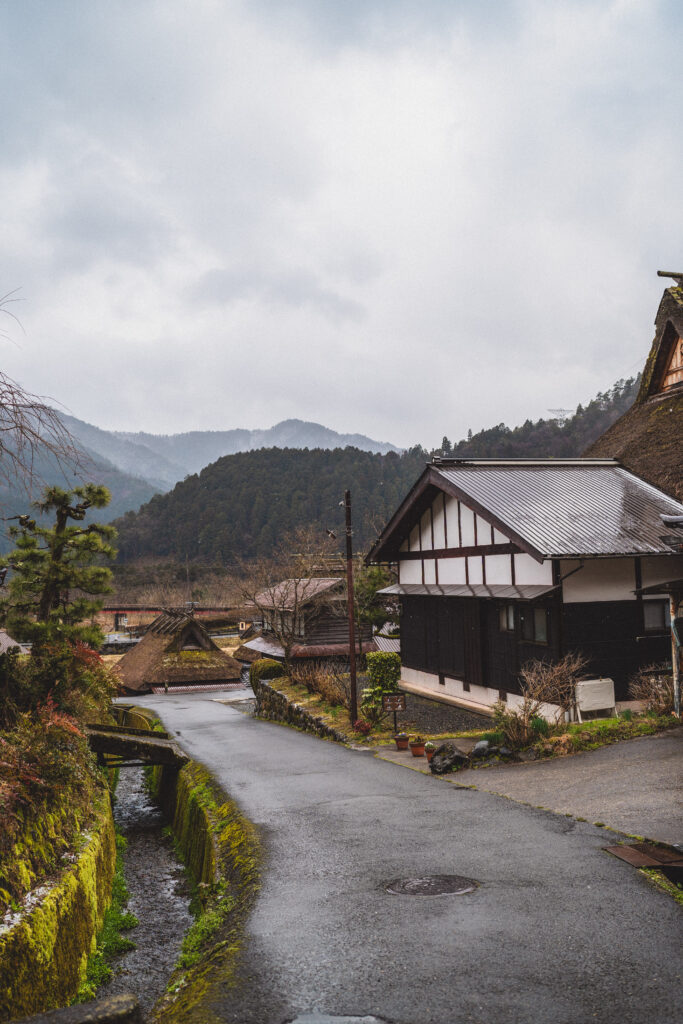
Highlights of the village
Eating at Sakaya Pizza Cafe
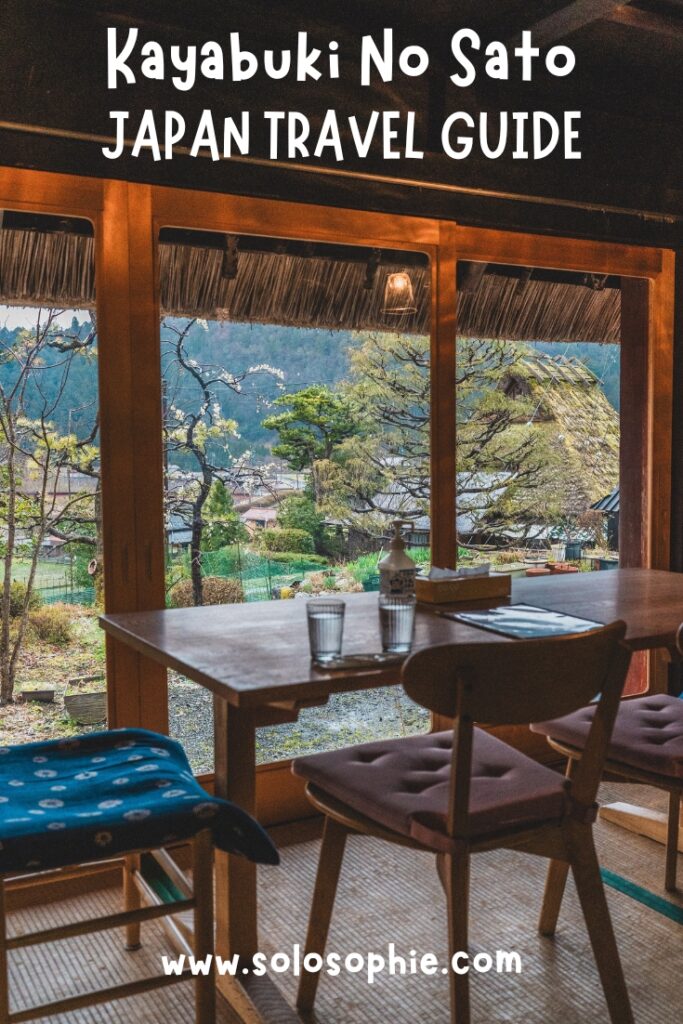
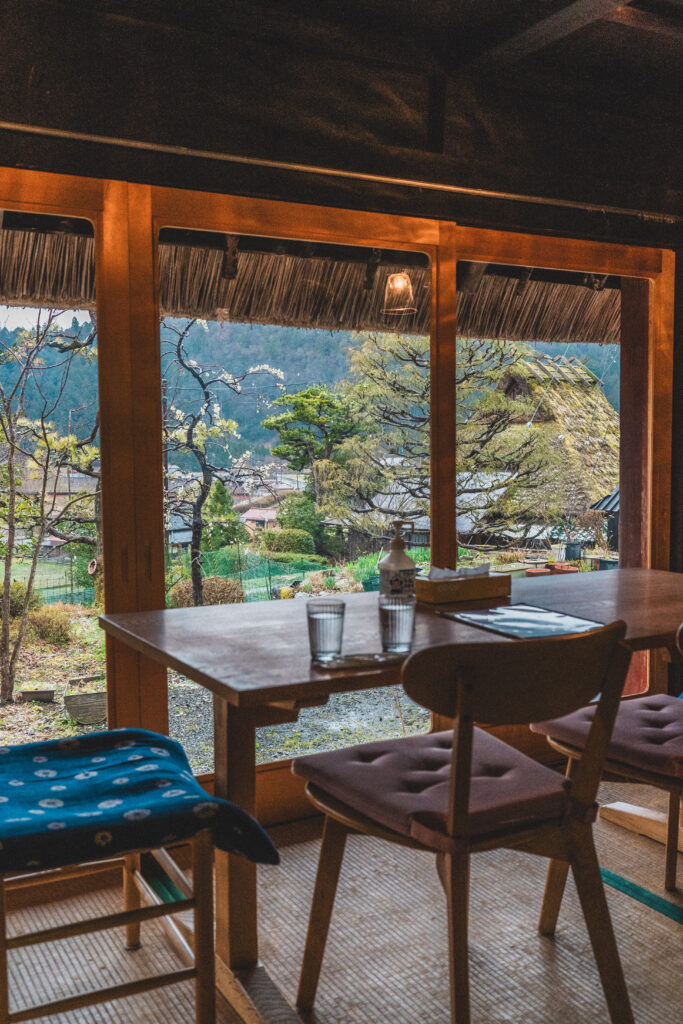
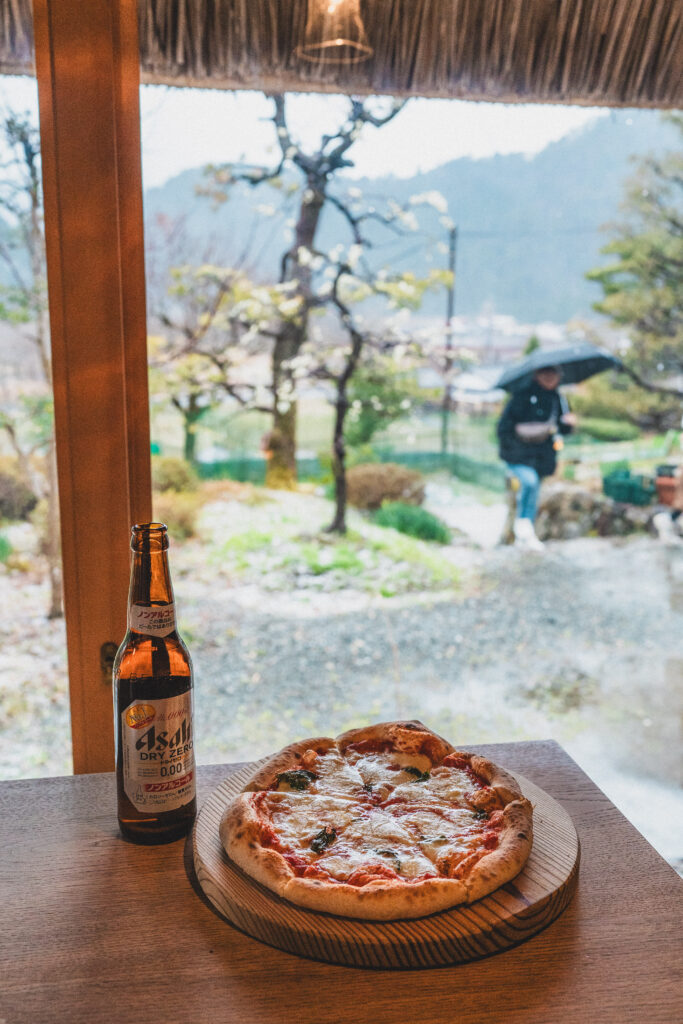
If you’re feeling a bit peckish when you get to the village, then one particularly pleasant option (with a beautiful view if you’re lucky enough to sit by the window) is to head to Sakaya Pizza café.
They have several vegetarian options and alcohol free beer on the menu. The restaurant itself is actually housed within one of the traditional thatched houses- so if you head there to eat you’ll even get to see inside one of the village’s many dwellings.
Wandering around
Surrounded by towering mountains and streams of crystal clear water, it will come as no surprise that simply wandering around and soaking up the tranquil ambience of this hamlet is the best way to experience it. Since the village is predominantly an area of working residents, you cannot enter most of the homes as they are privately owned.
Miyama Folk Museum
While exploring the area, a unique place to visit is the Miyama Folk Museum. The museum showcases the inside of one of the traditional thatched houses and depicts the lifestyle of the villagers, displaying the typical life of a farm house in the 19th century, as well as the traditional tools and daily household items used.
Opening times: 10 AM – 4 PM daily and closed on Monday’s, adult admission costs 300 yen.
Water Hose Festival
If you happen to be visiting Kayabuki No Sato on either the 20th May or 1st December, be sure to stick around for the Water Hose Festival. Simply the local fire brigade testing the water system in the event of a fire, this spectacular sight of water jets across the cute thatched houses has become a popular local event!
How to visit Kayabuki No Sato
Drive: To be honest, the easiest way to travel here is by means of your own transport. It makes things much simpler and it also gives you the opportunity to venture further into the surrounding landscape of Miyama and see more during the time you have.
Public transport: There’s no simple route as such, but it’s very possible to reach by public transport. From Kyoto, take the local or rapid train on the JR San-in line to Sonobe, the journey takes around 40 minutes. Then you will transfer at Sonobe station and go to Hiyoshi. From Hiyoshi, Station, you can take a Nantan City Bus into Miyama, the journey of this takes around 45 minutes.
Enjoyed reading about Kayabuki No Sato, Kyoto’s Thatched Village? Pin this article now, read it again later: