
How to Spend 2 Days in Nagasaki (48 Hour Itinerary)
Last Updated on 6th March 2025 by Sophie Nadeau
This post may contain affiliate links. Please check out my privacy policy for more information.
If you’re headed to the most southerly of the large islands which make up Japan, Kyushu, then one city that you have to add to your bucket list is Nagasaki. Here’s how to spend 2 days in Nagasaki.
Located in western Kyushu, which is the southernmost of Japan’s four main islands, Nagasaki is known for its seaside location and rich culinary scene, which has strong Dutch and Chinese influences. The city was founded in 607 CE and has a long and varied history, as you’ll see during this guide!
Is 2 days enough time in Nagasaki?
Yes, I would say that 48 hours is the ideal amount of time to explore Nagasaki. I would suggest spending at least one night in the city and giving yourself 2 full days, this way you’ll get to sample some local food, see the main historical sights and experience a coastal city of Japan.
Day 1 in Nagasaki suggested itinerary
Peace Park Nagasaki
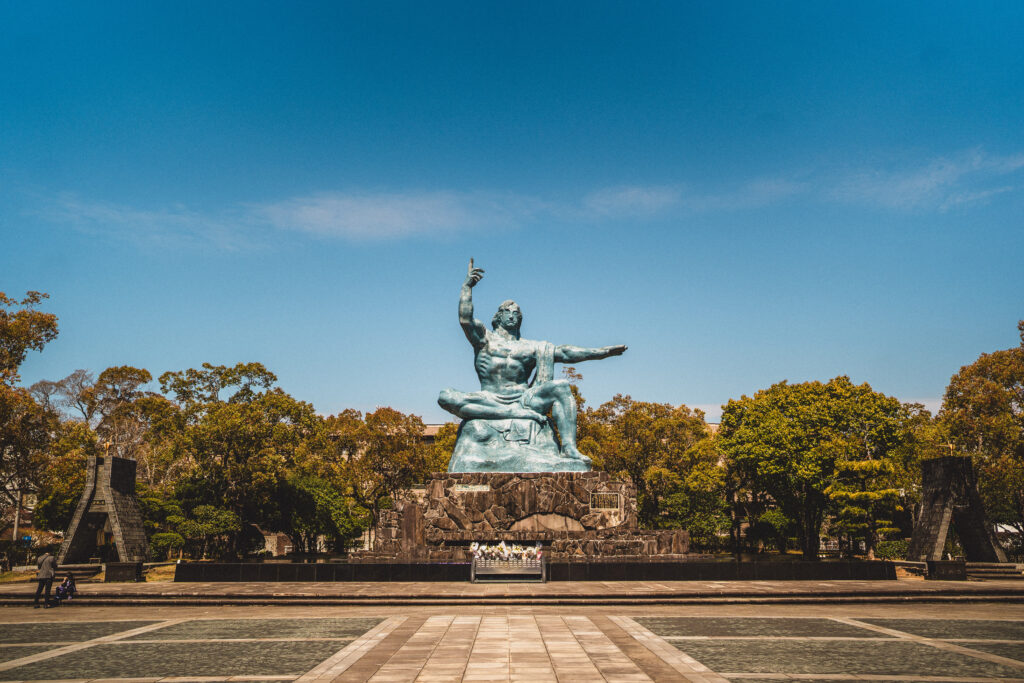
Nagasaki, along with Hiroshima suffered an atomic bombing during WWII. Today, one of the most important places to visit in the city is Nagasaki Peace Park. This tranquil and reflective space was established to commemorate the devastating atomic bombing of Nagasaki on August 9, 1945.
The park serves as a call to peace and as a memorial to the horrors of warfare. There are a few important monuments within the park, including the statue of peace which was designed by sculptor Seibou Kitamura and unveiled in 1955. There is also the fountain of peace and the epicentre, which is marked by a commemorative sculpture.
Atomic Bomb Museum
Another place that is important to visit while exploring the city is the Nagasaki Atomic Bomb Museum. Although a sombre visit, its necessary viewing and is a stark reminder that the horrors of nuclear warfare should never be repeated. The museum is open daily from 8:30am-5:30pm.
Sanno Shrine and one legged Torii Gate
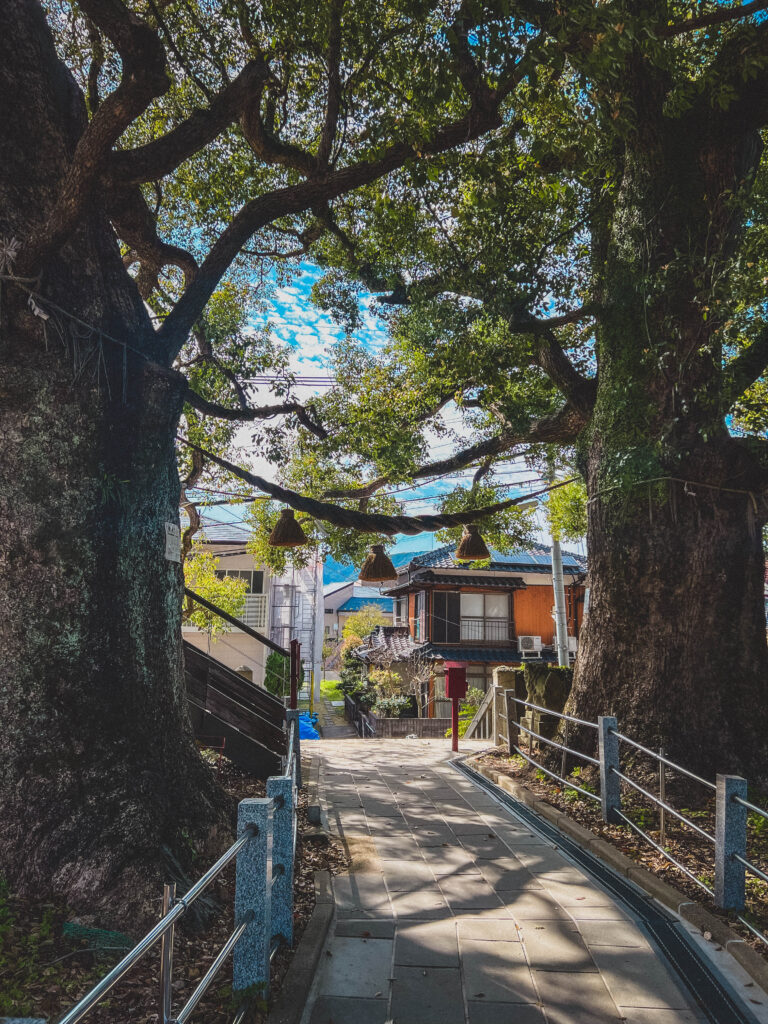
When the a-bomb went off, everything around for kilometres was damaged, flattened or burned. Sanno shrine is a shinto shrine which was around 800 metres south-east of the atomic bomb hypocentre.
All of the buildings were burned and the two camphor trees standing within the shrine lost all of their leaves. Everyone thought they were dead. However around two months after the bombing the trees began to sprout and the trees regained their health, proving to be a message of hope in a horrific time.
Nearby the one legged Torii Gate is all that remains of a gate which once marked the entrance to the shrine.

Veggie Cafe Bar Nobister
Vegetarian food can be a bit complicated to come by in Japan, but one spot where we particularly enjoyed the food was Veggie Cafe Bar Nobister. Both vegan and vegetarian friendly, this is the perfect place to stop for a bite to eat and the atmosphere is super cosy!
Martyrs Museum
The next stop after lunch is the Martyrs museum, which is officially known as the Museum of 26 Martyrs of Japan and Monument.
The 26 martyrs were a group of Catholics who were executed by crucifixion in 1597, under and order given by authorities after the Japanese shogun Toyotomi Hideyoshi, had issued to repress Christianity 1586. In fact, at a time Nagasaki was arguably the most Christian place in all of Japan, at its peak almost 500,000 people identified as Christian.
Located atop of Nishizaka Hill, the museum displays a wide exhibition of artefacts, documents and worship figures relating to the 26 martyrs, as well as general items which show the spread of the religion over Japan.
The monument itself overlooks beautiful views over Nagasaki, although it’s also the very spot of where the execution happened so holds a pretty morbid space on the hill. The 26 martyrs remain significant figures to this day, telling the story of Christianity in Japan.
The museum exhibition space is open daily from 9am-5pm and admission for it costs 500 yen.
Suwa Shrine, 諏訪神社
Next, you’ll want to head back down towards the northern part of the city and visit Nagasaki’s oldest and most major Shinto shrine, Suwa.
Originally built in 1614, it was built the same year as another shogun, Tokugawa Ieyasu’s, order to ban Christianity completely came. The government began forcing the Christian population to reconvert to the Japanese religions of with Buddhism and Shinto, so it was through that establishing a major point of worship would aid in effort of this.
Suwa Shrine was eventually relocated to the slope of Mount Tamazono first in 1647 and then again in 1683 when it was moved further up the slopes. The shrine actually survived the atomic bombing in 1945 thanks to its strategic position on the mountainside.
Today, Suwa Shrine has the appearance similar to many other shrines in Japan, to reach it you must ascend a flight of over 200 stone steps. It’s also a major location for the Nagasaki Kunchi, which is the biggest festival of the city, a celebration of autumn harvests that happens annually on October 7th-9th.
Shinchi Chinatown
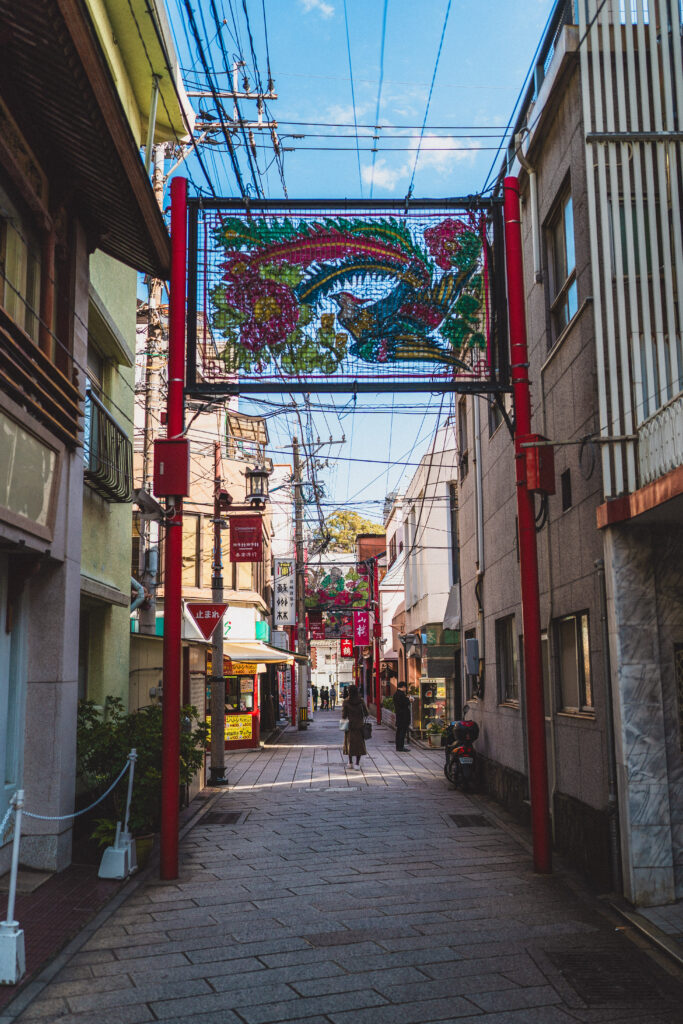
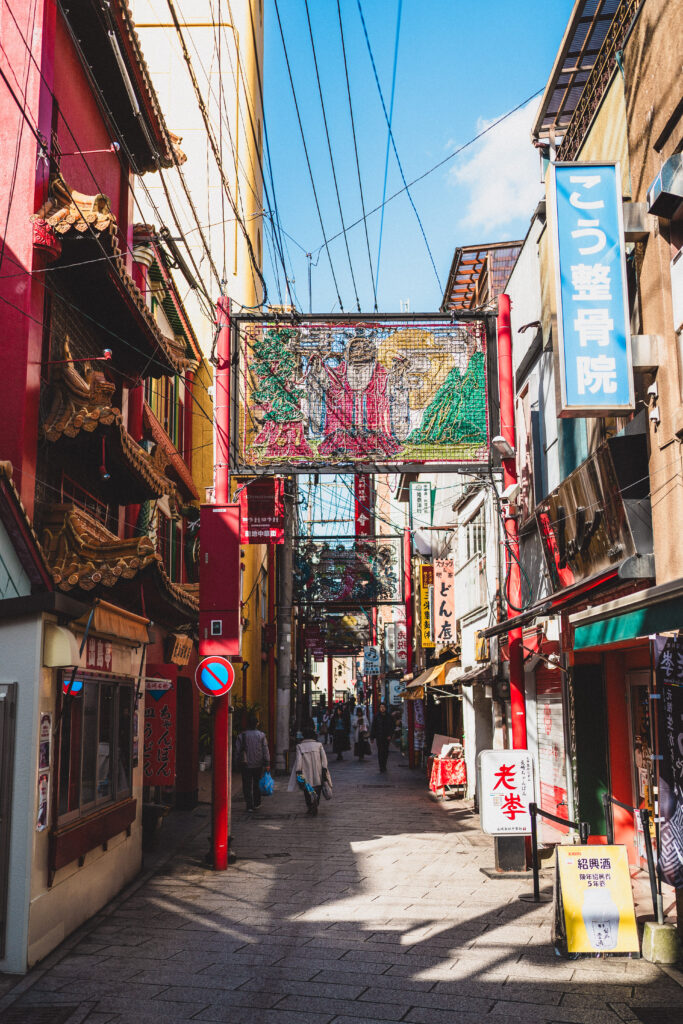
From Nagasaki’s centre, it’s easy to reach Shinchi Chinatown. This area is marked by its beautiful gates and stretches for around one city block. During Japan’s period of isolation, Nagasaki had the only open port in the country and the Chinese were the only traders allowed into the city, alongside the Dutch.
It’s also Japan’s oldest Chinatown! This makes for the ideal place to sample some of Nagasaki’s famous Chinese-influenced dishes, Chanpon (a noodle dish usually consisting of either pork or seafood) and Sara Udon (literally translates as “plate noodles” deep fried noodles topped with a fresh sauce).
Sofuku-ji
After indulging in Chinese-influenced delicacies, head to Sofuku-ji temple. Originally built in 1629 for the Chinese residents of Nagasaki, its Chinese architectural style offers a different feel to that of the other temples in the city.
Built along the slopes of the hillside, it managed to survive the atomic bombing of 1945. The grand entrance of the Ryugumon Gate is brightly coloured red, and two of the buildings found within the Sofuku-ji complex have been deemed as designated national treasures. Much of the Buddha Hall was designed and cut in China before it was shipped over to Nagasaki for construction.
The temple is free to visit and is open daily from 8am-5pm. There’s also lots of English signage which is helpful when visiting.
Yasaka shrine
Upon coming down from the temple you’ll find another Shinto shrine which is worth a quick visit, the Yasaka shrine, once called Gion shrine, and is dedicated to Susanoo in the tradition of the Gion faith.
Although there’s not lots to see or say about this shrine, it’s a beautiful and tranquil spot to explore while exploring the hillside.
Mount Inasa
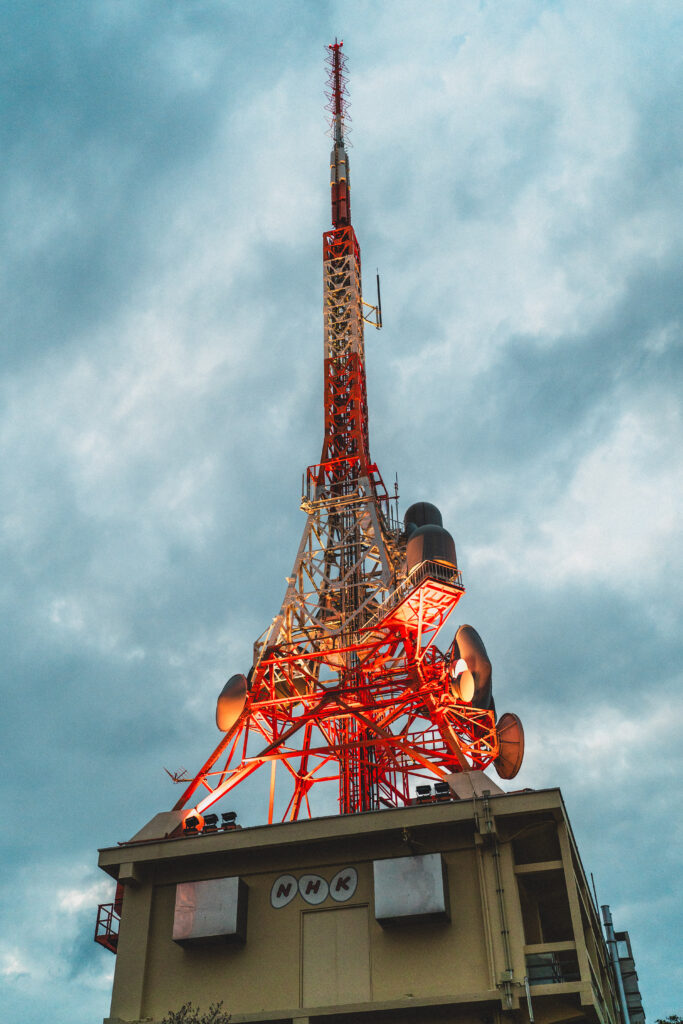
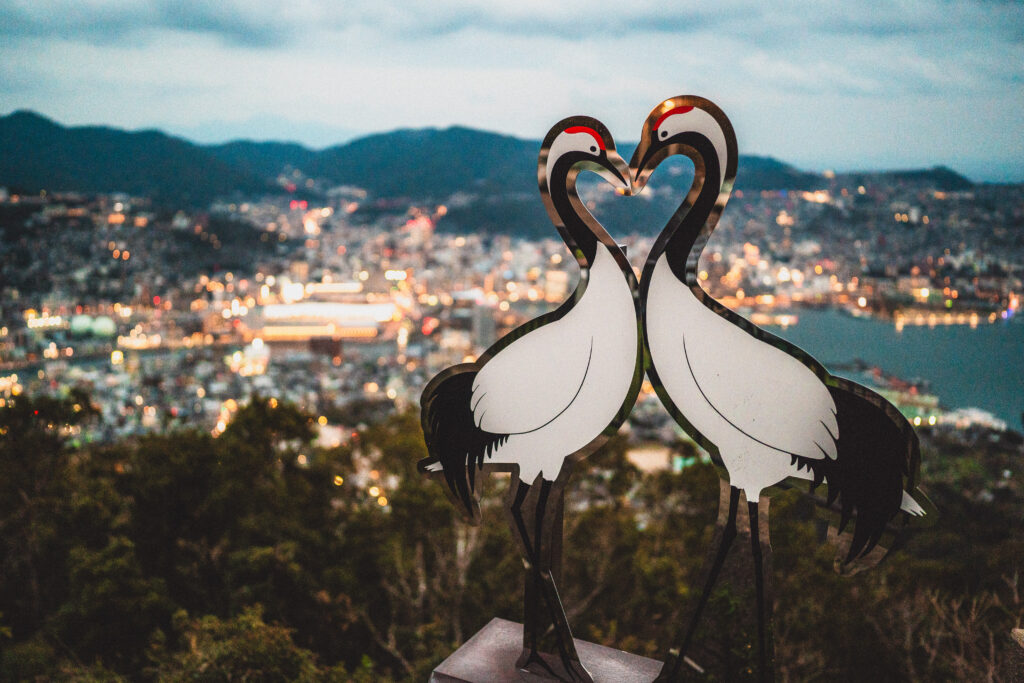
To finish your day of exploring, head to one of the best viewpoints in Nagasaki for sunset!
The view from the top of Mount Inasa, which is also known as Inasayama, is so stunning that it’s considered to be one of only a handful of “Ten Million Dollar Night Views” in Japan.
In order to get to the top you’ll want to take the ropeway, which costs 1250 yen (round trip) and runs between 9am-10pm. Once at the top you’ll be rewarded with breathtaking 360 degree views of Nagasaki bay.
Day 2 in Nagasaki suggested itinerary
Battleship Island
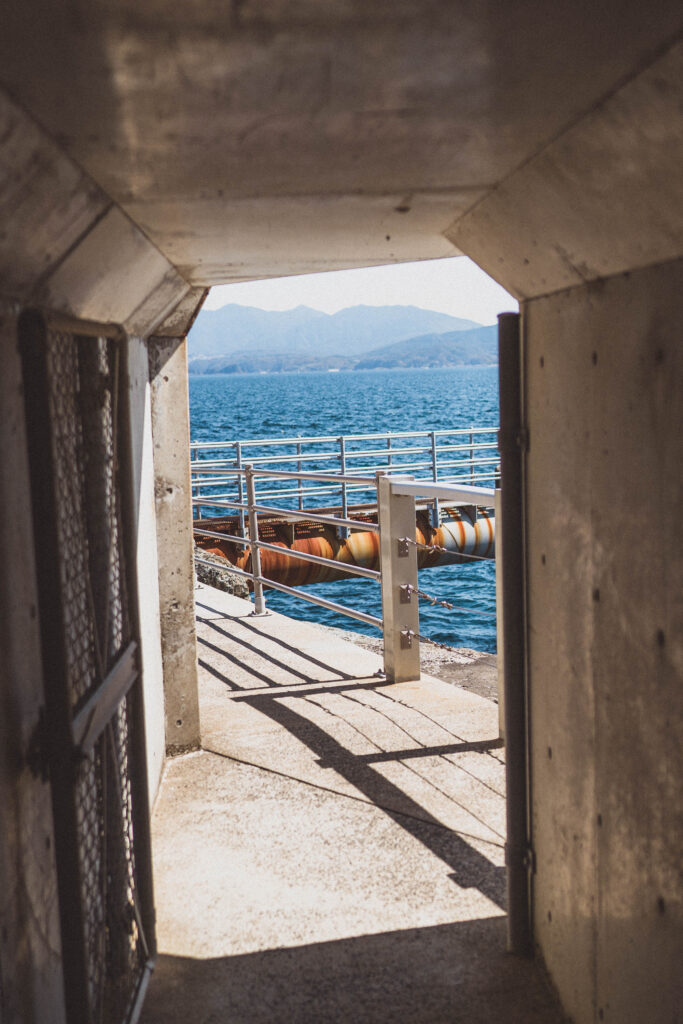
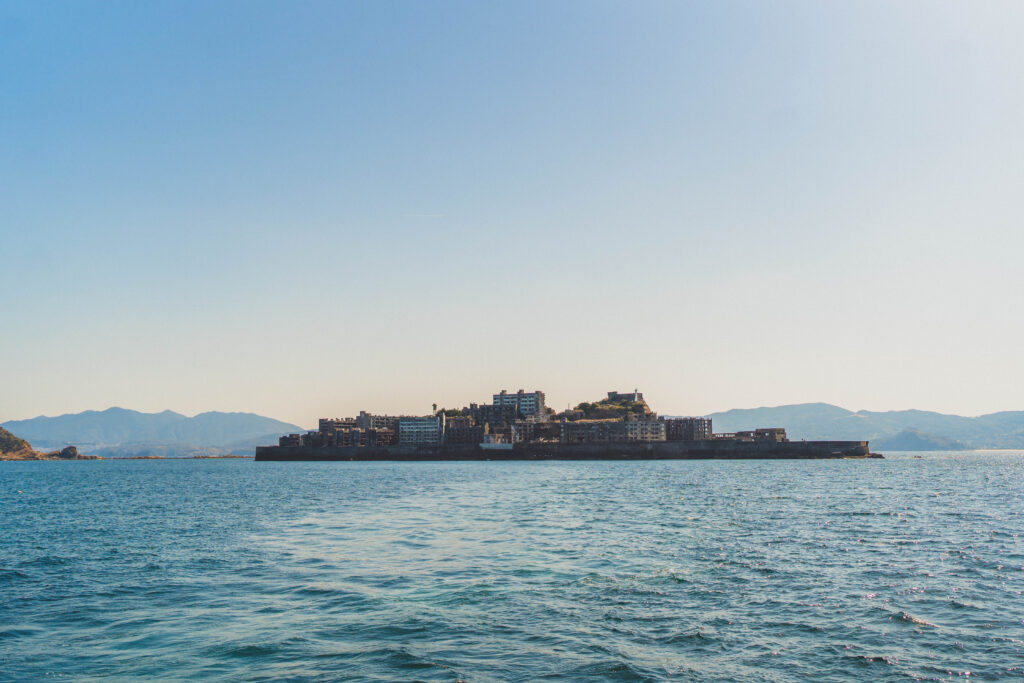
The next day, get up bright and early to head out to visit Battleship Island. Tours to the island take three hours. Officially named Hashima island, it was nicknamed battleship island or Gunkanjima in Japanese thanks to the fact that it resembles the form of a ship when viewed from certain angles.
The island is only a mere 480 meters long and 160 meters wide and was at one time home to a population of over 5,000 people (briefly making it the most densely populated place on earth).
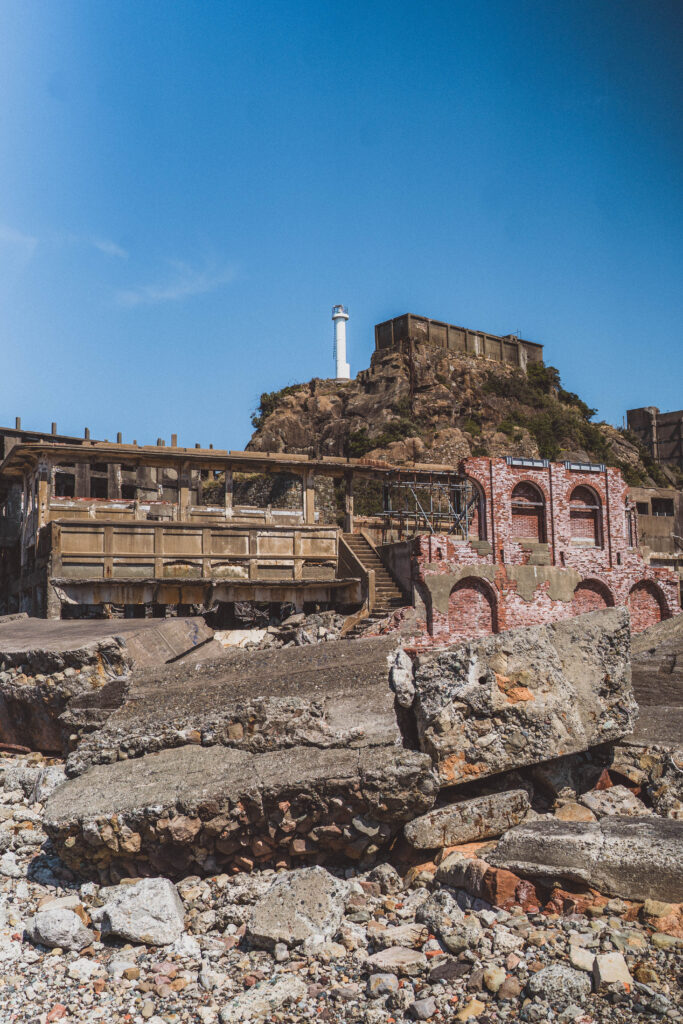
What was once considered to be a flourishing centre of coal mining and symbol of Japan’s progress and economic strength, remains today as an abandoned city being taken back by nature. However, there is also a much darker history to the island.
You can find out more about the history as well as how to plan your trip and what to know before you go in our guide here: How to visit Gunkanjima (Battleship Island)
Confucius Temple
After lunch, it’s time to explore Dejima. This is an artificial island and served as a Portuguese trading post during the 16th century. During Japan’s period of isolation it served as a Dutch trading post from the 17th-century for roughly two centuries.
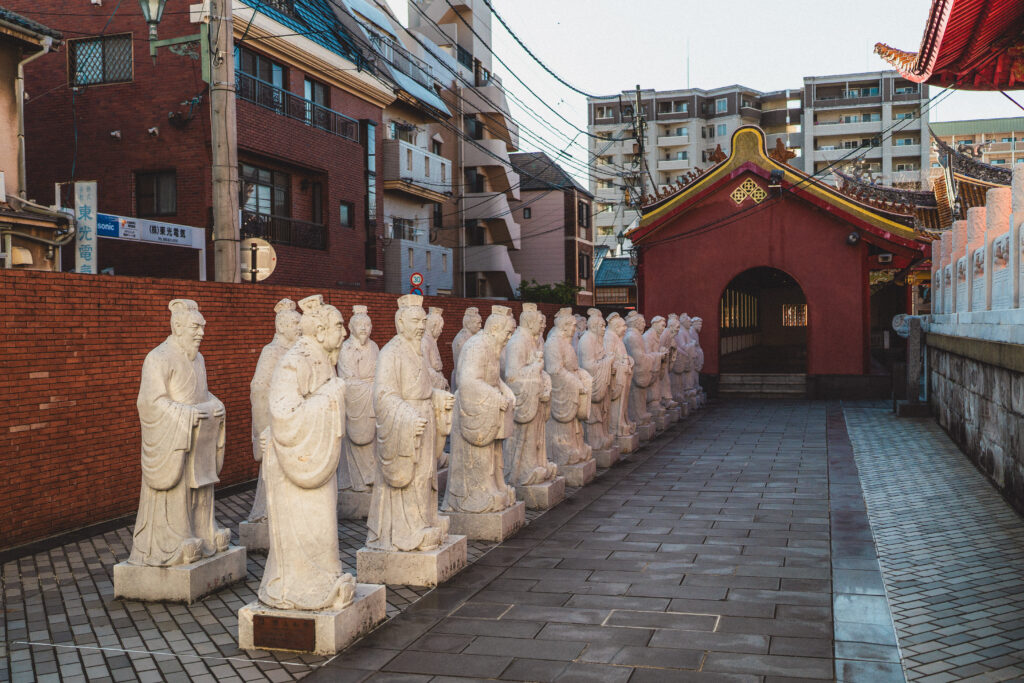
Confucius Temple is also known as the Nagasaki Confucius Shrine and is dedicated to Confucius, the ancient Chinese philosopher.
You can visit for a small fee and today the temple serves as a center for Confucianism in the region. Within the temple grounds, you can find statues of Confucius and other prominent figures in Confucianism, as well as inscriptions of Confucian teachings.
Dutch Slope
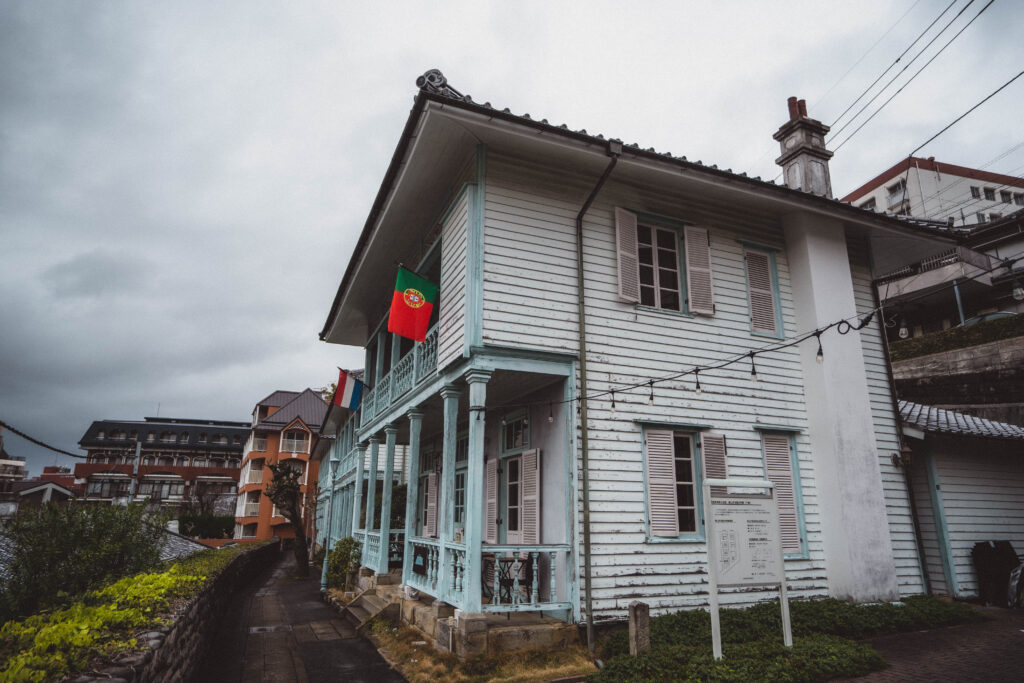
Glover Garden isn’t the only place you can see western style homes in Nagasaki. Indeed if you head to Dutch slope, a particularly steep hill in the Dejima district, you’ll find rows of wooden dutch style houses. One of them even features a free small museum where you can see photos of what Nagasaki would have looked like at the turn of the 20th century.
A quick point of interest: as Dutch people were the only Westerners allowed in the country for quite some time, ‘Dutch’ actually referred to everything Western for a while.
Oura Cathedral
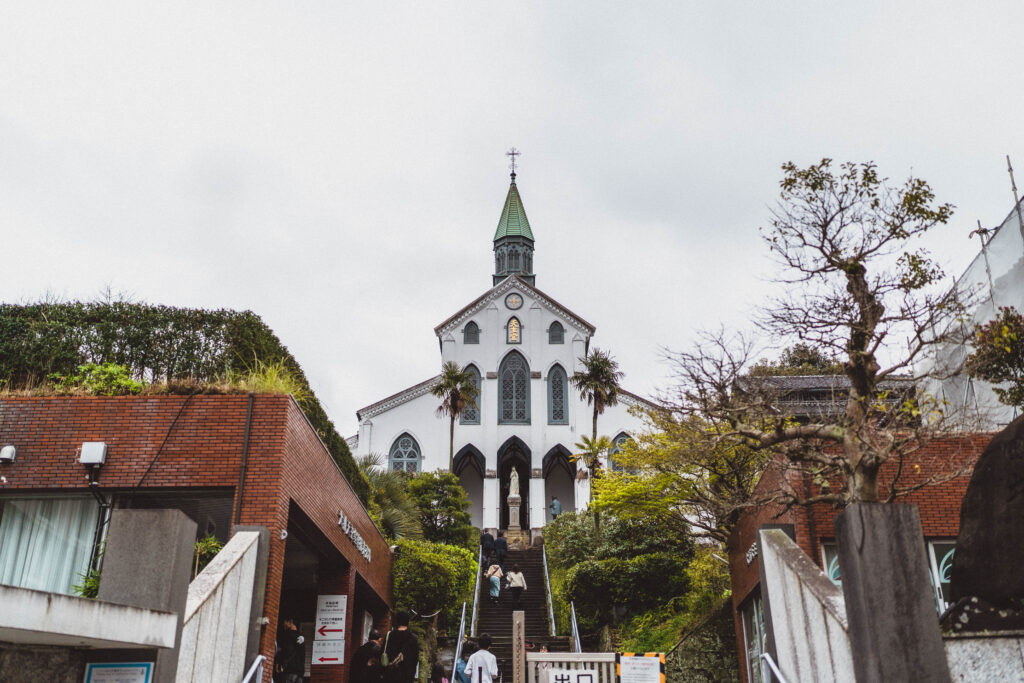
Nearby to the Dutch slope is the Oura Cathedral. The cathedral was built in the late 19th century to honour the 26 Christian martyrs who were crucified in 1597. It is listed as a UNESCO World Heritage Site and also deemed to be a national treasure
The building itself is particularly unique in that it features western architecture. It was badly damaged during the atomic bombing in 1945, today artefacts from the damage can be seen in the Nagasaki Atomic Bomb Museum.
Glover Garden
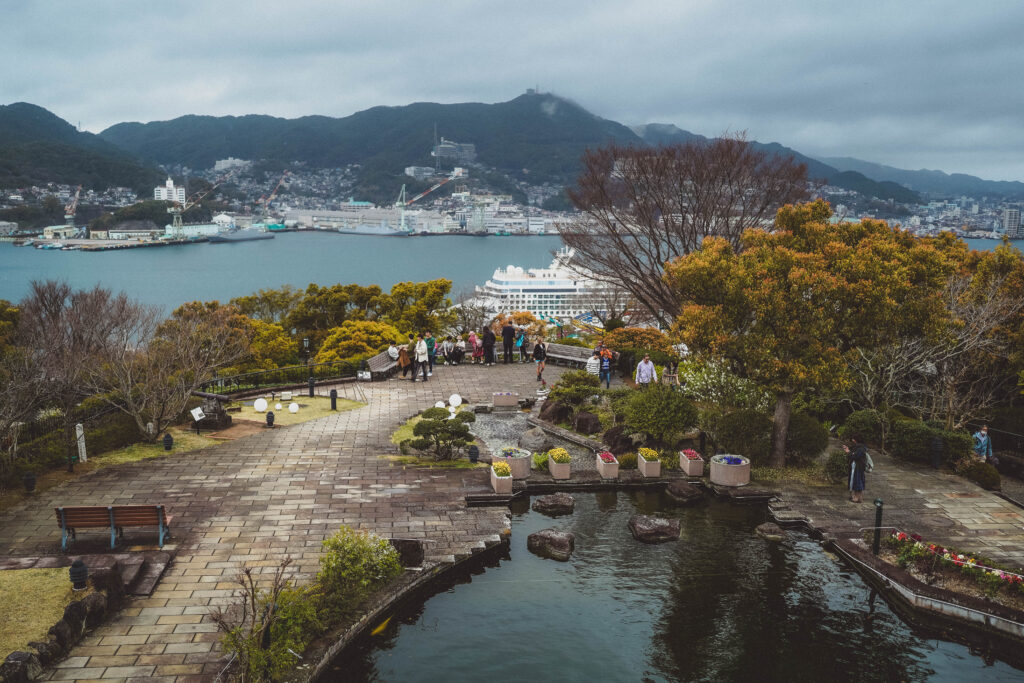
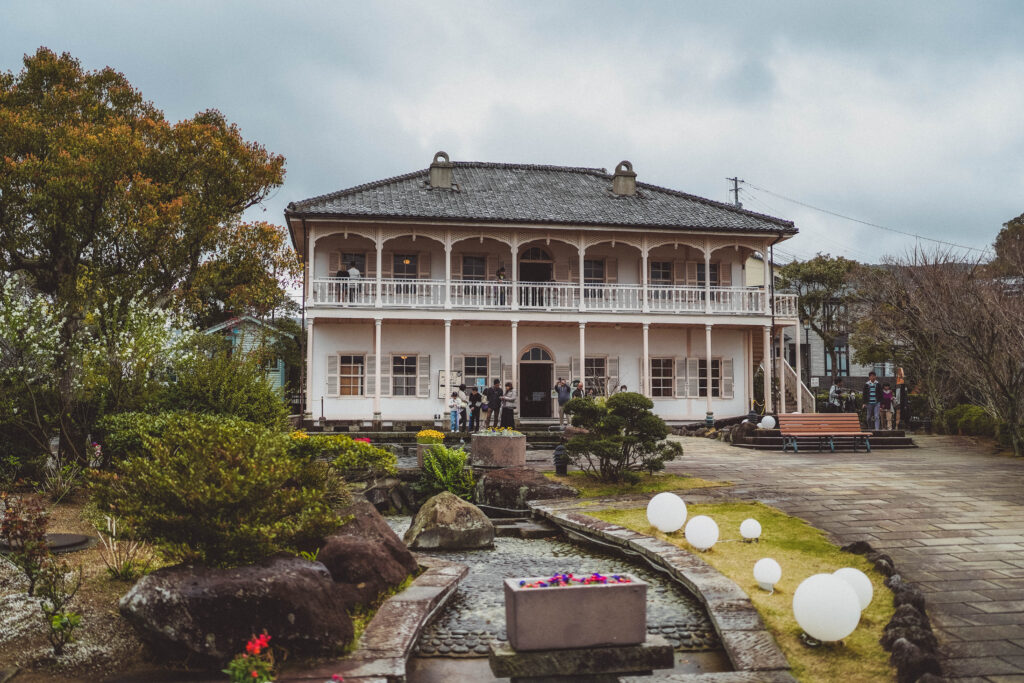
This beautiful green space is perched high on a hill overlooking Nagasaki harbour below. The garden is named after Thomas Blake Glover who was a Scottish merchant who played a significant role in the modernization of Japan during the late 19th and early 20th centuries.
Today you can expect to find several beautifully preserved Western-style residences that once belonged to foreign merchants and diplomats and some beautifully landscaped gardens.
Getting around Nagasaki
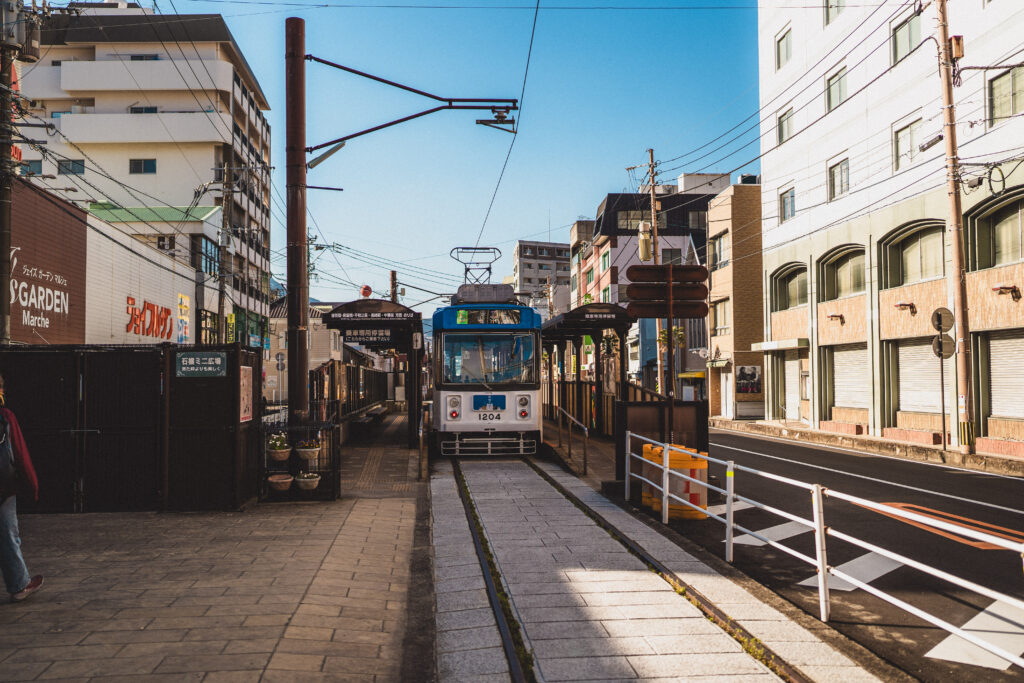
As Nagasaki is pretty large, you’ll want to make use of public transportation during your stay. While, for the most part, you can get around on your own two feet (just be sure to wear comfortable shoes as you’ll be walking a lot), you’ll want to take the bus or tram to get between the area of the Peace Park and Dejima.
How to take the tram
In order to take the tram you board at one of the back doors (not the front ones). You get off at the front next to the driver. When you’re leaving the tram, you should pay the fare. You’ll have to pay exact change but there’s a money exchanger next to the driver.
How to take the bus
The bus functions similarly to the tram. You board at the back door and leave at the front (which is also when you pay). However, the difference between taking the bus and the tram is that, when you get on the bus, you have to take a ticket (the machine is on the left when entering).
The number that you get on the ticket will correspond with a number on a screen at the front of the bus. You’ll then pay the fare which corresponds with your number when leaving the bus (don’t worry, it’s actually pretty simple).
Again, like the tram, make sure to have your fare in exact change or use the money exchanger at the front of the bus before you get off.
Where to stay in Nagasaki
Truth be told, there’s nowhere in Nagasaki that is amazing to stay, despite it being filled with fascinating historical sights and tourist attractions, it doesn’t quite have the same when it comes to hotels so don’t expect to be blown away. That being said, we’ve put together a list of a few options (including where we stayed) as well as some based on web reviews, all of which provide what you need for your stay:
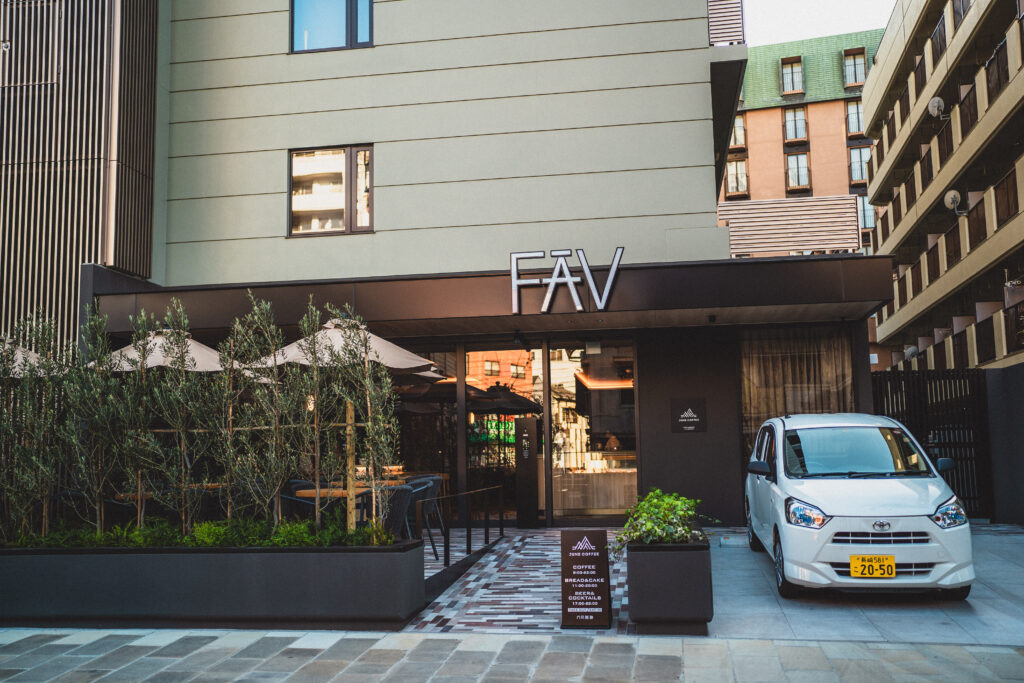
- FAV LUX – We stayed in this hotel, our room was clean enough and we had a small kitchen which was useful for morning coffees and keeping snacks etc. There was also a cafe in the hotel, although it was nice, it was really expensive. But overall the bed was comfortable and it was an easy enough stay with a good location nearby to Oura Catholic Church, Glover Garden. Check prices and availability here.
- Dormy Inn Premium Nagasaki Ekimae – Reasonably priced, this hotel has everything you need close by, including several shops and eateries. It is also well connected, located a 5 minute walk away from Nagasaki Station. There’s also Wi-Fi, breakfast and on site parking available. Check prices and availability here.
- Candeo Hotels – Located within Shinchi Chinatown, the hotel is also conveniently a 2 minute walk from a tram spot. Clean and modern, there is also a rooftop bathhouse if you fancy taking some time to relax. Check prices and availability here.
What food to try in Nagasaki
Nagasaki is filled with traditional dishes that give a taste for the city’s history and blend of cultures. Some of the must-try delicacies while there include:
- Turkish Rice: Despite its name, this dish has no relation to Turkey. This classic Nagasaki dish is actually rarely served outside of the city, consisting of rice, spaghetti, and a pork cutlet covered in a curry sauce…it looks more like leftovers from a buffet, but is meant to be absolutely delicious!
- Chirin chirin ice cream: This sweet treat has been served as a tourist delight for almost 50 years, sorbet/ice cream that is carefully moulded into delicate petals to make up the shape of a rose.
- Chanpon and Sara Udon: As mentioned, these are dishes you can sample in Shinchi Chinatown to get a taste for the Chinese influence, these two dishes are loved by the locals.
- Goto udon: This is a beloved dish in the city, and all over Japan too. Simple yet delicious, the noodles are served in a broth with Camellia oil taken from the local mountains, a raw egg and spring onions to garnish. This dish is often made up from local ingredients nearby, so if you have it while in Nagasaki you’ll truly be sampling a taste of the region.
Enjoyed reading about how to spend 2 days in Nagasaki? Pin this article now, read it again later: