
Frigiliana: A Guide to the ‘Prettiest Village in Andalusia’
Last Updated on 11th May 2024 by Sophie Nadeau
This post may contain affiliate links. Please check out my privacy policy for more information.
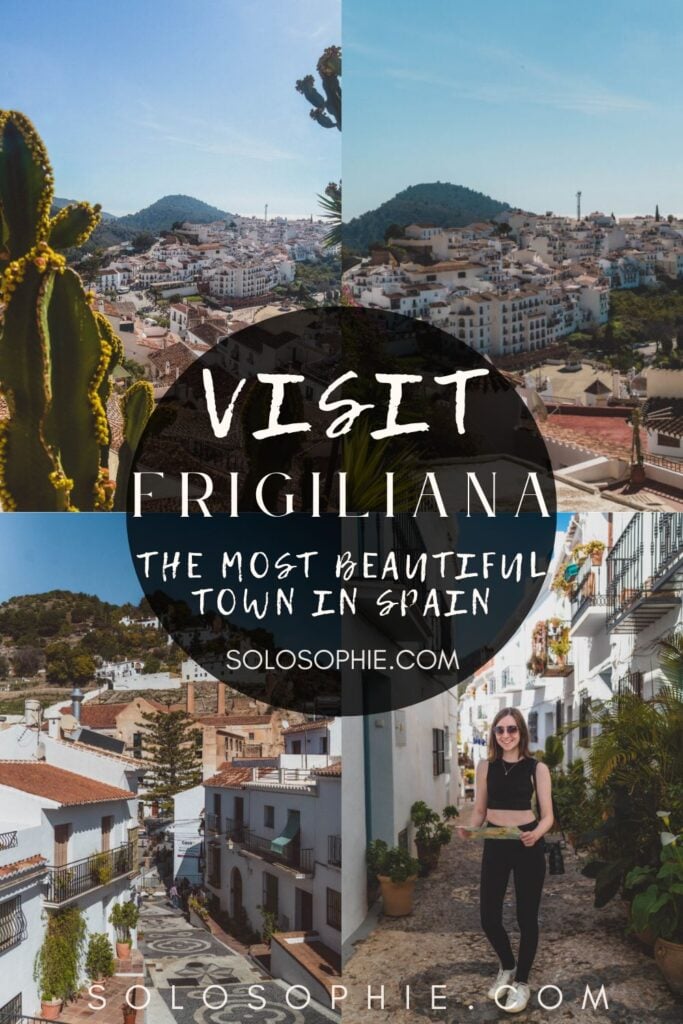
Home to pretty as a postcard views, historic architecture dating back many centuries, and often dubbed ‘the prettiest village in Andalusia,’ Frigiliana has all the makings of the perfect escape from the hustle and bustle of busy modern day life. Here’s your insider’s guide to the best things to do in Frigiliana as well as what to know before you go.

Introducing Frigiliana
Frigiliana is located in Andalusia and has a population of just over 3000 residents and is around 320 metres above sea level, meaning that it has an enviable position elevated above the surrounding countryside.
From almost every turn in town, you’ll be rewarded with beautiful views of the surrounding rolling green hills, including onto avocado groves and even all the way out onto the Mediterranean Sea.
Frigiliana is actually one of the ‘pueblos blancos’ (white villages) which are a group of around 30 villages in the Spanish countryside that are so called because they are filled with white washed houses.
It’s located around a 15 minute drive from the coastal town of Nerja and just under an hour’s drive away from Malaga, making it the perfect day trip from the city.
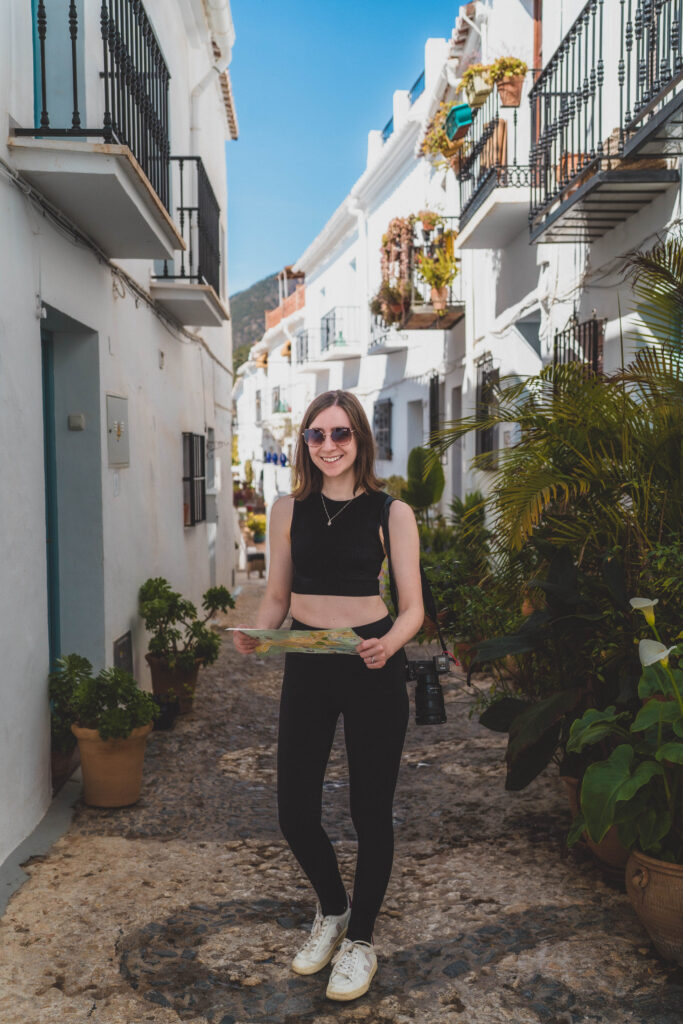
Voted the most beautiful town in Spain
In 1982 Frigiliana was voted the most beautiful town in Spain and then in 1986 it was voted the most beautiful town in Andalusia. Today the town is divided into two distinctive parts; there’s the new town (which still feels pretty historic with its meandering cobbled lanes and pedestrian only steps and stairways) and the historic district. You’ll want to spend most of your time exploring the Moorish-Mudéjar area of Frigiliana.
A brief history of Frigiliana
With a history dating back as far as 3,000 years before Christ was born, The Phoenicians were the first civilisations to settle here in around 700 BC. Followed by the Romans in 200 BC, who went on to build the Castillo de Lizar upon the hilltop.
However, it was the Moorish people who truly left their mark on Frigilana, building irrigation systems and terraces, they also utilised the land to produce olive oil, sugar cane, silk and plenty more.
The Moorish period came to an end when the Christian forces came in 1485, with the villagers surrendering peacefully, many of which even converted religions, subsequently known as ‘Moriscos’.
Peace soon turned on its head when the ruling Christian forces became oppressive, forcing an uprising in the Alpujarra regions of Granada, the rebellion spread like wildfire. So much so, that one of the bloodies battles in the history of Southern Spain broke out.
The Battle of the Peñon de Frigiliana, wherein some 2,000 Moorish people perished and the castle fortress was burnt to the ground. The following year, in 1570, the remaining Moors were expelled and their lands distributed to the Christians of Granada and Valencia.
The village thereafter became a ghost town, almost completely abandoned, it took a few centuries to become re-settled to the extent that it remains today. It’s also hard to imagine such a gruesome history when walking through this enchanting white washed village.
Today one of the most important things to know about Frigiliana is that the three religions; Islam, Judaism, and Christianity coexist side by side. There’s even an annual festival ‘Las Tres Culturas’ (the Festival of Three Cultures) held annually over four days on the last weekend in August.
Best things to do in Frigiliana
Wander around town
The best way to soak up Frigiliana is to simply wander around and get lost down the narrow cobbled lanes, you’ll come across treasures each way you look! Be sure to keep an eye out for the sculptures scattered around the village, created by artist Robert Harding, these symbolise the unity of the three cultures that now live happily side by side.
Explore the Moorish-Mudéjar district
One of the most popular areas to discover in Frigiliana is the Moorish-Mudéjar district. This district is the old district that was inhabited by the Moors both before and after the rebellion. The name Mudéjar is used to describe the architectural style used by Muslim craftsmen working in Christian territory.
Filled with steep cobbled alleyways that wind around the white washed buildings contrasted by the pink flowers that climb up the walls. This area is one of the best examples of traditional Arabic architecture in Spain, and an absolute must-see while visiting Frigiliana.
Check out the Fuente Vieja (old fountain)
Built in 1640 by order of the sixth Lord of Frigiliana, this old fountain was originally known from its construction as the ‘New Fountain’. Conceived to supply water for the villages residents as well as used as a drinking trough for the cattle, you can actually see where the stone has worn away from the animals drinking from it!
Moorish Castle of Lizar
Right at the top of the village you’ll find the remains of The Lizar Castle, or Castillo de Frigiliana, Cerro de la Sabina. It was built by the Moors between the 9th and 11th centuries.
Unfortunately not a great deal of the castle survives today, but it’s a great view from which to admire panoramic views of the rest of the town and the blue azure of the sea in the distance.
See the animatronics move
One of the most intriguing things we found while exploring the town was the mechanical theatres dotted around, and although we didn’t have any coins on us while visiting I managed to do some research on these curious things.
These peculiar coin-in-the-slot machines are literally just small puppet theatres that explain the village’s history. So although it’s quite a touristy thing, they’re probably quite a fun way to learn about Frigiliana while visiting (that is if puppets don’t scare you) …and there’s weirdly quite a lot of them around!
Museo Arqueologico de Frigiliana
If you want to learn more about the history of the town, then you would do well to visit the Archaeological Museum of Frigiliana. Housed within a 17th century building named ‘The Apero’ is an impressive collection of objects that were found at nearby archaeological sites.
With archaeological treasures that correspond to the Neolithic right through to the 19th century, this is definitely the best spot to fully experience the rich cultural and historical heritage of this village.
Palace of the Counts of Frigiliana
Yet another architectural gem worth checking out is the Palace of the Counts, once home to the Count and Countess of Frigiliana, the Manrique de Lara family. This gorgeous 16th century renaissance-style palace was built from the remaining stones of the Castle of Lizar.
Molasses factory
The Moorish people introduced and cultivated many new crops to Andalusia, including the sugar cane. Evidence of this can be found on the hill where ‘El Ingenio‘ lies- the only sugar cane and molasses factory still acitve in Europe. In fact it’s been in operation continuously since 1630, meaning that it has been making sugar for almost 400 years!
Today you can visit and learn more about the refinery process while exploring the impressive mechanical machinery as well as the history of the importance of this production for the village.
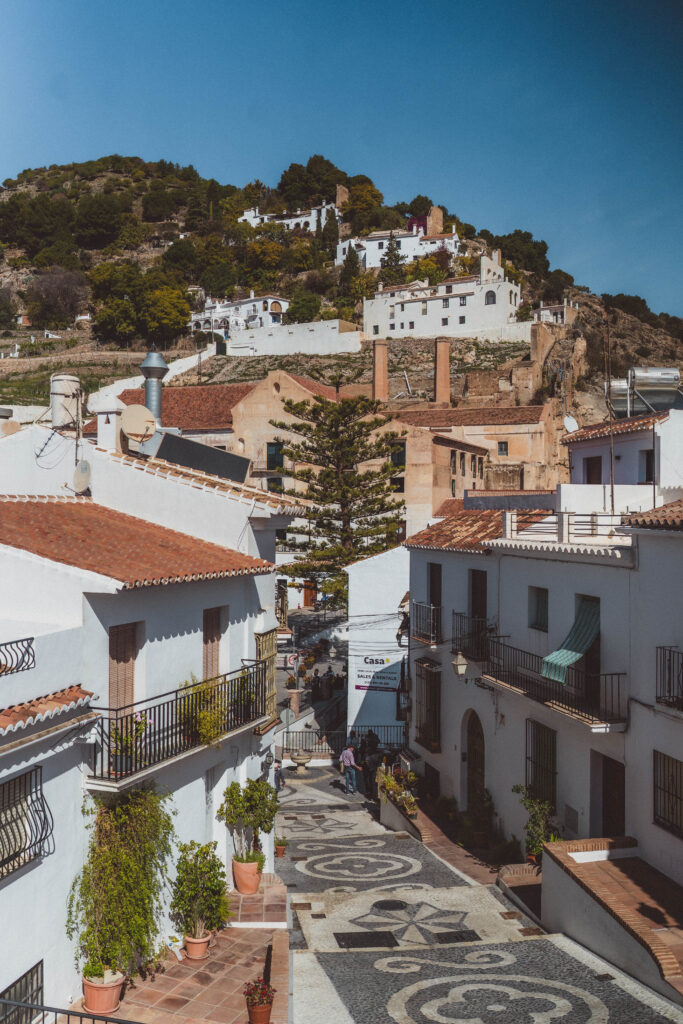
Admire the views
Thanks to Frigiliana’s position atop of a gorgeous hill, one of the best things to do in town is to admire all of the surrounding views. Of course the Castle Lizar offers stunning panoramic views, but we also enjoyed the balcony viewpoint nearby to the cafes and restaurants at, Callejon de Peñón.
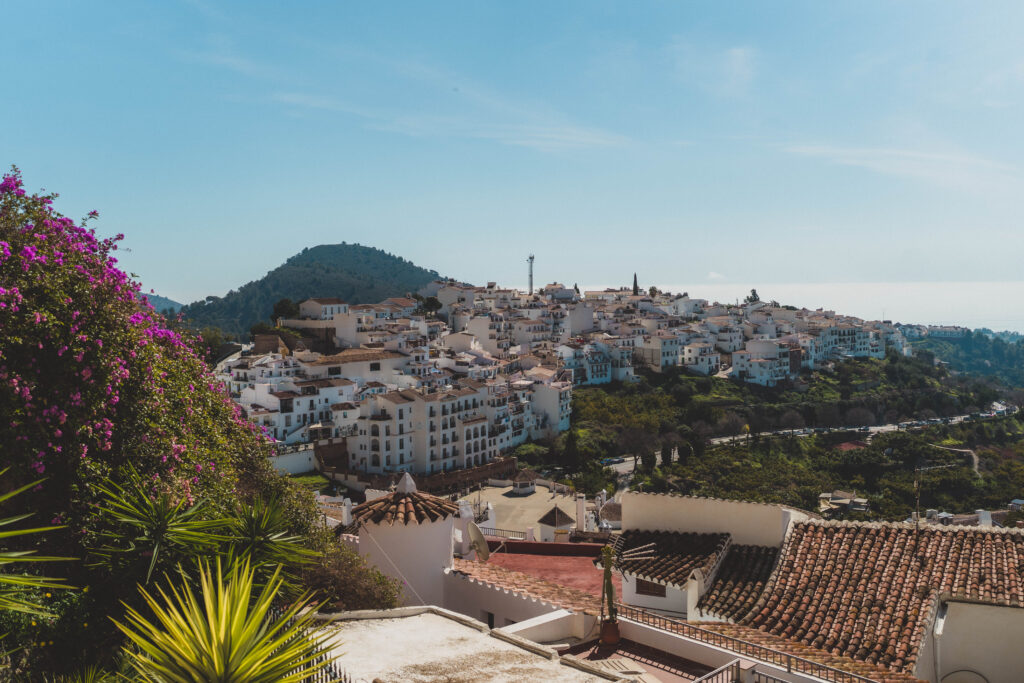
Marvel at the ceramics
One of the best parts about a stroll through Frigiliana is that you can see traditional ceramic signs all over town. This includes for numbering houses, to denote what a shop sells, and even a little trail of a dozen ceramics or so which depicts the history of the town.
San Antonio church
The main church in town is dedicated to Saint Anthony of Padua, completed in 1676, it was built on the site of an old mosque. The church stands as a historical symbol of the Christian conquest, as does its architecture and the and the artistic elements inside.
Beyond the rather plain façade belies a more ornate interior, with beautiful frescoes that are thought to date back to the 17th and 18th centuries. It’s completely free to enter and wander around!
Grab a beer at La Domadora y el León, CRAFT BEERS STORE
Honestly, with the heat and general relaxed ambience of this village you’ll find yourself craving a beer…and some olives! We headed to this spot, which translates to English as ‘The Tamer and the Lion’, serving crisp and refreshing craft beers.
Visit the market
For a true taste of local life, you’ll want to head to the market. Market days take place on Thursdays and Sundays. Head here and you can expect to find plenty of local fresh produce for sale, as well as souvenirs and even some clothing.
Hike the Rio Higueron Gorge
If you love hiking, then consider taking the Rio Higueron Gorge hike for a beautiful walk in the province of Malaga. Walking up a river valley which narrows into a gorge, this is a gorgeous way to immerse yourself in the natural surroundings and also see the water source of the village.
Generally considered medium in difficulty, be sure to bring comfortable shoes and lots of water!
Where to eat in Frigiliana
There are a number of well-reviewed eateries in town where you can get everything from a local Spanish wine to tapas to a full meal! Some of the best reviewed places to check out include:
- Punto de encuentro – Outdoor seating where you can soak up the sunshine, serving delicious traditional tapas and apparently the best croquettes in town!
- Spices Frigiliana – Enjoy their wide range of vegan and vegetarian options, with breathtaking views.
- Restaurante La Taperia – Tucked away in the old quarter next to the church, indulge in delicious homemade tapas and get cosy in the restaurants quaint little backyard seating.
Getting around Frigiliana
To be honest, the most historic area of the town is best explored on foot so be sure to wear comfortable shoes (there are lots of cobblestones- the streets are even still repaired by hand to this day). If you want to get a map (and even more tips) for getting around town, then I suggest heading to the tourist office to pick up some extra pamphlets.
Where to stay in Frigiliana
Frigiliana is an affordable spot to stay, and thanks to its position being near to the coast but far away from the hustle and bustle of its neighbouring nearby towns, it makes for the perfect destination to stay. Here’s a few top suggestions (based on web reviews):
- Villa Morera Bed & Breakfast: Boasting of stunning panoramic views and close to the village centre, it’s located just up the road from Nerja. Offering a variety of amenities including a pool, hot tub and a free breakfast. Check prices and availability here.
- Miller’s of Frigiliana: Just 7 minutes walk away from many of the restaurants in the village, this is an airy contemporary bed and breakfast, with a beautiful rooftop terrace where you can enjoy a drink in the evening. Check prices and availability here.
Watch the Frigiliana travel guide
Take a tour of Frigiliana yourself and watch our travel guide!
Enjoyed reading about the best things to do in Frigiliana? Pin this article now, read it again later: