
Nara Travel Guide: Best Things to do in the Deer City of Japan
Last Updated on 4th April 2024 by Sophie Nadeau
This post may contain affiliate links. Please check out my privacy policy and disclosure for more information.
A treasure trove of cultural experiences, Nara is a highlight of Japan for many visitors thanks to its wild deer, beautiful parklands, and wealth of dazzling temples. Here’s everything you need to know about Nara, as well as top travel tips, and the best things to do in Nara.


What is Nara known for?
In centuries gone by, Japan’s capital city was moved to a new destination every time a new emperor was crowned. This all changed in 710 when the custom was abolished and Nara was chosen to be the capital.
Nara was established as the first permanent capital of Japan and remained that way for decades. In fact, Nara, then known as Heijō-kyō , was the capital of Japan between 710 and 784 (it’s worth noting that there was a 5 year interruption between 741 to 745 CE).

At the same time as which Nara was named the capital city, Buddhism started to take hold in Japan, and so this is why many of Japan’s earliest and most important Buddhist temples can still be found in Nara today.
Throughout the 8th-century CE, so many Buddhist temples were constructed that the government felt overwhelmed by the number of religious structures in the city and the capital was moved from Nara to Nagaoka, before it was moved to Kyoto. The city is now home to 8 UNESCO World Heritage sites.

Deer in Nara
Deer are believed to be messengers from the gods in the Shintō religion and so are allowed to freely roam around at their own leisure. The deer are revered to such an extent that they have been designated as a national treasure of Japan.

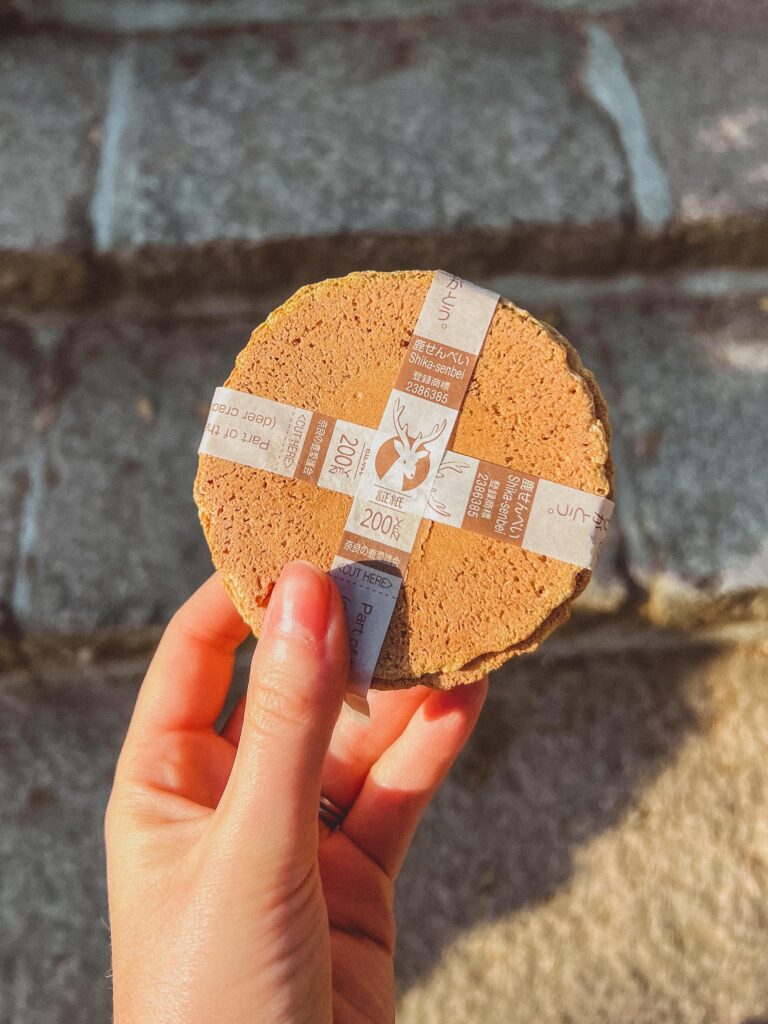
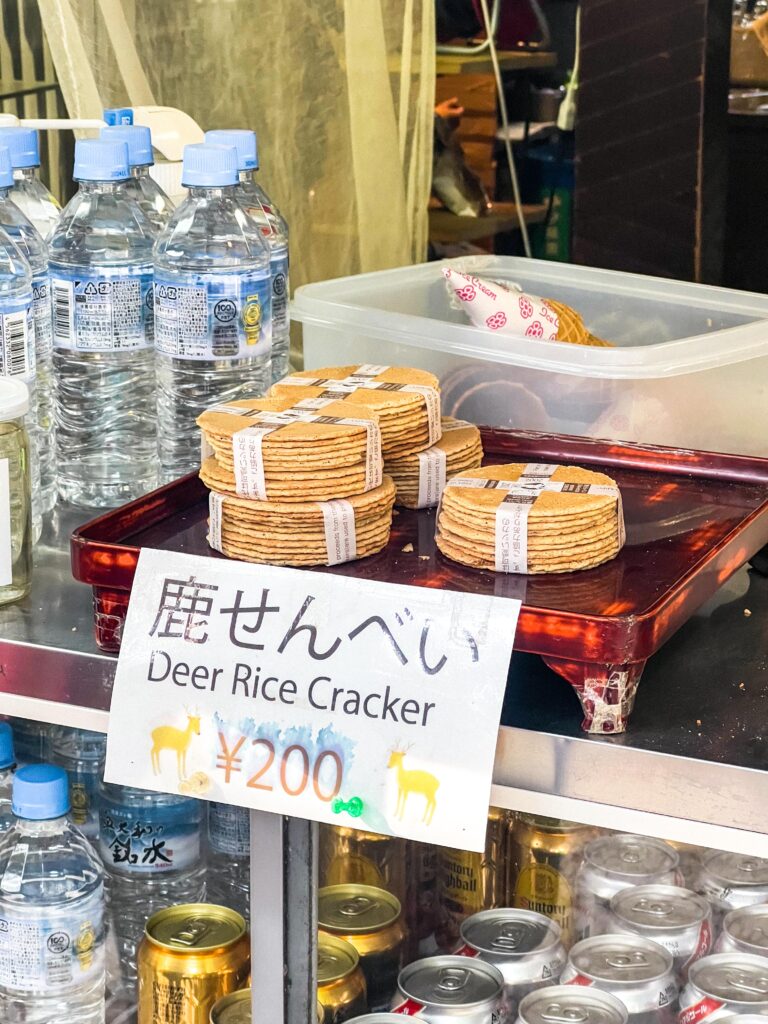
One of the most intriguing customs that are specific to the deer in Nara is that they have learned to bow in exchange for rice crackers. If you bow to the deer, then they will likely bow back, but they will also expect a rice cracker (purchased at specific vendors in the park and clearly marked as safe for the deer) in return.
How long do you need in Nara?
Nara is a fairly small city and all of its major attractions can be seen over the course of a day. Therefore, you only need a day or two to see everything Nara has to offer.
If you’re truly short on time, then you can spend a morning at Fushimi Inari-taisha, followed by an afternoon in Nara. If it’s your first time in Japan, then be sure to check out our top Japan travel tips.

Best time to visit Nara
There are two times of the year when Nara Park and its surroundings are exceptionally stunning (though bear in mind that these are also the busiest times of the year to visit). This is during hanami (cherry blossom viewing season in the spring) and during koyo (fall leaves viewing in the autumn).

Things to do in Nara
The majority of Nara’s main attractions are focused on its large, sprawling park, which is around a 20 minute walk away from JR Nara’s central train station. From the JR station, you can easily walk along Sanjo Dori street to reach the park.
En route, you’ll see plenty of stores selling classic Japan souvenirs, as well as local food and drink. Much like when visiting the island of Miyajima, you’ll soon notice that many shops sell deer themed souvenirs!

Kōfuku-ji
Kofukuji temple is on the fringes of Nara Park and is best-known for its towering pagoda, that stands at five-storeys tall, making it one of the tallest in Japan (the second tallest to be precise).
In fact, the pagoda is so iconic that it has since become an emblem of Nara. Unfortunately, the Pagoda’s interior is currently closed for extensive renovations and so won’t be open to the public again until 2030!
The temple itself was established in 710 and was once the family temple of the powerful Fujiwara family. The main Central Golden hall was unfortunately destroyed by fire three centuries ago but has been painstakingly rebuilt in the original style and has been open to the public since 2018. Inside, there’s the Yakushi Buddha.

The whole temple complex is fairly large and another highlight is the Eastern Golden Hall, which is also home to an impressive Buddha statue. There is also a National Treasure museum on the grounds of the temple that features collections showcasing one of the most extensive Buddhist art collections in Japan.
This temple is likely the first main attraction of Nara that you’ll come across as it’s one of the closest to the JR Nara station and is just a short walk away from Nara’s other station, Kintetsu-Nara.

Sarusawa Pond
Sarusawa Pond is located close to Kofukuji Temple and is a beautiful body of water which perfectly reflects the five-storey Pagoda. If you’re visiting Nara Park via either of the Nara stations, this will be one of the first sights you see in the city and there are often deer hanging out close by.

See the deer
Truth be told, the biggest draw of visiting Nara is the chance to see the deer, which are allowed to roam freely throughout the sprawling Nara park (and beyond if they so wish). In total, there are over 1200 sika deer, which are also known as Japanese deer or spotted deer.
Once in the park, you’ll see the deer pretty much everywhere you go. There’s also the chance to feed the deer if you purchase the special sika senbei (deer rice cracker) cookies that are sold by various vendors throughout the park.
Be sure not to feed the deer anything other than the permitted crackers and be mindful of your belongings and litter. Every year deer tragically become sick and some even die from ingesting plastic and food that they cannot digest.

Todaiji Temple
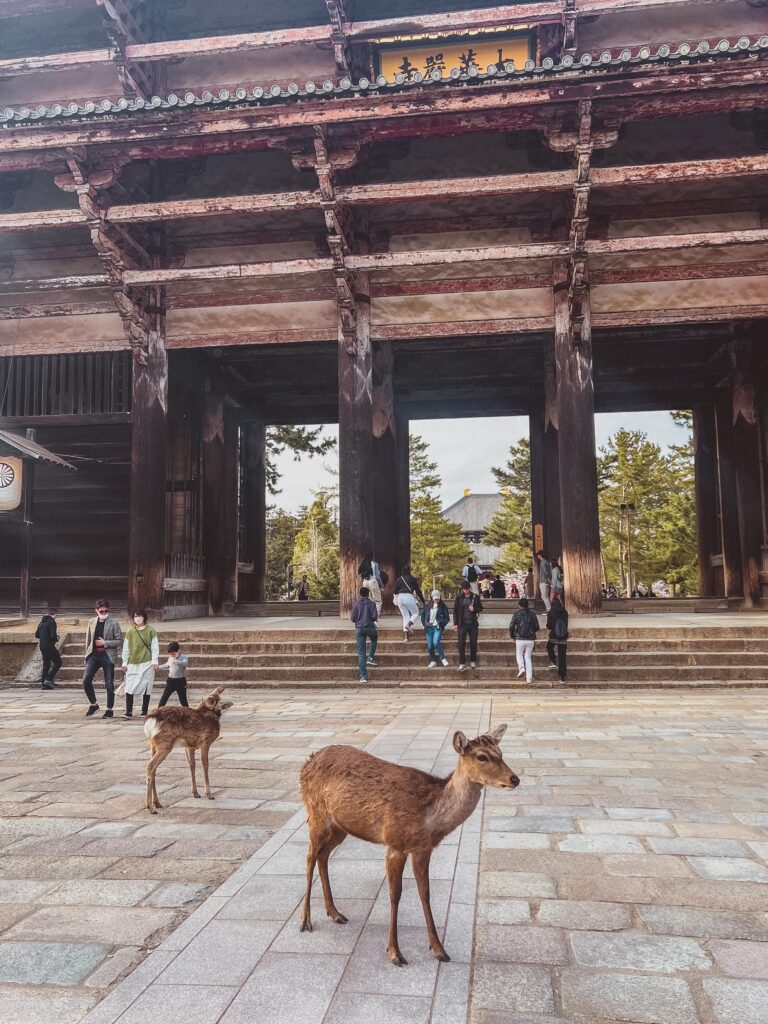
Truth be told, aside from seeing the deer, one of the top highlights of a day trip to Nara is the chance to visit the Todaiji Temple. The first glimpse of the temple you’ll have is in the form of the Nandaimon Gate, which is one of the largest temple entrances in all of Japan.
Todaiji temple was established in 750 and swiftly became the head temple of a nationwide group of temples. Today, the temple is classed as a UNESCO World Heritage site and, if you can believe it, the entire structure of the Main Hall is wooden.
The Main Hall you see today was actually reconstructed in 1709 on a smaller scale than its original predecessor but nevertheless maintained the record as the largest wooden building in the world until recently.

It’s thought that there were originally large pagodas either side of the temple, and inside there’s a small scale replica of how the grounds of the temple would have appeared in the 8th-century.
Visit the inside of the Main Hall of the temple today to marvel at the 15 metres tall Bronze Buddha statue, that is the largest of its kind in Japan. To give you an idea of just how large the statue is, the height of the Buddha’s hand is as tall as a person!

Another interesting feature in the Main Hall is a little hole in a pillar which is the same size as the Buddha statues’s nostril. It’s believed that, if you can fit through the hole, you’ll receive enlightenment in your next life.
The exterior of Todaiji’s main hall is framed by beautiful sakura during cherry blossom season, making it one of the most pleasant times of the year to visit.

Kasuga Taisha
This shrine was established in 768 CE and was originally the family shrine of the Fujiwara Clan, who were an aristocratic family that played a great role in the governance of Japan over the centuries.
The shrine is most famous for its dozens of bronze lanterns which have been donated by visitors over the decades. The lanterns are lit twice a year at festivals in February and then again in August.

Isuien Garden
There are plenty of beautiful gardens dotted throughout Nara and one of the most peaceful and beautiful of them all is Isuien Garden, which was founded centuries ago.
The garden is separated into two sections, with a distinctive front and rear garden. Whereas the front garden was established in the 17th-century and features a teahouse where you can enjoy traditional Japanese tea, with plenty of beautiful blossoming cherry blossom trees in the spring, the rear garden was created in 1899.

Sample local food and drink
One of the most famous foodie spots in Nara is Nakatanidou, which sells traditional Japanese mochi rice cakes and forever has a long queue out the front! If you prefer to learn about local food and drink with a local guide, consider booking this tour.

How to get to Nara
If you get the train to the JR Nara station, then it’s worth noting that the Tourist Information Centre is directly outside of the station. If you go in, then you can get a pretty detailed free map of the area in English and you can also buys some deer themed souvenirs. There’s also a Starbucks in the same building if you’re looking for a takeaway coffee!
As when visiting anywhere in Japan, be sure to have plenty of cash on you (in Japan, the local currency is the Japanese Yen) as Japan is a pretty cash based society and so you’ll need money on you to pay for entrance to certain temples and shrines, as well as purchase snacks and souvenirs.

Getting to Nara from Kyoto
Nara is one of the easiest day trips from Kyoto and is located just under an hour away from the city. If you have a Japan Rail pass (check prices here), then you can use your pass to get public transport between the two cities on a direct train line. In fact, it’s so easy to visit the city that we include it in our 3 days in Kyoto guide.
Getting to Nara from Osaka
Osaka is also another favourite destination from which to reach Nara thanks to the fact that it’s on a direct train line just under an hour away. You need to go to Osaka-Namba station, where you can get a 34 minute train ride on the Kintetsu-Nara line to reach Kintetsu-Nara station.
Where to stay in Nara
Although many people choose to visit Nara as a day trip from the larger nearby cities of Kyoto and Osaka, there are definitely enough things to see and do in the city to make an overnight trip worth it if you have extra time to spare. Here are some of the best places to stay in Nara (based on availability and web-reviews):
Hilo Hostel: This no frills well-reviewed hostel is located right in the heart of Nara, making it a great base to explore all of the city’s main attractions. Highlights include free Wi-Fi, baggage storage, and a restaurant onsite. Check prices and availability here.
Nara Hotel: This four-star hotel overlooks Nara Park and some rooms even include tatami floors, chabudai tables and futons. There are several food options onsite, including a French dining space. Check prices and availability here.
Enjoyed reading about the best things to do in Nara? Pin this article now, read it again later: