The Perfect 3 or 4 Days in Belgium Itinerary (Save This For Later!)
Last Updated on 30th July 2026 by Sophie Nadeau
This post may contain affiliate links. Please check out my privacy policy and disclosure for more information.
Belgium is a beautiful country characterised by its historic town centres, abundance of sumptuous castles, and fantastic foodie scene.
Nestled in western Europe, Belgium often misses out on much of the press it deserves in lieu of more sought after destinations such as France and the Netherlands. However, if you take the time to explore Belgium, you’ll find that there’s much more to the country than meets the eye. Here’s the perfect 3 or 4 days in Belgium itinerary you’ll want to follow on your next European adventure.

Introducing Belgium
Belgium is historically divided into two regions, each of which have their own culture and language. Wallonia lies to the South of the country where the local language spoken is French.
This part of the country is known for its medieval towns and Trappist beers (check our full beer guide here). The capital city of Wallonia is Namur, which has been capital of the Walloon region since 1986.
The Northern part of Belgium, and that which borders with the Netherlands speaks Flemish, which is a dialect of Dutch (a language which is also spoken in the Netherlands).
The Flemish region of Belgium is known as Flanders, and this area is famous for its diamond trade (namely via the city of Antwerp) and for being home to the canal cities of Bruges and Ghent.
Even though it’s always polite to learn a few words of the local language Flemish, a dialect of Dutch) in Flanders and French in Wallonia, you’ll likely get by with English, particularly in the more touristed areas of the country.
What is Belgium known for?
Belgium is probably most famous for a mouthwatering selection of sweet and savoury foods, including waffles (there are several different varieties), Belgian beer, chocolates, and fries.
If there’s one drink that Belgium is known for, it’s the beer. In fact, there are over 3000 varieties of Belgian beer and the country boasts over 200 breweries. Some of the more unique and historical varieties of beer to originate from Belgium are those of Trappist beers, which are brewed in a traditional method which was created by monks many centuries ago.
When sampling the beers, be wary of the alcohol content. Belgian beers tend to be quite heavy and are often as high as 9 or 10% in alcohol percentage, which is quite different from beers in other regions of Europe which tend to be between 4 and 6% in alcohol percentage.
For more Belgium inspiration, be sure to check out these top facts about Belgium and the 10+ best-kept secrets of Belgium.

Getting around Belgium
Unless you’re planning to go to more off the beaten path locations, you can easily get around Belgium by using public transportation, and more specifically, the train. Train links are fast, easy, and convenient.
Just be sure to validate your ticket before boarding a train as otherwise your ticket will not be seen as valid and you could face a fine. Be aware of your belongings, especially on more touristy routes as pickpockets are no uncommon.

What’s the best time to visit Belgium?
Like many destinations in Europe, the high season for travel is during the summer months (particularly during school holidays) while the low season for travel is in the winter.
Though this means that, with the exception of Christmas market season and the period leading up to New Year’s Eve, hotels and other travel costs are generally cheapest during the winter months, the weather is also at its worst.
As a result, I suggest that the best time to visit Belgium is in the shoulder seasons, i.e. during the spring and autumn when the weather is okay but the crowds are fewer.

Is 3 days enough time to visit Belgium?
I would personally say that 3 or 4 days is enough time to get an overview of Belgium, sample some of the local cuisine, and see a few of the major cities, including their major attractions.
If you want to get to know Belgium on a deeper level, however, and perhaps see some of the more off the beaten path locations, including the countryside and a few castles, you’ll want to set aside around a week’s worth of time.
Suggested Belgium Itinerary
Day 1: Antwerp
Antwerp is a delightful port city that also happens to be the second largest city in Belgium and is where the painter Rubens spent most of his life. Located in the north of the country, not far from the border with the Netherlands, most of the city’s main attractions are centred around the old town.
If you’re arriving in Antwerp by train, your first introduction to the town will be in the form of the beautiful train station, Antwerpen Centraal, which is often said to be one of the most beautiful in the world. You’ll then want to spend a few hours discovering the centre, which is around a half hour walk from the station.
One of the most iconic sites to discover is Grote Markt, which is the main town square. Close by, you can head to the tourist office to pick up a tourist map of the city to help you get around for the rest of the day. Then, check out the cathedral.

Located in the very heart of the city, close to the Grote Markt, this ecclesiastical building was consecrated in the 16th-century. Though only one tower exists today, the original plans for the cathedral included two towers of equal height.
There’s a huge number of dishes you can indulge in for lunch, though we personally opted for fast food for lunch so as to not waste too much time where we could have been exploring the city. If there’s one food you should try when in Beligum (if only just one fry to say you’ve sampled the local cuisine!) it’s the fries.
The chips at Frituur n°1 are fast to get and so good that we ended up going twice! You can easily find somewhere nearby to sit and munch on your fast-food. When ordering, be sure to get the Fritessaus- you won’t regret it!

After lunch, you’ll want to head to the Plantin-Moretus Museum. Part art museum, part history of the printing press, this sprawling complex of buildings easily needs 2-3 hours to fully explore and details the history of printing.
Then, if you’re a fan of Rubens, you’ll want to check out the Rubenshuis before checking out some of the more hidden gems of Antwerp. Finally, end your day of exploration by heading to Het Elfde Gebod.
Lying in the shadows of Antwerp’s Cathedral, the bar’s name is quite literally translated into English as the ’11th Commandment’. Once inside, you’ll soon discover an array of pulpits, church murals, angels and more.
Good to know
Unlike in the neighbouring country of France, it’s worth noting that the possibility of ordering tap water to accompany your meal is often not available. Instead, if you’re thirsty, you’ll be expected to fork out some extra cash for a drink.
Don’t be surprised if you’re expected to purchase a bottle of water if you want still water. During my time in Belgium, I only found a handful of restaurants who gave out glasses of tap water for free to accompany the meal I had ordered.

Day 2: Bruges & Ghent
Spend the morning in Bruges followed by an afternoon in Ghent. Ideally, you would spend one day in each city, but if you’re short on time then half a day is sufficient for each destination. I would personally start my morning in Bruges by heading to the Quay of the Rosary.
This is one of the most iconic viewpoints in Bruges and will give you a good idea of what to expect for the rest of the morning. You’ll then want to visit the Basilica of the Holy Blood, which is the most famous church in town.
The ecclesiastical building itself was constructed in the 12th-century and is now considered to be one of the finest examples of Gothic architecture in the city. In a city where almost everything will cost you a fair bit, it’s worth noting that the Basilica itself is free to enter!
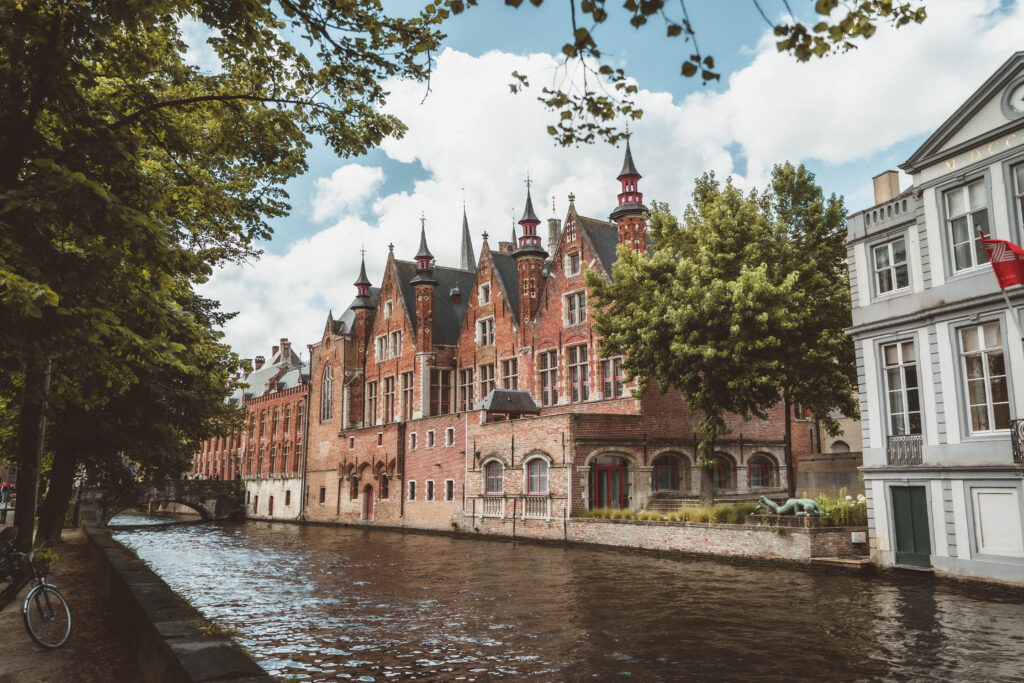
Afterwards, consider climbing the Belfry where you’ll be rewarded with breathtaking views of the city if you climb the 366 steps to the top. You’ll then want to spend an hour or two wandering the town before grabbing some lunch (here are some of the best hidden gems of Bruges).
In terms of lunch, I personally loved visiting That’s Toast, which has an outdoor terrace and plenty of vegetarian options. If you’re looking for a more traditional Belgian meal, then you could check out Belgian Pigeon House pub.
I don’t recommend going on a canal cruise of Bruges as you can do one in Ghent, a city which tends to be significantly less crowded. After a fairly quick tour of Bruges, head back to the train station so that you can hop on a train to Ghent.
The journey between Bruges and Ghent takes around 24 minutes so you won’t have long to sit down before heading out of the train to spend an afternoon exploring Ghent. Once in Ghent, start by heading to St Bavo’s Cathedral.

This 12th-century masterpiece showcases the Adoration of the Lamb (also called the Ghent Altarpiece), a 15th-century polyptych altarpiece that is widely regarded to be one of the most impressive artworks from the Middle Ages.
Afterwards, you’ll want to head to the city centre, where you can stroll around, learn about the story of the little noses, and see highlights such as St Peter’s Bridge and the Patershol neighbourhood.
Next, you’ll want to go on a canal cruise. These boat tours will give you a greater insight into the history of Bruges and Belgium and take just under an hour. Check out more details here. Finish your time in Ghent by heading to Pub de Dulle Griet.
If you’re looking for one of the most unusual things to do in Ghent, it has to be ordering the proef onze max van het huis (‘max of the house’ house beer). After all, even the fact of ordering the drink is a unique experience in of itself.
Not only will you soon discover that the shape of the glass is most unusual (and comes with its own little wooden stand), but that in order to be given your tipple, you’ll need to hand over a shoe, which is then hung over the bar in a little metal cage! The bar is cash only. Proost!

Day 3: Brussels
Of course, you can’t spend several days in Belgium without also checking out its capital city, Brussels, if only for a day. The city is home to the EU Parliament and boasts one of the best Christmas Markets in Europe.
Begin your one day in Brussels by spying Manneken Pis, one of a handful of weeing statues in the Belgian capital (yes, you read that correctly!) Then, walk just a few minutes to reach Grand Place.
This imposing town square is often said to be one of the most beautiful in the world and highlights include the city’s town hall, the Baroque guildhalls of the former Guilds of Brussels, and the former King’s House, which now operates as a museum.

After visiting the Grand Place, you should head to the nearby Royal Passages, which are filled with chocolate shops, boutiques, and even a bookshop (Tropismes) where you can purchase books about Brussels.
For those who enjoy discovering a city from a bird’s eye perspective, a hike up to the Mont des Arts district of the city is an absolute must. The walk from the city centre takes around ten minutes and you can admire the view before heading to the nearby cathedral.
Brussels Cathedral dates all the way back the 9th-century, when a chapel to St Michael likely existed on site. The church you see today was built between the 11th and 15h-centuries, with the twin towers on the front façade having been constructed in 1485. For a nominal fee, you can also pay to visit the crypt, which is one of the lesser-known gems of Brussels.

Skip lunch and go on a food tour instead. If you would prefer to sample both sweet and savoury snacks and learn more about Belgian food over the course of a single tour, then you might consider booking a Private Food Tour with 10 Tastings.
If you happen to be visiting Brussels during the summer, then you can pay to visit the Royal Palace of Brussels for free. End your day the right way by getting to know all about Belgian beers.
The two most famous types of beers from Belgium are the Trappist beers and the Abbey beers. Trappist beers are particularly unique in that they can only be called such if they are brewed in Trappist monasteries.
Good to know
There are different types of waffles to enjoy in Belgium. Whereas the Liege style is created from a thick dough containing sugar chunks, the Brussels waffle is the more uniform rectangular one which you’ll find more commonly outside of Belgium.
Day 4 (and day 5 if you do both options): Leuven & Mechelen or Dinant & Namur
The last day of this itinerary is optional and is for those who have a little more time to spare and wish to venture a little off the beaten path.
There are actually two options for this final day and it depends entirely on what you’re after from your Belgium trip. If you have two days remaining, then you can spend a day in Leuven and Mechlen and a day in Namur and Dinant. If you only want to go to Namur or Dinant, then I have a guide about choosing the best city for you.

The first option is to carry on exploring Flemish Belgium and head to Leuven, a delightful university city with a number of hidden gems, a mouthwatering beer scene, and an astonishing number of beautiful buildings. The other option is to head to Wallonia, which is within the French speaking part of Belgium.
Leuven is a bit off the beaten path but boasts a treasure trove of attractions worth exploring without the same number of crowds as cities like Ghent and Bruges. Start your day by heading to the Grote Markt, the main town square.
This is also where you can see the Gothic town hall. Nearby, St Peter’s Church is a must-see, as are the lovely cobbled lanes of central Leuven. After strolling the streets, you can head to the Leuven Botanical Garden.

Founded as early as 1738, the gardens were founded by the University of Leuven, before Belgium was its own independent nation. Thought to be founded with the intention of growing herbs to be used in a medicinal manner (indeed ‘Kruidtuin’ literally means ‘herb garden’), the garden was then transformed to be used to grow ornamental plants and shrubs for university studies.

You can then have lunch at one of the many cafés in town. One of the coolest places to head to is Oude Markt (Old Market), which is often dubbed the ‘longest bar in the world’ thanks to the fact it has so many bars next to one another.
After lunch, head to the beguinages of Leuven. UNESCO world heritage listed and easily one of the best things to do in Leuven, the grand beguinage of the city is one of the largest in Belgium.
Comprising of a space that covers an impressive 3 hectares in size, the Groot Begijnhof is easily one of the largest beguinages of Belgium and the Netherlands. Afterwards, you can head to the smaller beguinage, which is one of the best hidden gems of Leuven.

If you’re a beer lover, spend the rest of the afternoon checking out one of the city’s many breweries. Stella Artois is actually brewed close to Leuven, and it’s possible to visit the brewery every Saturday.
Those who would prefer to see another town instead of sampling even more Belgian beer can hop on a quick train of under half an hour to reach Mechelen. The town isn’t huge so you don’t need more than a few hours to see all of the major attractions.
Some of the top things to do in Mechelen include the Kruidtuin botanical gardens (which are free to visit), and strolling alongside the picture-perfect boardwalk, Dijlepad.

Dinant is a charming town that is characterised by its pastel hued buildings and is fairly compact, meaning that you can see all that the town has to offer over the space of a half day.
There are unfortunately no direct trains between Brussels and Dinant so you’ll have to switch trains at Namur. What this does mean is that it’s the perfect opportunity to see both Dinant and Namur in a day, and you’ll stop off at Namur on your way back from Dinant.
Begin your visit to Dinant by checking out the Collegiate Church of Notre-Dame de Dinant. This stunning Gothic church that dates back to the 13th century and boasts intricate stonework, as well as beautiful stained glass windows.

Next, take a stroll along the Meuse River, which flows through the city and wandering alongside it offers interesting vantage points of the town. Beer lovers shouldn’t miss Maison Leffe, a museum and brewery that showcases the history and brewing process of Leffe beer.
Take a cable car up to the Citadel of Dinant. Fortified and mighty, the site has been fortified since the 11th-century, though the fortifications you see today were largely constructed during the 19th-century.
You can then head back to the city centre to enjoy lunch at one of the many restaurants. If you’re not tired to Belgian food quite yet, then there are plenty of options to choose from. Le Confessionnal and La planche des saveurs are both well-reviewed options which serve up classic Belgian fare.
After lunch, visit the Saxophone Museum, which pays tribute to Adolphe Sax. The inventor of the saxophone was born in Dinant and today you can learn about his life and the evolution of the saxophone in this cultural hub.

After exploring Dinant, it’s time to hop back on the train and head back in the direction of Brussels, stopping off at Namur en route. Once in Namur, you’ll want to head to visit the citadel of Namur.
This is the crowning jewel in the beauty of the town and dates back to 937, though much of what you see today was created during the 17th-century. After walking the ramparts, head to the city centre where you can shop for Belgium souvenirs and visit the 18th-century Baroque Saint-Aubin’s Cathedral.

Where to stay
If you opt to choose just one city to stay in (so as to avoid having to bring your suitcase everywhere and having to pack and unpack on a daily basis), then I would recommend basing yourself in Brussels for this itinerary as its central location means that you can easily reach everywhere else in a short amount of time. Here are some of our top places to stay in Brussels:
Latroupe Grote Markt: There is no two ways about it: Brussels is quite a pricey city so wherever you stay may well cost more than you are used to. However, one of the more affordable options in town is the Latroupe Grote Markt, which has amenities such as free Wi-Fi and a bar on-site. Check prices and availability here.
Aparthotel Adagio Brussels Grand Place: Those in search of mid-range accommodation when in Brussels should check out this three-star establishment. Highlights include baggage storage and breakfast for an extra fee. Check prices and availability here.
Juliana Hotel Brussels: For an extra luxurious stay during your time in Brussels, consider checking out this five-star hotel. Located on the neoclassical square of Place des Martyrs, this accommodation boasts a spa, indoor pool, and bar onsite. Check prices and availability here.
What to know before visiting Belgium for the first time
What to wear when exploring Europe
In the summer, you can’t go wrong by pairing a cute midi dress with classic white tennis shoes for a laid-back smart casual look that’s just as chic for walking around a city’s cobbled lanes as it is for wandering coastal paths. I love this dress and have it in several colour ways. In terms of tennis shoes, this is my go-to shoe.
When it comes to winter in Europe, most places (with the exception of a few islands) can get pretty cold and so warm layers is a must. I find that cute ankle boots like these ones are the perfect mix of practical meets cute.
Shoulder seasons (spring and summer) in Europe tend to come with a mix of rainy and sunny days and so, again, layers are a must. Trench coats and sneakers are the best uniform to explore the continent in.
Finally, a cross-body bag like these ones is a must. I personally use a crossbody bag by this brand and love its shape, size, and versatility. As well as being convenient and compact, it’s one of the safest ways to transport your valuables, all the while looking chic. I also recommend bringing along a travel adapter like this one so you can charge all of your electronics during your stay!
Enjoyed reading this Belgium itinerary? Pin this article now, read it again later: