
A Free & Self-Guided Pavia Walking Tour in Northern Italy
Last Updated on 24th April 2023 by Sophie Nadeau
This post may contain affiliate links. Please check out my privacy policy for more information.
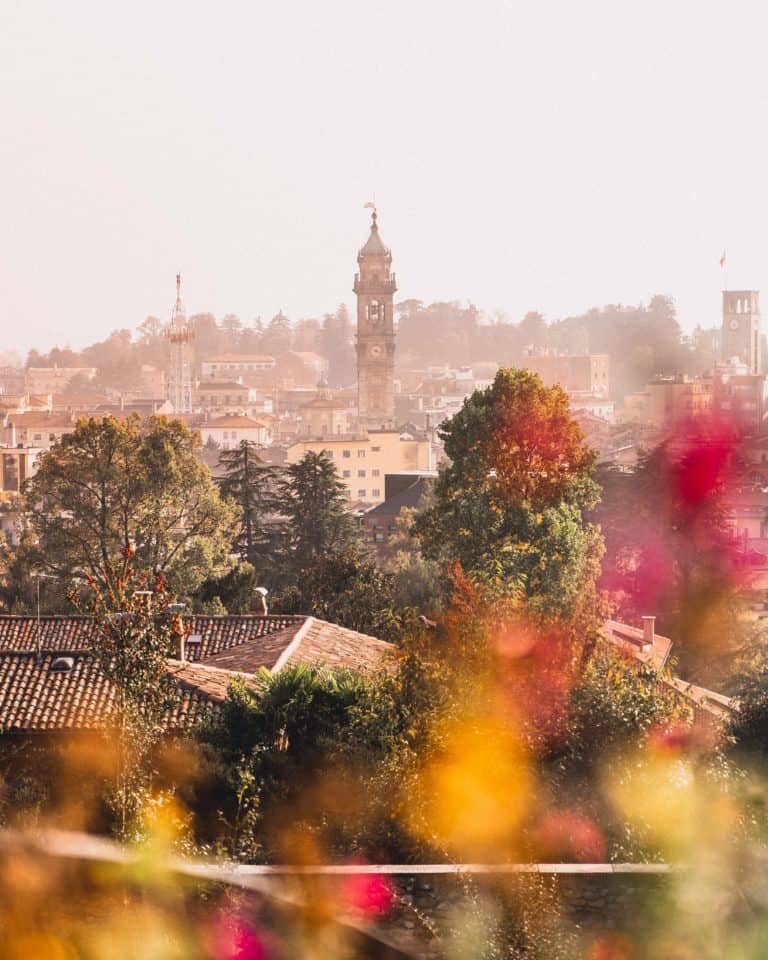
Pavia is an ancient university town characterised by its countless cobbled lanes, various trattorias, and ancient monasteries. As such, the narrow lanes lend themselves to exploring the city on foot. That way, you’ll get more of a chance to peek behind every corner and glimpse down every alleyway. Here’s a free and self-guided Pavia walking tour:


Pavia Walking Tour: Practical Advice, Tricks, and Tips
This walking tour is best attempted on a sunny day when the sun is shining and there’s no better time to explore the city. To make the most of this guided walk, I highly recommend wearing sturdy shoes; the cobbled lanes may be pretty but they’re not so easy to walk on in heels or uncomfortable footwear!
Along the way, you’ll find plenty of churches and other attractions that you’ll likely want to visit. It’s worth noting that almost everything in town is free to visit, so make sure to bring your camera along, and also don’t be afraid to take an extra moment to peek down any extra interesting alleyway you spot on the way.
Walking time: Just 20 minutes! However, you’ll want to dedicate at least a few hours to exploring all the ancient churches, shops, and eateries en route if you follow this self-guided tour of Pavia.
Distance covered: 1.6 km (1 mile)

University of Pavia
Of course, you can’t head to the university town, whose university was first established in the 14th-century, making it the second oldest in Italy, without checking out a few of its ancient buildings dedicated to learning. Dotted in the North of the city, the campus is littered across several ornate buildings, cloisters, and vintage structures.
Elsewhere on campus, the university is home to several museums; including one about the History of the University, as well as a botanical garden filled with diverse plant species.
As some of the museums are open to the public from Monday-Friday, make sure to check the university website prior to your trip if you’re hoping to check out some of their collections.
For more affordable and budget eats in the city, then the university area of the city is where you’ll find them, close to campus!
After all, tucked away in a passageway behind the highest concentration of medieval towers, I enjoyed an incredible full-sized and freshly baked pizza for just €4. Espressos here can be purchased for as little as €1.

Medieval Towers
Surrounding the university part of the city, are a few towering structures dating back to the middle ages. These were once built by the city’s wealthiest merchants and families as a way of showing off their riches.
Today, just a handful of the towers survive, though sadly they’re closed to the public. Instead, you’ll have to admire the red-bricked structures from their exteriors and snap them from afar.

Piazza della Vittoria
The main town square can be found in the very heart of the pedestrianised parts of the city. Filled with ancient buildings and plenty of trattorias where you can enjoy traditional Italian dishes (think oodles of pizza and all the pasta!), it’s well worth a wander through on any trip to the city. If you’re looking for a sit-down lunch, then you’ll find it here in the piazza.

Duomo di Pavia
Rumour has it that Da Vinci himself had a hand in designing this Duomo, with particular regards to the expansive dome, which happens to be one of the largest in Italy.
Characterised by its red brick façade (like many other ancient buildings in the city), the Duomo is quirky in that it was meant to be finished with a marble cladding, but time and money both ran out before the cathedral could be completed!

Il Samova Teashop
On the same piazza as that of the Duomo, you’ll find a bakery which is often cited as the best sweet shop in the city. Right next door to some of the best accommodation Pavia has to offer, Le Stanze del Cardinale, the traditionally Italian teashop of Il Samova serves all sorts of sweet treats; ranging from puff pastry pieces to delicate chocolates.
It’s the perfect place to stop and sip on a coffee, all the while watching life go by in the Piazza del Duomo just outside the front door.

Chiesa di San Teodoro
Although I wanted this self-guided Pavia walking tour to begin with the story of Pavia, it simply wasn’t possible geographically! That being said, your first true glimpse of how Pavia was once one of the most important cities in the Lombardy region during the 16th-century can be found in the form of a fresco at the back of the ornately decorated San Teodoro.
Here, a depiction of the city of a hundred towers can truly be seen in all its glory, complete with fortified walls, and of course, the red-bricked Castello Visconteo.
Elsewhere in the ecclesiastical building, which dates all the way back to the twelfth century, there are frescoes depicitng the lives of the Saints San Teodoro and Saint Agnes.

Basilica di San Michele
The most important ecclesiastical building in the city is not its impressive cathedral. No? I hear you ask. No, instead it’s the Basilica di San Michele, which was where both Charlemagne and Barbarossa were crowned as Kings of the Kingdom of Lombardy.
Today, its interior offers some of the most beautiful frescoes to be found anywhere in the city, including an underground crypt filled with reliquaries.

Ponte Coperto
Sadly, the medieval covered bridge which spans the River Ticino was badly damaged and pretty much destroyed during WWII. However, a perfect replica is now in situ, bridging the gap between old and new, and making this the perfect spot to finish this self-guided Pavia walking tour.
Following your tour of the city, why not take a trip 8 km North to see the stunning monastery, Certosa di Pavia? Often said to be the most beautiful example of Renaissance architecture in Northern Italy, it’s free to visit and is well worth the few euro train fare to reach it.

Things to know before visiting Pavia for the first time
If you’re visiting Italy from the USA, UK, Canda, and a plethora of other countries, then you should know that you’ll need to bring along a travel adaptor. I recommend this all-in-one travel adaptor that will allow you to use your electronics in over 150 countries!
Another thing worth purchasing before your visit to Pavia is a basic Italian phrasebook. While many people in Pavia speak English, it’s always worth having an Italian word guide to hand! Some of the best day trips from Pavia include visits to Milan, Genoa, and the nearby Certosa di Pavia.
When making a trip, Pavia couldn’t be easier to reach from the larger cities of Genova or Milano. And though the city is certainly less busy than other Northern Italian towns, be sure to book your stay well in advance in order to secure the best rates. Check the best accommodation prices here.
If you’re looking for even more inspiration about the boot-shaped country, then be sure to check out our best travel quotes about Italy. And if you need to know more information before heading to the South of Europe, check out our top Italy travel tips.
Enjoyed reading this self-guided Pavia walking tour? Pin it now, read it again later: