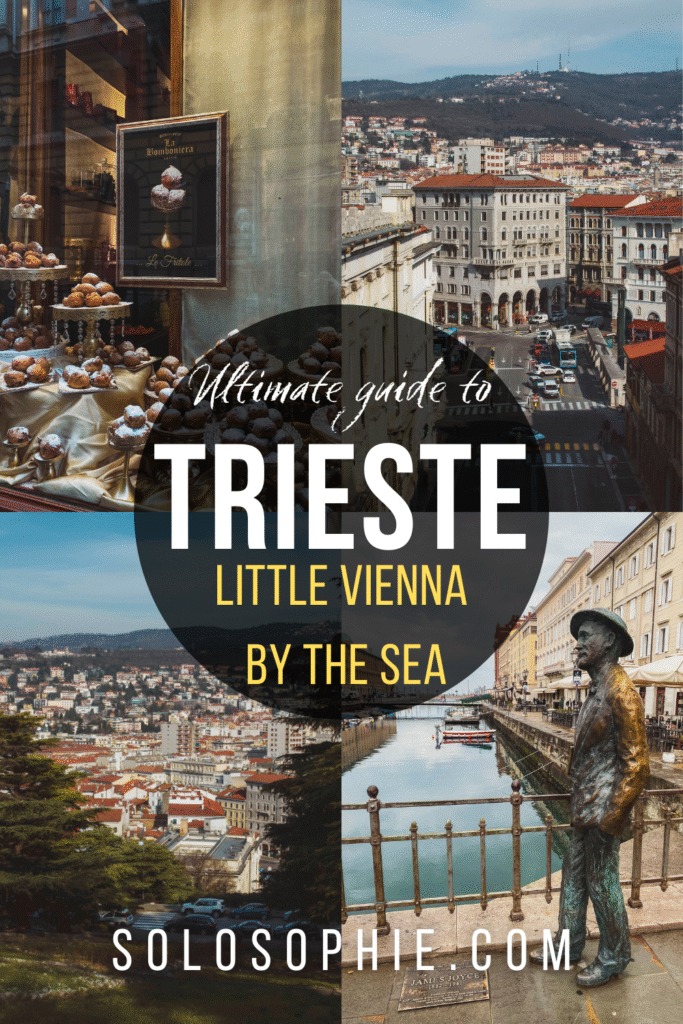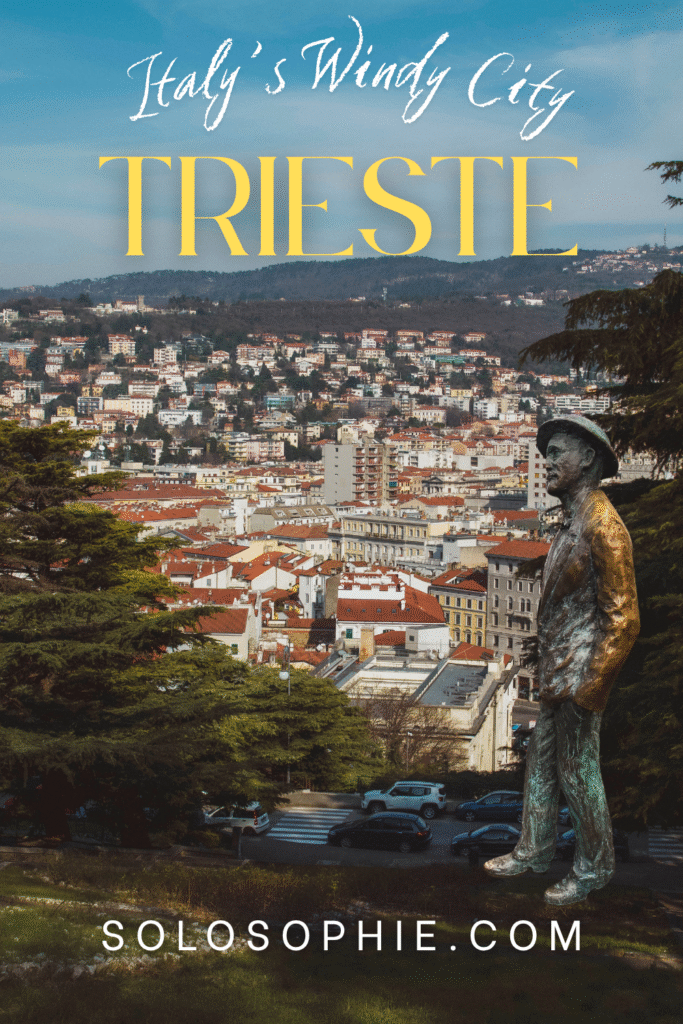
Your Ultimate Guide to Trieste: Little Vienna by the Sea
Last Updated on 26th June 2025 by Sophie Nadeau
This post may contain affiliate links. Please check out my privacy policy and disclosure for more information.
Trieste is an Italian city you’ve likely never heard of. Tucked away in the northeastern corner of the boot-shaped country, this rich historical seaport settlement is best known for its gust of wind, “La Bora,” and its vibrant literary heritage.
With its regal architecture, thriving coffee culture and central square that’s spacious enough to accommodate a small army, it’s no wonder this city is referred to as “little Vienna by the sea”. Here’s your ultimate guide to the best things to do in Trieste!
Contents
- Where is Trieste?
- Is Trieste, Italy worth visiting?
- A brief history of Trieste
- Best things to do in Trieste
- Unity of Italy Square
- Canal Grande & Borgo Teresiano neighbourhood
- The Literature Museum
- James Joyce Statue
- Get a pastry from Pasticceria La Bomboniera
- Sample local coffee
- Trieste Cathedral
- Visit The Wind Museum
- Indulge in local cuisine
- Spy out Roman ruins
- Stroll through Parco della Rimembranza
- Walk along the port area
- Castle of San Giusto
- Temple of Monte Grisa
- Head to Beach Barcola
- Day trip to Venice
- Day trip to Slovenia
- Where to stay in Trieste
Where is Trieste?
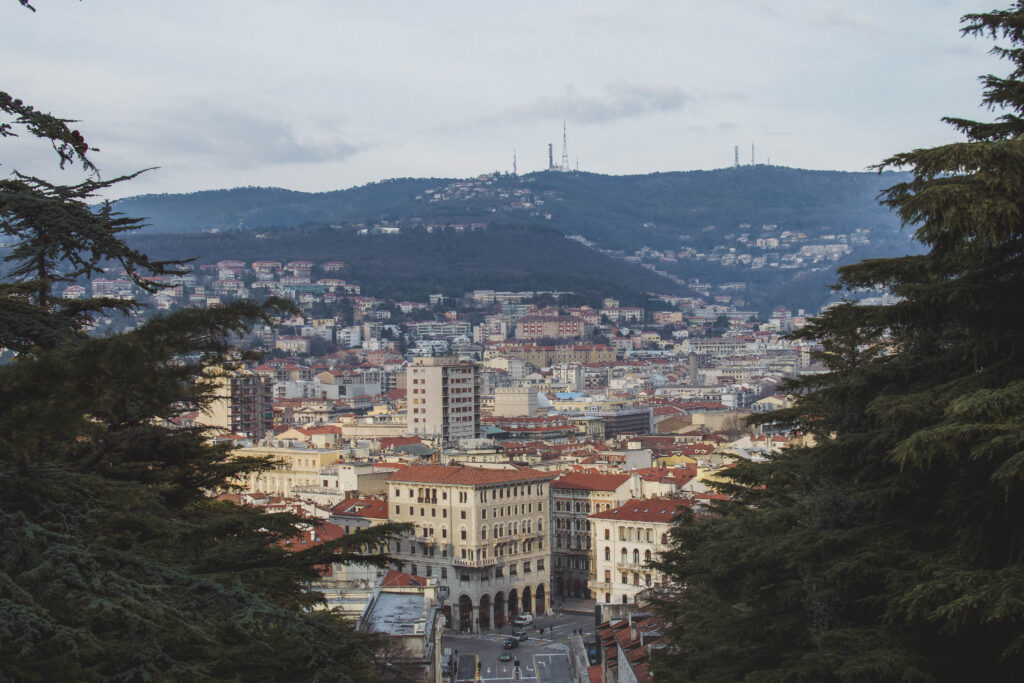
Trieste is tucked away in the northeastern corner of Italy at the end of the Adriatic. It lies on a narrow strip between the Adriatic Sea and Slovenia.
Is Trieste, Italy worth visiting?
Truth be told, I wouldn’t go out of my way to visit Trieste alone, but rather as a trip where you’re visiting multiple locations in the near vicinity. While the city is pleasant and has plenty to offer, it still feels more like an “up-and-coming” destination.
A brief history of Trieste
Trietse holds an interesting history, melded by its unique blend of cultures and influences. It was originally a Roman settlement known as Tergeste, and, thanks to its location, it became an important port and trading hub under Roman rule. During the Middle Ages, Trieste emerged as a maritime rival to its neighbour, Venice, and briefly fell under Venetian control before coming under the Patriarchate of Aquileia.
During the 18th and 19th centuries, Trieste was part of the Austro-Hungarian Empire and became a vital free port. After the end of the First World War, Trieste was annexed by Italy and became part of the Italian Kingdom. Despite this, the city remains defined by its vibrant character and blend of cultures, where Italian, Slavic and Central European cultures continue to thrive!
Best things to do in Trieste
Unity of Italy Square
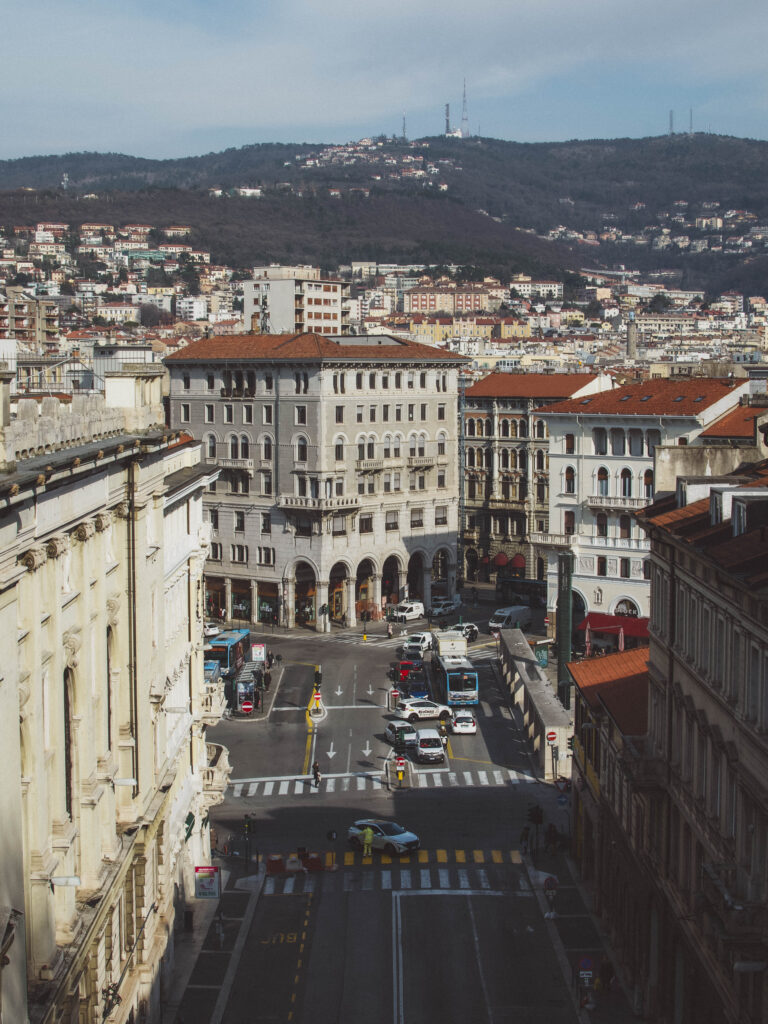
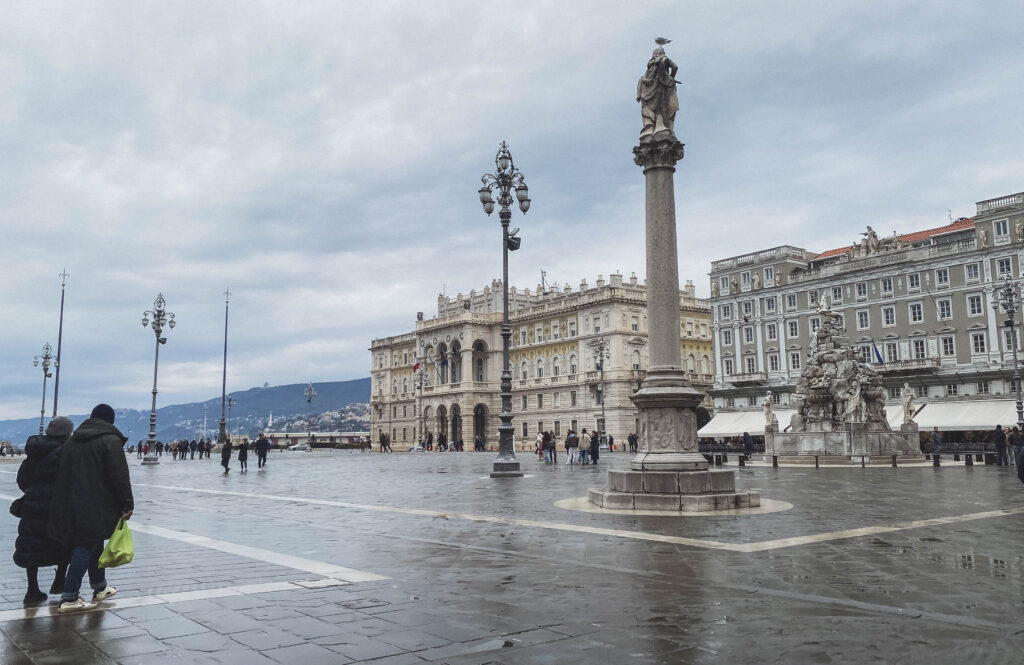
Piazza Unità d’Italia, as it’s known in Italian, is the main square of Trieste and is often said to be Europe’s largest square, located next to the sea. This grand expanse is a central point of the city where anything from concerts, protests, to visits of foreign heads of state and meetings occur.
The Grand Trieste City Hall looks out onto the expanse of the square, its neoclassical elements and prominent clock tower reflect that of the Austro-Hungarian period during which it was built.
Canal Grande & Borgo Teresiano neighbourhood
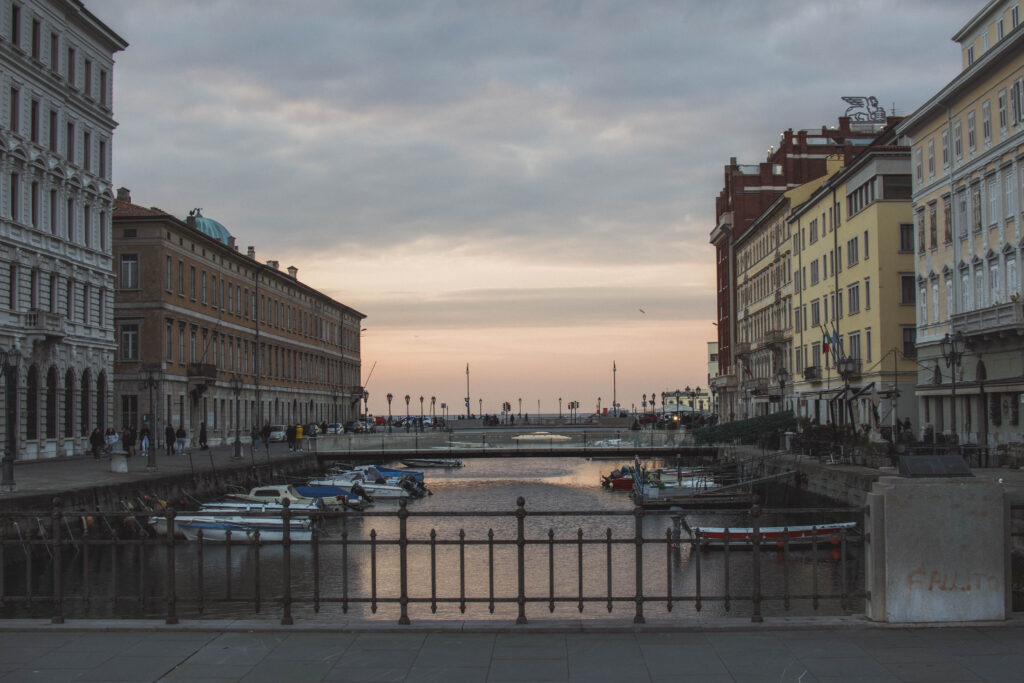
Canal Grande slices through the heart of Trieste and serves as a charming centrepiece of the city, capturing its soul and reflecting its maritime past. Built between 1754 and 1756 by Matteo Pirona, a Venetian architect, the canal played an integral part in the building of Borgo Teresiano, as it allowed for boats to unload materials and goods directly into the city.
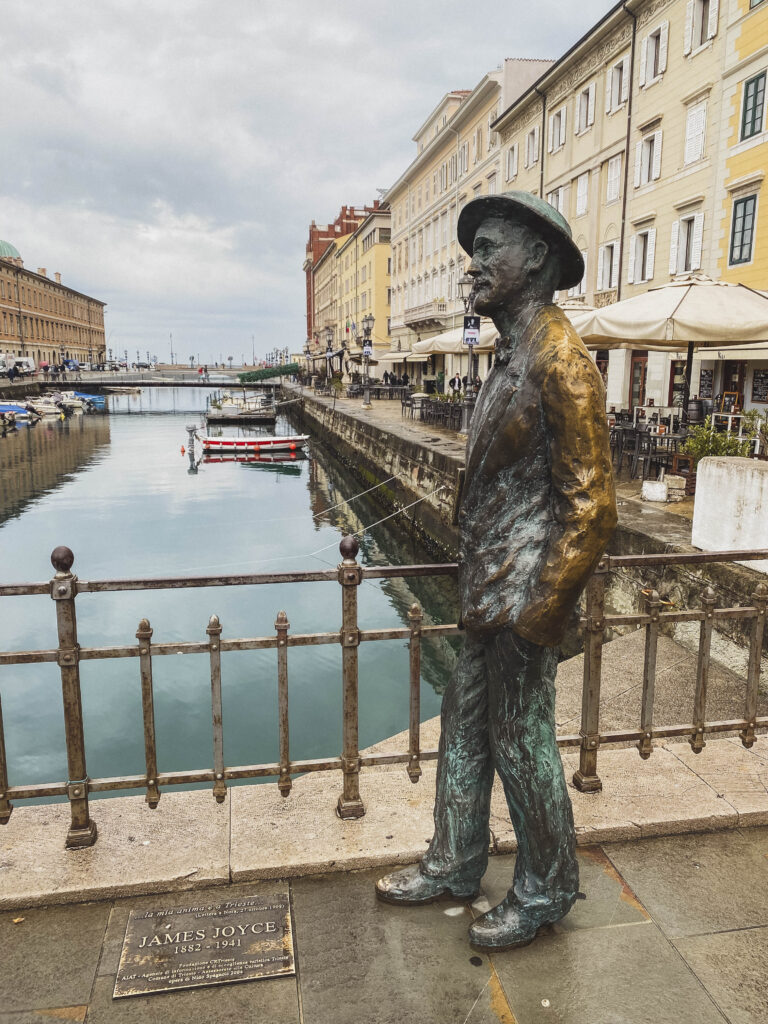
Today, the promenade is lined with elegant pastel coloured buildings, bustling cafés, and is a great spot for locals and visitors alike to gather at the banks and sip on coffee. It’s also where you can spot James Joyce traversing one of the three bridges that cross the small canal, frozen in time as a bronze statue.
The Literature Museum
Trieste has long been a haven for literary minds. While James Joyce is the city’s most famous literary connection, he wasn’t alone; writers such as Italo Svevo, Umberto Saba and many more also found inspiration here.
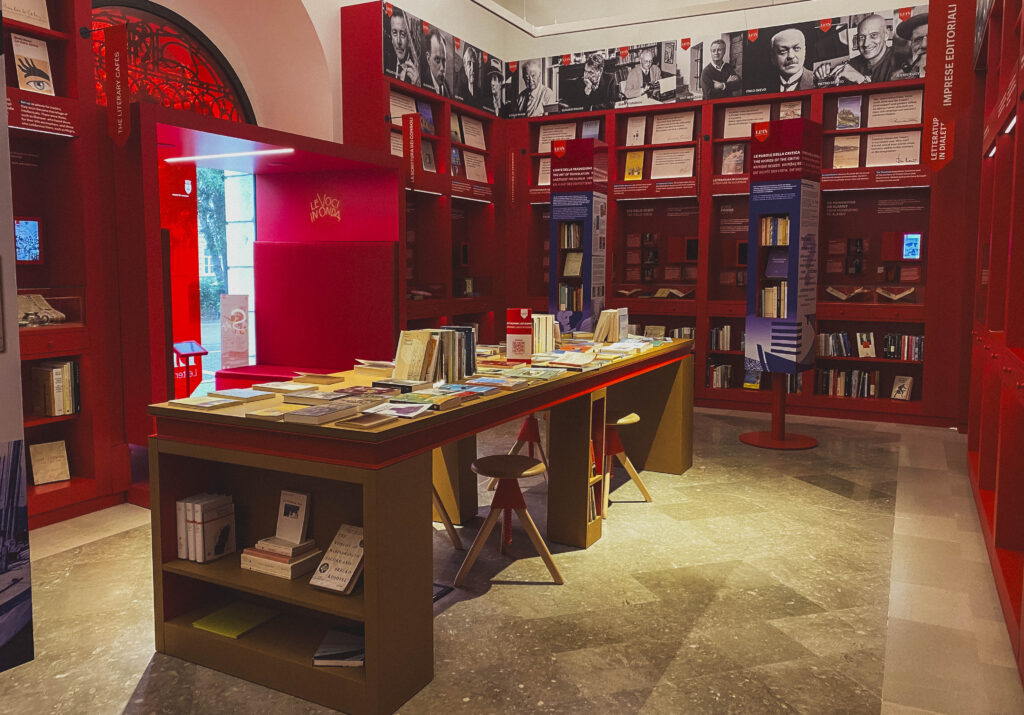
In September 2024, the LETS Museum of Trieste Literature was opened to celebrate the city’s rich literary heritage. This cultural gem is both interactive and immersive, accessible to even the more casual of readers. The displays are built up of books, magazines and written articles in all kinds of languages, and visitors are welcomed to pick up and leaf through the literature that has had a pivotal role in shaping Trieste’s identity.
There are also permanent exhibitions dedicated to James Joyce, Umberto Saba, and Italo Svevo. The museum is completely free to visit.
James Joyce Statue
Joyce’s legacy is deeply felt (and celebrated) in Trieste, with markers of his time here scattered throughout the city. Perhaps the most tangible glimpse of him is the bronze statue, frozen in time, on a bridge that goes across Canal Grande.
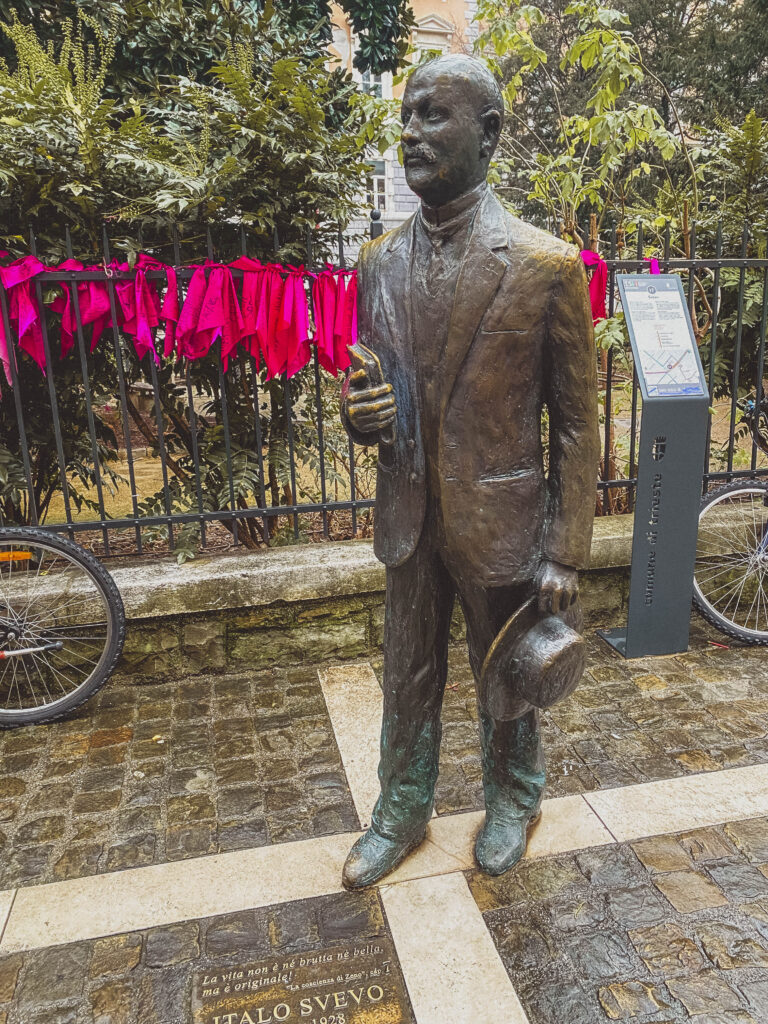
A touching tribute to Joyce’s dear friend, Italo Stevo, can also be found in the form of a bronze cast statue near the Literature Museum.
Get a pastry from Pasticceria La Bomboniera
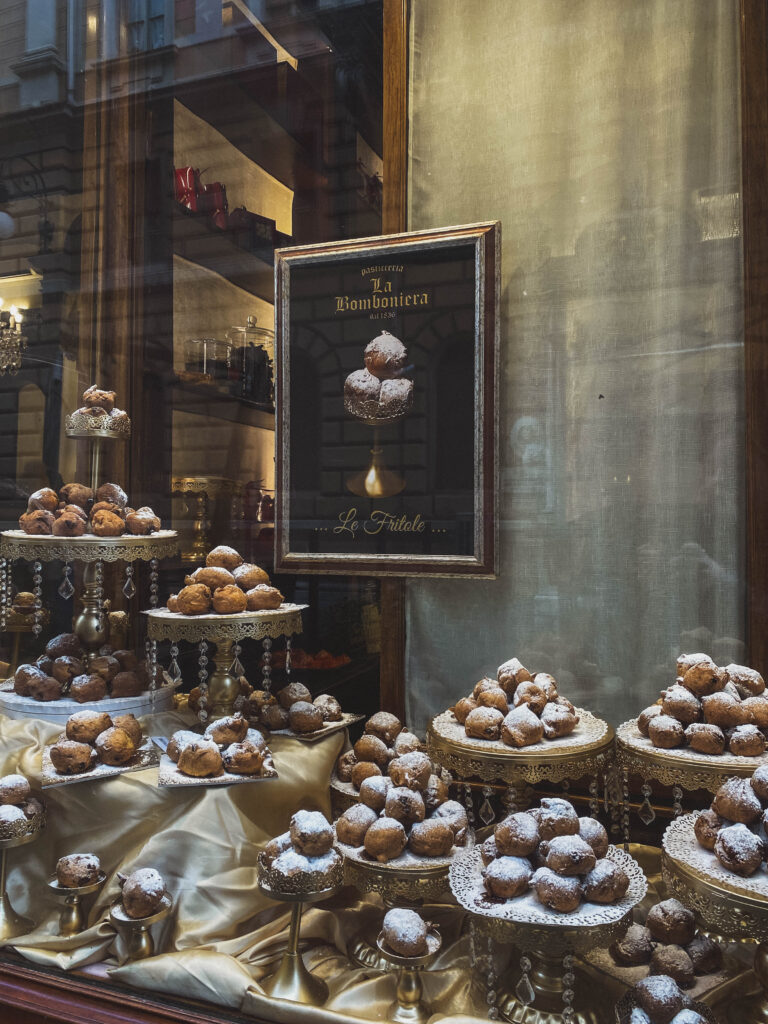
Pasticceria La Bomboniera is the perfect place to indulge in the city’s Austro-Hungarian heritage. This pastry shop is decorated in the Art Nouveau style and has remained virtually untouched for over a hundred years. Dating back to 1836, this timeless corner of Trieste is where you can find delectable delights that are still baked in a traditional wood fired oven.
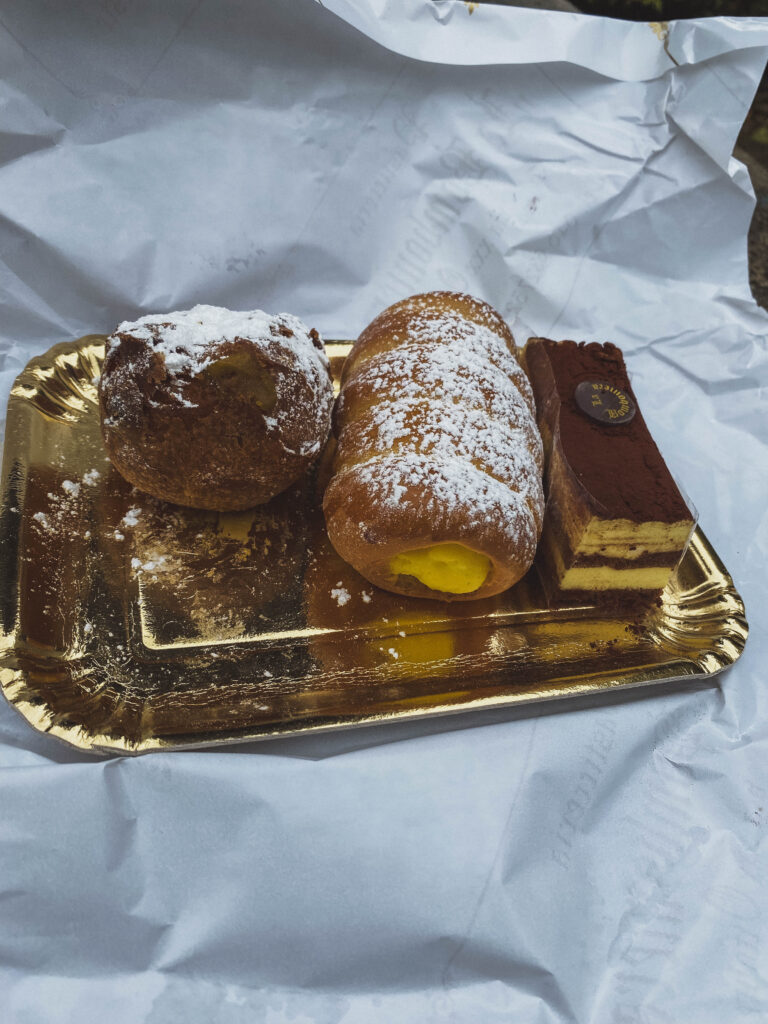
When you visit here, be sure to purchase a Fritole – a classic fried doughnut that originated in Venice during the period of Carnival in February. When we went, they had several fritole filled with all kinds of flavours – the one with pistachio cream is delicious!
Sample local coffee
Trieste is widely regarded as the coffee capital of Italy, thanks to its unique blend of cultural influences. Indeed, it’s said that on average, a Triestini drinks twice as much as their fellow countrymen!
The city joined the coffee trade in the 18th century after its port was declared tax-free under Austro-Hungarian rule. Coffee began arriving from the Ottoman Empire, and before long, Trieste was supplying beans to cafés across the empire, including Vienna’s iconic coffee houses.
Today, the coffee culture is immediately felt upon visiting Trieste, thanks to its sprawling cafés that stay bustling outdoors even during the coldest winter months. A favourite order that’s often made by locals is a capo in b: a mini cappuccino served in a glass.
Trieste Cathedral
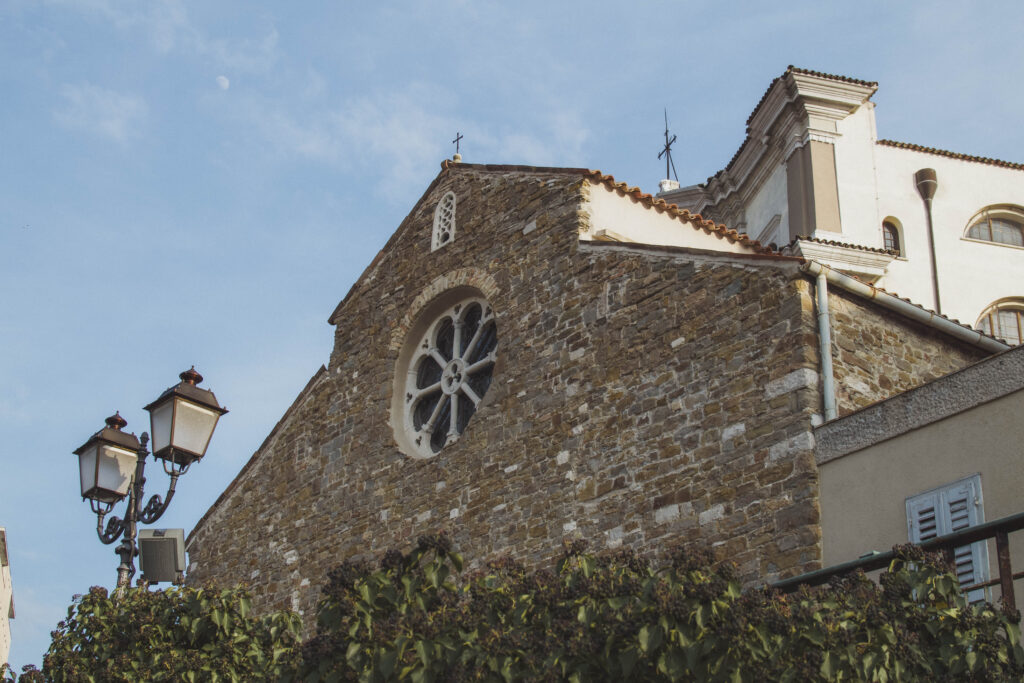
Trieste Cathedral is dedicated to Saint Justus, and it was consecrated in 1385. Perched on San Giusto Hill, the ecclesial building is known as Basilica cattedrale di San Giusto Martire in Italian and is a combination of Romanesque and Gothic architectural styles.
From the facade, the basilica is characterised by a beautiful Gothic rose window, and the interior is decorated with intricate Byzantine-Ravenna inspired mosaics. Inside, you’ll also find the Chapel of the Treasure, which houses significant relics from the 13th century such as the reliquary urn of Saint Justus and the Battuti crucifix.
The cathedral is also home to Trieste’s emblem and symbol, the halberd of Saint Sergius. According to legends, this weapon miraculously fell from the sky into the city on October 8, 303, the day the holy soldier was martyred in Syria.
Visit The Wind Museum
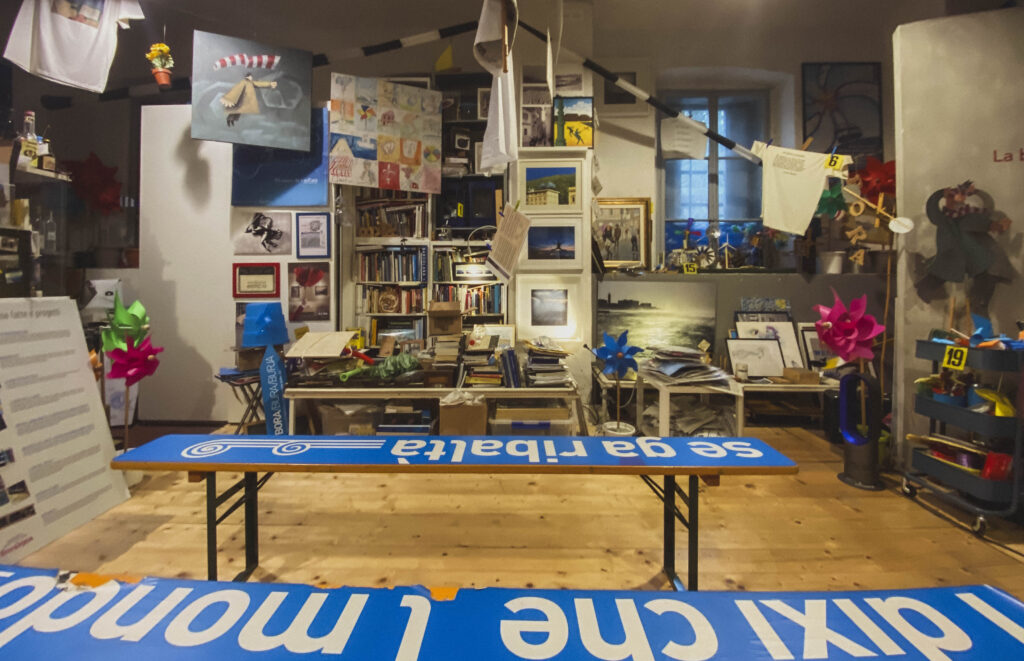
When visiting Trieste, a friend mentioned to us that we had to visit the Wind Museum, or as it’s known officially Bora Museum. And trust me when I say, this is probably one of the most unusual and surprising places I’ve ever been to, and should be a priority to anyone who visits Trieste!
Museo della Bora is visited by appointment only. You have to email to visit this curious space, which feels somewhere between a laboratory and an art exhibition, with all things dedicated to the research and understanding of the local wind known as La Bora.
We booked our visit, and on the day, we turned up at an inconspicuous address where our enthusiastic tour guide awaited. Two more visitors from Milan arrived (our guide noted they were lucky to be let in without a booking) and then our 45-minute whirlwind journey into the history of La Bora began.
The museum is crammed with art inspired by La Bora, countless graphs and charts documenting the wind, instruments used to monitor the strong gusts, and most interestingly, tiny bottles of wind sent by visitors from across the globe. A personal favourite was the captured wind from Russia, contained within a mini vodka bottle.
It should be noted, while this museum is free to visit (including the tour), it runs based on donations, so they are always appreciated. See the official website here to book.
Indulge in local cuisine
When in Italy, the most obvious choice for any visit is to sample the mouthwatering delights of the local cuisine. Trieste’s cuisine, in particular, is a vibrant blend of Italian, Balkan, and Austro-Hungarian influences. This means you can expect anything from the classic pasta and pizza dishes, to more hearty and robust dishes like goulash, meat accompanied with sauerkraut or foods like Ćevapi (Serbian-style grilled sausage patties).
The best place to sample Serbian (and generally Balkan) food in Trieste has to be Rustiko. This charming gem of a restaurant is full of character, parts of the floor are glass, revealing the foundations of previous stone architecture, and the food is hearty and delicious!
Spy out Roman ruins
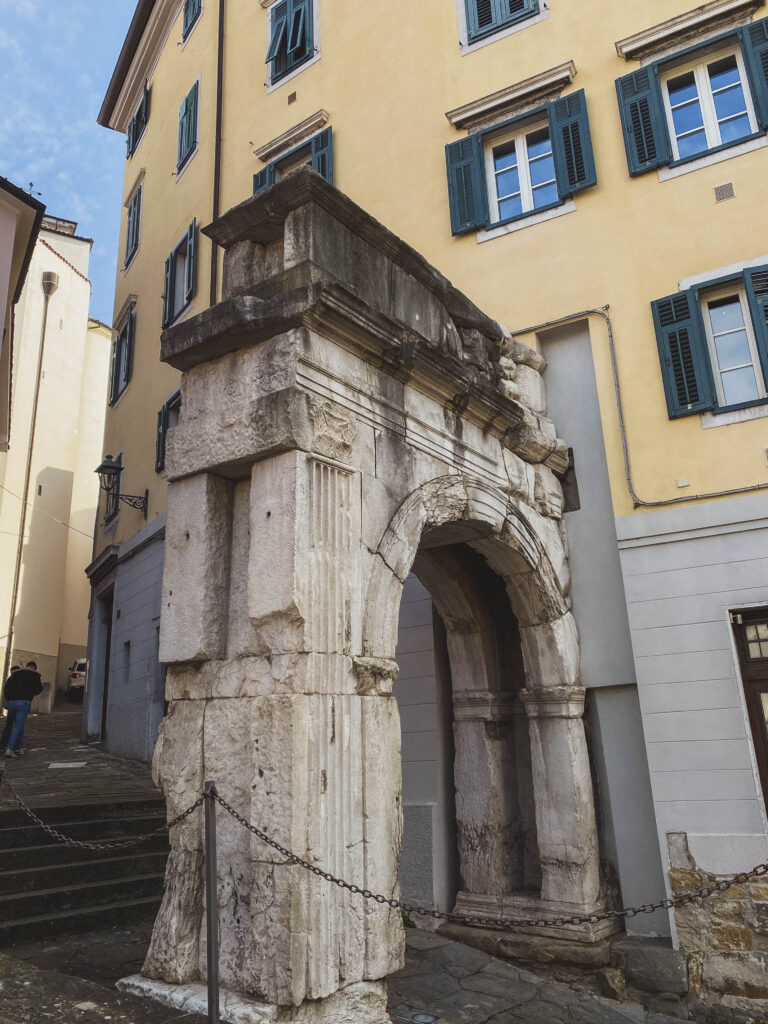
Trieste’s strategic geographic location made it a valuable destination. It’s for this reason that it became a Roman colony during the time of Julius Caesar, who knew of the settlement then by its ancient name, Tergeste. Today, the city’s Roman past can still be traced through the remnants of ruins that lie scattered throughout.
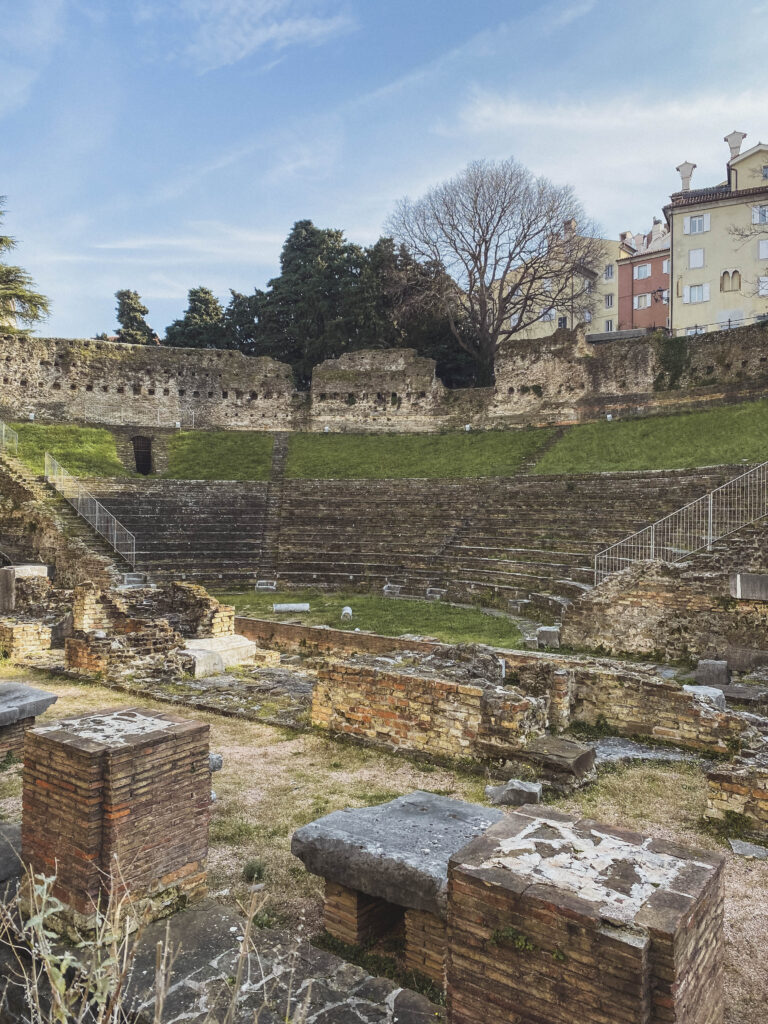
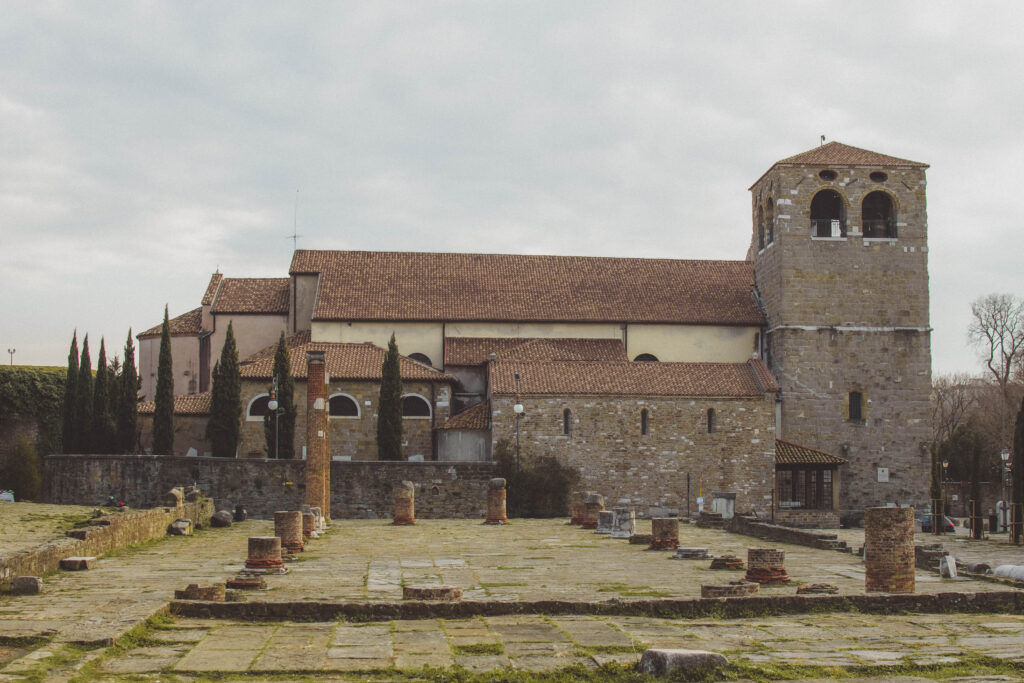
One of the most striking and well-preserved sites is that of the Roman Theatre (Teatro Romano di Trieste), which can be found nestled at the foot of San Giusto Hill. This open-air amphitheatre dates back to the 1st & 2nd centuries, and it’s still used occasionally for performances today. Nearby, there are fragments of Roman walls, arches, mosaics, and artefacts housed in the Civico Museo di Storia ed Arte.
While the Roman ruins of Trieste aren’t quite as impressive as those of Florence or Rome, it’s still fascinating to catch a glimpse of the city’s past through the smatterings of remains that hide throughout.
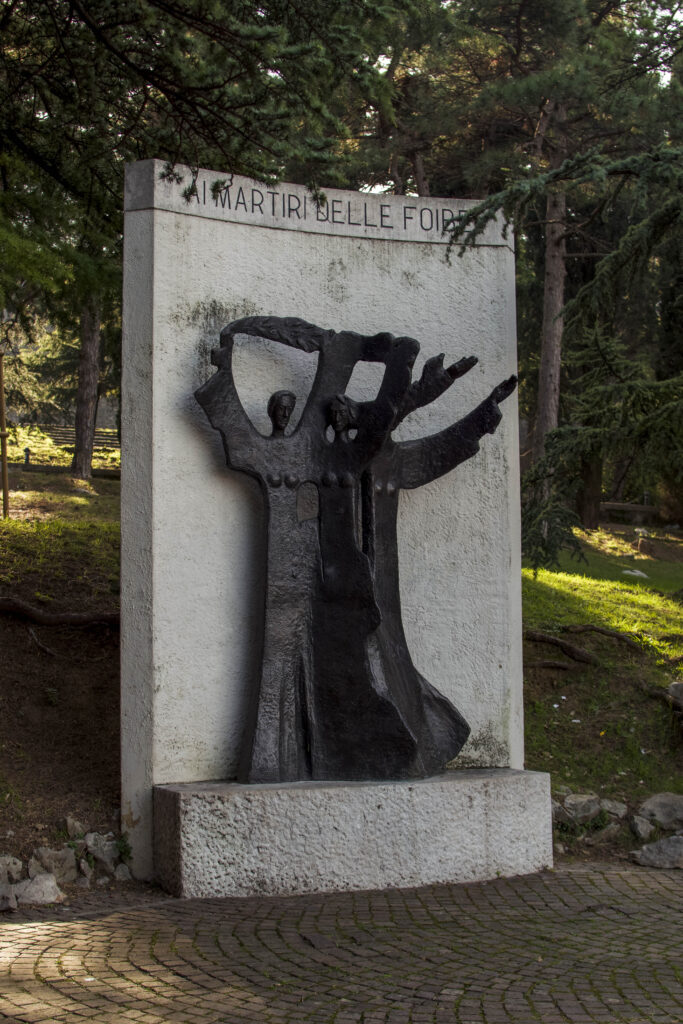
Stroll through Parco della Rimembranza
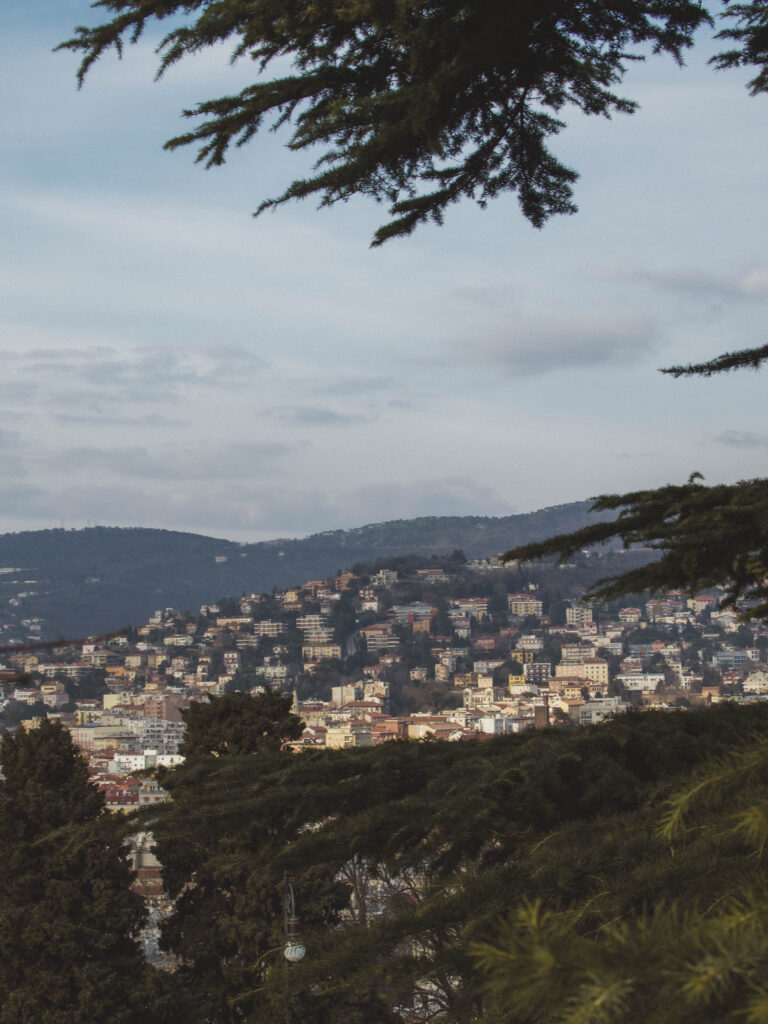
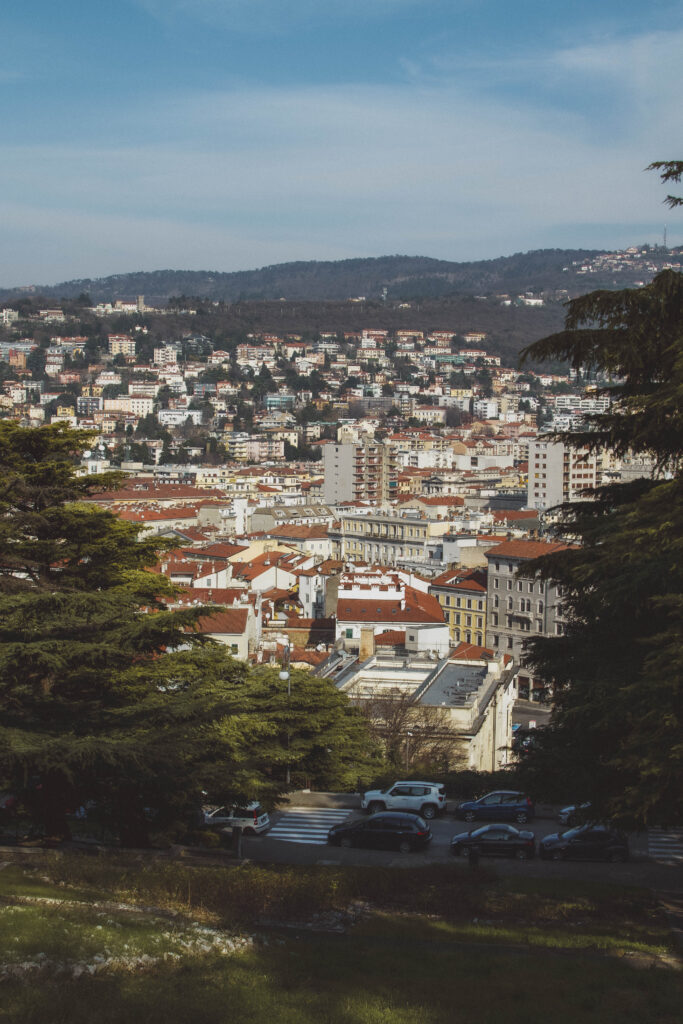
The Remembrance Park sits atop the Hill of San Giusto, offering sweeping views overlooking Trieste and the mountains that surround it. The peaceful green area is home to a series of karst stones, which have been engraved with the names of Triestini lost to wars.
The park dates back to 1926 and is beautifully laid out, offering a solemn and sacred atmosphere amongst nature; a quiet, calm away from the hustle and bustle of the city centre.
Walk along the port area
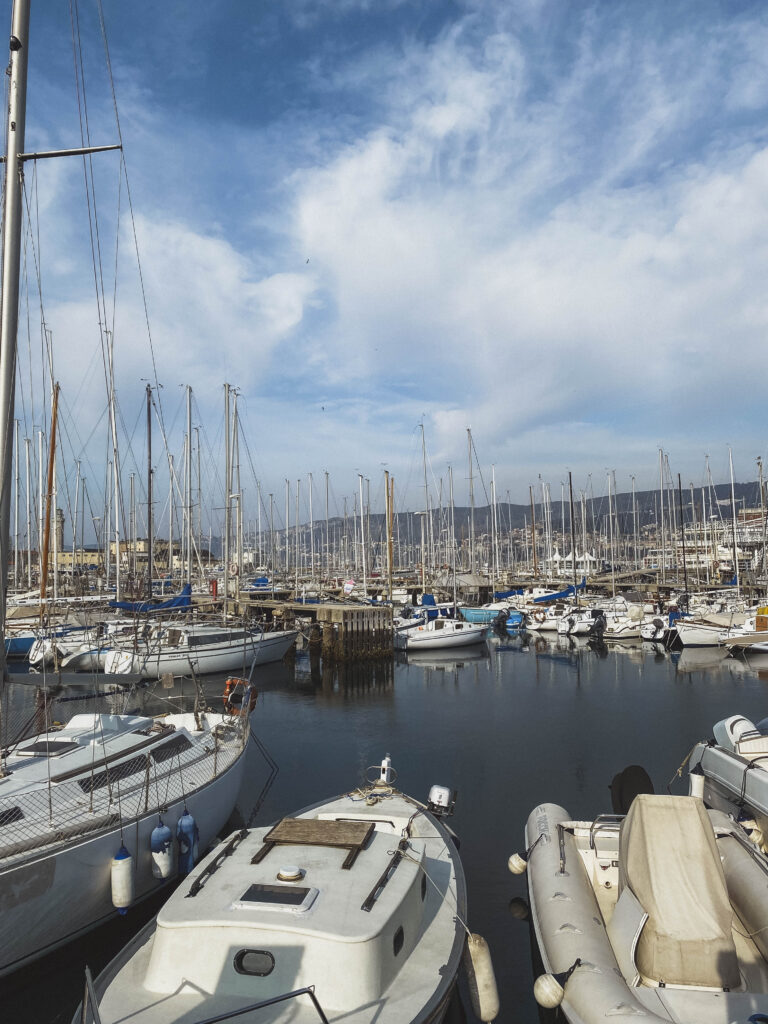
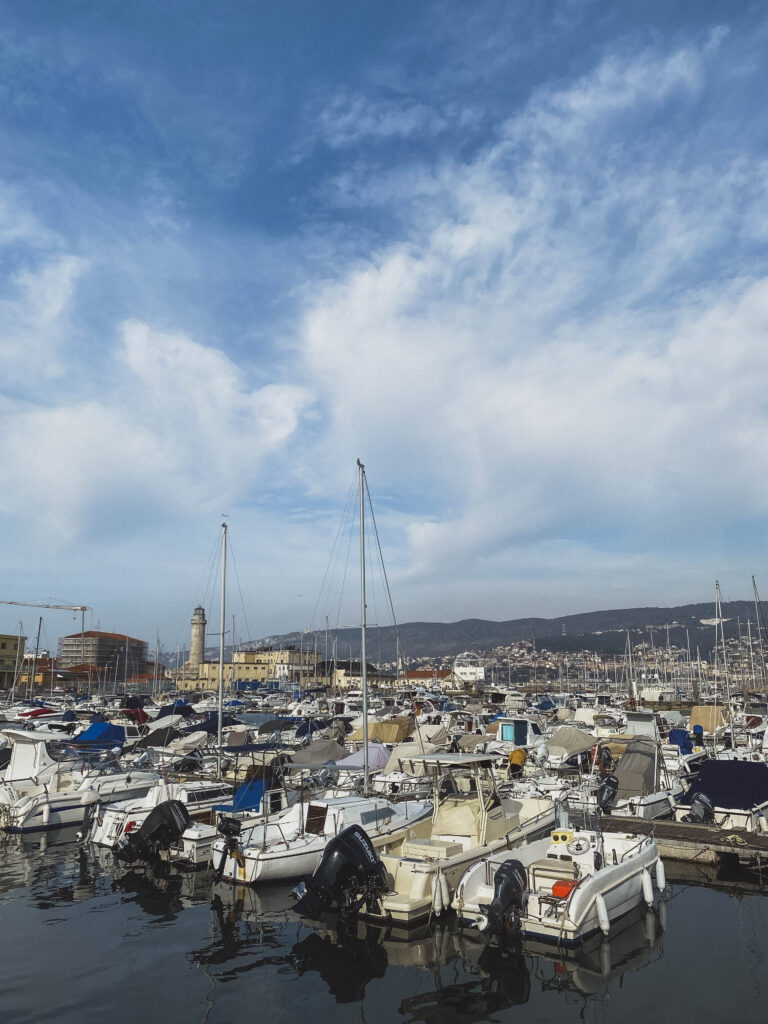
The Port of Trieste is more than just a gateway to the Adriatic; indeed, it’s considered the most important commercial port in Italy, with a trade volume of up to 62 million tonnes! The city’s port dates back to Roman times, and this very day, it remains one of the busiest and most strategically placed ports in Europe, linking Central Europe to global shipping routes.
Stroll around the area and spy out fishing and sailing boats, and take a moment to soak up the city’s history and identity that is so rooted and shaped by this quaint port area. Here, you’ll also find a number of cafés and bars that line the waterfront. No matter what time of day, I can guarantee you’ll see clusters of Italian men with red wine in hand and a small cloud of cigarette smoke lingering above them.
Castle of San Giusto
The Castle of San Giusto sits atop a steep hill, overlooking the city and sea beyond. Built between the 15th and 16th centuries, the fortress was designed to defend Trieste from invasions. Today, the castle remains well preserved and houses an interesting collection of historical artefacts, medieval weaponry, and art that tell of the city’s storied past.
This was definitely one of my favourite spots in Trieste (despite the steep climb) as it offered almost 360 views of the city and allowed for a chance to soak up the gulf and its hinterland in all its glory.
Temple of Monte Grisa
Although we never visited, this intriguing architectural structure can be seen from miles away, and at every viewpoint in Trieste, it stands out. The National Shrine of Mary Mother and Queen, as it’s officially known, is a Roman Catholic Church that sits at an altitude of 300 meters on the mountainside of Mount Grisa, just outside the city centre.
The triangular structure was designed by Professor Antonio Guacci, and its elaborate design is said to evoke the shape of an ‘M’ as a symbol of the Holy Mary. Despite its Sci-fi appearance, the ecclesial building was constructed sometime between 1963 and 1965. The temple can be visited (if you have a car) and it boasts stunning vistas overlooking Trieste and its gulf.
Head to Beach Barcola
While Trieste isn’t renowned for its sandy beaches, its coastal setting means there are still a few great places to catch some sun and swim in the Adriatic. Barcola Beach is surrounded by a wooded area, offering plenty of shady respite from the Mediterranean heat.
You’ll need to use public transport or a car to visit the beach as it’s a little further out from the city centre. There are a few eateries nearby which are open during the summer months. It should be noted that, as this is the closest beach to Trieste, it can get fairly busy, so if you are visiting during peak season be sure to get down early to ensure a spot.
Day trip to Venice
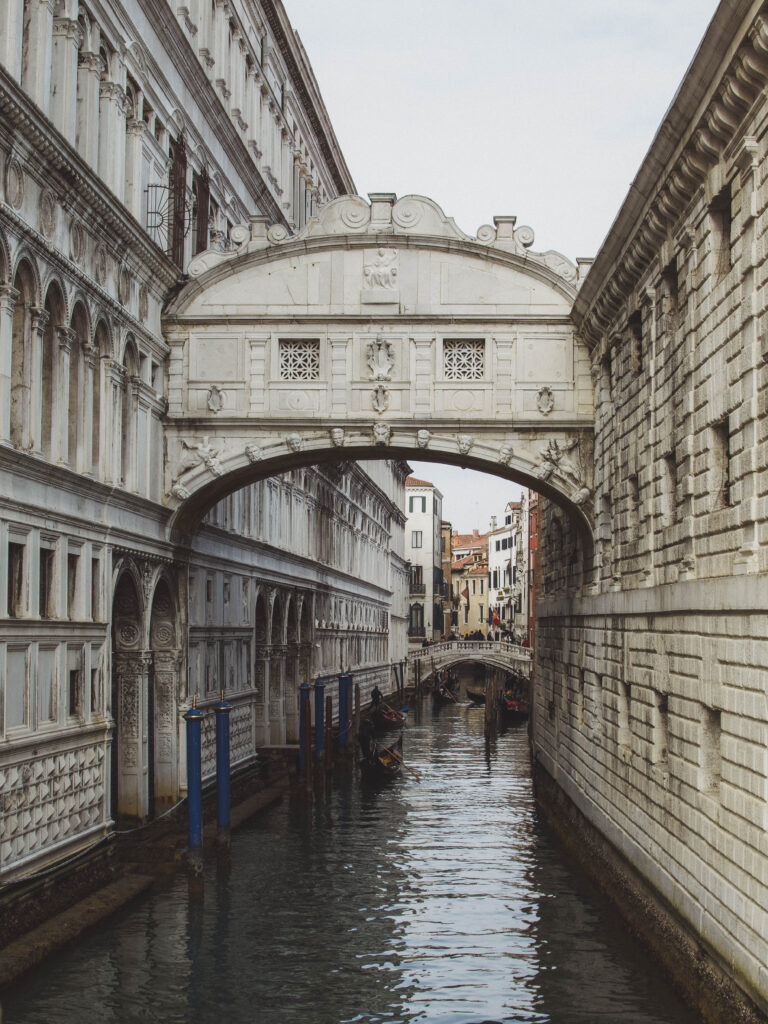
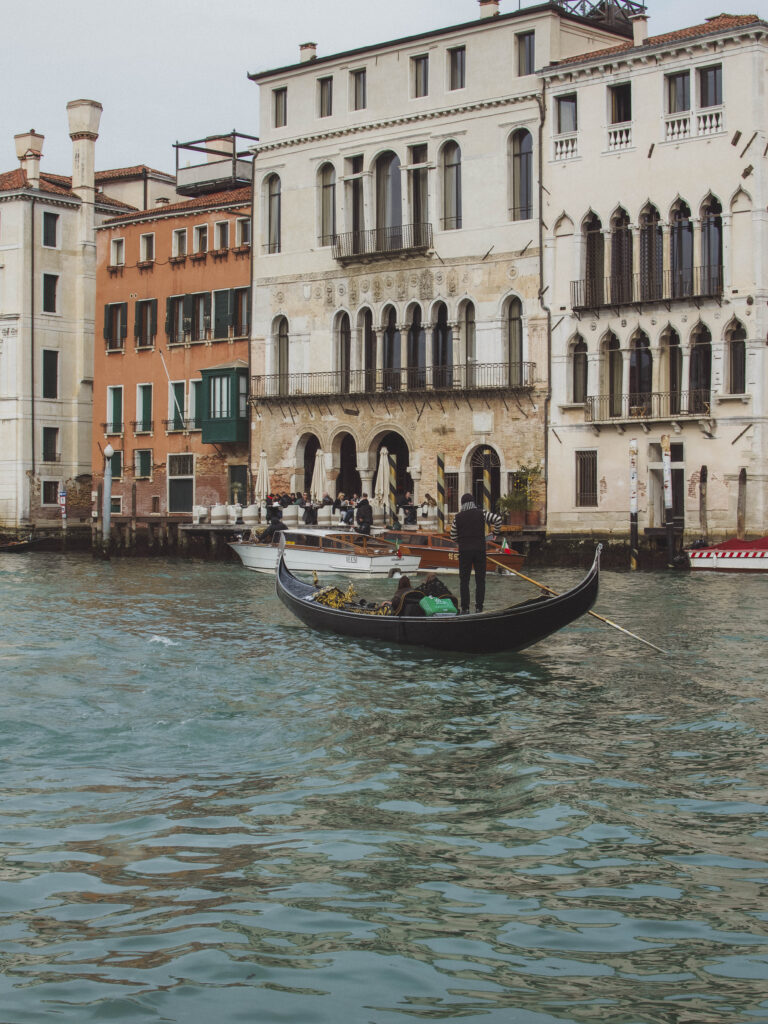
We had three days in Trieste, and as the city is quite small, we decided to take advantage of the fact that Venice was merely a 2-hour bus ride away. You can also take the train, but the Flixbus option for us felt the most convenient at the time.
For the bus, there are 11 services per day running between Trieste and Venice, allowing for a full day of exploring in the City of Water. Conversely, this also means that you can easily visit Trieste as a day trip from Venice.
When in Venice, you can enjoy all the delights on offer without the pressures and cost of paying for a night’s stay in one of Italy’s most expensive cities.
To really soak up the Venetian charm like a local, I recommend getting lost in the winding streets and canals, grabbing a Campari spritz and a bite-sized sandwich, then visiting a few art galleries, and be sure to stop at Saint Mark’s Basilica too.
Day trip to Slovenia
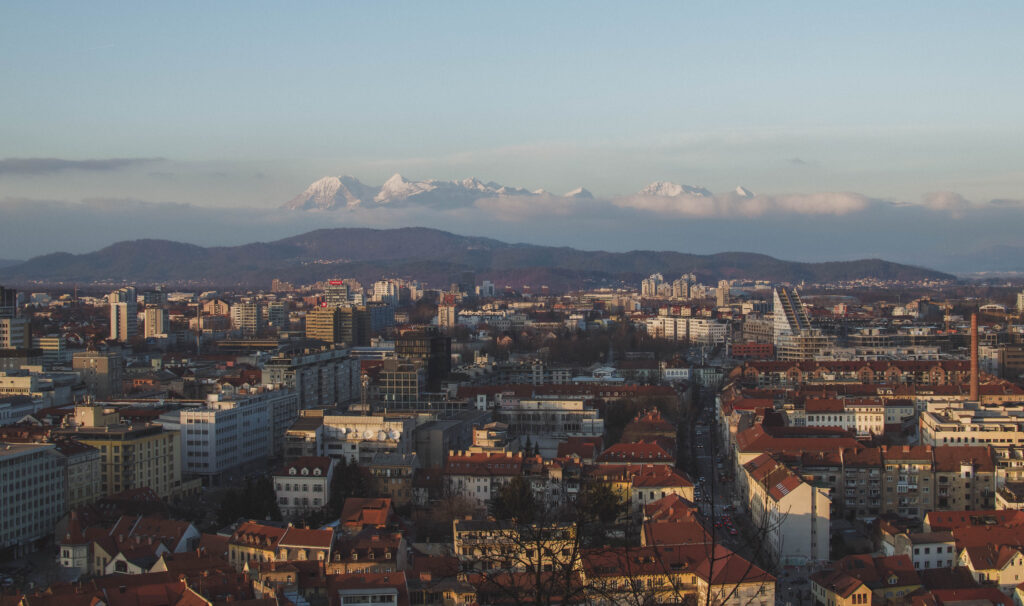
Thanks to its proximity to Slovenia, one of the best and easiest day trips from Trieste is a visit to Ljubljana, the country’s capital city. There are around 4 trains per day running between Trieste Centrale and Ljubljana, though it should be noted that some trains are faster than others. The quickest train takes around 2.5 hours, but the longer ones can take up to 6 hours.
Once in Ljubljana (pronounced: loo·bee·aa·nuh), you can get a taste for Slovenian culture, explore Balkan culture, feast on local cuisine, and delve into the city’s historical sights like Ljubljana Castle and the rose coloured Cathedral of Saint Nicholas.
Where to stay in Trieste
I recommend staying in the Città Vecchia (old town) area of Trieste; this way, you’re within walking distance to the main attractions and sights, as well as cafés and restaurants. That being said, Trieste is a very walkable city, so it’s fairly easy to navigate even if a little further out. Here are a few suggestions of where to stay (based on web-reviews):
(Budget) Hotello Hostel – This is for the ultimate budget stay in Trieste (and where we stayed), while I wouldn’t recommend it for anything but basic, the location was convenient and it was very reasonably priced. That being said, we got a private bedroom & bathroom, which I highly recommend if travelling in a couple/group of friends. Check prices and availability here.
(Mid-range) Rooms Boutique Carducci – Situated just an 8-minute walk from Trieste Centrale station and 10 minutes from the main Unity of Italy Square, this family-run guest house has been praised by guests for its location and cleanliness. Check prices and availability here.
(Luxury) Grand Hotel Duchi d’Aosta – Elegant and ornate, this hotel is housed within a 1873 building and sits at the edge of the city’s main square. Home to a renowned restaurant/bar and a high-end patisserie, this luxurious accommodation also boasts rooms with balconies and some with their own separate living rooms. Check prices and availability here.
Enjoyed reading our ultimate guide on Trieste? Pin this article now, and read it again later: