A Guide to the Best Things to do in Lanzarote
Last Updated on 26th February 2025 by Sophie Nadeau
This post may contain affiliate links. Please check out my privacy policy and disclosure for more information.
A sweeping landscape of volcanic beauty, Lanzarote has become a true jewel of the Canary Islands. Shaped by nature and the creativity of the human touch, the island is a perfect blend of people and nature coexisting in harmony, with the utmost respect for the natural landscape and its ecological diversity. Here’s a guide to the best things to do in Lanzarote, the ‘Island of Eternal Spring’.

Contents
What is Lanzarote famous for?
Lanzarote is synonymous with volcanoes, a landscaped littered with peaks and troughs, lava fields, and rocks formed in impossible shapes, thus ensuring dazzling vistas over the island.
The island is also famed for its all-year-round sunshine, vast stretches of golden sandy beaches, stunning coastline and its very own wine region, La Geria.
Another thing the island is famous for is the influence of native and multifaceted artist, César Manrique, who made it his mission to make Lanzarote into the most beautiful and breathtaking place on Earth!
(Read on and you’ll see just how much influence this incredible artist had in making the island the jewel it is today). If it’s your first time on the Canary Island, be sure to check out our suggestions for how to spend 3 days in Lanzarote.
Things to do in North Lanzarote
Take a trip to La Graciosa
Visit the tiny neighbouring island, La Graciose, which is the smallest of the Canaries and is best known for its secluded beaches, beautiful volcanic landscape and peaceful and serene ambience.
There are two small settlements on La Graciose, meaning the island has a population of just 700 people. However, most of the island’s territory is owned by the Natural Park of the Chinijo Archipelago and is protected for its precious ecology.
La Graciosa is one of the last places in Europe to not have paved roads running through its landscape, its untouched beauty is one of the biggest draws for visitors. Reachable in half an hour, several boats go to and from the island daily.
Mirador del Río
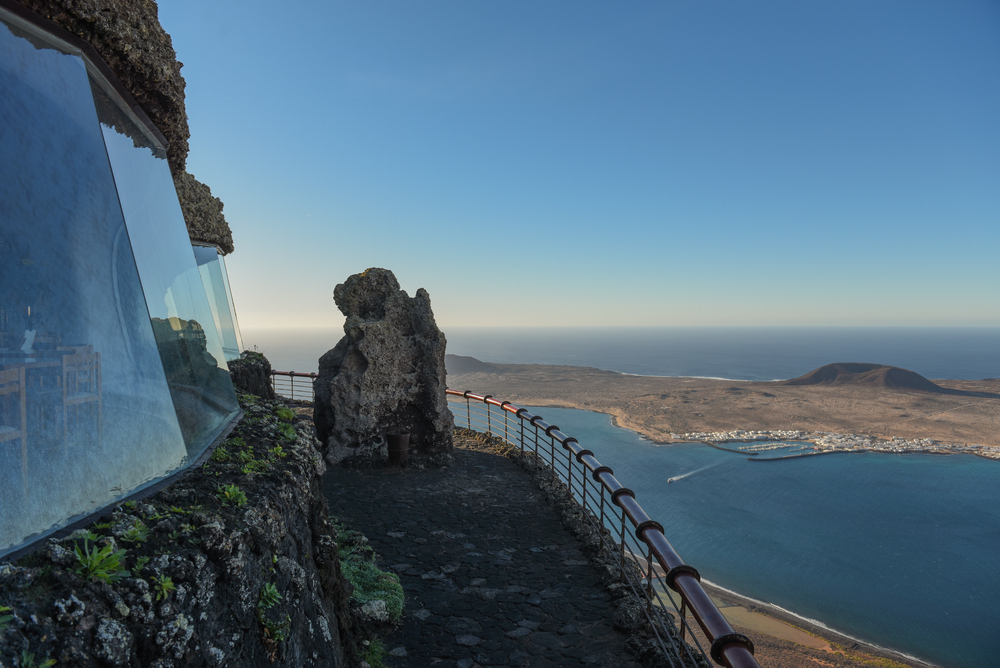
Situated at the northernmost point of the island is Mirador del Río, which is one of the most popular viewpoints in Lanzarote. Located almost 500 meters above the cliff face, this viewpoint is a unique creation by César Manrique, an artist who was born in and eventually resettled in Lanzarote.
The Mirador del Río is on the Risco de Famara escarpment and if you go into the paid visitor centre (at the cost of 5 euros, then there’s a small café and a viewing terrace).
Mirador de Guinate
Offering a quieter (and free) viewpoint, this hidden gem is only reachable via car and is just a short drive down the western coastline from Mirador del Río. From here you can see stunning vistas of La Graciosa island and Guinate from the same spot!
As it’s high above sea level, the winds can get pretty strong, so be sure to bring a spare jacket (even during the summer months).

Jardin de Cactus
The Jardin de Cactus is a beautiful cactus garden and is easily one of the most beautiful places to visit in Lanzarote. Jardín de Cactus (The Cactus Garden), is a magical space which boasts 1,400 varieties of Cacti and over 10,000 other tropical plants from all over the world, truly a plant lover’s haven!
Set within a former quarry, which acts as a warming dish and protects the somewhat delicate plants from the winds which can be fierce across the Canaries, the garden was the last work carried out by famous artist César Manrique.
A charming little windmill sits at the top of the garden, standing in stark contrast to the volcanic black sand and rock, and from here you can enjoy one of the best views overlooking the garden in its entirety.

Haría
Nestled within a palm-tree-filled valley, Haría is a welcome escape from the hustle and bustle of some of Lanzarote’s busier towns. An oasis of greenery amid an otherwise arid landscape, the small settlement remains somewhat of a hidden gem of the island.
The sleepy little village in Haría Valley, which is fondly nicknamed ‘The Valley of 1,000 Palms’, is characterised by its winding narrow paths, trailing flowering bougainvillaea and sheer number of palm trees.
Home to a beautiful church, César Manrique’s House Museum, a vibrant craft market every Saturday morning and the beautiful main square Plaza Leon y Castillo, which is lined with cosy cafés overshadowed by majestic eucalyptus trees.

Arrieta
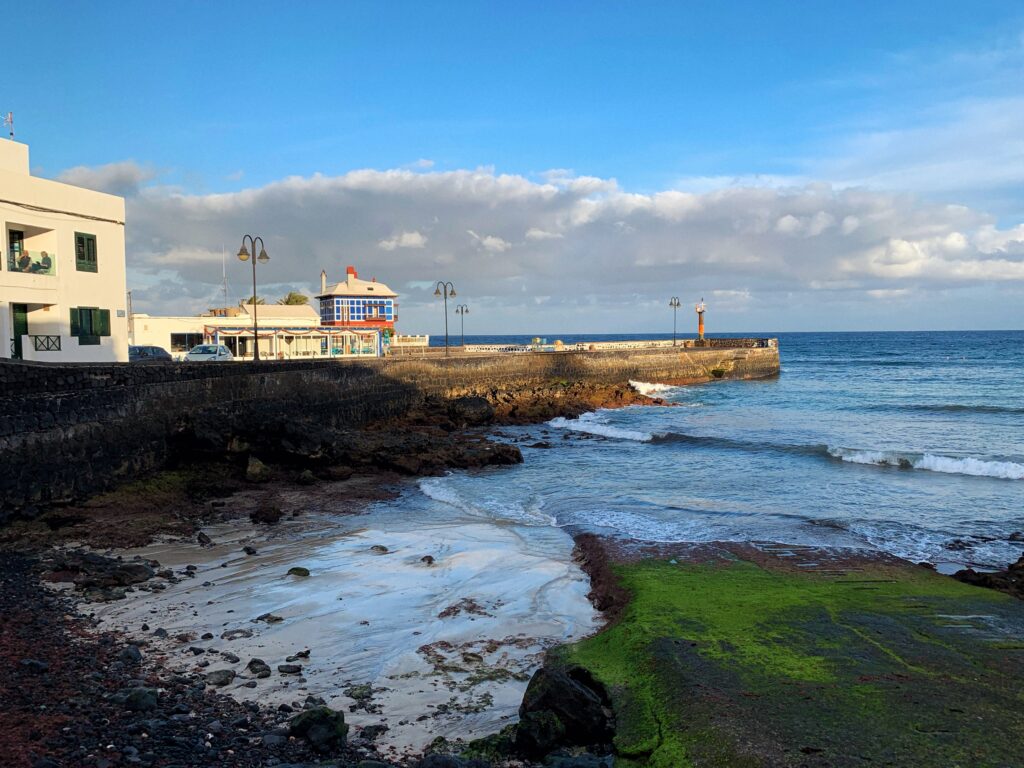
Arrieta is a charming little fisherman’s town, situated in the Haría municipality, the town’s name comes from Arriete Preud’homme, who was the Mayor of Lanzarote. Although much of the town caters to tourism (with a smattering of restaurants, cafés, and bars along the town’s main street- Calle la Garita), many people still work and live here, particularly those in the fishing industry.
One of the most unique things to see in Arrieta is the Casa La Juanita. This unusual red and blue house stands as a stark contrast to the surrounding white-washed homes, it lies on the fringes of the sea and was originally known as the ‘chalet of Arrieta’.
An unfortunate history, the house was constructed by a local family who moved back to Lanzarote after their daughter Juana fell ill from tuberculosis, believing that the fresh air of the island would help her recovery. Built to appear like a dollhouse from Juana’s childhood, sadly she passed away and was laid to rest in Haría.
Jameos del Agua
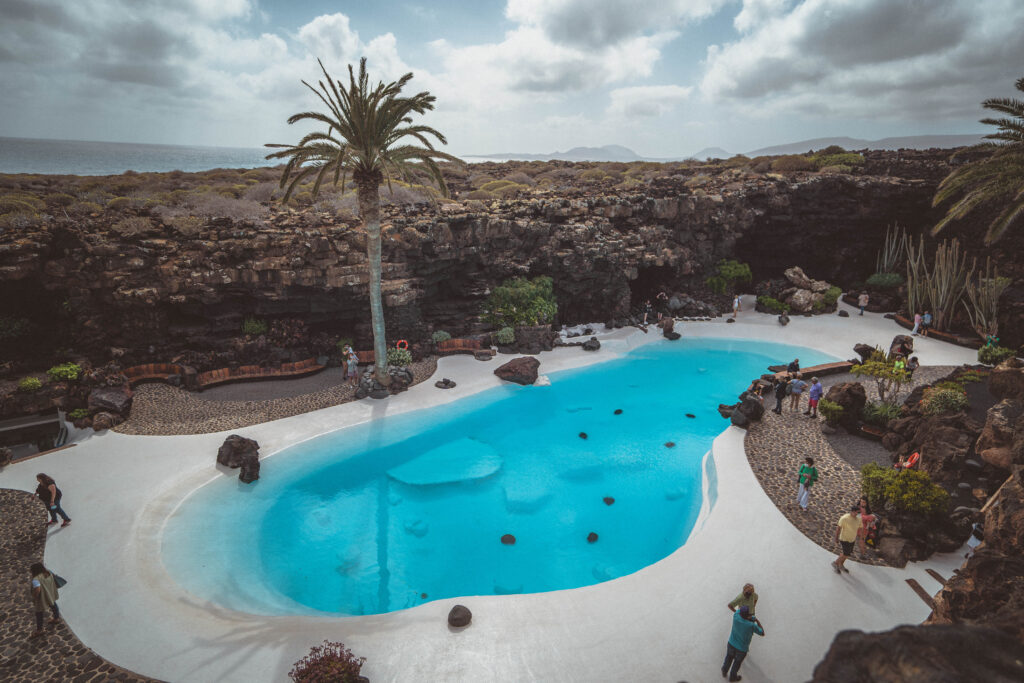
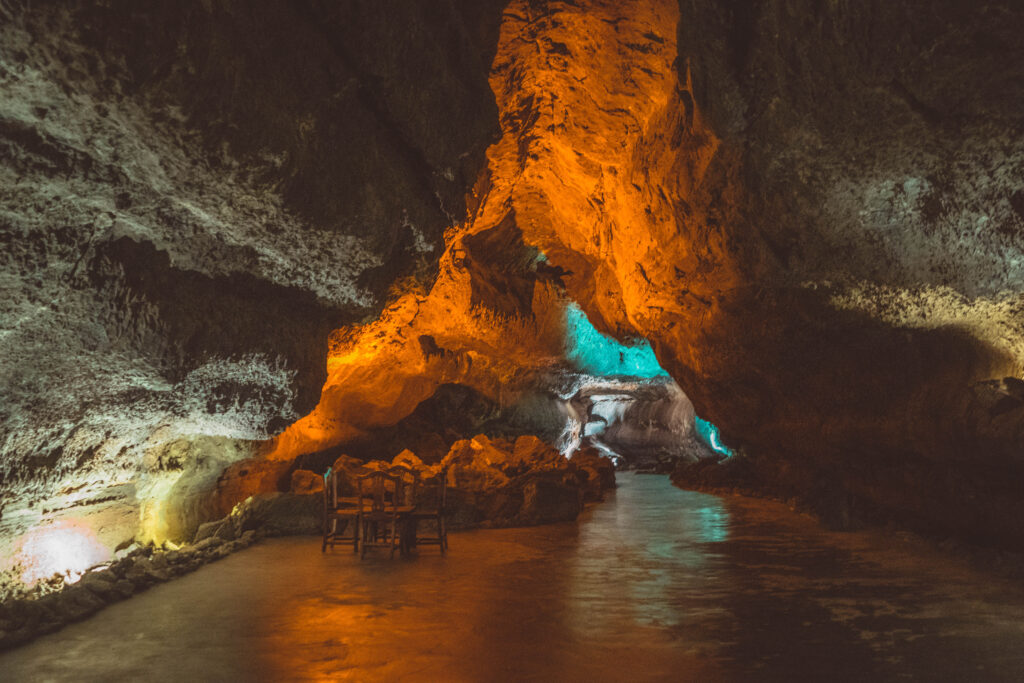
A unique opening of a lava tube is home to the natural wonder known as, Jameos del Agua and is one of the most popular places on the island to visit. It’s also the home of a blind lobster species that is only found in the cave and has since become a symbol of Lanzarote!
Between 3000- 5000 years ago, the lava tube was formed when hot molten magma flowed down from the volcano of Monte Corona to the sea. The lava stream cooled and formed a crust before draining away into the sea and leaving behind a tunnel, where a natural seawater lake has formed.
Geology aside, one of the coolest things to see while visiting Jameos del Agua is the iconic little squat lobsters that are solely found in this spot. Scientifically referred to as Munidopsis polymorphic, these little white lobsters are completely blind and are around 1 cm in length. They are the animal symbol for Lanzarote and their image can be found on flags, advertisements, and signs.
The lava tube is one of the longest in the world and also houses Cueva de los Verdes (see below).

Cueva de los Verdes
Cueva de los Verdes is situated within the same lava tube as Jameos del Agua, but at different openings. The grotto reaches a length of almost 8 kilometres comprising a complex network of tunnels. Open to visitors since the 1960s, a local artist, Jesus Soto, was hired to create mood lighting for the grotto, as well as ambient music.
Despite what the name might suggest, the caves are not green. Cueva de los Verdes takes its name after a local family of goat herders, Los Verdes, who took their flock here to shelter from bad weather.
In times gone by, people would have used the caves to hide from marauding pirates and slave traders. One particular cavern was used to hide in so regularly that it is now known as ‘The Refuge’.
Today, one of the highlights that can be seen in Cueva de los Verdes is its very own concert hall! Concerts are only ever held at night and as you can imagine, the acoustics are incredible. There’s a piano which had to be brought into the cave in several parts and the hall can seat up to 500 people at once.
Tours of the lava tunnels take place throughout the day in English and Spanish.
Visit the Piscinas Naturales de Punta Mujeres
Punta Mujeres translates to ‘Women’s Point’ and is named so because traditionally it was the point where local women would wait to greet their husbands returning from fishing. Today, you’re unlikely to see any women waiting, but rather taking a dip and relaxing in the crystal clear waters of the natural water park.
One of the most enchanting places to swim on the island is in the natural swimming pools of Punta Mujeres. Almost completely untouched by the human hand, these natural rock pools are filled with water from the ocean and make for an idyllic spot to soak up the island’s wonders.
Visit the Casa Museo de César Manrique
César Manrique was a Spanish artist, sculptor and nature activist who was born in Lanzarote and later in life moved back to the island and settled there. Famed for his architectural feats, the artist’s touch can be found across the island.
Manrique treated Lanzarote as an artistic playground, sculpting, shaping and designing to transform the island into what we know today as a jewel of the Canary Islands group.
The house and museum of César Manrique can be found on the outskirts of the verdant village of Haría. It has since been transformed into a museum that was opened to the public in 2013, though little has been changed, meaning that visitors can experience an authentic space that the artist designed for himself.
Sadly, César Manrique passed away in a tragic road accident on Calle Elvira Sánchez. His final resting place is in Haría cemetery.
Check out Ermita de las Nieves
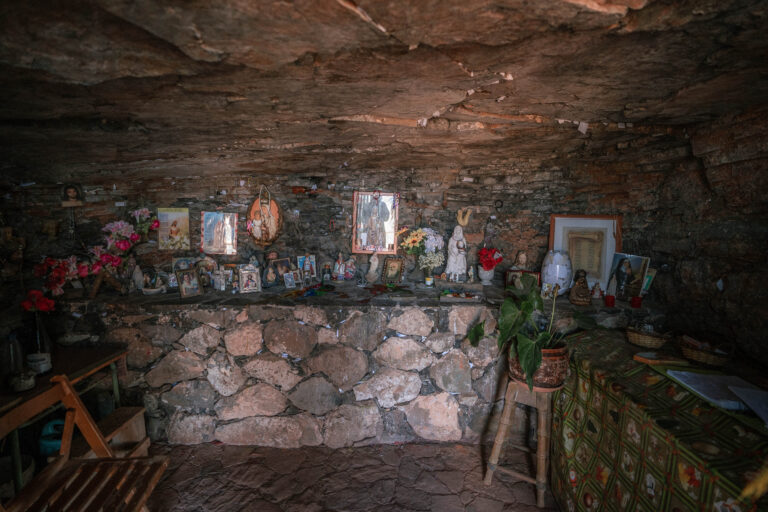
Like much of Spain, Lanzarote has deep-rooted ties with the Catholic faith, religion is very much part of the island’s culture. Ermita de las Nieves is a mirador, not just home to stunning views, but is also said to be where the first sighting of Virgen de las Nieves took place.
Things to do in Central Lanzarote
Teguise
The delightful town of Teguise was once the capital of Lanzarote and is said to be one of the first settlements, making it the oldest town in the entirety of the Canary Islands. Rich with a history that dates back to 1414, Teguise is also the birthplace of César Manrique.
Filled with historical treasures, the town is home to Spinola Palace, a traditional Canarian home of a wealthy family that has since been transformed into a museum, the beautiful Church of Our Lady of Guadalupe which looms above the charming main square, Plaza Mayor.
On Sundays, Teguise hosts the largest market in all of Lanzarote, where you can indulge in local delights and find everything from delicious local cheese and wines to handmade artisanal products.

Stratified City
A collection of volcanic rock formations known as Stratified City is one of the most unique places to visit on the island. Carved by the sun, wind, and rain over centuries, creating fascinating strata and shapes, the weather continues to degrade the rocks, constantly changing their appearance as a result.
Stratified City is situated directly in front of the “Barranco de las Piletas” ravine and is free to visit. You’ll likely only need around twenty minutes wandering around the rocks and snapping some photos.

Museo Lagomar
Visit the most famous house on the island, an architectural project that became the dreamwork of British developer Sam Benady. Lagomar encompasses the beauty of Lanzarote’s natural landscape (and, as you can probably guess there was some help from César Manrique here too).
Lanzarote’s unique volcanic landscape has been a prime location for creators alike. During the 1970s Benady had an idea of creating a wonder home, and just like that the Lagomar architectural project was born.
With the help of local artists César Manrique and Jesús Soto, a beautiful home and gardens were created, set within an ancient volcanic quarry and with the use of its lava as a construction material. This oasis in the heart of the island is a breathtaking vision of magical caves, rock gardens and secret passages leading to the crystal clear lake. A work of art that compliments the natural setting it sits in!
So beautiful that Egyptian actor Omar Sharif, fell in love with Lagomar while out filming in Lanzarote, he bought the place and briefly called it home. Since the house was bought by two architects who further developed the property.
Today, the designed estate is open to the public and is a great place to admire the private residence as well as marvel at the artistic imprint that has been left.


César Manrique Foundation
Another spot on the island dedicated to César Manrique can be found in a natural lava cave. The César Manrique Foundation is set within a building that sits atop five volcanic bubbles, each room of the building was designed with Manrique’s techniques and style in mind.
A blend of nature and architecture that complement one another, here you can visit a collection of César Manrique’s artworks, visit a museum dedicated to the life and works of the artist, and sip on a coffee in the café, enjoying the unique and wonderful space.
Casa Museo del Campesino
Another museum which (surprise!) was designed by no other than César Manrique, is a museum which is dedicated to Lanzarote’s traditions and culture. Casa Museo del Campesino (House museum of the peasant farmer) exhibits the secrets of local handcrafts, local traditions and the way of life for famers working on the island.
Learn about the winemaking of the island, as well as the various agricultural equipment which has been used throughout the year to cultivate the land. Stood at the centre of the museum is the 15-meter tall Monument to Fertility, which has become an iconic sight of Lanzarote.
And, you can dine underground in the museum’s restaurant that serves a range of traditional dishes.
Los Volcanes Natural Park
The last eruption on Lanzarote took place in 1824, further contributing to the island’s sweeping and unique landscape. Los Volcanes Natural Park is a place where you can visit the end results of volcanic eruptions, displaying strange and fascinating formations where the lava has solidified.
Completely stark, vegetation in this area is scarce, but surprisingly there are many reptile and bird species which have adapted to living in this habitat.

Las Grietas
Las Grietas ravine is reminiscent of one found in the USA. Yet another unusual geological rock formation, Las Grietas translates into English as ‘the cracks’ as it was caused when the volcanic plates of Montaña Blanca cracked.
While visitors can only wander for 20 metres or so between the rock face, the site is reminiscent of a very miniature version of Antelope Canyon in Arizona or the Grand Canyon in Arizona and remains one of the less-visited geological formations in Lanzarote!


Discover Lanzarote wine
If you enjoy wine then you should be sure to check out the Lanzarote wine scene during your time on the island. Wine has been produced in the Canaries since the mid 15th-century when the first colonists imported vines to the islands. Rather uniquely, the grape harvest is done entirely by hand to this day!
La Geria is a protected landscape and is the name from which the wine region is known by. The ‘geria’ are cone-shaped hollows which have been excavated down meters deep with a vine planted in the heart.
The presence of volcanic ash is one of the most unique aspects of Lanzarote’s wine growing, allowing the minerals of the ash to feed the vines, adding important nutrients which adds to the wine’s unique flavour.
The most common type of grape grown is Malvasia, and this accounts for around 75% of the wine produced. Red, white, and rosé are all produced on the island.

Hike into Caldera de los Cuervos
Situated within Timanfaya National Park, the popular and stunning hiking route of Caldera de los Cuervos takes visitors back in time along a trail which traces the history of volcanic activity, passes by the protected La Geria landscape and offers sweeping panoramic views from various points on the path.

Things to do in South Lanzarote
Piscinas Naturales Charcones
The pristine and perfectly clear natural puddles of seawater and located in Los Charcones, which is known around the island to be one of the most beautiful places to swim, relax and soak up the wonders of nature as an architect.
Papagayo Beach
A small cove in the shape of a shell, Papagayo Beach is one of the most popular spots on the island. The small stretch of white sand is sheltered from the winds thanks to its location, meaning the sparkling emerald and azure waters are particularly perfect for snorkelling.
El Golfo (and green lagoon)
Another natural wonder created by volcanic eruptions is the unique and strange green lagoon that is located just outside of El Gofo on the shore of a beach. A spectacular vivid olive green pool that is further illuminated by the contrast of black sand that surrounds it, the colour of the water is caused by a semi precious stone, Olivina, that is found amongst the grains of sand, forged from volcanic origin.
Enjoyed reading about the best things to do in Lanzarote? Pin this article now, read it again later: