Taketomi Travel Guide: a Hidden Subtropical Paradise Island of Japan
Last Updated on 5th August 2024 by Sophie Nadeau
This post may contain affiliate links. Please check out my privacy policy and disclosure for more information.
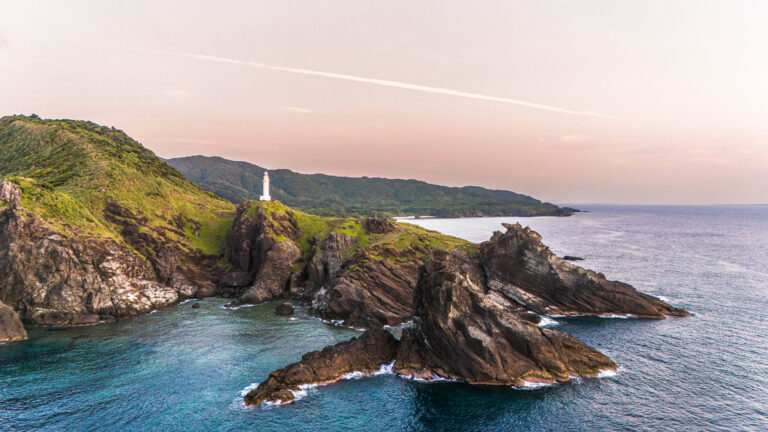
This tiny subtropical island is surrounded by turquoise-blue waters. A paradise of tranquillity and a place of history and tradition, Taketomi is a hidden gem of Japan that a lot of tourists don’t get to experience. Famed for its white sand beaches, ease of access to nature, and stunning scenery, here’s the ultimate travel guide and how to visit this remote Japanese treasure!
Contents
Introducing Taketomi
Vital to preserving the island’s traditional culture and natural environment, there are a few undertakings in which residents must abide by:
- “Do not sell” – Essentially, you can’t live here unless your family already own a house on the island. There is no selling to anyone outside of the island, and no lending it out in a disorderly manner.
- “Do not pollute” – This one is crucial for the natural landscape to thrive!
- “Do not destroy” – Residents are to be mindful and also ensure visitors also abide by this principle.
- “Do not disturb” – Advertisements, signboards and anything else that could be to the detriment of the aesthetic appearance of Taketomi is not allowed.
- “Make full use” – Use traditional ceremonial events and local industries as spiritual support to promote the island and make full use of its existence, while being careful of how it is used.
These principles are considered to be crucial in the preservation of the island for generations to come!
Where is Taketomi?
Taketomi Island, 竹富島, is a subtropical island. Located approximately 7 kilometres west of Ishigaki Island, which is one of the largest of the Yaeyama islands, an archipelago that’s part of Okinawa. The island is tiny, with a circumference of 9.2 kilometres and a population of just under 400 residents.
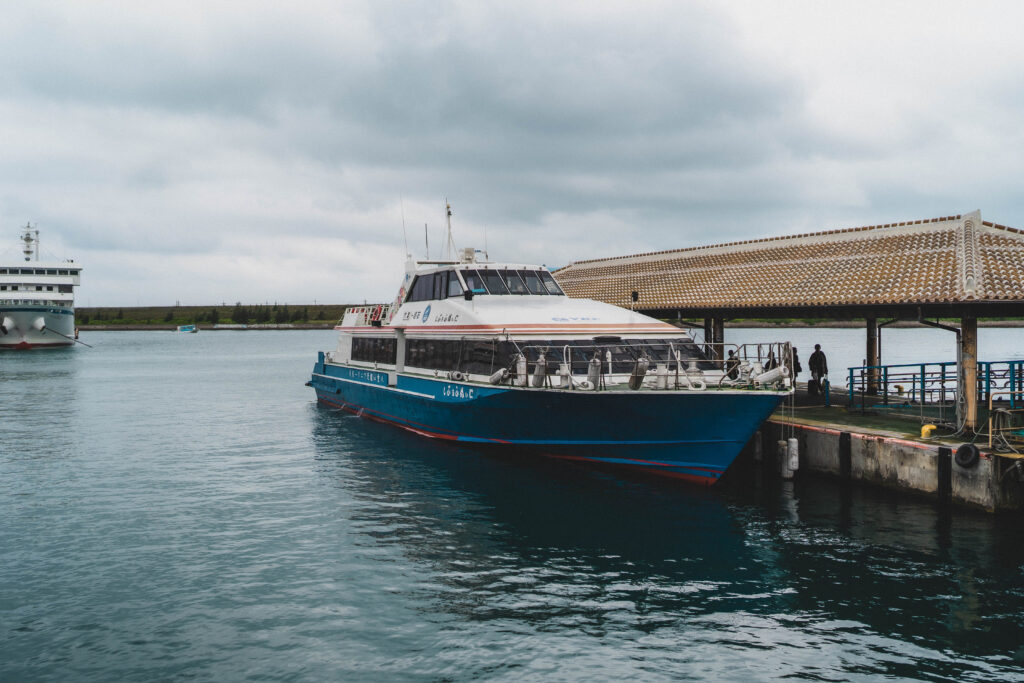
It is part of the southernmost group of islands from Japan and is just off of the coast of Taiwan. The only way to reach the island is by boat and regular ferries depart from Ishigaki throughout the day.
What is Taketomi known for?
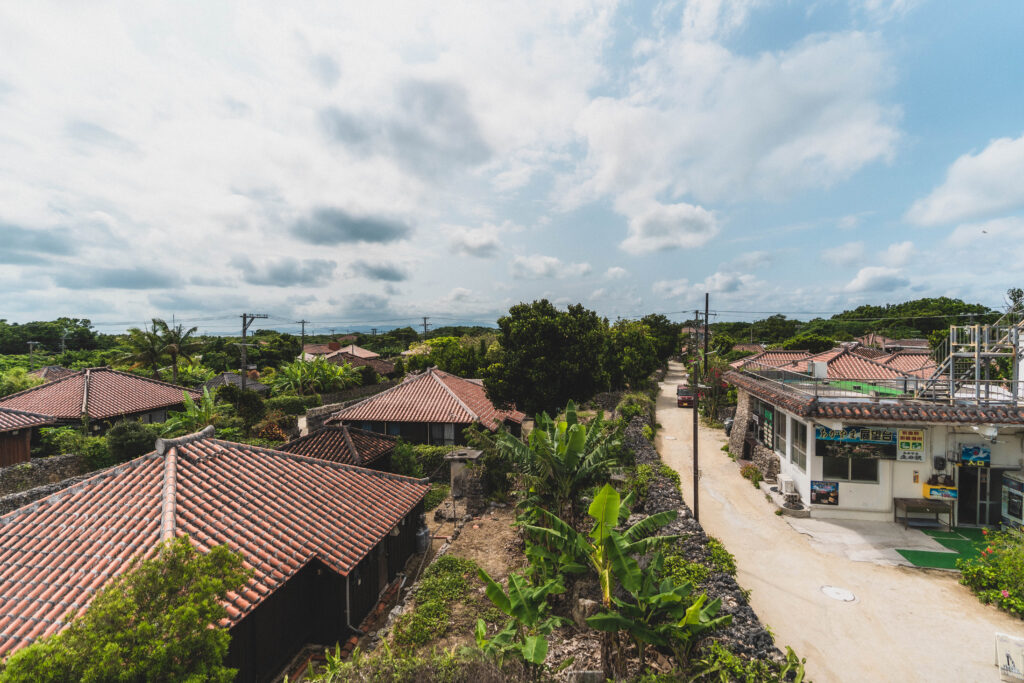
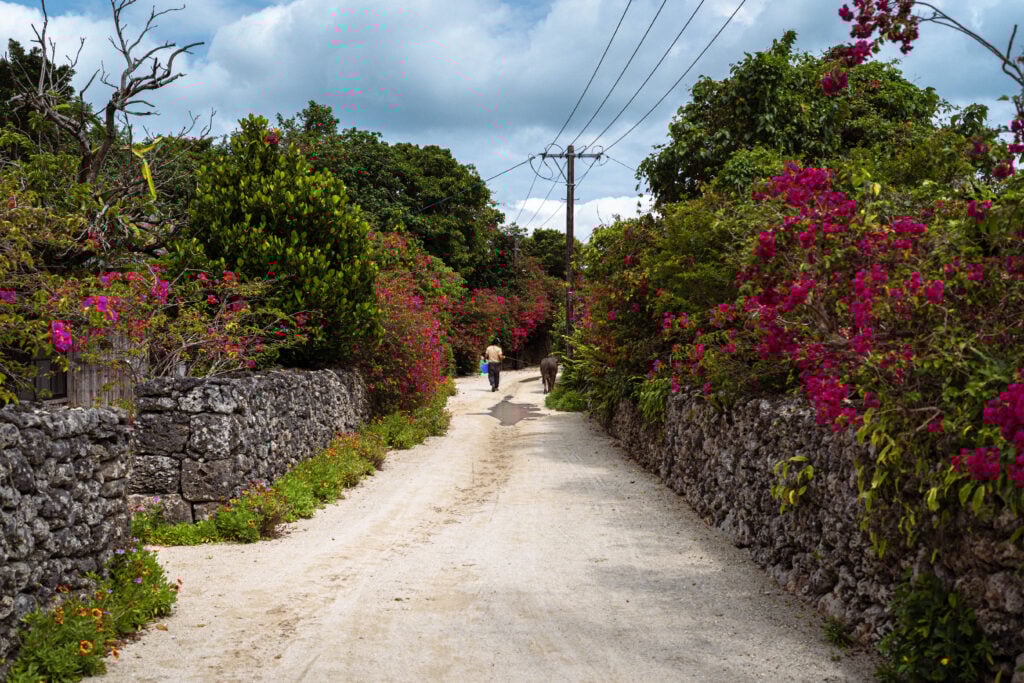
Taketomi is known for its “traditional Okinawan” houses. Characterised by red tile roofs, and generally surrounded by coral and limestone walls built to withstand typhoons, they are houses which are built to coexist with nature.
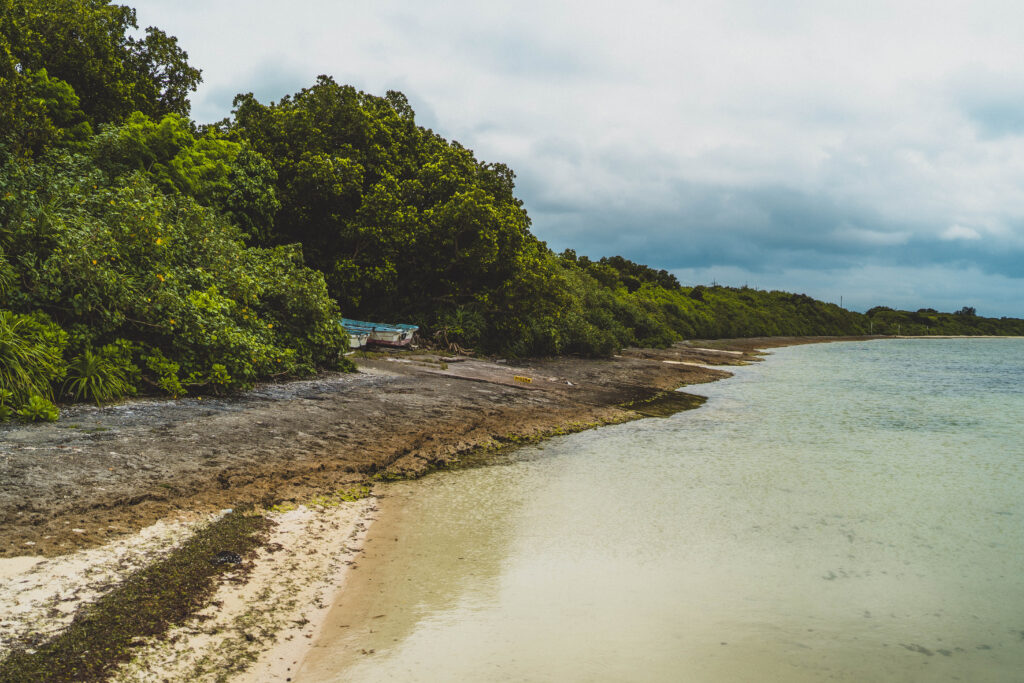
The small circular island is also surrounded by coral reefs, home to an abundance of sea life. A unique aspect for which the island is known is its intriguing star-shaped sand on Kaiji Beach!
Thanks to the tropical climate (temperatures rarely fall below 15 C), Taketomi is a natural beauty, from exotic plants to diverse ecosystems, the island is brimming with life!
Getting around
There are two main ways to get around Taketomi Island, on foot or by bicycle. We opted to rent a bicycle as it’s a magical way to explore, and the island is very quiet. There are numerous places to rent from either in the port area or in the main village (which is a 15-minute walk from the port).
The cost to rent a bicycle is 2,000 yen per day or 500 yen per hour, there are both manual and e-bikes available. Although it’s on the more costly side, it’s worth it! We personally rented from Minemoto Rental Cycle which is just a few minutes walk from the port.
If you choose to rent a bicycle, you won’t be given a lock as the island is so safe there’s no need for one. There’s also no way to ‘steal’ a bicycle due to this being an island!
However, the one thing that you should note is that you do have to park your bicycle in a designated parking spot. Luckily these are everywhere around the main tourist attractions and so it’s not hard to find a space while exploring.
You only really need 5-6 hours to fully explore and get to know Taketomi. This will allow sufficient time to take in the island’s beauty. If you want to escape from it all for a little while longer, then you can alternatively opt to stay on the island for a few days.
Just bear in mind that since this is such a small island, space is really limited and so you should book your trip well in advance. If you’re visiting as a day trip, get to the ferry port as it opens because on sunny days in high season (late spring) boat trips can sell out.

Best things to do in Taketomi
Tourist centre
Right next to the ferry arrival, the first spot you’ll see is the Taketomi Visitor Centre. Here, there are a variety of displays explaining the history of the island, introducing the nature and the cultural traditions and sightseeing of the island.
There’s a short film which is played twice every hour, offering subtitles in both English and Chinese. Also, there are maps of the nearby terrain, detailing and suggesting paths which are best for seeing local wildlife.
See wildlife
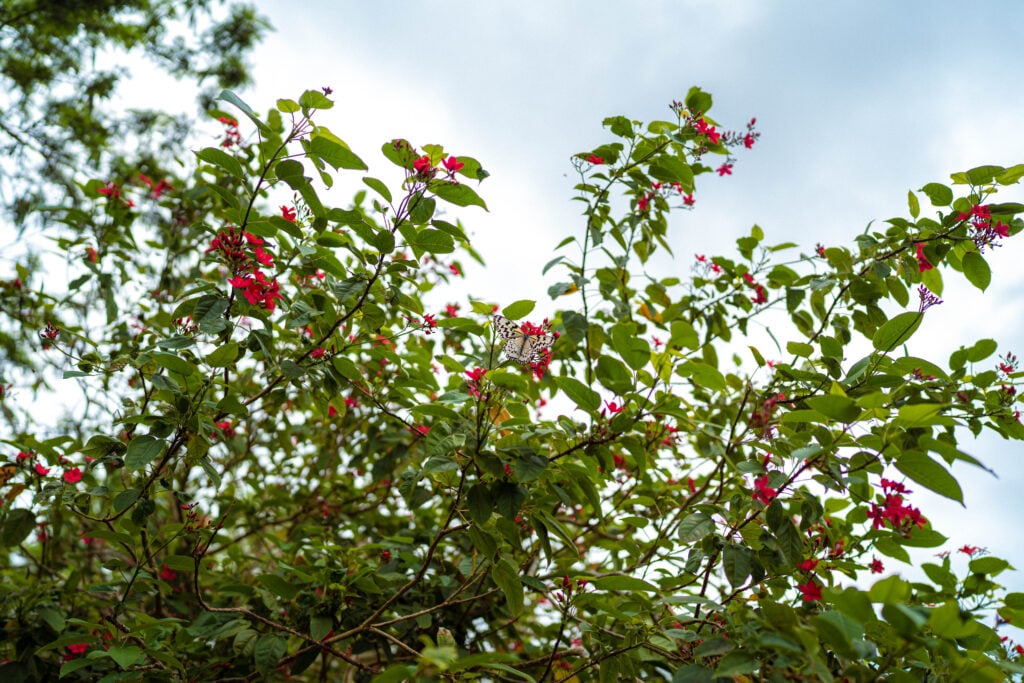
One of the best things to soak up when exploring the island is its vibrant and diverse abundance of wildlife and luscious vegetation. Full of life, the colours and serene ambience of Taketomi is truly enchanting to explore.
The sheer amount of butterflies, we saw was incredible and some of them were the size of my palm! The giant Atlas moth which is designated as protected by the Okinawa Prefectural Government and can be seen floating around the subtropical island if you have keen eyesight.
Taiwan-ebine orchid (Calanthe formosana) is designated for protection by Taketomi town, as its name suggests the flower is native to Taiwan and typically blooms in October time.
Shinzato village remains
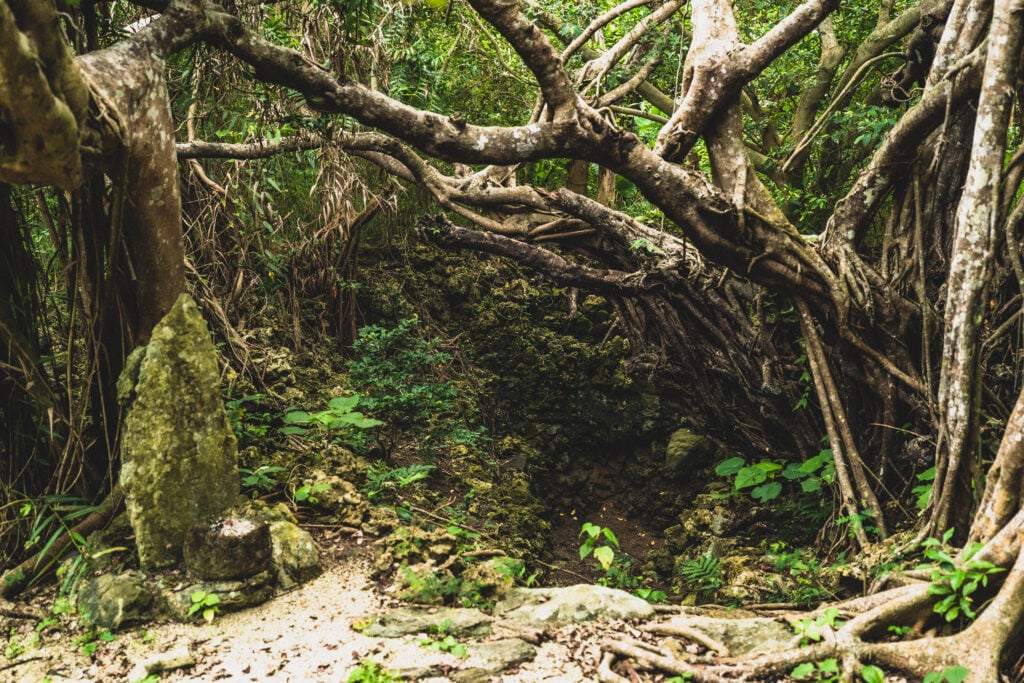
The Shinzato Village remains offer a fascinating insight into the history and development of settlements on Taketomi Island.
Said to be the birthplace of the village communities, the ruins here mostly date between the 12th and 13th centuries. Throughout the years there have been many archaeological excavations, with finds such as earthenware from China in the 13th century, there’s a lot of rich history that likely still hides on this site!
Mishashi-on
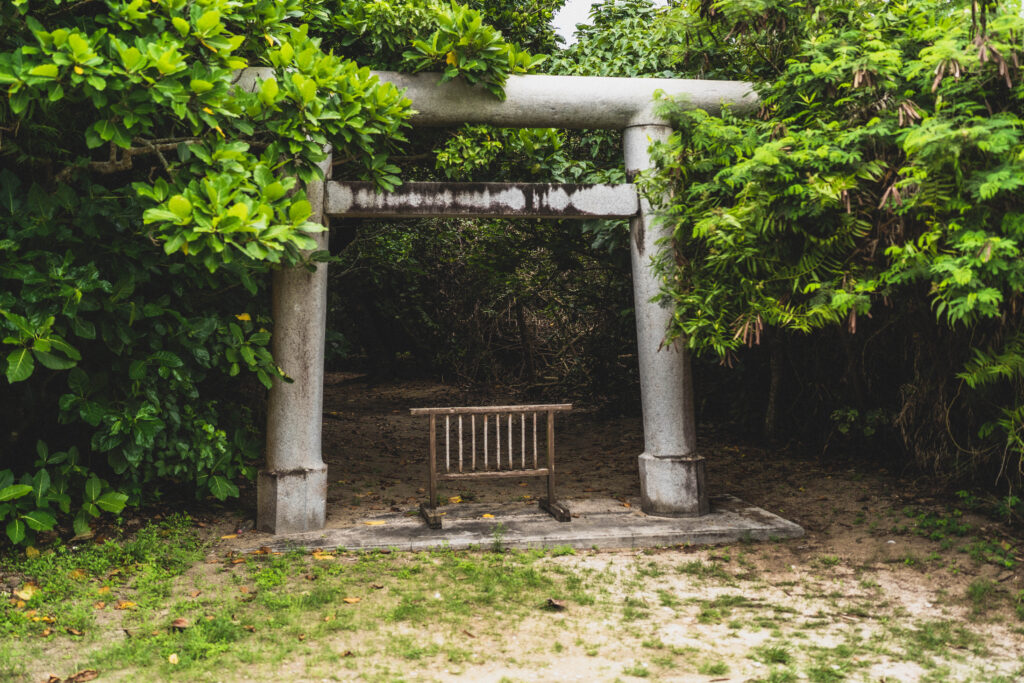
In this tranquil spot of the island, you can see the remaining foundations of Mishashi-on pier, which was used as an official main port for all the ships until 1932.
The on is considered to be a sacred place on the island and so cannot be visited by tourists. All that can be seen of the on is the torii gate entrance (you should not cross the boundary of the gate as it is disrespectful to the locals).
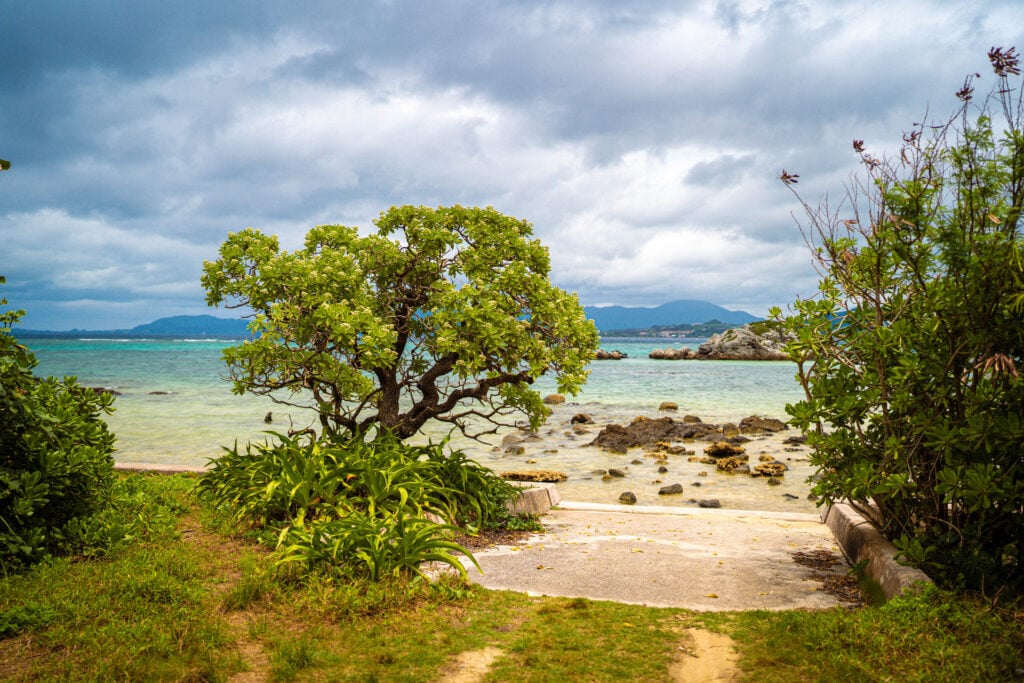
Nishi pier
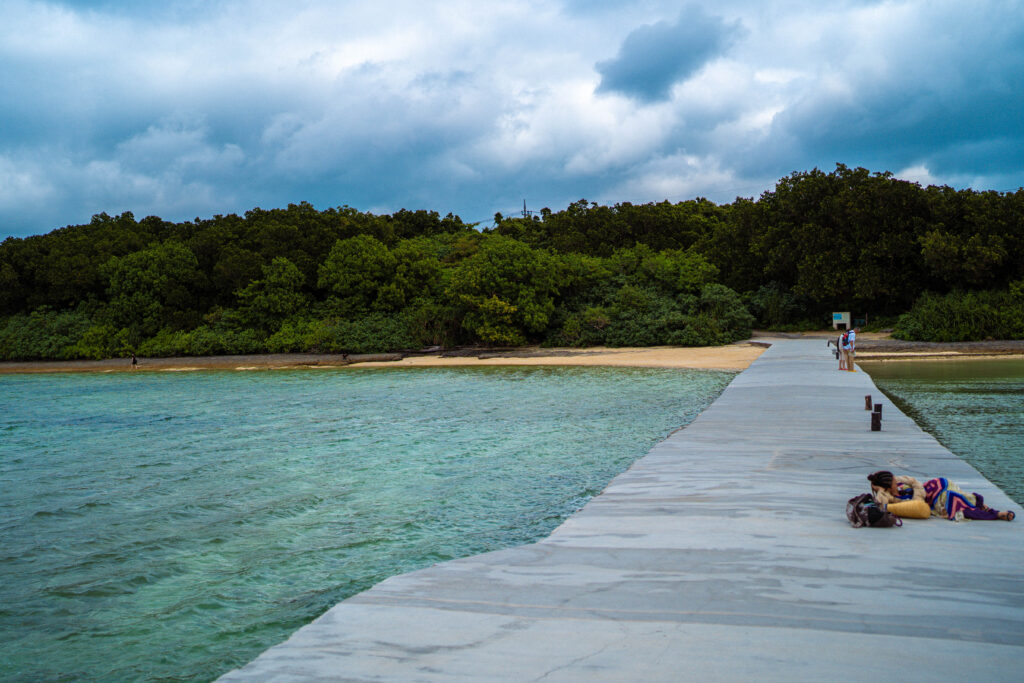
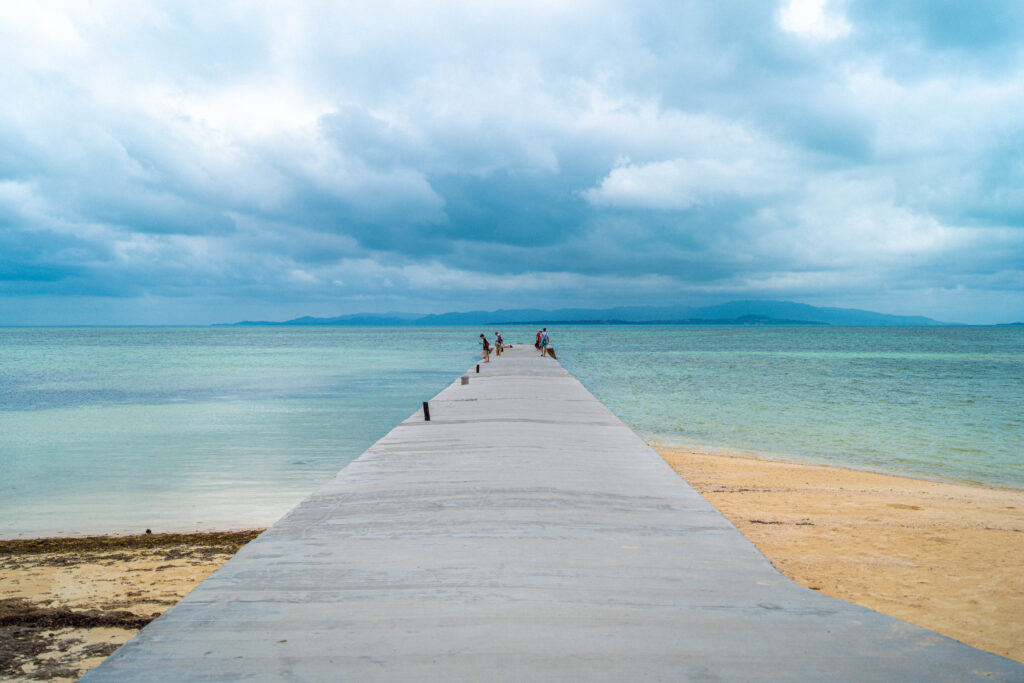
One of the most photogenic spots on the island, Nishi pier stretches into the distance of crystal clear blue waters, overlooking views of Iriomote Island. It’s one of the most beautiful spots to watch the sunset from.
Rich with sea life, small iidako (octopuses) burrow into the sand to catch minamisunagaini (smooth-handed ghost crabs) and there are carnivorous fish that dart through the shallows to catch schools of fish, a constant cycle of life takes place around Nishi pier.
Kondoi beach
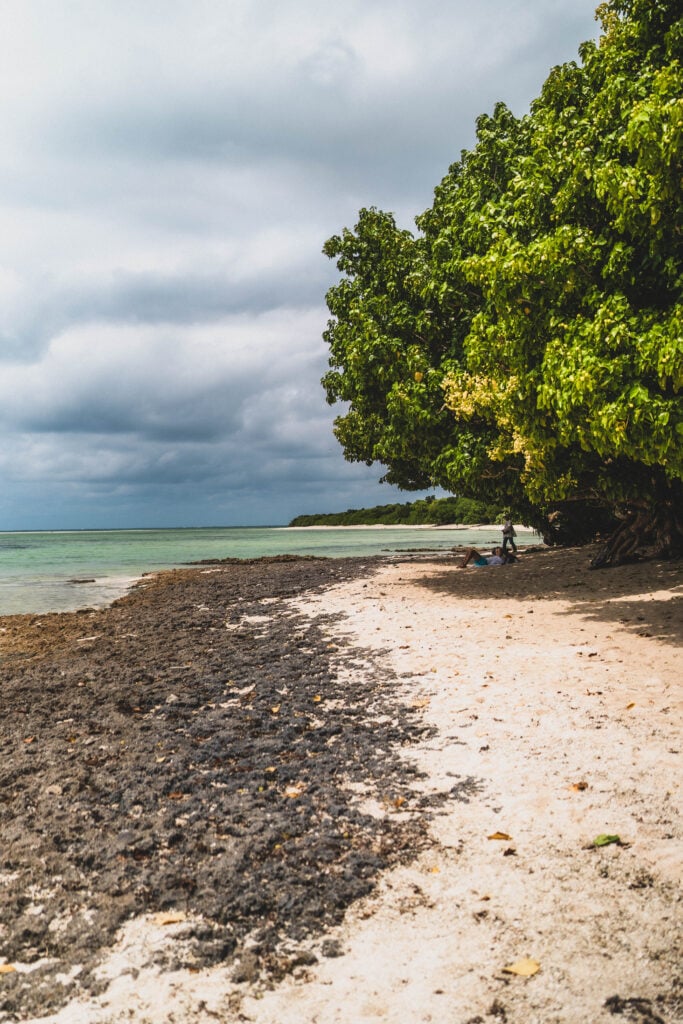
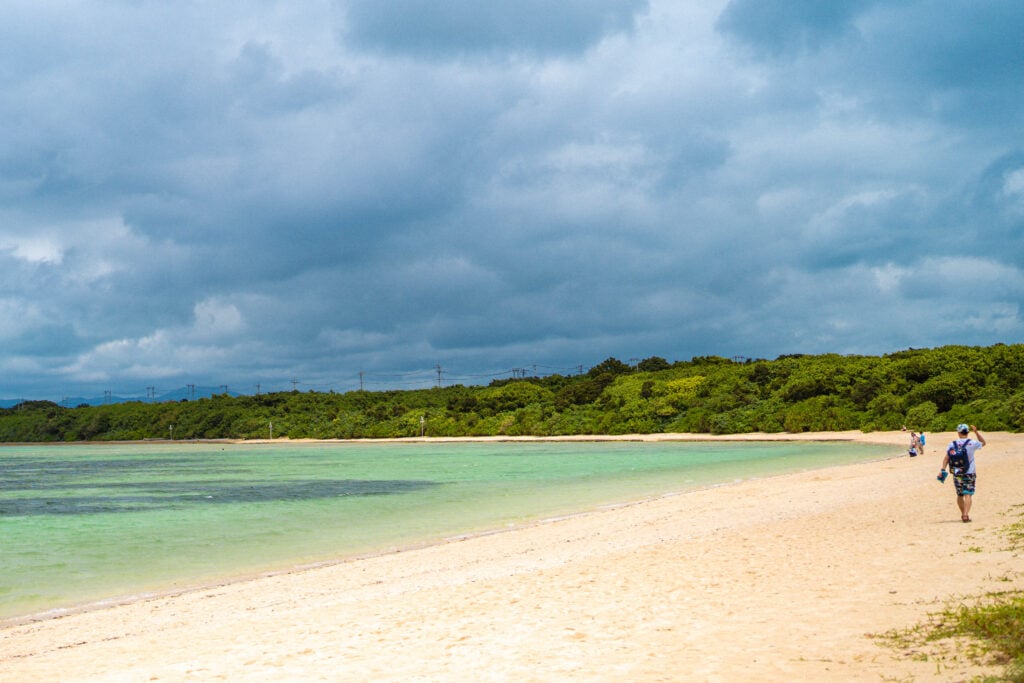
This is the longest stretch of sand on the island, the white gold sand is unique in texture and much coarser than you might expect, which makes it more difficult to walk along. Crystal clear water lapping up against the white sand, with the contrast of emerald green on the land, it’s a place of natural beauty.
Kondoi Beach is the perfect place to stop for a picnic! Although you have to be careful of the crows…similar to seagulls, they can be quite sneaky and creep up on you and take food.
Star sand Kaiji beach
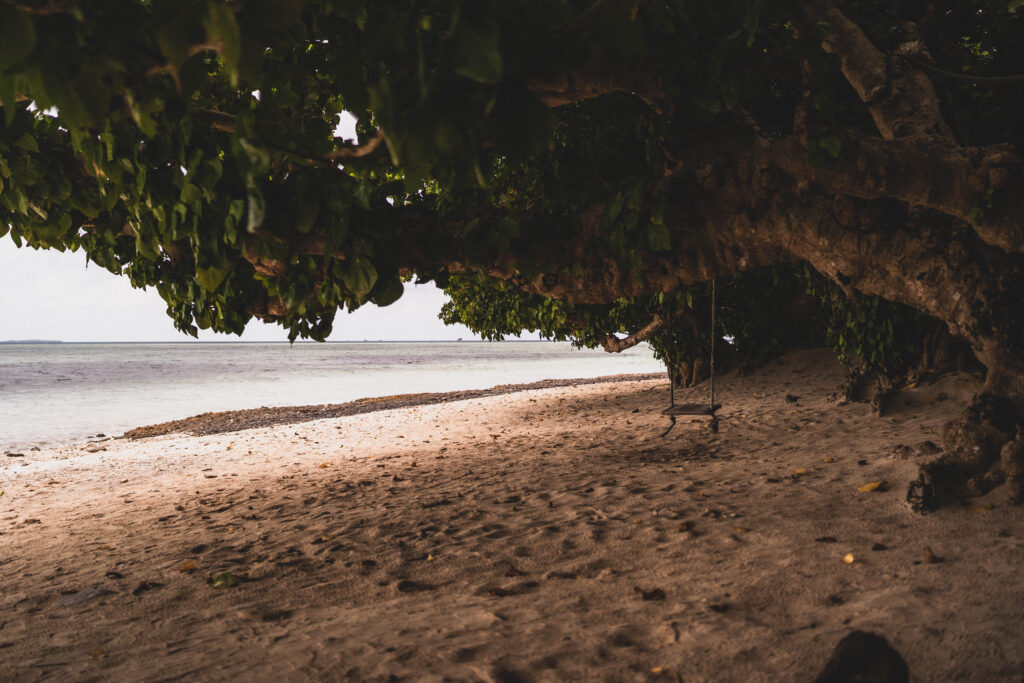
One of the most famous beaches in all of Okinawa, this unique landscape is known for its star-shaped pieces of sand which can be seen with the naked eye!
Miniature works of art, the grains of sand are exoskeletons of tiny marine animals. Foraminifera are microscopic beings which build intricate shells from calcium carbonate, which they collect while drifting through the water. When the single-celled creatures die, their shell remains at sea and eventually drifts to shore.
When walking along the natural wonder of Kaiji Beach, you can take a look at the former homes for yourself and marvel at the tiny stars!

Nagominoto tower
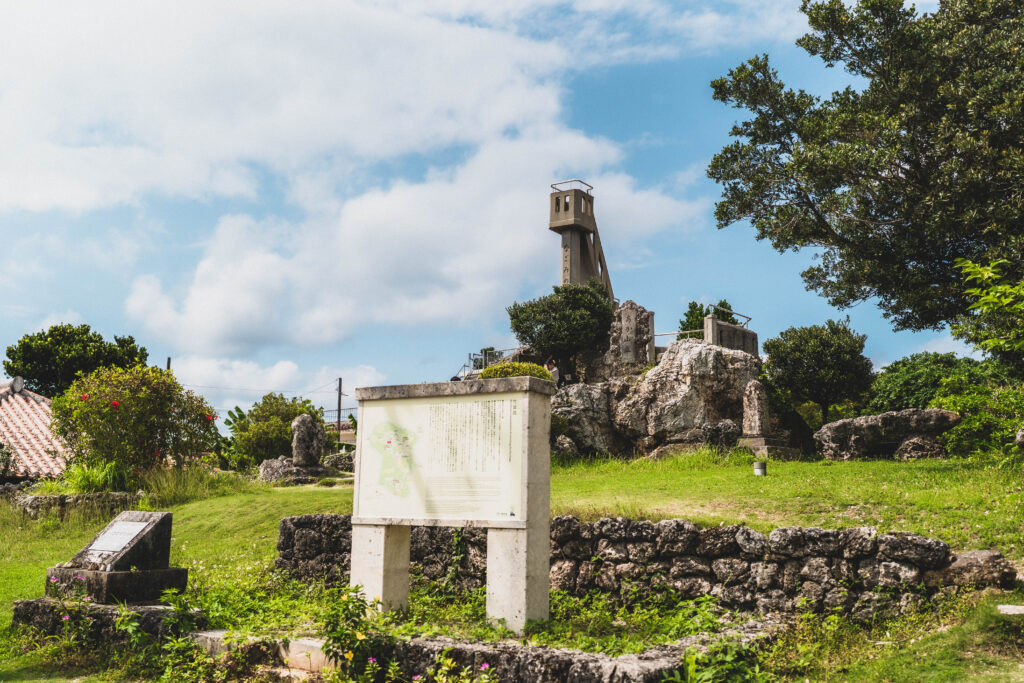
The highest spot on the island, Nagominoto Tower is the perfect place to spy the iconic red roof-topped homes and panoramic views of the surrounding landscape. Located in the heart of Taketomi village, the tower stands 4.5 meters tall, and thanks to the hill it stands on, it is approximately 10 meters higher than the houses that surround it.
Taketomi Village
The main village and only settlement on the island is Taketomi Village. The majority of the island’s less than 400 residents reside here and its history is said to date back to the 13th century.
There are no modern houses, only Ryukyus, which are a style of architecture iconic for their red-tiled roofs. Typically adorning the roofs are clay Shisa lions. Often found as a pair, these are the guardian lions of Okinawa and each pair has a different face, usually one with its mouth open, the other closed.
Getting to Taketomi
Taketomi Island is accessible by speed boat from Ishigaki Port. Boats depart from here every hour and the journey only takes 10 minutes. If you want to visit as a day trip from Ishigaki, then you need to head to the ferry terminal, where you can buy return tickets to visit Taketomi. Please bear in mind that, during the summer, the first boats can sell out so arrive early in order to avoid disappointment.
Watch the Taketomi travel guide
Enjoyed reading about Taketomi Island and how to visit? Pin this article now, read it again later: